SB 728: California Renewables Portfolio Standard Program.
- Session Year: 2015-2016
- House: Senate
- Latest Version Date: 2015-04-27
Under existing law, the Public Utilities Commission has regulatory authority over public utilities, including electrical corporations, as defined. The Public Utilities Act imposes various duties and responsibilities on the commission with respect to the purchase of electricity and requires the commission to review and adopt a procurement plan and a renewable energy procurement plan for each electrical corporation pursuant to the California Renewables Portfolio Standard Program (RPS program). The RPS program requires the commission to establish a renewables portfolio standard requiring all retail sellers, as defined, to procure a minimum quantity of electricity products from eligible renewable energy resources, as defined, at specified percentages of the total kilowatthours sold to their retail end-customers during specified compliance periods. Existing law authorizes the commission to require a retail seller to procure eligible renewable energy resources in excess of the specified quantities.
This bill would require that the commission evaluate the economic impacts benefits and costs to the California economy, including upon low- and middle-income individuals and families and disadvantaged communities, before exercise of its authority to increase the procurement of eligible renewable energy resources in excess of the specified quantities. The bill would require the commission, in performing its evaluation, to conduct duly noticed public workshops throughout the state to allow for public comment and consideration of the economic findings.
Under existing law, the Public Utilities Commission has regulatory authority over public utilities, including electrical corporations, as defined. The Public Utilities Act imposes various duties and responsibilities on the commission with respect to the purchase of electricity and requires the commission to review and adopt a procurement plan and a renewable energy procurement plan for each electrical corporation pursuant to the California Renewables Portfolio Standard Program (RPS program). The RPS program requires the commission to establish a renewables portfolio standard requiring all retail sellers, as defined, to procure a minimum quantity of electricity products from eligible renewable energy resources, as defined, at specified percentages of the total kilowatthours sold to their retail end-customers during specified compliance periods. Existing law authorizes the commission to require a retail seller to procure eligible renewable energy resources in excess of the specified quantities.
This bill would require that the commission evaluate the economic impacts upon low- and middle-income individuals and families before exercise of its authority to increase the procurement of eligible renewable energy resources in excess of the specified quantities. The bill would require the commission, in performing its evaluation, to conduct duly noticed public workshops throughout the state to allow for public comment and consideration of the economic findings.
(a)In order to fulfill unmet long-term resource needs, the commission shall establish a renewables portfolio standard requiring all retail sellers to procure a minimum quantity of electricity products from eligible renewable energy resources as a specified percentage of total kilowatthours sold to their retail end-use customers each compliance period to achieve the targets established under this article. For any retail seller procuring at least 14 percent of retail sales from eligible renewable energy resources in 2010, the deficits associated with any previous renewables portfolio standard shall not be added to any procurement requirement pursuant to this article.
(b)The commission shall implement renewables portfolio standard procurement requirements only as follows:
(1)Each retail seller shall procure a minimum quantity of eligible renewable energy resources for each of the following compliance periods:
(A)January 1, 2011, to December 31, 2013, inclusive.
(B)January 1, 2014, to December 31, 2016, inclusive.
(C)January 1, 2017, to December 31, 2020, inclusive.
(2)(A)No later than January 1, 2012, the commission shall establish the quantity of electricity products from eligible renewable energy resources to be procured by the retail seller for each compliance period. These quantities shall be established in the same manner for all retail sellers and result in the same percentages used to establish compliance period quantities for all retail sellers.
(B)In establishing quantities for the compliance period from January 1, 2011, to December 31, 2013, inclusive, the commission shall require procurement for each retail seller equal to an average of 20 percent of retail sales. For the following compliance periods, the quantities shall reflect reasonable progress in each of the intervening years sufficient to ensure that the procurement of electricity products from eligible renewable energy resources achieves 25 percent of retail sales by December 31, 2016, and 33 percent of retail sales by December 31, 2020. The commission shall require retail sellers to procure not less than 33 percent of retail sales of electricity products from eligible renewable energy resources in all subsequent years.
(C)Retail sellers shall be obligated to procure no less than the quantities associated with all intervening years by the end of each compliance period. Retail sellers shall not be required to demonstrate a specific quantity of procurement for any individual intervening year.
(3)The commission may require the procurement of eligible renewable energy resources in excess of the quantities specified in paragraph (2). The commission shall evaluate the economic impacts benefits and costs to the California economy, including upon low- and middle-income individuals and families and disadvantaged communities, before exercise of its authority pursuant to this paragraph to increase the procurement of eligible renewable energy resources. In performing its evaluation, the commission shall conduct duly noticed public workshops throughout the state to allow for public comment and consideration of the economic findings. These workshops shall be completed not less than 60 days prior to consideration by the commission of a rule that would require procurement of eligible renewable energy resources in excess of the quantities specified in paragraph (2).
(4)Only for purposes of establishing the renewables portfolio standard procurement requirements of paragraph (1) and determining the quantities pursuant to paragraph (2), the commission shall include all electricity sold to retail customers by the Department of Water Resources pursuant to Division 27 (commencing with Section 80000) of the Water Code in the calculation of retail sales by an electrical corporation.
(5)The commission shall waive enforcement of this section if it finds that the retail seller has demonstrated any of the following conditions are beyond the control of the retail seller and will prevent compliance:
(A)There is inadequate transmission capacity to allow for sufficient electricity to be delivered from proposed eligible renewable energy resource projects using the current operational protocols of the Independent System Operator. In making its findings relative to the existence of this condition with respect to a retail seller that owns transmission lines, the commission shall consider both of the following:
(i)Whether the retail seller has undertaken, in a timely fashion, reasonable measures under its control and consistent with its obligations under local, state, and federal laws and regulations, to develop and construct new transmission lines or upgrades to existing lines intended to transmit electricity generated by eligible renewable energy resources. In determining the reasonableness of a retail sellers actions, the commission shall consider the retail sellers expectations for full-cost recovery for these transmission lines and upgrades.
(ii)Whether the retail seller has taken all reasonable operational measures to maximize cost-effective deliveries of electricity from eligible renewable energy resources in advance of transmission availability.
(B)Permitting, interconnection, or other circumstances that delay procured eligible renewable energy resource projects, or there is an insufficient supply of eligible renewable energy resources available to the retail seller. In making a finding that this condition prevents timely compliance, the commission shall consider whether the retail seller has done all of the following:
(i)Prudently managed portfolio risks, including relying on a sufficient number of viable projects.
(ii)Sought to develop one of the following: its own eligible renewable energy resources, transmission to interconnect to eligible renewable energy resources, or energy storage used to integrate eligible renewable energy resources. This clause shall not require an electrical corporation to pursue development of eligible renewable energy resources pursuant to Section 399.14.
(iii)Procured an appropriate minimum margin of procurement above the minimum procurement level necessary to comply with the renewables portfolio standard to compensate for foreseeable delays or insufficient supply.
(iv)Taken reasonable measures, under the control of the retail seller, to procure cost-effective distributed generation and allowable unbundled renewable energy credits.
(C)Unanticipated curtailment of eligible renewable energy resources necessary to address the needs of a balancing authority.
(6)If the commission waives the compliance requirements of this section, the commission shall establish additional reporting requirements on the retail seller to demonstrate that all reasonable actions under the control of the retail seller are taken in each of the intervening years sufficient to satisfy future procurement requirements.
(7)The commission shall not waive enforcement pursuant to this section, unless the retail seller demonstrates that it has taken all reasonable actions under its control, as set forth in paragraph (5), to achieve full compliance.
(8)If a retail seller fails to procure sufficient eligible renewable energy resources to comply with a procurement requirement pursuant to paragraphs (1) and (2) and fails to obtain an order from the commission waiving enforcement pursuant to paragraph (5), the commission shall exercise its authority pursuant to Section 2113.
(9)Deficits associated with the compliance period shall not be added to a future compliance period.
(c)The commission shall establish a limitation for each electrical corporation on the procurement expenditures for all eligible renewable energy resources used to comply with the renewables portfolio standard. In establishing this limitation, the commission shall rely on the following:
(1)The most recent renewable energy procurement plan.
(2)Procurement expenditures that approximate the expected cost of building, owning, and operating eligible renewable energy resources.
(3)The potential that some planned resource additions may be delayed or canceled.
(d)In developing the limitation pursuant to subdivision (c), the commission shall ensure all of the following:
(1)The limitation is set at a level that prevents disproportionate rate impacts.
(2)The costs of all procurement credited toward achieving the renewables portfolio standard are counted towards the limitation.
(3)Procurement expenditures do not include any indirect expenses, including imbalance energy charges, sale of excess energy, decreased generation from existing resources, transmission upgrades, or the costs associated with relicensing any utility-owned hydroelectric facilities.
(e)(1)No later than January 1, 2016, the commission shall prepare a report to the Legislature assessing whether each electrical corporation can achieve a 33-percent renewables portfolio standard by December 31, 2020, and maintain that level thereafter, within the adopted cost limitations. If the commission determines that it is necessary to change the limitation for procurement costs incurred by any electrical corporation after that date, it may propose a revised cap consistent with the criteria in subdivisions (c) and (d). The proposed modifications shall take effect no earlier than January 1, 2017.
(2)Notwithstanding Section 10231.5 of the Government Code, the requirement for submitting a report imposed under paragraph (1) is inoperative on January 1, 2021.
(3)A report to be submitted pursuant to paragraph (1) shall be submitted in compliance with Section 9795 of the Government Code.
(f)If the cost limitation for an electrical corporation is insufficient to support the projected costs of meeting the renewables portfolio standard procurement requirements, the electrical corporation may refrain from entering into new contracts or constructing facilities beyond the quantity that can be procured within the limitation, unless eligible renewable energy resources can be procured without exceeding a de minimis increase in rates, consistent with the long-term procurement plan established for the electrical corporation pursuant to Section 454.5.
(g)(1)The commission shall monitor the status of the cost limitation for each electrical corporation in order to ensure compliance with this article.
(2)If the commission determines that an electrical corporation may exceed its cost limitation prior to achieving the renewables portfolio standard procurement requirements, the commission shall do both of the following within 60 days of making that determination:
(A)Investigate and identify the reasons why the electrical corporation may exceed its annual cost limitation.
(B)Notify the appropriate policy and fiscal committees of the Legislature that the electrical corporation may exceed its cost limitation, and include the reasons why the electrical corporation may exceed its cost limitation.
(h)The establishment of a renewables portfolio standard shall not constitute implementation by the commission of the federal Public Utility Regulatory Policies Act of 1978 (Public Law 95-617).
(a)In order to fulfill unmet long-term resource needs, the commission shall establish a renewables portfolio standard requiring all retail sellers to procure a minimum quantity of electricity products from eligible renewable energy resources as a specified percentage of total kilowatthours sold to their retail end-use customers each compliance period to achieve the targets established under this article. For any retail seller procuring at least 14 percent of retail sales from eligible renewable energy resources in 2010, the deficits associated with any previous renewables portfolio standard shall not be added to any procurement requirement pursuant to this article.
(b)The commission shall implement renewables portfolio standard procurement requirements only as follows:
(1)Each retail seller shall procure a minimum quantity of eligible renewable energy resources for each of the following compliance periods:
(A)January 1, 2011, to December 31, 2013, inclusive.
(B)January 1, 2014, to December 31, 2016, inclusive.
(C)January 1, 2017, to December 31, 2020, inclusive.
(2)(A)No later than January 1, 2012, the commission shall establish the quantity of electricity products from eligible renewable energy resources to be procured by the retail seller for each compliance period. These quantities shall be established in the same manner for all retail sellers and result in the same percentages used to establish compliance period quantities for all retail sellers.
(B)In establishing quantities for the compliance period from January 1, 2011, to December 31, 2013, inclusive, the commission shall require procurement for each retail seller equal to an average of 20 percent of retail sales. For the following compliance periods, the quantities shall reflect reasonable progress in each of the intervening years sufficient to ensure that the procurement of electricity products from eligible renewable energy resources achieves 25 percent of retail sales by December 31, 2016, and 33 percent of retail sales by December 31, 2020. The commission shall require retail sellers to procure not less than 33 percent of retail sales of electricity products from eligible renewable energy resources in all subsequent years.
(C)Retail sellers shall be obligated to procure no less than the quantities associated with all intervening years by the end of each compliance period. Retail sellers shall not be required to demonstrate a specific quantity of procurement for any individual intervening year.
(3)The commission may require the procurement of eligible renewable energy resources in excess of the quantities specified in paragraph (2). The commission shall evaluate the economic impacts upon low- and middle-income individuals and families before exercise of its authority pursuant to this paragraph to increase the procurement of eligible renewable energy resources. In performing its evaluation, the commission shall conduct duly noticed public workshops throughout the state to allow for public comment and consideration of the economic findings. These workshops shall be completed not less than 60 days prior to consideration by the commission of a rule that would require procurement of eligible renewable energy resources in excess of the quantities specified in paragraph (2).
(4)Only for purposes of establishing the renewables portfolio standard procurement requirements of paragraph (1) and determining the quantities pursuant to paragraph (2), the commission shall include all electricity sold to retail customers by the Department of Water Resources pursuant to Division 27 (commencing with Section 80000) of the Water Code in the calculation of retail sales by an electrical corporation.
(5)The commission shall waive enforcement of this section if it finds that the retail seller has demonstrated any of the following conditions are beyond the control of the retail seller and will prevent compliance:
(A)There is inadequate transmission capacity to allow for sufficient electricity to be delivered from proposed eligible renewable energy resource projects using the current operational protocols of the Independent System Operator. In making its findings relative to the existence of this condition with respect to a retail seller that owns transmission lines, the commission shall consider both of the following:
(i)Whether the retail seller has undertaken, in a timely fashion, reasonable measures under its control and consistent with its obligations under local, state, and federal laws and regulations, to develop and construct new transmission lines or upgrades to existing lines intended to transmit electricity generated by eligible renewable energy resources. In determining the reasonableness of a retail sellers actions, the commission shall consider the retail sellers expectations for full-cost recovery for these transmission lines and upgrades.
(ii)Whether the retail seller has taken all reasonable operational measures to maximize cost-effective deliveries of electricity from eligible renewable energy resources in advance of transmission availability.
(B)Permitting, interconnection, or other circumstances that delay procured eligible renewable energy resource projects, or there is an insufficient supply of eligible renewable energy resources available to the retail seller. In making a finding that this condition prevents timely compliance, the commission shall consider whether the retail seller has done all of the following:
(i)Prudently managed portfolio risks, including relying on a sufficient number of viable projects.
(ii)Sought to develop one of the following: its own eligible renewable energy resources, transmission to interconnect to eligible renewable energy resources, or energy storage used to integrate eligible renewable energy resources. This clause shall not require an electrical corporation to pursue development of eligible renewable energy resources pursuant to Section 399.14.
(iii)Procured an appropriate minimum margin of procurement above the minimum procurement level necessary to comply with the renewables portfolio standard to compensate for foreseeable delays or insufficient supply.
(iv)Taken reasonable measures, under the control of the retail seller, to procure cost-effective distributed generation and allowable unbundled renewable energy credits.
(C)Unanticipated curtailment of eligible renewable energy resources necessary to address the needs of a balancing authority.
(6)If the commission waives the compliance requirements of this section, the commission shall establish additional reporting requirements on the retail seller to demonstrate that all reasonable actions under the control of the retail seller are taken in each of the intervening years sufficient to satisfy future procurement requirements.
(7)The commission shall not waive enforcement pursuant to this section, unless the retail seller demonstrates that it has taken all reasonable actions under its control, as set forth in paragraph (5), to achieve full compliance.
(8)If a retail seller fails to procure sufficient eligible renewable energy resources to comply with a procurement requirement pursuant to paragraphs (1) and (2) and fails to obtain an order from the commission waiving enforcement pursuant to paragraph (5), the commission shall exercise its authority pursuant to Section 2113.
(9)Deficits associated with the compliance period shall not be added to a future compliance period.
(c)The commission shall establish a limitation for each electrical corporation on the procurement expenditures for all eligible renewable energy resources used to comply with the renewables portfolio standard. In establishing this limitation, the commission shall rely on the following:
(1)The most recent renewable energy procurement plan.
(2)Procurement expenditures that approximate the expected cost of building, owning, and operating eligible renewable energy resources.
(3)The potential that some planned resource additions may be delayed or canceled.
(d)In developing the limitation pursuant to subdivision (c), the commission shall ensure all of the following:
(1)The limitation is set at a level that prevents disproportionate rate impacts.
(2)The costs of all procurement credited toward achieving the renewables portfolio standard are counted towards the limitation.
(3)Procurement expenditures do not include any indirect expenses, including imbalance energy charges, sale of excess energy, decreased generation from existing resources, transmission upgrades, or the costs associated with relicensing any utility-owned hydroelectric facilities.
(e)(1)No later than January 1, 2016, the commission shall prepare a report to the Legislature assessing whether each electrical corporation can achieve a 33-percent renewables portfolio standard by December 31, 2020, and maintain that level thereafter, within the adopted cost limitations. If the commission determines that it is necessary to change the limitation for procurement costs incurred by any electrical corporation after that date, it may propose a revised cap consistent with the criteria in subdivisions (c) and (d). The proposed modifications shall take effect no earlier than January 1, 2017.
(2)Notwithstanding Section 10231.5 of the Government Code, the requirement for submitting a report imposed under paragraph (1) is inoperative on January 1, 2021.
(3)A report to be submitted pursuant to paragraph (1) shall be submitted in compliance with Section 9795 of the Government Code.
(f)If the cost limitation for an electrical corporation is insufficient to support the projected costs of meeting the renewables portfolio standard procurement requirements, the electrical corporation may refrain from entering into new contracts or constructing facilities beyond the quantity that can be procured within the limitation, unless eligible renewable energy resources can be procured without exceeding a de minimis increase in rates, consistent with the long-term procurement plan established for the electrical corporation pursuant to Section 454.5.
(g)(1)The commission shall monitor the status of the cost limitation for each electrical corporation in order to ensure compliance with this article.
(2)If the commission determines that an electrical corporation may exceed its cost limitation prior to achieving the renewables portfolio standard procurement requirements, the commission shall do both of the following within 60 days of making that determination:
(A)Investigate and identify the reasons why the electrical corporation may exceed its annual cost limitation.
(B)Notify the appropriate policy and fiscal committees of the Legislature that the electrical corporation may exceed its cost limitation, and include the reasons why the electrical corporation may exceed its cost limitation.
(h)The establishment of a renewables portfolio standard shall not constitute implementation by the commission of the federal Public Utility Regulatory Policies Act of 1978 (Public Law 95-617).
|
Date
|
Status
|
|---|---|
| Feb 27, 2015 | Introduced. To Com. on RLS. for assignment. To print. |
| Mar 2, 2015 | From printer. May be acted upon on or after April 1. |
| Mar 2, 2015 | Read first time. |
| Mar 19, 2015 | Referred to Com. on E., U., & C. |
| Mar 24, 2015 | Set for hearing April 7. |
| Apr 6, 2015 | April 7 hearing postponed by committee. |
| Apr 7, 2015 | Set for hearing April 21. |
| Apr 23, 2015 | From committee: Do pass as amended and re-refer to Com. on APPR. (Ayes 10. Noes 1. Page 724.) (April 21). |
| Apr 27, 2015 | Read second time and amended. Re-referred to Com. on APPR. |
| Apr 29, 2015 | Set for hearing May 4. |
| May 4, 2015 | May 4 hearing: Placed on APPR. suspense file. |
| May 23, 2015 | Set for hearing May 28. |
| May 28, 2015 | May 28 hearing: Held in committee and under submission. |
| Feb 1, 2016 | Returned to Secretary of Senate pursuant to Joint Rule 56. |
|
Date
|
Description
|
Location
|
Votes
|
|
|---|---|---|---|---|
| May 4, 2015 | Placed on suspense file | Senate Standing Committee on Appropriations |
Passed |
|
| Apr 21, 2015 | Do pass as amended, but first amend, and re-refer to the Committee on [Appropriations] | Senate Standing Committee on Energy, Utilities and Communications |
Passed |
This list shows positions taken on this bill by organizations on the date displayed, which is linked to the original source.
Positions by individuals are not included.
|
Organization
|
Position
|
Date
|
|---|---|---|
| Large-Scale Solar Association | ** Against | Apr 20, 2015 |
| The Utility Reform Network, unless amended | ** Against | Apr 20, 2015 |
SB 728 (Morrell) Page 2 of 2
SENATE COMMITTEE ON APPROPRIATIONS
Senator Ricardo Lara, Chair
2015 - 2016 Regular Session
SB 728 (Morrell) - California Renewables Portfolio Standard Program
|
|
Version: April 27, 2015 |
Policy Vote: E., U., & C. 10 - 1 |
Urgency: No |
Mandate: No |
Hearing Date: May 4, 2015 |
Consultant: Marie Liu |
This bill meets the criteria for referral to the Suspense File.
Bill Summary:
SB 728 would require the California Public Utilities Commission (CPUC) to evaluate the economic costs and benefits to the California economy before it raises the renewable energy procurement requirements beyond 33 percent.
Fiscal Impact:
One-time costs of $600,000 to $800,000 over two years and potential ongoing costs of $100,000 thereafter from the Public Utilities Reimbursement Account (special) to contract out an economic analysis.
Annual costs of $360,000 for at least two years, and potentially ongoing, from the Public Utilities Reimbursement Account (special) to the CPUC for proceeding costs.
Background:
Existing law requires all retail sellers of electricity – investor-owned utilities (IOU), community choice aggregators (CCAs), and energy service providers (ESPs) – and publicly-owned utilities (POU) to increase purchases of renewable energy such that at least 33 percent of retail sales are procured from renewable energy resources by December 31, 2020. This is known as the Renewable Portfolio Standard (RPS). The CPUC is explicitly authorized to require retail sellers of electricity to procure renewable energy resources in excess of the 33-percent RPS requirement. (Public Utilities Code §399.11 et seq.)
Proposed Law:
This bill would require the CPUC to evaluate the economic costs and benefits to the California economy, including to low- and middle-income families, before it exercises its authority to raise the renewable energy procurement requirements beyond 33 percent.
Related Legislation:
AB 327 (Perea) Chapter 611, Statutes of 2013 specified that the CPUC has the authority to raise the RPS standard above 33 percent.
Staff Comments:
This bill would require the CPUC to do a macro-economic analysis, an analysis which they currently do not do for RPS or any other issue. As they have no internal capacity, they would contract out the analysis. The CPUC estimates that the contract would cost between $600,000 and $800,000 to develop the methodology and to vet the analysis with stakeholders. Staff notes that these contract costs seem in line with contracts made the Air Resources Board (ARB) for the economic analysis of the AB 32 scoping plans, which cost approximately $500,000 with the ARB handling some of the analysis internally.
The CPUC believes that the economic analysis will increase the complexity, and contentiousness, of the proceeding necessary to increase the RPS procurement requirements. Thus, for increased staffing costs for the proceeding, the CPUC anticipates needing an additional $360,000 annually for two years.
Staff notes that the bill is unclear as to whether the economic analysis is only required the first time the RPS standard is raised above 33% threshold or every time the RPS standard is raised so long as the standard is greater than 33%. In other words, the bill clearly requires an economic analysis if the RPS standard is raised from 33% to 40%, but is ambiguous as to whether another analysis would be required if the CPUC was raising the standard from 40% to 50%. If the requirement is the former, given that the current RPS program increases program requirements in two year compliance periods, the CPUC estimates that it would have ongoing contract costs of $100,000 annually to update the economic analysis and its staffing costs would become ongoing. However, if the author’s intent is that the economic analysis only be conducted for the first time the RPS standard is raised above the 33% threshold, that intent should be clarified to avoid ongoing these ongoing costs
-- END --
SB 728 (Morrell) Page 3 of 3
SENATE COMMITTEE ON ENERGY, UTILITIES AND COMMUNICATIONS
Senator Ben Hueso, Chair
2015 - 2016 Regular
Bill No: SB 728 Hearing Date: 4/21/2015
Author: |
Morrell |
||
Version: |
2/27/2015 As Introduced |
||
Urgency: |
No |
Fiscal: |
Yes |
Consultant: |
Jay Dickenson |
||
SUBJECT: California Renewables Portfolio Standard Program
DIGEST: This bill requires the California Public Utilities Commission (CPUC), before it exercises its authority in existing law to increase renewable energy procurement requirements beyond 33 percent, to evaluate the economic impacts of the increase on low- and middle-income individuals and families.
ANALYSIS:
Existing law requires retail sellers of electricity – investor-owned utilities (IOU), community choice aggregators (CCAs), and energy service providers (ESPs) – and publicly-owned utilities (POU) to increase purchases of renewable energy such that at least 33 percent of retail sales are procured from renewable energy resources by December 31, 2020. This is known as the Renewable Portfolio Standard (RPS). The CPUC establishes the RPS for retail sellers and ensures they progress in achieving it, and levies penalties for failure. The governing board of each POU establishes its own RPS. The CEC may issue a notice of violation against a POU for failure the adequately progress in meeting RPS targets and refer the POU to the California Air Resources Board (ARB), which may assess penalties against it. The RPS provides numerous cost containment provisions and exceptions to compliance obligations. Existing law authorizes the CPUC to require retail sellers of electricity to procure renewable energy resources in excess of the 33-percent RPS requirement. (Public Utilities Code §399.11 et seq.)
This bill requires the CPUC, before it exercises its authority in existing law to increase renewable energy procurement requirements applicable to retail sellers beyond 33 percent, to evaluate the economic impacts of the increase on low- and middle-income individuals and families.
Background
Current law establishes the RPS, which requires retail sellers of electricity and POUs to procure at least 33 percent of retail electricity sales from renewable energy resources by the year 2020. Existing law establishes a compliance schedule of increasing procurement obligations and authorizes the CPUC to require retail sellers to procure more than 33 percent of retail electricity sales from eligible renewable energy resources.
Consider the Costs, and the Benefits. This bill requires the CPUC, before it exercises its authority in existing law to increase renewable energy procurement requirements beyond 33 percent, to evaluate the economic impacts of the increase on low- and middle-income individuals and families. This seems a reasonable requirement. The statute that created the RPS implicitly acknowledges that requiring retail sellers to procure greater quantities of electricity from renewable resources than they would otherwise procure might increase costs. The Legislature anticipated the possibility of such cost increases when it considered the RPS legislation. For this reason, statute includes “off ramps” that allow retail sellers to be excused from their RPS procurement obligations, should the CPUC make certain findings. Additionally, existing law requires the CPUC annually to report to the Legislature on the costs of all electricity procurement contracts for eligible renewable energy resources.
Presumably, pushing the RPS requirements beyond 33 percent similarly has the potential to increase electricity costs. It makes sense that the CPUC consider the potential for such costs before expanding the RPS requirements pursuant to existing statutory authority. As noted above, existing law requires the CPUC annually to report on costs of procurement of renewable energy resources. That report differs from this bill in that the CPUC reports actual costs in the aggregate, not the potential economic impacts to specific socioeconomic subsets, as does this bill. The author and committee may wish to amend the bill to require CPUC to consider the economic impacts of an expanded RPS – both costs and benefits – to the California economy in general, and to low- and middle-income individuals and families and disadvantaged communities specifically.
Prior/Related Legislation
SB 836 (Padilla, Chapter 600, Statutes of 2011) requires the CPUC annually to report on the costs of all electricity procurement contracts for eligible renewable energy resources.
SB 2 x1 (Simitian, Chapter 1, Statutes of 2011) requires retail sellers of electricity and POUs to procure at least 33 percent of their electricity from renewable resources by 2020.
FISCAL EFFECT: Appropriation: No Fiscal Com.: Yes Local: No
SUPPORT:
None received
OPPOSITION:
Large-Scale Solar Association
The Utility Reform Network, unless amended
ARGUMENTS IN SUPPORT: The author contends it’s important the CPUC consider the effects of an RPS beyond the existing 33 percent requirement on low- and middle-income individuals and families because they are particularly susceptible to cost increases.
ARGUMENTS IN OPPOSITION: Opponents argue this bill is redundant of existing statutory requirements that obligate the CPUC to report on RPS costs and that it adds costs to the CPUC’s RPS-related processes.
-- END --
Discussed in Hearing
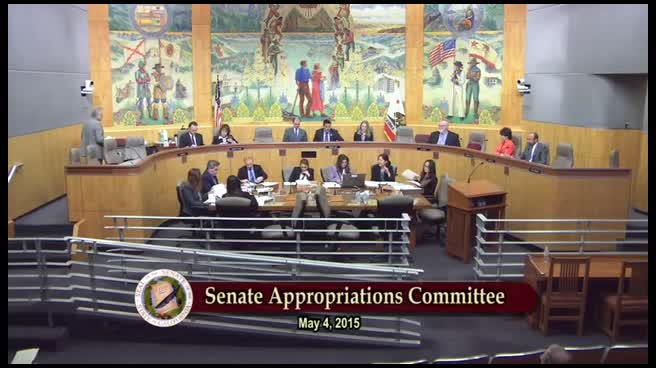 1MIN
Senate Standing Committee on Appropriations
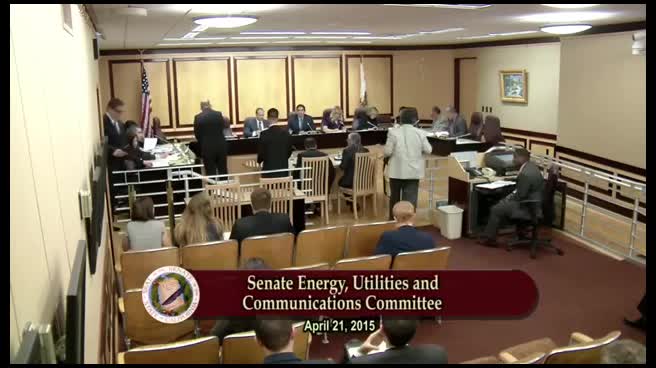 4MIN
Senate Standing Committee on Energy, Utilities and Communications
Bill Author

Bill Co-Author(s):