SB 732: Beverage container recycling.
- Session Year: 2015-2016
- House: Senate
- Latest Version Date: 2015-04-06
Existing law, the California Beverage Container Recycling and Litter Reduction Act, requires that every beverage container sold or offered for sale in this state have a minimum refund value. Existing law imposes specified reporting requirements on certain parties, including manufacturers and processors in connection with the act. Existing
This bill would, on and after January 1, 2017, require every manufacturer of a beverage sold in a plastic beverage container to demonstrate to the Department of Resources Recycling and Recovery that each type of plastic beverage container sold in this state contains, on average, not less than 10 percent postfilled material.
Existing law requires the department to calculate a processing fee and a processing payment for any type of empty beverage container with a refund value less than the cost of recycling in accordance with a specified formula. The department is prohibited from imposing a processing fee on certain plastic beverage containers labeled with a 1 called PET beverage containers, if a willing purchaser offers to purchase empty PET containers at a voluntary artificial scrap value that is equal to the processing fee, as specified.
This bill would delete the provisions prohibiting the department from imposing a processing fee on PET beverage containers for which there is such a willing purchaser.
Existing law requires the department to reduce the processing fee paid by beverage manufacturers based on the recycling rate of the container, subject to specified requirements and the availability of funds.
This bill would prohibit the department from reducing the processing fee requirements for any beverage manufacturer for any beverage container sold in the state unless the beverage manufacturer demonstrates to the department that the beverage container is manufactured at a facility that meets or exceeds a certain percentage of recycled content, regardless of whether the container is manufactured in the state.
Existing law, the California Beverage Container Recycling and Litter Reduction Act, requires that every beverage container sold or offered for sale in this state have a minimum refund value. Existing law requires the department to calculate a processing fee and a processing payment for any type of empty beverage container with a refund value less than the cost of recycling in accordance with a specified formula. The department is prohibited from imposing a processing fee on PET beverage containers if a willing purchaser offers to purchase empty PET containers at a voluntary artificial scrap value that is equal to the processing fee, as specified.
This bill would delete the provisions prohibiting the department from imposing a processing fee on PET beverage containers for which there is such a willing purchaser.
Existing law requires the department to reduce the processing fee paid by beverage manufacturers based on the recycling rate of the container, subject to specified requirements and the availability of funds.
This bill would prohibit the department from reducing the processing fee requirements for any beverage manufacturer for any beverage container sold in the state unless the beverage manufacturer demonstrates to the department that the beverage container is manufactured at a facility that meets or exceeds a certain percentage of recycled content, regardless of whether the container is manufactured in the state.
On and after January 1, 2017, every manufacturer of a beverage sold in a plastic beverage container shall demonstrate to the department that each type of plastic beverage container sold in this state contains, on average, not less than 10 percent postfilled material.
SECTION 1.SEC. 2.Section 14575.1 of the Public Resources Code is repealed.SEC. 2.SEC. 3.Section 14575.1 is added to the Public Resources Code, to read:14575.1.Notwithstanding subdivision (e) of Section 14575, the department shall not reduce the processing fee requirements for any beverage manufacturer for any beverage container sold in this state unless the beverage manufacturer demonstrates to the department that the beverage container is manufactured at a facility that meets or exceeds the percentage of recycled content specified pursuant to Section 14549, regardless of whether the container is manufactured in this state.
(a)Notwithstanding subdivision (b) of Section 14575, if a willing purchaser offers to purchase empty PET containers at a voluntary artificial scrap value that is equal to the processing fee reduced pursuant to subdivision (f) of Section 14575 when applied to all containers sold, no processing fee shall be imposed on PET containers pursuant to Section 14575.
(b)If a willing purchaser offers to pay a voluntary artificial scrap value, the department shall, on a monthly basis, determine whether the sum of the voluntary artificial scrap value and payments made from the PET Processing Fee Account pursuant to subdivision (f) of Section 14575, are equal to, or more than, the recycling cost for empty PET containers determined pursuant to subdivision (d) of Section 14575.
(c)If the department determines that, for any monthly period, the sum of the voluntary artificial scrap value and payments made from the PET Processing Fee Account pursuant to subdivision (f) of Section 14575, is less than the recycling cost for empty PET containers, determined pursuant to Section 14575, the following requirements shall apply:
(1)The department shall immediately provide written notification of the deficiency for that monthly period and the amount of that deficiency to any willing purchaser.
(2)A willing purchaser shall correct the deficiency in the next monthly period by adjusting the voluntary artificial scrap value by an amount sufficient to equal the recycling cost for empty PET containers plus the previous monthly periods deficiency.
(3)If the deficiency and amount in arrears is not corrected within 30 days of providing written notice to willing purchasers of empty PET containers, the department shall impose a processing fee pursuant to Section 14575 which includes any amount necessary, including any amount in arrears, to cover the cost of recycling empty PET containers.
(d)If the department determines that, for any monthly period, the sum of the voluntary artificial scrap value and payments made from the PET Processing Fee Account pursuant to subdivision (f) of Section 14575, is greater than the recycling cost for empty PET containers, the department shall do both of the following:
(1)Immediately provide written notification of the deviation for that monthly period and the amount of that deviation to any willing purchaser.
(2)Provide a credit equal to the amount of the deviation for any future monthly period wherein the voluntary artificial scrap value, and payments made from the PET Processing Fee Account, are less than the recycling cost of empty PET containers determined pursuant to subdivision (d) of Section 14575.
(e)Nothing in this section is intended to affect any litigation that was pending on January 1, 1996, in which the department is a party of record.
SEC. 2.Section 14575.1 is added to the Public Resources Code, to read:14575.1.Notwithstanding subdivision (e) of Section 14575, the department shall not reduce the processing fee requirements for any beverage manufacturer for any beverage container sold in this state unless the beverage manufacturer demonstrates to the department that the beverage container is manufactured at a facility that meets or exceeds the percentage of recycled content specified pursuant to Section 14549, regardless of whether the container is manufactured in this state.
|
Date
|
Status
|
|---|---|
| Feb 27, 2015 | Introduced. To Com. on RLS. for assignment. To print. |
| Mar 2, 2015 | From printer. May be acted upon on or after April 1. |
| Mar 2, 2015 | Read first time. |
| Mar 19, 2015 | Referred to Com. on E.Q. |
| Mar 27, 2015 | Set for hearing April 15. |
| Apr 6, 2015 | From committee with author's amendments. Read second time and amended. Re-referred to Com. on E.Q. |
| Apr 16, 2015 | April 15 set for first hearing. Failed passage in committee. (Ayes 1. Noes 0. Page 650.) Reconsideration granted. |
| Feb 1, 2016 | Returned to Secretary of Senate pursuant to Joint Rule 56. |
|
Date
|
Description
|
Location
|
Votes
|
|
|---|---|---|---|---|
| Apr 15, 2015 | [First] hearing set for [04-15-2015]: Failed passage in Committee. Reconsideration granted | Senate Standing Committee on Environmental Quality |
Passed |
|
| Apr 15, 2015 | Do pass, but first be re-referred to the Committee on [Appropriations] | Senate Standing Committee on Environmental Quality |
Failed |
This list shows positions taken on this bill by organizations on the date displayed, which is linked to the original source.
Positions by individuals are not included.
|
Organization
|
Position
|
Date
|
|---|---|---|
| California Association Of Local Conservation Corps | ** Support | Apr 15, 2015 |
| California League Conservation of Voters | * Indeterminate | Apr 15, 2015 |
| California League Of Conservation Voters | * Support | Apr 15, 2015 |
| California Nevada Beverage Association | * Against | Apr 15, 2015 |
| California Nevada Beverage Association Glass Packaging Institute | ** Against | Apr 15, 2015 |
| Californians Against Waste | * Support | Apr 15, 2015 |
| Cr&R, Inc. | ** Support | Apr 15, 2015 |
| Environment California | ** Support | Apr 15, 2015 |
| Glass Packaging Institute | * Indeterminate | Apr 15, 2015 |
| Inland Empire Disposal Association | ** Support | Apr 15, 2015 |
| Los Angeles County Waste Management Association | ** Support | Apr 15, 2015 |
| Napa Recycling & Waste Services | ** Support | Apr 15, 2015 |
| Owens-Illinois, Inc. | * Indeterminate | Apr 15, 2015 |
| Plastic Recycling Corporation Of California | * Against | Apr 15, 2015 |
| Recology | ** Support | Apr 15, 2015 |
| Solid Waste Association of North America | ** Support | Apr 15, 2015 |
| Solid Waste Association Of Orange County | ** Support | Apr 15, 2015 |
| Strategic Materials, Inc. | ** Support | Apr 15, 2015 |
| Waste Management | ** Support | Apr 15, 2015 |
| Zanker Recycling | ** Support | Apr 15, 2015 |
SB 732 (Pan) Page 8 of 8
SENATE COMMITTEE ON ENVIRONMENTAL QUALITY
Senator Bob Wieckowski, Chair
2015 - 2016 Regular
Bill No: SB 732 Hearing Date: 4/15/2015
Author: |
Pan |
||
Version: |
4/6/2015 |
||
Urgency: |
No |
Fiscal: |
Yes |
Consultant: |
Rebecca Newhouse |
||
Subject: Beverage container recycling
ANALYSIS:
Existing law, under the California Beverage Container Recycling and Litter
Reduction Act (Act):
Requires the Department of Resources, Recovery and Recycling (CalRecycle) to establish a processing payment for a beverage container covered under the program that has a scrap value less than the cost of recycling, to be determined as specified, that is at least equal to the difference between the cost of recycling and the scrap value of the material.
Requires CalRecycle to establish a processing fee to be paid by beverage manufacturers set at specified percentages of the processing payment which are reduced as the container type recycling rate increases. This percentage ranges from 65% of the processing payment for a container type with a recycling rate of 30% or less to 10% of the processing payment for a container type with a recycling rate of greater than 75%.
Prohibits CalRecycle from imposing a processing fee on polyethylene terephthalate (PET) beverage containers if a willing purchaser offers to purchase empty PET containers at a voluntary artificial scrap value that is equal to the processing fee.
Requires every glass manufacturer in the state to use at least 35% of postfilled glass in the manufacturing of their glass food, drink or beverage containers, as specified.
This bill:
Deletes the provisions prohibiting CalRecyle from imposing a processing fee on PET beverage containers for which there is a willing purchaser.
Requires every manufacturer of a beverage sold in any plastic container to demonstrate to CalRecycle that each type of a plastic beverage container sold in this state contains, on average, not less than 10% postfilled material on and after January 1, 2017.
Prohibits CalRecycle from reducing the processing fee requirements for any beverage manufacturer for any beverage sold in the state unless the manufacturer demonstrates to CalRecycle that the container is manufactured at a facility that meets or exceeds a specified percentage of recycled content, regardless of whether the container is manufactured in this state.
Background
Background on the Bottle Bill Program.
The Bottle Bill program is designed to provide consumers with a financial incentive for recycling and to make recycling convenient to consumers. The centerpiece of the Act is the California Redemption Value (CRV). Consumers pay a deposit, the CRV, on each beverage container they purchase. Retailers collect the CRV from consumers when they buy beverages. The dealer retains a small percentage of the deposit for administration and remits the remainder to the distributor, who also retains a small portion for administration before remitting the balance to CalRecycle. When consumers return their empty beverage containers to a recycler (or donate them to a curbside or other program), the deposit is paid back as a refund.
Processing Fees, Payments and Offsets.
The Program requires container manufacturers to internalize the cost of recycling the empty beverage containers they manufacture. If the cost of recycling these materials exceeds the fair market value of the materials (or scrap value), the Department assesses a processing fee on beverage manufacturers that is in turn distributed to recyclers to cover their costs for recycling that material (termed a processing payment). Processing fees are currently assessed on glass, plastic and bimetal beverage containers because their scrap value is not sufficient to cover their recycling costs. Aluminum beverage containers are not assessed a processing fee because the scrap value of aluminum exceeds its recycling costs.
However, the processing fees actually paid by beverage manufacturers are reduced pursuant to a statutory formula that depends, in part, on the recycling rate for that material type. If the recycling rate for a particular material is greater than 75%, the processing fee is reduced to 10% of the processing payment. For recycling rates less than 35%, the processing fee is 65% of the processing payment. Beverage manufacturers pay the processing fees to the Department. The Department distributes the processing payments to processors who, in turn, pass them on in their entirety to recyclers.
The Department offsets the difference between what the beverage manufacturers pay in processing fees and what is paid out to recyclers in processing payment. This subsidy is termed processing fee offsets and comes from unredeemed CRV payments from the fund.
The statute regarding processing fees allows manufacturers to artificially increase the scrap value of polyethylene terephthalate (PET) plastic which would subsequently reduce the total amount of the processing fees they eventually paid. However, processing fee offsets (enacted subsequently) subsidizes the processing fees manufactures pay to a degree that negates the need for manufacturers to artificially prop up scrap prices. SB 732 repeals the provisions from the Act allowing manufacturers to artificially increase the scap value of PET.
Structural Deficit and Department and Auditor’s Recommendations.
Deposits on covered beverage containers are remit to CalRecycle and deposited into the Beverage Container Recycling Fund (Fund). The Fund’s expenditures fit into two primary categories: 1) CRV reimbursements to recyclers and 2) program expenses, including administration, statutorily mandated grant programs, education and outreach, as well as processing fee offsets, are all funded by unredeemed CRV. Higher recycling rates reduce the amount of unredeemed CRV to fund program expenses. With the current structure of the program’s statutory expenditures, the “breakeven” recycling rate where expenditures equal revenues is about 72%. LAO, in their Overview of the Beverage Container Recycling Program from March 12, 2015, reports the recycling rate for the program at 85% and the projected structural deficit for 2015-16 fiscal year at $72 million.
The single largest expenditure category from the fund, after CRV payments, is processing fee offsets, paid to recyclers from unredeemed CRV as processing fee offsets. The LAO projects these payments will exceed $80 million in the next fiscal year.
In early 2014, the Department submitted a budget change proposal for what they termed “phase II” reforms to restructure the program and eliminate the structural deficit. Their proposal eliminated the processing fee offsets, requiring beverage manufacturers to pay fees equal to the processing payment (which, as noted above, is the difference in cost between the cost of recycling and the scrap value of the material). This, in combination with other Fund expenditure reduction measures was projected to have resulted in elimination of the structural deficit. According to the Department in this proposal:
“Processing fees were imposed in California in order to send accurate price signals to consumers and beverage manufacturers regarding the “true” (“internalized”) costs of reusing/recycling a container (“net of the used container’s scrap value”). Without the Processing Fees, beverage dealers and manufacturers would be completely isolated from the costs of recycling since, under the California’s Beverage Container Recycling law, beverage dealers and manufacturers otherwise bear no responsibility for the costs of recycling containers. The advent of the Processing Fee Offsets (paid from unredeemed CRV), which reduce the amount paid by beverage manufacturers, weakened or eliminated the price signals intended by the original Processing Fee. In addition, funds used for the Offsets are not available for other uses. As a result, CalRecycle believes that expenditures for Offsets are both unsustainable and undesirable and proposes a phased elimination of the use of unredeemed CRV to pay for those Offsets.”
Additionally, last year the Joint Legislative Budget Committee requested the State Auditor conduct an audit of the Bottle Bill program. Their audit report, released in November 2014, noted the following:
“A variety of revenue enhancements and expenditure reductions are available that we believe the Legislature may want to consider. For example, the most financially significant proposal is reducing or eliminating the State’s subsidies to beverage manufacturers and requiring them to pay the full cost of processing fees. State law requires beverage manufacturers to pay a processing fee, which the State then uses to make processing payments to recycling centers (and other entities) to encourage them to recycle certain beverage containers, such as glass and plastic; however, the beverage program currently subsidizes more than half of these processing fees. By requiring beverage manufactures to pay the full cost of the processing fee, the beverage program could collect additional revenue ranging between $60 million and $80 million annually.”
Comments
Purpose of Bill.
According to the author, “This measure is aimed at updating and creating a dual purpose of the Bottle Bill’s existing collection incentives to support increased utilization of recycled materials in manufacturing. The bill requires manufacturers of specified beverage containers to demonstrate their containers meet or exceed the recycled content provisions specified in Public Resources Code Section 14549, as a condition of qualifying for a reduction in recycling fees mandated under the Bottle Bill.
“Drastic drops in oil prices have had the effect of undermining the demand and price for California-generated recycled materials—California recycled material processors and recycled product makers are starting to lose market share to out of state/country ‘virgin’ producers, especially in the PET plastic market.
“As for glass, there is an environmental benefit for increased use of recycled content. For every 1% increase in recycled content, there is a 1% decrease in GHG emissions at factories, as well as reductions in mining and processing virgin inputs.
“California glass container manufacturing facilities produce 1.2 million tons of glass bottles and employ about 2600 workers, down from more than 3,000 workers in 2001. Californians consume about 1.6 billion tons of glass containers. Many of California’s former glass container manufacturing jobs have moved to Mexico and overseas.
“This bill is needed because it will help incentivize increased utilization of recycled materials in manufacturing and protect California’s 125,000 recycling-related jobs during a time of market instability.”
Recycled Content of 10, 25, or 35%?
The bill requires beverage manufacturers to demonstrate to CalRecycle that the beverage container is manufactured at a facility that meets or exceeds the percentage of recycled content specified in another section of the code. The section that is referenced requires a recycled content in glass beverage containers manufactured in the state to have at least a 35% recycled content, or 25% if they are using mixed-color cullet.
It is unclear whether SB 732 is referring to the 35%, or the 25% value, both referenced in the section.
Additionally, it is unclear whether the bill also requires plastic beverage containers to meet the 35 or 25% value to qualify for reduced processing fees, since the bill’s language refers to “any beverage manufacturer for any beverage container sold in this state.” This is further confused by the requirement in a separate section of the bill that manufactures of beverages in plastic containers demonstrate that their plastic beverage containers have no less than 10% recycled content.
According to the author, and the sponsor, the intent of the bill is to require 10% recycled content for plastic beverage containers, in order for beverage manufacturers of plastic beverage containers to qualify for reduced processing fees.
If the committee feels this bill is necessary, these percentage requirements should be clarified as the bill moves forward.
Policy Considerations.
Where to set the threshold? CalRecycle estimates the average recycled content for glass beverage containers is about 50%. Current law requires in-state glass manufacturers to achieve a 35% recycled content level for glass packaging. SB 732 requires that all beverages sold in the state, whether or not manufactured in California, meet that 35% (or 25%) value in order to qualify for reduced processing fees. The author notes that some companies import beverage containers that have substantially less recycled content. However, it is unclear what the average recycled content is for glass beverage containers manufactured out of state.
For plastic containers, it is not clear what the average recycled content is for plastic containers manufactured in state and out of state. Depending on the beverage manufacturer, there is a range of recycled content for PET packaging. For example, Coca Cola uses on average 6% recycled content for their PET packaging, Pepsi Co reports they are at 10% for beverage containers, and Nestle states that five of their brands use anywhere from 50 to 100% recycled PET content in their packaging.
As plastic recycled content values for PET containers vary significantly, and the level of recycled content in other types of plastic beverage containers is unknown, it is unclear whether 10% recycled content for plastic beverage containers is an appropriate value to make significant gains from the status quo of recycled content in plastics. Will this level of recycled content help bolster in-state recycling markets?
Enforcement is Costly. The bill ties reduced processing fees for beverage manufacturers to recycled minimum content requirements for any beverage container sold in the state. Beverage containers sold in the state may be manufactured all over the world. It is likely that ensuring the requirements of SB 732 are met will involve significant administrative costs. These potential costs are especially salient in light of the program’s structural deficit projected at $72 million for the next fiscal year.
Processing Fee Offsets Concerns. As noted in the background, both CalRecycle and BSA have proposed eliminating the processing fee offset to increase sustainability of the Fund. CalRecycle also believes the offsets weakens price signals intended to encourage beverage manufacturers to use materials that are more readily recyclable.
Is it appropriate to set up a structure reinforcing processing fee offsets when it is likely that the program, and processing fee offsets, as one of the largest Fund expenditures, will likely undergo some large-scale restructuring to address the Fund’s structural deficit?
SB 732 would require significantly increased administrative and enforcement burden, for a program that already has a structural deficit, to ensure a level of recycled content in beverage containers that may or may not significantly encourage in-state recycling markets or provide real benefits in recycling beyond the status quo. Additionally, by linking minimum recycled content to processing fee offsets, SB 732 bolsters the current structure of the program, considered by many to be untenable, where unredeemed CRV offsets shield the full cost of recycling from beverage manufacturers.
The Committee may wish to consider whether the bill is structured to achieve the author’s goals and therefore warrants (1) the significant expense and (2) the use processing fee offsets as incentives to achieve those goals.
SOURCE:
Californians Against Waste
SUPPORT:
California Association of Local Conservation Corps
California League of Conservation Voters
CR&R
Environment California
Inland Empire Disposal Association
Los Angeles County Waste Management Association
Napa Recycling & Waste Services
Recology
Solid Waste Association of North America
Solid Waste Association of Orange County
Strategic Materials, Inc.
Verdeco Recycling, Inc.
Waste Management
Zanker Recycling
OPPOSITION:
California Nevada Beverage Association
Glass Packaging Institute
ARGUMENTS IN SUPPORT:
Supporters notes that the bill would ensure more used glass and plastic beverage containers are recycled into new containers in a closed-loop system, instead of ending up in domestic landfills or being exported with unknown outcomes. Supporters also note that the bill would lead to significant reductions in greenhouse gas emissions, energy use and pollution associated with the mining and processing of virgin materials, and that while incentives in the bottle bill program have succeeded in achieving a 75% collection rate of used beverage containers, there are no effective incentives encouraging the actual recycling and utilization of those beverage containers.
ARGUMENTS IN OPPOSITION:
The Glass Packaging Institute states, among other opposition arguments, that the current processing fee relief was carefully negotiated and has helped lead to high recycling rates and that minimum recycled content is a separate issue . They also state that California glass container manufacturers are already using as much quality cullet as possible.
Among other concerns, the California Nevada Beverage Association states that the bill’s recycled content mandates raises serious logistical questions and federal commerce clause questions, and that ensuring compliance is incredibly complex for multi-facility in-state beverage manufactures. They also note significant health and safety issues regarding the use of recycled content in food grade containers.
-- END --
Discussed in Hearing
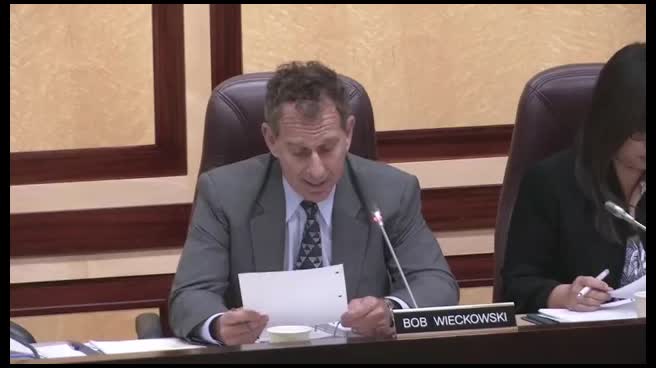 43MIN
Senate Standing Committee on Environmental Quality
Bill Author

Bill Co-Author(s):