SB 890: Sales and use taxes: no-tax weekends: firearms, ammunition, and hunting supplies.
- Session Year: 2015-2016
- House: Senate
- Latest Version Date: 2016-04-05
Existing sales and use tax laws impose taxes on retailers measured by the gross receipts from the sale of tangible personal property sold at retail in this state, or on the storage, use, or other consumption in this state of tangible personal property purchased from a retailer for storage, use, or other consumption in this state, and provides various exemptions from the taxes imposed by those laws. The Bradley-Burns Uniform Local Sales and Use Tax Law authorizes cities and counties to impose local sales and use taxes in conformity with the Sales and Use Tax Law, and existing law authorizes districts, as specified, to impose transactions and use taxes in accordance with the Transactions and Use Tax Law, which conforms generally to the Sales and Use Tax Law. Exemptions from state sales and use taxes are incorporated into these laws.
This bill would exempt from those taxes the gross receipts from the sale of, and the storage, use, or other consumption in this state of, firearms, ammunition, and hunting supplies purchased by an individual in the 2-day period beginning at 12:01 a.m. on the first Saturday in September and ending at midnight the next day and the 2-day period beginning at 12:01 a.m. on the first Saturday in October and ending at midnight the next day, as provided. The bill would specify that this exemption does not apply to local sales and use taxes and transactions and use taxes, and specified state sales and use taxes the proceeds of which are deposited into the Local Revenue Fund, the Local Revenue Fund 2011, the Local Public Safety Fund, and the Education Protection Account.
This bill would take effect immediately as a tax levy.
Existing law establishes a standard form for fire insurance policies in this state. Existing law requires that all fire insurance policies in California be on the standard form, with no additions to that form, except as provided. Existing law prohibits any part of the standard form from being omitted from the policy, except as specified.
This bill would make technical, nonsubstantive changes to that provision.
Existing law establishes a standard form for fire insurance policies in this state. Existing law requires that all fire insurance policies in California be on the standard form, with no additions to that form, except as provided. Existing law prohibits any part of the standard form from being omitted from the policy, except as specified.
This bill would make technical, nonsubstantive changes to that provision.
(a)There are exempted from the taxes imposed by this part the gross receipts from the sale of, and the storage and use of, or other consumption in this state of, firearms, ammunition, and hunting supplies purchased by an individual in the two-day period beginning at 12:01 a.m. on the first Saturday in September and ending at midnight the next day and the two-day period beginning at 12:01 a.m. on the first Saturday in October and ending at midnight the next day who, at the time of the purchase, provides the retailer with a copy of his or her valid annual hunting license or lifetime license issued pursuant to Article 2 (commencing with Section 3031) of Chapter 1 of Part 1 of Division 4, or a lifetime sportmans license issued pursuant to Section 714 of, the Fish and Game Code.
(b)For the purposes of this section, the following shall apply:
(1)Firearms mean shotguns, rifles, pistols, revolvers, or other handguns that may be legally sold or purchased in California.
(2)Ammunition means that ammunition designed and intended to be fired from a firearm.
(3)Hunting supplies means only those supplies used for and designed and intended for hunting, which include all of the following:
(A)Archery items such as bows, crossbows, arrows, quivers, and shafts.
(B)Off-road vehicles including all-terrain vehicles designed and intended primarily for hunting. Off-road vehicles do not include golf carts, go-carts, dirt bikes, mini-bikes, motorcycles, tractors, or motor vehicles that may be legally driven on the streets and highways of California, or heavy equipment such as cranes, forklifts, backhoes, and bulldozers.
(C)Vessels designed and intended for hunting such as airboats and pirogues.
(D)Accessories designed and intended for hunting.
(E)Animal feed manufactured and marketed for consumption primarily by game that can be legally hunted. Animal feed does not include food for animals that are pets.
(F)Apparel including safety gear, camouflage clothing, jackets, hats, gloves, mittens, face masks, and thermal underwear manufactured and marketed as being primarily for wear or use while hunting.
(G)Hunting shoes or boots designed and intended for hunting.
(H)Bags designed and intended to carry game or hunting gear.
(I)Float tubes if purchased to be used for hunting.
(J)Binoculars if purchased to be used for hunting.
(K)Tools manufactured and marketed as primarily for use in hunting.
(L)Firearm and archery cases.
(M)Firearm and archery accessories.
(N)Range finders.
(O)Knives manufactured and marketed as primarily for use in hunting, which does not include knives purchased for household, business, or other recreational uses.
(P)Decoys.
(Q)Tree stands.
(R)Blinds.
(S)Chairs to be used for hunting, which does not include chairs or other furniture purchased for household, business, or other recreational uses.
(T)Optics such as rifle scopes and impact resistant glasses for shooting.
(U)Hearing protection gear and enhancements.
(V)Holsters.
(W)Belts that are manufactured and marketed as primarily for use in hunting.
(X)Slings.
(Y)Other miscellaneous gear manufactured and marketed as primarily for use in hunting, which does not include toy guns and vessels and off-road vehicles utilized as childrens toys.
(c)(1)Notwithstanding any provision of the Bradley-Burns Uniform Local Sales and Use Tax Law (Part 1.5 (commencing with Section 7200)) or the Transactions and Use Tax Law (Part 1.6 (commencing with Section 7251)), the exemption established by this section does not apply with respect to any tax levied by a county, city, or district pursuant to, or in accordance with, either of those laws.
(2)Notwithstanding subdivision (a), the exemption established by this section shall not apply with respect to any tax levied pursuant to Section 6051.2 or 6201.2, Section 35 and subdivision (f) of Section 36 of Article XIII of the California Constitution, or any tax levied pursuant to Section 6051 or 6201 that is deposited in the State Treasury to the credit of the Local Revenue Fund 2011 pursuant to Section 6051.15 or 6201.15.
SEC. 2.This act provides for a tax levy within the meaning of Article IV of the Constitution and shall go into immediate effect.
SECTION 1.Section 2070 of the Insurance Code is amended to read:2070.(a)All fire policies on subject matter in California shall be on the standard form and, except as provided by this article, shall not contain additions to the form.
(b)No part of the standard form shall be omitted from the policy. However, a policy providing coverage against the peril of fire only, or in combination with coverage against other perils, need not comply with the provisions of the standard form of fire insurance policy or Section 2080, if the coverage with respect to the peril of fire, when viewed in its entirety, is substantially equivalent to, or more favorable to the insured than, that contained in the standard form fire insurance policy.
(a)All fire policies on subject matter in California shall be on the standard form, form and, except as provided by this article article, shall not contain additions thereto. No to the form.
(b)No part of the standard form shall be omitted therefrom except that any from the policy. However, a policy providing coverage against the peril of fire only, or in combination with coverage against other perils, need not comply with the provisions of the standard form of fire insurance policy or Section 2080; provided, that 2080, if the coverage with respect to the peril of fire, when viewed in its entirety, is substantially equivalent to to, or more favorable to the insured than than, that contained in such the standard form fire insurance policy.
|
Date
|
Status
|
|---|---|
| Jan 20, 2016 | Introduced. Read first time. To Com. on RLS. for assignment. To print. |
| Jan 21, 2016 | From printer. May be acted upon on or after February 20. |
| Jan 28, 2016 | Referred to Com. on RLS. |
| Apr 5, 2016 | From committee with author's amendments. Read second time and amended. Re-referred to Com. on RLS. |
| Apr 7, 2016 | Re-referred to Com. on GOV. & F. |
| Apr 8, 2016 | Set for hearing April 27. |
| Apr 27, 2016 | April 27 set for first hearing. Failed passage in committee. (Ayes 2. Noes 2. Page 3698.) Reconsideration granted. |
| Apr 27, 2016 | April 27 set for first hearing. Failed passage in committee. (Ayes 2. Noes 2.) Reconsideration granted. |
| Apr 28, 2016 | (Vote only). |
| Apr 28, 2016 | Set for hearing May 4. |
| May 3, 2016 | May 4 set for first hearing canceled at the request of author. |
|
Date
|
Description
|
Location
|
Votes
|
|
|---|---|---|---|---|
| Apr 27, 2016 | [First] hearing set for [04-27-2016]: Failed passage in Committee. Reconsideration granted | Senate Standing Committee on Governance and Finance |
Passed |
|
| Apr 27, 2016 | Do pass, but first be re-referred to the Committee on [Appropriations] | Senate Standing Committee on Governance and Finance |
Failed |
This list shows positions taken on this bill by organizations on the date displayed, which is linked to the original source.
Positions by individuals are not included.
|
Organization
|
Position
|
Date
|
|---|---|---|
| California Rifle And Pistol Association, Inc. | * Support | Apr 27, 2016 |
| California Waterfowl Association | * Support | Apr 27, 2016 |
SENATE COMMITTEE ON GOVERNANCE AND FINANCE
Senator Robert M. Hertzberg, Chair
2015 - 2016 Regular
Bill No: | SB 890 | Hearing Date: | 5/4/16 |
Author: | Gaines | Tax Levy: | Yes |
Version: | 4/5/16 | Fiscal: | Yes |
Consultant: | Grinnell | ||
Sales and use taxes: no-tax weekends: firearms, ammunition, and hunting supplies
Enacts a “sales and use tax holiday” for firearms, ammunition, and hunting supplies for two two-day periods.
Background
State law imposes the sales tax on every retailer engaged in business in this state that sells tangible personal property, and requires them to collect the appropriate tax from the purchase and remit the amount to the Board of Equalization (BOE). Sales tax applies whenever a retail sale is made, which is basically any sale other than one for resale in the regular course of business. Unless the person pays the sales tax to the retailer, he or she is liable for the use tax, which is imposed on any person consuming tangible personal property in the state. The use tax rate is the same rate as the sales tax rate, and must be remitted on or before the last day of the month following the quarterly period in which the person made the purchase. The current rate is 7.50%, but beginning January 1, 2017, the sales and use tax rate decreases to 7.25% (Proposition 30, 2012. The rate breakdown is detailed below). Additionally, cities and counties may increase the sales and use tax rate up to 2% for either specific or general purposes pursuant to the California Constitution’s vote requirements.
Rate | Jurisdiction | Purpose/Authority | |
|---|---|---|---|
3.9375% | State (General Fund) | State general purposes | |
1.0625% |
| Realignment of local public safety services | |
0.50% | State (Local Revenue Fund) | Local governments to fund health and welfare programs | |
0.50% | State (Local Public Safety Fund) | Local governments to fund public safety services | |
1.25% | Local (City/County) 1.00% City and County | City and county general operations. Dedicated to county transportation purposes | |
7.25% | Total Statewide Rate |
Many items are fully exempted from the sales and use tax in this state (prescription drugs, food, poultry litter), while others are exempted from the state sales tax, but not the local share, such as farm equipment and machinery, diesel fuel used for farming and food processing, teleproduction and postproduction equipment, timber harvesting equipment and machinery, and racehorse breeding stock.
Proposed Law
Senate Bill 890 enacts a sales and use tax exemption from the state share (3.9375%), but not the local, for firearms, ammunition, and hunting supplies, purchased during two two-day periods, set as:
- From 12:01 am on the first Saturday in September and ending on midnight the next day.
- From 12:01 am on the first Saturday in October, and ending on midnight the next day.
To claim the exemption, a purchaser must present a copy of his or her valid hunting license issued under specified provisions of the Fish and Game Code.
The measure defines its terms, including:
- “Firearm” as a shotgun, rifle, pistol, revolver, or other handgun that may be legally sold or purchased in the state.
- “Ammunition” means that ammunition designed and intended to be fired from a firearm.
- “Hunting supplies” include:
- Archery items,
- Off-road vehicles including all-terrain vehicles designed and intended primarily for hunting, but not golf carts, go-carts, dirt bikes, mini-bikes, motorcycles, tractors, motor vehicles that may be legally driven on California’s streets and highways, or heavy equipment, as defined,
- Vessels designed and intended for hunting such as airboats and pirogues,
- Accessories designed and intended for hunting,
- Animal feed manufactured and marketed for consumption by game that can be legally hunted, but not pet food,
- Apparel, such as safety gear, camouflage coating, jackets, hats, gloves, mittens, face masks, and thermal underwear manufactured and marketed as being primarily for wear or use while hunting,
- Hunting shoes or boots designed and intended for hunting,
- Bags designed and intended to carry game or hunting gear,
- Float tubes if purchased to be used in hunting,
- Binoculars if purchased to be used in hunting,
- Tools manufactured and marketed as primarily for use in hunting,
- Firearm and archery accessories and cases,
- Range Finders,
- Knives manufactured and marketed as primarily for use in hunting, but not knives purchased for household, business, or other recreational uses,
- Decoys, tree stands, and blinds,
- Chairs to be used for hunting, but not ones used for household, business, or other recreational uses,
- Optics such as rifle scopes and impact resistant glasses for shooting,
- Optics such as rifle scopes and impact resistant glasses for shooting,
- Hearing protection gear and enhancements,
- Holsters, belts that are primarily used in hunting, and slings, and
- Other miscellaneous hunting gear manufactured and marketed as primarily for use in hunting, but not toy guns, vessels, and off-road vehicles utilized as children’s toys.
As a tax levy, the measure would take effect immediately.
State Revenue Impact
According to BOE, SB 890 results in revenue losses of $363,000 annually.
Comments
1. Purpose of the bill. According to the author, “Hunting has a rich and meaningful history in California. Hunting trips provide opportunities for relaxation, quality time with friends, family bonding, and respect for the outdoors for many of California’s citizens. Additionally, for many rural parts of our state, hunting season creates essential revenue for otherwise often financially depressed areas. Senate Bill 890 would encourage our citizens to enjoy the beauty that California is internationally known for and increase tourism in areas which desperately need an economic boost to recover from the recent recession. This tax-free weekend would be a boon to sporting goods stores, outfitters, as well as the hotels, gas stations, restaurants and myriad other businesses which benefit from the hunting economy. In addition, by exempting sales and use tax preceding the start of two popular hunting seasons, Senate Bill 890 would encourage annual hunters to purchase more while drawing new hunters to the activity, creating new tourists and new state revenue from hunting licenses.”
2. Will it work? Tax benefits directed at specific products do two things: First, they reward behavior that would have occurred without the subsidy, so-called “deadweight loss.” Some taxpayers will buy guns, ammunition, and hunting supplies for hunting season without any incentive, so the bill will give these taxpayers a windfall benefit equal to the sales tax not paid, providing no marginal benefit. Second, the bill may alter consumer decisions at the margin; the incentive of not paying sales tax may spur a taxpayer to purchase more of these items than they otherwise would have, triggering increased consumption, and sales for the retailer. A successful tax incentive causes more economic activity at the margin than its deadweight loss, but no tax credit has yet conclusively demonstrated that its benefits outweigh its costs. Another possible outcome for this bill is for retailers to raise prices of firearms, ammunition, and hunting supplies while marketing the incentive, leaving consumers no better off, which basically transfers revenue from the state to retailers. The Committee may wish to consider how much additional economic activity SB 890 will spur versus its deadweight loss, and whether retailers may increase prices to pocket the difference.
3. One big holiday. Although California has never offered a sales tax holiday, up to 14 other states do, mostly for clothing and school supplies. Studies find that taxpayers simply shift the timing of purchases to take advantage of holidays without an overall increase in sales, holidays mislead consumers about savings, and are costly and confusing for retailers.[1] Another study didn’t find any shifting, instead showing increased consumption, but found that sales tax holidays only benefit wealthier families.[2] The Committee may wish to consider the merits of establishing sales tax holidays.
4. Burden on retailers. Sales tax holidays create complexities for tax code compliance. Specifically, creating a sales tax exemption that only lasts for two days would place an additional burden on retailers to program their cash registers to exempt certain products on certain dates. This may require retailers to incur costs to accommodate the change; however, increased sales activity during this period could potentially offset those costs. Additionally, under current law, when merchandise is exchanged, the law considers the transaction as two separate transactions: (1) a rescission of the original sale and (2) a separate sale of the replacement merchandise. For example, if a customer purchases a rifle and exchanges it for a pistol, the transaction is regarded under the law as a separate sale of the pistol and a rescission of the original sale of the rifle. To report the correct amount of tax, the retailer may deduct the sales price of the rifle from taxable sales, and must include the sales price of the pistol. Under the proposed holiday period, if the same rifle is purchased during the sales tax holiday period and exchanged for the pistol after the holiday period, the proposed exemption would not apply to the exchange; the law recognizes that transaction as occurring after the exempt holiday period. This complexity may lead to retailer reporting errors. Rain checks could also create confusion. Current law provides that a retailer-issued rain check does not constitute a sale of tangible personal property. Therefore, the exemption would not apply when a retailer issues a rain check to the customer for an out of stock item during the holiday period and the customer uses the rain check to purchase the item after the proposed holiday period.
5. New tax expenditure. Enacting a new tax exemption results in foregone revenue, which requires cuts in spending or higher taxes, all else equal. Tax credits do not pay for themselves: the state’s last effort of “dynamic revenue analysis” indicates that while dynamic effects are definitely present and visible, their effects are generally relatively modest.[3] The Committee may wish to consider whether the benefits resulting from this incentive are worth the tradeoff of cuts in spending or taxes on other activities.
6. Consistent? California has been one of the nation’s leaders in enacting legislation intended to prevent gun violence, putting in place many laws that seek to reduce death and injury that where firearms are involved. According to the 2007 Small Arms Survey, there are already 88.8 guns per 100 American, and data from the University of Sydney shows that America’s rate of 3.54 firearm homicides per 100,000 people is more than three times that of any other nation. A recent American Journal of Medicine study states Americans are 10 times more likely to be killed with a gun than citizens of any other nation. SB 890’s sales tax holiday seeks to increase firearm and ammunition purchases in the state by allowing a sales and use tax exemption during two two-day periods. While the bill requires a purchaser to show a hunting license to avoid the sales tax, possessing a license doesn’t necessarily mean the gun will be used to hunt. The Committee may wish to consider the merits of enacting tax exemptions intended to increase firearm purchases given the state’s efforts to reduce firearm violence.
7. Vague terms. SB 890 allows sales and use tax exemptions for specified purchases of firearms, ammunition, and hunting supplies during two two-day periods, and applies to a broad set of items that can be used in hunting, but could also be used for many other activities. The measure restricts many of its exempt items by setting use and intention standards; however, these restrictions don’t apply to all possible exempt items, the terms vary considerably, and require the purchaser or seller to know at purchase that an item was designed, manufactured, or marketed in a specific way, or will be used, or primarily used, for hunting to be exempt. The bill’s standards also vary considerably. The measure uses all of the following restrictions: “used for and designed and intended for hunting,” “designed and intended for hunting,” “designed and intended primarily for hunting,” “manufactured and marketed as being primarily for wear use in hunting,” “if purchased to be use in hunting,” “primarily for use in hunting,” and “manufactured and marketed as primarily for use in hunting.” Vague and inconsistent terms could lead to inconsistent application throughout the state, and disagreements between purchasers, retailers, and BOE.
Support and Opposition
(4/28/16)
Support: California Rifle and Pistol Association, California Sportsman’s Lobby, California Waterfowl Association, National Shooting Sports Foundation, Outdoor Sportsmen’s Coalition of California, Safari Club International, Safari Club International Foundation.
Opposition: California Tax Reform Association.
-- END --
“Sales Tax Holidays: Politically Expedient but Poor Tax Policy” Tax Foundation, July, 2013. ↑
“The Effect of Sales Tax Holidays on Household Consumption Patterns.” Federal Reserve Bank of Chicago, July, 2010. ↑
“Whatever Happened to Dynamic Revenue Analysis in California?” John David Vasche, prepared for the Federation of Tax Administrators, September, 2006. ↑
SENATE COMMITTEE ON GOVERNANCE AND FINANCE
Senator Robert M. Hertzberg, Chair
2015 - 2016 Regular
Bill No: | SB 890 | Hearing Date: | 4/27/16 |
Author: | Gaines | Tax Levy: | Yes |
Version: | 4/5/16 | Fiscal: | Yes |
Consultant: | Grinnell | ||
Sales and use taxes: no-tax weekends: firearms, ammunition, and hunting supplies
Enacts a “sales and use tax holiday” for firearms, ammunition, and hunting supplies for two two-day periods.
Background
State law imposes the sales tax on every retailer engaged in business in this state that sells tangible personal property, and requires them to collect the appropriate tax from the purchase and remit the amount to the Board of Equalization (BOE). Sales tax applies whenever a retail sale is made, which is basically any sale other than one for resale in the regular course of business. Unless the person pays the sales tax to the retailer, he or she is liable for the use tax, which is imposed on any person consuming tangible personal property in the state. The use tax rate is the same rate as the sales tax rate, and must be remitted on or before the last day of the month following the quarterly period in which the person made the purchase. The current rate is 7.50%, but beginning January 1, 2017, the sales and use tax rate decreases to 7.25% (Proposition 30, 2012. The rate breakdown is detailed below). Additionally, cities and counties may increase the sales and use tax rate up to 2% for either specific or general purposes pursuant to the California Constitution’s vote requirements.
Rate | Jurisdiction | Purpose/Authority | |
|---|---|---|---|
3.9375% | State (General Fund) | State general purposes | |
1.0625% |
| Realignment of local public safety services | |
0.50% | State (Local Revenue Fund) | Local governments to fund health and welfare programs | |
0.50% | State (Local Public Safety Fund) | Local governments to fund public safety services | |
1.25% | Local (City/County) 1.00% City and County | City and county general operations. Dedicated to county transportation purposes | |
7.25% | Total Statewide Rate |
Many items are fully exempted from the sales and use tax in this state (prescription drugs, food, poultry litter), while others are exempted from the state sales tax, but not the local share, such as farm equipment and machinery, diesel fuel used for farming and food processing, teleproduction and postproduction equipment, timber harvesting equipment and machinery, and racehorse breeding stock.
Proposed Law
Senate Bill 890 enacts a sales and use tax exemption from the state share (3.9375%), but not the local, for firearms, ammunition, and hunting supplies, purchased during two two-day periods, set as:
- From 12:01 am on the first Saturday in September and ending on midnight the next day.
- From 12:01 am on the first Saturday in October, and ending on midnight the next day.
To claim the exemption, a purchaser must present a copy of his or her valid hunting license issued under specified provisions of the Fish and Game Code.
The measure defines its terms, including:
- “Firearm” as a shotgun, rifle, pistol, revolver, or other handgun that may be legally sold or purchased in the state.
- “Ammunition” means that ammunition designed and intended to be fired from a firearm.
- “Hunting supplies” include:
- Archery items,
- Off-road vehicles including all-terrain vehicles designed and intended primarily for hunting, but not golf carts, go-carts, dirt bikes, mini-bikes, motorcycles, tractors, motor vehicles that may be legally driven on California’s streets and highways, or heavy equipment, as defined,
- Vessels designed and intended for hunting such as airboats and pirogues,
- Accessories designed and intended for hunting,
- Animal feed manufactured and marketed for consumption by game that can be legally hunted, but not pet food,
- Apparel, such as safety gear, camouflage coating, jackets, hats, gloves, mittens, face masks, and thermal underwear manufactured and marketed as being primarily for wear or use while hunting,
- Hunting shoes or boots designed and intended for hunting,
- Bags designed and intended to carry game or hunting gear,
- Float tubes if purchased to be used in hunting,
- Binoculars if purchased to be used in hunting,
- Tools manufactured and marketed as primarily for use in hunting,
- Firearm and archery accessories and cases,
- Range Finders,
- Knives manufactured and marketed as primarily for use in hunting, but not knives purchased for household, business, or other recreational uses,
- Decoys, tree stands, and blinds,
- Chairs to be used for hunting, but not ones used for household, business, or other recreational uses,
- Optics such as rifle scopes and impact resistant glasses for shooting,
- Hearing protection gear and enhancements,
- Holsters, belts that are primarily used in hunting, and slings, and
- Other miscellaneous hunting gear manufactured and marketed as primarily for use in hunting, but not toy guns, vessels, and off-road vehicles utilized as children’s toys.
As a tax levy, the measure would take effect immediately.
State Revenue Impact
According to BOE, SB 890 results in revenue losses of $363,000 annually.
Comments
1. Purpose of the bill. According to the author, “Hunting has a rich and meaningful history in California. Hunting trips provide opportunities for relaxation, quality time with friends, family bonding, and respect for the outdoors for many of California’s citizens. Additionally, for many rural parts of our state, hunting season creates essential revenue for otherwise often financially depressed areas. Senate Bill 890 would encourage our citizens to enjoy the beauty that California is internationally known for and increase tourism in areas which desperately need an economic boost to recover from the recent recession. This tax-free weekend would be a boon to sporting goods stores, outfitters, as well as the hotels, gas stations, restaurants and myriad other businesses which benefit from the hunting economy. In addition, by exempting sales and use tax preceding the start of two popular hunting seasons, Senate Bill 890 would encourage annual hunters to purchase more while drawing new hunters to the activity, creating new tourists and new state revenue from hunting licenses.”
2. Will it work? Tax benefits directed at specific products do two things: First, they reward behavior that would have occurred without the subsidy, so-called “deadweight loss.” Some taxpayers will buy guns, ammunition, and hunting supplies for hunting season without any incentive, so the bill will give these taxpayers a windfall benefit equal to the sales tax not paid, providing no marginal benefit. Second, the bill may alter consumer decisions at the margin; the incentive of not paying sales tax may spur a taxpayer to purchase more of these items than they otherwise would have, triggering increased consumption, and sales for the retailer. A successful tax incentive causes more economic activity at the margin than its deadweight loss, but no tax credit has yet conclusively demonstrated that its benefits outweigh its costs. Another possible outcome for this bill is for retailers to raise prices of firearms, ammunition, and hunting supplies while marketing the incentive, leaving consumers no better off, which basically transfers revenue from the state to retailers. The Committee may wish to consider how much additional economic activity SB 890 will spur versus its deadweight loss, and whether retailers may increase prices to pocket the difference.
3. One big holiday. Although California has never offered a sales tax holiday, up to 14 other states do, mostly for clothing and school supplies. Studies find that taxpayers simply shift the timing of purchases to take advantage of holidays without an overall increase in sales, holidays mislead consumers about savings, and are costly and confusing for retailers.[1] Another study didn’t find any shifting, instead showing increased consumption, but found that sales tax holidays only benefit wealthier families.[2] The Committee may wish to consider the merits of establishing sales tax holidays.
4. Burden on retailers. Sales tax holidays create complexities for tax code compliance. Specifically, creating a sales tax exemption that only lasts for two days would place an additional burden on retailers to program their cash registers to exempt certain products on certain dates. This may require retailers to incur costs to accommodate the change; however, increased sales activity during this period could potentially offset those costs. Additionally, under current law, when merchandise is exchanged, the law considers the transaction as two separate transactions: (1) a rescission of the original sale and (2) a separate sale of the replacement merchandise. For example, if a customer purchases a rifle and exchanges it for a pistol, the transaction is regarded under the law as a separate sale of the pistol and a rescission of the original sale of the rifle. To report the correct amount of tax, the retailer may deduct the sales price of the rifle from taxable sales, and must include the sales price of the pistol. Under the proposed holiday period, if the same rifle is purchased during the sales tax holiday period and exchanged for the pistol after the holiday period, the proposed exemption would not apply to the exchange; the law recognizes that transaction as occurring after the exempt holiday period. This complexity may lead to retailer reporting errors. Rain checks could also create confusion. Current law provides that a retailer-issued rain check does not constitute a sale of tangible personal property. Therefore, the exemption would not apply when a retailer issues a rain check to the customer for an out of stock item during the holiday period and the customer uses the rain check to purchase the item after the proposed holiday period.
5. New tax expenditure. Enacting a new tax exemption results in foregone revenue, which requires cuts in spending or higher taxes, all else equal. Tax credits do not pay for themselves: the state’s last effort of “dynamic revenue analysis” indicates that while dynamic effects are definitely present and visible, their effects are generally relatively modest.[3] The Committee may wish to consider whether the benefits resulting from this incentive are worth the tradeoff of cuts in spending or taxes on other activities.
6. Consistent? California has been one of the nation’s leaders in enacting legislation intended to prevent gun violence, putting in place many laws that seek to reduce death and injury that where firearms are involved. According to the 2007 Small Arms Survey, there are already 88.8 guns per 100 American, and data from the University of Sydney shows that America’s rate of 3.54 firearm homicides per 100,000 people is more than three times that of any other nation. A recent American Journal of Medicine study states Americans are 10 times more likely to be killed with a gun than citizens of any other nation. SB 890’s sales tax holiday seeks to increase firearm and ammunition purchases in the state by allowing a sales and use tax exemption during two two-day periods. While the bill requires a purchaser to show a hunting license to avoid the sales tax, possessing a license doesn’t necessarily mean the gun will be used to hunt. The Committee may wish to consider the merits of enacting tax exemptions intended to increase firearm purchases given the state’s efforts to reduce firearm violence.
7. Vague terms. SB 890 allows sales and use tax exemptions for specified purchases of firearms, ammunition, and hunting supplies during two two-day periods, and applies to a broad set of items that can be used in hunting, but could also be used for many other activities. The measure restricts many of its exempt items by setting use and intention standards; however, these restrictions don’t apply to all possible exempt items, the terms vary considerably, and require the purchaser or seller to know at purchase that an item was designed, manufactured, or marketed in a specific way, or will be used, or primarily used, for hunting to be exempt. The bill’s standards also vary considerably. The measure uses all of the following restrictions: “used for and designed and intended for hunting,” “designed and intended for hunting,” “designed and intended primarily for hunting,” “manufactured and marketed as being primarily for wear use in hunting,” “if purchased to be use in hunting,” “primarily for use in hunting,” and “manufactured and marketed as primarily for use in hunting.” Vague and inconsistent terms could lead to inconsistent application throughout the state, and disagreements between purchasers, retailers, and BOE.
Support and Opposition
(4/21/16)
Support: California Rifle and Pistol Association, California Sportsman’s Lobby, California Waterfowl Association, National Shooting Sports Foundation, Outdoor Sportsmen’s Coalition of California, Safari Club International, Safari Club International Foundation.
Opposition: California Tax Reform Association.
-- END --
“Sales Tax Holidays: Politically Expedient but Poor Tax Policy” Tax Foundation, July, 2013. ↑
“The Effect of Sales Tax Holidays on Household Consumption Patterns.” Federal Reserve Bank of Chicago, July, 2010. ↑
“Whatever Happened to Dynamic Revenue Analysis in California?” John David Vasche, prepared for the Federation of Tax Administrators, September, 2006. ↑
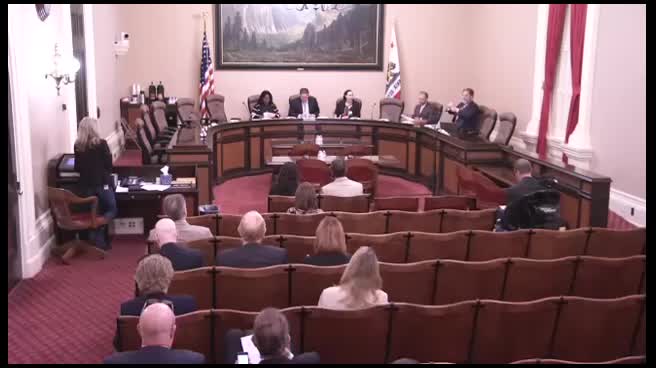
Discussed in Hearing
 17MIN
Senate Standing Committee on Governance and Finance
Bill Author
Bill Co-Author(s):