AB 1281: State parks: climate change: study.
- Session Year: 2017-2018
- House: Assembly
- Latest Version Date: 2017-03-30
Existing law vests with the Department of Parks and Recreation control over the state park system, and requires the department to take various actions to develop, operate, and maintain units of the state park system. Existing law requires specified state agencies to implement policies and measures to address the effects of climate change and facilitate the reduction of greenhouse gas emissions in the state.
This bill would require the department, by July 1, 2018, to complete a study that includes recommendations for further action that may be necessary to address the impacts of climate change at units of the state parks system, containing specified information.
The California Coastal Act of 1976 provides for the planning and regulation of development in the coastal zone, as defined. Existing law specifies planning and management policies for the location of new residential, commercial, and industrial development in the coastal zone.This bill would make a nonsubstantive change in that provision.The California Coastal Act of 1976 provides for the planning and regulation of development in the coastal zone, as defined. Existing law specifies planning and management policies for the location of new residential, commercial, and industrial development in the coastal zone.
This bill would make a nonsubstantive change in that provision.
The Department of Parks and Recreation, by July 1, 2018, shall complete a study concerning the impacts of climate change at units of the state park system that includes all of the following:
(a)An evaluation of the existing infrastructure at state park units and the effects of climate change on that infrastructure.
(b)A description of ways to safeguard and improve existing public recreation facilities and access to state parks that may be affected by the impacts of climate change.
(c)A description of ways that other state agencies and local governments can best address the effects of climate change and greenhouse gas emissions at state parks.
(d)A summary of statewide planning measures for state parks that may be implemented to mitigate climate change issues.
(e)Any recommendations for future action that may be necessary to address the impacts of climate change at units of the state park system.
SECTION 1.Section 30250 of the Public Resources Code is amended to read:30250.(a)New residential, commercial, or industrial development, except as otherwise provided in this division, shall be located within, contiguous with, or in close proximity to, existing developed areas able to accommodate it or, where these areas are not able to accommodate it, in other areas with adequate public services and where it will not have significant adverse effects, either individually or cumulatively, on coastal resources. In addition, land divisions, other than leases for agricultural uses, outside existing developed areas shall be permitted only where 50 percent of the usable parcels in the area have been developed and the created parcels would be no smaller than the average size of surrounding parcels.(b)Where feasible, new hazardous industrial development shall be located away from existing developed areas.(c)Visitor-serving facilities that cannot feasibly be located in existing developed areas shall be located in existing isolated developments or at selected points of attraction for visitors.(a)New residential, commercial, or industrial development, except as otherwise provided in this division, shall be located within, contiguous with, or in close proximity to, existing developed areas able to accommodate it or, where such these areas are not able to accommodate it, in other areas with adequate public services and where it will not have significant adverse effects, either individually or cumulatively, on coastal resources. In addition, land divisions, other than leases for agricultural uses, outside existing developed areas shall be permitted only where 50 percent of the usable parcels in the area have been developed and the created parcels would be no smaller than the average size of surrounding parcels.
(b)Where feasible, new hazardous industrial development shall be located away from existing developed areas.
(c)Visitor-serving facilities that cannot feasibly be located in existing developed areas shall be located in existing isolated developments or at selected points of attraction for visitors.
|
Date
|
Status
|
|---|---|
| Feb 1, 2018 | From committee: Filed with the Chief Clerk pursuant to Joint Rule 56. |
| Jan 31, 2018 | Died pursuant to Art. IV, Sec. 10(c) of the Constitution. |
| May 26, 2017 | In committee: Held under submission. |
| May 3, 2017 | In committee: Set, first hearing. Referred to APPR. suspense file. |
| Apr 26, 2017 | From committee: Do pass and re-refer to Com. on APPR. (Ayes 10. Noes 5.) (April 25). Re-referred to Com. on APPR. |
| Mar 30, 2017 | From committee chair, with author's amendments: Amend, and re-refer to Com. on W.,P., & W. Read second time and amended. |
| Apr 3, 2017 | Re-referred to Com. on W.,P., & W. |
| Mar 30, 2017 | Referred to Com. on W.,P., & W. |
| Feb 19, 2017 | From printer. May be heard in committee March 21. |
| Feb 17, 2017 | Read first time. To print. |
|
Date
|
Description
|
Location
|
Votes
|
|
|---|---|---|---|---|
| Apr 25, 2017 | Do pass and be re-referred to the Committee on [Appropriations] | Assembly Standing Committee on Water, Parks, and Wildlife |
Passed |
This list shows positions taken on this bill by organizations on the date displayed, which is linked to the original source.
Positions by individuals are not included.
|
Organization
|
Position
|
Date
|
|---|---|---|
| Trust For Public Land, The | * Support | Apr 25, 2017 |
Date of Hearing: May 3, 2017
ASSEMBLY COMMITTEE ON APPROPRIATIONS
Lorena Gonzalez Fletcher, Chair
ABPCA Bill Id:AB 1281
Author:(Limón) – As Amended Ver:March 30, 2017
Policy Committee: | Water, Parks and Wildlife | Vote: | 10-5 |
|
| ||
|
|
Urgency: No State Mandated Local Program: No Reimbursable: No
SUMMARY:
This bill requires the Department of Parks and Recreation (DPR) to complete a study on the impacts of climate change at units of the state parks system by July 1, 2018. The study is required to include:
- An evaluation of existing infrastructure and the effects of climate change on that infrastructure.
- A description of ways to safeguard and improve existing public recreation facilities and access to state parks that may be affected by the impacts of climate change.
- A description of ways other state agencies and local governments can best address the effects of climate change and greenhouse gas (GHG) emissions at state parks.
- A summary of statewide planning measures that may be implemented to mitigate climate change issues in state parks.
- A summary of recommendations for future action necessary to address climate change issues in state park units.
FISCAL EFFECT:
DPR estimates an additional 37 positions and a total cost of $3.36 million (GF) to perform the required components necessary to produce the study. However, it should be noted that the six month timeline in the bill is not achievable, and without adjustment, this figure may be much higher.
COMMENTS:
- Purpose. According to the author, this bill ensures we are proactively observing and preparing for the effects of climate change on parks and other outdoor recreational areas. The author further contends we need a full assessment of climate change resiliency— particularly on the coast—so that we can continue to protect and safely enjoy the natural beauty of California.
- Background. DPR manages 280 park units, which contain the finest and most diverse collection of natural, cultural, and recreational resources to be found within California. The state park system includes state parks, state natural reserves, state historic parks, state historic monuments, state beaches, state recreation areas, state vehicular recreation areas, state seashores and state marine parks. With over 340 miles of coastline, 970 miles of lake and river frontage, 15,000 campsites and 4,500 miles of trails, the State Park System provides recreational, educational, and inspirational opportunities for over 67 million visitors a year.
- Applying Climate Assessments to State Parks. The previous climate assessments have focused on many sectors of the economy. These included, among other issues: (1) habitat and wildfires; (2) sea level rise; (3) drought and water supply; (4) emergency management; and, (5) health impacts. All of these critical issues affect state parks but none directly look at the existing physical assets of the parks and how the state should approach these assets from a climate adaption model.
- Does DPR have Climate Expertise? This bill requires DPR to complete a study that is outside its normal mission and expertise. The author may wish to require DPR to complete the report in consultation with the Natural Resources Agency, the Office of Planning and Research and others to ensure the best planning measures and mitigations strategies are identified. Additionally, the author may wish to consider giving DPR sufficient time to perform the tasks necessary to complete a meaningful report.
- Related Legislation. SB 246 (Wieckowski), Chapter 606, Statutes of 2015, establishes the Integrated Climate Adaptation and Resiliency Program through the Office of Planning and Research to coordinate regional and local adaptation efforts with state climate adaptation strategies.
Analysis Prepared by: Jennifer Galehouse / APPR. / (916) 319-2081
Date of Hearing: April 25, 2017
ASSEMBLY COMMITTEE ON WATER, PARKS, AND WILDLIFE
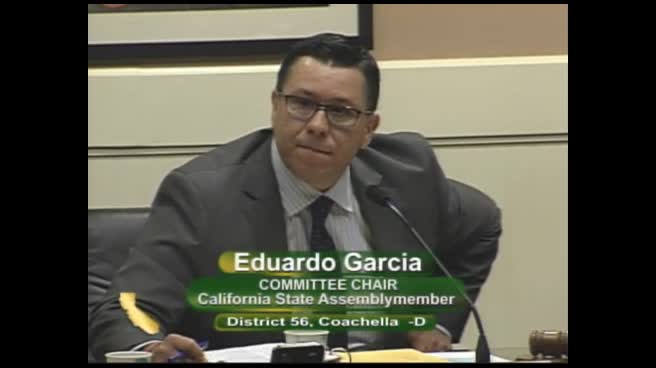
Eduardo Garcia, Chair
ABPCA Bill Id:AB 1281 (
Author:Limón) – As Amended Ver:March 30, 2017
SUBJECT: State parks: climate change: study
SUMMARY: Requires the Department of Parks and Recreation to complete a study on the effects of climate change on units of the state park system. Specifically, this bill:
Requires the Department of Parks and Recreation (CDPR), by July 1, 2018, to complete a study on the impacts of climate change at units of the state parks system. The study is required to include:
- An evaluation of existing infrastructure and the effects of climate change on that infrastructure.
- A description of ways to safeguard and improve existing public recreation facilities and access to parks that may be affected by climate change.
- A description of ways other state agencies and local governments can best address the effects of climate change at state parks.
- A summary of planning measures and recommendations to mitigate and address climate change issues at state parks statewide.
EXISTING LAW:
- Establishes the California State Park system and vests the DPR with control of the state park system and responsibility for administering, protecting, developing, and interpreting state parks for the use and enjoyment of the public. Requires the DPR to protect the state park system from damage and to preserve the peace therein.
- Establishes the Integrated Climate Adaptation and Resiliency Program (Program) to be administered by the Office of Planning and Research (OPR) to work with and assist local and regional efforts for climate adaptation and resilience.
- Establishes the Integrated Climate Adaptation and Resiliency Program (Program) to be administered by the Office of Planning and Research (OPR) to work with and assist local and regional efforts for climate adaptation and resilience.
- Requires, pursuant to the California Global Warming Solutions Act [AB 32 (Núñez), Chapter 488, Statutes of 2006], the Air Resources Board (ARB) to adopt a statewide greenhouse gas (GHG) emissions limit equivalent to 1990 levels by 2020 and to adopt rules and regulations to achieve maximum technologically feasible and cost-effective GHG emission reductions.
- Pursuant to Executive Order S-13-08 (Schwarzenegger), requires the Natural Resources Agency (CNRA), through the Climate Action Team, to coordinate with local, regional, state, federal, and private entities to develop, by 2009, a state Climate Adaptation Strategy. Requires the strategy to summarize the best known science on climate change impacts to California, assess California's vulnerability to the identified impacts, and outline solutions that can be implemented within and across state agencies to promote resiliency.
- Pursuant to Executive Order B-30-15 (Brown), in addition to establishing a 40% GHG emission reduction goal by 2030, requires several actions on adaptation, including:
- Requires the CNRA to update, every three years, the state's climate adaptation strategy and ensure that its provisions are fully implemented. Requires the state's climate adaptation strategy to:
- Identify vulnerabilities to climate change by sector and regions, including, at a minimum, the following sectors: water, energy, transportation, public health, agriculture, emergency services, forestry, biodiversity and habitat, and ocean and coastal resources;
- Outline primary risks to residents, property, communities, and natural systems from these vulnerabilities, and identify priority actions needed to reduce these risks; and,
- Identify a lead agency or group of agencies to lead adaptation efforts in each sector.
- Requires each sector lead to prepare an implementation plan by September 2015 to outline the actions that will be taken as identified in the state's climate adaptation strategy, and report back on those actions to the CNRA.
- Requires state agencies to take climate change into account in their planning and investment decisions, and employ full life-cycle cost accounting to evaluate and compare infrastructure investments and alternatives.
- Requires state agencies' planning and investment to be guided by the principles of climate preparedness, flexibility and adaptive approaches for uncertain climate impacts, protective of vulnerable populations, and prioritization of natural infrastructure solutions.
- Requires the state's Five-Year Infrastructure Plan to take current and future climate change impacts into account in all infrastructure projects.
- Requires the OPR to establish a technical, advisory group to help state agencies incorporate climate change impacts into planning and investment decisions.
- Requires the state to continue its rigorous climate change research program focused on understanding the impacts of climate change and how best to prepare and adapt to such impacts.
- Requires the CNRA to update, every three years, the state's climate adaptation strategy and ensure that its provisions are fully implemented. Requires the state's climate adaptation strategy to:
FISCAL EFFECT: Unknown
COMMENTS:
Author’s Statement:
AB 1281 makes sure that we are proactively observing and preparing for the effects of climate change on parks and other outdoor recreational areas. We need a full assessment of climate change resiliency— particularly on the coast—so that we can continue to protect and safely enjoy the natural beauty of California.
Variety of State Parks. California Department of Parks and Recreation (CDPR) manages 280 park units, which contain the finest and most diverse collection of natural, cultural, and recreational resources to be found within California. These treasures are as diverse as California: from the last stands of primeval redwood forests to vast expanses of fragile desert; from the lofty Sierra Nevada to the broad sandy beaches of our southern coast; and from the opulence of Hearst Castle to the vestiges of colonial Russia.
The state park system includes state parks, state natural reserves, state historic parks, state historic monuments, state beaches, state recreation areas, state vehicular recreation areas, state seashores and state marine parks. Within the system are natural and cultural preserves, lakes and reservoirs, coastal beaches, historic homes, Spanish era adobe buildings, lighthouses, ghost towns, museums, visitor centers, conference centers, and off-highway vehicle recreation areas. Together, state park system lands protect and preserve an unparalleled collection of culturally and environmentally sensitive structures and habitats, threatened plant and animal species, ancient Native American sites, historic structures and artifacts.
With over 340 miles of coastline, 970 miles of lake and river frontage, 15,000 campsites and 4,500 miles of trails, the State Park System provides recreational, educational, and inspirational opportunities for over 67 million visitors a year.
Administration Efforts for Climate Adaptation. In 2008, Executive Order (EO) S-13-08 called on state agencies to develop California’s first strategy to identify and prepare for expected climate impacts. The EO focused on the need to understand and improve how sea level rise projections would impact the state’s coastal and low-lying areas. The EO required the California Natural Resources Agency (CNRA) to develop a Climate Adaptation Strategy with various state agencies through the established Climate Action Team. These efforts were designed to be complementary, but not duplicative, of the state’s strategy for reducing greenhouse gas (GHG) emissions. The OPR, in conjunction with CNRA, was required to provide land-use planning guidance related to sea level rise and other climate change impacts. The state subsequently undertook two new climate change assessments (a previous assessment, in 2006, examined the broad impacts of climate change on California’s assets). The first assessment, completed in 2009, attempted to provide initial economic impacts of climate change. It concluded that preparing for climate impacts, in addition to efforts to reduce GHG emissions, could substantially reduce California’s risk of economic losses and damages. The second assessment, completed in 2012, focused on vulnerability and adaptation discussed in the 2009 Climate Adaptation Strategy (described below). This assessment focused more specific types of response needs related to ground exposure, sensitivity, and natural and human systems.
Governor’s Climate Change Assessments and Funding. The Administration has completed four climate assessments that addressed very different issues:
- The First Climate Change Assessment, released in 2006, looked at the potential impacts of climate change on key state resources such as the water supply, public health, agriculture, coastal areas, forestry, and electricity production and demand. The assessment influenced the passage of Assembly Bill 32, the California Global Warming Solutions Act of 2006.
- The Second Climate Change Assessment, released in 2009, attempted to provide initial estimates of the economic impacts of climate change. It concluded that adaptation - as a complementary approach to mitigation - could substantially reduce economic impacts of loss and damage from a changing climate. Findings from the Second Assessment were instrumental in preparing California's 2009 statewide adaptation strategy.
- The Third Climate Change Assessment, released in 2012, was shaped by the request for more information on vulnerability and adaptation options discussed in the 2009 California Adaptation Strategy. It made significant progress in projecting climate change impacts, but also in better understanding the interactions of those potential impacts with on the ground exposure, sensitivity, and response capacity of natural and human systems.
- Fourth Climate Change Assessment - California’s recently released Climate Change Research Plan articulates near-term climate change research needs to ensure that the state stays on track to meet its climate goals. The Fourth Climate Change Assessment is the first inter-agency effort to implement a substantial portion of the Climate Change Research Plan. The Governors’ 2014-15 budget included $5 million (a one-time, Environmental License Plate Fund) and one position at the CNRA, to carry out a fourth climate change assessment. The majority of funds were proposed to be used for research contracts to conduct the scientific research needed for the assessment. The assessment, similar to the three previous assessments, would continue to generate data and information needed to support continued climate policy development, planning, and implementation efforts at the state, regional, and local level.
Coastal Climate Adaptation. Sea Level Rise in California. According to the Administration, climate change in California during the next century is expected to shift precipitation patterns, accelerate sea level rise and increase temperatures. The country’s longest continuously operating gauge of sea level, at Fort Point in San Francisco Bay, recorded a seven-inch rise in sea level over the 20th century. As has been seen throughout the country such as with Hurricane Sandy, as well as the recent “king tides” (very high tides) in Southern California, much of the developed California coast is susceptible to the impacts of sea level rise. In recent events, high tides inundated parts of the Pacific Coast Highway, Huntington Beach, and other low-lying areas of Southern California. Parts of the San Francisco Bay Area also experienced flooding, including portions of Highway One in Marin County. These very high tides are considered a good indicator of the possible impacts of sea level rise and create challenges for local planners and developers in low-lying areas.
Applying Climate Assessments to State Parks. The previous climate assessments have focused on many sectors of the economy. These included, among other issues: (1) habitat and wildfires; (2) sea level rise; (3) drought and water supply; (4) emergency management; and, (5) health impacts. All of these critical issues affect state parks but none directly look at the existing physical assets of the parks and how the state should approach these assets from a climate adaption model. This bill asks the question – how should State Parks adapt to climate change? Recent events including the washout of a bridge in Big Sur that cut off access to a number of state parks, the increased flooding at the McGrath State Beach campground, and multiple closures due to increased fire activity during the drought, have highlighted the need for careful planning from our state parks related to climate change and adaptation.
Related Legislation. SB 246 (Wieckowski), Chapter 606, Statutes of 2015, establishes the Integrated Climate Adaptation and Resiliency Program through the Office of Planning and Research to coordinate regional and local adaptation efforts with state climate adaptation strategies.
REGISTERED SUPPORT / OPPOSITION:
Support
None on file
Opposition
None on file
Analysis Prepared by: Catherine Freeman / W., P., & W. /
Discussed in Hearing
 1H
Assembly Standing Committee on Appropriations
 3MIN
Assembly Standing Committee on Water, Parks, and Wildlife
 3MIN
Assembly Standing Committee on Natural Resources
Bill Author

Bill Co-Author(s):