AB 1342: Greenhouse Gas Reduction Fund: healthy forest programs, organic waste projects, and recycling projects.
- Session Year: 2017-2018
- House: Assembly
- Latest Version Date: 2017-04-27
The California Global Warming Solutions Act of 2006 designates the State Air Resources Board as the state agency charged with monitoring and regulating sources of emissions of greenhouse gases. The act requires the state board to approve a statewide greenhouse gas emissions limit equivalent to the statewide greenhouse gas emissions level in 1990 to be achieved by 2020 and to ensure that statewide greenhouse gas emissions are reduced to at least 40% below the 1990 level by 2030. The act authorizes the state board to include the use of market-based compliance mechanisms. Existing law requires all moneys, except for fines and penalties, collected by the state board as part of a market-based compliance mechanism to be deposited in the Greenhouse Gas Reduction Fund and to be available upon appropriation. Existing law continuously appropriates 35% of the annual proceeds of the fund for transit, affordable housing, and sustainable communities programs and 25% of the annual proceeds of the fund for certain components of a specified high-speed rail project.
This bill would continuously appropriate $100,000,000 from the fund make moneys from the fund, upon appropriation, available to the Department of Forestry and Fire Protection for healthy forest programs that reduce greenhouse gas emissions caused by uncontrolled wildfires, as specified. The bill would continuously appropriate $100,000,000 from the fund specified; to the Department of Resources Recycling and Recovery for instate organic waste recycling projects that reduce greenhouse gas emissions, as specified. The bill would also continuously appropriate $100,000,000 from the fund specified; and to the Department of Resources Recycling and Recovery for instate recycling projects that reduce greenhouse gas emissions and help achieve the states policy goal that not less than 75% of solid waste generated be source reduced, recycled, or composted by the year 2020.
The California Global Warming Solutions Act of 2006 designates the State Air Resources Board as the state agency charged with monitoring and regulating sources of emissions of greenhouse gases. The act requires the state board to approve a statewide greenhouse gas emissions limit equivalent to the statewide greenhouse gas emissions level in 1990 to be achieved by 2020 and to ensure that statewide greenhouse gas emissions are reduced to at least 40% below the 1990 level by 2030. The act authorizes the state board to include the use of market-based compliance mechanisms. Existing law requires all moneys, except for fines and penalties, collected by the state board as part of a market-based compliance mechanism to be deposited in the Greenhouse Gas Reduction Fund and to be available upon appropriation. Existing law continuously appropriates 35% of the annual proceeds of the fund for transit, affordable housing, and sustainable communities programs and 25% of the annual proceeds of the fund for certain components of a specified high-speed rail project.
This bill would continuously appropriate $100,000,000 from the fund to the Department of Forestry and Fire Protection for healthy forest programs that reduce greenhouse gas emissions caused by uncontrolled wildfires, as specified. The bill would continuously appropriate $100,000,000 from the fund to the Department of Resources Recycling and Recovery for instate organic waste recycling projects that reduce greenhouse gas emissions, as specified. The bill would also continuously appropriate $100,000,000 from the fund to the Department of Resources Recycling and Recovery for instate recycling projects that reduce greenhouse gas emissions and help achieve the states policy goal that not less than 75% of solid waste generated be source reduced, recycled, or composted by the year 2020.
(a)(1)Moneys from the fund are available, upon appropriation by the Legislature, to the Department of Forestry and Fire Protection for healthy forest programs that reduce greenhouse gas emissions caused by uncontrolled wildfires, including, but not limited to, vegetation management, forest overgrowth reduction, and measures to ensure future wildfires are more consistent with the historic regenerative fire regime.
(2)The Department of Forestry and Fire Protection, with the moneys specified in this subdivision, may allocate moneys to a local government to carry out fire prevention activities and to provide incentives to private sector parties to reduce the risk and intensity of wildfires or improve the resiliency of lands prone to wildfires.
(b)Moneys from the fund are available, upon appropriation by the Legislature, to the Department of Resources Recycling and Recovery for instate organic waste recycling projects that reduce greenhouse gas emissions, including, but not limited to, composting, energy production, food waste prevention, and recyclable material manufacturing projects.
(c)Moneys from the fund are available, upon appropriation by the Legislature, to the Department of Resources Recycling and Recovery for instate recycling projects that reduce greenhouse gas emissions and help achieve the states policy goal that not less than 75 percent of solid waste generated be source reduced, recycled, or composted by the year 2020, and annually thereafter, pursuant to Section 41780.01 of the Public Resources Code.
SECTION 1.Section 39719 of the Health and Safety Code is amended to read:39719.(a)The Legislature shall appropriate the annual proceeds of the fund for the purpose of reducing greenhouse gas emissions in this state in accordance with the requirements of Section 39712.(b)To carry out a portion of the requirements of subdivision (a), annual proceeds are continuously appropriated for the following:(1)Beginning in the 201516 fiscal year, and notwithstanding Section 13340 of the Government Code, 35 percent of annual proceeds of the fund are continuously appropriated, without regard to fiscal years, for transit, affordable housing, and sustainable communities programs as follows:(A)Ten percent of the annual proceeds of the fund is hereby continuously appropriated to the Transportation Agency for the Transit and Intercity Rail Capital Program created by Part 2 (commencing with Section 75220) of Division 44 of the Public Resources Code.(B)Five percent of the annual proceeds of the fund is hereby continuously appropriated to the Low Carbon Transit Operations Program created by Part 3 (commencing with Section 75230) of Division 44 of the Public Resources Code. Funds shall be allocated by the Controller, according to requirements of the program, and pursuant to the distribution formula in subdivision (b) or (c) of Section 99312 of, and Sections 99313 and 99314 of, the Public Utilities Code.(C)Twenty percent of the annual proceeds of the fund is hereby continuously appropriated to the Strategic Growth Council for the Affordable Housing and Sustainable Communities Program created by Part 1 (commencing with Section 75200) of Division 44 of the Public Resources Code. Of the amount appropriated in this subparagraph, no less than 10 percent of the annual proceeds, shall be expended for affordable housing, consistent with the provisions of that program.(2)Beginning in the 201516 fiscal year, notwithstanding Section 13340 of the Government Code, 25 percent of the annual proceeds of the fund is hereby continuously appropriated to the High-Speed Rail Authority for the following components of the initial operating segment and Phase I Blended System as described in the 2012 business plan adopted pursuant to Section 185033 of the Public Utilities Code:(A)Acquisition and construction costs of the project.(B)Environmental review and design costs of the project.(C)Other capital costs of the project.(D)Repayment of any loans made to the authority to fund the project.(3)(A)Beginning in the 201718 fiscal year, notwithstanding Section 13340 of the Government Code, one hundred million dollars ($100,000,000) is hereby continuously appropriated from the fund, without regard to fiscal years, to the Department of Forestry and Fire Protection for healthy forest programs that reduce greenhouse gas emissions caused by uncontrolled wildfires, including, but not limited to, vegetation management, forest overgrowth reduction, and measures to ensure future wildfires are more consistent with the historic regenerative fire regime.(B)The Department of Forestry and Fire Protection, with the appropriation specified in this paragraph, may allocate moneys to a local government to carry out fire prevention activities and to provide incentives to private sector parties to reduce the risk and intensity of wildfires or improve the resiliency of lands prone to wildfires.(4)Beginning in the 201718 fiscal year, notwithstanding Section 13340 of the Government Code, one hundred million dollars ($100,000,000) is hereby continuously appropriated from the fund, without regard to fiscal years, to the Department of Resources Recycling and Recovery for instate organic waste recycling projects that reduce greenhouse gas emissions, including, but not limited to, composting, energy production, food waste prevention, and recyclable material manufacturing.(5)Beginning in the 201718 fiscal year, notwithstanding Section 13340 of the Government Code, one hundred million dollars ($100,000,000) is hereby continuously appropriated from the fund, without regard to fiscal years, to the Department of Resources Recycling and Recovery for instate recycling projects that reduce greenhouse gas emissions and help achieve the states policy goal that not less than 75 percent of solid waste generated be source reduced, recycled, or composted by the year 2020, and annually thereafter, pursuant to Section 41780.01 of the Public Resources Code.(c)In determining the amount of annual proceeds of the fund for purposes of the calculation in subdivision (b), the funds subject to Section 39719.1 shall not be included.(a)The Legislature shall appropriate the annual proceeds of the fund for the purpose of reducing greenhouse gas emissions in this state in accordance with the requirements of Section 39712.
(b)To carry out a portion of the requirements of subdivision (a), annual proceeds are continuously appropriated for the following:
(1)Beginning in the 201516 fiscal year, and notwithstanding Section 13340 of the Government Code, 35 percent of annual proceeds of the fund are continuously appropriated, without regard to fiscal years, for transit, affordable housing, and sustainable communities programs as following: follows:
(A)Ten percent of the annual proceeds of the fund is hereby continuously appropriated to the Transportation Agency for the Transit and Intercity Rail Capital Program created by Part 2 (commencing with Section 75220) of Division 44 of the Public Resources Code.
(B)Five percent of the annual proceeds of the fund is hereby continuously appropriated to the Low Carbon Transit Operations Program created by Part 3 (commencing with Section 75230) of Division 44 of the Public Resources Code. Funds shall be allocated by the Controller, according to requirements of the program, and pursuant to the distribution formula in subdivision (b) or (c) of Section 99312 of, and Sections 99313 and 99314 of, the Public Utilities Code.
(C)Twenty percent of the annual proceeds of the fund is hereby continuously appropriated to the Strategic Growth Council for the Affordable Housing and Sustainable Communities Program created by Part 1 (commencing with Section 75200) of Division 44 of the Public Resources Code. Of the amount appropriated in this subparagraph, no less than 10 percent of the annual proceeds, shall be expended for affordable housing, consistent with the provisions of that program.
(2)Beginning in the 201516 fiscal year, notwithstanding Section 13340 of the Government Code, 25 percent of the annual proceeds of the fund is hereby continuously appropriated to the High-Speed Rail Authority for the following components of the initial operating segment and Phase I Blended System as described in the 2012 business plan adopted pursuant to Section 185033 of the Public Utilities Code:
(A)Acquisition and construction costs of the project.
(B)Environmental review and design costs of the project.
(C)Other capital costs of the project.
(D)Repayment of any loans made to the authority to fund the project.
(3)(A)Beginning in the 201718 fiscal year, notwithstanding Section 13340 of the Government Code, one hundred million dollars ($100,000,000) is hereby continuously appropriated from the fund, without regard to fiscal years, to the Department of Forestry and Fire Protection for healthy forest programs that reduce greenhouse gas emissions caused by uncontrolled wildfires, including, but not limited to, vegetation management, forest overgrowth reduction, and measures to ensure future wildfires are more consistent with the historic regenerative fire regime.
(B)The Department of Forestry and Fire Protection, with the appropriation specified in this paragraph, may allocate moneys to a local government to carry out fire prevention activities and to provide incentives to private sector parties to reduce the risk and intensity of wildfires or improve the resiliency of lands prone to wildfires.
(4)Beginning in the 201718 fiscal year, notwithstanding Section 13340 of the Government Code, one hundred million dollars ($100,000,000) is hereby continuously appropriated from the fund, without regard to fiscal years, to the Department of Resources Recycling and Recovery for instate organic waste recycling projects that reduce greenhouse gas emissions, including, but not limited to, composting, energy production, food waste prevention, and recyclable material manufacturing.
(5)Beginning in the 201718 fiscal year, notwithstanding Section 13340 of the Government Code, one hundred million dollars ($100,000,000) is hereby continuously appropriated from the fund, without regard to fiscal years, to the Department of Resources Recycling and Recovery for instate recycling projects that reduce greenhouse gas emissions and help achieve the states policy goal that not less than 75 percent of solid waste generated be source reduced, recycled, or composted by the year 2020, and annually thereafter, pursuant to Section 41780.01 of the Public Resources Code.
(c)In determining the amount of annual proceeds of the fund for purposes of the calculation in subdivision (b), the funds subject to Section 39719.1 shall not be included.
|
Date
|
Status
|
|---|---|
| Feb 1, 2018 | From committee: Filed with the Chief Clerk pursuant to Joint Rule 56. |
| Jan 31, 2018 | Died pursuant to Art. IV, Sec. 10(c) of the Constitution. |
| May 26, 2017 | In committee: Held under submission. |
| May 17, 2017 | In committee: Set, first hearing. Referred to APPR. suspense file. |
| May 1, 2017 | Re-referred to Com. on APPR. |
| Apr 27, 2017 | Read second time and amended. |
| Apr 26, 2017 | From committee: Amend, and do pass as amended and re-refer to Com. on APPR. (Ayes 10. Noes 0.) (April 24). |
| Apr 17, 2017 | In committee: Set, first hearing. Hearing canceled at the request of author. |
| Mar 13, 2017 | Referred to Com. on NAT. RES. |
| Feb 19, 2017 | From printer. May be heard in committee March 21. |
| Feb 17, 2017 | Read first time. To print. |
|
Date
|
Description
|
Location
|
Votes
|
|
|---|---|---|---|---|
| Apr 24, 2017 | Do pass as amended and be re-referred to the Committee on [Appropriations] | Assembly Standing Committee on Natural Resources |
Passed |
This list shows positions taken on this bill by organizations on the date displayed, which is linked to the original source.
Positions by individuals are not included.
|
Organization
|
Position
|
Date
|
|---|---|---|
| Calforests | ** Support | Apr 21, 2017 |
| California Association Of Local Conservation Corps | * Support | Apr 24, 2017 |
| California Biomass Energy Alliance | ** Support | Apr 21, 2017 |
| California Chamber Of Commerce | ** Against | Apr 21, 2017 |
| California Compost Coalition | * Support | Apr 24, 2017 |
| Californians Against Waste | * Support | Apr 24, 2017 |
| CalTax | ** Against | Apr 21, 2017 |
| Community Alliance With Family Farmers | ** Support | Apr 21, 2017 |
| Pacific Forest Trust | * Support | Apr 24, 2017 |
| Rural County Representatives of California | ** Support | Apr 21, 2017 |
Date of Hearing: May 17, 2017
ASSEMBLY COMMITTEE ON APPROPRIATIONS
Lorena Gonzalez Fletcher, Chair
ABPCA Bill Id:AB 1342
Author:(Flora) – As Amended Ver:April 27, 2017
Policy Committee: | Natural Resources | Vote: | 10 - 0 |
|
| ||
|
|
Urgency: No State Mandated Local Program: No Reimbursable: No
SUMMARY:
This bill, upon appropriation by the Legislature, makes monies from the Greenhouse Gas Revenue Fund (GGRF) available to various programs. Specifically, this bill:
- Authorizes CalFIRE to expend GGRF for healthy forest programs that reduce greenhouse (GHG) emissions caused by uncontrolled wildfires, including but not limited to vegetative management, forest overgrowth,
- Authorizes CalFIRE to allocate the funding to local governments to carry out fire prevention activities and to provide incentives to private sector parties to reduce the risk and intensity of wildfires or improve the resiliency of lands prone to wildfires.
- Authorizes CalRecycle to expend GGRF for in-state organic waste recycling projects that reduce GHG emissions, including, but not limited to, composting, energy production, food waste prevention, and recyclable materials manufacturing.
- Authorizes CalRecyle to expend GGRF for in-state recycling projects that reduce GHG emissions and help achieve the state's policy goal that not less than 75% of solid waste be diverted from landfill disposal by 2020.
FISCAL EFFECT:
Cost pressures, likely in the hundreds of millions of dollars (GGRF) to funds the authorized programs at CalFire and CalRecycle. Administrative costs will be based on the size of the funded programs (GGRF).
COMMENTS:
- Purpose. "According to the author, AB 1342 supports and builds upon existing goals and efforts to reduce emissions, allowing CAL FIRE and CalRecycle to take advantage of existing resources to appropriately fund projects for forest management and recycling or organic and nonorganic waste."
- Background. The California Global Warming Solutions Act of 2006 (AB 32) requires the Air Resources Board (ARB) to adopt a statewide GHG emissions limit equivalent to 1990 levels by 2020 and adopt regulations, including market-based compliance mechanisms, to achieve maximum technologically feasible and cost-effective GHG emission reductions.
As part of the implementation of AB 32 market-based compliance measures, ARB adopted a cap-and-trade program that caps the allowable statewide emissions and provides for the auctioning of emission credits, the proceeds of which are quarterly deposited into the GGRF available for appropriation by the Legislature.
The 2014-15 Budget Act allocated cap-and-trade revenues for the 2014-15 fiscal year and established a long-term plan for the allocation of cap-and-trade revenues beginning in fiscal year 2015-16.
The Budget continuously appropriates 35% of cap-and-trade funds for investments in transit, affordable housing, and sustainable communities. Twenty-five percent of the revenues are continuously appropriated to continue the construction of high-speed rail. The remaining 40% are to be appropriated annually by the Legislature for investments in programs that include low-carbon transportation, energy efficiency and renewable energy, and natural resources and waste diversion.
- Short lived climate pollutants (SLCPs). Carbon dioxide (CO2) remains in the atmosphere for centuries, which makes it critical to reduce in order to limit long-term climate change. However, SLCPs, including methane, HFCs, and black carbon (soot), are relatively short-lived (anywhere from a few weeks to 15 years), but have much higher global warming potentials than CO2.
Methane (CH4) is the principal component of natural gas and is produced biologically under anaerobic conditions in ruminants, landfills, and waste handling. Many emissions sources of methane are unregulated (e.g., methane from dairy production and fugitive methane emissions from landfills and natural gas distribution). Methane is about 80 times more powerful as a global warming pollutant than CO2 on a 20-year time scale.
HFCs (also known as F-gases) are synthetic gases used in refrigeration, air conditioning, insulation foams, solvents, aerosol products, and fire protection. Currently, HFCs are a small fraction of the total climate forcing gases, but they are the fastest growing source of carbon pollution. HFCs, on average, have a global warming potential 1600 times that of CO2 on a 20-year time scale.
Black carbon, a component of soot, also known as PM 2.5, comes from diesel engines and incomplete burning of carbon sources. In addition to being a powerful global warming pollutant, black carbon is associated with numerous negative health impacts and is designated a potential human carcinogen. Black carbon is not listed under AB 32 as a GHG subject to AB 32 regulations. However, due to known health and air quality impacts, ARB has several programs to reduce particulate matter emissions from heavy-duty vehicles. Black carbon has a global warming potential 3,200 times that of CO2 on a 20-year time scale.
CalRecycle has been engaged with ARB in developing ARB's Strategy to reduce methane emissions from landfills. It is also is tasked with diverting at least 75% of solid waste generated statewide by 2020. Organic materials make up one-third of the waste stream and food continues to be the greatest single item disposed, comprising over 15% of materials landfilled.
According to ARB, wildfire is the largest source of black carbon emissions in California, accounting for over 50% of total black carbon emissions in a typical year. Wildfires are difficult to prevent, and there is uncertainty in estimating emissions. Prescribed fires are also a source of black carbon, but in practice can reduce overall black carbon emissions by preventing catastrophic wildfires.
Analysis Prepared by: Jennifer Galehouse / APPR. / (916) 319-2081
Date of Hearing: April 24, 2017
ASSEMBLY COMMITTEE ON NATURAL RESOURCES
Cristina Garcia, Chair
ABPCA Bill Id:AB 1342 (
Author:Flora) – As Introduced Ver:February 17, 2017
SUBJECT: Greenhouse Gas Reduction Fund: appropriations
SUMMARY: Continuously appropriates $100 million from the Greenhouse Gas Reduction Fund (GGRF) to the Department of Forestry and Fire Protection (CAL FIRE) and continuously appropriates $200 million from the GGRF to the Department of Resources Recycling and Recovery (CalRecycle) for greenhouse gas (GHG) emissions reduction projects.
EXISTING LAW:
- Requires the Air Resources Board (ARB), pursuant to California Global Warming Solutions Act of 2006 [AB 32 (Nunez), Chapter 488, Statutes of 2006], to adopt a statewide GHG emissions limit equivalent to 1990 levels by 2020 and adopt regulations to achieve maximum technologically feasible and cost-effective GHG emission reductions. AB 32 authorizes ARB to permit the use of market-based compliance mechanisms to comply with GHG reduction regulations once specified conditions are met.
- Establishes the GGRF and requires all moneys, except for fines and penalties, collected by ARB from the auction or sale of allowances pursuant to a market-based compliance mechanism (i.e., the cap-and-trade program adopted by ARB under AB 32) to be deposited in the GGRF and available for appropriation by the Legislature.
- Establishes the GGRF Investment Plan and Communities Revitalization Act (Act) to set procedures for the investment of GHG allowance auction revenues. Authorizes a range of GHG reduction investments and establishes several policy objectives:
- Maximize economic, environmental, and public health benefits;
- Foster job creation;
- Complement efforts to improve air quality;
- Direct investment toward the most disadvantaged communities and households in the state;
- Provide opportunities for businesses, public agencies, nonprofits, and other community institutions to participate in and benefit from statewide efforts to reduce GHG emissions; and,
- Lessen the impacts and effects of climate change on the state's communities, economy, and environment.
- Maximize economic, environmental, and public health benefits;
- Specifies that moneys appropriated from the GGRF through investments may include funding to reduce GHG emissions as follows:
- Energy efficiency, clean and renewable energy generation, distributed renewable energy generation, transmission and storage, and other related actions;
- The development of state-of-the-art systems to move goods and freight, advanced technology vehicles and vehicle infrastructure, advanced biofuels, and low-carbon and efficient public transportation;
- Water use and water supply, land and natural resource conservation and management, forestry, and sustainable agriculture projects;
- Strategic planning and development of sustainable infrastructure projects;
- In-state diversion of municipal solid waste from disposal through waste reduction, diversion, and reuse;
- Investments in programs implemented by local and regional agencies, local and regional collaboratives, and nonprofit organizations coordinating with local governments; and,
- Funding research, development, and deployment of innovative technologies, measures, and practices related to programs and projects funded pursuant to the Act.
- Energy efficiency, clean and renewable energy generation, distributed renewable energy generation, transmission and storage, and other related actions;
- Requires the investment plan to allocate:
- A minimum of 25% of the available moneys in the GGRF to projects located within, and that provide benefits to individuals living in, disadvantaged communities;
- A minimum of 5% of the available moneys in the GGRF to projects that benefit low-income households or to projects located within, and benefiting individuals living in, low-income communities; and,
- A minimum of 5% of the available moneys in the GGRF to projects that benefit low-income households that are outside of, but within ½ mile of, disadvantaged communities, or to projects located within the boundaries of, and benefiting individuals living in, low-income communities that are outside of, but within ½ mile of, disadvantaged communities.
- A minimum of 25% of the available moneys in the GGRF to projects located within, and that provide benefits to individuals living in, disadvantaged communities;
- Requires ARB to implement the comprehensive short-lived climate pollutant (SLCP) strategy to achieve, from 2013 levels, a 40% reduction in methane, a 40% reduction in hydrofluorocarbon gases (HFCs), and a 50% reduction in black carbon by 2030.
- Allows CAL FIRE to enter into agreements and make grants and take other actions to develop Program Timberland Environmental Impact Reports for carbon sequestration and fuel reduction programs to encourage forest resource improvements and otherwise facilitate good timberland management through a program of financial and technical assistance.
- Authorizes funds in Timber Regulation and Forest Restoration Fund to be spent for fuel treatment grants and grants to local agencies responsible for fire protection, qualified nonprofits, recognized tribes, local and state governments, and resources conservation districts undertaken on a state responsibility area or on wildlands that pose a threat to a state responsibility area. Grants are required to reduce the costs of wildland fire suppression, reduce GHG emissions, promote adaptation of forested landscapes to changing climate, improve forest health, and protect homes and communities.
THIS BILL:
- Beginning in the 2017-18 fiscal year, continuously appropriates $100 million annually from the GGRF to CalFIRE for healthy forest programs that reduce GHG emissions caused by uncontrolled wildfires, as specified.
- Authorizes CalFIRE to allocate the funding to local governments to carry out fire prevention activities and to provide incentives to private sector parties to reduce the risk and intensity of wildfires or improve the resiliency of lands prone to wildfires.
- Beginning in the 2017-18 fiscal year, continuously appropriates $100 million annually from the GGRF to CalRecycle for in-state organic waste recycling projects that reduce GHG emissions, including, but not limited to, composting, energy production, food waste prevention, and recyclable materials manufacturing.
- Beginning in the 2017-18 fiscal year, continuously appropriates $100 million annually from the GGRF to CalRecycle for in-state recycling projects that reduce GHG emissions and help achieve the state's policy goal that not less than 75% of solid waste be diverted from landfill disposal by 2020.
FISCAL EFFECT: Unknown
COMMENTS:
- Author's statement:
AB 1342 supports and builds upon existing goals and efforts to reduce [GHG] emissions, allowing CAL FIRE and CalRecycle to take advantage of existing resources to appropriately fund projects for forest management and recycling or organic and nonorganic waste.
- Existing GGRF funding and programs. The 2014-15 Budget Act allocated GGRF revenues for the 2014-15 fiscal year and established a long-term plan for the allocation of GGRF revenues beginning in fiscal year 2015-16. Thirty-five percent of GGRF is continuously appropriated for investments in transit, affordable housing, and sustainable communities. Twenty-five percent is continuously appropriated to continue the construction of the high-speed rail project. The remaining 40% is subject to annual appropriation by the Legislature for investments in programs that include low-carbon transportation, energy efficiency and renewable energy, and natural resources and waste diversion.
The 2017 Annual Report of Cap and Trade Auction Proceeds includes an analysis of funds spent within and benefiting disadvantaged communities, excluding high speed rail spending. According to the report, 34% of expenditures were for projects located within disadvantaged communities and 50% of the overall funding benefited disadvantaged communities.
Listed below are the major GGRF program areas and funding to date, totaling $3.385 billion:
- Sustainable Communities and Clean Transportation:
- High Speed Rail Authority, High Speed Rail Project, $800 million
- State Transit Assistance, Low-Carbon Transit Operations, $135 million
- Transportation Agency, Transit and Intercity Rail Capital Program, $381 million
- Strategic Growth Council, Affordable Housing and Sustainable Communities Program, $570 million
- Department of Transportation, Active Transportation, $10 million
- Strategic Growth Council, Transformative Climate Communities Program and Technical Assistance, $142 million
- Air Resources Board, Low Carbon Transportation, $695 million
- Short-Lived Climate Pollutants:
- Air Resources Board, Black Carbon Woodsmoke, $5 million
- Department of Resources Recycling and Recovery, Waste Diversion, $71 million
- Department of Food and Agriculture, Dairy Digesters and Alternative Fuels, $65 million
- Department of Food and Agriculture, Healthy Soils, $8 million
- Carbon Sequestration:
- Department of Forestry and Fire Protection, Healthy Forests, $49 million
- Department of Forestry and Fire Protection, Urban and Community Forestry, $33 million
- Department of Fish and Wildlife, Wetlands and Watershed Restoration, $30 million
- Natural Resources Agency, Urban Greening, $80 million
- Energy Efficiency/Renewable Energy:
- Department of Community Services and Development, Energy Efficiency Upgrades/Weatherization, $174 million
- Department of Water Resources, Water Use Efficiency, $70 million
- Department of Food and Agriculture, State Water Efficiency and Enhancement Program, $68 million
- Sustainable Communities and Clean Transportation:
The Governor's 2017-18 Budget proposes $2.155 billion in expenditures:
- Continuous Appropriations:
- High Speed Rail, Authority, $375 million
- Low Carbon Transit Operations, State Transit Assistance, $75 million
- Transit and Intercity Rail Capital Program, Transportation Agency, $150 million
- Affordable Housing and Sustainable Communities Program, Strategic Growth Council, $300 million
- Transportation Package, $500 million:
- Transportation Agency, Transit and Intercity Rail Capital Program
- Department of Transportation, Active Transportation
- Fifty Percent Reduction in Petroleum Use:
- Air Resources Board, Low Carbon Transportation, $363 million
- Transformational Climate Communities:
- Strategic Growth Council, Transformative Climate Communities and Technical Assistance and Outreach, $142 million
- Short-Lived Climate Pollutants, $95 million:
- Air Resources Board, Black Carbon Woodsmoke
- Department of Resources Recycling and Recovery, Waste Diversion
- Department of Food and Agriculture, Dairy Digesters
- Carbon Sequestration, $127.5 million:
- Department of Forestry and Fire Protection, Healthy Forests and Urban Greening
- Department of Food and Agriculture, Climate Smart Agriculture and Healthy Soils
- Natural Resources Agency, Urban Greening
- Energy Efficiency/Renewable Energy, $27.5 million:
- Department of Community Services and Development, Energy Efficiency Upgrades/Weatherization
- Department of Food and Agriculture, State Water Efficiency and Enhancement Program
- Continuous Appropriations:
- Cap and trade auction revenues. The GGRF is funded by cap and trade auction revenues. While some auctions generated significant funds, more recent auctions have generated less revenue. Fiscal year 2015-16 peaked at over $1.8 billion; however, the three auctions raised just over $380 million in proceeds. The February 2017 auction generated just $8.1 million. The next auction will take place on May 16th.
- Short lived climate pollutants. Carbon dioxide (CO2) remains in the atmosphere for centuries, which makes it critical to reduce in order to limit long-term climate change. However, SLCPs, including methane, HFCs, and black carbon (soot), are relatively short-lived (anywhere from a few weeks to 15 years), but have much higher global warming potentials than CO2. New research suggests that aggressively reducing these SLCPs in the short-term, compared to only cutting CO2 emissions, can do more to slow sea level rise and other climate change impacts in the near-term.
Methane (CH4) is the principal component of natural gas and is produced biologically under anaerobic conditions in ruminants, landfills, and waste handling. Atmospheric methane concentrations have been increasing as a result of human activities related to agriculture, fossil fuel extraction and distribution, and waste generation and processing. Many emissions sources of methane are unregulated (e.g., methane from dairy production and fugitive methane emissions from landfills and natural gas distribution). Methane is about 80 times more powerful as a global warming pollutant than CO2 on a 20-year time scale.
HFCs (also known as F-gases) are synthetic gases used in refrigeration, air conditioning, insulation foams, solvents, aerosol products, and fire protection. They are primarily produced for use as substitutes for ozone-depleting substances which are being phased out globally. Currently, HFCs are a small fraction of the total climate forcing gases, but they are the fastest growing source of carbon pollution. HFCs, on average, have a global warming potential 1600 times that of CO2 on a 20-year time scale.
Black carbon, a component of soot, also known as PM 2.5, comes from diesel engines and incomplete burning of carbon sources. In addition to being a powerful global warming pollutant, black carbon is associated with numerous negative health impacts and is designated a potential human carcinogen. Black carbon is not listed under AB 32 as a GHG subject to AB 32 regulations. However, due to known health and air quality impacts, ARB has several programs to reduce particulate matter emissions from heavy-duty vehicles. Black carbon has a global warming potential 3200 times that of CO2 on a 20-year time scale.
CalRecycle has been engaged with ARB in developing ARB's Strategy to reduce methane emissions from landfills. It is also is tasked with diverting at least 75% of solid waste generated statewide by 2020. Organic materials make up one-third of the waste stream and food continues to be the greatest single item disposed, comprising over 15% of materials landfilled. According to CalRecycle, significant gains in organic waste diversion are necessary to meet these goals. Recycling technologies for organic waste include composting, anaerobic digestion, and other types of processing that generate renewable fuels, energy, soil amendments, and mulch. Recycling provides significant GHG reductions over landfilling. Recycling reduces GHGs by avoiding the emissions that would be generated by the material’s decomposition in a landfill, as well as by displacing fossil fuels used in the manufacture of virgin materials.
According to ARB, wildfire is the largest source of black carbon emissions in California, accounting for over 50% of total black carbon emissions in a typical year. Wildfires are difficult to prevent, and there is uncertainty in estimating emissions. Prescribed fires are also a source of black carbon, but in practice can reduce overall black carbon emissions by preventing catastrophic wildfires.
This bill provides funding to reduce methane emissions generated by solid waste and black carbon emissions associated with wildfires. - Suggested amendments. Given the inconsistent nature of cap and trade revenues and in order to ensure that the Legislature maintains proper oversight of funds allocated, the committee may wish to amend the bill to authorize up to $100 million annually, upon appropriation by the Legislature, for each of the programs identified in the bill. The committee may also wish to amend the bill to specify that the funding allocated to CAL FIRE fund programs that are consistent with Public Resources Code section 4799.05, which provides guidance to CAL FIRE for GGRF expenditures.
REGISTERED SUPPORT / OPPOSITION:
Support
Calforests
California Biomass Energy Alliance
California Compost Coalition
Californians Against Waste
Community Alliance with Family Farmers
Rural County Representatives of California
Opposition
California Chamber of Commerce
CalTax
Analysis Prepared by: Elizabeth MacMillan / NAT. RES. /
Discussed in Hearing
 1H
Assembly Standing Committee on Appropriations
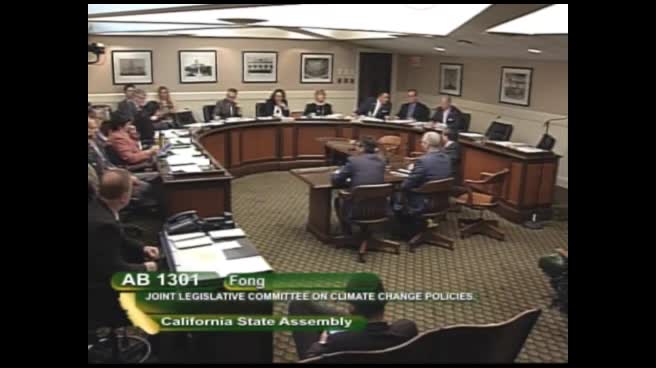 6MIN
Assembly Standing Committee on Natural Resources
Bill Author

Bill Co-Author(s):