AB 1376: Apprenticeship: preapprenticeship programs for women.
- Session Year: 2017-2018
- House: Assembly
- Latest Version Date: 2017-03-30
Existing law provides for the establishment of apprenticeship programs in various trades, to be approved by the Chief of the Division of Apprenticeship Standards within the Department of Industrial Relations in any trade in the state or in a city or trade area whenever the apprentice training needs justify the establishment.
This bill would require the Division of Apprenticeship Standards to develop curricula for, and to provide certification for, preapprenticeship programs for women in the construction trades, to be regulated under these provisions. The bill would establish criteria for the selection of persons or organizations to administer the preapprenticeship programs and would provide the requirements for a preapprenticeship program to seek reimbursement of its expenses for providing its services.
The bill would make a one-time appropriation of $500,000 from the General Fund to the Division of Apprenticeship Standards to develop a curriculum and certification process for these preapprenticeship programs. The bill would provide that the funding of the operation of the programs would be upon further appropriation by the Legislature.
The bill would make legislative findings in support of these provisions.
The federal Every Student Succeeds Act provides for the allotment of formula grants to states for various activities to support effective educational instruction, including providing training to support the identification of students who are gifted and talented. This bill would express the intent of the Legislature to enact legislation that would align state law with the federal Every Student Succeeds Act by requiring the State Department of Education to work with stakeholders to develop recommendations to assist teachers, principals, or other school leaders in identifying pupils who are gifted and talented and to provide instruction based on their needs.The federal Every Student Succeeds Act provides for the allotment of formula grants to states for various activities to support effective educational instruction, including providing training to support the identification of students who are gifted and talented.
This bill would express the intent of the Legislature to enact legislation that would align state law with the federal Every Student Succeeds Act by requiring the State Department of Education to work with stakeholders to develop recommendations to assist teachers, principals, or other school leaders in identifying pupils who are gifted and talented and to provide instruction based on their needs.
The Legislature finds and declares all of the following:
(a)Women make up the majority of minimum wage earners and women of color are heavily concentrated in minimum wage jobs. The low minimum wage is especially hard on workers with families, single mother-headed households.
(b)Low wages prevail for workers in highly female-dominated occupations, including domestic work, child care, and home health care. Women of color are hit particularly hard since they are the majority of workers in all three of these occupations.
(c)Persistent barriers to entry and advancement for women, particularly women of color, in higher paid, traditionally male-dominated occupations, including the skilled construction trades and apprenticeships, lead to underrepresentation of women in these fields.
(d)Skilled apprenticeship is a major pathway into blue-collar middle-class careers.
(e)The Division of Apprenticeship Standards oversees a paid on-the-job training program with an educational component for 75,000 California apprentices.
(f)Ninety-three percent of the apprentices in California are male.
(g)Over 70 percent of the apprentices in California are in construction, 97 percent of which are men.
SEC. 2.Chapter 5 (commencing with Section 3100) is added to Division 3 of the Labor Code, to read:5.Preapprenticeship Programs for Women3100.The Division of Apprenticeship Standards shall develop and certify a statewide preapprenticeship program designed to recruit female candidates for construction opportunities.
3101.The division shall create training and curriculum based on preexisting multicraft curriculum standards designed to prepare women candidates with the skills, competencies, and mentorship needed to enter existing apprenticeship programs in the construction trades.
3102.A person or organization desiring to be certified to administer a preapprenticeship program under these provisions shall submit an application to the division that shall include the following information:
(a)Verifiable documentation of experience in the construction industry.
(b)A list of instructors or mentors who will be participating in the program and their qualifications.
(c)A proposed schedule for meeting the criteria of the preapprenticeship curriculum developed by the division.
(d)Other information as the division may require.
3103.The division shall certify administrators for the preapprenticeship programs from career centers, trade schools, local unemployment offices, and other institutions based upon the information contained in the application and an evaluation of the administrators ability to verify their access to potential participants, including their ability to provide services directly to women matriculating through the preapprenticeship programs.
3104.A preapprenticeship program certified by the division shall submit in full detail, its complete expenditures in administering the program, including, all liabilities, investments, portfolios, expenses, and tax records. The division shall review and approve reimbursement of program expenditures that meet the following requirements:
(a)The majority of expenses consisting of the direct costs and expenses associated with administering the program to the targeted demographic.
(b)Standardized reports, on a form designated by the division, are submitted that provide transparency into program curriculum and outcomes. These reports shall be available for public review.
(c)The program meets the standards set by the division, including at least a 50-percent placement rating in existing apprenticeship programs for preapprenticeship program participants.
3105.(a)There is appropriated from the General Fund five hundred thousand dollars ($500,000) to the Division of Apprenticeship Standards to establish the preapprenticeship program, including developing the curriculum and selecting the program administrators.
(b)Funding for the continued operation of certified preapprenticeship programs shall be made upon further appropriation by the Legislature.
SECTION 1.It is the intent of the Legislature to enact legislation that would align state law with Section 2101 of the federal Every Student Succeeds Act (Public Law 114-95) by requiring the State Department of Education to work with stakeholders to develop recommendations to assist teachers, principals, or other school leaders in identifying pupils who are gifted and talented and to provide instruction based on their needs.It is the intent of the Legislature to enact legislation that would align state law with Section 2101 of the federal Every Student Succeeds Act (Public Law 114-95) by requiring the State Department of Education to work with stakeholders to develop recommendations to assist teachers, principals, or other school leaders in identifying pupils who are gifted and talented and to provide instruction based on their needs.
|
Date
|
Status
|
|---|---|
| Feb 1, 2018 | From committee: Filed with the Chief Clerk pursuant to Joint Rule 56. |
| Jan 31, 2018 | Died pursuant to Art. IV, Sec. 10(c) of the Constitution. |
| May 26, 2017 | In committee: Held under submission. |
| May 3, 2017 | In committee: Set, first hearing. Referred to APPR. suspense file. |
| Apr 20, 2017 | From committee: Do pass and re-refer to Com. on APPR. (Ayes 7. Noes 0.) (April 19). Re-referred to Com. on APPR. |
| Mar 30, 2017 | From committee chair, with author's amendments: Amend, and re-refer to Com. on L. & E. Read second time and amended. |
| Apr 3, 2017 | Re-referred to Com. on L. & E. |
| Mar 30, 2017 | Referred to Com. on L. & E. |
| Feb 19, 2017 | From printer. May be heard in committee March 21. |
| Feb 17, 2017 | Read first time. To print. |
|
Date
|
Description
|
Location
|
Votes
|
|
|---|---|---|---|---|
| Apr 19, 2017 | Do pass and be re-referred to the Committee on [Appropriations] | Assembly Standing Committee on Labor and Employment |
Passed |
This list shows positions taken on this bill by organizations on the date displayed, which is linked to the original source.
Positions by individuals are not included.
|
Organization
|
Position
|
Date
|
|---|---|---|
| Associated Builders And Contractors Of California | * Support | Apr 19, 2017 |
| California Workforce Association | * Support | Apr 19, 2017 |
| Equal Rights Advocates | * Support | Apr 19, 2017 |
| Independent Roofing Contractors | * Support | Apr 19, 2017 |
| Plumbing Heating and Cooling Contractors in California | * Support | Apr 19, 2017 |
| Sacramento Regional Conservation Corps | ** Support | Apr 19, 2017 |
| Trades Women Inc. | * Support | Apr 19, 2017 |
| Western Electrical Contractors Association (Weca-Iec) | * Support | Apr 19, 2017 |
Date of Hearing: May 3, 2017
ASSEMBLY COMMITTEE ON APPROPRIATIONS
Lorena Gonzalez Fletcher, Chair
ABPCA Bill Id:AB 1376
Author:(Caballero) – As Amended Ver:March 30, 2017
Policy Committee: | Labor and Employment | Vote: | 7 - 0 |
|
| ||
|
|
Urgency: No State Mandated Local Program: No Reimbursable: No
SUMMARY:
This bill requires the Division of Apprenticeship Standards (DAS) within the Department of Industrial Relations, to develop curricula for, and to provide certification for, pre-apprenticeship programs for women in the construction trades. Specifically, this bill:
- Requires DAS to develop and certify a statewide pre-apprenticeship program and mandates DAS to create training and curriculum based on existing multi-craft curriculum standards designed to prepare women candidates with skills needed to enter existing apprenticeship programs in the construction trades.
- Develops standards for the certification of individuals or organizations desiring to administer a pre-apprenticeship program, and requires applicants to submit certain information, as specified.
- Requires that DAS review and approve reimbursement of certain program expenditures, as defined
- Provides for a one-time appropriation of $500,000 from the General Fund (GF) to DAS for developing a curriculum and certification process for these pre-apprenticeship programs. Funding for the operation of these programs will be contingent upon appropriation from the Legislature.
FISCAL EFFECT:
One time transfer of $500,000 from the GF to DAS for the purposes of starting the new statewide preapprenticeship program, as required this bill. Costs are not expected to exceed this amount.
COMMENTS:
- Purpose and Background. According to the author, AB 1376 will fund pre-apprenticeship programs for women in the construction trades and help increase the number of women prepared to enter California construction apprenticeship programs. The author notes that apprenticeship programs are a pathway to economic security and opportunities for career advancement, but men are overrepresented in these programs: In California, 70% of apprenticeship programs are in construction, and 93% of apprentices are male.
- State’s Role in Apprenticeship Programs. While apprenticeship programs are generally programs that operate according to standards agreed to by labor and managements in accordance with state and federal laws, California has a relatively robust involvement in developing standards and promoting apprenticeships. As of 2014, there were 53,000 apprentices working statewide, compared to 16,500 in New York. DAS administers apprenticeship law and enforces standards for the hours, wages, working conditions, and the specific skills required for state certification as a journeyperson in an apprenticeable occupation. DAS also distributes grants to apprenticeship programs and provides training and consultation to programs across the state.
- Pre-Apprenticeship Programs. Pre-apprenticeship programs typically teach participants the skills necessary to qualify for an apprenticeship program, For example, Long Beach City College offers a construction pre-apprenticeship training program that offers students the opportunity to learn the skills necessary for a union apprenticeship in the construction trades. Students learn a variety of skills, such as cabinet making and weatherization.
Analysis Prepared by: Luke Reidenbach / APPR. / (916) 319-2081
Date of Hearing: April 19, 2017
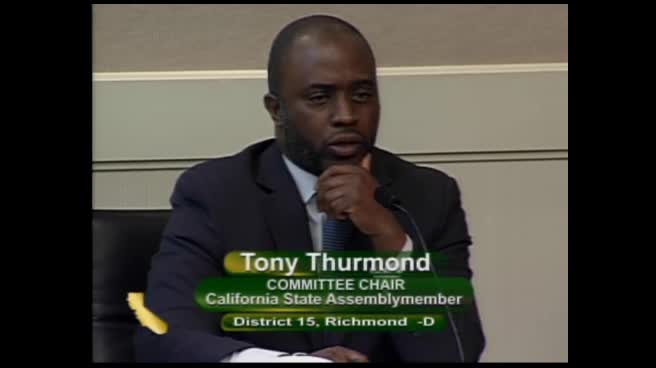
ASSEMBLY COMMITTEE ON LABOR AND EMPLOYMENT
Tony Thurmond, Chair
ABPCA Bill Id:AB 1376 (
Author:Caballero) – As Amended Ver:March 30, 2017
SUBJECT: Apprenticeship: preapprenticeship programs for women
SUMMARY: Requires the Division of Apprenticeship Standards to develop curricula for, and to provide certification for, preapprenticeship programs for women in the constriction trades, to be regulated as specified. Specifically, this bill:
- Requires the Division of Apprenticeship Standards (Division) to develop and certify a statewide preapprenticeship program designed to recruit female candidates for construction opportunities.
- Mandates the division to create training and curriculum based on preexisting multicraft curriculum standards designed to prepare women candidates with the skills, competencies, and mentorship needed to enter existing apprenticeship programs in the construction trades.
- Provides that when a person or organization desiring to be certified to administer a preapprenticeship program under these provisions shall submit an application to the division that shall include the following information:
- Verifiable documentation of experience in the construction industry.
- A list of instructors or mentors who will be participating in the program and their qualifications.
- A proposed schedule for meeting the criteria of the preapprenticeship curriculum developed by the division.
- Other information as the division may require.
- Requires that when the division certifies administrators for the preapprenticeship programs from career centers, trade schools, local unemployment offices, and other institutions based upon the information contained in the application and an evaluation of the administrators’ ability to verify their access to potential participants, including their ability to provide services directly to women matriculating through the preapprenticeship programs.
- Mandates a preapprenticeship program certified by the division shall submit in full detail, its complete expenditures in administering the program, including, all liabilities, investments, portfolios, expenses, and tax records.
- Provides that the division shall review and approve reimbursement of program expenditures that meet the following requirements:
- The majority of expenses consisting of the direct costs and expenses associated with administering the program to the targeted demographic.
- Standardized reports, on a form designated by the division, are submitted that provide transparency into program curriculum and outcomes, which shall be available for public review.
- The program meets the standards set by the division, including at least a 50-percent placement rating in existing apprenticeship programs for preapprenticeship program participants.
- Provides a one-time appropriation of $500,000 from the General Fund to the Division of Apprenticeship Standards to develop a curriculum and certification process for these preapprenticeship programs.
- Provides that the funding of the operation of the programs would be upon further appropriation by the Legislature.
- Provides for findings and declarations related to barriers to entry and advancement for women, and particularly women of color, in traditionally male-dominated occupations, and relevant economic consequences.
EXISTING LAW:
- Provides for the Division of Apprenticeship Standards to administer California apprenticeship law and establish apprenticeship standards for wages, hours, working conditions and the specific skills required for state certification as a journeyperson in an apprenticeable occupation.
- Provides for the establishment of apprenticeship programs in various trades, to be approved by the Chief of the Division of Apprenticeship Standards within the Department of Industrial Relations in any trade in the state or in a city or trade area whenever the apprentice training needs justify the establishment.
FISCAL EFFECT: Unknown
COMMENTS: The author argues, “This bill will fund California pre-apprenticeship programs for women in the construction and related skilled trades. Programs funded under this bill will increase the numbers of women prepared to enter California construction apprenticeship programs.
Skilled apprenticeship is a key pathway into high-wage construction trades careers. Apprenticeship programs are the means by which skills are passed from one generation of workers to the next and pre-apprenticeship programs are a major gateway into apprenticeship programs. They offer economic security and job mobility because participants earn income while obtaining critical job training and education.
However, persistent barriers to the entry and advancement of women in both pre-apprenticeship and apprenticeship programs have led to severe underrepresentation in these programs, and consequently, in the construction trade workforce itself. In California, over 70% of apprentices are in construction and 93% of apprentices are male. Women’s share of construction jobs in the state is below 3%. This number has not budged over the past three decades, despite a substantial increase nationwide in the number and percentage of women in other nontraditional, physically demanding occupations, such as firefighting and correctional officer positions, during this period.[1] Without better access to pre-apprenticeship and apprenticeship opportunities, women will continue to be shut out of these higher-paid careers.
In California, which is home to 12 percent of the country’s women – more than any other state[2] - women comprise almost half the state’s workforce and are primary income earners in many households.[3] Yet, women in California, particularly women of color, face obstacles to enjoying economically secure lives. Women in California earn just 86 cents for every dollar earned by white men and the wage gap is much larger for women of color—Latina women earn just 43 cents for every dollar earned by white men, while Black women earn 63 cents and Asian women earn 72 cents.[4] On the whole, women in California lose $78.6 billion per year to the gender wage gap. Women face a gender wealth (i.e. net worth) gap that is even greater than the substantial gender income (pay) gap that persists. Women are more likely to live in poverty and 29% of families in California led by women live in poverty.[5]
A major contributor to this problem is the issue of occupational segregation, whereby women are disproportionally concentrated in low-wage and minimum wage jobs and underrepresented in higher-paying occupations and industries.[6] Women constitute the majority of workers earning the minimum wage, which is still not high enough to support a family. The number of working women in the low-wage workforce is at least 1.5 times that of men. Even though women are outpacing men in educational achievement, men still dominate high-wage, skilled occupations, especially in blue collar fields such as construction and skilled manufacturing (so-called “nontraditional” occupations), which pay 20 to 30 percent higher wages than those paid in occupations dominated by women.[7] Even in higher paid occupations, women are disproportionately relegated to the lower-paid positions. [8]
Increasing women’s access to preapprenticeship programs will, as a consequence, increase their participation in apprenticeship programs and in the construction trades workforce. This will boost women’s overall earnings and help to close the wage gap, providing a pathway to economic security and opportunities for career advancement.”
Apprenticeship Programs
Apprenticeship is a system of learning while earning, and learning by doing. It combines training on the job with related and supplemental instruction at school. Today, it is utilized chiefly in the skilled crafts. Each program operates under apprenticeship training standards agreed to by labor and management in accordance with state and federal laws, under which a person works with a skilled worker and gains on the job skills and knowledge and in turn becomes an important part of the occupation and industry. In those crafts in which management and labor organizations exist, each selects an equal number of members to serve on the joint apprenticeship committee. The joint apprenticeship committee determines the standards for training of its occupation and supervises the training of apprentices. In many cases the local apprenticeship committees have guidelines in the form of national and/or statewide standards recommended by the advisory organizations. But these are minimums and the local groups usually have complete autonomy in developing and administering their own programs.
Training is spelled out in apprenticeship standards developed by the local apprenticeship committees, with the assistance of consultants of the Division of Apprenticeship Standards, and registered with the State. The processes of the trade and the number of hours to be spent learning each process are defined. The period of training is from 1 to 6 years, depending upon the trade; most programs are for 4 years.
Apprentices start at a percentage of the skilled worker's wage and receive increases at regular intervals. Starting rates are usually 35% to 50%, and increases are given every six months in most trades. Upon successful completion of training, they are issued a certificate of completion by the State of California. Industry coordinators and apprenticeship consultants of the Division of Apprenticeship Standards visit establishments to determine on-the-job progress of apprentices, seek new apprenticeship openings, and discuss problems with apprentices, supervisors and employers. The enforcement of apprenticeship requirements is the responsibility of the Division of Labor Standards Enforcement.
California is one of 27 states who set their own standards for apprenticeship. California has significantly higher standards for apprenticeship than the federal Department of Labor. California with 53,000 apprentices is significantly larger than the next largest states of New York and Pennsylvania with 16,500 and 12,000 respectively.
Arguments in Support
The California Workforce Association is the sponsor of this bill and writes in support that, “Construction trades pre-apprenticeships for women in our communities would help ensure that they gain training and education, job readiness skills, placement, and retention assistance that are necessary for securing employment after certification. Women make up the majority of minimum wage earners in our state and women of color are particularly concentrated in minimum wage jobs. This fact is especially hard on workers with families and single mother-headed households. Low wages prevail for workers in highly-female dominated occupations, including domestic work, child care, and home health care. Women of color are hit particularly hard as they are the majority of workers in all three of these occupations. The California Workforce Association strongly supports new and innovative models designed to break down barriers to entry and advancement for women, particularly women of color, in higher-paid, traditionally male-dominated occupations, including the skilled construction trades and apprenticeships.
AB 1376’s emphasis on creating pre-apprenticeship programs for women that focus on retention and entry into industry recognized credentialing programs are essential steps towards increasing the number of women in construction trades and decreasing the gender pay gap in California.”
Equal Rights Advocates argue in support, “Skilled apprenticeship is a key pathway into high-wage blue-collar trade careers, which offer economic security as well as job mobility by allowing participants are able to earn income while obtaining critical job training and education. Apprenticeship programs are the means by which skills are passed from one generation of workers to the next and pre-apprenticeship programs are a major gateway into apprenticeship programs.
Access to high quality workforce training that addresses the unique needs of women seeking to enter the construction trades is key to advancing a more inclusive and diverse workspace in that industry, as well as helping to close the gender pay gap. While women make up 47% of California’s workforce, women only hold 6.3% of the state’s apprenticeship spots and only 2.3% of the construction trades apprenticeships. A major contributor to this problem is the issue of occupational segregation, whereby women are disproportionally concentrated in low-wage and minimum wage jobs and underrepresented in higher-paying occupations and industries. Women constitute the majority of workers earning the minimum wage, which is still not high enough to support a family. The number of working women in the low-wage workforce is at least 1.5 times that of men.
Low wages prevail for workers in highly-female dominated occupations, including domestic work, child care, and home health care. Women of color are hit particularly hard as they are the majority of workers in all three of these occupations. Even though women are outpacing men in educational achievement, men still dominate high-wage, skilled occupations, especially in blue collar fields such as construction and skilled manufacturing (so-called “nontraditional” occupations), which pay 20 to 30 percent higher wages than those paid in occupations dominated by women.[7] Strong pre-apprenticeship programs ensure that women have an opportunity to gain training and education, job readiness skills, placement, and retention assistance that are necessary for securing employment after certification.
Increasing women’s access to preapprenticeship programs will, as a consequence, increase their participation in apprenticeship programs and in the construction trades workforce. This will boost women’s overall earnings and help to close the wage gap, providing a pathway to economic security and opportunities for career advancement.”
REGISTERED SUPPORT / OPPOSITION:
Support
California Workforce Association (sponsor)
Equal Rights Advocates (sponsor)
Sacramento Regional Conservation Corps
Opposition
None on file
Analysis Prepared by: Taylor Jackson / L. & E. / 916-391-2091
See Women in Construction: Still Breaking Ground (2014) (National Women’s Law Center), available at http://www.nwlc.org/sites/default/files/pdfs/final_nwlc_womeninconstruction_report.pdf. ↑
Total U.S. female population is 162,663,500, total California females is 19,702,900. THE HENRY J. KAISER FAMILY FOUNDATION, Population Distribution by Gender, available at http://kff.org/other/state-indicator/distribution-by-gender/?dataView=1&activeTab=map¤tTimeframe=0&selectedDistributions=female&selectedRows=%7B%22nested%22:%7B%22california%22:%7B%7D%7D,%22wrapups%22:%7B%22united-states%22:%7B%7D%7D%7D&sortModel=%7B%22colId%22:%22Location%22,%22sort%22:%22asc%22%7D ↑
See Wendy Wang, Kim Parker & Paul Taylor, PEW RESEARCH CENTER, Breadwinner Moms (May 29, 2013), available at http://www.pewsocialtrends.org/files/2013/05/Breadwinner_moms_final.pdf. ↑
See Natalie Kitroeff and Nina Agrawal, Pay gap between men and women in California is nearly $79 billion a year (LA Times), available at http://www.latimes.com/business/la-fi-equal-pay-day-20170404-story.html. See also http://www.nationalpartnership.org/research-library/workplace-fairness/fair-pay/americas-women-and-the-wage-gap.pdf; http://www.nationalpartnership.org/research-library/workplace-fairness/fair-pay/americas-women-and-the-wage-gap.pdf; http://www.nationalpartnership.org/research-library/workplace-fairness/fair-pay/latinas-wage-gap.pdf ↑
MOUNT STAINT MARY’S UNIVERSITY, LOS ANGELES, The Report on the Status of Women and Girls in California (2015), available at https://www.msmu.edu/uploadedFiles/Content/Status_of_Women_and_Girls/RSWG%202015%20final.pdf. ↑
Public Policy Institute of California, Just the Facts: Poverty in California (Dec. 2015), available at http://www.ppic.org/main/publication_show.asp?i=261. ↑
See Wider Opportunities for Women, Women in Nontraditional Work Fact Sheet (2013), available at http://www.wowonline.org/wp-content/uploads/2013/05/Women-and-Non-Traditional-Work-Fact-Sheet-2010.pdf . ↑
Mount St. Mary’s University Los Angeles, The Report on the Status of Women and Girls in California (2015) (“Report on the Status of Women and Girls”), available at https://www.msmu.edu/uploadedFiles/Content/Status_of_Women_and_Girls/RSWG%202015%20final.pdf (citing U.S. Census, 2013 American Community Survey 1-Year Estimates. Table B01001 for total; B01001B for African American, B01001D for Asian; B01001H for White (Non-Hispanic); B01001I for Latinas). ↑
Discussed in Hearing
 1H
Assembly Standing Committee on Appropriations
 8MIN
Assembly Standing Committee on Labor and Employment
Bill Author

Bill Co-Author(s):