AB 1499: Horse racing: state-designated fairs: allocation of revenues: gross receipts for sales and use tax.
- Session Year: 2017-2018
- House: Assembly
- Latest Version Date: 2017-10-14
The Horse Racing Law provides that any unallocated balance from the total revenue received by the Department of Food and Agriculture pursuant to that law, except as specified, is hereby appropriated without regard to fiscal years for allocation by the Secretary of Food and Agriculture for capital outlay to California fairs, including state-designated fairs, for among other things, fair projects involving public health and safety, and projects that are required to protect fair property. That law also provides that a portion of these funds may be allocated to California fairs for general operational support.
This bill would, beginning July 1, 2018, require a return filed with the California Department of Tax and Fee Administration (CDTFA) to report gross receipts for sales and use tax purposes to segregate the gross receipts of the seller and the sales price of the property on a line or a separate form as prescribed by the CDTFA when the place of sale in this state or for use in this state is on or within the real property of a state-designated fair, as defined, or any real property of a state-designated fair that is leased to another party. The bill would require the CDTFA to report the amount of the total gross receipts segregated on the returns filed pursuant to these provisions to the Department of Finance on or before November 1 of each year. The bill would require the CDTFA to estimate the total gross receipts segregated for the 201920 fiscal year by January 31, 2019, based on the 3rd quarter of 2018, and would require that an amount equal to 3/4 of 1% of this estimated amount be included in the Governors revised budget in May 2019 for allocation to fairs pursuant to the provisions described above. The bill would require the CDTFA to reconcile this first-year estimate with actual return data from the full 201819 fiscal year, and to then adjust this figure as appropriate as the amount to be reported to the Department of Finance on November 1, 2019.
The bill would require that an amount equal to 3/4 of 1% of the total amount of gross receipts reported to the Department of Finance be included in the next annual Governors Budget for the Department of Food and Agriculture for allocation to fairs pursuant to the provisions described above. The bill would require, upon the enactment of the annual Budget Act, that this amount be transferred by the Controller to the Fair and Exposition Fund, which is continuously appropriated, and would allocate these moneys to state-designated fairs for specified fair projects and subject to certain conditions. The bill would require the CDTFA to be paid the actual cost for administering those provisions, as specified.
By creating a new source of revenue to be deposited into a continuously appropriated fund, the bill would make an appropriation.
The Horse Racing Law provides that any unallocated balance from the total revenue received by the Department of Food and Agriculture pursuant to that law, except as specified, is hereby appropriated without regard to fiscal years for allocation by the Secretary of Food and Agriculture for capital outlay to California fairs, including state-designated fairs, for among other things, fair projects involving public health and safety, and projects that are required to protect fair property. That law also provides that a portion of these funds may be allocated to California fairs for general operational support.
This bill would, beginning July 1, 2018, require a return filed with the California Department of Tax and Fee Administration (CDTFA) to report gross receipts for sales and use tax purposes to segregate the gross receipts of the seller and the sales price of the property on a line or a separate form as prescribed by the CDTFA when the place of sale in this state or for use in this state is on or within the real property of a state-designated fair, as defined, or any real property of a state-designated fair that is leased to another party. The bill would require the CDTFA to report the amount of the total gross receipts segregated on the returns filed pursuant to these provisions to the Department of Finance on or before November 1 of each year. The bill would require the CDTFA to estimate the total gross receipts segregated for the 201920 fiscal year by January 31, 2019, based on the 3rd quarter of 2018, and would require that an amount equal to 3/4 of 1% of this estimated amount be included in the Governors revised budget in May 2019 for allocation to fairs pursuant to the provisions described above. The bill would require the CDTFA to reconcile this first-year estimate with actual return data from the full 201819 fiscal year, and to then adjust this figure as appropriate as the amount to be reported to the Department of Finance on November 1, 2019.
The bill would require that an amount equal to 3/4 of 1% of the total amount of gross receipts reported to the Department of Finance be included in the next annual Governors Budget for the Department of Food and Agriculture for allocation to fairs pursuant to the provisions described above. The bill would require, upon the enactment of the annual Budget Act, that this amount be transferred by the Controller to the Fair and Exposition Fund, which is continuously appropriated, and would allocate these moneys to state-designated fairs for specified fair projects and subject to certain conditions. The bill would require the CDTFA to be paid the actual cost for administering those provisions, as specified.
By creating a new source of revenue to be deposited into a continuously appropriated fund, the bill would make an appropriation.
(1)The
The Horse Racing Law provides that any unallocated balance from the total revenue received by the Department of Food and Agriculture pursuant to that law, except as specified, is hereby appropriated without regard to fiscal years for allocation by the Secretary of Food and Agriculture for capital outlay to California fairs, including state-designated fairs, for among other things, fair projects involving public health and safety, and projects that are required to protect fair property. That law also provides that a portion of these funds may be allocated to California fairs for general operational support.
This bill would, beginning July 1, 2018, require a return filed with the California Department of Tax and Fee Administration (CDTFA) to report gross receipts for sales and use tax purposes to segregate the gross receipts of the seller and the sales price of the property on a line or a separate form as prescribed by the CDTFA when the place of sale in this state or for use in this state is on or within the real property of a state-designated fair, as defined, or any real property of a state-designated fair that is leased to another party. The bill would require the CDTFA to report the amount of the total gross receipts segregated on the returns filed pursuant to these provisions to the Department of Finance on or before November 1 of each year. The bill would require the CDTFA to estimate the total gross receipts segregated for the 201920 fiscal year by January 31, 2019, based on the 3rd quarter of 2018, and would require that this an amount equal to 3/4 of 1% of this estimated amount be included in the Governors revised budget in May 2019. 2019 for allocation to fairs pursuant to the provisions described above. The bill would require the CDTFA to reconcile this first-year estimate with actual return data from the full 201819 fiscal year, and to then adjust this figure as appropriate as the amount to be reported to the Department of Finance on November 1, 2019.
The bill would require that an amount equal to 3/4 of 1% of the total amount of gross receipts reported to the Department of Finance be included in the next annual Governors Budget for the Department of Food and Agriculture for allocation to fairs pursuant to the provisions described above. The bill would require, upon the enactment of the annual Budget Act, that this amount be transferred by the Controller to the Fair and Exposition Fund, which is continuously appropriated, and would allocate these moneys to state-designated fairs for specified fair projects and subject to certain conditions. The bill would provide that require the CDTFA to be paid the actual cost for administering those provisions, as specified.
(2)By
By creating a new source of revenue to be deposited into a continuously appropriated fund, the bill would make an appropriation.
(1)The Horse Racing Law provides that any unallocated balance from the total revenue received by the Department of Food and Agriculture pursuant to that law, except as specified, is hereby appropriated without regard to fiscal years for allocation by the Secretary of Food and Agriculture for capital outlay to California fairs, including state-designated fairs, for among other things, fair projects involving public health and safety, and projects that are required to protect fair property. That law also provides that a portion of these funds may be allocated to California fairs for general operational support.
This bill would would, beginning July 1, 2018, require a return filed with the State Board of Equalization California Department of Tax and Fee Administration (CDTFA) to report gross receipts for sales and use tax purposes to segregate the gross receipts of the seller and the sales price of the property on a form line or a separate form as prescribed by the state board CDTFA when the place of sale in this state or for use in this state is on or within the real property of a state-designated fair, as defined, or any real property of a state-designated fair that is leased to another party. The bill would require the state board CDTFA to report the amount of the total gross receipts segregated on the returns filed pursuant to these provisions to the Department of Finance on or before April 30 November 1 of each year. The bill would require the CDTFA to estimate the total gross receipts segregated for the 201920 fiscal year by January 31, 2019, based on the 3rd quarter of 2018, and would require that this amount be included in the Governors revised budget in May 2019. The bill would require the CDTFA to reconcile this first-year estimate with actual return data from the full 201819 fiscal year, and to then adjust this figure as appropriate as the amount to be reported to the Department of Finance on November 1, 2019.
The bill would require that an amount equal to 3/4 of 1% of the total amount of gross receipts reported to the Department of Finance be included in the next annual Governors Budget for the Department of Food and Agriculture for allocation to fairs pursuant to the provisions described above. The bill would require, upon the enactment of the annual Budget Act, that this amount be transferred by the Controller to the Fair and Exposition Fund, which is continuously appropriated, and would allocate these moneys to state-designated fairs for specified fair projects and subject to certain conditions. The bill would provide that the state board CDTFA be paid the actual cost for administering those provisions, as specified.
(2)By creating a new source of revenue to be deposited into a continuously appropriated fund, the bill would make an appropriation.
(1)The Horse Racing Law provides that any unallocated balance from the total revenue received by the Department of Food and Agriculture pursuant to that law, except as specified, is hereby appropriated without regard to fiscal years for allocation by the Secretary of Food and Agriculture for capital outlay to California fairs, including state-designated fairs, for among other things, fair projects involving public health and safety, and projects that are required to protect fair property. That law also provides that a portion of these funds may be allocated to California fairs for general operational support.
This bill would require a return filed with the State Board of Equalization to report gross receipts for sales and use tax purposes to segregate the gross receipts of the seller and the sales price of the property on a form prescribed by the state board when the place of sale in this state or for use in this state is on or within the real property of a state-designated fair, as defined, or any real property of a state-designated fair that is leased to another party. The bill would require the state board to report the amount of the total gross receipts segregated on the returns filed pursuant to these provisions to the Department of Finance on or before April 30 of each year.
The bill would require that an amount equal to 3/4 of 1% of the total amount of gross receipts reported to the Department of Finance be included in the next annual Governors Budget for the Department of Food and Agriculture for allocation to fairs pursuant to the provisions described above. The bill would require, upon the enactment of the annual Budget Act, that this amount be transferred by the Controller to the Fair and Exposition Fund, which is continuously appropriated, and would allocate these moneys to state-designated fairs, as specified. fairs for specified fair projects and subject to certain conditions. The bill would provide that the state board be paid the actual cost for administering those provisions, as specified.
(2)By creating a new source of revenue to be deposited into a continuously appropriated fund, the bill would make an appropriation.
(1)The Horse Racing Law provides that any unallocated balance from the total revenue received by the Department of Food and Agriculture pursuant to that law, except as specified, is hereby appropriated without regard to fiscal years for allocation by the Secretary of Food and Agriculture for capital outlay to California fairs, including state-designated fairs, for among other things, fair projects involving public health and safety, and projects that are required to protect fair property. That law also provides that a portion of these funds may be allocated to California fairs for general operational support.
This bill would require a return filed with the State Board of Equalization to report gross receipts for sales and use tax purposes to segregate the gross receipts of the seller and the sales price of the property on a form prescribed by the state board when the place of sale in this state or for use in this state is on or within the real property of a state-designated fair, as defined, or any real property of a state-designated fair that is leased to another party. The bill would require the state board to report the amount of the total gross receipts segregated on the returns filed pursuant to these provisions to the Department of Finance on or before April 30 of each year.
The bill would require that an amount equal to 3/4 of 1% of the total amount of gross receipts reported to the Department of Finance be included in the next annual Governors Budget for the Department of Food and Agriculture for allocation to fairs pursuant to the provisions described above. The bill would require, upon the enactment of the annual Budget Act, that this amount be transferred by the Controller to the Fair and Exposition Fund, which is continuously appropriated, and would allocate these moneys to state-designated fairs, as specified. The bill would provide that the state board be paid the actual cost for administering those provisions, as specified.
(2)By creating a new source of revenue to be deposited into a continuously appropriated fund, the bill would make an appropriation.
(a)Notwithstanding any other law, a return filed with the California Department of Tax and Fee Administration (CDTFA) to report gross receipts for sales and use tax purposes shall segregate the gross receipts of the seller and the sales price of the property on a line or a separate form as prescribed by the CDTFA when the place of sale in this state or for use in this state is on or within the real property of a state-designated fair or any real property of a state-designated fair that is leased to another party.
(b)For purposes of this section, state-designated fair means a state-designated fair as defined in Sections 19418, 19418.1, 19418.2, and 19418.3.
(c)The CDTFA shall add a line to a current return, or develop a separate form for purposes of this section.
(d)The CDTFA shall report the amount of the total gross receipts segregated on the returns filed pursuant to subdivision (a) to the Department of Finance on or before November 1 of each year.
(e)The CDTFA shall estimate the total gross receipts segregated for the 201920 fiscal year by January 31, 2019, based on the third quarter of 2018. An amount equal to three-quarters of 1 percent of this estimated amount shall be included in the Governors revised budget in May 2019 for allocation to fairs pursuant to Section 19620.2. The CDTFA shall reconcile this first-year estimate with actual return data from the full 201819 fiscal year, and then adjust this figure as appropriate as the amount to be reported to the Department of Finance on November 1, 2019.
(f)An amount equal to three-quarters of 1 percent of the total amount of gross receipts reported to the Department of Finance specified in subdivision (d) shall be included in the next annual Governors Budget for the Department of Food and Agriculture for allocation to fairs pursuant to Section 19620.2. Upon the enactment of the annual Budget Act, the amount appropriated by the Legislature to the Department of Food and Agriculture pursuant to this section shall be transferred by the Controller to the Fair and Exposition Fund in the State Treasury, and shall be continuously appropriated and allocated pursuant to Section 19620.2.
(g)The CDTFA shall be paid the actual cost for administering the provisions of this section from the funds appropriated pursuant to subdivision (f) before any allocation is made to fairs in accordance with Section 19620.2.
(h)(1)Any revenues deposited into the Fair and Exposition Fund pursuant to this section shall only be allocated to a state-designated fair if nonmanagement employees at that state-designated fair, or nonmanagement employees at any real property of that state-designated fair that is leased to another party, are provided the following working conditions:
(A)The employee receives a meal period of not less than 30 minutes for a work period of more than five hours per day, unless the work period per day of the employee is less than six hours and the meal period is waived by mutual consent of both the employer and the employee.
(B)The employee receives a second meal period of not less than 30 minutes for a work period of more than 10 hours per day, unless the work period per day of the employee is less than 12 hours, the second meal period is waived by mutual consent of both the employer and the employee, and the first meal period was not waived.
(C)Any work in excess of eight hours in one workday, any work in excess of 40 hours in any one workweek, and the first eight hours worked on the seventh day of work in any one workweek is compensated at the rate of no less than one and one-half times the regular rate of pay for an employee.
(D)Any work in excess of 12 hours in one day is compensated at the rate of no less than twice the regular rate of pay for an employee.
(E)Any work in excess of eight hours on any seventh day of a workweek is compensated at the rate of no less than twice the regular rate of pay for an employee.
(2)This subdivision shall not apply to full-time carnival ride operators employed by a traveling carnival.
(i)This section shall become operative on July 1, 2018.
(a)Notwithstanding any other law, a return filed with the California Department of Tax and Fee Administration (CDTFA) to report gross receipts for sales and use tax purposes shall segregate the gross receipts of the seller and the sales price of the property on a line or a separate form as prescribed by the CDTFA when the place of sale in this state or for use in this state is on or within the real property of a state-designated fair or any real property of a state-designated fair that is leased to another party.
(b)For purposes of this section, state-designated fair means a state-designated fair as defined in Sections 19418, 19418.1, 19418.2, and 19418.3.
(c)The CDTFA shall add a line to a current return, or develop a separate form for purposes of this section.
(d)The CDTFA shall report the amount of the total gross receipts segregated on the returns filed pursuant to subdivision (a) to the Department of Finance on or before November 1 of each year.
(e)The CDTFA shall estimate the total gross receipts segregated for the 201920 fiscal year by January 31, 2019, based on the third quarter of 2018. An amount equal to three-quarters of 1 percent of this estimated amount shall be included in the Governors revised budget in May 2019 for allocation to fairs pursuant to Section 19620.2. The CDTFA shall reconcile this first-year estimate with actual return data from the full 201819 fiscal year, and then adjust this figure as appropriate as the amount to be reported to the Department of Finance on November 1, 2019.
(f)An amount equal to three-quarters of 1 percent of the total amount of gross receipts reported to the Department of Finance specified in subdivision (d) shall be included in the next annual Governors Budget for the Department of Food and Agriculture for allocation to fairs pursuant to Section 19620.2. Upon the enactment of the annual Budget Act, the amount appropriated by the Legislature to the Department of Food and Agriculture pursuant to this section shall be transferred by the Controller to the Fair and Exposition Fund in the State Treasury, and shall be continuously appropriated and allocated pursuant to Section 19620.2.
(g)The CDTFA shall be paid the actual cost for administering the provisions of this section from the funds appropriated pursuant to subdivision (f) before any allocation is made to fairs in accordance with Section 19620.2.
(h)(1)Any revenues deposited into the Fair and Exposition Fund pursuant to this section shall only be allocated to a state-designated fair if nonmanagement employees at that state-designated fair, or nonmanagement employees at any real property of that state-designated fair that is leased to another party, are provided the following working conditions:
(A)The employee receives a meal period of not less than 30 minutes for a work period of more than five hours per day, unless the work period per day of the employee is less than six hours and the meal period is waived by mutual consent of both the employer and the employee.
(B)The employee receives a second meal period of not less than 30 minutes for a work period of more than 10 hours per day, unless the work period per day of the employee is less than 12 hours, the second meal period is waived by mutual consent of both the employer and the employee, and the first meal period was not waived.
(C)Any work in excess of eight hours in one workday, any work in excess of 40 hours in any one workweek, and the first eight hours worked on the seventh day of work in any one workweek is compensated at the rate of no less than one and one-half times the regular rate of pay for an employee.
(D)Any work in excess of 12 hours in one day is compensated at the rate of no less than twice the regular rate of pay for an employee.
(E)Any work in excess of eight hours on any seventh day of a workweek is compensated at the rate of no less than twice the regular rate of pay for an employee.
(2)This subdivision shall not apply to full-time carnival ride operators employed by a traveling carnival.
(i)This section shall become operative on July 1, 2018.
(a)Notwithstanding any other law, a return filed with the California Department of Tax and Fee Administration (CDTFA) to report gross receipts for sales and use tax purposes shall segregate the gross receipts of the seller and the sales price of the property on a line or a separate form as prescribed by the CDTFA when the place of sale in this state or for use in this state is on or within the real property of a state-designated fair or any real property of a state-designated fair that is leased to another party.
(b)For purposes of this section, state-designated fair means a state-designated fair as defined in Sections 19418, 19418.1, 19418.2, and 19418.3.
(c)The CDTFA shall add a line to a current return, or develop a separate form for purposes of this section.
(d)The CDTFA shall report the amount of the total gross receipts segregated on the returns filed pursuant to subdivision (a) to the Department of Finance on or before November 1 of each year.
(e)The CDTFA shall estimate the total gross receipts segregated for the 201920 fiscal year by January 31, 2019, based on the third quarter of 2018. This An amount equal to three-quarters of 1 percent of this estimated amount shall be included in the Governors revised budget in May 2019. 2019 for allocation to fairs pursuant to Section 19620.2. The CDTFA shall reconcile this first-year estimate with actual return data from the full 201819 fiscal year, and then adjust this figure as appropriate as the amount to be reported to the Department of Finance on November 1, 2019.
(f)An amount equal to three-quarters of 1 percent of the total amount of gross receipts reported to the Department of Finance specified in subdivision (d) shall be included in the next annual Governors Budget for the Department of Food and Agriculture for allocation to fairs pursuant to Section 19620.2. Upon the enactment of the annual Budget Act, the amount appropriated by the Legislature to the Department of Food and Agriculture pursuant to this section shall be transferred by the Controller to the Fair and Exposition Fund in the State Treasury, and shall be continuously appropriated and allocated pursuant to Section 19620.2.
(g)The CDTFA shall be paid the actual cost for administering the provisions of this section from the funds appropriated pursuant to subdivision (f) before any allocation is made to fairs in accordance with Section 19620.2.
(h)(1)Any revenues deposited into the Fair and Exposition Fund pursuant to this section shall only be allocated to a state-designated fair if nonmanagement employees at that state-designated fair, or nonmanagement employees at any real property of that state-designated fair that is leased to another party, are provided the following working conditions:
(A)The employee receives a meal period of not less than 30 minutes for a work period of more than five hours per day, unless the work period per day of the employee is less than six hours and the meal period is waived by mutual consent of both the employer and the employee.
(B)The employee receives a second meal period of not less than 30 minutes for a work period of more than 10 hours per day, unless the work period per day of the employee is less than 12 hours, the second meal period is waived by mutual consent of both the employer and the employee, and the first meal period was not waived.
(C)Any work in excess of eight hours in one workday, any work in excess of 40 hours in any one workweek, and the first eight hours worked on the seventh day of work in any one workweek is compensated at the rate of no less than one and one-half times the regular rate of pay for an employee.
(D)Any work in excess of 12 hours in one day is compensated at the rate of no less than twice the regular rate of pay for an employee.
(E)Any work in excess of eight hours on any seventh day of a workweek is compensated at the rate of no less than twice the regular rate of pay for an employee.
(2)This subdivision shall not apply to full-time carnival ride operators employed by a traveling carnival.
(i)This section shall become operative on July 1, 2018.
(a)Notwithstanding any other law, a return filed with the State Board of Equalization California Department of Tax and Fee Administration (CDTFA) to report gross receipts for sales and use tax purposes shall segregate the gross receipts of the seller and the sales price of the property on a form line or a separate form as prescribed by the State Board of Equalization CDTFA when the place of sale in this state or for use in this state is on or within the real property of a state-designated fair or any real property of a state-designated fair that is leased to another party.
(b)For purposes of this section, state-designated fair means a state-designated fair as defined in Sections 19418, 19418.1, 19418.2, and 19418.3.
(c)The State Board of Equalization CDTFA shall designate a separate line on the existing form, add a line to a current return, or develop a separate form for purposes of this section.
(d)The State Board of Equalization CDTFA shall report the amount of the total gross receipts segregated on the returns filed pursuant to subdivision (a) to the Department of Finance on or before April 30 November 1 of each year.
(e)The CDTFA shall estimate the total gross receipts segregated for the 201920 fiscal year by January 31, 2019, based on the third quarter of 2018. This amount shall be included in the Governors revised budget in May 2019. The CDTFA shall reconcile this first-year estimate with actual return data from the full 201819 fiscal year, and then adjust this figure as appropriate as the amount to be reported to the Department of Finance on November 1, 2019.
(e)(f)An amount equal to three-quarters of 1 percent of the total amount of gross receipts reported to the Department of Finance specified in subdivision (d) shall be included in the next annual Governors Budget for the Department of Food and Agriculture for allocation to fairs pursuant to Section 19620.2. Upon the enactment of the annual Budget Act, the amount appropriated by the Legislature to the Department of Food and Agriculture pursuant to this section shall be transferred by the Controller to the Fair and Exposition Fund in the State Treasury, and shall be continuously appropriated and allocated pursuant to Section 19620.2.
(f)(g)The State Board of Equalization CDTFA shall be paid the actual cost for administering the provisions of this section from the funds appropriated pursuant to subdivision (e) (f) before any allocation is made to fairs in accordance with Section 19620.2.
(g)(h)(1)Any revenues deposited into the Fair and Exposition Fund pursuant to this section shall only be allocated to a state-designated fair if nonmanagement employees at that state-designated fair, or nonmanagement employees at any real property of that state-designated fair that is leased to another party, are provided the following working conditions:
(A)The employee receives a meal period of not less than 30 minutes for a work period of more than five hours per day, unless the work period per day of the employee is less than six hours and the meal period is waived by mutual consent of both the employer and the employee.
(B)The employee receives a second meal period of not less than 30 minutes for a work period of more than 10 hours per day, unless the work period per day of the employee is less than 12 hours, the second meal period is waived by mutual consent of both the employer and the employee, and the first meal period was not waived.
(C)Any work in excess of eight hours in one workday, any work in excess of 40 hours in any one workweek, and the first eight hours worked on the seventh day of work in any one workweek is compensated at the rate of no less than one and one-half times the regular rate of pay for an employee.
(D)Any work in excess of 12 hours in one day is compensated at the rate of no less than twice the regular rate of pay for an employee.
(E)Any work in excess of eight hours on any seventh day of a workweek is compensated at the rate of no less than twice the regular rate of pay for an employee.
(2)This subdivision shall not apply to full-time carnival ride operators employed by a traveling carnival.
(i)This section shall become operative on July 1, 2018.
(a)Notwithstanding any other law, a return filed with the State Board of Equalization to report gross receipts for sales and use tax purposes shall segregate the gross receipts of the seller and the sales price of the property on a form prescribed by the State Board of Equalization when the place of sale in this state or for use in this state is on or within the real property of a state-designated fair or any real property of a state-designated fair that is leased to another party.
(b)For purposes of this section, state-designated fair means a state-designated fair as defined in Sections 19418, 19418.1, 19418.2, and 19418.3.
(c)The State Board of Equalization shall designate a separate line on the existing form, or develop a form for purposes of this section.
(d)The State Board of Equalization shall report the amount of the total gross receipts segregated on the returns filed pursuant to subdivision (a) to the Department of Finance on or before April 30 of each year.
(e)An amount equal to three-quarters of 1 percent of the total amount of gross receipts reported to the Department of Finance specified in subdivision (d) shall be included in the next annual Governors Budget for the Department of Food and Agriculture for allocation to fairs pursuant to Section 19620.2. Upon the enactment of the annual Budget Act, the amount appropriated by the Legislature to the Department of Food and Agriculture pursuant to this section shall be transferred by the Controller to the Fair and Exposition Fund in the State Treasury, and shall be continuously appropriated and allocated pursuant to Section 19620.2.
(f)The State Board of Equalization shall be paid the actual cost for administering the provisions of this section from the funds appropriated pursuant to subdivision (e) before any allocation is made to fairs in accordance with Section 19620.2.
(g)(1)Any revenues deposited into the Fair and Exposition Fund pursuant to this section shall only be allocated to a state-designated fair if nonmanagement employees at that state-designated fair, or nonmanagement employees at any real property of that state-designated fair that is leased to another party, are provided the following working conditions:
(A)The employee receives a meal period of not less than 30 minutes for a work period of more than five hours per day, unless the work period per day of the employee is less than six hours and the meal period is waived by mutual consent of both the employer and the employee.
(B)The employee receives a second meal period of not less than 30 minutes for a work period of more than 10 hours per day, unless the work period per day of the employee is less than 12 hours, the second meal period is waived by mutual consent of both the employer and the employee, and the first meal period was not waived.
(C)Any work in excess of eight hours in one workday, any work in excess of 40 hours in any one workweek, and the first eight hours worked on the seventh day of work in any one workweek is compensated at the rate of no less than one and one-half times the regular rate of pay for an employee.
(D)Any work in excess of 12 hours in one day is compensated at the rate of no less than twice the regular rate of pay for an employee.
(E)Any work in excess of eight hours on any seventh day of a workweek is compensated at the rate of no less than twice the regular rate of pay for an employee.
(2)This subdivision shall not apply to full-time carnival ride operators employed by a traveling carnival.
(a)Notwithstanding any other law, a return filed with the State Board of Equalization to report gross receipts for sales and use tax purposes shall segregate the gross receipts of the seller and the sales price of the property on a form prescribed by the State Board of Equalization when the place of sale in this state or for use in this state is on or within the real property of a state-designated fair or any real property of a state-designated fair that is leased to another party.
(b)For purposes of this section, state-designated fair means a state-designated fair as defined in Sections 19418, 19418.1, 19418.2, and 19418.3.
(c)The State Board of Equalization shall designate a separate line on the existing form, or develop a form for purposes of this section.
(d)The State Board of Equalization shall report the amount of the total gross receipts segregated on the returns filed pursuant to subdivision (a) to the Department of Finance on or before April 30 of each year.
(e)An amount equal to three-quarters of 1 percent of the total amount of gross receipts reported to the Department of Finance specified in subdivision (d) shall be included in the next annual Governors Budget for the Department of Food and Agriculture for allocation to fairs pursuant to Section 19620.2. Upon the enactment of the annual Budget Act, the amount appropriated by the Legislature to the Department of Food and Agriculture pursuant to this section shall be transferred by the Controller to the Fair and Exposition Fund in the State Treasury, and shall be continuously appropriated and allocated pursuant to Section 19620.2.
(f)The State Board of Equalization shall be paid the actual cost for administering the provisions of this section from the funds appropriated pursuant to subdivision (e) before any allocation is made to fairs in accordance with Section 19620.2.
REVISIONS: HeadingLine 2.|
Date
|
Status
|
|---|---|
| Oct 14, 2017 | Chaptered by Secretary of State - Chapter 798, Statutes of 2017. |
| Oct 14, 2017 | Approved by the Governor. |
| Sep 21, 2017 | Enrolled and presented to the Governor at 3:30 p.m. |
| Sep 13, 2017 | Assembly Rule 77(a) suspended. |
| Sep 13, 2017 | In Assembly. Concurrence in Senate amendments pending. May be considered on or after September 15 pursuant to Assembly Rule 77. |
| Sep 12, 2017 | Read third time. Passed. Ordered to the Assembly. |
| Sep 11, 2017 | Read second time. Ordered to third reading. |
| Sep 7, 2017 | Read third time and amended. Ordered to second reading. |
| Sep 5, 2017 | Read second time. Ordered to third reading. |
| Sep 1, 2017 | From committee: Do pass. (Ayes 6. Noes 0.) (September 1). |
| Aug 21, 2017 | In committee: Referred to APPR. suspense file. |
| Jul 12, 2017 | Read second time and amended. Re-referred to Com. on APPR. |
| Jul 11, 2017 | From committee: Amend, and do pass as amended and re-refer to Com. on APPR. (Ayes 6. Noes 0.) (July 5). |
| Jun 14, 2017 | Referred to Com. on GOV. & F. |
| Jun 1, 2017 | In Senate. Read first time. To Com. on RLS. for assignment. |
| May 31, 2017 | Read third time. Passed. Ordered to the Senate. (Ayes 72. Noes 0. Page 1974.) |
| May 30, 2017 | Read second time and amended. Ordered returned to second reading. |
| May 26, 2017 | From committee: Amend, and do pass as amended. (Ayes 12. Noes 0.) (May 26). |
| May 10, 2017 | In committee: Set, first hearing. Referred to APPR. suspense file. |
| Apr 27, 2017 | Coauthors revised. |
| Mar 16, 2017 | Referred to Com. on G.O. |
| Feb 19, 2017 | From printer. May be heard in committee March 21. |
| Feb 17, 2017 | Read first time. To print. |
|
Date
|
Description
|
Location
|
Votes
|
|
|---|---|---|---|---|
| Sep 13, 2017 | AB 1499 Gray Concurrence in Senate Amendments | Assembly Floor |
Passed |
|
| Sep 12, 2017 | Assembly 3rd Reading AB1499 Gray et al. By Cannella | Senate Floor |
Passed |
|
| Sep 1, 2017 | Do pass | Senate Standing Committee on Appropriations |
Passed |
|
| Aug 21, 2017 | Placed on suspense file | Senate Standing Committee on Appropriations |
Passed |
|
| Jul 5, 2017 | Do pass as amended, but first amend, and re-refer to the Committee on [Appropriations] | Senate Standing Committee on Governance and Finance |
Passed |
|
| May 31, 2017 | AB 1499 GRAY Assembly Third Reading | Assembly Floor |
Passed |
|
| May 26, 2017 | Do pass as amended. | Assembly Standing Committee on Appropriations |
Passed |
|
| Apr 27, 2017 | Do pass and be re-referred to the Committee on [Appropriations] | Assembly Standing Committee on Governmental Organization |
Passed |
This list shows positions taken on this bill by organizations on the date displayed, which is linked to the original source.
Positions by individuals are not included.
|
Organization
|
Position
|
Date
|
|---|---|---|
| Alameda County Fair | ** Support | Sep 9, 2017 |
| Amador County Fair | ** Support | Sep 9, 2017 |
| Antelope Valley Fair | ** Support | Sep 9, 2017 |
| Big Fresno Fair | ** Support | Sep 9, 2017 |
| Butte County Fair | ** Support | Sep 9, 2017 |
| Calaveras County Fair & Jumping Frog Jubilee | ** Support | Sep 9, 2017 |
| California Fairs Alliance | ** Support | Sep 9, 2017 |
| California Mid-State Fair | ** Support | Sep 9, 2017 |
| California Mid-Winter Fair and Fiesta | ** Support | Sep 9, 2017 |
| Chowchilla-Madera County Fair | ** Support | Sep 9, 2017 |
| Cloverdale Citrus Fruit Fair | ** Support | Sep 9, 2017 |
| Colorado River Fair | ** Support | Sep 9, 2017 |
| Colusa County Fair | ** Support | Sep 9, 2017 |
| Contra Costa County Fair | ** Support | Sep 9, 2017 |
| Del Norte County Fair | ** Support | Sep 9, 2017 |
| Desert Empire Fair | ** Support | Sep 9, 2017 |
| Dixon May Fair | ** Support | Sep 9, 2017 |
| Eastern Sierra Tri-County Fair | ** Support | Sep 9, 2017 |
| El Dorado County Fair | ** Support | Sep 9, 2017 |
| Gold Country Fair | ** Support | Sep 9, 2017 |
| Grand National Rodeo | ** Support | Sep 9, 2017 |
| Grand National Rodeo, Horse & Livestock Show | ** Support | Apr 26, 2017 |
| Horse & Livestock Show | ** Support | Sep 9, 2017 |
| Humboldt County Fair | ** Support | Sep 9, 2017 |
| Inter-Mountain Fair | ** Support | Sep 9, 2017 |
| Kern County Fair | ** Support | Sep 9, 2017 |
| Lake County Fair | ** Support | Sep 9, 2017 |
| Lassen County Fair | ** Support | Sep 9, 2017 |
| Lodi Grape Festival & Harvest Fair | ** Support | Sep 9, 2017 |
| Los Angeles County Fair | ** Support | Sep 9, 2017 |
| Madera District Fair | ** Support | Sep 9, 2017 |
| Marin County Fair | ** Support | Sep 9, 2017 |
| Mariposa Fairgrounds & Exposition Center | ** Support | Sep 9, 2017 |
| Mendocino County Fair | ** Support | Sep 9, 2017 |
| Merced County Fair | ** Support | Sep 9, 2017 |
| Monterey County Fair | ** Support | Sep 9, 2017 |
| Mother Lode Fair | ** Support | Sep 9, 2017 |
| Nap Valley Exposition | ** Support | Apr 26, 2017 |
| Napa County Fair & Fireworks | ** Support | Sep 9, 2017 |
| Napa Valley Exposition | ** Support | Sep 9, 2017 |
| National Orange Show Event Center | ** Support | Sep 9, 2017 |
| Nevada County Fair | ** Support | Sep 9, 2017 |
| OC Fair & Event Center | ** Support | Sep 9, 2017 |
| Placer County Fair | ** Support | Sep 9, 2017 |
| Plumas-Sierra County Fair | ** Support | Sep 9, 2017 |
| Redwood Acres Fair | ** Support | Sep 9, 2017 |
| Redwood Empire Fair | ** Support | Sep 9, 2017 |
| Riverside County Fair and National Date Festival | ** Support | Sep 9, 2017 |
| Rural County Representatives of California | ** Support | Sep 9, 2017 |
| Sacramento County Fair | ** Support | Sep 9, 2017 |
| Salinas Valley Fair | ** Support | Sep 9, 2017 |
| San Benito County Fair | ** Support | Sep 9, 2017 |
| San Benito County Saddle Horse Show & Rodeo | ** Support | Sep 9, 2017 |
| San Bernardino County Fair | ** Support | Sep 9, 2017 |
| San Diego County Fair | ** Support | Sep 9, 2017 |
| San Joaquin County Fair | ** Support | Sep 9, 2017 |
| San Mateo County Fair | ** Support | Sep 9, 2017 |
| Santa Barbara County Fair | ** Support | Sep 9, 2017 |
| Santa Barbara Fair & Expo | ** Support | Sep 9, 2017 |
| Santa Clara County Fair | ** Support | Sep 9, 2017 |
| Santa Cruz County Fair | ** Support | Sep 9, 2017 |
| Schools' Agriculture and Nutrition Fair | ** Support | Sep 9, 2017 |
| Shasta District Fair | ** Support | Sep 9, 2017 |
| Silver Dollar Fair | ** Support | Sep 9, 2017 |
| Siskiyou Golden Fair | ** Support | Sep 9, 2017 |
| Solano County Fair | ** Support | Sep 9, 2017 |
| Sonoma County Fair & Exposition, Inc. | ** Support | Sep 9, 2017 |
| Sonoma County Fair and Event Center | ** Support | Sep 9, 2017 |
| Southern California Fair | ** Support | Sep 9, 2017 |
| Stanislaus County Fair | ** Support | Sep 9, 2017 |
| Tehama District Fair | ** Support | Sep 9, 2017 |
| The Kings Fair | ** Support | Sep 9, 2017 |
| The Valley Fair | ** Support | Sep 9, 2017 |
| Trinity County Fair | ** Support | Sep 9, 2017 |
| Tulare County Fair | ** Support | Sep 9, 2017 |
| Tulelake-Butte Valley Fair | ** Support | Sep 9, 2017 |
| Unknown. | ** Against | Jun 30, 2017 |
| Ventura County Fair | ** Support | Sep 9, 2017 |
| Western Fairs Association | ** Support | Sep 9, 2017 |
| Yolo County Fair | ** Support | Sep 9, 2017 |
| Yuba-Sutter Fair | ** Support | Sep 9, 2017 |
CONCURRENCE IN SENATE AMENDMENTS
CSA1 Bill Id:AB 1499
Author:(Gray)
As Amended Ver:September 7, 2017
2/3 vote
ASSEMBLY: | 72-0 | (May 31, 2017) | SENATE: | 39-0 | (September 12, 2017) |
Original Committee Reference: G.O.
SUMMARY: The bill would direct retailers to segregate the amount of gross receipts from sales at fairs; require the California Department of Tax and Fee Administration (CDTFA) to calculate three-fourths of one percent of these gross receipts and report this amount to the Department of Finance; require the Governor's Budget to include these amounts in the Budget for allocation to the Department of Food and Agriculture (CDFA) for allocation to state-designated fairs, for among other things, fair projects involving public health and safety, and projects that are required to protect fair property, as specified. The allocation must be appropriated by the Legislature and enacted in the annual Budget Act.
The Senate amendments:
- Clarify that the California Department of Tax and Fee Administration (CDTFA) shall add a line to a current return, or develop a separate form, as specified
- Clarify that CDTFA shall estimate the total gross receipts segregated for the 2019–20 fiscal year by January 31, 2019, based on the 3rd quarter of 2018, and would require that an amount equal to 3/4 of 1% of this estimated amount be included in the Governor's revised budget in May 2019 to fund capital outlay for fair projects at California fairs.
- Make the bill operative on July 1, 2018.
- Make technical and conforming changes.
EXISTING LAW:
- Defines a state-designated fair as the California Exposition and State Fair in the City of Sacramento and those fairs specified in Business and Professions Code Section 19418.1 (district agricultural associations), Section 19418.2 (county fairs), and Section 19418.3 (citrus fruit fairs) that may receive financial support or are otherwise governed by Section 19400 et seq. (governing horse racing). These fairs are also collectively referred to as the "network of California fairs."
- Requires certain license fees from satellite wagering to be deposited into a separate account in the Satellite Wagering Account (SWA). These moneys are continuously appropriated for specified fair-related purposes, including the payment of expenses incurred in establishing and operating satellite-wagering facilities at fairs.
- Declares in Horse Racing Law that any unallocated balance from the total revenue received by CDFA pursuant to that law, except as specified, is hereby appropriated without regard to fiscal years for allocation by the Secretary of Food and Agriculture for capital outlay to California fairs, including state-designated fairs, for among other things, fair projects involving public health and safety, and projects that are required to protect fair property. The statute also provides that a portion of these funds may be allocated to California fairs for general operational support.
- Provides from the total revenue received by CDFA, exclusive of money received pursuant to Business and Professions Code Section 19640 and 19641, the Legislature shall annually appropriate to the department those sums as it deems necessary for the following purposes:
- For the oversight of the network of California fairs receiving money from the fund.
- For the auditing of all district agricultural association fairs, county fairs, and citrus fruit fairs.
- States the Legislature finds and declares that CDFA is responsible for ensuring the integrity of the Fair and Exposition Fund, administering allocations from the fund to the network of California fairs, as defined in Business and Professions Code Section 19418 to 19418.3, inclusive, and providing oversight of activities carried out by each California fair. Oversight shall include, but not be limited to, the following:
- Monitoring the solvency of the F&E Fund.
- Distributing available state resources to the network of California fairs based on criteria for state allocations approved by the Secretary of Food and Agriculture. The criteria for the distribution of available state resources to the network of California fairs shall not include a consideration of the structure that governs the fair.
- Creating a framework for administration of the network of California fairs allowing for maximum autonomy and local decision making authority, and conducting, or causing to be conducted, annual fiscal audits and periodic compliance audits.
- Conducting fiscal and performance audits of county fairs and citrus fruit fairs that are requested by the fair that is the subject of the audit, and that CDFA deems to be necessary.
- Guiding and providing incentives to fairs to seek matching funds and generate new revenue from a variety of sources.
- Supporting continuous improvement of fair programming to ensure that California fairs remain highly relevant community institutions.
- Imposes a sales tax on retailers for the privilege of selling tangible personal property (TPP), absent a specific exemption. The tax is based upon the retailer's gross receipts from TPP sales in this state.
- Imposes a complimentary use tax on the storage, use, or other consumption of TPP purchased out-of-state and brought into California. The use tax is imposed on the purchaser, and unless the purchaser pays the use tax to an out-of-state retailer registered to collect California's use tax, the purchaser remains liable for the tax. The use tax is set at the same rate as the state's sales tax and must generally be remitted to the BOE.
FISCAL EFFECT: According to the Senate Appropriations Committee, CDTFA estimates that this bill would result in an annual transfer of $14.9 million from the General Fund to CDFA's Fair and Exposition Fund. CDFTA's costs to implement this bill will be minor and absorbable.
COMMENTS: This bill, as amended in the Senate is consistent with Assembly actions.
Background: Fairs in California began in 1854, and have since grown to encompass 78 fairs statewide. The network of California fairs is composed of 52 district agricultural associations (DAA), 23 county fairs, two citrus fruit fairs, and the California Exposition and State Fair (Cal Expo). DAAs are state government entities governed by nine-member gubernatorial appointed boards of directors. In contrast, county fairs are either directly operated by counties or not-for-profit organizations; citrus fruit fairs are not-for-profit organizations; and Cal Expo is a state agency.
The Division of Fairs and Expositions within CDFA provides fiscal and policy oversight for the network of California fairs, and the Department of General Services (DGS) provides oversight for use of state property, procurement, and services contracts. Satellite wagering license fees are deposited into a separate account in the Satellite Wagering Account (SWA), and continuously appropriated for specified fair-related purposes, including the payment of expenses incurred in establishing and operating satellite-wagering facilities at fairs.
Prior to 2009, license fees imposed on horse racing wagers were deposited into the Fairs and Exposition Fund and the SWA, which supports the annual budget of the California Horse Racing Board, and supplements California fairs. However, in 2009, the Legislature shifted the horse racing industry's obligation to fund fairs through license fees imposed on wagers to the General Fund, instead providing an annual continuous appropriation of $32 million from the General Fund to support fairs (SBx2 16, Ashburn). However, the 2011-12 State Budget Act eliminated General Fund contributions to the Fund, requiring DAAs and all other designated fairs to be self-sufficient as of January 1, 2012.
Purpose of the bill: According to the author, "AB 1499 will provide a potential source of reliable funding for California's network of fairs and offer much needed financial support for fair projects involving public health and safety, infrastructure, deferred maintenance, and reinvestment back into the state's 78 fairs. For more than 75 years, California's fairs had a stable source of funding from horse racing license fees, however, the license fees were eliminated in the 2011-12 state budget, requiring all fairs to be self-sufficient as of January 1, 2012.
AB 1499 will help to restore a portion of the eliminated annual fair funding. Any allocation must be appropriated by the Legislature and enacted in the annual Budget Act. Without further state funding, these properties will continue to deteriorate and in their demise create public safety issues. The reality is that, through the sales tax, the network of fairs is a huge revenue generator for the state of California. Without funding to maintain the infrastructure, what were once valuable state assets may become state liabilities.
Currently, the state and local fairs are one of the few public entities that do not receive a portion of the locally generated sales tax, even though they are major contributors to sales tax revenue and create a significant number of jobs in their communities." The author notes that "California's fairs and fairgrounds are an integral asset to many counties throughout the State, particularly in rural California. California's fairs are economic engines, attracting investments, and serving as a place to stage agricultural, educational, and charitable events. Additionally, these properties are utilized by the Cal OES, CAL FIRE, and others as an evacuation center and public safety command center during catastrophic wildfires and other emergencies. AB 1499 would be a significant step in assuring the long-term viability of the network of California fairs."
Implementation: Beginning July 1, 2018, would require a return filed with the California Department of Tax and Fee Administration (CDTFA) to report gross receipts for sales and use tax purposes the gross receipts of the seller and the sales price of the property on a line or a separate form as prescribed by the CDTFA for sales on or within the real property of a state-designated fair or any real property of a state-designated fair that is leased to another party.
The bill would require the CDTFA to report the amount of the total gross receipts segregated on the returns filed to the Department of Finance (DOF) on or before November 1 of each year. The bill would require the CDTFA to estimate the total gross receipts segregated for the 2019–20 fiscal year by January 31, 2019, based on the 3rd quarter of 2018, and would require that an amount equal to 3/4 of 1% of this estimated amount be included in the Governor's revised budget in May 2019 for allocation to fairs, as defined.
The bill would require that an amount equal to 3/4 of 1% of the total amount of gross receipts reported to DOF to be included in the next annual Governor's Budget for CDFA for allocation to fairs for allocation to state-designated fairs, for among other things, fair projects involving public health and safety, and projects that are required to protect fair property, as specified.
Any allocation must be appropriated by the Legislature and enacted in the annual Budget Act.
Additionally, the bill would allow allocation of funds to state-designated fairs unless nonmanagement employees at that state-designated fair, or nonmanagement employees at any real property of that state-designated fair that is leased to another party, except for full-time carnival operators employed by a travelling carnival, have specified working conditions.
Analysis Prepared by: Eric Johnson / G.O. / (916) 319-2531 FN: 0002223
Office of Senate Floor Analyses (916) 651-1520 Fax: (916) 327-4478 | AB |
THIRD READING
Bill No: AB 1499
Amended: 9/7/17 in Senate
SENATE GOVERNANCE & FIN. COMMITTEE: 6-0, 7/5/17
AYES: McGuire, Nguyen, Beall, Hernandez, Hertzberg, Lara
NO VOTE RECORDED: Moorlach
SENATE APPROPRIATIONS COMMITTEE: 6-0, 9/1/17
AYES: Lara, Beall, Bradford, Hill, Nielsen, Wiener
NO VOTE RECORDED: Bates
ASSEMBLY FLOOR: 72-0, 5/31/17 - See last page for vote
DIGEST:
This bill directs retailers to segregate the amount of gross receipts from sales at fairs; requires the California Department of Tax and Fee Administration (CDTFA) to calculate ¾ of 1% of these gross receipts and report this amount to the Department of Finance; and requires the Governor’s Budget to include these amounts in the Budget for allocation to the Department of Food and Agriculture to fund state-designated fairs.
Senate Floor Amendments of 9/7/17 clarify that the Governor must include ¾ of 1% of estimated revenues in the 2019-20 revised budget for allocation to fairs, not all estimated revenues.
Existing law:
- Imposes the sales tax on every retailer engaged in business in this state that sells tangible personal property, and requires them to collect the appropriate tax from the purchase and remit the amount to the Board of Equalization.
- Applies the sales tax whenever a retail sale is made, which is basically any sale other than one for resale in the regular course of business.
- Makes, unless the person pays the sales tax to the retailer, the purchaser or property liable for the use tax, which is imposed on any person consuming tangible personal property in the state. The use tax rate is the same rate as the sales tax rate, and must be remitted on or before the last day of the month following the quarterly period in which the person made the purchase.
- Imposes a state sales tax rate of 7.25%. Additionally, cities and counties (and some special districts) may increase the sales and use tax rate, generally up to 2%, for either specific or general purposes pursuant to the California Constitution’s vote requirements.
- Provides that while component parts of the sales and use tax are allocated for specific local purposes, all revenue generated from the base state sales use tax rate (3.9375%) flows to the General Fund, which the Legislature then allocates to specific purposes annually in the Budget Act.
- Creates a network of California-designated fairs, composed of 52 district agricultural associations (DAA), 23 county fairs, two citrus fruit fairs, and the California Exposition and State Fair (Cal Expo).
- Contains sections of law continuously appropriating funds to the Secretary of Food and Agriculture (CDFA) for capital outlay to California fairs for fair projects involving public health and safety, involving major and deferred maintenance, necessary due to any emergency, required by physical changes to the fair site, required to protect the fair property or installation, such as fencing and flood protection, and for the acquisition or improvement of any property or facility that will serve to enhance the operation of the fair.
This bill:
- Requires retailers when filing returns to CDTFA to segregate the gross receipts of the seller and the sales price of tangible personal property when the place of sale or use is on or within the real property of a state-designated fair. This bill includes sales on property at a state-designated fair but leased to another party.
- Requires CDTFA to provide a line on a current return, or prescribe a new form, for retailers to report these receipts.
- Directs CDTFA to report the total gross receipts segregated under the bill to the Department of Finance on or before November 1 each year, and requires the Governor to include an amount equal to ¾ of 1% for allocation to CDFA to fund capital outlay for fair projects at California fairs.
- Requires, for the 2019-2020 fiscal year, CDTFA to estimate based on the third quarter of 2018 by January 31, 2019, and the Governor must include ¾ of 1% for allocation to CDFA to fund fairs in the May 2019, revised Budget.
- States that upon enactment of the Budget Act, the State Controller must transfer the amount appropriated by the Legislature to the Fair and Exposition Fund in the State Treasury.
- Requires CDTFA to be paid its costs of administering this bill from amounts collected under the bill before the Controller transfers funds to the Secretary of CDFA.
- Allows allocation of funds to state-designated fairs unless nonmanagement employees at that state-designated fair, or nonmanagement employees at any real property of that state-designated fair that is leased to another party, except for full-time carnival operators employed by a travelling carnival, have the following working conditions:
- The employee receives a meal period of not less than 30 minutes for a work period of more than five hours per day, unless the work period per day of the employee is less than six hours and the meal period is waived by mutual consent of both the employer and the employee.
- The employee receives a second meal period of not less than 30 minutes for a work period of more than 10 hours per day, unless the work period per day of the employee is less than 12 hours, the second meal period is waived by mutual consent of both the employer and the employee, and the first meal period was not waived.
- Any work in excess of eight hours in one workday, any work in excess of 40 hours in any one workweek, and the first eight hours worked on the seventh day of work in any one workweek is compensated at the rate of no less than one and one-half times the regular rate of pay for an employee.
- Any work in excess of 12 hours in one day is compensated at the rate of no less than twice the regular rate of pay for an employee.
- Any work in excess of eight hours on any seventh day of a workweek is compensated at the rate of no less than twice the regular rate of pay for an employee.
- Becomes operative on July 1, 2018.
Background
DAAs are state government entities governed by nine-member gubernatorial appointed boards of directors, county fairs are either directly operated by counties or not-for-profit organizations; citrus fruit fairs are not-for-profit organizations; and Cal Expo is a state agency.
The Division of Fairs and Expositions within CDFA provides fiscal and policy oversight for the network of California fairs, and the Department of General Services (DGS) provides oversight for use of state property, procurement, and services contracts. Satellite wagering license fees are deposited into a separate account in the Satellite Wagering Account (SWA), and continuously appropriated for specified fair-related purposes, including the payment of expenses incurred in establishing and operating satellite-wagering facilities at fairs.
Prior to 2009, license fees imposed on horse racing wagers were deposited into the Fairs and Exposition Fund and the SWA, which supports the annual budget of the California Horse Racing Board, and supplements California fairs. However, in 2009, the Legislature shifted the horse racing industry's obligation to fund fairs through license fees imposed on wagers to the General Fund, instead providing an annual continuous appropriation of $32 million from the General Fund to support fairs (SB 16 X2, Ashburn). However, the 2011-12 State Budget Act eliminated General Fund contributions to the Fund, requiring DAAs and all other designated fairs to be self-sufficient as of January 1, 2012.
Under AB 1499, taxpayers making sales at events held on state designated fairgrounds would need to segregate the gross receipts from these sales when filing their sales and use tax returns. Taxpayers who hold a seller’s permit for a permanent place of business and who make sales both at events at state designated fairs and events held at other locations would need to segregate those sales made at state designated fairs. While not administratively difficult, the measure would apply to those who lease property from a fairground. For example, Cal Expo also hosts Sacramento Republic soccer games and other events at Bonney Field, a large sports and entertainment venue that includes food and beverage concessions and merchandise sales. Additionally, Raging Waters is a water park located within Cal Expo’s grounds with dining and snack areas. In addition to fairs, these properties host many other events of temporary duration, such as motorized racing, craft fairs, doll shows, gun shows, home and garden shows, harvest festivals, farmers’ markets, cultural festivals and concerts, motor home, RV, and boat shows, plus corporate events, private dinner parties, and wedding receptions. This bill’s requirements applies to retailers making sales during these events too.
FISCAL EFFECT: Appropriation: Fiscal Com.: Local:
According to the Senate Appropriations Committee, CDTFA estimates that this bill would result in an annual transfer of $14.9 million from the General Fund to CDFA’s Fair and Exposition Fund. CDFTA’s costs to implement this bill will be minor and absorbable.
Alameda County Fair
Amador County Fair
Antelope Valley Fair
Big Fresno Fair
Butte County Fair
Calaveras County Fair & Jumping Frog Jubilee
California Fairs Alliance
California Mid-State Fair
California Mid-Winter Fair and Fiesta
Chowchilla-Madera County Fair
Cloverdale Citrus Fruit Fair
Colorado River Fair
Colusa County Fair
Contra Costa County Fair
Del Norte County Fair
Desert Empire Fair
Dixon May Fair
Eastern Sierra Tri-County Fair
El Dorado County Fair
Gold Country Fair
Grand National Rodeo
Horse & Livestock Show
Humboldt County Fair
Inter-Mountain Fair
Kern County Fair
Lake County Fair
Lassen County Fair
Lodi Grape Festival & Harvest Fair
Los Angeles County Fair
Madera District Fair
Marin County Fair
Mariposa Fairgrounds & Exposition Center
Mendocino County Fair
Merced County Fair
Monterey County Fair
Mother Lode Fair
Napa County Fair & Fireworks
Napa Valley Exposition
National Orange Show Event Center
Nevada County Fair
OC Fair & Event Center
Placer County Fair
Plumas-Sierra County Fair
Redwood Acres Fair
Redwood Empire Fair
Riverside County Fair and National Date Festival
Rural County Representatives of California
Sacramento County Fair
Salinas Valley Fair
San Benito County Fair
San Benito County Saddle Horse Show & Rodeo
San Bernardino County Fair
San Diego County Fair
San Joaquin County Fair
San Mateo County Fair
Santa Barbara County Fair
Santa Barbara Fair & Expo
Santa Clara County Fair
Santa Cruz County Fair
Schools' Agriculture and Nutrition Fair
Shasta District Fair
Silver Dollar Fair
Siskiyou Golden Fair
Solano County Fair
Sonoma County Fair & Exposition, Inc.
Sonoma County Fair and Event Center
Southern California Fair
Stanislaus County Fair
Tehama District Fair
The Kings Fair
The Valley Fair
Trinity County Fair
Tulare County Fair
Tulelake-Butte Valley Fair
Ventura County Fair
Western Fairs Association
Yolo County Fair
Yuba-Sutter Fair
None received
ARGUMENTS IN SUPPORT: According to the author, “AB 1499 will provide a potential source of reliable funding for California's network of fairs and offer much needed financial support for fair projects involving public health and safety, infrastructure, deferred maintenance, and reinvestment back into the state’s 78 fairs. For more than 75 years, California’s fairs had a stable source of funding from horse racing license fees, however, the license fees were eliminated in the 2011-12 state budget, requiring all fairs to be self-sufficient as of January 1, 2012. AB 1499 will help to restore a portion of the eliminated annual fair funding. Any allocation must be appropriated by the Legislature and enacted in the annual Budget Act. Without further state funding, these properties will continue to deteriorate and in their demise create public safety issues. The reality is that, through the sales tax, the network of fairs is a huge revenue generator for the state of California. Without funding to maintain the infrastructure, what were once valuable state assets may become state liabilities. Currently, the state and local fairs are one of the few public entities that do not receive a portion of the locally generated sales tax, even though they are major contributors to sales tax revenue and create a significant number of jobs in their communities.” The author notes that “California’s fairs and fairgrounds are an integral asset to many counties throughout the State, particularly in rural California. California’s fairs are economic engines, attracting investments, and serving as a place to stage agricultural, educational, and charitable events. Additionally, these properties are utilized by the Cal OES, CAL FIRE, and others as an evacuation center and public safety command center during catastrophic wildfires and other emergencies. AB 1499 would be a significant step in assuring the long-term viability of the network of California fairs.”
ASSEMBLY FLOOR: 72-0, 5/31/17
AYES: Acosta, Aguiar-Curry, Travis Allen, Arambula, Baker, Berman, Bloom, Bocanegra, Bonta, Burke, Caballero, Calderon, Cervantes, Chau, Chávez, Chiu, Chu, Cooley, Cooper, Cunningham, Dababneh, Dahle, Daly, Flora, Fong, Frazier, Friedman, Gallagher, Cristina Garcia, Eduardo Garcia, Gipson, Gloria, Gomez, Gonzalez Fletcher, Gray, Grayson, Holden, Irwin, Jones-Sawyer, Kalra, Kiley, Lackey, Levine, Limón, Low, Maienschein, Mathis, Mayes, McCarty, Medina, Mullin, Muratsuchi, Nazarian, O'Donnell, Patterson, Quirk, Quirk-Silva, Reyes, Ridley-Thomas, Rodriguez, Rubio, Salas, Santiago, Steinorth, Mark Stone, Thurmond, Ting, Voepel, Waldron, Weber, Wood, Rendon
NO VOTE RECORDED: Bigelow, Brough, Chen, Choi, Eggman, Harper, Melendez, Obernolte
9/9/17 14:30:57
**** END ****
Office of Senate Floor Analyses (916) 651-1520 Fax: (916) 327-4478 | AB |
THIRD READING
Bill No: AB 1499
:
SENATE GOVERNANCE & FIN. COMMITTEE: 6-0, 7/5/17
AYES: McGuire, Nguyen, Beall, Hernandez, Hertzberg, Lara
NO VOTE RECORDED: Moorlach
SENATE APPROPRIATIONS COMMITTEE: 6-0, 9/1/17
AYES: Lara, Beall, Bradford, Hill, Nielsen, Wiener
NO VOTE RECORDED: Bates
ASSEMBLY FLOOR: 72-0, 5/31/17 - See last page for vote
DIGEST:
This bill directs retailers to segregate the amount of gross receipts from sales at fairs; requires the California Department of Tax and Fee Administration (CDTFA) to calculate ¾ of 1% of these gross receipts and report this amount to the Department of Finance; requires the Governor’s Budget to include these amounts in the Budget for allocation to the Department of Food and Agriculture to fund state-designated fairs.
Existing law:
- Imposes the sales tax on every retailer engaged in business in this state that sells tangible personal property, and requires them to collect the appropriate tax from the purchase and remit the amount to the Board of Equalization.
- Applies the sales tax whenever a retail sale is made, which is basically any sale other than one for resale in the regular course of business.
- Makes, unless the person pays the sales tax to the retailer, the purchaser or property liable for the use tax, which is imposed on any person consuming tangible personal property in the state. The use tax rate is the same rate as the sales tax rate, and must be remitted on or before the last day of the month following the quarterly period in which the person made the purchase.
- Imposes a state sales tax rate of 7.25%. Additionally, cities and counties (and some special districts) may increase the sales and use tax rate, generally up to 2%, for either specific or general purposes pursuant to the California Constitution’s vote requirements.
- Provides that while component parts of the sales and use tax are allocated for specific local purposes, all revenue generated from the base state sales use tax rate (3.9375%) flows to the General Fund, which the Legislature then allocates to specific purposes annually in the Budget Act.
- Creates a network of California-designated fairs, composed of 52 district agricultural associations (DAA), 23 county fairs, two citrus fruit fairs, and the California Exposition and State Fair (Cal Expo).
- Contains sections of law continuously appropriating funds to the Secretary of Food and Agriculture (CDFA) for capital outlay to California fairs for fair projects involving public health and safety, involving major and deferred maintenance, necessary due to any emergency, required by physical changes to the fair site, required to protect the fair property or installation, such as fencing and flood protection, and for the acquisition or improvement of any property or facility that will serve to enhance the operation of the fair.
This bill:
- Requires retailers when filing returns to CDTFA to segregate the gross receipts of the seller and the sales price of tangible personal property when the place of sale or use is on or within the real property of a state-designated fair. This bill includes sales on property at a state-designated fair but leased to another party.
- Requires CDTFA to provide a line on a current return, or prescribe a new form, for retailers to report these receipts.
- Directs CDTFA to report the total gross receipts segregated under the bill to the Department of Finance on or before November 1 each year, and requires the Governor to include an amount equal to ¾ of one per cent for allocation to CDFA to fund capital outlay for fair projects at California fairs.
- Requires, for the 2019-2020 fiscal year, CDTFA to estimate based on the third quarter of 2018 by January 31, 2019, and the Governor must include that amount in the May, 2019, revised Budget.
- States that upon enactment of the Budget Act, the State Controller must transfer the amount appropriated by the Legislature to the Fair and Exposition Fund in the State Treasury.
- Requires CDTFA to be paid its costs of administering the bill from amounts collected under the bill before the Controller transfers funds to the Secretary of CDFA.
- Allows allocation of funds to state-designated fairs unless nonmanagement employees at that state-designated fair, or nonmanagement employees at any real property of that state-designated fair that is leased to another party, except for full-time carnival operators employed by a travelling carnival, have the following working conditions:
- The employee receives a meal period of not less than 30 minutes for a work period of more than five hours per day, unless the work period per day of the employee is less than six hours and the meal period is waived by mutual consent of both the employer and the employee.
- The employee receives a second meal period of not less than 30 minutes for a work period of more than 10 hours per day, unless the work period per day of the employee is less than 12 hours, the second meal period is waived by mutual consent of both the employer and the employee, and the first meal period was not waived.
- Any work in excess of eight hours in one workday, any work in excess of 40 hours in any one workweek, and the first eight hours worked on the seventh day of work in any one workweek is compensated at the rate of no less than one and one-half times the regular rate of pay for an employee.
- Any work in excess of 12 hours in one day is compensated at the rate of no less than twice the regular rate of pay for an employee.
- Any work in excess of eight hours on any seventh day of a workweek is compensated at the rate of no less than twice the regular rate of pay for an employee.
- Becomes operative on July 1, 2018.
Background
DAAs are state government entities governed by nine-member gubernatorial appointed boards of directors, county fairs are either directly operated by counties or not-for-profit organizations; citrus fruit fairs are not-for-profit organizations; and Cal Expo is a state agency.
The Division of Fairs and Expositions within CDFA provides fiscal and policy oversight for the network of California fairs, and the Department of General Services (DGS) provides oversight for use of state property, procurement, and services contracts. Satellite wagering license fees are deposited into a separate account in the Satellite Wagering Account (SWA), and continuously appropriated for specified fair-related purposes, including the payment of expenses incurred in establishing and operating satellite-wagering facilities at fairs.
Prior to 2009, license fees imposed on horse racing wagers were deposited into the Fairs and Exposition Fund and the SWA, which supports the annual budget of the California Horse Racing Board, and supplements California fairs. However, in 2009, the Legislature shifted the horse racing industry's obligation to fund fairs through license fees imposed on wagers to the General Fund, instead providing an annual continuous appropriation of $32 million from the General Fund to support fairs (SB 16 X2, Ashburn). However, the 2011-12 State Budget Act eliminated General Fund contributions to the Fund, requiring DAAs and all other designated fairs to be self-sufficient as of January 1, 2012.
Under AB 1499, taxpayers making sales at events held on state designated fairgrounds would need to segregate the gross receipts from these sales when filing their sales and use tax returns. Taxpayers who hold a seller’s permit for a permanent place of business and who make sales both at events at state designated fairs and events held at other locations would need to segregate those sales made at state designated fairs. While not administratively difficult, the measure would apply to those who lease property from a fairground. For example, Cal Expo also hosts Sacramento Republic soccer games and other events at Bonney Field, a large sports and entertainment venue that includes food and beverage concessions and merchandise sales. Additionally, Raging Waters is a water park located within Cal Expo’s grounds with dining and snack areas. In addition to fairs, these properties host many other events of temporary duration, such as motorized racing, craft fairs, doll shows, gun shows, home and garden shows, harvest festivals, farmers’ markets, cultural festivals and concerts, motor home, RV, and boat shows, plus corporate events, private dinner parties, and wedding receptions. This bill’s requirements applies to retailers making sales during these events too.
FISCAL EFFECT: Appropriation: Fiscal Com.: Local:
According to the Senate Appropriations Committee, CDTFA estimates that this bill would result in an annual transfer of $14.9 million from the General Fund to CDFA’s Fair and Exposition Fund. CDFTA’s costs to implement this bill will be minor and absorbable.
Alameda County Fair
Amador County Fair
Antelope Valley Fair
Big Fresno Fair
Butte County Fair
Calaveras County Fair & Jumping Frog Jubilee
California Fairs Alliance
California Mid-State Fair
California Mid-Winter Fair and Fiesta
Chowchilla-Madera County Fair
Cloverdale Citrus Fruit Fair
Colorado River Fair
Colusa County Fair
Contra Costa County Fair
Del Norte County Fair
Desert Empire Fair
Dixon May Fair
Eastern Sierra Tri-County Fair
El Dorado County Fair
Gold Country Fair
Grand National Rodeo
Horse & Livestock Show
Humboldt County Fair
Inter-Mountain Fair
Kern County Fair
Lake County Fair
Lassen County Fair
Lodi Grape Festival & Harvest Fair
Los Angeles County Fair
Madera District Fair
Marin County Fair
Mariposa Fairgrounds & Exposition Center
Mendocino County Fair
Merced County Fair
Monterey County Fair
Mother Lode Fair
Napa County Fair & Fireworks
Napa Valley Exposition
National Orange Show Event Center
Nevada County Fair
OC Fair & Event Center
Placer County Fair
Plumas-Sierra County Fair
Redwood Acres Fair
Redwood Empire Fair
Riverside County Fair and National Date Festival
Rural County Representatives of California
Sacramento County Fair
Salinas Valley Fair
San Benito County Fair
San Benito County Saddle Horse Show & Rodeo
San Bernardino County Fair
San Diego County Fair
San Joaquin County Fair
San Mateo County Fair
Santa Barbara County Fair
Santa Barbara Fair & Expo
Santa Clara County Fair
Santa Cruz County Fair
Schools' Agriculture and Nutrition Fair
Shasta District Fair
Silver Dollar Fair
Siskiyou Golden Fair
Solano County Fair
Sonoma County Fair & Exposition, Inc.
Sonoma County Fair and Event Center
Southern California Fair
Stanislaus County Fair
Tehama District Fair
The Kings Fair
The Valley Fair
Trinity County Fair
Tulare County Fair
Tulelake-Butte Valley Fair
Ventura County Fair
Western Fairs Association
Yolo County Fair
Yuba-Sutter Fair
None received
ARGUMENTS IN SUPPORT: According to the author, “AB 1499 will provide a potential source of reliable funding for California's network of fairs and offer much needed financial support for fair projects involving public health and safety, infrastructure, deferred maintenance, and reinvestment back into the state’s 78 fairs. For more than 75 years, California’s fairs had a stable source of funding from horse racing license fees, however, the license fees were eliminated in the 2011-12 state budget, requiring all fairs to be self-sufficient as of January 1, 2012. AB 1499 will help to restore a portion of the eliminated annual fair funding. Any allocation must be appropriated by the Legislature and enacted in the annual Budget Act. Without further state funding, these properties will continue to deteriorate and in their demise create public safety issues. The reality is that, through the sales tax, the network of fairs is a huge revenue generator for the state of California. Without funding to maintain the infrastructure, what were once valuable state assets may become state liabilities. Currently, the state and local fairs are one of the few public entities that do not receive a portion of the locally generated sales tax, even though they are major contributors to sales tax revenue and create a significant number of jobs in their communities.” The author notes that “California’s fairs and fairgrounds are an integral asset to many counties throughout the State, particularly in rural California. California’s fairs are economic engines, attracting investments, and serving as a place to stage agricultural, educational, and charitable events. Additionally, these properties are utilized by the Cal OES, CAL FIRE, and others as an evacuation center and public safety command center during catastrophic wildfires and other emergencies. AB 1499 would be a significant step in assuring the long-term viability of the network of California fairs.”
ASSEMBLY FLOOR: 72-0, 5/31/17
AYES: Acosta, Aguiar-Curry, Travis Allen, Arambula, Baker, Berman, Bloom, Bocanegra, Bonta, Burke, Caballero, Calderon, Cervantes, Chau, Chávez, Chiu, Chu, Cooley, Cooper, Cunningham, Dababneh, Dahle, Daly, Flora, Fong, Frazier, Friedman, Gallagher, Cristina Garcia, Eduardo Garcia, Gipson, Gloria, Gomez, Gonzalez Fletcher, Gray, Grayson, Holden, Irwin, Jones-Sawyer, Kalra, Kiley, Lackey, Levine, Limón, Low, Maienschein, Mathis, Mayes, McCarty, Medina, Mullin, Muratsuchi, Nazarian, O'Donnell, Patterson, Quirk, Quirk-Silva, Reyes, Ridley-Thomas, Rodriguez, Rubio, Salas, Santiago, Steinorth, Mark Stone, Thurmond, Ting, Voepel, Waldron, Weber, Wood, Rendon
NO VOTE RECORDED: Bigelow, Brough, Chen, Choi, Eggman, Harper, Melendez, Obernolte
9/4/17 12:53:36
**** END ****
SENATE COMMITTEE ON APPROPRIATIONS
Senator Ricardo Lara, Chair
2017 - 2018 Regular Session
AB 1499 (Gray) - Horse racing: state-designated fairs: allocation of revenues: gross receipts for sales and use tax
Version: July 12, 2017 | Policy Vote: GOV. & F. 6 - 0 |
Urgency: No | Mandate: No |
Hearing Date: August 21, 2017 | Consultant: Robert Ingenito |
This bill meets the criteria for referral to the Suspense File.
Bill Summary:
AB 1499 would (1) direct retailers to segregate the amount of gross receipts from sales at fairs, (2) require the California Department of Tax and Fee Administration (CDTFA) to calculate three-fourths of one percent of these gross receipts and report this amount to the Department of Finance, and (3) require these amounts be included in the budget for allocation to the California Department of Food and Agriculture (CDFA) to fund state-designated fairs.
Fiscal Impact:
CDTFA estimates that this bill would result in an annual transfer of $14.9 million from the General Fund to CDFA’s Fair and Exposition Fund. CDFTA’s costs to implement the bill would be minor and absorbable.
Background:
Except where a specific exemption or exclusion is provided, current law imposes the SUT on all retailers for the privilege of selling tangible personal property (TPP) at retail in California, or on the storage, use, or other consumption in this state of TPP purchased from a retailer.
After CDFTA collects SUT revenue ($51 billion in 2014-15), it allocates the money to various state and local funds. Roughly half—collected from an approximately 3.9 percent rate—goes to the General Fund and can be spent on any state program, such as education, health care, and criminal justice. Another 1.25 percent, known as the Bradley-Burns rate, goes to cities and counties for general purposes. Three sales tax funds have uniform state rates and support specified programs—an approximately 1.1 percent rate for 2011 realignment (county-administered criminal justice, mental health, and social service programs); a 0.5 percent rate for 1991 realignment (county-administered health and social services programs); and a 0.5 percent rate for city and county public safety programs pursuant to Proposition 172 (1993). Additionally, some local governments levy optional local rates—known as Transactions and Use Taxes (TUTs)—and a small portion of these funds are used for general purposes. As of January 1, 2017, the average statewide SUT rate was 8.21 percent.
State law fully exempts many items from SUT (such as prescription drugs, food, electricity, and poultry litter), while other items are exempted from the state sales tax, but not the local share, such as farm equipment and machinery, diesel fuel used for farming and food processing, teleproduction and postproduction equipment, timber harvesting equipment and machinery, and racehorse breeding stock. Partial SUT exemptions are difficult for both retailers and the CDFTA, and complicate return preparation and processing. Moreover, errors attributable to these partial exemptions occur frequently, resulting in additional return processing workload for CDFTA.
Thus, while certain parts of the SUT are allocated for specific local purposes, all revenue generated from the base state SUT flows to the General Fund, which the Legislature then annually allocates to specified purposes through the budget process.
The first fair in California occurred in 1854. Currently, there are 78 fairs statewide. The network of California fairs is composed of 52 district agricultural associations (DAA), 23 county fairs, 2 citrus fruit fairs, and the California Exposition and State Fair (Cal Expo). DAAs are state government entities governed by nine-member gubernatorial appointed boards of directors. In contrast, county fairs are either directly operated by counties or not-for-profit organizations; citrus fruit fairs are not-for-profit organizations; and Cal Expo is a state agency.
The Division of Fairs and Expositions within CDFA provides fiscal and policy oversight for the network of California fairs, and the Department of General Services (DGS) provides oversight for use of state property, procurement, and services contracts. Satellite wagering license fees are deposited into a separate account in the Satellite Wagering Account (SWA), and continuously appropriated for specified fair-related purposes, including the payment of expenses incurred in establishing and operating satellite-wagering facilities at fairs.
Prior to 2009, license fees imposed on horse racing wagers were deposited into the Fairs and Exposition Fund and the SWA, which supports the annual budget of the California Horse Racing Board, and supplements California fairs. In 2009, the Legislature shifted the horse racing industry's obligation to fund fairs through license fees imposed on wagers to the General Fund, instead providing an annual continuous appropriation of $32 million from the General Fund to support fairs (SBx2 16, Ashburn). However, in 2011-12, General Fund contributions to the Fund were eliminated, requiring DAAs and all other designated fairs to be self-sufficient as of January 1, 2012.
Proposed Law: This bill would, beginning July 1, 2018, require a return filed with CDTFA to report gross receipts for SUT purposes to segregate the gross receipts of the seller and the sales price of the property on a line or a separate form as prescribed by CDTFA when the place of sale in this state or for use in this state is on or within the real property of a state-designated fair, as defined, or any real property of a state-designated fair that is leased to another party. The bill would require CDTFA to report the amount of the total gross receipts segregated on the returns filed pursuant to these provisions to the Department of Finance on or before November 1 of each year. The bill would require CDTFA to estimate the total gross receipts segregated for 2019–20 by January 31, 2019, based on the 3rd quarter of 2018, and would require that this amount be included in the Governor’s revised budget in May 2019. The bill would require CDTFA to reconcile this first-year estimate with actual return data from the full 2018–19 fiscal year, and to then adjust this figure as appropriate as the amount to be reported to the Department of Finance on November 1, 2019.
The bill would require that an amount equal to 3/4 of one percent of the total amount of gross receipts reported to the Department of Finance be included in the next annual Governor’s Budget for CDFA for allocation to fairs pursuant to the provisions described above. The bill would require, upon the enactment of the annual Budget Act, that this amount be transferred by the Controller to the Fair and Exposition Fund, which is continuously appropriated, and would allocate these moneys to state-designated fairs for specified fair projects and subject to certain conditions. Finally, the bill would provide that CDTFA be paid the actual cost for administering those provisions, as specified.
Additionally, the bill would allow allocation of funds to state-designated fairs unless nonmanagement employees at that state-designated fair, or nonmanagement employees at any real property of that state-designated fair that is leased to another party, except for full-time carnival operators employed by a travelling carnival, have specified working conditions.
Related Legislation:
This bill is similar to AB 2678 (Gray, 2016), which was held under submission on the Suspense File of this Committee.
Staff Comments:
Staff notes the revenue impact on this bill would depend on (1) annual fair attendance, and (2) growth in affected taxable sales, which in turn would depend on future economic conditions. Consequently, CDFTA’s revenue loss estimate is subject to volatility.
-- END --
SENATE COMMITTEE ON GOVERNANCE AND FINANCE
Senator Mike McGuire, Chair
2017 - 2018 Regular
Bill No: | AB 1499 | Hearing Date: | 7/5/17 |
Author: | Gray | Tax Levy: | No |
Version: | 5/30/17 | Fiscal: | Yes |
Consultant: | Grinnell | ||
Horse racing: state-designated fairs: allocation of revenues: gross receipts for sales and use tax
Directs retailers to segregate the amount of gross receipts from sales at fairs; requires the Board of Equalization to calculate ¾ of 1% of these gross receipts and report this amount to the Department of Finance; requires the Governor’s Budget to include these amounts in the Budget for allocation to the Department of Food and Agriculture to fund state-designated fairs.
Background
State law imposes the sales tax on every retailer engaged in business in this state that sells tangible personal property, and requires them to collect the appropriate tax from the purchase and remit the amount to the Board of Equalization (BOE). Sales tax applies whenever a retail sale is made, which is basically any sale other than one for resale in the regular course of business. Unless the person pays the sales tax to the retailer, he or she is liable for the use tax, which is imposed on any person consuming tangible personal property in the state. The use tax rate is the same rate as the sales tax rate, and must be remitted on or before the last day of the month following the quarterly period in which the person made the purchase. The current rate is 7.25% as shown in the table below. Additionally, cities and counties may increase the sales and use tax rate up to 2% for either specific or general purposes pursuant to the California Constitution’s vote requirements.
Rate | Jurisdiction | Purpose/Authority | |
|---|---|---|---|
3.9375% | State (General Fund) | State general purposes | |
1.0625% |
| Realignment of local public safety services | |
0.50% | State (Local Revenue Fund) | Local governments to fund health and welfare programs | |
0.50% | State (Local Public Safety Fund) | Local governments to fund public safety services | |
1.25% | Local (City/County) 1.00% City and County | City and county general operations. Dedicated to county transportation purposes | |
7.25% | Total Statewide Rate |
Many items are fully exempted from the sales and use tax in this state, such as prescription drugs, food, and poultry litter, while others are exempted from the state sales tax, but not the local share, such as farm equipment and machinery, diesel fuel used for farming and food processing, teleproduction and postproduction equipment, timber harvesting equipment and machinery, and racehorse breeding stock.
While component parts of the sales and use tax are allocated for specific local purposes, all revenue generated from the base state sales use tax rate flows to the General Fund, which the Legislature then allocates to specific purposes annually in the Budget Act.
Fairs in California began in 1854, and have since grown to encompass 78 fairs statewide. The network of California fairs is composed of 52 district agricultural associations (DAA), 23 county fairs, 2 citrus fruit fairs, and the California Exposition and State Fair (Cal Expo). DAAs are state government entities governed by nine-member gubernatorial appointed boards of directors. In contrast, county fairs are either directly operated by counties or not-for-profit organizations; citrus fruit fairs are not-for-profit organizations; and Cal Expo is a state agency.
The Division of Fairs and Expositions within CDFA provides fiscal and policy oversight for the network of California fairs, and the Department of General Services (DGS) provides oversight for use of state property, procurement, and services contracts. Satellite wagering license fees are deposited into a separate account in the Satellite Wagering Account (SWA), and continuously appropriated for specified fair-related purposes, including the payment of expenses incurred in establishing and operating satellite-wagering facilities at fairs.
Prior to 2009, license fees imposed on horse racing wagers were deposited into the Fairs and Exposition Fund and the SWA, which supports the annual budget of the California Horse Racing Board, and supplements California fairs. However, in 2009, the Legislature shifted the horse racing industry's obligation to fund fairs through license fees imposed on wagers to the General Fund, instead providing an annual continuous appropriation of $32 million from the General Fund to support fairs (SBx2 16, Ashburn). However, the 2011-12 State Budget Act eliminated General Fund contributions to the Fund, requiring DAAs and all other designated fairs to be self-sufficient as of January 1, 2012.
Seeking to enhance funding for fairs in California, groups supporting the state’s fairs want to dedicate revenue from sales and use taxes at fairs for fair purposes.
Proposed Law
Assembly Bill 1499 requires retailers when filing returns to the BOE to segregate the gross receipts of the seller and the sales price of tangible personal property when the place of sale or use is on the real property of a state-designated fair. The measure applies to sales on property at a state-designated fair but leased to another party. The bill requires BOE to designate a line on an existing form, or create a new form.
The bill directs BOE to report the amount of total gross receipts segregated under the bill to the Director of Finance on or before April 30th of each year, and requires the Governor’s Budget to include ¾ of 1% of the amount of gross receipts recorded in the California Department of Food and Agriculture’s (CDFA’s) budget for allocation to fairs. Upon enactment of the Budget Act, the amount appropriated in the Budget Act must be transferred by the Controller to the Fair and Exhibition Fund in the State Treasury, which the measure continuously appropriates to the Secretary for Food and Agriculture for capital outlay to California fairs for fair projects involving public health and safety, involving major and deferred maintenance, necessary due to any emergency, required by physical changes to the fair site, required to protect the fair property or installation, such as fencing and flood protection, and for the acquisition or improvement of any property or facility that will serve to enhance the operation of the fair.
Funds may also be spent on general operations. BOE must be paid its actual cost for administering the bill out of funds appropriated by the Legislature before the Controller shifts them to CDFA.
AB1499 only allows allocation of funds to state-designated fairs unless nonmanagement employees at that state-designated fair, or nonmanagement employees at any real property of that state-designated fair that is leased to another party, except for full-time carnival operators employed by a travelling carnival, have the following working conditions:
- The employee receives a meal period of not less than 30 minutes for a work period of more than five hours per day, unless the work period per day of the employee is less than six hours and the meal period is waived by mutual consent of both the employer and the employee.
- The employee receives a second meal period of not less than 30 minutes for a work period of more than 10 hours per day, unless the work period per day of the employee is less than 12 hours, the second meal period is waived by mutual consent of both the employer and the employee, and the first meal period was not waived.
- Any work in excess of eight hours in one workday, any work in excess of 40 hours in any one workweek, and the first eight hours worked on the seventh day of work in any one workweek is compensated at the rate of no less than one and one-half times the regular rate of pay for an employee.
- Any work in excess of 12 hours in one day is compensated at the rate of no less than twice the regular rate of pay for an employee.
- Any work in excess of eight hours on any seventh day of a workweek is compensated at the rate of no less than twice the regular rate of pay for an employee.
State Revenue Impact
BOE estimates that AB 1499 results in annual revenue transfers to the fairs of $1.2 million.
Comments
1. Purpose of the bill. According to the author, “AB 1499 will provide a potential source of reliable funding for California's network of fairs and offer much needed financial support for fair projects involving public health and safety, infrastructure, deferred maintenance, and reinvestment back into the state’s 78 fairs. For more than 75 years, California’s fairs had a stable source of funding from horse racing license fees, however, the license fees were eliminated in the 2011-12 state budget, requiring all fairs to be self-sufficient as of January 1, 2012. AB 1499 will help to restore a portion of the eliminated annual fair funding. Any allocation must be appropriated by the Legislature and enacted in the annual Budget Act. Without further state funding, these properties will continue to deteriorate and in their demise create public safety issues. The reality is that, through the sales tax, the network of fairs is a huge revenue generator for the state of California. Without funding to maintain the infrastructure, what were once valuable state assets may become state liabilities. Currently, the state and local fairs are one of the few public entities that do not receive a portion of the locally generated sales tax, even though they are major contributors to sales tax revenue and create a significant number of jobs in their communities. The author notes that California’s fairs and fairgrounds are an integral asset to many counties throughout the State, particularly in rural California. California’s fairs are economic engines, attracting investments, and serving as a place to stage agricultural, educational, and charitable events. Additionally, these properties are utilized by the Cal OES, CAL FIRE, and others as an evacuation center and public safety command center during catastrophic wildfires and other emergencies. AB 1499 would be a significant step in assuring the long-term viability of the network of California fairs.”
2. A fair precedent? The Legislature appropriates revenues from the state’s general revenue sources in the Budget Act; the only current exception is the California Constitution’s Article XIX requirement that taxes derived from the sales of fuels for use in motor vehicles upon public streets and highways be used for specified transportation purposes. The state does not dedicate for specific purposes the revenues from sales of specified products, or the sale of any product in a specified place, just as it doesn’t dedicate income tax revenues from specific persons, or all people who live in a specific place. The Legislature allocates these funds as it sees fit in the annual Budget Act, pursuant to requirements in the Constitution and federal law. AB 1499 would set a precedent for fairs by requiring that the Governor’s Budget include a specified amount for the CDFA to allocate to fairs based on the amount of gross receipts collected by retailers and consumers at fairs, albeit only ¾ of 1% of the gross receipts from sales and use taxes derived from fairs and fair property. The state must fund many worthy causes, but the bill would place fair purposes above all other needs, and would invite future bills to dedicate revenue from specific taxable events. On the other hand, the bill funds important priorities funded for decades through horse racing wagering fees, which declined, and replacement General Fund support which was subsequently eliminated. Additionally, fairs do not currently receive a share of the local sales tax. The Committee may wish to consider whether enhancing funding to fairs as part of the State Budget is a better way of accomplishing AB 1499’s goal.
3. Application. Under AB 1499, taxpayers making sales at events held on state designated fairgrounds would need to segregate the gross receipts from these sales when filing their sales and use tax returns. Taxpayers who hold a seller’s permit for a permanent place of business and who make sales both at events at state designated fairs and events held at other locations would need to segregate those sales made at state designated fairs. While not administratively difficult, the measure would apply to those who lease property from a fairground. For example, California Exposition and State Fair (Cal Expo) also hosts Sacramento Republic soccer games and other events at Bonney Field, a large sports and entertainment venue that includes food and beverage concessions and merchandise sales. Additionally, Raging Waters is a water park located within Cal Expo’s grounds with dining and snack areas. In addition to fairs, these properties host many other events of temporary duration, such as motorized racing, craft fairs, doll shows, gun shows, home and garden shows, harvest festivals, farmers’ markets, cultural festivals and concerts, motor home, RV, and boat shows, plus corporate events, private dinner parties, and wedding receptions. The bill’s requirements would apply to retailers making sales during these events too.
4. Mechanics. Under AB 1499, retailers would first determine whether they make a sale or use a product bought from out-of-state in or within the property of a state-designated fair. If so, they then list the gross receipts from these sales separately from other ones. BOE collects this data from returns filed by retailers, and then reports the total amount of gross receipts to the Department of Finance by April 30th of each year. The bill then requires the Governor’s Budget for the next year to include ¾ of 1% of these receipts for CDFA to allocate to fairs. The measure then directs the Controller to transfer these amounts to the Fair and Exposition Fund upon enactment of the Budget Act. Because a bill can’t bind a future Legislature, the amount included in the Governor’s Budget may not be the same amount eventually appropriated in the Budget Act. Additionally, BOE states that its current systems cannot accommodate a January 1, 2018, effective date, as the measure adds requirements not currently part of its information technology system, requiring reprogramming. Even with the delayed operative date, BOE adds that because 60 days are necessary to review a return, it wouldn’t have the full year’s worth of data necessary to calculate a shift to implement the bill before April 30, 2020.
5. Who enforces? AB 1499 sets forth a list of working conditions that a state-designated fair must meet to qualify for funding under the measure. However, it isn’t clear how the Secretary will know whether the fair complies with these specific requirements, or whether funds will be recaptured if a fair meets the requirements at the time funds are allocated, but falls out of compliance after that time.
6. CDTFA. On June 27th, the Governor signed AB 102 (Committee on Budget), a budget trailer bill which implements the 2017-18 State Budget. AB 102 creates the California Department of Tax and Fee Administration (CDTFA), and shifts all non-constitutional tax administration duties from BOE to the new department. While AB 1499 directs BOE to perform certain duties with regard to the sales and use tax, AB 102’s shift ensures that CDTFA will implement the measure should it be enacted. The Committee could begin making conforming changes to the law to reflect AB 102 on a bill-by-bill basis; however, a future omnibus bill to change all relevant statutes to conform to AB 102 is a better approach.
7. Related legislation. AB 1499 is similar to AB 2678 (Gray), which the Committee approved last year. However, the measure was subsequently held on the Senate Appropriations Committee’s suspense file.
8. Technicals. BOE and Committee staff recommends amending AB 1499 to:
- Delete reference to BOE developing a separate form, and instead BOE will add a line on a current return, or develop a separate form.
- Specify a July 1, 2018, operative date, and move the bill’s date for the BOE to report to DOF from April 30th to November 1st to enable a full year’s worth of information to be received by DOF before the deadline for submission the Budget each January.
- However, to ensure that the Governor includes funds for CDFA under the bill for the 2019-2020 Budget, specify that BOE estimate the bill’s gross receipts for the 2019-2020 fiscal year by January 31, 2019, based on the third quarter of 2018.
- Make a conforming change to provide that the gross receipts reported to DOF by BOE on January 31, 2019, instead be included in the Governor’s revised budget in May, 2019.
- Additionally require BOE to reconcile the first-year estimate described above with actual return data from the full 2018-19 year, and then add or subtract as appropriate for the amount reported to DOF on November 1, 2019.
Assembly Actions
Assembly Government Organization: 20-0
Assembly Appropriations Committee: 12-0
Assembly Floor: 72-0
Support and Opposition
(6/30/17)
Support: Alameda County Fair; Amador County Fair; Antelope Valley Fair; Big Fresno Fair; Butte County Fair; Calaveras County Fair & Jumping Frog Jubilee; California Fairs Alliance; California Mid-State Fair; California Mid-Winter Fair and Fiesta; Chowchilla-Madera County Fair; Cloverdale Citrus Fruit Fair; Colorado River Fair; Colusa County Fair; Contra Costa County Fair; Del Norte County Fair; Desert Empire Fair; Dixon May Fair; Eastern Sierra Tri-County Fair; El Dorado County Fair; Gold Country Fair; Grand National Rodeo, Horse & Livestock Show; Humboldt County Fair; Inter-Mountain Fair; Kern County Fair ; Lake County Fair; Lassen County Fair; Lodi Grape Festival & Harvest Fair; Los Angeles County Fair; Madera District Fair; Marin County Fair; Mariposa Fairgrounds & Exposition Center; Mendocino County Fair; Merced County Fair; Monterey County Fair; Mother Lode Fair; Napa Valley Exposition; Napa County Fair & Fireworks; National Orange Show Event Center; Nevada County Fair; OC Fair & Event Center; Placer County Fair; Plumas-Sierra County Fair; Redwood Acres Fair; Redwood Empire Fair; Riverside County Fair and National Date Festival; Rural County Representatives of California; Sacramento County Fair; Salinas Valley Fair; San Benito County Fair; San Benito County Saddle Horse Show & Rodeo; San Bernardino County Fair; San Diego County Fair; San Joaquin County Fair; San Mateo County Fair; Santa Barbara County Fair; Santa Barbara Fair & Expo; Santa Clara County Fair; Santa Cruz County Fair; Schools' Agriculture and Nutrition Fair; Shasta District Fair; Silver Dollar Fair; Siskiyou Golden Fair; Solano County Fair; Sonoma County Fair & Exposition, Inc.; Sonoma County Fair and Event Center; Southern California Fair; Stanislaus County Fair; Tehama District Fair; The Kings Fair ; The Valley Fair; Trinity County Fair; Tulare County Fair; Tulelake-Butte Valley Fair; Ventura County Fair; Western Fairs Association Service Member Board; Yolo County Fair; Yuba-Sutter Fair
Opposition: Unknown.
-- END --
ASSEMBLY THIRD READING
ATR Bill Id:AB 1499
Author:(Gray)
As Amended Ver:May 30, 2017
2/3 vote
Committee | Votes | Ayes | Noes |
Governmental Organization | 20-0 | Gray, Bigelow, Acosta, Aguiar-Curry, Bocanegra, Bonta, Brough, Cooper, Daly, Gallagher, Eduardo Garcia, Gipson, Gloria, Jones-Sawyer, Kiley, Levine, Low, Rubio, Salas, Waldron | |
Appropriations | 12-0 | Gonzalez Fletcher, Bloom, Bocanegra, Bonta, Calderon, McCarty, Quirk, Friedman, Eduardo Garcia, Gray, Muratsuchi, Reyes |
SUMMARY: Would establish a potential annual funding allocation for capital outlay to the network of California fairs for infrastructure projects, as specified. Would require that an amount equal to 3/4 of 1% of the total amount of gross receipts reported to the California Department of Finance (DOF) be included in the next annual Governor's budget for the California Department of Food and Agriculture (CDFA) for allocation to state-designated fairs, for among other things, fair projects involving public health and safety, and projects that are required to protect fair property, as specified. The allocation must be appropriated by the Legislature and enacted in the annual Budget Act. Specifically, this bill:
- Provides that a return filed with the State Board of Equalization (BOE) to report gross receipts for sales and use tax purposes shall segregate the gross receipts of the seller and the sales price of the property on a form prescribed by BOE when the place of sale in this state or for use in this state is on or within the real property of a state-designated fair or any real property of a state-designated fair that is leased to another party.
- Defines a "state-designated fair" as a state-designated fair, as defined in Business and Professions Code §19418.1, 19418.2, and 19418.3. These fairs may also be referred to as part of the "network of California fairs."
- Provides the BOE shall designate a separate line on the existing form, or develop a form for purposes of implementing this bill.
- Provides BOE shall report the amount of the total gross receipts segregated on the returns filed pursuant to this bill to DOF on or before April 30 of each year.
- States an amount equal to three-quarters of 1 percent of the total amount of gross receipts reported to the DOF, as defined, shall be included in the next annual Governor's Budget for CDFA for allocation to fairs pursuant to current law. Upon the enactment of the annual Budget Act, the amount appropriated by the Legislature to CDFA pursuant to this bill shall be transferred by the Controller to the Fair and Exposition Fund (F&E Fund) in the State Treasury, and shall be continuously appropriated and allocated as outlined in current law. (See Existing Law #3)
- Provides BOE shall be paid the actual cost for administering the provisions of this bill from the funds appropriated, as defined, before any allocation is made to fairs, as specified.
- Provides any revenues deposited into the F&E Fund pursuant to this bill shall only be allocated to a state-designated fair if non-management employees at that state-designated fair, or non-management employees at any real property of that state-designated fair that is leased to another party, are provided the following conditions:
- The employee receives a meal period of not less than 30 minutes for a work period of more than five hours per day, unless the work period per day of the employee is less than six hours and the meal period is waived by mutual consent of both the employer and the employee.
- The employee receives a second meal period of not less than 30 minutes for a work period of more than 10 hours per day, unless the work period per day of the employee is less than 12 hours, the second meal period is waived by mutual consent of both the employer and the employee, and the first meal period was not waived.
- Any work in excess of eight hours in one workday, any work in excess of 40 hours in any one workweek, and the first eight hours worked on the seventh day of work in any one workweek is compensated at the rate of no less than one and one-half times the regular rate of pay for an employee.
- Any work in excess of 12 hours in one day is compensated at the rate of no less than twice the regular rate of pay for an employee.
- Any work in excess of eight hours on any seventh day of a workweek is compensated at the rate of no less than twice the regular rate of pay for an employee.
- This requirement shall not apply to full-time carnival ride operators employed by a traveling circus.
EXISTING LAW:
- Defines a state-designated fair as the California Exposition and State Fair in the City of Sacramento and those fairs specified in Business and Professions Code § 19418.1 (district agricultural associations), §19418.2 (county fairs), and §19418.3 (citrus fruit fairs) that may receive financial support or are otherwise governed by §19400 et seq. (governing horse racing). These fairs are also collectively referred to as the "network of California fairs."
- Requires certain license fees from satellite wagering to be deposited into a separate account in the Satellite Wagering Account (SWA). These moneys are continuously appropriated for specified fair-related purposes, including the payment of expenses incurred in establishing and operating satellite-wagering facilities at fairs.
- Declares in Horse Racing Law that any unallocated balance from the total revenue received by CDFA pursuant to that law, except as specified, is hereby appropriated without regard to fiscal years for allocation by the Secretary of Food and Agriculture for capital outlay to California fairs, including state-designated fairs, for among other things, fair projects involving public health and safety, and projects that are required to protect fair property. The statute also provides that a portion of these funds may be allocated to California fairs for general operational support.
- Provides from the total revenue received by CDFA, exclusive of money received pursuant to Business and Professions Code § 19640 and 19641, the Legislature shall annually appropriate to the department those sums as it deems necessary for the following purposes:
- For the oversight of the network of California fairs receiving money from the fund.
- For the auditing of all district agricultural association fairs, county fairs, and citrus fruit fairs.
- States the Legislature finds and declares that CDFA is responsible for ensuring the integrity of the Fair and Exposition Fund, administering allocations from the fund to the network of California fairs, as defined in Business and Professions Code §19418 to 19418.3, inclusive, and providing oversight of activities carried out by each California fair. Oversight shall include, but not be limited to, the following:
- Monitoring the solvency of the F&E Fund.
- Distributing available state resources to the network of California fairs based on criteria for state allocations approved by the Secretary of Food and Agriculture. The criteria for the distribution of available state resources to the network of California fairs shall not include a consideration of the structure that governs the fair.
- Creating a framework for administration of the network of California fairs allowing for maximum autonomy and local decision making authority, and conducting, or causing to be conducted, annual fiscal audits and periodic compliance audits.
- Conducting fiscal and performance audits of county fairs and citrus fruit fairs that are requested by the fair that is the subject of the audit, and that CDFA deems to be necessary.
- Guiding and providing incentives to fairs to seek matching funds and generate new revenue from a variety of sources.
- Supporting continuous improvement of fair programming to ensure that California fairs remain highly relevant community institutions.
- Imposes a sales tax on retailers for the privilege of selling tangible personal property (TPP), absent a specific exemption. The tax is based upon the retailer's gross receipts from TPP sales in this state.
- Imposes a complimentary use tax on the storage, use, or other consumption of TPP purchased out-of-state and brought into California. The use tax is imposed on the purchaser, and unless the purchaser pays the use tax to an out-of-state retailer registered to collect California's use tax, the purchaser remains liable for the tax. The use tax is set at the same rate as the state's sales tax and must generally be remitted to the BOE.
FISCAL EFFECT: According to the Assembly Appropriations Committee: 1) Unknown and possibly significant administrative costs for BOE to develop new forms and processes to identify taxable sales and purchases within state designated fair areas. 2) Annual transfer of approximately $14.9 million General Fund (GF) to the F&E Fund.
COMMENTS:
Background.
California fairs have been in existence since 1854 and have since grown to encompass 78 fairs statewide. The network of California fairs is composed of 52 district agricultural associations (DAA), 23 county fairs, 2 citrus fruit fairs, and The California Exposition and State Fair (Cal Expo). DAAs are state government entities that are governed by nine-member gubernatorial appointed boards of directors. In contrast, county fairs are county government or not-for-profit organizations; citrus fruit fairs are not-for-profit organizations; and Cal Expo is a state agency.
- DAA's – Hold fairs, expositions, and exhibitions to highlight various industries, enterprises, resources, and products of the state.
- County fairs – Hold fairs to highlight a county's natural and agricultural resources.
- Citrus fruit fairs – Hold annual fairs to celebrate the citrus fruit harvest.
- California Exposition and State Fair (Cal Expo) – Holds the annual California State Fair, expositions and exhibitions to highlight various industries, enterprises, resources, and products of the state.
According to CDFA, the economic impact of fairs consists of attendees' spending at the fair and interim events, spending by the fair organizations, and indirect and induced impacts created by the fair's spending. Indirect and induced spending are secondary ripple effect impacts, occurring as the initial direct spending moves through suppliers, vendors, payrolls and other subsequent spending. In 2009, the total economic impact on the State of California in terms of estimated spending, income, jobs and public tax revenue were as follows:
- Spending Impact: $2.85 billion in spending
- Tax Impact: $127 million in state and local tax revenue
- Income Impact: $856 million in wages
- Employment Impact: 25,223 full-time equivalents (jobs)
The Division of Fairs and Expositions within CDFA provides fiscal and policy oversight for the network of California fairs, and the Department of General Services provides oversight for use of state property, procurement, and services contracts. The vision of this oversight is to enrich the lives of California's citizens by ensuring the network of California fairs continue to exist as viable, recreational and cultural facilities of general public interest. California's fairs serve as world leaders in providing educational and competitive exhibits that highlight California's industry and industrial enterprises, resources and products of every kind & nature. California fairs focus on improvement, promotion, encouragement and reward of excellence in those endeavors.
Purpose of the bill. According to the author, AB 1499 will provide a potential source of reliable funding for California's network of fairs and offer much needed financial support for specific fair-related purposes and projects on fairgrounds. Over the past 75 years, there has been a designated funding source for fairs from which the state has made significant investments in promoting the business operations and improving the infrastructure of California's fairs.
The network of California fairs has faced many challenges, the most recent being the loss of continuous fair funding in the 2011-12 Budget due to the state's growing fiscal problems, thus requiring the fairs to be self-sufficient as of January 1, 2012. Without further state funding, these properties will continue to deteriorate and in their demise create public safety issues. The reality is that, through the sales tax, the network of fairs is a huge revenue generator for the state of California. Without funding to maintain the infrastructure, what were once valuable state assets may become state liabilities. Currently, the state and local fairs are one of the few public entities that do not receive a portion of the locally generated sales tax, even though they are major contributors to sales tax revenue and create a significant number of jobs in their communities.
The author states, AB 1499 would require that an amount equal to a small percentage (3/4 of 1%) of the total amount of gross receipts on California fairgrounds be included in the annual Governor's budget proposal to serve as a "baseline" amount for allocation by CDFA to benefit the network of California fairs. The specified "baseline" amount would be subject to the normal annual budget deliberations by the Legislature that could leave the amount as it is, increase the amount, decrease the amount, or eliminate the amount altogether.
Past and present fair funding. Prior to 2009, license fees imposed on horse racing wagers were deposited into the F&E Fund and the SWA, which, in addition to supporting the annual budget of the California Horse Racing Board, also supplemented the income of the network of California fairs. SB 16 X2 (Ashburn), Chapter 12, Statutes of 2009, in turn, shifted the horse racing industry's obligation to fund fairs through license fees imposed on wagers to the GF. Specifically, SB 16 X2 provided an annual continuous appropriation of $32 million from the GF to support fairs. This change was done as part of a package of measures designed to provide economic stimulus for the horse racing industry.
In 2009, the Legislature recognized the need for a new source of funding for the continuation of fairs and, thus, continuously appropriated $32 million from the state's GF to be paid into the F&E Fund. However, the 2011-12 state budget eliminated GF contributions to the F&E Fund, requiring DAAs and all other designated fairs to be self-sufficient as of January 1, 2012. The FY 2016-17 budget appropriated $3 million to support the fairs and an additional $4 million for infrastructure needs.
Application. Each year the BOE will report the amount of the "total gross receipts" segregated on the returns filed by sellers when the place of sale in this state or for use in this state is on or within the real property of a state-designated fair to the DOF on or before April 30 of each year. DOF will then include in the next annual Governor's budget proposal an amount equal to 3/4 of 1 percent of the number reported by BOE to the DOF. This specified "amount" is just a number, which gives DOF an annual baseline from which to make its calculation. The amount has nothing to do with sales tax generated on fairgrounds property. No sales tax revenue will be used in the calculation or in the appropriation. The source of the funds to be allocated or proposed to be allocated will be from the GF. DOF will then include the specified amount in the Governor's budget and the budget process begins. The Legislature in its deliberations can leave the budget allocation amount as it is, increase the allocation, decrease the allocation, or eliminate the allocation altogether.
If, after the budget bill has gone through the Legislative process, and there is an amount remaining in the final budget, as enacted by the Legislature and signed into law by the Governor, the allocated amount shall be transferred from the GF to the F&E Fund for allocation by CDFA pursuant to Business and Professions Code §19620.2. Code §19620.2, in turn, provides for the allocation of moneys for capital outlay to California fairs for fair projects:
- Involving public health and safety;
- Involving major and deferred maintenance;
- Necessary due to any emergency;
- Required by physical changes to the fair site; and,
- Required to protect the fair property or installation, such as fencing and flood protection.
The money may also be used for the acquisition or improvement of any property or facility that will serve to enhance the operation of the fair. The bill provides that BOE shall be paid the actual cost for administering the provisions of this bill from the funds appropriated, as defined, before any allocation is made to fairs, as outlined in current law.
In support. Proponents note, "more than 12 million Californians attend their hometown fair each year, creating jobs, tax income, and building community pride and harmony throughout the state. Another 20 million Californians attend non-fair events at fairgrounds each year, most with a non-profit or charitable element. Additionally, California's fairgrounds are vital to the state's ability to protect the public during times of natural disasters and other emergencies. As it currently stands, none of the resulting locally generated dollars come back to assist fairgrounds with infrastructure or operating needs. AB 1499 will provide fairs with an important starting point to be part of the discussion when the governor and the legislature set funding priorities in the annual budget process. The network of California Fairs will continue to serve our communities in good times and bad; from the fun and excitement of fair time to the times of flood and fires."
The Rural County Representatives of California writes in support, this bill would be a significant step in assuring the long-term viability of the network of California fairs and the fairgrounds. Many of the fairgrounds that serve such a critical role for the State and local community in which they are located remain in jeopardy without a sustainable source of funding. We would encourage any fiscal analysis of AB 1499 to include the costs to the State if CAL FIRE and other state disaster-related agencies no longer have access to fairground facilities – a scenario that is extremely plausible if further funding is not provided. AB 1499 would be a critical link in providing that long-term sustainable funding for the operations and maintenance of the fairgrounds.
Prior legislation. AB 2678 (Gray) of 2016. Requires taxable sales and purchases within a "state-designated fair" to be segregated on the Sales and Use Tax return and also mandates that 30% of the state's General Fund SUT revenues derived from those segregated sales and purchases be deposited in the F&E Fund. (Held on Senate Appropriations Suspense File)
The author states, this bill addresses concerns expressed by the Senate Appropriations Committee analysis in 2016 relating to the continuous appropriation authority, as it was thought to limit Legislative discretion. This bill mandates that any appropriation would need to be made through the annual state budget process.
Analysis Prepared by: Eric Johnson / G.O. / (916) 319-2531 FN: 0000853
Date of Hearing: May 10, 2017
ASSEMBLY COMMITTEE ON APPROPRIATIONS
Lorena Gonzalez Fletcher, Chair
ABPCA Bill Id:AB 1499
Author:(Gray) – As Introduced Ver:February 17, 2017
Policy Committee: | Governmental Organization | Vote: | 20 - 0 |
|
| ||
|
|
Urgency: No State Mandated Local Program: No Reimbursable: No
SUMMARY:
This bill requires the Board of Equalization (BOE) to report the amount of taxable sales and purchases within a state designated fair area, as defined, to the Department of Finance (DOF). Of this reported amount, 0.75% of it must be included in the Governor’s Budget for allocation to the Fair and Exposition Fund.
FISCAL EFFECT:
- Unknown and possibly significant administrative costs for BOE to develop new forms and processes to identify taxable sales and purchases within state designated fair areas.
- Annual transfer of approximately $14.9 million General Fund (GF) to the Fair and Exposition Fund.
COMMENTS:
- Background. California fairs have been in existence since 1854 and have since grown to encompass 78 fairs statewide. This network of California fairs is composed of 52 district agricultural associations (DAA), 23 county fairs, 2 citrus fruit fairs, and The California Exposition and State Fair (Cal Expo). DAAs are state government entities that are governed by nine-member gubernatorial appointed boards of directors. In contrast, county fairs are county government or not-for-profit organizations; citrus fruit fairs are not-for-profit organizations; and Cal Expo is a state agency.
The Division of Fairs and Expositions within the California Department of Food and
Agriculture (CDFA) provides fiscal and policy oversight for the network of California fairs.
The source of state funding for these fairs has historically been dependent on horse racing license fees, which in recent years have significantly declined. In 2009, the Legislature recognized the need for a new source of funding for the continuation of fairs and, thus, continuously appropriated $32 million from the state's General Fund to be paid into the Fairs and Exposition Fund. However, the 2011-12 state budget eliminated those General Fund contributions, requiring DAAs to be self-sufficient as of January 1, 2012.
- Purpose. According to the author, AB 1499 will provide a potential source of reliable funding for California’s network of fairs and offer much needed financial support for specific fair-related purposes and projects on fairgrounds.
- Recent Legislation. AB 2678 (Gray), of the 2015-16 Legislative Session, would have required 30% of the state's General Fund sales and use tax revenues derived from the taxable sales and purchases within state-designated funds to be deposited in the Fair and Exposition Fund. AB 2678 was held on the Senate Appropriations Committee’s Suspense File.
Analysis Prepared by: Luke Reidenbach / APPR. / (916) 319-2081
Date of Hearing: April 27, 2017
ASSEMBLY COMMITTEE ON GOVERNMENTAL ORGANIZATION
Adam Gray, Chair
ABPCA Bill Id:AB 1499 (
Author:Gray) – As Introduced Ver:February 17, 2017
SUBJECT: Horse racing: state-designated fairs: allocation of revenues: gross receipts for sales and use tax
SUMMARY: Would establish a potential annual funding allocation for capital outlay to the network of California fairs for infrastructure projects, as specified. The bill would require that an amount equal to 3/4 of 1% of the total amount of gross receipts reported to the California Department of Finance (DOF) be included in the next annual Governor’s budget for the California Department of Food and Agriculture (CDFA) for allocation to state-designated fairs, for among other things, fair projects involving public health and safety, and projects that are required to protect fair property, as specified. The allocation must be appropriated by the Legislature and enacted in the annual Budget Act. Specifically, this bill:
1) Provides that a return filed with the State Board of Equalization (BOE) to report gross receipts for sales and use tax purposes shall segregate the gross receipts of the seller and the sales price of the property on a form prescribed by BOE when the place of sale in this state or for use in this state is on or within the real property of a state-designated fair or any real property of a state-designated fair that is leased to another party.
2) Defines a “state-designated fair” as a state-designated fair, as defined in Business and Professions Code § 19418.1, 19418.2, and 19418.3. These fairs may also be referred to as part of the “network of California fairs.”
3) Provides the BOE shall designate a separate line on the existing form, or develop a form for purposes of implementing this bill.
4) Provides BOE shall report the amount of the total gross receipts segregated on the returns filed pursuant to this bill to DOF on or before April 30 of each year.
5) States an amount equal to three-quarters of 1 percent of the total amount of gross receipts reported to the DOF, as defined, shall be included in the next annual Governor’s Budget for CDFA for allocation to fairs pursuant to current law. Upon the enactment of the annual Budget Act, the amount appropriated by the Legislature to CDFA pursuant to this bill shall be transferred by the Controller to the Fair and Exposition Fund in the State Treasury, and shall be continuously appropriated and allocated as outlined in current law. (See Existing Law #3)
6) Provides BOE shall be paid the actual cost for administering the provisions of this bill from the funds appropriated, as defined, before any allocation is made to fairs, as specified.
EXISTING LAW:
1) Defines a state-designated fair as the California Exposition and State Fair in the City of Sacramento and those fairs specified in Business and Professions Code § 19418.1 (district agricultural associations), § 19418.2 (county fairs), and § 19418.3 (citrus fruit fairs) that may receive financial support or are otherwise governed by § 19400 et seq. (governing horse racing). These fairs are also collectively referred to as the "network of California fairs."
2) Requires certain license fees from satellite wagering to be deposited into a separate account in the Satellite Wagering Account (SWA). These moneys are continuously appropriated for specified fair-related purposes, including the payment of expenses incurred in establishing and operating satellite-wagering facilities at fairs.
3) Declares in Horse Racing Law that any unallocated balance from the total revenue received by CDFA pursuant to that law, except as specified, is hereby appropriated without regard to fiscal years for allocation by the Secretary of Food and Agriculture for capital outlay to California fairs, including state-designated fairs, for among other things, fair projects involving public health and safety, and projects that are required to protect fair property. The statute also provides that a portion of these funds may be allocated to California fairs for general operational support.
4) Provides from the total revenue received by CDFA, exclusive of money received pursuant to Business and Professions Code § 19640 and 19641, the Legislature shall annually appropriate to the department those sums as it deems necessary for the following purposes:
(a) For the oversight of the network of California fairs receiving money from the fund.
(b) For the auditing of all district agricultural association fairs, county fairs, and citrus fruit fairs.
5) States the Legislature finds and declares that CDFA is responsible for ensuring the integrity of the Fair and Exposition Fund, administering allocations from the fund to the network of California fairs, as defined in Business and Professions Code § 19418 to 19418.3, inclusive, and providing oversight of activities carried out by each California fair. Oversight shall include, but not be limited to, the following:
(1) Monitoring the solvency of the Fair and Exposition Fund.
(2) Distributing available state resources to the network of California fairs based on criteria for state allocations approved by the Secretary of Food and Agriculture. The criteria for the distribution of available state resources to the network of California fairs shall not include a consideration of the structure that governs the fair.
(3) Creating a framework for administration of the network of California fairs allowing for maximum autonomy and local decision making authority, and conducting, or causing to be conducted, annual fiscal audits and periodic compliance audits.
(4) Conducting fiscal and performance audits of county fairs and citrus fruit fairs that are requested by the fair that is the subject of the audit, and that CDFA deems to be necessary.
(5) Guiding and providing incentives to fairs to seek matching funds and generate new revenue from a variety of sources.
(6) Supporting continuous improvement of fair programming to ensure that California fairs remain highly relevant community institutions.
6) Imposes a sales tax on retailers for the privilege of selling tangible personal property (TPP), absent a specific exemption. The tax is based upon the retailer's gross receipts from TPP sales in this state.
7) Imposes a complimentary use tax on the storage, use, or other consumption of TPP purchased out-of-state and brought into California. The use tax is imposed on the purchaser, and unless the purchaser pays the use tax to an out-of-state retailer registered to collect California's use tax, the purchaser remains liable for the tax. The use tax is set at the same rate as the state's sales tax and must generally be remitted to the BOE.
FISCAL EFFECT: Unknown
COMMENTS:
Background.
California fairs have been in existence since 1854 and have since grown to encompass 78 fairs statewide. The network of California fairs is composed of 52 district agricultural associations (DAA), 23 county fairs, 2 citrus fruit fairs, and The California Exposition and State Fair (Cal Expo). DAAs are state government entities that are governed by nine-member gubernatorial appointed boards of directors. In contrast, county fairs are county government or not-for-profit organizations; citrus fruit fairs are not-for-profit organizations; and Cal Expo is a state agency.
• DAA's – Hold fairs, expositions, and exhibitions to highlight various industries, enterprises, resources, and products of the state.
• County fairs – Hold fairs to highlight a county's natural and agricultural resources.
• Citrus fruit fairs – Hold annual fairs to celebrate the citrus fruit harvest.
• California Exposition and State Fair (Cal Expo) – Holds the annual California State Fair, expositions and exhibitions to highlight various industries, enterprises, resources, and products of the state.
According to CDFA, the economic impact of fairs consists of attendees' spending at the fair and interim events, spending by the fair organizations, and indirect and induced impacts created by the fair's spending. Indirect and induced spending are secondary ripple effect impacts, occurring as the initial direct spending moves through suppliers, vendors, payrolls and other subsequent spending. In 2009, the total economic impact on the State of California in terms of estimated spending, income, jobs and public tax revenue were as follows:
• Spending Impact: $2.85 billion in spending
• Tax Impact: $127 million in state and local tax revenue
• Income Impact: $856 million in wages
• Employment Impact: 25,223 full-time equivalents (jobs)
The Division of Fairs and Expositions within CDFA provides fiscal and policy oversight for the network of California fairs, and the Department of General Services (DGS) provides oversight for use of state property, procurement, and services contracts. The vision of this oversight is to enrich the lives of California's citizens by ensuring the network of California fairs continue to exist as viable, recreational and cultural facilities of general public interest. California's fairs serve as world leaders in providing educational and competitive exhibits that highlight California's industry and industrial enterprises, resources and products of every kind & nature. California fairs focus on improvement, promotion, encouragement and reward of excellence in those endeavors.
Purpose of the bill. According to the author, AB 1499 will provide a potential source of reliable funding for California’s network of fairs and offer much needed financial support for specific fair-related purposes and projects on fairgrounds. Over the past 75 years, there has been a designated funding source for fairs from which the state has made significant investments in promoting the business operations and improving the infrastructure of California’s fairs.
The network of California fairs has faced many challenges, the most recent being the loss of continuous fair funding in the 2011-12 Budget due to the state’s growing fiscal problems, thus requiring the fairs to be self-sufficient as of January 1, 2012. Without further state funding, these properties will continue to deteriorate and in their demise create public safety issues. The reality is that, through the sales tax, the network of fairs is a huge revenue generator for the state of California. Without funding to maintain the infrastructure, what were once valuable state assets may become state liabilities. Currently, the state and local fairs are one of the few public entities that do not receive a portion of the locally generated sales tax, even though they are major contributors to sales tax revenue and create a significant number of jobs in their communities.
The author states, AB 1499 would require that an amount equal to a small percentage (3/4 of 1%) of the total amount of gross receipts on California fairgrounds be included in the annual Governor's budget proposal to serve as a "baseline" amount for allocation by CDFA to benefit the network of California fairs. The specified "baseline" amount would be subject to the normal annual budget deliberations by the Legislature that could leave the amount as it is, increase the amount, decrease the amount, or eliminate the amount altogether.
Past and present fair funding. Prior to 2009, license fees imposed on horse racing wagers were deposited into the Fairs and Exposition Fund (F&E Fund) and the SWA, which, in addition to supporting the annual budget of the California Horse Racing Board, also supplemented the income of the network of California fairs. SB 16 X2 (Ashburn), Chapter 12, Statutes of 2009, in turn, shifted the horse racing industry's obligation to fund fairs through license fees imposed on wagers to the GF. Specifically, SB 16 X2 provided an annual continuous appropriation of $32 million from the GF to support fairs. This change was done as part of a package of measures designed to provide economic stimulus for the horse racing industry.
In 2009, the Legislature recognized the need for a new source of funding for the continuation of fairs and, thus, continuously appropriated $32 million from the state's General Fund to be paid into the F&E Fund. However, the 2011-12 state budget eliminated General Fund contributions to the F&E Fund, requiring DAAs and all other designated fairs to be self-sufficient as of January 1, 2012. The FY 2016-17 budget appropriated $3 million to support the fairs and an additional $4 million for infrastructure needs.
Application. Each year the BOE will report the amount of the “total gross receipts” segregated on the returns filed by sellers when the place of sale in this state or for use in this state is on or within the real property of a state-designated fair to the DOF on or before April 30 of each year. DOF will then include in the next annual Governor’s budget proposal an amount equal to 3/4 of 1 percent of the number reported by BOE to the DOF. This specified “amount” is just a number, which gives DOF an annual baseline from which to make its calculation. The amount has nothing to do with sales tax generated on fairgrounds property. No sales tax revenue will be used in the calculation or in the appropriation. The source of the funds to be allocated or proposed to be allocated will be General Fund. DOF will then include the specified amount in the Governor’s budget and the budget process begins. The Legislature in its deliberations can leave the budget allocation amount as it is, increase the allocation, decrease the allocation, or eliminate the allocation altogether.
If, after the budget bill has gone through the Legislative process, and there is an amount remaining in the final budget, as enacted by the Legislature and signed into law by the Governor, the allocated amount shall be transferred from the General Fund to the F&E Fund for allocation by CDFA pursuant to Business and Professions Code Section 19620.2. Section 19620.2, in turn, provides for the allocation of moneys for capital outlay to California fairs for fair projects:
i) Involving public health and safety;
ii) Involving major and deferred maintenance;
iii) Necessary due to any emergency;
iv) Required by physical changes to the fair site; and,
v) Required to protect the fair property or installation, such as fencing and flood protection.
The money may also be used for the acquisition or improvement of any property or facility that will serve to enhance the operation of the fair.
The bill provides that BOE shall be paid the actual cost for administering the provisions of this bill from the funds appropriated, as defined, before any allocation is made to fairs, as outlined in current law.
In support. Proponents note, "more than 12 million Californians attend their hometown fair each year, creating jobs, tax income, and building community pride and harmony throughout the state. Another 20 million Californians attend non-fair events at fairgrounds each year, most with a non-profit or charitable element. Additionally, California's fairgrounds are vital to the state's ability to protect the public during times of natural disasters and other emergencies. As it currently stands, none of the resulting locally generated dollars come back to assist fairgrounds with infrastructure or operating needs. AB 1499 will provide fairs with an important starting point to be part of the discussion when the governor and the legislature set funding priorities in the annual budget process. The network of California Fairs will continue to serve our communities in good times and bad; from the fun and excitement of fair time to the times of flood and fires."
The Rural County Representatives of California writes in support, AB 1499 would be a significant step in assuring the long-term viability of the network of California fairs and the fairgrounds. Many of the fairgrounds that serve such a critical role for the State and local community in which they are located remain in jeopardy without a sustainable source of funding. We would encourage any fiscal analysis of AB 1499 to include the costs to the State if CAL FIRE and other state disaster-related agencies no longer have access to fairground facilities – a scenario that is extremely plausible if further funding is not provided. AB 1499 would be a critical link in providing that long-term sustainable funding for the operations and maintenance of the fairgrounds.
Prior legislation. AB 2678 (Gray) of 2016. Requires taxable sales and purchases within a "state-designated fair" to be segregated on the Sales and Use Tax return and also mandates that 30% of the state's General Fund SUT revenues derived from those segregated sales and purchases be deposited in the Fair and Exposition Fund. (Held on Senate Appropriations Suspense File)
The author states, this bill addresses concerns expressed by the Senate Appropriations Committee analysis in 2016 relating to the continuous appropriation authority, as it was thought to limit Legislative discretion. This bill mandates that any appropriation would need to be made through the annual state budget process.
REGISTERED SUPPORT / OPPOSITION:
Support
Alameda County Fair
Amador County Fair
Antelope Valley Fair
Big Fresno Fair
Butte County Fair
Calaveras County Fair & Jumping Frog Jubilee
California Fairs Alliance
California Mid-State Fair
California Mid-Winter Fair and Fiesta
Chowchilla-Madera County Fair
Cloverdale Citrus Fruit Fair
Colorado River Fair
Colusa County Fair
Contra Costa County Fair
Del Norte County Fair
Desert Empire Fair
Dixon May Fair
Eastern Sierra Tri-County Fair
El Dorado County Fair
Gold Country Fair
Grand National Rodeo, Horse & Livestock Show
Humboldt County Fair
Inter-Mountain Fair
Kern County Fair
Lake County Fair
Lassen County Fair
Lodi Grape Festival & Harvest Fair
Los Angeles County Fair
Madera District Fair
Marin County Fair
Mariposa Fairgrounds & Exposition Center
Mendocino County Fair
Merced County Fair
Monterey County Fair
Mother Lode Fair
Nap Valley Exposition
Napa County Fair & Fireworks
National Orange Show Event Center
Nevada County Fair
OC Fair & Event Center
Placer County Fair
Plumas-Sierra County Fair
Redwood Acres Fair
Redwood Empire Fair
Riverside County Fair and National Date Festival
Rural County Representatives of California
Sacramento County Fair
Salinas Valley Fair
San Benito County Fair
San Benito County Saddle Horse Show & Rodeo
San Bernardino County Fair
San Diego County Fair
San Joaquin County Fair
San Mateo County Fair
Santa Barbara County Fair
Santa Barbara Fair & Expo
Santa Clara County Fair
Santa Cruz County Fair
Schools' Agriculture and Nutrition Fair
Shasta District Fair
Silver Dollar Fair
Siskiyou Golden Fair
Solano County Fair
Sonoma County Fair & Exposition, Inc.
Sonoma County Fair and Event Center
Southern California Fair
Stanislaus County Fair
Tehama District Fair
The Kings Fair
The Valley Fair
Trinity County Fair
Tulare County Fair
Tulelake-Butte Valley Fair
Ventura County Fair
Western Fairs Association Service Member Board
Yolo County Fair
Yuba-Sutter Fair
Opposition
None on file
Analysis Prepared by: Eric Johnson / G.O. / (916) 319-2531
Discussed in Hearing
 2MIN
Assembly Floor
 3MIN
Senate Floor
 1H
Senate Standing Committee on Appropriations
 9MIN
Senate Standing Committee on Governance and Finance
 1MIN
Assembly Floor
 1H
Assembly Standing Committee on Appropriations
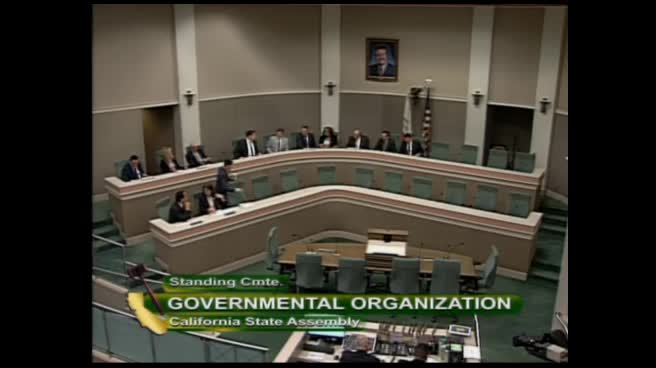 3MIN
Assembly Standing Committee on Governmental Organization
Bill Author