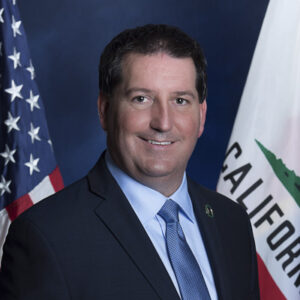
AB 1509: San Francisco Bay Area Rapid Transit District.
- Session Year: 2017-2018
- House: Assembly
- Latest Version Date: 2017-05-11
(1)Existing law establishes the San Francisco Bay Area Rapid Transit District (BART), which is authorized to acquire, construct, own, operate, control, or use rights-of-way, rail lines, bus lines, stations, platforms, switches, yards, terminals, parking lots, and any and all other facilities necessary or convenient for rapid transit service. Existing law imposes a permanent 1/2 of 1% transactions and use tax in the Counties of Alameda, Contra Costa, and San Francisco, with the net revenues from the tax allocated to transit purposes. Existing law requires 75% of the net revenues to be allocated to BART.
Existing local law, ballot Measure RR, adopted by the voters of the Counties of San Francisco, Alameda, and Contra Costa on November 8, 2016, pursuant to a 2/3 vote, enacted a regional bond measure authorizing BART to issue $3.5 billion in general obligation bonds for the acquisition or improvement of real property to replace or upgrade severely worn tracks, tunnels damaged by water intrusion, outdated train control systems, and other deteriorating infrastructure to keep BART safe, prevent accidents, breakdowns, or delays, relieve overcrowding, reduce traffic congestion and pollution, improve earthquake safety, and increase access for seniors and persons with disabilities.
This bill would require BART to maintain its existing commitment of funds for the acquisition, construction, or completion of rapid transit facilities and would prohibit BART from redirecting any existing funds dedicated for system infrastructure capital improvements or rolling stock to cover operating expenses following the approval of Measure RR. The bill would also require BART in any fiscal year that it makes an expenditure of Measure RR revenues to expend from other sources of revenue an amount not less than the annual average of its expenditures on acquisition, construction, or completion of rapid transit facilities during the 201314, 201415, and 201516 fiscal years. By imposing new duties on a local governmental entity, the bill would create a state-mandated local program.
The bill would authorize the Controller to perform audits to ensure compliance with certain of these provisions and if BART has not complied with those provisions, the Controller would be required to withhold an amount, equal to the difference between actual and required expenditures, from distributions provided to BART under the transactions and use tax provisions described above.(2)The California Constitution requires the state to reimburse local agencies and school districts for certain costs mandated by the state. Statutory provisions establish procedures for making that reimbursement.
This bill would provide that, if the Commission on State Mandates determines that the bill contains costs mandated by the state, reimbursement for those costs shall be made pursuant to the statutory provisions noted above.
(1)Existing law establishes the San Francisco Bay Area Rapid Transit District (BART), which is authorized to acquire, construct, own, operate, control, or use rights-of-way, rail lines, bus lines, stations, platforms, switches, yards, terminals, parking lots, and any and all other facilities necessary or convenient for rapid transit service. Existing law imposes a permanent 1/2 of 1% transactions and use tax in the Counties of Alameda, Contra Costa, and San Francisco, with the net revenues from the tax allocated to transit purposes. Existing law requires 75% of the net revenues to be allocated to BART.
Existing local law, ballot Measure RR, adopted by the voters of the Counties of San Francisco, Alameda, and Contra Costa on November 8, 2016, pursuant to a 2/3 vote, enacted a regional bond measure authorizing BART to issue $3.5 billion in general obligation bonds for the acquisition or improvement of real property to replace or upgrade severely worn tracks, tunnels damaged by water intrusion, outdated train control systems, and other deteriorating infrastructure to keep BART safe, prevent accidents, breakdowns, or delays, relieve overcrowding, reduce traffic congestion and pollution, improve earthquake safety, and increase access for seniors and persons with disabilities.
This bill would prohibit BART from redirecting any existing funds dedicated for system infrastructure capital improvements or rolling stock to cover operating expenses following the approval of Measure RR. The bill would also require BART in any fiscal year that it makes an expenditure of Measure RR revenues to expend from other sources of revenue an amount not less than the annual average of its expenditures on acquisition, construction, or completion of rapid transit facilities during the 201314, 201415, and 201516 fiscal years. By imposing new duties on a local governmental entity, the bill would create a state-mandated local program.
The bill would authorize the Controller to perform audits to ensure compliance with certain of these provisions and if BART has not complied with those provisions, the Controller would be required to withhold an amount, equal to the difference between actual and required expenditures, from distributions provided to BART under the transactions and use tax provisions described above.
(2)The California Constitution requires the state to reimburse local agencies and school districts for certain costs mandated by the state. Statutory provisions establish procedures for making that reimbursement.
This bill would provide that, if the Commission on State Mandates determines that the bill contains costs mandated by the state, reimbursement for those costs shall be made pursuant to the statutory provisions noted above.
(1)Existing law establishes the San Francisco Bay Area Rapid Transit District (BART), which is authorized to acquire, construct, own, operate, control, or use rights-of-way, rail lines, bus lines, stations, platforms, switches, yards, terminals, parking lots, and any and all other facilities necessary or convenient for rapid transit service. Existing law imposes a permanent 1/2 of 1% transactions and use tax in the Counties of Alameda, Contra Costa, and San Francisco, with the net revenues from the tax allocated to transit purposes. Existing law requires 75% of the net revenues to be allocated to BART.
Existing local law, ballot Measure RR, adopted by the voters of the Counties of San Francisco, Alameda, and Contra Costa on November 8, 2016, pursuant to a 2/3 vote, enacted a regional bond measure authorizing BART to issue $3.5 billion in general obligation bonds for the acquisition or improvement of real property to replace or upgrade severely worn tracks, tunnels damaged by water intrusion, outdated train control systems, and other deteriorating infrastructure to keep BART safe, prevent accidents, breakdowns, or delays, relieve overcrowding, reduce traffic congestion and pollution, improve earthquake safety, and increase access for seniors and persons with disabilities.
This bill would prohibit BART from redirecting any existing funds dedicated for system improvements to cover operating expenses following the approval of Measure RR. The bill would also require BART in any fiscal year that it makes an expenditure of Measure RR revenues to expend from other sources of revenue an amount not less than the annual average of its expenditures on acquisition, construction, or completion of rapid transit facilities during the 201314, 201415, and 201516 fiscal years. By imposing new duties on a local governmental entity, the bill would create a state-mandated local program.
The bill would authorize the Controller to perform audits to ensure compliance with certain of these provisions and if BART has not complied with those provisions, the Controller would be required to withhold an amount, equal to the difference between actual and required expenditures, from distributions provided to BART under the transactions and use tax provisions described above.
(2)The California Constitution requires the state to reimburse local agencies and school districts for certain costs mandated by the state. Statutory provisions establish procedures for making that reimbursement.
This bill would provide that, if the Commission on State Mandates determines that the bill contains costs mandated by the state, reimbursement for those costs shall be made pursuant to the statutory provisions noted above.
(a)The district shall maintain its existing commitment of funds for the acquisition, construction, or completion of rapid transit facilities. Following approval of Measure RR at the November 8, 2016, election, the district shall not redirect any existing funds dedicated for system infrastructure capital improvements or rolling stock to cover operating expenses.
(b)In any fiscal year that the district makes an expenditure of Measure RR revenues, the district shall expend from other sources of revenue an amount not less than the annual average of its expenditures on acquisition, construction, or completion of rapid transit facilities during the 201314, 201415, and 201516 fiscal years.(c)The State Controller may perform audits to ensure compliance with subdivision (b) when deemed necessary. If the district has not complied with subdivision (b), the Controller shall withhold an amount, equal to the difference between actual and required expenditures, from distributions provided pursuant to subdivision (a) of Section 29142.2.SEC. 2.If the Commission on State Mandates determines that this act contains costs mandated by the state, reimbursement to local agencies and school districts for those costs shall be made pursuant to Part 7 (commencing with Section 17500) of Division 4 of Title 2 of the Government Code.
(a)The district shall maintain its existing commitment of funds for the acquisition, construction, or completion of rapid transit facilities. Following approval of Measure RR at the November 8, 2016, election, the district shall not redirect any existing funds dedicated for system infrastructure capital improvements or rolling stock to cover operating expenses.
(b)In any fiscal year that the district makes an expenditure of Measure RR revenues, the district shall expend from other sources of revenue an amount not less than the annual average of its expenditures on acquisition, construction, or completion of rapid transit facilities during the 201314, 201415, and 201516 fiscal years.
(c)The State Controller may perform audits to ensure compliance with subdivision (b) when deemed necessary. If the district has not complied with subdivision (b), the Controller shall withhold an amount, equal to the difference between actual and required expenditures, from distributions provided pursuant to subdivision (a) of Section 29142.2.
SEC. 2.If the Commission on State Mandates determines that this act contains costs mandated by the state, reimbursement to local agencies and school districts for those costs shall be made pursuant to Part 7 (commencing with Section 17500) of Division 4 of Title 2 of the Government Code.
(a)The district shall maintain its existing commitment of funds for the acquisition, construction, or completion of rapid transit facilities. Following approval of Measure RR at the November 8, 2016, election, the district shall not redirect any existing funds dedicated for system improvements to cover operating expenses.
(b)In any fiscal year that the district makes an expenditure of Measure RR revenues, the district shall expend from other sources of revenue an amount not less than the annual average of its expenditures on acquisition, construction, or completion of rapid transit facilities during the 201314, 201415, and 201516 fiscal years.
(c)The Controller may perform audits to ensure compliance with subdivision (b) when deemed necessary. If the district has not complied with subdivision (b), the Controller shall withhold an amount, equal to the difference between actual and required expenditures, from distributions provided pursuant to subdivision (a) of Section 29142.2.
SEC. 2.If the Commission on State Mandates determines that this act contains costs mandated by the state, reimbursement to local agencies and school districts for those costs shall be made pursuant to Part 7 (commencing with Section 17500) of Division 4 of Title 2 of the Government Code.
|
Date
|
Status
|
|---|---|
| Feb 1, 2018 | From committee: Filed with the Chief Clerk pursuant to Joint Rule 56. |
| Jan 31, 2018 | Died pursuant to Art. IV, Sec. 10(c) of the Constitution. |
| May 26, 2017 | In committee: Held under submission. |
| May 24, 2017 | In committee: Set, first hearing. Referred to APPR. suspense file. |
| May 15, 2017 | Re-referred to Com. on APPR. |
| May 11, 2017 | From committee chair, with author's amendments: Amend, and re-refer to Com. on APPR. Read second time and amended. |
| Apr 27, 2017 | From committee: Do pass and re-refer to Com. on APPR. (Ayes 5. Noes 3.) (April 26). Re-referred to Com. on APPR. |
| Apr 19, 2017 | In committee: Set, first hearing. Hearing canceled at the request of author. |
| Apr 17, 2017 | Re-referred to Com. on L. GOV. |
| Apr 6, 2017 | From committee chair, with author's amendments: Amend, and re-refer to Com. on L. GOV. Read second time and amended. |
| Mar 16, 2017 | Referred to Com. on L. GOV. |
| Feb 19, 2017 | From printer. May be heard in committee March 21. |
| Feb 17, 2017 | Read first time. To print. |
|
Date
|
Description
|
Location
|
Votes
|
|
|---|---|---|---|---|
| Apr 26, 2017 | Do pass and be re-referred to the Committee on [Appropriations] | Assembly Standing Committee on Local Government |
Passed |
This list shows positions taken on this bill by organizations on the date displayed, which is linked to the original source.
Positions by individuals are not included.
|
Organization
|
Position
|
Date
|
|---|---|---|
| AFSCME Council 57 | ** Against | Apr 25, 2017 |
| BART | * Support | Apr 26, 2017 |
| California Conference Board of Amalgamated Transit Union | ** Against | Apr 25, 2017 |
| California Labor Federation | ** Against | Apr 25, 2017 |
| Councilmember Dave Trotter, Town of Moraga | ** Support | Apr 25, 2017 |
Date of Hearing: May 24, 2017
ASSEMBLY COMMITTEE ON APPROPRIATIONS
Lorena Gonzalez Fletcher, Chair
ABPCA Bill Id:AB 1509
Author:(Baker) – As Amended Ver:May 11, 2017
Policy Committee: | Local Government | Vote: | 5 - 3 |
Urgency: No State Mandated Local Program: Yes Reimbursable: Yes
SUMMARY:
This bill establishes restrictions on the expenditure of funds for the Bay Area Transit District (BART). Specifically, this bill:
- Prohibits BART, following approval of Measure RR at the November 8, 2016, election, from redirecting any existing funds dedicated for system infrastructure capital improvements or rolling stock to cover operating expenses.
- Requires BART to maintain its existing commitment of funds for the acquisition, construction, or completion of rapid transit facilities.
FISCAL EFFECT:
Potential reimbursable state-mandated costs of up to $1.2 billion (GF), to cover expenses that BART officials must now backfill from other revenue sources.
COMMENTS:
- Purpose. According to the author, "BART officials can redirect the funds previously allocated for capital or capital improvements before Measure RR passed to cover operating costs. In doing so, Measure RR revenue would effectively be diverted from BART’s crumbling infrastructure, as promised repeatedly to Bay Area voters who will pay for Measure RR for the next 48 years. This would go against what voters wanted and Measure RR’s original purpose of helping BART’s dilapidated infrastructure."
- Background. Existing law authorizes BART to issue a general obligation bond (GO bond), backed by property tax, subject to two-thirds voter approval. In November 2004, voters in San Francisco, Contra Costa, and Alameda counties approved Measure AA authorizing BART to issue a GO bond up to $980 million to make earthquake safety improvements. In November 2016, voters passed Measure RR to issue a GO bond up to $3.5 billion to repair and replace infrastructure. According to BART, some of the priorities for Measure RR funding include replacing 90 miles of track, cable replacement, repairing tunnels and structures, and renewing and modernizing stations.
BART also levies a half-cent transactions and use tax in San Francisco, Contra Costa, and Alameda counties. From the transactions and use tax, BART receives 75% of revenues which account for BART's second largest source of revenue after passenger fares. According to BART, those revenues are pledged to secure sales tax revenue bonds and are used to pay general operating and capital costs. For FY 2017, BART projects the transactions and use tax revenues at $247.5 million. BART also receives a share of ad valorem property taxes in FY 2017 which accounted for $40.2 million in revenues for the district.
- Arguments in Support. Councilmember Dave Trotter, Town of Moraga, argues, "Key to the passage of Measure RR was a promise by BART voters that the funds would be dedicated exclusively to much-needed capital investment and not used to cover BART's high operating costs. BART rejected Measure RR language that would have ensured the Measure's fund could not be used to backfill operating costs. As a result, BART effectively can use Measure RR funds to redirect capital improvements to cover operating costs. As much as $1.2 billion of Measure RR funds – a full one-third of the bond fund – can be used to backfill operating costs. Measure RR could effectively be diverted from BART's crumbling infrastructure, which was a promise made repeatedly to Bay Area voters who will pay for Measure RR for the next 48 years."
- Arguments in Opposition. SEIU California asserts, "This bill is an unnecessary intrusion into an area of local control. The BART Board of Directors are elected officials and should have the ability to determine how much money to invest in capital projects and how much to invest in operations. Measure RR did not include the limitations on budgeting that this bill contains and so there is nothing in the passage of that measure that lends support for the limits in local control proposed by this bill. These are matters best left to the BART Board to determine how to make this money translate in greater access and use of transit services.
Analysis Prepared by: Jennifer Swenson / APPR. / (916) 319-2081
Date of Hearing: April 26, 2017
ASSEMBLY COMMITTEE ON LOCAL GOVERNMENT
Cecilia Aguiar-Curry, Chair
ABPCA Bill Id:AB 1509 (
Author:Baker) – As Amended Ver:April 6, 2017
SUBJECT: San Francisco Bay Area Rapid Transit District.
SUMMARY: Establishes restrictions on the expenditure of funds for the Bay Area Transit District (BART) and requires the State Controller to withhold specified revenues if the required expenditures are not met, as specified. Specifically, this bill:
- Requires BART, in any fiscal year (FY) that BART expends Measure RR revenues, to expend from other sources of revenue an amount not less than the annual average of its expenditures on acquisition, construction, or completion of rapid transit facilities during the 2013-14, 2014-15, and 2015-16, FYs.
- Authorizes the California State Controller to perform audits to ensure compliance with 1), above, when deemed necessary.
- Requires the Controller, if BART does not comply with 1), above, to withhold an amount equal to the difference between actual and required expenditures, from distributions provided to BART, pursuant to existing law for transactions and use tax revenue.
- Prohibits BART, following approval of Measure RR at the November 8, 2016, election, from redirecting any existing funds dedicated for system infrastructure capital improvements or rolling stock to cover operating expenses.
- Requires BART to maintain its existing commitment of funds for the acquisition, construction, or completion of rapid transit facilities.
- Provides that, if the Commission on State Mandates determines that this bill contains costs mandated by the state, reimbursement to local agencies and school districts for those costs shall be made, pursuant to current laws governing state mandated local costs.
FISCAL EFFECT: This bill is keyed fiscal and contains a state-mandated local program.
COMMENTS:
- Bill Summary. This bill requires in any FY that Measure RR revenues are expended that BART expend from other sources of revenue no less than the annual average of its expenditure on the acquisition, construction, or completion of rapid transit facilities during the 2013-16 FYs. According to the author, the average expenditure for rapid transit facilities from these three FYs is around $705 million. This bill authorizes the State Controller to perform audits to ensure that BART complies with this requirement. Under this bill, if BART does not comply with this requirement, the Controller must withhold an amount equal to the difference between actual and required expenditures from distributions provided to BART, pursuant to a section of existing law which allocates transactions and use tax revenue to BART.
This bill requires BART to maintain its existing commitment of funds for the acquisition, construction, or completion of rapid transit facilities. This bill also prohibits BART from redirecting any existing funds dedicated for system infrastructure capital improvements or rolling stock to cover operating expenses. This bill is author-sponsored.
- Author's Statement. According to the author, "BART officials can redirect the funds previously allocated for capital or capital improvements before Measure RR passed to cover operating costs. In doing so, Measure RR revenue would effectively be diverted from BART’s crumbling infrastructure, as promised repeatedly to Bay Area voters who will pay for Measure RR for the next 48 years. This would go against what voters wanted and Measure RR’s original purpose of helping BART’s dilapidated infrastructure."
- BART. Existing law authorizes BART to issue a general obligation bond (GO bond), backed by property tax, subject to two-thirds voter approval. In November 2004, voters in San Francisco, Contra Costa, and Alameda counties approved Measure AA authorizing BART to issue a GO bond up to $980 million to make earthquake safety improvements. In November 2016, voters passed Measure RR to issue a GO bond up to $3.5 billion to repair and replace infrastructure. According to BART, some of the priorities for Measure RR funding include replacing 90 miles of track, cable replacement, repairing tunnels and structures, and renewing and modernizing stations.
BART also levies a half-cent transactions and use tax in San Francisco, Contra Costa, and Alameda counties. From the transactions and use tax, BART receives 75% of revenues which account for BART's second largest source of revenue after passenger fares. According to BART, those revenues are pledged to secure sales tax revenue bonds and are used to pay general operating and capital costs. For FY 2017, BART projects the transactions and use tax revenues at $247.5 million. BART also receives a share of ad valorem property taxes in FY 2017 which accounted for $40.2 million in revenues for the district.
- Arguments in Support. Councilmember Dave Trotter, Town of Moraga, argues, "Key to the passage of Measure RR was a promise by BART voters that the funds would be dedicated exclusively to much-needed capital investment and not used to cover BART's high operating costs. BART rejected Measure RR language that would have ensured the Measure's fund could not be used to backfill operating costs. As a result, BART effectively can use Measure RR funds to redirect capital improvements to cover operating costs. As much as $1.2 billion of Measure RR funds – a full one-third of the bond fund – can be used to backfill operating costs. Measure RR could effectively be diverted from BART's crumbling infrastructure, which was a promise made repeatedly to Bay Area voters who will pay for Measure RR for the next 48 years."
- Arguments in Opposition. The California Conference Board of the Amalgamated Transit Union (ATU) states, "This bill is a fundamental intrusion of state government into an area of local control. Shouldn't the BART Board of Directors, who are elected officials, have the authority to determine how much money they wish to invest in capital projects and how much they wish to invest in operations?" American Federation of State, County and Municipal Employees, argue, "For years, BART's leadership has made the decision to divert funds from the operations budget to fund the capital improvement needs of the aging system. By asking the state legislature to lock BART into redirecting a specific and large amount of operating funds into the capital budget, AB 1509's authors would make this year-by-year tactical decisions of the agency permanent policy. Already, Measure RR, a bond approved by voters in November 2016, funds cannot legally be used for BART operations. Therefore, it is not necessary for the legislature to act to protect them…One can try to predict but can't be certain in 2017 what an adequate operations budget will be in two or ten years down the line. We urge you to oppose this short-sighted proposal that does not allow for the necessary flexibility to balance the capital and operations needs of the future by tying the hands of the policy makers that are elected to make these important decisions at the District level."
- Policy Considerations. The Committee may wish to consider the following:
- Will of the voters. The author argues that BART officials have the ability to redirect funds previously allocated for capital improvements to cover operating costs and by doing so Measure RR funds would effectively be diverted from infrastructure. The Committee may wish to consider if 70.1% of voters supported Measure RR, whether additional restrictions need to be imposed by the Legislature. ATU argues, "The bill mentions Measure RR, which was approved by the voters with the support of our union and many other labor organizations. Measure RR did not include the limitations on budgeting that this bill contains and so there is nothing in the passage of that measure that lends support for the limits in control proposed by this bill."
- Transaction and Use Tax Revenue. This bill requires the Controller to withhold transactions and use tax revenue if BART does not expend a specified amount of funding on rapid transit facilities in any year that they expend Measure RR funding. The Legislature authorized BART to go to the voters for a transactions and use tax in 1970 and BART obtained voter approval in San Francisco, Contra Costa, and Alameda counties. The Committee may wish to consider if it is appropriate to direct the State Controller to withhold transactions and use tax revenue that was approved by the voters. The Committee may wish to consider the potential effect this bill may have on sales tax bonds which are secured by transactions and use tax revenue and if the requirements in this bill will impact the security of those bonds.
REGISTERED SUPPORT / OPPOSITION:
Support
Councilmember Dave Trotter, Town of Moraga
Opposition
American Federation of State, County and Municipal Employees AFL-CIO (AFSCME)
AFSCME Council 57
California Conference Board of Amalgamated Transit Union
California Labor Federation
Analysis Prepared by: Misa Lennox / L. GOV. / (916) 319-3958
Date of Hearing: April 19, 2017
ASSEMBLY COMMITTEE ON LOCAL GOVERNMENT
Cecilia Aguiar-Curry, Chair
ABPCA Bill Id:AB 1509 (
Author:Baker) – As Amended Ver:April 6, 2017
SUBJECT: San Francisco Bay Area Rapid Transit District.
SUMMARY: Establishes restrictions on the expenditure of funds for the Bay Area Transit District (BART) and requires the State Controller to withhold specified revenues if the required expenditures are not met, as specified. Specifically, this bill:
- Requires BART, in any fiscal year (FY) that BART expends Measure RR revenues, to expend from other sources of revenue an amount not less than the annual average of its expenditures on acquisition, construction, or completion of rapid transit facilities during the 2013-14, 2014-15, and 2015-16, FYs.
- Authorizes the California State Controller to perform audits to ensure compliance with 1), above, when deemed necessary.
- Requires the Controller, if BART does not comply with 1), above, to withhold an amount equal to the difference between actual and required expenditures, from distributions provided to BART, pursuant to existing law for transactions and use tax revenue.
- Prohibits BART, following approval of Measure RR at the November 8, 2016, election, from redirecting any existing funds dedicated for system infrastructure capital improvements or rolling stock to cover operating expenses.
- Requires BART to maintain its existing commitment of funds for the acquisition, construction, or completion of rapid transit facilities.
- Provides that, if the Commission on State Mandates determines that this bill contains costs mandated by the state, reimbursement to local agencies and school districts for those costs shall be made, pursuant to current laws governing state mandated local costs.
FISCAL EFFECT: This bill is keyed fiscal and contains a state-mandated local program.
COMMENTS:
- Bill Summary. This bill requires in any FY that Measure RR revenues are expended that BART expend from other sources of revenue no less than the annual average of its expenditure on the acquisition, construction, or completion of rapid transit facilities during the 2013-16 FYs. According to the author, the average expenditure for rapid transit facilities from these three FYs is around $705 million. This bill authorizes the State Controller to perform audits to ensure that BART complies with this requirement. Under this bill, if BART does not comply with this requirement, the Controller must withhold an amount equal to the difference between actual and required expenditures from distributions provided to BART, pursuant to a section of existing law which allocates transactions and use tax revenue to BART.
This bill requires BART to maintain its existing commitment of funds for the acquisition, construction, or completion of rapid transit facilities. This bill also prohibits BART from redirecting any existing funds dedicated for system infrastructure capital improvements or rolling stock to cover operating expenses. This bill is author-sponsored.
- Author's Statement. According to the author, "BART officials can redirect the funds previously allocated for capital or capital improvements before Measure RR passed to cover operating costs. In doing so, Measure RR revenue would effectively be diverted from BART’s crumbling infrastructure, as promised repeatedly to Bay Area voters who will pay for Measure RR for the next 48 years. This would go against what voters wanted and Measure RR’s original purpose of helping BART’s dilapidated infrastructure."
- BART. Existing law authorizes BART to issue a general obligation bond (GO bond), backed by property tax, subject to two-thirds voter approval. In November 2004, voters in San Francisco, Contra Costa, and Alameda counties approved Measure AA authorizing BART to issue a GO bond up to $980 million to make earthquake safety improvements. In November 2016, voters passed Measure RR to issue a GO bond up to $3.5 billion to repair and replace infrastructure. According to BART, some of the priorities for Measure RR funding include replacing 90 miles of track, cable replacement, repairing tunnels and structures, and renewing and modernizing stations.
BART also levies a half-cent transactions and use tax in San Francisco, Contra Costa, and Alameda counties. From the transactions and use tax, BART receives 75% of revenues which account for BART's second largest source of revenue after passenger fares. According to BART, those revenues are pledged to secure sales tax revenue bonds and are used to pay general operating and capital costs. For FY 2017, BART projects the transactions and use tax revenues at $247.5 million. BART also receives a share of ad valorem property taxes in FY 2017 which accounted for $40.2 million in revenues for the district.
- Arguments in Support. None on file.
- Arguments in Opposition. The California Conference Board of the Amalgamated Transit Union (ATU) states, "This bill is a fundamental intrusion of state government into an area of local control. Shouldn't the BART Board of Directors, who are elected officials, have the authority to determine how much money they wish to invest in capital projects and how much they wish to invest in operations?" American Federation of State, County and Municipal Employees, Council 57, argue, "For years, BART's leadership has made the decision to divert funds from the operations budget to fund the capital improvement needs of the aging system. By asking the state legislature to lock BART into redirecting a specific and large amount of operating funds into the capital budget, AB 1509's authors would make this year-by-year tactical decisions of the agency permanent policy. Already, Measure RR, a bond approved by voters in November 2016, funds cannot legally be used for BART operations. Therefore, it is not necessary for the legislature to act to protect them…One can try to predict but can't be certain in 2017 what an adequate operations budget will be in two or ten years down the line. We urge you to oppose this short-sighted proposal that does not allow for the necessary flexibility to balance the capital and operations needs of the future by tying the hands of the policy makers that are elected to make these important decisions at the District level."
- Policy Considerations. The Committee may wish to consider the following:
- Will of the voters. The author argues that BART officials have the ability to redirect funds previously allocated for capital improvements to cover operating costs and by doing so Measure RR funds would effectively be diverted from infrastructure. The Committee may wish to consider if 70.1% of voters supported Measure RR, whether additional restrictions need to be imposed by the Legislature. ATU argues, "The bill mentions Measure RR, which was approved by the voters with the support of our union and many other labor organizations. Measure RR did not include the limitations on budgeting that this bill contains and so there is nothing in the passage of that measure that lends support for the limits in control proposed by this bill."
- Transaction and Use Tax Revenue. This bill requires the Controller to withhold transactions and use tax revenue if BART does not expend a specified amount of funding on rapid transit facilities in any year that they expend Measure RR funding. The Legislature authorized BART to go to the voters for a transactions and use tax in 1970 and BART obtained voter approval in San Francisco, Contra Costa, and Alameda counties. The Committee may wish to consider if it is appropriate to direct the State Controller to withhold transactions and use tax revenue that was approved by the voters. The Committee may wish to consider the potential effect this bill may have on sales tax bonds which are secured by transactions and use tax revenue and if the requirements in this bill will impact the security of those bonds.
REGISTERED SUPPORT / OPPOSITION:
Support
None on file
Opposition
American Federation of State, County and Municipal Employees AFL-CIO (AFSCME)
AFSCME Council 57
California Conference Board of Amalgamated Transit Union
Analysis Prepared by: Misa Lennox / L. GOV. / (916) 319-3958
Discussed in Hearing
 1H
Assembly Standing Committee on Appropriations
 2MIN
Assembly Standing Committee on Appropriations
 27MIN
Assembly Standing Committee on Local Government
Bill Author

Bill Co-Author(s):