AB 1520: Lifting Children and Families Out of Poverty Task Force.
- Session Year: 2017-2018
- House: Assembly
- Latest Version Date: 2017-10-02
Existing law establishes various programs that provide cash assistance and other benefits relating to health care, food, and housing, among other things, to qualified low-income families and individuals, including, among others, the California Work Opportunity and Responsibility to Kids (CalWORKs) program, the California Earned Income Tax Credit, Medi-Cal, CalFresh, the California Special Supplemental Nutrition Program for Women, Infants, and Children (WIC Program), and the Emergency Housing and Assistance Program.
This bill would establish the Lifting Children and Families Out of Poverty Task Force, for the purpose of submitting a report to the Legislature and the executive branch administration of the state, as specified, that recommends future comprehensive strategies to achieve the reduction of deep poverty among children and reduce the overall child poverty rate in the state. The bill would require the report to be completed by November 1, 2018. The bill would require the State Department of Social Services to invite and convene the task force and to assist the task force in carrying out its duties, as specified. The bill would repeal these provisions on January 1, 2020.
Existing law establishes various programs that provide cash assistance and other benefits relating to health care, food, and housing, among other things, to qualified low-income families and individuals, including, among others, the California Work Opportunity and Responsibility to Kids (CalWORKs) program, the California Earned Income Tax Credit, Medi-Cal, CalFresh, the California Special Supplemental Nutrition Program for Women, Infants, and Children (WIC Program), and the Emergency Housing and Assistance Program.
This bill would establish the Lifting Children and Families Out of Poverty Task Force, for the purpose of producing a report for submitting a report to the Legislature and the executive branch administration of the state, as specified, that recommends future comprehensive strategies to address achieve the reduction of deep poverty among children and reduce the overall child poverty rate in the state. The bill would require the report to be completed by November 1, 2018. The bill would require the State Department of Social Services to invite and convene the task force and to assist the task force in carrying out its duties, as specified. The bill would repeal these provisions on January 1, 2020.
Existing law establishes various programs that provide cash assistance and other benefits relating to health care, food, and housing, among other things, to qualified low-income families and individuals, including, among others, the California Work Opportunity and Responsibility to Kids (CalWORKs) program, the California Earned Income Tax Credit, Medi-Cal, CalFresh, the California Special Supplemental Nutrition Program for Women, Infants, and Children (WIC Program), and the Emergency Housing and Assistance Program.
This bill would establish the Lifting Children and Families Out of Poverty Task Force, for the purpose of producing a report for the Legislature and the executive administration of the state, as specified, that recommends future comprehensive strategies to eliminate address deep poverty among children and reduce the overall child poverty rate in the state. The bill would require the report to be completed by November 1, 2018. The bill would require the State Department of Social Services to invite and convene the task force and to work with the task force to carry assist the task force in carrying out its duties, as specified. The bill would repeal these provisions on January 1, 2020.
Existing law establishes various programs that provide cash assistance and other benefits relating to health care, food, and housing, among other things, to qualified low-income families and individuals, including, among others, the California Work Opportunity and Responsibility to Kids (CalWORKs) program, the California Earned Income Tax Credit, Medi-Cal, CalFresh, the California Special Supplemental Nutrition Program for Women, Infants, and Children (WIC Program), and the Emergency Housing and Assistance Program.
This bill would establish the Lifting Children and Families Out of Poverty Task Force, consisting of specified stakeholders, for the purpose of developing, recommending, and annually updating a plan aimed at addressing deep child poverty and providing recommendations on how to reduce child poverty in California. The bill would require the task force, in conjunction with the California Health and Human Services Agency, to prepare and submit a report to the Legislature no earlier than March 1, 2018, and no later than March 1, 2020, that includes, among other things, a projection of the child poverty rate for each fiscal year through 203940 and benchmarks that can be used to measure the states progress towards these goals, as specified. The bill would require the task forces benchmarks to include those that peer-reviewed studies have shown to be predictive of adult poverty rates and child poverty rates in subsequent generations, as specified. The bill would require the task force to base any estimate made in its report on current evidence-based, high-quality modeling techniques and data networks, as specified. The bill would require the task force to discuss the degree of uncertainty and reasonable range related to each key estimate made in its report and to disclose, to the extent possible, statistical margins of error and confidence intervals for each estimate. Following the submission of the initial report, the bill would require the agency and task force to continuously review its benchmarks, update its models and projections, and annually submit a report to the Legislature regarding the states progress towards its poverty reduction goals and any significant modifications to the findings and recommendations made in the initial report, as specified. The bill would require the agency and task force to consider certain programs, services, and expenditures in preparing its analyses and recommendations, including child care and early childhood education for children living below the federal poverty level, job training and placement programs, and General Fund expenditures related to health care services for children and low-come childless adults. for the purpose of producing a report for the Legislature and the executive administration of the state, as specified, that recommends future comprehensive strategies to eliminate deep poverty among children and reduce the overall child poverty rate in the state. The bill would require the report to be completed by November 1, 2018. The bill would require the State Department of Social Services to invite and convene the task force and to work with the task force to carry out its duties, as specified. The bill would repeal these provisions on January 1, 2020.
Existing law establishes various programs that provide cash assistance and other benefits relating to health care, food, and housing, among other things, to qualified low-income families and individuals, including, among others, the California Work Opportunity and Responsibility to Kids (CalWORKs) program, the California Earned Income Tax Credit, Medi-Cal, CalFresh, the California Special Supplemental Nutrition Program for Women, Infants, and Children (WIC Program), and the Emergency Housing and Assistance Program.
This bill would establish the Lifting Children and Families Out of Poverty Task Force, consisting of specified stakeholders, for purposes of eliminating deep child poverty and to reduce the overall child poverty rate in the state by 50% by the 203940 fiscal year. the purpose of developing, recommending, and annually updating a plan aimed at addressing deep child poverty and providing recommendations on how to reduce child poverty in California. The bill would require the task force, in conjunction with the California Health and Human Services Agency, to prepare and submit a report to the Legislature no earlier than March 1, 2018, and no later than March 1, 2020, that includes, among other things, a projection of the child poverty rate for each fiscal year through 203940 and benchmarks that can be used to measure the states progress towards these goals, as specified. The bill would require the task forces benchmarks to include those that peer-reviewed studies have shown to be predictive of adult poverty rates and child poverty rates in subsequent generations, as specified. The bill would require the task force to base any estimate made in its report on current evidence-based, high-quality modeling techniques and data networks, as specified. The bill would require the task force to discuss the degree of uncertainty and reasonable range related to each key estimate made in its report and to disclose, to the extent possible, statistical margins of error and confidence intervals for each estimate. Following the submission of the initial report, the bill would require the agency and task force to continuously review its benchmarks, update its models and projections, and annually submit a report to the Legislature regarding the states progress towards its poverty reduction goals and any significant modifications to the findings and recommendations made in the initial report, as specified. The bill would require the agency and task force to consider certain programs, services, and expenditures in preparing its analyses and recommendations, including child care and early childhood education for children living below the federal poverty level, job training and placement programs, and General Fund expenditures related to health care services for children and low-come childless adults.
Existing law establishes various programs that provide cash assistance and other benefits relating to health care, food, and housing, among other things, to qualified low-income families and individuals, including, among others, the California Work Opportunity and Responsibility to Kids (CalWORKs) program, the California Earned Income Tax Credit, Medi-Cal, CalFresh, the California Special Supplemental Nutrition Program for Women, Infants, and Children (WIC Program), and the Emergency Housing and Assistance Program.
This bill would establish the Lifting Children and Families Out of Poverty Task Force, consisting of specified stakeholders, for purposes of researching, analyzing, and providing guidance to the Legislature in supporting Californias efforts on lifetime wellness, self-sufficiency, and economic strength in families and communities throughout the state. The bill would require the task force to report to the Legislature on its projections of how the Governors budget proposal will impact the child poverty rate in California. eliminating deep child poverty and to reduce the overall child poverty rate in the state by 50% by the 203940 fiscal year. The bill would also require the task force, commencing in 2019, and every 2 years thereafter, to prepare, and report to the Legislature, an analysis that includes an estimate of the impact that current programs, services, and innovations established under existing law have had on the child poverty rate in California. force, in conjunction with the California Health and Human Services Agency, to prepare and submit a report to the Legislature no earlier than March 1, 2018, and no later than March 1, 2020, that includes, among other things, a projection of the child poverty rate for each fiscal year through 203940 and benchmarks that can be used to measure the states progress towards these goals, as specified. The bill would require the task forces benchmarks to include those that peer-reviewed studies have shown to be predictive of adult poverty rates and child poverty rates in subsequent generations, as specified. The bill would require the task force to base any estimate made in its report on current evidence-based, high-quality modeling techniques and data networks, as specified. The bill would require the task force to discuss the degree of uncertainty and reasonable range related to each key estimate made in its report and to disclose, to the extent possible, statistical margins of error and confidence intervals for each estimate. Following the submission of the initial report, the bill would require the agency and task force to continuously review its benchmarks, update its models and projections, and annually submit a report to the Legislature regarding the states progress towards its poverty reduction goals and any significant modifications to the findings and recommendations made in the initial report, as specified. The bill would require the agency and task force to consider certain programs, services, and expenditures in preparing its analyses and recommendations, including child care and early childhood education for children living below the federal poverty level, job training and placement programs, and General Fund expenditures related to health care services for children and low-come childless adults.
Existing law establishes various programs that provide cash assistance and other benefits relating to health care, food, and housing, among other things, to qualified low-income families and individuals, including, among others, the California Work Opportunity and Responsibility to Kids (CalWORKs) program, the California Earned Income Tax Credit, Medi-Cal, CalFresh, the California Special Supplemental Nutrition Program for Women, Infants, and Children (WIC Program), and the Emergency Housing and Assistance Program.
This bill would make legislative findings and declarations regarding child poverty in California. The bill would state the intent of the Legislature to move toward reducing child poverty in this state by 50% over a 20-year period, commencing with the 201819 fiscal year and ending with the 203839 fiscal year. The bill would also state the intent of the Legislature to use a specified framework as guiding and nonbinding recommendations for purposes of enacting future legislation to fund programs or services that have been proven to reduce child poverty in California and to fund future innovations that are shown to achieve similar outcomes. The bill would set forth certain programs, services, and expenditures that the Legislature should consider for purposes of making appropriations on an annual basis, except as specified. The bill would require the annual Budget Act passed by the Legislature to contain a statement specifying how expenditures in the Budget Act comply with the framework.This bill would establish the Lifting Children and Families Out of Poverty Task Force, consisting of specified stakeholders, for purposes of researching, analyzing, and providing guidance to the Legislature in making appropriations pursuant to the framework and in supporting Californias efforts on lifetime wellness, self-sufficiency, and economic strength in families and communities throughout the state. The bill would require the Legislative Analysts Office and the task force, on an annual basis, task force to report to the Legislature on their its projections of how the Governors budget proposal will impact the child poverty rate in California. The bill would also require the office and the task force, commencing in 2019, and every 2 years thereafter, to prepare, and report to the Legislature, an analysis regarding child poverty that includes certain information relating to programs, services, and expenditures and an estimate of the impact that the framework described above has had, or will have, on current or projected future child poverty rates, respectively, in California, to the extent the framework has been used by the Legislature. The bill would recommend that the Legislature hold a joint hearing every 2 years, as specified, to assess the impact that the framework has had on the child poverty rate in California and would recommend that the committees involved consider the reports submitted by the office and the task force. that includes an estimate of the impact that current programs, services, and innovations established under existing law have had on the child poverty rate in California.
Existing law establishes various programs that provide cash assistance and other benefits relating to health care, food, and housing, among other things, to qualified low-income families and individuals, including, among others, the California Work Opportunity and Responsibility to Kids (CalWORKs) program, the California Earned Income Tax Credit, Medi-Cal, CalFresh, the California Special Supplemental Nutrition Program for Women, Infants, and Children (WIC Program), and the Emergency Housing and Assistance Program.
This bill would make legislative findings and declarations regarding child poverty in California. The bill would state the intent of the Legislature to move toward reducing child poverty in this state by 50% over a 20-year period, commencing with the 201819 fiscal year and ending with the 203839 fiscal year. The bill would also state the intent of the Legislature to use a specified framework as guiding and nonbinding recommendations for purposes of enacting future legislation to fund programs or services that have been proven to reduce child poverty in California and to fund future innovations that are shown to achieve similar outcomes. The bill would set forth certain programs, services, and expenditures that the Legislature should consider for purposes of making appropriations on an annual basis, except as specified. The bill would require the annual Budget Act passed by the Legislature to contain a statement specifying how expenditures in the Budget Act comply with the framework.
This bill would establish the Lifting Children and Families Out of Poverty Task Force, consisting of specified stakeholders, for purposes of researching, analyzing, and providing guidance to the Legislature in making appropriations pursuant to the framework and in supporting Californias efforts on lifetime wellness, self-sufficiency, and economic strength in families and communities throughout the state. The bill would require the Department of Finance, Legislative Analysts Office and the task force, on an annual basis, to report to the Legislature on its their projections of how the Governors budget proposal will impact the child poverty rate in California. The bill would also require the department, office and the task force, commencing in 2019, and every 2 years thereafter, to prepare, and report to the Legislature, an analysis regarding child poverty that includes, among other things, includes certain information relating to programs, services, and expenditures and an estimate of the impact that the framework described above has had on the had, or will have, on current or projected future child poverty rate rates, respectively, in California, to the extent the framework has been used by the Legislature. The bill would recommend that the Legislature hold a joint hearing every 2 years, as specified, to assess the impact that the framework has had on the child poverty rate in California and would recommend that the committees involved consider the reports submitted by the department. office and the task force.
Existing law establishes various programs that provide cash assistance and other benefits relating to health care, food, and housing, among other things, to qualified low-income families and individuals, including, among others, the California Work Opportunity and Responsibility to Kids (CalWORKs) program, the California Earned Income Tax Credit, Medi-Cal, CalFresh, the California Special Supplemental Nutrition Program for Women, Infants, and Children (WIC Program), and the Emergency Housing and Assistance Program.
This bill would make legislative findings and declarations regarding child poverty in California. The bill would state the intent of the Legislature to move toward reducing child poverty in this state by 50% over a 20-year period, commencing with the 201819 fiscal year and ending with the 203839 fiscal year. The bill would also state the intent of the Legislature to use a specified framework as guiding and nonbinding recommendations for purposes of enacting future legislation to fund programs or services that have been proven to reduce child poverty in California and to fund future innovations that are shown to achieve similar outcomes. The bill would set forth certain programs, services, and expenditures that the Legislature should consider for purposes of making appropriations on an annual basis, except as specified.
This bill would require the Department of Finance, on an annual basis, to report to the Legislature on its projections of how the Governors budget proposal will impact the child poverty rate in California. The bill would also require the department, commencing in 2019, and every 2 years thereafter, to prepare, and report to the Legislature, an analysis regarding child poverty that includes, among other things, an estimate of the impact that the framework described above has had on the child poverty rate in California, to the extent the framework has been used by the Legislature. The bill would recommend that the Legislature hold a joint hearing every 2 years, as specified, to assess the impact that the framework has had on the child poverty rate in California and would recommend that the committees involved consider the reports submitted by the department.
(a)It is the intent of the Legislature to address deep poverty among children and move toward reducing the overall child poverty rate in the state.
(b)In seeking to address deep child poverty and reduce overall child poverty, it is the intent of the Legislature to build on the substantial foundation and progress that has been made in helping low-income Californians and addressing child poverty in the state, such as increases to the minimum wage, the elimination of the maximum family grant rule in the CalWORKs program, housing and utility support programs, school nutrition programs, the local control funding formula for K12 education, state programs under the federal Workforce Innovation and Opportunity Act, expansion of health care, investments in child development, the California Earned Income Tax Credit, and outreach and assistance with the federal earned income tax credit.
(c)It is further the intent of the Legislature that the Lifting Children and Families Out of Poverty Task Force produce a report that recommends future comprehensive strategies to achieve the reduction of deep poverty among children and reduce the overall child poverty rate in the state.
SEC. 2.Division 11 (commencing with Section 20050) is added to the Welfare and Institutions Code, to read:11.POVERTY REDUCTION1.General Provisions1.Title20050.This division shall be known, and may be cited, as the Lifting Children and Families Out of Poverty Act.
2.Task Force20055.(a)(1)The Lifting Children and Families Out of Poverty Task Force is hereby established for the purpose of recommending future comprehensive strategies aimed at addressing deep child poverty and reducing child poverty in California.
(2)The task force shall be invited and convened by the State Department of Social Services. The task force shall consist of stakeholders that focus on family and child well-being, from birth to adulthood, in furtherance of the goals of reducing child poverty and alleviating family crises, including, but not limited to, representatives from among the state agencies responsible for health and human services, workforce, education, and housing programs, counties, justice agencies, state and local community organizations that work with and advocate for children and families, and researchers with subject-matter expertise.
(b)The State Department of Social Services shall assist the task force in carrying out its duties to the extent that funding is available. The department may use its existing resources to absorb its costs for implementing this division. Notwithstanding any other law, the department may accept and expend funds from nongovernment sources for its work with the task force.
(c)The task force shall submit a report to the executive branch administration and the Legislature. The report shall be completed by no later than November 1, 2018, and shall include the following:
(1)The success achieved over the eight-year period prior to completion of the report, for each program and service determined by the task force to be of the highest importance in reducing both childhood poverty and the number of children in deep poverty, and recommendations that may build on that success.
(2)An analysis of unmet needs among children in deep poverty and poverty, if any, for each of the programs and services determined by the task force to be of the highest importance in reducing childhood poverty.
(3)A specific set of near-term, intermediate term, and long-term benchmarks that can be used to measure the states progress toward the goal of addressing child poverty.
(4)The task force shall consider the needs and priorities for services, and make recommendations intended to address deep poverty among children and reduce the number of children living in poverty.
(d)A report submitted to the Legislature pursuant to this section shall be submitted in compliance with Section 9795 of the Government Code.
20060.This division shall remain in effect only until January 1, 2020, and as of that date is repealed, unless a later enacted statute that is enacted before January 1, 2020, deletes or extends that date.
(a)It is the intent of the Legislature to address deep poverty among children and move toward reducing the overall child poverty rate in the state.
(b)In seeking to address deep child poverty and reduce overall child poverty, it is the intent of the Legislature to build on the substantial foundation and progress that has been made in helping low-income Californians and addressing child poverty in the state, such as increases to the minimum wage, the elimination of the maximum family grant rule in the CalWORKs program, housing and utility support programs, school nutrition programs, the local control funding formula for K12 education, state programs under the federal Workforce Innovation and Opportunity Act, expansion of health care, investments in child development, the California Earned Income Tax Credit, and outreach and assistance with the federal earned income tax credit.
(c)It is further the intent of the Legislature that the Lifting Children and Families Out of Poverty Task Force produce a report that recommends future comprehensive strategies to achieve the reduction of deep poverty among children and reduce the overall child poverty rate in the state.
SEC. 2.Division 11 (commencing with Section 20050) is added to the Welfare and Institutions Code, to read:11.POVERTY REDUCTION1.General Provisions1.Title20050.This division shall be known, and may be cited, as the Lifting Children and Families Out of Poverty Act.
2.Task Force20055.(a)(1)The Lifting Children and Families Out of Poverty Task Force is hereby established for the purpose of recommending future comprehensive strategies aimed at addressing deep child poverty and reducing child poverty in California.
(2)The task force shall be invited and convened by the State Department of Social Services. The task force shall consist of stakeholders that focus on family and child well-being, from birth to adulthood, in furtherance of the goals of reducing child poverty and alleviating family crises, including, but not limited to, representatives from among the state agencies responsible for health and human services, workforce, education, and housing programs, counties, justice agencies, state and local community organizations that work with and advocate for children and families, and researchers with subject-matter expertise.
(b)The State Department of Social Services shall assist the task force in carrying out its duties to the extent that funding is available. To assist the task force, the department may hire staff and enter into contracts with state agencies, universities, nonprofit organizations, and other entities, as needed. The department may use its existing resources to absorb its costs for implementing this division. Notwithstanding any other law, the department may accept and expend funds from nongovernment sources for its work with the task force.
(c)The task force shall submit a report for the incoming to the executive branch administration and the Legislature. The report shall be completed by no later than November 1, 2018, and shall include the following:
(1)The success achieved over the eight-year period prior to completion of the report, for each program and service determined by the task force to be of the highest importance in reducing both childhood poverty and the number of children in deep poverty, and recommendations and associated costs that may build on that success.
(2)Any recommendations and the associated costs that may be considered to build on the progress described in paragraph (1).(3)A projection of both the child poverty rate, and the rate of children in deep poverty in California in the 203940 fiscal year under programs, services, and policies established pursuant to existing law, as identified by the task force.(4)(2)An analysis of unmet needs among children in deep poverty and poverty, if any, for each of the programs and services determined by the task force to be of the highest importance in reducing childhood poverty.
(5)(3)A specific set of near-term, intermediate term, and long-term benchmarks that can be used to measure the states progress toward the goal of addressing deep poverty among children and a 50-percent reduction in the overall child poverty rate by the 203940 fiscal year. These benchmarks shall include those that peer-reviewed studies have shown to be predictive of future adult poverty and child poverty in subsequent generations. child poverty.
(6)(4)The task force shall consider the needs and priorities for services, and make recommendations intended to address deep poverty among children and reduce the number of children living in poverty.
(d)A report submitted to the Legislature pursuant to this section shall be submitted in compliance with Section 9795 of the Government Code.
20060.This division shall remain in effect only until January 1, 2020, and as of that date is repealed, unless a later enacted statute that is enacted before January 1, 2020, deletes or extends that date.
(a)It is the intent of the Legislature to eliminate address deep poverty among children and move toward reducing the overall child poverty rate in the state.
(b)In seeking to eliminate address deep child poverty and reduce overall child poverty, it is the intent of the Legislature to build on the substantial foundation and progress that has been made in helping low-income Californians and addressing child poverty in the state, such as increases to the minimum wage, the elimination of the maximum family grant rule in the CalWORKs program, housing and utility support programs, school nutrition programs, the local control funding formula for K-12 K12 education, state programs under the federal Workforce Innovation and Opportunity Act, expansion of health care, investments in child development, the California Earned Income Tax Credit, and outreach and assistance with the federal earned income tax credit.
(c)It is further the intent of the Legislature that the Lifting Children and Families Out of Poverty Task Force produce a report that recommends future comprehensive strategies to achieve the elimination reduction of deep poverty among children and reduce the overall child poverty rate in the state.
SEC. 2.Division 11 (commencing with Section 20050) is added to the Welfare and Institutions Code, to read:11.POVERTY REDUCTION1.General Provisions1.Title20050.This division shall be known, and may be cited, as the Lifting Children and Families Out of Poverty Act.
2.Task Force20055.(a)(1)The Lifting Children and Families Out of Poverty Task Force is hereby established for the purpose of recommending future comprehensive strategies aimed at eliminating addressing deep child poverty and reducing child poverty in California.
(2)The task force shall be invited and convened by the State Department of Social Services. The task force shall consist of stakeholders that focus on family and child well-being, from birth to adulthood, in furtherance of the goals of reducing child poverty and alleviating family crises, including, but not limited to, representatives from among the state agencies responsible for health and human services, workforce, education, and housing programs, counties, justice agencies, state and local community organizations that work with and advocate for children and families, and researchers with subject-matter expertise.
(b)The State Department of Social Services shall assist the task force in carrying out its duties to the extent that funding is available. To assist the task force, the department may hire staff and enter into contracts with state agencies, universities, nonprofit organizations, and other entities, as needed. The department may use its existing resources to absorb its costs for implementing this division. Notwithstanding any other law, the department may accept and expend funds from nongovernment sources for its work with the task force.
(c)The task force shall submit a report for the incoming executive branch administration and the Legislature. The report shall be completed by no later than November 1, 2018, and shall include the following:
(1)The success achieved over the eight-year period prior to completion of the report, for each program and service determined by the task force to be of the highest importance in reducing both childhood poverty and the number of children in deep poverty, and recommendations and associated costs that may build on that success.
(2)Any recommendations and the associated costs that may be considered to build on the progress described in paragraph (1).
(3)A projection of both the child poverty rate, and the rate of children in deep poverty in California in the 203940 fiscal year under programs, services, and policies established pursuant to existing law, as identified by the task force.
(4)An analysis of unmet needs among children in deep poverty and poverty, if any, for each of the programs and services determined by the task force to be of the highest importance in reducing childhood poverty.
(5)A specific set of near-term, intermediate term, and long-term benchmarks that can be used to measure the states progress toward the goal of eliminating addressing deep poverty among children and a 50 percent 50-percent reduction in the overall child poverty rate by the 203940 fiscal year. These benchmarks shall include those that peer-reviewed studies have shown to be predictive of future adult poverty and child poverty in subsequent generations.
(6)The task force shall consider the needs and priorities for services, and make recommendations intended to eliminate address deep poverty among children and reduce the number of children living in poverty.
(d)A report submitted to the Legislature pursuant to this section shall be submitted in compliance with Section 9795 of the Government Code.
20060.This division shall remain in effect only until January 1, 2020, and as of that date is repealed, unless a later enacted statute that is enacted before January 1, 2020, deletes or extends that date.
(a)It is the intent of the Legislature to address deep poverty eliminate deep poverty among children and move toward reducing the overall child poverty rate in the state.
(b)In seeking to address eliminate deep child poverty and reduce overall child poverty, it is the intent of the Legislature to build on the substantial foundation and progress that has been made in helping low-income Californians and addressing child poverty in the state. state, such as increases to the minimum wage, the elimination of the maximum family grant rule in the CalWORKs program, housing and utility support programs, school nutrition programs, the local control funding formula for K-12 education, state programs under the federal Workforce Innovation and Opportunity Act, expansion of health care, investments in child development, the California Earned Income Tax Credit, and outreach and assistance with the federal earned income tax credit.
(c)It is further the intent of the Legislature that the Lifting Children and Families Out of Poverty Task Force provide a comprehensive plan to the Legislature and various state agencies to reduce childhood poverty. produce a report that recommends future comprehensive strategies to achieve the elimination of deep poverty among children and reduce the overall child poverty rate in the state.
SEC. 2.Division 11 (commencing with Section 20050) is added to the Welfare and Institutions Code, to read:11.POVERTY REDUCTION1.General Provisions1.Title20050.This division shall be known, and may be cited, as the Lifting Children and Families Out of Poverty Act.
2.Task Force20055.(a)(1)The Lifting Children and Families Out of Poverty Task Force is hereby established for the purpose of developing, recommending, and annually updating a plan aimed at addressing deep child poverty and providing recommendations on how to reduce child poverty in California. recommending future comprehensive strategies aimed at eliminating deep child poverty and reducing child poverty in California.
(2)The task force shall be invited and convened by the State Department of Social Services. The task force shall consist of stakeholders that focus on family and child well-being, from birth to adulthood, in furtherance of the goals of reducing child poverty and alleviating family crises, including, but not limited to, at least one representative from each of the following groups or entities:
(A)The State Department of Education.(B)The State Department of Health Care Services.(C)The State Department of Social Services.(D)The State Department of Public Health.(E)County health and social services agencies.(F)Community-based organizations that work with children and families.(G)State and local advocacy organizations for children and families.(H)Academics who work in issues impacting children and families.(I)Research based organizations that focus on children and family issues.(J)The Legislature.(b)The task force shall work with the California Health and Human Services Agency to carry out its duties. The agency, in conjunction with the task force, may hire staff and enter into contracts with state agencies, universities, nonprofit organizations, and other entities, as needed, to develop the capabilities required to carry out the duties set forth in this section. The agency may accept funds from nongovernment sources in order to commence work on the task force.(c)Notwithstanding Section 10231.5 of the Government Code, by no earlier than March 1, 2018, and no later than March 1, 2020, the agency and the task force shall submit a report to the Legislature that includes all of the following: representatives from among the state agencies responsible for health and human services, workforce, education, and housing programs, counties, justice agencies, state and local community organizations that work with and advocate for children and families, and researchers with subject-matter expertise.
(b)The State Department of Social Services shall assist the task force in carrying out its duties to the extent that funding is available. To assist the task force, the department may hire staff and enter into contracts with state agencies, universities, nonprofit organizations, and other entities, as needed. The department may use its existing resources to absorb its costs for implementing this division. Notwithstanding any other law, the department may accept and expend funds from nongovernment sources for its work with the task force.
(c)The task force shall submit a report for the incoming executive branch administration and the Legislature. The report shall be completed by no later than November 1, 2018, and shall include the following:
(1)The success achieved over the eight-year period prior to completion of the report, for each program and service determined by the task force to be of the highest importance in reducing both childhood poverty and the number of children in deep poverty, and recommendations and associated costs that may build on that success.
(2)Any recommendations and the associated costs that may be considered to build on the progress described in paragraph (1).
(1)(3)A projection of both the child poverty rate rate, and the rate of children in deep poverty in California in the 203940 fiscal year and intervening fiscal years under programs, services, and policies established pursuant to existing law, as identified by the agency and task force.
(2)(4)An analysis of the unmet need, unmet needs among children in deep poverty and poverty, if any, for each of the programs and services determined by the task force to be of the highest importance in reducing childhood poverty, including those programs and services listed in subdivision (h). This analysis shall include, but are not limited to, all of the following:
(A)Future investment increases, if any, in existing programs, services, or innovations.(B)New investments in strategies not currently employed by the state.(C)Changes in financial formulas for programs affecting children that involve county services for children living in poverty.
(3)(5)A specific set of near-term, intermediate term, and long-term benchmarks that can be used to measure the states progress toward the goal of eliminating deep poverty among children and a 50 percent reduction in the overall child poverty rate by the 203940 fiscal year. These benchmarks shall include those that peer-reviewed studies have shown to be predictive of future adult poverty and child poverty in subsequent generations. These benchmarks may include, but are not limited to, any of the following:
(A)Juvenile arrest rates.(B)Incidence of reported mistreatment of children.(C)Incidence of attention deficit hyperactivity disorder.(D)The numbers and percentage of children, from birth to kindergarten entry, who participate in center-based or formal home-based early learning settings or programs, including Early Head Start, Head Start, child care, or preschool.(E)The number and percentage of students above grade level, according to state mathematics and English language arts assessments, in grades 3 to 8, inclusive, and high school.(F)The attendance rates of students in grades 6 to 9, inclusive, at target schools, as defined in subdivision (i), inclusive of daily attendance rates and chronic absenteeism.(G)The truancy rates in target middle schools and high schools, as defined in subdivision (i).(H)Standardized test scores.(I)The number and percent of grade 10 students passing the California High School Exit Exam.(J)High school graduation rates, including rates in target high schools, as defined in subdivision (i).(K)The percentage of high school graduates who obtain postsecondary degrees, vocational certificates, or other industry-recognized certifications or credentials without the need for remediation.(d)The projection required in paragraph (1) of subdivision (c) shall be based on all relevant demographic, economic, and policy-related factors that have an impact on the future child poverty rate. These factors shall include, but are not limited to, all of the following:(1)The projected number and distribution of households in the state by size, income, and number of children.(2)Adult education levels.(3)Immigration and migration patterns.(4)Growth in jobs by occupation.(5)Rent, food prices, and other related consumer expenses.(e)Any estimate made pursuant to subdivision (c) shall be based on current evidence-based, high-quality modeling techniques and data networks, such as the California Longitudinal Administrative Database, the Childrens Data Network, the California Policy Lab, and other sources that link the federal census, the American Community Survey, and other administrative data into panels of deidentified individuals that can be studied over time.(f)The report produced pursuant to subdivision (c) shall include a discussion of the degree of uncertainty and a reasonable range related to each of the key estimates. To the extent possible, the discussion shall include specific margins of error and confidence intervals for each of the estimates.(g)(1)Following the issuance of its initial report, the agency and task force shall continuously review the poverty benchmarks established pursuant to paragraph (3) of subdivision (c) and update its models and projections.(2)Notwithstanding Section 10231.5 of the Government Code, the agency and task force shall submit a report to the Legislature by December 31 of each year on the states progress toward meeting the goals specified in Section 20500 and any significant modifications to the findings and recommendations made pursuant to subdivision (c).(h)The agency and task force shall consider all of the following programs, services, and expenditures in preparing its analyses and recommendations:(1)Child care and early childhood education, including preschool programs, for children living below the federal poverty level.(2)Home visiting programs.(3)After school programs and summer school programs.(4)Foster care and adoption services.(5)Job training and placement programs.(6)Increases in the amount of the California Earned Income Tax Credit, as described in Section 17052 of the Revenue and Taxation Code, or increases in eligibility for the credit.(7)Increases in the amount of aid to recipients of the California Work Opportunity and Responsibility to Kids program pursuant to Chapter 2 (commencing with Section 11200) of Part 3 of Division 9, or increases in eligibility for the aid.(8)General Fund expenditures for health care services for all children.(9)General Fund expenditures to maintain health care coverage for childless adults whose income does not exceed 133 percent of the federal poverty level.(10)General Fund expenditures for the treatment of substance abuse for individuals eligible for Medi-Cal benefits.(11)The availability of low- and moderate-income housing.(i)For purposes of this section, target school means a school that meets the requirements set forth in paragraph (1) of subdivision (b) of Section 200.19 of Title 34 of the Code of Federal Regulations.(6)The task force shall consider the needs and priorities for services, and make recommendations intended to eliminate deep poverty among children and reduce the number of children living in poverty.
(j)(d)A report submitted to the Legislature pursuant to this section shall be submitted in compliance with Section 9795 of the Government Code.
20060.This division shall remain in effect only until January 1, 2020, and as of that date is repealed, unless a later enacted statute that is enacted before January 1, 2020, deletes or extends that date.
(a)It is the intent of the Legislature to address deep poverty and move toward reducing the overall child poverty rate in the state.
(b)In seeking to address deep child poverty and reduce overall child poverty, it is the intent of the Legislature to build on the substantial foundation and progress that has been made in helping low-income Californians and addressing child poverty in the state.
(c)It is further the intent of the Legislature that the Lifting Children and Families Out of Poverty Task Force provide a comprehensive plan to the Legislature and various state agencies to reduce childhood poverty.
SECTION 1.SEC. 2.Division 11 (commencing with Section 20050) is added to the Welfare and Institutions Code, to read:11.POVERTY REDUCTION1.general provisionsGeneral Provisions1.Title and Intent20050.(a)This part division shall be known, and may be cited, as the Lifting Children and Families Out of Poverty Act.
(b)It is the intent of the Legislature to eliminate deep poverty and move toward reducing the overall child poverty rate in the state.(c)In seeking to achieve the deep child poverty elimination and reducing overall child poverty, it is the intent of the Legislature to build on the substantial foundation and progress that has been made in helping low-income Californians and address child poverty in the state.(d)It is further the intent of the Legislature that the Lifting Children and Families Out of Poverty Task Force provide a comprehensive plan to the Legislature and various state agencies to reduce childhood poverty.2.Task Force20055.(a)(1)The Lifting Children and Families Out of Poverty Task Force is hereby established for the purpose of developing, recommending, and annually updating a plan aimed at achieving the elimination of addressing deep child poverty and providing recommendations on how to reduce child poverty rate by 50 percent in California between the 201920 and 203940 fiscal years. in California.
(2)The task force shall consist of stakeholders that focus on family and child well-being, from birth to adulthood, in furtherance of the goals of reducing child poverty and alleviating family crises, including, but not limited to, at least one representative from each of the following groups or entities:
(A)The State Department of Education.
(B)The State Department of Health Care Services.
(C)The State Department of Social Services.
(D)The State Department of Public Health.
(E)County health and social services agencies.
(F)Community-based organizations that work with children and families.
(G)State and local advocacy organizations for children and families.
(H)Academics who work in issues impacting children and families.
(I)Research based organizations that focus on children and family issues.
(J)The Legislature.
(b)The task force shall work with the California Health and Human Services Agency to carry out its duties. The agency, in conjunction with the task force, may hire staff and enter into contracts with state agencies, universities, nonprofit organizations, and other entities, as needed, to develop the capabilities required to carry out the duties set forth in this section. The agency may accept funds from nongovernment sources in order to commence work on the task force.
(c)Notwithstanding Section 10231.5 of the Government Code, by no earlier than March 1, 2018, and no later than March 1, 2020, the agency and the task force shall submit a report to the Legislature that includes all of the following:
(1)A projection of the child poverty rate in California in the 203940 fiscal year and intervening fiscal years under programs, services, and policies established pursuant to existing law, as identified by the agency and task force.
(2)An analysis of the unmet need, if any, for each of the programs and services determined by the task force to be of the highest importance in reducing childhood poverty, including those programs and services listed in subdivision (h). This analysis shall include, but are not limited to, all of the following:
(A)Future investment increases, if any, in existing programs, services, or innovations.
(B)New investments in strategies not currently employed by the state.
(C)Changes in financial formulas for programs affecting children that involve county services for children living in poverty.
(3)A specific set of near-term, intermediate term, and long-term benchmarks that can be used to measure the states progress toward the goal of a 50 percent reduction in the child poverty rate by the 2039-40 203940 fiscal year. These benchmarks shall include those that peer-reviewed studies have shown to be predictive of future adult poverty and child poverty in subsequent generations. These benchmarks may include, but are not limited to, any of the following:
(A)Juvenile arrest rates.
(B)Incidence of reported mistreatment of children.
(C)Incidence of attention deficit hyperactivity disorder.
(D)The numbers and percentage of children, from birth to kindergarten entry, who participate in center-based or formal home-based early learning settings or programs, including Early Head Start, Head Start, child care, or preschool.
(E)The number and percentage of students above grade level, according to state mathematics and English language arts assessments, in grades 3 to 8, inclusive, and high school.
(F)The attendance rates of students in grades 6 to 9, inclusive, at target schools, as defined in subdivision (i), inclusive of daily attendance rates and chronic absenteeism.
(G)The truancy rates in target middle schools and high schools, as defined in subdivision (i).
(H)Standardized test scores.
(I)The number and percent of grade 10 students passing the California High School Exit Exam.
(J)High school graduation rates, including rates in target high schools, as defined in subdivision (i).
(K)The percentage of high school graduates who obtain postsecondary degrees, vocational certificates, or other industry-recognized certifications or credentials without the need for remediation.
(d)The projection required in paragraph (1) of subdivision (c) shall be based on all relevant demographic, economic, and policy-related factors that have an impact on the future child poverty rate. These factors shall include, but are not limited to, all of the following:
(1)The projected number and distribution of households in the state by size, income, and number of children.
(2)Adult education levels.
(3)Immigration and migration patterns.
(4)Growth in jobs by occupation.
(5)Rent, food prices, and other related consumer expenses.
(e)Any estimate made pursuant to subdivision (c) shall be based on current evidence-based, high-quality modeling techniques and data networks, such as the California Longitudinal Administrative Database, the Childrens Data Network, the California Policy Lab, and other sources that link the federal census, the American Community Survey, and other administrative data into panels of deidentified individuals that can be studied over time.
(f)The report produced pursuant to subdivision (c) shall include a discussion of the degree of uncertainty and a reasonable range related to each of the key estimates. To the extent possible, the discussion shall include specific margins of error and confidence intervals for each of the estimates.
(g)(1)Following the issuance of its initial report, the agency and task force shall continuously review the poverty benchmarks established pursuant to paragraph (3) of subdivision (c) and update its models and projections.
(2)Notwithstanding Section 10231.5 of the Government Code, the agency and task force shall submit a report to the Legislature by December 31 of each year on the states progress toward meeting the goals specified in Section 20500 and any significant modifications to the findings and recommendations made pursuant to subdivision (c).
(h)The agency and task force shall consider all of the following programs, services, and expenditures in preparing its analyses and recommendations:
(1)Child care and early childhood education, including preschool programs, for children living below the federal poverty level.
(2)Home visiting programs.
(3)After school programs and summer school programs.
(4)Foster care and adoption services.
(5)Job training and placement programs.
(6)Increases in the amount of the California Earned Income Tax Credit, as described in Section 17052 of the Revenue and Taxation Code, or increases in eligibility for the credit.
(7)Increases in the amount of aid to recipients of the California Work Opportunity and Responsibility to Kids program pursuant to Chapter 2 (commencing with Section 11200) of Part 3 of Division 9, or increases in eligibility for the aid.
(8)General Fund expenditures for health care services for all children.
(9)General Fund expenditures to maintain health care coverage for childless adults whose income does not exceed 133 percent of the federal poverty level.
(10)General Fund expenditures for the treatment of substance abuse for individuals eligible for Medi-Cal benefits.
(11)The availability of low- and moderate-income housing.
(i)For purposes of this section, target school means a school that meets the requirements set forth in paragraph (1) of subdivision (b) of Section 200.19 of Title 34 of the Code of Federal Regulations.
(j)A report submitted to the Legislature pursuant to this section shall be submitted in compliance with Section 9795 of the Government Code.
(a)This part shall be known, and may be cited, as the Lifting Children and Families Out of Poverty Act.
(b)It is the intent of the Legislature to eliminate deep poverty and move toward reducing the overall child poverty rate in the state.
(c)In seeking to achieve the deep child poverty elimination and reducing overall child poverty, it is the intent of the Legislature to build on the substantial foundation and progress that has been made in helping low-income Californians and address child poverty in the state.
(d)It is further the intent of the Legislature that the Lifting Children and Families Out of Poverty Task Force provide a comprehensive plan to the Legislature and various state agencies to reduce childhood poverty.
2.Task Force20055.(a)(1)The Lifting Children and Families Out of Poverty Task Force is hereby established for the purpose of developing, recommending, and annually updating a plan aimed at achieving the elimination of deep child poverty and providing recommendations on how to reduce child poverty rate by 50 percent in California between the 201920 and 203940 fiscal years.
(2)The task force shall consist of stakeholders that focus on family and child well-being, from birth to adulthood, in furtherance of the goals of reducing child poverty and alleviating family crises, including, but not limited to, at least one representative from each of the following groups or entities:
(A)The State Department of Education.
(B)The State Department of Health Care Services.
(C)The State Department of Social Services.
(D)The State Department of Public Health.
(E)County health and social services agencies.
(F)Community-based organizations that work with children and families.
(G)State and local advocacy organizations for children and families.
(H)Academics who work in issues impacting children and families.
(I)Research based organizations that focus on children and family issues.
(J)The Legislature.
(b)The task force shall work with the California Health and Human Services Agency to carry out its duties. The agency, in conjunction with the task force, may hire staff and enter into contracts with state agencies, universities, nonprofit organizations, and other entities, as needed, to develop the capabilities required to carry out the duties set forth in this section. The agency may accept funds from nongovernment sources in order to commence work on the task force.
(c)Notwithstanding Section 10231.5 of the Government Code, by no earlier than March 1, 2018, and no later than March 1, 2020, the agency and the task force shall submit a report to the Legislature that includes all of the following:
(1)A projection of the child poverty rate in California in the 203940 fiscal year and intervening fiscal years under programs, services, and policies established pursuant to existing law, as identified by the agency and task force.
(2)An analysis of the unmet need, if any, for each of the programs and services determined by the task force to be of the highest importance in reducing childhood poverty, including those programs and services listed in subdivision (h). This analysis shall include, but are not limited to, all of the following:
(A)Future investment increases, if any, in existing programs, services, or innovations.
(B)New investments in strategies not currently employed by the state.
(C)Changes in financial formulas for programs affecting children that involve county services for children living in poverty.
(3)A specific set of near-term, intermediate term, and long-term benchmarks that can be used to measure the states progress toward the goal of a 50 percent reduction in the child poverty rate by the 2039-40 fiscal year. These benchmarks shall include those that peer-reviewed studies have shown to be predictive of future adult poverty and child poverty in subsequent generations. These benchmarks may include, but are not limited to, any of the following:
(A)Juvenile arrest rates.
(B)Incidence of reported mistreatment of children.
(C)Incidence of attention deficit hyperactivity disorder.
(D)The numbers and percentage of children, from birth to kindergarten entry, who participate in center-based or formal home-based early learning settings or programs, including Early Head Start, Head Start, child care, or preschool.
(E)The number and percentage of students above grade level, according to state mathematics and English language arts assessments, in grades 3 to 8, inclusive, and high school.
(F)The attendance rates of students in grades 6 to 9, inclusive, at target schools, as defined in subdivision (i), inclusive of daily attendance rates and chronic absenteeism.
(G)The truancy rates in target middle schools and high schools, as defined in subdivision (i).
(H)Standardized test scores.
(I)The number and percent of grade 10 students passing the California High School Exit Exam.
(J)High school graduation rates, including rates in target high schools, as defined in subdivision (i).
(K)The percentage of high school graduates who obtain postsecondary degrees, vocational certificates, or other industry-recognized certifications or credentials without the need for remediation.
(d)The projection required in paragraph (1) of subdivision (c) shall be based on all relevant demographic, economic, and policy-related factors that have an impact on the future child poverty rate. These factors shall include, but are not limited to, all of the following:
(1)The projected number and distribution of households in the state by size, income, and number of children.
(2)Adult education levels.
(3)Immigration and migration patterns.
(4)Growth in jobs by occupation.
(5)Rent, food prices, and other related consumer expenses.
(e)Any estimate made pursuant to subdivision (c) shall be based on current evidence-based, high-quality modeling techniques and data networks, such as the California Longitudinal Administrative Database, the Childrens Data Network, the California Policy Lab, and other sources that link the federal census, the American Community Survey, and other administrative data into panels of deidentified individuals that can be studied over time.
(f)The report produced pursuant to subdivision (c) shall include a discussion of the degree of uncertainty and a reasonable range related to each of the key estimates. To the extent possible, the discussion shall include specific margins of error and confidence intervals for each of the estimates.
(g)(1)Following the issuance of its initial report, the agency and task force shall continuously review the poverty benchmarks established pursuant to paragraph (3) of subdivision (c) and update its models and projections.
(2)Notwithstanding Section 10231.5 of the Government Code, the agency and task force shall submit a report to the Legislature by December 31 of each year on the states progress toward meeting the goals specified in Section 20500 and any significant modifications to the findings and recommendations made pursuant to subdivision (c).
(h)The agency and task force shall consider all of the following programs, services, and expenditures in preparing its analyses and recommendations:
(1)Child care and early childhood education, including preschool programs, for children living below the federal poverty level.
(2)Home visiting programs.
(3)After school programs and summer school programs.
(4)Foster care and adoption services.
(5)Job training and placement programs.
(6)Increases in the amount of the California Earned Income Tax Credit, as described in Section 17052 of the Revenue and Taxation Code, or increases in eligibility for the credit.
(7)Increases in the amount of aid to recipients of the California Work Opportunity and Responsibility to Kids program pursuant to Chapter 2 (commencing with Section 11200) of Part 3 of Division 9, or increases in eligibility for the aid.
(8)General Fund expenditures for health care services for all children.
(9)General Fund expenditures to maintain health care coverage for childless adults whose income does not exceed 133 percent of the federal poverty level.
(10)General Fund expenditures for the treatment of substance abuse for individuals eligible for Medi-Cal benefits.
(11)The availability of low- and moderate-income housing.
(i)For purposes of this section, target school means a school that meets the requirements set forth in paragraph (1) of subdivision (b) of Section 200.19 of Title 34 of the Code of Federal Regulations.
(j)A report submitted to the Legislature pursuant to this section shall be submitted in compliance with Section 9795 of the Government Code.
SECTION 1.Division 11 (commencing with Section 20000) is added to the Welfare and Institutions Code, to read:11.POVERTY REDUCTION20000.(a)(1)The Lifting Children and Families Out of Poverty Task Force is hereby established for purposes of researching, analyzing, and providing guidance to the Legislature in supporting Californias efforts on lifetime wellness, self-sufficiency, and economic strength in families and communities throughout the state.(2)The task force shall consist of stakeholders that focus on family and child well-being, from birth to adulthood, in furtherance of the goals of reducing child poverty and alleviating family crises, including, but not limited to, at least one representative of each of the following:(A)State departments.(B)County agencies.(C)Community agencies.(D)Local nonprofit organizations.(E)Advocates.(F)Academics.(G)Think tanks.(H)The Legislature.(b)The task force shall, in conjunction with the release of the Governors budget proposal on or before January 10 of each calendar year, report to the Legislature on its projections of how the Governors budget proposal will impact the child poverty rate in California.(c)Commencing in 2019, and every two years thereafter, the task force shall prepare, and report to the Legislature, an analysis that includes an estimate of the impact that current programs, services, and innovations established under existing law have had on the child poverty rate in California.(d)The reports required to be submitted pursuant to subdivisions (b) and (c) shall be submitted in compliance with Section 9795 of the Government Code.(a)(1)The Lifting Children and Families Out of Poverty Task Force is hereby established for purposes of researching, analyzing, and providing guidance to the Legislature in making appropriations pursuant to Section 20055 and in supporting Californias efforts on lifetime wellness, self-sufficiency, and economic strength in families and communities throughout the state.
(2)The task force shall consist of stakeholders that focus on family and child well-being, from birth to adulthood, in furtherance of the goals of reducing child poverty and alleviating family crises, including, but not limited to, at least one representative of each of the following:
(A)State departments.
(B)County agencies.
(C)Community agencies.
(D)Local nonprofit organizations.
(E)Advocates.
(F)Academics.
(G)Think tanks.
(H)The Legislature.
(b)On an annual basis, the Legislative Analysts Office and the The task force shall, in conjunction with the release of the Governors budget proposal on or before January 10 of each calendar year, report to the Legislature on their its projections of how the Governors budget proposal will impact the child poverty rate in California.
(c)Commencing in 2019, and every two years thereafter, the Legislative Analysts Office and the task force shall prepare, and report to the Legislature, an analysis that includes all of the following information: an estimate of the impact that current programs, services, and innovations established under existing law have had on the child poverty rate in California.
(1)An estimate of the impact that current programs, services, and innovations established under existing law, as identified by the Legislative Analysts Office and the task force, have had on the child poverty rate in California.(2)An estimate of the impact that any potential future investment increases in existing programs, services, or innovations, or any new investments in strategies not employed by the state, as identified by the Legislative Analysts Office and the task force, would have on the child poverty rate in California.(3)An estimate of the impact that expenditures and financial formulas for programs affecting children, as identified by the Legislative Analysts Office and the task force, have had on county services for children living in poverty.(4)(A)To the extent the framework described in Section 20055 has been used by the Legislature, and to the extent relevant information is available, an estimate of the impact that the framework has had, or will have, on current or projected future child poverty rates, respectively, in California.(B)The analysis of the impact of the framework on projected future child poverty rates shall consider measurable childhood indicators that peer-reviewed studies have shown to be predictive of future adult poverty and, accordingly, next-generation child poverty rates. These indicators may include, but are not limited to, school test scores, high school graduation rates, juvenile arrest rates, incidence of reported mistreatment of children, and incidence of attention deficit hyperactivity disorder.(d)The reports required to be submitted pursuant to subdivisions(b) subdivisions (b) and (c) shall be submitted in compliance with Section 9795 of the Government Code.
This act shall be known, and may be cited, as the Lifting Children and Families Out of Poverty Act of 2017.
SEC. 2.The Legislature finds and declares all of the following:
(a)California has the highest rate of child poverty in the nation. One in five children lives under the federal poverty level in California, and 30 percent of African American children and 30 percent of Latino children live in poverty. Without a comprehensive attack on poverty and its root causes, the future economic stability of California is at risk.
(b)Our ability to grow the economy and create jobs is damaged by this continued level of high poverty. The economic health of current and future generations depends on immediately implementing proven measures that provide opportunities to move those left behind out of the cycle of poverty.
(c)The state spends millions of dollars each year addressing the effects of child poverty, which goes hand in hand with adult poverty. The failure to adequately and systematically address child poverty guarantees the continued cycle of poverty.
(c)(d)Attacking poverty requires an unprecedented investment. There are proven and effective strategies to fight poverty, but, to succeed on a large scale, they must be funded and sustained over a generation. Otherwise, poverty will continue to drain government resources without producing lasting change. Accordingly, in order to achieve the social and economic benefits of reducing poverty, the Legislature should make an ongoing commitment of resources to the effort of reducing poverty.
(d)(e)This commitment would be demonstrated by the Legislature using a framework for reducing and realized by adopting a framework to be used in the annual budget process that results in investments necessary to reduce child poverty in this state by 50 percent over 20 years.
(e)(f)In order to accomplish this goal, the state needs to build on existing, but underfunded, initiatives that research shows are effective. These efforts require a comprehensive plan to create economic opportunity for everyone. Expert analysis finds that this approach would provide a 2-to-1 return on investment, save taxpayers money in health care and social services, reduce overcrowding in jails and prisons, decrease the horror of child abuse, and reduce the number of children living in poverty by 50 percent.
SEC. 3.Division 11 (commencing with Section 20050) is added to the Welfare and Institutions Code, to read:11.POVERTY REDUCTION1.LIFTING CHILDREN AND FAMILIES OUT OF POVERTY ACT1.General Provisions1.Title and Intent20050.(a)This part shall be known, and may be cited, as the Lifting Children and Families Out of Poverty Act.
(b)It is the intent of the Legislature to move toward reducing child poverty in this state by 50 percent over a 20-year period, commencing with the 201819 fiscal year and ending with the 203839 fiscal year.
2.Funding Framework20055.(a)It is the intent of the Legislature to use the framework described in subdivision (b) as guiding and nonbinding recommendations, to the extent feasible and permitted under law, for purposes of enacting future legislation to fund programs or services that have been proven to reduce child poverty in California and to fund future innovations that are shown to achieve similar outcomes. In order to make meaningful progress in reducing child poverty in this state, it is the intent of the Legislature that this framework will result in sufficient investment in programs, services, and innovations that directly address the causes of child poverty.
(b)(1)On an annual basis, the Legislature should appropriate moneys for any of the programs, services, or expenditures set forth in paragraph (4) for the purpose of moving toward reducing child poverty in this state by 50 percent over a 20-year period, commencing with the 201819 fiscal year and ending with the 203839 fiscal year.
(2)The Legislature should invest in programs, services, and innovations at amounts or levels it deems appropriate for each program, service, or innovation.
(3)If General Fund revenues fall by 10 percent from one fiscal year to the subsequent one, or in the event of a state of emergency, as defined in Section 8558 of the Government Code, the Legislature should consider whether this framework should be temporarily suspended until those circumstances have ended.
(4)The Legislature should consider all of the following programs, services, and expenditures for purposes of making appropriations pursuant to paragraph (1):
(A)Child care and early childhood education, including preschool programs, for children living below the federal poverty level.
(B)Home visiting programs.
(C)After school programs and summer school programs.
(D)Foster care and adoption services.
(E)Job training and placement programs.
(F)Increases in the amount of the California Earned Income Tax Credit, as defined in Section 17052 of the Revenue and Taxation Code, or increases in eligibility for the credit.
(G)Increases in the amount of aid to recipients of the California Work Opportunity and Responsibility to Kids (CalWORKs) program, under Chapter 2 (commencing with Section 11200) of Part 3 of Division 9, or increases in eligibility for the aid.
(H)General Fund expenditures for health care services for undocumented immigrant all children.
(I)General Fund expenditures to maintain the expansion of the Medi-Cal program pursuant to the federal Patient Protection and Affordable Care Act (Public Law 111-148). health care coverage for childless adults whose income does not exceed 133 percent of the federal poverty level.
(J)General Fund expenditures for the treatment of substance abuse for individuals eligible for Medi-Cal benefits.
(K)General Fund expenditures for financing, planning, construction, and maintenance of affordable housing for lower income households, very low income households, and extremely low income households, as defined in Sections 50079.5, 50105, and 50106 of the Health and Safety Code, respectively.
(L)General Fund expenditures to support federally designated Promise Zones, as established under the United States Department of Housing and Urban Development, that are located in California, and to create state-designated Promise Zones in communities with high poverty for the purpose of coordinating services and prioritizing grant funding for those communities.
(5)The annual Budget Act passed by the Legislature shall contain a statement specifying how expenditures in the Budget Act comply with this subdivision.
(5)(6)The Legislature should, commencing in 2019, and every two years thereafter, hold a joint hearing, led by appropriate committees from each house of the Legislature, in order to assess the impact that the framework described in this section has had on the child poverty rate in California. The committees should consider, during the hearing, the reports submitted by the Department of Finance pursuant to subdivisions (a) and (b) Legislative Analysts Office and the Lifting Children and Families Out of Poverty Task Force pursuant to subdivisions (b) and (c) of Section 20060, among other reports that the committees deem appropriate.
20060.(a)On (1)The Lifting Children and Families Out of Poverty Task Force is hereby established for purposes of researching, analyzing, and providing guidance to the Legislature in making appropriations pursuant to Section 20055 and in supporting Californias efforts on lifetime wellness, self-sufficiency, and economic strength in families and communities throughout the state.
(2)The task force shall consist of stakeholders that focus on family and child well-being, from birth to adulthood, in furtherance of the goals of reducing child poverty and alleviating family crises, including, but not limited to, at least one representative of each of the following:
(A)State departments.
(B)County agencies.
(C)Community agencies.
(D)Local nonprofit organizations.
(E)Advocates.
(F)Academics.
(G)Think tanks.
(H)The Legislature.
(b)On an annual basis, the Department of Finance Legislative Analysts Office and the task force shall, in conjunction with the release of the Governors budget proposal on or before January 10 of each calendar year, report to the Legislature on its their projections of how the Governors budget proposal will impact the child poverty rate in California.
(b)(c)Commencing in 2019, and every two years thereafter, the department Legislative Analysts Office and the task force shall prepare, and report to the Legislature, an analysis that includes all of the following information:
(1)An estimate of the impact that current programs, services, and innovations established under existing law, as identified by the department, Legislative Analysts Office and the task force, have had on the child poverty rate in California.
(2)An estimate of the impact that any potential future investment increases in existing programs, services, or innovations, or any new investments in strategies not employed by the state, as identified by the department, Legislative Analysts Office and the task force, would have on the child poverty rate in California.
(3)An estimate of the impact that expenditures and financial formulas for programs affecting children, as identified by the Legislative Analysts Office and the task force, have had on county services for children living in poverty.
(3)(4)(A)To the extent the framework described in Section 20055 has been used by the Legislature, and to the extent relevant information is available, an estimate of the impact that the framework has had on the had, or will have, on current or projected future child poverty rate rates, respectively, in California.
(B)The analysis of the impact of the framework on projected future child poverty rates shall consider measurable childhood indicators that peer-reviewed studies have shown to be predictive of future adult poverty and, accordingly, next-generation child poverty rates. These indicators may include, but are not limited to, school test scores, high school graduation rates, juvenile arrest rates, incidence of reported mistreatment of children, and incidence of attention deficit hyperactivity disorder.
(c)(d)The reports required to be submitted pursuant to subdivisions (a) and (b) and (c) shall be submitted in compliance with Section 9795 of the Government Code.
This act shall be known, and may be cited, as the Lifting Children and Families Out of Poverty Act of 2017.
SEC. 2.The Legislature finds and declares all of the following:
(a)California has the highest rate of child poverty in the nation. One in five children lives under the federal poverty level in California, and 30 percent of African American children and 30 percent of Latino children live in poverty. Without a comprehensive attack on poverty and its root causes, the future economic stability of California is at risk.
(b)Our ability to grow the economy and create jobs is damaged by this continued level of high poverty. The economic health of current and future generations depends on immediately implementing proven measures that provide opportunities to move those left behind out of the cycle of poverty.
(c)Attacking poverty requires an unprecedented investment. There are proven and effective strategies to fight poverty, but, to succeed on a large scale, they must be funded and sustained over a generation. Otherwise, poverty will continue to drain government resources without producing lasting change. Accordingly, in order to achieve the social and economic benefits of reducing poverty, the Legislature should make an ongoing commitment of resources to the effort of reducing poverty.
(d)This commitment would be demonstrated by the Legislature using a framework for reducing child poverty in this state by 50 percent over 20 years.
(e)In order to accomplish this goal, the state needs to build on existing, but underfunded, initiatives that research shows are effective. These efforts require a comprehensive plan to create economic opportunity for everyone. Expert analysis finds that this approach would provide a 2-to-1 return on investment, save taxpayers money in health care and social services, reduce overcrowding in jails and prisons, decrease the horror of child abuse, and reduce the number of children living in poverty by 50 percent.
SEC. 3.Division 11 (commencing with Section 20050) is added to the Welfare and Institutions Code, to read:11.POVERTY REDUCTION1.LIFTING CHILDREN AND FAMILIES OUT OF POVERTY ACT1.General Provisions1.Title and Intent20050.(a)This part shall be known, and may be cited, as the Lifting Children and Families Out of Poverty Act.
(b)It is the intent of the Legislature to move toward reducing child poverty in this state by 50 percent over a 20-year period, commencing with the 201819 fiscal year and ending with the 203839 fiscal year.
2.Funding Framework20055.(a)It is the intent of the Legislature to use the framework described in subdivision (b) as guiding and nonbinding recommendations, to the extent feasible and permitted under law, for purposes of enacting future legislation to fund programs or services that have been proven to reduce child poverty in California and to fund future innovations that are shown to achieve similar outcomes. In order to make meaningful progress in reducing child poverty in this state, it is the intent of the Legislature that this framework result in sufficient investment in programs, services, and innovations that directly address the causes of child poverty.
(b)(1)On an annual basis, the Legislature should appropriate moneys for any of the programs, services, or expenditures set forth in paragraph (4) for the purpose of moving toward reducing child poverty in this state by 50 percent over a 20-year period, commencing with the 201819 fiscal year and ending with the 203839 fiscal year.
(2)The Legislature should invest in programs, services, and innovations at amounts or levels it deems appropriate for each program, service, or innovation.
(3)If General Fund revenues fall by 10 percent from one fiscal year to the subsequent one, or in the event of a state of emergency, as defined in Section 8558 of the Government Code, the Legislature should consider whether this framework should be temporarily suspended until those circumstances have ended.
(4)The Legislature should consider all of the following programs, services, and expenditures for purposes of making appropriations pursuant to paragraph (1):
(A)Child care and early childhood education, including preschool programs, for children living below the federal poverty level.
(B)Home visiting programs.
(C)After school programs and summer school programs.
(D)Foster care and adoption services.
(E)Job training and placement programs.
(F)Increases in the amount of the California Earned Income Tax Credit, as defined in Section 17052 of the Revenue and Taxation Code, or increases in eligibility for the credit.
(G)Increases in the amount of aid to recipients of the California Work Opportunity and Responsibility to Kids (CalWORKs) program, under Chapter 2 (commencing with Section 11200) of Part 3 of Division 9, or increases in eligibility for the aid.
(H)General Fund expenditures for health care services for undocumented immigrant children.
(I)General Fund expenditures to maintain the expansion of the Medi-Cal program pursuant to the federal Patient Protection and Affordable Care Act (Public Law 111-148).
(J)General Fund expenditures for the treatment of substance abuse for individuals eligible for Medi-Cal benefits.
(K)General Fund expenditures for financing, planning, construction, and maintenance of affordable housing for lower income households, very low income households, and extremely low income households, as defined in Sections 50079.5, 50105, and 50106 of the Health and Safety Code, respectively.
(L)General Fund expenditures to support federally designated Promise Zones, as established under the United States Department of Housing and Urban Development, that are located in California, and to create state-designated Promise Zones in communities with high poverty for the purpose of coordinating services and prioritizing grant funding for those communities.
(5)The Legislature should, commencing in 2019, and every two years thereafter, hold a joint hearing, led by appropriate committees from each house of the Legislature, in order to assess the impact that the framework described in this section has had on the child poverty rate in California. The committees should consider, during the hearing, the reports submitted by the Department of Finance pursuant to subdivisions (a) and (b) of Section 20060, among other reports that the committees deem appropriate.
20060.(a)On an annual basis, the Department of Finance shall, in conjunction with the release of the Governors budget proposal on or before January 10 of each calendar year, report to the Legislature on its projections of how the Governors budget proposal will impact the child poverty rate in California.
(b)Commencing in 2019, and every two years thereafter, the department shall prepare, and report to the Legislature, an analysis that includes all of the following information:
(1)An estimate of the impact that current programs, services, and innovations established under existing law, as identified by the department, have had on the child poverty rate in California.
(2)An estimate of the impact that any potential future investment increases in existing programs, services, or innovations, or any new investments in strategies not employed by the state, as identified by the department, would have on the child poverty rate in California.
(3)To the extent the framework described in Section 20055 has been used by the Legislature, and to the extent relevant information is available, an estimate of the impact that the framework has had on the child poverty rate in California.
(c)The reports required to be submitted pursuant to subdivisions (a) and (b) shall be submitted in compliance with Section 9795 of the Government Code.
|
Date
|
Status
|
|---|---|
| Oct 2, 2017 | Chaptered by Secretary of State - Chapter 415, Statutes of 2017. |
| Oct 2, 2017 | Approved by the Governor. |
| Sep 26, 2017 | Enrolled and presented to the Governor at 3 p.m. |
| Sep 15, 2017 | Senate amendments concurred in. To Engrossing and Enrolling. |
| Sep 14, 2017 | In Assembly. Concurrence in Senate amendments pending. |
| Sep 13, 2017 | Read third time. Passed. Ordered to the Assembly. |
| Sep 12, 2017 | Read second time. Ordered to third reading. |
| Sep 11, 2017 | Withdrawn from committee. |
| Sep 8, 2017 | From committee chair, with author's amendments: Amend, and re-refer to committee. Read second time, amended, and re-referred to Com. on RLS. |
| Sep 6, 2017 | From committee chair, with author's amendments: Amend, and re-refer to committee. Read second time, amended, and re-referred to Com. on RLS. |
| Sep 5, 2017 | Read second time. Ordered to third reading. |
| Sep 1, 2017 | From committee: Amend, and do pass as amended. (Ayes 7. Noes 0.) (September 1). |
| Aug 21, 2017 | In committee: Referred to APPR. suspense file. |
| Jul 17, 2017 | Read second time and amended. Re-referred to Com. on APPR. |
| Jul 13, 2017 | From committee: Amend, and do pass as amended and re-refer to Com. on APPR. (Ayes 7. Noes 0.) (July 11). |
| Jul 5, 2017 | From committee chair, with author's amendments: Amend, and re-refer to committee. Read second time, amended, and re-referred to Com. on HUMAN S. |
| Jun 14, 2017 | Referred to Com. on HUMAN S. |
| Jun 5, 2017 | In Senate. Read first time. To Com. on RLS. for assignment. |
| Jun 1, 2017 | Read third time. Passed. Ordered to the Senate. (Ayes 78. Noes 0. Page 2074.) |
| May 30, 2017 | Read second time and amended. Ordered returned to second reading. |
| May 26, 2017 | From committee: Amend, and do pass as amended. (Ayes 14. Noes 0.) (May 26). |
| May 17, 2017 | In committee: Set, first hearing. Referred to APPR. suspense file. |
| Apr 26, 2017 | From committee: Do pass and re-refer to Com. on APPR. (Ayes 6. Noes 0.) (April 25). Re-referred to Com. on APPR. |
| Apr 18, 2017 | Re-referred to Com. on HUM. S. |
| Apr 17, 2017 | From committee chair, with author's amendments: Amend, and re-refer to Com. on HUM. S. Read second time and amended. |
| Mar 16, 2017 | Referred to Com. on HUM. S. |
| Feb 19, 2017 | From printer. May be heard in committee March 21. |
| Feb 17, 2017 | Read first time. To print. |
|
Date
|
Description
|
Location
|
Votes
|
|
|---|---|---|---|---|
| Sep 15, 2017 | AB 1520 BURKE Concurrence in Senate Amendments | Assembly Floor |
Passed |
|
| Sep 13, 2017 | Assembly 3rd Reading AB1520 Burke et al. By Mitchell | Senate Floor |
Passed |
|
| Sep 1, 2017 | Do pass as amended | Senate Standing Committee on Appropriations |
Passed |
|
| Aug 21, 2017 | Placed on suspense file | Senate Standing Committee on Appropriations |
Passed |
|
| Jul 11, 2017 | Do pass as amended, but first amend, and re-refer to the Committee on [Appropriations] | Senate Standing Committee on Human Services |
Passed |
|
| Jun 1, 2017 | AB 1520 BURKE Assembly Third Reading | Assembly Floor |
Passed |
|
| May 26, 2017 | Do pass as amended. | Assembly Standing Committee on Appropriations |
Passed |
|
| Apr 25, 2017 | Do pass and be re-referred to the Committee on [Appropriations] | Assembly Standing Committee on Human Services |
Passed |
This list shows positions taken on this bill by organizations on the date displayed, which is linked to the original source.
Positions by individuals are not included.
|
Organization
|
Position
|
Date
|
|---|---|---|
| 1 individual | ** Support | Jul 7, 2017 |
| 211 LA County | ** Support | Sep 12, 2017 |
| Alameda County Board of Supervisors | ** Support | Sep 12, 2017 |
| American Academy of Pediatrics | ** Support | Sep 12, 2017 |
| Asian Law Alliance | ** Support | Sep 12, 2017 |
| Board Of Supervisors County Of Los Angeles | ** Support | Sep 12, 2017 |
| Bonnie M. Dumanis San Diego County District Attorney | ** Support | Apr 21, 2017 |
| California Alternative Payment Program | ** Support | Jul 7, 2017 |
| California Alternative Payment Program Association | * Support | Apr 25, 2017 |
| California Catholic Conference | ** Support | Sep 12, 2017 |
| California Coverage and Health Initiatives | * Support | Apr 25, 2017 |
| California Health Advocates | ** Support | Sep 12, 2017 |
| California Legislative Black Caucus | ** Support | Sep 12, 2017 |
| California State Parent Teacher Association | ** Support | Apr 21, 2017 |
| California State PTA | ** Support | Sep 12, 2017 |
| Catholic Charities of Santa Clara County | ** Support | Sep 12, 2017 |
| Catholic Church | * Support | Jul 11, 2017 |
| Children Now | ** Support | Sep 12, 2017 |
| Children'S Defense Fund | ** Support | Apr 21, 2017 |
| ChildrenS Defense Fund | ** Support | Apr 21, 2017 |
| City Of Los Angeles | ** Support | Sep 12, 2017 |
| Council for a Strong America | ** Support | Sep 12, 2017 |
| Department Of Finance | ** Against | Sep 12, 2017 |
| Early Edge California | ** Support | Sep 12, 2017 |
| Fight Crime: Invest in Kids California | ** Support | Sep 12, 2017 |
| First 5 California | ** Support | Sep 12, 2017 |
| First 5 La | ** Support | Sep 12, 2017 |
| First AME Church of Los Angeles | ** Support | Sep 12, 2017 |
| first district of the county of los angeles | ** Support | Sep 12, 2017 |
| First Focus Campaign for Children | ** Support | Sep 12, 2017 |
| Gather, Respect, Advocate, Change, Engage | ** Support | Sep 12, 2017 |
| Golden State Opportunity | ** Support | Sep 12, 2017 |
| Grace | ** Support | Jul 7, 2017 |
| Greater Sacramento Urban League | ** Support | Sep 12, 2017 |
| Health Access California | ** Support | Sep 12, 2017 |
| Health Officers Association Of California | ** Support | Sep 12, 2017 |
| Jewish Family Serivces | ** Support | Sep 12, 2017 |
| Jewish Family Service of San Diego | * Support | Apr 25, 2017 |
| jewish public affairs | ** Support | Sep 12, 2017 |
| Junior League of San Diego | ** Support | Sep 12, 2017 |
| Junior Leagues of California State Public Affairs Committee | ** Support | Sep 12, 2017 |
| LA PROMISE | ** Support | Apr 21, 2017 |
| Los Angeles Chamber of Commerce | ** Support | Sep 12, 2017 |
| Los Angeles Promise Neighborhood | ** Support | Apr 21, 2017 |
| Los Angeles Urban League | ** Support | Sep 12, 2017 |
| maternal mental health now | ** Support | Sep 12, 2017 |
| Mission: Readiness California | ** Support | Sep 12, 2017 |
| Moneta Gardens Community Center | ** Support | Apr 21, 2017 |
| moneta gardens improvement, inc. | ** Support | Sep 12, 2017 |
| Mothers In Action, Inc. | ** Support | Sep 12, 2017 |
| National Association Of Social Workers, California Chapter | ** Support | Sep 12, 2017 |
| National Foster Youth Institute | ** Support | Sep 12, 2017 |
| One For All | ** Support | Sep 12, 2017 |
| Public Council | ** Support | Sep 12, 2017 |
| San Diego County District Attorney | ** Support | Apr 21, 2017 |
| SEIU LOCAL 721 | ** Support | Sep 12, 2017 |
| SHIELDS for Families | ** Support | Sep 12, 2017 |
| Social Justice Learning Institute | ** Support | Sep 12, 2017 |
| South Bank Community Services | * Support | Apr 25, 2017 |
| South Bay Community Services | ** Support | Sep 12, 2017 |
| South Bay Universal Child Development Center | ** Support | Apr 21, 2017 |
| St John's Well Child | * Indeterminate | Apr 25, 2017 |
| St. John's Well Child & Family Center | ** Support | Sep 12, 2017 |
| st. joseph center | ** Support | Sep 12, 2017 |
| the bay area council | ** Support | Sep 12, 2017 |
| the children's defense fund | ** Support | Sep 12, 2017 |
| the city of los angeles | ** Support | Sep 12, 2017 |
| the district attorney of san diego county | ** Support | Sep 12, 2017 |
| University of Southern California | ** Support | Sep 12, 2017 |
| Youth Policy Institute | ** Support | Sep 12, 2017 |
CONCURRENCE IN SENATE AMENDMENTS
CSA1 Bill Id:AB 1520
Author:(Burke and Rubio)
As Amended Ver:September 8, 2017
Majority vote
ASSEMBLY: | 78-0 | (June 1, 2017) | SENATE: | 40-0 | (September 13, 2017) |
Original Committee Reference: HUM. S.
SUMMARY: Establishes the Lifting Children and Families Out of Poverty Task Force.
Specifically, this bill:
- States Legislative intent to address deep poverty among children and move toward reducing the overall child poverty rate in the state by building upon current policies and programs and further, states Legislative intent that the task force established by this bill produce a report that recommends future comprehensive strategies to achieve the reduction of child poverty and deep poverty.
- Establishes the Lifting Children and Families Out of Poverty Task Force (Task Force), in order to recommend strategies for addressing deep child poverty and reducing child poverty in the state.
- Requires the Task Force to be established by the Department of Social Services (DSS) and to consist of stakeholders, with representatives from a range of specified entities, that focus on family and child well-being and the reduction of child poverty and alleviation of family crises.
- Requires DSS to assist the Task Force in carrying out its duties, as specified.
- Requires the Task Force to submit a report to the executive administration and the Legislature by November 1, 2018, that includes specified data, analyses, benchmarks, and recommendations.
- Sunsets the provisions of this bill on January 1, 2020.
The Senate amendments:
- Add language stating Legislative intent to address deep poverty among children and move toward reducing the overall child poverty rate in the state by building upon current policies and programs and further, stating Legislative intent that the Task Force established by this bill produce a report that recommends future comprehensive strategies to achieve the reduction of child poverty and deep poverty.
- Recast the purpose of the Task Force to include recommending strategies for addressing deep child poverty and reducing child poverty in the state.
- Require DSS to be responsible for convening the Task Force, and modify the list of entities to be included on the Task Force.
- Require DSS to assist the Task Force in carrying out its duties, as specified.
- Delete language that:
- Requires the Task Force to, in conjunction with the release of the Governor's budget proposal each year, as specified, report to the Legislature on its projections of how the Governor's budget proposal will impact the state's child poverty rate; and
- Requires the Task Force to, beginning in 2019 and every two years thereafter, prepare an analysis to be reported, as specified, to the Legislature that includes an estimate of the impact the current programs, services, and innovations established under existing law have had on the child poverty rate in California.
- Add language that requires the Task Force to submit a report to the executive administration and the Legislature by November 1, 2018, that includes specified data, analyses, benchmarks, and recommendations.
- Add language that sunsets the provisions of this bill on January 1, 2020.
EXISTING LAW:
- Establishes the California Child Care and Developmental Services Act (CCDSA) for the purpose of providing a comprehensive, coordinated, and cost-effective system of child care and development services, as specified, for children from infancy to 13 years of age, and their parents, through full- and part-time programs. (Education Code Section (EDC) 8200 et seq.)
- States the intent of the Legislature that all families have access to child care and development services, as specified, regardless of ethnic status, cultural background, or special needs, and the intent that subsidized child care and development services be provided to eligible families, to the extent funding is available. (EDC 8202)
- Establishes under federal law the Temporary Assistance for Needy Families (TANF) program to provide aid and welfare-to-work services to eligible families and, in California, provides that TANF funds for welfare-to-work services are administered through the CalWORKs program. (42 United States Code (U.S.C.) 601 et seq., Welfare and Institutions Code Section (WIC) 11200 et seq.)
- Establishes the Nurse-Family Partnership program, to be administered by the California Department of Public Health (CDPH), to provide grants to counties for voluntary nurse home visiting programs to be provided to expectant first-time mothers, their children, and their families, as specified. (Health and Safety Code Section (HSC) 123491 – 123493)
- States that the purpose of foster care law is to provide maximum safety and protection for children who are being physically, sexually or emotionally abused, neglected, or exploited and to ensure the safety, protection, and physical and emotional well-being of children at risk of such harm. (Welfare Institutions Code Section (WIC) 300.2)
- Declares the intent of the Legislature to, whenever possible: preserve and strengthen a child's family ties, reunify a foster child with his or her relatives, or when family reunification is not possible or likely, to develop a permanent alternative. Further states the intent of the Legislature to reaffirm its commitment to children who are in out-of-home placement to live in the least restrictive family setting promoting normal childhood experiences that is suited to meet the child's or youth's needs and is as close to the child's family as possible, as specified. Further declares Legislative intent that all children live with a committed, permanent, and nurturing family and that services and supports should be tailored to meet the needs of the individual child and family being served, as specified. (WIC 16000)
- Requires placement of a child in foster care to be based upon selection of a safe setting that is the least restrictive family setting that promotes normal childhood experiences and the most appropriate setting that meets the child's individual needs and is available, in proximity to the parent's home, the child's school, and best suited to meet the child's special needs and best interests. Further requires the selection of placement to consider, in order of priority, placement with relatives, nonrelated extended family members, and tribal members; foster family homes, resource families, and nontreatment certified homes of foster family agencies; followed by treatment and intensive treatment certified homes of foster family agencies; or multidimensional treatment foster care homes or therapeutic foster care homes; group care placements in the order of short term residential therapeutic programs (STRTPs), group homes, community treatment facilities, and out-of-state residential treatment, as specified. (WIC 16501.1(d)(1))
- Establishes the federal EITC for eligible taxpayers based on the taxpayer's income. (26 U.S.C. Section 32)
- Establishes the state EITC for eligible taxpayers based on certain eligibility criteria. (RTC 17052)
- Defines a "state of emergency" to mean the duly proclaimed existence of conditions of disaster or of extreme peril to the safety of persons and property within the state caused by conditions which, by reason of their magnitude, are or are likely to require the combined forces of a mutual aid region or regions to combat, as specified. (Government Code (GOV) 8558)
FISCAL EFFECT: According to the Senate Appropriations Committee on September 1, 2017, this bill may result in the following costs:
- Unknown costs, likely in the low to mid hundreds of thousands of dollars in fiscal year (FY) 2017-18 and 2018-19, and ongoing costs in the low hundreds of thousands of dollars for DSS to establish and administer the Task Force. This would include consulting services and staff support. (General Fund)
- Unknown, potentially significant cost pressures to implement any recommendations developed by the Task Force.
COMMENTS:
Child poverty in California: According to the United States Census Bureau's Official Poverty Measure, more than one in five children – 21.2% – in California were living in poverty in 2015. According to the Public Policy Institute of California's (PPIC's) California Poverty Measure (CPM), which employs a more comprehensive methodology for measuring poverty across regions, the child poverty rate in 2014 (the most recent year for which data are available) was 23.1%. Using the combined 2012 through 2014 CPM, PPIC determined that child poverty rates across counties vary significantly, from a high of 30.8% in Santa Barbara County to a low of 13% in El Dorado County. Los Angeles County has a child poverty rate of 29.1%, while Sacramento County's was 19.1%.
State child poverty rates per the 2014 CPM also vary by race and ethnicity, with Latino children having a poverty rate of 31.6%, African American children a rate of 19%, Asian American children 13.5%, and white children 11.9%. Children under the age of 5 had a poverty rate of 23.6%, compared to children ages 5 and older, whose poverty rate was 22.8%. 81.8% of poor children in California lived in families with at least one working adult.
Moreover, PPIC finds that, without safety net resources such as CalFresh (formerly known as food stamps) or CalWORKs, the state's TANF program, 37.1% of the state's children would live in poverty – that is, social safety net programs reduced the child poverty rate by 14%. According to PPIC:
"The largest social safety net programs are CalFresh (California's food stamps program), CalWORKs (cash assistance for families with children), General Assistance (GA), the federal Earned Income Tax Credit (EITC; the state EITC is in place as of 2015), the federal Child Tax Credit (CTC), Supplemental Security Income (SSI/SSP), federal housing subsidies, the Supplemental Nutrition Program for Women, Infants, and Children (WIC), and school breakfast and lunch. CalFresh and the EITC lowered the child poverty rate by the largest amount (4.1 and 4.0 percentage points, respectively). The CTC, CalWORKs, school meals, and housing subsidies reduced child poverty by 1.2 to 2.3 percentage points each. These differing effects are overlapping and reflect, in part, the scale and scope of each program as well as participation rates among eligible families."
Need for this bill: According to the author:
"1 in 5 children live in poverty, which translates into 1/3 of African American children and 1/3 of Latino children in poverty; even though, California is the sixth largest economy in the world. From a moral perspective, it is shameful to have one of the largest economies in the world and the largest percentage of child poverty in the country. On the other hand and from an economic standpoint, poverty itself threatens the future economic stability of California. Poverty is not an isolated event; poverty is the effect of many causes that loop back and perpetuates despair among our communities."
Analysis Prepared by: Daphne Hunt / HUM. S. / (916) 319-2089 FN: 0002373
Office of Senate Floor Analyses (916) 651-1520 Fax: (916) 327-4478 | AB |
THIRD READING
Bill No: AB 1520
:
SENATE HUMAN SERVICES COMMITTEE: 7-0, 7/11/17
AYES: Wiener, Berryhill, Glazer, Leyva, McGuire, Nguyen, Portantino
SENATE APPROPRIATIONS COMMITTEE: 7-0, 9/1/17
AYES: Lara, Bates, Beall, Bradford, Hill, Nielsen, Wiener
ASSEMBLY FLOOR: 78-0, 6/1/17 - See last page for vote
SOURCE: Gather, Respect, Advocate, Change, Engage
DIGEST:
This bill establishes the Lifting Children and Families Out of Poverty Task Force for the purpose of submitting a report for the Legislature and the executive administration of the state, as specified, that recommends future comprehensive strategies aimed at addressing deep child poverty and reducing child poverty in the state, as specified.
Existing law:
- Establishes in federal law the Supplemental Nutrition Assistance Program (SNAP) to promote the general welfare and to safeguard the health and wellbeing of the nation’s population by raising the levels of nutrition among low-income households.
- Establishes the federal Earned Income Tax Credit (EITC) for eligible taxpayers based on the taxpayer’s income.
- Establishes the Social Security Act, a system of federal benefits for aged and low-income people.
- Enacts the federal Workforce Innovation and Opportunity Act (WIOA), formerly known as the federal Workforce Investment Act of 1998, which provides for activities and programs for job training and employment investment in which states can participate.
- Establishes the federal Temporary Assistance for Needy Families (TANF) program, which permits states to implement the program under a state plan, and the California Work Opportunity and Responsibility to Kids (CalWORKs) program to provide cash assistance and other social services for low-income families through the federal TANF program.
- Establishes Medicare, a federal health insurance program for aged and disabled people, and the Medicaid program, under which health care services are provided to qualified, low-income persons. Establishes the Medi-Cal program as California’s Medicaid program and administered by the Department of Health Care Services.
- Establishes the Head Start program to promote school readiness of low-income children by enhancing their cognitive, social, and emotional development.
- Establishes the federal Patient Protection and Affordable Care Act (ACA), which enacts various health care coverage market reforms including the availability of health insurance exchanges.
- Establishes the CalFresh program to administer the provisions of federal SNAP benefits to low-income families and individuals meeting specified criteria.
- Establishes the California Child Care and Developmental Services Act to provide a comprehensive, coordinated, and cost-effective system of child care and development, for children from infancy to 13 years of age, as specified.
- Establishes the Nurse-Family Partnership program, to be administered by the California Department of Public Health (CDPH), to provide grants to counties for voluntary nurse home visiting programs to be provided to expectant first-time mothers, their children, and their families, as specified.
- Establishes the state EITC for eligible taxpayers based on certain eligibility criteria.
This bill:
- States legislative intend to address deep poverty among children and move toward reducing the overall child poverty rate in the state.
- States legislative intent that the Lifting Children and Families Out of Poverty Task Force produce a report that recommends future comprehensive strategies to achieve the reduction of deep poverty among children and reduce the overall child poverty rate in the state.
- States legislative intent that, in seeking to address deep child poverty and reduce overall child poverty, it is the intent of the Legislature to build on the substantial foundation and progress that has been made in helping low-income Californians and addressing child poverty in the state, such as increases to the minimum wage, the elimination of the maximum family grant rule in the CalWORKs program, housing and utility support programs, school nutrition programs, the local control funding formula for K–12 education, state programs under WIOA, expansion of health care, investments in child development, the California EITC, and outreach and assistance with the federal EITC.
- Establishes the Lifting Children and Families Out of Poverty Act, and within the Act, establishes the Lifting Children and Families Out of Poverty Task Force for the purpose of recommending future comprehensive strategies aimed at addressing deep child poverty and reducing child poverty in California.
- Requires the Task Force to be invited and convened by the State Department of Social Services (CDSS).
- Requires that the Task Force shall consist of stakeholders that focus on family and child well-being, from birth to adulthood, in furtherance of the goals of reducing child poverty and alleviating family crises, including, but not limited to, representatives from among the state agencies responsible for health and human services, workforce, education, and housing programs, counties, justice agencies, state and local community organizations that work with and advocate for children and families, and researchers with subject-matter expertise.
- Requires CDSS to assist the Task Force in carrying out its duties to the extent that funding is available.
- Permits CDSS to use its existing resources to absorb its costs for implementing this division.
- Permits CDSS, notwithstanding any other law, to accept and expend funds from nongovernment sources for its work with the Task Force.
- Requires the Task Force to submit a report to the executive branch administration and to the Legislature no later than November 1, 2018, which shall include the following:
- The success achieved over the eight-year period prior to completion of the report, for each program and service determined by the Task Force to be of the highest importance in reducing both childhood poverty and the number of children in deep poverty, and recommendations that may build on that success.
- An analysis of unmet needs among children in deep poverty and poverty, if any, for each of the programs and services determined by the Task Force to be of the highest importance in reducing childhood poverty.
- A specific set of near-term, intermediate term, and long-term benchmarks that can be used to measure the state’s progress toward the goal of addressing child poverty.
- The Task Force shall consider the needs and priorities for services, and make recommendations intended to address deep poverty among children and reduce the number of children living in poverty.
- Provides that the provisions of this bill shall remain in effect only until January 1, 2020, and as of that date is repealed, unless a later enacted statute that is enacted before January 1, 2020, deletes or extends that date.
Background
According to the official poverty measure, nearly six million adults (15.3 percent) and more than one in five children (21.2 percent) in California lived in poverty in 2015. According to the supplemental poverty measure, a more refined measure that takes into account cost of food, clothing and shelter and utilities and other factors, eight million (20.6 percent) Californians lived in poverty in 2015. Using a slightly different methodology, the Public Policy Institute of California (PPIC) placed the statewide poverty rate at 22 percent.
California’s safety net includes numerous programs that provide a mix of supports and services including cash grants, nutritional support, housing assistance, and tax credits. These programs help millions of Californians each year. For example, in 2015–16, an average of 1.29 million residents received monthly support from CalWORKs, California’s cash assistance program for families with children. An average of 4.35 million Californians received a monthly food benefit from CalFresh. These and other safety net programs substantially moderate poverty, particularly among children.
According to PPIC, while 23 percent of California children lived in poverty in 2014, 37 percent would have been poor had it not been for safety net programs, meaning social safety net programs reduced the child poverty rate by 14 percent. According to PPIC:
The largest social safety net programs are CalFresh (California's food stamps program), CalWORKs (cash assistance for families with children), General Assistance (GA), the federal Earned Income Tax Credit (EITC; the state EITC is in place as of 2015), the federal Child Tax Credit (CTC), Supplemental Security Income (SSI/SSP), federal housing subsidies, the Supplemental Nutrition Program for Women, Infants, and Children (WIC), and school breakfast and lunch. CalFresh and the EITC lowered the child poverty rate by the largest amount (4.1 and 4.0 percentage points, respectively). The CTC, CalWORKs, school meals, and housing subsidies reduced child poverty by 1.2 to 2.3 percentage points each. These differing effects are overlapping and reflect, in part, the scale and scope of each program as well as participation rates among eligible families.
In May 2015, the Stanford Center on Poverty and Inequity issued a report titled, “Why is There so Much Poverty and California: The Causes of California’s Sky-High Poverty and the Evidence Behind the Equal Opportunity Plan for Reducing It.” The author points to this report as a model framework for this bill.
According to the report, the current “stop-gap approach” to poverty “treats the symptoms of a broken labor market by relying on cash transfers to poor families.” The report promotes a long-term solution to poverty that “treats the causes of poverty by ensuring that poor children have the same access to high-quality training and schooling as the rest of California’s children. … The Equal Opportunity Plan (EOP), which brings together programs and interventions backed by rigorous evaluation studies, permanently reduces poverty and social program spending by providing skill-building opportunities for all children. As with the stop-gap approach, the EOP also delivers cash benefits to families in need, but the total amount of spending on cash benefits will gradually decline as the labor force is increasingly trained and employable.”
The same report affirms that the “poverty-reducing effect of the safety net is especially large for children (15.0 points) and the elderly (19.10 points), it is comparatively small for working-age adults (9.0) points. These results make it clear that, despite the many criticisms leveled against the state’s safety net, it is doing real and substantial poverty-reducing work in its current form.”
This bill proposes to establish a Lifting Children and Families Out of Poverty Task Force that would study existing anti-poverty programs and services that are designed to reduce childhood poverty and make recommendations for comprehensive strategies aimed at addressing deep child poverty and reducing child poverty rate in California.
FISCAL EFFECT: Appropriation: Fiscal Com.: Local:
According to the Senate Appropriations Committee:
- Unknown costs, likely in the low to mid hundreds of thousands of dollars in FY 2017-18 and 2018-19, and ongoing costs in the low hundreds of thousands of dollars for CDSS to establish and administer the Task Force. This would include consulting services and staff support. (GF)
- Unknown, potentially significant cost pressures to implement any recommendations developed by the Task Force.
Gather, Respect, Advocate, Change, Engage (source)
211 LA County
Alameda County Board of Supervisors
American Academy of Pediatrics
Asian Law Alliance
Board of Supervisors County of Los Angeles
Bonnie M. Dumanis San Diego County District Attorney
California Alternative Payment Program
California Catholic Conference
California Health Advocates
California Legislative Black Caucus
California State PTA
Catholic Charities of Santa Clara County
Children Now
City of Los Angeles
Council for a Strong America
Early Edge California
Fight Crime: Invest in Kids California
First 5 California
First 5 LA
First AME Church of Los Angeles
First District of the County of Los Angeles
First Focus Campaign for Children
Golden State Opportunity
Greater Sacramento Urban League
Health Access California
Health Officers Association of California
Jewish Family Serivces
Jewish Public Affairs
Junior League of San Diego
Junior Leagues of California State Public Affairs Committee
Los Angeles Chamber of Commerce
Los Angeles Urban League
Maternal Mental Health NOW
Mission: Readiness California
Moneta Gardens Improvement, Inc.
Mothers In Action, Inc.
National Association of Social Workers, California Chapter
National Foster Youth Institute
One for All
Public Council
SEIU Local 721
SHIELDS for Families
Social Justice Learning Institute
South Bay Community Services
St. John’s Well Child & Family Center
St. Joseph Center
The Bay Area Council
The Children’s defense Fund
The City of Los Angeles
The District Attorney of San Diego County
University of Southern California
Youth Policy Institute
One individual
OPPOSITION: (Verified 8/29/17)
Department of Finance
ARGUMENTS IN SUPPORT: Gather, Respect, Advocate, Change, Engage (GRACE), the sponsor of this bill, writes, “Expert analysis has determined that this comprehensive approach will not only reduce poverty by 50 percent, but it will provide an over 2:1 return on investment, saving taxpayers money in health care and social services, foster care, incarceration and juvenile detention. Currently, California has the highest rate of child poverty in the nation according to the U.S. Census Bureau’s Supplemental Poverty Measure that accounts for the high cost of living in our state. That translates to one in five children or 1.9 million; and almost one-third of African American children and one-third of Latino children living in poverty.”
ARGUMENTS IN OPPOSITION: According to the Department of Finance (DOF), this bill will create about $1 million annual General Fund costs for various state entities to carry out Task Force activities and potentially significant General Fund cost pressures in the hundreds of millions of dollars annually to implement Task Force recommendations. DOF writes, “Finance is opposed to this bill because it results in significant General Fund costs that are not included in the Administration's current fiscal plan, and potentially results in significant ongoing General Fund cost pressures based on task force recommendations.”
ASSEMBLY FLOOR: 78-0, 6/1/17
AYES: Acosta, Aguiar-Curry, Travis Allen, Arambula, Baker, Berman, Bigelow, Bloom, Bocanegra, Bonta, Brough, Burke, Caballero, Cervantes, Chau, Chávez, Chen, Chiu, Chu, Cooley, Cooper, Cunningham, Dababneh, Dahle, Daly, Eggman, Flora, Fong, Frazier, Friedman, Gallagher, Cristina Garcia, Eduardo Garcia, Gipson, Gloria, Gomez, Gonzalez Fletcher, Gray, Grayson, Harper, Holden, Irwin, Jones-Sawyer, Kalra, Kiley, Lackey, Levine, Limón, Low, Maienschein, Mathis, Mayes, McCarty, Medina, Melendez, Mullin, Muratsuchi, Nazarian, Obernolte, O'Donnell, Patterson, Quirk, Quirk-Silva, Reyes, Ridley-Thomas, Rodriguez, Rubio, Salas, Santiago, Steinorth, Mark Stone, Thurmond, Ting, Voepel, Waldron, Weber, Wood, Rendon
NO VOTE RECORDED: Calderon, Choi
9/12/17 21:23:19
**** END ****
Office of Senate Floor Analyses (916) 651-1520 Fax: (916) 327-4478 | AB |
THIRD READING
Bill No: AB 1520
:
SENATE HUMAN SERVICES COMMITTEE: 7-0, 7/11/17
AYES: Wiener, Berryhill, Glazer, Leyva, McGuire, Nguyen, Portantino
SENATE APPROPRIATIONS COMMITTEE: 7-0, 9/1/17
AYES: Lara, Bates, Beall, Bradford, Hill, Nielsen, Wiener
ASSEMBLY FLOOR: 78-0, 6/1/17 - See last page for vote
SOURCE: Gather, Respect, Advocate, Change, Engage
DIGEST:
This bill establishes the Lifting Children and Families Out of Poverty Task Force for the purpose of producing a report for the Legislature and the executive administration of the state, as specified, that recommends future comprehensive strategies to eliminate deep poverty among children and reduce the overall child poverty rate in the state, as specified.
Existing law:
- Establishes in federal law the Supplemental Nutrition Assistance Program (SNAP) to promote the general welfare and to safeguard the health and wellbeing of the nation’s population by raising the levels of nutrition among low-income households.
- Establishes the federal Earned Income Tax Credit (EITC) for eligible taxpayers based on the taxpayer’s income.
- Establishes the Social Security Act, a system of federal benefits for aged and low-income people.
- Establishes the federal Temporary Assistance for Needy Families (TANF) program, which permits states to implement the program under a state plan, and the California Work Opportunity and Responsibility to Kids (CalWORKs) program to provide cash assistance and other social services for low-income families through the federal TANF program.
- Establishes Medicare, a federal health insurance program for aged and disabled people, and the Medicaid program, under which health care services are provided to qualified, low-income persons. Establishes the Medi-Cal program as California’s Medicaid program and administered by the Department of Health Care Services.
- Establishes the Head Start program to promote school readiness of low-income children by enhancing their cognitive, social, and emotional development.
- Establishes the federal Patient Protection and Affordable Care Act (ACA), which enacts various health care coverage market reforms including the availability of health insurance exchanges.
- Establishes the CalFresh program to administer the provisions of federal SNAP benefits to low-income families and individuals meeting specified criteria.
- Establishes the California Child Care and Developmental Services Act to provide a comprehensive, coordinated, and cost-effective system of child care and development, for children from infancy to 13 years of age, as specified.
- Establishes the Nurse-Family Partnership program, to be administered by the California Department of Public Health (CDPH), to provide grants to counties for voluntary nurse home visiting programs to be provided to expectant first-time mothers, their children, and their families, as specified.
- Establishes the state EITC for eligible taxpayers based on certain eligibility criteria.
This bill:
- States legislative intent, in seeking to eliminate deep child poverty and reduce overall child poverty, to build on the substantial foundation and progress that has been made in helping low-income Californians and addressing child poverty in the state, as specified.
- States legislative intent that the Lifting Children and Families Out of Poverty Task Force produce a report that recommends future comprehensive strategies to achieve the elimination of deep poverty among children and reduce the overall child poverty rate in the state.
- Establishes the Lifting Children and Families Out of Poverty Act, and within the Act, establishes the Lifting Children and Families Out of Poverty Task Force for the purpose of recommending future comprehensive strategies aimed at eliminating deep child poverty and reducing child poverty in California.
- Requires the California Department of Social Services (CDSS) to convene the Task Force, which shall consist of stakeholders that focus on family and child well-being, from birth to adulthood, in furtherance of the goals of reducing child poverty and alleviating family crises, including, but not limited to, representatives from among the state agencies responsible for health and human services, workforce, education, and housing programs, counties, justice agencies, state and local community organizations that work with and advocate for children and families, and researchers with subject-matter expertise.
- Requires CDSS to assist the Task Force in carrying out its duties to the extent that funding is available.
- Permits CDSS to hire staff and enter into contracts with state agencies, universities, nonprofit organizations, and other entities, as needed, in order to assist the Task Force.
- Permits CDSS to use its existing resources to absorb its costs for implementing this bill.
- Permits CDSS, notwithstanding any other law, to accept and expend funds from nongovernment sources for its work with the Task Force.
- Requires the Task Force to submit a report for the incoming executive branch administration and the Legislature by no later than November 1, 2018.
- Requires the Task Force report to include the following:
- The success achieved over the eight-year period prior to completion of the report, for each program and service determined by the Task Force to be of the highest importance in reducing both childhood poverty and the number of children in deep poverty, and recommendations and associated costs that may build on that success.
- Any recommendations and the associated costs that may be considered to build on the progress described above.
- A projection of both the child poverty rate, and the rate of children in deep poverty in California in the 2039–40 fiscal year under programs, services, and policies established pursuant to existing law, as identified by the Task Force.
- An analysis of unmet needs among children in deep poverty and poverty, if any, for each of the programs and services determined by the Task Force to be of the highest importance in reducing childhood poverty.
- A specific set of near-term, intermediate term, and long-term benchmarks that can be used to measure the state’s progress toward the goal of eliminating deep poverty among children and a 50 percent reduction in the overall child poverty rate by the 2039–40 fiscal year. These benchmarks shall include those that peer-reviewed studies have shown to be predictive of future adult poverty and child poverty in subsequent generations.
- The Task Force shall consider the needs and priorities for services, and make recommendations intended to eliminate deep poverty among children and reduce the number of children living in poverty.
- Provides that the provisions of this bill will sunset on January 1, 2020.
Background
According to the official poverty measure, nearly six million adults (15.3 percent) and more than one in five children (21.2 percent) in California lived in poverty in 2015. According to the supplemental poverty measure, a more refined measure that takes into account cost of food, clothing and shelter and utilities and other factors, eight million (20.6 percent) Californians lived in poverty in 2015. Using a slightly different methodology, the Public Policy Institute of California (PPIC) placed the statewide poverty rate at 22 percent.
California’s safety net includes numerous programs that provide a mix of supports and services including cash grants, nutritional support, housing assistance, and tax credits. These programs help millions of Californians each year. For example, in 2015–16, an average of 1.29 million residents received monthly support from CalWORKs, California’s cash assistance program for families with children. An average of 4.35 million Californians received a monthly food benefit from CalFresh. These and other safety net programs substantially moderate poverty, particularly among children.
According to PPIC, while 23 percent of California children lived in poverty in 2014, 37 percent would have been poor had it not been for safety net programs, meaning social safety net programs reduced the child poverty rate by 14 percent. According to PPIC:
The largest social safety net programs are CalFresh (California's food stamps program), CalWORKs (cash assistance for families with children), General Assistance (GA), the federal Earned Income Tax Credit (EITC; the state EITC is in place as of 2015), the federal Child Tax Credit (CTC), Supplemental Security Income (SSI/SSP), federal housing subsidies, the Supplemental Nutrition Program for Women, Infants, and Children (WIC), and school breakfast and lunch. CalFresh and the EITC lowered the child poverty rate by the largest amount (4.1 and 4.0 percentage points, respectively). The CTC, CalWORKs, school meals, and housing subsidies reduced child poverty by 1.2 to 2.3 percentage points each. These differing effects are overlapping and reflect, in part, the scale and scope of each program as well as participation rates among eligible families.
In May 2015, the Stanford Center on Poverty and Inequity issued a report titled, “Why is There so Much Poverty and California: The Causes of California’s Sky-High Poverty and the Evidence Behind the Equal Opportunity Plan for Reducing It.” The author points to this report as a model framework for this bill.
According to the report, the current “stop-gap approach” to poverty “treats the symptoms of a broken labor market by relying on cash transfers to poor families.” The report promotes a long-term solution to poverty that “treats the causes of poverty by ensuring that poor children have the same access to high-quality training and schooling as the rest of California’s children. … The Equal Opportunity Plan (EOP), which brings together programs and interventions backed by rigorous evaluation studies, permanently reduces poverty and social program spending by providing skill-building opportunities for all children. As with the stop-gap approach, the EOP also delivers cash benefits to families in need, but the total amount of spending on cash benefits will gradually decline as the labor force is increasingly trained and employable.”
The same report affirms that the “poverty-reducing effect of the safety net is especially large for children (15.0 points) and the elderly (19.10 points), it is comparatively small for working-age adults (9.0) points. These results make it clear that, despite the many criticisms leveled against the state’s safety net, it is doing real and substantial poverty-reducing work in its current form.”
This bill proposes to establish a task force that would study existing anti-poverty programs and services that are designed to reduce childhood poverty and make recommendations for comprehensive strategies that would eliminate deep poverty among children and reduce the overall child poverty rate in the state.
FISCAL EFFECT: Appropriation: Fiscal Com.: Local:
According to the Senate Appropriations Committee:
- Unknown costs, likely in the low to mid hundreds of thousands of dollars in FY 2017-18 and 2018-19, and ongoing costs in the low hundreds of thousands of dollars for CDSS to establish and administer the Task Force. This would include consulting services and staff support. (GF)
- Unknown, potentially significant cost pressures to implement any recommendations developed by the Task Force.
Gather, Respect, Advocate, Change, Engage (source)
211 LA County
Alameda County Board of Supervisors
American Academy of Pediatrics
Asian Law Alliance
Board of Supervisors County of Los Angeles
Bonnie M. Dumanis San Diego County District Attorney
California Alternative Payment Program
California Catholic Conference
California Health Advocates
California Legislative Black Caucus
California State PTA
Catholic Charities of Santa Clara County
Children Now
City of Los Angeles
Council for a Strong America
Early Edge California
Fight Crime: Invest in Kids California
First 5 California
First 5 LA
First AME Church of Los Angeles
First District of the County of Los Angeles
First Focus Campaign for Children
Golden State Opportunity
Greater Sacramento Urban League
Health Access California
Health Officers Association of California
Jewish Public Affairs
Junior League of San Diego
Junior Leagues of California State Public Affairs Committee
Los Angeles Chamber of Commerce
Los Angeles Urban League
Maternal Mental Health NOW
Mission: Readiness California
Moneta Gardens Improvement, Inc.
Mothers In Action, Inc.
National Association of Social Workers, California Chapter
National Foster Youth Institute
One for All
Public Council
SEIU Local 721
SHIELDS for Families
OPPOSITION: (Verified 8/29/17)
Department of Finance
ARGUMENTS IN SUPPORT: Gather, Respect, Advocate, Change, Engage (GRACE), the sponsor of this bill, writes, “Expert analysis has determined that this comprehensive approach will not only reduce poverty by 50 percent, but it will provide an over 2:1 return on investment, saving taxpayers money in health care and social services, foster care, incarceration and juvenile detention. Currently, California has the highest rate of child poverty in the nation according to the U.S. Census Bureau’s Supplemental Poverty Measure that accounts for the high cost of living in our state. That translates to one in five children or 1.9 million; and almost one-third of African American children and one-third of Latino children living in poverty.”
ARGUMENTS IN OPPOSITION: According to the Department of Finance (DOF), this bill will create about $1 million annual General Fund costs for various state entities to carry out Task Force activities and potentially significant General Fund cost pressures in the hundreds of millions of dollars annually to implement Task Force recommendations. DOF writes, “Finance is opposed to this bill because it results in significant General Fund costs that are not included in the Administration's current fiscal plan, and potentially results in significant ongoing General Fund cost pressures based on task force recommendations.”
ASSEMBLY FLOOR: 78-0, 6/1/17
AYES: Acosta, Aguiar-Curry, Travis Allen, Arambula, Baker, Berman, Bigelow, Bloom, Bocanegra, Bonta, Brough, Burke, Caballero, Cervantes, Chau, Chávez, Chen, Chiu, Chu, Cooley, Cooper, Cunningham, Dababneh, Dahle, Daly, Eggman, Flora, Fong, Frazier, Friedman, Gallagher, Cristina Garcia, Eduardo Garcia, Gipson, Gloria, Gomez, Gonzalez Fletcher, Gray, Grayson, Harper, Holden, Irwin, Jones-Sawyer, Kalra, Kiley, Lackey, Levine, Limón, Low, Maienschein, Mathis, Mayes, McCarty, Medina, Melendez, Mullin, Muratsuchi, Nazarian, Obernolte, O'Donnell, Patterson, Quirk, Quirk-Silva, Reyes, Ridley-Thomas, Rodriguez, Rubio, Salas, Santiago, Steinorth, Mark Stone, Thurmond, Ting, Voepel, Waldron, Weber, Wood, Rendon
NO VOTE RECORDED: Calderon, Choi
9/5/17 9:41:45
**** END ****
SENATE COMMITTEE ON
Senator Ricardo Lara, Chair
2017 - 2018 Regular Session
AB 1520 (Burke) - Lifting Children and Families Out of Poverty Task Force
Version: | Policy Vote: |
Urgency: | Mandate: |
Hearing Date: | Consultant: |
*********** ANALYSIS ADDENDUM – SUSPENSE FILE ***********
The following information is revised to reflect amendments
adopted by the committee on September 1, 2017
Bill Summary:
AB 1520 would establish the Lifting Children and Families Out of Poverty Task Force for the purpose of recommending future comprehensive strategies to eliminate deep poverty and reduce overall poverty amongst children.
Fiscal Impact:
- Unknown costs, likely in the low to mid hundreds of thousands of dollars in FY 2017-18 and 2018-19, and ongoing costs in the low hundreds of thousands of dollars for the Department of Social Services (CDSS) to establish and administer the Task Force. This would include consulting services and staff support. (GF)
- Unknown, potentially significant cost pressures to implement any recommendations developed by the Task Force.
Author Amendments:
- Remove the provision that stakeholders from specified state agencies must be represented on the task force.
- Remove the requirement that the task force must work with the California Health and Human Services Agency and remove responsibilities of the agency.
- Specify that the task force shall be convened by CDSS.
- Require the report to the Legislature to be submitted by November 1, 2018, as specified.
- Provide that the provisions of the bill sunset on January 1, 2020.
-- END --
SENATE COMMITTEE ON
Senator Ricardo Lara, Chair
2017 - 2018 Regular Session
AB 1520 (Burke) - Lifting Children and Families Out of Poverty Task Force
Version: | Policy Vote: |
Urgency: | Mandate: |
Hearing Date: | Consultant: |
This bill meets the criteria for referral to the Suspense File.
Bill Summary:
AB 1520 would establish the Lifting Children and Families Out of Poverty Task Force, consisting of specified stakeholders, for the purpose of developing, recommending, and annually updating a plan aimed at addressing deep child poverty and providing recommendations on how to reduce child poverty in California
Fiscal Impact:
- Unknown costs, likely in the low to mid hundreds of thousands of dollars in FY 2017-18 and 2018-19, and ongoing costs in the low hundreds of thousands of dollars for a state agency to establish and administer the Task Force. This would include consulting services and state staff support. (GF)
- Ongoing costs, likely in the low hundreds of thousands of dollars per year for each department represented on the Task Force for staff support to participate on the Task Force. This would include attending meetings, and drafting and reviewing documents developed by the Task Force. (GF)
- Unknown, potentially significant cost pressures to implement any recommendations developed by the Task Force.
Background:
According to the U.S. Census Bureau’s Official Poverty Measure, one in five children in California (21.2%) live in poverty – the highest rate of child poverty in the nation. According to the Public Policy of California’s (PPIC’s) California Poverty Measure (CPM), which uses a more comprehensive methodology for determining poverty rates, the child poverty rate in 2014 was 23.1%.
California’s safety net includes various programs that provide a mix of supports and services that include cash grants, nutritional support, housing assistance, and tax credits. PPIC finds that without safety net resources, 37.1% of the state’s children would live in poverty.
Proposed Law:
This bill would establish the Lifting Children and Families Out of Poverty Task Force. Specifically, this bill would:
- Establish the task force for the purpose of developing, recommending, and annually updating a plan aimed at addressing deep child poverty and providing recommendations on how to reduce child poverty in California;
- The task force shall consist of stakeholders that focus on family and child well-being, from birth to adulthood, in furtherance of the goals of reducing child poverty and alleviating family crises, including, but not limited to, at least one representative from each of the following groups or entities: State Department of Education, State Department of Health Care Services, State Department of Social Services, State Department of Public Health, county health and social services agencies, community-based organizations that work with children and families, state and local advocacy organizations for children and families, academics who work in issues impacting children and families, research based organizations that focus on children and family issues, the Legislature;
- Require the task force to work with the California Health and Human Services (CHHS) Agency to carry out its duties;
- Authorize CHHS to hire staff and enter into contracts with state agencies, universities, nonprofit organizations, and other entities, as needed and to accept funds from nongovernment sources in order to commence work on the task force;
- Require the task force, between March 1, 2018, and March 1, 2020, to submit a report to the Legislature that includes a projection of the child poverty rate in California in FY 2039-40 and intervening fiscal years, an analysis of the unmet need, if any, for each of the programs and services determined by the task force to be of the highest importance in reducing childhood poverty, and a specific set of near-term, intermediate term, and long-term benchmarks that can be used to measure the state’s progress toward the goal of a 50% reduction in the child poverty rate by FY 2039-40;
- Require any estimate made in the task force report to be based on current evidence-based, high-quality modeling techniques and data networks that can be studied over time;
- Require the report to include a discussion of the degree of uncertainty and a reasonable range related to each of the key estimates;
- Require the task force to continuously review poverty benchmarks;
- Require the task force to submit a report to the Legislature by December 31 of each year on the state’s progress toward meeting the task force goals and any significant modifications to the findings and recommendations made in the report;
- Require CHHS and the task force to consider specified programs, services, and expenditures in preparing its analyses and recommendations.
-- END --
SENATE COMMITTEE ON HUMAN SERVICES
Senator Wiener, Chair
2017 - 2018 Regular
Bill No: AB 1520
Author: | Burke | ||
Version: | July 5, 2017 | Hearing Date: | July 11, 2017 |
Urgency: | No | Fiscal: | Yes |
Consultant: | Taryn Smith | ||
Subject: Lifting Children and Families Out of Poverty Task Force
SUMMARY
This bill would establish the Lifting Children and Families Out of Poverty Task Force, consisting of specified stakeholders, for purposes of eliminating deep child poverty and reducing the overall child poverty rate in the state by 50 percent by the 2039–40 fiscal year, as specified.
ABSTRACT
Existing law:
- Establishes in federal law the Supplemental Nutrition Assistance Program (SNAP) to promote the general welfare and to safeguard the health and wellbeing of the nation’s population by raising the levels of nutrition among low-income households. (7 CFR 271.1; 7 CFR 273.9)
- Establishes the federal EITC for eligible taxpayers based on the taxpayer’s income. (26 USC Section 32)
- Establishes the Social Security Act, a system of federal benefits for aged and low-income people. (42 USC 7 et seq.)
- Establishes the federal Temporary Assistance for Needy Families (TANF) program, which permits states to implement the program under a state plan. (42 USC 601 et seq.)
- Establishes Medicare, a federal health insurance program for aged and disabled people. (42 USC 1395 et seq.)
- Establishes the Medicaid program, under which health care services are provided to qualified, low-income persons. (42 USC 1396 et seq.)
- Establishes the Head Start program for the purpose of promoting the school readiness of low-income children by enhancing their cognitive, social, and emotional development. (42 USC 9801 et seq.)
- Establishes the federal Patient Protection and Affordable Care Act (ACA), which enacts various health care coverage market reforms including the availability of health insurance exchanges. (42 USC 18001, et seq)
- States that the purpose of foster care law is to provide maximum safety and protection for children who are being physically, sexually or emotionally abused, neglected, or exploited and to ensure the safety, protection, and physical and emotional well-being of children at risk of such harm. (WIC 300.2)
- Establishes in state law the California Work Opportunity and Responsibility to Kids (CalWORKs) program to provide cash assistance and other social services for low-income families through the federal TANF program. (WIC 11200 et seq.)
- Establishes the Medi-Cal program as California’s Medicaid program and administered by the Department of Health Care Services, under which health care services are provided to qualified, low-income persons. (WIC 14000 et seq.)
- Establishes the CalFresh program to administer the provisions of federal SNAP benefits to low-income families and individuals meeting specified criteria. (WIC 18900 et seq.)
- Establishes the California Child Care and Developmental Services Act for the purpose of providing a comprehensive, coordinated, and cost-effective system of child care and development services, as specified, for children from infancy to 13 years of age, and their parents, through full- and part-time programs. (EDC 8200 et seq.)
- Establishes the Nurse-Family Partnership program, to be administered by the California Department of Public Health (CDPH), to provide grants to counties for voluntary nurse home visiting programs to be provided to expectant first-time mothers, their children, and their families, as specified. (HSC 123491, et seq.)
- Establishes the state EITC for eligible taxpayers based on certain eligibility criteria. (RTC 17052)
This bill:
- Provides that the act may be cited as the Lifting Children and Families Out of Poverty Act.
Codifies the intent of the Legislature to eliminate deep poverty and move toward reducing the overall child poverty rate in the state.
- Codifies that, in seeking to achieve the deep child poverty elimination and reducing overall child poverty, it is the intent of the Legislature to build on the substantial foundation and progress that has been made in helping low-income Californians and address child poverty in the state.
- Codifies the intent of the Legislature that the Lifting Children and Families Out of Poverty Task Force provide a comprehensive plan to the Legislature and various state agencies to reduce childhood poverty.
- Establishes the Lifting Children and Families Out of Poverty Task Force for the purpose of developing, recommending, and annually updating a plan aimed at achieving the elimination of deep child poverty and providing recommendations on how to reduce child poverty rate by 50 percent in California between the 2019–20 and 2039–40 fiscal years.
- Requires that the task force shall consist of stakeholders that focus on family and child well-being, from birth to adulthood, in furtherance of the goals of reducing child poverty and alleviating family crises, including, but not limited to, at least one representative from each of the following groups or entities:
- The State Department of Education.
- The State Department of Health Care Services.
- The State Department of Social Services.
- The State Department of Public Health.
- County health and social services agencies.
- Community-based organizations that work with children and families.
- State and local advocacy organizations for children and families.
- Academics who work in issues impacting children and families.
- Research based organizations that focus on children and family issues.
- The Legislature.
- Requires the task force to work with the California Health and Human Services Agency (CHHS) to carry out its duties.
- Permits the CHHS, in conjunction with the task force, to hire staff and enter into contracts with state agencies, universities, nonprofit organizations, and other entities, as needed, to develop the capabilities required to carry out the duties set forth in this section.
- Permits CHHS to accept funds from nongovernment sources in order to commence work on the task force.
- Requires the task force to submit a report to the Legislature that includes all of the following:
- A projection of the child poverty rate in California in the 2039–40 fiscal year and intervening fiscal years under programs, services, and policies established pursuant to existing law, as identified by the CHHS and the task force.
- An analysis of the unmet need, if any, for each of the programs and services determined by the task force to be of the highest importance in reducing childhood poverty, including specified programs and services. This analysis shall include, but is not limited to, all of the following:
- Future investment increases, if any, in existing programs, services, or innovations.
- New investments in strategies not currently employed by the state.
- Changes in financial formulas for programs affecting children that involve county services for children living in poverty.
- A specific set of near-term, intermediate term, and long-term benchmarks that can be used to measure the state’s progress toward the goal of a 50 percent reduction in the child poverty rate by the 2039-40 fiscal year. The benchmarks shall include those that peer-reviewed studies have shown to be predictive of future adult poverty and child poverty in subsequent generations. The benchmarks may include, but are not limited to, any of the following:
- Juvenile arrest rates.
- Incidence of reported mistreatment of children.
- Incidence of attention deficit hyperactivity disorder.
- The numbers and percentage of children, from birth to kindergarten entry, who participate in center-based or formal home-based early learning settings or programs, including Early Head Start, Head Start, child care, or preschool.
- The number and percentage of students above grade level, according to state mathematics and English language arts assessments, in grades 3 to 8, inclusive, and high school.
- The attendance rates of students in grades 6 to 9, inclusive, at target schools, as defined in subdivision (i), inclusive of daily attendance rates and chronic absenteeism.
- The truancy rates in target middle schools and high schools, as defined in subdivision (i).
- Standardized test scores.
- The number and percent of grade 10 students passing the California High School Exit Exam.
- High school graduation rates, including rates in target high schools, as defined in subdivision (i).
- The percentage of high school graduates who obtain postsecondary degrees, vocational certificates, or other industry-recognized certifications or credentials without the need for remediation.
- Requires the projection of the child poverty rate in the report to be based on all relevant demographic, economic, and policy-related factors that have an impact on the future child poverty rate, as specified.
- Requires any estimate made in the task force report to be based on current evidence-based, high-quality modeling techniques and data networks, such as the California Longitudinal Administrative Database, the Children’s Data Network, the California Policy Lab, and other sources that link the federal census, the American Community Survey, and other administrative data into panels of identified individuals that can be studied over time.
- Requires the report to include a discussion of the degree of uncertainty and a reasonable range related to each of the key estimates. Requires, to the extent possible, the discussion to include specific margins of error and confidence intervals for each of the estimates.
- Requires CHHS and the task force to continuously review the poverty benchmarks.
- Requires the task force to submit a report to the Legislature by December 31 of each year on the state’s progress toward meeting the task force goals and any significant modifications to the findings and recommendations made in the report.
- Requires the CHHS and the task force to consider specified programs, services, and expenditures in preparing its analyses and recommendations.
- Defines “target school” to mean a school that is consistently underperforming subgroup, as defined in federal regulation
FISCAL IMPACT
According to the Assembly Appropriations Committee the May 30, 2017 version of this bill would likely generate the following:
- Unknown costs, likely in the low hundreds of thousands of dollars annually, to an unspecified state agency to establish and administer the Task Force; and
- Ongoing costs, likely minor, to various state departments to participate on the task force.
This bill has been amended since that analysis was completed.
BACKGROUND AND DISCUSSION
Purpose of the bill:
California has the highest rate of child poverty in the nation according to the US Census Bureau’s Supplemental Poverty Measure, which accounts for the high cost of living in California. One in five children in California live in poverty.
According to the author, AB 1520 “takes a holistic approach on how to lift children and families out of poverty.” The bill creates the Lifting Children and Families Out of Poverty Task Force and requires the task force to prepare a report to the Legislature that includes a projection of the child poverty rate in Fiscal Year 2039-40, an analysis of the unmet need in programs and services that reduce childhood poverty, and a series of benchmarks, including those that peer-reviewed studies have shown to be predictive of future adult child poverty in future generations, that can be used to measure the state’s progress toward the goal of reduction of child poverty. The bill also requires the task for to submit annual reports on the state’s progress toward reducing child poverty.
Poverty
According to the official poverty measure, nearly 6 million adults (15.3 percent) and more than one in five children (21.2 percent) in California lived in poverty in 2015. According to the supplemental poverty measure, a more refined measure that takes into account cost of food, clothing and shelter and utilities and other factors, 8 million (20.6 percent) Californians lived in poverty in 2015. Using a slightly different methodology, the Public Policy Institute of California (PPIC) placed the statewide poverty rate at 22 percent.
Safety Net
California’s safety net includes numerous programs that provide a mix of supports and services that include cash grants, nutritional support, housing assistance, and tax credits. These programs help millions of Californians each year. For example, in 2015–16, an average of 1.29 million residents received monthly support from CalWORKs, California’s cash assistance program for families with children. An average of 4.35 million Californians received a monthly food benefit from CalFresh. These and other safety net programs substantially moderate poverty, particularly among children.
According to PPIC, while 23 percent of California children lived in poverty in 2014, 37 percent would have been poor had it not been for safety net programs, meaning social safety net programs reduced the child poverty rate by 14 percent. According to PPIC:
The largest social safety net programs are CalFresh (California's food stamps program), CalWORKs (cash assistance for families with children), General Assistance (GA), the federal Earned Income Tax Credit (EITC; the state EITC is in place as of 2015), the federal Child Tax Credit (CTC), Supplemental Security Income (SSI/SSP), federal housing subsidies, the Supplemental Nutrition Program for Women, Infants, and Children (WIC), and school breakfast and lunch. CalFresh and the EITC lowered the child poverty rate by the largest amount (4.1 and 4.0 percentage points, respectively). The CTC, CalWORKs, school meals, and housing subsidies reduced child poverty by 1.2 to 2.3 percentage points each. These differing effects are overlapping and reflect, in part, the scale and scope of each program as well as participation rates among eligible families.
In May 2015, the Stanford Center on Poverty and Inequity issued a report titled, “Why is There so Much Poverty and California: The Causes of California’s Sky-High Poverty and the Evidence Behind the Equal Opportunity Plan for Reducing It.” The author points to this report as a model framework for the effort to reverse the cycle of poverty, as provided in this bill.
According to the report, the current “stop-gap approach” to poverty “treats the symptoms of a broken labor market by relying on cash transfers to poor families.” The report promotes a long-term solution to poverty that “treats the causes of poverty by ensuring that poor children have the same access to high-quality training and schooling as the rest of California’s children.
The Equal Opportunity Plan (EOP), which brings together programs and interventions backed by rigorous evaluation studies, permanently reduces poverty and social program spending by providing skill-building opportunities for all children. As with the stop-gap approach, the EOP also delivers cash benefits to families in need, but the total amount of spending on cash benefits will gradually decline as the labor force is increasingly trained and employable.”
The same report affirms that the “poverty-reducing effect of the safety net is especially large for children (15.0 points) and the elderly (19.10 points), it is comparatively small for working-age adults (9.0) points. These results make it clear that, despite the many criticisms leveled against the state’s safety net, it is doing real and substantial poverty-reducing work in its current form.”
COMMENTS
In order to more closely reflect amendments made in Assembly Appropriations Committee, the author has agreed to amend this bill as follows:
Uncodified Legislative intent:
(a) It is the intent of the Legislature to address deep poverty and move toward reducing the overall child poverty rate in the state.
(b) In seeking to address deep child poverty and reduce overall child poverty, it is the intent of the Legislature to build on the substantial foundation and progress that has been made in helping low-income Californians and addressing child poverty in the state.
(c) It is further the intent of the Legislature that the Lifting Children and Families Out of Poverty Task Force provide a comprehensive plan to the Legislature and various state agencies to reduce childhood poverty.
20050.
(a) This part shall be known, and may be cited, as the Lifting Children and Families Out of Poverty Act.
(b) It is the intent of the Legislature to eliminate deep poverty and move toward reducing the overall child poverty rate in the state.
(c) In seeking to achieve the deep child poverty elimination and reducing overall child poverty, it is the intent of the Legislature to build on the substantial foundation and progress that has been made in helping low-income Californians and address child poverty in the state.
(d) It is further the intent of the Legislature that the Lifting Children and Families Out of Poverty Task Force provide a comprehensive plan to the Legislature and various state agencies to reduce childhood poverty.
20055.
(a) (1) The Lifting Children and Families Out of Poverty Task Force is hereby established for the purpose of developing, recommending, and annually updating a plan aimed at achieving the elimination of addressing deep child poverty and providing recommendations on how to reduce child poverty rate by 50 percent in California between the 2019–20 and 2039–40 fiscal years.
PRIOR VOTES
Assembly Floor: | 78 - 0 |
Assembly Appropriations Committee: | 14 - 0 |
Assembly Human Services Committee: | 6 - 0 |
POSITIONS
Support:
211 LA County
Alameda County Board of Supervisors
American Academy of Pediatrics
Asian Law Alliance
California Alternative Payment Program
California Catholic Conference
California Health Advocates
California Legislative Black Caucus
California State PTA
Catholic Charities of Santa Clara County
Children Now
Council for a Strong America
Early Edge California
First 5 California
First 5 LA
First AME Church of Los Angeles
First District of the County of Los Angeles
First Focus Campaign for Children
Golden State Opportunity
GRACE
Health Access California
Health Officers Association of California
Jewish Public Affairs
Junior League of San Diego
Junior Leagues of California State Public Affairs Committee
Los Angeles Urban League
Maternal Mental Health NOW
Moneta Gardens Improvement, Inc.
Mothers In Action, Inc.
National Association of Social Workers, California Chapter
National Foster Youth Institute
One for All
Public Council
SEIU Local 721
SHIELDS for Families
Social Justice Learning Institute
South Bay Community Services
St. Joseph Center
The Bay Area Council
The Children’s defense Fund
The City of Los Angeles
The District Attorney of San Diego County
University of Southern California
Youth Policy Institute
1 Individual
Oppose:
None received.
-- END --
ASSEMBLY THIRD READING
ATR Bill Id:AB 1520
Author:(Burke and Rubio)
As Amended Ver:May 30, 2017
Majority vote
Committee | Votes | Ayes | Noes |
Human Services | 6-0 | Rubio, Arambula, Maienschein, Reyes, Mark Stone, Gonzalez Fletcher | |
Appropriations | 14-0 | Gonzalez Fletcher, Bigelow, Bloom, Bocanegra, Bonta, Calderon, McCarty, Quirk, Fong, Friedman, Eduardo Garcia, Gray, Muratsuchi, Reyes |
SUMMARY: Establishes the Lifting Children and Families Out of Poverty Task Force. Specifically, this bill:
- Establishes the Lifting Children and Families Out of Poverty Task Force (Task Force), to be made up of specified stakeholders, for purposes of researching, analyzing, and providing guidance to the Legislature in supporting the state's efforts on lifetime wellness, self-sufficiency, and economic strength in families and communities throughout California.
- Requires the Task Force to, in conjunction with the release of the Governor's budget proposal each year, as specified, report to the Legislature on its projections of how the Governor's budget proposal will impact the state's child poverty rate.
- Requires the Task Force to, beginning in 2019 and every two years thereafter, prepare an analysis to be reported, as specified, to the Legislature that includes an estimate of the impact the current programs, services, and innovations established under existing law have had on the child poverty rate in California.
EXISTING LAW:
- Establishes the California Child Care and Developmental Services Act (CCDSA) for the purpose of providing a comprehensive, coordinated, and cost-effective system of child care and development services, as specified, for children from infancy to 13 years of age, and their parents, through full- and part-time programs. (Education Code Section (EDC) 8200 et seq.)
- States the intent of the Legislature that all families have access to child care and development services, as specified, regardless of ethnic status, cultural background, or special needs, and the intent that subsidized child care and development services be provided to eligible families, to the extent funding is available. (EDC 8202)
- Establishes under federal law the Temporary Assistance for Needy Families (TANF) program to provide aid and welfare-to-work services to eligible families and, in California, provides that TANF funds for welfare-to-work services are administered through the CalWORKs program. (42 U.S.C. 601 et seq., Welfare and Institutions Code Section (WIC) 11200 et seq.)
- Establishes the Nurse-Family Partnership program, to be administered by the California Department of Public Health (CDPH), to provide grants to counties for voluntary nurse home visiting programs to be provided to expectant first-time mothers, their children, and their families, as specified. (Health and Safety Code Section (HSC) 123491 – 123493)
- States that the purpose of foster care law is to provide maximum safety and protection for children who are being physically, sexually or emotionally abused, neglected, or exploited and to ensure the safety, protection, and physical and emotional well-being of children at risk of such harm. (Welfare Institutions Code Section (WIC) 300.2)
- Declares the intent of the Legislature to, whenever possible: preserve and strengthen a child's family ties, reunify a foster child with his or her relatives, or when family reunification is not possible or likely, to develop a permanent alternative. Further states the intent of the Legislature to reaffirm its commitment to children who are in out-of-home placement to live in the least restrictive family setting promoting normal childhood experiences that is suited to meet the child's or youth's needs and is as close to the child's family as possible, as specified. Further declares Legislative intent that all children live with a committed, permanent, and nurturing family and that services and supports should be tailored to meet the needs of the individual child and family being served, as specified. (WIC 16000)
- Requires placement of a child in foster care to be based upon selection of a safe setting that is the least restrictive family setting that promotes normal childhood experiences and the most appropriate setting that meets the child's individual needs and is available, in proximity to the parent's home, the child's school, and best suited to meet the child's special needs and best interests. Further requires the selection of placement to consider, in order of priority, placement with relatives, nonrelated extended family members, and tribal members; foster family homes, resource families, and nontreatment certified homes of foster family agencies; followed by treatment and intensive treatment certified homes of foster family agencies; or multidimensional treatment foster care homes or therapeutic foster care homes; group care placements in the order of short term residential therapeutic programs (STRTPs), group homes, community treatment facilities, and out-of-state residential treatment, as specified. (WIC 16501.1(d)(1))
- Establishes the federal EITC for eligible taxpayers based on the taxpayer's income. (26 U.S.C. Section 32)
- Establishes the state EITC for eligible taxpayers based on certain eligibility criteria. (RTC 17052)
- Defines a "state of emergency" to mean the duly proclaimed existence of conditions of disaster or of extreme peril to the safety of persons and property within the state caused by conditions which, by reason of their magnitude, are or are likely to require the combined forces of a mutual aid region or regions to combat, as specified. (GOV 8558)
FISCAL EFFECT: According to the Assembly Appropriations Committee:
- Unknown costs, likely in the low hundreds of thousands of dollars annually, to an unspecified state agency to establish and administer the Task Force; and
- Ongoing costs, likely minor, to various state departments to participate on the task force.
COMMENTS:
Child poverty in California: According to the United States Census Bureau's Official Poverty Measure, more than one in five children – 21.2% – in California were living in poverty in 2015. According to the Public Policy Institute of California's (PPIC's) California Poverty Measure (CPM), which employs a more comprehensive methodology for measuring poverty across regions, the child poverty rate in 2014 (the most recent year for which data are available) was 23.1%. Using the combined 2012 through 2014 CPM, PPIC determined that child poverty rates across counties vary significantly, from a high of 30.8% in Santa Barbara County to a low of 13% in El Dorado County. Los Angeles County has a child poverty rate of 29.1%, while Sacramento County's was 19.1%.
State child poverty rates per the 2014 CPM also vary by race and ethnicity, with Latino children having a poverty rate of 31.6%, African American children a rate of 19%, Asian American children 13.5%, and white children 11.9%. Children under the age of 5 had a poverty rate of 23.6%, compared to children ages 5 and older, whose poverty rate was 22.8%. 81.8% of poor children in California lived in families with at least one working adult.
Moreover, PPIC finds that, without safety net resources such as CalFresh (formerly known as food stamps) or CalWORKs, the state's TANF program, 37.1% of the state's children would live in poverty – that is, social safety net programs reduced the child poverty rate by 14%. According to PPIC:
The largest social safety net programs are CalFresh (California's food stamps program), CalWORKs (cash assistance for families with children), General Assistance (GA), the federal Earned Income Tax Credit (EITC; the state EITC is in place as of 2015), the federal Child Tax Credit (CTC), Supplemental Security Income (SSI/SSP), federal housing subsidies, the Supplemental Nutrition Program for Women, Infants, and Children (WIC), and school breakfast and lunch. CalFresh and the EITC lowered the child poverty rate by the largest amount (4.1 and 4.0 percentage points, respectively). The CTC, CalWORKs, school meals, and housing subsidies reduced child poverty by 1.2 to 2.3 percentage points each. These differing effects are overlapping and reflect, in part, the scale and scope of each program as well as participation rates among eligible families.
Need for this bill: According to the author:
1 in 5 children live in poverty, which translates into 1/3 of African American children and 1/3 of Latino children in poverty; even though, California is the sixth largest economy in the world. From a moral perspective, it is shameful to have one of the largest economies in the world and the largest percentage of child poverty in the country. On the other hand and from an economic standpoint, poverty itself threatens the future economic stability of California. Poverty is not an isolated event; poverty is the effect of many causes that loop back and perpetuates despair among our communities.
Analysis Prepared by: Daphne Hunt / HUM. S. / (916) 319-2089 FN: 0000904
Date of Hearing: May 17, 2017
ASSEMBLY COMMITTEE ON APPROPRIATIONS
Lorena Gonzalez Fletcher, Chair
ABPCA Bill Id:AB 1520
Author:(Burke) – As Amended Ver:April 17, 2017
Policy Committee: | Human Services | Vote: | 6 - 0 |
|
| ||
|
|
Urgency: No State Mandated Local Program: No Reimbursable: No
SUMMARY: This bill establishes the Lifting Children and Families Out of Poverty Act of 2017. Specifically, this bill:
- Establishes the Lifting Children and Families Out of Poverty Task Force (Task Force), to be made up of specified stakeholders, for purposes of researching, analyzing, and providing guidance to the Legislature in making appropriations pursuant to this bill and in supporting the state’s efforts on lifetime wellness, self-sufficiency, and economic strength in families and communities throughout California.
- Requires the Legislative Analyst’s Office (LAO) and the Task Force, in conjunction with the release of the Governor’s budget proposal each year, as specified, to report to the Legislature on their projections of how the Governor’s budget proposal will impact the state’s child poverty rate.
- Requires the LAO and the Task Force, beginning in 2019 and every two years thereafter, to prepare an analysis to be reported to the Legislature that includes specified information regarding impacts of various actions on child poverty
- Encourages the Legislature, beginning in 2019, and every two years thereafter, to hold a joint hearing to assess the impact that the framework proposed by this bill has had on the state child poverty rate and encourages the committees convening each hearing to consider the reports submitted by the LAO and the Task Force.
- Encourages the Legislature, on an annual basis, to appropriate funds for programs, services, or expenditures for the purpose of cutting child poverty in half by 2038-39 in amounts deemed appropriate, as specified.
FISCAL EFFECT:
- Unknown costs, likely in the low hundreds of thousands of dollars annually, to an unspecified state agency to establish and administer the Task Force.
- Ongoing costs, likely minor, to various state departments to participate on the task force.
- Ongoing future cost pressure, likely in the low billions of dollars (GF), to fund programs, services, and expenditures identified by the LAO and the Task Force. This would be offset to the extent these investments resulted in reduced demand for foster care, juvenile detention, and social services, and reduced health care costs.
COMMENTS:
- Purpose. This bill seeks to reduce child poverty by establishing a framework through the state budget process that requires the Legislature to fund programs and services that further this goal. According to the author:
“1 in 5 children live in poverty, which translates into 1/3 of African American children and 1/3 of Latino children live in poverty; even though, California is the sixth largest economy in the world. From a moral perspective, it is shameful to have one of the largest economies in the world and the largest percentage of child poverty in the country. On the other hand and from an economic standpoint, poverty itself threatens the future economic stability of California. Poverty is not an isolated event; poverty is the effect of many causes that loop back and perpetuates despair among our communities.”
- Background. According to the U.S. Census Bureau’s Official Poverty Measure, more than one in five children – 21.2% – in California were living in poverty in 2015. According to the Public Policy Institute of California’s (PPIC’s) California Poverty Measure (CPM), which employs a more comprehensive methodology for measuring poverty across regions, the child poverty rate in 2014 was 23.1%. Using the combined 2012 through 2014 CPM, PPIC determined that child poverty rates across counties vary significantly, from a high of 30.8% in Santa Barbara County to a low of 13% in El Dorado County. Los Angeles County has a child poverty rate of 29.1%, while Sacramento County’s was 19.1%.
State child poverty rates per the 2014 CPM also vary by race and ethnicity, with Latino children having a poverty rate of 31.6%, African American children a rate of 19%, Asian American children 13.5%, and white children 11.9%. Children under the age of 5 had a poverty rate of 23.6%, compared to children ages 5 and older, whose poverty rate was 22.8%. 81.8% of poor children in California lived in families with at least one working adult.
Moreover, PPIC finds that, without safety net resources such as CalFresh or CalWORKs, 37.1% of the state’s children would live in poverty – that is, social safety net programs reduced the child poverty rate by 14%.
- Implementation. This bill, as written, does not designate what state agency or department should establish, house, and administer the Task Force. Should this bill move forward, clarifying details should be added.
Analysis Prepared by: Jennifer Swenson / APPR. / (916) 319-2081
Date of Hearing: April 25, 2017
ASSEMBLY COMMITTEE ON HUMAN SERVICES
Blanca Rubio, Chair
ABPCA Bill Id:AB 1520 (
Author:Burke) – As Amended Ver:April 17, 2017
SUBJECT: Lifting Children and Families Out of Poverty Act of 2017
SUMMARY: Establishes the Lifting Children and Families Out of Poverty Act of 2017.
Specifically, this bill:
- Makes Legislative findings and declarations related to child poverty in California.
- Declares Legislative intent to move toward reducing child poverty by 50% in the 20-year period between fiscal years 2018-19 and 2038-39 and to use the framework proposed by this bill as recommendations for enacting future legislation to fund programs or services and future innovations to reduce child poverty, as specified.
- Encourages the Legislature, on an annual basis, to appropriate funds for programs, services, or expenditures – including, but not limited to, child care and early education programs, home visiting programs, job training and placement programs, and increases in the amount of aid to recipients of the California Work Opportunity and Responsibility to Kids (CalWORKs) program – for the purpose of cutting child poverty in half by 2038-39 in amounts deemed appropriate, as specified.
- States that the Legislature should consider the merit of temporarily suspending use of the framework proposed by this bill if General Fund revenues fall by 10% from one fiscal year to the next or in the event of a state of emergency, as specified.
- Requires the annual Budget Act passed by the Legislature to include a statement specifying how expenditures in that Act comply with the provisions of this bill encouraging the Legislature to appropriate funds to programs for the purposes of reducing child poverty by 50% over 20 years, as specified.
- Establishes the Lifting Children and Families Out of Poverty Task Force (Task Force), to be made up of specified stakeholders, for purposes of researching, analyzing, and providing guidance to the Legislature in making appropriations pursuant to proposed provisions of this bill and in supporting the state’s efforts on lifetime wellness, self-sufficiency, and economic strength in families and communities throughout California.
- Requires the Legislative Analyst’s Office (LAO) and the Task Force to, in conjunction with the release of the Governor’s budget proposal each year, as specified, report to the Legislature on their projections of how the Governor’s budget proposal will impact the state’s child poverty rate.
- Requires the LAO and the Task Force to, beginning in 2019 and every two years thereafter, prepare an analysis to be reported, as specified, to the Legislature that includes all of the following:
- An estimate that current programs, services, and innovations have had on the state’s child poverty rate, as specified;
- An estimate of the impact that any potential future investment increases in existing programs, services, or innovations or any new investments in strategies not employed by the state, as specified, would have on the state’s child poverty rate;
- An estimate of the impact that expenditures and financial formulas for programs affecting children, as specified, have had on county services for children living in poverty; and
- An estimate of the impact of the framework proposed by this bill, to the extent it has been used by the Legislature and to the extent that relevant information is available, on the current and projected state child poverty rates, as specified.
- Encourages the Legislature to, beginning in 2019, and every two years thereafter, hold a joint hearing in order to assess the impact that the framework proposed by this bill has had on the state child poverty rate and encourages the committees convening each hearing to consider the reports submitted by the LAO and the Task Force, among other reports deemed appropriate, as specified.
EXISTING LAW:
- Establishes the California Child Care and Developmental Services Act (CCDSA) for the purpose of providing a comprehensive, coordinated, and cost-effective system of child care and development services, as specified, for children from infancy to 13 years of age, and their parents, through full- and part-time programs. (EDC 8200 et seq.)
- States the intent of the Legislature that all families have access to child care and development services, as specified, regardless of ethnic status, cultural background, or special needs, and the intent that subsidized child care and development services be provided to eligible families, to the extent funding is available. (EDC 8202)
- Establishes under federal law the Temporary Assistance for Needy Families (TANF) program to provide aid and welfare-to-work services to eligible families and, in California, provides that TANF funds for welfare-to-work services are administered through the CalWORKs program. (42 U.S.C. 601 et seq., WIC 11200 et seq.)
- Establishes the Nurse-Family Partnership program, to be administered by the California Department of Public Health (CDPH), to provide grants to counties for voluntary nurse home visiting programs to be provided to expectant first-time mothers, their children, and their families, as specified. (HSC 123491 – 123493)
- States that the purpose of foster care law is to provide maximum safety and protection for children who are being physically, sexually or emotionally abused, neglected, or exploited and to ensure the safety, protection, and physical and emotional well-being of children at risk of such harm. (WIC 300.2)
- Declares the intent of the Legislature to, whenever possible: preserve and strengthen a child’s family ties, reunify a foster child with his or her relatives, or when family reunification is not possible or likely, to develop a permanent alternative. Further states the intent of the Legislature to reaffirm its commitment to children who are in out-of-home placement to live in the least restrictive family setting promoting normal childhood experiences that is suited to meet the child’s or youth’s needs and is as close to the child’s family as possible, as specified. Further declares Legislative intent that all children live with a committed, permanent, and nurturing family and that services and supports should be tailored to meet the needs of the individual child and family being served, as specified. (WIC 16000)
- Requires placement of a child in foster care to be based upon selection of a safe setting that is the least restrictive family setting that promotes normal childhood experiences and the most appropriate setting that meets the child’s individual needs and is available, in proximity to the parent’s home, the child’s school, and best suited to meet the child’s special needs and best interests. Further requires the selection of placement to consider, in order of priority, placement with relatives, nonrelated extended family members, and tribal members; foster family homes, resource families, and nontreatment certified homes of foster family agencies; followed by treatment and intensive treatment certified homes of foster family agencies; or multidimensional treatment foster care homes or therapeutic foster care homes; group care placements in the order of short term residential therapeutic programs (STRTPs), group homes, community treatment facilities, and out-of-state residential treatment, as specified. (WIC 16501.1(d)(1))
- Establishes the federal EITC for eligible taxpayers based on the taxpayer’s income. (26 U.S.C. Section 32)
- Establishes the state EITC for eligible taxpayers based on certain eligibility criteria. (RTC 17052)
- Defines a “state of emergency” to mean the duly proclaimed existence of conditions of disaster or of extreme peril to the safety of persons and property within the state caused by conditions which, by reason of their magnitude, are or are likely to require the combined forces of a mutual aid region or regions to combat, as specified. (GOV 8558)
FISCAL EFFECT: Unknown.
COMMENTS:
Child poverty in California: According to the U.S. Census Bureau’s Official Poverty Measure, more than one in five children – 21.2% – in California were living in poverty in 2015. According to the Public Policy Institute of California’s (PPIC’s) California Poverty Measure (CPM), which employs a more comprehensive methodology for measuring poverty across regions, the child poverty rate in 2014 (the most recent year for which data are available) was 23.1%. Using the combined 2012 through 2014 CPM, PPIC determined that child poverty rates across counties vary significantly, from a high of 30.8% in Santa Barbara County to a low of 13% in El Dorado County. Los Angeles County has a child poverty rate of 29.1%, while Sacramento County’s was 19.1%.
State child poverty rates per the 2014 CPM also vary by race and ethnicity, with Latino children having a poverty rate of 31.6%, African American children a rate of 19%, Asian American children 13.5%, and white children 11.9%. Children under the age of 5 had a poverty rate of 23.6%, compared to children ages 5 and older, whose poverty rate was 22.8%. 81.8% of poor children in California lived in families with at least one working adult.
Moreover, PPIC finds that, without safety net resources such as CalFresh (formerly known as food stamps) or CalWORKs, the state’s TANF program, 37.1% of the state’s children would live in poverty – that is, social safety net programs reduced the child poverty rate by 14%. According to PPIC:
“The largest social safety net programs are CalFresh (California’s food stamps program), CalWORKs (cash assistance for families with children), General Assistance (GA), the federal Earned Income Tax Credit (EITC; the state EITC is in place as of 2015), the federal Child Tax Credit (CTC), Supplemental Security Income (SSI/SSP), federal housing subsidies, the Supplemental Nutrition Program for Women, Infants, and Children (WIC), and school breakfast and lunch. CalFresh and the EITC lowered the child poverty rate by the largest amount (4.1 and 4.0 percentage points, respectively). The CTC, CalWORKs, school meals, and housing subsidies reduced child poverty by 1.2 to 2.3 percentage points each. These differing effects are overlapping and reflect, in part, the scale and scope of each program as well as participation rates among eligible families.”
Need for this bill: According to the author:
“1 in 5 children live in poverty, which translates into 1/3 of African American children and 1/3 of Latino children in poverty; even though, California is the sixth largest economy in the world. From a moral perspective, it is shameful to have one of the largest economies in the world and the largest percentage of child poverty in the country. On the other hand and from an economic standpoint, poverty itself threatens the future economic stability of California. Poverty is not an isolated event; poverty is the effect of many causes that loop back and perpetuates despair among our communities.”
According to GRACE, the sponsor of this bill;
“[This bill] establishes a permanent framework through the state budget process that requires the Legislature to invest in programs that have been proven to significantly reduce child poverty. In addition, [this bill] requires the state to monitor and measure progress by producing annual reports analyzing how the proposed state budget will impact the child poverty rate. It also requires reports every two years monitoring the impact of current and potential investments, and the Legislature will be required to hold hearings on California’s progress to reduce child poverty every two years.”
REGISTERED SUPPORT / OPPOSITION:
Support
Alameda County Board of Supervisors
Bonnie M. Dumanis San Diego County District Attorney
California Alternative Payment Program Association
California Catholic Conference
California Coverage and Health Initiatives
California Legislative Black Caucus
California State Parent Teacher Association
CaliforniaHealth+ Advocates
Catholic Charities of Santa Clara County
Children Now
Children’s Defense Fund
First 5 California
First AME Church of Los Angeles
First Focus Campaign for Children
Golden State Opportunity
GRACE (Sponsor)
Health Access California
Jewish Public Affairs Committee
Junior Leagues of CA
LA PROMISE
Los Angeles Promise Neighborhood
Los Angeles Urban League
Moneta Gardens Community Center
Mothers In Action, Inc.
National Association of Social Workers, CA Chapter
National Foster Youth Institute
One For All (OFA)
Public Counsel
San Diego County District Attorney
SHIELDS for families
Social Justice Learning Institute
South Bay Community Services
South Bay Universal Child Development Center
St. John’s Well Child & Family Center
St. Joseph Center Planting Hope & Growing Lives
University of Southern California
Youth Policy Institute
1 Individual
Opposition
None on file.
Analysis Prepared by: Daphne Hunt / HUM. S. /
Discussed in Hearing
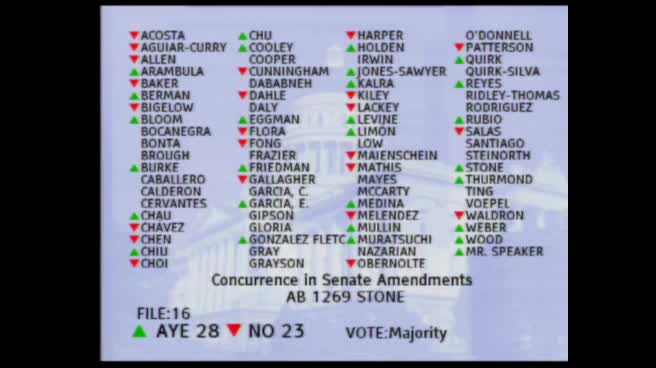 5MIN
Assembly Floor
 8MIN
Senate Floor
 1H
Senate Standing Committee on Appropriations
 6MIN
Senate Standing Committee on Human Services
 3MIN
Assembly Floor
 1H
Assembly Standing Committee on Appropriations
 11MIN













