AB 2065: Local agencies: surplus land.
- Session Year: 2017-2018
- House: Assembly
- Latest Version Date: 2018-04-16
(1)Existing law prescribes requirements for the disposal of surplus land by a local agency. Existing law defines local agency for these purposes as every city, county, city and county, and district, including school districts of any kind or class, empowered to acquire and hold real property. Existing law defines surplus land for these purposes as land owned by any local agency that is determined to be no longer necessary for the agencys use, except property being held by the agency for the purpose of exchange.
This bill would expand the definition of local agency to include sewer, water, utility, and local and regional park districts, joint powers authorities, successor agencies to former redevelopment agencies, housing authorities, and other political subdivisions of this state and any instrumentality thereof that is empowered to acquire and hold real property, thereby requiring these entities to comply with these requirements for the disposal of surplus land. The bill would revise the definition of surplus land to mean land owned by any local agency that is not necessary for the agencys governmental operations, except property being held by the agency expressly for the purpose of exchange for another property necessary for its governmental operations and would provide that land is presumed to be surplus land when a local agency initiates an action to dispose of it.
The bill would also define the term dispose of for these purposes as the sale, lease, transfer, or other conveyance of any interest in real property owned by a local agency. The bill would recast various provisions referring to the sale or lease of surplus land to instead refer to the disposal of surplus land. The bill would also delete certain obsolete references and make related conforming changes.
(2)Existing law requires a local agency disposing of surplus land to send, prior to disposing of that property, a written offer to sell or lease the property to specified entities. Existing law requires that a local agency, upon a written request, send a written offer to sell or lease surplus land to a housing sponsor, as defined, for the purpose of developing low- and moderate-income housing. Existing law also requires the local agency to send a written offer to sell or lease surplus land for the purpose of developing property located within an infill opportunity zone, designated as provided, to, among others, a community redevelopment agency.
This bill would instead require the local agency disposing of surplus land to send, prior to disposing of that property or participating in any formal or informal negotiations to dispose of that property, a written notice of availability. The bill would make various related conforming changes. With regards to a housing sponsor, the bill would require that the written notice of availability be sent if the housing sponsor has notified the applicable regional council of governments or, in the case of a local agency without a council of governments, the Department of Housing and Community Development of its interest in the land, rather than upon written request. With regards to surplus land to be used for the purpose of developing property located within an infill opportunity zone, as described above, the bill would instead require that the written notice of availability be sent to a successor agency to a former redevelopment agency.
(3)After the disposing agency has received a notice from an entity desiring to purchase or lease the land, existing law requires the disposing agency to enter into good faith negotiations to determine a mutually satisfactory sales price or lease terms.
This bill would limit negotiations to sales price and lease terms, including the amount and timing of any payments.
(4)If the local agency receives offers from more than one entity that agrees to meet specified requirements related to the provision of affordable housing on the surplus land, existing law requires the local agency to give priority to the entity that proposes to provide the greatest number of units that meet those requirements. Notwithstanding that requirement, existing law requires the local agency to give first priority to an entity in specified circumstances.
This bill would define priority for these purposes as meaning that the local agency negotiates in good faith exclusively with the entity pursuant to specified requirements. In the event that more than one entity proposes the same number of units that meet the above-described affordable housing requirements, this bill would require that priority be given to the entity that proposes the deepest average level of affordability for the affordable units.
(5)Under existing law, failure by a local agency to comply with these requirements for the disposal of surplus land does not invalidate the transfer or conveyance of real property to a purchaser or encumbrancer of value.
This bill, in the event of failure to comply, would provide that certain requirements, described below, relating to the use of units developed on the parcel for affordable housing purposes would apply.
(6)If a local agency does not agree to price and terms with an entity to which notice and an opportunity to purchase or lease are given and disposes of the surplus land to an entity that uses the property for the development of 10 or more residential units, existing law requires the purchasing entity or a successor in interest to provide not less than 15% of the total number of units developed on the parcels at an affordable housing cost or affordable rent to lower income households.
This bill would revise this requirement to apply if the local agency does not agree to price and terms with an entity to which notice of availability of land was given, or if no entity to which a notice of availability was given responds to that notice, and 10 or more residential units are developed on the property.
(7)Existing law makes various findings and declarations as to the need for affordable housing and the use of surplus government land for that purpose.
This bill would revise these findings.
(8)By adding to the duties of local officials with respect to the disposal of surplus land, and expanding the scope of local agencies subject to the bills requirements, this bill would impose a state-mandated local program.
The California Constitution requires the state to reimburse local agencies and school districts for certain costs mandated by the state. Statutory provisions establish procedures for making that reimbursement.
This bill would provide that, if the Commission on State Mandates determines that the bill contains costs mandated by the state, reimbursement for those costs shall be made pursuant to the statutory provisions noted above.
(a)The Legislature reaffirms its declaration that housing is of vital statewide importance to the health, safety, and welfare of the residents of this state and that provision of a decent home and a suitable living environment for every Californian is a priority of the highest order. The Legislature further declares that a shortage of sites available for housing for persons and families of low and moderate income is a barrier to addressing urgent statewide housing needs and that surplus government land, prior to disposition, should be made available for that purpose.
(b)The Legislature reaffirms its belief that there is an identifiable deficiency in the amount of land available for recreational purposes and that surplus land, prior to disposition, should be made available for park and recreation purposes or for open-space purposes. This article shall not apply to surplus residential property as defined in Section 54236.
(c)The Legislature reaffirms its declaration of the importance of appropriate planning and development near transit stations, to encourage the clustering of housing and commercial development around such stations. Studies of transit ridership in California indicate that a higher percentage of persons who live or work within walking distance of major transit stations utilize the transit system more than those living elsewhere, and that lower income households are more likely to use transit when living near a major transit station than higher income households. The sale or lease of surplus land at less than fair market value to facilitate the creation of affordable housing near transit is consistent with goals and objectives to achieve optimal transportation use. The Legislature also notes that the Federal Transit Administration gives priority for funding of rail transit proposals to areas that are implementing higher-density, mixed-use, and affordable development near major transit stations.
SEC. 2.Section 54221 of the Government Code is amended to read:54221.As used in this article, the following definitions shall apply:
(a)Local agency means every city, whether organized under general law or by charter, county, city and county, district, including school, sewer, water, utility, and local and regional park districts of any kind or class, joint powers authority, successor agency to a former redevelopment agency, housing authority, or other political subdivision of this state and any instrumentality thereof that is empowered to acquire and hold real property.
(b)Surplus land means land owned by any local agency, that is not necessary for the agencys governmental operations, except property being held by the agency expressly for the purpose of exchange for another property necessary for its governmental operations. Land shall be presumed to be surplus land when a local agency initiates an action to dispose of it.
(c)Open-space purposes means the use of land for public recreation, enjoyment of scenic beauty, or conservation or use of natural resources.
(d)Persons and families of low or moderate income means the same as provided under Section 50093 of the Health and Safety Code.
(e)(1)Except as provided in paragraph (2), exempt surplus land means either of the following:
(A)Surplus land that is transferred pursuant to Section 25539.4.
(B)Surplus land that is (i) less than 5,000 square feet in area, (ii) less than the minimum legal residential building lot size for the jurisdiction in which the parcel is located, or 5,000 square feet in area, whichever is less, or (iii) has no record access and is less than 10,000 square feet in area; and is not contiguous to land owned by a state or local agency that is used for park, recreational, open-space, or low- and moderate-income housing purposes. If the surplus land is not sold to an owner of contiguous land, it is not considered exempt surplus land and is subject to this article.
(2)Notwithstanding paragraph (1), the following properties are not considered exempt surplus land and are subject to this article:
(A)Lands within the coastal zone.
(B)Lands within 1,000 yards of a historical unit of the State Parks System.
(C)Lands within 1,000 yards of any property that has been listed on, or determined by the State Office of Historic Preservation to be eligible for, the National Register of Historic Places.
(D)Lands within the Lake Tahoe region as defined in Section 66905.5.
(f)Dispose of shall mean sell, lease, transfer, or otherwise convey any interest in real property owned by a local agency.
SEC. 3.Section 54222 of the Government Code is amended to read:54222.Any local agency disposing of surplus land shall send, prior to disposing of that property or participating in any formal or informal negotiations to dispose of that property, a written notice of availability of the property to all of the following entities:
(a)A written notice of availability for the purpose of developing low- and moderate-income housing shall be sent to any local public entity, as defined in Section 50079 of the Health and Safety Code, within whose jurisdiction the surplus land is located. Housing sponsors, as defined by Section 50074 of the Health and Safety Code, that have notified the applicable regional council of governments or, in the case of a local agency without a council of governments, the Department of Housing and Community Development, of their interest in surplus land shall be sent a written notice of availability of surplus land for the purpose of developing low- and moderate-income housing. All notices shall be sent by first-class mail and, if possible, by electronic mail, and shall include the location and a description of the property. With respect to any offer to purchase or lease pursuant to this subdivision, priority shall be given to development of the land to provide affordable housing for lower income elderly or disabled persons or households, and other lower income households.
(b)A written notice of availability for park and recreational purposes or open-space purposes shall be sent:
(1)To any park or recreation department of any city within which the land may be situated.
(2)To any park or recreation department of the county within which the land is situated.
(3)To any regional park authority having jurisdiction within the area in which the land is situated.
(4)To the State Resources Agency or any agency that may succeed to its powers.
(c)A written notice of availability of land suitable for school facilities construction or use by a school district for open-space purposes shall be sent to any school district in whose jurisdiction the land is located.
(d)A written notice of availability for the purpose of developing property located within an infill opportunity zone designated pursuant to Section 65088.4 or within an area covered by a transit village plan adopted pursuant to the Transit Village Development Planning Act of 1994 (Article 8.5 (commencing with Section 65460) of Chapter 3 of Division 1 of Title 7) shall be sent to any county, city, city and county, successor agency to a former redevelopment agency, public transportation agency, or housing authority within whose jurisdiction the surplus land is located.
(e)The entity or association desiring to purchase or lease the surplus land for any of the purposes authorized by this section shall notify in writing the disposing agency of its interest in purchasing or leasing the land within 60 days after receipt of the agencys notice of availability of the land.
SEC. 4.Section 54223 of the Government Code is amended to read:54223.After the disposing agency has received notice from the entity desiring to purchase or lease the land on terms that comply with this article, the disposing agency and the entity shall enter into good faith negotiations to determine a mutually satisfactory sales price or lease terms. If the price or terms cannot be agreed upon after a good faith negotiation period of not less than 90 days, the land may be disposed of without further regard to this article, except that Section 54233 shall apply. Negotiations shall be limited to sales price and lease terms, including the amount and timing of any payments.
SEC. 5.Section 54225 of the Government Code is amended to read:54225.Any public agency disposing of surplus land to an entity described in Section 54222 for park or recreation purposes, for open-space purposes, for school purposes, or for low- and moderate-income housing purposes may provide for a payment period of up to 20 years in any contract of sale or sale by trust deed for the land. The payment period for surplus land disposed of for housing for persons and families of low and moderate income may exceed 20 years, but the payment period shall not exceed the term that the land is required to be used for low- or moderate-income housing.
SEC. 6.Section 54226 of the Government Code is amended to read:54226.This article shall not be interpreted to limit the power of any local agency to dispose of surplus land at fair market value or at less than fair market value, and any such disposal at or less than fair market value consistent with this article shall not be construed as inconsistent with an agencys purpose. No provision of this article shall be applied when it conflicts with any other provision of statutory law.
SEC. 7.Section 54227 of the Government Code is amended to read:54227.(a)In the event that any local agency disposing of surplus land receives offers for the purchase or lease of that land from more than one of the entities to which notice and an opportunity to purchase or lease shall be given pursuant to this article, the local agency shall give first priority to the entity that agrees to use the site for housing that meets the requirements of Section 54222.5. If the local agency receives offers from more than one entity that agrees to meet the requirements of Section 54222.5, then the local agency shall give priority to the entity that proposes to provide the greatest number of units that meet the requirements of Section 54222.5. In the event that more than one entity proposes the same number of units that meet the requirements of Section 54222.5, priority shall be given to the entity that proposes the deepest average level of affordability for the affordable units.
(b)Notwithstanding subdivision (a), first priority shall be given to an entity that agrees to use the site for park or recreational purposes if the land being offered is already being used and will continue to be used for park or recreational purposes, or if the land is designated for park and recreational use in the local general plan and will be developed for that purpose.
(c)For purposes of this section, a local agency priority to an entity by negotiating means that the local agency shall negotiate in good faith exclusively with the entity in accordance with Section 54223.
SEC. 8.Section 54230.5 of the Government Code is amended to read:54230.5.The failure by a local agency to comply with this article shall not invalidate the transfer or conveyance of real property to a purchaser or encumbrancer for value; however, Section 54233 shall still apply.
SEC. 9.Section 54233 of the Government Code is amended to read:54233.If the local agency does not agree to price and terms with an entity to which notice of availability of land was given pursuant to this article, or if no entity to which a notice of availability was given pursuant to this article responds to that notice, and 10 or more residential units are developed on the property, not less than 15 percent of the total number of units developed on the parcels shall be sold or rented at affordable housing cost, as defined in Section 50052.5 of the Health and Safety Code, or affordable rent, as defined in Section 50053 of the Health and Safety Code, to lower income households, as defined in Section 50079.5 of the Health and Safety Code. Rental units shall remain affordable to, and occupied by, lower income households for a period of at least 55 years. The initial occupants of all ownership units shall be lower income households, and the units shall be subject to an equity sharing agreement consistent with the provisions of paragraph (2) of subdivision (c) of Section 65915. These requirements shall be contained in a covenant or restriction recorded against the surplus land prior to land use entitlement of the project, and the covenant or restriction shall run with the land and shall be enforceable, against any owner who violates a covenant or restriction and each successor in interest who continues the violation, by any of the entities described in subdivisions (a) to (f), inclusive, of Section 54222.5.
SEC. 10.If the Commission on State Mandates determines that this act contains costs mandated by the state, reimbursement to local agencies and school districts for those costs shall be made pursuant to Part 7 (commencing with Section 17500) of Division 4 of Title 2 of the Government Code.
(a)The Legislature reaffirms its declaration that housing is of vital statewide importance to the health, safety, and welfare of the residents of this state and that provision of a decent home and a suitable living environment for every Californian is a priority of the highest order. The Legislature further declares that there is a shortage of sites available for housing for persons and families of low and moderate income is a barrier to addressing urgent statewide housing needs and that surplus government land, prior to disposition, should be made available for that purpose.
(b)The Legislature reaffirms its belief that there is an identifiable deficiency in the amount of land available for recreational purposes and that surplus land, prior to disposition, should be made available for park and recreation purposes or for open-space purposes. This article shall not apply to surplus residential property as defined in Section 54236.
(c)The Legislature reaffirms its declaration of the importance of appropriate planning and development near transit stations, to encourage the clustering of housing and commercial development around such stations. Studies of transit ridership in California indicate that a higher percentage of persons who live or work within walking distance of major transit stations utilize the transit system more than those living elsewhere, and that lower income households are more likely to use transit when living near a major transit station than higher income households. The sale or lease of surplus land at less than fair market value to facilitate the creation of affordable housing near transit is consistent with goals and objectives to achieve optimal transportation use. The Legislature also notes that the Federal Transit Administration gives priority for funding of rail transit proposals to areas that are implementing higher-density, mixed-use, and affordable development near major transit stations.
SEC. 2.Section 54221 of the Government Code is amended to read:54221.(a)As used in this article, the term local the following definitions shall apply:
(a)Local agency means every city, whether organized under general law or by charter, county, city and county, and district, including school school, sewer, water, utility, and local and regional park districts of any kind or class, joint powers authority, successor agency to a former redevelopment agency, housing authority, or other political subdivision of this state and any instrumentality thereof that is empowered to acquire and hold real property.
(b)As used in this article, the term surplus Surplus land means land owned by any local agency, that is determined to be no longer not necessary for the agencys use, governmental operations, except property being held by the agency expressly for the purpose of exchange. exchange for another property necessary for its governmental operations. Land shall be presumed to be surplus land when a local agency initiates an action to dispose of it.
(c)As used in this article, the term open-space Open-space purposes means the use of land for public recreation, enjoyment of scenic beauty, or conservation or use of natural resources.
(d)As used in this article, the term persons Persons and families of low or moderate income means the same as provided under Section 50093 of the Health and Safety Code.
(e)As used in this article, the term exempt (1)Except as provided in paragraph (2), exempt surplus land means either of the following:
(1)(A)Surplus land that is transferred pursuant to Section 25539.4.
(2)(B)Surplus land that is (A) (i) less than 5,000 square feet in area, (B) (ii) less than the minimum legal residential building lot size for the jurisdiction in which the parcel is located, or 5,000 square feet in area, whichever is less, or (C) (iii) has no record access and is less than 10,000 square feet in area; and is not contiguous to land owned by a state or local agency that is used for park, recreational, open-space, or low- and moderate-income housing purposes and is located neither within an enterprise zone pursuant to Section 7073 nor a designated program area as defined in Section 7082. purposes. If the surplus land is not sold to an owner of contiguous land, it is not considered exempt surplus land and is subject to this article.
(f)(2)Notwithstanding subdivision (e), paragraph (1), the following properties are not considered exempt surplus land and are subject to this article:
(1)(A)Lands within the coastal zone.
(2)(B)Lands within 1,000 yards of a historical unit of the State Parks System.
(3)(C)Lands within 1,000 yards of any property that has been listed on, or determined by the State Office of Historic Preservation to be eligible for, the National Register of Historic Places.
(4)(D)Lands within the Lake Tahoe region as defined in Section 66905.5.
(f)Dispose of shall mean sell, lease, transfer, or otherwise convey any interest in real property owned by a local agency.
SEC. 3.Section 54222 of the Government Code is amended to read:54222.Any local agency disposing of surplus land shall send, prior to disposing of that property, property or participating in any formal or informal negotiations to dispose of that property, a written offer to sell or lease notice of availability of the property as follows: to all of the following entities:
(a)A written offer to sell or lease notice of availability for the purpose of developing low- and moderate-income housing shall be sent to any local public entity, as defined in Section 50079 of the Health and Safety Code, within whose jurisdiction the surplus land is located. Housing sponsors, as defined by Section 50074 of the Health and Safety Code, that have notified the applicable regional council of governments or, in the case of a local agency without a council of governments, the Department of Housing and Community Development, of their interest in surplus land shall be sent, upon sent a written request, a written offer to sell or lease notice of availability of surplus land for the purpose of developing low- and moderate-income housing. All notices shall be sent by first-class mail and, if possible, by electronic mail, and shall include the location and a description of the property. With respect to any offer to purchase or lease pursuant to this subdivision, priority shall be given to development of the land to provide affordable housing for lower income elderly or disabled persons or households, and other lower income households.
(b)A written offer to sell or lease notice of availability for park and recreational purposes or open-space purposes shall be sent:
(1)To any park or recreation department of any city within which the land may be situated.
(2)To any park or recreation department of the county within which the land is situated.
(3)To any regional park authority having jurisdiction within the area in which the land is situated.
(4)To the State Resources Agency or any agency that may succeed to its powers.
(c)A written offer to sell or lease notice of availability of land suitable for school facilities construction or use by a school district for open-space purposes shall be sent to any school district in whose jurisdiction the land is located.
(d)A written offer to sell or lease for enterprise zone purposes any surplus property in an area designated as an enterprise zone pursuant to Section 7073 shall be sent to the nonprofit neighborhood enterprise association corporation in that zone.(e)(d)A written offer to sell or lease notice of availability for the purpose of developing property located within an infill opportunity zone designated pursuant to Section 65088.4 or within an area covered by a transit village plan adopted pursuant to the Transit Village Development Planning Act of 1994 (Article 8.5 (commencing with Section 65460) of Chapter 3 of Division 1 of Title 7) shall be sent to any county, city, city and county, community successor agency to a former redevelopment agency, public transportation agency, or housing authority within whose jurisdiction the surplus land is located.
(f)(e)The entity or association desiring to purchase or lease the surplus land for any of the purposes authorized by this section shall notify in writing the disposing agency of its intent to purchase or lease interest in purchasing or leasing the land within 60 days after receipt of the agencys notification of intent to sell notice of availability of the land.
SEC. 4.Section 54223 of the Government Code is amended to read:54223.After the disposing agency has received notice from the entity desiring to purchase or lease the land, land on terms that comply with this article, the disposing agency and the entity shall enter into good faith negotiations to determine a mutually satisfactory sales price or lease terms. If the price or terms cannot be agreed upon after a good faith negotiation period of not less than 90 days, the land may be disposed of without further regard to this article, except that Section 54233 shall apply. Negotiations shall be limited to sales price and lease terms, including the amount and timing of any payments.
SEC. 5.Section 54225 of the Government Code is amended to read:54225.Any public agency selling disposing of surplus land to an entity described in Section 54222 for park or recreation purposes, for open-space purposes, for school purposes, or for low- and moderate- income housing purposes may provide for a payment period of up to 20 years in any contract of sale or sale by trust deed for the land. The payment period for surplus land sold disposed of for housing for persons and families of low and moderate income may exceed 20 years, but the payment period shall not exceed the term that the land is required to be used for low- or moderate-income housing.
SEC. 6.Section 54226 of the Government Code is amended to read:54226.This article shall not be interpreted to limit the power of any local agency to sell or lease dispose of surplus land at fair market value or at less than fair market value, and any such sale or lease disposal at or less than fair market value consistent with this article shall not be construed as inconsistent with an agencys purpose. No provision of this article shall be applied when it conflicts with any other provision of statutory law.
SEC. 7.Section 54227 of the Government Code is amended to read:54227.(a)In the event that any local agency disposing of surplus land receives offers for the purchase or lease of that land from more than one of the entities to which notice and an opportunity to purchase or lease shall be given pursuant to this article, the local agency shall give first priority to the entity that agrees to use the site for housing that meets the requirements of Section 54222.5. If the local agency receives offers from more than one entity that agrees to meet the requirements of Section 54222.5, then the local agency shall give priority to the entity that proposes to provide the greatest number of units that meet the requirements of Section 54222.5 at the deepest level of affordability. 54222.5. In the event that more than one entity proposes the same number of units that meet the requirements of Section 54222.5, priority shall be given to the entity that proposes the deepest average level of affordability for the affordable units.
(b)Notwithstanding subdivision (a), first priority shall be given to an entity that agrees to use the site for park or recreational purposes if the land being offered is already being used and will continue to be used for park or recreational purposes, or if the land is designated for park and recreational use in the local general plan and will be developed for that purpose.
(c)For purposes of this section, a local agency priority to an entity by negotiating in good faith exclusively with the entity in accordance with Section 54223.
SEC. 8.Section 54230.5 of the Government Code is amended to read:54230.5.The failure by a local agency to comply with this article shall not invalidate the transfer or conveyance of real property to a purchaser or encumbrancer for value. value; however, Section 54233 shall still apply.
SEC. 9.Section 54233 of the Government Code is amended to read:54233.If the local agency does not agree to price and terms with an entity to which notice and an opportunity to purchase or lease are of availability of land was given pursuant to this article and disposes of the surplus land to an article, or if no entity that uses the property for the development of to which a notice of availability was given pursuant to this article responds to that notice, and 10 or more residential units, the entity or a successor-in-interest shall provide units are developed on the property, not less than 15 percent of the total number of units developed on the parcels shall be sold or rented at affordable housing cost, as defined in Section 50052.5 of the Health and Safety Code, or affordable rent, as defined in Section 50053 of the Health and Safety Code, to lower income households, as defined in Section 50079.5 of the Health and Safety Code. Rental units shall remain affordable to, and occupied by, lower income households for a period of at least 55 years. The initial occupants of all ownership units shall be lower income households, and the units shall be subject to an equity sharing agreement consistent with the provisions of paragraph (2) of subdivision (c) of Section 65915. These requirements shall be contained in a covenant or restriction recorded against the surplus land prior to land use entitlement of the project, and the covenant or restriction shall run with the land and shall be enforceable, against any owner who violates a covenant or restriction and each successor in interest who continues the violation, by any of the entities described in subdivisions (a) to (f), inclusive, of Section 54222.5.
SEC. 10.If the Commission on State Mandates determines that this act contains costs mandated by the state, reimbursement to local agencies and school districts for those costs shall be made pursuant to Part 7 (commencing with Section 17500) of Division 4 of Title 2 of the Government Code.
|
Date
|
Status
|
|---|---|
| May 25, 2018 | In committee: Held under submission. |
| May 2, 2018 | In committee: Set, first hearing. Referred to APPR. suspense file. |
| Apr 17, 2018 | Re-referred to Com. on APPR. |
| Apr 16, 2018 | Read second time and amended. |
| Apr 12, 2018 | From committee: Amend, and do pass as amended and re-refer to Com. on APPR. (Ayes 6. Noes 3.) (April 11). |
| Feb 22, 2018 | Referred to Com. on L. GOV. |
| Feb 8, 2018 | From printer. May be heard in committee March 10. |
| Feb 7, 2018 | Read first time. To print. |
|
Date
|
Description
|
Location
|
Votes
|
|
|---|---|---|---|---|
| Apr 11, 2018 | Do pass as amended and be re-referred to the Committee on [Appropriations] | Assembly Standing Committee on Local Government |
Passed |
This list shows positions taken on this bill by organizations on the date displayed, which is linked to the original source.
Positions by individuals are not included.
|
Organization
|
Position
|
Date
|
|---|---|---|
| Association of California Healthcare Districts | * Against | Apr 11, 2018 |
| Bay Area Council | ** Support | Apr 10, 2018 |
| Burbank Housing Development Corporation | ** Support | Apr 10, 2018 |
| California Apartment Association | * Support | Apr 11, 2018 |
| California Assocation of Sanitation Agencies | * Against | Apr 11, 2018 |
| California Association Of Sanitary Agencies | ** Against | Apr 10, 2018 |
| California Housing Consortium | ** Support | Apr 10, 2018 |
| California Housing Partnership Corporation | ** Support | Apr 10, 2018 |
| California Municipal Utilities Association | * Against | Apr 11, 2018 |
| California Special Districts Association | * Against Unless Amend | Apr 11, 2018 |
| California YIMBY | ** Support | Apr 10, 2018 |
| Corporation For Supportive Housing | ** Support | Apr 10, 2018 |
| EAH Housing | ** Support | Apr 10, 2018 |
| East Bay Housing Organization | * Support | Apr 11, 2018 |
| Habitat For Humanity California | ** Support | Apr 10, 2018 |
| Non-profit Housing Association of California | * Support | Apr 11, 2018 |
| Non-Profit Housing Association Of Northern California [Sponsor] | ** Support | Apr 10, 2018 |
| Rural County Representatives Of California | * Against | Apr 11, 2018 |
| San Diego Housing Federation | ** Support | Apr 10, 2018 |
| San Francisco Housing Action Coalition | ** Support | Apr 10, 2018 |
| Silicon Valley At Home | ** Support | Apr 10, 2018 |
| Southern California Association of Non Profit Housing | ** Support | Apr 10, 2018 |
| Yimby Action | ** Support | Apr 10, 2018 |
Date of Hearing: May 2, 2018
ASSEMBLY COMMITTEE ON APPROPRIATIONS
Lorena Gonzalez Fletcher, Chair
ABPCA Bill Id:AB 2065
Author:(Ting) – As Amended Ver:April 16, 2018
Policy Committee: | Local Government | Vote: | 6 - 3 |
|
| ||
|
|
Urgency: No State Mandated Local Program: Yes Reimbursable: Yes
SUMMARY:
This bill revises and expands provisions in the Surplus Land Act. Specifically, this bill:
- Expands the types of local agencies required to comply with the Surplus Land Act to additionally include sewer, water, utility, local and regional park districts, joint powers authorities, successor agencies to former redevelopment agencies, housing authorities, and other political subdivisions of the state empowered to acquire and hold real property.
- Revises the requirement that a local agency disposing of property must send a written offer to sell or lease the property, to instead require a local agency to send a written “notice of availability” of the property to specified entities prior to disposing of the property or participating in any formal or informal negotiations to dispose of the property. Requires written notices to be sent by email, if possible.
- Requires the notice of availability additionally be sent to housing sponsors that have notified the applicable regional council of government (COG), or, for a local agency without a COG, the Department of Housing and Community Development (HCD), of their interest in surplus land.
- Requires negotiations between the disposing agency and an interested entity to be limited to sales price and lease terms, including the amount and timing of any payments.
- Provides that the existing 15% minimum affordability requirement applies whenever surplus public land is used for housing development, even if no entity responds to the notice of availability, and states that this requirement still applies, even if the local agency fails to comply with other provisions of the Surplus Land Act.
FISCAL EFFECT:
- Potentially reimbursable state mandate costs likely in excess of $300,000 (GF) statewide to over 600 special districts that must newly implement the administrative and procedural requirements necessary to comply with the Surplus Land Act. For example, if 300 agencies spend $1,000 to implement the requirements in this bill, costs would be $300,000.
Actual costs will depend on the number reimbursement claims filed and a determination by the Commission on State Mandates.
- Unknown potentially reimbursable state mandate costs to existing local agencies (cities, counties, special districts, and school districts) currently covered by the Surplus Land Act to comply with expanded definitions and additional requirements in the bill.
COMMENTS:
- Purpose. This bill seeks to increase the supply of affordable housing by improving the distribution of surplus land. According to the author:
California is facing an affordable housing crisis and unused public land has the potential to promote affordable housing development throughout the state. AB 2065 will strengthen provisions in existing law that guarantee affordable housing developers get first priority to purchase surplus land from local governments and agencies.
- Background. Local agencies are required to annually inventory land they own. If land is no longer needed, a local agency must follow certain procedures to dispose of "surplus" land. The intent of the disposal procedures is to promote the use of surplus land for affordable housing, parks and recreation purposes, open-space purposes, and transit-oriented development. The disposal procedures provide a right of first refusal to entities agreeing to use the land for, among other things, affordable housing.
Prior to disposing of surplus land, local agencies must make a written offer to sell or lease surplus land for the purpose of developing low- or moderate-income housing to "housing sponsors" upon written request, as well as any local public entity within the jurisdiction where the surplus land is located. A local agency must also provide a written offer to additional entities, depending on the type of proposed development, for park and recreational purposes, school facilities construction or use by a school district for open space purposes, enterprise purposes, and infill opportunity zones, or transit village plans.
If one of these entities is interested in buying or leasing the land, it must notify the local agency within 60 days of receipt of the offer. If a notified entity is interested but cannot agree with the agency on the price or terms, the local agency must enter into good-faith negotiations with the entity for at least 90 days. If 90 days pass without an agreement, then the local agency may sell or lease the land without further regard to the right of first refusal requirements.
AB 2135 (Ting), Chapter 677, Statutes of 2014, made a number of changes to the Surplus Land Act regarding the prioritization of affordable housing. The bill provided that if a local agency receives offers for the purchase or lease of land from more than one notified entity, the local agency must give first priority to the entity that agrees to provide at least 25% of the units to low-income households, with certain exceptions. If more than one notified entity agrees to provide the low-income housing, the local agency must give priority to the entity that proposes to provide the greatest number of affordable units at the deepest level of affordability.
AB 2135 also specified that if the local agency does not agree to price and terms with a notified entity and the surplus land is developed with 10 or more residential units, at least 15% of the units must be affordable to low-income households. The bill also increased the time a local agency has to conduct good faith negotiations from 60 days to 90 days.
- Arguments in Support. Affordable housing supporters argue many local agencies have attempted to circumvent both the letter and the intent of the Surplus Land Act. They contend this bill will bring greater clarity and provide for more efficient distribution of surplus land to increase the supply of affordable housing.
- Arguments in Opposition. Special districts note the bill would place onerous new requirements on public agencies disposing of surplus land and is not workable for all types of public agencies and situations.
Analysis Prepared by: Jennifer Swenson / APPR. / (916) 319-2081
Date of Hearing: April 11, 2018
ASSEMBLY COMMITTEE ON LOCAL GOVERNMENT
Cecilia Aguiar-Curry, Chair
ABPCA Bill Id:AB 2065 (
Author:Ting) – As Introduced Ver:February 7, 2018
SUBJECT: Local agencies: surplus land.
SUMMARY: Revises and expands provisions in the Surplus Land Act. Specifically, this bill:
- Revises, for purposes of the Surplus Land Act, the following terms:
- Expands the definition of “local agency” to additionally include a sewer, water, utility, and local and regional park district, joint powers authorities, successor agency to a former redevelopment agency, housing authority, or other political subdivision of the state and any instrumentality thereof that is empowered to acquire and hold real property, thereby expanding the entities required to comply with the Surplus Land Act;
- Expands the definition of “surplus land” to mean land owned by any local agency that is not necessary for the agency’s governmental operations, except property being held by the agency expressly for the purpose of exchange for another property necessary for its governmental operations. States that land shall be presumed to be “surplus land” when a local agency initiates an action to dispose of it;
- Revises the definition of “exempt surplus land” to remove references to the enterprise zone program; and,
- Adds a definition of “dispose of” to mean sell, lease, transfer, or otherwise convey any interest in real property owned by a local agency.
- Revises requirements related to a local agency disposing of property and sending a written offer to sell or lease to instead require any local agency to send a written notice of availability of the property to specified entities, prior to disposing of that property or participating in any formal or informal negotiations to dispose of that property.
- Requires that the notice of availability additionally be sent to housing sponsors that have notified the applicable regional council of governments (COG), or, in the case of a local agency without a COG, the Department of Housing and Community Development (HCD)
of their interest in surplus land. - Requires written notices to be sent by electronic mail (e-mail), if possible.
- Requires negotiations between the disposing agency and the entity to be limited to sales price and lease terms, including the amount and timing of any payments.
- Requires priority to be given to the entity that proposes the deepest average level of affordability for the affordable units, in the event that more than one entity proposes the same number of units that meets the requirements of existing law.
- Requires that a written notice of availability be sent to a successor agency to a former redevelopment agency, for surplus land to be used for the purpose of developing property located within an infill opportunity zone.
- Defines, for purposes of the section of law in the Surplus Land Act that details the process that a local agency disposing of surplus land must give first priority to an entity when it receives multiple offers to purchase or lease land, the term “priority,” to mean “an entity negotiating in good faith exclusively with the entity” in accordance with another specified section of the Surplus Land Act.
- Provides that if no entity to which a notice of availability was given responds to that notice, and 10 or more residential units are developed on that property, that not less than 15% of the total number of units developed on the parcels shall be sold or rented at affordable housing cost, as defined. Requires this provision to apply, even if the local agency fails to comply with other provisions of the Surplus Land Act that do not invalidate the transfer or conveyance of real property, as specified.
- Specifies that if the Commission on State Mandates determines that the bill’s provisions contain costs mandated by the state, that reimbursement to local agencies and school districts shall be made pursuant to Part 7 (commencing with Section 17500) of Division 4 of Title 2 of the Government Code.
- Makes other minor, technical, and conforming changes.
EXISTING LAW:
- States, pursuant to the Surplus Land Act, the importance of making surplus government land, prior to disposition, available for purposes, including low- and moderate-income housing, park and recreation purposes or for open space purposes, and for the sale or lease of surplus land to facilitate the creation of affordable housing near transit.
- Defines, for purposes of the Surplus Land Act, “local agency” to mean every city, county, city and county, and district, including school districts of any kind or class, empowered to acquire and hold real property.
- Requires, pursuant to the Surplus Land Act:
- Any local agency disposing of surplus land to send, prior to disposing of that property, a written offer to sell or lease the property, as follows:
- A written offer to sell or lease for the purpose of developing low- and moderate-income housing shall be sent to any local public entity, as defined, within whose jurisdiction the surplus land is located. Housing sponsors shall be sent, upon written request, a written offer to sell or lease surplus land for the purpose of developing low- and moderate-income housing. Requires notices to be sent by first class mail, as specified;
- A written offer to sell or lease for park and recreational purposes or open-space purposes shall be sent:
- To any park or recreation department of any city within which the land may be situated;
- To any park or recreation department of the county within which the land is situated;
- To any regional park authority having jurisdiction within the area in which the land is situated; and,
- To the State Resources agency or any agency that may succeed to its powers.
- A written offer to sell or lease land suitable for school facilities construction or use by a school district for open-space purposes shall be sent to any school district in whose jurisdiction the land is located;
- A written offer to sell or lease for enterprise zone purposes;
- A written offer to sell or lease for the purpose of developing property located within an infill opportunity zone, as defined, or within an area covered by a transit village plan, as specified.
- Requires the entity or association desiring to purchase or lease the surplus land to notify in writing the disposing agency of its intent to purchase or lease the land within 60 days after receipt of the agency’s notification of intent to sell the land.
- Allows the land to be disposed of without further regard should the disposing agency and the entity not agree on price or terms after a good faith negotiation period of not less than 90 days.
- Requires, in the event that any local agency disposing of surplus land receives offers for the purchase or lease of that land from more than one of the entities to which notice was given, the local agency to give first priority to the entity that agrees to use the site for housing, as specified.
- States that the failure by a local agency to comply with the Surplus Land Act does not invalidate the transfer or conveyance of real property to a purchaser or encumbrancer for value.
- Provides that if the local agency does not agree to price and terms with an entity to which notice and an opportunity to purchase or lease are given and disposes of the surplus land to an entity that uses the property for the development of 10 or more residential units, the entity or a successor-in-interest shall provide not less than 15% of the total number of units developed on the parcels at affordable housing cost, as defined.
- Any local agency disposing of surplus land to send, prior to disposing of that property, a written offer to sell or lease the property, as follows:
FISCAL EFFECT: This bill is keyed fiscal and contains a state-mandated local program.
COMMENTS:
- Background on Surplus Land Act. Local agencies are required to inventory the land they own every year. If land is no longer needed, a local agency must follow certain procedures prior to disposal of this "surplus" land. The intent behind the disposal procedures is to promote the use of surplus land towards affordable housing, parks and recreation purposes, open-space purposes, and transit-oriented development. The disposal procedures provide a Right of First Refusal to entities agreeing to use the land for, amongst other things, affordable housing.
Prior to disposing of surplus land, local agencies must make a written offer to sell or lease surplus land for the purpose of developing low- or moderate-income housing to "housing sponsors" upon written request, as well as any local public entity within the jurisdiction where the surplus land is located. A local agency wishing to dispose of surplus land must also provide a written offer to additional entities, depending on the type of proposed development, for park and recreational purposes, school facilities construction or use by a school district for open space purposes, enterprise purposes, and infill opportunity zones, or transit village plans.
If one of these entities is interested in buying or leasing the land, it must notify the local agency within 60 days of receipt of the offer. If a notified entity is interested but cannot agree with the agency upon the price or terms, the local agency must enter into good faith negotiations with the entity for at least 90 days. If 90 days have passed without an agreement, then the local agency may sell or lease the land without further regard to the Right of First Refusal requirements under the disposal procedures.
AB 2135 (Ting), Chapter 677, Statutes of 2014, made a number of changes to the Surplus Land Act relating to the prioritization of affordable housing. The bill provided that, in the event that any local agency disposing of surplus land receives offers for the purchase or lease of that land from more than one notified entity, the local agency must give first priority to the entity that agrees to make available at least 25% of the units in the development at an affordable housing cost to low-income households, subject to exceptions relating to land used or designated for park and recreational use. If more than one notified entity agrees to make available at least 25% of the units in the development at an affordable housing cost to low-income individuals, then the local agency must give priority to the entity that proposes to provide the greatest number of affordable units at the deepest level of affordability.
AB 2135 additionally specified that if the local agency does not agree to price and terms with a notified entity and the surplus land is developed with 10 or more residential units, at least 15% of the units in the development must be at an affordable housing cost to low-income households. The bill also increased the time a local agency has to conduct good faith negotiations with certain entities from 60 days to 90 days.
- Bill Summary. This bill makes a number of changes to the Surplus Land Act and is sponsored by the Non-Profit Housing Association of California. This bill:
- Expands the definition of “local agency” to additionally include a sewer, water, utility, and local and regional park district, joint powers authorities, successor agency to a former redevelopment agency, housing authority, or other political subdivision of the state and any instrumentality thereof that is empowered to acquire and hold real property, thereby expanding the entities required to comply with the Surplus Land Act;
- Revises requirements related to a local agency disposing of property and sending a written offer to sell or lease to instead require any local agency to send a written notice of availability of the property to specified entities, prior to disposing of that property or participating in any formal or informal negotiations to dispose of that property, and requires written notices to be sent by email, if possible;
- Requires that the notice of availability additionally be sent to housing sponsors that have notified the applicable regional COG, or, in the case of a local agency without a COG, HCD, of their interest in surplus land;
- Requires negotiations between the disposing agency and the entity to be limited to sales price and lease terms, including the amount and timing of any payments; and,
- Provides that the existing 15% minimum affordability requirement applies whenever surplus public land is used for housing development, even if no entity responds to the notice of availability, and states that this requirement still applies, even if the local agency fails to comply with other provisions of the Surplus Land Act.
- Author’s Statement. According to the author, “California is facing an affordable housing crisis and unused public land has the potential to promote affordable housing development throughout the state. AB 2065 will strengthen provisions in existing law that guarantee affordable housing developers get first priority to purchase surplus land from local governments and agencies.”
- Policy Considerations. A coalition of local agencies, including the Association of Healthcare Districts, the California Association of Sanitary Agencies, the California Municipal Utilities Association, the California Special Districts Association, and the Rural County Representatives of California have an “Oppose Unless Amended” position on the bill, and raise the following concerns:
- The new definition of “disposal” is problematic for public agencies that have valid reasons to lease or otherwise protect land they own (for instance, conservation easements may be sold or granted for sensitive species protection or as mitigation, or property held for future facility needs may be leased out until the property is sold). The coalition asks the author to consider amending the definition to apply only to the sale of surplus land;
- The coalition asks for amendments that would require public agencies to only offer land for sale that is considered suitable for school facilities or affordable housing; and,
- Lastly, the coalition notes that there could be good reasons for an agency to have information negotiations, and that if the agency complies with the Surplus Land Act by providing notice and negotiation in good faith, that should be all that is required.
The Committee may wish to ask the author about the issues raised above.
- Committee Amendments. In order to correct an error in the bill, the Committee may wish to consider the following committee amendment:
On page 9, line 26:
(c) For purposes of this section, a local agency “priority” means that the local agency shall negotiate in good faith to an entity by negotiating in good faith exclusively with the entity in accordance with Section 54223.
- Arguments in Support. Supporters argue that many local agencies have attempted to circumvent both the letter and the intent of the Surplus Land Act, and that this bill will bring greater clarity and provide for more efficient distribution of surplus land to increase the supply of affordable housing.
- Arguments in Opposition. Opponents note that the bill would place onerous new requirements on public agencies disposing of surplus land, and that language in the bill needs to be revised to make it workable for all types of public agencies and situations.
REGISTERED SUPPORT / OPPOSITION:
Support
Non-Profit Housing Association of Northern California [SPONSOR]
Bay Area Council
Burbank Housing Development Corporation
California Apartment Association
California Housing Consortium
California Housing Partnership Corporation
California YIMBY
Corporation for Supportive Housing
EAH Housing
East Bay Housing Organizations
Habitat for Humanity California
Housing Leadership Council
San Diego Housing Federation
San Francisco Housing Action Coalition
Silicon Valley at Home
Southern California Association of Non Profit Housing
YIMBY Action
Opposition
Association of California Healthcare Districts (unless amended)
California Association of Sanitary Agencies (unless amended)
California Municipal Utilities Association (unless amended)
California Special Districts Association (unless amended)
Rural County Representatives of California (unless amended)
Analysis Prepared by: Debbie Michel / L. GOV. / (916) 319-3958
Discussed in Hearing
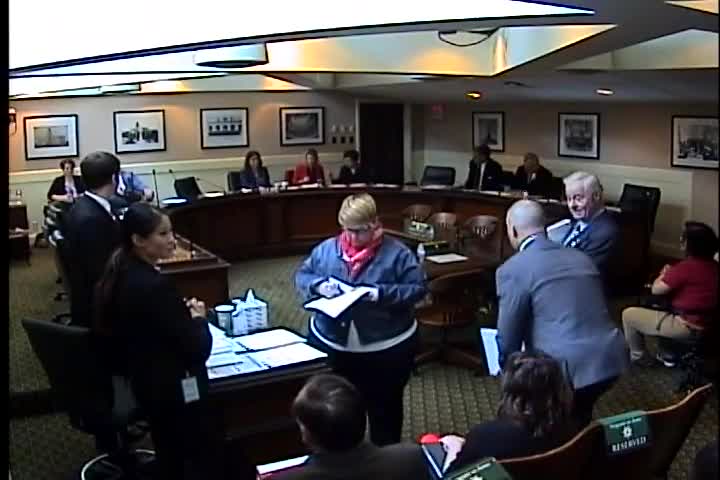 14MIN
Assembly Standing Committee on Local Government
Bill Author

Bill Co-Author(s):