AB 2590: Personal income taxes: exclusion: servicemembers.
- Session Year: 2017-2018
- House: Assembly
- Latest Version Date: 2018-04-09
The Personal Income Tax Law imposes a tax on individual taxpayers measured by the taxpayers taxable income for the taxable year, but excludes certain items of income from the computation of tax, including an exclusion for compensation for military or naval service performed by a nonresident while domiciled within the state.
This bill would bill, for taxable years beginning on or after January 1, 2018, and before January 1, 2028, would exclude from gross income, income basic pay received by a servicemember on active duty in the United States Armed Forces, in the reserve component of the United States Armed Forces, or in the National Guard, derived from his or her position as a servicemember while he or she is on military orders for 90 or more consecutive days.
This bill would take effect immediately as a tax levy.
The Personal Income Tax Law imposes a tax on individual taxpayers measured by the taxpayers taxable income for the taxable year, but excludes certain items of income from the computation of tax, including an exclusion for compensation for military or naval service performed by a nonresident while domiciled within the state.
This bill would exclude from gross income, basic pay received by a servicemember on active duty in the United States Armed Forces, in the reserve component of the United States Armed Forces, or in the National Guard, derived from his or her position as a servicemember while he or she is on military orders for 90 or more consecutive days.
This bill would take effect immediately as a tax levy.
Gross (a)For taxable years beginning on or after January 1, 2018, and before January 1, 2028, gross income does not include any basic pay received by a servicemember on active duty in the United States Armed Forces, in the reserve component of the United States Armed Forces, or in the National Guard, derived from his or her position as a servicemember while he or she is on military orders for 90 or more consecutive days.
(b)This section shall remain in effect only until December 1, 2028, and as of that date is repealed.
SEC. 2.This act provides for a tax levy within the meaning of Article IV of the California Constitution and shall go into immediate effect.
Gross income does not include any basic pay received by a servicemember on active duty in the United States Armed Forces, in the reserve component of the United States Armed Forces, or in the National Guard, derived from his or her position as a servicemember while he or she is on military orders for 90 or more consecutive days.
SEC. 2.This act provides for a tax levy within the meaning of Article IV of the California Constitution and shall go into immediate effect.
|
Date
|
Status
|
|---|---|
| May 25, 2018 | In committee: Held under submission. |
| Apr 18, 2018 | In committee: Set, first hearing. Referred to APPR. suspense file. |
| Apr 10, 2018 | Re-referred to Com. on APPR. |
| Apr 9, 2018 | Read second time and amended. |
| Apr 5, 2018 | From committee: Amend, and do pass as amended and re-refer to Com. on APPR. (Ayes 8. Noes 1.) (April 2). |
| Mar 5, 2018 | Referred to Com. on REV. & TAX. |
| Feb 16, 2018 | From printer. May be heard in committee March 18. |
| Feb 15, 2018 | Read first time. To print. |
|
Date
|
Description
|
Location
|
Votes
|
|
|---|---|---|---|---|
| Apr 2, 2018 | Do pass as amended and be re-referred to the Committee on [Appropriations] | Assembly Standing Committee on Revenue and Taxation |
Passed |
This list shows positions taken on this bill by organizations on the date displayed, which is linked to the original source.
Positions by individuals are not included.
Date of Hearing: April 18, 2018
ASSEMBLY COMMITTEE ON APPROPRIATIONS
Lorena Gonzalez Fletcher, Chair
ABPCA Bill Id:AB 2590
Author:(Chen) – As Amended Ver:April 9, 2018
Policy Committee: | Revenue and Taxation | Vote: | 8 - 1 |
|
| ||
|
|
Urgency: No State Mandated Local Program: No Reimbursable: No
SUMMARY:
This bill excludes from gross income any basic pay received by a servicemember in the United States Armed Force (U.S. Armed Forces), in the reserve component of the U.S. Armed Forces, or in the National Guard, while he or she is on military orders for 90 or more consecutive days. This exclusion is available for taxable years beginning in 2018 through 2027.
FISCAL EFFECT:
- Annual General Fund (GF) revenue loss of $190 million in 2018-19, $130 million in 2019-20, and $130 million in 2020-21. (See Comment #3)
- Annual expenses in excess of $150,000 GF for the Franchise Tax Board (FTB) to develop and administer the exclusion.
COMMENTS:
- Background and purpose. Under federal and state law, a servicemember may exclude from his or her gross income any compensation received during active service in a combat zone or while hospitalized as a result of wounds, disease, or injury incurred in a combat zone.
According to the author, AB 2590 is needed because the current income exclusion does not take into account the members of the military who are not deployed to combat zone but who otherwise perform essential duties.
- Fiscal implications of tax expenditures. Existing law allows for various tax expenditures such as credits, deductions, exclusions, and exemptions for particular taxpayer groups. These features of the tax code can result in significant state costs through foregone tax revenue, and, in many cases, policymakers have little control over the revenue loss that occurs in any given year. As a result, many tax expenditure bills now include provisions designed to give the Legislature more control over costs. Examples of such provisions include placing a sunset date or making a bill’s provisions contingent upon a separate budget appropriation. AB 2590 includes a sunset.
- Revenue losses. Because there is no definition of “military orders,” this income exclusion may be available to any active-duty servicemember based in California. Modifying the definition of “military orders” could both reduce the bill’s costs and make the proposed exclusion more comparable to the one available to those servicemenbers serving in combat zones.
Analysis Prepared by: Luke Reidenbach / APPR. / (916) 319-2081
Date of Hearing: April 2, 2018
ASSEMBLY COMMITTEE ON REVENUE AND TAXATION
Autumn R. Burke, Chairwoman
ABPCA Bill Id:AB 2590 (
Author:Chen) – As Introduced Ver:February 15, 2018
Majority vote. Tax levy. Fiscal committee.
SUBJECT: Personal income taxes: exclusion: servicemembers
SUMMARY: Excludes from gross income any basic pay received by a servicemember in the United States Armed Forces (U.S. Armed Forces), in the reserve component of the U.S. Armed Forces, or in the National Guard, derived from his or her position as a servicemember while he or she is on military orders for 90 or more consecutive days. Specifically, this bill:
- Excludes from gross income, for each taxable year beginning on or after January 1, 2018, any basic pay received by a servicemember, that is derived from his or her position as a servicemember, while he or she is on military orders for 90 or more consecutive days.
- Extends the gross income exclusion to the following servicemembers:
- Persons on active duty in the U.S. Armed Forces;
- Persons in the reserve component of the U.S. Armed Forces; and,
- Persons in the National Guard.
- Takes immediate effect as a tax levy.
EXISTING FEDERAL LAW:
- Provides that "gross income" includes all income from whatever source derived unless specifically excluded. (Internal Revenue Code (IRC) Section 61.)
- Includes, generally, basic pay compensation as income.
- Excludes from gross income compensation received for active service as a member below the commissioned officer grade in the U.S. Armed Forces, and for commissioned officers, excludes similar pay up to the enlisted personnel maximum level pay, for any month during any part of which the member:
- Served in a combat zone, as defined; or,
- Was hospitalized as a result of wounds, disease, or injury incurred while serving in a combat zone, as specified. (IRC Section 112(a).)
- Provides protections for servicemembers as they enter active duty, including provisions prescribing rules for determining the residence and source of military compensation for state income tax purposes under the Servicemembers Civil Relief Act (SCRA). (50 U.S. Code Appendix Sections 501-593.)
- Provides, generally, under the SCRA, that compensation for military service is not considered to be from sources within the state where a servicemember is stationed if that state is not the servicemember's domicile.
EXISTING STATE LAW:
- Provides that IRC Section 61, relating to the definition of gross income, shall apply, except as specified. (Revenue and Taxation Code (R&TC) Section 17071.)
- Conforms to federal law with respect to servicemember compensation included and excluded from gross income.
- Includes basic pay compensation in gross income to the same extent as federal law for servicemembers subject to California income tax. Specifically:
- Military pay, including basic pay, is not included in California source income unless the servicemember is domiciled in California and stationed in California.
- Under the federal SCRA, military servicemembers who are not domiciled in California are not taxed by California on military pay received for military services performed in California, even if stationed in California for the entire year.
- Defines "Armed Forces of the United States" to include all regular and reserve components of the uniformed services that are subject to the jurisdiction of the Secretary of Defense, the Secretary of the Army, the Secretary of the Navy, or the Secretary of the Air Force, and the Coast Guard. The members of these forces include commissioned officers and personnel below the grade of commissioned officers. (R&TC Section 17022.)
FISCAL EFFECT: The Franchise Tax Board estimates that this bill would reduce General Fund revenues by $190 million in fiscal year (FY) 2018-19, by $130 million in FY 2019-20, and by $130 million in FY 2020-21.
COMMENTS:
- The author has provided the following statement in support of this bill:
Members of the military whose duties take them away from California for long periods should be treated equally under California's income tax rules. Currently, members of the military who are not deployed to combat zones receive no exemption for state income taxes, whereas members deployed in combat zones do receive this exemption. Members outside combat zones perform duties essential to protecting our country, yet they are denied the same tax protections as those in combat zones. Further, their taxes are supporting services they cannot utilize because of their deployment. Granting similar tax protections to members away for 90 or more consecutive days will signal California's support for all its veterans and servicemembers.
- The FTB has identified the following implementation concerns in its analysis of this bill:
- "This bill uses the undefined term, 'military orders.' The absence of a definition to clarify this term could lead to disputes with taxpayers and would complicate administration of this bill. The author may wish to amend the bill to clearly define the term."
- "If the author intends for the term 'active duty' to apply to servicemembers in the reserve component of the U.S. Armed Forces, the National Guard, or both, this bill should be amended."
- "It is unclear how the [FTB] would be able to determine that a servicemember had served on military orders for the 90 day minimum period needed to trigger the exclusion."
- "It is unclear whether and how the exclusion would apply to a servicemember who served the minimum 90 days on military orders over two taxable years but less than the 90 day period in each taxable year. Would the exclusion apply to both taxable years? Be prorated based on the days served in each taxable year?"
- Committee Staff Comments
- What is a "tax expenditure"? Existing law provides various credits, deductions, exclusions, and exemptions for particular taxpayer groups. In the late 1960s, U.S. Treasury officials began arguing that these features of the tax law should be referred to as "expenditures" since they are generally enacted to accomplish some governmental purpose and there is a determinable cost associated with each (in the form of foregone revenues). This bill creates a tax expenditure program, in the form of a gross income exclusion, for each servicemember subject to California income tax, which is keyed to his or her basic pay earnings from the federal government.
- How is a tax expenditure different from a direct expenditure? As the Department of Finance notes in its annual Tax Expenditure Report, there are several key differences between tax expenditures and direct expenditures. First, tax expenditures are reviewed less frequently than direct expenditures once they are put in place. This can offer taxpayers greater economic certainty, but it can also result in tax expenditures remaining a part of the tax code without demonstrating any public benefit. Second, there is generally no control over the amount of revenue losses associated with any given tax expenditure. Finally, it should also be noted that, once enacted, it takes a two-thirds vote to rescind an existing tax expenditure absent a sunset date. This effectively results in a "one-way ratchet" whereby tax expenditures can be conferred by majority vote, but cannot be rescinded, irrespective of their efficacy, without a supermajority vote.
- What does basic pay include? Military pay includes several categories of pay. "Basic pay" includes pay for active duty, back wages, drills, reserve training, training duty, attendance at a designated service school, and cost-of-living allowances in the continental United States (i.e., CONUS COLA). Bonus pay excludes special pay, bonus pay, incentive pay, personal use of a government-provided vehicle, and other pay (e.g., accrued leave, high-deployment per diem, officer personal money allowance, and student loan repayment).
- When is military pay subject to California income tax? Military pay is subject to California income tax if the servicemember has a California domicile and is stationed in California on permanent military orders.
- A potential precedent: While cognizant of the personal and professional sacrifices made by members of the military, this bill would favor one group of taxpayers over another. The Committee may wish to consider whether it is establishing a precedent of excluding certain income received by other taxpayers the state may wish to recognize (e.g., police, firefighters, and teachers).
- Issues of conformity: This bill would create a state gross income exclusion for which federal law has no counterpart, thus increasing nonconformity. California typically conforms to federal law for gross income exclusions for ease of administration.
- Absence of a sunset: In its current form, this bill's proposed gross income exclusion lacks an automatic sunset date. This Committee has a longstanding policy favoring the inclusion of sunset dates to allow the Legislature to review tax expenditure programs. As such, the author may wish to consider the addition of appropriate sunset provisions.
- Technical amendment: On page 2, line 3, the phrase "reserve component" should read "reserve components".
- Related legislation: SB 924 (Morrell) would exclude from gross income any servicemember-derived income from National Guard active duty in California. SB 924 is pending hearing in the Senate Governance and Finance Committee.
- Prior legislation: AB 321(Chávez), of the 2015-16 Legislative Session, among other things, would have excluded from gross income basic pay received while on active duty in California. AB 321 was held on this Committee's Suspense File.
REGISTERED SUPPORT / OPPOSITION:
Support
None on file
Opposition
None on file
Analysis Prepared by: Rose Marie Kinnee / REV. & TAX. / (916) 319-2098
Discussed in Hearing
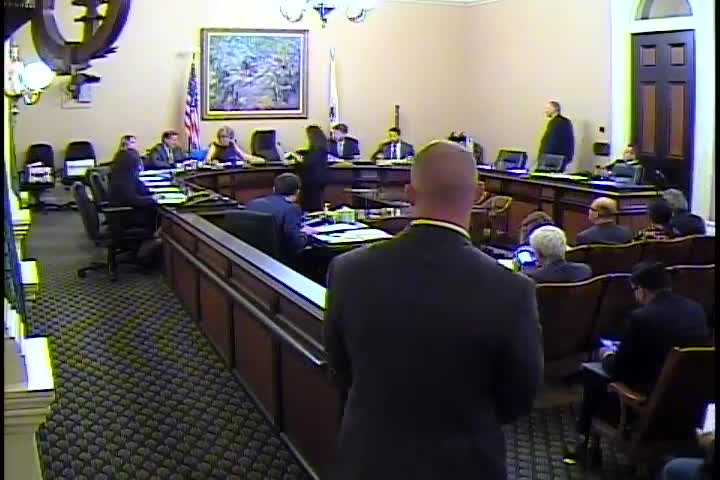 1MIN
Assembly Standing Committee on Revenue and Taxation
Bill Author

Bill Co-Author(s):