AB 2683: Literacy education: pupil author book publishing program: grant program.
- Session Year: 2017-2018
- House: Assembly
- Latest Version Date: 2018-05-01
Existing law establishes a system of public elementary and secondary schools in this state and authorizes local educational agencies throughout the state to operate schools and provide instruction to pupils in kindergarten and grades 1 to 12, inclusive. Existing law establishes in the State Department of Education a division known as the California State Library.
This bill would create the California Student Author Project as a grant program for the benefit of public school pupils from extremely low income low-income communities. The bill would appropriate $1,000,000 from the General Fund to the California State Library in the 201819 fiscal year for purposes of providing grant awards to nonprofit organizations for purposes of the program, as specified. The bill would require a grant recipient, during the 201920 and 202021 school years, to establish a pupil author book publishing program for public school pupils in grades 6 to 12, inclusive, from housing developments with a median income level of 30% of area median income. a housing development operated under a city or county public housing program that is subsidized by the federal government and provides affordable housing. The bill would require a grant recipient to provide the participating public school pupils an opportunity to write, edit, and promote a short story, and would require a grant recipient to operate weekly pupil author workshops, as provided. The bill would require the California State Library, not later than January 1, 2022, to report to the Legislature on the outcomes of the California Student Author Project.
Funds appropriated by this bill would be applied toward the minimum funding requirements for school districts and community college districts imposed by Section 8 of Article XVI of the California Constitution, as specified.Existing law establishes a system of public elementary and secondary schools in this state and authorizes local educational agencies throughout the state to operate schools and provide instruction to pupils in kindergarten and grades 1 to 12, inclusive. Existing law establishes in state government the Arts Council and imposes various duties on the council to foster arts development and to award grants and prizes to individuals and organizations in the arts, as provided. Existing law establishes in the State Department of Education a division known as the California State Library.
This bill would create the California Student Author Art and Literacy Project as a grant program for the benefit of public school pupils from extremely low income communities. The bill would appropriate $1,000,000 from the General Fund to the Arts Council California State Library in the 201819 fiscal year for purposes of providing grant awards to nonprofit organizations for purposes of the program, as specified. The bill would require a grant recipient, during the 201920 and 202021 school years, to establish a pupil author book publishing program for public school pupils in grades 6 to 12, inclusive, from housing developments with a median income level of 30% of area median income. The bill would require a grant recipient to provide the participating public school pupils an opportunity to write, edit, and promote a short story story, and would require a grant recipient to operate weekly pupil author workshops, as provided. The bill would require the Arts Council, California State Library, not later than January 1, 2022, to report to the Legislature on the outcomes of the California Student Author Art and Literacy Project.
Funds appropriated by this bill would be applied toward the minimum funding requirements for school districts and community college districts imposed by Section 8 of Article XVI of the California Constitution, as specified.
Existing law establishes a system of public elementary and secondary schools in this state and authorizes local educational agencies throughout the state to operate schools and provide instruction to pupils in kindergarten and grades 1 to 12, inclusive. Existing law establishes in state government the Arts Council and imposes various duties on the council to foster arts development and to award grants and prizes to individuals and organizations in the arts, as provided.
This bill would create the California Student Author Art and Literacy Project as a grant program for the benefit of pupils from extremely low income communities. The bill would appropriate $1,000,000 from the General Fund to the Arts Council in the 201819 fiscal year for purposes of providing grant awards to nonprofit organizations for purposes of the program, as specified. The bill would require a grant recipient, during the 201920 and 202021 school years, to establish a pupil author book publishing program for pupils in grades 6 to 12, inclusive, from housing developments with a median income level of 30% of area median income. The bill would require a grant recipient to provide participating pupils an opportunity to write, edit, and promote a short story and would require a grant recipient to operate weekly pupil author workshops, as provided. The bill would require the Arts Council, not later than January 1, 2022, to report to the Legislature on the outcomes of the California Student Author Art and Literacy Project.
Funds appropriated by this bill would be applied toward the minimum funding requirements for school districts and community college districts imposed by Section 8 of Article XVI of the California Constitution, as specified.
The Legislature finds and declares all of the following:
(a)The trend of low-income youth struggling to become proficient in reading and writing is a narrative that is passed down from era to era.
(b)According to The Literacy Project, there are currently 45 million Americans who are functionally illiterate and unable to read above a 5th grade level. In California, 25 percent of the states 6 million pupils are unable to perform basic reading skills.
(c)According to the organization DoSomething.org, nearly 85 percent of the juveniles who face trial in the juvenile court system are functionally illiterate, proving that there is a close relationship between illiteracy and crime.
(d)Over half of California pupils failed to meet English standards based on Spring 2017 standardized test results, a performance that remained essentially flat compared to the previous year.
(e)About 49 percent of pupils statewide met or exceeded English standards on the California Assessment of Student Performance and Progress in 2017, which is administered to public school pupils at certain grade levels each year. The same proportion of California pupils met English standards in 2016.
(f)For decades, generational illiteracy has hindered the careers, futures, and hopes of many pupils and their families.
(g)With the exception of organizations that focus on book drives or after school reading programs, there are few, if any, literacy pupil author book publishing programs existing today.
54801.There is hereby established the California Student Author Project. The project is designed to accomplish all of the following for public school pupils from extremely low income low-income communities:
(a)Improve pupils English language skills.
(b)Improve academic performance among pupils.
(c)Build healthy relationships between pupils and the community.
(d)Empower pupils with critical life skills.
(e)Promote positive life choices for pupils.
(f)Increase literacy, reading, and writing among pupils and the community.
(g)Reduce pupil truancy.
(h)Reduce pupil suspensions and expulsions.
54802.(a)A grant recipient pursuant to Section 54804 shall implement the educational program described in this section in the 201920 and 202021 school years.
(b)(1)A grant recipient shall provide the educational program described in this section to public school pupils in grades 6 to 12, inclusive, from housing developments with a median income level of 30 percent of area median income. a housing development described pursuant to paragraph (2).
(2)The educational program described in this section shall be provided in a housing development operated under a city or county public housing program that is subsidized by the federal government and provides affordable housing.
(c)A grant recipient shall establish a pupil author book publishing program to provide the participating public school pupils an opportunity to write, edit, and promote a short story. A grant recipient shall operate weekly pupil author workshops that shall include, but are not limited to, the following educational phases:
(1)Writing and editing, including instruction in the skills necessary for creative writing.
(2)Publishing an anthology.
(3)Marketing, media, and community relations, including instruction in book brand development and entrepreneurship.
(4)A group presentation.
(5)A community-based book signing event.
(d)Pupils participating in the pupil author book publishing program shall be expected to do all of the following:
(1)Engage in critical thinking.
(2)Practice effective problem solving.
(3)Devise a useful outline for their book.
(4)Develop promotional and advertising tools.
(5)Write a press release geared towards promotion of the book and the book signing event within the community.
(6)Gain knowledge and understanding of how to create an exciting literary character, and how to show, rather than tell, their story in a logical order.
54803.(a)Not later than January 1, 2022, the California State Library shall report to the Legislature on the outcomes of the California Student Author Project. The report shall include, but is not limited to, all of the following information:
(1)The extent to which the project accomplished the outcomes described in Section 54801.
(2)Demographic data about the public school pupils participating in the project, disaggregated by race, gender, foster youth, and English learners.
(3)The extent of parent engagement as a result of the project.
(b)(1)The requirement for submitting a report imposed under subdivision (a) is inoperative on January 1, 2026, pursuant to Section 10231.5 of the Government Code.
(2)The report prepared pursuant to subdivision (a) shall be submitted in compliance with Section 9795 of the Government Code.
54804.(a)The sum of one million dollars ($1,000,000) is hereby appropriated from the General Fund to the California State Library in the 201819 fiscal year for purposes of providing grant awards pursuant to this article.
(b)(1)The California State Library shall provide grant awards for purposes of this article to nonprofit organizations that have demonstrated experience in providing similar educational programs to pupils in extremely low income low-income communities.
(2)The California State Library shall select grant recipients with the goal of providing access to the services provided by the California Student Author Project to a total of 1,000 public school pupils over the course of the 201920 and 202021 school years.
(c)A nonprofit organization that receives a grant award shall use the funds awarded only for the purposes described in this article.
(d)For purposes of making the computations required by Section 8 of Article XVI of the California Constitution, the amount appropriated in subdivision (a) shall be deemed to be General Fund revenues appropriated for school districts, as defined in subdivision (c) of Section 41202 of the Education Code, for the 201819 fiscal year, and included within the total allocations to school districts and community college districts from General Fund proceeds of taxes appropriated pursuant to Article XIII B, as defined in subdivision (e) of Section 41202 of the Education Code, for the 201819 fiscal year.The Legislature finds and declares all of the following:
(a)The trend of low-income youth struggling to become proficient in reading and writing is a narrative that is passed down from era to era.
(b)According to The Literacy Project, there are currently 45 million Americans who are functionally illiterate and unable to read above a 5th grade level. In California, 25 percent of the states 6 million pupils are unable to perform basic reading skills.
(c)According to the organization DoSomething.org, nearly 85 percent of the juveniles who face trial in the juvenile court system are functionally illiterate, proving that there is a close relationship between illiteracy and crime.
(d)Over half of California pupils failed to meet English standards based on Spring 2017 standardized test results, a performance that remained essentially flat compared to the previous year.
(e)About 49 percent of pupils statewide met or exceeded English standards on the California Assessment of Student Performance and Progress in 2017, which is administered to public school pupils at certain grade levels each year. The same proportion of California pupils met English standards in 2016.
(f)For decades, generational illiteracy has hindered the careers, futures, and hopes of many pupils and their families.
(g)With the exception of organizations that focus on book drives or after school reading programs, there are few, if any, literacy pupil author book publishing programs existing today.
54801.There is hereby established the California Student Author Art and Literacy Project. The project is designed to accomplish all of the following for public school pupils from extremely low income communities:
(a)Improve pupils English language skills.
(b)Improve academic performance among pupils.
(c)Build healthy relationships between pupils and the community.
(d)Empower pupils with critical life skills.
(e)Promote positive life choices for pupils.
(f)Increase literacy, reading, and writing among pupils and the community.
(g)Reduce pupil truancy.
(h)Reduce pupil suspensions and expulsions.
54802.(a)A grant recipient pursuant to Section 54804 shall implement the educational program described in this section in the 201920 and 202021 school years.
(b)A grant recipient shall provide the educational program described in this section to public school pupils in grades 6 to 12, inclusive, from housing developments with a median income level of 30 percent of area median income.
(c)A grant recipient shall establish a pupil author book publishing program to provide participating the participating public school pupils an opportunity to write, edit, and promote a short story. A grant recipient shall operate weekly pupil author workshops that shall include, but are not limited to, the following educational phases:
(1)Writing and editing, including instruction in the skills necessary for creative writing.
(2)Publishing an anthology.
(3)Marketing, media, and community relations, including instruction in book brand development and entrepreneurship.
(4)A group presentation.
(5)A community-based book signing event.
(d)Pupils participating in the pupil author book publishing program shall be expected to do all of the following:
(1)Engage in critical thinking.
(2)Practice effective problem solving.
(3)Devise a useful outline for their book.
(4)Develop promotional and advertising tools.
(5)Write a press release geared towards promotion of the book and the book signing event within the community.
(6)Gain knowledge and understanding of how to create an exciting literary character, and how to show, rather than tell, their story in a logical order.
54803.(a)Not later than January 1, 2022, the Arts Council California State Library shall report to the Legislature on the outcomes of the California Student Author Art and Literacy Project. The report shall include, but is not limited to, all of the following information:
(1)The extent to which the project accomplished the outcomes described in Section 54801.
(2)Demographic data about the public school pupils participating in the project, disaggregated by race, gender, foster youth, and English learners.
(3)The extent of parent engagement as a result of the project.
(b)(1)The requirement for submitting a report imposed under subdivision (a) is inoperative on January 1, 2026, pursuant to Section 10231.5 of the Government Code.
(2)The report prepared pursuant to subdivision (a) shall be submitted in compliance with Section 9795 of the Government Code.
54804.(a)The sum of one million dollars ($1,000,000) is hereby appropriated from the General Fund to the Arts Council California State Library in the 201819 fiscal year for purposes of providing grant awards pursuant to this article.
(b)(1)The Arts Council California State Library shall provide grant awards for purposes of this article to nonprofit organizations that have demonstrated experience in providing similar educational programs to pupils in extremely low income communities.
(2)The Arts Council California State Library shall select grant recipients with the goal of providing access to the services provided by the California Student Author Art and Literacy Project to a total of 1,000 public school pupils over the course of the 201920 and 202021 school years.
(c)A nonprofit organization that receives a grant award shall use the funds awarded only for the purposes described in this article.
(d)For purposes of making the computations required by Section 8 of Article XVI of the California Constitution, the amount appropriated in subdivision (a) shall be deemed to be General Fund revenues appropriated for school districts, as defined in subdivision (c) of Section 41202 of the Education Code, for the 201819 fiscal year, and included within the total allocations to school districts and community college districts from General Fund proceeds of taxes appropriated pursuant to Article XIII B, as defined in subdivision (e) of Section 41202 of the Education Code, for the 201819 fiscal year.
The Legislature finds and declares all of the following:
(a)The trend of low-income youth struggling to become proficient in reading and writing is a narrative that is passed down from era to era.
(b)According to The Literacy Project, there are currently 45 million Americans who are functionally illiterate and unable to read above a 5th grade level. In California, 25 percent of the states 6 million pupils are unable to perform basic reading skills.
(c)According to the organization DoSomething.org, nearly 85 percent of the juveniles who face trial in the juvenile court system are functionally illiterate, proving that there is a close relationship between illiteracy and crime.
(d)Over half of California pupils failed to meet English standards based on Spring 2017 standardized test results, a performance that remained essentially flat compared to the previous year.
(e)About 49 percent of pupils statewide met or exceeded English standards on the California Assessment of Student Performance and Progress in 2017, which is administered to public school pupils at certain grade levels each year. The same proportion of California pupils met English standards in 2016.
(f)For decades, generational illiteracy has hindered the careers, futures, and hopes of many pupils and their families.
(g)With the exception of organizations that focus on book drives or after school reading programs, there are few, if any, literacy pupil author book publishing programs existing today.
54801.There is hereby established the California Student Author Art and Literacy Project. The project is designed to accomplish all of the following for pupils from extremely low income communities:
(a)Improve pupils English language skills.
(b)Improve academic performance among pupils.
(c)Build healthy relationships between pupils and the community.
(d)Empower pupils with critical life skills.
(e)Promote positive life choices for pupils.
(f)Increase literacy, reading, and writing among pupils and the community.
(g)Reduce pupil truancy.
(h)Reduce pupil suspensions and expulsions.
54802.(a)A grant recipient pursuant to Section 54804 shall implement the educational program described in this section in the 201920 and 202021 school years.
(b)A grant recipient shall provide the educational program described in this section to pupils in grades 6 to 12, inclusive, from housing developments with a median income level of 30 percent of area median income.
(c)A grant recipient shall establish a pupil author book publishing program to provide participating pupils an opportunity to write, edit, and promote a short story. A grant recipient shall operate weekly pupil author workshops that shall include, but are not limited to, the following educational phases:
(1)Writing and editing, including instruction in the skills necessary for creative writing.
(2)Publishing an anthology.
(3)Marketing, media, and community relations, including instruction in book brand development and entrepreneurship.
(4)A group presentation.
(5)A community-based book signing event.
(d)Pupils participating in the pupil author book publishing program shall be expected to do all of the following:
(1)Engage in critical thinking.
(2)Practice effective problem solving.
(3)Devise a useful outline for their book.
(4)Develop promotional and advertising tools.
(5)Write a press release geared towards promotion of the book and the book signing event within the community.
(6)Gain knowledge and understanding of how to create an exciting literary character, and how to show, rather than tell, their story in a logical order.
54803.(a)Not later than January 1, 2022, the Arts Council shall report to the Legislature on the outcomes of the California Student Author Art and Literacy Project. The report shall include, but is not limited to, all of the following information:
(1)The extent to which the project accomplished the outcomes described in Section 54801.
(2)Demographic data about pupils participating in the project, disaggregated by race, gender, foster youth, and English learners.
(3)The extent of parent engagement as a result of the project.
(b)(1)The requirement for submitting a report imposed under subdivision (a) is inoperative on January 1, 2026, pursuant to Section 10231.5 of the Government Code
(2)The report prepared pursuant to subdivision (a) shall be submitted in compliance with Section 9795 of the Government Code.
54804.(a)The sum of one million dollars ($1,000,000) is hereby appropriated from the General Fund to the Arts Council in the 201819 fiscal year for purposes of providing grant awards pursuant to this article.
(b)(1)The Arts Council shall provide grant awards for purposes of this article to nonprofit organizations that have demonstrated experience in providing similar educational programs to pupils in extremely low income communities.
(2)The Arts Council shall select grant recipients with the goal of providing access to the services provided by the California Student Author Art and Literacy Project to a total of 1,000 pupils over the course of the 201920 and 202021 school years.
(c)A nonprofit organization that receives a grant award shall use the funds awarded only for the purposes described in this article.
(d)For purposes of making the computations required by Section 8 of Article XVI of the California Constitution, the amount appropriated in subdivision (a) shall be deemed to be General Fund revenues appropriated for school districts, as defined in subdivision (c) of Section 41202 of the Education Code, for the 201819 fiscal year, and included within the total allocations to school districts and community college districts from General Fund proceeds of taxes appropriated pursuant to Article XIII B, as defined in subdivision (e) of Section 41202 of the Education Code, for the 201819 fiscal year.
|
Date
|
Status
|
|---|---|
| May 25, 2018 | In committee: Held under submission. |
| May 9, 2018 | In committee: Set, first hearing. Referred to APPR. suspense file. |
| May 2, 2018 | Re-referred to Com. on APPR. |
| May 1, 2018 | Read second time and amended. |
| Apr 30, 2018 | From committee: Amend, and do pass as amended and re-refer to Com. on APPR. (Ayes 7. Noes 0.) (April 25). |
| Apr 19, 2018 | Re-referred to Com. on ED. |
| Apr 18, 2018 | From committee chair, with author's amendments: Amend, and re-refer to Com. on ED. Read second time and amended. |
| Apr 11, 2018 | In committee: Set, first hearing. Hearing canceled at the request of author. |
| Mar 8, 2018 | Referred to Com. on ED. |
| Feb 16, 2018 | From printer. May be heard in committee March 18. |
| Feb 15, 2018 | Read first time. To print. |
|
Date
|
Description
|
Location
|
Votes
|
|
|---|---|---|---|---|
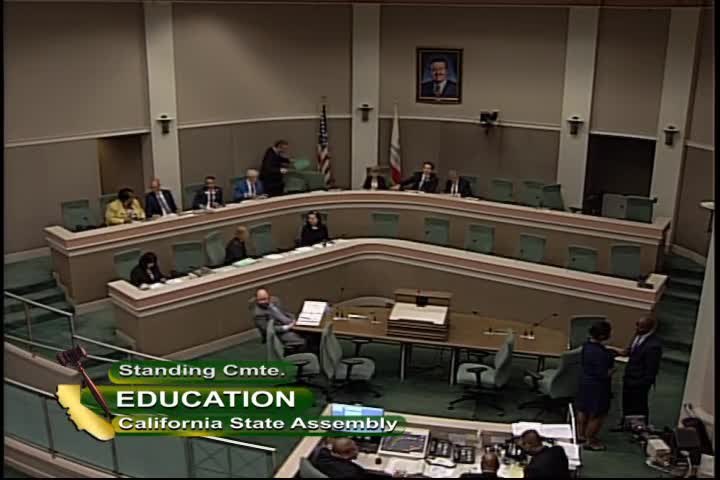
| Apr 25, 2018 | Do pass as amended and be re-referred to the Committee on [Appropriations] | Assembly Standing Committee on Education |
Passed |
This list shows positions taken on this bill by organizations on the date displayed, which is linked to the original source.
Positions by individuals are not included.
|
Organization
|
Position
|
Date
|
|---|---|---|
| An individual | ** Support | Apr 24, 2018 |
| Apple10 Skincare, Inc. | ** Support | Apr 24, 2018 |
| Base509 | ** Support | Apr 24, 2018 |
| Crenshaw United Methodist Church | ** Support | Apr 24, 2018 |
| Foothill-De Anza Community College District | ** Support | Apr 24, 2018 |
| Franklin Classical Middle School | ** Support | Apr 24, 2018 |
| Gr Public Relations | ** Support | Apr 24, 2018 |
| Kaya South Incorporated | ** Support | Apr 24, 2018 |
| Kern Community College District | ** Support | Apr 24, 2018 |
| Kimble Gamble Brown Baggin It | ** Support | Apr 24, 2018 |
| Los Rios Community College District | ** Support | Apr 24, 2018 |
| San Diego Community College District | ** Support | Apr 24, 2018 |
| Yuba Community College District | ** Support | Apr 24, 2018 |
Date of Hearing: May 9, 2018
ASSEMBLY COMMITTEE ON APPROPRIATIONS
Lorena Gonzalez Fletcher, Chair
ABPCA Bill Id:AB 2683
Author:(Gipson) – As Amended Ver:May 1, 2018
Policy Committee: | Education | Vote: | 7 - 0 |
|
| ||
|
|
Urgency: No State Mandated Local Program: No Reimbursable: No
SUMMARY: This bill appropriates $1 million GF to create a grant program, over the 2019-20 and 2020-21 fiscal years, for eligible nonprofit institutions to provide programming related to writing and publishing for students who live in public housing developments in grades six through 12. The California State Library is to award grants and produce a report on program outcomes by January 1, 2022.
FISCAL EFFECT:
- $1 million GF over three years for grant awards to provide programming related to writing and publishing.
- One-time GF costs of about $200,000 for the California State Library to award and oversee grants and submit a report on the program’s outcomes.
COMMENTS:
- Purpose. According to the author:
AB 2683 will enhance the literacy skills of extremely low-income youth residing in public housing developments through a student author book publishing pilot program. Through this program students will learn to write a fiction genre short narrative as part of a published anthology. Participating students will also attend regular development workshops and receive coaching to execute their own community based book signing event. This type of experiential learning will help youth raise their literacy levels and better prepare them for postsecondary school success.
- California State Library. The State Library serves as the central library for state government, collects, preserves, and publicizes literature and historical items, and provides specialized research services to the Legislature and the governor. In addition, the state library passes through state and federal funds to local public libraries for specified purposes and provides related oversight and technical assistance. These local assistance programs fund literacy programs, internet services, and resource sharing, among other things. In addition, the state has funded various one-time initiatives in recent years at the state library, including the Civil Liberties program and an online high school program.
- Governor’s Budget Proposal. The governor’s 2018-19 budget proposal provides a $2.5 million ongoing GF augmentation to the State Library Literacy Program, with a portion of funds going to local libraries to provide literacy services to children of adult learners.
- Related Legislation. SB 494 (Hueso), of this session, would have established the Golden State Reading grant program for the purpose of assisting local educational agencies in ensuring that all students meet reading standards and language progressive skills by the end of grade three. This bill was vetoed by the governor.
Analysis Prepared by: Natasha Collins / APPR. / (916) 319-2081
Date of Hearing: April 25, 2018
ASSEMBLY COMMITTEE ON EDUCATION
Patrick O'Donnell, Chair
ABPCA Bill Id:AB 2683 (
Author:Gipson) – As Amended Ver:April 18, 2018
SUBJECT: Literacy education: pupils from extremely low income communities: grant program
SUMMARY: Establishes the California Student Author Project, a grant program operated by the California State Library (CSL). Specifically, this bill:
- Makes findings and declarations regarding the importance of literacy education.
- Establishes the California Student Author Project, designed to accomplish all of the following for public school students from extremely low income communities:
- Improve students’ English language skills
- Improve academic performance among students
- Build healthy relationships between students and the community
- Empower students with critical life skills
- Promote positive life choices for students
- Increase literacy, reading, and writing among students and the community
- Reduce student truancy
- Reduce student suspensions and expulsions
- Requires a grant recipient to implement the educational program in the 2019–20 and 2020–21 school years.
- Requires a grant recipient to provide the educational program described in this section to students in grades 6 to 12, inclusive, from housing developments with a median income level of 30 percent of area median income.
- Requires a grant recipient to establish a student author book publishing program to provide participating students an opportunity to write, edit, and promote a short story.
- Requires a grant recipient to operate weekly student author workshops that shall include the following educational phases:
- Writing and editing, including instruction in the skills necessary for creative writing
- Publishing an anthology
- Marketing, media, and community relations, including instruction in book brand development and entrepreneurship
- A group presentation
- A community-based book signing event
- States that students participating in the student author book publishing program are expected to do all of the following:
- Engage in critical thinking
- Practice effective problem solving
- Devise a useful outline for their book
- Develop promotional and advertising tools
- Write a press release geared towards promotion of the book and the book signing event within the community
- Gain knowledge and understanding of how to create an exciting literary character, and how to show, rather than tell, their story in a logical order
- Requires, not later than January 1, 2022, the California State Library (CSL) to report to the Legislature on the outcomes of the California Student Author Project.
- Requires the report to include all of the following information:
- The extent to which the project accomplished the desired outcomes of the project.
- Demographic data about students participating in the project, disaggregated by race, gender, foster youth, and English learners.
- The extent of parent engagement as a result of the project.
- Appropriates the sum of one million dollars from the General Fund to the CSL in the 2018–19 fiscal year for purposes of providing these grant awards.
- Requires the CSL to provide grant awards to nonprofit organizations that have demonstrated experience in providing similar educational programs to students in extremely low income communities.
- Requires the CSL to grant recipients with the goal of providing access to the services provided by the California Student Author Project to a total of 1,000 students over the course of the 2019–20 and 2020–21 school years.
- States that a nonprofit organization that receives a grant award shall use the funds awarded only for the purposes described in this article.
- States that, for purposes of making the computations required by Section 8 of Article XVI of the California Constitution, which was approved by the voters as Proposition 98, the amount appropriated is deemed to be “General Fund revenues appropriated for school districts.”
EXISTING LAW:
- Establishes the California Civil Liberties Public Education Act, for the purpose of sponsoring public educational activities and development of educational materials to ensure that the events surrounding the exclusion, forced removal, and internment of citizens and permanent residents of Japanese ancestry are remembered, and so that the causes and circumstances of that and similar events is illuminated and understood. Requires that this program is administered by the California State Library. (EC 13000)
- Requires the State Librarian to allocate grants on a competitive basis for the general purpose of establishing a legacy of remembrance as part of a continuing process of recovery from World War II exclusion and detention.
FISCAL EFFECT: Unknown
COMMENTS:
Need for the bill. The author’s office states, “Children’s reading competency is strongly correlated with the home literacy environment and in order to effectively address functional illiteracy we must focus on improving literacy outcomes at home. Since low-income households have less access to learning materials and skill building lessons research shows that functional illiteracy is especially prevalent in public housing developments. Children who live in public housing perform worse in school than students who live in other types of housing and this disparity exists amongst children even when comparing students at the same schools who shared similar demographics, like race, gender, and poverty status. Children who live in public housing developments are also less likely to have experiences that encourage the development of reading acquisition skills and as a result enter high school with average literacy skills five years behind those of higher-income students. This suggests that children who reside in public housing developments face unique social and economic hurdles at home that affect their success in the classroom and illustrates the often-overlooked role that housing can play in education.
To help reverse this trend, AB 2683 will enhance the literacy skills of extremely low-income youth residing in public housing developments through a student author book publishing pilot program. Through this program students will learn to write a fiction genre short narrative as part of a published anthology. Participating students will also attend regular development workshops and receive coaching to execute their own community based book signing event. This type of experiential learning will help youth raise their literacy levels and better prepare them for postsecondary school success. This pilot will also serve as a data point for our urban housing centers. The outcomes will provide data on how to address literacy within our housing developments and how services can be leveraged to address this statewide need.”
Modeled after existing program. According to the author, this grant program proposed by this bill is modeled after an existing program run by a non-profit organization called Phabb5. This organization’s mission is “to reinvigorate, inspire, and unite communities at their core by creating turnkey comprehensive book publishing programs that help students stand out during every phase of life.”
English language arts scores improving, but overall proficiency is low and achievement gaps persist. According to the CDE, in the second year of the state’s Common Core-aligned assessment in English Language Arts (which includes assessment of reading skills), students’ performance improved over the prior year. But overall performance remains low and achievement gaps remain.
In the 2015-16 academic year about 49 percent of students met or exceeded grade-level achievement standards in English Language Arts (37 percent met the standards in Mathematics). 37 percent of Latinos and 31 percent of African American students meet or exceeded standards in English language arts compared with 64 percent of White students. Compared to the prior year, average scores for Latino students in English language arts increased 5 percent, while scores for African Americans and Whites rose 3 percent.
What does research say about how to improve literacy? The U.S. Department of Education’s Institute of Education Sciences (IES) maintains the What Works Clearinghouse (WWC), which reviews the existing research on different programs, products, and practices, and policies in education, with the goal of providing educators information they need to make evidence-based decisions. The WWC identifies interventions in different content and skills areas, including literacy.
In 2009 the WWC published a practice guide entitled “Assisting Students Struggling with Reading: Response to Intervention (RtI) and Multi-Tier Intervention in the Primary Grades.” This guide shared five recommendations to help educators identify struggling readers and implement evidence-based strategies to promote their reading achievement:
- Screen all students for potential reading problems at the beginning of the year and again in the middle of the year. Regularly monitor the progress of students who are at elevated risk for developing reading disabilities.
- Provide differentiated reading instruction for all students based on assessments of students’ current reading levels.
- Provide intensive, systematic instruction on up to three foundational reading skills in small groups to students who score below the benchmark on universal screening. Typically these groups meet between three and five times a week for 20–40 minutes.
- Monitor the progress of tier 2 students at least once a month. Use these data to determine whether students still require intervention. For those still making insufficient progress, school-wide teams should design a tier 3 intervention plan.
- Provide intensive instruction daily that promotes the development of various components of reading proficiency to students who show minimal progress after reasonable time in tier 2 small group instruction.
Of these practices, the IES found minimal evidence for three of these practices, found moderate evidence for the first (screen for potential reading problems), and strong evidence for the third (provide intensive, systematic instruction in a small group setting).
The CDE also maintains a webpage devoted to research-based intervention programs and tools to support students to achieve proficiency on the Common Core State Standards.
Proposition 98 eligible? This bill states that, for purposes of Proposition 98, the minimum funding guarantee provided for in the Constitution, funds appropriated by this bill are deemed “General Fund revenues appropriated for school districts.” However, the bill appropriates funding to the State Library for grants to non-profit organizations, not local education agencies or community college districts. Staff recommends that the bill be amended to remove this provision.
Definition of eligible students. This bill requires that the students served the grant program live in “housing developments with a median income level of 30 percent of area median income.” It appears that a list of housing developments meeting the specific requirements of the bill does not exist, making it difficult to judge whether a grant proposal has met the requirements of the bill.
Staff recommends that this be changed to “a housing development under a city or county public housing program that is subsidized by the federal government and provides affordable housing.” Staff also recommends, consistent with the author’s stated intent, that this bill be amended to require that the programs supported by this program operate in public housing developments.
Related legislation. SB 494 (Hueso) of this Session would have established the Golden State Reading grant program for the purpose of assisting local educational agencies in ensuring that all students meet reading standards and language progressive skills by the end of grade 3. This bill was vetoed by the Governor, who stated:
This bill would establish the Golden State Reading grant program for the purpose of assisting local educational agencies to ensure that all students meet specified reading standards and language skills by the end of the third grade. Local educational agencies already have the flexibility under the Local Control Funding Formula to provide students the support they need to ensure that appropriate reading and language skills are achieved.
REGISTERED SUPPORT / OPPOSITION:
Support
Apple10 Skincare, Inc.
Base509
Crenshaw United Methodist Church
Foothill-De Anza Community College District
Franklin Classical Middle School
GR Public Relations
Kaya South Incorporated
Kern Community College District
Kimble Gamble Brown Baggin It
Los Rios Community College District
San Diego Community College District
Yuba Community College District
An individual
Opposition
None on file
Analysis Prepared by: Tanya Lieberman / ED. / (916) 319-2087
Bill Author

Bill Co-Author(s):