AB 2727: Personal income taxes: credit: firefighters.
- Session Year: 2017-2018
- House: Assembly
- Latest Version Date: 2018-04-10
The Personal Income Tax Law authorizes various credits against the taxes imposed by that law.
This bill would authorize a credit against that tax for each taxable year beginning on and after January 1, 2019, and before January 1, 2028, 2024, in an amount equal to 35% or 80% of the amount paid or incurred by a qualified firefighter during the taxable year for qualified firefighter expenses, as defined, not to exceed $1,500. and would limit the amount of the credit allowed to a taxpayer for each taxable year to $1,500.
This bill would take effect immediately as a tax levy.
The Personal Income Tax Law authorizes various credits against the taxes imposed by that law.
This bill would authorize a credit against that tax for each taxable year beginning on and after January 1, 2019, and before January 1, 2028, in an amount equal to 80% of the amount paid or incurred by a qualified firefighter during the taxable year for qualified firefighter expenses, as defined, not to exceed $1,500.
This bill would take effect immediately as a tax levy.
(a)(1)For each taxable year beginning on or after January 1, 2019, and before January 1, 2028, 2024, there shall be allowed as a credit against the net tax, as defined in Section 17039, of a qualified firefighter an amount equal to 35 or 80 percent, not to exceed one thousand five hundred dollars ($1,500), percent of the amount paid or incurred during the taxable year for qualified firefighter expenses. expenses. The amount of a credit allowed under this section to a taxpayer shall not exceed one thousand five hundred dollars ($1,500) for each taxable year.
(2)For purposes of paragraph (1), the applicable credit percentage shall be:
(A)Thirtyfive percent of the amount paid or incurred during the taxable year for qualified firefighter expenses by a qualified firefighter described in subparagraph (B) of paragraph (3) of subdivision (b).
(B)Eighty percent of the amount paid or incurred during the taxable year for qualified firefighter expenses by a qualified firefighter described in subparagraph (A) of paragraph (3) of subdivision (b).
(b)For purposes of this section, all of the following apply:
(1)Certifying entity means any fire department, as specified in this section, the Department of Forestry and Fire Protection, and any county forestry or firefighting department or unit, to which the qualified firefighter reports.
(2)Qualified firefighter expenses means the amount paid or incurred by a qualified firefighter, for which the qualified firefighter was not reimbursed, for training and equipment that was obtained in order to serve as a qualified firefighter.
(3)Qualified firefighter means either of the following:
(A)A volunteer firefighter who is registered as an active firefighting member of any regularly organized volunteer fire department having official recognition, and full or partial support of the government of the county, city, town, or district in the this state in which the volunteer fire department is located.
(B)A professional firefighter who is employed as a firefighter by the Department of Forestry and Fire Protection, or any county forestry or firefighting department or unit in this state, or any firefighter hired to serve as a firefighter by a fire department of a city, county, city and county, district, or other public or municipal corporation or political subdivision of this state.
(c)In order to be eligible for a tax credit authorized by this section, the qualified firefighter shall do all of the following:
(1)Submit a request to the certifying entity for certification of both of the following:
(A)That the firefighter is a qualified firefighter as provided by this section.
(B)That the equipment for which the qualified firefighter is claiming a credit under this section was obtained in order to serve as a qualified firefighter.
(2)Retain for his or her records a copy of the certificate issued by the certifying entity as specified in subdivision (d).
(3)Provide a copy of the certification to the Franchise Tax Board upon request. If the qualified firefighter fails to comply with the requirements of this subdivision, no credit shall be allowed to that qualified firefighter under this section for any taxable year unless the qualified firefighter subsequently complies.
(d)The certifying entity shall do all of the following:
(1)Certify that the firefighter is a qualified firefighter as provided by this section.
(2)Certify that the equipment for which the qualified firefighter is claiming a credit under this section was obtained in order to serve as a qualified firefighter.
(3)Provide the qualified firefighter with a copy of the certification to retain for his or her records.
(e)No deduction shall be allowed as otherwise provided in this part for that portion of expenses paid or incurred for the taxable year which is equal to the amount of the credit allowed under this section attributable to those expenses.
(f)No credit may be claimed under this section with respect to any amount for which any other credit has been claimed under this part.
(g)If a qualified firefighter that claims a credit under this section sells, transfers, or otherwise disposes of, either directly or indirectly, any equipment within three years of the taxable year during which he or she first claimed the credit, there shall be added to the net tax of the qualified firefighter for the taxable year of sale, transfer, or disposition an amount equal to the total credit claimed multiplied by a fraction, the numerator of which is the remaining term of the three years and the denominator of which is three.
(h)In the case where the credit allowed by this section exceeds the net tax, the excess may be carried over to reduce the net tax for the next three taxable years, or until the credit has been exhausted, whichever occurs first.
(i)This section shall remain in effect only until December 1, 2028, 2024, and as of that date is repealed.
SEC. 2.This act provides for a tax levy within the meaning of Article IV of the California Constitution and shall go into immediate effect.
(a)For each taxable year beginning on or after January 1, 2019, and before January 1, 2028, there shall be allowed as a credit against the net tax, as defined in Section 17039, of a qualified firefighter an amount equal to 80 percent, not to exceed one thousand five hundred dollars ($1,500), of the amount paid or incurred during the taxable year for qualified firefighter expenses.
(b)For purposes of this section, all of the following apply:
(1)Certifying entity means any fire department, as specified in this section, the Department of Forestry and Fire Protection, and any county forestry or firefighting department or unit, to which the qualified firefighter reports.
(2)Qualified firefighter expenses means the amount paid or incurred by a qualified firefighter, for which the qualified firefighter was not reimbursed, for training and equipment that was obtained in order to serve as a qualified firefighter.
(3)Qualified firefighter means either of the following:
(A)A volunteer firefighter who is registered as an active firefighting member of any regularly organized volunteer fire department having official recognition, and full or partial support of the government of the county, city, town, or district in the state in which the volunteer fire department is located.
(B)A professional firefighter who is employed as a firefighter by the Department of Forestry and Fire Protection, or any county forestry or firefighting department or unit in this state, or any firefighter hired to serve as a firefighter by a fire department of a city, county, city and county, district, or other public or municipal corporation or political subdivision of this state.
(c)In order to be eligible for a tax credit authorized by this section, the qualified firefighter shall do all of the following:
(1)Submit a request to the certifying entity for certification of both of the following:
(A)That the firefighter is a qualified firefighter as provided by this section.
(B)That the equipment for which the qualified firefighter is claiming a credit under this section was obtained in order to serve as a qualified firefighter.
(2)Retain for his or her records a copy of the certificate issued by the certifying entity as specified in subdivision (d).
(3)Provide a copy of the certification to the Franchise Tax Board upon request. If the qualified firefighter fails to comply with the requirements of this subdivision, no credit shall be allowed to that qualified firefighter under this section for any taxable year unless the qualified firefighter subsequently complies.
(d)The certifying entity shall do all of the following:
(1)Certify that the firefighter is a qualified firefighter as provided by this section.
(2)Certify that the equipment for which the qualified firefighter is claiming a credit under this section was obtained in order to serve as a qualified firefighter.
(3)Provide the qualified firefighter with a copy of the certification to retain for his or her records.
(e)No deduction shall be allowed as otherwise provided in this part for that portion of expenses paid or incurred for the taxable year which is equal to the amount of the credit allowed under this section attributable to those expenses.
(f)No credit may be claimed under this section with respect to any amount for which any other credit has been claimed under this part.
(g)If a qualified firefighter that claims a credit under this section sells, transfers, or otherwise disposes of, either directly or indirectly, any equipment within three years of the taxable year during which he or she first claimed the credit, there shall be added to the net tax of the qualified firefighter for the taxable year of sale, transfer, or disposition an amount equal to the total credit claimed multiplied by a fraction, the numerator of which is the remaining term of the three years and the denominator of which is three.
(h)In the case where the credit allowed by this section exceeds the net tax, the excess may be carried over to reduce the net tax for the next three taxable years, or until the credit has been exhausted, whichever occurs first.
(i)This section shall remain in effect only until December 1, 2028, and as of that date is repealed.
SEC. 2.This act provides for a tax levy within the meaning of Article IV of the California Constitution and shall go into immediate effect.
|
Date
|
Status
|
|---|---|
| May 25, 2018 | In committee: Held under submission. |
| Apr 25, 2018 | In committee: Set, first hearing. Referred to APPR. suspense file. |
| Apr 11, 2018 | Re-referred to Com. on APPR. |
| Apr 10, 2018 | Read second time and amended. |
| Apr 9, 2018 | From committee: Amend, and do pass as amended and re-refer to Com. on APPR. (Ayes 9. Noes 0.) (April 2). |
| Mar 8, 2018 | Referred to Com. on REV. & TAX. |
| Feb 16, 2018 | From printer. May be heard in committee March 18. |
| Feb 15, 2018 | Read first time. To print. |
|
Date
|
Description
|
Location
|
Votes
|
|
|---|---|---|---|---|
| Apr 2, 2018 | Do pass as amended and be re-referred to the Committee on [Appropriations] | Assembly Standing Committee on Revenue and Taxation |
Passed |
This list shows positions taken on this bill by organizations on the date displayed, which is linked to the original source.
Positions by individuals are not included.
|
Organization
|
Position
|
Date
|
|---|---|---|
| Rural County Representatives of California | ** Support | Mar 29, 2018 |
| Shasta County | * Support | Apr 2, 2018 |
Date of Hearing: April 25, 2018
ASSEMBLY COMMITTEE ON APPROPRIATIONS
Lorena Gonzalez Fletcher, Chair
ABPCA Bill Id:AB 2727
Author:(Flora) – As Amended Ver:April 10, 2018
Policy Committee: | Revenue and Taxation | Vote: | 9 - 0 |
|
| ||
|
|
Urgency: No State Mandated Local Program: No Reimbursable: No
SUMMARY:
This bill creates a Personal Income Tax (PIT) credit worth 80% of a volunteer firefighter’s eligible expenses and 35% of a professional firefighter’s eligible expenses, as defined. The size of the credit is limited to $1,500, and the credit is available in taxable years beginning in 2019 through 2023.
FISCAL EFFECT:
- Annual General Fund revenue loss of $11 million in 2018-19, $24 million in 2019-20, and $30 million in 2020-21.
- Likely absorbable costs for the Department of Forestry and Fire Protection to certify a firefighter’s eligibility for a credit.
COMMENTS:
- Purpose. According to the author, AB 2727 will help fire districts recruit firefighters by providing an incentive for those who want to serve their community in fire protection service. As supporters of the bill note, many rural fire districts rely on volunteer firefighters, and their training and equipment costs have increased in recent years.
- Fiscal implications of tax expenditures. Existing law allows for various tax expenditures such as credits, deductions, exclusions, and exemptions for particular taxpayer groups. These features of the tax code can result in significant state costs through foregone tax revenue, and, in many cases, policymakers have little control over the revenue loss that occurs in any given year. As a result, many tax expenditure bills now include provisions designed to give the Legislature more control over costs. Examples of such provisions include placing a sunset date or making a bill’s provisions contingent upon a separate budget action. AB 2727 includes a sunset.
- Recent legislation. AB 1700 (La Malfa), of the 2007-08 Legislative Session, would have provided a tax credit to qualified firefighters for qualified firefighter expenses. That bill died in the Assembly Committee on Revenue and Taxation.
Analysis Prepared by: Luke Reidenbach / APPR. / (916) 319-2081
Date of Hearing: April 2, 2018
ASSEMBLY COMMITTEE ON REVENUE AND TAXATION
Autumn R. Burke, Chairwoman
ABPCA Bill Id:AB 2727 (
Author:Flora) – As Introduced Ver:February 15, 2018
Majority vote. Tax levy. Fiscal committee.
SUBJECT: Personal income taxes: credit: volunteer firefighters
SUMMARY: Allows a tax credit, under the Personal Income Tax (PIT) Law, to a "qualified firefighter", as specified. Specifically, this bill:
- Allows, for taxable years beginning on or after January 1, 2019, and before January 1, 2028, a credit against the net tax of a "qualified firefighter" in an amount equal to 80%, not to exceed $1,500, of the amount paid or incurred during the taxable year for "qualified firefighter expenses".
- Defines a "qualified firefighter" as either of the following:
- A volunteer firefighter who is registered as an active firefighting member of any regularly organized volunteer fire department having official recognition, and full or partial support of the government of the county, city, town, or district in the state in which the volunteer fire department is located; or,
- A professional firefighter who is employed as a firefighter by the Department of Forestry and Fire Protection, or any county forestry or firefighting department or unit in this state, or any firefighter hired to serve as a firefighter by a fire department of a city, county, city and county, district, or other public or municipal corporation or political subdivision of this state.
- Defines "qualified firefighter expenses" to mean the amount paid or incurred by a qualified firefighter, for which the qualified firefighter was not reimbursed, for training and equipment that was obtained in order to serve as a qualified firefighter.
- Provides that, to be eligible for this tax credit, the qualified firefighter must do all of the following:
- Submit a request to the "certifying entity" for certification of both of the following:
- That the firefighter is a qualified firefighter as provided by this bill; and,
- That the equipment for which the qualified firefighter is claiming a credit under this bill was obtained in order to serve as a qualified firefighter.
- Retain for his or her records a copy of the certificate issued by the "certifying entity"; and,
- Provide a copy of the certification to the Franchise Tax Board (FTB) upon request.
- Submit a request to the "certifying entity" for certification of both of the following:
- Requires the "certifying entity" to do all of the following:
- Certify that the firefighter is a qualified firefighter, as provided by this bill;
- Certify that the equipment for which the qualified firefighter is claiming a credit was obtained in order to serve as a qualified firefighter; and,
- Provide the qualified firefighter with a copy of the certification to retain for his or her records.
- Defines "certifying entity" to mean any fire department, the Department of Forestry and Fire Protection, and any county forestry or firefighting department or unit, to which the qualified firefighter reports.
- Disallows a deduction for that portion of expenses paid or incurred for the taxable year that is equal to the amount of the credit allowed under this bill attributable to those expenses.
- Provides that no credit may be claimed with respect to any amount for which any other credit has been claimed.
- Provides that if a qualified firefighter who claims a credit sells, transfers, or otherwise disposes of, either directly or indirectly, any equipment within three years of the taxable year during which he or she first claimed the credit, the credit shall be recaptured, as specified.
- Provides that, in cases where the credit amount exceeds the taxpayer's net tax, the excess credit amount may be carried over for the next three taxable years, or until the credit has been exhausted.
- Sunsets the credit's statutory provisions on December 1, 2028.
- Takes immediate effect as a tax levy.
EXISTING LAW:
- Allows various tax credits under the PIT Law. These credits are generally designed to encourage socially beneficial behavior or to provide relief to taxpayers who incur specified expenses.
- Requires any bill authorizing a new credit to contain all of the following:
- Specific goals, purposes, and objectives that the tax credit will achieve;
- Detailed performance indicators for the Legislature to use when measuring whether the tax credit meets the goals, purposes, and objectives stated in the bill; and,
- Data collection requirements to enable the Legislature to determine whether the tax credit is meeting, failing to meet, or exceeding those specific goals, purposes, and objectives. The requirements shall include the specific data and baseline measurements to be collected and remitted in each year the credit is in effect, for the Legislature to measure the change in performance indicators, and the specific taxpayers, state agencies, or other entities required to collect and remit data. (Revenue and Taxation Code (R&TC) Section 41.)
FISCAL EFFECT: The FTB estimates revenue losses of $13 million in fiscal year (FY) 2018-19, $28 million in FY 2019-20, and $37 million in FY 2020-21.
COMMENTS:
- The author has provided the following statement in support of this bill:
Ensuring a qualified, robust firefighter workforce is critical to the economic and physical safety of our communities. AB 2727 would enhance recruitment and retention of firefighters in the industry by providing an incentive for those who currently or wish to serve their community in fire protection service.
- This bill is sponsored by the Rural County Representatives of California, which notes the following:
Many rural fire districts rely upon the volunteer services of members from their communities to provide a critical public service, responding to structure fires and emergency response calls. In addition, these firefighters are often on the first line of defense, along with the California Department of Forestry and Fire Protection, on the devastating wildland fires in their own communities. In some parts of rural California, volunteer firefighters are the only local fire department.
Over the years, the training requirements and equipment for volunteer (and paid personnel) have increased in time and expense. While the fire districts generally provide the minimum training and safety equipment, often these individuals are not reimbursed for travel to the required training and incur expenses on additional training or higher quality safety equipment. It has become increasingly difficult for the rural fire districts to recruit and retain volunteer firefighters.
- The FTB notes the following in its staff analysis of this bill:
- "It is unclear whether the $1,500 limitation applies to the total amount of the credit or the total amount of unreimbursed expenses. To avoid disputes between taxpayers and the department, the bill should be amended to clarify the author's intent."
- "For clarity, it is recommended the bill be amended to provide the amount of qualified costs in the certification. This bill [uses] a phrase that is undefined, i.e., 'fails to comply.' The absence of definitions to clarify these terms could lead to disputes with taxpayers and would complicate the administration of this bill. For clarity and ease of administration, it is recommended that the bill be amended to clearly define this phrase."
- Committee Staff Comments:
- What is a "tax expenditure"? Existing law provides various credits, deductions, exclusions, and exemptions for particular taxpayer groups. In the late 1960s, U.S. Treasury officials began arguing that these features of the tax law should be referred to as "expenditures" since they are generally enacted to accomplish some governmental purpose and there is a determinable cost associated with each (in the form of foregone revenues). This bill would enact a new tax expenditure program, in the form of a tax credit, for qualified firefighters.
- How is a tax expenditure different from a direct expenditure? As the Department of Finance notes in its annual Tax Expenditure Report, there are several key differences between tax expenditures and direct expenditures. First, tax expenditures are reviewed less frequently than direct expenditures once they are put in place. Second, there is generally no control over the amount of revenue losses associated with any given tax expenditure. Finally, it should also be noted that, once enacted, it takes a two-thirds vote to rescind an existing tax expenditure absent a sunset date. This effectively results in a "one-way ratchet" whereby tax expenditures can be conferred by majority vote, but cannot be rescinded, irrespective of their efficacy or cost, without a supermajority vote.
- Picking a percentage: As currently drafted, this bill allows a credit equal to 80%, not to exceed $1,500, of the amount paid or incurred during a taxable year for qualified firefighter expenses. Even after taking into account the $1,500 cap, allowing a credit equal to 80% of a taxpayer's qualifying expenses would appear to be unprecedented. Typically, state law specifies a credit percentage of 50% or less to ensure that the taxpayer is bearing at least half the cost of the underlying expenses.
- Picking a sunset date: This bill currently allows the credit for taxable years beginning on or before January 1, 2028. In other words, the credit would be available to qualified firefighters for a full nine taxable years. Absent extraordinary circumstances, this Committee has a longstanding policy favoring the inclusion of a five-year sunset date for new tax expenditure programs to allow for more frequent legislative review. The author may wish to take amendments providing for a five-year sunset date.
- Section 41: On September 29, 2014, Governor Brown signed SB 1335 (Leno), Chapter 845, Statutes of 2014, which added R&TC Section 41. SB 1335 recognized that the Legislature should apply the same level of review used for government spending programs to tax expenditure programs, including tax credits. Thus, R&TC Section 41 requires any bill introduced on or after January 1, 2015 that allows a new income tax credit to contain specific goals, purposes, and objectives that the tax credit will achieve. In addition, Section 41 requires detailed performance indicators for the Legislature to use when measuring whether the tax credit meets the goals, purposes, and objectives so-identified. In its current form, this bill does not contain language complying with Section 41. The author may wish to take amendments to do so.
- What is the goal of this credit? Adding language to comply with Section 41 would also help clarify the goal or goals this credit is seeking to accomplish. As noted above, tax credits are typically conferred to encourage taxpayer behavior that likely would not occur absent a financial incentive. For such credits, it often makes sense to include language (lacking in this bill) providing that the credit shall only be available on an original return. This prevents taxpayers from amending a return for a prior year to take advantage of a tax credit of which they were unaware (and, thus, one that had no bearing on their underlying behavior). Other credits, however, are provided as a matter of legislative grace to provide relief to taxpayers who incur specified expenses. The child adoption credit is an example of such a tax expenditure program. This, however, raises another issue. If the credit this bill proposes is simply intended to defray the equipment costs of qualified firefighters, might it make sense to cover those costs through a direct General Fund appropriation?
- Equipment, training, or both? This bill defines "qualified firefighter expenses" to mean unreimbursed costs paid or incurred for training and equipment that was obtained in order to serve as a qualified firefighter. Other provisions of this bill, however, refer only to equipment. For example, this bill requires the certifying entity to certify that the equipment (but not training) for which the firefighter is claiming a credit was obtain to serve as a qualified firefighter. To promote internal consistency and avoid confusion, this bill should clearly specify whether training costs are included or not in the calculation of the credit. In addition, it might be helpful to clarify those costs included in training expenses. This term would almost certainly cover the registration fees associated with a training course, but would it also include travel and lodging expenses incurred in traveling to a training course? Additional definitional precision may prevent future disputes between the FTB and taxpayers regarding the scope of qualifying expenses.
- Is this credit limited to California firefighters? If the intent is to limit this credit to firefighters in California, Committee staff suggests amending the term "the state" on page 2, line 16, to read "this state".
- Technical amendment: On page 3, line 15, strike "that" and insert "who".
- Previous legislation: AB 1700 (La Malfa), of the 2007-08 Legislative Session, provided a similar tax credit to qualified firefighters for qualified firefighter expenses. AB 1700 was held on this Committee's Suspense File.
- What is a "tax expenditure"? Existing law provides various credits, deductions, exclusions, and exemptions for particular taxpayer groups. In the late 1960s, U.S. Treasury officials began arguing that these features of the tax law should be referred to as "expenditures" since they are generally enacted to accomplish some governmental purpose and there is a determinable cost associated with each (in the form of foregone revenues). This bill would enact a new tax expenditure program, in the form of a tax credit, for qualified firefighters.
REGISTERED SUPPORT / OPPOSITION:
Support
Rural County Representatives of California (Sponsor)
Opposition
None on file
Analysis Prepared by: M. David Ruff / REV. & TAX. / (916) 319-2098
Discussed in Hearing
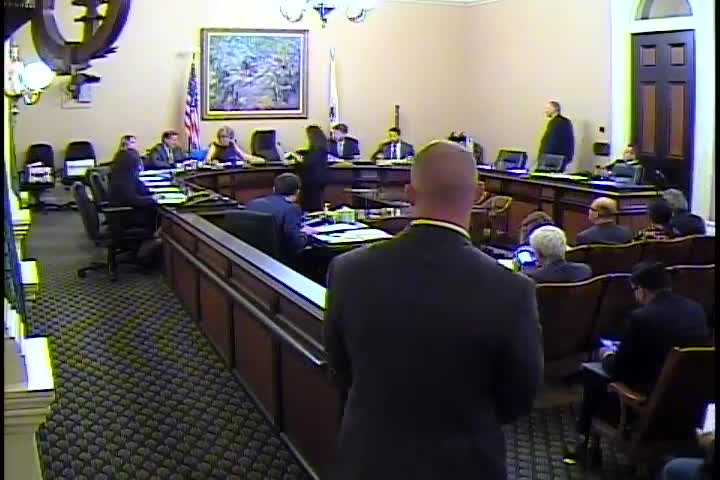 7MIN
Assembly Standing Committee on Revenue and Taxation
Bill Author

Bill Co-Author(s):