AB 273: Child care services: eligibility.
- Session Year: 2017-2018
- House: Assembly
- Latest Version Date: 2017-10-12
Existing law, the Child Care and Development Services Act, requires the Superintendent of Public Instruction to administer child care and development programs that offer a full range of services for eligible children from infancy to 13 years of age. Existing law establishes eligibility requirements and requires families to meet at least one requirement in each of 2 specified areas, including the area relating to why the family has a need for the child care service.
This bill would include in the area relating to need, as a requirement that may be satisfied for purposes of eligibility, that the family needs the child care services because the parents are engaged in an educational program for English language learners or to attain a high school diploma or general educational development certificate.
Existing law, the Child Care and Development Services Act, requires the Superintendent of Public Instruction to administer child care and development programs that offer a full range of services for eligible children from infancy to 13 years of age. Existing law establishes eligibility requirements and requires families to meet at least one requirement in each of 2 specified areas, including the area relating to why the family has a need for the child care service.
This bill would include in the area relating to need, as a requirement that may be satisfied for purposes of eligibility, that the family needs the child care services because the parents are engaged in an educational program for English as a second language learners or to attain a high school diploma or general educational development certificate.
(a)(1)The Superintendent shall adopt rules and regulations on eligibility, enrollment, and priority of services needed to implement this chapter. In order to be eligible for federal and state subsidized child development services, families shall meet at least one requirement in each of the following areas:
(A)A family is (i) a current aid recipient, (ii) income eligible, (iii) homeless, or (iv) one whose children are recipients of protective services, or whose children have been identified as being abused, neglected, or exploited, or at risk of being abused, neglected, or exploited.
(B)A family needs the child care services (i) because the child is identified by a legal, medical, or social services agency, a local educational agency liaison for homeless children and youths designated pursuant to Section 11432(g)(1)(J)(ii) of Title 42 of the United States Code, a Head Start program, or an emergency or transitional shelter as (I) a recipient of protective services, (II) being neglected, abused, or exploited, or at risk of neglect, abuse, or exploitation, or (III) being homeless or (ii) because the parents are (I) engaged in vocational training leading directly to a recognized trade, paraprofession, or profession, (II) engaged in an educational program for English language learners or to attain a high school diploma or general educational development certificate, (III) employed or seeking employment, (IV) seeking permanent housing for family stability, or (V) incapacitated.
(2)If only one parent has signed an application for enrollment in child care services, as required by this chapter or regulations adopted to implement this chapter, and the information provided on the application indicates that there is a second parent who has not signed the application, the parent who has signed the application shall self-certify the presence or absence of the second parent under penalty of perjury. The parent who has signed the application shall not be required to submit additional information documenting the presence or absence of the second parent.
(b)Except as provided in Article 15.5 (commencing with Section 8350), priority for federal and state subsidized child development services is as follows:
(1)First priority shall be given to neglected or abused children who are recipients of child protective services, or children who are at risk of being neglected or abused, upon written referral from a legal, medical, or social services agency. If an agency is unable to enroll a child in the first priority category, the agency shall refer the family to local resource and referral services to locate services for the child.
(2)Second priority shall be given equally to eligible families, regardless of the number of parents in the home, who are income eligible. Within this priority, families with the lowest gross monthly income in relation to family size, as determined by a schedule adopted by the Superintendent, shall be admitted first. If two or more families are in the same priority in relation to income, the family that has a child with exceptional needs shall be admitted first. If there is no family of the same priority with a child with exceptional needs, the same priority family that has been on the waiting list for the longest time shall be admitted first. For purposes of determining order of admission, the grants of public assistance recipients shall be counted as income.
(3)The Superintendent shall set criteria for, and may grant specific waivers of, the priorities established in this subdivision for agencies that wish to serve specific populations, including children with exceptional needs or children of prisoners. These new waivers shall not include proposals to avoid appropriate fee schedules or admit ineligible families, but may include proposals to accept members of special populations in other than strict income order, as long as appropriate fees are paid.
(c)Notwithstanding any other law, in order to promote continuity of services, a family enrolled in a state or federally funded child care and development program whose services would otherwise be terminated because the family no longer meets the program income, eligibility, or need criteria may continue to receive child development services in another state or federally funded child care and development program if the contractor is able to transfer the familys enrollment to another program for which the family is eligible before the date of termination of services or to exchange the familys existing enrollment with the enrollment of a family in another program, provided that both families satisfy the eligibility requirements for the program in which they are being enrolled. The transfer of enrollment may be to another program within the same administrative agency or to another agency that administers state or federally funded child care and development programs.
(d)A physical examination and evaluation, including age-appropriate immunization, shall be required before, or within six weeks of, enrollment. A standard, rule, or regulation shall not require medical examination or immunization for admission to a child care and development program of a child whose parent or guardian files a letter with the governing board of the child care and development program stating that the medical examination or immunization is contrary to his or her religious beliefs, or provide for the exclusion of a child from the program because of a parent or guardian having filed the letter. However, if there is good cause to believe that a child is suffering from a recognized contagious or infectious disease, the child shall be temporarily excluded from the program until the governing board of the child care and development program is satisfied that the child is not suffering from that contagious or infectious disease.
(e)Regulations formulated and promulgated pursuant to this section shall include the recommendations of the State Department of Health Care Services relative to health care screening and the provision of health care services. The Superintendent shall seek the advice and assistance of these health authorities in situations where service under this chapter includes or requires care of children who are ill or children with exceptional needs.
(f)The Superintendent shall establish guidelines for the collection of employer-sponsored child care benefit payments from a parent whose child receives subsidized child care and development services. These guidelines shall provide for the collection of the full amount of the benefit payment, but not to exceed the actual cost of child care and development services provided, notwithstanding the applicable fee based on the fee schedule.
(g)The Superintendent shall establish guidelines according to which the director or a duly authorized representative of the child care and development program will certify children as eligible for state reimbursement pursuant to this section.
(h)(1)Except as provided in paragraphs (2) to (4), inclusive, upon establishing initial eligibility or ongoing eligibility for services under this chapter, a family shall be considered to meet all eligibility and need requirements for those services for not less than 12 months, shall receive those services for not less than 12 months before having their eligibility or need recertified, and shall not be required to report changes to income or other changes for at least 12 months.
(2)A family that establishes initial eligibility or ongoing eligibility on the basis of income shall report increases in income that exceed the threshold for ongoing income eligibility as described in subdivision (b) of Section 8263.1, and the familys ongoing eligibility for services shall at that time be recertified.
(3)A family that establishes initial eligibility or ongoing eligibility on the basis of seeking employment shall receive services under this chapter as follows:
(A)If seeking employment is the basis for initial eligibility, the family shall receive services under this chapter for not less than six months.
(B)If, at the time of recertification, the only basis established for ongoing eligibility is a parents need to seek employment, the family shall receive services for no less than six months.
(4)A family may at any time voluntarily report income or other changes. This information shall be used, as applicable, to reduce the familys fees, increase the familys services, or extend the period of the familys eligibility before recertification.
(i)(1)Because a family that meets eligibility requirements at its most recent eligibility certification or recertification is considered eligible until the next recertification, as provided in subdivision (h), a payment made by a child development program for a child during this period shall not be considered an error or an improper payment due to a change in the familys circumstances during that same period.
(2)Notwithstanding paragraph (1), the Superintendent or his or her designated agent may seek to recover payments that are the result of fraud.
(j)(1)Notwithstanding the rulemaking provisions of the Administrative Procedure Act (Chapter 3.5 (commencing with Section 11340) of Part 1 of Division 3 of Title 2 of the Government Code) and Section 33308.5 of this code, until regulations are filed with the Secretary of State to implement subdivision (h), the department shall implement subdivision (h) through management bulletins or similar letters of instruction on or before October 1, 2017.
(2)The department shall initiate a rulemaking action to implement subdivision (h) on or before December 31, 2018. The department shall convene a workgroup of parents, advocates, department staff, child development program representatives, and other stakeholders to develop recommendations regarding implementing subdivision (h).
(k)Public funds shall not be paid directly or indirectly to an agency that does not pay at least the minimum wage to each of its employees.
(a)(1)The Superintendent shall adopt rules and regulations on eligibility, enrollment, and priority of services needed to implement this chapter. In order to be eligible for federal and state subsidized child development services, families shall meet at least one requirement in each of the following areas:
(A)A family is (i) a current aid recipient, (ii) income eligible, (iii) homeless, or (iv) one whose children are recipients of protective services, or whose children have been identified as being abused, neglected, or exploited, or at risk of being abused, neglected, or exploited.
(B)A family needs the child care services (i) because the child is identified by a legal, medical, or social services agency, a local educational agency liaison for homeless children and youths designated pursuant to Section 11432(g)(1)(J)(ii) of Title 42 of the United States Code, a Head Start program, or an emergency or transitional shelter as (I) a recipient of protective services, (II) being neglected, abused, or exploited, or at risk of neglect, abuse, or exploitation, or (III) being homeless or (ii) because the parents are (I) engaged in vocational training leading directly to a recognized trade, paraprofession, or profession, (II) engaged in an educational program for English language learners or to attain a high school diploma or general educational development certificate, (III) employed or seeking employment, (III) (IV) seeking permanent housing for family stability, or (IV) (V) incapacitated.
(2)If only one parent has signed an application for enrollment in child care services, as required by this chapter or regulations adopted to implement this chapter, and the information provided on the application indicates that there is a second parent who has not signed the application, the parent who has signed the application shall self-certify the presence or absence of the second parent under penalty of perjury. The parent who has signed the application shall not be required to submit additional information documenting the presence or absence of the second parent.
(b)Except as provided in Article 15.5 (commencing with Section 8350), priority for federal and state subsidized child development services is as follows:
(1)First priority shall be given to neglected or abused children who are recipients of child protective services, or children who are at risk of being neglected or abused, upon written referral from a legal, medical, or social services agency. If an agency is unable to enroll a child in the first priority category, the agency shall refer the family to local resource and referral services to locate services for the child.
(2)Second priority shall be given equally to eligible families, regardless of the number of parents in the home, who are income eligible. Within this priority, families with the lowest gross monthly income in relation to family size, as determined by a schedule adopted by the Superintendent, shall be admitted first. If two or more families are in the same priority in relation to income, the family that has a child with exceptional needs shall be admitted first. If there is no family of the same priority with a child with exceptional needs, the same priority family that has been on the waiting list for the longest time shall be admitted first. For purposes of determining order of admission, the grants of public assistance recipients shall be counted as income.
(3)The Superintendent shall set criteria for, and may grant specific waivers of, the priorities established in this subdivision for agencies that wish to serve specific populations, including children with exceptional needs or children of prisoners. These new waivers shall not include proposals to avoid appropriate fee schedules or admit ineligible families, but may include proposals to accept members of special populations in other than strict income order, as long as appropriate fees are paid.
(c)Notwithstanding any other law, in order to promote continuity of services, a family enrolled in a state or federally funded child care and development program whose services would otherwise be terminated because the family no longer meets the program income, eligibility, or need criteria may continue to receive child development services in another state or federally funded child care and development program if the contractor is able to transfer the familys enrollment to another program for which the family is eligible before the date of termination of services or to exchange the familys existing enrollment with the enrollment of a family in another program, provided that both families satisfy the eligibility requirements for the program in which they are being enrolled. The transfer of enrollment may be to another program within the same administrative agency or to another agency that administers state or federally funded child care and development programs.
(d)A physical examination and evaluation, including age-appropriate immunization, shall be required before, or within six weeks of, enrollment. A standard, rule, or regulation shall not require medical examination or immunization for admission to a child care and development program of a child whose parent or guardian files a letter with the governing board of the child care and development program stating that the medical examination or immunization is contrary to his or her religious beliefs, or provide for the exclusion of a child from the program because of a parent or guardian having filed the letter. However, if there is good cause to believe that a child is suffering from a recognized contagious or infectious disease, the child shall be temporarily excluded from the program until the governing board of the child care and development program is satisfied that the child is not suffering from that contagious or infectious disease.
(e)Regulations formulated and promulgated pursuant to this section shall include the recommendations of the State Department of Health Care Services relative to health care screening and the provision of health care services. The Superintendent shall seek the advice and assistance of these health authorities in situations where service under this chapter includes or requires care of children who are ill or children with exceptional needs.
(f)The Superintendent shall establish guidelines for the collection of employer-sponsored child care benefit payments from a parent whose child receives subsidized child care and development services. These guidelines shall provide for the collection of the full amount of the benefit payment, but not to exceed the actual cost of child care and development services provided, notwithstanding the applicable fee based on the fee schedule.
(g)The Superintendent shall establish guidelines according to which the director or a duly authorized representative of the child care and development program will certify children as eligible for state reimbursement pursuant to this section.
(h)(1)Except as provided in paragraphs (2) to (4), inclusive, upon establishing initial eligibility or ongoing eligibility for services under this chapter, a family shall be considered to meet all eligibility and need requirements for those services for not less than 12 months, shall receive those services for not less than 12 months before having their eligibility or need recertified, and shall not be required to report changes to income or other changes for at least 12 months.
(2)A family that establishes initial eligibility or ongoing eligibility on the basis of income shall report increases in income that exceed the threshold for ongoing income eligibility as described in subdivision (b) of Section 8263.1, and the familys ongoing eligibility for services shall at that time be recertified.
(3)A family that establishes initial eligibility or ongoing eligibility on the basis of seeking employment shall receive services under this chapter as follows:
(A)If seeking employment is the basis for initial eligibility, the family shall receive services under this chapter for not less than six months.
(B)If, at the time of recertification, the only basis established for ongoing eligibility is a parents need to seek employment, the family shall receive services for no less than six months.
(4)A family may at any time voluntarily report income or other changes. This information shall be used, as applicable, to reduce the familys fees, increase the familys services, or extend the period of the familys eligibility before recertification.
(i)(1)Because a family that meets eligibility requirements at its most recent eligibility certification or recertification is considered eligible until the next recertification, as provided in subdivision (h), a payment made by a child development program for a child during this period shall not be considered an error or an improper payment due to a change in the familys circumstances during that same period.
(2)Notwithstanding paragraph (1), the Superintendent or his or her designated agent may seek to recover payments that are the result of fraud.
(j)(1)Notwithstanding the rulemaking provisions of the Administrative Procedure Act (Chapter 3.5 (commencing with Section 11340) of Part 1 of Division 3 of Title 2 of the Government Code) and Section 33308.5 of this code, until regulations are filed with the Secretary of State to implement subdivision (h), the department shall implement subdivision (h) through management bulletins or similar letters of instruction on or before October 1, 2017.
(2)The department shall initiate a rulemaking action to implement subdivision (h) on or before December 31, 2018. The department shall convene a workgroup of parents, advocates, department staff, child development program representatives, and other stakeholders to develop recommendations regarding implementing subdivision (h).
(k)Public funds shall not be paid directly or indirectly to an agency that does not pay at least the minimum wage to each of its employees.
SECTION 1.Section 8263 of the Education Code is amended to read:8263.(a)(1)The Superintendent shall adopt rules and regulations on eligibility, enrollment, and priority of services needed to implement this chapter. In order to be eligible for federal and state subsidized child development services, families shall meet at least one requirement in each of the following areas:(A)A family is (i) a current aid recipient, (ii) income eligible, (iii) homeless, or (iv) one whose children are recipients of protective services, or whose children have been identified as being abused, neglected, or exploited, or at risk of being abused, neglected, or exploited.(B)A family needs the child care services (i) because the child is identified by a legal, medical, or social services agency, a local educational agency liaison for homeless children and youths designated pursuant to Section 11432(g)(1)(J)(ii) of Title 42 of the United States Code, a Head Start program, or an emergency or transitional shelter as (I) a recipient of protective services, (II) being neglected, abused, or exploited, or at risk of neglect, abuse, or exploitation, or (III) being homeless or (ii) because the parents are (I) engaged in vocational training leading directly to a recognized trade, paraprofession, or profession, (II) engaged in an educational program for English as a second language learners or to attain a high school diploma or general educational development certificate, (III) employed or seeking employment, (IV) seeking permanent housing for family stability, or (V) incapacitated.(2)If only one parent has signed an application for enrollment in child care services, as required by this chapter or regulations adopted to implement this chapter, and the information provided on the application indicates that there is a second parent who has not signed the application, the parent who has signed the application shall self-certify the presence or absence of the second parent under penalty of perjury. The parent who has signed the application shall not be required to submit additional information documenting the presence or absence of the second parent.(b)Except as provided in Article 15.5 (commencing with Section 8350), priority for federal and state subsidized child development services is as follows:(1)(A)First priority shall be given to neglected or abused children who are recipients of child protective services, or children who are at risk of being neglected or abused, upon written referral from a legal, medical, or social services agency. If an agency is unable to enroll a child in the first priority category, the agency shall refer the family to local resource and referral services to locate services for the child.(B)A family who is receiving child care on the basis of being a child at risk of abuse, neglect, or exploitation, as defined in subdivision (k) of Section 8208, is eligible to receive services pursuant to subparagraph (A) for up to three months, unless the family becomes eligible pursuant to subparagraph (C).(C)A family may receive child care services for up to 12 months on the basis of a certification by the county child welfare agency that child care services continue to be necessary or, if the child is receiving child protective services during that period of time, and the family requires child care and remains otherwise eligible. This time limit does not apply if the familys child care referral is recertified by the county child welfare agency.(2)Second priority shall be given equally to eligible families, regardless of the number of parents in the home, who are income eligible. Within this priority, families with the lowest gross monthly income in relation to family size, as determined by a schedule adopted by the Superintendent, shall be admitted first. If two or more families are in the same priority in relation to income, the family that has a child with exceptional needs shall be admitted first. If there is no family of the same priority with a child with exceptional needs, the same priority family that has been on the waiting list for the longest time shall be admitted first. For purposes of determining order of admission, the grants of public assistance recipients shall be counted as income.(3)The Superintendent shall set criteria for, and may grant specific waivers of, the priorities established in this subdivision for agencies that wish to serve specific populations, including children with exceptional needs or children of prisoners. These new waivers shall not include proposals to avoid appropriate fee schedules or admit ineligible families, but may include proposals to accept members of special populations in other than strict income order, as long as appropriate fees are paid.(c)Notwithstanding any other law, in order to promote continuity of services, a family enrolled in a state or federally funded child care and development program whose services would otherwise be terminated because the family no longer meets the program income, eligibility, or need criteria may continue to receive child development services in another state or federally funded child care and development program if the contractor is able to transfer the familys enrollment to another program for which the family is eligible before the date of termination of services or to exchange the familys existing enrollment with the enrollment of a family in another program, provided that both families satisfy the eligibility requirements for the program in which they are being enrolled. The transfer of enrollment may be to another program within the same administrative agency or to another agency that administers state or federally funded child care and development programs.(d)In order to promote continuity of services, the Superintendent may extend the 60-working-day period specified in subdivision (a) of Section 18086.5 of Title 5 of the California Code of Regulations for an additional 60 working days if he or she determines that opportunities for employment have diminished to the degree that one or both parents cannot reasonably be expected to find employment within 60 working days and granting the extension is in the public interest. The scope of extensions granted pursuant to this subdivision shall be limited to the necessary geographic areas and affected persons, which shall be described in the Superintendents order granting the extension. It is the intent of the Legislature that extensions granted pursuant to this subdivision improve services in areas with high unemployment rates and areas with disproportionately high numbers of seasonal agricultural jobs.(e)A physical examination and evaluation, including age-appropriate immunization, shall be required before, or within six weeks of, enrollment. A standard, rule, or regulation shall not require medical examination or immunization for admission to a child care and development program of a child whose parent or guardian files a letter with the governing board of the child care and development program stating that the medical examination or immunization is contrary to his or her religious beliefs, or provide for the exclusion of a child from the program because of a parent or guardian having filed the letter. However, if there is good cause to believe that a child is suffering from a recognized contagious or infectious disease, the child shall be temporarily excluded from the program until the governing board of the child care and development program is satisfied that the child is not suffering from that contagious or infectious disease.(f)Regulations formulated and promulgated pursuant to this section shall include the recommendations of the State Department of Health Care Services relative to health care screening and the provision of health care services. The Superintendent shall seek the advice and assistance of these health authorities in situations where service under this chapter includes or requires care of children who are ill or children with exceptional needs.(g)The Superintendent shall establish guidelines for the collection of employer-sponsored child care benefit payments from a parent whose child receives subsidized child care and development services. These guidelines shall provide for the collection of the full amount of the benefit payment, but not to exceed the actual cost of child care and development services provided, notwithstanding the applicable fee based on the fee schedule.(h)The Superintendent shall establish guidelines according to which the director or a duly authorized representative of the child care and development program will certify children as eligible for state reimbursement pursuant to this section.(i)Public funds shall not be paid directly or indirectly to an agency that does not pay at least the minimum wage to each of its employees.(a)(1)The Superintendent shall adopt rules and regulations on eligibility, enrollment, and priority of services needed to implement this chapter. In order to be eligible for federal and state subsidized child development services, families shall meet at least one requirement in each of the following areas:
(A)A family is (i) a current aid recipient, (ii) income eligible, (iii) homeless, or (iv) one whose children are recipients of protective services, or whose children have been identified as being abused, neglected, or exploited, or at risk of being abused, neglected, or exploited.
(B)A family needs the child care services (i) because the child is identified by a legal, medical, or social services agency, a local educational agency liaison for homeless children and youths designated pursuant to Section 11432(g)(1)(J)(ii) of Title 42 of the United States Code, a Head Start program, or an emergency or transitional shelter as (I) a recipient of protective services, (II) being neglected, abused, or exploited, or at risk of neglect, abuse, or exploitation, or (III) being homeless or (ii) because the parents are (I) engaged in vocational training leading directly to a recognized trade, paraprofession, or profession, (II) engaged in an educational program for English as a second language learners or to attain a high school diploma or general educational development certificate, (III) employed or seeking employment, (III) (IV) seeking permanent housing for family stability, or (IV) (V) incapacitated.
(2)If only one parent has signed an application for enrollment in child care services, as required by this chapter or regulations adopted to implement this chapter, and the information provided on the application indicates that there is a second parent who has not signed the application, the parent who has signed the application shall self-certify the presence or absence of the second parent under penalty of perjury. The parent who has signed the application shall not be required to submit additional information documenting the presence or absence of the second parent.
(b)Except as provided in Article 15.5 (commencing with Section 8350), priority for federal and state subsidized child development services is as follows:
(1)(A)First priority shall be given to neglected or abused children who are recipients of child protective services, or children who are at risk of being neglected or abused, upon written referral from a legal, medical, or social services agency. If an agency is unable to enroll a child in the first priority category, the agency shall refer the family to local resource and referral services to locate services for the child.
(B)A family who is receiving child care on the basis of being a child at risk of abuse, neglect, or exploitation, as defined in subdivision (k) of Section 8208, is eligible to receive services pursuant to subparagraph (A) for up to three months, unless the family becomes eligible pursuant to subparagraph (C).
(C)A family may receive child care services for up to 12 months on the basis of a certification by the county child welfare agency that child care services continue to be necessary or, if the child is receiving child protective services during that period of time, and the family requires child care and remains otherwise eligible. This time limit does not apply if the familys child care referral is recertified by the county child welfare agency.
(2)Second priority shall be given equally to eligible families, regardless of the number of parents in the home, who are income eligible. Within this priority, families with the lowest gross monthly income in relation to family size, as determined by a schedule adopted by the Superintendent, shall be admitted first. If two or more families are in the same priority in relation to income, the family that has a child with exceptional needs shall be admitted first. If there is no family of the same priority with a child with exceptional needs, the same priority family that has been on the waiting list for the longest time shall be admitted first. For purposes of determining order of admission, the grants of public assistance recipients shall be counted as income.
(3)The Superintendent shall set criteria for, and may grant specific waivers of, the priorities established in this subdivision for agencies that wish to serve specific populations, including children with exceptional needs or children of prisoners. These new waivers shall not include proposals to avoid appropriate fee schedules or admit ineligible families, but may include proposals to accept members of special populations in other than strict income order, as long as appropriate fees are paid.
(c)Notwithstanding any other law, in order to promote continuity of services, a family enrolled in a state or federally funded child care and development program whose services would otherwise be terminated because the family no longer meets the program income, eligibility, or need criteria may continue to receive child development services in another state or federally funded child care and development program if the contractor is able to transfer the familys enrollment to another program for which the family is eligible before the date of termination of services or to exchange the familys existing enrollment with the enrollment of a family in another program, provided that both families satisfy the eligibility requirements for the program in which they are being enrolled. The transfer of enrollment may be to another program within the same administrative agency or to another agency that administers state or federally funded child care and development programs.
(d)In order to promote continuity of services, the Superintendent may extend the 60-working-day period specified in subdivision (a) of Section 18086.5 of Title 5 of the California Code of Regulations for an additional 60 working days if he or she determines that opportunities for employment have diminished to the degree that one or both parents cannot reasonably be expected to find employment within 60 working days and granting the extension is in the public interest. The scope of extensions granted pursuant to this subdivision shall be limited to the necessary geographic areas and affected persons, which shall be described in the Superintendents order granting the extension. It is the intent of the Legislature that extensions granted pursuant to this subdivision improve services in areas with high unemployment rates and areas with disproportionately high numbers of seasonal agricultural jobs.
(e)A physical examination and evaluation, including age-appropriate immunization, shall be required before, or within six weeks of, enrollment. A standard, rule, or regulation shall not require medical examination or immunization for admission to a child care and development program of a child whose parent or guardian files a letter with the governing board of the child care and development program stating that the medical examination or immunization is contrary to his or her religious beliefs, or provide for the exclusion of a child from the program because of a parent or guardian having filed the letter. However, if there is good cause to believe that a child is suffering from a recognized contagious or infectious disease, the child shall be temporarily excluded from the program until the governing board of the child care and development program is satisfied that the child is not suffering from that contagious or infectious disease.
(f)Regulations formulated and promulgated pursuant to this section shall include the recommendations of the State Department of Health Care Services relative to health care screening and the provision of health care services. The Superintendent shall seek the advice and assistance of these health authorities in situations where service under this chapter includes or requires care of children who are ill or children with exceptional needs.
(g)The Superintendent shall establish guidelines for the collection of employer-sponsored child care benefit payments from a parent whose child receives subsidized child care and development services. These guidelines shall provide for the collection of the full amount of the benefit payment, but not to exceed the actual cost of child care and development services provided, notwithstanding the applicable fee based on the fee schedule.
(h)The Superintendent shall establish guidelines according to which the director or a duly authorized representative of the child care and development program will certify children as eligible for state reimbursement pursuant to this section.
(i)Public funds shall not be paid directly or indirectly to an agency that does not pay at least the minimum wage to each of its employees.
All matter omitted in this version of the bill appears in the bill as introduced in the Senate, February 9, 2017. (JR11) REVISIONS: HeadingLines 2 and 3.|
Date
|
Status
|
|---|---|
| Oct 12, 2017 | Chaptered by Secretary of State - Chapter 689, Statutes of 2017. |
| Oct 12, 2017 | Approved by the Governor. |
| Sep 18, 2017 | Enrolled and presented to the Governor at 4 p.m. |
| Sep 11, 2017 | Senate amendments concurred in. To Engrossing and Enrolling. |
| Sep 6, 2017 | In Assembly. Concurrence in Senate amendments pending. May be considered on or after September 8 pursuant to Assembly Rule 77. |
| Sep 6, 2017 | Read third time. Passed. Ordered to the Assembly. |
| Sep 5, 2017 | Read second time. Ordered to third reading. |
| Sep 1, 2017 | From committee: Amend, and do pass as amended. (Ayes 7. Noes 0.) (September 1). |
| Aug 21, 2017 | In committee: Referred to APPR. suspense file. |
| Jul 12, 2017 | From committee: Do pass and re-refer to Com. on APPR. with recommendation: To Consent Calendar. (Ayes 7. Noes 0.) (July 11). Re-referred to Com. on APPR. |
| Jun 21, 2017 | From committee: Do pass and re-refer to Com. on HUMAN S. with recommendation: To Consent Calendar. (Ayes 6. Noes 0.) (June 21). Re-referred to Com. on HUMAN S. |
| Jun 8, 2017 | Referred to Coms. on ED. and HUMAN S. |
| May 26, 2017 | In Senate. Read first time. To Com. on RLS. for assignment. |
| May 26, 2017 | Read third time. Passed. Ordered to the Senate. (Ayes 73. Noes 0. Page 1715.) |
| May 22, 2017 | From Consent Calendar by request of Assembly Member Aguiar-Curry. To Third Reading. |
| May 18, 2017 | Read second time. Ordered to Consent Calendar. |
| May 17, 2017 | Coauthors revised. |
| Mar 8, 2017 | From committee: Do pass and re-refer to Com. on APPR. (Ayes 7. Noes 0.) (March 7). Re-referred to Com. on APPR. |
| Feb 13, 2017 | Referred to Com. on HUM. S. |
| Feb 2, 2017 | From printer. May be heard in committee March 4. |
| Feb 1, 2017 | Read first time. To print. |
|
Date
|
Description
|
Location
|
Votes
|
|
|---|---|---|---|---|
| Sep 11, 2017 | AB 273 AGUIAR-CURRY Concurrence in Senate Amendments | Assembly Floor |
Passed |
|
| Sep 6, 2017 | Assembly 3rd Reading AB273 Aguiar-Curry et al. By Atkins | Senate Floor |
Passed |
|
| Sep 1, 2017 | Do pass as amended | Senate Standing Committee on Appropriations |
Passed |
|
| Aug 21, 2017 | Placed on suspense file | Senate Standing Committee on Appropriations |
Passed |
|
| Jul 11, 2017 | Do pass, but first be re-referred to the Committee on [Appropriations] with the recommendation: To Consent Calendar | Senate Standing Committee on Human Services |
Passed |
|
| Jun 21, 2017 | Do pass, but first be re-referred to the Committee on [Human Services] with the recommendation: To Consent Calendar | Senate Standing Committee on Education |
Passed |
|
| May 26, 2017 | AB 273 AGUIAR-CURRY Assembly Third Reading | Assembly Floor |
Passed |
|
| May 17, 2017 | Do pass. To Consent Calendar. | Assembly Standing Committee on Appropriations |
Passed |
|
| Mar 7, 2017 | Do pass and be re-referred to the Committee on [Appropriations] | Assembly Standing Committee on Human Services |
Passed |
This list shows positions taken on this bill by organizations on the date displayed, which is linked to the original source.
Positions by individuals are not included.
|
Organization
|
Position
|
Date
|
|---|---|---|
| 9to5, california | ** Support | Sep 4, 2017 |
| 9to5, National Association of Working Women | ** Support | Sep 4, 2017 |
| Alameda County Board of Supervisors | ** Support | Sep 4, 2017 |
| American Academy of Pediatrics | ** Support | Sep 4, 2017 |
| American Association of University Women | ** Support | Sep 4, 2017 |
| Asian Pacific Environmental Network | ** Support | Sep 4, 2017 |
| Bananas Calculated Resource Referral Agency | * Support | Mar 7, 2017 |
| beth am | ** Support | Jul 7, 2017 |
| California Adult Education Administrators Association | ** Support | Sep 4, 2017 |
| California Alternative Payment Program Association | ** Support | Sep 4, 2017 |
| California Association for the Education of Young Children | ** Support | Sep 4, 2017 |
| California Catholic Conference | ** Support | Sep 4, 2017 |
| California Child Care Coordinators Association | ** Support | Sep 4, 2017 |
| California Child Care Resource & Referral Network | ** Support | Sep 4, 2017 |
| California Council For Adult Education | ** Support | Sep 4, 2017 |
| California Federation Of Teachers | ** Support | Sep 4, 2017 |
| California Immigrant Policy Center | ** Support | Sep 4, 2017 |
| California Legislative Women's Caucus | ** Support | Jul 7, 2017 |
| California School Employees Association | ** Support | Sep 4, 2017 |
| California State PTA | ** Support | Sep 4, 2017 |
| California Women's Law Center | ** Support | Sep 4, 2017 |
| Cannabis Industry | * Support | Mar 7, 2017 |
| Child Action, Inc. | ** Support | Sep 4, 2017 |
| Child Care Alliance Los Angeles | ** Support | Jul 7, 2017 |
| Child Care Alliance of Los Angeles | ** Support | Sep 4, 2017 |
| Child Care Law Center | ** Support | Sep 4, 2017 |
| Child Care Links | ** Support | Jul 7, 2017 |
| Child Care Resource Center | ** Support | Sep 4, 2017 |
| Children Now | ** Support | Sep 4, 2017 |
| Children'S Defense Fund - California | ** Support | Sep 4, 2017 |
| Choices For Children | ** Support | Sep 4, 2017 |
| Coleman Advocates | ** Support | Jul 7, 2017 |
| Coleman Advocates for Children and Youth | ** Support | Sep 4, 2017 |
| Common Sense Kids Action | ** Support | Jul 7, 2017 |
| community action marin child development program | ** Support | Sep 4, 2017 |
| Community Child Care Council of Alameda County | ** Support | Sep 4, 2017 |
| Community Child Care Council of Sonoma County | ** Support | Mar 7, 2017 |
| Community Housing Partnership | ** Support | Sep 4, 2017 |
| Congregation Beth Am | ** Support | Sep 4, 2017 |
| Courage Campaign | ** Support | Sep 4, 2017 |
| Crystal Stairs, Inc. | ** Support | Sep 4, 2017 |
| Del Norte Child Care Council | ** Support | Sep 4, 2017 |
| el dorado county early care foundation planning council | ** Support | Jul 7, 2017 |
| Equal Rights Advocates | ** Support | Sep 4, 2017 |
| fairfax-san anselmo children's center | ** Support | Sep 4, 2017 |
| Families In Schools | ** Support | Sep 4, 2017 |
| First 5 California | ** Support | Sep 4, 2017 |
| First 5 Marin Children and Families Commission | ** Support | Sep 4, 2017 |
| Jewish Family Service of Los Angeles | ** Support | Sep 4, 2017 |
| Los Angeles Unified School District | ** Support | Sep 4, 2017 |
| Marin Child Care Council | ** Support | Sep 4, 2017 |
| Marin County Board of Supervisors | ** Support | Sep 4, 2017 |
| marin county child care commission | ** Support | Sep 4, 2017 |
| Marin County Office of Education | ** Support | Jul 7, 2017 |
| Marin County Superintendent of Schools | ** Support | Sep 4, 2017 |
| Marin Head Start | ** Support | Sep 4, 2017 |
| MUSICIANS LOCAL 802 | * Support | Mar 7, 2017 |
| Napa County Office Of Education | ** Support | Sep 4, 2017 |
| National Association Of Social Workers, California Chapter | ** Support | Sep 4, 2017 |
| Novato Youth Center | ** Support | Sep 4, 2017 |
| NY THOUROUGHBRED RACING INDUSTRY | * Support | Mar 7, 2017 |
| Organizacin en California de Lderes Campesinas, Inc. | ** Support | Mar 7, 2017 |
| Organizacion en California de Lideres Campesinas, Inc. | ** Support | Sep 4, 2017 |
| Parent Voices California | ** Support | Sep 4, 2017 |
| Parent Voices of California | * Support | Mar 7, 2017 |
| san francisco child care planning & advisory council | ** Support | Sep 4, 2017 |
| Sierra Nevada Children's Services | ** Support | Sep 4, 2017 |
| Siskiyou Child Care Council | ** Support | Mar 7, 2017 |
| siskyou child care council, inc. | ** Support | Jul 7, 2017 |
| Solano Family & Children's Services | ** Support | Sep 4, 2017 |
| Son-shine Counseling Center | ** Support | Jul 7, 2017 |
| Stronger California Advocates Network | ** Support | Mar 7, 2017 |
| The Stronger California Advocates Network | ** Support | Jul 7, 2017 |
| Treated Wood Council | * Support | Mar 7, 2017 |
| Vision y Compromiso | ** Support | Sep 4, 2017 |
| Voices For Progress Education Fund | ** Support | Jul 7, 2017 |
| western center on law and poverty | * Support | Mar 7, 2017 |
| Western Center On Law And Poverty Inc. | * Support | Mar 7, 2017 |
| Women's Foundation of California | ** Support | Sep 4, 2017 |
| Women's Policy Institute | ** Support | Sep 4, 2017 |
CONCURRENCE IN SENATE AMENDMENTS
CSA1 Bill Id:AB 273
Author:(Aguiar-Curry)
As Introduced Ver:September 1, 2017
Majority vote
ASSEMBLY: | 73-0 | (May 26, 2017) | SENATE: | 39-0 | (September 6, 2017) |
Original Committee Reference: HUM. S.
SUMMARY: Clarifies that engagement in English language and high school or high school equivalency educational programs meets criteria for establishing eligibility for subsidized child care programs.
The Senate amendments make a technical amendment to change "English as a second language learners" to "English language learners."
EXISTING LAW:
- Establishes the Child Care and Development Services Act to provide child care and development services as part of a coordinated, comprehensive, and cost-effective system serving children from birth to 13 years old and their parents, and including a full range of supervision, health, and support services through full- and part-time programs. (Education Code Section (EDC) 8200 et seq.)
- Defines "child care and development services" to mean services designed to meet a wide variety of children's and families' needs while parents and guardians are working, in training, seeking employment, incapacitated, or in need of respite. (EDC 8208)
- States the intent of the Legislature that all families have access to child care and development services, through resource and referral where appropriate, and regardless of demographic background or special needs, and that families are provided the opportunity to attain financial stability through employment, while maximizing growth and development of their children, and enhancing their parenting skills through participation in child care and development programs. (EDC 8202)
- Requires the Superintendent of Public Instruction to administer general child care and development programs to include, among other things as specified, age- and developmentally-appropriate activities, supervision, parenting education and involvement, and nutrition. Further allows such programs to be designed to meet child-related needs identified by parents or guardians, as specified. (EDC 8240 and 8241)
- Requires the Superintendent of Public Instruction to adopt rules and regulations regarding eligibility, enrollment, and priority of services. (EDC 8263)
- Requires families, in order to be eligible for federal and state subsidized child development services, to meet at least one requirement in each of the following areas:
- Be a family that is either:
- A current aid recipient;
- Income eligible;
- Homeless; or
- One who has a child or children who is/are recipients of public services, or identified as being, or at risk of being, abused, neglected, or exploited.
- Have a need for child care services due to:
- Have a child that is identified, by specified entities, as either: a recipient of protective services; being, or at risk of being, neglected, abused, or exploited; or being homeless; or
- The parents being either: engaged in vocational training, as specified; employed or seeking employment; seeking permanent housing or family stability; or incapacitated. (EDC 8263)
- Be a family that is either:
- To allow for maximum parental choice, authorizes the operation of Alternative Payment Programs (APPs) and provision of alternative payments and support services to parents and child care providers by local government agencies or non-profit organizations that contract with the California Department of Education (CDE). (EDC 8220)
- Establishes rules and requirements for APPs and providers, as contracted agencies with CDE, to observe, including but not limited to accounting and auditing requirements, attendance monitoring requirements, referral requirements where applicable, and reimbursement and payment procedures. (EDC 8220 et seq.)
- Requires the Superintendent to adopt rules, regulations, and guidelines to facilitate funding and reimbursement procedures for subsidized child care. (EDC 8269)
- Requires the Superintendent to establish a family fee schedule for subsidized child care, as specified, contingent on income and subject to a cap. (EDC 8273)
FISCAL EFFECT: According to the Senate Appropriations Committee on September 1, 2017, this bill may result in the following costs:
- Potential unknown General Fund costs or cost pressures for the state to fund additional subsidized child care slots by expanding or clarifying the eligibility criteria for parents to qualify to include those parents enrolled in English as a second language (ESL) and high school equivalency courses. These amounts will depend on how many additional children would participate as a result of this measure and whether the families are eligible for CalWORKs Stages 2 or 3 child care or the capped, non-CalWORKs programs such as General Child Care and the Alternative Payment Program. However, CDE indicates that there are contractors that already approve families for child care using a general educational development (GED) or ESL course. Further, CalWORKs Stage 1 and welfare-to-work activities include adult basic education which covers GED and ESL. The application of the proposed criteria already exists; therefore this could lessen any costs that may result from this measure; and
- CDE estimates approximately $48,000 over two years to update regulations and the Child Development Management Information system as a result of this bill.
COMMENTS:
Subsidized child care: California's subsidized child care system is designed to provide assistance to parents and guardians who are working, in training, seeking employment, incapacitated, or in need of respite. This child care is available through a number of programs; additionally, California offers State Preschool Programs to eligible three-and four-year-olds.
Parents participating in CalWORKs, as well as families transitioning off of and no longer receiving CalWORKs aid, can be eligible for child care, which is offered in three "stages." The Department of Social Services (DSS) administers Stage 1, and CDE administers Stages 2 and 3. CDE also administers non-CalWORKs child care. The largest programs are: General Child Care, which includes contracted centers and family child care homes; the California State Preschool Program, which provides developmentally, culturally, and linguistically appropriate curriculum to eligible three- and four-year olds; and APPs, which provide vouchers that can be used to obtain child care in a center, family child care home, or from a license-exempt provider. Waitlists for non-CalWORKs child care are common.
Certain eligibility and prioritization rules apply to subsidized child care in California. Families are eligible for non-CalWORKs subsidized child care if they meet at least one requirement in each of two areas: eligibility and need. First, they must meet one of the eligibility criteria, which are: currently receiving aid, being income-eligible, being homeless, or having children who are recipients of protective services or who have been identified as being, or at risk of being, abused, neglected, or exploited. Secondly, the family must meet one of the "need" requirements: either the child has to have been identified by a legal, medical, or social services agency or emergency shelter as being a recipient of protective services or being (or at risk of being) abused, neglected or exploited, or the parents need to be employed or seeking employment, engaged in vocational training, seeking permanent housing for family stability, or incapacitated.
The effect of English proficiency and high school education on employment and earnings: Both English proficiency and the acquisition of a high school education have been shown to have positive impacts on employment and earnings, and they are arguably fundamental steps in achieving higher levels of education (and the additional earnings that attend these higher levels of education).
The United States (U.S.) Bureau of Labor Statistics reports that, in 2015, for adults ages 25 and over with full-time jobs, those without a high school diploma or equivalent saw median weekly earnings of $493, compared to their counterparts with a high school diploma whose median weekly earnings were $678. Among the same population, the unemployment rate for those without a high school diploma was 8.0%, compared to 5.4% for those with a high school diploma. According to the same data, acquisition of an associate's degree only improves outcomes: median weekly earnings were $798 and the unemployment rate was 2.8%. For those with a bachelor's degree, median weekly earnings were $1,137, and the unemployment rate was 2.4%.
A 2005 report from the U.S. Census Bureau entitled "How Does the Ability to Speak English Affect Earnings?" concluded that:
Clearly, English-speaking ability influences a worker's ability to succeed, regardless of the particular language spoken at home. The degree to which a person can communicate in English influences employment status, and once employed, his or her ability to find full-time, year-round employment. Even among those who have full employment, those with the highest ability to speak English have the highest earnings. These earnings approach the earnings of English-only speakers.
Need for this bill: According to the author, "[This bill] will give Californians who want to work an opportunity to get the education and training that they need. By expanding the eligibility criteria of subsidized child care services to those who are participating in English as a Second language or High School Equivalency courses, this bill will help ensure that parents and adult caretakers of children can pursue an education that will allow both them and their families greater socioeconomic mobility."
Writing in support, the Western Center on Law and Poverty states that, "It is well documented that individuals who are proficient in English have higher occupational mobility, with better job prospects and the opportunity to earn higher wages. Parents are also better prepared to support their children as they enter the K-12 system. Many families require state supported child care services in order to continue with their education and work towards a profession. Costly child care services may prove burdensome for lower income families, disproportionately impacting single mothers and women of color. This change will empower parents to increase their educational level by providing families with greater access to subsidized child care services."
Analysis Prepared by: FN 0001851
Office of Senate Floor Analyses (916) 651-1520 Fax: (916) 327-4478 | AB |
THIRD READING
Bill No: AB 273
Amended: in Senate
SENATE EDUCATION COMMITTEE: 6-0, 6/21/17
AYES: Allen, Galgiani, Leyva, Mendoza, Pan, Vidak
NO VOTE RECORDED: Wilk
SENATE HUMAN SERVICES COMMITTEE: 7-0, 7/11/17
AYES: Wiener, Berryhill, Glazer, Leyva, McGuire, Nguyen, Portantino
SENATE APPROPRIATIONS COMMITTEE: 7-0, 9/1/17
AYES: Lara, Bates, Beall, Bradford, Hill, Nielsen, Wiener
ASSEMBLY FLOOR: 73-0, 5/26/17 - See last page for vote
Women’s Foundation of California
Women’s Policy Institute
DIGEST:
This bill expands eligibility for federal and state subsidized child development services to families who need child care because the parents are engaged in an educational program for English language learners or to attain a high school diploma or general educational development certificate.
Existing law:
- Establishes the income eligibility limit for child care and development services at 70 percent of the State median income that was in use for the 2007-08 fiscal year, adjusted for family size. (Education Code § 8263.1)
- Requires families, in order to be eligible for federal and state subsidized child development services, to meet at least one requirement in each of the following areas:
- Be a family that is either:
- A current aid recipient;
- Income eligible;
- Homeless; or
- One whose children are recipients of protective services, or identified as being, or at risk of being, abused, neglected, or exploited.
- Be a family that needs the child care services because:
- The child is identified by specified entities as either: a recipient of protective services; being, or at risk of being, neglected, abused, or exploited; or being homeless.
- The parents are either: engaged in vocational training leading directly to a recognized trade, paraprofession or profession; employed or seeking employment; seeking permanent housing or family stability; or incapacitated. (EC § 8263)
- Be a family that is either:
This bill expands eligibility for federal and state subsidized child development services to families who need child care because the parents are engaged in an educational program for English language learners or to attain a high school diploma or general educational development certificate.
Comments
- Subsidized child care. Families may be eligible for state and federally subsidized child care through participation in CalWORKs, or based on income and need for child care services. Income eligibility for families that are not current recipients of CalWORKs is established at 70 percent of state median income as calculated in 2007-2008 ($46,896 for a family of four) or if they are recipients of child protective services and if they can show need for child care services.
The state’s subsidized child care and development services are delivered to eligible families through two categories of providers, providers with a direct service contract with the California Department of Education (CDE) (licensed Title 5 programs) and Title 22 (Alternative Payment Programs/vouchers) licensed and licensed-exempt general child care providers. Title 5 child care providers must meet education and training standards that exceed those of Title 22 child care providers (licensed and license-exempt), as well as provide an educational component. Existing law specifies that children are eligible for subsidized child care if the family meets at least one requirement in each of two areas: eligibility and need.
This bill expands the area of need to include when parents are engaged in an educational program for English learners or to attain a high school diploma or high school equivalency certificate. The result is that additional families may be eligible for subsidized child care. Funding for subsidized child care is established through the annual Budget Act, and therefore this bill does not directly increase funding for subsidized child care (but could create greater competition for a set amount of funding).
NOTE: This bill was heard in the Senate Education and Human Services committees. Please refer to those committees’ policy analyses for additional information.
FISCAL EFFECT: Appropriation: Fiscal Com.: Local:
According to the Senate Appropriations Committee:
- Potential unknown General Fund costs or cost pressures for the state to fund additional subsidized child care slots by expanding or clarifying the eligibility criteria for parents to quality to include those parents enrolled in English as a second language and high school equivalency courses. These amounts will depend on how many additional children would participate as a result of this measure and whether the families are eligible for CalWORKs Stages 2 or 3 child care of the capped, non-CalWORKs programs such as General Child care and the Alternative Payment Program. However, the CDE indicates that there are contractors that already approve families for child care using a general educational development or English language course. Further, CalWORKs Stage 1 and welfare-to-work activities include adult basic education which covers general educational development and English language courses. The application of the proposed criteria already exists; therefore this could lessen any costs that may result from this measure.
- The CDE estimates approximately $48,000 over two years to update regulations and the Child Development Management Information system as a result of this bill.
Parent Voices California (co-source)
Women’s Foundation of California (co-source)
Women’s Policy Institute (co-source)
9to5, California
9to5, National Association of Working Women
Alameda County Board of Supervisors
American Academy of Pediatrics
American Association of University Women
Asian Pacific Environmental Network
California Adult Education Administrators Association
California Alternative Payment Program Association
California Association for the Education of Young Children
California Catholic Conference
California Child Care Coordinators Association
California Child Care Resource & Referral Network
California Council for Adult Education
California Federation of Teachers
California Immigrant Policy Center
California School Employees Association
California State PTA
California Women’s Law Center
Child Action, Inc.
Child Care Alliance of Los Angeles
Child Care Law Center
Child Care Resource Center
Children Now
Children’s Defense Fund – California
Choices for Children
Coleman Advocates for Children and youth
Community Action Marin Child Development Program
Community Child Care Council of Alameda County
Community Housing Partnership
Congregation Beth Am
Courage Campaign
Crystal Stairs, Inc.
Del Norte Child Care Council
Economic Development and Justice Giving Circle of The Women’s Foundation of California
El Dorado County Early Care and Education Planning Council
Equal Rights Advocates
Families in Schools
Fairfax-San Anselmo Children’s Center
First 5 California
First 5 Marin Children and Families Commission
Jewish Family Service of Los Angeles
Los Angeles Unified School District
Marin Child Care Council
Marin County Board of Supervisors
Marin County Child Care Commission
Marin County Superintendent of Schools
Marin Head Start
Napa County Office of Education
National Association of Social Workers, California Chapter
Novato Youth Center
Organización en California de Líderes Campesinas, Inc.
San Francisco Child Care Planning & Advisory Council
Sierra Nevada Children’s Services
Solano Family & Children’s Services
Visión y Compromiso
OPPOSITION: (Verified 8/31/17)
None received
ASSEMBLY FLOOR: 73-0, 5/26/17
AYES: Acosta, Aguiar-Curry, Travis Allen, Arambula, Baker, Berman, Bigelow, Bloom, Bocanegra, Bonta, Brough, Burke, Caballero, Calderon, Cervantes, Chávez, Chen, Chiu, Choi, Chu, Cooley, Cooper, Cunningham, Dababneh, Dahle, Daly, Flora, Fong, Frazier, Friedman, Cristina Garcia, Eduardo Garcia, Gipson, Gloria, Gomez, Gonzalez Fletcher, Gray, Grayson, Holden, Irwin, Jones-Sawyer, Kalra, Kiley, Lackey, Levine, Limón, Low, Maienschein, Mathis, Mayes, McCarty, Medina, Mullin, Muratsuchi, Nazarian, Obernolte, O'Donnell, Patterson, Quirk, Quirk-Silva, Reyes, Ridley-Thomas, Rodriguez, Rubio, Salas, Santiago, Mark Stone, Thurmond, Ting, Voepel, Weber, Wood, Rendon
NO VOTE RECORDED: Chau, Eggman, Gallagher, Harper, Melendez, Steinorth, Waldron
9/4/17 12:33:29
**** END ****
SENATE COMMITTEE ON
Senator Ricardo Lara, Chair
2017 - 2018 Regular Session
AB 273 (Aguiar-Curry) - Child care services: eligibility
Version: | Policy Vote: |
Urgency: | Mandate: |
Hearing Date: | Consultant: |
Bill Summary:
This bill provides that parents are engaged in an educational program for English learners or to attain a high school diploma or high school equivalency certificate are eligible for federal and state subsidized child care.
*********** ANALYSIS ADDENDUM – SUSPENSE FILE ***********
The following information is revised to reflect amendments
adopted by the committee on September 1, 2017
Fiscal Impact:
- Potential unknown General Fund costs or cost pressures for the state to fund additional subsidized child care slots by expanding or clarifying the eligibility criteria for parents to qualify to include those parents enrolled in English as a second language (ESL) and high school equivalency courses. These amounts will depend on how many additional children would participate as a result of this measure and whether the families are eligible for CalWORKs Stages 2 or 3 child care or the capped, non-CalWORKs programs such as General Child Care and the Alternative Payment Program. However, the California Department of Education (CDE) indicates that there are contractors that already approve families for child care using a general educational development (GED) or ESL course. Further, CalWORKs Stage 1 and welfare-to-work activities include adult basic education which covers GED and ESL. The application of the proposed criteria already exists; therefore this could lessen any costs that may result from this measure.
- The CDE estimates approximately $48,000 over two years to update regulations and the Child Development Management Information system as a result of this bill.
Author Amendments:
Make technical changes and add coauthors.
-- END --
SENATE COMMITTEE ON APPROPRIATIONS
Senator Ricardo Lara, Chair
2017 - 2018 Regular Session
AB 273 (Aguiar-Curry) - Child care services: eligibility
Version: February 1, 2017 | Policy Vote: ED. 6 - 0, HUMAN S. 7 - 0 |
Urgency: No | Mandate: No |
Hearing Date: August 21, 2017 | Consultant: Lenin Del Castillo |
This bill meets the criteria for referral to the Suspense File.
Bill Summary:
This bill provides that parents are engaged in an educational program for English learners or to attain a high school diploma or high school equivalency certificate are eligible for federal and state subsidized child care.
Fiscal Impact:
- Potential unknown General Fund costs or cost pressures for the state to fund additional subsidized child care slots by expanding or clarifying the eligibility criteria for parents to qualify to include those parents enrolled in English as a second language (ESL) and high school equivalency courses. These amounts will depend on how many additional children would participate as a result of this measure and whether the families are eligible for CalWORKs Stages 2 or 3 child care or the capped, non-CalWORKs programs such as General Child Care and the Alternative Payment Program. However, the California Department of Education (CDE) indicates that there are contractors that already approve families for child care using a general educational development (GED) or ESL course. Further, CalWORKs Stage 1 and welfare-to-work activities include adult basic education which covers GED and ESL. The application of the proposed criteria already exists; therefore this could lessen any costs that may result from this measure.
- The CDE estimates approximately $48,000 over two years to update regulations and the Child Development Management Information system as a result of this bill.
Background:
Existing law establishes the income eligibility limit for child care and development services at 70 percent of the State median income that was in use for the 2007-08 fiscal year, adjusted for family size. Existing law requires families, in order to be eligible for federal and state subsidized child development services, to meet at least one requirement in each of the following areas:
- Be a family that is either: current aid recipient, income eligible; homeless; or one whose children are recipients of protective services, or identified as being, or at risk of being, abused, neglected, or exploited.
- Be a family that needs the child care services because the child is identified by specified entities as either: a recipient of protective services; being, or at risk of being, neglected, abused, or exploited; or being homeless; or the parents are either: engaged in vocational training leading directly to a recognized trade, paraprofession or profession; employed or seeking employment; seeking permanent housing or family stability; or incapacitated.
Proposed Law:
This bill expands eligibility for federal and state subsidized child development services to families who need child care because the parents are engaged in an educational program for English learners or to attain a high school diploma or high school equivalency certificate.
Related Legislation:
AB 227 (Mayes) establishes the CalWORKs Educational Opportunity and Attainment Program to offer education grants and/or stipends to eligible CalWORKs participants who complete certain educational programs, and appropriates $20 million to the California Community Colleges. AB 227 is pending in the Senate Human Services Committee.
AB 982 (Eggman, Chapter 567, Statutes of 2015) expanded the list of entities that can identify a child in need of subsided child development services to include a local educational agency liaison for homeless children and youths, a Head Start program, or a transitional shelter and made homeless children eligible for the services.
Staff Comments:
By expanding or clarifying the area of need to include when parents are engaged in an educational program for English learners or to attain a high school diploma or high school equivalency certificate, additional families may be eligible for subsidized child care slots. Funding for subsidized child care is established through the annual Budget Act for a specified number of slots each year. While this bill would not directly increase funding for subsidized child care, it would likely create cost pressure on a set amount of funding and increase the demand for additional slots.
-- END --
SENATE COMMITTEE ON HUMAN SERVICES
Senator Wiener, Chair
2017 - 2018 Regular
Bill No: AB 273
Author: | Aguiar-Curry | ||
Version: | February 1, 2017 | Hearing Date: | July 11, 2017 |
Urgency: | No | Fiscal: | Yes |
Consultant: | Taryn Smith | ||
Subject: Child care services: eligibility
SUMMARY
This bill adds being engaged in an educational program for English as second language (ESL) learners or to attain a high school diploma or general educational development (GED) certificate to the criteria for establishing eligibility for subsidized child care programs.
ABSTRACT
Existing law:
- Establishes the Child Care and Development Services Act to provide child care and development services as part of a coordinated, comprehensive, and cost-effective system serving children from birth to 13 years old and their parents, and including a full range of supervision, health, and support services through full- and part-time programs. (EDC 8200 et seq.)
- States the intent of the Legislature that all families have access to child care and development services, through resource and referral where appropriate, and regardless of demographic background or special needs, and that families are provided the opportunity to attain financial stability through employment, while maximizing growth and development of their children, and enhancing their parenting skills through participation in child care and development programs. (EDC 8202)
- Defines “child care and development services” to mean services designed to meet a wide variety of children’s and families’ needs while parents and guardians are working, in training, seeking employment, incapacitated, or in need of respite. (EDC 8208)
- Authorizes the operation of Alternative Payment Programs (APPs) and provision of alternative payments and support services to parents and child care providers by local government agencies or non-profit organizations that contract with CDE, in order to allow for maximum parental choice. (EDC 8220)
- Establishes rules and requirements for APPs and providers, as contracted agencies with CDE, to observe, including but not limited to accounting and auditing requirements, attendance monitoring requirements, referral requirements where applicable, and reimbursement and payment procedures. (EDC 8220 et seq.)
- Requires the Superintendent of Public Instruction to administer general child care and development programs to include, among other things as specified, age- and developmentally-appropriate activities, supervision, parenting education and involvement, and nutrition. Further allows such programs to be designed to meet child-related needs identified by parents or guardians, as specified. (EDC 8240 and 8241)
- Requires the Superintendent of Public Instruction to adopt rules and regulations regarding eligibility, enrollment, and priority of services. (EDC 8263)
- Requires families, in order to be eligible for federal and state subsidized child development services, to meet at least one requirement in each of the following areas:
- Be a family that is either:
- A current aid recipient;
- Income eligible;
- Homeless; or
- One who has a child or children who is/are recipients of public services, or identified as being, or at risk of being, abused, neglected, or exploited.
- Have a need for child care services due to:
- Have a child that is identified, by specified entities, as either: a recipient of protective services; being, or at risk of being, neglected, abused, or exploited; or being homeless; or
- The parents being either: engaged in vocational training, as specified; employed or seeking employment; seeking permanent housing or family stability; or incapacitated. (EDC 8263)
- Be a family that is either:
- Establishes the income eligibility limit for child care and development services at 70 percent of the state median income that was in use for the 2007-08 fiscal year, adjusted for family size. (EDC 8263.1)
This bill:
- Provides that a parent’s participation in an educational program for ESL or to attain a high school diploma or GED certificate meets one of the requirements for subsidized childcare.
FISCAL IMPACT
According to an analysis prepared by the Assembly Appropriations Committee:
- Onetime cost to the California Department of Education of approximately $60,000 over two years to update regulations and the Child development Management Information system (CDMIS)
- Negligible fiscal impact to the Department of Social Services.
BACKGROUND AND DISCUSSION
Purpose of the bill:
Under existing law, parents that meet income criteria and are engaged in vocational training courses that lead directly to a trade or profession are eligible for subsidized childcare. However, parents who are taking courses in ESL and or GED do not qualify for the childcare services. Thus, otherwise eligible families who are seeking ESL or high school education cannot access subsidized childcare. According to the author, “Many families require state supported childcare services in order to continue with their education and work towards a profession. Costly childcare services may be burdensome for lower income families, disproportionately impacting single mothers and women of color.” AB 273 will add participation in ESL and high school diploma or GED programs to the list of eligibility criteria for state subsidized child development and care services.
Subsidized child care
California’s subsidized child care programs are intended to serve two primary purposes: 1) enable low-income families to work, and 2) improve low-income children’s cognitive and educational development. According to the California Budget and Policy Center, child care subsidies provide job stability and have been shown to increase parents’ earnings. Subsidies also allow families to afford higher-quality child care where their children can learn and grow.
California provides child care subsidies to some low-income families, including those participating in the California Work Opportunity and Responsibility to Kids (CalWORKs) program. Generally, CalWORKs participants are eligible to receive subsidized child care if they are employed or if they are participating in approved Welfare to Work activities. Non-CalWORKs families are eligible if they meet at least one of the following eligibility requirements and one of the following need requirements.
- Eligibility requirements: Currently receiving aid, being income-eligible, being homeless, or having children who are recipients of protective services or who have been identified as being or at risk of being, abused, neglected, or exploited.
- Need requirements: Either the child has to have been identified by a legal, medical, or social services agency or emergency shelter as being a recipient of protective services or being (or at risk of being) abused, neglected or exploited, or the parents need to be employed or seeking employment, engaged in vocational training, seeking permanent housing for family stability, or incapacitated.
Income eligibility for families who are not on CalWORKs require that a family cannot earn more than 70 percent of the FY 2007-08 state median income, or $3,518 per month for a family of three, in order to receive subsidized child care from the APPs.
High school education impact on employment
Graduation from high school is strongly correlated with a higher likelihood of employment and greater earning potential. High school dropouts are far more likely to experience reduced job opportunities, unemployment, incarceration, or require government assistance as compared to high school graduates.
According to a report issued by US Department of Labor’s Bureau of Labor Statistics, in 2014, 18.3 percent of the working poor had not obtained a high school diploma and 8.3 percent of the working poor had obtained a high school diploma, but no college education.[1]
Also according to the Bureau of Labor Statistics, full-time workers age 25 and older without a high school diploma had median weekly earnings of $494 in the first quarter of 2016. That compares with a median of $679 for high school graduates who never attended college and $782 for workers with some college or an associate degree.[2] The national unemployment rate in January 2017 was 4.8 percent. For people with less than a high school diploma, the unemployment rate was 7.7 percent and for high school graduate with no college, it was 5.3 percent. [3]
Additionally, a 2007 study by Northwestern University shows that male dropouts were 6.3 times more likely to be incarcerated than high school graduates and 63 times more likely to be incarcerated than college graduates.
English proficiency
Studies have shown that individuals who are proficient in English have higher occupational mobility, with better job prospects and the opportunity to earn higher wages. Parents are also better prepared to support their children’s academic success as they enter the K-12 system. Many families require state subsidized child care services in order to obtain this basic education and become more employable.
A 2005 report from the U.S. Census Bureau entitled “How Does the Ability to Speak English Affect Earnings?” concluded that:
“Clearly, English-speaking ability influences a worker’s ability to succeed, regardless of the particular language spoken at home. The degree to which a person can communicate in English influences employment status, and once employed, his or her ability to find full-time, year-round employment. Even among those who have full employment, those with the highest ability to speak English have the highest earnings. These earnings approach the earnings of English-only speakers.”
Related legislation:
AB 227 (Mayes, 2017) establishes the CalWORKs Educational Opportunity and Attainment Program to offer education grants and/or stipends to eligible CalWORKs participants who complete certain educational programs, and appropriates $20 million to the California Community Colleges. AB 227 is a two-year bill.
AB 1106 (Weber, 2017) excludes the basic housing allowance provided to active duty military personnel from counting as income for purposes of determining eligibility for child care and development services. It also changes contracting requirements for APPs.
AB 982 (Eggman, Chapter 567, Statutes of 2015) expanded the list of entities that can identify a child in need of subsided child development services to include a local educational agency liaison for homeless children and youths, a Head Start program, or a transitional shelter and made homeless children eligible for the services.
COMMENTS
Under existing law, CalWORKs parents who are, as part of their welfare-to-work plan, engaged in ESL, high school equivalency degrees and other adult basic education courses are qualified for subsidized childcare. Also under existing law, non-CalWORKs parents who are engaged in vocational training, as specified, and meet other criteria are eligible for subsidized childcare. This bill would modify that requirement to more closely reflect CalWORKs rules and list engagement in ESL or high school diploma or GED classes as qualifying activities to receive subsidized childcare services.
PRIOR VOTES
Senate Education Committee | 6-0 |
Assembly Floor: | 73-0 |
Assembly Appropriations Committee: | 17 - 0 |
Assembly Human Services Committee: | 7 - 0 |
POSITIONS
Support:
Parent Voices (Co-Sponsor)
Alameda County Board of Supervisors
American Academy of Pediatrics, California
American Association of University Women
Asian Pacific Environmental Network
Beth Am
California Alternative Payment Program Association
California Association for the Education of Young Children
California Catholic Conference
California Child Care Coordinators Association
California Child Care Resource & Referral Network
California Federation of Teachers
California Immigrant Policy Center
California Legislative Women’s Caucus
California School Employees Association
California State PTA
California Women’s Law Center
Child Action, Inc.
Child Care Alliance Los Angeles
Child Care Law Center
Child Care links
Child Care Resource Center
Children Now
Children’s Defense Fund
Choices for Children
Coleman Advocates
Common Sense Kids Action
Community Action Marin
Community Child Care Council of Alameda County
Community Housing Partnership
Courage Campaign
Crystal Stairs, Inc.
Del Norte Child Care Council
Economic Development and Justice Giving Circle of the Women’s Foundation of CA
El Dorado County Early Care Foundation Planning Council
Equal Rights Advocates
Fairfax-San Anselmo Children’s Center
Families In Schools
First 5 California
First 5 of Marin and families Commission
Jewish Family Service of Los Angeles
Los Angeles Unified School District
Marin Child Care Council
Marin County Board of Supervisors
Marin County Child Care Commission
Marin County Office of Education
Marin County Superintendent of Schools
Marin Head Start
Napa County Office of Education
National Association of Social Workers California Chapter
9to5, National Association of Working Women
Novato Youth Center
Organizacion en California de Lideres Campesina, Inc.
San Francisco Child Care Planning & Advisory Council
Sierra Nevada Children’s Services
Siskyou Child Care Council, Inc.
Solano Family & Children’s Services
Son-Shine Counseling Center
The Economic Development and Justice Giving Circle of The Women’s Foundation of CA
The Stronger California Advocates Network
The Women’s Foundation of California
Vision y Compromiso
Voices for Progress Education Fund
Women's Foundation of California, Women's Policy Institute
Oppose:
None received.
-- END –
http://www.bls.gov/opub/reports/working-poor/2014/home.htm ↑
https://www.bls.gov/opub/ted/2016/weekly-earnings-by-educational-attainment-in-first-quarter-2016.htm ↑
https://www.bls.gov/opub/ted/2017/unemployment-rate-2-point-5-percent-for-college-grads-7-point-7-percent-for-high-school-dropouts-january-2017.htm ↑
SENATE COMMITTEE ON EDUCATION
Senator Benjamin Allen, Chair
2017 - 2018 Regular
Bill No: Hearing Date: June 21, 2017
Author: | Aguiar-Curry | ||
Version: |
| ||
Urgency: | Fiscal: | ||
Consultant: | |||
Subject:
NOTE: This bill has been referred to the Committees on Education and Human Services. A "do pass" motion should include referral to the Committee on Human Services.
SUMMARY
This bill expands eligibility for federal and state subsidized child development services to families who need child care because the parents are engaged in an educational program for English learners or to attain a high school diploma or high school equivalency certificate.
BACKGROUND
Existing law:
- Establishes the income eligibility limit for child care and development services at 70 percent of the State median income that was in use for the 2007-08 fiscal year, adjusted for family size. (Education Code § 8263.1)
- Requires families, in order to be eligible for federal and state subsidized child development services, to meet at least one requirement in each of the following areas:
- Be a family that is either:
- A current aid recipient;
- Income eligible;
- Homeless; or
- One whose children are recipients of protective services, or identified as being, or at risk of being, abused, neglected, or exploited.
- Be a family that needs the child care services because:
- The child is identified by specified entities as either: a recipient of protective services; being, or at risk of being, neglected, abused, or exploited; or being homeless.
- The parents are either: engaged in vocational training leading directly to a recognized trade, paraprofession or profession; employed or seeking employment; seeking permanent housing or family stability; or incapacitated. (EC § 8263)
- Be a family that is either:
ANALYSIS
This bill expands eligibility for federal and state subsidized child development services to families who need child care because the parents are engaged in an educational program for English learners or to attain a high school diploma or high school equivalency certificate.
STAFF COMMENTS
- Need for the bill. According to the author, “Under existing law, parents that meet income criteria and are engaged in vocational training courses leading directly to a trade or profession are eligible for state supported child care services. However, courses in English as a Second Language and/or High School Equivalency Certificate do not qualify as a type of vocational training. Many families require state supported child care services in order to continue with their education and work towards a profession. Costly child care services may prove burdensome for lower income families, disproportionately impacting single mothers and women of color.”
- Subsidized child care. Families may be eligible for state and federally subsidized child care through participation in CalWORKs, or based on income and need for child care services. Income eligibility for families that are not current recipients of CalWORKs is established at 70% of state median income as calculated in 2007-2008 ($46,896 for a family of four) or if they are recipients of child protective services and if they can show need for child care services.
The state’s subsidized child care and development services are delivered to eligible families through two categories of providers, providers with a direct service contract with the California Department of Education (licensed Title 5 programs) and Title 22 (Alternative Payment Programs/vouchers) licensed and licensed-exempt general child care providers. Title 5 child care providers must meet education and training standards that exceed those of Title 22 child care providers (licensed and license-exempt), as well as provide an educational component. Existing law specifies that children are eligible for subsidized child care if the family meets at least one requirement in each of two areas: eligibility and need.
This bill expands the area of need to include when parents are engaged in an educational program for English learners or to attain a high school diploma or high school equivalency certificate. The result is that additional families may be eligible for subsidized child care. Funding for subsidized child care is established through the annual Budget Act, and therefore this bill does not directly increase funding for subsidized child care (but could create greater competition for a set amount of funding).
- Fiscal impact. According to the Assembly Appropriations Committee, this bill would impose:
- Onetime cost to the California Department of Education of approximately $60,000 over two years to update regulations and the Child Development Management Information system.
- Negligible fiscal impact to the Department of Social Services.
- Onetime cost to the California Department of Education of approximately $60,000 over two years to update regulations and the Child Development Management Information system.
- Related legislation. AB 227 (Mayes) establishes the CalWORKs Educational Opportunity and Attainment Program to offer education grants and/or stipends to eligible CalWORKs participants who complete certain educational programs, and appropriates $20 million to the California Community Colleges. AB 227 is pending referral in the Senate.
SUPPORT
Parent Voices California (co-sponsor)
The Women’s Foundation of California, Women’s Policy Institute (co-sponsor)
9to5, California
9to5, National Association of Working Women
Alameda County Board of Supervisors
American Academy of Pediatrics
American Association of University Women
Asian Pacific Environmental Network
California Alternative Payment Program Association
California Association for the Education of Young Children
California Catholic Conference
California Child Care Coordinators Association
California Child Care Resource & Referral Network
California Federation of Teachers
California Immigrant Policy Center
California School Employees Association
California State PTA
California Women’s Law Center
Child Action, Inc.
Child Care Alliance of Los Angeles
Child Care Law Center
Child Care Resource Center
Children Now
Children’s Defense Fund – California
Choices for Children
Coleman Advocates for Children and youth
Community Action Marin Child Development Program
Community Child Care Council of Alameda County
Community Housing Partnership
Congregation Beth Am
Courage Campaign
Crystal Stairs, Inc.
Del Norte Child Care Council
Economic Development and Justice Giving Circle of The Women’s Foundation of California
El Dorado County Early Care and Education Planning Council
Equal Rights Advocates
Fairfax-San Anselmo Children’s Center
First 5 California
First 5 Marin Children and Families Commission
Jewish Family Service of Los Angeles
Los Angeles Unified School District
Marin Child Care Council
Marin County Board of Supervisors
Marin County Child Care Commission
Marin County Superintendent of Schools
Marin Head Start
Napa County Office of Education
National Association of Social Workers, California Chapter
Novato Youth Center
Organización en California de Líderes Campesinas, Inc.
San Francisco Child Care Planning & Advisory Council
Sierra Nevada Children’s Services
Solano Family & Children’s Services
Visión y Compromiso
OPPOSITION
None received
-- END --
ASSEMBLY THIRD READING
ATR Bill Id:AB 273
Author:(Aguiar-Curry)
As Introduced Ver:February 1, 2017
Majority vote
Committee | Votes | Ayes | Noes |
Human Services | 7-0 | Rubio, Choi, Arambula, Gonzalez Fletcher, Maienschein, Mark Stone, Thurmond | |
Appropriations | 17-0 | Gonzalez Fletcher, Bigelow, Bloom, Levine, Bonta, Brough, Calderon, Quirk, Eggman, Fong, Thurmond, Gallagher, Eduardo Garcia, Gray, Muratsuchi, Obernolte, Reyes |
SUMMARY: Clarifies that engagement in English as a second language and high school or high school equivalency educational programs meets criteria for establishing eligibility for subsidized child care programs.
EXISTING LAW:
- Establishes the Child Care and Development Services Act to provide child care and development services as part of a coordinated, comprehensive, and cost-effective system serving children from birth to 13 years old and their parents, and including a full range of supervision, health, and support services through full- and part-time programs. (Education Code Section (EDC) 8200 et seq.)
- Defines "child care and development services" to mean services designed to meet a wide variety of children's and families' needs while parents and guardians are working, in training, seeking employment, incapacitated, or in need of respite. (EDC 8208)
- States the intent of the Legislature that all families have access to child care and development services, through resource and referral where appropriate, and regardless of demographic background or special needs, and that families are provided the opportunity to attain financial stability through employment, while maximizing growth and development of their children, and enhancing their parenting skills through participation in child care and development programs. (EDC 8202)
- Requires the Superintendent of Public Instruction to administer general child care and development programs to include, among other things as specified, age- and developmentally-appropriate activities, supervision, parenting education and involvement, and nutrition. Further allows such programs to be designed to meet child-related needs identified by parents or guardians, as specified. (EDC 8240 and 8241)
- Requires the Superintendent of Public Instruction to adopt rules and regulations regarding eligibility, enrollment, and priority of services. (EDC 8263)
- Requires families, in order to be eligible for federal and state subsidized child development services, to meet at least one requirement in each of the following areas:
- Be a family that is either:
- A current aid recipient;
- Income eligible;
- Homeless; or
- One who has a child or children who is/are recipients of public services, or identified as being, or at risk of being, abused, neglected, or exploited.
- Have a need for child care services due to:
- Have a child that is identified, by specified entities, as either: a recipient of protective services; being, or at risk of being, neglected, abused, or exploited; or being homeless; or
- The parents being either: engaged in vocational training, as specified; employed or seeking employment; seeking permanent housing or family stability; or incapacitated. (EDC 8263)
- Be a family that is either:
- To allow for maximum parental choice, authorizes the operation of Alternative Payment Programs (APPs) and provision of alternative payments and support services to parents and child care providers by local government agencies or non-profit organizations that contract with the California Department of Education (CDE). (EDC 8220)
- Establishes rules and requirements for APPs and providers, as contracted agencies with CDE, to observe, including but not limited to accounting and auditing requirements, attendance monitoring requirements, referral requirements where applicable, and reimbursement and payment procedures. (EDC 8220 et seq.)
- Requires the Superintendent to adopt rules, regulations, and guidelines to facilitate funding and reimbursement procedures for subsidized child care. (EDC 8269)
- Requires the Superintendent to establish a family fee schedule for subsidized child care, as specified, contingent on income and subject to a cap. (EDC 8273)
FISCAL EFFECT: According to the Assembly Appropriations Committee on May 17, 2017, this bill may result in a onetime cost to CDE of approximately $60,000 over two years to update regulations and the Child Development Management Information system (CDMIS), and will have a negligible fiscal impact to the Department of Social Services (DSS).
COMMENTS:
Subsidized child care: California's subsidized child care system is designed to provide assistance to parents and guardians who are working, in training, seeking employment, incapacitated, or in need of respite. This child care is available through a number of programs; additionally, California offers State Preschool Programs to eligible three-and four-year-olds.
Parents participating in CalWORKs, as well as families transitioning off of and no longer receiving CalWORKs aid, can be eligible for child care, which is offered in three "stages." The Department of Social Services (DSS) administers Stage 1, and CDE administers Stages 2 and 3. CDE also administers non-CalWORKs child care. The largest programs are: General Child Care, which includes contracted centers and family child care homes; the California State Preschool Program, which provides developmentally, culturally, and linguistically appropriate curriculum to eligible three- and four-year olds; and APPs, which provide vouchers that can be used to obtain child care in a center, family child care home, or from a license-exempt provider. Waitlists for non-CalWORKs child care are common.
Certain eligibility and prioritization rules apply to subsidized child care in California. Families are eligible for non-CalWORKs subsidized child care if they meet at least one requirement in each of two areas: eligibility and need. First, they must meet one of the eligibility criteria, which are: currently receiving aid, being income-eligible, being homeless, or having children who are recipients of protective services or who have been identified as being, or at risk of being, abused, neglected, or exploited. Secondly, the family must meet one of the "need" requirements: either the child has to have been identified by a legal, medical, or social services agency or emergency shelter as being a recipient of protective services or being (or at risk of being) abused, neglected or exploited, or the parents need to be employed or seeking employment, engaged in vocational training, seeking permanent housing for family stability, or incapacitated.
The effect of English proficiency and high school education on employment and earnings: Both English proficiency and the acquisition of a high school education have been shown to have positive impacts on employment and earnings, and they are arguably fundamental steps in achieving higher levels of education (and the additional earnings that attend these higher levels of education).
The United States (U.S.) Bureau of Labor Statistics reports that, in 2015, for adults ages 25 and over with full-time jobs, those without a high school diploma or equivalent saw median weekly earnings of $493, compared to their counterparts with a high school diploma whose median weekly earnings were $678. Among the same population, the unemployment rate for those without a high school diploma was 8.0%, compared to 5.4% for those with a high school diploma. According to the same data, acquisition of an associate's degree only improves outcomes: median weekly earnings were $798 and the unemployment rate was 2.8%. For those with a bachelor's degree, median weekly earnings were $1,137, and the unemployment rate was 2.4%.
A 2005 report from the U.S. Census Bureau entitled "How Does the Ability to Speak English Affect Earnings?" concluded that:
Clearly, English-speaking ability influences a worker's ability to succeed, regardless of the particular language spoken at home. The degree to which a person can communicate in English influences employment status, and once employed, his or her ability to find full-time, year-round employment. Even among those who have full employment, those with the highest ability to speak English have the highest earnings. These earnings approach the earnings of English-only speakers.
Need for this bill: According to the author, "[This bill] will give Californians who want to work an opportunity to get the education and training that they need. By expanding the eligibility criteria of subsidized child care services to those who are participating in English as a Second language or High School Equivalency courses, this bill will help ensure that parents and adult caretakers of children can pursue an education that will allow both them and their families greater socioeconomic mobility."
Writing in support, the Western Center on Law and Poverty states that, "It is well documented that individuals who are proficient in English have higher occupational mobility, with better job prospects and the opportunity to earn higher wages. Parents are also better prepared to support their children as they enter the K-12 system. Many families require state supported child care services in order to continue with their education and work towards a profession. Costly child care services may prove burdensome for lower income families, disproportionately impacting single mothers and women of color. This change will empower parents to increase their educational level by providing families with greater access to subsidized child care services."
Analysis Prepared by: Daphne Hunt / HUM. S. / (916) 319-2089 FN: 0000484
Date of Hearing: May 17, 2017
ASSEMBLY COMMITTEE ON APPROPRIATIONS
Lorena Gonzalez Fletcher, Chair
ABPCA Bill Id:AB 273
Author:(Aguiar-Curry) – As Introduced Ver:February 1, 2017
Policy Committee: | Human Services | Vote: | 7 - 0 |
Urgency: No State Mandated Local Program: No Reimbursable: No
SUMMARY:
This bill clarifies that engagement in English as a second language (ESL) and high school or high school equivalency educational programs meets criteria for establishing eligibility for subsidized child care programs.
FISCAL EFFECT:
- Onetime cost to the California Department of Education of approximately $60,000 over two years to update regulations and the Child development Management Information system (CDMIS)
- Negligible fiscal impact to the Department of Social Services.
COMMENTS:
- Purpose. According to the author, “This bill will give Californians who want to work an opportunity to get the education and training that they need. By expanding the eligibility criteria of subsidized child care services to those who are participating in English as a second language or high school equivalency courses, this bill will help ensure that parents and adult caretakers of children can pursue an education that will allow both them and their families greater socioeconomic mobility.”
- Background. California’s subsidized child care system is designed to provide assistance to parents and guardians who are working, in training, seeking employment, incapacitated, or in need of respite. This child care is available through a number of programs as well as State Preschool Programs for eligible three-and four-year-olds.
Parents participating in CalWORKs, as well as families transitioning off of and no longer receiving CalWORKs aid, can be eligible for subsidized child care. Families are eligible for non-CalWORKs subsidized child care if they meet at least one requirement in each of two areas, eligibility and need. A family can meet the "eligible" criteria if they are currently receiving aid, income-eligible, homeless, or have children who are recipients of protective services, or have been identified as being, or at risk of being, abused, neglected, or exploited.
A family can meet the "need" criteria if the child has been identified by a legal, medical, or social services agency or emergency shelter as being a recipient of protective services or at risk of being abused, neglected. exploited, or homeless; or if the parents are employed or seeking employment, engaged in vocational training, seeking permanent housing for family stability, or incapacitated.
This bill explicitly adds enrollment in ESL, high school, and high school equivalency classes to the existing requirements that may demonstrate need for subsidized child care.
- Related legislation. AB 818 (Burke), also before this Committee today, permits a CalWORKs recipient to request an extension to the 24-month welfare-to-work time clock in order to obtain a high school education or its equivalent or to participate in education or activities subsequent to the acquisition of a high school diploma or its equivalent.
Analysis Prepared by: Jennifer Swenson / APPR. / (916) 319-2081
Date of Hearing: March 7, 2017
ASSEMBLY COMMITTEE ON HUMAN SERVICES
Blanca Rubio, Chair
ABPCA Bill Id:AB 273 (
Author:Aguiar-Curry) – As Introduced Ver:February 1, 2017
SUBJECT: Child care services: eligibility
SUMMARY: Clarifies that engagement in English as a second language and high school or high school equivalency educational programs meets criteria for establishing eligibility for subsidized child care programs.
EXISTING LAW:
- Establishes the Child Care and Development Services Act to provide child care and development services as part of a coordinated, comprehensive, and cost-effective system serving children from birth to 13 years old and their parents, and including a full range of supervision, health, and support services through full- and part-time programs. (EDC 8200 et seq.)
- Defines “child care and development services” to mean services designed to meet a wide variety of children’s and families’ needs while parents and guardians are working, in training, seeking employment, incapacitated, or in need of respite. (EDC 8208)
- States the intent of the Legislature that all families have access to child care and development services, through resource and referral where appropriate, and regardless of demographic background or special needs, and that families are provided the opportunity to attain financial stability through employment, while maximizing growth and development of their children, and enhancing their parenting skills through participation in child care and development programs. (EDC 8202)
- Requires the Superintendent of Public Instruction to administer general child care and development programs to include, among other things as specified, age- and developmentally-appropriate activities, supervision, parenting education and involvement, and nutrition. Further allows such programs to be designed to meet child-related needs identified by parents or guardians, as specified. (EDC 8240 and 8241)
- Requires the Superintendent of Public Instruction to adopt rules and regulations regarding eligibility, enrollment, and priority of services. (EDC 8263)
- Requires families, in order to be eligible for federal and state subsidized child development services, to meet at least one requirement in each of the following areas:
- Be a family that is either:
- A current aid recipient;
- Income eligible;
- Homeless; or
- One who has a child or children who is/are recipients of public services, or identified as being, or at risk of being, abused, neglected, or exploited.
- Have a need for child care services due to:
- Have a child that is identified, by specified entities, as either: a recipient of protective services; being, or at risk of being, neglected, abused, or exploited; or being homeless; or
- The parents being either: engaged in vocational training, as specified; employed or seeking employment; seeking permanent housing or family stability; or incapacitated. (EDC 8263)
- Be a family that is either:
- To allow for maximum parental choice, authorizes the operation of Alternative Payment Programs (APPs) and provision of alternative payments and support services to parents and child care providers by local government agencies or non-profit organizations that contract with CDE. (EDC 8220)
- Establishes rules and requirements for APPs and providers, as contracted agencies with CDE, to observe, including but not limited to accounting and auditing requirements, attendance monitoring requirements, referral requirements where applicable, and reimbursement and payment procedures. (EDC 8220 et seq.)
- Requires the Superintendent to adopt rules, regulations, and guidelines to facilitate funding and reimbursement procedures for subsidized child care. (EDC 8269)
- Requires the Superintendent to establish a family fee schedule for subsidized child care, as specified, contingent on income and subject to a cap. (EDC 8273)
FISCAL EFFECT: Unknown.
COMMENTS:
Subsidized child care: California’s subsidized child care system is designed to provide assistance to parents and guardians who are working, in training, seeking employment, incapacitated, or in need of respite. This child care is available through a number of programs; additionally, California offers State Preschool Programs to eligible three-and four-year-olds.
Parents participating in CalWORKs, as well as families transitioning off of and no longer receiving CalWORKs aid, can be eligible for child care, which is offered in three “stages.” The Department of Social Services (DSS) administers Stage 1, and the California Department of Education (CDE) administers Stages 2 and 3. CDE also administers non-CalWORKs child care. The largest programs are: General Child Care, which includes contracted centers and family child care homes; the California State Preschool Program, which provides developmentally, culturally, and linguistically appropriate curriculum to eligible three- and four-year olds; and APPs, which provide vouchers that can be used to obtain child care in a center, family child care home, or from a license-exempt provider. Waitlists for non-CalWORKs child care are common.
Certain eligibility and prioritization rules apply to subsidized child care in California. Families are eligible for non-CalWORKs subsidized child care if they meet at least one requirement in each of two areas: eligibility and need. First, they must meet one of the eligibility criteria, which are: currently receiving aid, being income-eligible, being homeless, or having children who are recipients of protective services or who have been identified as being, or at risk of being, abused, neglected, or exploited. Secondly, the family must meet one of the “need” requirements: either the child has to have been identified by a legal, medical, or social services agency or emergency shelter as being a recipient of protective services or being (or at risk of being) abused, neglected or exploited, or the parents need to be employed or seeking employment, engaged in vocational training, seeking permanent housing for family stability, or incapacitated.
The effect of English proficiency and high school education on employment and earnings: Both English proficiency and the acquisition of a high school education have been shown to have positive impacts on employment and earnings, and they are arguably fundamental steps in achieving higher levels of education (and the additional earnings that attend these higher levels of education).
The U.S. Bureau of Labor Statistics reports that, in 2015, for adults ages 25 and over with full-time jobs, those without a high school diploma or equivalent saw median weekly earnings of $493, compared to their counterparts with a high school diploma whose median weekly earnings were $678. Among the same population, the unemployment rate for those without a high school diploma was 8.0%, compared to 5.4% for those with a high school diploma. According to the same data, acquisition of an associate’s degree only improves outcomes: median weekly earnings were $798 and the unemployment rate was 2.8%. For those with a bachelor’s degree, median weekly earnings were $1,137, and the unemployment rate was 2.4%.
A 2005 report from the U.S. Census Bureau entitled “How Does the Ability to Speak English Affect Earnings?” concluded that:
“Clearly, English-speaking ability influences a worker’s ability to succeed, regardless of the particular language spoken at home. The degree to which a person can communicate in English influences employment status, and once employed, his or her ability to find full-time, year-round employment. Even among those who have full employment, those with the highest ability to speak English have the highest earnings. These earnings approach the earnings of English-only speakers.”
Need for this bill: According to the author, “[This bill] will give Californians who want to work an opportunity to get the education and training that they need. By expanding the eligibility criteria of subsidized child care services to those who are participating in English as a Second language or High School Equivalency courses, this bill will help ensure that parents and adult caretakers of children can pursue an education that will allow both them and their families greater socioeconomic mobility.”
Writing in support, the Western Center on Law and Poverty states that, “It is well documented that individuals who are proficient in English have higher occupational mobility, with better job prospects and the opportunity to earn higher wages. Parents are also better prepared to support their children as they enter the K-12 system. Many families require state supported child care services in order to continue with their education and work towards a profession. Costly child care services may prove burdensome for lower income families, disproportionately impacting single mothers and women of color. This change will empower parents to increase their educational level by providing families with greater access to subsidized child care services.”
REGISTERED SUPPORT / OPPOSITION:
Support
Women’s Foundation of California, Women’s Policy Institute (Sponsor)
Parent Voices (Co-Sponsor)
9to5
9to5, National Association of Working Women
Asian Pacific Environmental Network
California Alternative Payment Program Association (CAPPA)
California Catholic Conference, Inc.
California Child Care Resource & Referral Network
California Women’s Law Center
Child Action, Inc.
Child Care Alliance of Los Angeles
Child Care Law Center
Child Care Links
Child Care Resource Center
Children Now
Choices for Children
Community Action Marin
Community Child Care Council (4Cs) of Alameda County
Community Child Care Council of Sonoma County
Community Housing Partnership
Crystal Stairs, Inc.
Del Norte Child Care Council
Equal Rights Advocates
Fairfax-San Anselmo Children’s Center
First 5 Marin Children and Families Commission
Jewish Family Service of Los Angeles
Marin County Office of Education
Marin Head Start
Ms. Mary Jane Burke, Marin County Superintendent of Schools
Novato Youth Center
Organización en California de Líderes Campesinas, Inc.
Sierra Nevada Children’s Services
Siskiyou Child Care Council
Solano Family & Children’s Services
Son-shine Counseling Center
Stronger California Advocates Network
Visión y Compromiso
Voices for Progress Education Fund
Western Center on Law and Poverty
Opposition
None on File.
Analysis Prepared by: Daphne Hunt / HUM. S. / (916) 319-2089
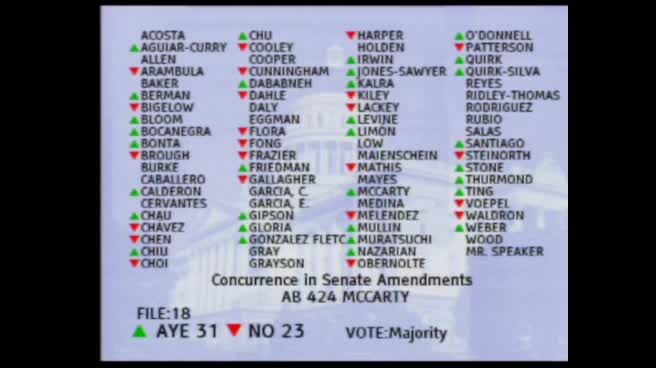

Bill Author