AB 2787: Long duration bulk energy storage: procurement.
- Session Year: 2017-2018
- House: Assembly
- Latest Version Date: 2018-08-28
Existing law provides for the establishment of an Independent System Operator (ISO) as a nonprofit public benefit corporation and requires the ISO to make certain filings with the Federal Energy Regulatory Commission (FERC) and to seek authority from the FERC as needed to give the ISO the ability to secure generating and transmission resources necessary to guarantee achievement of planning and operating reserve criteria no less stringent than those established by the Western Electricity Coordinating Council and the North American Electric Reliability Council.
This bill would require the ISO, on or before December 31, 2019, to complete a process for the procurement of long duration energy storage projects that in aggregate have at least 1,000 megawatts capacity, but not more than 2,000 megawatts, except as provided. The bill would require the ISO to develop a methodology for allocating the cost of that procurement to all load-serving entities within the ISO-controlled electrical grid, as provided.
Under existing law, a violation of the Public Utilities Act or any order, decision, rule, direction, demand, or requirement of the commission is a crime.
Because the provisions of this bill would be a part of the act and because a violation of an order, decision, or rule of the commission implementing its requirements act, a violation of which would be a crime, the bill would impose a state-mandated local program.
The California Constitution requires the state to reimburse local agencies and school districts for certain costs mandated by the state. Statutory provisions establish procedures for making that reimbursement.
This bill would provide that no reimbursement is required by this act for a specified reason.
This bill would declare that it is to take effect immediately as an urgency statute.
Existing law provides for the establishment of an Independent System Operator (ISO) as a nonprofit public benefit corporation and requires the ISO to make certain filings with the Federal Energy Regulatory Commission (FERC) and to seek authority from the FERC as needed to give the ISO the ability to secure generating and transmission resources necessary to guarantee achievement of planning and operating reserve criteria no less stringent than those established by the Western Electricity Coordinating Council and the North American Electric Reliability Council.
This bill would require the ISO, on or before December 31, 2019, to complete a process for the procurement of long duration energy storage projects that in aggregate have at least 1,000 megawatts capacity, but not more than 2,000 megawatts, except as provided. The bill would require the ISO to develop a methodology for allocating the cost of that procurement to all load-serving entities within the ISO-controlled electrical grid, as provided.
Under existing law, a violation of the Public Utilities Act or any order, decision, rule, direction, demand, or requirement of the commission is a crime.
Because the provisions of this bill would be a part of the act and because a violation of an order, decision, or rule of the commission implementing its requirements would be a crime, the bill would impose a state-mandated local program.
The California Constitution requires the state to reimburse local agencies and school districts for certain costs mandated by the state. Statutory provisions establish procedures for making that reimbursement.
This bill would provide that no reimbursement is required by this act for a specified reason.
Existing law authorizes the Fish and Game Commission, by regulation, to prescribe the manner and means of taking fish, reptiles, and amphibians for noncommercial purposes. Under existing law, the Department of Fish and Wildlife exercises various functions with regard to the taking of fish and wildlife. This bill would require the department, on or before March 1, 2020, to review existing research and data on the impacts of lead fishing tackle on, at minimum, the environment, including wildlife, rivers, lakes, streams, and potential drinking water sources, review efforts in other jurisdictions to regulate the use of lead fishing tackle, and submit a report on the findings of the review to the Governor and the Legislature, as provided.Existing law authorizes the Fish and Game Commission, by regulation, to prescribe the manner and means of taking fish, reptiles, and amphibians for noncommercial purposes. Under existing law, the Department of Fish and Wildlife exercises various functions with regard to the taking of fish and wildlife.
This bill would require the department, on or before March 1, 2020, to conduct a study, in consultation with specified entities, on the use of lead fishing tackle, including review existing research and data on the impacts of lead fishing tackle on on, at minimum, the environment, including wildlife, rivers, lakes, streams, and potential drinking water sources, review efforts in other jurisdictions to regulate the use of lead fishing tackle, and to submit a report on the findings of the study review to the Governor and the Legislature, as provided.
Existing law authorizes the Fish and Game Commission, by regulation, to prescribe the manner and means of taking fish, reptiles, and amphibians for noncommercial purposes. Under existing law, the Department of Fish and Wildlife exercises various functions with regard to the taking of fish and wildlife.
This bill would require the department, on or before March 1, 2020, to conduct a study, in consultation with specified entities, on the use of lead fishing tackle, including the impacts of lead fishing tackle on wildlife, rivers, lakes, streams, and potential drinking water sources, and to submit a report on the findings of the study to the Governor and the Legislature, as provided.
Existing law requires the Department of Toxic Substances Control to adopt regulations that establish a process for evaluating chemicals of concern in consumer products, and their potential alternatives, to determine how to best limit exposure to or reduce the level of hazard posed by a chemical of concern. Existing law requires that these regulations establish a process that includes an evaluation of the availability of potential alternatives and potential hazards posed by those alternatives and an evaluation of critical exposure pathways. Existing law requires that these regulations specify the range of regulatory responses that the department is authorized to take following the completion of the alternatives analysis. Existing hazardous waste control laws regulate the disposal of, among other things, discarded appliances, lead acid batteries, small household batteries, lead wheel weights, and household hazardous waste. Existing law prohibits any person from managing any hazardous waste, except as provided in the hazardous waste control laws and regulations. A violation of the hazardous waste control laws is a crime.This bill would, as part of the hazardous waste control laws, commencing January 1, 2025, prohibit a person from manufacturing, selling, or purchasing a fishing weight or sinker in California that has no cross section greater than or equal to two centimeters in length, is under 50 grams in mass, and contains more than 0.1% lead by weight. The bill would provide, if the Department of Toxic Substances Control identifies an alternative to lead used in fishing weights or sinkers as a chemical of concern pursuant to the consumer products chemical evaluation law described above, that the alternative remains subject to the evaluation process for alternatives described above. Because the bill would create a new crime, it would impose a state-mandated local program.The California Constitution requires the state to reimburse local agencies and school districts for certain costs mandated by the state. Statutory provisions establish procedures for making that reimbursement.This bill would provide that no reimbursement is required by this act for a specified reason.Existing law requires the Department of Toxic Substances Control to adopt regulations that establish a process for evaluating chemicals of concern in consumer products, and their potential alternatives, to determine how to best limit exposure to or reduce the level of hazard posed by a chemical of concern. Existing law requires that these regulations establish a process that includes an evaluation of the availability of potential alternatives and potential hazards posed by those alternatives and an evaluation of critical exposure pathways. Existing law requires that these regulations specify the range of regulatory responses that the department is authorized to take following the completion of the alternatives analysis.
Existing hazardous waste control laws regulate the disposal of, among other things, discarded appliances, lead acid batteries, small household batteries, lead wheel weights, and household hazardous waste. Existing law prohibits any person from managing any hazardous waste, except as provided in the hazardous waste control laws and regulations. A violation of the hazardous waste control laws is a crime.
This bill would, as part of the hazardous waste control laws, commencing January 1, 2025, prohibit a person from manufacturing, selling, or purchasing a fishing weight or sinker in California that has no cross section greater than or equal to two centimeters in length, is under 50 grams in mass, and contains more than 0.1% lead by weight. The bill would provide, if the Department of Toxic Substances Control identifies an alternative to lead used in fishing weights or sinkers as a chemical of concern pursuant to a specified law, the consumer products chemical evaluation law described above, that the alternative remains subject to the evaluation process specified in that law. for alternatives described above. Because the bill would create a new crime, it would impose a state-mandated local program.
The California Constitution requires the state to reimburse local agencies and school districts for certain costs mandated by the state. Statutory provisions establish procedures for making that reimbursement.
This bill would provide that no reimbursement is required by this act for a specified reason.
Existing law requires the Department of Toxic Substances Control to adopt regulations that establish a process for evaluating chemicals of concern in consumer products, and their potential alternatives, to determine how to best limit exposure to or reduce the level of hazard posed by a chemical of concern. Existing law requires that these regulations establish a process that includes an evaluation of the availability of potential alternatives and potential hazards posed by those alternatives and an evaluation of critical exposure pathways. Existing law requires that these regulations specify the range of regulatory responses that the department is authorized to take following the completion of the alternatives analysis.
Existing hazardous waste control laws regulate the disposal of, among other things, discarded appliances, lead acid batteries, small household batteries, lead wheel weights, and household hazardous waste. Existing law prohibits any person from managing any hazardous waste, except as provided in the hazardous waste control laws and regulations. A violation of the hazardous waste control laws is a crime.
This bill would, as part of the hazardous waste control laws, prohibit a person from manufacturing, selling, or purchasing a fishing weight or sinker in California that has no cross section greater than or equal to two centimeters in length, is under 50 grams in mass, and contains more than 0.1% lead by weight. The bill would provide, if the Department of Toxic Substances Control identifies an alternative to lead used in fishing weights or sinkers as a chemical of concern pursuant to a specified law, that the alternative remains subject to the evaluation process specified in that law. Because the bill would create a new crime, it would impose a state-mandated local program.
The California Constitution requires the state to reimburse local agencies and school districts for certain costs mandated by the state. Statutory provisions establish procedures for making that reimbursement.
This bill would provide that no reimbursement is required by this act for a specified reason.
The Legislature finds and declares the following:
(a)California is experiencing unprecedented changes in the generation, delivery, and consumption of electricity. Along with these changes come challenges for operating the states electrical grid and resources in the most efficient manner, particularly in terms of the time-sensitive need to match generation to the demand for electricity.
(b)As part of the long-term procurement planning process at the Public Utilities Commission, the California Independent System Operator (ISO) has identified a need for fast-ramping and flexible resources to balance the electrical grid and store low-cost energy from renewable energy resources.
(c)The ISO has identified long duration bulk energy storage and, in particular, pumped hydroelectric storage, when constructed in a sufficiently large scale, as helping to meet the California electrical grids need for fast-ramping capability and the capacity to store generation from renewable energy resources.
(d)The State Energy Resources Conservation and Development Commission has identified bulk energy storage, including pumped hydroelectric storage, as a key resource to help meet the challenges of integrating renewable energy onto the California electric grid.
(e)Pumped hydroelectric storage is a well-established and proven technology in wide deployment in the world, including in California, and, over many decades, has been shown to be reliable, with a useful asset life of 40 to 50 years or longer.
(f)The Public Utilities Commission, pursuant to Chapter 7.7 (commencing with Section 2835) of Part 2 of Division 1 of the Public Utilities Code, established a 1,325 megawatts energy storage procurement mandate; however, pumped hydroelectric storage facilities larger than 50 megawatts were not included as an eligible technology under the commissions implementation of that chapter. Battery energy storage projects have been the primary energy storage technology procured to meet that mandate.
(g)Other bulk energy storage technologies, including compressed air and those that store energy by chemical, thermal, or other means, also provide similar capabilities and valuable bulk storage benefits in comparison to pumped hydroelectric storage.
(h)The State Energy Resources Conservation and Development Commission has identified a number of barriers to bulk energy storage projects, including their high upfront capital costs, long development timelines, and uncertainty surrounding cost allocation.
(i)It is in the interest of California to diversify energy storage technologies.
(d)(j)California needs long duration bulk energy storage, with its unique ability both to utilize excess electricity generated by renewable energy resources and, when needed, to quickly inject that electricity back into the electrical grid to meet ramping and peak demand needs, as a part of the new strategy for efficiently operating the electrical grid in a manner that best protects electric reliability and the environment. This public policy directive should be implemented by the ISO.
(e)(k)Because long duration bulk energy storage will contribute to the reliability of the entire electric electrical transmission grid as additional renewable energy resources are added to it, it is appropriate that the cost of this energy storage is reflected in the transmission rates charged by the ISO for the use of the ISO-controlled grid. The ISO shall establish the cost recovery framework for such energy storage, but shall not own or operate any bulk energy storage projects.
SEC. 2.Section 351 is added to the Public Utilities Code, to read:351.(a)For purposes of this section, long duration bulk storage project means an energy storage resource interconnected to the electrical grid in California that has the capability to discharge at its capacity continuously for at least eight hours and cycle through its discharge and charge cycle on a daily basis. basis, has a minimum useful asset life of 40 years, has been proven by way of deployment, and is at least 500 megawatts in project capacity size.
(b)(1)On or before December 31, 2019, the Independent System Operator shall complete a procurement process for procuring one or more long duration bulk storage projects that have an aggregate capacity of at least 1,000 megawatts, but not more than 2,000 megawatts, unless the Independent System Operator determines that procurement in excess of the 2,000-megawatt limit maximizes the efficiency of sizing the long duration bulk energy storage projects procured.
(2)The Independent System Operator shall identify the targeted procurement capacity, commercial operation date, and technical criteria for the long duration bulk energy storage projects necessary to ensure support for renewable energy resource integration, to enhance grid reliability, and to achieve Californias greenhouse gas emissions reduction goals by providing fast-ramping and flexible resources of the Independent System Operator-controlled electrical grid.
(3)The Independent System Operator shall select one or more long duration bulk energy storage projects that are feasible and that can be procured and constructed on a timeline consistent with the California Renewables Portfolio Standard Program (Article 16 (commencing with Section 399.11)) and the states greenhouse gas emission reduction targets, taking into consideration the status of the required permits and licenses for the projects.
(4)The Independent System Operator shall select a project that will use a reservoir or other substantial infrastructure owned by a public entity only if all work on the project will be conducted pursuant to a project labor agreement that meets the requirements of Section 2500 of the Public Contract Code.
(c)(1)The procurement process shall provide for cost recovery to all load-serving entities within the Independent System Operator-controlled electrical grid for the revenue requirements of any selected long duration bulk energy storage project through a cost-of-service rate that takes into account any offsetting revenues that a long duration bulk energy project may receive from participation in the Independent System Operator markets or other revenues the project may receive.
(2)The Independent System Operator shall develop a methodology for allocating those costs, net of offsetting market or other revenues, to all load-serving entities within the Independent System Operator-controlled electrical grid.
(3)For any future requirement to procure long duration bulk energy storage, the commission shall credit each load-serving entity with its proportionate share of the long duration bulk energy storage project required pursuant to this section based on the cost allocation determined pursuant to paragraph (2).
(d)The Independent System Operator shall give preference when procuring long duration bulk energy storage projects to those projects that include an option to an electrical corporation, or any combination of electrical corporations, as participating transmission owners in the Independent System Operator to acquire an ownership interest in the project.
(e)The capacity required pursuant to this section is in addition to any procurement requirement pursuant to Section 2836.
(f)To the extent that approval is required by federal law, the Independent System Operator shall implement this section subject to the approval of the Federal Energy Regulatory Commission.
(g)This section does not alter or affect, in any manner, the authority of the Independent System Operator or other state agencies to adopt a different definition for bulk energy storage for purposes of any other authority to procure bulk energy storage.
(h)The provisions of this section are severable. If any provision of this section or its application is held invalid, that invalidity shall not affect other provisions or applications that can be given effect without the invalid provision or application.
SEC. 3.No reimbursement is required by this act pursuant to Section 6 of Article XIIIB of the California Constitution because the only costs that may be incurred by a local agency or school district will be incurred because this act creates a new crime or infraction, eliminates a crime or infraction, or changes the penalty for a crime or infraction, within the meaning of Section 17556 of the Government Code, or changes the definition of a crime within the meaning of Section 6 of Article XIIIB of the California Constitution.
SEC. 4.This act is an urgency statute necessary for the immediate preservation of the public peace, health, or safety within the meaning of Article IV of the California Constitution and shall go into immediate effect. The facts constituting the necessity are:
In order to develop imminently necessary large scale grid support in the amount of 1,000 to 4,000 megawatts as soon as possible, it is necessary for this bill to take effect immediately.
The Legislature finds and declares the following:
(a)California is experiencing unprecedented changes in the generation, delivery, and consumption of electricity. Along with these changes come challenges for operating the states electrical grid and resources in the most efficient manner, particularly in terms of the time-sensitive need to match generation to the demand for electricity.
(b)As part of the long-term procurement planning process at the Public Utilities Commission, the California Independent System Operator (ISO) has identified a need for fast-ramping and flexible resources to balance the electrical grid and store low-cost energy from renewable energy resources.
(c)The ISO has identified long duration bulk energy storage and, in particular, pumped hydroelectric storage, when constructed in a sufficiently large scale, as helping to meet the California electrical grids need for fast-ramping capability and the capacity to store generation from renewable energy resources.
(d)California needs long duration bulk energy storage, with its unique ability both to utilize excess electricity generated by renewable energy resources and, when needed, to quickly inject that electricity back into the electrical grid to meet ramping and peak demand needs, as a part of the new strategy for efficiently operating the electrical grid in a manner that best protects electric reliability and the environment. This public policy directive should be implemented by the ISO.
(e)Because long duration bulk energy storage will contribute to the reliability of the entire electric transmission grid as additional renewable energy resources are added to it, it is appropriate that the cost of this energy storage is reflected in the transmission rates charged by ISO for the use of the ISO-controlled grid.
SEC. 2.Section 351 is added to the Public Utilities Code, to read:351.(a)For purposes of this section, long duration bulk storage project means an energy storage resource interconnected to the electrical grid in California that has the capability to discharge at its capacity continuously for at least eight hours and cycle through its discharge and charge cycle on a daily basis.
(b)(1)On or before December 31, 2019, the Independent System Operator shall complete a procurement process for procuring one or more long duration bulk storage projects that have an aggregate capacity of at least 1,000 megawatts, but not more than 2,000 megawatts, unless the Independent System Operator determines that procurement in excess of the 2,000-megawatt limit maximizes the efficiency of sizing the long duration bulk energy storage projects procured.
(2)The Independent System Operator shall identify the targeted procurement capacity, commercial operation date, and technical criteria for the long duration bulk energy storage projects necessary to ensure support for renewable energy integration, to enhance grid reliability, and to achieve Californias greenhouse gas emissions reduction goals by providing fast-ramping and flexible resources of the Independent System Operator-controlled electrical grid.
(3)The Independent System Operator shall select one or more long duration bulk energy storage projects that are feasible and that can be procured and constructed on a timeline consistent with the states greenhouse gas emission reduction targets, taking into consideration the status of the required permits and licenses for the projects.
(c)(1)The procurement process shall provide for cost recovery to all load-serving entities within the Independent System Operator-controlled electrical grid for the revenue requirements of any selected long duration bulk energy storage project through a cost-of-service rate that takes into account any offsetting revenues that a long duration bulk energy project may receive from participation in the Independent System Operator markets or other revenues the project may receive.
(2)The Independent System Operator shall develop a methodology for allocating those costs, net of offsetting market or other revenues, to all load-serving entities within the Independent System Operator-controlled electrical grid.
(3)For any future requirement to procure long duration bulk energy storage, the commission shall credit each load-serving entity with its proportionate share of the long duration bulk energy storage project required pursuant to this section based on the cost allocation determined pursuant to paragraph (2).
(d)The Independent System Operator shall give preference when procuring long duration bulk energy storage projects to those projects that include an option to an electrical corporation, or any combination of electrical corporations, as participating transmission owners in the Independent System Operator to acquire an ownership interest in the project.
(e)The capacity required pursuant to this section is in addition to any procurement requirement pursuant to Section 2836.
SEC. 3.No reimbursement is required by this act pursuant to Section 6 of Article XIIIB of the California Constitution because the only costs that may be incurred by a local agency or school district will be incurred because this act creates a new crime or infraction, eliminates a crime or infraction, or changes the penalty for a crime or infraction, within the meaning of Section 17556 of the Government Code, or changes the definition of a crime within the meaning of Section 6 of Article XIIIB of the California Constitution.
SECTION 1.Chapter 7.1 (commencing with Section 1710) is added to Division 2 of the Fish and Game Code, to read:7.1.Lead Fishing Tackle1710.(a)On or before March 1, 2020, the department shall do both of the following:(1)Review existing research and data on the impacts of lead fishing tackle on, at minimum, the environment, including wildlife, rivers, lakes, streams, and potential drinking water sources, and review efforts in other jurisdictions to regulate the use of lead fishing tackle.(2)Submit a report to the Governor and the Legislature, in compliance with Section 9795 of the Government Code, on the findings of the review pursuant to paragraph (1). The report shall include recommendations for the safe use of lead fishing tackle that protects the environment, including wildlife, rivers, lakes, streams, and potential drinking water sources.(b)Pursuant to Section 10231.5 of the Government Code, this chapter is repealed on January 1, 2024.(a)On or before March 1, 2020, the department shall do both of the following:
(1)Conduct a study, in consultation with the Department of Toxic Substances Control, the State Water Resources Control Board, and any relevant stakeholders, including, but not limited to, sport fishing groups or associations and public health and environmental health organizations, on the use of lead fishing tackle, including the impacts of lead fishing tackle on wildlife, rivers, lakes, streams, and potential drinking water sources. The department may enter contracts to conduct this study.(1)Review existing research and data on the impacts of lead fishing tackle on, at minimum, the environment, including wildlife, rivers, lakes, streams, and potential drinking water sources, and review efforts in other jurisdictions to regulate the use of lead fishing tackle.
(2)Submit a report to the Governor and the Legislature, in compliance with Section 9795 of the Government Code, on the findings of the study conducted review pursuant to paragraph (1). The report shall include recommendations for the safe use of lead fishing tackle that protects public human health and the environment, including wildlife, rivers, lakes, streams, and potential drinking water sources.
(b)Pursuant to Section 10231.5 of the Government Code, this chapter is repealed on January 1, 2024.
(a)On or before March 1, 2020, the department shall do both of the following:
(1)Conduct a study, in consultation with the Department of Toxic Substances Control, the State Water Resources Control Board, and any relevant stakeholders, including, but not limited to, sport fishing groups or associations and public health and environmental health organizations, on the use of lead fishing tackle, including the impacts of lead fishing tackle on wildlife, rivers, lakes, streams, and potential drinking water sources. The department may enter contracts to conduct this study.
(2)Submit a report to the Governor and the Legislature, in compliance with Section 9795 of the Government Code, on the findings of the study conducted pursuant to paragraph (1). The report shall include recommendations for the safe use of lead fishing tackle that protects public human health and the environment, including wildlife, rivers, lakes, streams, and potential drinking water sources.
(b)Pursuant to Section 10231.5 of the Government Code, this chapter is repealed on January 1, 2024.
SECTION 1.Article 13.2 (commencing with Section 25250.40) is added to Chapter 6.5 of Division 20 of the Health and Safety Code, to read:13.2.Lead Fishing Weights and Sinkers25250.40.(a)On and after January 1, 2025, a person shall not manufacture, sell, or purchase a fishing weight or sinker in California that has no cross section greater than or equal to two centimeters in length, is under 50 grams in mass, and contains more than 0.1 percent lead by weight.(b)If the department identifies an alternative to lead used in fishing weights or sinkers as a chemical of concern pursuant to Section 25252, that alternative to lead shall remain subject to the evaluation process imposed pursuant to Section 25253 to determine how to best limit exposure or to reduce the level of hazard posed by the alternative.(c)Nothing in this section shall be construed to restrict the authority of the department pursuant to Sections 25252 and 25253 relating to a chemical or chemical ingredient contained in fishing weights or sinkers, including, but not limited to, an alternative to lead.SEC. 2.No reimbursement is required by this act pursuant to Section 6 of Article XIIIB of the California Constitution because the only costs that may be incurred by a local agency or school district will be incurred because this act creates a new crime or infraction, eliminates a crime or infraction, or changes the penalty for a crime or infraction, within the meaning of Section 17556 of the Government Code, or changes the definition of a crime within the meaning of Section 6 of Article XIIIB of the California Constitution.(a)A On and after January 1, 2025, a person shall not manufacture, sell, or purchase a fishing weight or sinker in California that has no cross section greater than or equal to two centimeters in length, is under 50 grams in mass, and contains more than 0.1 percent lead by weight.
(b)If the department identifies an alternative to lead used in fishing weights or sinkers as a chemical of concern pursuant to Section 25252, that alternative to lead shall remain subject to the evaluation process imposed pursuant to Section 25253 to determine how to best limit exposure or to reduce the level of hazard posed by the alternative.
(c)Nothing in this section shall be construed to restrict the authority of the department pursuant to Sections 25252 and 25253 relating to a chemical or chemical ingredient contained in fishing weights or sinkers, including, but not limited to, an alternative to lead.
SEC. 2.No reimbursement is required by this act pursuant to Section 6 of Article XIIIB of the California Constitution because the only costs that may be incurred by a local agency or school district will be incurred because this act creates a new crime or infraction, eliminates a crime or infraction, or changes the penalty for a crime or infraction, within the meaning of Section 17556 of the Government Code, or changes the definition of a crime within the meaning of Section 6 of Article XIIIB of the California Constitution.
(a)A person shall not manufacture, sell, or purchase a fishing weight or sinker in California that has no cross section greater than or equal to two centimeters in length, is under 50 grams in mass, and contains more than 0.1 percent lead by weight.
(b)If the department identifies an alternative to lead used in fishing weights or sinkers as a chemical of concern pursuant to Section 25252, that alternative to lead shall remain subject to the evaluation process imposed pursuant to Section 25253 to determine how to best limit exposure or to reduce the level of hazard posed by the alternative.
(c)Nothing in this section shall be construed to restrict the authority of the department pursuant to Sections 25252 and 25253 relating to a chemical or chemical ingredient contained in fishing weights or sinkers, including, but not limited to, an alternative to lead.
SEC. 2.No reimbursement is required by this act pursuant to Section 6 of Article XIIIB of the California Constitution because the only costs that may be incurred by a local agency or school district will be incurred because this act creates a new crime or infraction, eliminates a crime or infraction, or changes the penalty for a crime or infraction, within the meaning of Section 17556 of the Government Code, or changes the definition of a crime within the meaning of Section 6 of Article XIIIB of the California Constitution.
|
Date
|
Status
|
|---|---|
| Aug 31, 2018 | Ordered to inactive file at the request of Senator Hueso. |
| Aug 30, 2018 | Read second time. Ordered to third reading. |
| Aug 29, 2018 | From committee: Do pass. (Ayes 5. Noes 1.) (August 29). |
| Aug 28, 2018 | Senate Rule 29.3(b) suspended. (Ayes 26. Noes 11.) |
| Aug 27, 2018 | From committee: Do pass and re-refer to Com. on APPR. (Ayes 6. Noes 2.) (August 27). Re-referred to Com. on APPR. |
| Aug 24, 2018 | In committee: Hearing postponed by committee. |
| Aug 22, 2018 | Re-referred to Com. on E., U. & C. |
| Aug 22, 2018 | Joint Rule 62(a) suspended. |
| Aug 21, 2018 | From committee chair, with author's amendments: Amend, and re-refer to committee. Read second time, amended, and re-referred to Com. on RLS. |
| Jul 5, 2018 | From committee chair, with author's amendments: Amend, and re-refer to committee. Read second time, amended, and re-referred to Com. on RLS. |
| Jun 7, 2018 | Referred to Com. on RLS. |
| May 31, 2018 | In Senate. Read first time. To Com. on RLS. for assignment. |
| May 30, 2018 | Read third time. Passed. Ordered to the Senate. |
| May 29, 2018 | Read second time. Ordered to third reading. |
| May 25, 2018 | From committee: Amend, and do pass as amended. (Ayes 12. Noes 4.) (May 25). |
| May 16, 2018 | In committee: Set, first hearing. Referred to APPR. suspense file. |
| Apr 30, 2018 | Re-referred to Com. on APPR. |
| Apr 26, 2018 | Read second time and amended. |
| Apr 25, 2018 | From committee: Amend, and do pass as amended and re-refer to Com. on APPR. (Ayes 6. Noes 1.) (April 24). |
| Apr 10, 2018 | In committee: Set, first hearing. Hearing canceled at the request of author. |
| Apr 4, 2018 | Re-referred to Com. on E.S. & T.M. |
| Apr 3, 2018 | From committee chair, with author's amendments: Amend, and re-refer to Com. on E.S. & T.M. Read second time and amended. |
| Mar 8, 2018 | Referred to Com. on E.S. & T.M. |
| Feb 17, 2018 | From printer. May be heard in committee March 19. |
| Feb 16, 2018 | Read first time. To print. |
|
Date
|
Description
|
Location
|
Votes
|
|
|---|---|---|---|---|
| Aug 29, 2018 | Do pass | Senate Standing Committee on Appropriations |
Passed |
|
| Aug 27, 2018 | Do pass, but first be re-referred to the Committee on [Appropriations] | Senate Standing Committee on Energy, Utilities and Communications |
Passed |
|
| May 30, 2018 | AB 2787 QUIRK Assembly Third Reading | Assembly Floor |
Passed |
|
| May 25, 2018 | Do pass as amended. | Assembly Standing Committee on Appropriations |
Passed |
|
| Apr 24, 2018 | Do pass as amended and be re-referred to the Committee on [Appropriations] | Assembly Standing Committee on Environmental Safety and Toxic Materials |
Passed |
This list shows positions taken on this bill by organizations on the date displayed, which is linked to the original source.
Positions by individuals are not included.
|
Organization
|
Position
|
Date
|
|---|---|---|
| 7 Individuals | ** Against | Apr 20, 2018 |
| Agricultural Energy Consumers Association | ** Against | Aug 30, 2018 |
| Alameda Creek Alliance | ** Support | Apr 20, 2018 |
| American Sportfishing Association | ** Against | Apr 20, 2018 |
| Audubon California | ** Against | Aug 30, 2018 |
| California Aquaculture Association | ** Against | Apr 20, 2018 |
| California Association For Recreational Fishing | ** Against | Apr 20, 2018 |
| California Association Of Harbor Masters And Port Captains | ** Against | Apr 20, 2018 |
| California Chamber Of Commerce | * Against | Apr 24, 2018 |
| California Labor Federation | * Support | Aug 27, 2018 |
| California Large Energy Consumers Association | ** Against | Aug 30, 2018 |
| California Municipal Utilities Association | ** Against | Aug 30, 2018 |
| California Native Plant Society | ** Against | Aug 30, 2018 |
| California Parks Company | ** Against | Apr 20, 2018 |
| California Parks Hospitality Association | ** Against | Apr 20, 2018 |
| California Partnership | * Support | Aug 27, 2018 |
| California Public Utilities Commission | ** Against | Aug 30, 2018 |
| California Sportfishing League | * Against | Apr 24, 2018 |
| California Sportsman's Lobby, Inc. | * Against | Apr 24, 2018 |
| California State Association Of Electrical Workers | * Support | Aug 27, 2018 |
| California Wilderness Coalition | ** Against | Aug 30, 2018 |
| California Wind Energy Association | ** Against | Aug 30, 2018 |
| California Yacht Broker'S Association | ** Against | Apr 20, 2018 |
| California Yacht Brokers Association | * Against | Apr 24, 2018 |
| California Yacht Marina | ** Against | Apr 20, 2018 |
| Center For Biological Diversity | ** Against | Aug 30, 2018 |
| Center For Public Environmental Oversight | ** Support | Apr 20, 2018 |
| City Of Coachella | ** Support | Aug 30, 2018 |
| Clean Power Campaign | ** Support | Aug 30, 2018 |
| Clean Water Action | ** Support | Apr 20, 2018 |
| Coachella Valley Economic Partenership | * Support | Aug 27, 2018 |
| Coachella Valley Unified School District | * Support | Aug 27, 2018 |
| Coastal Conservation Association Of California | ** Against | Apr 20, 2018 |
| Coastside Fishing Club | * Against | Apr 24, 2018 |
| Congress of California Seniors | ** Support | Aug 30, 2018 |
| Congressional Sportsmen's Foundation | * Against | Apr 24, 2018 |
| Coyote Bait And Tackle | ** Against | Apr 20, 2018 |
| Dana Wharf Sportfishing And Whale Watching | ** Against | Apr 20, 2018 |
| Defenders Of Wildlife | ** Against | Aug 30, 2018 |
| East Valley Coalition | ** Support | Aug 30, 2018 |
| Environmental Working Group | ** Support | Apr 20, 2018 |
| Friends Of The Earth | ** Support | Aug 30, 2018 |
| Independent Energy Producers Association | ** Against | Aug 30, 2018 |
| Inspire Club International | * Against | Apr 24, 2018 |
| International Union of Operating Engineers | ** Support | Aug 30, 2018 |
| International Union Of Painters And Allied Trades | * Support | Aug 27, 2018 |
| Jinkosolar Inc. | ** Support | Aug 30, 2018 |
| Los Angeles Rod And Reel Club | ** Against | Apr 20, 2018 |
| Magnum Caes, Llc | ** Support | Aug 30, 2018 |
| Mammoth Lakes Tourism | ** Against | Apr 20, 2018 |
| Marina Recreation Association | ** Against | Apr 20, 2018 |
| Marine Recreation Association | * Against | Apr 24, 2018 |
| National Association of Manufacturers | * Against | Apr 24, 2018 |
| National Federation Of Independent Business | ** Against | Apr 20, 2018 |
| National Marine Manufacturers Association | ** Against | Apr 20, 2018 |
| National Parks Conservation Association | ** Against | Aug 30, 2018 |
| NextEra Energy Resources | ** Support | Aug 30, 2018 |
| Northern California Power Agency | ** Against | Aug 30, 2018 |
| Oceanside Senior Anglers, Inc. | ** Against | Apr 20, 2018 |
| Ohlone Audubon Society, Inc. | ** Support | Apr 20, 2018 |
| Outdoor Sportsmen'S Coalition Of California | * Against | Apr 24, 2018 |
| Pacific Gas And Electric Company | ** Support | Aug 30, 2018 |
| Pueblo Unido Community Development Corporation | ** Support | Aug 30, 2018 |
| Riverside County Supervisor | * Support | Aug 27, 2018 |
| Safari Club International | ** Against | Apr 20, 2018 |
| Safe Harbor Marinas | ** Against | Apr 20, 2018 |
| San Diego County Building Trades Union | ** Support | Aug 30, 2018 |
| San Diego County Water Authority | ** Support | Aug 30, 2018 |
| San Diego County Wildlife Federation | ** Against | Apr 20, 2018 |
| San Diego Water Authority | * Support | Aug 27, 2018 |
| San Francisco Public Utilities Commission | * Against | Aug 27, 2018 |
| Sierra Club California | ** Against | Aug 30, 2018 |
| Silicon Valley Leadership Group | ** Against | Aug 30, 2018 |
| Southern California Public Power Authority | ** Against | Aug 30, 2018 |
| State Building & Construction Trades Council, Afl-Cio | ** Support | Aug 30, 2018 |
| Tehama County Board of Supervisors | ** Against | Apr 20, 2018 |
| The Nature Conservancy | ** Against | Aug 30, 2018 |
| The Utility Reform Network | ** Against | Aug 30, 2018 |
| Turtle Island Restoration Network | ** Support | Apr 20, 2018 |
| United Pier And Shore Anglers Of California | ** Against | Apr 20, 2018 |
| Ventana Wilderness Alliance | ** Support | Apr 20, 2018 |
| vet voice foundation | ** Against | Aug 30, 2018 |
| Western Boaters Safety Group | ** Against | Apr 20, 2018 |
Office of Senate Floor Analyses (916) 651-1520 Fax: (916) 327-4478 | AB |
THIRD READING
Bill No: AB 2787
:
SENATE ENERGY, U. & C. COMMITTEE: 6-2, 8/27/18
AYES: Hueso, Bradford, Cannella, Hertzberg, Stern, Wiener
NOES: Morrell, Hill
NO VOTE RECORDED: McGuire, Skinner, Vidak
SENATE APPROPRIATIONS COMMITTEE: 5-1, 8/29/18
AYES: Portantino, Bates, Beall, Nielsen, Wiener
NOES: Hill
NO VOTE RECORDED: Bradford
ASSEMBLY FLOOR: 61-10, 5/30/18 - See last page for vote
SOURCE: NextEra Energy Resources
DIGEST:
This bill requires the California Independent System Operator (CAISO) to procure 1,000 to 2,000 megawatts (MW) of capacity from long duration energy storage projects by December 31, 2019 and allocate the costs to all load-serving entities within the ISO-controlled electrical grid.
Existing law:
- Imposes, via The Public Utilities Act, various duties and responsibilities on the California Public Utilities Commission (CPUC) with respect to the purchase of electricity and requires the CPUC to review and adopt a renewable energy procurement plan for each investor-owned utility (IOU) and all retail sellers pursuant to the California Renewables Portfolio Standard Program (RPS). (Public Utilities Code §399.15)
- Requires each publicly owned utility (POU) to adopt and implement a renewable energy resources procurement plan that requires the utility to procure a minimum quantity of eligible renewable energy resources each compliance period to achieve the RPS procurement goals. (Public Utilities Code §399.30)
- Requires each load serving entity (LSE) to prepare and file an integrated resource plan (IRP) that includes procurements enabling utilities to meet greenhouse gas (GHG) emissions reduction targets for the electricity sector. (Public Utilities Code §454.52)
- Provides for the establishment of an Independent System Operator (ISO) as a nonprofit public benefit corporation and requires the ISO to make certain filings with the Federal Energy Regulatory Commission (FERC) and to seek authority from the FERC as needed to give the ISO the ability to secure generating and transmission resources necessary to guarantee achievement of planning and operating reserve criteria no less stringent than those established by the Western Electricity Coordinating Council and the North American Electric Reliability Council. (Public Utilities Code § 334 et seq.)
- Establishes that FERC as exclusive jurisdiction over the transmission of electric energy in interstate commerce. Also establishes the process and procedures for establishing transmission of electric energy in interstate commerce by public utilities, i.e., the rates, terms & conditions of interstate electric transmission by public utilities. (Federal Power Act §§§201, 205, 206 (16 USC 824, 824d, 824e)
This bill:
- Makes several findings and declarations concerning the changing electrical grid, the need to match generation to the demand for electricity, and the beneficial attributes of bulk energy storage.
- Defines “long duration bulk storage project” to mean an energy storage resource interconnected to the electrical grid in California that has the capability to discharge at its capacity continuously for at least eight hours and cycle through its discharge and charge cycle on a daily basis, has a minimum useful asset life of 40 years, has been proven by way of deployment, and is at least 500 MW in project capacity size.
- Requires the CAISO to complete, on or before December 31, 2019, a procurement process for procuring one or more long duration bulk storage projects that have an aggregate capacity of at least 1,000 MW, but not more than 2,000 MW, unless the CAISO determines that procurement in excess of the 2,000-MW limit maximizes the efficiency of sizing the long duration bulk energy storage projects procured.
- Requires the CAISO to identify the targeted procurement capacity, commercial operation date, and technical criteria for the long duration bulk energy storage projects necessary to ensure support for renewable energy integration, to enhance grid reliability, and to achieve California’s GHG emissions reduction goals by providing fast-ramping and flexible resources of the CAISO-controlled electrical grid.
- Requires the CAISO to select one or more long duration bulk energy storage projects that are feasible and that can be procured and constructed on a timeline consistent with the state’s GHG emission reduction targets, taking into consideration the status of the required permits and licenses for the projects.
- Requires the CAISO select a project that will use a reservoir or other substantial infrastructure owned by a public entity only if all work on the project will be conducted pursuant to a project labor agreement that meets the requirements of Section 2500 of the Public Contract Code.
- Requires the procurement process to provide for cost recovery to all LSEs within the CAISO-controlled electrical grid for revenue requirements of any selected long duration bulk energy storage project through a cost-effective rate that takes into account any offsetting revenues that a long duration bulk energy project may receive from participation in the CAISO markets or other revenues the project may receive.
- Requires the CAISO to develop a methodology for allocating those costs, net of offsetting market or other revenues, to all LSEs within the CAISO-controlled electric grid.
- Requires the CAISO to give preference when procuring long duration bulk energy storage projects to those projects that include an option to an electrical corporation, or any combination of electrical corporations, as participating transmission owners in the CAISO to acquire ownership interest in the project.
Background
Bulk energy storage. Bulk energy storage, also known as grid-scale energy storage, can include any technology used to store energy on a large scale within the power grid. Pumped hydroelectric energy systems are the primary bulk energy technology deployed in California. However, there are other technologies, including compressed air energy systems and advanced rail energy systems. Additionally, with developments and advancements in technology, its possible battery storage may one day become more commonly used as a grid-scale energy storage. In the case of pumped hydroelectric energy storage, also known as pumped storage or pumped hydro, it is one of the oldest energy resources.
“Duck Curve” integration of renewables is a challenge for the electric grid.
A typical pumped storage facility uses pumps and generators to move water between an upper and lower reservoir. When electricity is cheap during times of low demand, water is pumped from the lower reservoir to the upper reservoir. During periods of high demand, water is released from the upper reservoir through a generator to produce electricity that can be sold at higher prices. This fluctuation and responsiveness to the changing electricity landscape during the day, can help with renewables integration and replace the reliance on natural gas power plants. However, pumped storage is requires a significant amount of up front capital, long construction phase, and, like other resources, connection to the transmission lines to the power grids.
Renewable Portfolio Standard. The state is well on its way to achieving its existing RPS targets. Most POUs are on track to meet their 2020 goals and working towards their 2030 goals. As shown in the table below, the state’s three largest electric utilities generally have met current procurement goals and anticipate exceeding future procurement goals.
IRP Reference System Plan. As required in SB 350 (De León, Chapter 547, Statutes of 2015), the Integrated Resources Plan (IRP) process requires the CPUC to identify a portfolio of resources for electricity procurement that provides optimal integration of renewable energy in a cost-effective manner, and minimize impacts on ratepayer’s bills. The identification of this portfolio is intended to guide LSEs’ IRPs, which help ensure that utilities meet GHG reduction targets for the electricity sector. The reference system plan is a guide – not a mandate. Earlier this year, the CPUC adopted a reference system plan, which identifies the energy procurements needed to help the LSEs meet specific GHG reduction goals. The CPUC adopted a GHG reduction goal of 42 million metric tons by 2030. To meet this target, the CPUC identified specific procurements for LSEs, noted in the IRP reference system plan.
Large IOUs long on renewable procurement. As noted above, the large IOUs are currently long on procurement and are anticipated to meet their 2030 RPS requirements by 2020. Accordingly, the IOUs chose not to hold annual RPS solicitation in 2017. Initially the IOUs procured more renewables than necessary in part to hedge against potential RPS shortfalls due to the initial higher project failure rates. However, changes in the electricity landscape, in particular the load migration from IOUs to Community Choice Aggregators (CCAs) is resulting in the IOUs having less of a need to procure additional resources, including renewable energy resources.
AB 2787. This bill mandates a procurement goal of 1,000 to 2,000 MW of long duration bulk storage, largely meant to prefer pumped storage projects. The sponsors note the hurdles for pumped storage, in particular, with long lead times, high up-front costs, and a challenge for any one LSE to procure. Moreover, the sponsors state that this particular resource will be needed in a 60 percent plus RPS world.
Too much? Too soon? Too costly? Clearly, pumped storage provides some beneficial attributes that can complement the integration of renewables on the electric grid. However, the fundamental questions are: how much is needed, where is it needed, and when is it needed? Considering the costs to ratepayers can be in the hundreds of millions, and likely billions of dollars, for projects and corresponding transmission lines mandated by this bill, it would seem wise to proceed with caution. As noted above, the CPUC and CEC have already initiated the first cycle of the IRP, as required by SB 350. Two important milestones were the development of the Reference System Plan and the August 1st LSE filing deadlines. Yet, this bill looks to usurp this process and instead have the legislature make a determination that it is exactly this resource on the specific timeline that is needed. Such an effort through legislation may have the unintended effect of increasing costs to all ratepayers, where a more cost-effective approach may be optimized through the IRP process. As the CPUC notes, any additional statutory clean energy procurement mandates will limit the ability of the CPUC, stakeholders, and sister agency partners to look at a full range of energy resource alternatives to find the optimal mix of clean energy resources needed to achieve California’s pioneering GHG remission reduction plan.”
California ISO or Western States ISO? This bill would establish a new precedent by requiring the ISO to procure the mandated energy storage as transmission assets. There are many concerns with such an approach, not the least of which is that this legislature is currently being asked whether to expand the ISO from a largely California footprint or to a broader, Western States ISO. Under either scenario, the prospect of ISO procurement is not very appealing, and perhaps, less so, under an expanded and uncertain grid. The CAISO has noted its own concerns with this approach. Furthermore, the CAISO has stated they had studied the use of energy storage in 2016-17, but they found that the benefits did not outweigh the costs, generally. Additionally, as stakeholders have noted, the notion of the ISO contracting its own asset as it oversees dispatch would provide an opportunity for the ISO to have bias in the market.
ISO procurement invites FERC action. Transmission procurement is very clearly under federal jurisdiction by the FERC. To the extent one has concerns about the current FERC, this mandated procurement would be handled by the existing federal administration. The CAISO has noted that such a mandate could raise state/federal jurisdiction concerns that would potentially undermine and district from the merits of cost recovery. As the CAISO states, the preference for a specific resource type could be viewed as discriminatory under the Federal Power Act, and thereby challenged by other stakeholders under review by the FERC. Additionally, any tariff changes would need to be submitted to FERC for review and adoption.
Allocating costs to all CAISO LSEs. As proposed by this bill, the costs of the projects procured by the proposed mandate would be shouldered by all LSEs participating the CAISO-controlled electric grid. Such an approach can be beneficial to financing large, expensive capital projects that may be too large and expensive for any one LSE to procure. However, the approach fails to acknowledge the efforts of each LSE to procure a cost optimized diverse portfolio. Again, the Legislature may wish to consider proceeding with caution before diving in to such an approach. Additionally, given the changes currently occurring with the pace of departing load from IOUs to CCAs, the first phase of the IRP process, the active proceedings concerning the Public Charge Indifference Adjustment (PCIA), resource adequacy (RA), and the Consumer Choice (CPUC “Green Book”) effort, the Legislature may wish to hold off on any large procurement decisions until some of these issues are better understood or resolved.
Comments
CAISO cocerns: Although not taking a position, the CAISO has raised concerns about the designation of the CAISO as the procurement entity for this resource, the ratemaking mechanisms to allocate the costs to California ratepayers and the potential to raise federal/state jurisdictional concerns. On these matters, the CAISO specifically notes the need to undergo FERC approval to include cost-allocation mechanism in their tariff. Additionally, the CAISO notes that the approval under Section 205 of the Federal Power Act would be uncertain since the bill provides a preference for a specific resource type.
Prior/Related Legislation
AB 893 (E. Garcia, 2018) would require, by December 31, 2021, each retail seller of electricity and each local publicly owned electric utility (POU) to procure a proportionate share of electricity products from a statewide total of 3,000 megawatts (MW) of geothermal generation capacity, as specified. The bill is pending consideration in the Senate Committee on Rules.
SB 350 (De León, Chapter 547, Statutes of 2015) established, among other items a 50 percent RPS and a requirement to establish and IRP process, in order to optimize the portfolio of resources to meet the state’s GHG goals at lowest possible cost.
AB 2514 (Skinner, Chapter 469, Statutes of 2010) required the CPUC to determine appropriate targets, if any, for LSEs to procure energy storage systems. The bill required LSEs to meet any targets adopted by the CPUC by 2015 and 2020. The bill required POUs to set their own targets for the procurement of energy storage and then meet those targets by 2016 and 2021.
AB 33 (Quirk, Chapter 680, Statutes of 2016) obligated the CPUC, in consultation with the CEC, to evaluate and analyze the potential for all types of long-duration bulk energy storage resources to help integrate renewables into the electric grid.
FISCAL EFFECT: Appropriation: Fiscal Com.: Local:
According to the Senate Committee on Appropriations;
- Ongoing costs of $212 thousand annually (ratepayer funds) for one position at the CPUC and their travel expenses to advocate at the FERC and CAISO.
- Minor and absorbable costs for CPUC to perform the analyses required by the bill.
- Unknown but likely significant increased costs, potentially in the high tens of millions or even hundreds of millions of dollars, (various funds) to the state as an energy utility ratepayer. Some, but not all, ratepayer costs could potentially be recouped later as procurement savings, depending on later determinations by CAISO.
NextEra Energy Resources (source)
City of Coachella
Clean Power Campaign
Congress of California Seniors
East Valley Coalition
Friends of the Earth
International Union of Operating Engineers
JinkoSolar (U.S.) Inc.
Magnum CAES, LLC
Pacific Gas and Electric Company
Pueblo Unido Community Development Corporation
San Diego County Building Trades Union
San Diego County Water Authority
State Building & Construction Trades Council, AFL-CIO
OPPOSITION: (Verified 8/27/18)
Agricultural Energy Consumers Association
Audubon California
California Large Energy Consumers Association
California Municipal Utilities Association
California Native Plant Society
California Public Utilities Commission
California Wilderness Coalition
California Wind Energy Association
Center for Biological Diversity
Defenders of Wildlife
Independent Energy Producers Association
National Parks Conservation Association
Northern California Power Agency
Sierra Club California
Silicon Valley Leadership Group
Southern California Public Power Authority
The Nature Conservancy
The Utility Reform Network
Vet Voice Foundation
ARGUMENTS IN SUPPORT: The sponsor of this bill, NextEra Energy Resources (NextEra), states that long duration bulk storage energy resources are needed in order for the state to achieve a RPS greater than 60 percent. However, the high upfront capital costs, uncertainty regarding cost allocation and long lead times to develop bulk storage projects are hurdles to bringing long duration storage to fruition. NextEra further states that AB 2787 removes those barriers and provides a means to diversify California’s storage solutions. They further argue that California must act now due to the 10 year lead time needed for procurement, design, and construction of the projects. NextEra states that having the CAISO conduct the procurement mandated by this bill provides an efficient and fair cost recovery mechanism that will allow financing and construction of large infrastructure projects.
ARGUMENTS IN OPPOSITION: The arguments in opposition to this bill generally fall into the following categories of concerns: (1) concern about the costs of the projects and the impact to ratepayers, (2) concerns about the designations of the CAISO as the procurement entity and related federal/state jurisdictional concerns, (3) the undemonstrated need for this procurement requirement, (4) concerns about the expanded role of the utility ownership of the resource, (5) the undermining of the existing procurement process through the IRP, and (6) concern about the effects of Eagle Mountain project on the water, habitat, and environment of sensitive lands in the surrounding site area.
ASSEMBLY FLOOR: 61-10, 5/30/18
AYES: Acosta, Aguiar-Curry, Arambula, Baker, Berman, Bloom, Bonta, Burke, Caballero, Calderon, Carrillo, Cervantes, Chau, Chávez, Chen, Chiu, Choi, Chu, Cooley, Cunningham, Dahle, Daly, Eggman, Friedman, Cristina Garcia, Gipson, Gloria, Gonzalez Fletcher, Grayson, Holden, Irwin, Jones-Sawyer, Kalra, Kamlager-Dove, Lackey, Levine, Limón, Low, Maienschein, Mathis, Mayes, McCarty, Medina, Mullin, Muratsuchi, Nazarian, O'Donnell, Quirk, Quirk-Silva, Reyes, Rodriguez, Salas, Santiago, Steinorth, Mark Stone, Thurmond, Ting, Voepel, Weber, Wood, Rendon
NOES: Bigelow, Brough, Flora, Fong, Gallagher, Gray, Harper, Obernolte, Patterson, Waldron
NO VOTE RECORDED: Travis Allen, Cooper, Frazier, Eduardo Garcia, Kiley, Melendez, Rubio
8/30/18 18:24:37
**** END ****
SENATE COMMITTEE ON APPROPRIATIONS
Senator Anthony Portantino, Chair
2017 - 2018 Regular Session
AB 2787 (Quirk) - Long duration bulk energy storage: procurement
Version: August 28, 2018 | Policy Vote: E., U., & C. 6 - 2 |
Urgency: Yes | Mandate: Yes |
Hearing Date: August 29, 2018 | Consultant: Ashley Ames |
This bill meets the criteria for referral to the Suspense File.
Bill Summary:
This bill would require the California Independent System Operator (CAISO) to procure 1,000 to 2,000 megawatts (MW) of capacity from long duration energy storage projects by December 31, 2019 and allocate the costs to all load-serving entities (LSEs) within the ISO-controlled electrical grid.
Fiscal Impact:
- Ongoing costs of $212 thousand annually (ratepayer funds) for one position at the California Public Utilities Commission (CPUC) and their travel expenses to advocate at the Federal Energy Regulatory Commission and CAISO.
- Minor and absorbable costs for CPUC to perform the analyses required by the bill.
- Unknown but likely significant increased costs, potentially in the high tens of millions or even hundreds of millions of dollars, (various funds) to the state as an energy utility ratepayer. Some, but not all, ratepayer costs could potentially be recouped later as procurement savings, depending on later determinations by CAISO.
Background:
Some renewable energy sources, such as wind and solar, are only available under certain conditions. Consequently, the timing of renewable energy production does not always align with peak energy demand. This imbalance is especially pronounced for solar power. In many energy markets, the peak demand occurs in the evening as people arrive home and turn on appliances, which is usually after sunset when solar power is no longer available. Without any form of energy storage, other generators must rapidly increase power output around the time of sunset to compensate for the loss of solar generation. Energy storage can help shift demand and supply between peak and off-peak periods.
Bulk energy storage, also known as grid-scale energy storage, can include any technology used to store energy on a large scale within the power grid. Pumped hydroelectric energy systems are the primary bulk energy technology deployed in California. However, there are other technologies, including compressed air energy systems and advanced rail energy systems. Battery storage is also becoming more viable as grid-scale energy storage through technological advancements, but is not yet cost effective.
California’s Renewable Portfolio Standard (RPS) program requires the state’s energy LSEs to procure 50 percent of their total electricity retail sales from eligible renewable energy resources by 2030. This program is jointly implemented and administered by the CPUC and the California Energy Commission (CEC). Higher renewable procurement requirements increase the need for energy storage to stabilize California’s energy grid.
SB 350 (De León, 2015) established the Integrated Resources Plan (IRP) process, which is intended to optimize the portfolio of resources to meet the state’s GHG goals at lowest possible cost. This process requires CPUC to identify a portfolio of resources for electricity procurement that optimizes the integration of renewable energy while minimizing impacts on ratepayers. In its efforts to develop the IRP system reference plan, the CPUC utilized a model that can solve for the optimal investments in renewable resources, energy storage technologies, new gas plants, and gas plant retrofits subject to certain constraints. CPUC and CEC have already initiated the first cycle of the IRP.
Historically, renewable energy mandates are met through the procurement of generation capacity, which is typically overseen and regulated by CPUC.
Proposed Law:
This bill would:
- Direct CAISO to complete a process to procure capacity from long duration bulk storage projects that have an aggregate of at least 1,000 MW but not more than 2,000 MW on or before December 31, 2019. (The CAISO could procure more than 2,000 MW if they determine larger procurement levels would maximize efficiency of project sizing.)
- Require CAISO to identify 1) targeted procurement capacity, 2) commercial operation date, and 3) technical criteria of long duration bulk storage projects to support renewable integration, enhance grid reliability, and achieve state greenhouse gas reduction goals.
- Require CAISO to select one or two feasible projects that can be procured and constructed on a timeline consistent with the state’s greenhouse gas reduction goals, taking into consideration required permits and licenses.
- Require that the procurement process provide cost recovery to all LSEs within the CAISO. Cost recovery includes revenue requirements of selected long duration storage projects through a cost-of-service rate that takes into account offsetting revenues to the project participating in the CAISO market, and other revenues the project may receive.
- Require CPUC to credit LSEs for costs associated with future long duration storage procurement requirements based on their proportionate share of the project.
Related Legislation:
- SB 1347 (Stern) would direct the CPUC to, by January 1, 2020, direct LSEs to procure 2,000 MW energy storage with a commercial operation date of December 31, 2030. It was held in the Assembly Appropriations Committee.
- AB 893 (E. Garcia) would require, by May 31, 2019, each retail seller of electricity and each local publicly owned electric utility (POU) to procure a proportionate share of electricity products from a statewide total of 5,000 MW of qualified renewable energy resources, as defined. The bill would require portions of that 5,000 MW to be procured from specified qualified renewable energy resources. This bill is pending consideration in the Senate Rules Committee.
Staff Comments:
Energy storage projects, as defined in this bill, usually cost between the high hundreds of millions up to the low billions to complete. For example, the Eagle Mountain pumped hydroelectric project, located near the southeastern border of Joshua Tree National Park, would cost between $2.5 and $3 billion to complete, not including costs for any needed transmission infrastructure. Once completed, it would provide about 1,300 MW of capacity. Other projects that might meet the requirements of this bill would likely have a higher per-MW cost due to smaller economies of scale.
Generation and infrastructure costs are usually passed on to utility ratepayers, including both individuals and the state. The state is a major consumer of energy, and ultimately purchases, as a ratepayer, roughly one to two percent of total electricity produced in California.
LSEs already have the flexibility to procure capacity from long duration energy storage projects within the context of their entire resource portfolio. Mandating energy procurement via legislation reduces their procurement flexibility, which can drive up costs charged to both individual ratepayers as well as the state. Increased rates seem especially likely in the case of requiring procurement from long duration energy storage. CAISO has indicated that, based on research it conducted in 2016-17, the benefits of energy storage generally did not outweigh the costs
As noted above, CPUC and CEC have already initiated the first cycle of the IRP. This bill would circumvent the IRP process by setting procurement requirements and deadlines through legislation. A more cost-effective approach could be identified through the IRP process.
Moreover, it is unclear to what extent the Legislature can place requirements on CAISO, which is not a state entity but rather a non-profit public benefit corporation. CAISO is required, however, to seek authority from FERC, as needed, to secure generating and transmission resources. By requiring the ISO to procure the mandated energy storage as transmission assets, this project would fall under FERC, rather than CPUC, jurisdiction. Staff notes that, historically, these procurements tend to cost much higher prices than what might otherwise be purchased through a CPUC review.
-- END --
SENATE COMMITTEE ON ENERGY, UTILITIES AND COMMUNICATIONS
Senator Ben Hueso, Chair
2017 - 2018 Regular
Bill No: AB 2787 Hearing Date: 8/27/2018
Author: | Quirk | ||
Version: | 8/21/2018 As Amended | ||
Urgency: | Yes | Fiscal: | Yes |
Consultant: | Nidia Bautista | ||
SUBJECT: Long duration bulk energy storage: procurement
DIGEST: This bill would require the California Independent System Operator (CAISO) to procure 1,000 to 2,000 megawatts (MW) of capacity from long duration energy storage projects by December 31, 2019 and allocate the costs to all load-serving entities within the ISO-controlled electrical grid.
ANALYSIS:
Existing law:
- The Public Utilities Act imposes various duties and responsibilities on the California Public Utilities Commission (CPUC) with respect to the purchase of electricity and requires the CPUC to review and adopt a renewable energy procurement plan for each investor-owned utility (IOU) and all retail sellers pursuant to the California Renewables Portfolio Standard Program (RPS). (Public Utilities Code §399.15)
- Establishes the RPS and requires a retail seller, as defined, to purchase specified minimum quantities of electricity products from eligible renewable energy resources, as defined, for specified compliance periods. (Public Utilities Code §399.16)
- Requires each publicly owned utility (POU) to adopt and implement a renewable energy resources procurement plan that requires the utility to procure a minimum quantity of eligible renewable energy resources each compliance period to achieve the RPS procurement goals. (Public Utilities Code §399.30)
- Requires the CPUC to identify a diverse and balanced portfolio of resources needed to ensure a reliable electricity supply that provides optimal integration of renewable energy in a cost-effective manner. The CPUC must direct each IOU to develop a procurement plan that includes a strategy for procuring best-fit and least-cost resources to meet the portfolio’s needs. Authorizes Community Choice Aggregators (CCAs) to submit proposals to meet their portion of the renewable integration needs identified by the CPUC. (Public Utilities Code §454.51)
- Requires each load serving entity (LSE) to prepare and file an integrated resource plan (IRP) that includes procurements enabling utilities to meet greenhouse gas (GHG) emissions reduction targets for the electricity sector. (Public Utilities Code §454.52)
- Establishes a 1,325 MW energy storage procurement mandate, exempts pumped hydroelectric storage facilities larger than 50 MW. (Public Utilities Code §2835)
- Provides for the establishment of an Independent System Operator as a nonprofit public benefit corporation and requires the ISO to make certain filings with the Federal Energy Regulatory Commission (FERC) and to seek authority from the FERC as needed to give the ISO the ability to secure generating and transmission resources necessary to guarantee achievement of planning and operating reserve criteria no less stringent than those established by the Western Electricity Coordinating Council and the North American Electric Reliability Council. (Public Utilities Code § 334 et seq.)
- Charges CAISO with management of the transmission grid and related energy markets in order to ensure the reliability of electric service and the health and safety of the public. (Public Utilities Code §345.5)
- Establishes the oversight of sales of electric energy at wholesale in interstate commerce by public utilities, i.e., the rates, terms & conditions of wholesale electric sales by public utilities – Federal Power Act §§§201, 205, 206. (16 USC 824, 824d, 824e)
- Establishes that FERC as exclusive jurisdiction over the transmission of electric energy in interstate commerce. Also establishes the process and procedures for establishing transmission of electric energy in interstate commerce by public utilities, i.e., the rates, terms & conditions of interstate electric transmission by public utilities. (Federal Power Act §§§201, 205, 206 (16 USC 824, 824d, 824e)
This bill:
- Makes several findings and declarations concerning the changing electrical grid, the need to match generation to the demand for electricity, and the beneficial attributes of bulk energy storage.
- Defines “long duration bulk storage project” to mean an energy storage resource interconnected to the electrical grid in California that has the capability to discharge at its capacity continuously for at least eight hours and cycle through its discharge and charge cycle on a daily basis.
- Requires the CAISO to complete, on or before December 31, 2019, a procurement process for procuring one or more long duration bulk storage projects that have an aggregate capacity of at least 1,000 MW, but not more than 2,000 MW, unless the CAISO determines that procurement in excess of the 2,000-MW limit maximizes the efficiency of sizing the long duration bulk energy storage projects procured.
- Requires the CAISO to identify the targeted procurement capacity, commercial operation date, and technical criteria for the long duration bulk energy storage projects necessary to ensure support for renewable energy integration, to enhance grid reliability, and to achieve California’s GHG emissions reduction goals by providing fast-ramping and flexible resources of the CAISO-controlled electrical grid.
- Requires the CAISO to select one or more long duration bulk energy storage projects that are feasible and that can be procured and constructed on a timeline consistent with the state’s GHG emission reduction targets, taking into consideration the status of the required permits and licenses for the projects.
- Requires the procurement process to provide for cost recovery to all LSEs within the CAISO-controlled electrical grid for revenue requirements of any selected long duration bulk energy storage project through a cost-effective rate that takes into account any offsetting revenues that a long duration bulk energy project may receive from participation in the CAISO markets or other revenues the project may receive.
- Requires the CAISO to develop a methodology for allocating those costs, net of offsetting market or other revenues, to all LSEs within the CAISO-controlled electric grid.
- Requires the CPUC, for any future requirement to procure long duration bulk energy storage, to credit each LSE with its proportionate share of the long duration bulk energy storage project required based on the cost allocation determined by the CAISO.
- Requires the CAISO to give preference when procuring long duration bulk energy storage projects to those projects that include an option to an electrical corporation, or any combination of electrical corporations, as participating transmission owners in the CAISO to acquire ownership interest in the project.
- States that the capacity required from this bill is in addition to any procurement requirement pursuant to Section 2836.
Background
Bulk energy storage. Bulk energy storage, also known as grid-scale energy storage, can include any technology used to store energy on a large scale within the power grid. Pumped hydroelectric energy systems are the primary bulk energy technology deployed in California. However, there are other technologies, including compressed air energy systems and advanced rail energy systems. Additionally, with developments and advancements in technology, its possible battery storage may one day become more commonly used as a grid-scale energy storage. In the case of pumped hydroelectric energy storage, also known as pumped storage or pumped hydro, it is one of the oldest energy resources.
“Duck Curve” integration of renewables is a challenge for the electric grid.
A typical pumped storage facility uses pumps and generators to move water between an upper and lower reservoir. When electricity is cheap during times of low demand, water is pumped from the lower reservoir to the upper reservoir. During periods of high demand, water is released from the upper reservoir through a generator to produce electricity that can be sold at higher prices. This fluctuation and responsiveness to the changing electricity landscape during the day, can help with renewables integration and replace the reliance on natural gas power plants. However, pumped storage is requires a significant amount of up front capital, long construction phase, and, like other resources, connection to the transmission lines to the power grids.
Renewable Portfolio Standard. California’s ambitious RPS program is jointly implemented and administered by the CPUC and the California Energy Commission (CEC). The RPS program requires the state’s energy LSEs, including IOUs, CCAs, Electric Service Providers (ESPs) and POUs to procure 50 percent of their total electricity retail sales from eligible renewable energy resources by 2030. The RPS requires milestones on the path to 2030, including interim goals of 25 percent by 2016, and 33 percent by 2020. The CPUC reviews and approves RPS Procurement Plans and Compliance Reports for the IOUs, CCAs, and ESPs. The CEC oversees RPS compliance for the POUs. The large IOUs served approximately 75 percent of the state’s retail electricity load in 2016, while the smaller IOUs, CCAs, and ESPs collectively served the remaining 25 percent. The POUs serve approximately 20-25 percent of California’s electric load, but are not retail sellers.
The state is well on its way to achieving its existing RPS targets. Most POUs are on track to meet their 2020 goals and working towards their 2030 goals. As shown in the table below, the state’s three largest electric utilities generally have met current procurement goals and anticipate exceeding future procurement goals:
Progress towards Meeting RPS Procurement Mandates Existing statute requires each electric utility to procure 50 percent of electricity from eligible renewable energy resources by 2030, with interim goals of 25 percent by 2016 and 33 percent by 2020. | ||
2016 | 2020 | |
Pacific Gas and Electric | 32.9% | 43.0% |
Southern California Edison | 28.2 % | 41.4% |
San Diego Gas and Electric | 43.2% | 45.2% |
IRP Reference System Plan. As required in SB 350, the Integrated Resources Plan (IRP) process requires the CPUC to identify a portfolio of resources for electricity procurement that provides optimal integration of renewable energy in a cost-effective manner, and minimize impacts on ratepayer’s bills. The identification of this portfolio is intended to guide LSEs’ IRPs, which help ensure that utilities meet GHG reduction targets for the electricity sector. The reference system plan is a guide – not a mandate. Earlier this year, the CPUC adopted a reference system plan, which identifies the energy procurements needed to help the LSEs meet specific GHG reduction goals. The CPUC adopted a GHG reduction goal of 42 million metric tons by 2030. To meet this target, the CPUC identified specific procurements for LSEs, noted in the IRP reference system plan.
IRP RESOLVE model. In its efforts to develop the IRP system reference plan, the CPUC utilized RESOLVE which is a model that can solve for the optimal investments in renewable resources, energy storage technologies, new gas plants, and gas plant retrofits subject to an annual constraint on delivered renewable energy that reflects the constraints of the RPS policy, GHG emissions and maintaining resource adequacy and reliability. The RESOLVE is a modeling tool, not a forecast, but it can help serve as a guide based on the assumptions included in the model.
Large IOUs long on renewable procurement. As noted above, the large IOUs are currently long on procurement and are anticipated to meet their 2030 RPS requirements by 2020. Accordingly, the IOUs chose not to hold annual RPS solicitation in 2017. Initially the IOUs procured more renewables than necessary in part to hedge against potential RPS shortfalls due to the initial higher project failure rates. However, changes in the electricity landscape, in particular the load migration from IOUs to CCAs is resulting in the IOUs having less of a need to procure additional resources, including renewable energy resources. Considering LSEs and the CPUC are in the midst of the first IRP cycle and the uncertainty in the electricity landscape due to load migration, an obvious question is whether any additional procurement is needed at this time.
AB 2787. This bill mandates a procurement goal of 1,000 to 2,000 MW of long duration bulk storage, largely meant to prefer pumped storage projects. The sponsors note the hurdles for pumped storage, in particular, with long lead times, high up-front costs, and a challenge for any one LSE to procure. Moreover, the sponsors state that this particular resource will be needed in a 60 percent plus RPS world.
Too much? Too soon? Too costly? Clearly, pumped storage provides some beneficial attributes that can complement the integration of renewables on the electric grid. However, the fundamental questions are: how much is needed, where is it needed, and when is it needed? Considering the costs to ratepayers can be in the hundreds of millions, and likely billions of dollars, for projects and corresponding transmission lines mandated by this bill, it would seem wise to proceed with caution. As noted above the CPUC and CEC have already initiated the first cycle of the IRP, as required by SB 350 (De León, Chapter 547, Statutes of 2015). Two important milestones were the development of the Reference System Plan and the August 1st LSE filing deadlines. Yet, this bill looks to usurp this process and instead have the legislature make a determination that it is exactly this resource on the specific timeline that is needed. Such an effort through legislation may have the unintended effect of increasing costs to all ratepayers, where a more cost-effective approach may be optimized through the IRP process. Again, we’re only in the first half of the first cycle of the IRP, it would seem some patience is warranted. As the CPUC notes, any additional statutory clean energy procurement mandates will limit the ability of the CPUC, stakeholders, and sister agency partners to look at a full range of energy resource alternatives to find the optimal mix of clean energy resources needed to achieve California’s pioneering GHG remission reduction plan.”
California ISO or Western States ISO? This bill would establish a new precedent and require the ISO to procure the mandated energy storage as transmission assets. There are many concerns with such an approach, not the least of which is that this legislature is currently being asked whether to expand the ISO from a largely California footprint to a broader, Western States ISO. Under either scenario, the prospect of ISO procurement is not very appealing, and perhaps, less so, under an expanded and uncertain grid. One of the concerns with CAISO procurement, is that historically (including just this year), CAISO has limited procurement to only where there is a demonstrated need to address reliability, including as identified through the resources adequacy program. These procurements tend to be at much higher prices than what might otherwise be purchased through a CPUC review. However, the sponsors are correct to note that these purchases would not be part of the resource adequacy program, but handled as transmission assets, under review by the FERC. The sponsors point to activity at the FERC and CAISO to support such an approach. However, the CAISO has noted its own concerns with this approach. Furthermore, the CAISO has stated they had studied the use of energy storage in 2016-17, but they found that the benefits did not outweigh the costs, generally. Additionally, as stakeholders have noted, the notion of the ISO owning its own asset as it oversees dispatch would provide an opportunity for the ISO to have bias in the market. If the ISO is an air traffic controller, were we to require it to purchase its own airplanes, would it take action to benefit the landing and take-offs of its planes above that of others. That seems like a logical question and one where the Legislature may want to further explore the implications, before mandating any procurement by the ISO.
ISO procurement invites FERC action. Transmission procurement is very clearly under federal jurisdiction by the FERC. To the extent one has concerns about the current FERC, this mandated procurement would be handled by the existing federal administration. The CAISO has noted that such a mandate could raise state/federal jurisdiction concerns that would potentially undermine and district from the merits of cost recovery. As the CAISO states, the preference for a specific resource type could be viewed as discriminatory under the Federal Power Act, and thereby challenged by other stakeholders under review by the FERC. Additionally, any tariff changes would need to be submitted to FERC for review and adoption. Important to note that transmission cases have generally resulted in increasing rates for ratepayers, in many cases outpacing the increases in distribution. While many stakeholders are active at the CPUC, there are much fewer participants in transmission cases affecting Californians. In acknowledgement of this challenge, the Legislature this year approved budget funding to support increased participation by the CPUC to help ensure California ratepayers are better protected. Nonetheless, CPUC participation at the FERC will still be limited and is only a more recent development.
Allocating costs to all CAISO LSEs. As proposed by this bill, the costs of the projects procured by the proposed mandated would be shouldered by all LSEs participating the CAISO-controlled electric grid. Such an approach can be beneficial to financing large, expensive capital projects that may be too large and expensive for any one LSE to procure. However, the approach fails to acknowledge the efforts of each LSE to procure a cost optimized diverse portfolio. Again, the Legislature may wish to consider proceeding with caution before diving in to such an approach.
Given the changes currently occurring with departing load from IOUs to CCAs, the first phase of the IRP process, not to mention, the active proceedings concerning the Public Charge Indifference Account (PCIA), resource adequacy (RA), and the Consumer Choice (CPUC “Green Book”) effort, the Legislature may wish to hold off on any large procurement decisions until some of these issues are better understood or resolved.
Alternatives:
Option Two. Direct the CPUC, CEC, CAISO, to work with stakeholders and experts to provide options for different approaches to centralized procurement, instead of mandating the approach in this bill.
Option Three. Direct the CPUC and CEC to consider the procurement of pumped energy storage and how the procurement should be mandated. Remove any minimum procurement requirements, or reduce those to less than 1,000 MW, as there are other projects that could satisfy a minimum 300 MW requirement.
Prior/Related Legislation
AB 893 (E. Garcia, 2018) would require, by December 31, 2021, each retail seller of electricity and each local publicly owned electric utility (POU) to procure a proportionate share of electricity products from a statewide total of 3,000 megawatts (MW) of geothermal generation capacity, as specified. The bill is pending consideration before the full Senate.
SB 350 (De León, Chapter 547, Statutes of 2015) established, among other items a 50 percent RPS and a requirement to establish and IRP process, in order to optimize the portfolio of resources to meet the state’s GHG goals at lowest possible cost.
AB 2514 (Skinner, Chapter 469, Statutes of 2010) required the CPUC to determine appropriate targets, if any, for LSEs to procure energy storage systems. The bill required LSEs to meet any targets adopted by the CPUC by 2015 and 2020. The bill required POUs to set their own targets for the procurement of energy storage and then meet those targets by 2016 and 2021.
AB 33 (Quirk, Chapter 680, Statutes of 2016) obligated the CPUC, in consultation with the CEC, to evaluate and analyze the potential for all types of long-duration bulk energy storage resources to help integrate renewables into the electric grid.
FISCAL EFFECT: Appropriation: No Fiscal Com.: Yes Local: Yes
SUPPORT:
NextEra Energy Resources (Sponsor)
City of Coachella
Clean Power Campaign
East Valley Coalition
Friends of the Earth
International Union of Operating Engineers
JinkoSolar (U.S.) Inc.
Magnum CAES, LLC
Pacific Gas and Electric Company
Pueblo Unido Community Development Corporation
San Diego County Building Trades Union
San Diego County Water Authority
State Building & Construction Trades Council, AFL-CIO
OPPOSITION:
Agricultural Energy Consumers Association
Audubon California
California Large Energy Consumers Association
California Municipal Utilities Association
California Native Plant Society
California Public Utilities Commission
California Wilderness Coalition
California Wind Energy Association
Center for Biological Diversity
Defenders of Wildlife
Independent Energy Producers Association
National Parks Conservation Association
Northern California Power Agency
Sierra Club California
Silicon Valley Leadership Group
Southern California Public Power Authority
The Nature Conservancy
The Utility Reform Network
Vet Voice Foundation
ARGUMENTS IN SUPPORT: The sponsor of this bill, NextEra, states that long duration bulk storage energy resources are needed in order for the state to achieve a RPS greater than 60 percent. However, the high upfront capital costs, uncertainty regarding cost allocation and long lead times to develop bulk storage projects are hurdles to bringing long duration storage to fruition. NextEra further states that AB 2787 removes those barriers and provides a means to diversify California’s storage solutions. They further argue that California must act now due to the 10 year lead time needed for procurement, design, and construction of the projects. NextEra states that having the CAISO conduct the procurement mandated by this bill provides an efficient and fair cost recovery mechanism that will allow financing and construction of large infrastructure projects.
The San Diego County Building Trades in their support for this bill state California is already curtailing significant amounts of renewable energy and those numbers are poised to grow exponentially. They further state that pumped energy storage projects are one of the lowest-cost proven solutions for bulk energy storage. They believe one of the most promising projects is the San Vicente Energy Storage Facility under consideration which could store 500 megawatts of capacity for eight hours and take advantage of the existing San Vicente Reservoir and its proximity to the Sunrise Powerlink transmission terminus.
ARGUMENTS IN OPPOSITION: The arguments in opposition to this bill generally fall into the following categories of concerns: (1) concern about the costs of the projects and the impact to ratepayers, (2) concerns about the designations of the CAISO as the procurement entity and related federal/state jurisdictional concerns, (3) the undemonstrated need for this procurement requirement, (4) concerns about the expanded role of the utility ownership of the resource, (5) the undermining of the existing procurement process through the IRP, and (6) concern about the effects of Eagle Mountain project on the water, habitat, and environment of sensitive lands in the surrounding site area. Specifically, the California Large Energy Consumers Association (CLECA) and The Utility Reform Network (TURN) express concerns about the effect on ratepayers from the procurement mandate in this bill. The POUs also take issue with the indiscriminate allocation of costs for a costly resource that is not needed and may not be directly benefiting a utility. The Independent Energy Producers (IEP) raise concerns with the costs, the lack of need for this bill, as well as, the undermining of the IRP process. The IEP also raises significant concern with the designation of the CAISO as the procurement entity, when CAISO is supposed to be “independent” and overseeing all dispatch. Instead, the IEP, states, this bill would require CAISO to own an asset that would also be dispatch by CAISO thereby undermining the energy market overseen by the CAISO. The CPUC also raises concerns with the undermining of the IRP process which in the current cycle did not identify a need to purchase long duration bulk energy storage. Several conservation and environmental organizations are concerned that this bill would support a controversial project, Eagle’s Crest/Eagle Mountain, which would threaten the environment in and around Joshua Tree National Park. These organizations are particularly concerned with the groundwater mining by the project and the effect of the loss of the water. They also raise concerns that this particularly could use fossil fuel to run the facility, thereby potentially negating the “clean energy” they project would create.
CAISO CONCERNS: Although not taking a position, the CAISO has raised concerns about the designation of the CAISO as the procurement entity for this resource, the ratemaking mechanisms to allocate the costs to California ratepayers and the potential to raise federal/state jurisdictional concerns. On these matters, the CAISO specifically notes the need to undergo FERC approval to include cost-allocation mechanism in their tariff. Additionally, the CAISO notes that the approval under Section 205 of the Federal Power Act would be uncertain since the bill provides a preference for a specific resource type.
-- END --
SENATE COMMITTEE ON ENERGY, UTILITIES AND COMMUNICATIONS
Senator Ben Hueso, Chair
2017 - 2018 Regular
Bill No: AB 2787 Hearing Date: 8/24/2018
Author: | Quirk | ||
Version: | 8/21/2018 As Amended | ||
Urgency: | Yes | Fiscal: | Yes |
Consultant: | Nidia Bautista | ||
SUBJECT: Long duration bulk energy storage: procurement
DIGEST: This bill would require the California Independent System Operator (CAISO) to procure 1,000 to 2,000 megawatts (MW) of capacity from long duration energy storage projects by December 31, 2019 and allocate the costs to all load-serving entities within the ISO-controlled electrical grid.
ANALYSIS:
Existing law:
- The Public Utilities Act imposes various duties and responsibilities on the California Public Utilities Commission (CPUC) with respect to the purchase of electricity and requires the CPUC to review and adopt a renewable energy procurement plan for each investor-owned utility (IOU) and all retail sellers pursuant to the California Renewables Portfolio Standard Program (RPS). (Public Utilities Code §399.15)
- Establishes the RPS and requires a retail seller, as defined, to purchase specified minimum quantities of electricity products from eligible renewable energy resources, as defined, for specified compliance periods. (Public Utilities Code §399.16)
- Requires each publicly owned utility (POU) to adopt and implement a renewable energy resources procurement plan that requires the utility to procure a minimum quantity of eligible renewable energy resources each compliance period to achieve the RPS procurement goals. (Public Utilities Code §399.30)
- Requires the CPUC to identify a diverse and balanced portfolio of resources needed to ensure a reliable electricity supply that provides optimal integration of renewable energy in a cost-effective manner. The CPUC must direct each IOU to develop a procurement plan that includes a strategy for procuring best-fit and least-cost resources to meet the portfolio’s needs. Authorizes Community Choice Aggregators (CCAs) to submit proposals to meet their portion of the renewable integration needs identified by the CPUC. (Public Utilities Code §454.51)
- Requires each load serving entity (LSE) to prepare and file an integrated resource plan (IRP) that includes procurements enabling utilities to meet greenhouse gas (GHG) emissions reduction targets for the electricity sector. (Public Utilities Code §454.52)
- Establishes a 1,325 MW energy storage procurement mandate, exempts pumped hydroelectric storage facilities larger than 50 MW. (Public Utilities Code §2835)
- Provides for the establishment of an Independent System Operator as a nonprofit public benefit corporation and requires the ISO to make certain filings with the Federal Energy Regulatory Commission (FERC) and to seek authority from the FERC as needed to give the ISO the ability to secure generating and transmission resources necessary to guarantee achievement of planning and operating reserve criteria no less stringent than those established by the Western Electricity Coordinating Council and the North American Electric Reliability Council. (Public Utilities Code § 334 et seq.)
- Charges CAISO with management of the transmission grid and related energy markets in order to ensure the reliability of electric service and the health and safety of the public. (Public Utilities Code §345.5)
- Establishes the oversight of sales of electric energy at wholesale in interstate commerce by public utilities, i.e., the rates, terms & conditions of wholesale electric sales by public utilities – Federal Power Act §§§201, 205, 206. (16 USC 824, 824d, 824e)
- Establishes that FERC as exclusive jurisdiction over the transmission of electric energy in interstate commerce. Also establishes the process and procedures for establishing transmission of electric energy in interstate commerce by public utilities, i.e., the rates, terms & conditions of interstate electric transmission by public utilities. (Federal Power Act §§§201, 205, 206 (16 USC 824, 824d, 824e)
This bill:
- Makes several findings and declarations concerning the changing electrical grid, the need to match generation to the demand for electricity, and the beneficial attributes of bulk energy storage.
- Defines “long duration bulk storage project” to mean an energy storage resource interconnected to the electrical grid in California that has the capability to discharge at its capacity continuously for at least eight hours and cycle through its discharge and charge cycle on a daily basis.
- Requires the CAISO to complete, on or before December 31, 2019, a procurement process for procuring one or more long duration bulk storage projects that have an aggregate capacity of at least 1,000 MW, but not more than 2,000 MW, unless the CAISO determines that procurement in excess of the 2,000-MW limit maximizes the efficiency of sizing the long duration bulk energy storage projects procured.
- Requires the CAISO to identify the targeted procurement capacity, commercial operation date, and technical criteria for the long duration bulk energy storage projects necessary to ensure support for renewable energy integration, to enhance grid reliability, and to achieve California’s GHG emissions reduction goals by providing fast-ramping and flexible resources of the CAISO-controlled electrical grid.
- Requires the CAISO to select one or more long duration bulk energy storage projects that are feasible and that can be procured and constructed on a timeline consistent with the state’s GHG emission reduction targets, taking into consideration the status of the required permits and licenses for the projects.
- Requires the procurement process to provide for cost recovery to all LSEs within the CAISO-controlled electrical grid for revenue requirements of any selected long duration bulk energy storage project through a cost-effective rate that takes into account any offsetting revenues that a long duration bulk energy project may receive from participation in the CAISO markets or other revenues the project may receive.
- Requires the CAISO to develop a methodology for allocating those costs, net of offsetting market or other revenues, to all LSEs within the CAISO-controlled electric grid.
- Requires the CPUC, for any future requirement to procure long duration bulk energy storage, to credit each LSE with its proportionate share of the long duration bulk energy storage project required based on the cost allocation determined by the CAISO.
- Requires the CAISO to give preference when procuring long duration bulk energy storage projects to those projects that include an option to an electrical corporation, or any combination of electrical corporations, as participating transmission owners in the CAISO to acquire ownership interest in the project.
- States that the capacity required from this bill is in addition to any procurement requirement pursuant to Section 2836.
Background
Bulk energy storage. Bulk energy storage, also known as grid-scale energy storage, can include any technology used to store energy on a large scale within the power grid. Pumped hydroelectric energy systems are the primary bulk energy technology deployed in California. However, there are other technologies, including compressed air energy systems and advanced rail energy systems. Additionally, with developments and advancements in technology, its possible battery storage may one day become more commonly used as a grid-scale energy storage. In the case of pumped hydroelectric energy storage, also known as pumped storage or pumped hydro, it is one of the oldest energy resources.
“Duck Curve” integration of renewables is a challenge for the electric grid.
A typical pumped storage facility uses pumps and generators to move water between an upper and lower reservoir. When electricity is cheap during times of low demand, water is pumped from the lower reservoir to the upper reservoir. During periods of high demand, water is released from the upper reservoir through a generator to produce electricity that can be sold at higher prices. This fluctuation and responsiveness to the changing electricity landscape during the day, can help with renewables integration and replace the reliance on natural gas power plants. However, pumped storage is requires a significant amount of up front capital, long construction phase, and, like other resources, connection to the transmission lines to the power grids.
Renewable Portfolio Standard. California’s ambitious RPS program is jointly implemented and administered by the CPUC and the California Energy Commission (CEC). The RPS program requires the state’s energy LSEs, including IOUs, CCAs, Electric Service Providers (ESPs) and POUs to procure 50 percent of their total electricity retail sales from eligible renewable energy resources by 2030. The RPS requires milestones on the path to 2030, including interim goals of 25 percent by 2016, and 33 percent by 2020. The CPUC reviews and approves RPS Procurement Plans and Compliance Reports for the IOUs, CCAs, and ESPs. The CEC oversees RPS compliance for the POUs. The large IOUs served approximately 75 percent of the state’s retail electricity load in 2016, while the smaller IOUs, CCAs, and ESPs collectively served the remaining 25 percent. The POUs serve approximately 20-25 percent of California’s electric load, but are not retail sellers.
The state is well on its way to achieving its existing RPS targets. Most POUs are on track to meet their 2020 goals and working towards their 2030 goals. As shown in the table below, the state’s three largest electric utilities generally have met current procurement goals and anticipate exceeding future procurement goals:
Progress towards Meeting RPS Procurement Mandates Existing statute requires each electric utility to procure 50 percent of electricity from eligible renewable energy resources by 2030, with interim goals of 25 percent by 2016 and 33 percent by 2020. | ||
2016 | 2020 | |
Pacific Gas and Electric | 32.9% | 43.0% |
Southern California Edison | 28.2 % | 41.4% |
San Diego Gas and Electric | 43.2% | 45.2% |
IRP Reference System Plan. As required in SB 350, the Integrated Resources Plan (IRP) process requires the CPUC to identify a portfolio of resources for electricity procurement that provides optimal integration of renewable energy in a cost-effective manner, and minimize impacts on ratepayer’s bills. The identification of this portfolio is intended to guide LSEs’ IRPs, which help ensure that utilities meet GHG reduction targets for the electricity sector. The reference system plan is a guide – not a mandate. Earlier this year, the CPUC adopted a reference system plan, which identifies the energy procurements needed to help the LSEs meet specific GHG reduction goals. The CPUC adopted a GHG reduction goal of 42 million metric tons by 2030. To meet this target, the CPUC identified specific procurements for LSEs, noted in the IRP reference system plan.
IRP RESOLVE model. In its efforts to develop the IRP system reference plan, the CPUC utilized RESOLVE which is a model that can solve for the optimal investments in renewable resources, energy storage technologies, new gas plants, and gas plant retrofits subject to an annual constraint on delivered renewable energy that reflects the constraints of the RPS policy, GHG emissions and maintaining resource adequacy and reliability. The RESOLVE is a modeling tool, not a forecast, but it can help serve as a guide based on the assumptions included in the model.
Large IOUs long on renewable procurement. As noted above, the large IOUs are currently long on procurement and are anticipated to meet their 2030 RPS requirements by 2020. Accordingly, the IOUs chose not to hold annual RPS solicitation in 2017. Initially the IOUs procured more renewables than necessary in part to hedge against potential RPS shortfalls due to the initial higher project failure rates. However, changes in the electricity landscape, in particular the load migration from IOUs to CCAs is resulting in the IOUs having less of a need to procure additional resources, including renewable energy resources. Considering LSEs and the CPUC are in the midst of the first IRP cycle and the uncertainty in the electricity landscape due to load migration, an obvious question is whether any additional procurement is needed at this time.
AB 2787. This bill mandates a procurement goal of 1,000 to 2,000 MW of long duration bulk storage, largely meant to prefer pumped storage projects. The sponsors note the hurdles for pumped storage, in particular, with long lead times, high up-front costs, and a challenge for any one LSE to procure. Moreover, the sponsors state that this particular resource will be needed in a 60 percent plus RPS world.
Too much? Too soon? Too costly? Clearly, pumped storage provides some beneficial attributes that can complement the integration of renewables on the electric grid. However, the fundamental questions are: how much is needed, where is it needed, and when is it needed? Considering the costs to ratepayers can be in the hundreds of millions, and likely billions of dollars, for projects and corresponding transmission lines mandated by this bill, it would seem wise to proceed with caution. As noted above the CPUC and CEC have already initiated the first cycle of the IRP, as required by SB 350 (De León, Chapter 547, Statutes of 2015). Two important milestones were the development of the Reference System Plan and the August 1st LSE filing deadlines. Yet, this bill looks to usurp this process and instead have the legislature make a determination that it is exactly this resource on the specific timeline that is needed. Such an effort through legislation may have the unintended effect of increasing costs to all ratepayers, where a more cost-effective approach may be optimized through the IRP process. Again, we’re only in the first half of the first cycle of the IRP, it would seem some patience is warranted. As the CPUC notes, any additional statutory clean energy procurement mandates will limit the ability of the CPUC, stakeholders, and sister agency partners to look at a full range of energy resource alternatives to find the optimal mix of clean energy resources needed to achieve California’s pioneering GHG remission reduction plan.”
California ISO or Western States ISO? This bill would establish a new precedent and require the ISO to procure the mandated energy storage as transmission assets. There are many concerns with such an approach, not the least of which is that this legislature is currently being asked whether to expand the ISO from a largely California footprint to a broader, Western States ISO. Under either scenario, the prospect of ISO procurement is not very appealing, and perhaps, less so, under an expanded and uncertain grid. One of the concerns with CAISO procurement, is that historically (including just this year), CAISO has limited procurement to only where there is a demonstrated need to address reliability, including as identified through the resources adequacy program. These procurements tend to be at much higher prices than what might otherwise be purchased through a CPUC review. However, the sponsors are correct to note that these purchases would not be part of the resource adequacy program, but handled as transmission assets, under review by the FERC. The sponsors point to activity at the FERC and CAISO to support such an approach. However, the CAISO has noted its own concerns with this approach. Furthermore, the CAISO has stated they had studied the use of energy storage in 2016-17, but they found that the benefits did not outweigh the costs, generally. Additionally, as stakeholders have noted, the notion of the ISO owning its own asset as it oversees dispatch would provide an opportunity for the ISO to have bias in the market. If the ISO is an air traffic controller, were we to require it to purchase its own airplanes, would it take action to benefit the landing and take-offs of its planes above that of others. That seems like a logical question and one where the Legislature may want to further explore the implications, before mandating any procurement by the ISO.
ISO procurement invites FERC action. Transmission procurement is very clearly under federal jurisdiction by the FERC. To the extent one has concerns about the current FERC, this mandated procurement would be handled by the existing federal administration. The CAISO has noted that such a mandate could raise state/federal jurisdiction concerns that would potentially undermine and district from the merits of cost recovery. As the CAISO states, the preference for a specific resource type could be viewed as discriminatory under the Federal Power Act, and thereby challenged by other stakeholders under review by the FERC. Additionally, any tariff changes would need to be submitted to FERC for review and adoption. Important to note that transmission cases have generally resulted in increasing rates for ratepayers, in many cases outpacing the increases in distribution. While many stakeholders are active at the CPUC, there are much fewer participants in transmission cases affecting Californians. In acknowledgement of this challenge, the Legislature this year approved budget funding to support increased participation by the CPUC to help ensure California ratepayers are better protected. Nonetheless, CPUC participation at the FERC will still be limited and is only a more recent development.
Allocating costs to all CAISO LSEs. As proposed by this bill, the costs of the projects procured by the proposed mandated would be shouldered by all LSEs participating the CAISO-controlled electric grid. Such an approach can be beneficial to financing large, expensive capital projects that may be too large and expensive for any one LSE to procure. However, the approach fails to acknowledge the efforts of each LSE to procure a cost optimized diverse portfolio. Again, the Legislature may wish to consider proceeding with caution before diving in to such an approach.
Given the changes currently occurring with departing load from IOUs to CCAs, the first phase of the IRP process, not to mention, the active proceedings concerning the Public Charge Indifference Account (PCIA), resource adequacy (RA), and the Consumer Choice (CPUC “Green Book”) effort, the Legislature may wish to hold off on any large procurement decisions until some of these issues are better understood or resolved.
Alternatives:
Option Two. Direct the CPUC, CEC, CAISO, to work with stakeholders and experts to provide options for different approaches to centralized procurement, instead of mandating the approach in this bill.
Option Three. Direct the CPUC and CEC to consider the procurement of pumped energy storage and how the procurement should be mandated. Remove any minimum procurement requirements, or reduce those to less than 1,000 MW, as there are other projects that could satisfy a minimum 300 MW requirement.
Prior/Related Legislation
AB 893 (E. Garcia, 2018) would require, by December 31, 2021, each retail seller of electricity and each local publicly owned electric utility (POU) to procure a proportionate share of electricity products from a statewide total of 3,000 megawatts (MW) of geothermal generation capacity, as specified. The bill is pending consideration before the full Senate.
SB 350 (De León, Chapter 547, Statutes of 2015) established, among other items a 50 percent RPS and a requirement to establish and IRP process, in order to optimize the portfolio of resources to meet the state’s GHG goals at lowest possible cost.
AB 2514 (Skinner, Chapter 469, Statutes of 2010) required the CPUC to determine appropriate targets, if any, for LSEs to procure energy storage systems. The bill required LSEs to meet any targets adopted by the CPUC by 2015 and 2020. The bill required POUs to set their own targets for the procurement of energy storage and then meet those targets by 2016 and 2021.
AB 33 (Quirk, Chapter 680, Statutes of 2016) obligated the CPUC, in consultation with the CEC, to evaluate and analyze the potential for all types of long-duration bulk energy storage resources to help integrate renewables into the electric grid.
FISCAL EFFECT: Appropriation: No Fiscal Com.: Yes Local: Yes
SUPPORT:
NextEra Energy Resources (Sponsor)
City of Coachella
Clean Power Campaign
East Valley Coalition
Friends of the Earth
International Union of Operating Engineers
JinkoSolar (U.S.) Inc.
Magnum CAES, LLC
Pacific Gas and Electric Company
Pueblo Unido Community Development Corporation
San Diego County Building Trades Union
San Diego County Water Authority
State Building & Construction Trades Council, AFL-CIO
OPPOSITION:
Audubon California
California Large Energy Consumers Association
California Municipal Utilities Association
California Native Plant Society
California Public Utilities Commission
California Wilderness Coalition
California Wind Energy Association
Center for Biological Diversity
Defenders of Wildlife
Independent Energy Producers Association
National Parks Conservation Association
Northern California Power Agency
Sierra Club California
Silicon Valley Leadership Group
Southern California Public Power Authority
The Nature Conservancy
The Utility Reform Network
Vet Voice Foundation
ARGUMENTS IN SUPPORT: The sponsor of this bill, NextEra, states that long duration bulk storage energy resources are needed in order for the state to achieve a RPS greater than 60 percent. However, the high upfront capital costs, uncertainty regarding cost allocation and long lead times to develop bulk storage projects are hurdles to bringing long duration storage to fruition. NextEra further states that AB 2787 removes those barriers and provides a means to diversify California’s storage solutions. They further argue that California must act now due to the 10 year lead time needed for procurement, design, and construction of the projects. NextEra states that having the CAISO conduct the procurement mandated by this bill provides an efficient and fair cost recovery mechanism that will allow financing and construction of large infrastructure projects.
The San Diego County Building Trades in their support for this bill state California is already curtailing significant amounts of renewable energy and those numbers are poised to grow exponentially. They further state that pumped energy storage projects are one of the lowest-cost proven solutions for bulk energy storage. They believe one of the most promising projects is the San Vicente Energy Storage Facility under consideration which could store 500 megawatts of capacity for eight hours and take advantage of the existing San Vicente Reservoir and its proximity to the Sunrise Powerlink transmission terminus.
ARGUMENTS IN OPPOSITION: The arguments in opposition to this bill generally fall into the following categories of concerns: (1) concern about the costs of the projects and the impact to ratepayers, (2) concerns about the designations of the CAISO as the procurement entity and related federal/state jurisdictional concerns, (3) the undemonstrated need for this procurement requirement, (4) concerns about the expanded role of the utility ownership of the resource, (5) the undermining of the existing procurement process through the IRP, and (6) concern about the effects of Eagle Mountain project on the water, habitat, and environment of sensitive lands in the surrounding site area. Specifically, the California Large Energy Consumers Association (CLECA) and The Utility Reform Network (TURN) express concerns about the effect on ratepayers from the procurement mandate in this bill. The POUs also take issue with the indiscriminate allocation of costs for a costly resource that is not needed and may not be directly benefiting a utility. The Independent Energy Producers (IEP) raise concerns with the costs, the lack of need for this bill, as well as, the undermining of the IRP process. The IEP also raises significant concern with the designation of the CAISO as the procurement entity, when CAISO is supposed to be “independent” and overseeing all dispatch. Instead, the IEP, states, this bill would require CAISO to own an asset that would also be dispatch by CAISO thereby undermining the energy market overseen by the CAISO. The CPUC also raises concerns with the undermining of the IRP process which in the current cycle did not identify a need to purchase long duration bulk energy storage. Several conservation and environmental organizations are concerned that this bill would support a controversial project, Eagle’s Crest/Eagle Mountain, which would threaten the environment in and around Joshua Tree National Park. These organizations are particularly concerned with the groundwater mining by the project and the effect of the loss of the water. They also raise concerns that this particularly could use fossil fuel to run the facility, thereby potentially negating the “clean energy” they project would create.
CAISO CONCERNS: Although not taking a position, the CAISO has raised concerns about the designation of the CAISO as the procurement entity for this resource, the ratemaking mechanisms to allocate the costs to California ratepayers and the potential to raise federal/state jurisdictional concerns. On these matters, the CAISO specifically notes the need to undergo FERC approval to include cost-allocation mechanism in their tariff. Additionally, the CAISO notes that the approval under Section 205 of the Federal Power Act would be uncertain since the bill provides a preference for a specific resource type.
-- END --
ASSEMBLY THIRD READING
ATR Bill Id:AB 2787
Author:(Quirk)
As Amended Ver:May 25, 2018
Majority vote
Committee | Votes | Ayes | Noes |
Environmental Safety | 6-1 | Quirk, Melendez, Arambula, Bloom, Holden, Muratsuchi | Brough |
Appropriations | 12-4 | Gonzalez Fletcher, Bloom, Bonta, Calderon, Carrillo, Chau, Eggman, Friedman, Eduardo Garcia, Nazarian, Quirk, Reyes | Bigelow, Fong, Gallagher, Obernolte |
SUMMARY: Requires, on or before March 1, 2020, the Department of Fish and Wildlife (DFW) to review existing research and data on the impacts of lead fishing tackle on the environment, including wildlife, rivers, lakes, streams, and potential drinking water sources. Requires DFW to submit a report to the Governor and Legislature with recommendations for the safe use of lead fishing tackle that protects the environment.
EXISTING LAW: Prohibits a person, in the course of doing business, from knowingly discharging or releasing a chemical known to the state to cause cancer or reproductive toxicity into water or onto or into land where such chemical passes or probably will pass into any source of drinking water.
FISCAL EFFECT: According to the Assembly Appropriations Committee, enactment of this bill could result in unknown costs to the DFW, likely between $500,000 and $750,000 a year for 4 years.
COMMENTS:
Need for the bill: According to the author,
Lead is a commonly used metal in fishing weights due to its high density, malleability, and low cost. However, lead is also highly poisonous to both human and animals. Starting in the 1980s studies have looked at the impact discarded lead fishing weights have on resident animal populations. These studies found significant evidence linking consumption of discarded fishing weights to lead toxicosis and animal mortality.
Since 1987 lead has been listed under Proposition 65 as carcinogenic and reproductive toxin. It has been banned from a variety of products, including ammunition, paint, gasoline and children’s toys. In 2008 the Office of Environmental Health Hazard Assessment has issued a guideline to measure lead exposure to anglers from fishing tackle. The methodology in the guideline makes clear that anglers can be exposed to amounts of lead in excess of safe exposure recommendations.
Lead is a well-known toxin: Lead has been listed under California's Proposition 65 since 1987 as a substance that can cause reproductive damage and birth defects and has been listed as a chemical known to cause cancer since 1992. According to the Office of Environmental Health Hazard Assessment, lead has multiple toxic effects on the human body. Decreased intelligence in children and increased blood pressure in adults are among the more serious non-carcinogenic effects. There is no level of lead that has been proven safe, either for children or for adults.
Proposed Rule by the United States Environmental Protection Agency (US EPA) banning lead fishing weights and sinkers: In 1994, the US EPA proposed a rule that would prohibit the manufacture, processing, and distribution of smaller size fishing sinkers containing lead and zinc. Though not adopted, the US EPA did a very extensive analysis of the impacts of lead fishing weights and sinkers.
US EPA identifies viable, affordable alternative: The US EPA did not believe that the use of lead- and zinc-containing sinkers is essential. Several available or commercially viable substitutes for lead and zinc sinkers exist that are less toxic to water birds (e.g., bismuth, tin, antimony, steel, and tungsten). The economic impact (purchase price of sinkers) of the proposed regulation on consumers is estimated to be less than $4.00 for the average angler per year. This is minimal in comparison to other fishing expenditures, such as rods, reels, licenses, etc.
Washington Department of Fish and Wildlife Study of Fish and Wildlife: In 2006 the Washington Department of Fish and Wildlife released a study, "Issues Related to the Use of Lead Fishing Gear." According to the study, "There is growing concern about the amount of lead that is deposited into our environment by various means. Federal laws have addressed what appear to be the most common pathways. The manufacture of paint with high levels of lead was banned in 1978, and leaded gasoline was banned in the mid-1980s. But problems persist, and a recent New York Times article (January 17, 2006) states that about 25% of our nation’s children are still exposed to lead in their homes and more than 400,000 each year are found to have amounts of lead in their bodies that are hazardous to normal mental and physical development. Workers in the metals trades are still at risk – as recently as 1998, over 320,000 workers in the U.S. were exposed to lead (Needleman, 2004). Another more recent area of concern is the lead deposited into the environment from hunters and fishers in the form of lead shot and lead fishing tackle. Although many different species of birds, reptiles, and small mammals are known to have died from ingesting lead, studies have shown that birds are very susceptible to lead poisoning because the grinding action of their gizzards releases the toxic metal directly into their bloodstream. Loons are the birds most likely to ingest lead fishing tackle, and one lead sinker or lead jig can kill a loon. Several countries have enacted laws banning or limiting the use of lead fishing tackle. Several U.S. states also have passed laws, often based on limiting the use of small lead sinkers or jigs that are more likely to be swallowed."
There have been several studies highlighting the potential adverse effects of lead fishing weights and sinkers on wildlife. However, there have not been any studies done in California. Given the negative health effects of lead on humans and wildlife, it is important to investigate the impacts of lead fishing weights and sinkers on California wildlife. AB 2787 directs the DFW to cull together existing research and data in order to provide recommendations on the safe use of lead fishing tackle to the Governor and Legislature.
Analysis Prepared by: Josh Tooker / E.S. & T.M. / (916) 319-3965 FN: 0003335
Date of Hearing: May 16, 2018
ASSEMBLY COMMITTEE ON APPROPRIATIONS
Lorena Gonzalez Fletcher, Chair
ABPCA Bill Id:AB 2787
Author:(Quirk) – As Amended Ver:April 26, 2018
Policy Committee: | Environmental Safety and Toxic Materials | Vote: | 6 - 1 |
|
| ||
|
|
Urgency: No State Mandated Local Program: No Reimbursable: No
SUMMARY:
This bill requires the Department of Fish and Wildlife (DFW), in consultation with the Department of Toxic Substance Control (DTSC) and the State Water Resources Control Board (State Water Board) and any relevant stakeholders, to conduct a study on the use of lead fishing tackle on wildlife, lakes, streams, and potential drinking water sources. Additionally, this bill:
- Allows DFW to enter into contracts to conduct the study.
- Requires DFW to submit the findings in a report to the Legislature and governor by March 1, 2020.
- Requires the report to include recommendations for the safe use of lead fishing tackle.
FISCAL EFFECT:
- DFW first-year costs of approximately $1.3 million GF (4 PY plus contracts and equipment), second-year and third-year costs of approximately $1.8 million GF (16.5 PY) and fourth-year costs of $550,000 GF (4.5 PY)
According to DFW, the study will take a minimum of four years to complete. The department will incur one-time costs for equipment, sampling efforts will likely occur over a two-year period, and vendor contracts will also be necessary. The final year will involve analysis and reporting.
- DTSC and State Water Board costs are absorbable.
COMMENTS:
- Background and Purpose. DTSC’s Safer Consumer Products Regulations (also called green chemistry) provide a continuous, four-step, science-based, ongoing process to identify safer consumer product alternatives. The process begins with regulations establishing lists of candidate chemicals, followed by workplans for priority products, then alternative analyses, and lastly, regulatory responses.
DTSC's 2015-2017 Priority Product Workplan (Workplan) includes fishing and angling equipment. This is important because DTSC cannot consider a product as a possible priority product unless it is within the Workplan.
According to the Workplan:
Recreational anglers fish in sensitive habitats such as lakes, rivers, streams, bays, and the ocean. More than one million Californians fish recreationally. Together, these anglers may lose a significant amount of fishing and angling equipment into the environment. Any hazardous chemicals in the equipment they lose can expose, and potentially harm, birds and other wildlife. Products in this category contain a variety of chemicals that appear on the Candidate Chemicals List, including metals such as lead, zinc, and copper. Of particular concern are products such as fishing weights and sinkers made from lead that are used to add weight to a fishing line, lure, or hook. Lead poisoning associated with the ingestion of lead fishing weights has been well documented in a variety of bird and animal species around the world, including swans, waterfowl, gulls, turtles, cranes, herons, and pelicans. We are most concerned about fishing weights and gear that might be consumed by water fowl due to characteristics of size, shape and density.
This bill requires DFW to conduct a study in consultation with DTSC and the State Water Board on the use of lead fishing tackle including impacts on natural waters and drinking water sources.
- Lead. Lead has been listed under California's Proposition 65 since 1987 as a substance that can cause reproductive damage and birth defects and has been listed as a chemical known to cause cancer since 1992. There is no level of lead that has been proven safe, either for children or for adults.
- Related Legislation. AB 711 (Rendon), Chapter 742, Statutes of 2013, requires the use of non-lead ammunition when taking any wildlife with a firearm in California.
Analysis Prepared by: Jennifer Galehouse / APPR. / (916) 319-2081
Date of Hearing: April 10, 2018
ASSEMBLY COMMITTEE ON ENVIRONMENTAL SAFETY AND TOXIC MATERIALS
Bill Quirk, Chair
ABPCA Bill Id:AB 2787 (
Author:Quirk) – As Amended Ver:April 3, 2018
SUBJECT: Lead fishing weights and sinkers
SUMMARY: Prohibits, on and after January 1, 2025, a person from manufacturing, selling, or purchasing a fishing weight or sinker in California, if it is less than 50 grams in mass and contains more than 0.1 percent lead by weight. Specifically, this bill:
1) Prohibits, on and after January 1, 2025, a person from manufacturing, selling, or purchasing a fishing weight or sinker in California, that has no cross section greater than or equal to two centimeters in length, is less than 50 grams in mass and contains more than 0.1 percent lead by weight.
2) Requires the Department of Toxic Substances Control (DTSC), if it identifies an alternative to lead used in fishing weights under the Safer Consumer Products Program (Program), to subject that alternative to an evaluation process under the Program to determine how to best limit exposure or to reduce the level of hazard posed by the alternative.
EXISTING LAW:
- Prohibits a person, in the course of doing business, from knowingly discharging or releasing a chemical known to the state to cause cancer or reproductive toxicity into water or onto or into land where such chemical passes or probably will pass into any source of drinking water. (Health and Safety Code (HSC) § 25249.5)
- Prohibits a person, in the course of doing business, from knowingly and intentionally exposing any individual to a chemical known to the state to cause cancer or reproductive toxicity without first giving clear and reasonable warning to such individual. (HSC § 25249.6)
- Requires the Governor to publish a list of chemicals known to cause cancer or reproductive toxicity and to annually revise the list. (HSC § 25249.8)
4) Requires DTSC, on or before January 1, 2011, to adopt regulations to establish a process to identify and prioritize those chemicals or chemical ingredients in consumer products that may be considered a chemical of concern. (HSC § 25252 (a))
5) Requires DTSC, on or before January 1, 2011, to adopt regulations to evaluate chemicals of concern and their potential alternatives in consumer products and to determine how best to limit exposure or to reduce the level of hazard posed by the chemical of concern in the product. (HSC § 25253(a)(1))
6) Authorizes DTSC to take specified regulatory actions to limit exposure or to reduce the level of hazard posed by a chemical of concern. (HSC § 25253(b))
FISCAL EFFECT: Unknown.
COMMENTS:
Need for the bill: According to the author,
"Lead is a commonly used metal in fishing weights due to its high density, malleability, and low cost. However, lead is also highly poisonous to both human and animals. Starting in the 1980s studies have looked at the impact discarded lead fishing weights have on resident animal populations. These studies found significant evidence linking consumption of discarded fishing weights to lead toxicosis and animal mortality.
Since 1987 lead has been listed under Proposition 65 as carcinogenic and reproductive toxin. It has been banned from a variety of products, including ammunition, paint, gasoline and children’s toys. In 2008 the Office of Environmental Health Hazard Assessment has issued a guideline to measure lead exposure to anglers from fishing tackle. The methodology in the guideline makes clear that anglers can be exposed to amounts of lead in excess of safe exposure recommendations.
AB 2787 would bring California up to speed and ban lead fishing weights under 50 grams and with a cross section of less than 2 centimeters in any direction. Lead-free alternatives have been widely available in these jurisdictions in the decades since these bans were implemented."
Lead is a well-known toxin: Lead has been listed under California's Proposition 65 since 1987 as a substance that can cause reproductive damage and birth defects and has been listed as a chemical known to cause cancer since 1992. According to the Office of Environmental Health Hazard Assessment, lead has multiple toxic effects on the human body. Decreased intelligence in children and increased blood pressure in adults are among the more serious non-carcinogenic effects. There is no level of lead that has been proven safe, either for children or for adults.
The CDC found, based on the U.S. Census Bureau 2010 count of the number of children between the ages of 1 and 5 years old, that approximately 2.6% of U.S. children in that age group have high levels of lead in their blood (blood lead levels ≥ 5 micrograms per deciliter (µg/dL)).
Exposure to lead can seriously harm a child’s health. Even a slight elevation in blood levels can reduce IQ and stunt development. Millions of children are being exposed to lead in their homes through aging lead-based paint, increasing their risks for damage to the brain and nervous system, slowed growth and development, learning and behavior problems, hearing, and speech problems.
The Centers for Disease Control and Prevention's (CDC) 2012 Advisory Committee on Childhood Lead Poisoning Prevention statement, Low Level Lead Exposure Harms Children: A Renewed Call for Primary Prevention, found that the adverse health effects of blood lead levels less than 10 μg/dL in children extend beyond cognitive function to include cardiovascular, immunological, and endocrine effects.
The California Green Chemistry regulation: The California legislature passed, and Governor Schwarzenegger signed, the Green Chemistry law AB 1879 (Feuer, Chapter 559, Statues of 2008) and SB 509 (Simitian, Chapter 560, Statues of 2008) in 2008. The law authorizes and requires DTSC to adopt regulations to identify and prioritize chemicals of concern in consumer products, and their possible alternatives, and to take regulatory action to best protect people and the environment. In response, DTSC promulgated the Safer Consumer Products Regulations. According to DTSC, the regulations provide for a continuous, four-step, science-based, ongoing process to identify safer consumer product alternatives. DTSC describes the process as follows:
- Candidate Chemicals – The regulations establish a list of candidate chemicals (approximately 1,200) based on the work of authoritative organizations, and specify a DTSC process to add to the list. Candidate chemicals have at least one quality that can cause harm to people or the environment (called a hazard trait).
- Priority Products – Priority products are consumer products that contain one or more candidate chemical. An initial list of three product-chemical combinations was released on March 13, 2014, and on July 15, 2016, DTSC proposed to list Children’s Foam-Padded Sleeping Products containing the flame retardants TDCPP and TCEP as a priority product. Before a priority product is finalized, it goes through the rulemaking process, which may take up to one year. Sixty days after a priority product is finalized, responsible entities, e.g., manufacturers will need to submit priority product notifications.
- Alternatives Analysis – The regulations require responsible entities (manufacturers, importers, assemblers, and retailers) to notify DTSC when their product is listed as a priority product. DTSC will post this information on its web site. Priority product manufacturers (or other responsible entities) must perform an alternatives analysis on the product's candidate chemicals to determine how to limit exposure to, or reduce the level of, public health and/or environmental harm.
- Regulatory Responses – The regulations require DTSC to identify and implement regulatory responses that will protect public health and/or the environment, and maximize the use of acceptable and feasible alternatives. DTSC may require regulatory responses for a priority product if the manufacturer decides to keep the chemical, or for an alternative chemical replacement selected.
Fishing and angling equipment in DTSC Workplan: DTSC's 2015-2017 Priority Product Workplan (Workplan) includes fishing and angling equipment. This is important because DTSC cannot consider a product as a possible priority product unless it is within their Workplan. According to the Workplan, "Recreational anglers fish in sensitive habitats such as lakes, rivers, streams, bays, and the ocean. More than one million Californians fish recreationally. Together, these anglers may lose a significant amount of fishing and angling equipment into the environment. Any hazardous chemicals in the equipment they lose can expose, and potentially harm, birds and other wildlife. Products in this category contain a variety of chemicals that appear on the Candidate Chemicals List, including metals such as lead, zinc, and copper. Of particular concern are products such as fishing weights and sinkers made from lead that are used to add weight to a fishing line, lure, or hook. Lead poisoning associated with the ingestion of lead fishing weights has been well documented in a variety of bird and animal species around the world, including swans, waterfowl, gulls, turtles, cranes, herons, and pelicans. We are most concerned about fishing weights and gear that might be consumed by water fowl due to characteristics of size, shape and density."
California laws banning/limiting lead in products: Over the years California has banned or greatly restricted the amount of lead in products. Below is a snapshot of some of those laws (lead paint and lead in gasoline were banned at the federal level):
1) Toxics in packaging (AB 455, Chu, Chapter 679, Statutes of 2003). Bans selling or promoting packaging that has cadmium, lead, mercury, and hexavalent chromium in exceedance of certain limits.
2) Lead in candy (AB 121, Vargas, Chapter 707, Statutes of 2005). Sets maximum allowable lead levels for candy and requires the California Department of Public Health to test the candy for the presence of lead.
3) Lead-containing jewelry (AB 1681, Pavley, Chapter 415, Statutes of 2006). Prohibits the sale of jewelry that does not meet specified lead content standards and provides processes for the oversight of jewelry manufactured or sold in California.
4) Lead-free plumbing parts (AB 1953, Chan, Chapter 853, Statutes of 2006). Tightens standards that replaced or new plumbing must meet in order to be considered "lead-free."
5) Lead wheel weights (SB 757, Pavley Chapter 614, Statutes of 2009). Prohibits a person from manufacturing, selling, or installing a wheel weight that contains more than 0.1 percent lead by weight and enacts civil and administrative penalties for violations of the prohibition.
6) Glass beads (AB 1930, De La Torre Chapter 368, Statutes of 2010). Prohibits the manufacture, sale, offering for sale, or offering for promotional purposes of glass beads containing arsenic or lead above a specified level if those beads will be used with blasting equipment.
Non-lead ammunition required in California: Assembly Bill 711 (Rendon, Chapter 742, Statutes of 2013) requires the use of non-lead ammunition when taking any wildlife with a firearm in California. This law required the Fish and Game Commission (Commission) to adopt regulations that phase-in the statute’s requirements and require it to be fully implemented by July 1, 2019.
In April 2015, the Commission adopted regulations, which will implement the non-lead requirement in the following three phases:
1) Phase 1 – Effective July 1, 2015, non-lead ammunition required when taking Nelson bighorn sheep and all wildlife on state wildlife areas and ecological reserves.
2) Phase 2 – Effective July 1, 2016, non-lead shot required when taking upland game birds with a shotgun, except for dove, quail, snipe, and any game birds taken on licensed game bird clubs. In addition, non-lead shot required when using a shotgun to take resident small game mammals, furbearing mammals, nongame mammals, nongame birds, and any wildlife for depredation purposes.
3) Phase 3 – Effective July 1, 2019, non-lead ammunition will be required when taking any wildlife with a firearm anywhere in California.
Proposed Rule by the United States Environmental Protection Agency (US EPA) banning lead fishing weights and sinkers: In 1994, the United States Environmental Protection Agency (US EPA) proposed a rule that would prohibit the manufacture, processing, and distribution of smaller size fishing sinkers containing lead and zinc. Though not adopted, the US EPA did a very extensive analysis of the impacts of lead fishing weights and sinkers.
On October 20, 1992, the US EPA received a petition to initiate rulemaking proceedings to require that the sale of lead fishing sinkers be accompanied by an appropriate label or notice warning that such products are toxic to wildlife. The US EPA granted the petition; however, the US EPA concluded that a labeling provision would not adequately address the risk of injury to waterfowl and other birds (water birds) from ingestion of lead fishing sinkers. In addition, the US EPA found that zinc fishing sinkers adversely affect water birds, and can cause mortality. Therefore, the US EPA issued a proposed rule to prohibit the manufacturing, processing, and distribution in commerce in the United States of certain smaller size fishing sinkers containing lead and zinc, and mixed with other substances, including those made of brass. The US EPA based this proposed regulatory action on a number of factors such as the scientific evidence regarding the toxicity of lead and zinc, exposure to fishing sinkers, the economic consequences of the rule as proposed, and availability of substitutes.
Extremely low amounts of lead and zinc adversely affect water birds. Lead causes damage to the liver, kidney and central nervous system, and adversely affects reproduction and growth in water birds. Zinc is also toxic to water birds and can damage the central nervous system. Not only would the proposed rule serve to reduce risks posed to water birds, but it would also assist in reducing human health risk to home manufacturers of lead fishing sinkers.
While the US EPA has not analyzed the risks to human health due to the manufacture of lead fishing sinkers at home, the health effects of lead are well documented. Lead can cause learning disabilities in children, miscarriages, and may contribute to hypertension or high blood pressure. Persons who make lead sinkers at home may receive harmful exposures during the melting and pouring of lead through the inhalation of dust or vapors.
US EPA identifies viable affordable alternative: The US EPA did not believe that the use of lead- and zinc-containing sinkers is essential. Several available or commercially viable substitutes for lead and zinc sinkers exist that are less toxic to water birds (e.g., bismuth, tin, antimony, steel, and tungsten). The economic impact (purchase price of sinkers) of the proposed regulation on consumers is estimated to be less than $4.00 for the average angler per year. This is minimal in comparison to other fishing expenditures, such as rods, reels, licenses, etc.
Washington Department of Fish and Wildlife Study of Fish and Wildlife: In 2006 the Washington Department of Fish and Wildlife released a study, "Issues Related to the Use of Lead Fishing Gear". According to the study, "There is growing concern about the amount of lead that is deposited into our environment by various means. Federal laws have addressed what appear to be the most common pathways. The manufacture of paint with high levels of lead was banned in 1978, and leaded gasoline was banned in the mid-1980s. But problems persist, and a recent New York Times article (January 17, 2006) states that about 25% of our nation’s children are still exposed to lead in their homes and more than 400,000 each year are found to have amounts of lead in their bodies that are hazardous to normal mental and physical development. Workers in the metals trades are still at risk – as recently as 1998, over 320,000 workers in the U.S. were exposed to lead (Needleman, 2004). Another more recent area of concern is the lead deposited into the environment from hunters and fishers in the form of lead shot and lead fishing tackle. Although many different species of birds, reptiles, and small mammals are known to have died from ingesting lead, studies have shown that birds are very susceptible to lead poisoning because the grinding action of their gizzards releases the toxic metal directly into their bloodstream. Loons are the birds most likely to ingest lead fishing tackle, and one lead sinker or lead jig can kill a loon. Several countries have enacted laws banning or limiting the use of lead fishing tackle. Several U.S. states also have passed laws, often based limiting the use of small lead sinkers or jigs that are more likely to be swallowed."
There have been several studies highlighting the potential adverse effects of lead fishing weights and sinkers on wildlife. However, there have not been any studies done in California. Given the negative health effects of lead on humans and wildlife it is important to investigate the impacts of lead fishing weights and sinkers on California wildlife. The author and Committee may wish to consider directing the Department of Fish and Wildlife, along with DTSC and the State Water Resources Board, to look into this issue further and report back to the Legislature.
REGISTERED SUPPORT / OPPOSITION:
Support
Alameda Creek Alliance
Center for Biological Diversity
Center for Public Environmental Oversight
Clean Water Action
Environmental Working Group
Ohlone Audubon Society, Inc.
Physicians for Social Responsibility San Francisco Bay Area Chapter
Turtle Island Restoration Network
Ventana Wilderness Alliance
Opposition
American Sportfishing Association
California Aquaculture Association
California Association of Harbor Masters and Port Captains
California Association for Recreational Fishing
California Chamber of Commerce
California Parks Company
California Parks Hospitality Association
California Sportfishing League
California Sportsman's Lobby
California Yacht Broker's Association
California Yacht Marina
Coastal Conservation Association of California
Coastside Fishing Club
Congressional Sportsmen's Foundation
Coyote Bait and Tackle
Dana Wharf Sportfishing and Whale Watching
Los Angeles Rod and Reel Club
Mammoth Lakes Tourism
Marina Recreation Association
National Federation of Independent Business
National Marine Manufacturers Association
Oceanside Senior Anglers, Inc.
Outdoor Sportsmen's Coalition of California
San Diego County Wildlife Federation
Safari Club International
Safe Harbor Marinas
Tehama County Board of Supervisors
United Pier and Shore Anglers of California
Western Boaters Safety Group
7 individuals
As well as over 5,500 signatures in opposition submitted to online petition circulated by the California Sportfishing League and Coastal Conservation Association of California
Analysis Prepared by: Josh Tooker / E.S. & T.M. /
Discussed in Hearing
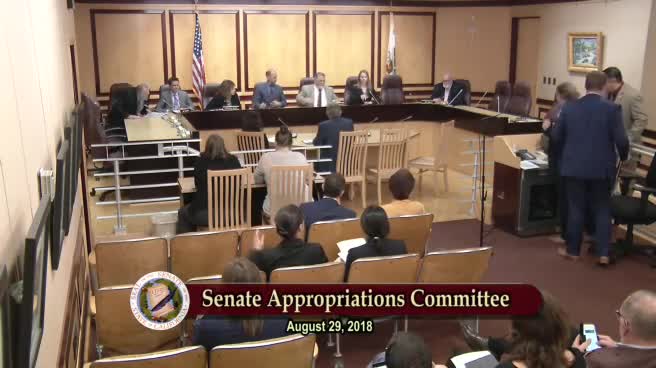 14MIN
Senate Standing Committee on Appropriations
 42MIN
Senate Standing Committee on Energy, Utilities and Communications
 1MIN
Assembly Floor
 11MIN
Assembly Standing Committee on Environmental Safety and Toxic Materials
Bill Author











