AB 2932: Corporation Tax Law: credit: employment.
- Session Year: 2017-2018
- House: Assembly
- Latest Version Date: 2018-05-14
The Corporation Tax Law allows various credits against the taxes imposed by that law. Existing law requires any bill authorizing a new tax credit to contain, among other things, specific goals, purposes, and objectives that the tax credit will achieve, detailed performance indicators, and data collection requirements.
This bill, upon appropriation of specified funds by the Legislature, for each taxable year beginning on and after January 1, 2019, and before January 1, 2026, 2024, unless the annual budget act lacks a specific appropriation of funds to reimburse the Franchise Tax Board for administrative costs, would allow a credit against the taxes imposed under that law to a qualified taxpayer, as defined to mean a taxpayer that increases its workforce by 20 annual full-time equivalent qualified employees, as compared to the taxpayers base year, in an amount equal to 17.5% of qualified wages paid or incurred during the taxable year to a qualified employee, not to exceed $5,000,000 per qualified taxpayer per taxable year. The bill would limit the credit to the first 5 consecutive, taxable years after a qualified taxpayer first qualifies to receive the credit, subject to specified requirements. The bill would limit the aggregate amount of credits to be allocated in each calendar year to up to $50,000,000 plus the unused allocation credit amount, if any, for the preceding calendar year. The bill would require the Franchise Tax Board to allocate and certify credits to taxpayers on a first-come-first-served basis. The bill also would include that additional information required for any bill authorizing a new income tax credit.
This bill would take effect immediately as a tax levy.
The Corporation Tax Law allows various credits against the taxes imposed by that law. Existing law requires any bill authorizing a new tax credit to contain, among other things, specific goals, purposes, and objectives that the tax credit will achieve, detailed performance indicators, and data collection requirements.
This bill, upon appropriation of specified funds by the Legislature, for each taxable year beginning on and after January 1, 2019, and before January 1, 2026, would allow a credit against the taxes imposed under that law to a qualified taxpayer, as defined to mean a taxpayer that increases its workforce by 20 annual full-time equivalent qualified employees, as compared to the taxpayers base year, in an amount equal to 17.5% of qualified wages paid or incurred during the taxable year to a qualified employee, not to exceed $5,000,000 per qualified taxpayer per taxable year. The bill would limit the credit to the first 5 consecutive, taxable years after a qualified taxpayer first qualifies to receive the credit, subject to specified requirements. The bill would limit the aggregate amount of credits to be allocated in each calendar year to up to $50,000,000 plus the unused allocation credit amount, if any, for the preceding calendar year. The bill would require the Franchise Tax Board to allocate and certify credits to taxpayers on a first-come-first-served basis. The bill also would include that additional information required for any bill authorizing a new income tax credit.
This bill would take effect immediately as a tax levy.
The Corporation Tax Law allows various credits against the taxes imposed by that law. This bill would state the intent of the Legislature to enact legislation that would allow a credit under the Corporation Tax Law to taxpayers that increase their workforce in an amount equal to a percentage of the wages paid or incurred by the taxpayers employees, subject to both credit amount per taxpayer limitations, aggregate credit amount per taxable year limitations, and a limitation on the number of taxable years for which the credit may be claimed by a taxpayer.The Corporation Tax Law allows various credits against the taxes imposed by that law.
This bill would state the intent of the Legislature to enact legislation that would allow a credit under the Corporation Tax Law to taxpayers that increase their workforce in an amount equal to a percentage of the wages paid or incurred by the taxpayers employees, subject to both credit amount per taxpayer limitations, aggregate credit amount per taxable year limitations, and a limitation on the number of taxable years for which the credit may be claimed by a taxpayer.
(a)For each taxable year beginning on or after January 1, 2019, and before January 1, 2026, 2024, there shall be allowed as a credit against the tax, as defined in Section 23036, to a qualified taxpayer, an amount equal to 17.5 percent of qualified wages paid or incurred during the taxable year to a qualified employee, not to exceed five million dollars ($5,000,000) per qualified taxpayer per taxable year.
(b)For purposes of this section:
(1)Annual full-time equivalent means either of the following:
(A)In the case of a qualified employee paid hourly qualified wages, annual full-time equivalent means the total number of hours worked for the qualified taxpayer by the qualified employee, not to exceed 2,000 hours per employee, divided by 2,000.
(B)In the case of a salaried qualified employee, annual full-time equivalent means the total number of weeks worked for the qualified taxpayer by the qualified employee divided by 52.
(2)Base year means the 2019 taxable year in the case of a qualified taxpayer engaged in business in this state before January 1, 2019, or, in the case of a qualified taxpayer that first engages in business in this state on or after January 1, 2019, the first taxable year in which they engage in business in this state.
(3)Qualified employee means an employee who was not previously employed by the qualified taxpayer.
(4)(A)Qualified taxpayer means a taxpayer that meets both of the following requirements:
(i)The taxpayer employs over 20 employees during the taxpayers base year.
(ii)The taxpayer increases the workforce of the trade or business engaged in by the taxpayer by 20 annual full-time equivalent qualified employees during the taxable year as compared to the number of employees employed by the taxpayer as of the last day of the taxpayers base year.
(B)A qualified taxpayer shall not include a sexually oriented business, as described in clause (v) of subparagraph (C) of paragraph (11) of subdivision (b) of Section 17053.73.
(5)Qualified wages means wages subject to withholding under Division 6 (commencing with Section 13000) of the Unemployment Insurance Code.
(c)(1)This credit shall only be allowed to a qualified taxpayer for five consecutive taxable years, beginning with the first taxable year that the qualified taxpayer increases the workforce of the trade or business engaged in by the qualified taxpayer by 20 annual full-time equivalent qualified employees as compared to the number of employees employed by the qualified taxpayer in the taxpayers base year, as tallied at the end tallied as of the last day of the taxpayers taxable year.
(2)The credit shall not be allowed in any taxable year occurring within the five consecutive taxable years in which the employee increase, as compared to the number of employees employed by the qualified taxpayer in the qualified taxpayers base year, is not maintained.
(d)(1) For purposes of this section:
(A)All employees of the trades or businesses that are treated as related under Section 267, 318, or 707 of the Internal Revenue Code shall be treated as employed by a single qualified taxpayer.
(B)All employees of all corporations that are members of the same controlled group of corporations shall be treated as employed by a single qualified taxpayer.
(C)The credit, if any, allowable by this section to each member shall be determined by reference to its proportionate share of the expense of the qualified wages giving rise to the credit, and shall be allocated in that manner.
(D)If a qualified taxpayer acquires the major portion of a trade or business of another taxpayer, hereinafter in this paragraph referred to as the predecessor, or the major portion of a separate unit of a trade or business of a predecessor, then, for purposes of applying this section for any taxable year ending after that acquisition, the employment relationship between an annual full-time equivalent qualified employee and a qualified taxpayer shall not be treated as terminated if the employee continues to be employed in that trade or business.
(2)For purposes of this subdivision, controlled group of corporations means a controlled group of corporations as defined in Section 1563(a) of the Internal Revenue Code, except that:
(A)More than 50 percent shall be substituted for at least 80 percent each place it appears in Section 1563(a)(1) of the Internal Revenue Code.
(B)The determination shall be made without regard to subsections (a)(4) and (e)(3)(C) of Section 1563 of the Internal Revenue Code.
(e)The aggregate amount of credits that may be allocated pursuant to this section shall be an amount equal to the sum of the following:
(1)Fifty million dollars ($50,000,000) in credits for each calendar year.
(2)The unused allocation credit amount, if any, for the preceding calendar year.
(f)For the purposes of this section, the Franchise Tax Board shall do both of the following:
(1)On or after January 1, 2019, and before January 1, 2026, 2024, allocate and certify tax credits to qualified taxpayers on a first-come-first-served basis by determining and designating applicants who meet the requirements of this section.
(2)Once the credits allocated exceed the limit established in subdivision (d), (e), the Franchise Tax Board shall cease to allocate and certify tax credits to qualified taxpayers.
(g)In the case where the credit allowed by this section exceeds the tax, the credit may be carried over to reduce the tax in the following taxable year, and the succeeding six years if necessary, until the credit is exhausted.
(h)A deduction or credit otherwise allowed under this part for any amount paid or incurred by the qualified taxpayer upon which the credit is based shall not be reduced by the amount of the credit allowed by this section.
(i)A credit allowed by this section shall be claimed on a timely filed original return.
(j)(1)The Franchise Tax Board may adopt regulations as necessary or appropriate to carry out the purposes of this section, including any regulations necessary to clarify whether a taxpayer meets the requirements for being properly treated as a qualified taxpayer under this section.
(2)Chapter 3.5 (commencing with Section 11340) of Part 1 of Division 3 of Title 2 of the Government Code does not apply to any standard, criterion, procedure, determination, rule, notice, or guideline established or issued by the Franchise Tax Board pursuant to this section.
(k)This section shall become operative on the effective date of any budget measure specifically appropriating funds to the Franchise Tax Board for its costs of administering this section.(k)Notwithstanding subdivision (a), this section shall not apply for taxable years where the annual budget act lacks a specific appropriation of funds to reimburse the Franchise Tax Board for its costs of administering this section with respect to that taxable year.
(l) This section shall remain in effect only until December 1, 2026, 2024, and as of that date is repealed.
SEC. 2.For the purposes of complying with Section 41 of the Revenue and Taxation Code, the Legislature finds and declares as follows:
(a)Specific goals, purposes, and objectives:
(1)Increase the number of businesses located in California.
(2)Increase state revenue.
(3)Increase the number of jobs available for Californians.
(4)Decrease statewide unemployment.
(b)Performance indicators:
(1)The number of businesses that locate to California and receive the credit.
(2)A decrease in the unemployment rate.
(3)The number of jobs created by businesses that receive the credit.
(c)Data collection requirements and baseline measurements:
(1)The baseline measures include:
(A)State level of unemployment at the time the credits become available.
(B)The average number of business that located to California in the five years prior to the credit being available.
(2)Data to collect includes:
(A)The number of businesses that qualify for the credit.
(B)How many jobs qualified taxpayers create.
(C)The total amount of salaries paid that qualify for the credit.
(D)How long a qualified taxpayer remains in California.
(E)The total amount of qualified wages paid and the income generated to the state from those wages.
SEC. 3.This act provides for a tax levy within the meaning of Article IV of the California Constitution and shall go into immediate effect.
(a)For each taxable year beginning on or after January 1, 2019, and before January 1, 2026, there shall be allowed as a credit against the tax, as defined in Section 23036, to a qualified taxpayer, an amount equal to 17.5 percent of qualified wages paid or incurred during the taxable year to a qualified employee, not to exceed five million dollars ($5,000,000) per qualified taxpayer per taxable year.
(b)For purposes of this section:
(1)Annual full-time equivalent means either of the following:
(A)In the case of a qualified employee paid hourly qualified wages, annual full-time equivalent means the total number of hours worked for the qualified taxpayer by the qualified employee, not to exceed 2,000 hours per employee, divided by 2,000.
(B)In the case of a salaried qualified employee, annual full-time equivalent means the total number of weeks worked for the qualified taxpayer by the qualified employee divided by 52.
(2)Base year means the 2019 taxable year in the case of a qualified taxpayer engaged in business in this state before January 1, 2019, or, in the case of a qualified taxpayer that first engages in business in this state on or after January 1, 2019, the first taxable year in which they engage in business in this state.
(3)Qualified employee means an employee who was not previously employed by the qualified taxpayer.
(4)(A)Qualified taxpayer means a taxpayer that meets both of the following requirements:
(i)The taxpayer employs over 20 employees during the taxpayers base year.
(ii)The taxpayer increases the workforce of the trade or business engaged in by the taxpayer by 20 annual full-time equivalent qualified employees during the taxable year as compared to the number of employees employed by the taxpayer as of the last day of the taxpayers base year.
(B)A qualified taxpayer shall not include a sexually oriented business, as described in clause (v) of subparagraph (C) of paragraph (11) of subdivision (b) of Section 17053.73.
(5)Qualified wages means wages subject to withholding under Division 6 (commencing with Section 13000) of the Unemployment Insurance Code.
(c)(1)This credit shall only be allowed to a qualified taxpayer for five consecutive taxable years, beginning with the first taxable year that the qualified taxpayer increases the workforce of the trade or business engaged in by the qualified taxpayer by 20 annual full-time equivalent qualified employees as compared to the number of employees employed by the qualified taxpayer in the taxpayers base year, as tallied at the end of the taxpayers taxable year.
(2)The credit shall not be allowed in any taxable year occurring within the five consecutive taxable years in which the employee increase, as compared to the number of employees employed by the qualified taxpayer in the qualified taxpayers base year, is not maintained.
(d)(1) For purposes of this section:
(A)All employees of the trades or businesses that are treated as related under Section 267, 318, or 707 of the Internal Revenue Code shall be treated as employed by a single qualified taxpayer.
(B)All employees of all corporations that are members of the same controlled group of corporations shall be treated as employed by a single qualified taxpayer.
(C)The credit, if any, allowable by this section to each member shall be determined by reference to its proportionate share of the expense of the qualified wages giving rise to the credit, and shall be allocated in that manner.
(D)If a qualified taxpayer acquires the major portion of a trade or business of another taxpayer, hereinafter in this paragraph referred to as the predecessor, or the major portion of a separate unit of a trade or business of a predecessor, then, for purposes of applying this section for any taxable year ending after that acquisition, the employment relationship between an annual full-time equivalent qualified employee and a qualified taxpayer shall not be treated as terminated if the employee continues to be employed in that trade or business.
(2)For purposes of this subdivision, controlled group of corporations means a controlled group of corporations as defined in Section 1563(a) of the Internal Revenue Code, except that:
(A)More than 50 percent shall be substituted for at least 80 percent each place it appears in Section 1563(a)(1) of the Internal Revenue Code.
(B)The determination shall be made without regard to subsections (a)(4) and (e)(3)(C) of Section 1563 of the Internal Revenue Code.
(e)The aggregate amount of credits that may be allocated pursuant to this section shall be an amount equal to the sum of the following:
(1)Fifty million dollars ($50,000,000) in credits for each calendar year.
(2)The unused allocation credit amount, if any, for the preceding calendar year.
(f)For the purposes of this section, the Franchise Tax Board shall do both of the following:
(1)On or after January 1, 2019, and before January 1, 2026, allocate and certify tax credits to qualified taxpayers on a first-come-first-served basis by determining and designating applicants who meet the requirements of this section.
(2)Once the credits allocated exceed the limit established in subdivision (d), the Franchise Tax Board shall cease to allocate and certify tax credits to qualified taxpayers.
(g)In the case where the credit allowed by this section exceeds the tax, the credit may be carried over to reduce the tax in the following taxable year, and the succeeding six years if necessary, until the credit is exhausted.
(h)A deduction or credit otherwise allowed under this part for any amount paid or incurred by the qualified taxpayer upon which the credit is based shall not be reduced by the amount of the credit allowed by this section.
(i)A credit allowed by this section shall be claimed on a timely filed original return.
(j)(1)The Franchise Tax Board may adopt regulations as necessary or appropriate to carry out the purposes of this section, including any regulations necessary to clarify whether a taxpayer meets the requirements for being properly treated as a qualified taxpayer under this section.
(2)Chapter 3.5 (commencing with Section 11340) of Part 1 of Division 3 of Title 2 of the Government Code does not apply to any standard, criterion, procedure, determination, rule, notice, or guideline established or issued by the Franchise Tax Board pursuant to this section.
(k)This section shall become operative on the effective date of any budget measure specifically appropriating funds to the Franchise Tax Board for its costs of administering this section.
(l) This section shall remain in effect only until December 1, 2026, and as of that date is repealed.
SEC. 2.For the purposes of complying with Section 41 of the Revenue and Taxation Code, the Legislature finds and declares as follows:
(a)Specific goals, purposes, and objectives:
(1)Increase the number of businesses located in California.
(2)Increase state revenue.
(3)Increase the number of jobs available for Californians.
(4)Decrease statewide unemployment.
(b)Performance indicators:
(1)The number of businesses that locate to California and receive the credit.
(2)A decrease in the unemployment rate.
(3)The number of jobs created by businesses that receive the credit.
(c)Data collection requirements and baseline measurements:
(1)The baseline measures include:
(A)State level of unemployment at the time the credits become available.
(B)The average number of business that located to California in the five years prior to the credit being available.
(2)Data to collect includes:
(A)The number of businesses that qualify for the credit.
(B)How many jobs qualified taxpayers create.
(C)The total amount of salaries paid that qualify for the credit.
(D)How long a qualified taxpayer remains in California.
(E)The total amount of qualified wages paid and the income generated to the state from those wages.
SEC. 3.This act provides for a tax levy within the meaning of Article IV of the California Constitution and shall go into immediate effect.
SECTION 1.It is the intent of the Legislature to enact legislation that would allow a credit under the Corporation Tax Law to taxpayers that increase their workforce in an amount equal to a percentage of the wages paid or incurred by the taxpayers employees, subject to both credit amount per taxpayer limitations, aggregate credit amount per taxable year limitations, and a limitation on the number of taxable years for which the credit may be claimed by a taxpayer.It is the intent of the Legislature to enact legislation that would allow a credit under the Corporation Tax Law to taxpayers that increase their workforce in an amount equal to a percentage of the wages paid or incurred by the taxpayers employees, subject to both credit amount per taxpayer limitations, aggregate credit amount per taxable year limitations, and a limitation on the number of taxable years for which the credit may be claimed by a taxpayer.
|
Date
|
Status
|
|---|---|
| May 25, 2018 | Joint Rule 62(a), file notice suspended. |
| May 23, 2018 | In committee: Set, first hearing. Referred to APPR. suspense file. |
| May 15, 2018 | Re-referred to Com. on APPR. |
| May 14, 2018 | Read second time and amended. |
| May 10, 2018 | From committee: Amend, and do pass as amended and re-refer to Com. on APPR. (Ayes 8. Noes 1.) (May 7). |
| Mar 21, 2018 | Re-referred to Com. on REV. & TAX. |
| Mar 20, 2018 | From committee chair, with author's amendments: Amend, and re-refer to Com. on REV. & TAX. Read second time and amended. |
| Mar 19, 2018 | Referred to Com. on REV. & TAX. |
| Feb 17, 2018 | From printer. May be heard in committee March 19. |
| Feb 16, 2018 | Read first time. To print. |
|
Date
|
Description
|
Location
|
Votes
|
|
|---|---|---|---|---|
| May 7, 2018 | Do pass as amended and be re-referred to the Committee on [Appropriations] | Assembly Standing Committee on Revenue and Taxation |
Passed |
This list shows positions taken on this bill by organizations on the date displayed, which is linked to the original source.
Positions by individuals are not included.
|
Organization
|
Position
|
Date
|
|---|---|---|
| California Grocers Association | ** Support | May 4, 2018 |
Date of Hearing: May 23, 2018
ASSEMBLY COMMITTEE ON APPROPRIATIONS
Lorena Gonzalez Fletcher, Chair
ABPCA Bill Id:AB 2932
Author:(Choi) – As Amended Ver:May 14, 2018
Policy Committee: | Revenue and Taxation | Vote: | 8 - 1 |
|
| ||
|
|
Urgency: No State Mandated Local Program: No Reimbursable: No
SUMMARY:
This bill allows, for taxable years 2019 through 2024, a Corporation Tax credit to a qualified employer that increases its workforce by 20 full-time employees during the taxable year compared to a base year, as defined. The credit is worth the lesser of 17.5% of the wages paid or $5,000, and no more than $50 million in credits may be allocated in any year. The credit is available only after the annual budget act appropriates funds to reimburse the Franchise Tax Board (FTB) for administrative costs.
FISCAL EFFECT:
Annual General Fund revenue loss of $15 million in 2018-19, $50 million in 2019-20, and $55 million in 2020-21. These estimates assume that the annual budget act appropriates money to reimburse FTB for administrative costs, as is required by this bill.
COMMENTS:
- The New Employment Credit (NEC). The NEC allows, from January 1, 2014, to January 1, 2021, a tax credit for the additional hiring of employees in defined geographic areas in California. The credit is generally available in geographic areas covered by the former Enterprise Zones and areas with high incidence of poverty and unemployment. To qualify for the credit, the taxpayer must increase total jobs throughout California from one year to the next, and the credit is only allowed for new jobs provided in California. The allowable credit percentage is 35% per year for five years, generally for wages between 150% and 350% of the minimum wage, multiplied by the ratio of the net increase in full-time employees to the number of qualified full-time employees.
- Purpose. According to the author, AB 2932 will incentivize businesses to grow in California. The author contends that despite being one of the largest economies in the world, businesses are leaving and unemployment is higher than the national average.
- Fiscal implications of tax expenditures. Existing law allows for various tax expenditures such as credits, deductions, exclusions, and exemptions for particular taxpayer groups. These features of the tax code can result in significant state costs through foregone tax revenue and, in many cases, policymakers have little control over the revenue loss that occurs in any given year. As a result, many tax expenditure bills now include provisions designed to give the Legislature more control over costs. Examples of such provisions include placing a sunset date or making a bill’s provisions contingent upon a separate budget appropriation. AB 2932 contains a sunset and a $50 million cap on the total amount of credits that may be allocated each year.
- Claiming the credit Because AB 2932 does not clarify how a taxpayer will reserve a credit, many more businesses will claim the credit than actually receive it. FTB estimates that roughly $340 million in credits will be claimed in tax year 2019 but only $50 million will be allocated. As a result, under current law many taxpayers will be subject to an underpayment penalty after assuming a credit that they did not receive, resulting in up to $19 million in collected penalty revenue each year. The fiscal estimates cited above do not take into account potential penalty revenue.
- Recent legislation. AB 1216 (Choi), of the 2017-18 Legislative Session, allows a credit in an amount equal to 17.5% of qualified wages similar to this bill. AB 1216 was held on this committee’s Suspense File.
Analysis Prepared by: Luke Reidenbach / APPR. / (916) 319-2081
Date of Hearing: May 7, 2018
ASSEMBLY COMMITTEE ON REVENUE AND TAXATION
Autumn R. Burke, Chairwoman
ABPCA Bill Id:AB 2932 (
Author:Choi) – As Amended Ver:March 20, 2018
Majority vote. Tax levy. Fiscal committee.
SUBJECT: Corporation Tax Law: credit: employment
SUMMARY: Allows a credit under the Corporation Tax (CT) Law to a qualified taxpayer in an amount equal to 17.5% of qualified wages paid or incurred during the taxable year to a qualified employee, not to exceed $5 million per qualified taxpayer per taxable year. Specifically, this bill:
- Allows, for each taxable year beginning on or after January 1, 2019, and before January 1, 2026, a credit under the CT Law to a qualified taxpayer in an amount equal to 17.5% of qualified wages paid or incurred during the taxable year to a qualified employee, not to exceed $5 million per qualified taxpayer per taxable year.
- Establishes an overall tax credit program of $50 million each calendar year allocated on a first-come-first-served basis.
- Defines a "qualified employee" as an employee who was not previously employed by the qualified taxpayer.
- Defines a "qualified taxpayer" as a taxpayer that both:
- Employs over 20 employees during the taxpayer's "base year"; and,
- Increases the workforce of the trade or business engaged in by the taxpayer by 20 "annual full-time equivalent" qualified employees during the taxable year as compared to the number of employees employed by the taxpayer in the taxpayer's base year, as of the last day of the taxpayer's base year.
- Provides that a "qualified taxpayer" does not include a sexually oriented business, as described in Revenue and Taxation Code (R&TC) Section 17053.73(b)(11)(C)(v).
- Defines an "annual full-time equivalent" as either of the following:
- In the case of a qualified employee paid hourly qualified wages, as the total number of hours worked for the qualified taxpayer by the qualified employee, not to exceed 2,000 hours per employee, divided by 2,000; or,
- In the case of a salaried qualified employee, as the total number of weeks worked for the qualified taxpayer by the qualified employee divided by 52.
- Defines a "base year" as either:
- The 2019 taxable year in the case of a qualified taxpayer engaged in business in this state before January 1, 2019; or,
- The first taxable year in the case of a qualified taxpayer that first engages in business in this state on or after January 1, 2019.
- Defines "qualified wages" as wages subject to withholding under Division 6 of the Unemployment Insurance Code.
- Allows the credit only to a qualified taxpayer for five consecutive taxable years, beginning with the first taxable year in which the credit may be claimed.
- Disallows the credit in any taxable year occurring within the five consecutive taxable years in which the employee increase, as compared to the number of employees employed by the taxpayer in the taxpayer's base year, is not maintained.
- Treats all employees of the trades or businesses that are treated as related under specified Internal Revenue Code (IRC) sections as employed by a single qualified taxpayer.
- Treats all employees of all corporations that are members of the same "controlled group of corporations" as employed by a single qualified taxpayer.
- Disallows certain employees, as specified, from being treated as terminated after acquisitions, as specified.
- Defines "controlled group of corporations" as a controlled group of corporations as defined in IRC Section 1563(a), except that:
- "More than 50 percent" is substituted for "at least 80 percent" throughout; and,
- IRC Section 156 subsections (a) (4) and (e)(3)(C) are disregarded.
- Allows the credit to be carried forward for seven years.
- Specifies that any other deduction or credit allowed under the CT Law, for any amount paid or incurred by the qualified taxpayer upon which the credit is based, is not to be reduced by the amount of the credit.
- Allows the credit to only be claimed on a timely filed original return.
- Authorizes the Franchise Tax Board (FTB) to issue regulations to implement the credit, as specified.
- Makes the credit operative only if a budget measure specifically appropriates funds to FTB for the credit's administration costs.
- Finds and declares the specific goals, purposes, and objectives; performance indicators; and data collection requirements and baseline measurements of the credit, required by R&TC Section 41, as follows:
- Specific goals, purposes, and objectives are to increase the number of businesses located in California, increase state revenue, increase the number of jobs available for Californians, and decrease statewide unemployment;
- Performance indicators include the number of businesses that locate to California and receive the credit, a decrease in the unemployment rate, and the number of jobs created by businesses that receive the credit; and,
- Baseline measures include the state level of unemployment at the time the credits become available and the average number of businesses that located to California in the five years prior to the credit being available; and data to collect includes the number of businesses that qualify for the credit, how many jobs qualified taxpayers create, the total amount of salaries paid that qualify for the credit, how long a qualified taxpayer remains in California, and the total amount of qualified wages paid and the income generated to the state from those wages.
- Sunsets on December 1, 2026.
- Takes immediate effect as a tax levy.
EXISTING LAW:
- Allows taxpayers engaged in a trade or business to deduct all expenses that are considered ordinary and necessary in conducting that trade or business.
- Allows various tax credits under the PIT Law and the CT Law generally designed to encourage socially beneficial behavior or to provide relief to taxpayers who incur specified expenses.
- Allows, for taxable years beginning on or after January 1, 2014, and before January 1, 2021, a New Employment Credit (NEC) under the PIT Law and the CT Law available to a qualified taxpayer that hires a qualified full-time employee, has an overall net increase in employment, and pays or incurs qualified wages attributable to work performed by a qualified full-time employee in a designated census tract or economic development area. The qualified taxpayer must receive a tentative credit reservation from the FTB, calculated as 35% of qualified wages, for the qualified full-time employee, who must meet at least one of the following conditions upon commencement of employment:
- Unemployed for six months immediately preceding employment;
- Veteran separated from the Armed Forces in the preceding 12 months;
- Recipient of the federal Earned Income Tax Credit in the previous taxable year;
- Ex-offender convicted of a felony; or,
- Current recipient of CalWORKS or general assistance.
- Allows, for taxable years beginning on or after January 1, 2016, and before January 1, 2031, a credit under the CT Law equal to 17.5% of qualified wages paid to qualified full-time employees by a prime contractor awarded a prime contract, or a major first-tier subcontractor awarded a subcontract, to manufacture property for ultimate use in, or as a component of, a new advanced strategic aircraft for the United States Air Force.
- Applies performance measurement standards to any new tax credit under either the PIT Law or the CT Law if enacted by a bill introduced on or after January 1, 2015. Specifically, existing law requires all of the following:
- Specific goals, purposes, and objectives that the tax credit will achieve;
- Detailed performance indicators for the Legislature to use when measuring whether the tax credit meets the goals, purposes, and objectives stated in the bill; and,
- Data collection requirements to enable the Legislature to determine whether the tax credit is meeting, failing to meet, or exceeding those specific goals, purposes, and objectives, including a requirement to specify both of the following:
- The baseline data, to be collected and remitted in each year the credit is effective, for the Legislature to measure the change in performance indicators; and,
- The taxpayers, state agencies, or other entities required to collect and remit data.
FISCAL EFFECT: The FTB estimates General Fund revenue losses of $9.1 million in Fiscal Year (FY) 2018-19, $31 million in FY 2019-20, and $37 million in FY 2020-21.
COMMENTS:
- The author has provided the following statement in support of this bill:
Despite being the 6th largest economy in the world, businesses are leaving and as a result we have an unemployment rate higher than the national average and the highest poverty rate in the nation. We not only need to incentivize business to come here but we need to incentivize them to grow here as well. Offering new businesses the same 17.5% tax credit of full time salaries that was given to the aerospace industry is a necessary and reasonable step in the right direction.
- The FTB notes the following policy, implementation, and technical considerations:
- "This bill would specifically allow taxpayers to claim multiple tax benefits for the same item of expense."
- "This bill would provide a tax benefit for those taxpayers subject to the CTL that would not be provided to taxpayers subject to the PITL. Thus, this bill would provide differing treatment based solely on entity classification."
- "Because a qualified taxpayer that is operating in the state would have taxable year 2019 as the base year, and taxable year 2019 is the first year the credit would be available, the credit would be unavailable until taxable year 2020. If this is contrary to the author's intent, the author may wish to amend this bill to specify taxable year 2018 as the base year for businesses operating within the state prior to January 1, 2019. For a corporation just beginning business in this state, the base year is defined as the first taxable year. As a result, the credit would be unavailable to corporations just starting business in this state in the first taxable year. If this is contrary to the author's intent, the bill should be amended."
- "Because the bill lacks an allocation process and instead ends the credit when the cap is met, taxpayers would lack certainty of the credit's availability until after their return was filed and the credit was allocated by the FTB. Additionally, because the demand for the credit could exceed the cap amount, taxpayers that claim the credit and are subsequently denied the credit by the FTB because the cap has been reached could be subject to penalties and interest. If this is contrary to the author's intent, the bill should be amended."
- "The bill lacks administrative details necessary for the FTB to administer a cap on the credit. For example,
- "How would the department allocate and certify credits among returns filed on the same day when the total amount of credit claimed would exceed the remaining amount available for allocation? Allow 100 percent of the credits on those returns? Prorate the remaining credit among those returns?"
- "The bill uses the phrase, 'employed by the qualified taxpayer in the taxpayer's base year, as tallied at the end of the taxpayer's taxable year' (page 3, line 26, 27) which is unclear. It is suggested that this phrase be replaced with 'employed by the qualified taxpayer in the taxpayer's base year, tallied as of the last day of the taxpayer's taxable year' to provide more clarity."
- "The bill's specified operative date language is silent as to the taxable years the bill would affect. For clarity and ease of administration, subdivision (k) should be amended to read, 'Notwithstanding subdivision (a), this section shall not apply for taxable years where the annual budget act lacks a specific appropriation of funds to reimburse the FTB for its costs of administering this section with respect to that taxable year.' "
- Committee Staff Comments:
- California's existing hiring tax credit programs: In 2013, Governor Brown signed legislation that reformed California's economic development policies. [AB 93 (Committee on Budget), Chapter 69, Statutes of 2013.] The new law eliminated enterprise zones (EZs) and other geographically targeted economic development areas and, instead, created three new economic development tax incentives: (i) the NEC; (ii) a sales and use tax (SUT) exemption on purchases of manufacturing equipment made by qualified taxpayers, capped at $200 million annually per taxpayer; and, (iii) the California Competes Tax Credit (CCTC) program under which incentives are negotiated and administered by the Governor's Office of Business and Economic Development. The total annual amount of these three tax incentives – the NEC, SUT exemption, and CCTC – was limited to $750 million.
- The NEC program: The NEC allows, from January 1, 2014 to January 1, 2021, a tax credit under the PIT Law and the CT Law for the additional hiring of employees in defined geographic areas (DGAs) in California. The credit is generally available in geographic areas covered by the former EZs and the top 25% of census tracts in California with the highest civilian unemployment rates and poverty rates. To qualify for the credit, the taxpayer must increase total jobs throughout California from one year to the next, and the credit is only allowed for new jobs provided in California. Except for small businesses, certain employers that otherwise qualify for the NEC are prohibited from receiving the credit. For example, excluded businesses include retail trades services, food services, drinking places (alcoholic beverages), theater companies and dinner theaters, casinos and casino hotels, and sexually oriented businesses.
The NEC is available for wages paid by taxpayers to full-time employees who perform at least 50% of their activities in the DGAs. The allowable credit percentage is 35% per year for five years, generally for wages between 150% and 350% of the minimum wage, multiplied by the ratio of the net increase in full-time employees to the number of qualified full-time employees. Qualified full-time employees must meet at least one of the following conditions upon commencement of employment: (i) unemployed for six months immediately preceding employment; (ii) veteran separated from the Armed Forces in the preceding 12 months; (iii) recipient of the federal Earned Income Tax Credit in the previous taxable year; (iv) ex-offender convicted of a felony; or, (v) current recipient of CalWORKS or general assistance. According to the Legislative Analyst's Office, few taxpayers have claimed the NEC because most businesses do not qualify, the credit amount is small for lower-wage employees, and claiming the credit is complex. In 2014 and 2015 combined, only 310 taxpayers claimed about $1 million in credits.[1]
- The Governor's proposal for a new hiring credit: The 2018-19 proposed budget includes a new tax credit—the California Hiring Credit—for 2019 through 2024 that would be similar to the existing NEC but with several changes to make it more attractive to employers. In particular, the Governor's proposed credit would be available to most California businesses and the amount of the credit would be larger for lower-wage employees.
- What does this bill do? This bill creates a new hiring tax credit for a qualified taxpayer in an amount equal to 17.5% of the qualified wages paid or incurred during the taxable year to a qualified employee. In order to claim the credit, a qualified taxpayer must increase its workforce by 20 annual, full-time equivalent new employees during the taxable year when compared to its base year, which is the first year in which the taxpayer engages in business in California after enactment of the credit. The credit may only be claimed by the taxpayer for five consecutive years, and is disallowed for any taxable year in which the increase in employees that qualifies the taxpayer for the credit is not maintained. The credit is limited to $5 million per qualified taxpayer per taxable year. Additionally, there is an overall tax credit program cap of $50 million each calendar year allocated on a first-come-first-served basis.
The credit proposed by this bill is much broader than the existing NEC, as it can be claimed by any type of business that is not a sexually oriented business. Additionally, the only criterion for a qualified employee is that the employee must not have been previously employed by the taxpayer claiming the credit. While the taxpayer would need to make 20 annual, full-time equivalent qualified employee hires, the way in which this criterion is calculated would allow an employer that hires enough minimum wage part-time employees to qualify for the credit. Although a similar calculation is provided for under the NEC, qualified wages under the NEC must generally be higher than minimum wage and the credit cannot be claimed by businesses in industries where part-time work is most common. Lastly, hiring of the 20 annual, full-time equivalent qualified employees must occur over the course of the same taxable year in order for the taxpayer to become eligible for the credit. While the taxpayer would have to maintain the same level of full-time equivalent qualified employee hires for the next four consecutive years to maintain the credit, the taxpayer would not be required to add any additional hires above that level on a year-to-year basis.
- Do hiring tax credits work? Research shows that hiring tax credits have some impact but appear to be a very blunt tool for stimulating job growth.[2] Additionally, it is unclear if the hiring tax credit provides an incentive or a reward. California's unemployment rate has been steadily declining over the last few years to a record-tying low rate of 4.3%, as of March 2018.[3] An improved economy is more likely to lead to additional hiring of all individuals in all industries, irrespective of state incentives such as a hiring tax credit. As a result, a hiring tax credit could potentially provide an employer with a windfall for actions that would have already taken place because of improvements in the market.
Additionally, research shows that California is likely to face a shortage of workers with the education and training needed to meet the demands of California's evolving economy, with the share of the workforce projected to have some college education by 2025 estimated at 29%, and the share of jobs that will require workers with those skills estimated at 36%.[4] In light of this trend, the Committee may wish to consider whether the hiring tax credit proposed by this bill would spur job growth, especially where it is needed most; or alternatively, whether resources may be better allocated improving access to education and job training that would empower skilled workers to meet the needs of California's emerging industries.
- R&TC Section 41: SB 1335 (Leno), Chapter 845, Statutes of 2014, added R&TC Section 41, which recognized that the Legislature should apply the same level of review used for government spending programs to tax preference programs, including tax credits. Thus, Section 41 requires any bill that is introduced on or after January 1, 2015 and allows a new PIT or CT credit to contain specific goals, purposes, and objectives that the tax credit will achieve. In addition, Section 41 requires detailed performance indicators for the Legislature to use when measuring whether the tax credit meets the goals, purposes, and objectives so-identified.
This bill provides a number of thoughtful performance measures with which to evaluate the effectiveness of the proposed tax credit, such as the number of businesses and jobs that grow in California upon receipt of the credit. The author may also wish to consider additional measures such as whether business and job growth occurs amongst taxpayers that do not receive the credit and the specific industries and employee classifications in which growth occurs with or without the credit. Such provisions may help gauge whether the credit, if enacted, incentivizes new hiring activity in key California industries paying living wages or primarily benefits taxpayers that would have otherwise hired new employees even without the credit.
- What is a "tax expenditure"? Existing law provides various credits, deductions, exclusions, and exemptions for particular taxpayer groups. In the late 1960s, United States Treasury officials began arguing that these features of the tax law should be referred to as "expenditures" since they are generally enacted to accomplish some governmental purpose and there is a determinable cost associated with each of them (in the form of forgone revenues). This bill would enact a new tax expenditure program in the form of a tax credit for employers that hire at least 20 annual, full-time equivalent new employees.
- Tax expenditure vs. direct expenditure: As the Department of Finance notes in its annual Tax Expenditure Report, there are several key differences between tax expenditures and direct expenditures. First, tax expenditures are reviewed less frequently than direct expenditures once they are put in place. This can offer taxpayers greater certainty, but it can also result in tax expenditures remaining part of the tax code without demonstrating any public benefit. Second, there is generally no control over the amount of revenue losses associated with any given tax expenditure. Finally, it should also be noted that, once enacted, it takes a two-thirds vote to rescind an existing tax expenditure absent a sunset date. This bill includes a seven year sunset date, longer than the five year sunset date generally recommended by this Committee. The Committee may wish to consider shortening the sunset date to 5 years consistent with other income tax related credits.
- Related legislation:
- AB 1216 (Choi) allows a credit in an amount equal to 17.5% of qualified wages similar to this bill. AB 1216 was held on the Assembly Appropriations Committee's Suspense File.
- AB 1071 (Brough) allows a credit in an amount equal to 17.5% of qualified wages paid or incurred by an aerospace entity. AB 1071 was not heard by this Committee and returned to the Chief Clerk.
- SB 661 (Fuller) extends the sunset date of the NEC and broadly expands eligibility for the credit. SB 661 was not heard by the Senate Committee on Governance and Finance and returned to the Secretary of the Senate.
- SB 507 (Hueso) expands the NEC by including convicted felons between ages 18 to 25 and ex-foster youths who have completed work readiness programs as qualified full-time employees. SB 507 was amended to delete these provisions and was not heard by the Senate Committee on Governance and Finance.
REGISTERED SUPPORT / OPPOSITION:
Support
California Grocers Association
Opposition
None on file
Analysis Prepared by: Rose Marie Kinnee / REV. & TAX. / (916) 319-2098
LAO, The 2018-19 Budget: California Hiring Tax Credits, (March 2018). ↑
A study by Daniel Wilson, Assistant Director of the Center for the Study of Innovation and Productivity at the Federal Reserve Bank of San Francisco, and Robert Chirinko, Professor of Finance at the University of Illinois at Chicago, found that between January 1990 and August 2009, states in which employers could qualify for credits immediately after enactment of the tax credit experienced a slight employment increase of 0.12%. ↑
Employment Development Department, April 20, 2018 News Release18-66. ↑
Sarah Bohn, "California's Need for Skilled Workers," Public Policy Institute of California, September 2014. ↑
Discussed in Hearing
 3MIN
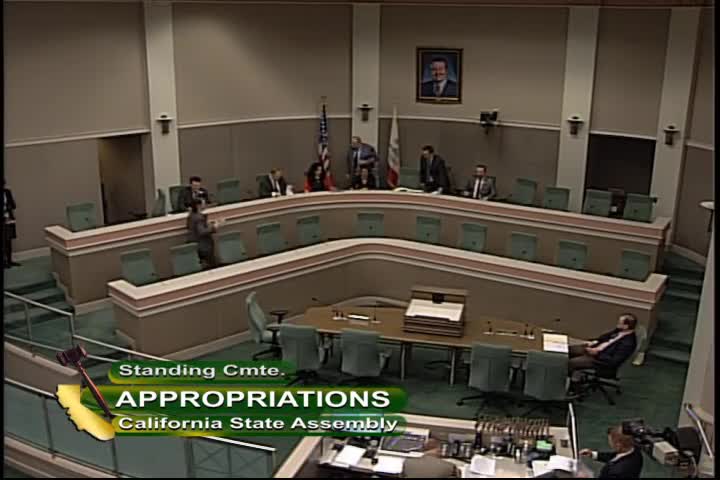
Assembly Standing Committee on Appropriations
 6MIN
Assembly Standing Committee on Revenue and Taxation
Bill Author

Bill Co-Author(s):