AB 2945: Income and corporation taxes: credit: wages.
- Session Year: 2017-2018
- House: Assembly
- Latest Version Date: 2018-05-14
The Personal Income Tax Law and the Corporation Tax Law allow various credits against the taxes imposed by those laws.
This bill, for each taxable year beginning on or after January 1, 2019, and before January 1, 2029, 2024, would allow a credit against the taxes imposed under both laws to a qualified employer in an amount equal to 35% of the qualified wages paid or incurred during the taxable year to a qualified employee, defined to mean an employee who has no functional hearing and has completed completed, or is completing completing, specified rehabilitative services. The bill would prohibit the credit from exceeding $2,100 per employee.
This bill would take effect immediately as a tax levy.
The Personal Income Tax Law and the Corporation Tax Law allow various credits against the taxes imposed by those laws.
This bill, for each taxable year beginning on or after January 1, 2020, 2019, and before January 1, 2029, would allow a credit against the taxes imposed under both laws to taxpayer who is an a qualified employer in an amount equal to 35% of the qualified wages paid or incurred during the taxable year to a qualified employee, defined to mean an employee who has little to no functional hearing, not to exceed 35% of the first $6,000 of qualified wages. hearing and has completed or is completing specified rehabilitative services. The bill would prohibit the credit from exceeding $2,100 per employee.
This bill would take effect immediately as a tax levy.
The Personal Income Tax Law and the Corporation Tax Law allow various credits against the taxes imposed by those laws.
This bill, for each taxable year beginning on or after January 1, 2020, would allow a credit against the taxes imposed under both laws to taxpayer who is an employer in an amount equal to the qualified wages paid or incurred during the taxable year to a qualified employee, defined to mean an employee who has little to no functional hearing, not to exceed 35% of the first $6,000 of qualified wages.
This bill would take effect immediately as a tax levy.
(a)For each taxable year beginning on or after January 1, 2019, and before January 1, 2029, 2024, there shall be allowed to a qualified employer as a credit against the net tax, as defined in Section 17039, an amount equal to 35 percent of the qualified wages paid or incurred by a qualified employer to a qualified employee during the taxable year, not to exceed two thousand one hundred dollars ($2,100) per qualified employee.
(b)For purposes of this section:
(1)Qualified employee means an employee who has no functional hearing and who has completed, or is completing, rehabilitative services provided by the Department of Rehabilitation, the Department of Veterans Affairs, or an employment network under the Ticket to Work Program.
(2)(A)Qualified employer means a taxpayer that is an employer that qualifies for a federal Work Opportunity Tax Credit, pursuant to Section 51 of the Internal Revenue Code, relating to amount of credit, as certified by the Employment Development Department.
(B)Qualified employer shall not include a sexually oriented business, as described in sub-subclause (ia) of subclause (II) of clause (v) of subparagraph (C) of paragraph (11) of subdivision (b) of Section 17053.73.
(3)Qualified wages means wages subject to withholding under Division 6 (commencing with Section 13000) of the Unemployment Insurance Code.
(c)In the case where the credit allowed by this section exceeds the net tax, the excess may be carried over to reduce the net tax in the following taxable year, and succeeding seven years if necessary, until the credit is exhausted.
(d)A deduction otherwise allowed under this part for any amount paid or incurred by the qualified employer upon which the credit is based shall be reduced by the amount of the credit allowed by this section.
(e)If the qualified employer is allowed a credit pursuant to this section for qualified wages paid or incurred, no other credit shall be allowed to the qualified employer under this part with respect to any wage consisting in whole or in part of those qualified wages.
(f)Section 41 does not apply to the credit allowed by this section.
(g)The Employment Development Department shall annually provide to the Franchise Tax Board a list of qualified employers and qualified employees in the form and manner that is agreed upon by the Employment Development Department and the Franchise Tax Board.
SEC. 2.Section 23650 is added to the Revenue and Taxation Code, to read:23650.(a)For each taxable year beginning on or after January 1, 2019, and before January 1, 2029, 2024, there shall be allowed to a qualified employer as a credit against the tax, as defined in Section 23036, an amount equal to 35 percent of the qualified wages paid or incurred by a qualified employer to a qualified employee during the taxable year, not to exceed two thousand one hundred dollars ($2,100) per qualified employee.
(b)For purposes of this section:
(1)Qualified employee means an employee who has no functional hearing and who has completed, or is completing, rehabilitative services provided by the Department of Rehabilitation, the Department of Veterans Affairs, or an employment network under the Ticket to Work Program.
(2)(A)Qualified employer means a taxpayer that is an employer that qualifies for a federal Work Opportunity Tax Credit, pursuant to Section 51 of the Internal Revenue Code, relating to amount of credit, as certified by the Employment Development Department.
(B)Qualified employer shall not include a sexually oriented business, as described in sub-subclause (ia) of subclause (II) of clause (v) of subparagraph (C) of paragraph (11) of subdivision (b) of Section 17053.73.
(3)Qualified wages means wages subject to withholding under Division 6 (commencing with Section 13000) of the Unemployment Insurance Code.
(c)In the case where the credit allowed by this section exceeds the tax, the excess may be carried over to reduce the tax in the following taxable year, and succeeding seven years if necessary, until the credit is exhausted.
(d)A deduction otherwise allowed under this part for any amount paid or incurred by the qualified employer upon which the credit is based shall be reduced by the amount of the credit allowed by this section.
(e)If the qualified employer is allowed a credit pursuant to this section for qualified wages paid or incurred, no other credit shall be allowed to the qualified employer under this part with respect to any wage consisting in whole or in part of those qualified wages.
(f)Section 41 does not apply to the credit allowed by this section.
(g)The Employment Development Department shall annually provide to the Franchise Tax Board a list of qualified employers and qualified employees in the form and manner that is agreed upon by the Employment Development Department and the Franchise Tax Board.
SEC. 3.This act provides for a tax levy within the meaning of Article IV of the California Constitution and shall go into immediate effect.
(a)For each taxable year beginning on or after January 1, 2020, 2019, and before January 1, 2029, there shall be allowed to a taxpayer who is an qualified employer as a credit against the net tax, as defined in Section 17039, an amount equal to 35 percent of the qualified wages paid or incurred by a qualified employer to a qualified employee by an employer during the taxable year, not to exceed 35 percent of the first six thousand dollars ($6,000) of qualified wages. two thousand one hundred dollars ($2,100) per qualified employee.
(b)For purposes of this section:
(1)Qualified employee means an employee who has little to no functional hearing. hearing and who has completed, or is completing, rehabilitative services provided by the Department of Rehabilitation, the Department of Veterans Affairs, or an employment network under the Ticket to Work Program.
(2)(A)Qualified employer means a taxpayer that is an employer that qualifies for a federal Work Opportunity Tax Credit, pursuant to Section 51 of the Internal Revenue Code, relating to amount of credit, as certified by the Employment Development Department.
(B)Qualified employer shall not include a sexually oriented business, as described in sub-subclause (ia) of subclause (II) of clause (v) of subparagraph (C) of paragraph (11) of subdivision (b) of Section 17053.73.
(2)(3)Qualified wages means wages subject to withholding under Division 6 (commencing with Section 13000) of the Unemployment Insurance Code.
(3)A taxpayer shall not include a sexually oriented business, as described in clause (v) of subparagraph (C) of paragraph (11) of subdivision (b) of Section 17053.73.(c)In the case where the credit allowed by this section exceeds the net tax, the excess may be carried over to reduce the net tax in the following taxable year, and succeeding seven years if necessary, until the credit is exhausted.
(d)A deduction otherwise allowed under this part for any amount paid or incurred by the taxpayer qualified employer upon which the credit is based shall be reduced by the amount of the credit allowed by this section.
(e)If the qualified employer is allowed a credit pursuant to this section for qualified wages paid or incurred, no other credit shall be allowed to the qualified employer under this part with respect to any wage consisting in whole or in part of those qualified wages.
(e)(f)Section 41 does not apply to the credit allowed by this section.
(g)The Employment Development Department shall annually provide to the Franchise Tax Board a list of qualified employers and qualified employees in the form and manner that is agreed upon by the Employment Development Department and the Franchise Tax Board.
SEC. 2.Section 23650 is added to the Revenue and Taxation Code, to read:23650.(a)For each taxable year beginning on or after January 1, 2020, 2019, and before January 1, 2029, there shall be allowed to a taxpayer who is an qualified employer as a credit against the tax, as defined in Section 23036, an amount equal to 35 percent of the qualified wages paid or incurred by a qualified employer to a qualified employee by an employer during the taxable year, not to exceed 35 percent of the first six thousand dollars ($6,000) of qualified wages. two thousand one hundred dollars ($2,100) per qualified employee.
(b)For purposes of this section:
(1)Qualified employee means an employee who has little to no functional hearing. hearing and who has completed, or is completing, rehabilitative services provided by the Department of Rehabilitation, the Department of Veterans Affairs, or an employment network under the Ticket to Work Program.
(2)(A)Qualified employer means a taxpayer that is an employer that qualifies for a federal Work Opportunity Tax Credit, pursuant to Section 51 of the Internal Revenue Code, relating to amount of credit, as certified by the Employment Development Department.
(B)Qualified employer shall not include a sexually oriented business, as described in sub-subclause (ia) of subclause (II) of clause (v) of subparagraph (C) of paragraph (11) of subdivision (b) of Section 17053.73.
(2)(3)Qualified wages means wages subject to withholding under Division 6 (commencing with Section 13000) of the Unemployment Insurance Code.
(3)A taxpayer shall not include a sexually oriented business, as described in clause (v) of subparagraph (C) of paragraph (11) of subdivision (b) of Section 17053.73.(c)In the case where the credit allowed by this section exceeds the tax, the excess may be carried over to reduce the tax in the following taxable year, and succeeding seven years if necessary, until the credit is exhausted.
(d)A deduction otherwise allowed under this part for any amount paid or incurred by the taxpayer qualified employer upon which the credit is based shall be reduced by the amount of the credit allowed by this section.
(e)If the qualified employer is allowed a credit pursuant to this section for qualified wages paid or incurred, no other credit shall be allowed to the qualified employer under this part with respect to any wage consisting in whole or in part of those qualified wages.
(e)(f)Section 41 does not apply to the credit allowed by this section.
(g)The Employment Development Department shall annually provide to the Franchise Tax Board a list of qualified employers and qualified employees in the form and manner that is agreed upon by the Employment Development Department and the Franchise Tax Board.
SEC. 3.This act provides for a tax levy within the meaning of Article IV of the California Constitution and shall go into immediate effect.
(a)For each taxable year beginning on or after January 1, 2020, there shall be allowed to a taxpayer who is an employer as a credit against the net tax, as defined in Section 17039, an amount equal to the qualified wages paid or incurred to a qualified employee by an employer during the taxable year, not to exceed 35 percent of the first six thousand dollars ($6,000) of qualified wages.
(b)For purposes of this section:
(1)Qualified employee means an employee who has little to no functional hearing.
(2)Qualified wages means wages subject to withholding under Division 6 (commencing with Section 13000) of the Unemployment Insurance Code.
(3)A taxpayer shall not include a sexually oriented business, as described in clause (v) of subparagraph (C) of paragraph (11) of subdivision (b) of Section 17053.73.
(c)In the case where the credit allowed by this section exceeds the net tax, the excess may be carried over to reduce the net tax in the following taxable year, and succeeding years if necessary, until the credit is exhausted.
(d)A deduction otherwise allowed under this part for any amount paid or incurred by the taxpayer upon which the credit is based shall be reduced by the amount of the credit allowed by this section.
(e)Section 41 does not apply to the credit allowed by this section.
SEC. 2.Section 23650 is added to the Revenue and Taxation Code, to read:23650.(a)For each taxable year beginning on or after January 1, 2020, there shall be allowed to a taxpayer who is an employer as a credit against the tax, as defined in Section 23036, an amount equal to the qualified wages paid or incurred to a qualified employee by an employer during the taxable year, not to exceed 35 percent of the first six thousand dollars ($6,000) of qualified wages.
(b)For purposes of this section:
(1)Qualified employee means an employee who has little to no functional hearing.
(2)Qualified wages means wages subject to withholding under Division 6 (commencing with Section 13000) of the Unemployment Insurance Code.
(3)A taxpayer shall not include a sexually oriented business, as described in clause (v) of subparagraph (C) of paragraph (11) of subdivision (b) of Section 17053.73.
(c)In the case where the credit allowed by this section exceeds the tax, the excess may be carried over to reduce the tax in the following taxable year, and succeeding years if necessary, until the credit is exhausted.
(d)A deduction otherwise allowed under this part for any amount paid or incurred by the taxpayer upon which the credit is based shall be reduced by the amount of the credit allowed by this section.
(e)Section 41 does not apply to the credit allowed by this section.
SEC. 3.This act provides for a tax levy within the meaning of Article IV of the California Constitution and shall go into immediate effect.
|
Date
|
Status
|
|---|---|
| May 25, 2018 | Joint Rule 62(a), file notice suspended. |
| May 23, 2018 | In committee: Set, first hearing. Referred to APPR. suspense file. |
| May 15, 2018 | Re-referred to Com. on APPR. |
| May 14, 2018 | Read second time and amended. |
| May 10, 2018 | From committee: Amend, and do pass as amended and re-refer to Com. on APPR. (Ayes 8. Noes 0.) (May 7). |
| May 1, 2018 | Re-referred to Com. on REV. & TAX. |
| Apr 30, 2018 | From committee chair, with author's amendments: Amend, and re-refer to Com. on REV. & TAX. Read second time and amended. |
| Mar 8, 2018 | Referred to Com. on REV. & TAX. |
| Feb 17, 2018 | From printer. May be heard in committee March 19. |
| Feb 16, 2018 | Read first time. To print. |
|
Date
|
Description
|
Location
|
Votes
|
|
|---|---|---|---|---|
| May 7, 2018 | Do pass as amended and be re-referred to the Committee on [Appropriations] | Assembly Standing Committee on Revenue and Taxation |
Passed |
This list shows positions taken on this bill by organizations on the date displayed, which is linked to the original source.
Positions by individuals are not included.
|
Organization
|
Position
|
Date
|
|---|---|---|
| Hearing Healthcare Providers of California | ** Support | May 4, 2018 |
| Hearing Healthcare Providers of California | * Support | May 7, 2018 |
| Norcal Services for the Deaf and Hard of Hearing | * Support | May 7, 2018 |
| Park Place Hearing Center | * Support | May 7, 2018 |
Date of Hearing: May 23, 2018
ASSEMBLY COMMITTEE ON APPROPRIATIONS
Lorena Gonzalez Fletcher, Chair
ABPCA Bill Id:AB 2945
Author:(Gallagher) – As Amended Ver:May 14, 2018
Policy Committee: | Revenue and Taxation | Vote: | 8 - 0 |
|
| ||
|
|
Urgency: No State Mandated Local Program: No Reimbursable: No
SUMMARY:
This bill allows for a tax credit under Personal Income Tax (PIT) Law and Corporation Tax (CT) Law for the hiring of deaf or hard of hearing employees, as defined. Specifically, this bill:
- Allows, for tax years 2019 through 2023, a tax credit to a qualified employer equal to the lesser of 35% of the wages paid to a qualified employee, or $2,100. A “qualified employer” is an employer that also qualifies for a federal Work Opportunity Tax Credit (WOTC).
- Defines “qualified employee” to be someone who has no functional hearing and has completed, or is completing, rehabilitative services provided by the Department of Rehabilitation, the Department of Veterans Affairs, or an employment network under the Ticket to Work Program.
FISCAL EFFECT:
Annual General Fund revenue loss of approximately $1.6 million.
COMMENTS:
- Purpose. According to the author, AB 2945 will help ensure equal access to employment for those who are deaf or hard of hearing. Supporters of the bill note that half of these individuals are not in the workforce and they face significant barriers to stable employment.
- The federal WOTC program. AB 2945 restricts eligibly for a credit to employers who qualify for the federal WOTC. This credit is available for wages paid by employers that hire individuals from certain targeted groups of hard-to-employ individuals. The credit is generally 40% of the first $6,000 of qualified wages paid to each member of a targeted group during the first year of employment and 25% in the case of wages attributable to individuals meeting only minimum employment levels. There are a range of other requirements to qualify, including that the employee must complete a minimum of 120 hours of service. In 2017, there were approximately 165,000 WOTC certifications in California.
- Fiscal implications of tax expenditures. Existing law allows for various tax expenditures such as credits, deductions, exclusions, and exemptions for particular taxpayer groups. These features of the tax code can result in significant state costs through foregone tax revenue and, in many cases, policymakers have little control over the revenue loss that occurs in any given year. As a result, many tax expenditure bills now include provisions designed to give the Legislature more control over costs. Examples of such provisions include placing a sunset date or making a bill’s provisions contingent upon a separate budget appropriation. AB 2945 includes a sunset date.
Analysis Prepared by: Luke Reidenbach / APPR. / (916) 319-2081
Date of Hearing: May 7, 2018
ASSEMBLY COMMITTEE ON REVENUE AND TAXATION
Autumn R. Burke, Chairwoman
ABPCA Bill Id:AB 2945 (
Author:Gallagher) – As Amended Ver:April 30, 2018
Majority vote. Tax levy. Fiscal committee.
SUBJECT: Income and corporation taxes: credit: wages
SUMMARY: Allows a tax credit to a "qualified employer" equal to 35% of "qualified wages" paid to a "qualified employee", not to exceed $2,100 per "qualified employee". Specifically, this bill:
- Allows, for each taxable year beginning on or after January 1, 2019, and before January 1, 2029, a credit to a "qualified employer" equal to 35% of "qualified wages" paid or incurred by a "qualified employer" to a "qualified employee" during the taxable year, not to exceed $2,100 per "qualified employee".
- Allows the credit under both the Personal Income Tax (PIT) Law and the Corporation Tax (CT) Law.
- Defines a "qualified employer" as a taxpayer that is an employer that qualifies for a federal Work Opportunity Tax Credit, pursuant to Internal Revenue Code (IRC) Section 51, as certified by the Employment Development Department (EDD).
- Specifies that a "qualified employer" shall not include a sexually oriented business, as defined.
- Defines "qualified wages" as wages subject to withholding under Unemployment Insurance Code Section 13000 et seq.
- Defines a "qualified employee" as an employee who has no functional hearing and who has completed, or is completing, rehabilitative services provided by the Department of Rehabilitation, the Department of Veterans Affairs, or an employment network under the Ticket to Work Program.
- Provides that, in cases where the credit amount exceeds the taxpayer's tax liability, the excess credit amount may be carried over to reduce the taxpayer's tax liability in the following taxable year, and succeeding seven years if necessary, until the credit is exhausted.
- Provides that a deduction otherwise allowed for any amount paid or incurred by the qualified employer upon which the credit is based shall be reduced by the amount of the credit allowed.
- Specifies that if the qualified employer is allowed a credit under this bill for qualified wages paid or incurred, no other credit shall be allowed to the qualified employer with respect to any wage consisting in whole or in part of those qualified wages.
- Provides that Revenue and Taxation Code (R&TC) Section 41 shall not apply to this credit.
- Requires EDD to annually provide to the Franchise Tax Board (FTB) a list of qualified employers and qualified employees in the form and manner that is agreed upon by EDD and FTB.
- Takes immediate effect as a tax levy.
EXISTING STATE LAW:
- Allows various tax credits under both the PIT Law and the CT Law. These credits are generally designed to encourage socially beneficial behavior or to provide relief to taxpayers who incur specified expenses.
- Allows a New Employment Credit (NEC), which is available to a qualified taxpayer that hires a qualified full-time employee, has an overall net increase in employment, and pays or incurs qualified wages attributable to work performed by the qualified full-time employee in a designed census tract or former Enterprise Zone. The qualified taxpayer must receive a tentative credit reservation from the FTB for that qualified full-time employee.
- Requires any bill authorizing a new credit to contain all of the following:
- Specific goals, purposes, and objectives that the tax credit will achieve;
- Detailed performance indicators for the Legislature to use when measuring whether the tax credit meets the goals, purposes, and objectives stated in the bill; and,
- Data collection requirements to enable the Legislature to determine whether the tax credit is meeting, failing to meet, or exceeding those specific goals, purposes, and objectives. The requirements shall include the specific data and baseline measurements to be collected and remitted in each year the credit is in effect, for the Legislature to measure the change in performance indicators, and the specific taxpayers, state agencies, or other entities required to collect and remit data. (R&TC Section 41.)
- Allows taxpayers engaged in a trade or business to deduct all expenses that are considered ordinary and necessary in conducting that trade or business.
FISCAL EFFECT: Unknown. The FTB's revenue estimate for this bill is currently pending.
COMMENTS:
- The author notes the following in support of this bill:
Through no fault of their own, the disabled community continually faces significant barriers in getting decent jobs. I believe this bill will do right by the deaf/hard of hearing community by ensuring equal access to employment opportunities.
- This bill is supported by the Hearing Healthcare Providers of California, which notes the following:
Currently, almost half of deaf or hard of hearing people in California are not in the workforce, compared to only a quarter of individuals who can hear. There are negative psychological effects correlated with both hearing loss and unemployment. Despite federal and state anti-discrimination laws that make it illegal to discriminate against qualified applicants, hearing impaired individuals still encounter significant barriers to stable employment. Seeing our patients struggle with obtaining employment is disheartening – providing employers with a minor incentive not only opens employment opportunities, but it creates more awareness amongst employers that this is an issue that merits additional attention.
- Committee Staff Comments:
- What is a "tax expenditure"? Existing law provides various credits, deductions, exclusions, and exemptions for particular taxpayer groups. In the late 1960s, U.S. Treasury officials began arguing that these features of the tax law should be referred to as "expenditures" since they are generally enacted to accomplish some governmental purpose and there is a determinable cost associated with each (in the form of foregone revenues).
As the Department of Finance notes in its annual Tax Expenditure Report, there are several key differences between tax expenditures and direct expenditures. First, tax expenditures are typically reviewed less frequently than direct expenditures. Second, there is generally no control over the amount of revenue losses associated with any given tax expenditure. Finally, it should also be noted that, once enacted, it takes a two-thirds vote to rescind an existing tax expenditure absent a sunset date. This effectively results in a "one-way ratchet" whereby tax expenditures can be conferred by majority vote, but cannot be rescinded, irrespective of their efficacy or cost, without a supermajority vote.
- What would this bill do? This bill would establish a new tax expenditure program in the form of a tax credit available to "qualified employers". The credit would equal 35% of qualified wages paid to a "qualified employee" during the taxable year, not to exceed $2,100 per qualified employee. This bill defines a "qualified employer" as a taxpayer that qualifies for a federal Work Opportunity Tax Credit (discussed below), as certified by EDD. A "qualified employee", in turn, is defined as an employee with no functional hearing who has completed, or is completing, rehabilitative services provided by the Department of Rehabilitation, the Department of Veterans Affairs, or an employment network under the Ticket to Work Program.
- The federal Work Opportunity Tax Credit: This federal credit is available for wages paid by employers that hire individuals from certain targeted groups of hard-to-employ individuals. (IRC Section 51.) The credit is generally 40% of the first $6,000 of qualified wages paid to each member of a targeted group during the first year of employment and 25% in the case of wages attributable to individuals meeting only minimum employment levels. Under this credit program, an employee must complete a minimum of 120 hours of service for wages to be taken into account for the credit calculation. If the 120-hour test is met, but the employee fails to perform at least 400 hours of service, the employer is entitled to a 25% credit. The list of targeted employee groups includes vocational rehabilitation referrals. Such individuals must have a physical or mental disability resulting in a substantial barrier to employment and be referred to the employer upon completion of rehabilitative services.
- California already has a hiring credit in California? In 2013, Governor Brown signed legislation that fundamentally reformed California's economic development policies. [AB 93 (Committee on Budget), Chapter 69, Statutes of 2013.] The new law eliminated enterprise zones and other geographically targeted economic development areas and, instead, created three new economic development tax incentives: (i) the NEC; (ii) a partial sales and use tax exemption for specified purchases of manufacturing equipment; and, (iii) the California Competes Tax Credit program under which incentives are negotiated and administered by the Governor's Office of Business and Economic Development.
- The NEC program: The NEC allows a tax credit to a qualified taxpayer that hires a qualified full-time employee and pays qualified wages attributable to work performed by the employee in a designated census tract or economic development area, as specified.
Qualified full-time employees, in turn, must meet at least one of the following conditions upon commencement of employment:
- The individual was unemployed for the six months immediately preceding employment, as specified;
- The individual is a veteran who separated from service in the Armed Forces within the 12 months preceding employment;
- The individual was a recipient of the federal Earned Income Tax Credit;
- The individual is an ex-offender previously convicted of a felony; or,
- The individual is a recipient of either CalWORKs or general assistance, as specified.
While no one can question the laudable goal of increasing employment opportunities for traditionally hard-to-employ individuals, including those with a hearing impairment, the Committee may wish to consider whether it would be preferable to work within the parameters of the existing NEC program instead of creating an entirely new and standalone hiring tax credit for the deaf. That said, the existing NEC program is considered by many to be both highly complicated and, for that reason, is arguably underutilized. The NEC program is also only available for employment in specific regions of the state.
- Section 41: On September 29, 2014, Governor Brown signed SB 1335 (Leno), Chapter 845, Statutes of 2014, which added R&TC Section 41. SB 1335 recognized that the Legislature should apply the same level of review used for government spending programs to tax expenditure programs, including tax credits. Thus, R&TC Section 41 requires any bill introduced on or after January 1, 2015 that allows a new income tax credit to contain specific goals, purposes, and objectives that the tax credit will achieve. In addition, Section 41 requires detailed performance indicators for the Legislature to use when measuring whether the tax credit meets the goals, purposes, and objectives so-identified. In its current form, this bill states that Section 41 shall not apply to this credit. The Committee may wish to consider whether this exemption is appropriate or whether it would be preferable to articulate clear goals for this credit.
- A note on sunsets: This bill would currently allow this credit for ten taxable years. This Committee, however, has a longstanding policy favoring the inclusion of five-year sunset dates for most tax expenditure programs to allow for more frequent legislative review. The Committee may wish to consider amendments shortening the sunset period to five years.
REGISTERED SUPPORT / OPPOSITION:
Support
Hearing Healthcare Providers of California
Opposition
None on file
Analysis Prepared by: M. David Ruff / REV. & TAX. / (916) 319-2098
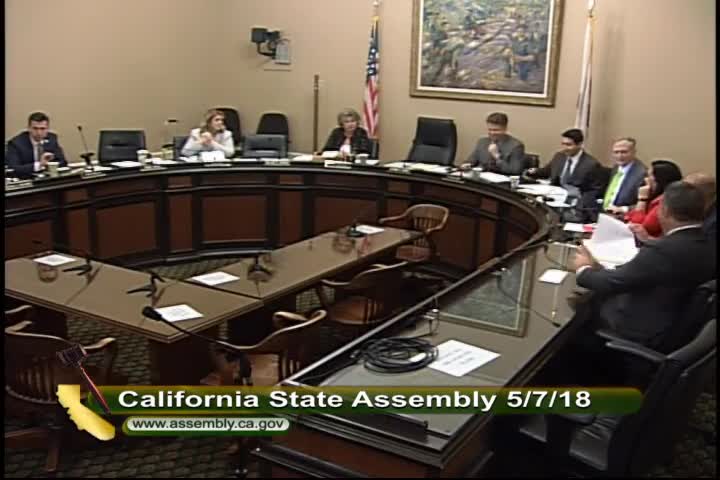
Discussed in Hearing
 12MIN
Assembly Standing Committee on Revenue and Taxation
Bill Author




