AB 2999: Income taxes: credits: affordable housing.
- Session Year: 2017-2018
- House: Assembly
- Latest Version Date: 2018-05-10
The Personal Income Tax Law and the Corporation Tax Law allow various credits against the taxes imposed by those laws.
This bill would allow a credit against those taxes for each taxable year beginning on or after January 1, 2019, and before January 1, 2024, in an amount equal to 50% 25% of the amount of cash paid or incurred, or the equivalent value of qualified land or property donated, by an employer donated to a nonprofit organization by a taxpayer during the taxable year for the construction of affordable housing, as defined, for employees or the investment in an employer-assisted housing program, as defined. The bill would limit the aggregate amount of these credits to be allocated in any fiscal year to up to $10,000,000 and would require these credits to be allocated on a first-come-first-served basis.
This bill would take effect immediately as a tax levy.
The Personal Income Tax Law and the Corporation Tax Law allow various credits against the taxes imposed by those laws.
This bill would allow a credit against those taxes for each taxable year beginning on or after January 1, 2019, in an amount equal to 50% of the amount of cash paid or incurred, or the equivalent value of land or property donated, by an employer during the taxable year for the construction of affordable housing, as defined, for employees or the investment in an employer-assisted housing program, as defined.
This bill would take effect immediately as a tax levy.
(a)For each taxable year beginning on or after January 1, 2019, and before January 1, 2024, there shall be allowed as a credit against the net tax, as defined in Section 17039, an amount equal to 50 25 percent of the amount of cash paid or incurred, or the equivalent value of qualified land or property donated, by an employer donated to a nonprofit organization by a taxpayer during the taxable year for the construction of affordable housing for employees or the investment in an employer-assisted housing program. housing.
(b)For purposes of this section:
(1)Affordable housing means housing developments in which some 25 percent or more of the dwelling units may be purchased or rented, with or without government assistance, on a basis that is affordable to persons or families of low or moderate income, as defined in Section 50093 of the Health and Safety Code. individuals and families of low income, and to which employees of the taxpayer who are individuals of low income have first priority to purchase or rent.
(2)Employer-assisted housing program includes monetary assistance for, or the subsidizing of, an employees rent or mortgage payments or employer-funded housing developments for employees.(2)Individuals and families of low income or individuals of low income means individuals or families who are eligible for financial assistance specifically provided by a governmental agency for the benefit of occupants of housing financed pursuant to Division 31 (commencing with Section 50000) of the Health and Safety Code.
(3)Nonprofit organization means a nonprofit charitable organization exempt from federal income tax as an organization described in Section 501(c)(3) of the Internal Revenue Code that constructs affordable housing.
(4)Qualified land or property means land or property that is deed restricted to ensure that the affordable housing units, if rented, shall be made available to individuals and families of low income for a period of 55 years or more.
(c)The aggregate amount of credits that may be allocated in any fiscal year pursuant to this section and Section 23610.7 shall be ten million dollars ($10,000,000) and these credits shall be allocated on a first-come-first-served basis.
(c)(d)In the case where the credit allowed by this section exceeds the net tax, the excess may be carried over to reduce the net tax in the following taxable year.
(d)It is the intent of the Legislature to comply with Section 41.(e)In compliance with Section 41, the ____ shall track the number of affordable housing units that are constructed by a nonprofit organization as a result of this credit.
(f)This section shall remain in effect only until December 1, 2024, and as of that date is repealed.
SEC. 2.Section 23610.7 is added to the Revenue and Taxation Code, to read:23610.7.(a)For each taxable year beginning on or after January 1, 2019, and before January 1, 2024, there shall be allowed as a credit against the tax, as defined in Section 23036, an amount equal to 50 25 percent of the amount of cash paid or incurred, or the equivalent value of qualified land or property donated, by an employer donated to a nonprofit organization by a taxpayer during the taxable year for the construction of affordable housing for employees or the investment in an employer-assisted housing program. housing.
(b)For purposes of this section:
(1)Affordable housing means housing developments in which some 25 percent or more of the dwelling units may be purchased or rented, with or without government assistance, on a basis that is affordable to persons or families of low or moderate income, as defined in Section 50093 of the Health and Safety Code. individuals and families of low income, and to which employees of the taxpayer who are individuals of low income have first priority to purchase or rent.
(2)Employer-assisted housing program includes monetary assistance for, or the subsidizing of, an employees rent or mortgage payments or employer-funded housing developments for employees.(2)Individuals and families of low income or individuals of low income means individuals or families who are eligible for financial assistance specifically provided by a governmental agency for the benefit of occupants of housing financed pursuant to Division 31 (commencing with Section 50000) of the Health and Safety Code.
(3)Nonprofit organization means a nonprofit charitable organization exempt from federal income tax as an organization described in Section 501(c)(3) of the Internal Revenue Code that constructs affordable housing.
(4)Qualified land or property means land or property that is deed restricted to ensure that the affordable housing units, if rented, shall be made available to individuals and families of low income for a period of 55 years or more.
(c)The aggregate amount of credits that may be allocated in any fiscal year pursuant to this section and Section 17057.7 shall be ten million dollars ($10,000,000) and these credits shall be allocated on a first-come-first-served basis.
(c)(d)In the case where the credit allowed by this section exceeds the tax, the excess may be carried over to reduce the tax in the following taxable year.
(d)It is the intent of the Legislature to comply with Section 41.(e)In compliance with Section 41, the ____ shall track the number of affordable housing units that are constructed by a nonprofit organization as a result of this credit.
(f)This section shall remain in effect only until December 1, 2024, and as of that date is repealed.
SEC. 3.This act provides for a tax levy within the meaning of Article IV of the California Constitution and shall go into immediate effect.
(a)For each taxable year beginning on or after January 1, 2019, there shall be allowed as a credit against the net tax, as defined in Section 17039, an amount equal to 50 percent of the amount of cash paid or incurred, or the equivalent value of land or property donated, by an employer during the taxable year for the construction of affordable housing for employees or the investment in an employer-assisted housing program.
(b)For purposes of this section:
(1)Affordable housing means housing developments in which some of the dwelling units may be purchased or rented, with or without government assistance, on a basis that is affordable to persons or families of low or moderate income, as defined in Section 50093 of the Health and Safety Code.
(2)Employer-assisted housing program includes monetary assistance for, or the subsidizing of, an employees rent or mortgage payments or employer-funded housing developments for employees.
(c)In the case where the credit allowed by this section exceeds the net tax, the excess may be carried over to reduce the net tax in the following taxable year.
(d)It is the intent of the Legislature to comply with Section 41.
SEC. 2.Section 23610.7 is added to the Revenue and Taxation Code, to read:23610.7.(a)For each taxable year beginning on or after January 1, 2019, there shall be allowed as a credit against the tax, as defined in Section 23036, an amount equal to 50 percent of the amount of cash paid or incurred, or the equivalent value of land or property donated, by an employer during the taxable year for the construction of affordable housing for employees or the investment in an employer-assisted housing program.
(b)For purposes of this section:
(1)Affordable housing means housing developments in which some of the dwelling units may be purchased or rented, with or without government assistance, on a basis that is affordable to persons or families of low or moderate income, as defined in Section 50093 of the Health and Safety Code.
(2)Employer-assisted housing program includes monetary assistance for, or the subsidizing of, an employees rent or mortgage payments or employer-funded housing developments for employees.
(c)In the case where the credit allowed by this section exceeds the tax, the excess may be carried over to reduce the tax in the following taxable year.
(d)It is the intent of the Legislature to comply with Section 41.
SEC. 3.This act provides for a tax levy within the meaning of Article IV of the California Constitution and shall go into immediate effect.
|
Date
|
Status
|
|---|---|
| May 25, 2018 | In committee: Held under submission. |
| May 16, 2018 | In committee: Set, first hearing. Referred to APPR. suspense file. |
| May 14, 2018 | Re-referred to Com. on APPR. |
| May 10, 2018 | Read second time and amended. |
| May 9, 2018 | From committee: Amend, and do pass as amended and re-refer to Com. on APPR. (Ayes 7. Noes 0.) (May 9). |
| Apr 30, 2018 | In committee: Set, second hearing. Hearing canceled at the request of author. |
| May 8, 2018 | From committee: Do pass and re-refer to Com. on H. & C.D. (Ayes 9. Noes 1.) (May 7). Re-referred to Com. on H. & C.D. |
| Apr 30, 2018 | Assembly Rule 56 suspended. |
| Apr 16, 2018 | In committee: Set, first hearing. Hearing canceled at the request of author. |
| Mar 12, 2018 | Referred to Coms. on REV. & TAX. and H. & C.D. |
| Feb 17, 2018 | From printer. May be heard in committee March 19. |
| Feb 16, 2018 | Read first time. To print. |
|
Date
|
Description
|
Location
|
Votes
|
|
|---|---|---|---|---|
| May 9, 2018 | Do pass as amended and be re-referred to the Committee on [Appropriations] | Assembly Standing Committee on Housing and Community Development |
Passed |
|
| May 7, 2018 | Do pass and be re-referred to the Committee on [Housing and Community Development] | Assembly Standing Committee on Revenue and Taxation |
Passed |
This list shows positions taken on this bill by organizations on the date displayed, which is linked to the original source.
Positions by individuals are not included.
|
Organization
|
Position
|
Date
|
|---|---|---|
| American Planning Association, California Chapter | ** Support | May 7, 2018 |
| California Apartment Association | * Support | May 7, 2018 |
| Nonprofit Housing Association Northern California | * Support | May 9, 2018 |
Date of Hearing: May 16, 2018
ASSEMBLY COMMITTEE ON APPROPRIATIONS
Lorena Gonzalez Fletcher, Chair
ABPCA Bill Id:AB 2999
Author:(Bonta) – As Introduced Ver:February 16, 2018
Policy Committee: | Revenue and Taxation | Vote: | 9 - 1 |
Housing and Community Development | 7 - 0 | ||
|
|
Urgency: No State Mandated Local Program: No Reimbursable: No
SUMMARY:
This bill allows a Personal Income Tax (PIT) Law and Corporation Tax (CT) Law credit for the construction of affordable housing for which low-income employees of the taxpayer are granted a priority. Specifically, this bill:
- Allows, for tax years beginning in 2019 through 2023, a PIT or CT credit worth 25% of donated land or property to a nonprofit organization for the construction of affordable housing. Up to $10 million in credits may be allocated each taxable year.
- Defines “affordable housing” as a household development with at least 25% of units purchased or rented on an affordable basis to low-income families and individuals and for which low-income employees have first priority to purchase or rent.
- FISCAL EFFECT:
Annual General Fund revenue loss of approximately $2 million in 2018-19, $8.4 million in 2019-20, and $13 million in 2020-21. AB 2999 caps new credit allocations to $10 million per year, but unused credits may be rolled over in the next year.
COMMENTS:
- Purpose. According to the author, AB 2999 will encourage employers to help employees with high housing costs. Through this program, employers can help employees through donating land or property devoted to the construction of affordable housing that may be usable by employees.
- Fiscal implications of tax expenditures. Existing law allows for various tax expenditures such as credits, deductions, exclusions, and exemptions for particular taxpayer groups. These features of the tax code can result in significant state costs through foregone tax revenue and, in many cases, policymakers have little control over the revenue loss that occurs in any given year. As a result, many tax expenditure bills now include provisions designed to give the Legislature more control over costs. Examples of such provisions include placing a sunset date or making a bill’s provisions contingent upon a separate budget appropriation. AB 2999 contains a sunset and an aggregate cap on credits allocated each year.
Analysis Prepared by: Luke Reidenbach / APPR. / (916) 319-2081
Date of Hearing: May 9, 2018
ASSEMBLY COMMITTEE ON HOUSING AND COMMUNITY DEVELOPMENT
David Chiu, Chair
ABPCA Bill Id:AB 2999 (
Author:Bonta) – As Introduced Ver:February 16, 2018
SUBJECT: Income taxes: credits: affordable housing: employer-assisted housing programs
SUMMARY: Allows a credit, under the Personal Income Tax (PIT) Law and the Corporation Tax (CT) Law, to an employer for the construction of "affordable housing" for employees or for investments in an "employer-assisted housing program." Specifically, this bill:
- Allows a tax credit for taxable years beginning on or after January 1, 2019, to an employer in an amount equal to 50% of the amount paid or incurred, or the equivalent value of land or property donated, by the employer during the taxable year for the construction of "affordable housing" for employees or for investments in an "employer-assisted housing program."
- Defines "affordable housing" as housing developments in which some of the dwelling units may be purchased or rented, with or without government assistance, on a basis that is affordable to persons or families of low or moderate income.
- Provides that an "employer-assisted housing program" includes monetary assistance for, or the subsidizing of, an employee's rent or mortgage payments or employer-funded housing developments for employees.
- Allows excess tax credit amounts to be carried over to the following taxable year.
- Provides that it is the intent of the Legislature to comply with Revenue and Taxation Code (R&TC) Section 41.
- Takes effect immediately as a tax levy.
EXISTING LAW:
- Allows various tax credits under both the PIT Law and the CT Law. These credits are generally designed to encourage socially beneficial behavior or to provide relief to taxpayers who incur specified expenses.
- Allows a state tax credit for costs related to construction, rehabilitation, or acquisition of low-income housing, known as the Low-Income Housing Tax Credit (LIHTC). The credit, which mirrors a federal LIHTC, may be used by taxpayers to offset the tax under the PIT, the CT and the Insurance Tax laws.
- Allows a deduction for charitable contributions made to a qualified organization, including a nonprofit organized pursuant to Internal Revenue Code (IRC) Section 501(c)(3), as specified.
- Requires any bill authorizing a new credit to contain all of the following:
- Specific goals, purposes, and objectives that the tax credit will achieve;
- Detailed performance indicators for the Legislature to use when measuring whether the tax credit meets the goals, purposes, and objectives stated in the bill; and,
- Data collection requirements to enable the Legislature to determine whether the tax credit is meeting, failing to meet, or exceeding those specific goals, purposes, and objectives. The requirements shall include the specific data and baseline measurements to be collected and remitted in each year the credit is in effect, for the Legislature to measure the change in performance indicators, and the specific taxpayers, state agencies, or other entities required to collect and remit data. (R&TC Section 41.)
FISCAL EFFECT: The Franchise Tax Board (FTB) estimates General Fund revenue losses of $5.5 billion in fiscal year (FY) 2018-19, $16 billion in FY 2019-20, and $21 billion in FY 2020-21.
COMMENTS:
Purpose of the bill: According the author, "AB 2999 provides an incentive for employers to help their hard working, deserving employees with some of the highest housing costs in the nation. Employers need to be given tools to help their employees with the increasing burden of housing costs. By creating this Employer-Assisted Housing tax credit program through AB 2999, employers can help their employees with housing and rental costs or help create new construction for their employees. Our goal is to support low to middle income employees who are being hit the hardest with California's housing crisis. If the track record of these programs in other states provides any guidance, we should see increased support of deserving employees across California. Let's continue our work to support working families in California."
What does this bill do? This bill appears to encourage the creation of employee affordable housing by providing a tax credit for two things: 1) the construction of affordable housing; and, 2) investments in an employer-assisted housing program. The construction of affordable housing would allow some of the units to be rented or sold to individuals and families who are low or moderate-income. The employer-assisted housing program allows for assistance with an employee's rent or mortgage payments or employer-funded housing developments for employees.
Although the intent, as stated by the author, is to encourage the development and the affordability of housing for low and moderate-income families, this bill lacks parameters to meet the stated goals. As currently drafted, this bill only provides that the construction of "affordable housing" be made available to low and moderate-income families. However, no guidance is provided to help define low and moderate-income. Additionally, as currently drafted, the provisions of this bill only state that some of the units must be made available for rent or sale to low and moderate income families. Without additional guidance, it is possible for employers to receive a credit for the development of a newly built apartment complex with ten units even if only one of those units is made available to a low-income employee. Because of the potentially large credit that may be made available to an employer, a specified percentage of the housing units should be required to be made available to low and moderate-income families.
The second provision of this bill creates an employer-assisted housing program to help assist employees make rent or mortgage payments. The second provision, however, is not specifically limited to low and moderate-income families. As currently drafted, this bill would allow a credit to an employer that provides rent and mortgage assistance to a high salary employee. If this is not the intent of the author, additional restrictions are needed.
State oversight: The LIHTC is overseen by the California Tax Credit Allocation Committee (Committee). In allocating credits to rental housing projects, the Committee performs feasibility analyses on every project to ensure that allocations do not exceed the amount required for project feasibility. Although statutes define the qualifying basis for determining the maximum credit, the Committee will only provide a rental housing project with the amount of credit necessary to make the project feasible. The Committee, in allocating credits, will also consider factors other than cost. For example, Internal Revenue Code Section 42 requires that each state give preference to projects that serve the lowest-income tenants, projects obligated to serve qualified low-income tenants for the longest period of time, and projects located in qualified census tracts that contribute to a concerted community revitalization plan. California additionally adds its own requirements when reviewing LIHTC applications. Public policies encouraging smart growth principles and energy efficiencies are part of California's housing tax credit program. California implements a competitive scoring system where points are awarded for a variety of items, ranging from serving lower-income tenants, to achieving energy efficiencies, to the degree that the project will contribute to revitalization efforts in the area where it will be located. The criteria for choosing eligible projects are, in part, a way of ensuring that the best projects among the applicants are chosen.
This bill takes a different approach and allows a taxpayer to effectively choose where the housing will be located. All qualifying projects will serve low-income and moderate- income families, but no feasibility test is required. There is also no way of knowing how or where the funds will be spent, and this bill does not assess a community's need for the qualified project. The expenditure of these state resources is entirely left up to the taxpayer; as a result, it is unclear if the best projects will be funded. Additionally, it is possible that the lands donated will be located in an area that is relatively far away from the employer's place of business. In these situations, housing may become more affordable but commute times may increase.
Limiting affordable housing to employees: As stated by the author, the purpose of this bill is to help provide employees with affordable housing. There are, however, a few policy concerns with limiting the benefits of this bill to employees of the taxpayer. It is not clear to Committee staff how property would be treated if employees move out of the affordable housing unit. Other employees meeting the income restrictions may be allowed to move in, but that assumes that other employees also fall within the low and moderate-income restrictions. If no other employees are available, would the unit sit empty? These restrictions may create a perverse incentive that keeps workers from earning above a certain amount in order to maintain affordable housing.
Proposed amendments: To address some of these concerns, the author's office has decided to substantially limit the provisions of this bill. Specifically, the author's office is proposing the following amendments:
- Allow a credit only for the value of land and property donated for the construction of affordable housing;
- Allow the credit to any taxpayer that donates land and property;
- Reduce the credit to 25%;
- Require that at least 25% of the units be made available to low-income residents;
- Expand the population of individuals that may live in the affordable housing units to all low-income residents, but provide the employees of a taxpayer with first priority;
- Define “low-income residents” as individuals or families who are eligible for financial assistance specifically provided by a governmental agency for the benefit of occupants of housing;
- Require that donated land be deed restricted to ensure that the affordable housing units, if rented, be made available to low income families for a period of at least 55 years;
- Limit the total amount of credit that may be provided in a FY to $10 million;
- Track the number of units that are built in compliance with R&TC Section 41; and,
- Add a five year sunset.
Double-referred: This bill is double-referred. It was heard in the Assembly Committee on Revenue and Taxation and passed out on a vote of 8-1 on May 7, 2018.
REGISTERED SUPPORT / OPPOSITION:
Support
American Planning Association, California Chapter
California Apartment Association
Opposition
None on file
Analysis Prepared by: Lisa Engel / H. & C.D. / (916) 319-2085
Date of Hearing: May 7, 2018
ASSEMBLY COMMITTEE ON REVENUE AND TAXATION
Autumn R. Burke, Chairwoman
ABPCA Bill Id:AB 2999 (
Author:Bonta) – As Introduced Ver:February 16, 2018
Majority vote. Tax levy. Fiscal committee.
SUBJECT: Income taxes: credits: affordable housing: employer-assisted housing programs
SUMMARY: Allows a credit, under the Personal Income Tax (PIT) Law and the Corporation Tax (CT) Law, to an employer for the construction of "affordable housing" for employees or for investments in an "employer-assisted housing program." Specifically, this bill:
- Allows a tax credit for taxable years beginning on or after January 1, 2019, to an employer in an amount equal to 50% of the amount paid or incurred, or the equivalent value of land or property donated, by the employer during the taxable year for the construction of "affordable housing" for employees or for investments in an "employer-assisted housing program."
- Defines "affordable housing" as housing developments in which some of the dwelling units may be purchased or rented, with or without government assistance, on a basis that is affordable to persons or families of low or moderate income.
- Provides that an "employer-assisted housing program" includes monetary assistance for, or the subsidizing of, an employee's rent or mortgage payments or employer-funded housing developments for employees.
- Allows excess tax credit amounts to be carried over to the following taxable year.
- Provides that it is the intent of the Legislature to comply with Revenue and Taxation Code (R&TC) Section 41.
- Takes effect immediately as a tax levy.
EXISTING LAW:
- Allows various tax credits under both the PIT Law and the CT Law. These credits are generally designed to encourage socially beneficial behavior or to provide relief to taxpayers who incur specified expenses.
- Allows a state tax credit for costs related to construction, rehabilitation, or acquisition of low-income housing, known as the Low-Income Housing Tax Credit (LIHTC). The credit, which mirrors a federal LIHTC, may be used by taxpayers to offset the tax under the PIT, the CT and the Insurance Tax laws.
- Allows a deduction for charitable contributions made to a qualified organization, including a nonprofit organized pursuant to Internal Revenue Code (IRC) Section 501(c)(3), as specified.
- Requires any bill authorizing a new credit to contain all of the following:
- Specific goals, purposes, and objectives that the tax credit will achieve;
- Detailed performance indicators for the Legislature to use when measuring whether the tax credit meets the goals, purposes, and objectives stated in the bill; and,
- Data collection requirements to enable the Legislature to determine whether the tax credit is meeting, failing to meet, or exceeding those specific goals, purposes, and objectives. The requirements shall include the specific data and baseline measurements to be collected and remitted in each year the credit is in effect, for the Legislature to measure the change in performance indicators, and the specific taxpayers, state agencies, or other entities required to collect and remit data. (R&TC Section 41.)
FISCAL EFFECT: The Franchise Tax Board (FTB) estimates General Fund revenue losses of $5.5 billion in fiscal year (FY) 2018-19, $16 billion in FY 2019-20, and $21 billion in FY 2020-21.
COMMENTS:
- The author has provided the following statement is support of this bill:
AB 2999 provides an incentive for employers to help their hard working, deserving employees with some of the highest housing costs in the nation. Employers need to be given tools to help their employees with the increasing burden of housing costs. By creating this Employer-Assisted Housing tax credit program through AB 2999, employers can help their employees with housing and rental costs or help create new construction for their employees. Our goal is to support low to middle income employees who are being hit the hardest with California's housing crisis. If the track record of these programs in other states provides any guidance, we should see increased support of deserving employees across California. Let's continue our work to support working families in California.
- Proponents state that "California is in the midst of an unprecedented housing crisis caused by a severe lack of new housing construction at all levels. In order to address California's ongoing affordability challenges, housing production must increase dramatically. AB 2999 is a creative solution that will help us address our housing needs."
- Committee Staff Comments:
- What does this bill do? This bill appears to encourage the creation of employee affordable housing by providing a tax credit for two things: 1) the construction of affordable housing; and, 2) investments in an employer-assisted housing program. The construction of affordable housing would allow some of the units to be rented or sold to individuals and families who are low or moderate-income. The employer-assisted housing program allows for assistance with an employee's rent or mortgage payments or employer-funded housing developments for employees.
Although the intent, as stated by the author, is to encourage the development and the affordability of housing for low and moderate-income families, this bill lacks parameters to meet the stated goals. As currently drafted, this bill only provides that the construction of "affordable housing" be made available to low and moderate-income families. However, no guidance is provided to help define low and moderate-income. Additionally, as currently drafted, the provisions of this bill only state that some of the units must be made available for rent or sale to low and moderate income families. Without additional guidance, it is possible for employers to receive a credit for the development of a newly built apartment complex with ten units even if only one of those units is made available to a low-income employee. Because of the potentially large credit that may be made available to an employer, a specified percentage of the housing units should be required to be made available to low and moderate-income families.
The second provision of this bill creates an employer-assisted housing program to help assist employees make rent or mortgage payments. The second provision, however, is not specifically limited to low and moderate-income families. As currently drafted, this bill would allow a credit to an employer that provides rent and mortgage assistance to a high salary employee. If this is not the intent of the author, additional restrictions are needed.
- State oversight: The LIHTC is overseen by the California Tax Credit Allocation Committee (Committee). In allocating credits to rental housing projects, the Committee performs feasibility analyses on every project to ensure that allocations do not exceed the amount required for project feasibility. Although statutes define the qualifying basis for determining the maximum credit, the Committee will only provide a rental housing project with the amount of credit necessary to make the project feasible. The Committee, in allocating credits, will also consider factors other than cost. For example, Internal Revenue Code Section 42 requires that each state give preference to projects that serve the lowest-income tenants, projects obligated to serve qualified low-income tenants for the longest period of time, and projects located in qualified census tracts that contribute to a concerted community revitalization plan. California additionally adds its own requirements when reviewing LIHTC applications. Public policies encouraging smart growth principles and energy efficiencies are part of California's housing tax credit program. California implements a competitive scoring system where points are awarded for a variety of items, ranging from serving lower-income tenants, to achieving energy efficiencies, to the degree that the project will contribute to revitalization efforts in the area where it will be located. The criteria for choosing eligible projects are, in part, a way of ensuring that the best projects among the applicants are chosen.
This bill takes a different approach and allows a taxpayer to effectively choose where the housing will be located. All qualifying projects will serve low-income and moderate- income families, but no feasibility test is required. There is also no way of knowing how or where the funds will be spent, and this bill does not assess a community's need for the qualified project. The expenditure of these state resources is entirely left up to the taxpayer; as a result, it is unclear if the best projects will be funded. Additionally, it is possible that the lands donated will be located in an area that is relatively far away from the employer's place of business. In these situations, housing may become more affordable but commute times may increase.
- Limiting affordable housing to employees: As stated by the author, the purpose of this bill is to help provide employees with affordable housing. There are, however, a few policy concerns with limiting the benefits of this bill to employees of the taxpayer. It is not clear to Committee staff how property would be treated if employees move out of the affordable housing unit. Other employees meeting the income restrictions may be allowed to move in, but that assumes that other employees also fall within the low and moderate-income restrictions. If no other employees are available, would the unit sit empty? These restrictions may create a perverse incentive that keeps workers from earning above a certain amount in order to maintain affordable housing.
- Practical solutions to housing affordability: A number of major Los Angeles employers have recently shared their concerns that the high cost of living is creating a barrier to attracting and retaining top talent. Employers in high cost areas are developing special hiring packages, subsidizing transportation and reimbursing relocation costs to attract qualified employees. The problem is not unique to Los Angeles— nearly every metropolitan area is burdened by high housing costs. If true that employers are having a difficult time recruiting and retaining talent, an easy, although expensive, solution to the problem would be to offer employees a salary that allows them to comfortably afford housing near their place of employment. Alternatively, because a number of employees commute great distances from areas where housing is less expensive, a more practical solution would be to open new offices or move existing offices to those low cost areas.
- Proposed amendments: To address some of these concerns, the author's office has decided to substantially limit the provisions of this bill. Specifically, the author's office is proposing the following amendments:
- Allow a credit only for the value of land and property donated for the construction of affordable housing;
- Allow the credit to any taxpayer that donates land and property;
- Reduce the credit to 25%;
- Require that at least 25% of the units be made available to low-income residents;
- Expand the population of individuals that may live in the affordable housing units to all low-income residents, but provide the employees of a taxpayer with first priority;
- Define “low-income residents” as individuals or families who are eligible for financial assistance specifically provided by a governmental agency for the benefit of occupants of housing;
- Require that donated land be deed restricted to ensure that the affordable housing units, if rented, be made available to low income families for a period of at least 55 years;
- Limit the total amount of credit that may be provided in a FY to $10 million;
- Track the number of units that are built in compliance with R&TC Section 41; and,
- Add a five year sunset.
REGISTERED SUPPORT / OPPOSITION:
Support
American Planning Association
California Apartment Association
Opposition
None on file
Analysis Prepared by: Carlos Anguiano / REV. & TAX. / (916) 319-2098
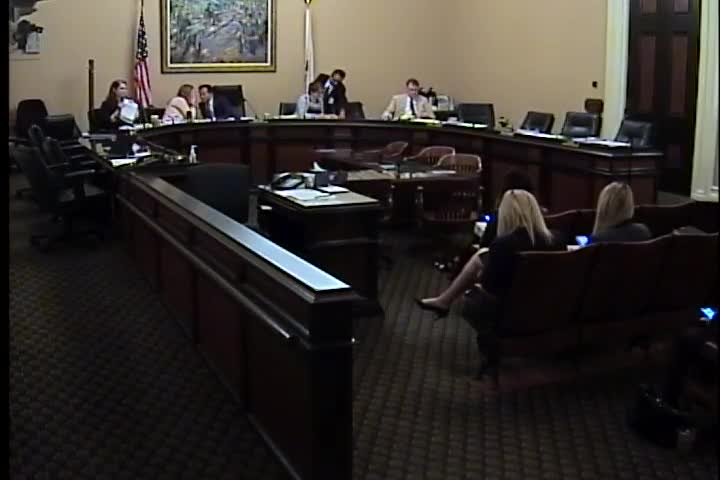
Discussed in Hearing
 3MIN
Assembly Standing Committee on Housing and Community Development
 1MIN
Assembly Standing Committee on Revenue and Taxation
Bill Author

Bill Co-Author(s):