AB 3128: Personal income tax: credit: disabled veteran: service dog.
- Session Year: 2017-2018
- House: Assembly
- Latest Version Date: 2018-04-10
The Personal Income Tax Law allows various credits against the taxes imposed by that law.
This bill, for taxable years beginning on or after January 1, 2019, and before January 1, 2022, 2029, would allow a credit under the Personal Income Tax Law against those taxes in an amount equal to 50% of the amounts amount paid or incurred during the taxable year by a qualified disabled veteran for the ownership and maintenance of a service dog, not to exceed $1,500 for a taxable year.
This bill would take effect immediately as a tax levy.
The Personal Income Tax Law allows various credits against the taxes imposed by that law.
This bill, for taxable years beginning on or after January 1, 2019, and before January 1, 2022, would allow a credit under the Personal Income Tax Law in an amount equal to 50% of the amounts paid or incurred during the taxable year by a qualified disabled veteran for the ownership and maintenance of a service dog, not to exceed $1,500 for a taxable year.
This bill would take effect immediately as a tax levy.
The Legislature finds and declares all of the following:
(a)California is home to a large population of war veterans, comprised of service men and women who have honorably served in the line of duty.
(b)It is not uncommon for veterans, after experiencing the horrors of war, to suffer from physical or mental health challenges.
(c)Common conditions that war veterans are afflicted with include post-traumatic stress disorder, traumatic brain injury, and heightened anxiety.
(d)Trained animals are often used to assist disabled veterans in their rehabilitation. An animal can greatly contribute to a veterans sense of normalcy by providing support and companionship.
(e)The purpose of adding Section 17053.45 to the Revenue and Taxation Code is to create a tax credit for disabled veterans, as determined by a disability rating promulgated by the United States Department of Veterans Affairs, who incur costs associated with the ownership of a service dog.
SEC. 2.Section 17053.45 is added to the Revenue and Taxation Code, to read:17053.45.(a)For taxable years beginning on or after January 1, 2019, and before January 1, 2022, 2029, there shall be allowed to a qualified disabled veteran as a credit against the costs associated with owning a service dog in net tax, as defined in Section 17039, an amount equal to 50 percent of the qualified disabled veterans qualified costs, not to exceed one thousand five hundred dollars ($1,500) during the taxable year.
(b)For purposes of this section:
(1)Qualified costs means the amounts amount paid or incurred during the taxable year by a qualified disabled veteran for the ownership and maintenance of a service dog that is limited to the amounts paid as local fees for service dog licenses; veterinary care and medical-related expenses, including vaccinations, annual checkups, and drug prescriptions; pet insurance coverage expenses; expenses for specialty equipment, including vests, leads, and harnesses; grooming expenses; and food expenses.
(2)Qualified disabled veteran means an individual who meets both of the following conditions:
(A)Has served on active duty with the United States Armed Forces of the United States and received an honorable discharge for all periods of active service.
(B)Has a service-connected disability rating of at least 30 percent, as determined by the United States Department of Veterans Affairs, and is assisted with any disability associated with that rating by a service dog.
(3)Service dog means a service dog, guide dog, or signal dog, as defined in clause (iii) of subparagraph (C) of paragraph (6) of subdivision (b) of Section 54.1 of the Civil Code.
(c) In the case where the credit allowed by this section exceeds the net tax, the excess may be carried over to reduce the net tax in the following taxable year.
(d)This credit shall be in lieu of a deduction that the qualified disabled veteran may otherwise claim pursuant to this part with respect to qualified costs.
(d)(e)It is the intent of the Legislative Legislature to comply with Section 41.
(e)(f) This section shall remain in effect only until December 1, 2022, 2029, and as of that date is repealed.
SEC. 3.This act provides for a tax levy within the meaning of Article IV of the California Constitution and shall go into immediate effect.
The Legislature finds and declares all of the following:
(a)California is home to a large population of war veterans, comprised of service men and women who have honorably served in the line of duty.
(b)It is not uncommon for veterans, after experiencing the horrors of war, to suffer from physical or mental health challenges.
(c)Common conditions that war veterans are afflicted with include post-traumatic stress disorder, traumatic brain injury, and heightened anxiety.
(d)Trained animals are often used to assist disabled veterans in their rehabilitation. An animal can greatly contribute to a veterans sense of normalcy by providing support and companionship.
(e)The purpose of adding Section 17053.45 to the Revenue and Taxation Code is to create a tax credit for disabled veterans, as determined by a disability rating promulgated by the United States Department of Veterans Affairs, who incur costs associated with the ownership of a service dog.
SEC. 2.Section 17053.45 is added to the Revenue and Taxation Code, to read:17053.45.(a)For taxable years beginning on or after January 1, 2019, and before January 1, 2022, there shall be allowed to a qualified disabled veteran a credit against the costs associated with owning a service dog in an amount equal to 50 percent of the qualified disabled veterans qualified costs, not to exceed one thousand five hundred dollars ($1,500) during the taxable year.
(b)For purposes of this section:
(1)Qualified costs means the amounts paid or incurred during the taxable year by a qualified disabled veteran for the ownership and maintenance of a service dog that is limited to the amounts paid as local fees for service dog licenses; veterinary care and medical-related expenses, including vaccinations, annual checkups, and drug prescriptions; pet insurance coverage expenses; expenses for specialty equipment, including vests, leads, and harnesses; grooming expenses; and food expenses.
(2)Qualified disabled veteran means an individual who meets both of the following conditions:
(A)Has served on active duty with the Armed Forces of the United States and received an honorable discharge for all periods of active service.
(B)Has a service-connected disability rating of at least 30 percent, as determined by the United States Department of Veterans Affairs, and is assisted with any disability associated with that rating by a service dog.
(3)Service dog means a service dog, as defined in clause (iii) of subparagraph (C) of paragraph (6) of subdivision (b) of Section 54.1 of the Civil Code.
(c) In the case where the credit allowed by this section exceeds the net tax, the excess may be carried over to reduce the net tax in the following taxable year.
(d)It is the intent of the Legislative to comply with Section 41.
(e) This section shall remain in effect only until December 1, 2022, and as of that date is repealed.
SEC. 3.This act provides for a tax levy within the meaning of Article IV of the California Constitution and shall go into immediate effect.
|
Date
|
Status
|
|---|---|
| May 25, 2018 | In committee: Held under submission. |
| Apr 18, 2018 | In committee: Set, first hearing. Referred to APPR. suspense file. |
| Apr 11, 2018 | Re-referred to Com. on APPR. |
| Apr 10, 2018 | Read second time and amended. |
| Apr 9, 2018 | From committee: Amend, and do pass as amended and re-refer to Com. on APPR. (Ayes 8. Noes 1.) (April 2). |
| Mar 12, 2018 | Referred to Com. on REV. & TAX. |
| Feb 17, 2018 | From printer. May be heard in committee March 19. |
| Feb 16, 2018 | Read first time. To print. |
|
Date
|
Description
|
Location
|
Votes
|
|
|---|---|---|---|---|
| Apr 2, 2018 | Do pass as amended and be re-referred to the Committee on [Appropriations] | Assembly Standing Committee on Revenue and Taxation |
Passed |
This list shows positions taken on this bill by organizations on the date displayed, which is linked to the original source.
Positions by individuals are not included.
|
Organization
|
Position
|
Date
|
|---|---|---|
| alpha canine | * Support | Apr 2, 2018 |
| California Tax Reform Association | * Against Unless Amend | Apr 2, 2018 |
| State Humane Association of California | * Support | Apr 2, 2018 |
Date of Hearing: April 18, 2018
ASSEMBLY COMMITTEE ON APPROPRIATIONS
Lorena Gonzalez Fletcher, Chair
ABPCA Bill Id:AB 3128
Author:(Chen) – As Amended Ver:April 10, 2018
Policy Committee: | Revenue and Taxation | Vote: | 8 - 1 |
|
| ||
|
|
Urgency: No State Mandated Local Program: No Reimbursable: No
SUMMARY:
This bill creates a Personal Income Tax (PIT) credit worth 50% of qualified costs, not to exceed $1,500, incurred by a disabled veteran, as defined, for owning a service dog. This credit is available for taxable years starting in 2019 through 2028.
FISCAL EFFECT:
Annual General Fund revenue loss of $26 million in 2018-19, $55 million in 2019-20, and $60 million in 2020-21.
COMMENTS:
- Purpose. According to the author, AB 3128 will help ensure that costs are not a barrier for a disabled veteran to receive the help he or she needs. The author points to a growing body of research on the health benefits of service animals, especially for veterans with war-related disabilities. This bill creates a tax credit to help offset the costs of owning a service dog.
- The costs of service dogs. Qualified costs under AB 2128 include money spent on service dog license fees, veterinary care, pet insurance, specialty equipment, and grooming and food. According to the American Kennel Club, the average cost for the first year of raising a dog is $3,085, and the average lifetime cost of raising a dog is $23,410. These estimates include the types of costs covered by this bill.
- Fiscal implications of tax expenditures. Existing law allows for various tax expenditures such as credits, deductions, exclusions, and exemptions for particular taxpayer groups. These features of the tax code can result in significant state costs through foregone tax revenue, and, in many cases, policymakers have little control over the revenue loss that occurs in any given year. As a result, many tax expenditure bills now include provisions designed to give the Legislature more control over costs. Examples of such provisions include placing a sunset date or making a bill’s provisions contingent upon a separate budget appropriation. AB 3128 includes a sunset.
- Recent legislation. AB 2472 (Linder), of the 2015-16 Legislative Session, which was substantially similar to this bill, was held on this committee’s Suspense File.
Analysis Prepared by: Luke Reidenbach / APPR. / (916) 319-2081
Date of Hearing: April 2, 2018
ASSEMBLY COMMITTEE ON REVENUE AND TAXATION
Autumn R. Burke, Chairwoman
ABPCA Bill Id:AB 3128 (
Author:Chen) – As Introduced Ver:February 16, 2018
Majority vote. Tax levy. Fiscal committee.
SUBJECT: Personal income tax: credit: disabled veteran: service dog
SUMMARY: Creates a tax credit under the Personal Income Tax (PIT) Law in an amount equal to 50% of the "qualified costs" incurred by a "qualified disabled veteran" owning a service dog. Specifically, this bill:
- Makes findings and declarations about the assistance service animals may provide war veterans.
- Allows a tax credit under the PIT Law for taxable years beginning on or after January 1, 2019, and before January 1, 2022, in an amount equal to 50% of "qualified costs" incurred by a "qualified disabled veteran," not to exceed $1,500 for the taxable year.
- Defines "qualified costs" as the following costs paid during the taxable year by a "qualified disabled veteran" for the ownership and maintenance of a service dog:
- Local fees for animal licenses;
- Veterinary care and medical-related expenses, such as vaccinations, annual check-ups, and drug prescriptions;
- Pet insurance coverage expenses;
- Expenses for specialty equipment, such as vests, leads, and harnesses;
- Grooming expenses; and,
- Food expenses.
- Defines a "service dog" as by reference to Civil Code Section 54.1(b)(6)(C)(iii), as a dog that has been individually trained to the requirements of the individual with a disability, including minimal protection work, rescue work, pulling a wheelchair, or fetching dropped items.
- Defines a "qualified disabled veteran" as an individual meeting both of the following conditions:
- Has served on active duty with the Armed Forces of the United States and received an honorable discharge for all periods of active service; and,
- Has a service-connected disability rating of at least 30%, as determined by the United States Department of Veterans Affairs (VA), with which a qualified service dog assists.
- Allows the credit to be carried over into the next taxable year.
- Provides that the Legislature intends to comply with Revenue and Taxation Code (R&TC) Section 41.
- Repeals the credit on December 1, 2022.
- Takes immediate effect as a tax levy.
EXISTING LAW:
- Allows various tax credits under the PIT Law. These credits are generally designed to encourage socially beneficial behavior or to provide relief to taxpayers who incur specified expenses.
- Allows a deduction under the PIT Law for unreimbursed medical and dental expenses that exceed 7.5% of federal adjusted gross income (AGI), including expenses related to the costs of buying, training, and maintaining a guide dog or other service animal to assist a visually impaired or hearing disabled person, or a person with other physical disabilities.[1] Eligible costs include food, grooming, and veterinary care incurred in maintaining the health and vitality of the animal so it may perform its duties. Federal law also allows a deduction for expenses that exceed 7.5% of federal AGI.[2]
- Requires any bill authorizing a new credit to contain all of the following:
- Specific goals, purposes, and objectives that the tax credit will achieve;
- Detailed performance indicators for the Legislature to use when measuring whether the tax credit meets the goals, purposes, and objectives stated in the bill; and,
- Data collection requirements to enable the Legislature to determine whether the tax credit is meeting, failing to meet, or exceeding those specific goals, purposes, and objectives. The requirements shall include the specific data and baseline measurements to be collected and remitted in each year the credit is in effect, for the Legislature to measure the change in performance indicators, and the specific taxpayers, state agencies, or other entities required to collect and remit data. (R&TC Section 41)
FISCAL EFFECT: The Franchise Tax Board estimates General Fund revenue losses of $26 million in fiscal year (FY) 2018-19, $55 million in FY 2019-20, $60 million in FY 2020-21.
COMMENTS:
- Author’s Statement: The author has provided the following statement in support of this bill:
Veterans face significant challenges when they re-enter society after their time in service. We owe it to the community of veterans in California to provide them with as many tools as possible to aid them in their transition out of the military. AB 3128 is in response to a growing body of research that demonstrates the many health benefits service animals offer veterans with war-related disabilities. AB 3128 seeks to ensure that costs don't act as a barrier to veterans who would benefit from the healing power of a service animal. - Committee Staff Comments:
- What is a "Tax Expenditure"? Existing law provides various credits, deductions, exclusions, and exemptions for particular taxpayer groups. In the late 1960s, United States Treasury officials began arguing that these features of the tax law should be referred to as "expenditures," since they are generally enacted to accomplish some governmental purpose and there is a determinable cost associated with each of them (in the form of forgone revenues). This bill would enact a new tax expenditure program in the form of a tax credit for a disabled veteran who owns a service dog.
- Tax Expenditure vs. Direct Expenditure: As the Department of Finance notes in its annual Tax Expenditure Report, there are several key differences between tax expenditures and direct expenditures. First, tax expenditures are reviewed less frequently than direct expenditures once they are put in place. This can offer taxpayers greater certainty, but it can also result in tax expenditures remaining part of the tax code without demonstrating any public benefit. Second, there is generally no control over the amount of revenue losses associated with any given tax expenditure. One option to address this concern is to place a limit on the aggregate amount of the credit. Finally, it should also be noted that, once enacted, it takes a two-thirds vote to rescind an existing tax expenditure absent a sunset date. This bill includes a three-year sunset date for the tax credit.
- A Veteran's Best Friend: According to the author's office, non-profit organizations throughout the country have formed to connect veterans with service animals. However, these organizations primarily focus on adoption and training, and do not help alleviate the annual costs of pet ownership. Pets are generally expensive to care for, and service animals may require specialty equipment to perform their requisite duties – these costs can be a burden to veterans, especially those who struggle to find employment post-service. According to the American Kennel Club, the average cost for the first year of raising a dog is $3,085.[3] Therefore, the $1,500 cap on this credit is likely to approximately capture the intended 50% of the cost of maintaining a dog.
- Definition of a Service Dog: Only "service dogs" as defined in Civil Code Section 54.1(b)(6)(C)(iii) are qualified under this credit. This code section specifies that a service dog is a dog that has been individually trained to the requirements of the individual with a disability, including minimal protection work, rescue work, pulling a wheelchair, or fetching dropped items. While that definition is fairly broad by listing only the "service dog" as qualified, this bill probably excludes by implication the terms "guide dog"[4] and "signal dog"[5]. Dogs with these designations might have distinguishable duties and training. It appears possible that a disabled veteran could own a guide dog or signal dog that does not fit into the category of "service dog". Therefore, the author's office may wish to expand the eligibility requirements to include all three designations of assistance dog.
- Options for Credit Delivery: This credit is a nonrefundable credit. Only taxpayers with tax liability receive a benefit from a nonrefundable tax credit. This could cause some distortion with the intended effect. Disability payments are not taxable income[6] so a veteran whose sole source of income is disability compensation would not have tax liability. Thus, a veteran in that situation would not receive the credit despite being on a fixed income and having a qualifying disability received in service to the United States. A veteran in that situation appears to be the intended beneficiary of this credit; and yet because he/she does not have sufficient, qualifying income, that person is ineligible for the benefit. This exclusion could be remedied by making the credit refundable. If refundable, a veteran with no, or low, tax liability could receive a check from the government, through the tax system, to assist with the cost of owning a service dog.
- Double Dipping: Generally, a single expense is not permitted to be claimed for multiple tax benefits within one tax system. Here, it appears a physically disabled veteran taxpayer could claim the same expense for dog care for both this credit, and the medical expenses deduction within California’s personal income tax system. The author's office may wish to consider amending this bill to remove this double benefit tax treatment.
- R&TC Section 41: SB 1335 (Leno), Chapter 845, Statutes of 2014, added R&TC Section 41, which recognized that the Legislature should apply the same level of review used for government spending programs to tax preference programs, including tax credits. Thus, Section 41 requires any bill that is introduced on or after January 1, 2015 and allows a new PIT or CT credit to contain specific goals, purposes, and objectives that the tax credit will achieve. In addition, Section 41 requires detailed performance indicators for the Legislature to use when measuring whether the tax credit meets the goals, purposes, and objectives so-identified. This bill states legislative intent to comply with Section 41, but offers no further information.
- Prior Legislation: AB 2472 (Linder), of the 2015-16 Legislative Session, would have allowed a tax credit to qualified disabled veterans, equal to 50% of the qualified costs of owning and maintaining a service dog, not to exceed $1,500. AB 2472 was held on the Assembly Appropriations Committee’s Suspense File.
REGISTERED SUPPORT / OPPOSITION:
Support
None on file
Opposition
None on file
Analysis Prepared by: Ken Conlan / REV. & TAX. / (916) 319-2098
R&TC Section 17201 ↑
Topic 502-Medical and Dental Expenses, IRS, https://www.irs.gov/taxtopics/tc502 ↑
"How Much Does it Cost to Raise a Dog?", American Kennel Club, http://www.akc.org/expert-advice/lifestyle/did-you-know/cost-to-raise-dog/ ↑
Civil Code Section 54.1(b)(6)(C)(i) ↑
Civil Code Section 54.1(b)(6)(C)(ii) ↑
VA Compensation, Franchise Tax Board, https://www.ftb.ca.gov/individuals/faq/Military-Retirement-and-Disability.shtml ↑
Discussed in Hearing
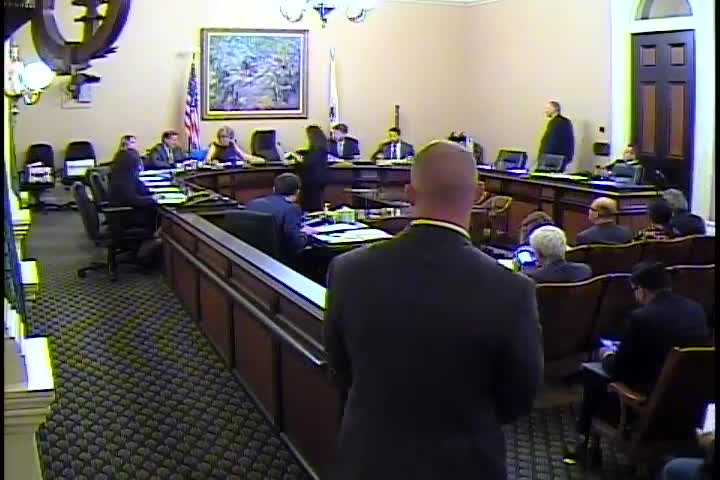 7MIN
Assembly Standing Committee on Revenue and Taxation
Bill Author

Bill Co-Author(s):