AB 483: Airports: pollution.
- Session Year: 2017-2018
- House: Assembly
- Latest Version Date: 2017-04-18
Under existing law, the Department of Toxic Substances Control generally regulates, among other things, the management and handling of hazardous waste and hazardous materials. Existing law requires a facility handling hazardous waste to obtain a hazardous waste facilities permit from the department and authorizes the department to enforce the requirements of the hazardous waste control laws through various means, including conducting inspections, issuing orders requiring that violations be corrected, and imposing administrative penalties, as specified.
Existing law imposes various limitations on the emissions of air contaminants for the control of air pollution from vehicular and nonvehicular sources. Existing law generally designates the State Air Resources Board as the state agency with the primary responsibility for the control of vehicular air pollution, and air pollution control and air quality management districts with the primary responsibility for the control of air pollution from all sources other than vehicular sources.
This bill would require the department and the state board to conduct or require to be conducted specified tests of the soil and air quality at airports, as defined. general aviation noncommercial airports that meet specified criteria. The bill would require the state board to coordinate the air quality testing with air districts. The bill would require the department, no later than July 1, 2019, to submit a specified report to the Legislature and post that report on its Internet Web site. The bill would require the state board and the appropriate air district to compile and post a specified annual report on their Internet Web sites. By adding to the duties of air districts, this bill would impose a state-mandated local program.
The California Constitution requires the state to reimburse local agencies and school districts for certain costs mandated by the state. Statutory provisions establish procedures for making that reimbursement.
This bill would provide that no reimbursement is required by this act for a specified reason.
Under existing law, the Department of Toxic Substances Control generally regulates, among other things, the management and handling of hazardous waste and hazardous materials. Existing law requires a facility handling hazardous waste to obtain a hazardous waste facilities permit from the department and authorizes the department to enforce the requirements of the hazardous waste control laws through various means, including conducting inspections, issuing orders requiring that violations be corrected, and imposing administrative penalties, as specified.
Existing law imposes various limitations on the emissions of air contaminants for the control of air pollution from vehicular and nonvehicular sources. Existing law generally designates the State Air Resources Board as the state agency with the primary responsibility for the control of vehicular air pollution, and air pollution control and air quality management districts with the primary responsibility for the control of air pollution from all sources other than vehicular sources.
This bill would require the department and the state board to conduct or require to be conducted specified tests of the soil and air quality at airports, as defined. The bill would require the state board to coordinate the air quality testing with air districts. The bill would require the department and the state board, department, no later than July 1, 2019, to submit a specified report to the Legislature and post that report on their its Internet Web sites. site. The bill would require the state board and appropriate air district to compile and post a specified annual report on their Internet Web sites. By adding to the duties of air districts, this bill would impose a state-mandated local program.
The California Constitution requires the state to reimburse local agencies and school districts for certain costs mandated by the state. Statutory provisions establish procedures for making that reimbursement.
This bill would provide that no reimbursement is required by this act for a specified reason.
Under existing law, the Department of Toxic Substances Control generally regulates, among other things, the management and handling of hazardous waste and hazardous materials. Existing law requires a facility handling hazardous waste to obtain a hazardous waste facilities permit from the department and authorizes the department to enforce the requirements of the hazardous waste control laws through various means, including conducting inspections, issuing orders requiring that violations be corrected, and imposing administrative penalties, as specified.
Existing law imposes various limitations on emissions of air contaminants for the control of air pollution from vehicular and nonvehicular sources. Existing law generally designates the State Air Resources Board as the state agency with the primary responsibility for the control of vehicular air pollution, and air pollution control and air quality management districts with the primary responsibility for the control of air pollution from all sources other than vehicular sources.
This bill would require the department and the state board to conduct specified tests of the soil and air quality at airports, as defined. The bill would require the state board to coordinate the air quality testing with air districts. The bill would require the department and the state board, no later than July 1, 2019, to submit a specified report to the Legislature and post that report on their Internet Web sites. By adding to the duties of air districts, this bill would impose a state-mandated local program.
The California Constitution requires the state to reimburse local agencies and school districts for certain costs mandated by the state. Statutory provisions establish procedures for making that reimbursement.
This bill would provide that no reimbursement is required by this act for a specified reason.
Existing law authorizes a housing authority to lease housing to persons of low income throughout the county in which it operates, except as provided.This bill would make a nonsubstantive change to this provision.Existing law authorizes a housing authority to lease housing to persons of low income throughout the county in which it operates, except as provided.
This bill would make a nonsubstantive change to this provision.
For purposes of this article, airport means a general aviation noncommercial airport built prior to 1960 that is located in an urban area and is in or adjacent to a zone determined to be above the 81st percentile in the most recent version of the California Communities Environmental Health Screening Tool, completed pursuant to Section 39711. that meets all of the following criteria:
(a)Located entirely within a disadvantaged community as identified by the California Environmental Protection Agency pursuant to Section 39711.
(b)Located entirely within the boundaries of an incorporated city with a population greater than 200,000 people.
(c)First certified for operation by the Federal Aviation Administration before the year 1960.
(d)Not designated by the United States Army Corps of Engineers as a formerly used defense site.
25232.(a)The department shall conduct soil sample testing at airports to determine if there is a presence of hazardous waste. The testing shall meet one of the following:
(1)The most recent requirements adopted by the American Society for Testing Materials for Standard Practice for Environmental Site Assessment: Phase I Environmental Site Assessment Process.
(2)The requirements of Part 312 (commencing with Section 312.1) of Title 40 of the Code of Federal Regulations.
(b)The department may coordinate with the State Water Resources Control Board and any local agency to determine if, based on the soil sample testing conducted pursuant to this section, an airport poses a threat to a groundwater basin.
(c)(1)No later than July 1, 2019, the department, with the findings and determinations resulting from the soil sample testing conducted pursuant to subdivision (a), shall do both of the following:
(A)Report to the Legislature on its findings and determinations.
(B)Post the report to the Legislature on the departments Internet Web site.
(2)A report to be submitted pursuant to this subdivision shall be submitted in compliance with Section 9795 of the Government Code.
SEC. 2.Chapter 10 (commencing with Section 39950) is added to Part 2 of Division 26 of the Health and Safety Code, to read:10.Airports39950.For purposes of this chapter, airport means a general aviation noncommercial airport built prior to 1960 that is located in an urban area and is in or adjacent to a zone determined to be above the 81st percentile in the most recent version of the California Communities Environmental Health Screening Tool, completed pursuant to Section 39711. that meets all of the following criteria:
(a)Located entirely within a disadvantaged community as identified by the California Environmental Protection Agency pursuant to Section 39711.
(b)Located entirely within the boundaries of an incorporated city with a population greater than 200,000 people.
(c)First certified for operation by the Federal Aviation Administration before the year 1960.
(d)Not designated by the United States Army Corps of Engineers as a formerly used defense site.
39952.(a)The state board, in coordination with districts, shall require airports to test the air quality at the airport to determine the airports impact on localized air pollution and the climate policy targets set forth in the California Global Warming Solutions Act of 2006 (Division 25.5 (commencing with Section 38500)). The testing shall include, but need not be limited to, all of the following air contaminants:
(1)Greenhouse gases, as defined in Section 38505.
(2)Hydrofluorocarbons.
(3)Black carbon.
(4)Particulate matter.
(5)Toxic air contaminants.
(6)Criteria air pollutants.
(b)(1)For the testing required pursuant to subdivision (a), an airport may utilize existing air quality testing equipment.
(2)If an airport does not have existing appropriate air quality testing equipment, the airport, in coordination with the state board and the appropriate district, shall submit a plan to the state board and the appropriate district describing how the airport will procure air quality testing equipment or repurpose existing air quality testing equipment to comply with this section.
(c)An airport shall collect the data required pursuant to subdivision (a) in real time and shall submit that data on a quarterly basis to the state board and appropriate district.
(d)No later than January 1, 2019, and annually thereafter, the state board and districts shall compile the data submitted pursuant to subdivision (c) in a report that is written in plain English and includes the public health impacts of the air pollutants. The report shall be posted on the Internet Web sites of the state board and the appropriate district.
SEC. 3.No reimbursement is required by this act pursuant to Section 6 of Article XIIIB of the California Constitution because a local agency or school district has the authority to levy service charges, fees, or assessments sufficient to pay for the program or level of service mandated by this act, within the meaning of Section 17556 of the Government Code.
For purposes of this article, airport means a general aviation noncommercial airport built prior to 1960 that is located in an urban area and is in or adjacent to a zone determined to be above the 81st percentile in the most recent version of the California Communities Environmental Health Screening, Screening Tool, completed pursuant to Section 39711.
25232.(a)The department shall conduct soil sample testing at airports to determine if there is a presence of hazardous waste. The testing shall meet one of the following:
(1)The most recent requirements adopted by the American Society for Testing Materials for Standard Practice for Environmental Site Assessment: Phase I Environmental Site Assessment Process.
(2)The requirements of Part 312 (commencing with Section 312.1) of Title 40 of the Code of Federal Regulations.
(b)The department may coordinate with the State Water Resources Control Board and any local agency to determine if, based on the soil sample testing conducted pursuant to this section, an airport poses a threat to a groundwater basin.
(c)(1)No later than July 1, 2019, the department, with the findings and determinations resulting from the soil sample testing conducted pursuant to subdivision (a), shall do both of the following:
(A)Report to the Legislature on its findings and determinations.
(B)Post the report to the Legislature on the departments Internet Web site.
(2)A report to be submitted pursuant to this subdivision shall be submitted in compliance with Section 9795 of the Government Code.
SEC. 2.Chapter 10 (commencing with Section 39950) is added to Part 2 of Division 26 of the Health and Safety Code, to read:10.Airports39950.For purposes of this chapter, airport means a general aviation noncommercial airport built prior to 1960 that is located in an urban area and is in or adjacent to a zone determined to be above the 81st percentile in the most recent version of the California Communities Environmental Health Screening, Screening Tool, completed pursuant to Section 39711.
39952.(a)The state board, in coordination with districts, shall require airports to test the air quality at airports the airport to determine the airports impact on localized air pollution and the climate policy targets set forth in the California Global Warming Solutions Act of 2006 (Division 25.5 (commencing with Section 38500)). The testing shall include, but need not be limited to, all of the following air contaminants:
(1)Greenhouse gases, as defined in Section 38505.
(2)Hydrofluorocarbons.
(3)Black carbon.
(4)Particulate matter.
(5)Toxic air contaminants.
(6)Criteria air pollutants.
(b)(1)No later than July 1, 2019, the state board, with the findings and determinations resulting from the testing conducted pursuant to subdivision (a), shall do both of the following:(A)Report to the Legislature on its findings and determinations.(B)Post the report to the Legislature on the state boards Internet Web site.(2)A report to be submitted pursuant to this subdivision shall be submitted in compliance with Section 9795 of the Government Code.(b)(1)For the testing required pursuant to subdivision (a), an airport may utilize existing air quality testing equipment.
(2)If an airport does not have existing appropriate air quality testing equipment, the airport, in coordination with the state board and the appropriate district, shall submit a plan to the state board and the appropriate district describing how the airport will procure air quality testing equipment or repurpose existing air quality testing equipment to comply with this section.
(c)An airport shall collect the data required pursuant to subdivision (a) in real time and shall submit that data on a quarterly basis to the state board and appropriate district.
(d)No later than January 1, 2019, and annually thereafter, the state board and districts shall compile the data submitted pursuant to subdivision (c) in a report that is written in plain English and includes the public health impacts of the air pollutants. The report shall be posted on the Internet Web sites of the state board and the appropriate district.
SEC. 3.No reimbursement is required by this act pursuant to Section 6 of Article XIIIB of the California Constitution because a local agency or school district has the authority to levy service charges, fees, or assessments sufficient to pay for the program or level of service mandated by this act, within the meaning of Section 17556 of the Government Code.
For purposes of this article, airport means a general aviation noncommercial airport built prior to 1960 that is located in an urban area and is in or adjacent to a zone determined to be above the 81st percentile in the most recent version of the California Communities Environmental Health Screening, completed pursuant to Section 39711.
25232.(a)The department shall conduct soil sample testing at airports to determine if there is a presence of hazardous waste. The testing shall meet one of the following:
(1)The most recent requirements adopted by the American Society for Testing Materials for Standard Practice for Environmental Site Assessment: Phase I Environmental Site Assessment Process.
(2)The requirements of Part 312 (commencing with Section 312.1) of Title 40 of the Code of Federal Regulations.
(b)The department may coordinate with the State Water Resources Control Board and any local agency to determine if, based on the soil sample testing conducted pursuant to this section, an airport poses a threat to a groundwater basin.
(c)(1)No later than July 1, 2019, the department, with the findings and determinations resulting from the soil sample testing conducted pursuant to subdivision (a), shall do both of the following:
(A)Report to the Legislature on its findings and determinations.
(B)Post the report to the Legislature on the departments Internet Web site.
(2)A report to be submitted pursuant to this subdivision shall be submitted in compliance with Section 9795 of the Government Code.
SEC. 2.Chapter 10 (commencing with Section 39950) is added to Part 2 of Division 26 of the Health and Safety Code, to read:10.Airports39950.For purposes of this chapter, airport means a general aviation noncommercial airport built prior to 1960 that is located in an urban area and is in or adjacent to a zone determined to be above the 81st percentile in the most recent version of the California Communities Environmental Health Screening, completed pursuant to Section 39711.
39952.(a)The state board, in coordination with districts, shall test the air quality at airports to determine the airports impact on localized air pollution and the climate policy targets set forth in the California Global Warming Solutions Act of 2006 (Division 25.5 (commencing with Section 38500)). The testing shall include, but need not be limited to, all of the following air contaminants:
(1)Greenhouse gases, as defined in Section 38505.
(2)Hydrofluorocarbons.
(3)Black carbon.
(4)Particulate matter.
(5)Toxic air contaminants.
(6)Criteria air pollutants.
(b)(1)No later than July 1, 2019, the state board, with the findings and determinations resulting from the testing conducted pursuant to subdivision (a), shall do both of the following:
(A)Report to the Legislature on its findings and determinations.
(B)Post the report to the Legislature on the state boards Internet Web site.
(2)A report to be submitted pursuant to this subdivision shall be submitted in compliance with Section 9795 of the Government Code.
SEC. 3.No reimbursement is required by this act pursuant to Section 6 of Article XIIIB of the California Constitution because a local agency or school district has the authority to levy service charges, fees, or assessments sufficient to pay for the program or level of service mandated by this act, within the meaning of Section 17556 of the Government Code.
SECTION 1.Section 34312.5 of the Health and Safety Code is amended to read:34312.5.(a)An authority may provide leased housing to persons of low income throughout the county in which it operates, subject to the following conditions:(1)No commitment to provide leased housing outside the area of operation may be made in advance of construction without approval of the local governing body of the city or, if an unincorporated area, the county with jurisdiction of the site of construction.(2)Leased housing may not be provided within the area of operation of another authority if the local governing body of the other authority disapproves in advance.(b)An authority may contract with the redevelopment agency of any city within the county to exercise its powers in the city pursuant to a contract with the redevelopment agency funded from the redevelopment agencys Low and Moderate Income Housing Fund for the purpose of increasing or improving the citys supply of low- and moderate-income housing.(a)An authority may provide leased housing to persons of low income throughout the county in which it operates, except: subject to the following conditions:
(1)No commitment to provide leased housing outside the area of operation may be made in advance of construction without approval of the local governing body of the city or, if an unincorporated area, the county with jurisdiction of the site of construction; and construction.
(2)Leased housing may not be provided within the area of operation of another authority if the local governing body of the other authority disapproves in advance.
(b)An authority may contract with the redevelopment agency of any city within the county to exercise its powers in the city pursuant to a contract with the redevelopment agency funded from the redevelopment agencys Low and Moderate Income Housing Fund for the purpose of increasing or improving the citys supply of low- and moderate-income housing.
|
Date
|
Status
|
|---|---|
| Feb 1, 2018 | From committee: Filed with the Chief Clerk pursuant to Joint Rule 56. |
| Jan 31, 2018 | Died pursuant to Art. IV, Sec. 10(c) of the Constitution. |
| Apr 25, 2017 | In committee: Set, first hearing. Hearing canceled at the request of author. |
| Apr 19, 2017 | Re-referred to Com. on E.S. & T.M. |
| Apr 18, 2017 | From committee chair, with author's amendments: Amend, and re-refer to Com. on E.S. & T.M. Read second time and amended. |
| Apr 4, 2017 | From committee: Do pass and re-refer to Com. on E.S. & T.M. (Ayes 7. Noes 1.) (April 3). Re-referred to Com. on E.S. & T.M. |
| Mar 29, 2017 | Re-referred to Com. on NAT. RES. |
| Mar 28, 2017 | From committee chair, with author's amendments: Amend, and re-refer to Com. on NAT. RES. Read second time and amended. |
| Mar 14, 2017 | In committee: Set, first hearing. Hearing canceled at the request of author. |
| Mar 1, 2017 | Re-referred to Com. on NAT. RES. |
| Feb 28, 2017 | From committee chair, with author's amendments: Amend, and re-refer to Com. on NAT. RES. Read second time and amended. |
| Feb 27, 2017 | Referred to Coms. on NAT. RES. and E.S. & T.M. |
| Feb 14, 2017 | From printer. May be heard in committee March 16. |
| Feb 13, 2017 | Read first time. To print. |
|
Date
|
Description
|
Location
|
Votes
|
|
|---|---|---|---|---|
| Apr 3, 2017 | Do pass and be re-referred to the Committee on [Environmental Safety and Toxic Materials] | Assembly Standing Committee on Natural Resources |
Passed |
This list shows positions taken on this bill by organizations on the date displayed, which is linked to the original source.
Positions by individuals are not included.
|
Organization
|
Position
|
Date
|
|---|---|---|
| Aircraft Owners and Pilots Association | ** Against | Apr 23, 2017 |
| Association of California Airports | ** Against | Apr 23, 2017 |
| BERNIER CARR & ASSOCIATES | * Support | Apr 3, 2017 |
| California Pilots Association | ** Against | Apr 23, 2017 |
| Coalition For Clean Air | * Support | Apr 3, 2017 |
| Environmental Working Group | ** Support | Apr 23, 2017 |
Date of Hearing: April 25, 2017
ASSEMBLY COMMITTEE ON ENVIRONMENTAL SAFETY AND TOXIC MATERIALS
Bill Quirk, Chair
ABPCA Bill Id:AB 483 (
Author:Bocanegra) – As Amended Ver:April 18, 2017
SUBJECT: Airports: pollution
SUMMARY: Requires the Department of Toxic Substances Control (DTSC) to conduct soil sampling at an airport, as defined, for the presence of hazardous wastes and to report its findings to the Legislature by July 1, 2019. Specifically, this bill:
1) Requires DTSC to conduct soil sampling at an airport, as defined, for the presence of hazardous wastes and to report its findings to the Legislature by July 1, 2019.
2) Defines an “airport” as a general aviation noncommercial airport that meets all of the following criteria. The airport:
a) Is located entirely within a disadvantaged community as identified by the California Environmental Protection Agency;
b) Is located entirely within the boundaries of an incorporated city with a population greater than 200,000 people;
c) Was first certified for operation by the Federal Aviation Administration before the year 1960; and,
d) Was not designated by the United States Army Corps of Engineers as a formerly used defense site.
3) Requires the California Air Resources Board, in coordination with air districts, to require airports to test the air quality at the airport to determine the airport’s impact on localized air pollution and the climate policy targets set for in the California Global Warming Solutions Act of 2006 and to post this information on its internet website by January 1, 2019, and annually thereafter.
EXISTING LAW:
- Establishes a program to provide for response authority for releases of hazardous substances, including spills and hazardous waste disposal sites that pose a threat to the public health or the environment. Provides that this is known as the Carpenter-Presley-Tanner Hazardous Substance Account Act (HSAA). (Health and Safety Code (HSC) § 25300 et seq.)
FISCAL EFFECT: Unknown.
COMMENTS:
Need for the bill: According to the author,
"Across California, many airports have been built over the past century serving a range of aircrafts, from international commercial service airports like SFO and LAX to very small non-commercial airports. Smaller airfields can play an important role for many communities, particularly for farming and firefighting purposes. In urban areas these airports can act as relief for larger airports in emergencies or when there is unexpectedly high air traffic.
While these airports can and often do provide several benefits to their surrounding communities, they can be a nuisance for noise, fumes, and the occasional aviation accident. In the Greater Los Angeles Area alone there are 24 general aviation airports that largely serve recreational pilots or small aviation business.
What remains unclear is the overall impact, at a localized level, that airports have on communities. These airports tend to have been built in the early 20th century in areas that were sparsely populated then, but are now tucked in the middle of residential neighborhoods. Given the state’s interest in protecting the environment and its commitment to improving disadvantaged urban communities, it is important that we understand how these airports fit into broader state environmental policy objectives.
Much of urban Southern California is located in non-attainment areas for clean air. Assembly District 39, which is comprised of the northeast San Fernando Valley, includes the Whiteman Airport in Pacoima and sits next to the Van Nuys Airport and the Burbank Airport. When trying to understand localized sources of pollution in the Los Angeles region, understanding the impact of small old urban airports, like Whiteman Airport, is necessary to informing the larger conversation about air pollution.
Assembly Bill 483 will create a scientific body of research about small urban airports and their impacts on surrounding communities."
Airports as defined in AB 483: According to information supplied by the author’s office, the definition of "airport" would include the following airports:
- Whiteman Airport;
- Riverside Municipal Airport ;
- Modesto City-County Airport/Harry Sham Field; and,
- Fresno-Chandler Executive Airport.
Hazardous substances/hazardous waste: The potential public health and environmental harm that can be caused by various hazardous substances used in industrial, manufacturing, and other processes has drawn widespread national attention. Information provided by the United States Environmental Protection Agency (US EPA) advises that over the next several decades, federal, state, and local governments and private industry will commit billions of dollars annually to clean up sites contaminated with hazardous waste and petroleum products from a variety of industrial sources. US EPA projects that as many as 355,000 contaminated sites will require cleanup over the next 30 years and that the cost of this cleanup may amount to as much as $250 billion.
Hazardous substance is a broad term that includes many chemicals and materials that present an imminent and substantial danger to public health or welfare. Improper use and disposal of these products can result in hazardous waste. According to the US EPA, hazardous wastes or substances are potentially hazardous to human health or the environment when they are improperly managed. They possess at least one of following characteristics: ignitability, corrosivity, reactivity, or toxicity, or they appear on special US EPA lists.
Carpenter-Presley-Tanner Hazardous Substances Account Act (HSAA): State law provides DTSC with general administrative responsibility for overseeing the state’s responses to spills or releases of hazardous substances, and for hazardous waste disposal sites that pose a threat to public health or the environment. DTSC utilizes the HSAA for cleanup of contaminated sites. The HSAA provides DTSC with the authority, procedures, and standards to investigate, remove, and remediate contamination at sites; to issue and enforce a removal or remedial action order to any responsible party; and to impose administrative or civil penalties for noncompliance with an order. Federal and state law also authorizes DTSC to recover costs and expenses it incurs in carrying out these activities.
Is there contamination at smaller general aviation airports in California?: A preliminary search of DTSC’s Envirostor database of cleanup sites found 158 records for airports. However, many of these sites were former military sites and many of these records stated that they are inactive and need further evaluation. It seems that there may not be a very clear picture of potential contamination at these smaller airports. AB 483 is seeking to provide the state and the public with a little bit more information by requiring an investigation of four airports, geographically dispersed throughout the state. This environmental snapshot could help inform DTSC about whether or not there should be a deeper look into airports across the state.
Technical/clarifying suggestions for the Committee to consider: The bill requires DTSC to do soil sampling for hazardous waste, however this is potentially a narrow picture of the potential contamination at an airport. The term hazardous substance is much broader and includes hazardous waste. Additionally, limiting the investigation to only soil sampling may result in a narrow picture of the potential contamination at an airport. Generally speaking, the responsible party is ordered to complete and pay for the investigation and cleanup of a contaminated site, including the oversight costs of DTSC. The bill could be clarified to be more consistent with DTSC’s current cleanup authority and require DTSC to order the airport owner/operator to investigate and cleanup any potential contamination at their airport.
As a result the author and committee may wish to consider the following clarifying amendments, to ensure consistency with current statute and DTSC’s cleanup practices and procedures:
Health and Safety Code 25232.
(a) The department shall, require an owner/operator of an airport to conduct, a Preliminary endangerment assessment and a Phase I environmental assessment pursuant to this Chapter, soil sample testing at airports to determine if there is any contamination that needs to be removed or remediated at the airport. a presence of hazardous waste. The testing shall meet one of the following:
(1) The most recent requirements adopted by the American Society for Testing Materials for Standard Practice for Environmental Site Assessment: Phase I Environmental Site Assessment Process.
(2) The requirements of Part 312 (commencing with Section 312.1) of Title 40 of the Code of Federal Regulations.
(b) The department may coordinate with the State Water Resources Control Board and any local agency to determine if, based on the soil sample testing conducted pursuant to this section, an airport poses a threat to a groundwater basin.
(b) The Department shall require the owner/operator of an airport to initiate investigations at airports pursuant to this section no later than July 1, 2018.
(c) The owner or operator of any airport investigated pursuant to (a), shall fully reimburse the department for all costs associated with the requirements of this section, including the departments oversight costs.
(d) The Department shall require the owner or operator of any airport where contamination is found to remove or remediate that contamination in accordance with this Chapter.
(e) No later than July 1, 2019, the department shall report on the findings of the investigation and cleanup of airports pursuant to this section, to the Legislature and shall post these findings on its internet website.
(c) (1) No later than July 1, 2019, the department, with the findings and determinations resulting from the soil sample testing conducted pursuant to subdivision (a), shall do both of the following:
(A) Report to the Legislature on its findings and determinations.
(B) Post the report to the Legislature on the department’s Internet Web site.
(2 f) A report to be submitted to the Legislature pursuant to this subdivision section shall be submitted in compliance with Section 9795 of the Government Code.
REGISTERED SUPPORT / OPPOSITION:
Support
Environmental Working Group
Opposition
Aircraft Owners and Pilots Association
Association of California Airports
California Pilots Association
Southwest Chapter of the American Association of Airport Executives
Analysis Prepared by: Josh Tooker / E.S. & T.M. /
Date of Hearing: April 3, 2017
ASSEMBLY COMMITTEE ON NATURAL RESOURCES
Cristina Garcia, Chair
ABPCA Bill Id:AB 483 (
Author:Bocanegra) – As Amended Ver:March 28, 2017
SUBJECT: Airports: pollution
SUMMARY: Requires specified air and soil testing and reporting at specified general aviation airports.
EXISTING LAW:
- Establishes the Air Resources Board (ARB) to regulate motor vehicle emissions, coordinate activities of air districts for the purposes of the federal Clean Air Act, and implement the California Global Warming Solutions Act (AB 32).
- Subject to the powers of the ARB, requires air districts to adopt and enforce rules and regulations to achieve and maintain the state and federal ambient air quality standards in all areas affected by non-vehicular emission sources under their jurisdiction.
- Establishes the Department of Toxic Substances Control (DTSC) to regulate the management and handling of hazardous waste and hazardous materials.
THIS BILL:
- Defines “airport” as a general aviation noncommercial airport built prior to 1960 that is located in an urban area and is in or adjacent to a zone determined to be above the 81st percentile in the most recent version of the California Communities Environmental Health Screening Tool (i.e., CalEnviroScreen).
- Requires DTSC to conduct soil sample testing at airports to determine if there is a presence of hazardous waste.
- Authorizes DTSC to coordinate with the State Water Resources Control Board and any local agency to determine if, based on the soil sample testing, an airport poses a threat to a groundwater basin.
- Requires DTSC to report its findings and determinations resulting from the soil sample testing.
- Requires ARB, in coordination with districts, to require airports to test the air quality at the airport to determine the airport’s impact on localized air pollution and the climate policy targets set forth in AB 32.
- Requires the testing to include all of the following air contaminants:
- Greenhouse gases,
- Hydrofluorocarbons,
- Black carbon,
- Particulate matter,
- Toxic air contaminants, and
- Criteria air pollutants.
- Authorizes an airport to utilize existing air quality testing equipment, or, if the airport does not have existing appropriate air quality testing equipment, requires the airport to submit a plan to ARB and the appropriate district describing how the airport will procure air quality testing equipment or repurpose existing air quality testing equipment to comply.
- Requires an airport to collect the air quality testing data in real time and submit that data on a quarterly basis to ARB and the appropriate district.
- Requires ARB and districts to compile the air quality testing data in an annual public report that is written in plain English and includes the public health impacts of the air pollutants.
FISCAL EFFECT: Unknown
COMMENTS:
- Author's statement:
Across California, many airports have been built over the past century serving a range of aircrafts, from international commercial service airports like SFO and LAX to very small non-commercial airports. Smaller airfields can play an important role for many communities, particularly for farming and firefighting purposes. In urban areas these airports can act as relief for larger airports in emergencies or when there is unexpectedly high air traffic.
While these airports can and often do provide several benefits to their surrounding communities, they can be a nuisance for noise, fumes, and the occasional aviation accident. In the Greater Los Angeles Area alone there are 24 general aviation airports that largely serve recreational pilots or small aviation business. These 24 airports do not include five military air installations, local police airfields, three international airports (LAX, Ontario, and John Wayne), or two domestic airports (Burbank and Long Beach). In the Bay Area, there are 15 general aviation airports, in addition to three international airports and two federal airfields. These numbers stand to show the prevalence of airports in the urban areas of our state.
What remains unclear is the overall impact, at a localized level, that airports have on communities. These airports tend to have been built in the early 20th century in areas that were sparsely populated then, but are now tucked in the middle of residential neighborhoods. Given the state’s interest in protecting the environment and its commitment to improving disadvantaged urban communities, it is important that we understand how these airports fit into broader state environmental policy objectives.
AB 483 will create a scientific body of research about small urban airports and their impacts on surrounding communities. This bill specifically targets airports built before 1960 that are located in or adjacent to areas that have high pollution levels as identified by CalEnviroScreen.
- Which airports does the bill apply to? Though there are over 200 general aviation airports in California, this bill is limited to airports built prior to 1960, located in an "urban area" (not defined in the bill, but defined elsewhere to mean a city with a population of 100,000 or more, or a group of adjacent cities, or unincorporated areas surrounded by cities, with a combined population of 100,000 or more), and in or adjacent to zone determined to be above the 81st percentile in CalEnviroScreen (which covers many urban areas throughout the state, including parts of the Bay Area, Sacramento, Stockton, Fresno, Bakersfield, greater Los Angeles and the Inland Empire). Although the committee could not definitively determine which airports the bill applies to, it likely applies to at least 20 airports.
- Who pays for monitoring? This bill requires testing for a wide array of pollutants, which implies different equipment, procedures, and analysis. Monitoring for criteria pollutants is relatively straightforward. Monitoring for toxic air contaminants is much more complicated given the large number of TACs and the need to understand exposure. Calculating GHGs is possible, but does not directly affect local air quality. To the extent these airports are in urban areas, and may be adjacent to streets, if not freeways, it may be difficult to attribute air pollution to the airports vs. surrounding vehicles.
This bill places the testing requirement on the airports, many of which are owned by local governments. The committee was unable to identify any existing monitoring requirements specific to small airports. Lead monitoring has been required in the past, but according to the South Coast Air Quality Management District, local airports are generally below applicable thresholds for monitoring.
- Double referral. This bill has been double referred to the Environmental Safety and Toxic Materials Committee for review of the provisions requiring DTSC to test airport soils for hazardous waste.
REGISTERED SUPPORT / OPPOSITION:
Support
Environmental Working Group
Opposition
None on file
Analysis Prepared by: Lawrence Lingbloom / NAT. RES. /
Discussed in Hearing
 6MIN
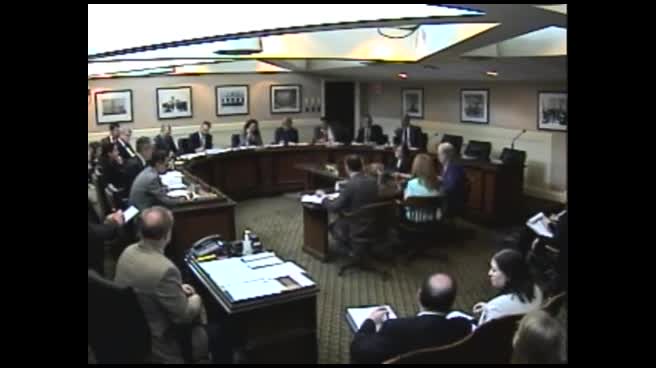
Assembly Standing Committee on Natural Resources
Bill Author
Bill Co-Author(s):