ACA 16: Redistricting: Senate districts.
- Session Year: 2017-2018
- House: Assembly
- Latest Version Date: 2017-06-07
The California Constitution creates the Citizens Redistricting Commission which is charged with the conduct of an open and transparent process enabling full public consideration of and comment on the drawing of district lines according to specific redistricting criteria. The Constitution requires the commission to establish single-member districts for the Senate, Assembly, Congress, and State Board of Equalization pursuant to a mapping process that, among other things, requires the districts to comply with the United States Constitution and the federal Voting Rights Act. The Constitution also requires that, to the extent possible, each Senate district be comprised of two whole, complete, and adjacent Assembly districts and that each Board of Equalization district be comprised of 10 whole, complete, and adjacent Senate districts.
This measure would modify the redistricting process for the drawing of Senate district lines by requiring the commission to establish 8 geographical regions that each include 5 Senate districts. The measure would eliminate the requirements that, to the extent practicable, each Senate district be comprised of 2 adjacent Assembly districts and that each Board of Equalization district be comprised of 10 adjacent Senate districts.
Resolved by the Assembly, the Senate concurring, That the Legislature of the State of California at its 201617 Regular Session commencing on the fifth day of December 2016, two-thirds of the membership of each house concurring, hereby proposes to the people of the State of California, that the Constitution of the State be amended as follows:
(a)The Citizens Redistricting Commission shall be created no later than December 31 in 2010, and in each year ending in the number zero thereafter.
(b)The commission shall: (1) conduct an open and transparent process enabling full public consideration of and comment on the drawing of district lines; (2) draw district lines according to the redistricting criteria specified in this article; and (3) conduct themselves with integrity and fairness.
(c)(1)The selection process is designed to produce a commission that is independent from legislative influence and reasonably representative of this States diversity.
(2)The commission shall consist of 14 members, as follows: five who are registered with the largest political party in California based on registration, five who are registered with the second largest political party in California based on registration, and four who are not registered with either of the two largest political parties in California based on registration.
(3)Each commission member shall be a voter who has been continuously registered in California with the same political party or unaffiliated with a political party and who has not changed political party affiliation for five or more years immediately preceding the date of his or her appointment. Each commission member shall have voted in two of the last three statewide general elections immediately preceding his or her application.
(4)The term of office of each member of the commission expires upon the appointment of the first member of the succeeding commission.
(5)Nine members of the commission shall constitute a quorum. Nine or more affirmative votes shall be required for any official action. The four final redistricting maps must be approved by at least nine affirmative votes which must include at least three votes of members registered from each of the two largest political parties in California based on registration and three votes from members who are not registered with either of these two political parties.
(6)Each commission member shall apply this article in a manner that is impartial and that reinforces public confidence in the integrity of the redistricting process. A commission member shall be ineligible for a period of 10 years beginning from the date of appointment to hold elective public office at the federal, state, county, or city level in this State. A member of the commission shall be ineligible for a period of five years beginning from the date of appointment to hold appointive federal, state, or local public office, to serve as paid staff for, or as a paid consultant to, the Board of Equalization, the Congress, the Legislature, or any individual legislator, or to register as a federal, state or local lobbyist in this State.
(d)The commission shall establish single-member districts for the Senate, Assembly, Congress, and State Board of Equalization pursuant to a mapping process using the following criteria as set forth in the following order of priority:
(1)Districts shall comply with the United States Constitution. Congressional districts shall achieve population equality as nearly as is practicable, and Senatorial, Assembly, and State Board of Equalization districts shall have reasonably equal population with other districts for the same office, except where deviation is required to comply with the federal Voting Rights Act or allowable by law.
(2)Districts shall comply with the federal Voting Rights Act (42 U.S.C. Sec. 1971 and following).
(3)Districts shall be geographically contiguous.
(4)The geographic integrity of any city, county, city and county, local neighborhood, or local community of interest shall be respected in a manner that minimizes their division to the extent possible without violating the requirements of any of the preceding subdivisions. A community of interest is a contiguous population which shares common social and economic interests that should be included within a single district for purposes of its effective and fair representation. Examples of such shared interests are those common to an urban area, a rural area, an industrial area, or an agricultural area, and those common to areas in which the people share similar living standards, use the same transportation facilities, have similar work opportunities, or have access to the same media of communication relevant to the election process. Communities of interest shall not include relationships with political parties, incumbents, or political candidates.
(5)To the extent practicable, and where this does not conflict with the criteria above, districts shall be drawn to encourage geographical compactness such that nearby areas of population are not bypassed for more distant population.
(6)To the extent practicable, and where this does not conflict with the criteria above, each Senate district shall be comprised of two whole, complete, and adjacent Assembly districts, and each Board of Equalization district shall be comprised of 10 whole, complete, and adjacent Senate districts.(e)(1)For purposes of establishing Senate districts, the commission shall establish eight regions, consisting of the counties identified in paragraph (2). Within each region, the commission shall establish five Senate districts, for a total of forty districts statewide.
(2)The regions shall consist of the following counties:
(A)North Coast Region: Counties of Del Norte, Humboldt, Mendocino, Lake, Sonoma, Marin, Napa, San Mateo, and San Francisco.
(B)Northern California Region: Counties of Siskiyou, Modoc, Trinity, Shasta, Lassen, Tehama, Plumas, Glenn, Butte, Sierra, Colusa, Sutter, Yuba, Nevada, Placer, El Dorado, Amador, Alpine, Calaveras, and Tuolumne.
(C)Bay-Delta Region: Counties of Yolo, Sacramento, Solano, Contra Costa, Alameda, and San Joaquin.
(D)Central Valley Region: Counties of Stanislaus, Mariposa, Mono, Merced, Madera, Fresno, Inyo, Tulare, Kings, and Kern.
(E)Central Coast Region: Counties of Santa Clara, Santa Cruz, Monterey, San Benito, San Luis Obispo, Santa Barbara, and Ventura.
(F)Los Angeles Region: Los Angeles County.
(G)Inland Empire Region: Counties of San Bernardino, Riverside, and Imperial.
(H)South Coast Region: Counties of Orange and San Diego.
(e)(f)The place of residence of any incumbent or political candidate shall not be considered in the creation of a map. Districts shall not be drawn for the purpose of favoring or discriminating against an incumbent, political candidate, or political party.
(f)(g)Districts for the Congress, Senate, Assembly, and State Board of Equalization shall be numbered consecutively commencing at the northern boundary of the State and ending at the southern boundary.
(g)(h)By August 15 in 2011, and in each year ending in the number one thereafter, the commission shall approve four final maps that separately set forth the district boundary lines for the congressional, Senatorial, Assembly, and State Board of Equalization districts. Upon approval, the commission shall certify the four final maps to the Secretary of State.
(h)(i)The commission shall issue, with each of the four final maps, a report that explains the basis on which the commission made its decisions in achieving compliance with the criteria listed in subdivision (d) and shall include definitions of the terms and standards used in drawing each final map.
(i)(j)Each certified final map shall be subject to referendum in the same manner that a statute is subject to referendum pursuant to Section 9 of Article II. The date of certification of a final map to the Secretary of State shall be deemed the enactment date for purposes of Section 9 of Article II.
(j)(k)If the commission does not approve a final map by at least the requisite votes or if voters disapprove a certified final map in a referendum, the Secretary of State shall immediately petition the California Supreme Court for an order directing the appointment of special masters to adjust the boundary lines of that map in accordance with the redistricting criteria and requirements set forth in subdivisions (d), (e), and (f) (f), and (g). Upon its approval of the masters map, the court shall certify the resulting map to the Secretary of State, which map shall constitute the certified final map for the subject type of district.
|
Date
|
Status
|
|---|---|
| Jun 27, 2018 | In committee: Set, first hearing. Failed passage. |
| May 17, 2018 | Referred to Coms. on E. & R. and APPR. |
| Jun 8, 2017 | From printer. May be heard in committee July 8. |
| Jun 7, 2017 | Read first time. To print. |
|
Date
|
Description
|
Location
|
Votes
|
|
|---|---|---|---|---|
| Jun 27, 2018 | Be adopted and re-referred to the Committee on [Appropriations] | Assembly Standing Committee on Elections and Redistricting |
Failed |
This list shows positions taken on this bill by organizations on the date displayed, which is linked to the original source.
Positions by individuals are not included.
|
Organization
|
Position
|
Date
|
|---|---|---|
| Butte County Board of Supervisors | * Support | Jun 27, 2018 |
| Chico Mayor Sean Morgan | ** Support | Jun 25, 2018 |
| Glenn County Board of Supervisors | ** Support | Jun 25, 2018 |
| Yuba County Board of Supervisors | ** Support | Jun 25, 2018 |
Date of Hearing: June 27, 2018
ASSEMBLY COMMITTEE ON ELECTIONS AND REDISTRICTING
Marc Berman, Chair
ABPCA Bill Id:ACA 16 (
Author:Gallagher) – As Introduced Ver:June 7, 2017
SUBJECT: Redistricting: Senate districts.
SUMMARY: Requires five State Senators to be elected from districts in each of eight specified regions of varying populations, instead of electing Senators from 40 districts with equal populations. Specifically, this measure:
- Requires the Citizens Redistricting Commission (CRC), when establishing state Senate districts, to establish eight regions consisting of the following counties:
- North Coast Region: The counties of Del Norte, Humboldt, Lake, Marin, Mendocino, Napa, San Francisco, San Mateo, and Sonoma.
- Northern California Region: The counties of Alpine, Amador, Butte, Calaveras, Colusa, El Dorado, Glenn, Lassen, Modoc, Nevada, Placer, Plumas, Shasta, Sierra, Siskiyou, Sutter, Tehama, Trinity, Tuolumne, and Yuba.
- Bay-Delta Region: The counties of Alameda, Contra Costa, Sacramento, San Joaquin, Solano, and Yolo.
- Central Valley Region: The counties of Fresno, Inyo, Kern, Kings, Madera, Mariposa, Merced, Mono, Stanislaus, and Tulare.
- Central Coast Region: The counties of Monterey, San Benito, San Luis Obispo, Santa Barbara, Santa Clara, Santa Cruz, and Ventura.
- Los Angeles Region: Los Angeles County.
- Inland Empire Region: The counties of Imperial, Riverside, and San Bernardino.
- South Coast Region: The counties of Orange and San Diego.
- Requires the CRC to establish five Senate districts within each region detailed above, for a total of 40 districts statewide.
- Repeals a requirement for the CRC, to the extent practicable and where it does not conflict with other specified criteria, to create Senate districts that are comprised of two whole, complete, and adjacent Assembly districts, and to create Board of Equalization (BOE) districts that are comprised of 10 whole, complete, and adjacent Senate districts.
EXISTING LAW:
- Provides that the legislative power of California is vested in the California Legislature, which consists of the Senate and the Assembly, but the people reserve to themselves the power of initiative and referendum.
- Provides that the State Senate has a membership of 40 Senators elected for four-year terms, with 20 to begin every two years.
- Establishes the CRC, and requires it to adjust the boundary lines of congressional, State Senatorial, Assembly, and BOE districts in the year following the year in which the national census is taken at the beginning of each decade, as specified.
- Requires the CRC, when establishing the boundary lines of State Senate districts, to establish single-member districts that have reasonably equal population with each other, except as required to comply with the federal Voting Rights Act or allowable by law.
- Prohibits a state from making or enforcing any law which abridges the privileges or immunities of citizens of the United States (US); from depriving any person of life, liberty, or property, without due process of law; or from denying to any person within its jurisdiction the equal protection of the laws. (US Constitution, Fourteenth Amendment, Section 1.)
FISCAL EFFECT: Unknown
COMMENTS:
- Purpose of the Measure: According to the author:
Representation is more than just ensuring equal population in districts. It is about ensuring that all voices, especially minority voices, are heard. Our Founders understood that representation should be both proportional (House of Reps) and seek to provide equality (Senate), by defined regions having an equal number of representatives. These principles of proportionality and equality have also been behind modern redistricting efforts to ensure that minority communities can have more influence over their representatives. In Federalist No. 51, James Madison warned of the so called “tyranny of the majority”, stating that “it is of great importance in a republic not only to guard society against oppression of its ruler, but to guard one part of the society against the injustice of the other part.” This republican form of government is guaranteed in the U.S. Constitution (Article IV, Sec. 4) and provides important checks to protect the interests of individuals, including minority subgroups.
We don’t have this important check in California because all electoral districts are based on population and all elections are decided by raw majorities or pluralities. I think most would agree that California is really a group of smaller states within a State. That is part of why California is hard to govern. We have various regions that are different from each other in terms of their economies, cultures, and values. Policies enacted by the State can have very disparate impacts to these sub-regions. But even with those differences, each region is critical to the greatness of the State and should be entitled to its own equal seat at the table. However, by apportioning both houses of the Legislature based solely on population, many regions of this State are left without significant representation and are effectively drowned out by the more populous portions of the State.
ACA 16 would recognize the unique regional diversity of our State and restore this important check at the state level by reapportioning the State Senate to better represent the diverse regions of California, while preserving the principal of “one-person one-vote” in the State Assembly. This would ensure no one region can dominate others, and would help build a consensus that better reflects the interest and concerns of all Californians.
- Longstanding Supreme Court Precedent Requires Legislative Districts to have Equal Populations: As noted above, the Fourteenth Amendment to the US Constitution prohibits a state from denying to any person within its jurisdiction the equal protection of the laws, among other provisions. This provision is commonly referred to as the Equal Protection Clause.
Prior to the 1960s, in many states, the seats in at least one of the houses of the state Legislature were established and based at least partially on geography, rather than strictly on a population basis. For example, although the districts in both houses of California's Legislature originally were based on population, in 1926, California voters adopted Proposition 28, which proposed a so-called "federal plan" of representation. Under that plan, the seats in the state Senate were apportioned largely based on geography, rather than by population. Proposition 28 provided that no county or city and county could contain more than one senatorial district, and no senatorial district could include more than three counties of small population. (The boundary lines for Assembly districts under Proposition 28 were developed based in part on population, but restrictions on dividing counties between Assembly districts meant that there were also significant population deviations between Assembly districts).
In 1962, the US Supreme Court considered Baker v. Carr (1962) 369 U.S. 186, a case in which Tennessee voters alleged that the state's apportioning of seats in the General Assembly among the state's counties, and a failure to reapportion them subsequently notwithstanding substantial growth and redistribution of the state's population, resulted in a "debasement of their votes," and those voters were thereby denied the equal protection of the laws guaranteed them by the Fourteenth Amendment. In that case, the Court held for the first time that such allegations of a denial of equal protection presented a justiciable constitutional cause of action. Prior to Baker, courts generally had held that such controversies over the apportionment of state legislative seats presented a "political question" over which the courts did not have jurisdiction.
The following year, the US Supreme Court first coined the phrase "one person, one vote" in the case of Gray v. Sanders (1963) 372 U.S. 368. That case concerned a Georgia law under which the winners of primary elections for statewide offices were determined based on a county unit system, where the candidate who received the most votes in each county received two votes for each representative to which the county was entitled in the lower House of Georgia's General Assembly. Because seats in the lower House were not apportioned based entirely on population, this system had the effect of giving voters in less-populated counties greater influence in primary elections than voters in more populous counties. In its ruling in Gray, the US Supreme Court found that the Equal Protection Clause requires that all voters who participate in an election have an equal vote in that election. In its decision, the court wrote:
How then can one person be given twice or ten times the voting power of another person in a state-wide election merely because he lives in a rural area or because he lives in the smallest rural county? Once the geographical unit for which a representative is to be chosen is designated, all who participate in the election are to have an equal vote—whatever their race, whatever their sex, whatever their occupation, whatever their income, and wherever their home may be in that geographical unit. This is required by the Equal Protection Clause of the Fourteenth Amendment. The concept of "we the people" under the Constitution visualizes no preferred class of voters but equality among those who meet the basic qualifications. The idea that every voter is equal to every other voter in his State, when he casts his ballot in favor of one of several competing candidates, underlies many of our decisions….
The conception of political equality from the Declaration of Independence, to Lincoln's Gettysburg Address, to the Fifteenth, Seventeenth, and Nineteenth Amendments can mean only one thing—one person, one vote.
Following Gray, in 1964, the US Supreme Court squarely addressed the question of whether the Equal Protection Clause requires apportionment of state legislative seats to be based on population in Reynolds v. Sims (1964) 377 U.S. 533. In Reynolds, the Court held the apportionment of Alabama's legislature unconstitutional and ordered reapportionment consistent with the one person, one vote principle. As articulated in Reynolds, the only permissible basis for drawing districts under the Equal Protection Clause—for both houses of a bicameral state legislature—is population, not geographical area. In the court's majority opinion, Chief Justice Warren wrote:
Legislators represent people, not trees or acres. Legislators are elected by voters, not farms or cities or economic interests. As long as ours is a representative form of government, and our legislatures are those instruments of government elected directly by and directly representative of the people, the right to elect legislators in a free and unimpaired fashion is a bedrock of our political system. It could hardly be gainsaid that a constitutional claim had been asserted by an allegation that certain otherwise qualified voters had been entirely prohibited from voting for members of their state legislature. And, if a State should provide that the votes of citizens in one part of the State should be given two times, or five times, or 10 times the weight of votes of citizens in another part of the State, it could hardly be contended that the right to vote of those residing in the disfavored areas had not been effectively diluted. It would appear extraordinary to suggest that a State could be constitutionally permitted to enact a law providing that certain of the State's voters could vote two, five, or 10 times for their legislative representatives, while voters living elsewhere could vote only once. And it is inconceivable that a state law to the effect that, in counting votes for legislators, the votes of citizens in one part of the State would be multiplied by two, five, or 10, while the votes of persons in another area would be counted only at face value, could be constitutionally sustainable. Of course, the effect of state legislative districting schemes which give the same number of representatives to unequal numbers of constituents is identical… Weighting the votes of citizens differently, by any method or means, merely because of where they happen to reside, hardly seems justifiable. One must be ever aware that the Constitution forbids "sophisticated as well as simple-minded modes of discrimination." Lane v. Wilson, 307 U.S. 268, 275; Gomillion v. Lightfoot, 364 U.S. 339, 342.
Consistent with the decision in Reynolds, in December 1964, the US District Court for the Southern District of California, Central Division, found in Silver v. Jordan (1964) 214 F.Supp. 576 that California's Senatorial apportionment under its "federal plan" of representation was "invidiously discriminatory, being based on no constitutionally valid policy; therefore it is invalid under the Equal Protection Clause of the Fourteenth Amendment, since it substantially dilutes one's right to vote solely because of where one happens to reside." The District Court's decision was affirmed by the US Supreme Court. Subsequently, the California Supreme Court ruled in Silver v. Brown (1965) 63 Cal.2d. 270 that California’s State Senate and State Assembly districts were invalid in light of the US Supreme Court’s decision in Reynolds. Five years later, California voters approved Proposition 6 at the June 1980 statewide primary election, which amended the California Constitution to conform with the US Supreme Court’s decision in Reynolds by requiring that “[t]he population of all districts of a particular type shall be reasonably equal.”
By establishing eight regions of different populations within the state and requiring that five Senators be elected from each region, this measure would result in the creation of Senate districts that have widely varying populations. The largest Senate districts would have more than two million people, while the smallest Senate districts would have about 326,000 people. In other words, voters living in the smallest Senate districts would have more than six times the voting power in the state Senate than voters living in the largest districts. This disparity between the smallest and largest districts is considerably larger than the disparity between the smallest and largest Assembly districts that were invalidated by the California Supreme Court in Silver v. Brown. In light of the foregoing information, it appears that the apportionment of the state Senate that is contemplated by this measure would violate the Equal Protection Clause of the Fourteenth Amendment to the US Constitution, as interpreted by the US and California Supreme Courts.
- Disparities in Regional Population: According to 2018 population estimates prepared by the Department of Finance, the most populous region created by this measure—the Los Angeles region—would have more than six times as many people as the least populous region created by this measure—the Northern California region. Based on those estimates and calculations by committee staff, this measure would cost Los Angeles County more than half its representation in the State Senate. At the same time, the 20 counties that would make up the “Northern California region” would receive more than three times the representation in the State Senate than they would otherwise be entitled to based on their populations. The following table details the effect that this measure would have on Senate representation for each of the 8 regions created by this measure:
Region | Population | Senate Districts Under Existing Law* | Senate Districts Under This Measure | Gain or Loss in Senate Representation |
Los Angeles | 10,283,729 | 10.3 | 5 | Loss of 5.3 seats |
South Coast | 6,558,559 | 6.6 | 5 | Loss of 1.6 seats |
Bay-Delta | 5,758,873 | 5.8 | 5 | Loss of 0.8 seats |
Inland Empire | 4,781,517 | 4.8 | 5 | Gain of 0.2 seats |
Central Coast | 4,326,462 | 4.3 | 5 | Gain of 0.7 seats |
Central Valley | 3,585,549 | 3.6 | 5 | Gain of 1.4 seats |
North Coast | 2,884,233 | 2.9 | 5 | Gain of 2.1 seats |
Northern California | 1,630,771 | 1.6 | 5 | Gain of 3.4 seats |
*Estimated number of Senate Districts that the region would be entitled to based on current population estimates for that region, assuming 40 Senate districts that have reasonably equal population with each other, as is currently required by the California Constitution. The number of estimated Senate Districts across all regions does not equal 40 due to rounding.
- Minority Rights: While the author and supporters of this measure argue that it will help ensure that minority voices are heard, it should be noted that nothing in this measure protects minority voices generally. Instead, this measure would increase the political power of certain people—those individuals who reside in one of the five less-populated regions that would gain Senate representation under this measure—while doing nothing to protect the voices of other minority populations. In fact, by amplifying the political power of certain regions of the state, this measure almost certainly would weaken the voices of certain minority groups that are concentrated in other areas of the state. For example, according to information from the US Census Bureau, more than half of the limited-English speaking households in California live in one of the three counties that would see the most significant loss in Senate representation under this proposal. By contrast, the four counties with the highest median household incomes in California would all gain Senate representation under this proposal.
- Conflicting Standards: As noted above, the California Constitution currently requires that State Senate districts be single-member districts that have reasonably equal population with each other. This measure would not repeal or change that requirement, but nonetheless would require that five Senate districts be created in each of the eight regions it creates. Because the regions do not have equal populations, these two requirements cannot both be satisfied. According to the author’s staff, it is the author’s intent that the each of the five Senate districts within a region would have reasonably equal populations with the other Senate districts in that region, but would not be required to have reasonably equal populations with Senate districts in other regions.
- Arguments in Support: In support of this measure, Chico Mayor Sean Morgan writes:
The current system of representation does not allow for many regions within California to have a voice on important state policy issues. [ACA 16]…would change the State Senate to ensure that each of California’s diverse regions has voice in dictating policy. Prior to 1968, State Senate seats were drawn so an individual county could not hold more than one seat. This made sense considering State Assembly districts were already structured according to population much like our House of Representatives. When this process was changed to its current form, the voice of many regions and their interests have fallen prey to the denser populated areas, leaving state policies to be dictated without consideration for regions outside of their concern…
ACA 16 would restore the lost voices of alienated regions by providing an important check that we have at the federal level in the Senate. Our founders purposely set up this republican form of government to protect minority voices and guard against the “tyranny of the majority.”
- Approval by Voters & Double-Referral: As a constitutional amendment, this measure requires the approval of the voters to take effect. Although this measure is keyed non-fiscal by the Legislative Counsel, it has been double-referred to the Assembly Appropriations Committee due to the costs associated with submitting a measure to the voters for their consideration.
REGISTERED SUPPORT / OPPOSITION:
Support
Butte County Board of Supervisors
Chico Mayor Sean Morgan
Glenn County Board of Supervisors
Yuba County Board of Supervisors
Opposition
None on file.
Analysis Prepared by: Ethan Jones / E. & R. / (916) 319-2094
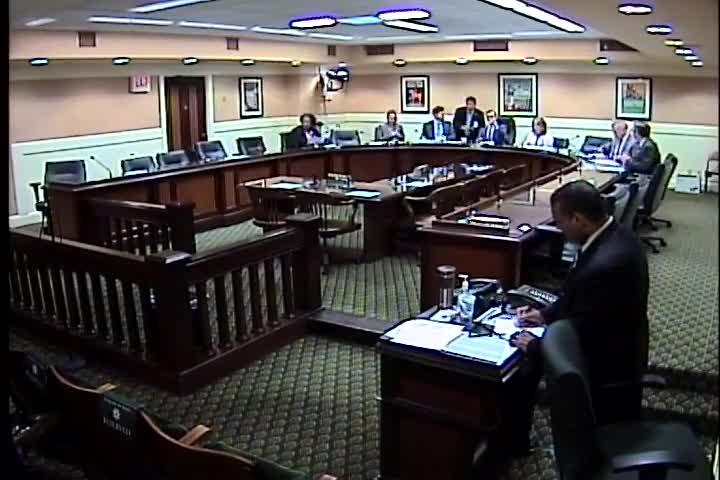
Discussed in Hearing
 32MIN
Assembly Standing Committee on Elections and Redistricting


Bill Co-Author(s):






