SB 1091: Property taxation: transfer of base year value: disaster relief.
- Session Year: 2017-2018
- House: Senate
- Latest Version Date: 2018-02-12
Existing property tax law, pursuant to a requirement of the California Constitution, authorizes the base year value of property that is substantially damaged or destroyed by a disaster, as declared by the Governor, to be transferred to a comparable property located within the same county that is acquired or newly constructed as a replacement for the substantially damaged or destroyed property.
This bill would prohibit the limitation requiring the transfer of base year value within the same county from applying to the transfer of base year value of property that is substantially damaged or destroyed by a disaster, as declared by the Governor, occurring on or after January 1, 2017, to July 1, 2018, inclusive, to comparable property located within a different county that is acquired or newly constructed as a replacement for the substantially damaged or destroyed property. The bill would limit these provisions to intercounty transfers of base year value that occur on or after the effective date of this bill.
By changing the manner in which local assessors assess property for property taxation purposes, this bill would impose a state-mandated local program.
The California Constitution requires the state to reimburse local agencies and school districts for certain costs mandated by the state. Statutory provisions establish procedures for making that reimbursement.
This bill would provide that, if the Commission on State Mandates determines that the bill contains costs mandated by the state, reimbursement for those costs shall be made pursuant to the statutory provisions noted above.
Existing law requires the state to reimburse local agencies annually for certain property tax revenues lost as a result of any exemption or classification of property for purposes of ad valorem property taxation.
This bill would provide that, notwithstanding those provisions, no appropriation is made and the state shall not reimburse local agencies for property tax revenues lost by them pursuant to the bill.
This bill would take effect immediately as a tax levy, but would become operative only if Senate Constitutional Amendment ____ of the 201718 Regular Session is approved by the voters.
(a)(1)Notwithstanding any other law, pursuant to Section 2 of Article XIIIA of the Constitution, the base year value of property that is substantially damaged or destroyed by a disaster, as declared by the Governor, may be transferred to comparable property within the same county, which is acquired or newly constructed within five years after the disaster, including in the case of the Northridge earthquake, as a replacement for the substantially damaged or destroyed property. At the time the base year value of the substantially damaged or destroyed property is transferred to the replacement property, the substantially damaged or destroyed property shall be reassessed at its full cash value; however, the substantially damaged or destroyed property shall retain its base year value notwithstanding the transfer authorized by this section. If the owner or owners of substantially damaged or destroyed property receive property tax relief under this section, that property shall not be eligible for property tax relief under subdivision (c) of Section 70 in the event of its reconstruction.
(2)Notwithstanding the limitation in paragraph (1) requiring the transfer of base year value within the same county, this limitation shall not apply to the transfer of base year value of property that is substantially damaged or destroyed by a disaster, as declared by the Governor, occurring on or after January 1, 2017, to July 1, 2018, inclusive, to comparable property located within a different county that is acquired or newly constructed as a replacement for the substantially damaged or destroyed property. This paragraph shall apply only to intercounty transfers of base year value that occur on or after the effective date of the act adding this paragraph.
(b)The replacement base year value of the replacement property acquired shall be determined in accordance with this section.
The assessor shall use the following procedure in determining the appropriate replacement base year value of comparable replacement property:
(1)If the full cash value of the comparable replacement property does not exceed 120 percent of the full cash value of the property substantially damaged or destroyed, then the adjusted base year value of the property substantially damaged or destroyed shall be transferred to the comparable replacement property as its replacement base year value.
(2)If the full cash value of the replacement property exceeds 120 percent of the full cash value of the property substantially damaged or destroyed, then the amount of the full cash value over 120 percent of the full cash value of the property substantially damaged or destroyed shall be added to the adjusted base year value of the property substantially damaged or destroyed. The sum of these amounts shall become the replacement propertys replacement base year value.
(3)If the full cash value of the comparable replacement property is less than the adjusted base year value of the property substantially damaged or destroyed, then that lower value shall become the replacement propertys base year value.
(4)The full cash value of the property substantially damaged or destroyed shall be the amount of its full cash value immediately prior to its substantial damage or destruction, as determined by the county assessor of the county in which the property is located.
(c)For purposes of this section:
(1)Property is substantially damaged or destroyed if either the land or the improvements sustain physical damage amounting to more than 50 percent of either the lands or the improvements full cash value immediately prior to the disaster. Damage includes a diminution in the value of property as a result of restricted access to the property where the restricted access was caused by the disaster and is permanent in nature.
(2)Replacement property is comparable to the property substantially damaged or destroyed if it is similar in size, utility, and function to the property which it replaces.
(A)Property is similar in function if the replacement property is subject to similar governmental restrictions, such as zoning.
(B)Both the size and utility of property are interrelated and associated with value. Property is similar in size and utility only to the extent that the replacement property is, or is intended to be, used in the same manner as the property substantially damaged or destroyed and its full cash value does not exceed 120 percent of the full cash value of the property substantially damaged or destroyed.
(i)A replacement property or any portion thereof used or intended to be used for a purpose substantially different than the use made of the property substantially damaged or destroyed shall to the extent of the dissimilar use be considered not similar in utility.
(ii)A replacement property or portion thereof that satisfies the use requirement but has a full cash value that exceeds 120 percent of the full cash value of the property substantially damaged or destroyed shall be considered, to the extent of the excess, not similar in utility and size.
(C)To the extent that replacement property, or any portion thereof, is not similar in function, size, and utility, the property, or portion thereof, shall be considered to have undergone a change in ownership when the replacement property is acquired or newly constructed.
(3)Disaster means a major misfortune or calamity in an area subsequently proclaimed by the Governor to be in a state of disaster as a result of the misfortune or calamity.
(d)(1)This section applies to any comparable replacement property acquired or newly constructed on or after July 1, 1985.
(2)The amendments made by Chapter 1053 of the Statutes of 1993 apply to any comparable replacement property that is acquired or newly constructed as a replacement for property substantially damaged or destroyed by a disaster occurring on or after October 20, 1991, and to the determination of base year values for the 199192 fiscal year and fiscal years thereafter.
(3)The amendments made by Chapter 317 of the Statutes of 2006 apply to any comparable replacement property that is acquired or newly constructed as a replacement for property substantially damaged or destroyed by a disaster occurring on or after July 1, 2003, and to the determination of base year values for the 200304 fiscal year and fiscal years thereafter.
(e)Only the owner or owners of the property substantially damaged or destroyed, whether one or more individuals, partnerships, corporations, other legal entities, or a combination thereof, shall receive property tax relief under this section. Relief under this section shall be granted to an owner or owners of substantially damaged or destroyed property obtaining title to replacement property. The acquisition of an ownership interest in a legal entity, which directly or indirectly owns real property, is not an acquisition of comparable property.
(f)Notwithstanding any other law, the board of supervisors of the County of San Diego may by ordinance extend the time period specified in subdivision (a) to transfer the base year value of property that is substantially damaged or destroyed by the Cedar Fire that commenced in October 2003, as declared by the Governor, to comparable property within the same county that is acquired or newly constructed as a replacement for the substantially damaged or destroyed property by two years. This subdivision shall apply to the determination of base year values for the 200304 fiscal year and fiscal years thereafter.
(g)The amendments made to this section by the act adding this subdivision Section 2 of Chapter 351 of the Statutes of 2011 shall apply commencing with the lien date for the 201213 fiscal year.
SEC. 2.If the Commission on State Mandates determines that this act contains costs mandated by the state, reimbursement to local agencies and school districts for those costs shall be made pursuant to Part 7 (commencing with Section 17500) of Division 4 of Title 2 of the Government Code.
SEC. 3.Notwithstanding Section 2229 of the Revenue and Taxation Code, no appropriation is made by this act and the state shall not reimburse any local agency for any property tax revenues lost by it pursuant to this act.
SEC. 4.This act provides for a tax levy within the meaning of Article IV of the California Constitution and shall go into immediate effect. However, the provisions of this act shall become operative only if Senate Constitutional Amendment ____ of the 201718 Regular Session is approved by the voters.
|
Date
|
Status
|
|---|---|
| May 25, 2018 | May 25 hearing: Held in committee and under submission. |
| May 23, 2018 | Set for hearing May 25. |
| May 22, 2018 | May 22 hearing: Placed on APPR. suspense file. |
| May 14, 2018 | Set for hearing May 22. |
| May 9, 2018 | From committee: Do pass and re-refer to Com. on APPR. (Ayes 6. Noes 0.) (May 9). Re-referred to Com. on APPR. |
| May 2, 2018 | Set for hearing May 9. |
| Feb 22, 2018 | Referred to Com. on GOV. & F. |
| Feb 13, 2018 | From printer. May be acted upon on or after March 15. |
| Feb 12, 2018 | Introduced. Read first time. To Com. on RLS. for assignment. To print. |
|
Date
|
Description
|
Location
|
Votes
|
|
|---|---|---|---|---|
| May 22, 2018 | Placed on suspense file | Senate Standing Committee on Appropriations |
Passed |
|
| May 9, 2018 | Do pass, but first be re-referred to the Committee on [Appropriations] | Senate Standing Committee on Governance and Finance |
Passed |
This list shows positions taken on this bill by organizations on the date displayed, which is linked to the original source.
Positions by individuals are not included.
|
Organization
|
Position
|
Date
|
|---|---|---|
| California State Board of Equalization | * Support | May 9, 2018 |
| Howard Jarvis Taxpayers Association | * Support | May 9, 2018 |
| Unknown. | ** Against | May 4, 2018 |
SENATE COMMITTEE ON
Senator Ricardo Lara, Chair
2017 - 2018 Regular Session
SB 1091 (Stone) - Property taxation: transfer of base year value: disaster relief
Version: | Policy Vote: |
Urgency: | Mandate: |
Hearing Date: | Consultant: |
This bill meets the criteria for referral to the Suspense File.
Bill Summary:
SB 1091 would permit taxpayers to transfer the base year value of property that is substantially damaged or destroyed by a disaster declared by the Governor occurring between January 1, 2017, and July 1, 2018.
Fiscal Impact:
The Board of Equalization (BOE) indicates that the bill would result in an annual property tax revenue loss of $134,000 for every 100 qualifying transfers. Reductions in local property tax revenues, in turn, increase General Fund Proposition 98 spending by up to roughly 50 percent (the exact amount depends on the specific amount of the annual Proposition 98 guarantee, which in turns depends upon a variety of economic, demographic and budgetary factors). BOE would incur absorbable costs to inform local county assessors, the public, and staff of the law change.
Additionally, by requiring county assessors to make specified changes to how real property is valued for property tax purposes, this bill creates a state-mandated local program. To the extent the Commission on State Mandates determines that the provisions of this bill create a new program or impose a higher level of service on local agencies, local agencies could claim reimbursement of those costs (General Fund).
Background:
The California Constitution provides that all property is taxable unless explicitly exempted by the Constitution or federal law. The Constitution (1) limits the maximum amount of any ad valorem tax on real property at 1 percent of full cash value, plus any locally-authorized bonded indebtedness, and (2) provides that assessors can only reappraise property whenever it is purchased, newly constructed, or when ownership changes (Proposition 13, 1978). Proposition 13 also limits on the inflationary growth of real property value to 2 percent per year.
Thus, when real property is purchased, the county assessor assigns it an assessed value that is equal to its purchase price, or “acquisition value,” referred to as the "base year value." Each year thereafter, the property’s assessed value increases by 2 percent or the rate of inflation (as measured by the California Consumer Price Index), whichever is lower. This process continues until the property is sold, at which point the county assessor again assigns it an assessed value equal to its most recent purchase price. In other words, a property’s assessed value resets to market value (what a willing buyer would pay for it) when it is sold. In most years, under this assessment practice, a property’s market value is greater than its assessed value. This occurs because assessed values increase by a maximum of 2 percent per year, whereas market values tend to increase more rapidly. Therefore, as long as a property does not change ownership, its assessed value increases predictably from one year to the next and is unaffected by higher annual increases in market value.
For example, a home purchased in 2011 for $300,000, has a maximum taxable base year value of $306,000 in 2012, $312,200 in 2013, $318,440 in 2014, $325,808 in 2015, and $332,324 in 2016. This base year value is then multiplied by the appropriate rate (usually 1 percent, but can be slightly more) to determine tax due. The annual values in the years after the home was purchased are referred to as factored base year values.
Reassessment limits and capped inflation growth ensure a predictable, slowly growing tax obligation for the taxpayer, and predictable revenue for local agencies; however, these provisions may also result in a taxable base year value below the property’s fair market value, which grows in magnitude the longer the assessor hasn’t reassessed the property. In most cases, this system results in shifting the cost of public services from incumbent homeowners onto individuals who recently purchased property.
Under certain circumstances, property owners may avoid reassessment when acquiring or purchasing a particular property by way of a base year value transfer. As an example, Proposition 50 (approved in 1986) allows taxpayers to transfer their base year value when their property is damaged by a major misfortune or calamity and located in an area declared to be in a state of disaster by the Governor.
Base year value transfers allow taxpayers to continue to pay property taxes at the factored base year value of their previous home, and not on the cash value of their newly purchased home, often resulting in tax savings. After the taxpayer transfers the base year value to the replacement property, the assessor revalues the damaged property to its current full cash value.
Additionally, voters subsequently allowed taxpayers to transfer base year values to other counties when their property is damaged by a major misfortune or calamity and located in an area declared to be in a state of disaster by the Governor (Proposition 171, 1993). However, the initiative only allowed transfers to other counties for a taxpayer’s principal places of residence, and solely when the board of supervisors in the county where the replacement property is located has adopted an ordinance making this benefit available. As of August 2014, there are ten counties that have such an ordinance: Contra Costa, Los Angeles, Modoc, Orange, San Francisco, Santa Clara, Solano, Sonoma, Sutter, and Ventura. Additionally, replacement homes must be purchased within three years rather than five years.
In September, October, and December 2017, wildfires burned property resulting in the Governor proclaiming a state of emergency in Butte, Lake, Los Angeles, Madera, Mariposa, Mendocino, Napa, Nevada, Orange, San Diego, Santa Barbara, Solano, Sonoma, Tulare, Ventura, and Yuba Counties.
Proposed Law:
This bill would allow taxpayers to transfer the base year value of property that is substantially damaged or destroyed by a disaster, as declared by the Governor, occurring on or after January 1, 2017, to July 1, 2018, to comparable property located within a different county that is acquired or newly constructed as a replacement for the substantially damaged or destroyed property. The measure would (1) apply to transfers on or after the effective date of the bill, and (2) not take effect unless an unspecified Senate Constitutional Amendment (SCA) is also enacted. To date, the companion SCA has not been introduced.
Related Legislation:
- ACA 24 (Waldron) would amend the California Constitution to extend the intracounty disaster relief base year value transfer, for disasters that occur from January 1, 2071 to July 1, 2018, to replacement property located in anywhere in California.
- AB 1890 (Mountjoy, Chapter 317, Statutes of 2006) extended the timeframe for related base year value transfers from three years to five years for all disasters occurring on or after July 1, 2003.
Staff Comments:
As noted above, this bill would expand disaster relief for property substantially damaged or destroyed by a Governor-declared disaster between January 1, 2017 and July 1, 2018. This measure would allow a base year value to transfer to a replacement property anywhere in California.
BOE’s revenue estimate for the bill requires two assumptions: (1) the affected difference between market and assessed values, and (2) the number of additional transfers granted under the terms of the bill. Regarding the former, BOE staff estimated the average value of each additional base year transfer granted. The median statewide home price in January 2018 was $528,000. In 2017-18, average assessed value of a property receiving the homeowners' exemption was about $394,000. Therefore, where the transfer is granted, the estimated amount of assessed value difference per home is about $134,000.
BOE indicates that, in 2017, over 10,000 homes were damaged or destroyed due to Governor-declared disasters. At the time of this analysis was prepared, seven weeks remain in the period of time covered by this bill; thus the number of damaged homes could be higher.
The revenue impact of the bill would depend on the extent to which homeowners of damaged properties purchase a replacement property in a different county; this number cannot be predicted. Instead, as an order of magnitude, BOE indicates that the revenue loss of the bill would be $134,000 for every 100 qualifying transfers. This figure is arrived at by multiplying 100 replacement homes by the $134,000 difference calculated above by the basic property tax rate of one percent.
This bill would amend the same section of law that allows for disaster base year value transfers within the same county, and not the one that allows for transfers from one county to another. Consequently, taxpayers can transfer their base year value from a disaster-affected property to any replacement property that is comparable to the damaged property in size, utility, and function, and is not limited to their principal place of residence. Additionally, the bill provides that the State shall not reimburse local agencies for any property tax revenue losses resulting from its expanded eligibility of base year value transfers.
-- END --
SENATE COMMITTEE ON GOVERNANCE AND FINANCE
Senator Mike McGuire, Chair
2017 - 2018 Regular
Bill No: | SB 1091 | Hearing Date: | 5/9/18 |
Author: | Stone | Tax Levy: | Yes |
Version: | 2/12/18 | Fiscal: | Yes |
Consultant: | Grinnell | ||
Property taxation: transfer of base year value: disaster relief
Allows taxpayers to transfer the base year value of property that is substantially damaged or destroyed by a disaster declared by the Governor occurring between January 1, 2017, and July 1, 2018.
Background
Article XIII of the California Constitution provides that all property is taxable unless explicitly exempted by the Constitution or federal law. The Constitution limits the maximum amount of any ad valorem tax on real property at 1% of full cash value, and directs assessors to only reappraise property when newly constructed, or when ownership changes (Proposition 13, 1978).
In 1986, Voters approved Proposition 50, which allows taxpayers to transfer their base year value when their property is damaged by a major misfortune or calamity and located in an area declared to be in a state of disaster by the Governor. In these cases, state law implementing the initiative allows the transfer when:
- The damaged property sustains physical damages amounting to more than 50 percent of its full cash value immediately prior to the disaster,
- The replacement property is located in the same county as the damaged property and is acquired or newly constructed within two years after the disaster,
- The replacement property is comparable to the damaged property in size, utility, and function. For example, a residential property can be replacement property for a damaged residence, but not for a commercial, agricultural, or industrial property,
- The market value of the replacement property does not exceed 120% of the fair market value of the replaced property in its pre-damaged condition. Property owners can still receive the disaster relief in cases where the value of the replacement property exceeds the 120% limitation, but any amount over this threshold is assessed at full market value and added to the transferred base year value, and
- The buyer of the replacement property was the owner of the damaged property at the time of damage.
Base year value transfers allow taxpayers to continue to pay property taxes at the factored base year value of their previous home, and not on the cash value of their newly purchased home, often resulting in tax savings. After the taxpayer transfers the base year value to the replacement property, the assessor revalues the damaged property to its current full cash value.
Additionally, voters subsequently allowed taxpayers can transfer base year values to other counties when their property is damaged by a major misfortune or calamity and located in an area declared to be in a state of disaster by the Governor (Proposition 171, 1993). However, the initiative only allowed transfers to other counties for a taxpayer’s principal places of residence, and solely when the board of supervisors in the county where the replacement property is located has adopted an ordinance making this benefit available. As of August 2014, there are ten counties that have such an ordinance: Contra Costa, Los Angeles, Modoc, Orange, San Francisco, Santa Clara, Solano, Sonoma, Sutter, and Ventura. Additionally, replacement homes must be purchased within three years rather than five years.
Voters also approved change in ownership exclusions to allow homeowners over the age of 55 and disabled persons (regardless of age) to transfer their home’s base year values to a replacement home of equal or lesser value within the same county (Proposition 60, 1988, and Proposition 110, 1990), or to homes in counties that adopt ordinances allowing the transfer (Proposition 90, 1990). Eleven counties currently allow these out-of-county transfers (Alameda, El Dorado, Los Angeles, Orange, Riverside, San Bernardino, San Diego, San Mateo, Santa Clara, Tuolumne, and Ventura).
Seeking tax relief for individuals affected by recent natural disasters, the author wants to allow taxpayers affected by disasters between January 1, 2017, and July 1, 2018, to transfer base year values to other counties.
Proposed Law
Senate Bill 1091 allows taxpayers to transfer the base year value of property that is substantially damaged or destroyed by a disaster, as declared by the Governor, occurring on or after January 1, 2017, to July 1, 2018, to comparable property located within a different county that is acquired or newly constructed as a replacement for the substantially damaged or destroyed property. The measure applies to transfers on or after the effective date of the bill.
SB 1091 states it does not take effect unless an unspecified Senate Constitutional Amendment is also enacted.
State Revenue Impact
Pending.
Comments
1. Purpose of the bill. According to the author, “In 2017, California suffered numerous natural disasters that have created fiscal challenges to homeowners who are facing unexpected costs after needing to rebuild after their homes were damaged or destroyed by natural disasters. I have been working closely with Board of Equalization Member Jerome E. Horton and his staff to address this problem with SB 1091. SB 1091 will allow property owners that were affected by a natural disaster to avoid property tax reassessment and transfer their Prop. 13 base year value from one home to another when forced to relocate.”
2. Revenue loss. SB 1091 expands eligibility for base year value transfers, resulting in property tax revenue losses. As a result, the state and local agencies will have to reduce spending or increase taxes to match the foregone revenue. The Committee may wish to consider whether the bill is worth the tradeoff of spending cuts or raising taxes, or both.
3. Constitutional? The California Constitution allows disaster-affected taxpayers to transfer their base year values within the same county, or to other counties, when the accepting county has enacted an ordinance, and both the original and replacement properties serve as the taxpayer’s principal place of residence. The Constitution clearly requires the accepting county to pass an ordinance for this treatment to apply, which SB 1091 seeks to override by allowing transfers to any county for taxpayers affected by recent disasters. However, assessors are unlikely to allow transfers in contravention of the Constitution. Without a constitutional change, SB 1091 cannot be implemented. While ACA 24 (Waldron) would make this change, it’s unclear whether the Assembly will approve the measure; additionally, SB 1091 states that it will only take effect if a Senate Constitutional Amendment (SCA) is also enacted, but no SCA has yet been introduced. The Committee may wish to consider whether approving SB 1091 without the necessary Constitutional change makes sense.
4. Local control. As mentioned above, the Constitution and state law currently allow taxpayers to transfer their base year values to other counties when the accepting county has enacted an ordinance, and both the original and replacement properties serve as the taxpayer’s principal place of residence. Requiring counties to enact an ordinance to accept these transfers retains an important measure of local control; with both disaster-related as well as transfers for disabled persons and those over 55, counties can choose based on their own values whether providing the tax benefit is worth the foregone revenue. SB 1091 would overrule local approval requirements, assuming the necessary Constitutional change. Additionally, SB 1091’s goal could be accomplished by encouraging counties to accept these transfers, especially in light of the effect of recent disasters. The Committee may wish to consider whether overriding local control is merited in this case.
5. When disasters strike. SB 1091 applies to properties damaged or destroyed by disasters declared by the Governor that occurred on or after January 1, 2017, to July 1, 2018. While the state has seen some of its worst fires and landslides during this period, why should SB 1091’s benefit be allowed for these taxpayers, but not others whose property has been damaged or destroyed at a different time, or by lesser disasters? Additionally, the bill would provide a tax benefit for persons affected by storms in March in eight counties (Amador, Fresno, Kern, Mariposa, Merced, Stanislaus, Tulare, and Tuolumne), but should severe wildfires return to California again this fall for the third straight year, those taxpayers could not claim SB 1091’s benefit. The Committee may wish to consider whether SB 1091’s application only to taxpayers affected by disasters between January 1, 2017, and July 1, 2018 is fair.
6. Not just principal place of residence. SB 1091 amends the section that allows for disaster base year value transfers within the same county, and not the one that allows for transfers from one county to another. As a result, a taxpayer can transfer their base year value from a disaster-affected property to any replacement property is comparable to the damaged property in size, utility, and function, and is not limited to their principal place of residence.
7. Mandate. The California Constitution requires the state to reimburse local governments for the costs of new or expanded state mandated local programs. Because SB 1091 changes the manner in which assessors value real property, Legislative Counsel says that it imposes a new state mandate. The measure states that should the Commission on State Mandates determine that the bill imposes a reimbursable mandate, reimbursement must be made pursuant to existing statutory provisions. Additionally, the bill provides that the state shall not reimburse local agencies for any property tax revenue losses resulting from its expanded eligibility of base year value transfers.
Support and Opposition
(5/4/18)
Support: Los Angeles County Assessor Jeffrey Prang; Santa Clara County Assessor Larry Stone; Ventura County Assessor Dan Goodwin; Howard Jarvis Taxpayers Association; Southwest California Legislative Council.
Opposition: Unknown.
-- END --
Discussed in Hearing
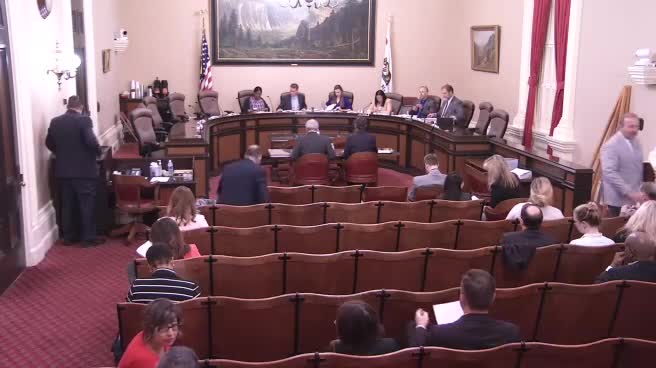 4MIN
Senate Standing Committee on Governance and Finance
Bill Author

Bill Co-Author(s):