SB 1213: Personal income taxes: household and dependent care services.
- Session Year: 2017-2018
- House: Senate
- Latest Version Date: 2018-02-15
The Personal Income Tax Law, in modified conformity to federal income tax law, authorizes a credit for household and dependent care services necessary for gainful employment, as provided. That law provides that the amount of the state credit is a percentage, either 50%, 43%, or 34%, as applicable, of the allowable federal credit determined on the basis of the amount of federal adjusted gross income earned that is not over $100,000, as specified by separate income brackets.
This bill, for taxable years beginning on or after January 1, 2019, would revise the above calculation to provide that the applicable state credit percentage is 50% if the federal adjusted gross income earned is not over $100,000, as provided. The bill would additionally require, for taxable years beginning on or after January 1, 2019, for a taxpayer with an allowable credit in excess of tax liability, a payment from the Tax Relief and Refund Account, a continuously appropriated account, to the taxpayer equal to the amount of the allowable credit that is in excess of tax liability, as provided. By authorizing additional payments from this account, this bill would make an appropriation.
(a)For each taxable year beginning on or after January 1, 2000, there shall be allowed as a credit against the net tax, as defined in Section 17039, an amount determined in accordance with Section 21 of the Internal Revenue Code, relating to expenses for household and dependent care services necessary for gainful employment, except that the amount of the credit shall be a percentage, as provided in subdivision (b) of the allowable federal credit without taking into account whether there is a federal tax liability.
(b)For the purposes of subdivision (a), the percentage of the allowable federal credit shall be determined as follows:
(1)For taxable years beginning before January 1, 2003:
| The percentage of |
|---|---|
$40,000 or less | 63% |
Over $40,000 but not over $70,000 | 53% |
Over $70,000 but not over $100,000 | 42% |
Over $100,000 | 0% |
(2)For taxable years beginning on or after January 1, 2003: 2003, and before January 1, 2019:
| The percentage of |
|---|---|
$40,000 or less | 50% |
Over $40,000 but not over $70,000 | 43% |
Over $70,000 but not over $100,000 | 34% |
Over $100,000 | 0% |
(3)For taxable years beginning on or after January 1, 2019:
| The percentage of |
|---|---|
Not over $100,000 | 50% |
Over $100,000 | 0% |
(c)For purposes of this section, adjusted gross income means adjusted gross income as computed for purposes of paragraph (2) of subdivision (h) of Section 17024.5.
(d)The credit authorized by this section shall be limited, as follows:
(1)Employment-related expenses, within the meaning of Section 21 of the Internal Revenue Code, relating to expenses for household and dependent care services necessary for gainful employment, shall be limited to expenses for household services and care provided in this state.
(2)Earned income, within the meaning of Section 21(d) of the Internal Revenue Code, relating to earned income limitation, shall be limited to earned income subject to tax under this part. For purposes of this paragraph, compensation received by a member of the armed forces for active services as a member of the armed forces, other than pensions or retired pay, shall be considered earned income subject to tax under this part, whether or not the member is domiciled in this state.
(e)For purposes of this section, Section 21(b)(1) of the Internal Revenue Code, relating to a qualifying individual, is modified to additionally provide that a child, as defined in Section 152(f)(1) of the Internal Revenue Code, relating to child defined, shall be treated, for purposes of Section 152 of the Internal Revenue Code, relating to dependent defined, as applicable for purposes of this section, as receiving over one-half of his or her support during the calendar year from the parent having custody for a greater portion of the calendar year, that parent shall be treated as a custodial parent, within the meaning of Section 152(e) of the Internal Revenue Code, relating to special rule for divorced parents, etc., as applicable for purposes of this section, and the child shall be treated as a qualifying individual under Section 21(b)(1) of the Internal Revenue Code, relating to qualifying individual, as applicable for purposes of this section, if both of the following apply:
(1)The child receives over one-half of his or her support during the calendar year from his or her parents who never married each other and who lived apart at all times during the last six months of the calendar year.
(2)The child is in the custody of one or both of his or her parents for more than one-half of the calendar year.
(f)For taxable years beginning on or after January 1, 2019, if the amount allowable as a credit under this section exceeds the tax liability computed under this part for the taxable year, the excess shall be credited against other amounts due, if any, and the balance, if any, shall be paid from the Tax Relief and Refund Account and refunded to the taxpayer.
(f)(g)The amendments to this section made by Section 1.5 of Chapter 824 of the Statutes of 2002 apply only to taxable years beginning on or after January 1, 2002.
(g)(h)The amendments made to this section by Chapter 14 of the Statutes of 2011 apply to taxable years beginning on or after January 1, 2011.
|
Date
|
Status
|
|---|---|
| May 25, 2018 | May 25 hearing: Held in committee and under submission. |
| May 18, 2018 | Set for hearing May 25. |
| Apr 23, 2018 | April 23 hearing: Placed on APPR. suspense file. |
| Apr 13, 2018 | Set for hearing April 23. |
| Apr 12, 2018 | From committee: Do pass and re-refer to Com. on APPR. (Ayes 5. Noes 0.) (April 11). Re-referred to Com. on APPR. |
| Apr 6, 2018 | Set for hearing April 11. |
| Mar 1, 2018 | Referred to Com. on GOV. & F. |
| Feb 16, 2018 | From printer. May be acted upon on or after March 18. |
| Feb 15, 2018 | Introduced. Read first time. To Com. on RLS. for assignment. To print. |
|
Date
|
Description
|
Location
|
Votes
|
|
|---|---|---|---|---|
| Apr 23, 2018 | Placed on suspense file | Senate Standing Committee on Appropriations |
Passed |
|
| Apr 11, 2018 | Do pass, but first be re-referred to the Committee on [Appropriations] | Senate Standing Committee on Governance and Finance |
Passed |
This list shows positions taken on this bill by organizations on the date displayed, which is linked to the original source.
Positions by individuals are not included.
|
Organization
|
Position
|
Date
|
|---|---|---|
| Her Healing. | ** Support | Apr 6, 2018 |
| Unknown. | ** Against | Apr 6, 2018 |
SENATE COMMITTEE ON
Senator Ricardo Lara, Chair
2017 - 2018 Regular Session
SB 1213 (Anderson) - Personal income taxes: household and dependent care services
Version: | Policy Vote: |
Urgency: | Mandate: |
Hearing Date: | Consultant: |
This bill meets the criteria for referral to the Suspense File.
Bill Summary:
SB 1213 would (1) increase the Child and Dependent Care Expense Credit for low and middle income taxpayers, and (2) make the credit refundable.
Fiscal Impact:
The Franchise Tax Board (FTB) estimates that the bill would result in General Fund revenue losses of $60 million in 2018–19, $100 million in 2019-20, and $100 million in 2020-21. FTB’s costs to implement the bill have yet to be determined, but are likely significant.
Background:
Tax expenditure programs (TEPs) are special tax provisions that reduce the amount of revenues the “basic” tax system would otherwise generate in order to provide (1) benefits to certain groups of taxpayers, and/or (2) incentives to encourage certain types of behavior and activities, such as charitable giving. Specifically, current law provides for, among other things, various income and corporation tax credits and deductions, as well as exemptions from the sales and use tax. The Department of Finance is required to publish a list of TEPs (currently totaling several hundred), which currently $61 billion annually.
The federal Child and Dependent Care Credit is a nonrefundable tax credit, equal to a portion of the taxpayer’s qualifying child or dependent care expenses. The taxpayer must incur employment-related expenses related to caring for a qualifying child or dependent (generally under 13 years of age or mentally incapable of taking caring of himself or herself) to obtain the credit. The credit amount is equal to the applicable percentage (20 to 35 percent) multiplied by the employment-related expenses paid. The applicable percentage declines as a taxpayer’s adjusted gross income (AGI) rises. The employment-related expenses are also limited. If a taxpayer has one qualifying dependent, the taxpayer is limited to $3,000 of employment-related expenses; this amount doubles if the taxpayer has two or more qualifying dependents.
Current state law provides a tax credit similar to the federal credit. The state credit, the Child and Dependent Care Expense (CDC) Credit, conforms to both the federal credit percentage and the federal expenses cap. The CDC Credit is computed by first applying the federal credit percentage (20 to 35 percent) to the lesser of (1) the state expenses cap ($3,000 or $6,000, described above), (2) California employment-related expenses paid, or (3) California earned income.
Then, the applicable state CDC Credit percentage is applied. As is the case with the federal credit, the percentage varies based on the taxpayer’s AGI, specifically as follows: 50 percent if AGI is $40,000 or less, 43 percent if AGI is greater than $40,000 but less than $70,000, 34 percent if AGI is greater than $70,000 but less than $100,000, and 0 percent if AGI is in excess of $100,000.
Prior to 2012, the CDC Credit was refundable, such that if a taxpayer’s liability was less than the CDC Credit amount, the difference would be returned to the taxpayer as a refund. However, the Legislature made the CDC Credit nonrefundable beginning in taxable year 2011, in response to budget constraints.
Proposed Law:
This bill would, beginning with taxable year 2019, modify the CDC Credit by reducing the existing four AGI categories and credit percentages to two, as follows: (1) 50 percent if AGI is less than $100,000, and 0 percent if AGI is over $100,000. The bill would also make the CDC Credit refundable, as was the case prior to 2011.
Related Legislation:
- AB 2023 (Caballero) would make the Child and Dependent Care Expenses Credit refundable, upon appropriation by the Legislature. The bill is currently pending in the Assembly Appropriations Committee.
- AB 230 (Chavez, 2017) would have increased the Child and Dependent Care Expenses Credit. The bill was held under submission on the Suspense File of the Assembly Appropriations Committee.
Staff Comments:
Using Internal Revenue Service (IRS) data related to the Child and Dependent Care Expenses Credit, and its own data from state returns, FTB indicates that California taxpayers reported approximately $400 million in federal Child and Dependent Care Expenses Credit in 2015. As noted above, this bill would increase the California percentage to 50 percent of federal credit for taxpayers with federal AGI less than $100,000.
After applying the California percentage allowable, FTB estimates that the CDC Credit is $100 million. Under current law, the amount of credit each taxpayer can use is limited by their tax liability, because as noted above, the credit is currently not refundable. These taxpayers currently claim an estimated $33 million in Child and Dependent Care Expenses Credit per year. However, this bill would allow a refund of the credit in excess of the taxpayer’s tax liability. The estimated amount of credit claimed is then increased by 30 percent, to $130 million, to account for additional qualified taxpayers that would file returns to claim the refundable credit. This amount is then reduced by the amount of credit currently claimed. As a result, the estimated revenue loss from the refundable credit is $95 million for 2015. FTB then adjusted the amount to reflect growth in the economy since 2015, and converted the data to a fiscal-year basis.
-- END --
SENATE COMMITTEE ON GOVERNANCE AND FINANCE
Senator Mike McGuire, Chair
2017 - 2018 Regular
Bill No: | SB 1213 | Hearing Date: | 4/11/18 |
Author: | Anderson | Tax Levy: | No |
Version: | 2/15/18 | Fiscal: | Yes |
Consultant: | Brown | ||
Personal income taxes: household and dependent care services
Increases the Child and Dependent Care Expense Credit for low and middle income taxpayers, and makes the credit refundable.
Background
California law allows various income tax credits and deductions, as well as sales and use tax exemptions. The Legislature enacts such tax incentives to either compensate taxpayers for incurring certain expenses, such as child adoption, or to influence certain behavior, such as charitable giving. The Legislature uses tax incentives to encourage taxpayers to do something that but for the tax credit, they would otherwise not do. The Department of Finance is required to annually publish a list of tax expenditures, currently totaling around $61.3 billion per year.
The federal Child and Dependent Care Credit is a nonrefundable tax credit, equal to a portion of the taxpayer’s qualifying child or dependent care expenses. To obtain the credit, the taxpayer must incur employment-related expenses to provide care for a qualifying child or dependent. Employment-related expenses are expenses incurred by the taxpayer for the taxpayer to be gainfully employed such as day care expenses or adult day care expenses. A qualifying child or dependent must be either under 13 years old, or mentally incapable of taking caring of himself or herself.
The credit amount is equal to the applicable percentage (20 to 35 percent) times the employment-related expenses paid. The applicable percentage is determined by the taxpayer’s adjusted gross income (AGI). For example, a taxpayer with an AGI of $15,000 or less uses the highest applicable percentage (35%) while a taxpayer with an AGI of $43,000 or more uses the lowest applicable percentage (20%). The employment-related expenses are also limited. If a taxpayer has one qualifying dependent, the taxpayer is limited to $3,000 of employment-related expenses. If the taxpayer has two or more qualifying dependents, the taxpayer is limited to $6,000 of employment-related expenses.
Existing state law provides a tax credit similar to the federal credit. The state’s credit, entitled Child and Dependent Care Expense (CDC) Credit, conforms to both the federal credit percentage and the federal expenses cap. The CDC Credit is computed by first applying the federal credit percentage (20 to 35 percent) to the lesser of:
- The state expenses cap (ex. $3,000 for one dependent or $6,000 for two or more dependents),
- California employment-related expenses paid, or
- California earned income.
Then, the applicable CDC Credit percentage is applied. The percentage varies based on the taxpayer’s AGI.
If AGI is: CDC Credit Percentage:
$40,000 or less 50%
Over $40,000 but not over $70,000 43%
Over $70,000 but not over $100,000 34%
Over $100,000 0%
Prior to 2012, the CDC Credit was refundable. However, the Legislature made the CDC Credit nonrefundable for tax years starting on January 1st, 2011, and after due to budget constraints (SB 86, Committee on Budget and Fiscal Review, 2011).
The author wants to make the CDC Credit refundable again and modify it to help minimize the financial strains of child and dependent care for low and middle income families.
Proposed Law
Senate Bill (SB) 1213 increases the credit percentage for taxpayers with an AGI between $40,000 and $100,000.
If AGI is: CDC Credit Percentage:
$100,000 or less 50%
Over $100,000 0%
SB 1213 also makes the CDC Credit refundable. In other words, if a taxpayer’s liability is less than the CDC Credit, the taxpayer can get a refund. The CDC Credit increase takes effect for taxable years beginning on or after January 1st, 2019. The bill also makes technical and conforming changes.
State Revenue Impact
The Franchise Tax Board (FTB) estimates revenue losses of $60 million in 2018–2019, $100 million in 2019-2020, and $100 million in 2020-2021.
Comments
1. Purpose of the bill. According to the author, “SB 1213 seeks to encourage participation in California’s formal labor market for lower- to middle-income California residents by increasing the existing household and dependent care services tax credit. The credit would increase to 50% of the allowable federal amount for all taxpayers with an AGI less than $100,000. FTB’s 2012 data shows that a large majority of the Child and Dependent Care services tax credit is concentrated among households with incomes between $50,000 and $99,999. Around 85% of the credit amounts were given to households in this income range. Making it refundable would allow low-income to see reduced child care costs, allowing them to keep more of their paycheck to support their families and place children in a higher-quality program of their choice.”
2. Another way? The Legislature has many options to incentivize workforce participation for parents who have children. For example, they could increase funding for the nine child care and early education programs the state currently administers. Three of these programs relate to California Work Opportunity and Responsibility to Kids (CalWORKS) which provides child care subsidies to families transitioning out of welfare. Another program is the California State Preschool Program which provides part-day and full-day programs for three to four year olds from low income, working families. SB 1213 presents another way: increasing a current tax credit. However, the amount of state revenue lost under SB 1213 could impact funding levels for the other nine state run child care programs as the state would ultimately collect less money in taxes. The Committee may wish to consider if SB 1213 is the best approach to reduce child care costs for California families.
3. Cost of child care. According to a 2017 report by Child Care Aware of America, the average yearly cost of child care in California for an infant is $13,671 and for a four year old is $9,406. In fact, the cost of infant care is nearly the annual cost of college tuition at a four year state college. In 2012, the same report by Child Care Aware of America listed the average yearly cost of child care in California for an infant as $12,068 and for a four year old as $8,407. These costs have increased at a rate greater than inflation since 2012. However, the state has increased funding for child care through other measures. Since 2013, the state has added more than 41,000 subsidized child care slots as well as increased funding for CalWorks Stage 2 and Stage 3 Child Care by $5.2 million. Should the state be doing more to help alleviate the burden child care costs place on working families?
4. Low income families. The current CDC Credit has a minimal impact if any on the state’s poorest working families because they have little or no tax liability. SB 1213 makes the CDC Credit refundable, providing an income boost to low income families.
5. Example. Mr. and Mrs. Smith have a combined AGI of $75,000; two children (one infant and one four year old); and annual child care costs of $22,077. Under current law, the Smith family would receive a CDC Credit of $408 calculated as follows:
$1,200 (federal credit) x 34% (current CDC Credit applicable rate) = $408 CDC credit
Under SB 1213, the Smith family would receive a CDC Credit of $600 calculated as follows:
$1,200 (federal credit) x 50% (SB 1213 CDC Credit applicable rate) = $600 CDC credit
6. Refundable credits. According to FTB and a report by the Legislative Analyst’s Office, “Options for a State Earned Income Tax Credit,” refundable credits increase refund fraud and identity theft. Historically, both the IRS and the FTB have experienced fraud and improper claims with refundable credits. More importantly, if a refund is determined to be fraudulent, the refund commonly cannot be recovered. The Committee may wish to consider the effects of issuing a refundable credit.
7. Sunset provision. Sunset clauses automatically repeal a bill’s provisions as of a specified date, allowing a future Legislature to assess its continuing public benefit. The Committee may wish to add a sunset date to SB 1213 to allow a future Legislature to assess the effectiveness of the CDC Credit.
8. Related legislation. Assembly bill (AB) 2023 (Caballero, 2018) makes the CDC Credit refundable. The Assembly Committee on Revenue and Taxation approved the measure on 3/13, and it is currently pending hearing in the Assembly Appropriations Committee.
Support and Opposition
(4/11/18)
Support: Her Healing.
Opposition: Unknown.
-- END --
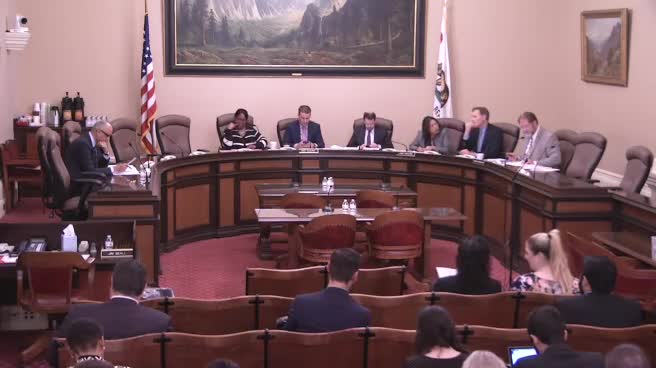
Discussed in Hearing
 14MIN
Senate Standing Committee on Governance and Finance
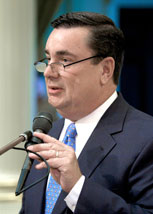
Bill Author
Bill Co-Author(s):