SB 1299: Tidelands: City of Huntington Beach: Huntington Harbor.
- Session Year: 2017-2018
- House: Senate
- Latest Version Date: 2018-04-17
Existing law vests with the State Lands Commission control over certain state lands, including certain tidelands and submerged lands.
This bill would grant and convey in trust to the City of Huntington Beach all of the rights, title, and interest of the state, held by the state by virtue of its sovereignty, acting by and through the commission, in specified real property properties in the Main and Midway Channels of Huntington Harbor in the County of Orange. The bill would require the City of Huntington Beach to submit to the commission for approval a trust lands use plan, as specified, thereby imposing a state-mandated local program.
This bill would make legislative findings and declarations as to the necessity of a special statute for Huntington Harbor.
The California Constitution requires the state to reimburse local agencies and school districts for certain costs mandated by the state. Statutory provisions establish procedures for making that reimbursement.
This bill would provide that, if the Commission on State Mandates determines that the bill contains costs mandated by the state, reimbursement for those costs shall be made pursuant to the statutory provisions noted above.
Existing law vests with the State Lands Commission control over certain state lands, including certain tidelands and submerged lands.
This bill would grant and convey in trust to the City of Huntington Beach all of the rights, title, and interest of the state, held by the state by virtue of its sovereignty, acting by and through the commission, in specified real property in the Main and Midway Channels of Huntington Harbor in the County of Orange. The bill would require the City of Huntington Beach to submit to the commission for approval a trust lands use plan, as specified, thereby imposing a state-mandated local program.
This bill would make legislative findings and declarations as to the necessity of a special statute for Huntington Harbor.
The California Constitution requires the state to reimburse local agencies and school districts for certain costs mandated by the state. Statutory provisions establish procedures for making that reimbursement.
This bill would provide that, if the Commission on State Mandates determines that the bill contains costs mandated by the state, reimbursement for those costs shall be made pursuant to the statutory provisions noted above.
Under existing law, all property has an owner, whether that owner is the state and the property is public, or the owner is an individual and the property is private. Existing law establishes that the state is the owner of all land that is below tide water, and below ordinary high-water mark, bordering upon tide water within the state. Existing law also establishes that the state is the owner of all land below the water of a navigable lake or stream; of all property lawfully appropriated by the state to its own use as well as property dedicated to the state; and of all property of which there is no other owner.This bill would make nonsubstantive changes to that provision governing state property.Under existing law, all property has an owner, whether that owner is the state and the property is public, or the owner is an individual and the property is private. Existing law establishes that the state is the owner of all land that is below tide water, and below ordinary high-water mark, bordering upon tide water within the state. Existing law also establishes that the state is the owner of all land below the water of a navigable lake or stream; of all property lawfully appropriated by the state to its own use as well as property dedicated to the state; and of all property of which there is no other owner.
This bill would make nonsubstantive changes to that provision governing state property.
The Legislature finds and declares all of the following:
(a)Upon admission to the United States, and as an incident of its sovereignty, the State of California received title to the tidelands, submerged lands, and beds of navigable waterways within its borders to be held subject to the public trust doctrine for statewide public purposes, including commerce, navigation, fisheries, preservation of lands in their natural state, and other recognized public trust uses.
(b)The state has made grants of public trust lands to over 80 local public entities, each of which manages the states public trust lands as a trustee pursuant to the public trust doctrine, legislative grants, the California Constitution, and other laws governing the trust and the trustees fiduciary responsibilities.
(c)A local trustee of the granted public trust lands is charged with managing the states granted public trust lands on behalf of the state for the benefit of all the people of California.
(d)As part of its fiduciary duty, a local trustee of granted public trust lands is required to take reasonable steps under the circumstances to take and keep control of, and preserve, the trust property.
(e)All jurisdiction and authority remaining in the state as to tidelands and submerged lands as to which grants have been given or may be made is vested within the State Lands Commission.
SEC. 2.(a)This section applies to the following:
(1)Approximately 65.6 acres of land described as strip A, in the grant deed to the State of California, recorded 12/20/1962, in book 6368, page 411, of official records, of the County of Orange with the following parcel numbers:
(A)APN 178-023-04.
(B)APN 178-023-05.
(C)APN 178-023-10.
(D)APN 178-023-11.
(E)APN 178-023-12.
(F)APN 178-023-13.
(G)APN 178-023-14.
(H)APN 178-023-15.
(I)APN 178-651-01.
(2)Approximately 7.57 acres of land described as strip B, in the grant deed to the State of California, recorded 12/20/1962, in book 6368, page 411, of official records, of the County of Orange, excepting therefrom, parcel 1, as described on Record of Survey 99-1071, filed in book 176, page 9 of Records of Survey, located in the Orange County records, the land rights of which are reportedly to be vested to Michael R. Van Voorhis and Denise Van Voorhis, trustees and the successor trustees of the Van Voorhis Family Trust, dated 10/31/2001, as these rights were transferred through the quitclaim deed recorded 12/05/2001, as Document Number 20010883069, in said official records and also excepting therefrom, parcel 2, as described on Record of Survey 99-1071, filed in book 176, page 9 of Records of Survey, located in the Orange County records, the land rights of which are reported to be vested to Hope Harbor Incorporated as these rights were transferred through the grant deed to Hope Harbor, Incorporated, recorded 12/29/2017, as Document Number 2017000564086, in said official records, with the parcel number APN 178-651-11.
(3)Approximately 4.54 acres of land consisting of a strip of land 270.00 feet in width the northwesterly line thereof being the southwesterly prolongation of the compromise boundary line between Rancho Los Alamitos and Rancho La Bolsa Chica, per instrument recorded in book 115, page 284 of records of the County of Los Angeles, said strip bounded on the northeast by the southwest line of the lands in the grant deed to the Orange County Flood Control District, recorded 07/08/1958 in book 4346, page 451 of Orange County Records and bounded on the southwest by the northeast line of strip A, as described in the grant deed to the State of California, recorded 12/20/1962, in book 6368, page 411, of official records, of the County of Orange with the following parcel numbers:
(A)APN 178-700-14.
(B)APN 178-700-15.
(C)APN 178-700-20.
(b)(1)Notwithstanding any other law, there is hereby granted and conveyed in trust to the City of Huntington Beach and to its successors, all of the rights, title, and interest of the state, held by the state by virtue of its sovereignty, acting by and through the State Lands Commission, in parcels of land in the County of Orange as set forth in subdivision (a).
(2)The powers granted to the State Lands Commission as to leasing or granting of rights or privileges with relation to the parcels of land set forth in subdivision (a) are hereby conferred to the City of Huntington Beach, as the local trustee of those parcels.
(3)The City of Huntington Beach shall succeed to all interests held by the State Lands Commission in leases situated on the parcels of land set forth in subdivision (a).
(4)The trustee may lease the trust lands, or any part of the trust lands, for limited periods, not exceeding 49 years, for purposes consistent with the trust upon which those parcels of land are held, as specified in subdivision (a) of Section 1.
(c)On or before January 1, 2020, the City of Huntington Beach, as trustee, shall submit to the State Lands Commission for approval a trust lands use plan describing any proposed development, preservation, or other use of the trust lands conveyed pursuant to subdivision (b) and any changes of, amendments to, or extensions of, the trust lands use plan.
(d)(1)The State Lands Commission shall review with reasonable promptness the trust lands use plan and any changes or amendments to the plan to determine whether they are consistent with the public trust doctrine and the requirement of this act.
(2)Based on its review, the commission shall approve or disapprove the plan or any changes or amendments to the plan.
(3)If the commission disapproves the plan, the commission shall notify the City of Huntington Beach of the disapproval and the city shall submit a revised plan to the commission no later than 180 days after the date of the notice of disapproval.
(4)If the commission determines that the revised plan is inconsistent with the public trust doctrine and the requirements of this act, all rights, title, and interests of the City of Huntington Beach in and to the trust lands and improvements on the trust lands shall revert to the state.
(e)Section 6359 of the Public Resources Code does not apply to trust land granted pursuant to this section.
SEC. 2.SEC. 3.The Legislature finds and declares that a special statute is necessary and that a general statute cannot be made applicable within the meaning of Section 16 of Article IV of the California Constitution because of the unique circumstance related to the Huntington Harbor.
SEC. 3.SEC. 4.If the Commission on State Mandates determines that this act contains costs mandated by the state, reimbursement to local agencies and school districts for those costs shall be made pursuant to Part 7 (commencing with Section 17500) of Division 4 of Title 2 of the Government Code.
(a)Notwithstanding any other law, there is hereby granted and conveyed in trust to the City of Huntington Beach and to its successors, all of the rights, title, and interest of the state, held by the state by virtue of its sovereignty, acting by and through the State Lands Commission, in two parcels of land situated in the Main and Midway Channels of Huntington Harbor in the County of Orange.
(b)On or before January 1, 2020, the City of Huntington Beach, as trustee, shall submit to the State Lands Commission for approval a trust lands use plan describing any proposed development, preservation, or other use of the trust lands conveyed pursuant to subdivision (a) and any changes of, amendments to, or extensions of, the trust lands use plan.
(c)(1)The State Lands Commission shall review with reasonable promptness the trust lands use plan and any changes or amendments to the plan to determine whether they are consistent with the public trust doctrine and the requirement of this act.
(2)Based on its review, the commission shall approve or disapprove the plan or any changes or amendments to the plan.
(3)If the commission disapproves the plan, the commission shall notify the City of Huntington Beach of the disapproval and the city shall submit a revised plan to the commission no later than 180 days after the date of the notice of disapproval.
(4)If the commission determines that the revised plan is inconsistent with the public trust doctrine and the requirements of this act, all rights, title, and interests of the City of Huntington Beach in and to the trust lands and improvements on the trust lands shall revert to the state.
SEC. 2.The Legislature finds and declares that a special statute is necessary and that a general statute cannot be made applicable within the meaning of Section 16 of Article IV of the California Constitution because of the unique circumstance related to the Huntington Harbor.
SEC. 3.If the Commission on State Mandates determines that this act contains costs mandated by the state, reimbursement to local agencies and school districts for those costs shall be made pursuant to Part 7 (commencing with Section 17500) of Division 4 of Title 2 of the Government Code.
SECTION 1.Section 670 of the Civil Code is amended to read:670.(a)The state is the owner of all land below tide water, and below ordinary high-water mark, bordering upon tide water within the state.(b)In addition the state is the owner of all land below the water of a navigable lake or stream; of all property lawfully appropriated by the state to its own use; of all property dedicated to the state; and of all property of which there is no other owner.The State (a)The state is the owner of all land below tide water, and below ordinary high-water mark, bordering upon tide water within the State; of state.
(b)In addition the state is the owner of all land below the water of a navigable lake or stream; of all property lawfully appropriated by it the state to its own use; of all property dedicated to the State; state; and of all property of which there is no other owner.
|
Date
|
Status
|
|---|---|
| May 22, 2018 | May 25 hearing postponed by committee. |
| May 18, 2018 | Set for hearing May 25. |
| May 7, 2018 | May 7 hearing: Placed on APPR. suspense file. |
| Apr 27, 2018 | Set for hearing May 7. |
| Apr 23, 2018 | From committee: Do pass and re-refer to Com. on APPR. (Ayes 9. Noes 0.) (April 24). Re-referred to Com. on APPR. |
| Apr 24, 2018 | From committee: Do pass and re-refer to Com. on APPR. (Ayes 9. Noes 0. Page 4787.) (April 24). Re-referred to Com. on APPR. |
| Apr 17, 2018 | From committee with author's amendments. Read second time and amended. Re-referred to Com. on N.R. & W. |
| Apr 10, 2018 | Set for hearing April 24. |
| Apr 4, 2018 | Re-referred to Com. on N.R. & W. |
| Mar 22, 2018 | From committee with author's amendments. Read second time and amended. Re-referred to Com. on RLS. |
| Mar 1, 2018 | Referred to Com. on RLS. |
| Feb 20, 2018 | From printer. May be acted upon on or after March 22. |
| Feb 16, 2018 | Introduced. Read first time. To Com. on RLS. for assignment. To print. |
|
Date
|
Description
|
Location
|
Votes
|
|
|---|---|---|---|---|
| May 7, 2018 | Placed on suspense file | Senate Standing Committee on Appropriations |
Passed |
|
| Apr 24, 2018 | Do pass, but first be re-referred to the Committee on [Appropriations] | Senate Standing Committee on Natural Resources and Water |
Passed |
This list shows positions taken on this bill by organizations on the date displayed, which is linked to the original source.
Positions by individuals are not included.
|
Organization
|
Position
|
Date
|
|---|---|---|
| City Of Huntington Beach | * Support | Apr 24, 2018 |
SENATE COMMITTEE ON
Senator Ricardo Lara, Chair
2017 - 2018 Regular Session
SB 1299 (Nguyen) - Tidelands: City of Huntington Beach: Huntington Harbor
Version: | Policy Vote: |
Urgency: | Mandate: |
Hearing Date: | Consultant: |
This bill meets the criteria for referral to the Suspense File.
Bill Summary:
SB 1299 would grant and convey in trust to the City of Huntington Beach (city) Huntington Harbour and all of the rights, title, and interest currently held state.
Fiscal Impact:
- Potentially significant one-time cost (General Fund) to State Lands Commission (commission) for staff time to analyze, review, and approve (or disapprove) the trust lands use plan.
- Ongoing costs of approximately $600,000 (General Fund) from lost revenue associated with state leases at Huntington Harbour.
Background:
Existing law protects, pursuant to the common law doctrine of the public trust, the public’s right to use California’s waterways for commerce, navigation, fishing, boating, natural habitat protection, and other water oriented activities. The public trust doctrine provides that filled and unfilled tide and submerged lands and the beds of lakes, streams, and other navigable waterways are held in trust by the state for the benefit of the people of the state.
Existing law also requires the commission to be the steward and manager of the state’s public trust lands. The commission has direct administrative control over the state’s public trust lands and oversight authority over public trust lands granted by the Legislature to local governments.
The Legislature has granted, in trust, public trust lands to over 80 local public agencies via more than 300 statutes. These legislative grants require the granted lands to be managed for the benefit of all the people of the state and serve statewide—as opposed to purely local—public purposes, pursuant to the public doctrine and the terms of the applicable granting statutes. Any grants of these lands to local trustees must be in the best interests of the state.
Commission staff negotiates leases and contracts with applicants to consider authorizing the use and development of the state’s property and resources. Public trust lands can be leased only for those uses consistent with the public trust.
In order to facilitate the development of the area that became Huntington Harbour in the City of Huntington Beach, a survey was conducted and the state’s ownership of the Main and Midway Channel was consolidated. The commission entered into agreements with the Huntington Harbour Corporation (corporation) in 1960 (Boundary Line Agreement 18 and Sovereign Land Location 34, as recorded) to convey certain state-owned lands to the corporation in exchange for ownership of these two Channels. The corporation then developed the Harbour and its waterfront residential subdivisions. According to Zillow, property values along these two channels are in the millions of dollars currently with premium locations valued in excess of $5 million.
Proposed Law:
This bill would grant and convey in trust to the City of Huntington Beach (city) all of the rights, title, and interest of the state, held by the state by virtue of its sovereignty, acting by and through the commission, in specified real properties in Huntington Harbour in the County of Orange.
In addition, the proposed legislative grant would:
- Provide for the city to succeed the commission for any existing leases.
- Authorize the trustee to lease trust lands for up to 49 years for trust purposes.
- Require the trustee on or before January 1, 2020 to submit a trust lands use plan or any changes or amendments to the plan, as described, to the commission for approval.
- Waive certain statutory survey requirements applying to the granted lands.
- Make legislative findings and declarations as to the necessity of a special statute for Huntington Harbour.
- Impose a state-mandated local program and require the state reimburse the city for applicable costs.
Staff Comments:
Significant General Fund impact. According to the commission, “it would have to analyze, review, and approve (or disapprove) the trust lands use plan. There would also be an annual General Fund revenue reduction of about $600,000 from lost revenue associated with state leases at Huntington Harbour. The current annual revenue the state receives from the leases is $339,336.35, but about 40 percent of properties where a lease is required haven’t yet come under lease.”
Significant concerns expressed in the Senate Natural Resources and Water Committee analysis and the commission. Staff notes numerous concerns expressed by the policy committee as well as official opposition from the commission (though this was submitted recently and they appear to be working with the author’s office to resolve these). Concerns include:
- Inconsistency with prior grants to use legislative intent language to invoke all jurisdiction and authority. This is not sufficiently restrictive or binding. Existing grants use explicit statutory language.
- The construction of the language implies that the trust lands use plan and all amendments to it must be submitted by January 1, 2020 which is likely not feasible. Reasonable deadlines, a careful consideration of how to manage the transition between the commission and the local trustee for leases, and a thorough conditioning of the grant’s terms—particularly in the event of a failure to reach agreement or to comply with the terms by either party—appear to be appropriate for legislative grants.
- It is inappropriate for the state to have to reimburse the city for state-mandated costs as the city is seeking this grant.
- Appropriate benchmarks or methods for calculating lease rents should be explicitly provided for, and allow for periodic adjustment.
- Liability and indemnification may need to be explicitly addressed.
- Revenue generation to support public trust purposes should be explicit. How the revenues will be spent, with appropriate accounting and handling, should also be explicit. Sufficient funds should be generated to support the commission’s oversight role, whether it is by the SB 551 model, as described above, or otherwise. Generating revenue for certain activities, such as dredging, to maintain the granted lands’ public trust purposes should be explicitly addressed and accounted for.
- It is unclear that it is appropriate to waive the survey requirements for the lands identified in the grant (PRC §6359).
- The grantee will likely have to maintain certain public uses – such as the recent lease for installation of a new water pipeline in the state’s sovereign lands subject to this grant. It may be appropriate to explicitly acknowledge that in the grant.
-- END --
SENATE COMMITTEE ON NATURAL RESOURCES AND WATER
Senator Robert Hertzberg, Chair
2017 - 2018 Regular
Bill No: SB Hearing Date: April 24, 2018
Author: | Nguyen | ||
Version: | April 17, 2018 Amended | ||
Urgency: | No | Fiscal: | Yes |
Consultant: | Katharine Moore | ||
Subject: Tidelands: City of Huntington Beach: Huntington Harbor
BACKGROUND AND EXISTING LAW
- Existing law protects, pursuant to the common law doctrine of the public trust, the public’s right to use California’s waterways for commerce, navigation, fishing, boating, natural habitat protection, and other water oriented activities. The public trust doctrine provides that filled and unfilled tide and submerged lands and the beds of lakes, streams, and other navigable waterways are held in trust by the state for the benefit of the people of the state.
- Existing law also requires the State Lands Commission (commission) to be the steward and manager of the state’s public trust lands. The commission has direct administrative control over the state’s public trust lands and oversight authority over public trust lands granted by the Legislature to local governments.
- The Legislature has granted, in trust, public trust lands to over 80 local public agencies via more than 300 statutes. These legislative grants require the granted lands to be managed for the benefit of all the people of the state and serve statewide – as opposed to purely local – public purposes, pursuant to the public doctrine and the terms of the applicable granting statutes. Any grants of these lands to local trustees must be in the best interests of the state.
- Commission staff negotiate leases and contracts with applicants to the commission to consider authorizing the use and development of the state’s property and resources. Public trust lands can be leased only for those uses consistent with the public trust.
- In order to facilitate the development of the area that became Huntington Harbour in the City of Huntington Beach, a survey was conducted and the state’s ownership of the Main and Midway Channel was consolidated. Two agreements were entered into by the commission and the Huntington Harbour Corporation (corporation) in 1960 (Boundary Line Agreement 18 and Sovereign Land Location 34, as recorded). In these the state conveyed certain state-owned lands to the corporation in exchange for ownership of these two Channels. The corporation then developed the Harbour and its waterfront residential subdivisions. According to Zillow, property values along these two channels are in the millions of dollars currently with premium locations valued in excess of $5 million.
- The “bulkhead” constitutes the boundary between private upland ownership and the state’s sovereign lands in the Main and Midway Channels. Any structures – for example, cantilevered decks – extending past the bulkhead are in sovereign lands and require a lease from the commission. Other channels created by corporation are not state sovereign lands and do not require a state lease. There is no dispute about what are state tidelands or sovereign lands in the Harbour, although the commission’s required leases for structures in the state tidelands are controversial.
- According to the commission, some property owners along the state-owned channels dispute the state’s legal right to charge rent for the use of public land, the state’s right to disapprove of certain uses of public trust land, and the state’s right to require a lease. In the last decade there have been three lawsuits between the commission and local residents over these disputed issues. To Committee staff’s knowledge, all three suits ended up being settled, and – in the two relevant instances – the residents complied with lease terms and paid rent eventually. Considerable state resources were expended on this litigation. Similar disputes regarding state authority apparently continue with other local residents.
- It is not clear that the commission has been completely consistent in its leasing practices over the decades. In fact, a 2011 state audit (described below) highlighted inconsistencies in the commission’s leasing practices. Citing a lack of adequate staff, the commission appears to have sought leases for use of the state’s public trust lands when it became aware that leases were needed. According to news reports, the commission did not become aware of the numerous cantilevered decks encroaching on state sovereign lands in the two Harbour channels until 2004, although it had issued leases to some Harbour residents before then. The state began seeking additional leases thereafter.
- One aspect of these disputes may stem, in part, from changes in state law. All structures did not always require rent. Apparently there was a long-standing practice for the state to not charge rent for recreational boat docks extending over the state’s public trust lands for certain associated single-family homes. While leases were issued, rent was not charged for any applicable dock, but was assessed on any other structures. Regardless, lease terms still require the lessee to insure the lease premises and indemnify the state for any liability.
- In 1976, the Attorney General (AG) wrote an opinion concluding that the issuance of a rent-free lease to certain landowners, as defined, for a private recreational pier on state land constitutes a gift of public property. This is illegal under California law. However, there was an exception in the instance that the rent-free lease provides a public benefit. The AG found no public benefit, particularly as the public is excluded from these piers. Subsequently, SB 349 (Nejedly, Chapter 431, Statutes of 1977) declared that there is substantial public benefit from the construction and maintenance of private recreational piers associated with certain homes that justifies rent-free leases. Older leases for structures in state tidelands in the Harbour cite SB 349 to provide rent-free terms for private recreational piers.
- In August 2011, the California State Auditor released a review of the commission with the subtitle “Because It Has Not Managed Public Lands Effectively, the State Has Lost Millions in Revenue for the General Fund.” Focusing on elements relevant here, the state auditor found that the commission inadequately monitored and serviced its leases, and did not adequately oversee granted lands, among other things. Oversight of granted lands was faulted for being reactive, not proactive. In the audit report, estimates suggest that repealing the provision in state law providing for rent-free leases for certain activities could raise an additional $2 million annually after 10 years.
- SB 152 (Pavley, Chapter 585, Statutes of 2011) repealed the SB 349 provision prohibiting the state from charging rent for private recreational piers constructed on state lands for use by certain owners, as defined. The bill requires the commission to charge rent for a private recreational pier, and requires the rent to be based on local conditions and local fair market rental rates.
- At the same time as SB 152, SB 876 (Harmon) would have allowed the commission to lease certain structures for shore protection to certain owners for a term of 99 years with limited rent adjustment. SB 876 was applicable to Harbour residents, and did not pass.
- Today, according to the commission, there are 205 properties subject to leases from the commission for state lands in Huntington Harbour. Of these there are 146 active or pending leases. The breakdown by category of those leases is recreational use (83), recreational and protective structure use (21), recreational pier (19), protective structure (12), “other” (which means recreational use with a deck enclosure) (4), public agency (3), commercial (2), parking area (1) and dredging (1). There are 18 expired leases, and 41 properties with improvements that have never been under lease, but should be.
- Generally the leases are for 10 years for residential use (Public Resources Code (PRC) §6505.5), and must be for public trust uses. The commission has certain benchmarks established for various uses to ensure fair market rents are assessed.
- The commission has undertaken outreach efforts to Harbour residents, and, for example, held a public meeting on April 25, 2017 in Huntington Beach for Harbour residents to “provide property owners and other interested parties information relating to the commission’s land ownership, jurisdiction, leasing practices and application process.”
- SB 551 (DeSaulnier, Chapter 422, Statutes of 2011) allows the state to receive 20% of gross revenues, ensuring the state receives revenue from granted trust lands. (This is a grant to the City of Pittsburg.) Previously, the commission had received a portion of excess funds periodically. This revenue stream helps to support grant oversight at the commission.
PROPOSED LAW
This bill would grant and convey in trust to the City of Huntington Beach (city) all of the rights, title, and interest of the state, held by the state by virtue of its sovereignty, acting by and through the commission, in specified real properties in Huntington Harbour in the County of Orange.
In addition, the proposed legislative grant would:
- Provide for the city to succeed the commission for any existing leases.
- Authorize the trustee to lease trust lands for up to 49 years for trust purposes.
- Require the trustee on or before January 1, 2020 to submit a trust lands use plan or any changes or amendments to the plan, as described, to the commission for approval.
- The commission is required to review the trust lands use plan “with reasonably promptness” for consistency with this bill and the public trust. The commission shall approve or disapprove the plan or any changes or amendments to it.
- In the event of disapproval, the commission shall notify the city and the city has 180 days from receiving notice to submit a revised plan.
- The trust lands revert to the state if the commission determines that the revised plan is inconsistent with the public trust doctrine and the requirements of the grant.
- The commission is required to review the trust lands use plan “with reasonably promptness” for consistency with this bill and the public trust. The commission shall approve or disapprove the plan or any changes or amendments to it.
- Waive certain statutory survey requirements applying to the granted lands.
- The bill would make legislative findings and declarations as to the necessity of a special statute for Huntington Harbour.
- Impose a state-mandated local program and require the state reimburse the city for applicable costs.
ARGUMENTS IN SUPPORT
According to the author, “Huntington Harbor is a critical recreational and functional resource in the City of Huntington Beach. This legislation, which is specified to the City of Huntington Beach, seeks to retain local control of the Harbour by giving full control of the lands in the Harbour to the City. Currently, the State Lands Commission holds the leasing rights to the submerged lands in the Main and Midway Channel to the Harbour. As such, the [commission] requires various land leases for residents with pleasure boat docks and cantilevered decks for only those properties that are located on the Main and Midway Channels. Huntington Harbour is made up of several hundred additional residences that are not on the Main or Midway channels, and thus do not need land lease agreements with the [commission]. As a result, it creates an unequal and inconsistent land leasing practice in the Harbour. By assuming ownership of this land, the City has the ability to normalize the land leasing situation in Huntington Harbour and prevent neighborhood strife cause by inconsistent and unequal land lease procedures.”
“This bill was also shift the cost burden and liability of the ownership of the submerged land in the Main and Midway Channel to the City of Huntington Beach. Upon the passage of this bill, the City will work in close partnership with the [commission] to create a trust land use plan that will describe any proposed development, preservation, or other use of the trust lands being granted to them.”
“It is important that the City is able to exercise local control over issues that are so close to home. Transferring this land from the State to the City will allow the City the greatest flexibility to decide what is best for their Harbour.”
ARGUMENTS IN OPPOSITION
None received
COMMENTS
Atypical legislative grant bill. Usually, bills that are introduced modifying legislative grants of the state’s sovereign lands, much less creating new grants, reflect completed negotiations between all parties, including the commission. In other words, the bill introduction represents the end, not the beginning. In this instance, the negotiations appear to be closer to the beginning than the end. In more typical legislative grant bills, only nominal – if any – changes are made to the bill following introduction. Here, significant amendments are anticipated, and, frankly, necessary to protect the state’s interests. Furthermore, given the fraught history and location-specific nuances particular to this area, it is difficult for Committee staff to either second-guess or anticipate the commission’s position on various elements of the legislative grant. The Committee may wish to fully vet a bill granting the state’s sovereign lands to a local trustee when complete prior to passage. Therefore, should the Committee vote this bill out, the Committee may also wish to recall the bill to the Committee for a thorough review of substantive amendments with appropriate participation by the commission prior to any concurrence vote on the Senate floor.
Seeking to undo a deal? Prior to the development of the Harbour, as noted above, the state’s sovereign lands were consolidated in the two Channels. While it is true that there are other non-sovereign land channels adjacent to the two in question here, that was purposeful by the developer. State law, as noted above, requires fair market rents to be assessed for sovereign lands. It is not clear that any legislative grant would necessarily supersede that law. It is also not clear that it is in the state’s best interests to provide rent relief to particular residents which is implied by the sponsor’s letter of support. Additionally a legislative grant cannot fully alienate the state’s oversight obligations. If there are concerns that local residents are not aware of any applicable state leases, a local ordinance compelling disclosure during relevant real estate transactions might more readily address that.
Getting the details right. This bill is an acknowledged work-in-progress, and there appear to be a number of elements requiring clarification and resolution. These include, but are not limited to, the following:
- It is inconsistent with prior grants to use legislative intent language to invoke all jurisdiction and authority. This is not sufficiently restrictive or binding. Existing grants use explicit statutory language.
- The construction of the language implies that the trust use plan and all amendments to it must be submitted by January 1, 2020 which is likely not feasible. Reasonable deadlines, a careful consideration of how to manage the transition between the commission and the local trustee for leases, and a thorough conditioning of the grant’s terms – particularly in the event of a failure to reach agreement or to comply with the terms by either party – appear to be appropriate for legislative grants.
- It is inappropriate for the state to have to reimburse the city for state-mandated costs as the city is seeking this grant.
- Appropriate benchmarks or methods for calculating lease rents should be explicitly provided for, and allow for periodic adjustment.
- Liability and indemnification may need to be explicitly addressed.
- Revenue generation to support public trust purposes should be explicit. How the revenues will be spent, with appropriate accounting and handling, should also be explicit. Sufficient funds should be generated to support the commission’s oversight role, whether it is by the SB 551 model, as described above, or otherwise. Generating revenue for certain activities, such as dredging, to maintain the granted lands’ public trust purposes should be explicitly addressed and accounted for.
- It is unclear that it is appropriate to waive the survey requirements for the lands identified in the grant (PRC §6359).
- The grantee will likely have to maintain certain public uses – such as the recent lease for installation of a new water pipeline in the state’s sovereign lands subject to this grant. It may be appropriate to explicitly acknowledge that in the grant.
The recent Martinez legislative grant. In 2014, a legislative grant repealed an existing grant and replaced it with a new grant for certain parcels in the City of Martinez (SB 1424 (Wolk), Chapter 628, Statutes of 2014). SB 1424 included relevant definitions, including for trust revenues, listed numerous specific trust grant conditions and anticipated contingencies in the grant’s timeline for certain activities to be completed. The development of a trust lands use plan by the City of Martinez was required, and the commission retained approval authority over it. All leases were required to collect rent at fair market value and be in the best interests of the state. Certain allowances for state uses of the trust lands were specifically reserved. Fishing with convenient access to the state’s waters is guaranteed to the public, and the trustee is required to reimburse the commission for all trust-related expenses. Documentation of the rules and regulations governing the trust lands is required as is regular reporting every five years to the commission on trust activities. Proof of the statewide benefit of the trust is required, and the trustee must demonstrate good faith in carrying out trust-related activities. The approval of large projects on granted lands remains with the commission. The SB 521 model provides for 20% of gross trust revenues to be provided to the state. Of that amount, 80% goes to the General Fund and 20% to a special commission fund. The commission, however, can waive the 20%. No reimbursement is required for a local mandate as the City of Martinez generates its own revenues.
The completed legislative grant to the City of Martinez contains considerably more detail than this bill does now.
Potential loss of revenue to the state. As currently written, the bill will result in a loss of revenues to the commission as the city takes over its existing leases. The commission receives approximately $340,000 annually from lease rents. Should all potential lessees pay rent, this amount should increase. A recent lease for various structures included indexing to the Consumer Price Index, had a 10 year term and the rent was on the order of $3,500 annually. Current lease applicants pay a non-refundable filing fee (now $25) and a minimum expense deposit ($1,500 for a recreational lease) to cover the state’s costs in processing the application.
Ongoing state oversight. In addition to the commission, the grant will not alter the jurisdiction of the California Coastal Commission over development and public access.
Related recent legislation
SB 367 (Bates, Chapter 332, Statutes of 2017) extended the maximum lease term at Dana Point Harbor.
SB 152 (Pavley, Chapter 585, Statutes of 2011) requires fair market rents be charged for recreational pier leases, among other things.
SB 876 (Harmon, 2011) would have allowed the commission to lease certain structures for shore protection to littoral owners for a term of 99 years with limited adjustment. (This bill was held without hearing by this Committee.)
SUPPORT
City of Huntington Beach (sponsor)
OPPOSITION
None Received
-- END --
Discussed in Hearing
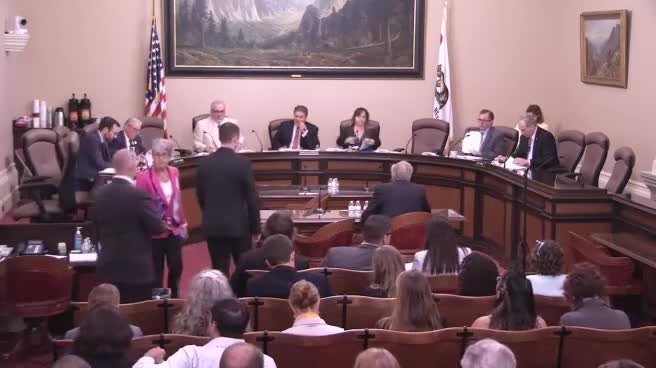 8MIN
Senate Standing Committee on Natural Resources and Water
Bill Author

Bill Co-Author(s):