SCA 18: Elections: recalls.
- Session Year: 2017-2018
- House: Senate
- Latest Version Date: 2018-05-08
The California Constitution provides that the voters may remove a state officer from elective office by a majority vote in a recall election.
This measure would increase the vote required to recall a state officer from a majority to 55 percent.
The California Constitution provides that the voters may recall a state officer and, in the same election, elect a successor. The California Constitution prohibits the officer who is the subject of a recall election from being a candidate in the recall election. The California Constitution requires the Governor to fill vacancies in courts and prohibits those vacancies from being filled in recall electionsThis measure would repeal these prohibitions, thereby enabling an officer who is the subject of a recall to be removed from, and elected to, his or her office in the same election.The California Constitution requires the Governor to call an election to fill a vacancy occurring in either house of the Legislature. The measure would instead require the Governor to fill a vacancy in either house of the Legislature by appointment within 45 days of the date of the vacancy or by a special election in which the Governor may require the use of instant runoff voting, as specified. The measure would provide that an appointee does not take office unless he or she is confirmed by a majority vote of the county boards of supervisors or county supervisors, as applicable. If an appointee is not confirmed or is affirmatively rejected with 45 days of his or her appointment, the measure would require the Governor to call a special election to fill the vacancy. The measure would provide that a special election called to fill a legislative vacancy may be consolidated with a statewide election if the special election is called within 240 days of the statewide election.The California Constitution provides that the voters may recall a state officer and, in the same election, elect a successor. The California Constitution prohibits the officer who is the subject of a recall election from being a candidate in the recall election. The California Constitution requires the Governor to fill vacancies in courts and prohibits those vacancies from being filled in recall elections
This measure would repeal these prohibitions, thereby enabling an officer who is the subject of a recall to be removed from, and elected to, his or her office in the same election.
The California Constitution requires the Governor to call an election to fill a vacancy occurring in either house of the Legislature.
The measure would instead require the Governor to fill a vacancy in either house of the Legislature by appointment within 45 days of the date of the vacancy or by a special election in which the Governor may require the use of instant runoff voting, as specified. The measure would provide that an appointee does not take office unless he or she is confirmed by a majority vote of the county boards of supervisors or county supervisors, as applicable. If an appointee is not confirmed or is affirmatively rejected with 45 days of his or her appointment, the measure would require the Governor to call a special election to fill the vacancy. The measure would provide that a special election called to fill a legislative vacancy may be consolidated with a statewide election if the special election is called within 240 days of the statewide election.
Resolved by the Senate, the Assembly concurring, That the Legislature of the State of California at its 201718 Regular Session commencing on the fifth day of December 2016, two-thirds of the membership of each house concurring, hereby proposes to the people of the State of California that the Constitution of the State be amended as follows:
(a)An election to determine whether to recall an officer and, if appropriate, to elect a successor shall be called by the Governor and held not less than 60 days nor more than 80 days from the date of certification of sufficient signatures.
(b)A recall election may be conducted within 180 days from the date of certification of sufficient signatures in order that the election may be consolidated with the next regularly scheduled election occurring wholly or partially within the same jurisdiction in which the recall election is held, if the number of voters eligible to vote at that next regularly scheduled election equal at least 50 percent of all the voters eligible to vote at the recall election.
(c)If the majority vote 55 percent of the vote on the question is to recall, the officer is removed and, if there is a candidate, the candidate who receives a plurality is the successor.
(a)(1)The Senate has a membership of 40 Senators elected for four-year terms, 20 to begin every two years.(2)The Assembly has a membership of 80 Members elected for two-year terms.(3)The term of a Senator or a Member of the Assembly shall commence on the first Monday in December next following her or his election.(4)During her or his lifetime, a person may serve no more than 12 years in the Senate, the Assembly, or both, in any combination of terms. This paragraph shall apply only to those Members of the Senate or the Assembly who are first elected to the Legislature after June 5, 2012, and who have not previously served in the Senate or Assembly. Members of the Senate or Assembly who were elected on or before June 5, 2012, may serve only the number of terms allowed at the time of the last election before June 5, 2012.(b)Election of Members of the Assembly shall be on the first Tuesday after the first Monday in November of even-numbered years unless otherwise prescribed by the Legislature. Senators shall be elected at the same time and places as Members of the Assembly.(c)A person is ineligible to be a Member of the Legislature unless the person is an elector and has been a resident of the legislative district for one year, and a citizen of the United States and a resident of California for three years, immediately preceding his or her election, and service of the full term of office to which the person is seeking to be elected would not exceed the maximum years of service permitted by paragraph (4) of subdivision (a).(d)If a vacancy occurs in the Legislature, the Governor shall do either of the following:(1)Fill the vacancy by appointment within 45 days of the date of the vacancy, subject to the following conditions:(A)An appointee shall take office only if, within 45 days of the appointment, he or she is confirmed by approval of one of the following:(i)For a district that encompasses more than one county, the majority of the county boards of supervisors in the district.(ii)For a district that encompasses one county or part of one county, the majority of the county supervisors in the district.(B)(i)If an appointee is not confirmed within 45 days pursuant to subparagraph (A), or is rejected by a majority vote of the county boards of supervisors or county supervisors, as applicable, the Governor shall call a special election to fill the vacancy pursuant to paragraph (2). (ii)If an appointment is confirmed pursuant to subparagraph (A), the appointee is eligible to take office and, except as provided in subparagraph (C), shall serve until the end of the term of the office.(C)(i)In the case of an appointment to a seat in the Senate during a term that does not end in the biennium of the regular session of the Legislature during which the vacancy occurred, the appointee shall not serve the remainder of the unexpired term. Instead, a special election shall be held on the date of a statewide election held in the regular session during which the vacancy occurred. The appointee shall serve only until a candidate is elected at the special election and takes office.(ii)If a special election is held pursuant to this subparagraph, a special primary election shall be held nine weeks before the statewide election with which the special election will be consolidated.(2)(A)Call a special election to fill the vacancy.(B)The Governor may require that the special election be conducted with instant runoff voting if both of the following apply:(i)The county or counties in the affected district are capable of conducting the special election using instant runoff voting.(ii)The Secretary of State has approved the instant runoff voting method that will be used in the special election.(3)A special election called pursuant to paragraph (2) may be consolidated with a statewide election if the special election is called within 240 days of the statewide election.Resolved by the Senate, the Assembly concurring, That the Legislature of the State of California at its 201718 Regular Session commencing on the fifth day of December 2016, two-thirds of the membership of each house concurring, hereby proposes to the people of the State of California that the Constitution of the State be amended as follows:
(a)An election to determine whether to recall an officer and, if appropriate, to elect a successor shall be called by the Governor and held not less than 60 days nor more than 80 days from the date of certification of sufficient signatures.
(b)A recall election may be conducted within 180 days from the date of certification of sufficient signatures in order that the election may be consolidated with the next regularly scheduled election occurring wholly or partially within the same jurisdiction in which the recall election is held, if the number of voters eligible to vote at that next regularly scheduled election equal at least 50 percent of all the voters eligible to vote at the recall election.
(c)If the majority vote on the question is to recall, the officer is removed and, if there is a candidate, the candidate who receives a plurality is the successor. The officer may not be a candidate, nor shall there be any candidacy for an office filled pursuant to subdivision (d) of Section 16 of Article VI.
(a)(1)The Senate has a membership of 40 Senators elected for 4-year four-year terms, 20 to begin every 2 two years.
(2)The Assembly has a membership of 80 members Members elected for 2-year two-year terms.
(3)The terms term of a Senator or a Member of the Assembly shall commence on the first Monday in December next following her or his election.
(4)During her or his lifetime lifetime, a person may serve no more than 12 years in the Senate, the Assembly, or both, in any combination of terms. This subdivision paragraph shall apply only to those Members of the Senate or the Assembly who are first elected to the Legislature after the effective date of this subdivision June 5, 2012, and who have not previously served in the Senate or Assembly. Members of the Senate or Assembly who were elected on or before the effective date of this subdivision June 5, 2012, may serve only the number of terms allowed at the time of the last election before the effective date of this subdivision. June 5, 2012.
(b)Election of members Members of the Assembly shall be on the first Tuesday after the first Monday in November of even-numbered years unless otherwise prescribed by the Legislature. Senators shall be elected at the same time and places as members Members of the Assembly.
(c)A person is ineligible to be a member Member of the Legislature unless the person is an elector and has been a resident of the legislative district for one year, and a citizen of the United States and a resident of California for 3 three years, immediately preceding the his or her election, and service of the full term of office to which the person is seeking to be elected would not exceed the maximum years of service permitted by paragraph (4) of subdivision (a) of this section. (a).
(d)When a vacancy occurs in the Legislature the Governor immediately shall call an election to fill the vacancy.(d)If a vacancy occurs in the Legislature, the Governor shall do either of the following:
(1)Fill the vacancy by appointment within 45 days of the date of the vacancy, subject to the following conditions:
(A)An appointee shall take office only if, within 45 days of the appointment, he or she is confirmed by approval of one of the following:
(i)For a district that encompasses more than one county, the majority of the county boards of supervisors in the district.
(ii)For a district that encompasses one county or part of one county, the majority of the county supervisors in the district.
(B)(i)If an appointee is not confirmed within 45 days pursuant to subparagraph (A), or is rejected by a majority vote of the county boards of supervisors or county supervisors, as applicable, the Governor shall call a special election to fill the vacancy pursuant to paragraph (2).
(ii)If an appointment is confirmed pursuant to subparagraph (A), the appointee is eligible to take office and, except as provided in subparagraph (C), shall serve until the end of the term of the office.
(C)(i)In the case of an appointment to a seat in the Senate during a term that does not end in the biennium of the regular session of the Legislature during which the vacancy occurred, the appointee shall not serve the remainder of the unexpired term. Instead, a special election shall be held on the date of a statewide election held in the regular session during which the vacancy occurred. The appointee shall serve only until a candidate is elected at the special election and takes office.
(ii)If a special election is held pursuant to this subparagraph, a special primary election shall be held nine weeks before the statewide election with which the special election will be consolidated.
(2)(A)Call a special election to fill the vacancy.
(B)The Governor may require that the special election be conducted with instant runoff voting if both of the following apply:
(i)The county or counties in the affected district are capable of conducting the special election using instant runoff voting.
(ii)The Secretary of State has approved the instant runoff voting method that will be used in the special election.
(3)A special election called pursuant to paragraph (2) may be consolidated with a statewide election if the special election is called within 240 days of the statewide election.
|
Date
|
Status
|
|---|---|
| Aug 16, 2018 | August 16 hearing: Held in committee and under submission. |
| Aug 10, 2018 | Set for hearing August 16. |
| May 24, 2018 | May 25 hearing postponed by committee. |
| May 23, 2018 | Set for hearing May 25. |
| May 22, 2018 | May 22 hearing: Placed on APPR. suspense file. |
| May 17, 2018 | Set for hearing May 22. |
| May 15, 2018 | From committee: Be adopted and re-refer to Com. on APPR. (Ayes 4. Noes 1.) (May 15). Re-referred to Com. on APPR. |
| May 8, 2018 | From committee with author's amendments. Read second time and amended. Re-referred to Com. on E. & C.A. |
| May 2, 2018 | Set for hearing May 15. |
| Apr 24, 2018 | May 1 set for first hearing canceled at the request of author. |
| Apr 17, 2018 | Set for hearing May 1. |
| Mar 15, 2018 | Referred to Com. on E. & C.A. |
| Mar 7, 2018 | From printer. May be acted upon on or after April 6. |
| Mar 6, 2018 | Introduced. Read first time. To Com. on RLS. for assignment. To print. |
|
Date
|
Description
|
Location
|
Votes
|
|
|---|---|---|---|---|
| May 22, 2018 | Placed on suspense file | Senate Standing Committee on Appropriations |
Passed |
|
| May 15, 2018 | Be adopted, but first be re-referred to the Committee on [Appropriations] | Senate Standing Committee on Elections and Constitutional Amendments |
Passed |
This list shows positions taken on this bill by organizations on the date displayed, which is linked to the original source.
Positions by individuals are not included.
|
Organization
|
Position
|
Date
|
|---|---|---|
| Family Rice Party | * Against | May 15, 2018 |
SENATE COMMITTEE ON
Senator Ricardo Lara, Chair
2017 - 2018 Regular Session
SCA 18 (Allen) - Elections: recalls
Version: | Policy Vote: |
Urgency: | Mandate: |
Hearing Date: | Consultant: |
This bill meets the criteria for referral to the Suspense File.
Bill Summary:
SCA 18, if approved by the voters, would increase the vote required to recall a state officer from a majority to 55 percent.
Fiscal Impact:
This bill would result in one-time General Fund costs to the Secretary of State (SOS) in the range of $438,000 to $584,000, likely in 2018-19, for printing and mailing costs to place the measure on the ballot in a statewide election. Actual costs may be higher or lower, depending on the length of required elements and the overall size of the ballot.
Background:
Under the California Constitution, any state officer may be recalled, including the elected offices of Governor, Lieutenant Governor, Secretary of State, Treasurer, State Controller, Attorney General, Superintendent of Public Instruction, Insurance Commissioner, Members of the State Board of Equalization, State Legislators, Justices of Courts of Appeal and the State Supreme Court. Additionally, under current law, a state officer appointed in lieu of election or to fill a vacancy in one of these offices may also be recalled.
Proposed Law:
This measure would increase the vote required to recall a state officer from a majority to 55 percent.
Staff Comments:
SOS indicates that printing and mailing costs associated with placing a measure on the statewide ballot are approximately $73,000 per page, depending on the length of the ballot. The fiscal estimates noted above reflect the addition of 6-8 pages in the Voter Information Guide. Actual costs would depend upon the length of the title and summary, analysis by the Legislative Analyst’s Office, proponent and opponent arguments, and text of the proposal.
-- END --
SENATE COMMITTEE ON
ELECTIONS AND CONSTITUTIONAL AMENDMENTS
Senator Henry Stern, Chair
2017 - 2018 Regular
Bill No: SCA Hearing Date: 5/15/18
Author: | |||
Version: | 5/8/18 | ||
Urgency: |
| Fiscal: | No |
Consultant: | Darren Chesin | ||
Subject: Elections: recalls
DIGEST
This measure, if approved by the voters, would increase the vote required to recall a state officer from a majority to 55%.
ANALYSIS
Existing law:
- Provides, pursuant to the California Constitution, for all of the following:
- That any state officer may be recalled. These include the elected offices of Governor, Lieutenant Governor, Secretary of State, Treasurer, Controller, Attorney General, Superintendent of Public Instruction, Insurance Commissioner, Members of the State Board of Equalization, State Legislators, and Justices of Courts of Appeal and the State Supreme Court. Pursuant to the Elections Code, a state officer appointed in lieu of election or to fill a vacancy in one of these offices may also be recalled.
- That the Legislature must provide for the recall of local officers. This provision, however, does not affect counties and cities whose charters provide for recall.
- That the voters may remove a state officer from elective office by a majority vote in a recall election.
This measure:
- Increases the vote required to recall a state officer from a majority to 55%.
BACKGROUND
Other Supermajority Vote Requirements. All statewide ballot measures and many local ballot measures only require a simple majority of votes cast for passage. Certain local ballot measures however require a two-thirds or 55% threshold of votes for passage. For instance, only a majority vote is required to pass local ballot measures to assess general purpose taxes but a two-thirds threshold is required if use of the tax proceeds is restricted to special purposes. Furthermore, a two-thirds vote is generally required to pass local bond measures but only 55% approval is required to pass school district, community college district, and county office of education bonds for school facilities.
General Procedures for the Recall of State Officers. To begin recall proceedings against a state officer, the recall proponents must serve, file, and publish or post a notice of intention to circulate a recall petition. A copy of the notice of intention must be served by personal delivery or by certified mail on the officer sought to be recalled. In addition, the original notice of intention, along with an affidavit of the time and manner of service, must be filed with the Secretary of State (SOS) within seven days of being served. A copy of the notice of intention (including addresses and signatures) must be published at the proponents' expense at least once in a newspaper of general circulation, as specified.
Within seven days after the filing of the notice of intention, the officer sought to be recalled may file with the SOS an answer of not more than 200 words. If an answer is filed, the officer must, within seven days after the filing of the notice of intention, serve a copy of the answer, by personal delivery or by certified mail, on one of the proponents named in the notice.
The proponents must then prepare the recall petition for circulation. The SOS is required to provide a format for the petition. The petition must include, among other things, all of the following:
- A request that an election be called to elect a successor to the office but if the officer is a justice of the Supreme Court or of a court of appeal the request shall be that the Governor appoint a successor to the officer.
- A copy of the notice of intention, including the statement of reasons for recall, and the names (no addresses) of at least ten proponents.
- The answer, if any, of the officer sought to be recalled. If the officer has not answered, the petition must so state.
Each signer must personally place his or her own information on the petition and must personally sign it (unless prevented by disability, etc.). The petition must be designed so that each signer can personally affix his or her printed name, signature, and residence address.
For a recall of a statewide officer, a petition must be signed by registered voters equal in number to 12% of the last vote for the office. Signatures must be obtained from at least five different counties and must be equal in number to at least one percent of the last vote for the office in each of five counties.
The number of signatures needed on the petition to recall State Senators, Members of the Assembly, Members of the Board of Equalization, and Judges of Courts of Appeal must equal at least 20% of the last vote for the office.
Registered voters who are qualified to vote for the office of the officer sought to be recalled can sign a recall petition. Any voter may withdraw his or her signature from the recall petition upon filing a written request with the county elections official prior to the day the petition section on which the signature appears is filed. In addition to the initial signature withdrawal period, any voter may withdraw his or her signature from the recall petition upon filing a written request with the county elections official within 30 business days after the SOS notifies counties that a sufficient number of registered voters signed the petition to initiate a recall election.
Within 160 days from the time the SOS notifies the proponents that the form and wording of the petition is correct, proponents must file a petition with the requisite number of valid signatures. Each section of a recall petition must be filed with the elections official of the county for which it was circulated.
Thirty days after a recall has been initiated and every thirty days thereafter, or more frequently at the discretion of the elections official, the elections official must determine the number of qualified voters who have signed the recall petition. Upon the completion of the examination, the county elections official certifies and submits the results to the SOS.
If the SOS determines that the petitions have the requisite number of valid signatures to initiate a recall election, the SOS must notify the Department of Finance of the results. Upon notification by the SOS that the petition has the requisite number of valid signatures to initiate a recall, the Department of Finance shall, within 30 business days, in consultation with the affected county elections officials and the SOS, estimate the costs of the recall election and submit this estimate to the Governor, the SOS, and the Chairperson of the Joint Legislative Budget Committee. The Joint Legislative Budget Committee has 30 days to review and comment on the estimate provided to them by the Department of Finance.
Upon the expiration of the Joint Legislative Budget Committee’s 30-day review and comment period, the SOS shall certify to the Governor that the proponents have submitted a sufficient number of valid signatures to qualify the recall for the ballot.
An election to determine whether to recall an officer and, if appropriate, to elect a successor, shall be called by the Governor and held not less than 60 days nor more than 80 days from the date of certification of sufficient signatures. The recall election may be conducted within 180 days from the date of certification of sufficient signatures in order that the election may be consolidated with the next regularly scheduled election occurring wholly or partially within the same jurisdiction in which the recall election is held, if the number of voters eligible to vote at that next regularly scheduled election equal to at least 50 % of all the voters eligible to vote at the recall election.
At the election, voters will decide whether or not to recall the officer and, if there is a candidate, will also choose a successor if the recall is successful. The officer sought to be recalled may not be a candidate to succeed himself/herself at the recall election. The recall election is conducted, canvassed, and the results declared in substantially the manner provided by law for a regular election for the office.
If a majority of the votes on a recall proposal are “Yes,” the officer is removed and, if there is a candidate, the candidate who receives the highest number of votes is the successor to the unexpired term of the recalled officer. If one-half or more of the votes at a recall election are “No,” the officer sought to be recalled shall continue in office. A justice of an Appellate Court will be appointed by the Governor to replace a recalled justice.
Recall History in California (1913 to present). According to the SOS, since 1913, there have been 164 recall attempts of state elected officials in California. Ten recall efforts collected enough signatures to qualify for the ballot and of those, the elected official was recalled in five instances. Recall attempts that have qualified for the ballot:
Year Officer Outcome
1913 Senator Marshall Black Recalled
1913 Senator Edwin E. Grant Recalled
1914 Senator James C. Owens Unsuccessful
1994 Senator David Roberti Unsuccessful
1994 Assemblyman Michael Machado Unsuccessful
1994 Assemblyman Paul Horcher Recalled
1995 Assemblywoman Doris Allen Recalled
2003 Governor Gray Davis Recalled
2007 Senator Jeffrey Denham Unsuccessful
2018 Senator Josh Newman Pending (June 5)
Other States. According to the National Conference of State Legislatures (NCSL), in six states, the election for a successor is held simultaneously with the recall election. In California and Colorado, the first question on the ballot is whether the official should be recalled. Voters are then asked to vote for a candidate for the office; the official who is the subject of the recall may not be listed among these candidates. If a majority of voters votes "yes" on the recall question, then the incumbent is recalled and the successor is elected via the second part of the ballot. If a majority of voters votes "no" on the recall question, then the incumbent remains in office and the second portion of the ballot is moot.
In the other states using the simultaneous model, the submission and certification of the recall petition essentially triggers a special election for the office, and the recall ballot consists of a list of candidates for the office. The name of the official who is the subject of the recall may appear on the ballot along with other nominees. In fact, in Arizona and Wisconsin, the name of the official being recalled is automatically placed on the recall ballot for reelection unless the official resigns from office.
In the remaining 13 states, the recall ballot contains only the question of whether or not the official should be recalled. If the majority vote is "yes" for recall, the office is declared vacant and is filled at a special election or as otherwise provided by law, which in some states is by appointment for the remainder of the term.
COMMENTS
- According to the Author: California is one of nineteen states that permit the recall of state officials. If a recall is successful, the replacement needs just a plurality of the vote. Therefore it is possible for the new official to have garnered only a fraction of the number of votes to be placed into office than the recalled official received in the regular election. It’s also possible for the incumbent to receive many more votes than the person who replaces him/her at the Capitol, having won the plurality of the votes in the concomitant successor election.
Recall elections are almost always held has a stand-alone special election, which historically have very low turnout. For example Jimmy Gomez was voted into office during the regular election cycle in 2016 with 110,036 votes. His replacement Wendy Carrillo won her special election for the same seat in 2017 with 11,100 votes. This illustrates the significant differences between voter turnouts during regular election cycles versus special elections. Since just a fraction of registered voters are required to sign a recall petition to qualify for the ballot, combined with low voter turnout, state officials can be recalled by a much smaller proportion of their constituents than voted for him or her during the regular election.
Regular election cycles ensure that voters have the opportunity to vote out officials they deem unworthy based on a variety of factors. In contrast, recall campaigns are often galvanized by one issue or one vote. Since recall elections circumvent the regular election process, there ought to be a slightly higher bar than majority to remove an elected official. By slightly raising the threshold for recall from a majority to a 55% vote, SCA 18 ensures that voters have reached a consensus before an elected official who was duly elected in a high-turnout regular election is removed from office, often replaced by someone with far fewer votes.
- New Territory. As described above in the BACKGROUND section, certain local ballot measures require a supermajority vote for approval. Although a recall question appearing on the ballot is technically considered a ballot measure (whereas the replacement question is considered an election for office), this measure would, for the first time in California, attach a supermajority vote requirement to a question related to elective office.
RELATED/PRIOR LEGISLATION
ACA 20 (Ridley-Thomas) of 2003 would have provided that there would be no election of a successor at an election to determine the recall of the Governor, and, if the recall receives a majority of votes, that the Lieutenant Governor would replace the Governor. The Assembly policy committee hearing for ACA 20 was cancelled at request of author.
POSITIONS
Sponsor: Author
Support: None received
Oppose: None received
-- END --
Discussed in Hearing
 1H
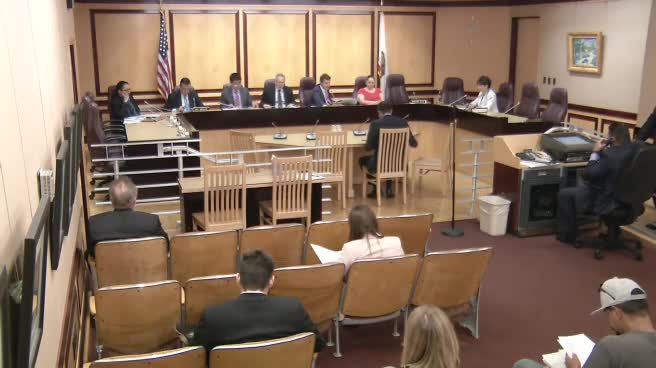
Senate Standing Committee on Appropriations
 15MIN
Senate Standing Committee on Elections and Constitutional Amendments
Bill Author

Bill Co-Author(s):