SR 39
- Session Year: 2017-2018
- House: Senate
- Latest Version Date: 2017-05-08
WHEREAS, On June 6, 1978, Proposition 13, officially titled the Peoples Initiative to Limit Property Taxation, was overwhelmingly approved by Californias voters, reducing property tax rates on homes, businesses, and farms, and capping the rate of increase in the future; and
WHEREAS, Home and business ownership are a bedrock of the American dream; and
WHEREAS, Proposition 13 makes it easier for all people, regardless of life circumstances, to achieve this dream; and
WHEREAS, Prior to the adoption of Proposition 13, Californias raging inflation had sent property tax bills in California soaring so high that many families had to sell their homes because they could not afford to pay their taxes; and
WHEREAS, Prior to the adoption of Proposition 13, small business owners facing fast increasing property taxes were forced to lay off their employees or close their businesses if property tax increases made their businesses unprofitable; and
WHEREAS, Prior to the adoption of Proposition 13, renters saw their rents increase when landlords saw their property taxes increase at a rapid rate; and
WHEREAS, With the passage of Proposition 13, taxpayers, for the first time, were provided a measure of certainty with respect to their property taxes; and
WHEREAS, In the 10 years following the passage of Proposition 13, incomes in California grew 50 percent faster than in the nation as a whole, and jobs grew at twice the national average; and
WHEREAS, Following the passage of Proposition 13, Californias budget climbed from $55 billion in 1980 to $97 billion in 1992a 75-percent increase above inflation; and
WHEREAS, In the 38 years following the passage of Proposition 13, the average homeowner and the average small business have saved tens of thousands of dollars annually in property tax payments, money that was put back into the economy to create jobs and foster economic development; and
WHEREAS, Since the passage of Proposition 13, proposed alternatives to Proposition 13 would have had a variety of unwelcome effects, including substantial tax increases for low-income and elderly homeowners; and
WHEREAS, Increased property taxes would be a disincentive for first-time homebuyers and stand as a barrier to growth of our housing market; and
WHEREAS, Proposition 13 remains just as popular with voters today as it was when it was approved, with numerous recent surveys citing over 60 percent support; and
WHEREAS, Proposed alternatives to Proposition 13 that would increase property taxes on California businesses would also affect the ability of employers to hire or retain California employees; and
WHEREAS, Proposed alternatives to Proposition 13 would also negatively affect renters who would see their rents increased if their landlords experienced property tax increases; and
WHEREAS, Since the passage of Proposition 13, voters have rejected, by wide margins, changes that would have businesses pay property taxes at a higher rate than those imposed upon residential owners, as evidenced by the defeat of Proposition 167 in 1992; and
WHEREAS, The volatility of income and sales tax revenue to the state and local governments is a major flaw in Californias tax system; however, Proposition 13 has rendered Californias property taxes a stable and predictable source of public revenue even during economic downturns and has provided a major benefit to local governments in California; and
WHEREAS, Friday, June 6, 2017, marks the 39th year following the voters approval of Proposition 13; now, therefore, be it
Resolved by the Senate of the State of California, That the Senate, in recognition of the impact Proposition 13 has had on the State of California, formally commemorates June 6, 2017, as the 39th anniversary date of Proposition 13; and be it further
Resolved, That the Senate reaffirms its support for Proposition 13 and the benefit that it provides to individual homeowners and to the states overall economy; and be it further
Resolved, That the Secretary of the Senate transmit copies of this resolution to the Governor of the State of California, and to the author for appropriate distribution.
|
Date
|
Status
|
|---|---|
| Jun 7, 2017 | June 7 hearing: Failed passage in committee. (Ayes 2. Noes 5. Page 1452.) |
| May 31, 2017 | Set for hearing June 7. |
| May 18, 2017 | Re-referred to Com. on GOV. & F. |
| May 8, 2017 | Introduced. Referred to Com. on RLS. |
|
Date
|
Description
|
Location
|
Votes
|
|
|---|---|---|---|---|
| Jun 7, 2017 | [06-07-2017] hearing: Motion to Reconsider. [Reconsideration Granted.] | Senate Standing Committee on Governance and Finance |
Passed |
|
| Jun 7, 2017 | Be adopted. Ordered to third reading | Senate Standing Committee on Governance and Finance |
Failed |
This list shows positions taken on this bill by organizations on the date displayed, which is linked to the original source.
Positions by individuals are not included.
|
Organization
|
Position
|
Date
|
|---|---|---|
| California Tax Reform Association. | ** Against | Jun 7, 2017 |
| Howard Jarvis Taxpayers Association. | ** Support | Jun 7, 2017 |
SENATE COMMITTEE ON GOVERNANCE AND FINANCE
Senator Mike McGuire, Chair
2017 - 2018 Regular
Bill No: | SR 39 | Hearing Date: | 6/7/17 |
Author: | Morrell | Tax Levy: | No |
Version: | 5/8/17 | Fiscal: | No |
Consultant: | Grinnell | ||
the 39th anniversary of Proposition 13
Commemorates the 39th Anniversary of the enactment of Proposition 13.
Background
Before Proposition 13 (1978), the Legislature could generally enact new taxes or increase existing taxes by majority vote. Proposition 13 instead required that any changes in state taxes for the purpose of increasing revenues receive approval by 2/3 vote of both houses of the Legislature to be enacted. Proposition 26 (2010) subsequently modified the definition to apply the 2/3 requirement to bills that “results in any taxpayer paying a higher tax.”
Prior to 1978, local agencies could enact taxes by ordinance Proposition 13 amended the Constitution to require a 2/3 vote of the electorate to enact a local special tax. Proposition 62 (1986) prohibited local agencies from imposing general taxes without majority approval of local voters, and clarified the 2/3 vote necessary to impose special taxes. Proposition 218 (1996) extended those vote thresholds to charter cities and required local agencies’ to obtain voter approval to levy new assessments, fees, and taxes, which was subsequently limited by Proposition 26.
Cities, counties, and special districts could generally set property tax rates on property within its jurisdiction without an aggregate cap before Proposition 13. State law required assessors to revalue property annually; however, in practice, assessors usually reassessed all the homes in one neighborhood every three to five years. Local agencies received property tax revenue resulting from the appropriate property tax rate fixed by the local agency.
Proposition 13 reformed property tax assessment in the following ways:
- Limited the maximum amount of any ad valorem tax on real property at 1% of full cash value as shown on the 1975-76 tax bill.
- Set a property’s assessed value at its purchase price, and precluded assessors from reassessing property unless it was newly constructed, or changed ownership.
- Capped the growth in assessed value to 2% per year.
- Provided that the Legislature allocates property tax revenue “according to law.”
Proposed Law
Senate Resolution 39 commemorates the 39th anniversary of Proposition 13. The measure contains several statements regarding property tax rates, taxpayer benefits, effects of the initiative on the state’s economy, as well as taxpayer support for Proposition 13, and potential changes and alternatives. The resolution states the Legislature’s reaffirmation of its support for Proposition 13 and the benefit it provides to individual homeowners and the state’s overall economy.
State Revenue Impact
No estimate.
Comments
1. Purpose of the bill. According to the author, “During the 1970s, inflation was on the rise and property tax bills were soaring. These circumstances put seniors at risk of losing their homes and affected first-time homebuyers thinking about entering the market. It was against this backdrop that voters overwhelmingly passed Proposition 13. The initiative reined in out-of-control property taxes and made them more predictable and stable for homeowners. In fact, the average homeowner has saved tens of thousands of dollars in taxes since that time. Additionally, unlike California’s sales and income tax rates, revenue from property taxes has remained a reliable source of income for the state. Even in the depths of the last recession, property tax revenue increased while other revenue sources declined. Senate Resolution 39 simply acknowledges the positive impact Proposition 13 has had on California and celebrates the 39th anniversary of its passage. Its taxpayer protections are still as popular today as when voters passed it over three decades ago – and that support cuts across party lines and ideologies. Every anniversary of its passage is an opportunity to reflect on one of California’s most important examples of democracy in action.”
2. Yes, but. Proposition 13 may be the most significant initiative ever enacted by California’s voters: its changes reshaped fundamental aspects of California governance and public finance. However, SR 39 celebrates the initiative from a specific point-of-view, and includes adjectives, phrases, and causal connections that may not reflect the views of the entire Legislature, including a statement of the Senate’s support for the initiative. Should the Committee wish to amend SR 39 to celebrate the initiative’s more complicated history as described below, it can amend it by deleting some of its terms and passages, among others:
- While inflation and property tax bills increased prior to Proposition 13’s enactment, are the adjectives “raging” and “soaring,” accurate?
- What specific examples exist of property taxes forcing layoffs, and closing businesses? What specific evidence demonstrates a statistically significant causal connection between the two?
- While the average homeowner and small business have likely saved tens of thousands of dollars annually in property taxes, how can it be shown that the same money was used to create jobs and foster economic development? Foregone taxes could have been used on consumption items, saved or invested in financial assets, or spent outside California.
- The measure states that proposed alternatives to Proposition 13 have “unwelcome effects,” including “substantial tax increases for low-income and elderly homeowners.” What alternatives were these, and did they target low-income persons and the elderly specifically?
- SR 39 also cites the defeat of Proposition 167 (1992) as an indication of a lack of favor of today’s voters for a split-roll. Can the results from an initiative that contained several different provisions considered at an election more than 20 years ago be correctly extrapolated to today’s electorate, given the state’s demographic and political change during that time? Recent Public Policy Institute of California polls showed that while more than 60% of respondents expressed support for Proposition 13, an almost equal amount favors a “split roll” property tax where commercial and industrial property is reassessed annually or periodically.
- The resolution reaffirms the Legislature’s support for the measure, and its benefit to homeowners and the state’s economy. While homeowners have certainly benefitted from Proposition 13, no empirical data shows that it produced a net benefit for the state’s economy. Given the initiative’s more nuanced and complicated effects described below, should the Legislature instead recognize the anniversary of the initiative’s enactment, and its significance and effect on California’s system of governance and public finance without declaring its support or characterizing it as a benefit to the economy?
3. The rest of the story. Enacted in 1978, Proposition 13 remains controversial today. California property owners pay less property tax, and enjoy the additional benefits of increased certainty due to the initiative’s limitations on assessed value growth and reassessments. Additionally, the initiative increased legislative vote requirements to raise or enact new taxes, and required voter approval when local agencies seek to raise taxes, likely contributing to a lower tax burden for Californians. However, enacting Proposition 13 did not occur without tradeoffs. Economists and academics have researched the measure’s legacy copiously, and their findings include that the initiative:
- Shifted the burden of financing public services from property taxes onto other revenue streams, with undesirable consequences;
- Transferred significant authority to the state, including the power to allocate property tax revenues;
- Led to significant differences in property taxes paid by taxpayers based on when they purchased property; and
- Created considerable distortions and inequities in the housing market.
Proposition 13 reduced local agency revenues. However, the state ameliorated much of the revenue loss, and local agencies found other ways to finance public services. Proposition 13 resulted in a property tax revenue loss of 51% percent in the first year after enactment, but the state assumed health and human services programs from the counties, shifted property taxes from schools to local agencies, and provided a $2.7 billion bailout to local agencies in 1978. Local agencies took other steps, such as relying more on sales, utility, and hotel taxes. Local agencies also increased or imposed new fees and charges, which did not for the most part require voter approval until Proposition 218 (1996), thereby shifting the burden of financing public services away from property taxes. Sometimes, costs were aligned with services; for example, housing developers now pay significant fees for infrastructure, permitting, and environmental review, which they attempt to pass on to homebuyers. Other fees did not bear such a relationship, such as the 48% increase in revenues from library fines, garbage collection fees, and sewer charges between 1979 and 1983. Local agencies often became more entrepreneurial, using redevelopment until recently to capture property tax increments, making land-use decisions based on sales tax revenue consequences instead of sound land use practices, and offering economic incentives to businesses that generate significant sales tax revenue to locate in its jurisdiction, such as big-box stores and auto dealerships.[1]
The initiative also fundamentally changed California’s state-local fiscal relationship. Proposition 13 changed a long standing tradition that began in 1910 with a constitutional amendment known as the "Separation of Sources," which provided that the property tax would be used for local purposes and state taxes would be used for state purposes. Although state taxes were revised in the 1930s, this doctrine remained until 1978 when Prop. 13 set a maximum tax rate with no ability for communities to raise the rate. Additionally, Proposition 13 required that property tax revenues be allocated “according to law,” meaning that the Legislature would determine how property tax revenues would be allocated among local agencies in a county levying a property tax. Previously, each local jurisdiction set the property tax rate within its jurisdiction. The Legislature decided to freeze current allocations within a county, locking in each agency’s share of the property tax regardless of future changes in demographics or service demand (AB 8, Greene, 1979); these allocation shares have been mostly fixed for the last 39 years. Proposition 13 also laid the foundation for the Legislature to shift property tax revenues from local agencies to schools in 1992-93, 1993-94, 2004-05, and 2005-06 to meet the state’s public education spending obligations under Proposition 98 (1988).
Prior to Proposition 13, voters in communities were able to increase the amount of property tax levied for schools by a majority vote. Although the state had enacted changes to partially address school funding inequalities due to disparities in the property tax wealth of districts, taxpayers could still choose to enhance funding for their local schools before the enactment of the initiative. Proposition 13 transferred the responsibility of communities to support their schools to the state. Since the enactment of Propositions 13 and 98 (1988), the state is responsible for all new investment in K-14 education, with the exception of voter-approved parcel taxes and general obligation bonds to fund school facilities.
Before Proposition 13 the state finance system was made up of taxes on wealth (property tax), income (personal and corporate income tax) and transactions (sales tax), with each providing an approximately equal share of the total cost of public services over a long period of time. Proposition 13 increased the reliance on the income tax since it assumed the responsibility for funding the schools. At the same time, local agencies increased the reliance on the sales tax in order to support local services. The net result was a highly volatile tax system at the state level and a local finance system dependent primarily on transactions (sales and use tax, utility user taxes and transient occupancy taxes). The property tax makes up a smaller share of tax revenue today than it did before Proposition 13.
While Proposition 13 reduced taxes, it caused distortive and inequitable tax consequences for many California taxpayers. Under Proposition 13, the date a taxpayer purchased a property sets a taxpayer’s property tax more so than its actual market value by locking in a property’s assessed valuation until ownership changes or the property is newly constructed. Property owners have a significant incentive not to move residences, because a new home’s purchase price determines its property taxes, which could exceed the taxes determined by the original property’s factored base year value. While Propositions 60 (1988) and 90 (1990) allow disabled taxpayers or those over the age of 55 to transfer base year values to properties of equal or lesser value than the original property, Proposition 13’s “lock-in” effect leads taxpayers to make different decisions on housing due to tax implications, distorting the function of a normal market. Additionally, locking in assessed valuations leads to taxpayers owning homes of the same market value paying vastly different property tax amount. As a result, newer homebuyers bear a proportionally larger share of the burden for financing public services than longer term residents.
4. On subsidiarity. Proposition 13 is often regarded mostly as a change in tax policy. However, by shifting control of property tax allocation from local agencies to the state, and limiting local revenue raising ability, the initiative and changes that followed fundamentally altered the relationship between citizens and their government, empowering the state to the detriment local agencies. Before Proposition 13, local agencies exercised “home rule” powers over local revenue sources: local taxes paid for local services, with some state intrusions. Voters chose their priorities when selecting officials to lead these local agencies, who set local tax rates, and then voters held officials accountable at the next election. Today, cities, counties, and special districts have little flexibility to raise revenues due to the initiative’s limitation on property tax rates and the 2/3 vote threshold for enacting new or higher special taxes. Researchers state that Proposition 13 and subsequent legislative action severely undercut local home rule powers by establishing a fiduciary relationship on the part of the state toward local agencies.[2] Counties particularly are reliant on state funding and must implement state programs as legal subdivisions of the state. Researchers add that any policy discussions between state and local agencies have deteriorated as a result, describing the fiscal relationship that evolved between state and local agencies as “a zero-sum political atmosphere in which fiscal considerations dominate intergovernmental policymaking.”[3]
5. Not so fast? The Committee approved SCA 9 (Weiner), which alters Proposition 13 to lower the vote threshold for cities, counties, or special districts to levy a special tax for transportation infrastructure projects from 2/3 to 55%. The measure is currently awaiting hearing in the Senate Committee on Election and Constitutional Amendments.
6. Another try. The Committee previously defeated an almost identical resolution celebrating the 36th Anniversary of Proposition 13 (SR 41, Morrell, 2014), the 35th Anniversary (SCR 25, Wyland, 2013), and the former Committee on Revenue and Taxation, a predecessor to this Committee, defeated an almost identical resolution celebrating the 30th Anniversary (SCR 116, Harman, 2008).
Support and Opposition
(6/1/17)
Support: Howard Jarvis Taxpayers Association.
Opposition: California Tax Reform Association.
-- END --
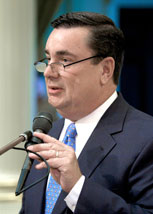
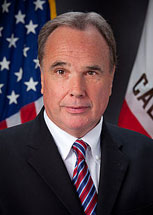
Bill Author









Bill Co-Author(s):