AB 3151: Intermodal roadability inspection program.
- Session Year: 2023-2024
- House: Assembly
- Latest Version Date: 2024-03-18
Current Status:
Failed
(2024-04-22: In committee: Hearing for testimony only.)
Introduced
In Committee
First Chamber
In Committee
Second Chamber
Enacted
What does this bill do?
The bill requires port terminals (including ocean marine terminals) to inspect every intermodal chassis before it leaves, expanding checks to brakes, steering, suspension, tires, lights, vehicle and container connecting devices, mud flaps, and frame damage, and to verify required state and federal inspections are current. Defects must be repaired within 10 days and before release (violations can be a misdemeanor, a criminal offense); inspection records must be kept six months; failed terminals face more frequent reinspections until compliant; and port operators, equipment providers, or trucking companies may not threaten or retaliate against drivers who report unsafe chassis.
The summary is provided by generative AI which can make mistakes. For original language, please view the details in the table below.
Existing law authorizes an ocean marine terminal that receives and dispatches intermodal chassis, as defined, to conduct an intermodal roadability inspection program in lieu of other provisions that require every operator of certain types of vehicles to cause the vehicle to be inspected at least every 90 days, or more often to ensure safe operation. Existing law establishes criteria for an ocean marine terminal to meet in order to be eligible to conduct the inspection program, including, among others, that more than 1,000 chassis are based at the ocean marine terminal, and that the terminal, following the 2 most recent terminal inspections, has received satisfactory compliance ratings, as specified. Existing law specifies what is required to be inspected on the chassis, including, among other things, the brake system components, suspension systems, and vehicle connecting devices. Existing law requires the signature, under penalty of perjury, of the ocean marine terminal operator or an authorized representative that the inspection has been performed. Existing law requires records of inspections of those intermodal chassis be kept at the relevant ocean marine terminal for 90 days.
Existing law establishes a terminal inspection program administered by the Department of the California Highway Patrol (department). Existing law, following a terminal inspection in which the department determines that an operator of an ocean marine terminal has failed to comply with the requirements of the intermodal roadability inspection program, requires the department to conduct a reinspection within 120 days, as specified, and if the terminal fails the reinspection, to comply with the requirements of the departments terminal inspection program until eligibility to utilize the intermodal eligibility inspection program is reestablished, as specified.
This bill would expand the above provisions to apply to a port terminal, defined by the bill to mean an ocean marine terminal or other terminal within a port master plan area. The bill would require, instead of authorize, a port terminal to conduct the intermodal roadability inspection program in lieu of the other provisions referred to above, and would delete the conditions relating to the number of chassis based at the ocean marine terminal and the receipt of prior satisfactory compliance ratings. The bill would include container connecting devices, mud flaps, and frame damage to the areas covered by the inspection. The bill would require the inspection to include verification that other specified inspections are current. The bill would require defects noted on an intermodal chassis to be repaired within 10 days after the inspection, and before the intermodal chassis is released from the terminal, the violation of which would be a misdemeanor. The bill would extend the period a port terminal is required to retain inspection records to 6 months. The bill would require the department, if a port terminal fails reinspection, to direct the port terminal operator to conduct additional terminal inspections at 30-day intervals, until the port terminal is in full compliance with intermodal roadability inspection program requirements, as prescribed.
Existing law prohibits an ocean marine terminal provider from threatening, coercing, or otherwise retaliating against a commercial driver for contacting a law enforcement agency with regard to the physical condition of an intermodal chassis or for requesting that the intermodal chassis be reinspected or repaired.
This bill would expand that prohibition to apply to threats, coercion, and other retaliation made by a port terminal operator, independent equipment provider, trucking company, or any other respondeat superior.
Existing law generally provides that a violation of the Vehicle Code is a criminal offense.
By creating new crimes, and by expanding the crime of perjury, the bill would impose a state-mandated local program.
The California Constitution requires the state to reimburse local agencies and school districts for certain costs mandated by the state. Statutory provisions establish procedures for making that reimbursement.
This bill would provide that no reimbursement is required by this act for a specified reason.
Under existing law, the Cigarette and Tobacco Products Licensing Act of 2003, the California Department of Tax and Fee Administration administers the statewide program to license manufacturers, importers, distributors, wholesalers, and retailers of cigarettes and tobacco products. Existing law requires a retailer to have a license to engage in the sale of cigarettes or tobacco products and to conspicuously display the license at each retail location in a manner visible to the public. Existing law makes any retailer who fails to display a license as required liable for a penalty of $500.This bill would increase that penalty to $600.Under existing law, the Cigarette and Tobacco Products Licensing Act of 2003, the California Department of Tax and Fee Administration administers the statewide program to license manufacturers, importers, distributors, wholesalers, and retailers of cigarettes and tobacco products. Existing law requires a retailer to have a license to engage in the sale of cigarettes or tobacco products and to conspicuously display the license at each retail location in a manner visible to the public. Existing law makes any retailer who fails to display a license as required liable for a penalty of $500.
This bill would increase that penalty to $600.
(a)An ocean marine A port terminal that receives and or dispatches intermodal chassis may shall conduct the intermodal roadability inspection program, as described in this section, in lieu of the inspection required by Section 34505.5, if the terminal meets all of the following conditions: 34505.5. For purposes of this section, port terminal includes an ocean marine terminal or other terminal within a port master plan area.
(1)More than 1,000 chassis are based at the ocean marine terminal.(2)The ocean marine terminal, following the two most recent consecutive inspections required by Section 34501.12, has received satisfactory compliance ratings, and the terminal has received no unsatisfactory compliance ratings as a result of any inspection conducted in the interim between the consecutive inspections conducted under Section 34501.12.(3)(1)Each intermodal chassis exiting the ocean marine a port terminal shall have a current decal and supporting documentation in accordance with Section 396.17 of Title 49 of the Code of Federal Regulations.
(4)(2)The ocean marine port terminals intermodal roadability inspection program shall consist of all of the following:
(A)Each time an intermodal chassis chassis, whether leased on a short-term or long-term basis, owned, or otherwise rented, is released from the ocean marine a port terminal, the chassis shall be inspected. The inspection shall include, but not be limited to, brake adjustment, brake system components and leaks, steering and suspension systems, tires and wheels, vehicle connecting devices, container connecting devices, mud flaps, frame damage, and lights and electrical system, systems, and shall include a visual inspection of the chassis to determine that it has not been tampered with. The inspection shall also include a verification that the state 90-day Basic Inspection of Terminals (BIT) inspection and the Federal Motor Carrier Safety Administration (FMCSA) annual inspection are both current.
(B)Each inspection shall be recorded on a daily roadability inspection report that shall include, but not be limited to, all of the following:
(i)Positive identification of the intermodal chassis, including company identification number and vehicle license plate number.
(ii)Date and nature of each inspection.
(iii)Signature, under penalty of perjury, of the ocean marine port terminal operator or an authorized representative that the inspection has been performed.
(iv)The inspector shall affix a green tag to a chassis that has passed inspection and a red tag to a chassis that has failed inspection. The tag shall contain the name of the inspector and the date and time that the inspection was completed and shall be placed in a conspicuous location so that it may be viewed from the rear of the vehicle. The tag shall be provided by the marine port terminal operator and shall meet specifications determined by the Department of the California Highway Patrol. The provisions of this subparagraph shall also be applicable to an intermodal chassis inspected by a marine port terminal operator pursuant to Section 34505.5.
(C)Records of each inspection conducted pursuant to subparagraph (A) shall be retained for 90 days six months at the ocean marine port terminal at which each chassis is based released and shall be made available upon request by any authorized employee of the department.
(D)Defects noted on any intermodal chassis shall be repaired, repaired within 10 days after the inspection and before the intermodal chassis is released from the terminal, and the repairs shall be recorded on the intermodal chassis maintenance file, before the intermodal chassis is released from the control of the ocean marine terminal. No port terminal. A vehicle subject to this section shall not be released to a motor carrier or operated on the highway other than to a place of repair until all defects listed during the inspection conducted pursuant to subparagraph (A) have been corrected and attested to by the signature of the operators authorized representative.
(E)Records of maintenance or repairs performed pursuant to the inspection in subparagraph (A) shall be maintained at the ocean marine port terminal for two years and shall be made available upon request of the department. Repair records may be retained in a computer system if printouts of those records are provided to the department upon request.
(F)Individuals performing ocean marine port terminal roadability inspections pursuant to this section shall be qualified, at a minimum, as set forth in Section 396.19 of Title 49 of the Code of Federal Regulations. Evidence of each inspectors qualification shall be retained by the ocean marine port terminal operator for the period during which the inspector is performing intermodal roadability inspections.
(b)The records maintained pursuant to paragraphs (C) and (E) subparagraphs (C) and (E) of paragraph (2) of subdivision (a) and Section 34505.5 shall be made available during normal business hours to any motor carrier or driver or the authorized representative thereof who has been engaged to transport an intermodal container on a chassis inspected pursuant to this section or Section 34505.5 from the ocean marine port terminal.
(c)Any citation issued for the violation of any state or federal law related to the defective condition of an intermodal chassis subject to inspection pursuant to this section or Section 34505.5, that is not owned by that motor carrier or commercial driver, shall be issued to the entity responsible for the inspection and maintenance of the intermodal chassis, unless the officer determines that the defective condition of the intermodal chassis was caused by the failure of the driver to operate a commercial motor vehicle in a safe manner.
(d)Any provision contained in a contract between the registered owner or lessee of an intermodal chassis subject to inspection pursuant to this section, or any other entity responsible for the inspection and maintenance of the intermodal chassis, and any motor carrier or any contract between a motor carrier and another motor carrier engaged to transport an intermodal container on a chassis subject to inspection pursuant to this section that contains a hold harmless or indemnity clause concerning defects in the physical condition of that chassis shall be void as against public policy. This subdivision shall not apply to damage to the intermodal chassis caused by the negligent or willful failure of the motor carrier to operate a commercial motor vehicle in a safe manner.
(e)Following a terminal inspection in which the department determines that an operator of an ocean marine a port terminal has failed to comply with the requirements of this section, the department shall conduct a reinspection within 120 days as specified in subdivision (h) of Section 34501.12. If the terminal fails the reinspection, the department shall direct the operator to comply with the requirements of Section 34505.5 until eligibility to utilize the inspection program described in this section is reestablished pursuant to subdivision (a). If any inspection operator, in addition to conducting the inspection program described by this section, to conduct the inspection required pursuant Section 34505.5 at 30-day intervals until the department has determined that the port terminal is in full compliance with the inspection requirements required by this section. If the reinspection results in an unsatisfactory rating due to conditions presenting an imminent danger to the public safety or due to the operators repeated failure to inspect and repair intermodal chassis pursuant to this section, the department shall immediately forward a recommendation to the Department of Motor Vehicles to suspend the operators motor carrier property permit, and forward a recommendation to the Federal Motor Carrier Safety Administration for administrative or other action deemed necessary against the carriers interstate operating authority, pursuant to Section 34505.6 or 34505.7.
(f)Any A driver who believes that an intermodal chassis is in an unsafe operating condition may request that the chassis be reinspected by the entity responsible for the inspection and maintenance of the chassis pursuant to this section or Section 34505.5. The request for reinspection, any corrective action taken, or the reason why corrective action was not taken shall be recorded in the intermodal chassis maintenance file.
(g)No A commercial driver shall not be threatened, coerced, or otherwise retaliated against by any ocean marine terminal operator a port terminal operator, independent equipment provider, trucking company, or any other respondeat superior, for contacting a law enforcement agency with regard to the physical condition of an intermodal chassis or for requesting that the intermodal chassis be reinspected or repaired.
(h)For the purposes of this section, the following definitions shall apply:
(1)Intermodal chassis means a trailer designed to carry intermodal freight containers.
(2)Ocean marine terminal means a terminal, as defined in Section 34515, located at a port facility that engages in the loading and unloading of the cargo of oceangoing vessels.
(i)Nothing in this section shall This section does not relieve a commercial driver or commercial motor carrier of any duty imposed by state or federal law related to the safe operation of a commercial motor vehicle.
(j)Nothing in this section shall This section does not affect the rights, duties, and obligations set forth in Section 2802 of the Labor Code.
SEC. 2.Section 40000.21 of the Vehicle Code is amended to read:40000.21.A violation of any of the following provisions is a misdemeanor, and not an infraction:
(a)Subdivision (a) of Section 34506, relating to the hours of service of drivers.
(b)Subdivision (b) of Section 34506, relating to the transportation of hazardous materials.
(c)Subdivision (c) of Section 34506, relating to schoolbuses.
(d)Subdivision (d) of Section 34506, relating to youth buses.
(e)Section 34505 or subdivision (e) of Section 34506, relating to tour buses.
(f)Section 34505.5 or subdivision (f) of Section 34506, relating to vehicles described in subdivisions (a) to (g), inclusive, of Section 34500.
(g)Subdivision (a) of Section 34501.3, relating to unlawful scheduling of runs by motor carriers.
(h)Subdivision (g) of Section 34506, relating to school pupil activity buses.
(i)Subparagraph (D) of paragraph (4) (2) of subdivision (a) of Section 34505.9, relating to intermodal chassis.
SEC. 3.No reimbursement is required by this act pursuant to Section 6 of Article XIIIB of the California Constitution because the only costs that may be incurred by a local agency or school district will be incurred because this act creates a new crime or infraction, eliminates a crime or infraction, or changes the penalty for a crime or infraction, within the meaning of Section 17556 of the Government Code, or changes the definition of a crime within the meaning of Section 6 of Article XIIIB of the California Constitution.
SECTION 1.Section 22974.5 of the Business and Professions Code is amended to read:22974.5.Any retailer who fails to display a license as required in Section 22972 shall, in addition to any other applicable penalty, be liable for a penalty of six hundred dollars ($600).Any retailer who fails to display a license as required in Section 22972 shall, in addition to any other applicable penalty, be liable for a penalty of five six hundred dollars ($500). ($600).
|
Date
|
Status
|
|---|---|
| Apr 22, 2024 | In committee: Hearing for testimony only. |
| Apr 15, 2024 | In committee: Hearing postponed by committee. |
| Mar 19, 2024 | Re-referred to Com. on TRANS. |
| Mar 18, 2024 | From committee chair, with author's amendments: Amend, and re-refer to Com. on TRANS. Read second time and amended. |
| Mar 18, 2024 | Referred to Com. on TRANS. |
| Feb 17, 2024 | From printer. May be heard in committee March 18. |
| Feb 16, 2024 | Read first time. To print. |
This list shows positions taken on this bill by organizations on the date displayed, which is linked to the original source.
Positions by individuals are not included.
|
Organization
|
Position
|
Date
|
|---|---|---|
| Big Nicks Pizza | ** Support | |
| Boys & Girls Clubs of The Los Angeles Harbor | ** Support | |
| California Teamsters Public Affairs Council | ** Support | |
| California Trucking Association | * Against | Apr 22, 2024 |
| City Of Los Angeles | ** Support | |
| City of Los Angeles Councilmember, Tim McOsker | ** Support | |
| DC Design + Build Consultants | ** Support | |
| Harbor Industrial | ** Support | |
| Harbor Trucking Association | ** Against | |
| Innovative Terminal Services | ** Support | |
| Institute of International Container Lessors | * Against Unless Amend | Apr 22, 2024 |
| International Longshore Warehouse Union Local 13 | * Support | Apr 22, 2024 |
| Los Angeles Latino Equity and Diversity Initiative | ** Support | |
| LOS ANGELES PORT POLICE ASSOCIATION | ** Support | |
| Office of Vice Mayor Cindy Allen of Long Beach | ** Support | |
| PACIFIC HARBOR LINE | ** Support | |
| Pacific Merchant Shipping Association | * Against | Apr 22, 2024 |
| Port of LA | * Support | Apr 22, 2024 |
| Port of Long Beach | ** Support | |
| Port of Los Angeles | ** Support | |
| Supervisor Janice Hahn | ** Support |
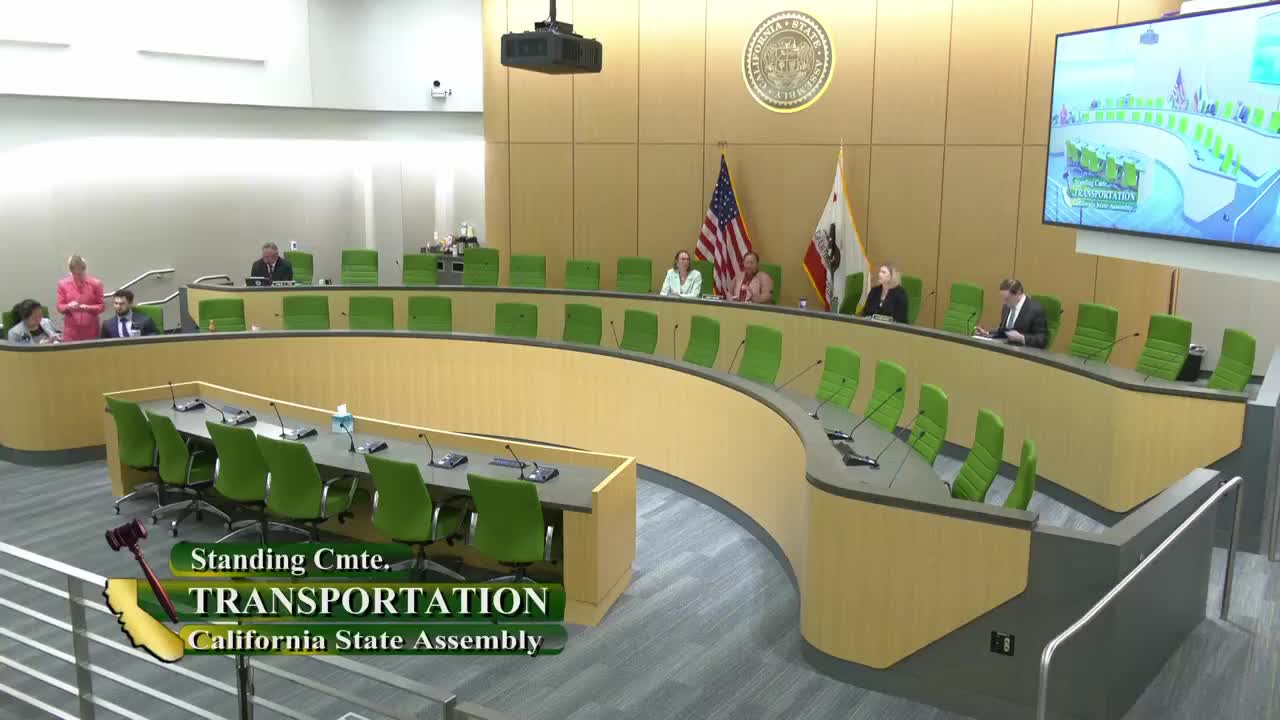
Date of Hearing: April 22, 2024
ASSEMBLY COMMITTEE ON TRANSPORTATION
Lori D. Wilson, Chair
ABPCA Bill Id:AB 3151 (
Author:Gipson) – As Amended Ver:March 18, 2024
SUBJECT: Intermodal roadability inspection program
SUMMARY: Requires, rather than permits, a port terminal to conduct the intermodal roadability inspection program and expands the chassis inspection requirements. Specifically, this bill:
- Expands the definition of port terminal to include an ocean marine terminal or other terminal within a port master plan area.
- Expands the port terminal’s intermodal roadability inspection program (IRIP) to consist of:
- Whether a chassis is leased on a short-term or long-term basis, owned, or otherwise rented; and,
- Inspection of steering, container connecting devices, mud flaps, frame damage, verification that the state 90-day Basic Inspection of Terminals (BIT) inspection and the Federal Motor Carrier Safety Administration (FMCSA) annual inspection are both current.
- Requires defects to intermodal chassis to be repaired within 10 days after the inspection and before the intermodal chassis is released from the terminal. Failure to do so results in a misdemeanor.
- Prevents a vehicle from being released from the port terminal to a motor carrier or operated on the highway other than to a place of repair until all defects listed during the inspection conducted have been corrected and attested to by the signature of the operator’s authorized representative.
- Requires the California Highway Patrol (CHP) to conduction inspections at 30-day intervals until it is determined that the port terminal is in full compliance with the inspection requirements.
EXISTING LAW:
- Allows an ocean marine terminal to conduct the IRIP if the terminal meets all of the following conditions:
- More than 1,000 chassis are based at the ocean marine terminal.
- The ocean marine terminal has received satisfactory compliance ratings.
- Each intermodal chassis exiting the ocean marine terminal has a current decal and supporting documentation in accordance with federal law. (Vehicle Code (VEH) Section 34505.9)
- Defines an ocean marine terminal’s IRIP to consist of all of the following:
- Includes inspection of, but is not limited to, brake adjustment, brake system components and leaks, suspension systems, tires and wheels, vehicle connecting devices, and lights and electrical system;
- Requires each inspection to be recorded on a daily roadability inspection report; and,
- Requires a green tag on attached to a chassis that has passed inspection and a red tag to a chassis that has failed inspection. (VEH Section 34505.9)
- For a failed inspection, requires CHP to reinspect within 120 days. If the terminal fails the reinspection, due to conditions presenting an imminent danger to the public safety or due to the operator’s repeated failure to inspect and repair intermodal chassis, requires CHP to immediately forward a recommendation to the Department of Motor Vehicles to suspend the operator’s motor carrier property permit. (VEH Section 34505.9)
- Requires every motor carrier operating a vehicle to complete inspection, maintenance, and lubrication services required of all motor carriers, and be inspected at least every 90 days, or more often if necessary to ensure safe operation. This inspection shall include, but not be limited to, all of the following:
- Brake adjustment;
- Brake system components and leaks;
- Steering and suspension systems;
- Tires and wheels; and,
- Vehicle connecting devices. (VEH Section 34505.9)
- Prohibits a vehicle operated by a motor carrier from operating on the highway other than to a place of repair until all defects listed during the inspection have been corrected. (VEH Section 34505.5)
- Establishes a misdemeanor if defects noted on any intermodal chassis inspection are not repaired. (VEH Section 40000.21)
FISCAL EFFECT: Unknown
COMMENTS: Since 1965 and under current law, the CHP has conducted terminal inspections to determine if motor carriers are complying with Motor Carrier Safety regulations, particularly with regard to the legal requirement to maintain commercial motor vehicles according to a scheduled maintenance (preventive maintenance) program. The CHP's role is to determine whether carriers' selected maintenance schedules are adequate to prevent collisions or mechanical breakdowns involving the vehicles, and if all required maintenance and driver records are prepared and retained as required by law. Primarily, the intent of this program is to ensure truck terminals are inspected by the CHP on a performance-based inspection selection system. The prioritized inspection of terminals includes those never before inspected and those from which hazardous materials are transported.
Ocean marine terminals that receive and dispatch intermodal trailer chassis, that demonstrate two consecutive satisfactory BIT inspections are authorized to engage in a variation of the 90-day interval inspection program, the IRIP. An "intermodal chassis" is the steel undercarriage that is attached to a truck tractor and is designed to hold and transport the large metal containers that are used to carry cargo materials. The IRIP was established on a demonstration basis in 1994 and made a permanent program in 1998. The IRIP is intended to supplement BIT inspections, and streamline safe chassis use at the port terminal, before the vehicle is on a road.
Under the IRIP, each time an intermodal chassis is loaded with a cargo container and dispatched from the marine terminal, a safety inspection is conducted by a terminal operator, not CHP. This inspection includes: brakes and suspension systems, tires and wheels, vehicle connecting devices, and lights and electrical system. All inspections are recorded on a daily roadability inspection report, which includes the following: positive identification of the intermodal chassis, date and time of each inspection, and signature of the marine terminal operator or representative. Records of each inspection are required to be retained for 90 days at the terminal facility. Vehicles determined to have any safety defects are prohibited from operating on the roadway until those defects are corrected. The CHP is authorized to have complete access to any vehicle equipment records. In addition, port facilities are required to comply with a federal inspection program which provides for one annual inspection of the marine terminal by federal officials.
Safety in Freight. Safety is the state’s top priority across all state transportation plans. The state’s 2023 Freight Mobility Plan outlines a “Safe System” approach, which acknowledges that safety is proactive, rather than waiting for crashes to occur and reacting afterwards.
Each port in the state maintains a safety plan. Some ports use a customized mapping and monitoring system that includes live feeds from security sensors, cameras, and alarms; geospatial maps; pipeline and other infrastructure location data; weather conditions; and social media reports to coordinate and deploy response teams for incidents and in conducting post-incident investigations.
According to the author, “AB 3151 is a common sense measure that would improve the safety standards of chassis operating in, and around, the ports by ensuring that trucks carrying shipping containers are compliant with inspections to vital systems including breaks, container connecting devices, and mud flaps. The legislature, administration, and industry stakeholders have made great strides in improving the safety protocols surrounding the ports and their workers in recent years. The safety of California Port workers, and the communities surrounding the port, is absolutely critical in our ability to transport goods and fuel our economy. This bill would additionally increase the frequency of these inspections and how long terminals need to keep records of these inspections to ensure that every truck operating in ports are as safe as they can be.”
In support, the International Longshore and Warehouse Union (ILWU) Locals 13, 63, and 94 write, “AB 3151’s requirements for comprehensive inspection and repair of chassis before leaving port terminals represent a pragmatic approach to mitigating these risks. By enforcing consistent and thorough inspections, and ensuring that all defects are repaired promptly, this bill will significantly reduce the likelihood of chassis-related accidents on our highways and public roads.”
In opposition, the California Trucking Association writes, “This new program is far afield from the original intention of Roadability to promote safety and maintenance practices by incentivizing port terminals to maintain satisfactory BIT ratings. While the safety benefit of this new proposed program is debatable, let us state the obvious. Enacting a law which allows the sponsors to detain and hold for repair any chassis, regardless of ownership status or existence of a maintenance contract with them, would primarily benefit the sponsors.”
Committee comments. This bill proposes major changes and expands the IRIP, without providing clear evidence of a problem. This bill expands the definition of a port terminal, expands the types of truck equipment that is required to be inspected, adds a 10 day time limit on when a chassis must be repaired, requires the chassis be detained until the repairs are complete, and creates a misdemeanor if the repairs are not complete within 10 days.
Ownership of intermodal chassis have changed. When the IRIP was created, port terminals were responsible for the inspection and maintenance recordkeeping requirements of the BIT Program. At that time, Ocean Carriers owned intermodal chassis and port terminals or contracted with them.
IRIP was created as an “incentive program for participants in the BIT program providing for exemptions from inspections for terminals with consistent satisfactory ratings” by authorizing port terminals with over 1,000 intermodal chassis based at its location and two consecutive satisfactory BIT ratings to perform “outgate inspections”. “Outgate inspections” as allowed in IRIP would allow a visual inspection of chassis as they left the port terminal in lieu of standard 90 day BIT inspections.
Chassis leasing companies, otherwise known in the industry as “intermodal equipment providers’
(IEPs) have become the dominant provider of intermodal chassis. Motor carriers and beneficial cargo owners have also begun acquiring chassis. As intermodal chassis owners and lessors, IEPs, motor carriers and beneficial cargo owners, not port terminals, are now the entities responsible for inspection and maintenance under BIT.
This bill significantly changes the IRIP, which was meant to allow outgate inspections in lieu of standard 90 day physical inspections required by BIT. Instead, this bill authorizes non-law enforcement personnel to detain drivers and perform an outgate inspection on equipment which is no longer subject to the port terminal’s BIT and provides the authority for them to seize and repair motor carrier, IEP and beneficial cargo owner property without authorization or notification. In doing so, this bill removes the incentive to maintain satisfactory BIT ratings, and the ability for CHP to revoke the IRIP with unsatisfactory BIT ratings.
Unclear what problem this bill is fixing. The sponsors state the safety of intermodal chassis at the port has declined as a result of increased goods movement that started during the COVID-19 pandemic and has continued. However, a very similar bill was introduced in 2019 (AB 1575 O’Donnell), before the pandemic. That bill was not set for a hearing in this committee. Additionally, the fatalities as a result of unsafe chassis cited by the sponsors, while tragic, also occurred before the pandemic and data indicates a recent decline in unsafe incidents. Specifically, additional information from the Federal Motor Carrier Safety Administration indicates that the number of intermodal container chassis involved in all crash events in California has decreased by over 100 incidents between 2019 and 2023.
If reform of the IRIP is warranted to ensure chassis safety, it would be important for the sponsors of this bill to work collaboratively with the CHP to update the program. The CHP is the technical and practical expert in roadway safety of intermodal chassis. However, the sponsors of this bill have just begun conversations with the CHP.
The California Assembly Select Committee on Ports and Goods Movement has been conducting hearings in each port across the state. The committee has stated there is a forthcoming whitepaper outlining recommendations for efficient port operation and safety. Safety of intermodal chassis and inspections could be a focus of this whitepaper, or a hearing, and it would be valuable to consider any recommendations from that paper that are applicable to the IRIP.
Delays at the port. It is estimated the additional inspection requirements this bill creates will add eight to ten minutes per trucker to each “turn time,” which is the time it takes a truck at a port terminal to drop off and/or pick up a container and then leave the terminal. This depends on a variety of factors including the size of the terminal, number of gates, level of automation, amount of time waiting for chassis to be provided, inspections, and other variables. It is estimated this bill could increase the turn time by 20-25%.
Repairing the chassis. Existing law creates a misdemeanor for chassis that are not repaired under the IRIP. This bill adds a variety of chassis equipment to the inspection requirements of the IRIP, and requires the chassis be repaired within 10 days. By significantly expanding the inspection requirements of the IRIP, this bill significantly expands the potential for a misdemeanor charge for chassis operator, determined by non-law enforcement personnel. Finally, this bill does not address who pays for the repairs. In practice, port terminals may look to profit from making repairs which could result in added costs for chassis owners.
Previous legislation. SB 1507 (Romero) Chapter 897, Statutes of 2002 imposed additional reporting responsibilities and potential new legal liabilities on marine terminal operators relating to the inspection and maintenance of intermodal chassis, and enact various legal and employment protections for the drivers of these vehicles.
AB 1575 (O’Donnell of 2019) would have required an ocean marine terminal to conduct the intermodal roadability inspection program, require a chassis to be inspected whether it is leased, owned, or rented, require defects noted on the chassis to be repaired within 10 days after the inspection and prior to leaving the terminal.
AB 529 (Lowenthal) Chapter 500, Statutes of 2013 altered the existing regulation for BIT inspections, once known as “Biennial Inspection of Terminals” to change the names to “Basic Inspection of Terminals” and allowed CHP to inspect any terminal at any time they chose instead of every other year.
AB 3151 (Karnette), Chapter 58, Statutes of 1994 created the Intermodal Roadability Inspection Program as an “incentive program for participants in the (BIT) program providing for exemptions from inspections for terminals with consistent satisfactory ratings by authorizing port terminals with over 1,000 intermodal chassis based at its location and two consecutive satisfactory BIT ratings to perform “outgate inspections”. Outgate inspections as allowed in Roadability would allow a visual inspection of chassis as they left the port terminal in lieu of standard 90 day BIT inspections.
REGISTERED SUPPORT / OPPOSITION:
Support
Big Nicks Pizza
Boys & Girls Clubs of the Los Angeles Harbor
California Teamsters Public Affairs Council
City of Los Angeles
City of Los Angeles Councilmember, Tim McOsker
DC Design + Build Consultants
Harbor Industrial
Innovative Terminal Services
International Longshore & Warehouse Union
International Longshore & Warehouse Union Local 13
International Longshore & Warehouse Union Local 63
International Longshore & Warehouse Union Local 94
Los Angeles Latino Equity and Diversity Initiative
Los Angeles Port Police Association
Office of Vice Mayor Cindy Allen of Long Beach
Pacific Harbor Line
Port of Long Beach
Port of Los Angeles
Supervisor Janice Hahn
Opposition
California Trucking Association
Harbor Trucking Association
Pacific Merchant Shipping Association
Analysis Prepared by: Julia Kingsley / TRANS. / (916) 319-2093
Discussed in Hearing
 19MIN
Assembly Standing Committee on Transportation
Bill Author

Bill Co-Author(s):