SB 221: Personal Income Tax Law: Corporation Tax Law: credits: domestic violence survivor housing.
- Session Year: 2023-2024
- House: Senate
- Latest Version Date: 2023-04-24
Current Status:
Failed
(2024-02-01: Returned to Secretary of Senate pursuant to Joint Rule 56.)
Introduced
In Committee
First Chamber
In Committee
Second Chamber
Enacted
The Personal Income Tax Law and the Corporation Tax Law allow various credits against the taxes imposed by those laws.
This bill would, for taxable years beginning on or after January 1, 2023, and before January 1, 2028, allow a credit of $500 $5,000 against the taxes imposed by those laws to a qualified taxpayer. The bill would define a qualified taxpayer for this purpose to mean a taxpayer that owns and leases qualified rental property, as defined, to a qualified nonprofit, as defined, pursuant to a lease that satisfies specified requirements. qualified lease. The bill would require the qualified taxpayer to obtain certification, under penalty of perjury, from the qualified nonprofit that the qualified rental property will be used to provide housing to survivors of domestic violence, as provided. By expanding the crime of perjury, this bill would establish a state-mandated local program.
Existing law requires a bill authorizing a new tax expenditure to contain, among other things, specific goals, purposes, and objectives the tax expenditure will achieve, detailed performance indicators, and data collection requirements.
This bill would include additional information required for any bill authorizing a new tax expenditure.
The California Constitution requires the state to reimburse local agencies and school districts for certain costs mandated by the state. Statutory provisions establish procedures for making that reimbursement.
This bill would provide that no reimbursement is required by this act for a specified reason.
This bill would take effect immediately as a tax levy.
The Personal Income Tax Law and the Corporation Tax Law allow various credits against the taxes imposed by those laws. Existing law requires a bill authorizing a new tax expenditure to contain, among other things, specific goals, purposes, and objectives the tax expenditure will achieve, detailed performance indicators, and data collection requirements.
This bill would, for taxable years beginning on or after January 1, 2023, and before January 1, 2028, allow a credit of $500 against the taxes imposed by those laws in an amount equal to the difference between the fair market rental value and the amount realized in rents and other revenues from leasing qualified rental property, as defined, to qualified nonprofits, as defined, for the purpose of providing housing to survivors of domestic violence below market rates. The bill would state it is the intent of the Legislature to comply with the additional information requirements of a bill authorizing a new tax expenditure. to a qualified taxpayer. The bill would define a qualified taxpayer for this purpose to mean a taxpayer that owns and leases qualified rental property, as defined, to a qualified nonprofit, as defined, pursuant to a lease that satisfies specified requirements. The bill would require the qualified taxpayer to obtain certification, under penalty of perjury, from the qualified nonprofit that the qualified rental property will be used to provide housing to survivors of domestic violence, as provided. By expanding the crime of perjury, this bill would establish a state-mandated local program.
Existing law requires a bill authorizing a new tax expenditure to contain, among other things, specific goals, purposes, and objectives the tax expenditure will achieve, detailed performance indicators, and data collection requirements.
This bill would include additional information required for any bill authorizing a new tax expenditure.
The California Constitution requires the state to reimburse local agencies and school districts for certain costs mandated by the state. Statutory provisions establish procedures for making that reimbursement.
This bill would provide that no reimbursement is required by this act for a specified reason.
This bill would take effect immediately as a tax levy.
The Personal Income Tax Law and the Corporation Tax Law allow various credits against the taxes imposed by those laws. Existing law requires a bill authorizing a new tax expenditure to contain, among other things, specific goals, purposes, and objectives the tax expenditure will achieve, detailed performance indicators, and data collection requirements.
This bill would, for taxable years beginning on or after January 1, 2023, and before January 1, 2028, allow a credit against the taxes imposed by those laws in an amount equal to the difference between the fair market rental value and the amount realized in rents and other revenues from leasing qualified rental property, as defined, to qualified nonprofits, as defined, for the purpose of providing housing to survivors of domestic violence below market rates. The bill would state it is the intent of the Legislature to comply with the additional information requirements of a bill authorizing a new tax expenditure.
This bill would take effect immediately as a tax levy.
(a)(1)For each taxable year beginning on or after January 1, 2023, and before January 1, 2028, there shall be allowed as a credit against the net tax, as that term is defined in Section 17039, of a qualified taxpayer an amount equal to five hundred dollars ($500). five thousand dollars ($5,000) for each qualified lease.
(2)A qualified taxpayer may claim no more than one credit for any taxable year pursuant to this section.(b)For purposes of this section, the following definitions shall apply:
(1)Domestic violence shall have the same definition as that term is defined in Section 6211 of the Family Code.
(2)Fair market rent means the fair market rent for the qualified rental property as of January 1 of the taxable year as determined by the United States Department of Housing and Urban Development in accordance with Section 888.113 of Title 24 of the Code of Federal Regulations.
(3)Qualified lease means a lease of qualified rental property between a qualified taxpayer and a qualified nonprofit that satisfies both of the following conditions:
(A)The rental rate is at least 20 percent lower than the fair market rent.
(B)The term of the lease is at least 12 months.
(3)(4)Qualified nonprofit means a nonprofit organization exempt from federal income taxation pursuant to Section 501(c)(3) of the Internal Revenue Code that is dedicated to assisting survivors of domestic violence by offering housing below market rates.
(4)(5)Qualified rental property means real property located in the state leased by a qualified taxpayer to a qualified nonprofit for the purpose of providing housing below market rates to survivors of domestic violence.
(5)(6)Qualified taxpayer means a taxpayer that owns and rents qualified rental property to a qualified nonprofit pursuant to a lease that satisfies all of the following: a qualified lease.
(A)The rental rate must be at least 20 percent lower than the fair market rent.(B)The lease must be for a term of at least six months.(c)In the case where the credit allowed under this section exceeds the net tax, for a taxable year, the excess credit may be carried over to reduce the net tax in the following taxable year, and succeeding four taxable years, if necessary, until the credit has been exhausted.
(d)A qualified taxpayer shall receive written certification, under penalty of perjury, from a qualified nonprofit, either as a term of the qualified lease or in a separate agreement, that the qualified rental property will be used to provide housing to survivors of domestic violence. The qualified taxpayer shall provide a copy of the certification to the Franchise Tax Board upon request.
(e)(1)For the purpose of complying with Section 41, as it relates to the tax credit established by this section and Section 23625, the Legislature finds and declares as follows:
(A)The goal, purpose, and objective of the credit is to incentivize people and businesses that provide residential rental space to work with nonprofits in assisting survivors of domestic violence.
(B)The performance indicators for the Legislature to use in determining whether the credit is achieving its stated goal shall be the number of taxpayers allowed a credit pursuant to this section or Section 23625 and the average dollar value of credits allowed.
(2)(A)No later than May 1, 2029, November 1, 2026, and annually thereafter, the Franchise Tax Board shall submit a report to the Legislature, in compliance with Section 9795 of the Government Code, detailing the number of taxpayers allowed a credit pursuant to this section and Section 23625 and the average dollar value of credits allowed.
(B)The disclosure provisions of this paragraph shall be treated as an exception to Section 19542.
(f)This section shall remain operative only until December 1, 2028, and as of that date is repealed.
SEC. 2.Section 23625 is added to the Revenue and Taxation Code, to read:23625.(a)(1)For each taxable year beginning on or after January 1, 2023, and before January 1, 2028, there shall be allowed as a credit against the tax, as that term is defined in Section 26036, of a qualified taxpayer an amount equal to five hundred dollars ($500). five thousand dollars ($5,000) for each qualified lease.
(2)A qualified taxpayer may claim no more than one credit for any taxable year pursuant to this section.(b)For purposes of this section, the following definitions shall apply:
(1)Domestic violence shall have the same definition as that term is defined in Section 6211 of the Family Code.
(2)Fair market rent means the fair market rent for the qualified rental property as of January 1 of the taxable year as determined by the United States Department of Housing and Urban Development in accordance with Section 888.113 of Title 24 of the Code of Federal Regulations.
(3)Qualified lease means a lease of qualified rental property between a qualified taxpayer and a qualified nonprofit that satisfies both of the following conditions:
(A)The rental rate is at least 20 percent lower than the fair market rent.
(B)The term of the lease is at least 12 months.
(3)(4)Qualified nonprofit means a nonprofit organization exempt from federal income taxation pursuant to Section 501(c)(3) of the Internal Revenue Code that is dedicated to assisting survivors of domestic violence by offering housing at below market rates.
(4)(5)Qualified rental property means real property located in the state leased by a qualified taxpayer to a qualified nonprofit for the purpose of providing housing at below market rates to survivors of domestic violence.
(5)(6)Qualified taxpayer means a taxpayer that owns and rents qualified rental property to a qualified nonprofit pursuant to a lease that satisfies all of the following: qualified lease.
(A)The rental rate must be at least 20 percent lower than the fair market rent.(B)The lease must be for a term of at least six months.(c)In the case where the credit allowed under this section exceeds the tax, for a taxable year, the excess credit may be carried over to reduce the tax in the following taxable year, and succeeding four taxable years, if necessary, until the credit has been exhausted.
(d)A qualified taxpayer shall receive written certification, under penalty of perjury, from a qualified nonprofit, either as a term of the lease or in a separate agreement, that the qualified rental property will be used to provide housing to survivors of domestic violence. The qualified taxpayer shall provide a copy of the certification to the Franchise Tax Board upon request.
(e)For purposes of complying with Section 41, the goal, purpose, objective, performance indicators, and data collection requirements for the credit allowed by this section shall be as specified in subdivision (e) of Section 17053.35. (f)(e)This section shall remain operative only until December 1, 2028, and as of that date is repealed.
SEC. 3.No reimbursement is required by this act pursuant to Section 6 of Article XIIIB of the California Constitution because the only costs that may be incurred by a local agency or school district will be incurred because this act creates a new crime or infraction, eliminates a crime or infraction, or changes the penalty for a crime or infraction, within the meaning of Section 17556 of the Government Code, or changes the definition of a crime within the meaning of Section 6 of Article XIIIB of the California Constitution.
SEC. 4.This act provides for a tax levy within the meaning of Article IV of the California Constitution and shall go into immediate effect.
(a)(1)For each taxable year beginning on or after January 1, 2023, and before January 1, 2028, there shall be allowed as a credit against the net tax, as that term is defined in Section 17039, of a qualified taxpayer an amount equal to the qualified amount. five hundred dollars ($500).
(2)A qualified taxpayer may claim no more than one credit for any taxable year pursuant to this section.
(b)For purposes of this section, the following definitions shall apply:
(1)Domestic violence shall have the same definition as that term is defined in Section 6211 of the Family Code.
(2)Qualified amount means the difference between the fair market rental value of qualified rental property and the amount realized in rent and other revenues resulting from the leasing of the qualified rental property to a qualified nonprofit.(2)Fair market rent means the fair market rent for the qualified rental property as of January 1 of the taxable year as determined by the United States Department of Housing and Urban Development in accordance with Section 888.113 of Title 24 of the Code of Federal Regulations.
(3)Qualified nonprofit means a nonprofit organization dedicated to assisting survivors of domestic violence by offering housing below market rates.
(4)Qualified rental property means real property leased by a qualified taxpayer to a qualified nonprofit for the purpose of providing housing below market rates to survivors of domestic violence.
(c)Upon request by the Franchise Tax Board, the taxpayer shall provide substantiation of the fair market rental value of qualified rental property, as determined by either of the following methods:(1)The fair market rental value determined by a comparative analysis prepared by an independent real estate broker. The comparative analysis shall be performed by a qualified, licensed professional who acts within the scope of the brokers license, who, at a minimum, meets the standards for brokers, as specified in Chapter 6 (commencing with Section 2705) of Title 10 of the California Code of Regulations, and the comparatives shall be made in accordance with Section 200.465(a) of Title 2 of the Code of Federal Regulations. (2)The fair market rental value determined by an independent appraisal. The appraisal shall be performed by a qualified, licensed professional appraiser who, at a minimum, meets standards for appraisers as specified in Chapter 6.5 (commencing with Section 3500) of Title 10 of the California Code of Regulations.(5)Qualified taxpayer means a taxpayer that owns and rents qualified rental property to a qualified nonprofit pursuant to a lease that satisfies all of the following:
(A)The rental rate must be at least 20 percent lower than the fair market rent.
(B)The lease must be for a term of at least six months.
(c)In the case where the credit allowed under this section exceeds the net tax, for a taxable year, the excess credit may be carried over to reduce the net tax in the following taxable year, and succeeding four taxable years, if necessary, until the credit has been exhausted.
(d)A qualified taxpayer shall receive written certification, under penalty of perjury, from a qualified nonprofit, either as a term of the qualified lease or in a separate agreement, that the qualified rental property will be used to provide housing to survivors of domestic violence. The qualified taxpayer shall provide a copy of the certification to the Franchise Tax Board upon request.
(e)(1)For the purpose of complying with Section 41, as it relates to the tax credit established by this section and Section 23625, the Legislature finds and declares as follows:
(A)The goal, purpose, and objective of the credit is to incentivize people and businesses that provide residential rental space to work with nonprofits in assisting survivors of domestic violence.
(B)The performance indicators for the Legislature to use in determining whether the credit is achieving its stated goal shall be the number of taxpayers allowed a credit pursuant to this section or Section 23625 and the average dollar value of credits allowed.
(2)(A)No later than May 1, 2029, the Franchise Tax Board shall submit a report to the Legislature, in compliance with Section 9795 of the Government Code, detailing the number of taxpayers allowed a credit pursuant to this section and Section 23625 and the average dollar value of credits allowed.
(B)The disclosure provisions of this paragraph shall be treated as an exception to Section 19542.
(d)(f)This section shall remain operative only until December 1, 2028, and as of that date is repealed.
SEC. 2.Section 23625 is added to the Revenue and Taxation Code, to read:23625.(a)(1)For each taxable year beginning on or after January 1, 2023, and before January 1, 2028, there shall be allowed as a credit against the tax, as that term is defined in Section 26036, of a qualified taxpayer an amount equal to the qualified amount. five hundred dollars ($500).
(2)A qualified taxpayer may claim no more than one credit for any taxable year pursuant to this section.
(b)For purposes of this section, the following definitions shall apply:
(1)Domestic violence shall have the same definition as that term is defined in Section 6211 of the Family Code.
(2)Qualified amount means the difference between the fair market rental value of qualified rental property and the amount realized in rent and other revenues resulting from the leasing of the qualified rental property to a qualified nonprofit.(2)Fair market rent means the fair market rent for the qualified rental property as of January 1 of the taxable year as determined by the United States Department of Housing and Urban Development in accordance with Section 888.113 of Title 24 of the Code of Federal Regulations.
(3)Qualified nonprofit means a nonprofit organization dedicated to assisting survivors of domestic violence by offering housing at below market rates.
(4)Qualified rental property means real property leased by a qualified taxpayer to a qualified nonprofit for the purpose of providing housing at below market rates to survivors of domestic violence.
(c)Upon request by the Franchise Tax Board, the taxpayer shall provide substantiation of the fair market rental value of qualified rental property, as determined by either of the following methods:(1)The fair market rental value determined by a comparative analysis prepared by an independent real estate broker. The comparative analysis shall be performed by a qualified, licensed professional who acts within the scope of the brokers license, who, at a minimum, meets the standards for brokers, as specified in Chapter 6 (commencing with Section 2705) of Title 10 of the California Code of Regulations, and the comparatives shall be made in accordance with Section 200.465(a) of Title 2 of the Code of Federal Regulations. (2)The fair market rental value determined by an independent appraisal. The appraisal shall be performed by a qualified, licensed professional appraiser who, at a minimum, meets standards for appraisers as specified in Chapter 6.5 (commencing with Section 3500) of Title 10 of the California Code of Regulations.(5)Qualified taxpayer means a taxpayer that owns and rents qualified rental property to a qualified nonprofit pursuant to a lease that satisfies all of the following:
(A)The rental rate must be at least 20 percent lower than the fair market rent.
(B)The lease must be for a term of at least six months.
(c)In the case where the credit allowed under this section exceeds the tax, for a taxable year, the excess credit may be carried over to reduce the tax in the following taxable year, and succeeding four taxable years, if necessary, until the credit has been exhausted.
(d)A qualified taxpayer shall receive written certification, under penalty of perjury, from a qualified nonprofit, either as a term of the lease or in a separate agreement, that the qualified rental property will be used to provide housing to survivors of domestic violence. The qualified taxpayer shall provide a copy of the certification to the Franchise Tax Board upon request.
(e)For purposes of complying with Section 41, the goal, purpose, objective, performance indicators, and data collection requirements for the credit allowed by this section shall be as specified in subdivision (e) of Section 17053.35.
(d)(f)This section shall remain operative only until December 1, 2028, and as of that date is repealed.
SEC. 3.It is the intention of the Legislature to comply with Section 41 of the Revenue and Taxation Code as it relates to the tax expenditures created by Sections 17053.35 and 23625 of the Revenue and Taxation Code, as added by this act.SEC. 3.No reimbursement is required by this act pursuant to Section 6 of Article XIIIB of the California Constitution because the only costs that may be incurred by a local agency or school district will be incurred because this act creates a new crime or infraction, eliminates a crime or infraction, or changes the penalty for a crime or infraction, within the meaning of Section 17556 of the Government Code, or changes the definition of a crime within the meaning of Section 6 of Article XIIIB of the California Constitution.
SEC. 4.This act provides for a tax levy within the meaning of Article IV of the California Constitution and shall go into immediate effect.
(a)For each taxable year beginning on or after January 1, 2023, and before January 1, 2028, there shall be allowed as a credit against the net tax, as that term is defined in Section 17039, of a taxpayer an amount equal to the qualified amount.
(b)For purposes of this section, the following definitions shall apply:
(1)Domestic violence shall have the same definition as that term is defined in Section 6211 of the Family Code.
(2)Qualified amount means the difference between the fair market rental value of qualified rental property and the amount realized in rent and other revenues resulting from the leasing of the qualified rental property to a qualified nonprofit.
(3)Qualified nonprofit means a nonprofit organization dedicated to assisting survivors of domestic violence by offering housing below market rates.
(4)Qualified rental property means real property leased by a taxpayer to a qualified nonprofit for the purpose of providing housing below market rates to survivors of domestic violence.
(c)Upon request by the Franchise Tax Board, the taxpayer shall provide substantiation of the fair market rental value of qualified rental property, as determined by either of the following methods:
(1)The fair market rental value determined by a comparative analysis prepared by an independent real estate broker. The comparative analysis shall be performed by a qualified, licensed professional who acts within the scope of the brokers license, who, at a minimum, meets the standards for brokers, as specified in Chapter 6 (commencing with Section 2705) of Title 10 of the California Code of Regulations, and the comparatives shall be made in accordance with Section 200.465(a) of Title 2 of the Code of Federal Regulations.
(2)The fair market rental value determined by an independent appraisal. The appraisal shall be performed by a qualified, licensed professional appraiser who, at a minimum, meets standards for appraisers as specified in Chapter 6.5 (commencing with Section 3500) of Title 10 of the California Code of Regulations.
(d)This section shall remain operative only until December 1, 2028, and as of that date is repealed.
SEC. 2.Section 23625 is added to the Revenue and Taxation Code, to read:23625.(a)For each taxable year beginning on or after January 1, 2023, and before January 1, 2028, there shall be allowed as a credit against the tax, as that term is defined in Section 26036, of a taxpayer an amount equal to the qualified amount.
(b)For purposes of this section, the following definitions shall apply:
(1)Domestic violence shall have the same definition as that term is defined in Section 6211 of the Family Code.
(2)Qualified amount means the difference between the fair market rental value of qualified rental property and the amount realized in rent and other revenues resulting from the leasing of the qualified rental property to a qualified nonprofit.
(3)Qualified nonprofit means a nonprofit organization dedicated to assisting survivors of domestic violence by offering housing at below market rates.
(4)Qualified rental property means real property leased by a taxpayer to a qualified nonprofit for the purpose of providing housing at below market rates to survivors of domestic violence.
(c)Upon request by the Franchise Tax Board, the taxpayer shall provide substantiation of the fair market rental value of qualified rental property, as determined by either of the following methods:
(1)The fair market rental value determined by a comparative analysis prepared by an independent real estate broker. The comparative analysis shall be performed by a qualified, licensed professional who acts within the scope of the brokers license, who, at a minimum, meets the standards for brokers, as specified in Chapter 6 (commencing with Section 2705) of Title 10 of the California Code of Regulations, and the comparatives shall be made in accordance with Section 200.465(a) of Title 2 of the Code of Federal Regulations.
(2)The fair market rental value determined by an independent appraisal. The appraisal shall be performed by a qualified, licensed professional appraiser who, at a minimum, meets standards for appraisers as specified in Chapter 6.5 (commencing with Section 3500) of Title 10 of the California Code of Regulations.
(d)This section shall remain operative only until December 1, 2028, and as of that date is repealed.
SEC. 3.It is the intention of the Legislature to comply with Section 41 of the Revenue and Taxation Code as it relates to the tax expenditures created by Sections 17053.35 and 23625 of the Revenue and Taxation Code, as added by this act.
SEC. 4.This act provides for a tax levy within the meaning of Article IV of the California Constitution and shall go into immediate effect.
|
Date
|
Status
|
|---|---|
| Feb 1, 2024 | Returned to Secretary of Senate pursuant to Joint Rule 56. |
| May 18, 2023 | May 18 hearing: Held in committee and under submission. |
| May 16, 2023 | Set for hearing May 18. |
| May 15, 2023 | May 15 hearing: Placed on APPR suspense file. |
| May 5, 2023 | Set for hearing May 15. |
| May 3, 2023 | From committee: Do pass and re-refer to Com. on APPR. (Ayes 7. Noes 0. Page 992.) (May 3). Re-referred to Com. on APPR. |
| Apr 24, 2023 | From committee with author's amendments. Read second time and amended. Re-referred to Com. on GOV. & F. |
| Apr 20, 2023 | Set for hearing May 3. |
| Mar 7, 2023 | From committee with author's amendments. Read second time and amended. Re-referred to Com. on GOV. & F. |
| Feb 1, 2023 | Referred to Com. on GOV. & F. |
| Jan 20, 2023 | From printer. May be acted upon on or after February 19. |
| Jan 19, 2023 | Introduced. Read first time. To Com. on RLS. for assignment. To print. |
|
Date
|
Description
|
Location
|
Votes
|
|
|---|---|---|---|---|
| May 15, 2023 | Placed on suspense file | Senate Standing Committee on Appropriations |
Passed |
|
| May 3, 2023 | Do pass, but first be re-referred to the Committee on [Appropriations] | Senate Standing Committee on Governance and Finance |
Passed |
This list shows positions taken on this bill by organizations on the date displayed, which is linked to the original source.
Positions by individuals are not included.
|
Organization
|
Position
|
Date
|
|---|---|---|
| California Apartment Association | ** Support |
SENATE COMMITTEE ON APPROPRIATIONS
Senator Anthony Portantino, Chair
2023 - 2024 Regular Session
SB 221 (Seyarto) - Personal Income Tax Law: Corporation Tax Law: credits: domestic violence survivor housing
Version: April 24, 2023 | Policy Vote: GOV. & F. 7 - 0 |
Urgency: No | Mandate: Yes |
Hearing Date: May 15, 2023 | Consultant: Robert Ingenito |
Bill Summary:
SB 221 would enact a tax credit for landlords that provide below market rent to a non-profit providing housing for domestic violence survivors.
Fiscal Impact:
The Franchise Tax Board (FTB) estimates that the bill would result in General Fund revenue losses of $140 million in 2023-24, $120 million in 2024-25, and $120 million in 2025-26. FTB’s costs to implement the bill have yet to be determined.
Background:
Tax expenditure programs (TEPs) are special tax provisions that reduce the amount of revenues the “basic” tax system would otherwise generate in order to provide (1) benefits to certain groups of taxpayers, and/or (2) incentives to encourage certain types of behavior and activities, such as charitable giving. Specifically, current law provides for, among other things, various income and corporation tax credits and deductions, as well as exemptions from the sales and use tax. The Department of Finance is required to publish a list of TEPs (currently totaling several hundred), which currently exceed $87 billion annually.
Proposed Law:
This bill would, for taxable years 2023 through 2027, provide a tax credit to a taxpayer that owns rental property that is leased to a non-profit that is dedicated to assisting survivors of domestic violence. The credit would be $5,000 for each qualified lease (as defined). Beginning in November, 2026, FTB would be required to submit a report to the Legislature detailing the number of taxpayers allowed a credit, and the average dollar value of credits allowed.
Staff Comments:
This bill would assist domestic violence survivors by providing a tax credit to landlords that rent housing below market rates to a non-profit entity that provides housing for victims of domestic abuse.
Any local government costs resulting from the mandate in this measure are not state-reimbursable because the mandate only involves the definition of a crime or the penalty for conviction of a crime.
-- END --
SENATE COMMITTEE ON GOVERNANCE AND FINANCE
Senator Anna M. Caballero, Chair
2023 - 2024 Regular
Bill No: | SB 221 | Hearing Date: | 5/3/23 |
Author: | Seyarto | Tax Levy: | Yes |
Version: | 4/24/23 Amended | Fiscal: | Yes |
Consultant: | Deitchman | ||
Personal Income Tax Law: Corporation Tax Law: credits: domestic violence survivor housing
Provides a tax credit to landlords that provide below market rent to a non-profit that provides housing for domestic violence survivors.
Background
Tax expenditures. California law allows various income tax credits, deductions, exemptions, and exclusions. The Legislature enacts such tax incentives either to compensate taxpayers for incurring certain expenses, such as child adoption, or to influence certain behavior, such as charitable giving. The Legislature uses tax incentives to encourage taxpayers to do something that but for the tax credit, they would otherwise not do. The Department of Finance is required annually to publish a list of tax expenditures, currently totaling around $87 billion per year.
Domestic Violence. The California Department of Public Health reports[1] that as many as 1 in 5 women and 1 in 7 men face severe domestic violence from a partner. Further, the estimated domestic violence cost over a female victim's lifetime is $103,767 and $23,414 for a male victim. According to the Department of Justice[2], there were 164,608 domestic violence calls in 2021 alone. These numbers represent only those that reported the abuse.
Rent Costs. Rents in California continue to rise every year becoming more and more unaffordable to single-income families. According to the Department of Housing and Urban Development (HUD)[3], the fair market rent in 2023 for a one bedroom in the Sacramento area is $1,400. For someone working full time and making minimum wage, this is 52 percent of their gross income ($1,400/$2,686).
Seeking to help domestic violence survivors find affordable and safe housing, the author wants to provide a tax credit to landlords that rent housing below market rates to a non-profit entity that provides housing for victims of domestic abuse.
Proposed Law
Senate Bill 221, for taxable years 2023 through 2028, provides a tax credit to a taxpayer that owns rental property into this state that they lease to a non-profit that is dedicated to assisting survivors of domestic violence, equal to $5,000 for each qualified lease. A “qualified lease” means a lease of a qualified rental property between a qualified taxpayer and a qualified non-profit where the rental rate is at least 20 percent lower than the fair market rent and the term of the lease is at least 12 months This credit is available to property owners that file under both the Personal Income and Corporation Tax law.
The measure allows the taxpayer to carry over any unused credit for up to five years, or until the credit has been exhausted.
The bill contains provisions to comply with the requirements of Revenue and Taxation Code Section 41.
SB 221 sunsets on December 1, 2028.
State Revenue Impact
Pending.
Comments
1. Purpose of the bill. According to the author, “SB221 grants a tax credit to individuals partnered with non-profit service providers dedicated to assisting with providing Transitional Housing at below market rates to survivors of domestic violence. With women on average waiting more than 10 years to access stable housing – a rate twice that of men, and the Office of Emergency Services Domestic Violence Assistance Program over-subscribed by almost 28,000 requests, California must seek to help and incentivize the increase in housing supply to these survivors.”
2. Revenue loss. Existing tax law provides various credits, deductions, exclusions, and exemptions for taxpayers. Since the Legislature enacts these items to accomplish some governmental purpose, which has a cost — in the form of foregone revenues — state law refers to them as "tax expenditures." This bill would create a new tax expenditure that seeks to encourage the hiring of homeless persons, but that will result in less revenue for the General Fund. Without General Fund moneys, the government has less funding to pay for important public services such as education and public safety. As a result, the state will have to reduce spending or increase taxes to match the foregone revenue. The Committee may wish to consider whether SB 221 is worth the spending cuts and/or tax increases.
3. Windfall. Tax expenditures produce two different outcomes. First, they reward behavior that would have occurred without the tax benefit, referred to as windfall benefit. Second, they generate certain activity that would not have occurred but for the tax benefit. SB 221 provides a tax credit for landlords that provide below market rental leases with qualified nonprofits. Some of these taxpayers would have executed these leases anyway as part of business operations and will receive a windfall benefit. On the other hand, taxpayers may view this tax credit as enough incentive to offer the discounted lease. However, regardless of whether it is a windfall benefit, SB 221 still has a General Fund impact to the state. The Committee may wish to consider whether enacting a tax credit for these types of leases will outweigh the cost to the state.
4. Section 41. Section 41 of the Revenue and Taxation Code requires any bill enacting a new tax expenditure to contain, among other things, specific goals, purposes, and objectives that the tax expenditure will achieve and detailed performance indicators, along with data collection and reporting requirements (SB 1335, Leno, 2014). To satisfy these requirements SB 221:
- States that its goal, purpose, and objective is to incentivize people and businesses that provide residential rental space to work with nonprofits in assisting survivors of domestic violence.
- To measure its impact, it directs Franchise Tax Board to prepare a report which must be provided no later than November 1, 2026, and annually thereafter, to the Legislature that compiles the number of taxpayers claiming the credit and the average dollar value of the credit allowed.
Support and Opposition
(4/28/23)
Support: California Apartment Association
Opposition: None submitted.
-- END --
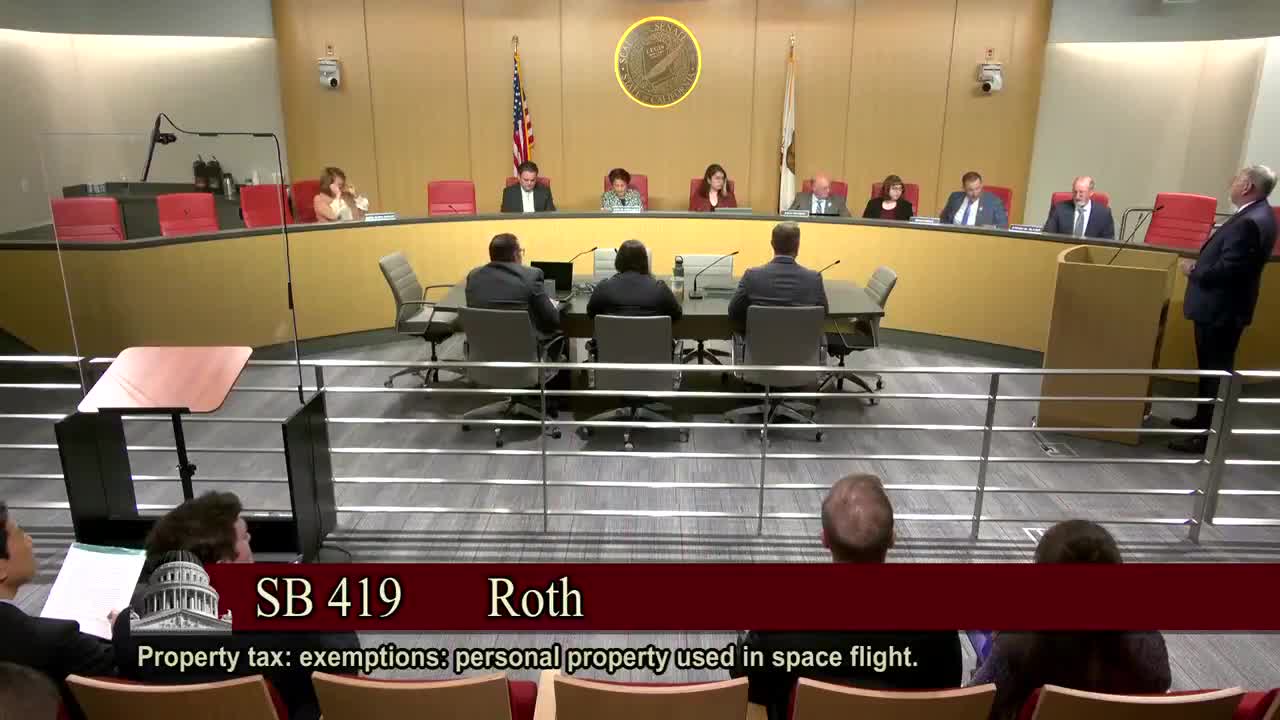
Discussed in Hearing
 6MIN
Senate Standing Committee on Governance and Finance
Bill Author

Bill Co-Author(s):