SB 685: Apprenticeship Innovation Funding Program: AgTech.
- Session Year: 2023-2024
- House: Senate
- Latest Version Date: 2023-02-16
Current Status:
Failed
(2024-02-01: Returned to Secretary of Senate pursuant to Joint Rule 56.)
Introduced
In Committee
First Chamber
In Committee
Second Chamber
Enacted
Existing law establishes the Apprenticeship Innovation Funding Program, to be operative and implemented only upon appropriation of funds by the Legislature. Existing law requires the Division of Apprenticeship Standards, within the Department of Industrial Relations, to administer the program to provide grants, reimbursements, or other funding for the support of an apprenticeship program or training of apprentices.
This bill, during the first 5 years of the programs grant funding period, would require the division to prioritize at least 20% of grant funds to be dedicated to reimbursing wage loss of farmworkers transitioning to AgTech, as defined, or a related career, incurred while enrolled in a farmworker-related training program.
(a)The provisions of this article shall be operative and implemented only upon appropriation of sufficient funds by the Legislature for that purpose. This article applies only to programs that are not within the jurisdiction of the council established pursuant to Section 3070.
(b)(1)The division shall establish and administer the Apprenticeship Innovation Funding Program to provide grants, reimbursements, or funding through other appropriate funding mechanisms to an apprenticeship program for the support of apprenticeship programs or for the training of apprentices. Grants, reimbursements, or funding from other appropriate funding mechanisms pursuant to the Apprenticeship Innovation Funding Program shall be awarded using funding appropriated by the Legislature for this purpose.
(2)(A)During the first five years of administering grant funds under this program, the division shall prioritize a minimum of 20 percent of funds for farmworkers transitioning to AgTech or a related career. Those funds shall be provided only to reimburse wage loss experienced by farmworkers while enrolled in a farmworker-related training program.
(B)For purposes of this paragraph, AgTech means the use of technology to improve the efficiency, profitability, or sustainability of agriculture.
(c)An apprenticeship program or eligible entity may submit an application to the division to request funds under this article in a manner specified by the division. An eligible entity is an entity that has registered apprentices with the division, including, but not limited to, public educational institutions, public and private nonprofit organizations, local workforce development boards specified in Section 14200 of the Unemployment Insurance Code, labor organizations, as defined in Section 1117, private for-profit organizations, education and training providers, tribal organizations, faith-based organizations, community-based organizations, industry associations, and parties to a collective bargaining agreement.
(d)Funding provided to the entities in subdivision (c) can be passed on to whichever entity is performing eligible activities pursuant to the funding that are consistent with this article, including the eligible activities described in Sections 3111.1 and 3112.1, provided that the entities are associated with an approved apprenticeship program.
(e)Any entity receiving funding pursuant to this article is subject to evaluation by the division under Section 3073.1. If the entity is found to have violated the provisions of this chapter, those violations are deemed imputed to the associated apprenticeship program, and the division may take any appropriate action against that apprenticeship program.
(f)As used in this article, public educational institutions includes local educational agencies, community colleges, the University of California, and the California State University.
(g)If a program or other entity is found to be using apprenticeship innovation funding for purposes other than those for which the funds were granted or is found to have obtained the funds improperly, then the program or other entity shall not be eligible to receive any apprenticeship innovation funding and the division or entity authorized to provide funding shall cease providing funds.
(h)The division shall require that recipients of apprenticeship innovation funding demonstrate a commitment to high road principles, as described in subdivision (s) of Section 14005 of the Unemployment Insurance Code, and shall evaluate the performance of recipients based on those principles.
|
Date
|
Status
|
|---|---|
| Feb 1, 2024 | Returned to Secretary of Senate pursuant to Joint Rule 56. |
| Apr 26, 2023 | April 26 set for first hearing. Failed passage in committee. (Ayes 2. Noes 0. Page 898.) Reconsideration granted. |
| Apr 13, 2023 | Set for hearing April 26. |
| Mar 1, 2023 | Referred to Com. on L., P.E. & R. |
| Feb 17, 2023 | From printer. May be acted upon on or after March 19. |
| Feb 16, 2023 | Introduced. Read first time. To Com. on RLS. for assignment. To print. |
|
Date
|
Description
|
Location
|
Votes
|
|
|---|---|---|---|---|
| Apr 26, 2023 | [First] hearing set for [04-26-2023]: Failed passage in Committee. Reconsideration granted | Senate Standing Committee on Labor, Public Employment and Retirement |
Passed |
|
| Apr 26, 2023 | Do pass, but first be re-referred to the Committee on [Appropriations] | Senate Standing Committee on Labor, Public Employment and Retirement |
Failed |
This list shows positions taken on this bill by organizations on the date displayed, which is linked to the original source.
Positions by individuals are not included.
|
Organization
|
Position
|
Date
|
|---|---|---|
| California Association Of Winegrape Growers | * Support | Apr 26, 2023 |
| California Farmworker Foundation | ** Support |
SENATE COMMITTEE ON LABOR, PUBLIC EMPLOYMENT AND RETIREMENT
Senator Dave Cortese, Chair
2023 - 2024 Regular
Bill No: SB 685 Hearing Date: April 26, 2023
Author: | Hurtado | ||
Version: | February 16, 2023 | ||
Urgency: | No | Fiscal: | Yes |
Consultant: | Dawn Clover | ||
SUBJECT: Apprenticeship Innovation Funding Program: AgTech
KEY ISSUE
Should the Legislature require 20 percent of Apprenticeship Innovation Funding Program funds to be allocated for transitioning farmworkers to agriculture technology or other related industries?
ANALYSIS
Existing law:
- Requires the Division of Apprenticeship Standards (DAS), upon appropriation of funds by the Legislature, to establish and administer the Apprenticeship Innovation Funding Program to provide grants, reimbursements, or funding through other appropriate mechanisms to an apprenticeship program for the support of apprenticeship programs and training of apprentices. (Labor Code §3110)
- Creates, within DAS, the Interagency Advisory Committee on Apprenticeship (IACA), which must provide advice and guidance to the Administrator of Apprenticeship and Chief of the Division of Apprenticeship Standards on the development and administration of standards governing preapprenticeship, certification, and on-the-job training and retraining programs outside the building and construction trade and firefighter occupations. (Labor Code §3071.5)
- Provides IACA must have the following designees as ex officio members:
- The Secretary of Labor and Workforce Development.
- The Executive Director of the California Workforce Development Board.
- The Director of Industrial Relations.
- The Executive Director of the Employment Training Panel, Superintendent of Public Instruction.
- The Chancellor of the California Community Colleges.
- The Director of Rehabilitation.
- The Executive Director of the State Council on Developmental Disabilities.
- The State Public Health Officer.
- The Director of Consumer Affairs. (Labor Code §3071.5)
This bill:
- Requires DAS, during the first five years of administering grant funds under the Program, to prioritize a minimum of 20 percent of funds for farmworkers transitioning to AgTech or a related career.
- Requires those funds to be provided only to reimburse wage loss experienced by farmworkers while enrolled in a farmworker related training program.
- Defines “AgTech” for the purpose of the Program to mean the use of technology to improve the efficiency, profitability, or sustainability of agriculture.
COMMENTS
1. Background
The Program was created last year to fund new and innovative apprenticeship programs, defined as apprenticeships associated with IACA, and aims to support IACA apprenticeship program sponsors to sustain and scale their programs and train apprentices. The intent of the funding for the Program is to support both new and existing IACA apprenticeship programs to grow and scale to meet the needs of more employers and create more earn and learn pathways for job seekers. The State has allocated $175 million over three years to support ongoing costs of these programs and classroom training, with $55 million specifically allocated for FY 2022-23. IACA apprenticeships focus on the non-building trade apprenticeship opportunities, such as those in the health care sector.
Many agricultural technologies replace the need for human labor. Adoption of these technologies in the food industry will translate into loss of employment for vulnerable populations. Because the food sector as a whole employs about ten percent[1] of the total workforce, this is not an insignificant impact to families and the overall economy. The Employment Development Department Labor Market Division estimates an annual average of 420,800 agricultural workers were employed in California last year. The Brookings Institution recommends policymakers should do two things to support these displaced workers: form partnerships with private sector employers to facilitate targeted retraining that allows the workers to reenter the labor force quickly and with a stronger set of skills, and establish robust income and other social insurance support to allow workers to effectively retrain.
2. Need for the Bill?
According to the author, “Senate Bill 685 seeks to establish a pilot program within California’s Apprenticeship Innovation Funding Program specifically targeting farmworkers impacted by flooding, drought, Covid-19, and the automation of agricultural jobs… The California Institute of Rural Studies (CIRS) published a report showing over 100,000 agricultural jobs were lost due to COVID-19’s economic and health impacts on the state’s farmworker workforce. Nearly half of all farmworkers experienced decreased work time and loss of income during the COVID-19 pandemic (CIRS). Agricultural land, due to drought and climate-change increased idled land in 2022 by 750,000 acres (PPIC). The growth in idled land means the loss of thousands of farmworker jobs throughout the state.
3. Committee Discussion
The purpose of the existing Program is to fund IACA related apprenticeships for a period of three years. This bill proposes to encumber 20 percent of the annual funding for five years without clear guidance regarding eligibility requirements. As the bill is currently drafted, it does not create a pilot program, rather it proposes to carve out funding to supplement lost wages for agricultural workers who receive training only in a farmworker related training program. It is unclear how the funding would be administered.
The committee may wish to consider whether this bill fulfills the intent the author has expressed to assist farmworkers and whether it is consistent with the overall goal of the Program to train and upskill workers while providing wages.
3. Proponent Arguments
According to the California Farmworker Foundation, “SB 685 seeks to establish a pilot program within the AIF specifically targeting farmworkers affected by drought, Covid-19 and now record flooding throughout the state. SB 685 will set aside 20% of the budgeted AIF to transition farmworkers to AgTech or a new career path.
Ninety percent of California farmworkers were born in Mexico, seven out of ten have just one employer, most farmworkers are married parents, and few migrate between California’s agricultural regions according to the 2018 Department of Labor National Agricultural Workers Survey. The average California farmworker works 36 weeks annually, earning $20,500 per year; About one-third received employer-provided health insurance. Half of those eligible rely on at least one public program, such as Medi-Cal or Food Stamps, but 60 percent of the state’s farmworkers lack work authorization and cannot receive any government safety net benefits.
Agricultural land, due to drought and climate-change increased idled land in 2022 by 750,000 acres. The growth in idled land means the loss of thousands of farmworker jobs throughout the state. Farmworkers and Ag tech innovation are not mutually exclusive. Training farmworkers with new technology and combining the expertise these workers have of crops, soil and harvesting techniques is a way to bring new efficiencies forward and retain this vital workforce.
Significant resources, deservedly so, have been invested into healthcare jobs as well as those eventually transitioning out of oil and gas sectors. Farmworkers deserve the same prioritization and SB 685 sets aside funding to ensure they receive the training and wages needed to transition into ag tech or a new career field. We believe this legislation is needed to bring equity to some of our most vulnerable workers and provide new career opportunities to them and their families.”
4. Opponent Arguments:
None received
4. Prior Legislation:
SB 191 (Committee on Budget and Fiscal Review - Chapter 67, Statutes of 2022) among other things, allocated $175 million over three years to support ongoing costs of these programs.
SUPPORT
California Farmworker Foundation
OPPOSITION
None received
-- END --
https://www.brookings.edu/blog/up-front/2020/11/23/automation-from-farm-to-table-technologys-impact-on-the-food-industry/ ↑
Discussed in Hearing
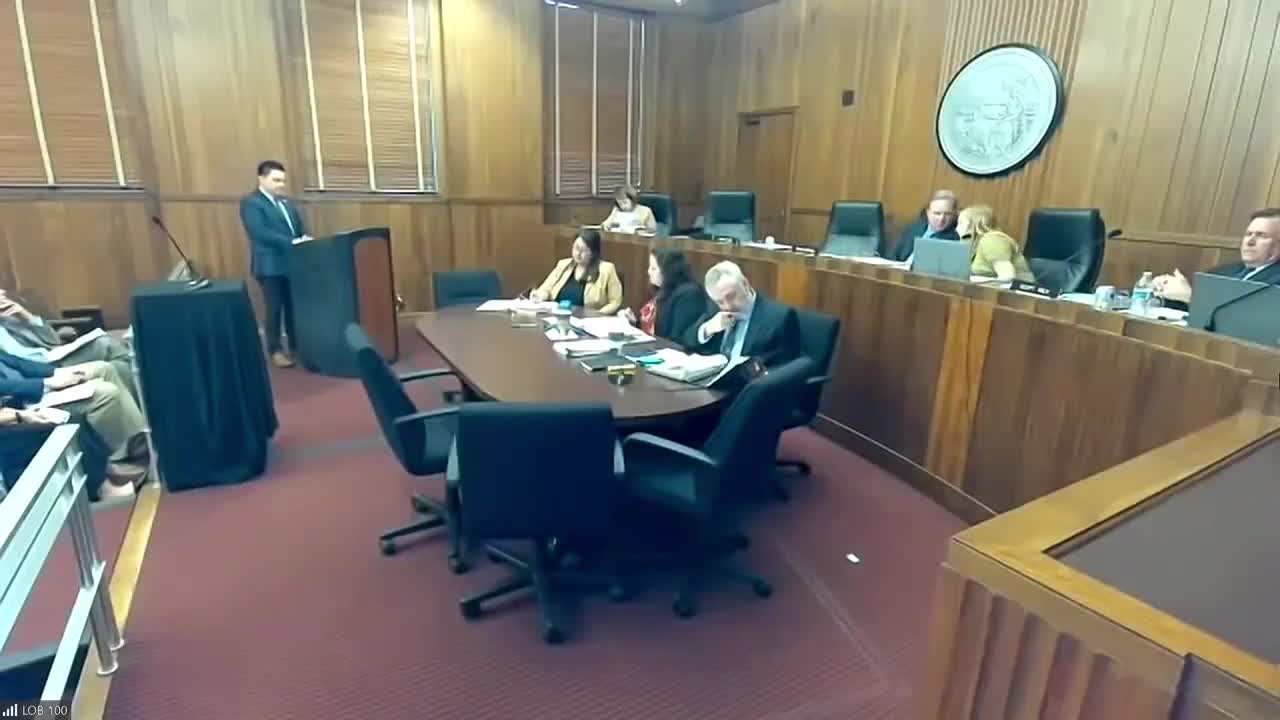 7MIN
Senate Standing Committee on Labor, Public Employment and Retirement
Bill Author

Bill Co-Author(s):