AB 2137: Occupational safety and health: fabrication activities: slab solid surface products.
- Session Year: 2025-2026
- House: Assembly
- Latest Version Date: 2026-04-15
Current Status:
In Progress
(2026-05-14: In committee: Held under submission.)
Introduced
In Committee
Awaiting First Chamber Vote
Passed First Chamber
In Committee
Awaiting Second Chamber Vote
Passed Second Chamber
Enacted
Existing law establishes the Occupational Safety and Health Standards Board within the Department of Industrial Relations to adopt occupational safety and health standards for the state, including standards dealing with exposure to harmful airborne contaminants. Existing law requires the Division of Occupational Safety and Health within the department to enforce all occupational safety and health standards, as specified.
Existing law imposes restrictions on specified high-exposure trigger tasks on artificial stone, as those terms are defined. Specifically, a person or entity engaged in high-exposure trigger tasks is prohibited from using dry methods, and is required to use effective wet methods when engaging in any high-exposure trigger tasks. Existing law requires the owner or operator of a fabrication shop, or any individual who will employ another individual to perform high-exposure trigger tasks in a fabrication shop, to ensure that an employee who will perform high-exposure tasks receives specified training and to annually attest to the division that these employees have been trained. Existing law requires the division to enforce these provisions by issuing a citation alleging a violation and a notice of civil penalty.
This bill would require, on or before January 1, 2028, the department to develop an application and certification process for fabrication shops to lawfully engage in slab solid surface product fabrication activities. The bill would authorize fabrication shops to engage in those fabrication activities during the pendency of the application development and certification process. The bill would require the department to develop an initial deposit process for fabrication shops to, during the pendency of the application development and certification process, submit a deposit fee for the application and certification subject to specified requirements, including that the deposit amount goes towards the initial certification fee collected by the department.
This bill would require, beginning July 1, 2028, the department to grant a 3-year certification to a fabrication shop that demonstrates satisfaction of specified criteria involving workplace safety conditions and precautions, and would authorize certification renewal, as specified. Among other conditions, the bill would establish certain regulatory fees in amounts to be determined and adjusted by the department, as specified, for the certification and renewal thereof. The bill would authorize the department to suspend or revoke a certification in certain cases, including for gross negligence, as specified. The bill would require the department, in consultation with the division and the State Department of Public Health, to track and keep a record of specified information on fabrication shops, including the number of citations issued to any of the fabrication shops for failure to comply with any temporary or future standards relating to respirable crystalline silica, as specified.
This bill would prohibit a person or entity, or an employee thereof, from engaging in fabrication activities, as defined, on slab solid surface products unless they conduct the fabrication activities at a fabrication shop that has submitted a valid initial deposit to the department, or, after July 1, 2028, has submitted an application for initial certification or renewal and the application is pending or has a valid certification, as provided. The bill would require the division to enforce this prohibition by issuing a citation alleging a violation and a notice of civil penalty.
This bill would prohibit, beginning July 1, 2028, a person from supplying a slab solid surface product directly to a person, entity, or business engaged in fabrication activities on those products if the person, entity, or business does not have a valid, or pending application for, certification. The bill would require a person that supplies a slab solid surface product to a person, entity, or business engaged in fabrication activities on those products to verify that the person, entity, or business has a certification, or a pending application for certification, as specified. The bill would require a person that supplies a slab solid surface product to a person, entity, or business that is not engaged in fabrication activities to rely on written certification issued under penalty of perjury that, among other things, they will not directly engage in fabrication activities with the product without a certification. By expanding the scope of the crime of perjury, the bill would impose a state-mandated local program. The bill would require a person that seeks services that require fabrication activities and enters into a contract with a person, entity, or business to undertake fabrication activities to verify that the person, entity, or business has a valid certificate before engaging with and providing slab solid surface products to that person, entity, or business. The bill would require the division to enforce these requirements by issuing a citation alleging a violation and a notice of civil penalty.
The bill would establish the Slab Fabrication Activity Account in the Occupational Safety and Health Fund in the State Treasury, and would require all fees, penalties, or other moneys collected by the department under the bill and under the above-described provisions relating to high-exposure trigger tasks to be deposited into the account. The bill would authorize moneys in the account to be expended by the department, upon appropriation by the Legislature, for the purposes of administering the bill and other provisions related to silicosis risk exposure in fabrication shops.
The California Constitution requires the state to reimburse local agencies and school districts for certain costs mandated by the state. Statutory provisions establish procedures for making that reimbursement.
This bill would provide that no reimbursement is required by this act for a specified reason.
Existing law, the California Occupational Safety and Health Act of 1973, requires employers to comply with certain safety and health standards, as specified, and charges the Division of Occupational Safety and Health with enforcement of the act. Existing law defines terms for purposes of the act.This bill would make nonsubstantive changes to those definitions.Existing law, the California Occupational Safety and Health Act of 1973, requires employers to comply with certain safety and health standards, as specified, and charges the Division of Occupational Safety and Health with enforcement of the act. Existing law defines terms for purposes of the act.
This bill would make nonsubstantive changes to those definitions.
For purposes of this chapter, the following definitions apply:
(a)Artificial stone means any reconstituted, artificial, synthetic, composite, engineered, or manufactured stone product. It is commonly made by combining natural stone or other crystalline silica-containing materials with adhesives, polymers, epoxies, resins, or other binding materials to form a slab. Fired ceramic and porcelain tiles and panels are not artificial stone.
(b)Department means the Department of Industrial Relations.
(c)Director means the Director of Industrial Relations.
(d)Division means the Division of Occupational Safety & Health.
(e)Dry methods means the undertaking of high-exposure trigger tasks without the use of wet methods that effectively suppress dust.
(f)(1)Fabrication shop means a person, entity, business, or location where high-exposure trigger tasks are undertaken.
(2)Fabrication shop does not include quarries, concrete and cement manufacturing facilities, or fired ceramic or fired porcelain tiles or panels manufacturing facilities that do not manufacture, fabricate, or finish artificial stone products.
(g)(1)Fabrication activities means machining, crushing, cutting, drilling, abrading, abrasive blasting, grinding, chiseling, carving, gouging, polishing, buffing, fracturing, intentional breaking, or intentional chipping of slab solid surface products.
(2)Fabrication activities does not include onsite construction work covered by Section 1532.3 of Title 8 of the California Code of Regulations or facilities where slab solid surface products are manufactured, including, but not limited to, quarries, concrete manufacturing facilities, or fired ceramic or fired porcelain tiles or panels manufacturing facilities.
(h)High-exposure trigger task means machining, crushing, cutting, drilling, abrading, abrasive blasting, grinding, chiseling, carving, gouging, polishing, buffing, fracturing, intentional breaking, or intentional chipping of artificial stone that contains more than 0.1 percent by weight crystalline silica, or other silica containing products, including natural stone, that contain more than 10 percent by weight crystalline silica. High-exposure trigger tasks also include clean up, disturbing, or handling of wastes, dusts, residues, debris, or other materials created during the above-listed tasks. High-exposure trigger tasks do not include tasks other than the fabrication of countertops, backsplashes, walls, flooring, waterfall countertop edges, and other products from slabs or panels.
(i)Respirable crystalline silica means quartz, cristobalite, or tridymite contained in airborne particles that are determined to be respirable by a sampling device designed to meet the characteristics for respirable-particle-size-selective samplers specified in the International Organization for Standardization (ISO) 7708:1995 Air Quality Particle Size Fraction Definitions for Health-Related Sampling.
(j)(1)Slab solid surface product means a hard stone-like substance containing crystalline silica, including, but not limited to, artificial, engineered, or natural stone, including granite or marble, that is used for countertop installation or customization and surface applications.
(2)For purposes of paragraph (1), artificial stone means any reconstituted, artificial, synthetic, composite, engineered, or manufactured stone product. It is commonly made by combining natural stone or other crystalline silica-containing materials with adhesives, polymers, epoxies, resins, or other binding materials to form a slab. Fired ceramic and porcelain tiles and panels are not artificial stone.
(k)Wet methods means effectively suppressing dust by one of the methods listed below, such that exposures do not exceed the action level at any time. Regardless of the method used, water shall cover the entire surface of the work object where a tool, equipment, or machine contacts the work object.
(1)Applying a constant, continuous, and appropriate volume of running water directly onto the surface of the work object. When water flow is integrated with a tool, machine, or equipment, water flow rates shall equal or exceed manufacturer recommendations and specifications to ensure effective dust suppression. Any water that is recycled must be filtered to remove silica prior to reuse.
(2)Submersing the work object underwater.
(3)Water jet cutting or the use of high-pressure water to cut material.
SEC. 2.Section 6359.6 is added to the Labor Code, to read:6359.6.(a)(1)On or before January 1, 2028, the department shall do all of the following:
(A)Develop an application and certification process for a slab solid surface product fabrication activity certification to authorize fabrication shops to engage in fabrication activities.
(B)Develop an initial deposit process for fabrication shops to, during the pendency of the application development and certification process, submit a deposit fee for the application and initial certification subject to all of the following requirements:
(i)The deposit fee amount shall be in an amount as the department deems necessary to implement this chapter and shall not exceed the reasonable regulatory cost.
(ii)The deposit fee amount collected by the department shall be used towards the initial certification fee collected pursuant to subdivision (b), and the applicable amount shall be returned to a fabrication shop if the deposit amount exceeds the initial certification fee or if the application is denied.
(C)(i)Determine the initial certification fee and the renewal fee to be collected pursuant to subdivision (b), which shall be in amounts as the department deems necessary to implement this chapter and shall not exceed the reasonable regulatory cost.
(ii)The department, in determining the fee amounts described in clause (i), may establish different fees for large or small fabrication shops in the state as the department deems necessary for regulatory purposes. The department shall, in determining the sizes of the fabrication shops and the fee amounts, consult with relevant stakeholders, including owners and operators of fabrication shops.
(2)(A)Notwithstanding any provision of this chapter to the contrary, a fabrication shop may continue to engage in fabrication activities during the pendency of the application development and certification process.
(B)This paragraph shall become inoperative on July 1, 2028.
(b)(1)Commencing July 1, 2028, the department shall accept an application for and grant a certification to a fabrication shop that demonstrates to the departments satisfaction of all of the following workplace safety conditions and precautions:
(A)Evidence of a legally obtained and valid business license and applicable state contractors license.
(B)Evidence of satisfactory workers compensation insurance coverage.
(C)Documentation of compliance with Section 6359.3. 6359.2.
(D)Implementation of an air quality monitoring program and documentation of certified air quality monitoring results consistent with any occupational safety and health standards and orders that are adopted by the Occupational Safety and Health Standards Board pursuant to Section 142.3.
(2)The department, or a third party certified by the department for this purpose, shall inspect a fabrication shop before the issuance of the certification to verify that the equipment and procedures of the fabrication shop are in compliance with any occupational safety and health standards and orders that are adopted by the Occupational Safety and Health Standards Board pursuant to Section 142.3.
(3)(A)An applicant for a certification shall submit to the department an initial certification application, including an initial certification fee in the amounts determined by the department, which shall be deposited in the Slab Fabrication Activity Account in the Occupational Safety and Health Fund for the purposes of administering this chapter.
(B)Notwithstanding any provision of this chapter to the contrary, a fabrication shop may continue to engage in fabrication activities if it has submitted an initial certification application and the application fee pursuant to subparagraph (A) while it awaits inspection pursuant to paragraph (2) during the pendency of the certification application.
(4)Each certification granted by the department shall be for a three-year period.
(5)(A)The department shall accept a renewal application for and grant a certification renewal to a fabrication shop that demonstrates to the department continued compliance with all of the following workplace safety conditions and precautions:
(i)Evidence of compliance with the requirements of any occupational safety and health standards and orders that are adopted by the Occupational Safety and Health Standards Board pursuant to Section 142.3.
(ii)Evidence of a legally maintained business license and applicable state contractors license.
(iii)Evidence of satisfactory workers compensation insurance coverage.
(iv)Documentation of certified air quality monitoring results consistent with any occupational safety and health standards and orders that are adopted by the Occupational Safety and Health Standards Board pursuant to Section 142.3 over the prior three years.
(v)Documentation of information related to employee-reported silicosis cases since previous certification.
(vi)Documentation of compliance with Section 6359.2.
(B)The department, or a third party certified by the department for this purpose, shall inspect a fabrication shop before the issuance of a certification renewal to verify that the equipment and procedures of the fabrication shop are in compliance with any occupational safety and health standards and orders that are adopted by the Occupational Safety and Health Standards Board pursuant to Section 142.3.
(C)An applicant for a certification renewal shall submit to the department a certification renewal fee in the amount determined by the department, which shall be deposited in the Slab Fabrication Activity Account in the Occupational Safety and Health Fund for the purposes of administering this chapter.
(D)A fabrication shop with a previous certification may continue to engage in fabrication activities during the pendency of the certification renewal application.
(6)The department may suspend or revoke a certification issued pursuant to this section if the department finds that the fabrication shop has engaged in gross negligence, gross incompetence, or willful or repeated disregard of any emergency or other occupational safety and health standards, occupational safety and health standards orders, any provision of this chapter, or any other related provision of law.
(c)Commencing January 1, 2029, the department shall evaluate the cost of implementation of this chapter and may adjust the amounts of the initial certification fee and the renewal certification fee, which shall be in reasonable amounts as the department deems necessary to implement this chapter and shall not exceed the reasonable regulatory cost.
SEC. 3.Section 6359.6.5 is added to the Labor Code, to read:6359.6.5.(a)The department, in consultation with the division and the State Department of Public Health, shall track and keep a record of information on fabrication shops regarding all of the following:
(1)The number of citations issued to any of the fabrication shops for failure to comply with any temporary or future standards relating to respirable crystalline silica adopted by the Occupational Safety and Health Standards Board, and the geographic areas in the state with the highest numbers of those citations.
(2)The number of new cases of silicosis identified in any of the fabrication shops since the passage of any temporary or future standards relating to respirable crystalline silica adopted by the Occupational Safety and Health Standards Board.
(3)The number of notices issued to fabrication shops found to be in noncompliance with department regulations relating to respirable crystalline silica.
(b)The department shall provide the information described in subdivision (a) to, or otherwise assist as applicable, local prosecutors in seeking civil or criminal action against fabrication shops in violation of any applicable provisions.
(c)The division may use the information described in subdivision (a) in seeking enforcement against fabrication shops in violation of any applicable provisions.
SEC. 4.Section 6359.7 is added to the Labor Code, to read:6359.7.(a)A person or entity, or an employee of a person or entity, shall not engage in fabrication activities unless they conduct the fabrication activities at a fabrication shop that has done either of the following:
(1)During the period of January 1, 2028, until July 1, 2028, submitted a valid initial deposit to the department pursuant to this chapter.
(2)After July 1, 2028, has submitted an application for initial certification or renewal pursuant to this chapter and the application is pending or has a valid certification issued by the department pursuant to this chapter.
(b)A violation of this section may be reported to the division. The division shall enforce this section by issuing a citation alleging a violation of this section and a notice of civil penalty in a manner consistent with Section 6317. Any person who receives a citation and penalty may appeal the citation and penalty to the appeals board in a manner consistent with Section 6319.
(c)Notwithstanding any provision of this division, a violation of this section is not a crime.
SEC. 5.Section 6359.7.5 is added to the Labor Code, to read:6359.7.5.(a)A person shall not supply a slab solid surface product directly to a person, entity, or business engaged in fabrication activities if the person, entity, or business engaged in fabrication activities does not have a valid, or a pending application for, certification, as provided in this chapter.
(1)A person that supplies a slab solid surface product to a person, entity, or business engaged in fabrication activities shall verify that the person, entity, or business has a valid, or a pending application for, certification as provided in this chapter before providing the slab solid surface product to that person, entity, or business.
(2)A person that supplies a slab solid surface product to a person, entity, or business that is not engaged in fabrication activities shall rely on a written verification issued under penalty of perjury from that person, entity, or business that they will not directly engage in fabrication activities on the product without a valid, or pending application for, certification as provided in this chapter and that, if the person, entity, or business resells the product, they will resell it to a person, entity, or business with a valid, or pending application for, certification as provided in this chapter.
(b)A person that seeks services that require fabrication activities and enters into a contract with a person, entity, or business to undertake fabrication activities shall verify that the person, entity, or business has a valid, or pending application for, certification as provided in this chapter before engaging with or providing slab solid surface products to that person, entity, or business.
(c)(1)The division shall enforce this section by issuing a citation alleging a violation of this section and a notice of civil penalty in a manner consistent with Section 6317. Any person who receives a citation and penalty may appeal the citation and penalty to the appeals board in a manner consistent with Section 6319.
(2)Notwithstanding any provision of this division, a violation of this section is not a crime.
(d)(1)A cause of action shall not lie against a person who supplies a slab solid surface product, as described in subdivision (a), or that enters into a contract for fabrication, as described in subdivision (b), and that makes the verifications required by this section.
(2)It is the intent of the Legislature in paragraph (1) to create a safe harbor for a person who makes the verifications required by this section.
(e)This section shall become operative on July 1, 2028.
SEC. 6.Section 6359.8 is added to the Labor Code, to read:6359.8.(a)The Slab Fabrication Activity Account is hereby created in the Occupational Safety and Health Fund, as established pursuant to Section 62.5, in the State Treasury.
(b)All fees, penalties, or other moneys collected by the department or the division under this chapter shall be deposited in the Slab Fabrication Activity Account.
(c)Upon appropriation by the Legislature for this express purpose, moneys in the account may be expended by the department for the purposes of administering this chapter.
SEC. 7.No reimbursement is required by this act pursuant to Section 6 of Article XIIIB of the California Constitution because the only costs that may be incurred by a local agency or school district will be incurred because this act creates a new crime or infraction, eliminates a crime or infraction, or changes the penalty for a crime or infraction, within the meaning of Section 17556 of the Government Code, or changes the definition of a crime within the meaning of Section 6 of Article XIIIB of the California Constitution.
For purposes of this chapter, the following definitions apply:
(a)Artificial stone means any reconstituted, artificial, synthetic, composite, engineered, or manufactured stone product. It is commonly made by combining natural stone or other crystalline silica-containing materials with adhesives, polymers, epoxies, resins, or other binding materials to form a slab. Fired ceramic and porcelain tiles and panels are not artificial stone.
(b)Department means the Department of Industrial Relations.
(c)Director means the Director of Industrial Relations.
(d)Division means the Division of Occupational Safety & Health.
(e)Dry methods means the undertaking of high-exposure trigger tasks without the use of wet methods that effectively suppress dust.
(f)(1)Fabrication shop means a person, entity, business, or location where high-exposure trigger tasks are undertaken.
(2)Fabrication shop does not include quarries, concrete and cement manufacturing facilities, or fired ceramic or fired porcelain tiles or panels manufacturing facilities that do not manufacture, fabricate, or finish artificial stone products.
(g)(1)Fabrication activities means machining, crushing, cutting, drilling, abrading, abrasive blasting, grinding, chiseling, carving, gouging, polishing, buffing, fracturing, intentional breaking, or intentional chipping of slab solid surface products.
(2)Fabrication activities does not include onsite construction work covered by Section 1532.3 of Title 8 of the California Code of Regulations or facilities where slab solid surface products are manufactured, including, but not limited to, quarries, concrete manufacturing facilities, or fired ceramic or fired porcelain tiles or panels manufacturing facilities.
(g)(h)High-exposure trigger task means machining, crushing, cutting, drilling, abrading, abrasive blasting, grinding, chiseling, carving, gouging, polishing, buffing, fracturing, intentional breaking, or intentional chipping of artificial stone that contains more than 0.1 percent by weight crystalline silica, or other silica containing products, including natural stone, that contain more than 10 percent by weight crystalline silica. High-exposure trigger tasks also include clean up, disturbing, or handling of wastes, dusts, residues, debris, or other materials created during the above-listed tasks. High-exposure trigger tasks do not include tasks other than the fabrication of countertops, backsplashes, walls, flooring, waterfall countertop edges, and other products from slabs or panels.
(h)(i)Respirable crystalline silica means quartz, cristobalite, or tridymite contained in airborne particles that are determined to be respirable by a sampling device designed to meet the characteristics for respirable-particle-size-selective samplers specified in the International Organization for Standardization (ISO) 7708:1995 Air Quality Particle Size Fraction Definitions for Health-Related Sampling.
(j)(1)Slab solid surface product means a hard stone-like substance containing crystalline silica, including, but not limited to, artificial, engineered, or natural stone, including granite or marble, that is used for countertop installation or customization and surface applications.
(2)For purposes of paragraph (1), artificial stone means any reconstituted, artificial, synthetic, composite, engineered, or manufactured stone product. It is commonly made by combining natural stone or other crystalline silica-containing materials with adhesives, polymers, epoxies, resins, or other binding materials to form a slab. Fired ceramic and porcelain tiles and panels are not artificial stone.
(i)(k)Wet methods means effectively suppressing dust by one of the methods listed below, such that exposures do not exceed the action level at any time. Regardless of the method used, water shall cover the entire surface of the work object where a tool, equipment, or machine contacts the work object.
(1)Applying a constant, continuous, and appropriate volume of running water directly onto the surface of the work object. When water flow is integrated with a tool, machine, or equipment, water flow rates shall equal or exceed manufacturer recommendations and specifications to ensure effective dust suppression. Any water that is recycled must be filtered to remove silica prior to reuse.
(2)Submersing the work object underwater.
(3)Water jet cutting or the use of high-pressure water to cut material.
SEC. 2.Section 6359.6 is added to the Labor Code, to read:6359.6.(a)(1)On or before January 1, 2028, the department shall do all of the following:
(A)Develop an application and certification process for a slab solid surface product fabrication activity certification to authorize fabrication shops to engage in fabrication activities.
(B)Develop an initial deposit process for fabrication shops to, during the pendency of the application development and certification process, submit a deposit fee for the application and initial certification subject to all of the following requirements:
(i)The deposit fee amount shall be in an amount as the department deems necessary to implement this chapter and shall not exceed the reasonable regulatory cost.
(ii)The deposit fee amount collected by the department shall be used towards the initial certification fee collected pursuant to subdivision (b), and the applicable amount shall be returned to a fabrication shop if the deposit amount exceeds the initial certification fee or if the application is denied.
(C)(i) Determine the initial certification fee and the renewal fee to be collected pursuant to subdivision (b), which shall be in amounts as the department deems necessary to implement this chapter and shall not exceed the reasonable regulatory cost.
(ii)The department, in determining the fee amounts described in clause (i), may establish different fees for large or small fabrication shops in the state as the department deems necessary for regulatory purposes. The department shall, in determining the sizes of the fabrication shops and the fee amounts, consult with relevant stakeholders, including owners and operators of fabrication shops.
(2)(A) Notwithstanding any provision of this chapter to the contrary, a fabrication shop may continue to engage in fabrication activities during the pendency of the application development and certification process.
(B)This paragraph shall become inoperative on July 1, 2028.
(b)(1) Commencing July 1, 2028, the department shall accept an application for and grant a certification to a fabrication shop that demonstrates to the departments satisfaction of all of the following workplace safety conditions and precautions:
(A)Evidence of a legally obtained and valid business license and applicable state contractors license.
(B)Evidence of satisfactory workers compensation insurance coverage.
(C)Documentation of compliance with Section 6359.3.
(D)Implementation of an air quality monitoring program and documentation of certified air quality monitoring results consistent with any occupational safety and health standards and orders that are adopted by the Occupational Safety and Health Standards Board pursuant to Section 142.3.
(2)The department, or a third party certified by the department for this purpose, shall inspect a fabrication shop before the issuance of the certification to verify that the equipment and procedures of the fabrication shop are in compliance with any occupational safety and health standards and orders that are adopted by the Occupational Safety and Health Standards Board pursuant to Section 142.3.
(3)(A) An applicant for a certification shall submit to the department an initial certification application, including an initial certification fee in the amounts determined by the department, which shall be deposited in the Slab Fabrication Activity Account in the Occupational Safety and Health Fund for the purposes of administering this chapter.
(B)Notwithstanding any provision of this chapter to the contrary, a fabrication shop may continue to engage in fabrication activities if it has submitted an initial certification application and the application fee pursuant to subparagraph (A) while it awaits inspection pursuant to paragraph (2) during the pendency of the certification application.
(4)Each certification granted by the department shall be for a three-year period.
(5)(A) The department shall accept a renewal application for and grant a certification renewal to a fabrication shop that demonstrates to the department continued compliance with all of the following workplace safety conditions and precautions:
(i)Evidence of compliance with the requirements of any occupational safety and health standards and orders that are adopted by the Occupational Safety and Health Standards Board pursuant to Section 142.3.
(ii)Evidence of a legally maintained business license and applicable state contractors license.
(iii)Evidence of satisfactory workers compensation insurance coverage.
(iv)Documentation of certified air quality monitoring results consistent with any occupational safety and health standards and orders that are adopted by the Occupational Safety and Health Standards Board pursuant to Section 142.3 over the prior three years.
(v)Documentation of information related to employee-reported silicosis cases since previous certification.
(vi)Documentation of compliance with Section 6359.2.
(B)The department, or a third party certified by the department for this purpose, shall inspect a fabrication shop before the issuance of a certification renewal to verify that the equipment and procedures of the fabrication shop are in compliance with any occupational safety and health standards and orders that are adopted by the Occupational Safety and Health Standards Board pursuant to Section 142.3.
(C)An applicant for a certification renewal shall submit to the department a certification renewal fee in the amount determined by the department, which shall be deposited in the Slab Fabrication Activity Account in the Occupational Safety and Health Fund for the purposes of administering this chapter.
(D)A fabrication shop with a previous certification may continue to engage in fabrication activities during the pendency of the certification renewal application.
(6)The department may suspend or revoke a certification issued pursuant to this section if the department finds that the fabrication shop has engaged in gross negligence, gross incompetence, or willful or repeated disregard of any emergency or other occupational safety and health standards, occupational safety and health standards orders, any provision of this chapter, or any other related provision of law.
(c)Commencing January 1, 2029, the department shall evaluate the cost of implementation of this chapter and may adjust the amounts of the initial certification fee and the renewal certification fee, which shall be in reasonable amounts as the department deems necessary to implement this chapter and shall not exceed the reasonable regulatory cost.
SEC. 3.Section 6359.6.5 is added to the Labor Code, to read:6359.6.5.(a)The department, in consultation with the division and the State Department of Public Health, shall track and keep a record of information on fabrication shops regarding all of the following:
(1)The number of citations issued to any of the fabrication shops for failure to comply with any temporary or future standards relating to respirable crystalline silica adopted by the Occupational Safety and Health Standards Board, and the geographic areas in the state with the highest numbers of those citations.
(2)The number of new cases of silicosis identified in any of the fabrication shops since the passage of any temporary or future standards relating to respirable crystalline silica adopted by the Occupational Safety and Health Standards Board.
(3)The number of notices issued to fabrication shops found to be in noncompliance with department regulations relating to respirable crystalline silica.
(b)The department shall provide the information described in subdivision (a) to, or otherwise assist as applicable, local prosecutors in seeking civil or criminal action against fabrication shops in violation of any applicable provisions.
(c)The division may use the information described in subdivision (a) in seeking enforcement against fabrication shops in violation of any applicable provisions.
SEC. 4.Section 6359.7 is added to the Labor Code, to read:6359.7.(a)A person or entity, or an employee of a person or entity, shall not engage in fabrication activities unless they conduct the fabrication activities at a fabrication shop that has done either of the following:
(1)During the period of January 1, 2028, until July 1, 2028, submitted a valid initial deposit to the department pursuant to this chapter.
(2)After July 1, 2028, has submitted an application for initial certification or renewal pursuant to this chapter and the application is pending or has a valid certification issued by the department pursuant to this chapter.
(b)A violation of this section may be reported to the division. The division shall enforce this section by issuing a citation alleging a violation of this section and a notice of civil penalty in a manner consistent with Section 6317. Any person who receives a citation and penalty may appeal the citation and penalty to the appeals board in a manner consistent with Section 6319.
(c)Notwithstanding any provision of this division, a violation of this section is not a crime.
SEC. 5.Section 6359.7.5 is added to the Labor Code, to read:6359.7.5.(a)A person shall not supply a slab solid surface product directly to a person, entity, or business engaged in fabrication activities if the person, entity, or business engaged in fabrication activities does not have a valid, or a pending application for, certification, as provided in this chapter.
(1)A person that supplies a slab solid surface product to a person, entity, or business engaged in fabrication activities shall verify that the person, entity, or business has a valid, or a pending application for, certification as provided in this chapter before providing the slab solid surface product to that person, entity, or business.
(2)A person that supplies a slab solid surface product to a person, entity, or business that is not engaged in fabrication activities shall rely on a written verification issued under penalty of perjury from that person, entity, or business that they will not directly engage in fabrication activities on the product without a valid, or pending application for, certification as provided in this chapter and that, if the person, entity, or business resells the product, they will resell it to a person, entity, or business with a valid, or pending application for, certification as provided in this chapter.
(b)A person that seeks services that require fabrication activities and enters into a contract with a person, entity, or business to undertake fabrication activities shall verify that the person, entity, or business has a valid, or pending application for, certification as provided in this chapter before engaging with or providing slab solid surface products to that person, entity, or business.
(c)(1)The division shall enforce this section by issuing a citation alleging a violation of this section and a notice of civil penalty in a manner consistent with Section 6317. Any person who receives a citation and penalty may appeal the citation and penalty to the appeals board in a manner consistent with Section 6319.
(2)Notwithstanding any provision of this division, a violation of this section is not a crime.
(d)(1)A cause of action shall not lie against a person who supplies a slab solid surface product, as described in subdivision (a), or that enters into a contract for fabrication, as described in subdivision (b), and that makes the verifications required by this section.
(2)It is the intent of the Legislature in paragraph (1) to create a safe harbor for a person who makes the verifications required by this section.
(e)This section shall become operative on July 1, 2028.
SEC. 6.Section 6359.8 is added to the Labor Code, to read:6359.8.(a)The Slab Fabrication Activity Account is hereby created in the Occupational Safety and Health Fund, as established pursuant to Section 62.5, in the State Treasury.
(b)All fees, penalties, or other moneys collected by the department or the division under this chapter shall be deposited in the Slab Fabrication Activity Account.
(c)Upon appropriation by the Legislature for this express purpose, moneys in the account may be expended by the department for the purposes of administering this chapter.
SEC. 7.No reimbursement is required by this act pursuant to Section 6 of Article XIIIB of the California Constitution because the only costs that may be incurred by a local agency or school district will be incurred because this act creates a new crime or infraction, eliminates a crime or infraction, or changes the penalty for a crime or infraction, within the meaning of Section 17556 of the Government Code, or changes the definition of a crime within the meaning of Section 6 of Article XIIIB of the California Constitution.
SECTION 1.Section 6302 of the Labor Code is amended to read:6302.As used in this division:(a)Director means the Director of Industrial Relations.(b)Department means the Department of Industrial Relations.(c)Insurer includes the State Compensation Insurance Fund and any private company, corporation, mutual association, and reciprocal or interinsurance exchange, authorized under the laws of this state to insure employers against liability for compensation under this part and under Division 4 (commencing with Section 3200), and any employer to whom a certificate of consent to self-insure has been issued.(d)Division means the Division of Occupational Safety and Health.(e)Standards board means the Occupational Safety and Health Standards Board, within the department.(f)Appeals board means the Occupational Safety and Health Appeals Board, within the department.(g)Aquaculture means a form of agriculture as defined in Section 17 of the Fish and Game Code.(h)Serious injury or illness means any injury or illness occurring in a place of employment or in connection with any employment that requires inpatient hospitalization, for other than medical observation or diagnostic testing, or in which an employee suffers an amputation, the loss of an eye, or any serious degree of permanent disfigurement. Serious injury or illness does not include any injury or illness or death caused by an accident on a public street or highway, unless the accident occurred in a construction zone. Serious injury or illness includes silicosis and silica-related lung cancer. (i)Serious exposure means any exposure of an employee to a hazardous substance when the exposure occurs as a result of an incident, accident, emergency, or exposure over time and is in a degree or amount sufficient to create a realistic possibility that death or serious physical harm in the future could result from the actual hazard created by the exposure.As used in this division:
(a)Director means the Director of Industrial Relations.
(b)Department means the Department of Industrial Relations.
(c)Insurer includes the State Compensation Insurance Fund and any private company, corporation, mutual association, and reciprocal or interinsurance exchange, authorized under the laws of this state to insure employers against liability for compensation under this part and under Division 4 (commencing with Section 3201), 3200), and any employer to whom a certificate of consent to self-insure has been issued.
(d)Division means the Division of Occupational Safety and Health.
(e)Standards board means the Occupational Safety and Health Standards Board, within the department.
(f)Appeals board means the Occupational Safety and Health Appeals Board, within the department.
(g)Aquaculture means a form of agriculture as defined in Section 17 of the Fish and Game Code.
(h)Serious injury or illness means any injury or illness occurring in a place of employment or in connection with any employment that requires inpatient hospitalization, for other than medical observation or diagnostic testing, or in which an employee suffers an amputation, the loss of an eye, or any serious degree of permanent disfigurement, but disfigurement. Serious injury or illness does not include any injury or illness or death caused by an accident on a public street or highway, unless the accident occurred in a construction zone. Serious injury or illness includes silicosis and silica-related lung cancer.
(i)Serious exposure means any exposure of an employee to a hazardous substance when the exposure occurs as a result of an incident, accident, emergency, or exposure over time and is in a degree or amount sufficient to create a realistic possibility that death or serious physical harm in the future could result from the actual hazard created by the exposure.
|
Date
|
Status
|
|---|---|
| May 14, 2026 | In committee: Held under submission. |
| May 6, 2026 | In committee: Set, first hearing. Referred to APPR. suspense file. |
| Apr 23, 2026 | From committee: Do pass and re-refer to Com. on APPR. (Ayes 7. Noes 0.) (April 22). Re-referred to Com. on APPR. |
| Apr 16, 2026 | Re-referred to Com. on L. & E. |
| Apr 15, 2026 | From committee chair, with author's amendments: Amend, and re-refer to Com. on L. & E. Read second time and amended. |
| Mar 23, 2026 | Re-referred to Com. on L. & E. |
| Mar 19, 2026 | From committee chair, with author's amendments: Amend, and re-refer to Com. on L. & E. Read second time and amended. |
| Mar 19, 2026 | Referred to Com. on L. & E. |
| Feb 19, 2026 | From printer. May be heard in committee March 21. |
| Feb 18, 2026 | Read first time. To print. |
|
Date
|
Description
|
Location
|
Votes
|
|
|---|---|---|---|---|
| Apr 22, 2026 | Do pass and be re-referred to the Committee on [Appropriations] | Assembly Standing Committee on Labor and Employment |
Passed |
This list shows positions taken on this bill by organizations on the date displayed, which is linked to the original source.
Positions by individuals are not included.
|
Organization
|
Position
|
Date
|
|---|---|---|
| Silica Safety Coalition | ** Support | |
| Western Occupational and Environmental Medical Association | ** Against |
Date of Hearing: May 6, 2026
ASSEMBLY COMMITTEE ON APPROPRIATIONS
Buffy Wicks, Chair
ABPCA Bill Id:AB 2137
Author:(Chen) – As Amended Ver:April 15, 2026
Policy Committee: | Labor and Employment | Vote: | 7 - 0 |
|
| ||
|
|
Urgency: No State Mandated Local Program: Yes Reimbursable: No
SUMMARY:
This bill requires the Department of Industrial Relations (DIR) to develop an application and certification process for fabrication shops to lawfully engage in slab solid surface product fabrication activities.
Specifically, this bill:
- Requires DIR to develop, by January 1, 2028, an application and certification process for slab solid surface product fabrication activity to authorize a fabrication shop to engage in fabrication activities, including a deposit fee, certification fee, and renewal fee not to exceed the reasonable regulatory cost.
- Requires DIR to accept and grant, by July 1, 2028, certification to a fabrication shop that demonstrates certain workplace safety conditions to DIR’s satisfaction, including passing an inspection by DIR or a certified third party; prohibits an uncertified person from engaging in fabrication activities; and prohibits a person from supplying a slab solid surface product to an uncertified person.
- Requires DIR to consult with the Division of Occupational Safety and Health (Cal/OSHA) and the Department of Public Health (CDPH) to track and keep a record of certain information about fabrication shops and new silicosis cases, and requires DIR to provide this information to local prosecutors seeking civil or criminal action against fabrication shops violating the law.
- Establishes the Slab Fabrication Activity Account in the Occupational Safety and Health Fund for fees, penalties, and other moneys collected by DIR pursuant to these provisions and authorizes, upon appropriation, the expenditure of account funds by DIR to administer these provisions.
FISCAL EFFECT:
- Ongoing costs in the millions of dollars across DIR’s divisions to develop and implement a certification process and data tracking system for fabrication activities (various special funds). Such costs may be offset by Slab Fabrication Activity Account fee revenues, but the fee structure will likely be insufficient to fully cover the costs of implementation.
- Likely ongoing costs in the hundreds of thousands of dollars to CDPH to assist with silicosis data tracking (General Fund (GF), with ongoing activity funded by fees deposited into the Slab Fabrication Activity Account if sufficient revenue is collected).
- Ongoing cost pressures of an unknown, but potentially significant amount, to the courts in additional workload by requiring DIR to track and report certain information to local prosecutors to help enforce fabrication activity requirements, which may result in an increased number of civil or criminal actions (GF or Trial Court Trust Fund). It is unclear how many actions may be filed statewide and how much court time may be needed to resolve each case, but it generally costs approximately $1,000 to operate a courtroom for one hour. Although courts are not funded on the basis of workload, increased pressure on staff and the TCTF may create a demand for increased court funding from the GF. The state budget provides annual GF backfills to the TCTF to offset revenue reductions, totaling approximately $117.3 million in fiscal year 2025-26.
The Legislative Analyst’s Office recently warned of GF structural deficits of around $35 billion
per year in the 2027-28 fiscal year and ongoing.
COMMENTS:
- Purpose. According to the author:
AB 2137 strengthens protections for workers in the artificial stone fabrication industry by addressing gaps in oversight, enforcement, and accountability that remain despite prior legislation like SB 20. It requires certification of fabrication shops, ensures compliance across the supply chain, and enhances enforcement and data tracking. This bill takes a comprehensive approach to reducing harmful silica exposure, protecting workers’ health, and preventing serious lung diseases.
- Silicosis. Silica is a naturally occurring substance that is commonly found in quartz and used in a variety of products, such as bricks, glass, plaster, and granite. Thus, silica is commonly found in countertops for residential properties. However, silica can be dangerous to a worker who cuts and manufactures these countertops when the dust produced by cutting into the stone is inhaled and embeds into the worker’s lungs.
In January 2019, Cal/OSHA initiated a Special Emphasis Program in the artificial stone fabrication industry to enforce compliance with regulations regarding occupational exposures to respirable crystalline silica. As part of this effort, Cal/OSHA interviewed over 150 workers at 33 shops and identified significant employer non-compliance with the exposure standard. On December 14, 2023, the Occupational Safety and Health Standards Board amended the Respirable Crystalline Silica standard on an emergency temporary basis to include additional employer obligations to protect employees from occupational silica, such as employee communication and training, respirator protection, and employee exposure monitoring. The standard was made permanent in January 2025.
SB 20 (Menjivar), Chapter 734, Statutes of 2025, prohibited the use of dry methods when a worker engages in high-exposure trigger tasks with artificial stone and required training on how to safely work with silica products for any employee performing high-exposure trigger tasks. This bill proposes a framework to further regulate the silica industry, including certification of fabrication shops and reporting requirements to monitor health and safety outcomes.
- Support and Opposition. This bill is supported by the Silica Safety Coalition, which argues, “By ensuring that only properly trained and certified fabricators may purchase and work with regulated stone materials, the bill strengthens accountability, removes bad actors from the marketplace, and helps focus enforcement resources where they are needed most.”
This bill is opposed by the Western Occupational and Environmental Medical Association, which argues that “for all practical purposes, artificial stone containing crystalline silica cannot be cut, ground, or polished safely” and “we have learned from Australia’s total ban on artificial stone in 2024 that safe substitutes can easily enter the market and meet demand completely and cost-effectively.”
- Prior Legislation. AB 3043 (Luz Rivas), of the 2023-24 Legislative Session, was similar to this bill, except AB 3043 would have required DIR to establish a licensing program instead of certification, included different data reporting requirements, and required the payment of prevailing wage to a fabrication worker. AB 3043’s hearing in the Senate Labor, Public Employment, and Retirement Committee was canceled at the request of the author.
Analysis Prepared by: Irene Ho / APPR. / (916) 319-2081
Date of Hearing: April 22, 2026
ASSEMBLY COMMITTEE ON LABOR AND EMPLOYMENT
Liz Ortega, Chair
ABPCA Bill Id:AB 2137 (
Author:Chen) – As Amended Ver:April 15, 2026
SUBJECT: Occupational safety and health: fabrication activities: slab solid surface products
SUMMARY: Establishes certification and renewal of certification requirements for those engaged in fabrication activities of slab solid surface products and provides for tracking of enforcement activities. Specifically, this bill:
- Defines “fabrication activities” to mean machining, crushing, cutting, drilling, abrading, abrasive blasting, grinding, chiseling, carving, gouging, polishing, buffing, fracturing, intentional breaking, or intentional chipping of slab solid surface products. “Fabrication activities” does not include onsite construction work, as specified, or facilities where slab solid surface products are manufactured, as specified.
- Requires the Department of Industrial Relations (DIR), on or before January 1, 2028, to do, among other things:
- Develop an application and certification process for a “slab solid surface product fabrication activity” certification to authorize fabrication shops to engage in fabrication activities.
- Develop an initial deposit process for fabrication shops to, during the pendency of the application development and certification process, submit a deposit fee for the application and initial certification subject to all of the following requirements:
- The deposit fee amount shall be in an amount as the DIR deems necessary to implement these provisions and shall not exceed the reasonable regulatory cost.
- The deposit fee amount collected by the DIR shall be used towards the initial certification fee and the applicable amount shall be returned to a fabrication shop if the deposit amount exceeds the initial certification fee or if the application is denied.
- Determine the initial certification fee and the renewal fee which shall be in amounts as the DIR deems necessary to implement these provisions and shall not exceed the reasonable regulatory cost.
- Provides that a fabrication shop may continue to engage in fabrication activities during the pendency of the application development and certification process. This provision shall become inoperative on July 1, 2028.
- Requires the DIR, commencing July 1, 2028, to accept an application for and grant a certification to a fabrication shop that demonstrates to DIR’s satisfaction of all of the following workplace safety conditions and precautions, including, among other things:
- Evidence of a legally obtained and valid business license and applicable state contractor’s license.
- Evidence of satisfactory workers’ compensation insurance coverage.
- Implementation of an air quality monitoring program, as specified.
- Requires the DIR or a specified third party to inspect a fabrication shop before the issuance of the certification to verify that the equipment and procedures of the fabrication shop comply with any occupational safety and health standards and orders that are promulgated by the Occupational Safety and Health Standards Board (Board).
- Requires an applicant for a certification to submit to the DIR an initial certification application, including an initial certification fee in the amounts determined by the DIR, to be deposited in the Slab Fabrication Activity Account (account) in the Occupational Safety and Health Fund. Each certification shall be for a three-year period.
Certification renewal
- Requires the DIR to accept a renewal application for and grant a certification renewal to a fabrication shop that demonstrates to the DIR continued compliance with workplace safety conditions and precautions, including, among other things:
- Evidence of compliance with the requirements of any occupational safety and health standards and orders that are promulgated by the Board.
- Evidence of a legally maintained business license and applicable state contractor’s license.
- Documentation of information related to employee-reported silicosis cases since previous certification.
- Requires the DIR or a specified third party to inspect a fabrication shop before the issuance of a certification renewal to verify that the equipment and procedures of the fabrication shop comply with any occupational safety and health standards and orders that are adopted by the Board.
- Requires an applicant for a certification renewal to submit to the DIR a certification renewal fee in the amount determined by the DIR, which shall be deposited in the account.
- Permits a fabrication shop with a previous certification to continue to engage in fabrication activities during the pendency of the certification renewal application.
- Authorizes the DIR to suspend or revoke a certificate issued pursuant to the above if the DIR finds that the fabrication shop has engaged in gross negligence, gross incompetence, or willful or repeated disregard of any emergency or other occupational safety and health standard or order, any provision of this chapter, or any other related law.
- Prohibits a person or entity, or an employee of a person or entity, from engaging in fabrication activities unless they conduct the fabrication activities at a fabrication shop that has done either of the following:
- During the period of January 1, 2028, until July 1, 2028, submitted a valid initial deposit to the DIR pursuant to this chapter.
- After July 1, 2028, has submitted an application for initial certification or renewal pursuant to this chapter and the application is pending or has a valid certification issued by the DIR.
- States that a violation of these certification requirements may be reported to Cal/OSHA. The division shall enforce this section by issuing a citation alleging a violation of this section and a notice of civil penalty, as specified. Any person who receives a citation and penalty may appeal the citation and penalty to the appeals board, as specified.
Tracking of enforcement activities
- Requires the DIR, in consultation with Cal/OSHA and the Department of Public Health (DPH), to track and keep a record of information on fabrication shops regarding all of the following:
- The number of citations issued to fabrication shops for failure to comply with any temporary or future standards relating to respirable crystalline silica adopted by the Board, and the geographic areas in the state with the highest numbers of those citations.
- The number of new cases of silicosis identified in any fabrication shops since the passage of any temporary or future standards relating to respirable crystalline silica adopted by the Board.
- The number of notices issued to fabrication shops found to be in noncompliance with DIR regulations relating to respirable crystalline silica.
- Requires the DIR to provide the information described in 14) above to, or otherwise assist as applicable, local prosecutors in seeking civil or criminal action against fabrication shops in violation of any applicable provisions. Cal/OSHA may also use this information in seeking enforcement against noncompliant fabrication shops.
Suppliers
- Prohibits a person from supplying a slab solid surface product directly to a person, entity, or business engaged in fabrication activities if the person, entity, or business engaged in fabrication activities does not have a valid, or a pending application for, certification.
- Requires a person that supplies a slab solid surface product to a person, entity, or business engaged in fabrication activities to verify that the person, entity, or business has a valid, or pending application for, certification before providing the slab solid surface product to the person, entity, or business.
- Requires a person that supplies a slab solid product to a person, entity, or business that is not engaged in fabrication activities to rely on a written verification issued under penalty of perjury from the person, entity, or business that they will not directly engage in fabrication activities on the product without a valid, or pending application for, certification and that, if the person, entity, or business resells the product, they will resell to a person, entity, or business with a valid, or pending application for, certification.
- Requires a person that seeks services that require fabrication activities and enters into a contract with a person, entity, or business to undertake fabrication activities to verify that the person, entity, or business has a valid, or pending application for, certification before engaging with or providing slab solid surface products to the person, entity, or business.
- Requires Cal/OSHA to enforce these requirements for suppliers by issuing a citation alleging a violation of this section and a notice of civil penalty, as specified. Any person who receives a citation and penalty may appeal the citation and penalty to the appeals board, as specified.
- States that, notwithstanding any provision above, a violation of the requirements for suppliers is not a crime.
- States that a cause of action cannot be sustained against a person who supplies a slab solid surface product, as described in 16) above, or that enters into a contract for fabrication, as described in 19) above, and that makes the verifications required.
- States that the provisions regarding suppliers become operative on July 1, 2028.
The Slab Fabrication Activity Account
- Creates the account in the Occupational Safety and Health Fund, in the State Treasury. All fees, penalties, or other moneys collected by the DIR or Cal/OSHA under this bill shall be deposited in the account.
- Upon appropriation by the Legislature for this express purpose, moneys in the account may be expended by the DIR to administer these provisions.
EXISTING LAW:
- Establishes the DIR within the Labor Workforce and Development Agency and vests it with various powers and duties to foster, promote, and develop the welfare of the wage earners of California, to improve their working conditions, and to advance their opportunities for profitable employment. Labor Code §50.5.
- Establishes the Cal/OSHA within the DIR to, among other things, propose, administer, and enforce occupational safety and health standards. Labor Code §6308.
- Requires, under the California Occupational Safety and Health Act, an employer to:
- Furnish employment and a place of employment that is safe and healthful for its employees.
- Furnish and use safety devices and safeguards, and to adopt and use practices, means, methods, operations, and processes, which are reasonably adequate to render employment and the place of employment safe and healthful. c) Do everything reasonably necessary to protect the life, safety, and health of employees. Lab. Code, § 6300 et seq.
- Establishes the Board within DIR, to promote, adopt, and maintain reasonable and enforceable standards that will ensure a safe and healthful workplace for workers. Labor Code, § 140 et seq.
- Provides that, if, upon inspection or investigation, Cal/OSHA believes that a health and safety standard, rule, order or regulation has been violated, it shall with reasonable promptness issue a citation to the employer. Each citation shall be in writing and shall describe with particularity the nature of the violation, including a reference to the provision of the code, standard, rule, regulation, or order alleged to have been violated. In addition, the citation shall fix a reasonable time for the abatement of the alleged violation. Labor Code §6317.
- Provides that, if, after an inspection or investigation, Cal/OSHA issues a citation pursuant to Section 6317 (see (5) above) or an order, as specified, it shall, within a reasonable time after the termination of the inspection or investigation, notify the employer by certified mail of the citation or order, and that the employer has 15 working days from receipt of the notice within which to notify the appeals board that he or she wishes to contest the citation or order. Labor Code §6319.
- Defines “high-exposure trigger task” to mean machining, crushing, cutting, drilling, abrading, abrasive blasting, grinding, chiseling, carving, gouging, polishing, buffing, fracturing, intentional breaking, or intentional chipping of artificial stone that contains more than 0.1 percent by weight crystalline silica, or other silica containing products, including natural stone, that contain more than 10 percent by weight crystalline silica. High-exposure trigger tasks also include clean up, disturbing, or handling of wastes, dusts, residues, debris, or other materials created during the above-listed tasks. High-exposure trigger tasks do not include tasks other than the fabrication of countertops, backsplashes, walls, flooring, waterfall countertop edges, and other products from slabs or panels. Labor Code §6359.1(g).
- Prohibits a person or entity engaged in high-exposure trigger tasks from using dry methods when engaging in any high-exposure trigger tasks. Labor Code §6359.1.5(a).
- States that a violation of 8) shall be grounds for an immediate order by Cal/OSHA prohibiting continued work and for specified penalties. Labor Code §6359.1.5(c).
- Requires the owner or operator of a fabrication shop, or any individual who will employ another individual to perform high-exposure trigger tasks in a fabrication shop, to:
- Ensure that any employee who performs high-exposure trigger tasks receives training, as specified.
- Provide to Cal/OSHA through electronic submission each year a written attestation that each employee who performs high-exposure trigger tasks has received the training, beginning July 1, 2026. Labor Code §6359.2(a).
- States that it shall be unlawful for any person to make a false statement, representation, or certification on the written attestation. Labor Code §6359.2(a)(2)(B).
- Requires Cal/OSHA to enforce 10)-11) above by issuing a citation alleging a violation and a notice of civil penalty, as specified. Any person who receives a citation and penalty may appeal the citation and penalty to the appeals board, as specified. Labor Code §6359.2(b).
- Requires the DPH to consider a report of silicosis related to occupational exposure to artificial stone as a serious illness and to report that case, with specified information, within three business days of receiving the report to Cal/OSHA. Labor Code §6359.4(a).
- States that when Cal/OSHA receives a report of silicosis related to artificial stone from the DPH, the report shall constitute a complaint from a government agency representative charging a serious violation and shall subject the employer or place of employment to requirements triggering an investigation by Cal/OSHA within three business days. Labor Code §6359.4(b).
- Requires Cal/OSHA to notify the DPH of any cases of silicosis related to artificial stone identified through enforcement activities within five business days of case identification. Labor Code §6359.4(c).
FISCAL EFFECT: Unknown.
COMMENTS: In January 2019, Cal/OSHA initiated a Special Emphasis Program (SEP) in the artificial stone fabrication industry to enforce compliance with the health and safety standard known as “Occupational Exposures to Respirable Crystalline Silica,” and interviewed over 150 workers who work with silica at 33 shops. The interviews revealed large-scale employer non-compliance with the exposure standard. For example, “84 of 92 workers (91%) reported performing tasks with artificial stone that generate respirable crystalline silica including cutting, grinding, laminating and polishing. Sixty-nine workers (75%) reported wearing disposable, filtering facepiece respirators and/or half-face elastomeric respirators for more than 30 days within the past year. Furthermore, 63 workers (68%) reported that their employer had not informed them of the results of silica air monitoring performed at their workplace.”[1]
On December 14, 2023, the Respirable Crystalline Silica standard was amended on an emergency temporary basis to address additional employee protection requirements.[2] That temporary standard was made permanent around January 2025. The standard includes a number of employer obligations to protect their employees from occupational silica, including the implementation of exposure controls, a written exposure control plan, employee communication and training, respirator protection, and employee exposure monitoring.
Despite the implementation of these health and safety measures, California’s workers continued to die from exposure to respirable crystalline silica. The DPH reports that, as of November 2025, there were 432 confirmed silicosis cases since 2019, including at least 25 deaths and 48 lung transplants.
Last year, the Legislature passed, and the Governor signed, SB 20 (Menjivar) to prohibit the use of dry methods when a worker engages in high-exposure trigger tasks with artificial stone. In addition, the legislation also required fabrication shops to ensure that any employee who performs high-exposure trigger tasks receives training on how to safely work with silica products.
As noted by opposition to this measure, the Standards Board will be hearing a petition this Spring that proposes to prohibit essentially all occupational tasks associated with engineered stone. The petition argues that the “evidence is now clear that engineered stone containing crystalline silica is too toxic to fabricate and install safely, and education and enforcement alone will not be sufficient to curtail the escalating occupational health emergency caused by this product.[3]” The petition also notes that Australia has a similar prohibition and a recent government evaluation confirmed that the ban on silica products has been largely effective.
According to the author, “AB 2137 strengthens protections for workers in the artificial stone fabrication industry by addressing gaps in oversight, enforcement, and accountability that remain despite prior legislation like SB 20. It requires certification of fabrication shops, ensures compliance across the supply chain, and enhances enforcement and data tracking. This bill takes a comprehensive approach to reducing harmful silica exposure, protecting workers’ health, and preventing serious lung diseases.
The author continues, “[Silicosis] typically affects relatively young individuals, with a median age at diagnosis of 46 and a median age of death around 48. It is seen primarily in immigrant men, especially those from Mexico and Central America. Patients often present symptoms such as cough and shortness of breath, although some may initially be asymptomatic. Many are under- or uninsured and first seek care in emergency departments or urgent care settings, contributing to delayed diagnosis. The provisions of AB 2137 are intended to create safer workplace conditions for fabrication shop workers, many of whom are young men of color.”
Arguments in Support
None on file.
Arguments in Opposition
The Western Occupational & Environmental Medical Association is opposed and states, “The evidence is now clear that engineered stone containing crystalline silica is too toxic to fabricate and install safely, and education and enforcement alone will not be sufficient to curtail the escalating occupational health emergency caused by this product.
As physicians who specialize in occupational diseases, we expect the silicosis health epidemic to
continue unless there is expedited Cal/OSHA rulemaking that effectively prohibits all fabrication
and installation (processing that generates dust) of engineered stone. This action is necessary to
protect these workers and their families from a deadly disease and to open the market for safer
products, which are already commercially available.
As you may know, the most effective approach to preventing occupational disease is elimination
of hazardous products and substitution with safer and less toxic materials.
Fortunately, there are many safer substitutes currently available that can be used as alternatives to engineered stone containing crystalline silica. Manufacturers of engineered stone (including
those with countertop product lines containing crystalline silica) are currently offering safer
alternative products in Australia that are crystalline silica-free, and which retain the same
quality, look and feel of engineered stone containing crystalline silica. These products emerged
in the market in response to Australia’s July 1, 2024, ban on engineered stone containing crystalline silica. They are commonly composed of amorphous (not crystalline) silica and are manufactured in a process similar to that of engineered stone.1 It is important to note that crystalline silica causes silicosis; amorphous silica is a different substance and is much safer. A recent Australian government evaluation confirmed that the prohibition is largely working as expected, creating a rapid change in the market and new opportunities for safer products, while protecting workers from exposure to respirable crystalline silica.”
Prior Legislation
SB 20 (Menjivar) Chapter 734, Statutes of 2025, prohibits a person or entity engaged in high-exposure trigger tasks with artificial stone from using dry methods when engaging in those tasks and requires the owner or operator of a fabrication shop, or any individual who will employ another individual to perform high-exposure trigger tasks in a fabrication shop, to ensure that their employees receive training on exposure to respirable crystalline silica.
AB 3043 (Luz Rivas) of 2024 would have prohibited the use of dry methods in any slab product fabrication activities, established licensing and training requirements for those engaged in fabrication activities, and created an online database to, among other things, track violations of health and safety orders and licensing requirements. This bill died in the Senate Labor, Public Employment and Retirement Committee.
REGISTERED SUPPORT / OPPOSITION:
Support
None on File
Opposition
Western Occupational & Environmental Medical Association
Analysis Prepared by: Megan Lane / L. & E. /
Finding of Emergency: Section 5204, Occupational Exposures to Respirable Crystalline Silica, Business Meeting of the Standards Board: December 14, 2023, p. 12. ↑
See Frequently Asked Question about Respirable Crystalline Silica Standards and Resources. ↑
Petition File No. 609 to Revise Title 8, Section 5204: Occupational Exposures to Respirable Crystalline Silica. Filed December 12, 2025. Found here: Petition File No. 609 - Section 5204 Occupational Exposures to Respirable Crystalline Silica. ↑
Discussed in Hearing
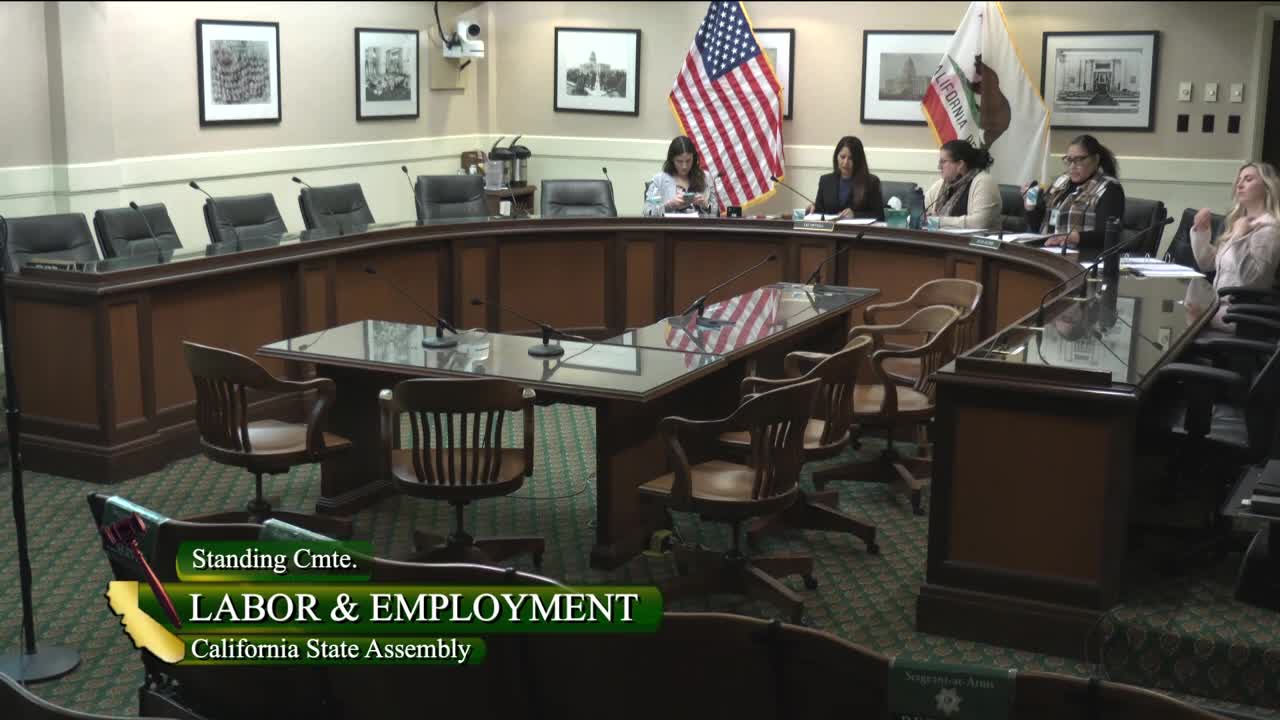 6MIN
Assembly Standing Committee on Labor and Employment
Bill Author

Bill Co-Author(s):