AB 380: Price gouging.
- Session Year: 2025-2026
- House: Assembly
- Latest Version Date: 2025-06-27
Current Status:
In Progress
(2025-08-29: In committee: Held under submission.)
Introduced
In Committee
Awaiting First Chamber Vote
Passed First Chamber
In Committee
Awaiting Second Chamber Vote
Passed Second Chamber
Enacted
Under existing law, upon the proclamation of a state of emergency by the President of the United States or the Governor, or upon the declaration of a local emergency by the executive officer of any county, city, or city and county, and for 30 days or 180 days, as specified, following the proclamation or declaration of emergency, it is a misdemeanor, punishable by up to one year in county jail, a fine of $10,000, or both that imprisonment and fine, for a person, contractor, business, or other entity to sell or offer to sell certain goods or services for a price of more than 10% greater than the price charged by that person immediately prior to the proclamation or declaration of emergency.
This bill would instead make that misdemeanor applicable, for those provisions for which the misdemeanor is applicable for a period of 30 days following the proclamation or declaration of emergency, for a period of 90 60 days. The bill would, for an entity or person other than a natural person, make that misdemeanor punishable by a fine of $25,000. By expanding the scope of a crime, this bill would impose a state-mandated local program.
Under existing law, as described above, it is unlawful to increase the rental price for housing by more than 10%, or evict any residential tenant of residential housing, upon the proclamation or declaration of emergency. Existing law defines housing for purposes of these provisions as any rental housing with an initial lease term of no longer than one year.
This bill would expand the definition of housing to include any rental housing without regard to the length of the initial lease term. The bill would make the prohibitions on increasing the rental price by more than 10% and eviction generally applicable to commercial real property. By expanding the scope of a crime, this bill would impose a state-mandated local program.
The California Constitution requires the state to reimburse local agencies and school districts for certain costs mandated by the state. Statutory provisions establish procedures for making that reimbursement.
This bill would provide that no reimbursement is required by this act for a specified reason.
Under existing law, upon the proclamation of a state of emergency by the President of the United States or the Governor, or upon the declaration of a local emergency by the executive officer of any county, city, or city and county, and for 30 days or 180 days, as specified, following the proclamation or declaration of emergency, it is a misdemeanor, punishable by up to one year in county jail, a fine of $10,000, or both that imprisonment and fine, for a person, contractor, business, or other entity to sell or offer to sell certain goods or services for a price of more than 10% greater than the price charged by that person immediately prior to the proclamation or declaration of emergency.
This bill would instead make that misdemeanor applicable for a period of either 180 or 365 days, as specified, and would, applicable, for those provisions for which the misdemeanor is applicable for a period of 30 days following the proclamation or declaration of emergency, for a period of 90 days. The bill would, for an entity or person other than a natural person, make that misdemeanor punishable by a fine of $25,000. By expanding the scope of a crime, this bill would impose a state-mandated local program.
Under existing law, as described above, it is unlawful to increase the rental price for housing by more than 10%, or evict any residential tenant of residential housing, upon the proclamation or declaration of emergency, except that a greater price increase may be charged if it can be proved that the increase is directly attributable to additional costs for repairs or additions beyond normal maintenance that were amortized over the rental term. emergency. Existing law defines housing for purposes of these provisions as any rental housing with an initial lease term of no longer than one year.
This bill would expand the definition of housing to include any rental housing without regard to the length of the initial lease term. The bill would remove the exemption for increasing the rental price by more than 10% for additional repair costs and would make the prohibitions on increasing the rental price by more than 10% and eviction generally applicable to commercial real property. By expanding the scope of a crime, this bill would impose a state-mandated local program.
The California Constitution requires the state to reimburse local agencies and school districts for certain costs mandated by the state. Statutory provisions establish procedures for making that reimbursement.
This bill would provide that no reimbursement is required by this act for a specified reason.
Under existing law, upon the proclamation of a state of emergency by the President of the United States or the Governor, or upon the declaration of a local emergency by the executive officer of any county, city, or city and county, and for 30 days or 180 days, as specified, following the proclamation or declaration of emergency, it is a misdemeanor, punishable by up to one year in county jail, a fine of $10,000, or both that imprisonment and fine, for a person, contractor, business, or other entity to sell or offer to sell certain goods or services for a price of more than 10% greater than the price charged by that person immediately prior to the proclamation or declaration of emergency.
This bill would instead make that misdemeanor applicable for a period of either 180 or 365 days, as specified, and would, for an entity or person other than a natural person, make that misdemeanor punishable by a fine of $25,000. By expanding the scope of a crime, this bill would impose a state-mandated local program.
Under existing law, as described above, it is unlawful to increase the rental price for housing by more than 10%, or evict any residential tenant of residential housing, upon the proclamation or declaration of emergency, except that a greater price increase may be charged if it can be proved that the increase is directly attributable to additional costs for repairs or additions beyond normal maintenance that were amortized over the rental term. Existing law defines housing for purposes of these provisions as any rental housing with an initial lease term of no longer than one year.
This bill would expand the definition of housing to include any rental housing without regard to the length of the initial lease term. The bill would remove the exemption for increasing the rental price by more than 10% for additional repair costs and would make the prohibitions on increasing the rental price by more than 10% and eviction generally applicable to commercial real property. By expanding the scope of a crime, this bill would impose a state-mandated local program.
The California Constitution requires the state to reimburse local agencies and school districts for certain costs mandated by the state. Statutory provisions establish procedures for making that reimbursement.
This bill would provide that no reimbursement is required by this act for a specified reason.
This bill would declare that it is to take effect immediately as an urgency statute.Under existing law, upon the proclamation of a state of emergency by the President of the United States or the Governor, or upon the declaration of a local emergency by the executive officer of any county, city, or city and county, and for 30 days or 180 days, as specified, following the proclamation or declaration of emergency, it is a misdemeanor, punishable by up to one year in county jail, a fine of $10,000, or both that imprisonment and fine, for a person, contractor, business, or other entity to sell or offer to sell certain goods or services for a price of more than 10% greater than the price charged by that person immediately prior to the proclamation or declaration of emergency.
This bill would instead make that misdemeanor applicable for the duration of that proclamation or declaration a period of either 180 or 365 days, as specified, and would, for an entity or person other than a natural person, make that misdemeanor punishable by a fine of $25,000. By expanding the scope of a crime, this bill would impose a state-mandated local program.
Under existing law, as described above, it is unlawful to increase the rental price for housing by more than 10%, or evict any residential tenant of residential housing, upon the proclamation or declaration of emergency, except that a greater price increase may be charged if it can be proved that the increase is directly attributable to additional costs for repairs or additions beyond normal maintenance that were amortized over the rental term. Existing law defines housing for purposes of these provisions as any rental housing with an initial lease term of no longer than one year.
This bill would expand the definition of housing to include any rental housing without regard to the length of the initial lease term. The bill would remove the exemption for increasing the rental price by more than 10% for additional repair costs and would make the prohibitions on increasing the rental price by more than 10% and eviction generally applicable to commercial real property. By expanding the scope of a crime, this bill would impose a state-mandated local program.
The California Constitution requires the state to reimburse local agencies and school districts for certain costs mandated by the state. Statutory provisions establish procedures for making that reimbursement.
This bill would provide that no reimbursement is required by this act for a specified reason.
This bill would declare that it is to take effect immediately as an urgency statute.
Under existing law, upon the proclamation of a state of emergency by the President of the United States or the Governor, or upon the declaration of a local emergency by the executive officer of any county, city, or city and county, and for 30 days or 180 days, as specified, following the proclamation or declaration of emergency, it is a misdemeanor, punishable by up to one year in county jail, a fine of $10,000, or both that imprisonment and fine, for a person, contractor, business, or other entity to sell or offer to sell certain goods or services for a price of more than 10% greater than the price charged by that person immediately prior to the proclamation or declaration of emergency.
This bill would instead make that misdemeanor applicable for the duration of that proclamation or declaration and would increase the fine to $50,000. would, for an entity or person other than a natural person, make that misdemeanor punishable by a fine of $25,000. By expanding the scope of a crime, this bill would impose a state-mandated local program.
Under existing law, as described above, it is unlawful to increase the rental price for housing by more than 10%, or evict any residential tenant of residential housing, upon the proclamation or declaration of emergency, except that a greater price increase may be charged if it can be proved that the increase is directly attributable to additional costs for repairs or additions beyond normal maintenance that were amortized over the rental term. Existing law defines housing for purposes of these provisions as any rental housing with an initial lease term of no longer than one year.
This bill would expand the definition of housing to include any rental housing without regard to the length of the initial lease term. The bill would remove the exemption for increasing the rental price by more than 10% for additional repair costs and would make the prohibitions on increasing the rental price by more than 10% and eviction applicable to commercial real property. By expanding the scope of a crime, this bill would impose a state-mandated local program.
The California Constitution requires the state to reimburse local agencies and school districts for certain costs mandated by the state. Statutory provisions establish procedures for making that reimbursement.
This bill would provide that no reimbursement is required by this act for a specified reason.
This bill would declare that it is to take effect immediately as an urgency statute.
Under existing law, upon the proclamation of a state of emergency by the President of the United States or the Governor, or upon the declaration of a local emergency by the executive officer of any county, city, or city and county, and for 30 days or 180 days, as specified, following the proclamation or declaration of emergency, it is a misdemeanor misdemeanor, punishable by up to one year in county jail, a fine of $10,000, or both that imprisonment and fine, for a person, contractor, business, or other entity to sell or offer to sell certain goods or services for a price of more than 10% greater than the price charged by that person immediately prior to the proclamation or declaration of emergency.
This bill would instead make that misdemeanor applicable for the duration of that proclamation or declaration. declaration and would increase the fine to $50,000. By expanding the scope of a crime, this bill would impose a state-mandated local program.
Under existing law, as described above, it is unlawful to increase the rental price for housing by more than 10%, or evict any residential tenant of residential housing, upon the proclamation or declaration of emergency, except that a greater price increase may be charged if it can be proved that the increase is directly attributable to additional costs for repairs or additions beyond normal maintenance that were amortized over the rental term. Existing law defines housing for purposes of these provisions as any rental housing with an initial lease term of no longer than one year.
This bill would expand the definition of housing to include any rental housing without regard to the length of the initial lease term. The bill would remove the exemption for increasing the rental price by more than 10% for additional repair costs and would make the prohibitions on increasing the rental price by more than 10% and eviction applicable to commercial real property. By expanding the scope of a crime, this bill would impose a state-mandated local program.
The California Constitution requires the state to reimburse local agencies and school districts for certain costs mandated by the state. Statutory provisions establish procedures for making that reimbursement.
This bill would provide that no reimbursement is required by this act for a specified reason.
This bill would declare that it is to take effect immediately as an urgency statute.
Under existing law, upon the proclamation of a state of emergency by the President of the United States or the Governor, or upon the declaration of a local emergency by the executive officer of any county, city, or city and county, and for 30 days or 180 days, as specified, following the proclamation or declaration of emergency, it is a misdemeanor for a person, contractor, business, or other entity to sell or offer to sell certain goods or services for a price of more than 10% greater than the price charged by that person immediately prior to the proclamation or declaration of emergency.
This bill would instead make that misdemeanor applicable for the duration of that proclamation or declaration. By expanding the scope of a crime, this bill would impose a state-mandated local program.
The California Constitution requires the state to reimburse local agencies and school districts for certain costs mandated by the state. Statutory provisions establish procedures for making that reimbursement.
This bill would provide that no reimbursement is required by this act for a specified reason.
This bill would declare that it is to take effect immediately as an urgency statute.
Upon the proclamation of a state of emergency declared by the Governor, the Office of Emergency Services shall include, on an appropriate internet website information about Section 396 of the Penal Code, including information for property owners about the effect of the proclamation on rental price as defined in paragraph (11) of subdivision (l) of Section 396 of the Penal Code.
SEC. 2.Section 396 of the Penal Code is amended to read:396.(a)The Legislature hereby finds that during a state of emergency or local emergency, including, but not limited to, an earthquake, flood, fire, riot, storm, drought, plant or animal infestation or disease, pandemic or epidemic disease outbreak, or other natural or manmade disaster, some merchants have taken unfair advantage of consumers by greatly increasing prices for essential consumer goods and services. While the pricing of consumer goods and services is generally best left to the marketplace under ordinary conditions, when a declared state of emergency or local emergency results in abnormal disruptions of the market, the public interest requires that excessive and unjustified increases in the prices of essential consumer goods and services be prohibited. It is the intent of the Legislature in enacting this act to protect citizens from excessive and unjustified increases in the prices charged during or shortly after a declared state of emergency or local emergency for goods and services that are vital and necessary for the health, safety, and welfare of consumers, whether those goods and services are offered or sold in person, in stores, or online. Further, it is the intent of the Legislature that this section be liberally construed so that its beneficial purposes may be served.
(b)Upon the proclamation of a state of emergency declared by the President of the United States or the Governor, or upon the declaration of a local emergency by an official, board, or other governing body vested with authority to make that declaration in any county, city, or city and county, and for a period of 90 60 days following that proclamation or declaration, it is unlawful for a person, contractor, business, or other entity to sell or offer to sell any consumer food items or goods, goods or services used for emergency cleanup, emergency supplies, medical supplies, home heating oil, building materials, housing, commercial real property, transportation, freight, and storage services, or gasoline or other motor fuels for a price of more than 10 percent greater than the price charged by that person for those goods or services immediately prior to the proclamation or declaration of emergency, or prior to a date set in the proclamation or declaration. However, a greater price increase is not unlawful if that person can prove that the increase in price was directly attributable to additional costs imposed on it by the supplier of the goods, or directly attributable to additional costs for labor or materials used to provide the services, during the state of emergency or local emergency, and the price is no more than 10 percent greater than the total of the cost to the seller plus the markup customarily applied by that seller for that good or service in the usual course of business immediately prior to the onset of the state of emergency or local emergency. If the person, contractor, business, or other entity did not charge a price for the goods or services immediately prior to the proclamation or declaration of emergency, it may not charge a price that is more than 50 percent greater than the cost thereof to the vendor as cost is defined in Section 17026 of the Business and Professions Code.
(c)Upon the proclamation of a state of emergency declared by the President of the United States or the Governor, or upon the declaration of a local emergency by an official, board, or other governing body vested with authority to make that declaration in any county, city, or city and county, and for a period of 180 days following that proclamation or declaration, it is unlawful for a contractor to sell or offer to sell any repair or reconstruction services or any services used in emergency cleanup for a price of more than 10 percent above the price charged by that person for those services immediately prior to the proclamation or declaration of emergency. However, a greater price increase is not unlawful if that person can prove that the increase in price was directly attributable to additional costs imposed on it by the supplier of the goods, or directly attributable to additional costs for labor or materials used to provide the services, during the state of emergency or local emergency, and the price represents no more than 10 percent greater than the total of the cost to the contractor plus the markup customarily applied by the contractor for that good or service in the usual course of business immediately prior to the onset of the state of emergency or local emergency.
(d)Upon the proclamation of a state of emergency declared by the President of the United States or the Governor, or upon the declaration of a local emergency by an official, board, or other governing body vested with authority to make that declaration in any county, city, or city and county, and for a period of 90 60 days following that proclamation or declaration, it is unlawful for an owner or operator of a hotel or motel to increase the hotel or motels regular rates, as advertised immediately prior to the proclamation or declaration of emergency, by more than 10 percent. However, a greater price increase is not unlawful if the owner or operator can prove that the increase in price is directly attributable to additional costs imposed on it for goods or labor used in its business, to seasonal adjustments in rates that are regularly scheduled, or to previously contracted rates.
(e)Upon the proclamation of a state of emergency declared by the President of the United States or the Governor, or upon the declaration of a local emergency by an official, board, or other governing body vested with authority to make that declaration in any city, county, or city and county, and for a period of 90 60 days following that proclamation or declaration, or any period the proclamation or declaration is extended by the applicable authority, it is unlawful for any person, business, or other entity, to increase the rental price, as defined in paragraph (11) of subdivision (l), advertised, offered, or charged for housing, to an existing or prospective tenant, by more than 10 percent. However, a greater rental price increase is not unlawful if that person can prove that the increase is directly attributable to additional costs for repairs or additions beyond normal maintenance that were amortized over the rental term that caused the rent to be increased greater than 10 percent or that an increase was contractually agreed to by the tenant prior to the proclamation or declaration. It shall not be a defense to a prosecution under this subdivision that an increase in rental price was based on the length of the rental term, the inclusion of additional goods or services, except as provided in paragraph (11) of subdivision (j) with respect to furniture, or that the rent was offered by, or paid by, an insurance company, or other third party, on behalf of a tenant. This subdivision does not authorize a landlord to charge a price greater than the amount authorized by a local rent control ordinance.
(f)Upon the proclamation of a state of emergency declared by the President of the United States or the Governor, or upon the declaration of a local emergency by an official, board, or other governing body vested with authority to make that declaration in any city, county, or city and county, and for a period of 90 60 days following that proclamation or declaration, it is unlawful for any person, business, or other entity, to increase the rental price, as defined in paragraph (11) of subdivision (l), advertised, offered, or charged for commercial real property, to an existing or prospective tenant, by more than 10 percent. However, a greater rental price increase is not unlawful if that person can prove that the increase is directly attributable to additional costs for repairs or additions beyond normal maintenance that were amortized over the rental term that caused the rent to be increased greater than 10 percent or that an increase was contractually agreed to by the commercial tenant prior to the proclamation or declaration. It shall not be a defense to a prosecution under this subdivision that an increase in rental price was based on the length of the rental term, the inclusion of additional goods or services, except as provided in paragraph (11) of subdivision (l) with respect to furniture, or that the rent was offered by, or paid by, an insurance company, or other third party, on behalf of a tenant. This subdivision does not authorize a landlord to charge a price greater than the amount authorized by a local rent control ordinance.
(g)It is unlawful for a person, business, or other entity to evict any residential tenant of residential housing and rent or offer to rent to another person at a rental price greater than the evicted tenant could be charged under this section after the proclamation of a state of emergency declared by the President of the United States or the Governor, or upon the declaration of a local emergency by an official, board, or other governing body vested with authority to make that declaration in any city, county, or city and county, and for a period of 90 60 days following that proclamation or declaration, or any period that the proclamation or declaration is extended by the applicable authority. It shall not be a violation of this subdivision for a person, business, or other entity to continue an eviction process that was lawfully begun prior to the proclamation or declaration of emergency.
(h)It is unlawful for a person, business, or other entity to evict any commercial tenant of commercial real property and rent or offer to rent to another person at a rental price greater than the evicted tenant could be charged under this section after the proclamation of a state of emergency declared by the President of the United States or the Governor, or upon the declaration of a local emergency by an official, board, or other governing body vested with authority to make that declaration in any city, county, or city and county, and for a period of 90 60 days following that proclamation or declaration. It shall not be a violation of this subdivision for a person, business, or other entity to continue an eviction process that was lawfully begun prior to the proclamation or declaration of emergency.
(i)The prohibitions of this section may be extended for additional periods, as needed, by a local legislative body, local official, the Governor, or the Legislature, if deemed necessary to protect the lives, property, or welfare of the citizens. Each extension by a local legislative body or local official shall not exceed 30 days. An extension may also authorize specified price increases that exceed the amount that would otherwise be permissible under this section.
(j)(1)A violation of this section by a natural person is a misdemeanor punishable by imprisonment in a county jail for a period not exceeding one year, by a fine of not more than ten thousand dollars ($10,000), or by both that fine and imprisonment.
(2)A violation of this section by any entity or by a person other than a natural person is a misdemeanor punishable by fine of not more than twenty-five thousand dollars ($25,000).
(k)A violation of this section shall constitute an unlawful business practice and an act of unfair competition within the meaning of Section 17200 of the Business and Professions Code. The remedies and penalties provided by this section are cumulative to each other, the remedies under Section 17200 of the Business and Professions Code, and the remedies or penalties available under all other laws of this state.
(l)For the purposes of this section, the following terms have the following meanings:
(1)State of emergency means a natural or manmade emergency resulting from an earthquake, flood, fire, riot, storm, drought, plant or animal infestation or disease, pandemic or epidemic disease outbreak, or other natural or manmade disaster for which a state of emergency has been declared by the President of the United States or the Governor.
(2)Local emergency means a natural or manmade emergency resulting from an earthquake, flood, fire, riot, storm, drought, plant or animal infestation or disease, pandemic or epidemic disease outbreak, or other natural or manmade disaster for which a local emergency has been declared by an official, board, or other governing body vested with authority to make that declaration in any county, city, or city and county in California.
(3)Consumer food item means any article that is used or intended for use for food, drink, confection, or condiment by a person or animal.
(4)Repair or reconstruction services means services performed by any person who is required to be licensed under the Contractors State License Law (Chapter 9 (commencing with Section 7000) of Division 3 of the Business and Professions Code), for repairs to residential or commercial property of any type that is damaged as a result of a disaster.
(5)Emergency supplies includes, but is not limited to, water, flashlights, radios, batteries, candles, blankets, soaps, diapers, temporary shelters, tape, toiletries, plywood, nails, and hammers.
(6)Medical supplies includes, but is not limited to, prescription and nonprescription medications, bandages, gauze, isopropyl alcohol, and antibacterial products.
(7)Building materials means lumber, construction tools, windows, and anything else used in the building or rebuilding of property.
(8)Gasoline means any fuel used to power any motor vehicle or power tool.
(9)Transportation, freight, and storage services means any service that is performed by any company that contracts to move, store, or transport personal or business property or that rents equipment for those purposes, including towing services.
(10)Housing means any rental housing, including, but not limited to, a space rented in a mobilehome park or campground.
(11)Rental price for housing and commercial real property means any of the following:
(A)For housing and commercial real property rented within one year prior to the time of the proclamation or declaration of emergency, the actual rental price paid by the tenant. For housing and commercial real property not rented at the time of the declaration or proclamation, but rented, or offered for rent, within one year prior to the proclamation or declaration of emergency, the most recent rental price offered before the proclamation or declaration of emergency. For housing and commercial real property rented at the time of the proclamation or declaration of emergency but that becomes vacant while the proclamation or declaration of emergency remains in effect, the actual rental price paid by the previous tenant. This amount may be increased by 5 percent if the housing was previously rented or offered for rent unfurnished, and it is now being offered for rent fully furnished. This amount shall not be adjusted for any other good or service, including, but not limited to, gardening or utilities currently or formerly provided in connection with the lease.
(B)(i)For housing and commercial real property not rented and not offered for rent within one year prior to the proclamation or declaration of emergency, 160 percent of the fair market rent established by the United States Department of Housing and Urban Development. This amount may be increased by 5 percent if the housing is offered for rent fully furnished. This amount shall not be adjusted for any other good or service, including, but not limited to, gardening or utilities currently or formerly provided in connection with the lease.
(ii)(I)For commercial real property not rented and not offered for rent within one year prior to the proclamation or declaration of emergency, the average market rent per square foot for the commercial real property use established by a third-party commercial real estate database.
(II)For purposes of this clause, third-party commercial real estate database means an internet website, application, or other similar centralized platform that acts as an intermediary between a consumer and another person, and that allows another person to list the availability of commercial real property for sale or for rent to a consumer.
(C)Housing and commercial real property advertised, offered, or charged, at a daily rate at the time of the declaration or proclamation of emergency, shall be subject to the rental price described in subparagraph (A), if the housing or commercial real property continues to be advertised, offered, or charged, at a daily rate. Housing and commercial real property advertised, offered, or charged, on a daily basis at the time of the declaration or proclamation of emergency, shall be subject to the rental price in subparagraph (B), if the housing or commercial real property is advertised, offered, or charged, on a periodic lease agreement after the declaration or proclamation of emergency.
(D)For mobilehome spaces rented to existing tenants at the time of the proclamation or declaration of emergency and subject to a local rent control ordinance, the amount authorized under the local rent control ordinance. For new tenants who enter into a rental agreement for a mobilehome space that is subject to rent control but not rented at the time of the proclamation or declaration of emergency, the amount of rent last charged for a space in the same mobilehome park. For mobilehome spaces not subject to a local rent control ordinance and not rented at the time of the proclamation or declaration of emergency, the amount of rent last charged for the space.
(12)Goods has the same meaning as defined in subdivision (c) of Section 1689.5 of the Civil Code.
(13)Commercial real property has the same meaning as defined in Section 827 of the Civil Code. means any real property that meets the definition of commercial real property in Section 827 of the Civil Code, except real property used primarily for transportation, freight, or storage services.
(m)This section does not preempt any local ordinance prohibiting the same or similar conduct or imposing a more severe penalty for the same conduct prohibited by this section.
(n)A business offering an item for sale, or a service, at a reduced price immediately prior to the proclamation or declaration of the emergency may use the price it normally charges for the item or service to calculate the price pursuant to subdivision (b) or (c).
(o)This section does not prohibit an owner from evicting a tenant for any lawful reason, including pursuant to Section 1161 of the Code of Civil Procedure.
SEC. 3.No reimbursement is required by this act pursuant to Section 6 of Article XIIIB of the California Constitution because the only costs that may be incurred by a local agency or school district will be incurred because this act creates a new crime or infraction, eliminates a crime or infraction, or changes the penalty for a crime or infraction, within the meaning of Section 17556 of the Government Code, or changes the definition of a crime within the meaning of Section 6 of Article XIIIB of the California Constitution.
Upon the proclamation of a state of emergency declared by the Governor, the Office of Emergency Services shall include, on an appropriate internet website information about Section 396 of the Penal Code, including information for property owners about the effect of the proclamation on rental price as defined in paragraph (11) of subdivision (l) of Section 396 of the Penal Code.
SEC. 2.Section 396 of the Penal Code is amended to read:396.(a)The Legislature hereby finds that during a state of emergency or local emergency, including, but not limited to, an earthquake, flood, fire, riot, storm, drought, plant or animal infestation or disease, pandemic or epidemic disease outbreak, or other natural or manmade disaster, some merchants have taken unfair advantage of consumers by greatly increasing prices for essential consumer goods and services. While the pricing of consumer goods and services is generally best left to the marketplace under ordinary conditions, when a declared state of emergency or local emergency results in abnormal disruptions of the market, the public interest requires that excessive and unjustified increases in the prices of essential consumer goods and services be prohibited. It is the intent of the Legislature in enacting this act to protect citizens from excessive and unjustified increases in the prices charged during or shortly after a declared state of emergency or local emergency for goods and services that are vital and necessary for the health, safety, and welfare of consumers, whether those goods and services are offered or sold in person, in stores, or online. Further, it is the intent of the Legislature that this section be liberally construed so that its beneficial purposes may be served.
(b)Upon the proclamation of a state of emergency declared by the President of the United States or the Governor, or upon the declaration of a local emergency by an official, board, or other governing body vested with authority to make that declaration in any county, city, or city and county, and for a period of 180 90 days following that proclamation or declaration, it is unlawful for a person, contractor, business, or other entity to sell or offer to sell any consumer food items or goods, goods or services used for emergency cleanup, emergency supplies, medical supplies, home heating oil, building materials, housing, commercial real property, transportation, freight, and storage services, or gasoline or other motor fuels for a price of more than 10 percent greater than the price charged by that person for those goods or services immediately prior to the proclamation or declaration of emergency, or prior to a date set in the proclamation or declaration. However, a greater price increase is not unlawful if that person can prove that the increase in price was directly attributable to additional costs imposed on it by the supplier of the goods, or directly attributable to additional costs for labor or materials used to provide the services, during the state of emergency or local emergency, and the price is no more than 10 percent greater than the total of the cost to the seller plus the markup customarily applied by that seller for that good or service in the usual course of business immediately prior to the onset of the state of emergency or local emergency. If the person, contractor, business, or other entity did not charge a price for the goods or services immediately prior to the proclamation or declaration of emergency, it may not charge a price that is more than 50 percent greater than the cost thereof to the vendor as cost is defined in Section 17026 of the Business and Professions Code.
(c)Upon the proclamation of a state of emergency declared by the President of the United States or the Governor, or upon the declaration of a local emergency by an official, board, or other governing body vested with authority to make that declaration in any county, city, or city and county, and for a period of 365 180 days following that proclamation or declaration, it is unlawful for a contractor to sell or offer to sell any repair or reconstruction services or any services used in emergency cleanup for a price of more than 10 percent above the price charged by that person for those services immediately prior to the proclamation or declaration of emergency. However, a greater price increase is not unlawful if that person can prove that the increase in price was directly attributable to additional costs imposed on it by the supplier of the goods, or directly attributable to additional costs for labor or materials used to provide the services, during the state of emergency or local emergency, and the price represents no more than 10 percent greater than the total of the cost to the contractor plus the markup customarily applied by the contractor for that good or service in the usual course of business immediately prior to the onset of the state of emergency or local emergency.
(d)Upon the proclamation of a state of emergency declared by the President of the United States or the Governor, or upon the declaration of a local emergency by an official, board, or other governing body vested with authority to make that declaration in any county, city, or city and county, and for a period of 180 90 days following that proclamation or declaration, it is unlawful for an owner or operator of a hotel or motel to increase the hotel or motels regular rates, as advertised immediately prior to the proclamation or declaration of emergency, by more than 10 percent. However, a greater price increase is not unlawful if the owner or operator can prove that the increase in price is directly attributable to additional costs imposed on it for goods or labor used in its business, to seasonal adjustments in rates that are regularly scheduled, or to previously contracted rates.
(e)Upon the proclamation of a state of emergency declared by the President of the United States or the Governor, or upon the declaration of a local emergency by an official, board, or other governing body vested with authority to make that declaration in any city, county, or city and county, and for a period of 180 90 days following that proclamation or declaration, or any period the proclamation or declaration is extended by the applicable authority, it is unlawful for any person, business, or other entity, to increase the rental price, as defined in paragraph (11) of subdivision (l), advertised, offered, or charged for housing, to an existing or prospective tenant, by more than 10 percent. However, a greater rental price increase is not unlawful if that person can prove that the increase is directly attributable to additional costs for repairs or additions beyond normal maintenance that were amortized over the rental term that caused the rent to be increased greater than 10 percent or that an increase was contractually agreed to by the tenant prior to the proclamation or declaration. It shall not be a defense to a prosecution under this subdivision that an increase in rental price was based on the length of the rental term, the inclusion of additional goods or services, except as provided in paragraph (11) of subdivision (j) with respect to furniture, or that the rent was offered by, or paid by, an insurance company, or other third party, on behalf of a tenant. This subdivision does not authorize a landlord to charge a price greater than the amount authorized by a local rent control ordinance.
(f)Upon the proclamation of a state of emergency declared by the President of the United States or the Governor, or upon the declaration of a local emergency by an official, board, or other governing body vested with authority to make that declaration in any city, county, or city and county, and for a period of 180 90 days following that proclamation or declaration, it is unlawful for any person, business, or other entity, to increase the rental price, as defined in paragraph (11) of subdivision (l), advertised, offered, or charged for commercial real property, to an existing or prospective tenant, by more than 10 percent. However, a greater rental price increase is not unlawful if that person can prove that the increase is directly attributable to additional costs for repairs or additions beyond normal maintenance that were amortized over the rental term that caused the rent to be increased greater than 10 percent or that an increase was contractually agreed to by the commercial tenant prior to the proclamation or declaration. It shall not be a defense to a prosecution under this subdivision that an increase in rental price was based on the length of the rental term, the inclusion of additional goods or services, except as provided in paragraph (11) of subdivision (l) with respect to furniture, or that the rent was offered by, or paid by, an insurance company, or other third party, on behalf of a tenant. This subdivision does not authorize a landlord to charge a price greater than the amount authorized by a local rent control ordinance.
(g)It is unlawful for a person, business, or other entity to evict any residential tenant of residential housing and rent or offer to rent to another person at a rental price greater than the evicted tenant could be charged under this section after the proclamation of a state of emergency declared by the President of the United States or the Governor, or upon the declaration of a local emergency by an official, board, or other governing body vested with authority to make that declaration in any city, county, or city and county, and for a period of 180 90 days following that proclamation or declaration, or any period that the proclamation or declaration is extended by the applicable authority. It shall not be a violation of this subdivision for a person, business, or other entity to continue an eviction process that was lawfully begun prior to the proclamation or declaration of emergency.
(h)It is unlawful for a person, business, or other entity to evict any commercial tenant of commercial real property and rent or offer to rent to another person at a rental price greater than the evicted tenant could be charged under this section after the proclamation of a state of emergency declared by the President of the United States or the Governor, or upon the declaration of a local emergency by an official, board, or other governing body vested with authority to make that declaration in any city, county, or city and county, and for a period of 180 90 days following that proclamation or declaration. It shall not be a violation of this subdivision for a person, business, or other entity to continue an eviction process that was lawfully begun prior to the proclamation or declaration of emergency.
(i)The prohibitions of this section may be extended for additional periods, as needed, by a local legislative body, local official, the Governor, or the Legislature, if deemed necessary to protect the lives, property, or welfare of the citizens. Each extension by a local legislative body or local official shall not exceed 30 days. An extension may also authorize specified price increases that exceed the amount that would otherwise be permissible under this section.
(j)(1)A violation of this section by a natural person is a misdemeanor punishable by imprisonment in a county jail for a period not exceeding one year, by a fine of not more than ten thousand dollars ($10,000), or by both that fine and imprisonment.
(2)A violation of this section by any entity or by a person other than a natural person is a misdemeanor punishable by fine of not more than twenty-five thousand dollars ($25,000).
(k)A violation of this section shall constitute an unlawful business practice and an act of unfair competition within the meaning of Section 17200 of the Business and Professions Code. The remedies and penalties provided by this section are cumulative to each other, the remedies under Section 17200 of the Business and Professions Code, and the remedies or penalties available under all other laws of this state.
(l)For the purposes of this section, the following terms have the following meanings:
(1)State of emergency means a natural or manmade emergency resulting from an earthquake, flood, fire, riot, storm, drought, plant or animal infestation or disease, pandemic or epidemic disease outbreak, or other natural or manmade disaster for which a state of emergency has been declared by the President of the United States or the Governor.
(2)Local emergency means a natural or manmade emergency resulting from an earthquake, flood, fire, riot, storm, drought, plant or animal infestation or disease, pandemic or epidemic disease outbreak, or other natural or manmade disaster for which a local emergency has been declared by an official, board, or other governing body vested with authority to make that declaration in any county, city, or city and county in California.
(3)Consumer food item means any article that is used or intended for use for food, drink, confection, or condiment by a person or animal.
(4)Repair or reconstruction services means services performed by any person who is required to be licensed under the Contractors State License Law (Chapter 9 (commencing with Section 7000) of Division 3 of the Business and Professions Code), for repairs to residential or commercial property of any type that is damaged as a result of a disaster.
(5)Emergency supplies includes, but is not limited to, water, flashlights, radios, batteries, candles, blankets, soaps, diapers, temporary shelters, tape, toiletries, plywood, nails, and hammers.
(6)Medical supplies includes, but is not limited to, prescription and nonprescription medications, bandages, gauze, isopropyl alcohol, and antibacterial products.
(7)Building materials means lumber, construction tools, windows, and anything else used in the building or rebuilding of property.
(8)Gasoline means any fuel used to power any motor vehicle or power tool.
(9)Transportation, freight, and storage services means any service that is performed by any company that contracts to move, store, or transport personal or business property or that rents equipment for those purposes, including towing services.
(10)Housing means any rental housing, including, but not limited to, a space rented in a mobilehome park or campground.
(11)Rental price for housing and commercial real property means any of the following:
(A)For housing and commercial real property rented within one year prior to the time of the proclamation or declaration of emergency, the actual rental price paid by the tenant. For housing and commercial real property not rented at the time of the declaration or proclamation, but rented, or offered for rent, within one year prior to the proclamation or declaration of emergency, the most recent rental price offered before the proclamation or declaration of emergency. For housing and commercial real property rented at the time of the proclamation or declaration of emergency but that becomes vacant while the proclamation or declaration of emergency remains in effect, the actual rental price paid by the previous tenant. This amount may be increased by 5 percent if the housing was previously rented or offered for rent unfurnished, and it is now being offered for rent fully furnished. This amount shall not be adjusted for any other good or service, including, but not limited to, gardening or utilities currently or formerly provided in connection with the lease.
(B)(i)For housing and commercial real property not rented and not offered for rent within one year prior to the proclamation or declaration of emergency, 160 percent of the fair market rent established by the United States Department of Housing and Urban Development. This amount may be increased by 5 percent if the housing is offered for rent fully furnished. This amount shall not be adjusted for any other good or service, including, but not limited to, gardening or utilities currently or formerly provided in connection with the lease.
(ii)(I)For commercial real property not rented and not offered for rent within one year prior to the proclamation or declaration of emergency, the average market rent per square foot for the commercial real property use established by a third-party commercial real estate database.
(II)For purposes of this clause, third-party commercial real estate database means an internet website, application, or other similar centralized platform that acts as an intermediary between a consumer and another person, and that allows another person to list the availability of commercial real property for sale or for rent to a consumer.
(C)Housing and commercial real property advertised, offered, or charged, at a daily rate at the time of the declaration or proclamation of emergency, shall be subject to the rental price described in subparagraph (A), if the housing or commercial real property continues to be advertised, offered, or charged, at a daily rate. Housing and commercial real property advertised, offered, or charged, on a daily basis at the time of the declaration or proclamation of emergency, shall be subject to the rental price in subparagraph (B), if the housing or commercial real property is advertised, offered, or charged, on a periodic lease agreement after the declaration or proclamation of emergency.
(D)For mobilehome spaces rented to existing tenants at the time of the proclamation or declaration of emergency and subject to a local rent control ordinance, the amount authorized under the local rent control ordinance. For new tenants who enter into a rental agreement for a mobilehome space that is subject to rent control but not rented at the time of the proclamation or declaration of emergency, the amount of rent last charged for a space in the same mobilehome park. For mobilehome spaces not subject to a local rent control ordinance and not rented at the time of the proclamation or declaration of emergency, the amount of rent last charged for the space.
(12)Goods has the same meaning as defined in subdivision (c) of Section 1689.5 of the Civil Code.
(13)Commercial real property has the same meaning as defined in Section 827 of the Civil Code.
(m)This section does not preempt any local ordinance prohibiting the same or similar conduct or imposing a more severe penalty for the same conduct prohibited by this section.
(n)A business offering an item for sale, or a service, at a reduced price immediately prior to the proclamation or declaration of the emergency may use the price it normally charges for the item or service to calculate the price pursuant to subdivision (b) or (c).
(o)This section does not prohibit an owner from evicting a tenant for any lawful reason, including pursuant to Section 1161 of the Code of Civil Procedure.
SEC. 3.No reimbursement is required by this act pursuant to Section 6 of Article XIIIB of the California Constitution because the only costs that may be incurred by a local agency or school district will be incurred because this act creates a new crime or infraction, eliminates a crime or infraction, or changes the penalty for a crime or infraction, within the meaning of Section 17556 of the Government Code, or changes the definition of a crime within the meaning of Section 6 of Article XIIIB of the California Constitution.
Upon the proclamation of a state of emergency declared by the Governor, the Office of Emergency Services shall include, on an appropriate internet website information about Section 396 of the Penal Code, including information for property owners about the effect of the proclamation on rental price as defined in paragraph (11) of subdivision (l) of Section 396 of the Penal Code.
SEC. 2.Section 396 of the Penal Code is amended to read:396.(a)The Legislature hereby finds that during a state of emergency or local emergency, including, but not limited to, an earthquake, flood, fire, riot, storm, drought, plant or animal infestation or disease, pandemic or epidemic disease outbreak, or other natural or manmade disaster, some merchants have taken unfair advantage of consumers by greatly increasing prices for essential consumer goods and services. While the pricing of consumer goods and services is generally best left to the marketplace under ordinary conditions, when a declared state of emergency or local emergency results in abnormal disruptions of the market, the public interest requires that excessive and unjustified increases in the prices of essential consumer goods and services be prohibited. It is the intent of the Legislature in enacting this act to protect citizens from excessive and unjustified increases in the prices charged during or shortly after a declared state of emergency or local emergency for goods and services that are vital and necessary for the health, safety, and welfare of consumers, whether those goods and services are offered or sold in person, in stores, or online. Further, it is the intent of the Legislature that this section be liberally construed so that its beneficial purposes may be served.
(b)Upon the proclamation of a state of emergency declared by the President of the United States or the Governor, or upon the declaration of a local emergency by an official, board, or other governing body vested with authority to make that declaration in any county, city, or city and county, and for a period of 180 days following that proclamation or declaration, it is unlawful for a person, contractor, business, or other entity to sell or offer to sell any consumer food items or goods, goods or services used for emergency cleanup, emergency supplies, medical supplies, home heating oil, building materials, housing, commercial real property, transportation, freight, and storage services, or gasoline or other motor fuels for a price of more than 10 percent greater than the price charged by that person for those goods or services immediately prior to the proclamation or declaration of emergency, or prior to a date set in the proclamation or declaration. However, a greater price increase is not unlawful if that person can prove that the increase in price was directly attributable to additional costs imposed on it by the supplier of the goods, or directly attributable to additional costs for labor or materials used to provide the services, during the state of emergency or local emergency, and the price is no more than 10 percent greater than the total of the cost to the seller plus the markup customarily applied by that seller for that good or service in the usual course of business immediately prior to the onset of the state of emergency or local emergency. If the person, contractor, business, or other entity did not charge a price for the goods or services immediately prior to the proclamation or declaration of emergency, it may not charge a price that is more than 50 percent greater than the cost thereof to the vendor as cost is defined in Section 17026 of the Business and Professions Code.
(c)Upon the proclamation of a state of emergency declared by the President of the United States or the Governor, or upon the declaration of a local emergency by an official, board, or other governing body vested with authority to make that declaration in any county, city, or city and county, and for a period of 365 days following that proclamation or declaration, it is unlawful for a contractor to sell or offer to sell any repair or reconstruction services or any services used in emergency cleanup for a price of more than 10 percent above the price charged by that person for those services immediately prior to the proclamation or declaration of emergency. However, a greater price increase is not unlawful if that person can prove that the increase in price was directly attributable to additional costs imposed on it by the supplier of the goods, or directly attributable to additional costs for labor or materials used to provide the services, during the state of emergency or local emergency, and the price represents no more than 10 percent greater than the total of the cost to the contractor plus the markup customarily applied by the contractor for that good or service in the usual course of business immediately prior to the onset of the state of emergency or local emergency.
(d)Upon the proclamation of a state of emergency declared by the President of the United States or the Governor, or upon the declaration of a local emergency by an official, board, or other governing body vested with authority to make that declaration in any county, city, or city and county, and for a period of 180 days following that proclamation or declaration, it is unlawful for an owner or operator of a hotel or motel to increase the hotel or motels regular rates, as advertised immediately prior to the proclamation or declaration of emergency, by more than 10 percent. However, a greater price increase is not unlawful if the owner or operator can prove that the increase in price is directly attributable to additional costs imposed on it for goods or labor used in its business, to seasonal adjustments in rates that are regularly scheduled, or to previously contracted rates.
(e)Upon the proclamation of a state of emergency declared by the President of the United States or the Governor, or upon the declaration of a local emergency by an official, board, or other governing body vested with authority to make that declaration in any city, county, or city and county, and for a period of 180 days following that proclamation or declaration, or any period the proclamation or declaration is extended by the applicable authority, it is unlawful for any person, business, or other entity, to increase the rental price, as defined in paragraph (11) of subdivision (l), advertised, offered, or charged for housing, to an existing or prospective tenant, by more than 10 percent. However, a greater rental price increase is not unlawful if an increase was contractually agreed to by the tenant prior to the proclamation or declaration. It shall not be a defense to a prosecution under this subdivision that an increase in rental price was based on the length of the rental term, the inclusion of additional goods or services, except as provided in paragraph (11) of subdivision (j) with respect to furniture, or that the rent was offered by, or paid by, an insurance company, or other third party, on behalf of a tenant. This subdivision does not authorize a landlord to charge a price greater than the amount authorized by a local rent control ordinance.
(f)Upon the proclamation of a state of emergency declared by the President of the United States or the Governor, or upon the declaration of a local emergency by an official, board, or other governing body vested with authority to make that declaration in any city, county, or city and county, and for a period of 180 days following that proclamation or declaration, it is unlawful for any person, business, or other entity, to increase the rental price, as defined in paragraph (11) of subdivision (l), advertised, offered, or charged for commercial real property, to an existing or prospective tenant, by more than 10 percent. However, a greater rental price increase is not unlawful if an increase was contractually agreed to by the commercial tenant prior to the proclamation or declaration. It shall not be a defense to a prosecution under this subdivision that an increase in rental price was based on the length of the rental term, the inclusion of additional goods or services, except as provided in paragraph (11) of subdivision (l) with respect to furniture, or that the rent was offered by, or paid by, an insurance company, or other third party, on behalf of a tenant. This subdivision does not authorize a landlord to charge a price greater than the amount authorized by a local rent control ordinance.
(g)It is unlawful for a person, business, or other entity to evict any residential tenant of residential housing and rent or offer to rent to another person at a rental price greater than the evicted tenant could be charged under this section after the proclamation of a state of emergency declared by the President of the United States or the Governor, or upon the declaration of a local emergency by an official, board, or other governing body vested with authority to make that declaration in any city, county, or city and county, and for a period of 180 days following that proclamation or declaration, or any period that the proclamation or declaration is extended by the applicable authority. It shall not be a violation of this subdivision for a person, business, or other entity to continue an eviction process that was lawfully begun prior to the proclamation or declaration of emergency.
(h)It is unlawful for a person, business, or other entity to evict any commercial tenant of commercial real property and rent or offer to rent to another person at a rental price greater than the evicted tenant could be charged under this section after the proclamation of a state of emergency declared by the President of the United States or the Governor, or upon the declaration of a local emergency by an official, board, or other governing body vested with authority to make that declaration in any city, county, or city and county, and for a period of 180 days following that proclamation or declaration. It shall not be a violation of this subdivision for a person, business, or other entity to continue an eviction process that was lawfully begun prior to the proclamation or declaration of emergency.
(i)The prohibitions of this section may be extended for additional periods, as needed, by a local legislative body, local official, the Governor, or the Legislature, if deemed necessary to protect the lives, property, or welfare of the citizens. Each extension by a local legislative body or local official shall not exceed 30 days. An extension may also authorize specified price increases that exceed the amount that would otherwise be permissible under this section.
(j)(1)A violation of this section by a natural person is a misdemeanor punishable by imprisonment in a county jail for a period not exceeding one year, by a fine of not more than ten thousand dollars ($10,000), or by both that fine and imprisonment.
(2)A violation of this section by any entity or by a person other than a natural person is a misdemeanor punishable by fine of not more than twenty-five thousand dollars ($25,000).
(k)A violation of this section shall constitute an unlawful business practice and an act of unfair competition within the meaning of Section 17200 of the Business and Professions Code. The remedies and penalties provided by this section are cumulative to each other, the remedies under Section 17200 of the Business and Professions Code, and the remedies or penalties available under all other laws of this state.
(l)For the purposes of this section, the following terms have the following meanings:
(1)State of emergency means a natural or manmade emergency resulting from an earthquake, flood, fire, riot, storm, drought, plant or animal infestation or disease, pandemic or epidemic disease outbreak, or other natural or manmade disaster for which a state of emergency has been declared by the President of the United States or the Governor.
(2)Local emergency means a natural or manmade emergency resulting from an earthquake, flood, fire, riot, storm, drought, plant or animal infestation or disease, pandemic or epidemic disease outbreak, or other natural or manmade disaster for which a local emergency has been declared by an official, board, or other governing body vested with authority to make that declaration in any county, city, or city and county in California.
(3)Consumer food item means any article that is used or intended for use for food, drink, confection, or condiment by a person or animal.
(4)Repair or reconstruction services means services performed by any person who is required to be licensed under the Contractors State License Law (Chapter 9 (commencing with Section 7000) of Division 3 of the Business and Professions Code), for repairs to residential or commercial property of any type that is damaged as a result of a disaster.
(5)Emergency supplies includes, but is not limited to, water, flashlights, radios, batteries, candles, blankets, soaps, diapers, temporary shelters, tape, toiletries, plywood, nails, and hammers.
(6)Medical supplies includes, but is not limited to, prescription and nonprescription medications, bandages, gauze, isopropyl alcohol, and antibacterial products.
(7)Building materials means lumber, construction tools, windows, and anything else used in the building or rebuilding of property.
(8)Gasoline means any fuel used to power any motor vehicle or power tool.
(9)Transportation, freight, and storage services means any service that is performed by any company that contracts to move, store, or transport personal or business property or that rents equipment for those purposes, including towing services.
(10)Housing means any rental housing, including, but not limited to, a space rented in a mobilehome park or campground.
(11)Rental price for housing and commercial real property means any of the following:
(A)For housing and commercial real property rented within one year prior to the time of the proclamation or declaration of emergency, the actual rental price paid by the tenant. For housing and commercial real property not rented at the time of the declaration or proclamation, but rented, or offered for rent, within one year prior to the proclamation or declaration of emergency, the most recent rental price offered before the proclamation or declaration of emergency. For housing and commercial real property rented at the time of the proclamation or declaration of emergency but that becomes vacant while the proclamation or declaration of emergency remains in effect, the actual rental price paid by the previous tenant. This amount may be increased by 5 percent if the housing was previously rented or offered for rent unfurnished, and it is now being offered for rent fully furnished. This amount shall not be adjusted for any other good or service, including, but not limited to, gardening or utilities currently or formerly provided in connection with the lease.
(B)(i)For housing and commercial real property not rented and not offered for rent within one year prior to the proclamation or declaration of emergency, 160 percent of the fair market rent established by the United States Department of Housing and Urban Development. This amount may be increased by 5 percent if the housing is offered for rent fully furnished. This amount shall not be adjusted for any other good or service, including, but not limited to, gardening or utilities currently or formerly provided in connection with the lease.
(ii)(I)For commercial real property not rented and not offered for rent within one year prior to the proclamation or declaration of emergency, the average market rent per square foot for the commercial real property use established by a third-party commercial real estate database.
(II)For purposes of this clause, third-party commercial real estate database means an internet website, application, or other similar centralized platform that acts as an intermediary between a consumer and another person, and that allows another person to list the availability of commercial real property for sale or for rent to a consumer.
(C)Housing and commercial real property advertised, offered, or charged, at a daily rate at the time of the declaration or proclamation of emergency, shall be subject to the rental price described in subparagraph (A), if the housing or commercial real property continues to be advertised, offered, or charged, at a daily rate. Housing and commercial real property advertised, offered, or charged, on a daily basis at the time of the declaration or proclamation of emergency, shall be subject to the rental price in subparagraph (B), if the housing or commercial real property is advertised, offered, or charged, on a periodic lease agreement after the declaration or proclamation of emergency.
(D)For mobilehome spaces rented to existing tenants at the time of the proclamation or declaration of emergency and subject to a local rent control ordinance, the amount authorized under the local rent control ordinance. For new tenants who enter into a rental agreement for a mobilehome space that is subject to rent control but not rented at the time of the proclamation or declaration of emergency, the amount of rent last charged for a space in the same mobilehome park. For mobilehome spaces not subject to a local rent control ordinance and not rented at the time of the proclamation or declaration of emergency, the amount of rent last charged for the space.
(12)Goods has the same meaning as defined in subdivision (c) of Section 1689.5 of the Civil Code.
(13)Commercial real property has the same meaning as defined in Section 827 of the Civil Code.
(m)This section does not preempt any local ordinance prohibiting the same or similar conduct or imposing a more severe penalty for the same conduct prohibited by this section.
(n)A business offering an item for sale, or a service, at a reduced price immediately prior to the proclamation or declaration of the emergency may use the price it normally charges for the item or service to calculate the price pursuant to subdivision (b) or (c).
(o)This section does not prohibit an owner from evicting a tenant for any lawful reason, including pursuant to Section 1161 of the Code of Civil Procedure.
SEC. 3.No reimbursement is required by this act pursuant to Section 6 of Article XIIIB of the California Constitution because the only costs that may be incurred by a local agency or school district will be incurred because this act creates a new crime or infraction, eliminates a crime or infraction, or changes the penalty for a crime or infraction, within the meaning of Section 17556 of the Government Code, or changes the definition of a crime within the meaning of Section 6 of Article XIIIB of the California Constitution.
SEC. 4.This act is an urgency statute necessary for the immediate preservation of the public peace, health, or safety within the meaning of Article IV of the California Constitution and shall go into immediate effect. The facts constituting the necessity are:In order to prevent unlawful price increases during the state of emergency in the Counties of Los Angeles and Ventura due to the fires and windstorm events in the County of Los Angeles, it is necessary that this act take effect immediately.Upon the proclamation of a state of emergency declared by the Governor, the Office of Emergency Services shall include, on an appropriate Internet Web site, internet website information about Section 396 of the Penal Code, including information for property owners about the effect of the proclamation on rental price as defined in paragraph (11) of subdivision (j) (l) of Section 396 of the Penal Code.
SECTION 1.SEC. 2.Section 396 of the Penal Code is amended to read:396.(a)The Legislature hereby finds that during a state of emergency or local emergency, including, but not limited to, an earthquake, flood, fire, riot, storm, drought, plant or animal infestation or disease, pandemic or epidemic disease outbreak, or other natural or manmade disaster, some merchants have taken unfair advantage of consumers by greatly increasing prices for essential consumer goods and services. While the pricing of consumer goods and services is generally best left to the marketplace under ordinary conditions, when a declared state of emergency or local emergency results in abnormal disruptions of the market, the public interest requires that excessive and unjustified increases in the prices of essential consumer goods and services be prohibited. It is the intent of the Legislature in enacting this act to protect citizens from excessive and unjustified increases in the prices charged during or shortly after a declared state of emergency or local emergency for goods and services that are vital and necessary for the health, safety, and welfare of consumers, whether those goods and services are offered or sold in person, in stores, or online. Further, it is the intent of the Legislature that this section be liberally construed so that its beneficial purposes may be served.
(b)Upon the proclamation of a state of emergency declared by the President of the United States or the Governor, or upon the declaration of a local emergency by an official, board, or other governing body vested with authority to make that declaration in any county, city, or city and county, and for the duration of a period of 180 days following that proclamation or declaration, it is unlawful for a person, contractor, business, or other entity to sell or offer to sell any consumer food items or goods, goods or services used for emergency cleanup, emergency supplies, medical supplies, home heating oil, building materials, housing, commercial real property, transportation, freight, and storage services, or gasoline or other motor fuels for a price of more than 10 percent greater than the price charged by that person for those goods or services immediately prior to the proclamation or declaration of emergency, or prior to a date set in the proclamation or declaration. However, a greater price increase is not unlawful if that person can prove that the increase in price was directly attributable to additional costs imposed on it by the supplier of the goods, or directly attributable to additional costs for labor or materials used to provide the services, during the state of emergency or local emergency, and the price is no more than 10 percent greater than the total of the cost to the seller plus the markup customarily applied by that seller for that good or service in the usual course of business immediately prior to the onset of the state of emergency or local emergency. If the person, contractor, business, or other entity did not charge a price for the goods or services immediately prior to the proclamation or declaration of emergency, it may not charge a price that is more than 50 percent greater than the cost thereof to the vendor as cost is defined in Section 17026 of the Business and Professions Code.
(c)Upon the proclamation of a state of emergency declared by the President of the United States or the Governor, or upon the declaration of a local emergency by an official, board, or other governing body vested with authority to make that declaration in any county, city, or city and county, and for the duration of a period of 365 days following that proclamation or declaration, it is unlawful for a contractor to sell or offer to sell any repair or reconstruction services or any services used in emergency cleanup for a price of more than 10 percent above the price charged by that person for those services immediately prior to the proclamation or declaration of emergency. However, a greater price increase is not unlawful if that person can prove that the increase in price was directly attributable to additional costs imposed on it by the supplier of the goods, or directly attributable to additional costs for labor or materials used to provide the services, during the state of emergency or local emergency, and the price represents no more than 10 percent greater than the total of the cost to the contractor plus the markup customarily applied by the contractor for that good or service in the usual course of business immediately prior to the onset of the state of emergency or local emergency.
(d)Upon the proclamation of a state of emergency declared by the President of the United States or the Governor, or upon the declaration of a local emergency by an official, board, or other governing body vested with authority to make that declaration in any county, city, or city and county, and for the duration of a period of 180 days following that proclamation or declaration, it is unlawful for an owner or operator of a hotel or motel to increase the hotel or motels regular rates, as advertised immediately prior to the proclamation or declaration of emergency, by more than 10 percent. However, a greater price increase is not unlawful if the owner or operator can prove that the increase in price is directly attributable to additional costs imposed on it for goods or labor used in its business, to seasonal adjustments in rates that are regularly scheduled, or to previously contracted rates.
(e)Upon the proclamation of a state of emergency declared by the President of the United States or the Governor, or upon the declaration of a local emergency by an official, board, or other governing body vested with authority to make that declaration in any city, county, or city and county, and for the duration of a period of 180 days following that proclamation or declaration, or any period the proclamation or declaration is extended by the applicable authority, it is unlawful for any person, business, or other entity, to increase the rental price, as defined in paragraph (11) of subdivision (j), (l), advertised, offered, or charged for housing or commercial real property, housing, to an existing or prospective tenant, by more than 10 percent. However, a greater rental price increase is not unlawful if an increase was contractually agreed to by the tenant prior to the proclamation or declaration. It shall not be a defense to a prosecution under this subdivision that an increase in rental price was based on the length of the rental term, the inclusion of additional goods or services, except as provided in paragraph (11) of subdivision (j) with respect to furniture, or that the rent was offered by, or paid by, an insurance company, or other third party, on behalf of a tenant. This subdivision does not authorize a landlord to charge a price greater than the amount authorized by a local rent control ordinance.
(f)Upon the proclamation of a state of emergency declared by the President of the United States or the Governor, or upon the declaration of a local emergency by an official, board, or other governing body vested with authority to make that declaration in any city, county, or city and county, and for a period of 180 days following that proclamation or declaration, it is unlawful for any person, business, or other entity, to increase the rental price, as defined in paragraph (11) of subdivision (l), advertised, offered, or charged for commercial real property, to an existing or prospective tenant, by more than 10 percent. However, a greater rental price increase is not unlawful if an increase was contractually agreed to by the commercial tenant prior to the proclamation or declaration. It shall not be a defense to a prosecution under this subdivision that an increase in rental price was based on the length of the rental term, the inclusion of additional goods or services, except as provided in paragraph (11) of subdivision (l) with respect to furniture, or that the rent was offered by, or paid by, an insurance company, or other third party, on behalf of a tenant. This subdivision does not authorize a landlord to charge a price greater than the amount authorized by a local rent control ordinance.
(f)(g)It is unlawful for a person, business, or other entity to evict any residential tenant of residential housing or commercial tenant of commercial real property and rent or offer to rent to another person at a rental price greater than the evicted tenant could be charged under this section after the proclamation of a state of emergency declared by the President of the United States or the Governor, or upon the declaration of a local emergency by an official, board, or other governing body vested with authority to make that declaration in any city, county, or city and county, and for the duration of a period of 180 days following that proclamation or declaration, and rent or offer to rent to another person at a rental price greater than the evicted tenant could be charged under this section. or any period that the proclamation or declaration is extended by the applicable authority. It shall not be a violation of this subdivision for a person, business, or other entity to continue an eviction process that was lawfully begun prior to the proclamation or declaration of emergency.
(h)It is unlawful for a person, business, or other entity to evict any commercial tenant of commercial real property and rent or offer to rent to another person at a rental price greater than the evicted tenant could be charged under this section after the proclamation of a state of emergency declared by the President of the United States or the Governor, or upon the declaration of a local emergency by an official, board, or other governing body vested with authority to make that declaration in any city, county, or city and county, and for a period of 180 days following that proclamation or declaration. It shall not be a violation of this subdivision for a person, business, or other entity to continue an eviction process that was lawfully begun prior to the proclamation or declaration of emergency.
(g)(i)The prohibitions of this section may be extended for additional periods, as needed, by a local legislative body, local official, the Governor, or the Legislature, if deemed necessary to protect the lives, property, or welfare of the citizens. Each extension by a local legislative body or local official shall not exceed 30 days. An extension may also authorize specified price increases that exceed the amount that would otherwise be permissible under this section.
(h)(j)(1)A violation of this section by a natural person is a misdemeanor punishable by imprisonment in a county jail for a period not exceeding one year, by a fine of not more than ten thousand dollars ($10,000), or by both that fine and imprisonment.
(2)A violation of this section by any entity or by a person other than a natural person is a misdemeanor punishable by fine of not more than twenty-five thousand dollars ($25,000).
(i)(k)A violation of this section shall constitute an unlawful business practice and an act of unfair competition within the meaning of Section 17200 of the Business and Professions Code. The remedies and penalties provided by this section are cumulative to each other, the remedies under Section 17200 of the Business and Professions Code, and the remedies or penalties available under all other laws of this state.
(j)(l)For the purposes of this section, the following terms have the following meanings:
(1)State of emergency means a natural or manmade emergency resulting from an earthquake, flood, fire, riot, storm, drought, plant or animal infestation or disease, pandemic or epidemic disease outbreak, or other natural or manmade disaster for which a state of emergency has been declared by the President of the United States or the Governor.
(2)Local emergency means a natural or manmade emergency resulting from an earthquake, flood, fire, riot, storm, drought, plant or animal infestation or disease, pandemic or epidemic disease outbreak, or other natural or manmade disaster for which a local emergency has been declared by an official, board, or other governing body vested with authority to make that declaration in any county, city, or city and county in California.
(3)Consumer food item means any article that is used or intended for use for food, drink, confection, or condiment by a person or animal.
(4)Repair or reconstruction services means services performed by any person who is required to be licensed under the Contractors State License Law (Chapter 9 (commencing with Section 7000) of Division 3 of the Business and Professions Code), for repairs to residential or commercial property of any type that is damaged as a result of a disaster.
(5)Emergency supplies includes, but is not limited to, water, flashlights, radios, batteries, candles, blankets, soaps, diapers, temporary shelters, tape, toiletries, plywood, nails, and hammers.
(6)Medical supplies includes, but is not limited to, prescription and nonprescription medications, bandages, gauze, isopropyl alcohol, and antibacterial products.
(7)Building materials means lumber, construction tools, windows, and anything else used in the building or rebuilding of property.
(8)Gasoline means any fuel used to power any motor vehicle or power tool.
(9)Transportation, freight, and storage services means any service that is performed by any company that contracts to move, store, or transport personal or business property or that rents equipment for those purposes, including towing services.
(10)Housing means any rental housing, including, but not limited to, a space rented in a mobilehome park or campground.
(11)Rental price for housing and commercial real property means any of the following:
(A)For housing and commercial real property rented within one year prior to the time of the proclamation or declaration of emergency, the actual rental price paid by the tenant. For housing and commercial real property not rented at the time of the declaration or proclamation, but rented, or offered for rent, within one year prior to the proclamation or declaration of emergency, the most recent rental price offered before the proclamation or declaration of emergency. For housing and commercial real property rented at the time of the proclamation or declaration of emergency but that becomes vacant while the proclamation or declaration of emergency remains in effect, the actual rental price paid by the previous tenant. This amount may be increased by 5 percent if the housing was previously rented or offered for rent unfurnished, and it is now being offered for rent fully furnished. This amount shall not be adjusted for any other good or service, including, but not limited to, gardening or utilities currently or formerly provided in connection with the lease.
(B)(i)For housing and commercial real property not rented and not offered for rent within one year prior to the proclamation or declaration of emergency, 160 percent of the fair market rent established by the United States Department of Housing and Urban Development. This amount may be increased by 5 percent if the housing is offered for rent fully furnished. This amount shall not be adjusted for any other good or service, including, but not limited to, gardening or utilities currently or formerly provided in connection with the lease.
(ii)(I)For commercial real property not rented and not offered for rent within one year prior to the proclamation or declaration of emergency, the average market rent per square foot for the commercial real property use established by a third-party commercial real estate database.
(II)For purposes of this clause, third-party commercial real estate database means an internet website, application, or other similar centralized platform that acts as an intermediary between a consumer and another person, and that allows another person to list the availability of commercial real property for sale or for rent to a consumer.
(C)Housing and commercial real property advertised, offered, or charged, at a daily rate at the time of the declaration or proclamation of emergency, shall be subject to the rental price described in subparagraph (A), if the housing or commercial real property continues to be advertised, offered, or charged, at a daily rate. Housing and commercial real property advertised, offered, or charged, on a daily basis at the time of the declaration or proclamation of emergency, shall be subject to the rental price in subparagraph (B), if the housing or commercial real property is advertised, offered, or charged, on a periodic lease agreement after the declaration or proclamation of emergency.
(D)For mobilehome spaces rented to existing tenants at the time of the proclamation or declaration of emergency and subject to a local rent control ordinance, the amount authorized under the local rent control ordinance. For new tenants who enter into a rental agreement for a mobilehome space that is subject to rent control but not rented at the time of the proclamation or declaration of emergency, the amount of rent last charged for a space in the same mobilehome park. For mobilehome spaces not subject to a local rent control ordinance and not rented at the time of the proclamation or declaration of emergency, the amount of rent last charged for the space.
(12)Goods has the same meaning as defined in subdivision (c) of Section 1689.5 of the Civil Code.
(13)Commercial real property has the same meaning as defined in Section 827 of the Civil Code.
(k)
(m)This section does not preempt any local ordinance prohibiting the same or similar conduct or imposing a more severe penalty for the same conduct prohibited by this section.
(l)
(n)A business offering an item for sale, or a service, at a reduced price immediately prior to the proclamation or declaration of the emergency may use the price it normally charges for the item or service to calculate the price pursuant to subdivision (b) or (c).
(m)
(o)This section does not prohibit an owner from evicting a tenant for any lawful reason, including pursuant to Section 1161 of the Code of Civil Procedure.
SEC. 2.SEC. 3.No reimbursement is required by this act pursuant to Section 6 of Article XIIIB of the California Constitution because the only costs that may be incurred by a local agency or school district will be incurred because this act creates a new crime or infraction, eliminates a crime or infraction, or changes the penalty for a crime or infraction, within the meaning of Section 17556 of the Government Code, or changes the definition of a crime within the meaning of Section 6 of Article XIIIB of the California Constitution.
SEC. 3.SEC. 4.This act is an urgency statute necessary for the immediate preservation of the public peace, health, or safety within the meaning of Article IV of the California Constitution and shall go into immediate effect. The facts constituting the necessity are:
In order to prevent unlawful price increases during the state of emergency in the Counties of Los Angeles and Ventura due to the fires and windstorm events in the County of Los Angeles, it is necessary that this act take effect immediately.
(a)The Legislature hereby finds that during a state of emergency or local emergency, including, but not limited to, an earthquake, flood, fire, riot, storm, drought, plant or animal infestation or disease, pandemic or epidemic disease outbreak, or other natural or manmade disaster, some merchants have taken unfair advantage of consumers by greatly increasing prices for essential consumer goods and services. While the pricing of consumer goods and services is generally best left to the marketplace under ordinary conditions, when a declared state of emergency or local emergency results in abnormal disruptions of the market, the public interest requires that excessive and unjustified increases in the prices of essential consumer goods and services be prohibited. It is the intent of the Legislature in enacting this act to protect citizens from excessive and unjustified increases in the prices charged during or shortly after a declared state of emergency or local emergency for goods and services that are vital and necessary for the health, safety, and welfare of consumers, whether those goods and services are offered or sold in person, in stores, or online. Further, it is the intent of the Legislature that this section be liberally construed so that its beneficial purposes may be served.
(b)Upon the proclamation of a state of emergency declared by the President of the United States or the Governor, or upon the declaration of a local emergency by an official, board, or other governing body vested with authority to make that declaration in any county, city, or city and county, and for the duration of that proclamation or declaration, it is unlawful for a person, contractor, business, or other entity to sell or offer to sell any consumer food items or goods, goods or services used for emergency cleanup, emergency supplies, medical supplies, home heating oil, building materials, housing, commercial real property, transportation, freight, and storage services, or gasoline or other motor fuels for a price of more than 10 percent greater than the price charged by that person for those goods or services immediately prior to the proclamation or declaration of emergency, or prior to a date set in the proclamation or declaration. However, a greater price increase is not unlawful if that person can prove that the increase in price was directly attributable to additional costs imposed on it by the supplier of the goods, or directly attributable to additional costs for labor or materials used to provide the services, during the state of emergency or local emergency, and the price is no more than 10 percent greater than the total of the cost to the seller plus the markup customarily applied by that seller for that good or service in the usual course of business immediately prior to the onset of the state of emergency or local emergency. If the person, contractor, business, or other entity did not charge a price for the goods or services immediately prior to the proclamation or declaration of emergency, it may not charge a price that is more than 50 percent greater than the cost thereof to the vendor as cost is defined in Section 17026 of the Business and Professions Code.
(c)Upon the proclamation of a state of emergency declared by the President of the United States or the Governor, or upon the declaration of a local emergency by an official, board, or other governing body vested with authority to make that declaration in any county, city, or city and county, and for the duration of that proclamation or declaration, it is unlawful for a contractor to sell or offer to sell any repair or reconstruction services or any services used in emergency cleanup for a price of more than 10 percent above the price charged by that person for those services immediately prior to the proclamation or declaration of emergency. However, a greater price increase is not unlawful if that person can prove that the increase in price was directly attributable to additional costs imposed on it by the supplier of the goods, or directly attributable to additional costs for labor or materials used to provide the services, during the state of emergency or local emergency, and the price represents no more than 10 percent greater than the total of the cost to the contractor plus the markup customarily applied by the contractor for that good or service in the usual course of business immediately prior to the onset of the state of emergency or local emergency.
(d)Upon the proclamation of a state of emergency declared by the President of the United States or the Governor, or upon the declaration of a local emergency by an official, board, or other governing body vested with authority to make that declaration in any county, city, or city and county, and for the duration of that proclamation or declaration, it is unlawful for an owner or operator of a hotel or motel to increase the hotel or motels regular rates, as advertised immediately prior to the proclamation or declaration of emergency, by more than 10 percent. However, a greater price increase is not unlawful if the owner or operator can prove that the increase in price is directly attributable to additional costs imposed on it for goods or labor used in its business, to seasonal adjustments in rates that are regularly scheduled, or to previously contracted rates.
(e)Upon the proclamation of a state of emergency declared by the President of the United States or the Governor, or upon the declaration of a local emergency by an official, board, or other governing body vested with authority to make that declaration in any city, county, or city and county, and for the duration of that proclamation or declaration, it is unlawful for any person, business, or other entity, to increase the rental price, as defined in paragraph (11) of subdivision (j), advertised, offered, or charged for housing or commercial real property, to an existing or prospective tenant, by more than 10 percent. However, a greater rental price increase is not unlawful if an increase was contractually agreed to by the tenant prior to the proclamation or declaration. It shall not be a defense to a prosecution under this subdivision that an increase in rental price was based on the length of the rental term, the inclusion of additional goods or services, except as provided in paragraph (11) of subdivision (j) with respect to furniture, or that the rent was offered by, or paid by, an insurance company, or other third party, on behalf of a tenant. This subdivision does not authorize a landlord to charge a price greater than the amount authorized by a local rent control ordinance.
(f)It is unlawful for a person, business, or other entity to evict any residential tenant of residential housing or commercial tenant of commercial real property after the proclamation of a state of emergency declared by the President of the United States or the Governor, or upon the declaration of a local emergency by an official, board, or other governing body vested with authority to make that declaration in any city, county, or city and county, and for the duration of that proclamation or declaration, and rent or offer to rent to another person at a rental price greater than the evicted tenant could be charged under this section. It shall not be a violation of this subdivision for a person, business, or other entity to continue an eviction process that was lawfully begun prior to the proclamation or declaration of emergency.
(g)The prohibitions of this section may be extended for additional periods, as needed, by a local legislative body, local official, the Governor, or the Legislature, if deemed necessary to protect the lives, property, or welfare of the citizens. Each extension by a local legislative body or local official shall not exceed 30 days. An extension may also authorize specified price increases that exceed the amount that would otherwise be permissible under this section.
(h)(1)A violation of this section by a natural person is a misdemeanor punishable by imprisonment in a county jail for a period not exceeding one year, by a fine of not more than fifty thousand dollars ($50,000), ten thousand dollars ($10,000), or by both that fine and imprisonment.
(2)A violation of this section by any entity or by a person other than a natural person is a misdemeanor punishable by fine of not more than twenty-five thousand dollars ($25,000).
(i)A violation of this section shall constitute an unlawful business practice and an act of unfair competition within the meaning of Section 17200 of the Business and Professions Code. The remedies and penalties provided by this section are cumulative to each other, the remedies under Section 17200 of the Business and Professions Code, and the remedies or penalties available under all other laws of this state.
(j)For the purposes of this section, the following terms have the following meanings:
(1)State of emergency means a natural or manmade emergency resulting from an earthquake, flood, fire, riot, storm, drought, plant or animal infestation or disease, pandemic or epidemic disease outbreak, or other natural or manmade disaster for which a state of emergency has been declared by the President of the United States or the Governor.
(2)Local emergency means a natural or manmade emergency resulting from an earthquake, flood, fire, riot, storm, drought, plant or animal infestation or disease, pandemic or epidemic disease outbreak, or other natural or manmade disaster for which a local emergency has been declared by an official, board, or other governing body vested with authority to make that declaration in any county, city, or city and county in California.
(3)Consumer food item means any article that is used or intended for use for food, drink, confection, or condiment by a person or animal.
(4)Repair or reconstruction services means services performed by any person who is required to be licensed under the Contractors State License Law (Chapter 9 (commencing with Section 7000) of Division 3 of the Business and Professions Code), for repairs to residential or commercial property of any type that is damaged as a result of a disaster.
(5)Emergency supplies includes, but is not limited to, water, flashlights, radios, batteries, candles, blankets, soaps, diapers, temporary shelters, tape, toiletries, plywood, nails, and hammers.
(6)Medical supplies includes, but is not limited to, prescription and nonprescription medications, bandages, gauze, isopropyl alcohol, and antibacterial products.
(7)Building materials means lumber, construction tools, windows, and anything else used in the building or rebuilding of property.
(8)Gasoline means any fuel used to power any motor vehicle or power tool.
(9)Transportation, freight, and storage services means any service that is performed by any company that contracts to move, store, or transport personal or business property or that rents equipment for those purposes, including towing services.
(10)Housing means any rental housing, including, but not limited to, a space rented in a mobilehome park or campground.
(11)Rental price for housing and commercial real property means any of the following:
(A)For housing and commercial real property rented within one year prior to the time of the proclamation or declaration of emergency, the actual rental price paid by the tenant. For housing and commercial real property not rented at the time of the declaration or proclamation, but rented, or offered for rent, within one year prior to the proclamation or declaration of emergency, the most recent rental price offered before the proclamation or declaration of emergency. For housing and commercial real property rented at the time of the proclamation or declaration of emergency but that becomes vacant while the proclamation or declaration of emergency remains in effect, the actual rental price paid by the previous tenant. This amount may be increased by 5 percent if the housing was previously rented or offered for rent unfurnished, and it is now being offered for rent fully furnished. This amount shall not be adjusted for any other good or service, including, but not limited to, gardening or utilities currently or formerly provided in connection with the lease.
(B)(i)For housing and commercial real property not rented and not offered for rent within one year prior to the proclamation or declaration of emergency, 160 percent of the fair market rent established by the United States Department of Housing and Urban Development. This amount may be increased by 5 percent if the housing is offered for rent fully furnished. This amount shall not be adjusted for any other good or service, including, but not limited to, gardening or utilities currently or formerly provided in connection with the lease.
(ii)(I)For commercial real property not rented and not offered for rent within one year prior to the proclamation or declaration of emergency, the average market rent per square foot for the commercial real property use established by a third-party commercial real estate database.
(II)For purposes of this clause, third-party commercial real estate database means an internet website, application, or other similar centralized platform that acts as an intermediary between a consumer and another person, and that allows another person to list the availability of commercial real property for sale or for rent to a consumer.
(C)Housing and commercial real property advertised, offered, or charged, at a daily rate at the time of the declaration or proclamation of emergency, shall be subject to the rental price described in subparagraph (A), if the housing or commercial real property continues to be advertised, offered, or charged, at a daily rate. Housing and commercial real property advertised, offered, or charged, on a daily basis at the time of the declaration or proclamation of emergency, shall be subject to the rental price in subparagraph (B), if the housing or commercial real property is advertised, offered, or charged, on a periodic lease agreement after the declaration or proclamation of emergency.
(D)For mobilehome spaces rented to existing tenants at the time of the proclamation or declaration of emergency and subject to a local rent control ordinance, the amount authorized under the local rent control ordinance. For new tenants who enter into a rental agreement for a mobilehome space that is subject to rent control but not rented at the time of the proclamation or declaration of emergency, the amount of rent last charged for a space in the same mobilehome park. For mobilehome spaces not subject to a local rent control ordinance and not rented at the time of the proclamation or declaration of emergency, the amount of rent last charged for the space.
(12)Goods has the same meaning as defined in subdivision (c) of Section 1689.5 of the Civil Code.
(13)Commercial real property has the same meaning as defined in Section 827 of the Civil Code.
(k)This section does not preempt any local ordinance prohibiting the same or similar conduct or imposing a more severe penalty for the same conduct prohibited by this section.
(l)A business offering an item for sale, or a service, at a reduced price immediately prior to the proclamation or declaration of the emergency may use the price it normally charges for the item or service to calculate the price pursuant to subdivision (b) or (c).
(m)This section does not prohibit an owner from evicting a tenant for any lawful reason, including pursuant to Section 1161 of the Code of Civil Procedure.
SEC. 2.No reimbursement is required by this act pursuant to Section 6 of Article XIIIB of the California Constitution because the only costs that may be incurred by a local agency or school district will be incurred because this act creates a new crime or infraction, eliminates a crime or infraction, or changes the penalty for a crime or infraction, within the meaning of Section 17556 of the Government Code, or changes the definition of a crime within the meaning of Section 6 of Article XIIIB of the California Constitution.
SEC. 3.This act is an urgency statute necessary for the immediate preservation of the public peace, health, or safety within the meaning of Article IV of the California Constitution and shall go into immediate effect. The facts constituting the necessity are:
In order to prevent unlawful price increases during the state of emergency in the Counties of Los Angeles and Ventura due to the fires and windstorm events in the County of Los Angeles, it is necessary that this act take effect immediately.
(a)The Legislature hereby finds that during a state of emergency or local emergency, including, but not limited to, an earthquake, flood, fire, riot, storm, drought, plant or animal infestation or disease, pandemic or epidemic disease outbreak, or other natural or manmade disaster, some merchants have taken unfair advantage of consumers by greatly increasing prices for essential consumer goods and services. While the pricing of consumer goods and services is generally best left to the marketplace under ordinary conditions, when a declared state of emergency or local emergency results in abnormal disruptions of the market, the public interest requires that excessive and unjustified increases in the prices of essential consumer goods and services be prohibited. It is the intent of the Legislature in enacting this act to protect citizens from excessive and unjustified increases in the prices charged during or shortly after a declared state of emergency or local emergency for goods and services that are vital and necessary for the health, safety, and welfare of consumers, whether those goods and services are offered or sold in person, in stores, or online. Further, it is the intent of the Legislature that this section be liberally construed so that its beneficial purposes may be served.
(b)Upon the proclamation of a state of emergency declared by the President of the United States or the Governor, or upon the declaration of a local emergency by an official, board, or other governing body vested with authority to make that declaration in any county, city, or city and county, and for the duration of that proclamation or declaration, it is unlawful for a person, contractor, business, or other entity to sell or offer to sell any consumer food items or goods, goods or services used for emergency cleanup, emergency supplies, medical supplies, home heating oil, building materials, housing, commercial real property, transportation, freight, and storage services, or gasoline or other motor fuels for a price of more than 10 percent greater than the price charged by that person for those goods or services immediately prior to the proclamation or declaration of emergency, or prior to a date set in the proclamation or declaration. However, a greater price increase is not unlawful if that person can prove that the increase in price was directly attributable to additional costs imposed on it by the supplier of the goods, or directly attributable to additional costs for labor or materials used to provide the services, during the state of emergency or local emergency, and the price is no more than 10 percent greater than the total of the cost to the seller plus the markup customarily applied by that seller for that good or service in the usual course of business immediately prior to the onset of the state of emergency or local emergency. If the person, contractor, business, or other entity did not charge a price for the goods or services immediately prior to the proclamation or declaration of emergency, it may not charge a price that is more than 50 percent greater than the cost thereof to the vendor as cost is defined in Section 17026 of the Business and Professions Code.
(c)Upon the proclamation of a state of emergency declared by the President of the United States or the Governor, or upon the declaration of a local emergency by an official, board, or other governing body vested with authority to make that declaration in any county, city, or city and county, and for the duration of that proclamation or declaration, it is unlawful for a contractor to sell or offer to sell any repair or reconstruction services or any services used in emergency cleanup for a price of more than 10 percent above the price charged by that person for those services immediately prior to the proclamation or declaration of emergency. However, a greater price increase is not unlawful if that person can prove that the increase in price was directly attributable to additional costs imposed on it by the supplier of the goods, or directly attributable to additional costs for labor or materials used to provide the services, during the state of emergency or local emergency, and the price represents no more than 10 percent greater than the total of the cost to the contractor plus the markup customarily applied by the contractor for that good or service in the usual course of business immediately prior to the onset of the state of emergency or local emergency.
(d)Upon the proclamation of a state of emergency declared by the President of the United States or the Governor, or upon the declaration of a local emergency by an official, board, or other governing body vested with authority to make that declaration in any county, city, or city and county, and for the duration of that proclamation or declaration, it is unlawful for an owner or operator of a hotel or motel to increase the hotel or motels regular rates, as advertised immediately prior to the proclamation or declaration of emergency, by more than 10 percent. However, a greater price increase is not unlawful if the owner or operator can prove that the increase in price is directly attributable to additional costs imposed on it for goods or labor used in its business, to seasonal adjustments in rates that are regularly scheduled, or to previously contracted rates.
(e)Upon the proclamation of a state of emergency declared by the President of the United States or the Governor, or upon the declaration of a local emergency by an official, board, or other governing body vested with authority to make that declaration in any city, county, or city and county, and for the duration of that proclamation or declaration, it is unlawful for any person, business, or other entity, to increase the rental price, as defined in paragraph (11) of subdivision (j), advertised, offered, or charged for housing, housing or commercial real property, to an existing or prospective tenant, by more than 10 percent. However, a greater rental price increase is not unlawful if that person can prove that the increase is directly attributable to additional costs for repairs or additions beyond normal maintenance that were amortized over the rental term that caused the rent to be increased greater than 10 percent or that an increase was contractually agreed to by the tenant prior to the proclamation or declaration. It shall not be a defense to a prosecution under this subdivision that an increase in rental price was based on the length of the rental term, the inclusion of additional goods or services, except as provided in paragraph (11) of subdivision (j) with respect to furniture, or that the rent was offered by, or paid by, an insurance company, or other third party, on behalf of a tenant. This subdivision does not authorize a landlord to charge a price greater than the amount authorized by a local rent control ordinance.
(f)It is unlawful for a person, business, or other entity to evict any residential tenant of residential housing or commercial tenant of commercial real property after the proclamation of a state of emergency declared by the President of the United States or the Governor, or upon the declaration of a local emergency by an official, board, or other governing body vested with authority to make that declaration in any city, county, or city and county, and for the duration of that proclamation or declaration, and rent or offer to rent to another person at a rental price greater than the evicted tenant could be charged under this section. It shall not be a violation of this subdivision for a person, business, or other entity to continue an eviction process that was lawfully begun prior to the proclamation or declaration of emergency.
(g)The prohibitions of this section may be extended for additional periods, as needed, by a local legislative body, local official, the Governor, or the Legislature, if deemed necessary to protect the lives, property, or welfare of the citizens. Each extension by a local legislative body or local official shall not exceed 30 days. An extension may also authorize specified price increases that exceed the amount that would otherwise be permissible under this section.
(h)A violation of this section is a misdemeanor punishable by imprisonment in a county jail for a period not exceeding one year, by a fine of not more than ten thousand dollars ($10,000), fifty thousand dollars ($50,000), or by both that fine and imprisonment.
(i)A violation of this section shall constitute an unlawful business practice and an act of unfair competition within the meaning of Section 17200 of the Business and Professions Code. The remedies and penalties provided by this section are cumulative to each other, the remedies under Section 17200 of the Business and Professions Code, and the remedies or penalties available under all other laws of this state.
(j)For the purposes of this section, the following terms have the following meanings:
(1)State of emergency means a natural or manmade emergency resulting from an earthquake, flood, fire, riot, storm, drought, plant or animal infestation or disease, pandemic or epidemic disease outbreak, or other natural or manmade disaster for which a state of emergency has been declared by the President of the United States or the Governor.
(2)Local emergency means a natural or manmade emergency resulting from an earthquake, flood, fire, riot, storm, drought, plant or animal infestation or disease, pandemic or epidemic disease outbreak, or other natural or manmade disaster for which a local emergency has been declared by an official, board, or other governing body vested with authority to make that declaration in any county, city, or city and county in California.
(3)Consumer food item means any article that is used or intended for use for food, drink, confection, or condiment by a person or animal.
(4)Repair or reconstruction services means services performed by any person who is required to be licensed under the Contractors State License Law (Chapter 9 (commencing with Section 7000) of Division 3 of the Business and Professions Code), for repairs to residential or commercial property of any type that is damaged as a result of a disaster.
(5)Emergency supplies includes, but is not limited to, water, flashlights, radios, batteries, candles, blankets, soaps, diapers, temporary shelters, tape, toiletries, plywood, nails, and hammers.
(6)Medical supplies includes, but is not limited to, prescription and nonprescription medications, bandages, gauze, isopropyl alcohol, and antibacterial products.
(7)Building materials means lumber, construction tools, windows, and anything else used in the building or rebuilding of property.
(8)Gasoline means any fuel used to power any motor vehicle or power tool.
(9)Transportation, freight, and storage services means any service that is performed by any company that contracts to move, store, or transport personal or business property or that rents equipment for those purposes, including towing services.
(10)Housing means any rental housing with an initial lease term of no longer than one year, housing, including, but not limited to, a space rented in a mobilehome park or campground.
(11)Rental price for housing and commercial real property means any of the following:
(A)For housing and commercial real property rented within one year prior to the time of the proclamation or declaration of emergency, the actual rental price paid by the tenant. For housing and commercial real property not rented at the time of the declaration or proclamation, but rented, or offered for rent, within one year prior to the proclamation or declaration of emergency, the most recent rental price offered before the proclamation or declaration of emergency. For housing and commercial real property rented at the time of the proclamation or declaration of emergency but which that becomes vacant while the proclamation or declaration of emergency remains in effect and which is subject to any ordinance, rule, regulation, or initiative measure adopted by any local governmental entity that establishes a maximum amount that a landlord may charge a tenant for rent, effect, the actual rental price paid by the previous tenant or the amount specified in subparagraph (B), whichever is greater. tenant. This amount may be increased by 5 percent if the housing was previously rented or offered for rent unfurnished, and it is now being offered for rent fully furnished. This amount shall not be adjusted for any other good or service, including, but not limited to, gardening or utilities currently or formerly provided in connection with the lease.
(B)(i)For housing and commercial real property not rented and not offered for rent within one year prior to the proclamation or declaration of emergency, 160 percent of the fair market rent established by the United States Department of Housing and Urban Development. This amount may be increased by 5 percent if the housing is offered for rent fully furnished. This amount shall not be adjusted for any other good or service, including, but not limited to, gardening or utilities currently or formerly provided in connection with the lease.
(ii)(I)For commercial real property not rented and not offered for rent within one year prior to the proclamation or declaration of emergency, the average market rent per square foot for the commercial real property use established by a third-party commercial real estate database.
(II)For purposes of this clause, third-party commercial real estate database means an internet website, application, or other similar centralized platform that acts as an intermediary between a consumer and another person, and that allows another person to list the availability of commercial real property for sale or for rent to a consumer.
(C)Housing and commercial real property advertised, offered, or charged, at a daily rate at the time of the declaration or proclamation of emergency, shall be subject to the rental price described in subparagraph (A), if the housing or commercial real property continues to be advertised, offered, or charged, at a daily rate. Housing and commercial real property advertised, offered, or charged, on a daily basis at the time of the declaration or proclamation of emergency, shall be subject to the rental price in subparagraph (B), if the housing or commercial real property is advertised, offered, or charged, on a periodic lease agreement after the declaration or proclamation of emergency.
(D)For mobilehome spaces rented to existing tenants at the time of the proclamation or declaration of emergency and subject to a local rent control ordinance, the amount authorized under the local rent control ordinance. For new tenants who enter into a rental agreement for a mobilehome space that is subject to rent control but not rented at the time of the proclamation or declaration of emergency, the amount of rent last charged for a space in the same mobilehome park. For mobilehome spaces not subject to a local rent control ordinance and not rented at the time of the proclamation or declaration of emergency, the amount of rent last charged for the space.
(12)Goods has the same meaning as defined in subdivision (c) of Section 1689.5 of the Civil Code.
(13)Commercial real property has the same meaning as defined in Section 827 of the Civil Code.
(k)This section does not preempt any local ordinance prohibiting the same or similar conduct or imposing a more severe penalty for the same conduct prohibited by this section.
(l)A business offering an item for sale, or a service, at a reduced price immediately prior to the proclamation or declaration of the emergency may use the price it normally charges for the item or service to calculate the price pursuant to subdivision (b) or (c).
(m)This section does not prohibit an owner from evicting a tenant for any lawful reason, including pursuant to Section 1161 of the Code of Civil Procedure.
SEC. 2.No reimbursement is required by this act pursuant to Section 6 of Article XIIIB of the California Constitution because the only costs that may be incurred by a local agency or school district will be incurred because this act creates a new crime or infraction, eliminates a crime or infraction, or changes the penalty for a crime or infraction, within the meaning of Section 17556 of the Government Code, or changes the definition of a crime within the meaning of Section 6 of Article XIIIB of the California Constitution.
SEC. 3.This act is an urgency statute necessary for the immediate preservation of the public peace, health, or safety within the meaning of Article IV of the California Constitution and shall go into immediate effect. The facts constituting the necessity are:
In order to prevent unlawful price increases during the state of emergency in the Counties of Los Angeles and Ventura due to the fires and windstorm events in the County of Los Angeles, it is necessary that this act take effect immediately.
(a)The Legislature hereby finds that during a state of emergency or local emergency, including, but not limited to, an earthquake, flood, fire, riot, storm, drought, plant or animal infestation or disease, pandemic or epidemic disease outbreak, or other natural or manmade disaster, some merchants have taken unfair advantage of consumers by greatly increasing prices for essential consumer goods and services. While the pricing of consumer goods and services is generally best left to the marketplace under ordinary conditions, when a declared state of emergency or local emergency results in abnormal disruptions of the market, the public interest requires that excessive and unjustified increases in the prices of essential consumer goods and services be prohibited. It is the intent of the Legislature in enacting this act to protect citizens from excessive and unjustified increases in the prices charged during or shortly after a declared state of emergency or local emergency for goods and services that are vital and necessary for the health, safety, and welfare of consumers, whether those goods and services are offered or sold in person, in stores, or online. Further, it is the intent of the Legislature that this section be liberally construed so that its beneficial purposes may be served.
(b)Upon the proclamation of a state of emergency declared by the President of the United States or the Governor, or upon the declaration of a local emergency by an official, board, or other governing body vested with authority to make that declaration in any county, city, or city and county, and for a period of 30 days following the duration of that proclamation or declaration, it is unlawful for a person, contractor, business, or other entity to sell or offer to sell any consumer food items or goods, goods or services used for emergency cleanup, emergency supplies, medical supplies, home heating oil, building materials, housing, transportation, freight, and storage services, or gasoline or other motor fuels for a price of more than 10 percent greater than the price charged by that person for those goods or services immediately prior to the proclamation or declaration of emergency, or prior to a date set in the proclamation or declaration. However, a greater price increase is not unlawful if that person can prove that the increase in price was directly attributable to additional costs imposed on it by the supplier of the goods, or directly attributable to additional costs for labor or materials used to provide the services, during the state of emergency or local emergency, and the price is no more than 10 percent greater than the total of the cost to the seller plus the markup customarily applied by that seller for that good or service in the usual course of business immediately prior to the onset of the state of emergency or local emergency. If the person, contractor, business, or other entity did not charge a price for the goods or services immediately prior to the proclamation or declaration of emergency, it may not charge a price that is more than 50 percent greater than the cost thereof to the vendor as cost is defined in Section 17026 of the Business and Professions Code.
(c)Upon the proclamation of a state of emergency declared by the President of the United States or the Governor, or upon the declaration of a local emergency by an official, board, or other governing body vested with authority to make that declaration in any county, city, or city and county, and for a period of 180 days following the duration of that proclamation or declaration, it is unlawful for a contractor to sell or offer to sell any repair or reconstruction services or any services used in emergency cleanup for a price of more than 10 percent above the price charged by that person for those services immediately prior to the proclamation or declaration of emergency. However, a greater price increase is not unlawful if that person can prove that the increase in price was directly attributable to additional costs imposed on it by the supplier of the goods, or directly attributable to additional costs for labor or materials used to provide the services, during the state of emergency or local emergency, and the price represents no more than 10 percent greater than the total of the cost to the contractor plus the markup customarily applied by the contractor for that good or service in the usual course of business immediately prior to the onset of the state of emergency or local emergency.
(d)Upon the proclamation of a state of emergency declared by the President of the United States or the Governor, or upon the declaration of a local emergency by an official, board, or other governing body vested with authority to make that declaration in any county, city, or city and county, and for a period of 30 days following the duration of that proclamation or declaration, it is unlawful for an owner or operator of a hotel or motel to increase the hotel or motels regular rates, as advertised immediately prior to the proclamation or declaration of emergency, by more than 10 percent. However, a greater price increase is not unlawful if the owner or operator can prove that the increase in price is directly attributable to additional costs imposed on it for goods or labor used in its business, to seasonal adjustments in rates that are regularly scheduled, or to previously contracted rates.
(e)Upon the proclamation of a state of emergency declared by the President of the United States or the Governor, or upon the declaration of a local emergency by an official, board, or other governing body vested with authority to make that declaration in any city, county, or city and county, and for a period of 30 days following that proclamation or declaration, or any period the proclamation or declaration is extended by the applicable authority, the duration of that proclamation or declaration, it is unlawful for any person, business, or other entity, to increase the rental price, as defined in paragraph (11) of subdivision (j), advertised, offered, or charged for housing, to an existing or prospective tenant, by more than 10 percent. However, a greater rental price increase is not unlawful if that person can prove that the increase is directly attributable to additional costs for repairs or additions beyond normal maintenance that were amortized over the rental term that caused the rent to be increased greater than 10 percent or that an increase was contractually agreed to by the tenant prior to the proclamation or declaration. It shall not be a defense to a prosecution under this subdivision that an increase in rental price was based on the length of the rental term, the inclusion of additional goods or services, except as provided in paragraph (11) of subdivision (j) with respect to furniture, or that the rent was offered by, or paid by, an insurance company, or other third party, on behalf of a tenant. This subdivision does not authorize a landlord to charge a price greater than the amount authorized by a local rent control ordinance.
(f)It is unlawful for a person, business, or other entity to evict any residential tenant of residential housing after the proclamation of a state of emergency declared by the President of the United States or the Governor, or upon the declaration of a local emergency by an official, board, or other governing body vested with authority to make that declaration in any city, county, or city and county, and for a period of 30 days following that proclamation or declaration, or any period that the proclamation or declaration is extended by the applicable authority the duration of that proclamation or declaration, and rent or offer to rent to another person at a rental price greater than the evicted tenant could be charged under this section. It shall not be a violation of this subdivision for a person, business, or other entity to continue an eviction process that was lawfully begun prior to the proclamation or declaration of emergency.
(g)The prohibitions of this section may be extended for additional periods, as needed, by a local legislative body, local official, the Governor, or the Legislature, if deemed necessary to protect the lives, property, or welfare of the citizens. Each extension by a local legislative body or local official shall not exceed 30 days. An extension may also authorize specified price increases that exceed the amount that would otherwise be permissible under this section during the initial 30 or 180 days after a proclamation or declaration of emergency. section.
(h)A violation of this section is a misdemeanor punishable by imprisonment in a county jail for a period not exceeding one year, by a fine of not more than ten thousand dollars ($10,000), or by both that fine and imprisonment.
(i)A violation of this section shall constitute an unlawful business practice and an act of unfair competition within the meaning of Section 17200 of the Business and Professions Code. The remedies and penalties provided by this section are cumulative to each other, the remedies under Section 17200 of the Business and Professions Code, and the remedies or penalties available under all other laws of this state.
(j)For the purposes of this section, the following terms have the following meanings:
(1)State of emergency means a natural or manmade emergency resulting from an earthquake, flood, fire, riot, storm, drought, plant or animal infestation or disease, pandemic or epidemic disease outbreak, or other natural or manmade disaster for which a state of emergency has been declared by the President of the United States or the Governor.
(2)Local emergency means a natural or manmade emergency resulting from an earthquake, flood, fire, riot, storm, drought, plant or animal infestation or disease, pandemic or epidemic disease outbreak, or other natural or manmade disaster for which a local emergency has been declared by an official, board, or other governing body vested with authority to make that declaration in any county, city, or city and county in California.
(3)Consumer food item means any article that is used or intended for use for food, drink, confection, or condiment by a person or animal.
(4)Repair or reconstruction services means services performed by any person who is required to be licensed under the Contractors State License Law (Chapter 9 (commencing with Section 7000) of Division 3 of the Business and Professions Code), for repairs to residential or commercial property of any type that is damaged as a result of a disaster.
(5)Emergency supplies includes, but is not limited to, water, flashlights, radios, batteries, candles, blankets, soaps, diapers, temporary shelters, tape, toiletries, plywood, nails, and hammers.
(6)Medical supplies includes, but is not limited to, prescription and nonprescription medications, bandages, gauze, isopropyl alcohol, and antibacterial products.
(7)Building materials means lumber, construction tools, windows, and anything else used in the building or rebuilding of property.
(8)Gasoline means any fuel used to power any motor vehicle or power tool.
(9)Transportation, freight, and storage services means any service that is performed by any company that contracts to move, store, or transport personal or business property or that rents equipment for those purposes, including towing services.
(10)Housing means any rental housing with an initial lease term of no longer than one year, including, but not limited to, a space rented in a mobilehome park or campground.
(11)Rental price for housing means any of the following:
(A)For housing rented within one year prior to the time of the proclamation or declaration of emergency, the actual rental price paid by the tenant. For housing not rented at the time of the declaration or proclamation, but rented, or offered for rent, within one year prior to the proclamation or declaration of emergency, the most recent rental price offered before the proclamation or declaration of emergency. For housing rented at the time of the proclamation or declaration of emergency but which becomes vacant while the proclamation or declaration of emergency remains in effect and which is subject to any ordinance, rule, regulation, or initiative measure adopted by any local governmental entity that establishes a maximum amount that a landlord may charge a tenant for rent, the actual rental price paid by the previous tenant or the amount specified in subparagraph (B), whichever is greater. This amount may be increased by 5 percent if the housing was previously rented or offered for rent unfurnished, and it is now being offered for rent fully furnished. This amount shall not be adjusted for any other good or service, including, but not limited to, gardening or utilities currently or formerly provided in connection with the lease.
(B)For housing not rented and not offered for rent within one year prior to the proclamation or declaration of emergency, 160 percent of the fair market rent established by the United States Department of Housing and Urban Development. This amount may be increased by 5 percent if the housing is offered for rent fully furnished. This amount shall not be adjusted for any other good or service, including, but not limited to, gardening or utilities currently or formerly provided in connection with the lease.
(C)Housing advertised, offered, or charged, at a daily rate at the time of the declaration or proclamation of emergency, shall be subject to the rental price described in subparagraph (A), if the housing continues to be advertised, offered, or charged, at a daily rate. Housing advertised, offered, or charged, on a daily basis at the time of the declaration or proclamation of emergency, shall be subject to the rental price in subparagraph (B), if the housing is advertised, offered, or charged, on a periodic lease agreement after the declaration or proclamation of emergency.
(D)For mobilehome spaces rented to existing tenants at the time of the proclamation or declaration of emergency and subject to a local rent control ordinance, the amount authorized under the local rent control ordinance. For new tenants who enter into a rental agreement for a mobilehome space that is subject to rent control but not rented at the time of the proclamation or declaration of emergency, the amount of rent last charged for a space in the same mobilehome park. For mobilehome spaces not subject to a local rent control ordinance and not rented at the time of the proclamation or declaration of emergency, the amount of rent last charged for the space.
(12)Goods has the same meaning as defined in subdivision (c) of Section 1689.5 of the Civil Code.
(k)This section does not preempt any local ordinance prohibiting the same or similar conduct or imposing a more severe penalty for the same conduct prohibited by this section.
(l)A business offering an item for sale, or a service, at a reduced price immediately prior to the proclamation or declaration of the emergency may use the price it normally charges for the item or service to calculate the price pursuant to subdivision (b) or (c).
(m)This section does not prohibit an owner from evicting a tenant for any lawful reason, including pursuant to Section 1161 of the Code of Civil Procedure.
SEC. 2.No reimbursement is required by this act pursuant to Section 6 of Article XIIIB of the California Constitution because the only costs that may be incurred by a local agency or school district will be incurred because this act creates a new crime or infraction, eliminates a crime or infraction, or changes the penalty for a crime or infraction, within the meaning of Section 17556 of the Government Code, or changes the definition of a crime within the meaning of Section 6 of Article XIIIB of the California Constitution.
SEC. 3.This act is an urgency statute necessary for the immediate preservation of the public peace, health, or safety within the meaning of Article IV of the California Constitution and shall go into immediate effect. The facts constituting the necessity are:
In order to prevent unlawful price increases during the state of emergency in the Counties of Los Angeles and Ventura due to the fires and windstorm events in the County of Los Angeles, it is necessary that this act take effect immediately.
|
Date
|
Status
|
|---|---|
| Aug 29, 2025 | In committee: Held under submission. |
| Aug 18, 2025 | In committee: Referred to suspense file. |
| Jul 8, 2025 | From committee: Do pass and re-refer to Com. on APPR. (Ayes 4. Noes 1.) (July 8). Re-referred to Com. on APPR. |
| Jun 27, 2025 | From committee chair, with author's amendments: Amend, and re-refer to committee. Read second time, amended, and re-referred to Com. on PUB. S. |
| Jun 19, 2025 | From committee chair, with author's amendments: Amend, and re-refer to committee. Read second time, amended, and re-referred to Com. on PUB. S. |
| Jun 18, 2025 | Referred to Com. on PUB. S. |
| Jun 5, 2025 | In Senate. Read first time. To Com. on RLS. for assignment. |
| Jun 4, 2025 | Read third time. Passed. Ordered to the Senate. (Ayes 49. Noes 9. Page 2064.) |
| May 29, 2025 | Read third time and amended. Ordered to third reading. (Page 1788.) |
| May 27, 2025 | Read second time. Ordered to third reading. |
| May 23, 2025 | Read second time and amended. Ordered returned to second reading. |
| May 23, 2025 | From committee: Amend, and do pass as amended. (Ayes 11. Noes 1.) (May 23). |
| May 23, 2025 | Assembly Rule 63 suspended. (Ayes 51. Noes 16. Page 1644.) |
| Apr 9, 2025 | In committee: Set, first hearing. Referred to APPR. suspense file. |
| Mar 13, 2025 | Re-referred to Com. on APPR. |
| Mar 12, 2025 | Read second time and amended. |
| Mar 11, 2025 | From committee: Amend, and do pass as amended and re-refer to Com. on APPR. (Ayes 5. Noes 0.) (March 11). |
| Mar 5, 2025 | Re-referred to Com. on PUB. S. |
| Mar 4, 2025 | From committee chair, with author's amendments: Amend, and re-refer to Com. on PUB. S. Read second time and amended. |
| Feb 18, 2025 | Referred to Com. on PUB. S. |
| Feb 4, 2025 | From printer. May be heard in committee March 6. |
| Feb 3, 2025 | Read first time. To print. |
|
Date
|
Description
|
Location
|
Votes
|
|
|---|---|---|---|---|
| Aug 18, 2025 | Placed on suspense file | Senate Standing Committee on Appropriations |
Passed |
|
| Jul 8, 2025 | Do pass, but first be re-referred to the Committee on [Appropriations] | Senate Standing Committee on Public Safety |
Passed |
|
| Jun 4, 2025 | AB 380 Mark González Assembly Third Reading | Assembly Floor |
Passed |
|
| May 23, 2025 | Do pass as amended. | Assembly Standing Committee on Appropriations |
Passed |
|
| Mar 11, 2025 | Do pass as amended and be re-referred to the Committee on [Appropriations] | Assembly Standing Committee on Public Safety |
Passed |
This list shows positions taken on this bill by organizations on the date displayed, which is linked to the original source.
Positions by individuals are not included.
|
Organization
|
Position
|
Date
|
|---|---|---|
| Asian Americans Advancing Justice Southern California | ** Support | |
| Bay Area Legal Aid | ** Support | |
| Bet Tzedek Legal Services | ** Support | |
| Beverly-Vermont Community Land Trust | ** Support | |
| Building Owners and Managers Association of California | ** Against | |
| California Apartment Association | ** Against | |
| California Association Of Realtors | ** Against | |
| California Business Properties Association | ** Against | |
| California Business Roundtable | ** Against | |
| California Chamber Of Commerce | ** Against | |
| California Hotel & Lodging Association | ** Against | |
| California Housing Partnership Corporation | ** Support | |
| California Retailers Association | ** Against | |
| Cameo - California Association for Micro Enterprise Opportunity | ** Support | |
| County of Los Angeles Board of Supervisors | ** Support | |
| Disability Rights California | ** Support | |
| Esperanza Community Housing Corporation | ** Support | |
| Housing and Economic Rights Advocates | ** Support | |
| Housing Rights Center | ** Support | |
| Inclusive Action for the City | ** Support | |
| Inner City Law Center | ** Support | |
| Institute of Real Estate Management | ** Against | |
| Leadership Counsel for Justice & Accountability | ** Support | |
| Legal Aid of Sonoma County | ** Support | |
| Legal Aid Society of San Diego | ** Support | |
| Little Tokyo Service Center | ** Support | |
| NAIOP of California | ** Against | |
| Neighborhood Legal Services of Los Angeles County | ** Support | |
| Physicians for Social Responsibility - Los Angeles | ** Support | |
| Public Advocates Inc. | ** Support | |
| Public Counsel | ** Support | |
| Strategic Actions for a Just Economy | ** Support | |
| Tenants Together | ** Support | |
| Tenemos Que Reclamar Y Unidos Salvar LA Tierra - South LA | ** Support | |
| The Rent Brigade | ** Support | |
| Western Center on Law & Poverty, INC. | ** Support |
SENATE COMMITTEE ON
Senator Anna Caballero, Chair
2025 - 2026 Regular Session
AB 380 (Mark González) - Price gouging
Version: | Policy Vote: |
Urgency: | Mandate: |
Hearing Date: | Consultant: |
Bill Summary:
AB 380 expands the crime of price gouging during an emergency.
Fiscal Impact:
- Unknown, potentially significant costs to the state funded trial court system (Trial Court Trust Fund, General Fund) to adjudicate the increased criminal penalties in this bill. Defendants are constitutionally guaranteed certain rights during criminal proceedings, including the right to a jury trial and the right to counsel (at public expense if the defendants are unable to afford the costs of representation). Increasing penalties leads to lengthier and more complex court proceedings with attendant workload and resource costs to the court. The fiscal impact of this bill to the courts will depend on many unknowns, including the numbers of people charged with an offense and the factors unique to each case. An eight-hour court day costs approximately $10,500 in staff in workload. This is a conservative estimate, based on the hourly rate of court personnel including at minimum the judge, clerk, bailiff, court reporter, jury administrator, administrative staff, and jury per-diems. If court days exceed 10, costs to the trial courts could reach hundreds of thousands of dollars. While the courts are not funded on a workload basis, an increase in workload could result in delayed court services and would put pressure on the General Fund to fund additional staff and resources and to increase the amount appropriated to backfill for trial court operations.
- Unknown, potentially significant costs (local funds, General Fund) to the counties to incarcerate people for the crimes in this bill. The average annual cost to incarcerate one person in county jail varies by county, but likely ranges from $70,000 to $90,000 per year. For example, in 2021, Los Angeles County budgeted $1.3 billion for jail spending, including $89,580 per incarcerated person. Actual incarceration costs to counties will depend on the number of convictions and the length of each sentence. Generally, county incarceration costs are not reimbursable state mandates pursuant to Proposition 30 (2012).
Background:
As explained in further detail in the Senate Public Safety Committee Analysis of this bill, price gouging occurs when person selling retail goods or services increases prices significantly after a natural disaster or other state of emergency. Existing law prohibits a selling or offering to sell certain goods or services for a price more than 10% greater than the price charged immediately prior to a declared state of emergency. Specifically, this prohibition applies when the president of the United States or the governor proclaims a state of emergency or when the executive officer of a county or city declares a local emergency. Currently, price gouging is prohibited for 30 or 180 days after an emergency is declared, depending on the goods or services at issue, but an extension of the price gouging protections can be declared by executive order. A violation of the prohibition is punishable as a misdemeanor by up to one year in county jail or a fine of $10,000, or by both. Price gouging is also an unlawful business practice that can be civilly enforced by specified public prosecutors or through a private right of action.
Proposed Law:
- Extends the minimum timeframes for pricing protections as follows:
- Doubles from 30 days to 60 days the prohibition applicable to contractor, business, or other entity to sell or offer to sell any consumer food items or goods, goods or services used for emergency cleanup, emergency supplies, medical supplies, home heating oil, building materials, housing, commercial real property, transportation, freight, and storage services, or gasoline or other motor fuels;
- Doubles from 30 days to 60 days the prohibition applicable to motel and hotel rates; and,
- Doubles from 30 days to 60 days the prohibition applicable to housing rental prices.
- Adds commercial real property to the list of commodities covered by price gouging protections.
- Removes from the definition of “housing” the requirement that rental housing have an initial lease term of no longer than one year.
- Defines “commercial real property” as all real property in this state, except dwelling units, mobile homes, and recreational vehicles, and also except real property used primarily for transportation, freight, or storage services.
- Provides that upon the proclamation of a state of emergency, or upon the declaration of a local emergency, and for a period of 60 days following that proclamation or declaration, it is unlawful for any person, business, or other entity, to increase the rental price advertised, offered, or charged for commercial real property, to an existing or prospective tenant, by more than 10%. However, a greater rental price increase is not unlawful if that person can prove that the increase is directly attributable to additional costs for repairs or additions beyond normal maintenance that were amortized over the rental term that caused the rent to be increased greater than 10%, or that an increase was contractually agreed to by the commercial tenant prior to the proclamation or declaration.
- States that it is not a defense that an increase in rental price was based on the length of the rental term, the inclusion of additional goods or services, except as specified, or that the rent was offered by, or paid by, an insurance company, or other third party, on behalf of a tenant.
- States that these provisions do not authorize a landlord to charge a price for commercial real property greater than the amount authorized by a local rent control ordinance.
- Makes it unlawful to evict any commercial tenant of commercial real property and to rent, or offer to rent, to another person at a rental price greater than the evicted tenant could be charged under price gouging protections after the proclamation of a state of emergency, or upon the declaration of a local emergency, and for a period of 60 days following that proclamation or declaration.
- Provides that it is not unlawful to continue an eviction process against a tenant of commercial property that was lawfully begun prior to the proclamation or declaration of emergency.
- Creates a separate punishment for the crime of price gouging when the violation is committed by an entity or person other than a natural person. Under these circumstances, the punishment is a misdemeanor punishable by fine of not more than $25,000.
-- END --
ASSEMBLY THIRD READING
ATR Bill Id:AB 380
Author:(Mark González and Gipson)
As Amended Ver:May 23, 2025
2/3 vote. Urgency
SUMMARY
Expands price gouging and eviction prohibitions to include commercial real property and extends the period of protection during a state of emergency to either 180 days or 365 days following the emergency declaration or proclamation.
Major Provisions
- Extends price gouging prohibitions to 180 days following an emergency declaration or proclamation for a person, contractor, business, or other entity to sell or offer to sell any consumer food items or goods, goods or services used for emergency cleanup, emergency supplies, medical supplies, home heating oil, building materials, housing, commercial real property, transportation, freight, and storage services, or gasoline or other motor fuels.
- Extends price gouging prohibitions to 180 days following an emergency declaration or proclamation for an owner or operator of a hotel or motel to increase the hotel or motel's regular rates, as advertised, immediately prior to the proclamation or declaration of emergency.
- Extends price gouging prohibitions to 365 days following an emergency declaration or proclamation for contractors selling repair services, reconstruction services, or emergency cleanup services, following the proclamation or declaration of a state of emergency.
- Extends price gouging prohibitions to 180 days, or any period the proclamation or declaration is extended by the applicable authority, for any person, business, or other entity, to increase the rental price, as defined, advertised, offered, or charged for housing, to an existing or prospective tenant.
- Extends price gouging prohibitions to 180 days for any person, business, or other entity, to increase the rental price, as defined, advertised, offered, or charged for commercial real property, to an existing or prospective tenant.
- Expands price gouging protections to include price increases on the sale, offer to sell, advertisement, or rental increases of commercial real property.
- Disallows using length of rental term or the inclusion of other goods and services, subject to defined exceptions, as defense to prosecution for increasing commercial rental prices.
- States that law does not permit commercial landlords to charge a greater price to commercial tenants than what is authorized under local rent control ordinances.
- Eliminates the authorization to increase rental prices beyond 10% where the person or business can prove that the increase is directly attributable to additional costs for repairs or additions beyond normal maintenance that were amortized over the rental term that caused the rent to be increased greater than 10%.
- Extends to residential tenants and commercial tenants of real property protections against eviction and precludes landlords from charging or offering to charge a rental price greater than what the evicted tenant could be charged during the emergency declaration or proclamation and the 180-day period thereafter.
- Increases the maximum fine for violation of the price gouging prohibitions from $10,000 to $25,000, except for individuals.
- Removes from the definition of "housing" the requirement that rental housing have an initial lease term of no longer than one year.
- Expands the definition of "rental price" to include, for commercial real property not rented and not offered for rent within one year prior to declaration of emergency, the average market rent per square foot established by a third-party commercial real estate database.
- Defines "third party commercial real estate database" as an internet website, application, or other similar centralized platform that acts as an intermediary between a consumer and another person, and that allows another person to list the availability of commercial real property for sale or for rent to a consumer.
- Defines "commercial real property" as all real property in this state, except dwelling units, mobile homes, and recreational vehicles, as specified.
COMMENTS
According to the Author
"Residents across Los Angeles continue to suffer in the aftermath of devastating wildfires that have displaced over 100,000 people and destroyed thousands of homes and businesses. As Angelenos navigate recovery, they should not have to worry about being exploited by predatory price gouging. Yet, we have seen rental prices skyrocket up to 300% despite existing legal protections. This is unacceptable.
"AB 380 ensures that price gouging protections last as long as an emergency declaration and closes loopholes that allow bad actors to exploit those in crisis. This bill aligns protections for hotels, food, and essential goods with those already in place for rental housing, ensuring families can access necessities without facing predatory price hikes. It also expands safeguards to commercial real estate, protecting small business owners from unjustified rent increases and evictions.
"Additionally, AB 380 strengthens enforcement by increasing penalties for violations—from $10,000 to $50,000—and allowing displaced residents to recover legal fees when fighting illegal price hikes. Essential goods and housing should not come with a corporate surcharge—after an emergency Californians deserve stability, not exploitation.
"During times of crisis, we must stand together to prevent opportunistic profiteering and safeguard our communities. This bill is a critical step in ensuring that all Californians can focus on healing and rebuilding, free from the fear of being priced out of their homes and businesses."
Arguments in Support
According to the Los Angeles County Board of Supervisors, "In the wake of the devastation brought on by January's firestorms, tens of thousands of residents were left to seek shelter, further straining an already expensive housing market and exacerbating the region's housing crisis.
"State price gouging protections were immediately activated shortly after the start of the fires on January 7th, yet reports indicate that some landlords and corporate rental firms have potentially engaged in price gouging.
"Investigations revealed that short-term rental companies have listed units at significantly inflated prices, with some rates increasing by over 50% compared to pre-disaster levels. Additionally, the California Department of Justice has issued warnings to more than 200 hotels and landlords for alleged violations, as tenants and housing advocates document widespread rent hikes beyond the legal threshold.
"Upon the declaration of an emergency, current law requires a renewal of a 30-day cap on price gouging protections for hotels, food and other emergency services every 30 days, which fails to account for the prolonged recovery periods following large-scale disasters.
"The recent wildfires underscore the necessity for robust consumer protection laws that extend price gouging protections for essential goods and services beyond arbitrary time limits. Reports indicate that as emergency declarations remain in place for months, affected residents continue to face exploitative pricing. In some cases, landlords have circumvented legal restrictions by relisting rental units at inflated prices under new terms, exploiting loopholes in enforcement."
Arguments in Opposition
According to the California Retailers Association, "AB 380 would extend price gouging protections for the full duration of an emergency declaration. This open-ended timeframe is problematic as California currently has several ongoing emergency declarations from years ago, such as an open proclamation for Hurricane Hillary from August 2023 and even as far back as a tree mortality statewide declaration from October 2015, during the Brown Administration. Extending price controls indefinitely under all these proclamations would create an untenable business environment. Long-term price controls can lead to supply shortages and market distortions, ultimately increasing costs for consumers.
"The bill's language covering "consumer food items or goods, goods or services used for emergency cleanup, emergency supplies, medical supplies, home heating oil, building materials, housing" is excessively broad. This sweeping categorization coupled with an indefinite period of time, discourages the restocking of essential goods or entering affected markets to meet demand."
FISCAL COMMENTS
According to the Assembly Appropriations Committee:
- Cost pressures (Trial Court Trust Fund, General Fund) of an unknown but potentially significant amount to the courts to adjudicate misdemeanor charges and civil enforcement actions filed as a result of this bill. As discussed in more detail below, actual costs will depend on the number of price gouging actions filed and the amount of court time needed to resolve each action. Although courts are not funded on the basis of workload, increased pressure on the Trial Court Trust Fund may create a demand for increased funding for courts from the General Fund. The fiscal year 2024-25 state budget provides $37.3 million ongoing General Fund to backfill declining revenue to the Trial Court Trust Fund.
- Possible costs (General Fund, special funds) to the Department of Justice (DOJ) of an unknown amount. Actual costs will depend on whether the Attorney General pursues enforcement actions, and, if so, the level of additional staffing needed by DOJ to handle the related workload. If DOJ hires staff to handle enforcement actions permitted by this bill, the department would incur significant costs, likely in the low hundreds of thousands of dollars annually, at a minimum. If DOJ does not pursue enforcement as permitted by this bill, the department would likely not incur any costs
VOTES
ASM PUBLIC SAFETY: 5-0-4
YES: Schultz, Mark González, Haney, Harabedian, Sharp-Collins
ABS, ABST OR NV: Alanis, Lackey, Nguyen, Ramos
ASM APPROPRIATIONS: 11-1-3
YES: Wicks, Arambula, Calderon, Caloza, Elhawary, Fong, Mark González, Hart, Pacheco, Pellerin, Solache
NO: Dixon
ABS, ABST OR NV: Sanchez, Ta, Tangipa
UPDATED
VERSION: May 23, 2025
CONSULTANT: Dustin Weber / PUB. S. / (916) 319-3744 FN: 0000949
ASSEMBLY THIRD READING
ATR Bill Id:AB 380
Author:(Mark González and Gipson)
As Amended Ver:May 23, 2025
2/3 vote. Urgency
SUMMARY
Expands price gouging and eviction prohibitions to include commercial real property and extends the period of protection during a state of emergency to either 180 days or 365 days following the emergency declaration or proclamation.
Major Provisions
- Extends price gouging prohibitions to 180 days following an emergency declaration or proclamation for a person, contractor, business, or other entity to sell or offer to sell any consumer food items or goods, goods or services used for emergency cleanup, emergency supplies, medical supplies, home heating oil, building materials, housing, commercial real property, transportation, freight, and storage services, or gasoline or other motor fuels.
- Extends price gouging prohibitions to 180 days following an emergency declaration or proclamation for an owner or operator of a hotel or motel to increase the hotel or motel's regular rates, as advertised, immediately prior to the proclamation or declaration of emergency.
- Extends price gouging prohibitions to 365 days following an emergency declaration or proclamation for contractors selling repair services, reconstruction services, or emergency cleanup services, following the proclamation or declaration of a state of emergency.
- Extends price gouging prohibitions to 180 days, or any period the proclamation or declaration is extended by the applicable authority, for any person, business, or other entity, to increase the rental price, as defined, advertised, offered, or charged for housing, to an existing or prospective tenant.
- Extends price gouging prohibitions to 180 days for any person, business, or other entity, to increase the rental price, as defined, advertised, offered, or charged for commercial real property, to an existing or prospective tenant.
- Expands price gouging protections to include price increases on the sale, offer to sell, advertisement, or rental increases of commercial real property.
- Disallows using length of rental term or the inclusion of other goods and services, subject to defined exceptions, as defense to prosecution for increasing commercial rental prices.
- States that law does not permit commercial landlords to charge a greater price to commercial tenants than what is authorized under local rent control ordinances.
- Eliminates the authorization to increase rental prices beyond 10% where the person or business can prove that the increase is directly attributable to additional costs for repairs or additions beyond normal maintenance that were amortized over the rental term that caused the rent to be increased greater than 10%.
- Extends to residential tenants and commercial tenants of real property protections against eviction and precludes landlords from charging or offering to charge a rental price greater than what the evicted tenant could be charged during the emergency declaration or proclamation and the 180-day period thereafter.
- Increases the maximum fine for violation of the price gouging prohibitions from $10,000 to $25,000, except for individuals.
- Removes from the definition of "housing" the requirement that rental housing have an initial lease term of no longer than one year.
- Expands the definition of "rental price" to include, for commercial real property not rented and not offered for rent within one year prior to declaration of emergency, the average market rent per square foot established by a third-party commercial real estate database.
- Defines "third party commercial real estate database" as an internet website, application, or other similar centralized platform that acts as an intermediary between a consumer and another person, and that allows another person to list the availability of commercial real property for sale or for rent to a consumer.
- Defines "commercial real property" as all real property in this state, except dwelling units, mobile homes, and recreational vehicles, as specified.
COMMENTS
According to the Author
"Residents across Los Angeles continue to suffer in the aftermath of devastating wildfires that have displaced over 100,000 people and destroyed thousands of homes and businesses. As Angelenos navigate recovery, they should not have to worry about being exploited by predatory price gouging. Yet, we have seen rental prices skyrocket up to 300% despite existing legal protections. This is unacceptable.
"AB 380 ensures that price gouging protections last as long as an emergency declaration and closes loopholes that allow bad actors to exploit those in crisis. This bill aligns protections for hotels, food, and essential goods with those already in place for rental housing, ensuring families can access necessities without facing predatory price hikes. It also expands safeguards to commercial real estate, protecting small business owners from unjustified rent increases and evictions.
"Additionally, AB 380 strengthens enforcement by increasing penalties for violations—from $10,000 to $50,000—and allowing displaced residents to recover legal fees when fighting illegal price hikes. Essential goods and housing should not come with a corporate surcharge—after an emergency Californians deserve stability, not exploitation.
"During times of crisis, we must stand together to prevent opportunistic profiteering and safeguard our communities. This bill is a critical step in ensuring that all Californians can focus on healing and rebuilding, free from the fear of being priced out of their homes and businesses."
Arguments in Support
According to the Los Angeles County Board of Supervisors, "In the wake of the devastation brought on by January's firestorms, tens of thousands of residents were left to seek shelter, further straining an already expensive housing market and exacerbating the region's housing crisis.
"State price gouging protections were immediately activated shortly after the start of the fires on January 7th, yet reports indicate that some landlords and corporate rental firms have potentially engaged in price gouging.
"Investigations revealed that short-term rental companies have listed units at significantly inflated prices, with some rates increasing by over 50% compared to pre-disaster levels. Additionally, the California Department of Justice has issued warnings to more than 200 hotels and landlords for alleged violations, as tenants and housing advocates document widespread rent hikes beyond the legal threshold.
"Upon the declaration of an emergency, current law requires a renewal of a 30-day cap on price gouging protections for hotels, food and other emergency services every 30 days, which fails to account for the prolonged recovery periods following large-scale disasters.
"The recent wildfires underscore the necessity for robust consumer protection laws that extend price gouging protections for essential goods and services beyond arbitrary time limits. Reports indicate that as emergency declarations remain in place for months, affected residents continue to face exploitative pricing. In some cases, landlords have circumvented legal restrictions by relisting rental units at inflated prices under new terms, exploiting loopholes in enforcement."
Arguments in Opposition
According to the California Retailers Association, "AB 380 would extend price gouging protections for the full duration of an emergency declaration. This open-ended timeframe is problematic as California currently has several ongoing emergency declarations from years ago, such as an open proclamation for Hurricane Hillary from August 2023 and even as far back as a tree mortality statewide declaration from October 2015, during the Brown Administration. Extending price controls indefinitely under all these proclamations would create an untenable business environment. Long-term price controls can lead to supply shortages and market distortions, ultimately increasing costs for consumers.
"The bill's language covering "consumer food items or goods, goods or services used for emergency cleanup, emergency supplies, medical supplies, home heating oil, building materials, housing" is excessively broad. This sweeping categorization coupled with an indefinite period of time, discourages the restocking of essential goods or entering affected markets to meet demand."
FISCAL COMMENTS
According to the Assembly Appropriations Committee:
- Cost pressures (Trial Court Trust Fund, General Fund) of an unknown but potentially significant amount to the courts to adjudicate misdemeanor charges and civil enforcement actions filed as a result of this bill. As discussed in more detail below, actual costs will depend on the number of price gouging actions filed and the amount of court time needed to resolve each action. Although courts are not funded on the basis of workload, increased pressure on the Trial Court Trust Fund may create a demand for increased funding for courts from the General Fund. The fiscal year 2024-25 state budget provides $37.3 million ongoing General Fund to backfill declining revenue to the Trial Court Trust Fund.
- Possible costs (General Fund, special funds) to the Department of Justice (DOJ) of an unknown amount. Actual costs will depend on whether the Attorney General pursues enforcement actions, and, if so, the level of additional staffing needed by DOJ to handle the related workload. If DOJ hires staff to handle enforcement actions permitted by this bill, the department would incur significant costs, likely in the low hundreds of thousands of dollars annually, at a minimum. If DOJ does not pursue enforcement as permitted by this bill, the department would likely not incur any costs.
VOTES
ASM PUBLIC SAFETY: 5-0-4
YES: Schultz, Mark González, Haney, Harabedian, Sharp-Collins
ABS, ABST OR NV: Alanis, Lackey, Nguyen, Ramos
ASM APPROPRIATIONS: 11-1-3
YES: Wicks, Arambula, Calderon, Caloza, Elhawary, Fong, Mark González, Hart, Pacheco, Pellerin, Solache
NO: Dixon
ABS, ABST OR NV: Sanchez, Ta, Tangipa
UPDATED
VERSION: May 23, 2025
CONSULTANT: Dustin Weber / PUB. S. / (916) 319-3744 FN: 0000907
Date of Hearing: April 9, 2025
ASSEMBLY COMMITTEE ON APPROPRIATIONS
Buffy Wicks, Chair
ABPCA Bill Id:AB 380
Author:(Mark González) – As Amended Ver:March 12, 2025
Policy Committee: | Public Safety | Vote: | 5 - 0 |
|
| ||
|
|
Urgency: Yes State Mandated Local Program: Yes Reimbursable: No
SUMMARY:
This bill extends the duration of specified price gouging protections, from the first 30 or 180 days after a state of emergency is declared to the full duration of the state of emergency, and adds protections against price gouging involving commercial real property.
FISCAL EFFECT:
- Cost pressures (Trial Court Trust Fund, General Fund) of an unknown but potentially significant amount to the courts to adjudicate misdemeanor charges and civil enforcement actions filed as a result of this bill. As discussed in more detail below, actual costs will depend on the number of price gouging actions filed and the amount of court time needed to resolve each action. Although courts are not funded on the basis of workload, increased pressure on the Trial Court Trust Fund may create a demand for increased funding for courts from the General Fund. The fiscal year 2024-25 state budget provides $37.3 million ongoing General Fund to backfill declining revenue to the Trial Court Trust Fund.
- Possible costs (General Fund, special funds) to the Department of Justice (DOJ) of an unknown amount. Actual costs will depend on whether the Attorney General pursues enforcement actions, and, if so, the level of additional staffing needed by DOJ to handle the related workload. If DOJ hires staff to handle enforcement actions permitted by this bill, the department would incur significant costs, likely in the low hundreds of thousands of dollars annually, at a minimum. If DOJ does not pursue enforcement as permitted by this bill, the department would likely not incur any costs.
COMMENTS:
- Purpose. According to the author:
Residents across Los Angeles continue to suffer in the aftermath of devastating wildfires that have displaced over 100,000 people and destroyed thousands of homes and businesses. As Angelenos navigate recovery, they should not have to worry about being exploited by predatory price gouging. Yet, we have seen rental prices skyrocket up to 300% despite existing legal protections. This is unacceptable. AB 380 ensures that price gouging protections last as long as an emergency declaration and closes loopholes that allow bad actors to exploit those in crisis.
- Background. Price gouging occurs when person selling retail goods or services increases prices significantly after a natural disaster or other state of emergency. Existing law prohibits a selling or offering to sell certain goods or services for a price more than 10% greater than the price charged immediately prior to a declared state of emergency. Specifically, this prohibition applies when the president of the United States or the governor proclaims a state of emergency or when the executive officer of a county or city declares a local emergency. Currently, price gouging is prohibited for 30 or 180 days after an emergency is declared, depending on the goods or services at issue. A violation of the prohibition is punishable as a misdemeanor by up to one year in county jail or a fine of $10,000, or both jail and a fine. Price gouging is also an unlawful business practice that can be civilly enforced by specified public prosecutors or through a private right of action.
This bill makes several changes that increase the scope of the existing price gouging statute. The bill extends the prohibition on price gouging to the full duration of a declared state of emergency, and increases the misdemeanor fine to $25,000 for a violation by a business or other entity. The bill also makes commercial real property prices subject to the price gouging prohibition.
It is difficult to estimate the fiscal impact of this bill because actual costs are contingent on a number of factors that will become knowable only in the future, including the number and duration of declared emergencies, the number of violations, the number of criminal and civil cases filed, and the number of violations resolved through plea deals or settlements outside of court. As of March 7, 2025, the Governor’s Office of Emergency Services listed more than 50 open state of emergency proclamations, one of which has been open for a decade. Legal Aid of Sonoma County, writing in support of the bill, explains that it “took on hundreds of cases for fire victims, including price gouging cases,” after the 2017 Tubbs fire. Organizers have compiled more than 1,500 instances of alleged rental housing price gouging after the wildfires in Los Angeles County in January 2025. As of January 17, 2025, DOJ reported issuing more than 200 warning letters to hotels and landlords alleged to have violated the price gouging statute after the Los Angeles fires, and DOJ and local prosecutors have filed related enforcement actions.
The number and severity of natural disasters may continue to increase in future years due to climate change. If, as the bill’s author and supporters hope, this bill leads to increased enforcement of violations by extending and expanding price gouging protections, the bill will result in potentially significant workload costs to the public prosecutors that file cases and to the courts that adjudicate them.
Analysis Prepared by: Annika Carlson / APPR. / (916) 319-2081
Date of Hearing: March 11, 2025
Counsel: Dustin Weber
ASSEMBLY COMMITTEE ON
Nick Schultz, Chair
ABPCA Bill Id:
Author:() – As Ver:
As Proposed to be Amended in Committee
SUMMARY:
Expands price gouging prohibitions to include commercial real property and extends the period of protection during a state of emergency to the duration of the emergency. Specifically, this bill:
- Extends price gouging prohibitions from 30 days or 180 days to the duration of the proclamation or declaration of a state of emergency.
- Expands price gouging protections to include price increases on the sale, offer to sell, or rental increases of commercial real property.
- Eliminates the authorization to increase rental prices beyond 10 percent where the person or business can prove that the increase is directly attributable to additional costs for repairs or additions beyond normal maintenance that were amortized over the rental term that caused the rent to be increased greater than 10 percent.
- Extends to commercial tenants of real property protections against eviction.
- Increases the maximum fine for violation of the price gouging prohibitions from $10,000 to $25,000 for all, except individuals.
- Removes from the definition of “housing” the requirement that rental housing have an initial lease term of no longer than one year.
- Expands the definition of “rental price” to include, for commercial real property not rented and not offered for rent within one year prior to declaration of emergency, the average market rent per square foot established by a third-party commercial real estate database.
- Defines “third party commercial real estate database” as an internet website, application, or other similar centralized platform that acts as an intermediary between a consumer and another person, and that allows another person to list the availability of commercial real property for sale or for rent to a consumer.
- Defines “commercial real property” as all real property in this state, except dwelling units, mobile homes, and recreational vehicles, as specified.
EXISTING LAW:
- Prohibits, for 30 days following an official proclamation or declaration of emergency, the sale or offer to sell of any consumer food items or goods, goods or services used for emergency cleanup, emergency supplies, medical supplies, home heating oil, building materials, housing, transportation, freight, and storage services, or gasoline or other motor fuels for more than a 10 percent greater price than the price charged prior to the proclamation or declaration of emergency. (Pen. Code, § 396, subd. (b).)
2) Prohibits a contractor, for 180 days following an official proclamation or declaration of emergency, from selling or offering to sell any repair or reconstruction services or any services used in emergency cleanup for more than a 10 percent greater price than the price charged prior to a proclamation or declaration of emergency. (Pen. Code, § 396, subd. (c).)
3) Prohibits an owner or operator of a hotel or motel, for 30 days following an official proclamation or declaration of emergency, from increasing the hotel or motel’s regular rates, as advertised more than a 10 percent greater price than the price charged prior to a proclamation or declaration of emergency. (Pen. Code, § 396, subd. (d).)
4) Prohibits, for 30 days following an official proclamation or declaration of emergency, the increase of rental price advertised, offered, or charged for housing, to an existing or prospective tenant for more than a 10 percent greater price than the price charged prior to a proclamation or declaration of emergency. (Pen. Code, § 396, subd. (e).)
5) Prohibits a landlord, for 30 days following an official proclamation or declaration of emergency, from evicting a tenant and renting or offering to rent to another person at a rental price greater than the evicted tenant could be charged, unless the eviction process began prior to the emergency proclamation or declaration. (Pen. Code, § 396, subd. (f).)
6) Provides that price gouging prohibitions may be extended for additional periods beyond the initial 30 days or 180 days of a proclamation or declaration of emergency if deemd necessary to protect the lives, property, or welfare of citizens. (Pen. Code, § 396, subd. (g).)
- Authorizes an extension of the price gouging prohibitions for up to 30 days, and authorizes specified price increases exceeding provided limits. (Pen. Code, § 396, subd. (g).)
8) Makes price gouging, as defined, punishable as a misdemeanor with imprisonment in a county jail for a period not exceeding one year, by a fine of not more than $10,000, or by both fine and imprisonment. (Pen. Code, § 396, subd. (h).)
9) Establishes that violations of the price gouging restrictions constitute unlawful business practices and potentially subject violators to injunctions and other remedies, as defined. (Pen. Code, § 396, subd. (i).)
10) Defines rental “housing”, including rented space at a mobile home park or campground, to have an initial lease term of no longer than one year. (Pen. Code, § 396, subd. (j)(10).)
- Defines “rental price” for housing as any of the following:
- For housing rented within one year prior to the time of the proclamation or declaration of emergency, the actual rental price paid by the tenant.
- For housing not rented at the time of the declaration or proclamation, but rented, or offered for rent, within one year prior to the proclamation or declaration of emergency, the most recent rental price offered before the proclamation or declaration of emergency.
- For housing rented at the time of the proclamation or declaration of emergency but which becomes vacant while the proclamation or declaration of emergency remains in effect and which is subject to any ordinance, rule, regulation, or initiative measure adopted by any local governmental entity that establishes a maximum amount that a landlord may charge a tenant for rent, the actual rental price paid by the previous tenant or 160 percent of the fair market rent, as specified, whichever is greater.
- For housing not rented and not offered for rent within one year prior to the proclamation or declaration of emergency, 160 percent of the fair market rent established by the United States Department of Housing and Urban Development. (Pen. Code, § 396, subd. (j)(11)(A)-(B).)
- For housing rented within one year prior to the time of the proclamation or declaration of emergency, the actual rental price paid by the tenant.
15) Provides that non-commercial housing subject to daily rate rents are covered by the restrictions under the definition of “rental housing”. (Pen. Code, § 396, subd. (j)(11)(C).)
FISCAL EFFECT:
Unknown
COMMENTS:
- Author's Statement: According to the author, “Residents across Los Angeles continue to suffer in the aftermath of devastating wildfires that have displaced over 100,000 people and destroyed thousands of homes and businesses. As Angelenos navigate recovery, they should not have to worry about being exploited by predatory price gouging. Yet, we have seen rental prices skyrocket up to 300% despite existing legal protections. This is unacceptable.
“AB 380 ensures that price gouging protections last as long as an emergency declaration and closes loopholes that allow bad actors to exploit those in crisis. This bill aligns protections for hotels, food, and essential goods with those already in place for rental housing, ensuring families can access necessities without facing predatory price hikes. It also expands safeguards to commercial real estate, protecting small business owners from unjustified rent increases and evictions.
“Additionally, AB 380 strengthens enforcement by increasing penalties for violations—from $10,000 to $50,000—and allowing displaced residents to recover legal fees when fighting illegal price hikes. Essential goods and housing should not come with a corporate surcharge—after an emergency Californians deserve stability, not exploitation.
“During times of crisis, we must stand together to prevent opportunistic profiteering and safeguard our communities. This bill is a critical step in ensuring that all Californians can focus on healing and rebuilding, free from the fear of being priced out of their homes and businesses.”
- Effect of the Bill: This bill changes the length of certain price gouging protections from a defined number of days to “the duration of” the emergency, which would solidify the reach of the law’s protections. This bill would also expand protections against price gouging during an emergency by broadening the definition of “housing” to include any rental housing without regard to the length of the initial lease term. Additionally, the bill would remove the exemption for increasing the rental price by more than 10% for additional repair costs and would make prohibitions on eviction and increasing rental price by more than 10% applicable to commercial real property. The bill would also increase the size of the fine for violating this law to $25,000 for all, except individuals.
This bill modifies Pen. Code section 396, where key interpretive differences in the law’s reach have created confusion during a traumatic time for Southern California residents recently haunted by devastating fires.
The two plausible readings of the current law regarding the extent of the price gouging protections are 1) the law’s protections exist only for 30 days or 180 days following the issuance of the emergency declaration, and 2) the protections exist for the duration of the emergency declaration plus an additional 30 days or 180 days. This bill endeavors to codify the latter, which appears to be the Legislature’s original intent.
Intent language provides a reasonably definitive idea of what the law hopes to accomplish. The California Supreme Court wrote, “Our fundamental task in interpreting a statute is to determine the Legislature's intent so as to effectuate the law's purpose.” (Cox v. City of Oakland, (2025) 17 Cal. 362, 373.) In 1872, we codified the following into law, “In the construction of a statute the intention of the Legislature . . . is to be pursued . . . .” (Cal. Civ. Proc. Code, § 1859.)
Here, the Legislature advised, “It is the intent of the Legislature in enacting this act to protect citizens from excessive and unjustified increases in the prices charged during or shortly after a declared state of emergency or local emergency . . . .” (emphasis added). Additionally, the more narrow interpretation could violate the rule against surplusage, which is a canon of legal interpretation that directs courts to give meaning to every word of a statute. (Skidgel v. California Unemployment Ins. Appeals Board (2021) 12 Cal. 5th 1, 16.)
While it is arguably more plausible that the Legislature’s original intent was for their price gouging protections to remain in effect during the period of a declared emergency and for a short period following a declared emergency (e.g., 30 days), the more narrow interpretation is not wholly unreasonable. Instead of “during or shortly after”, the Legislature could have been clearer in its meaning by writing “during and shortly after” in its intent language. With two plausible interpretations of this law’s reach, it is reasonable to pursue a change in the law that would conclusively clarify its meaning.
- Increased Fines and Criminal Deterrence: This bill would increase maximum fines from $10,000 to $25,000, except for individuals.
It remains unclear whether increasing criminal fines reliably deters crime. There is evidence showing that increased penalties generally fail to deter criminal behavior.[1] Data instead shows greater deterrent effects when there are increases in the likelihood of being caught and the perception that one will get caught.[2] In contrast, the act of punishment does not demonstrably increase deterrence.[3]
Criminal fines and the collection of criminal fines is commonly misunderstood. After the application of numerous assessments and surcharges, criminal fines rapidly balloon into unpayable amounts for most of the population, which create significant downstream consequences. Unsurprisingly, the judicial branch reported that $8.6 billion in fines and fees remained unpaid at the end of 2019-20.[4]
- Committee Amendments: Under the amended proposal, the maximum fine for violating this law would be kept at $10,000 for individuals, while the maximum fine for all others would be $25,000. Those subject to the $25,000 are defined in the statute.
- Argument in Support: According to the Los Angeles County Board of Supervisors, “In the wake of the devastation brought on by January’s firestorms, tens of thousands of residents were left to seek shelter, further straining an already expensive housing market and
exacerbating the region’s housing crisis.
“State price gouging protections were immediately activated shortly after the start of the fires on January 7th, yet reports indicate that some landlords and corporate rental firms have potentially engaged in price gouging.
“Investigations revealed that short-term rental companies have listed units at significantly inflated prices, with some rates increasing by over 50 percent compared to pre-disaster levels. Additionally, the California Department of Justice has issued warnings to more than 200 hotels and landlords for alleged violations, as tenants and housing advocates document widespread rent hikes beyond the legal threshold.
“Upon the declaration of an emergency, current law requires a renewal of a 30-day cap on price gouging protections for hotels, food and other emergency services every 30 days, which fails to account for the prolonged recovery periods following large-scale disasters.
“The recent wildfires underscore the necessity for robust consumer protection laws that extend price gouging protections for essential goods and services beyond arbitrary time limits. Reports indicate that as emergency declarations remain in place for months, affected residents continue to face exploitative pricing. In some cases, landlords have circumvented legal restrictions by relisting rental units at inflated prices under new terms, exploiting loopholes in enforcement.”
- Argument in Opposition: According to the California Retailers Association, “AB 380 would extend price gouging protections for the full duration of an emergency declaration. This open-ended timeframe is problematic as California currently has several ongoing emergency declarations from years ago, such as an open proclamation for Hurricane Hillary from August 2023 and even as far back as a tree mortality statewide declaration from October 2015, during the Brown Administration. Extending price controls indefinitely under all these proclamations would create an untenable business environment. Long-term price controls can lead to supply shortages and market distortions, ultimately increasing costs for consumers.
The bill's language covering "consumer food items or goods, goods or services used for emergency cleanup, emergency supplies, medical supplies, home heating oil, building materials, housing" is excessively broad. This sweeping categorization coupled with an indefinite period of time, discourages the restocking of essential goods or entering affected markets to meet demand.”
- Related Legislation:
- SB 36 (Umberg) would additionally authorize a search warrant to be issued when the property or things to be seized consists of evidence that tends to show that specified price gouging violations have occurred or are occurring. SB 36 is pending hearing in the Senate Judiciary Committee.
- SB 368 (Smallwood-Cuevas) would require the Department of Justice and local district attorneys to establish partnerships to enforce the price gouging provisions. SB 368 is pending hearing in the Senate Public Safety Committee.
- AB 299 (Gabriel) would prohibit eviction if the guest is living in the motel, hotel, or short-term lodging as a result of losing their residence in a wildfire in the County of Los Angeles. prior housing being damaged, destroyed, or otherwise made uninhabitable by a disaster. AB 299 is pending hearing in the Housing and Community Development Committee.
- SB 36 (Umberg) would additionally authorize a search warrant to be issued when the property or things to be seized consists of evidence that tends to show that specified price gouging violations have occurred or are occurring. SB 36 is pending hearing in the Senate Judiciary Committee.
- Prior Legislation:
- SB 1133 (Archuleta), of the 2021-22 Legislative Session, would have required an extension of price gouging protections, as defined, if they would apply to rental housing and the state of emergency has been in effect for over a year or more. SB 1133 bill was held in the Senate Appropriations Committee.
- SB 1212 (Caballero), of the 2021-22 Legislative Session, would have made it a misdemeanor, upon the proclamation or declaration of a state of emergency for any temporary services employer to increase its nonlabor costs, as defined, for health care personnel by more than 10%, except as specified. SB 1212 was held in the Senate Judiciary Committee.
- AB 1936 (Rodriguez), of the 2019-20 Legislative Session, would have specified that, for a proclamation or declaration of emergency made because of a public safety power shutoff or because of an announcement that a public safety power shutoff will occur, the restrictions on increased pricing apply for a period lasting until 72 hours after the restoration of power. AB 1936 was held in the Assembly Appropriations Committee.
- AB 3023 (Gabriel), of the 2019-20 Legislative Session, would have made price gouging protections applicable to a short-term lodging establishment, defined as any hotel, motel, bed and breakfast inn, or other similar lodging establishment. AB 3023 was held in the Assembly Public Safety Committee.
- SB 1196 (Umberg), Chapter 339, Statutes of 2020, provided that, if a contractor or business did not offer an item or service prior to the state of emergency, they are not allowed to charge more than 50% more of the total cost of the item to consumers.
- AB 1919 (Wood), Chapter 631, Statutes of 2018, expanded the scope of the crime of price gouging by including rental housing that was not on the market at the time of the proclamation or declaration of emergency.
REGISTERED SUPPORT / OPPOSITION:
Support
Asian Americans Advancing Justice-southern California
Bay Area Legal Aid
Bet Tzedek Legal Services
Beverly-vermont Community Land Trust
California Housing Partnership Corporation
Cameo - California Association for Micro Enterprise Opportunity
County of Los Angeles Board of Supervisors
Disability Rights California
Esperanza Community Housing Corporation
Housing and Economic Rights Advocates
Housing Rights Center
Inclusive Action for The City
Inner City Law Center
Leadership Counsel for Justice & Accountability
Legal Aid of Sonoma County
Legal Aid Society of San Diego
Little Tokyo Service Center
Neighborhood Legal Services of Los Angeles County
Physicians for Social Responsibility - Los Angeles
Public Advocates INC.
Public Counsel
Strategic Actions for A Just Economy
Tenants Together
Tenemos Que Reclamar Y Unidos Salvar LA Tierra - South LA (trust South La)
The Rent Brigade
Western Center on Law & Poverty, INC.
Oppose
Building Owners and Managers Association of California
California Apartment Association
California Business Properties Association
California Business Roundtable
California Retailers Association
Institute of Real Estate Management (IREM)
Naiop of California
Oppose Unless Amended
California Apartment Association
California Association of Realtors
California Chamber of Commerce
California Hotel & Lodging Association
Analysis Prepared by:
Five Things About Deterrence (May 2016) National Institute of Justice <https://www.ojp.gov/pdffiles1/nij/247350.pdf> [as of Feb. 25, 2025]. ↑
Ibid. ↑
Ibid. ↑
Overview of Criminal Fine and Fee System (May 13, 2021) Legislative Analyst’s Office <https://lao.ca.gov/Publications/Detail/4427> [as of Feb. 25, 2025]. ↑
Discussed in Hearing
 17MIN
Senate Standing Committee on Public Safety
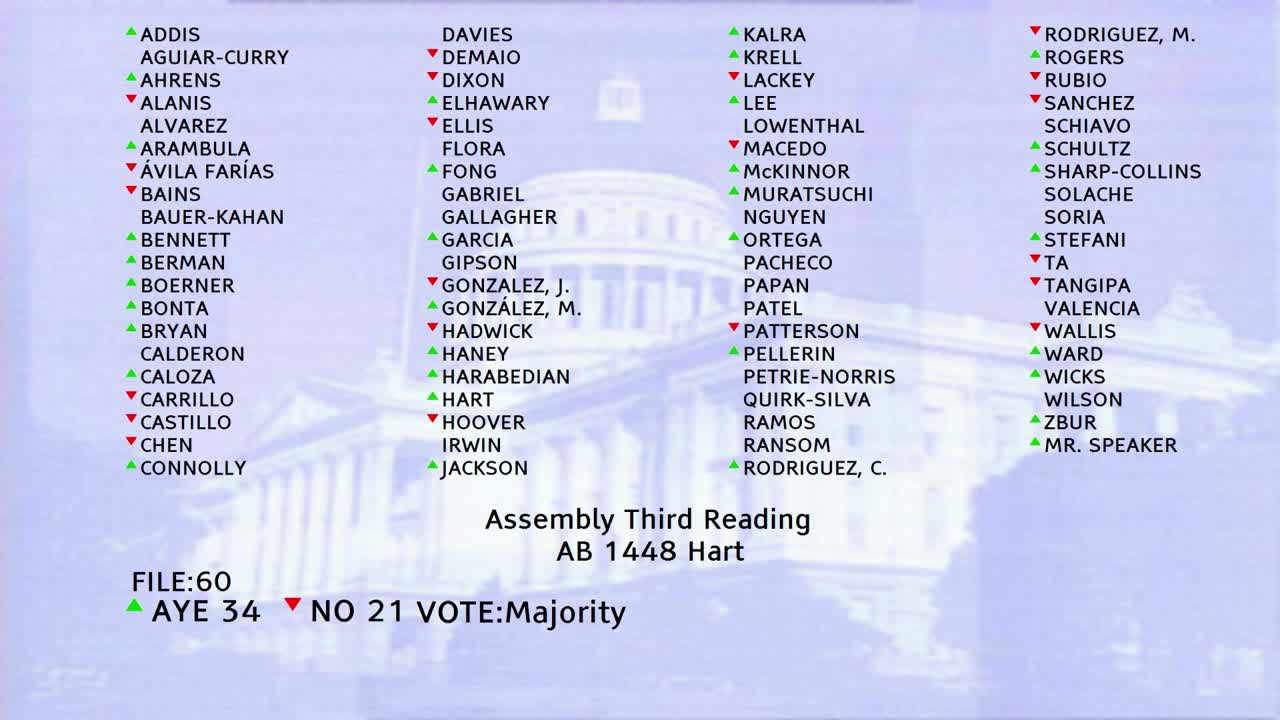 3MIN
Assembly Floor
 28MIN