AB 862: California School Dashboard: local control and accountability plans: college and career pathway data.
- Session Year: 2025-2026
- House: Assembly
- Latest Version Date: 2025-03-28
Current Status:
Failed
(2026-02-02: From committee: Filed with the Chief Clerk pursuant to Joint Rule 56.)
Introduced
In Committee
Awaiting First Chamber Vote
Passed First Chamber
In Committee
Awaiting Second Chamber Vote
Passed Second Chamber
Enacted
What does this bill do?
This bill directs the State Board of Education to consider adding to the California School Dashboard’s College/Career Indicator two measures showing the share of high school graduates who plan to enroll in college and the share who plan to enter registered apprenticeships, skilled trades, or industry-aligned career pathways. It also requires county offices of education to include those same student‑intended post‑high‑school path measures as a local metric in their accountability plans beginning in the 2026–27 school year.
The summary is provided by generative AI which can make mistakes. For original language, please view the details in the table below.
(1)Existing law requires the State Department of Education, in collaboration with, and subject to the approval of, the executive director of the State Board of Education, to develop and maintain the California School Dashboard, a web-based system for publicly reporting performance data on the state and local indicators included in the evaluation rubrics. The department, pursuant to the requirement of developing the California School Dashboard, has included as one of several state indicators, the College/Career Indicator (CCI), which represents the percentage of high school graduates who are prepared for college or a career.
This bill would require the state board to, on or before July 1, 2027, include upon the next revision of the California School Dashboard, consider for inclusion, for purposes of the CCI, the percentage of pupils who intend to enroll in college and the percentage of pupils who intend to enter or be employed through a registered apprenticeship program, skilled trade, or industry-aligned career pathway, as provided.
(2)Existing law requires the governing board of each school district and county board of education to adopt a local control and accountability plan (LCAP) and to update its LCAP before July 1 of each year. Existing law requires an LCAP to include, among other things, a description of the annual goals to be achieved for each state priority, as specified, for all pupils and certain subgroups of pupils. The states delineated priorities include, among others, pupil achievement, as measured by, among other things, the percentage of pupils who have successfully completed courses that satisfy the requirements for entrance to the University of California and the California State University and the percentage of pupils who have successfully completed courses that satisfy the requirements for career technical education sequences or programs of study that align with state board-approved career technical education standards and frameworks. school climate, as measured by, pupil suspension rates, pupil expulsion rates, and other local measures, including surveys of pupils, parents, and teachers on the sense of safety and school connectedness.
Existing law, on or before July 1, 2015, and each year thereafter, requires the governing body of a charter school to hold a public hearing to adopt an LCAP using a template adopted by the state board and requires the LCAP to include, among other things, a review of the progress toward the goals included in the charter. Existing law requires data reported pursuant to these provisions, to the extent practicable, to be reported in a manner consistent with how information is reported on the California School Dashboard, as provided.This bill would add as a local measurement for determining pupil achievement, school climate, for purposes of the LCAP adopted and updated by each school district and county board of education, the percentage of pupils who intend to enroll in college and the percentage of pupils who intend to enter or be employed through a registered apprenticeship program, skilled trade, or industry-aligned career pathway, as provided. The bill would require the governing body of a charter school to include in an LCAP the percentage of pupils who intend to enroll in college and the percentage of pupils who intend to enter or be employed through a registered apprenticeship program, skilled trade, or industry-aligned career pathway, as provided. To the extent this bill would impose additional duties on local educational agencies or local officials, the bill would impose a state-mandated local program.
(3)The California Constitution requires the state to reimburse local agencies and school districts for certain costs mandated by the state. Statutory provisions establish procedures for making that reimbursement.
This bill would provide that, if the Commission on State Mandates determines that the bill contains costs mandated by the state, reimbursement for those costs shall be made pursuant to the statutory provisions noted above.
(1)Existing law requires the State Department of Education, in collaboration with, and subject to the approval of, the executive director of the State Board of Education, to develop and maintain the California School Dashboard, a web-based system for publicly reporting performance data on the state and local indicators included in the evaluation rubrics. The department, pursuant to the requirement of developing the California School Dashboard, has included as one of several state indicators, the College/Career Indicator (CCI), which represents the percentage of high school graduates who are prepared for college or a career.
This bill would require the state board to, on or before July 1, 2027, include for purposes of the percentage of pupils who intend to enroll in college and the percentage of pupils who intend to enter or be employed through a registered apprenticeship program, skilled trade, or industry-aligned career pathway, as provided.
(2)Existing law requires the governing board of each school district and county board of education to adopt a local control and accountability plan (LCAP) and to update its LCAP before July 1 of each year. Existing law requires an LCAP to include, among other things, a description of the annual goals to be achieved for each state priority, as specified, for all pupils and certain subgroups of pupils. The states delineated priorities include, among others, pupil achievement, as measured by, among other things, the percentage of pupils who have successfully completed courses that satisfy the requirements for entrance to the University of California and the California State University and the percentage of pupils who have successfully completed courses that satisfy the requirements for career technical education sequences or programs of study that align with state board-approved career technical education standards and frameworks.
Existing law, on or before July 1, 2015, and each year thereafter, requires the governing body of a charter school to hold a public hearing to adopt an LCAP using a template adopted by the state board and requires the LCAP to include, among other things, a review of the progress toward the goals included in the charter. Existing law requires data reported pursuant to these provisions, to the extent practicable, to be reported in a manner consistent with how information is reported on the California School Dashboard, as provided.
This bill would add as a measurement for determining pupil achievement, for purposes of the LCAP adopted and updated by each school district and county board of education, the percentage of pupils who intend to enroll in college and the percentage of pupils who intend to enter or be employed through a registered apprenticeship program, skilled trade, or industry-aligned career pathway, as provided. The bill would require the governing body of a charter school to include in an LCAP the percentage of pupils who intend to enroll in college and the percentage of pupils who intend to enter or be employed through a registered apprenticeship program, skilled trade, or industry-aligned career pathway, as provided. To the extent this bill would impose additional duties on local educational agencies or local officials, the bill would impose a state-mandated local program.
(3)The California Constitution requires the state to reimburse local agencies and school districts for certain costs mandated by the state. Statutory provisions establish procedures for making that reimbursement.
This bill would provide that, if the Commission on State Mandates determines that the bill contains costs mandated by the state, reimbursement for those costs shall be made pursuant to the statutory provisions noted above.
(a)On or before July 1, 2027, Upon the next revision of the California School Dashboard, the state board shall include consider the inclusion of both of the following data related to a pupils chosen path after high school for the College/Career Indicator associated with the California School Dashboard maintained by the department pursuant to subdivision (f) of Section 52064.5:
(1)(a)The percentage of pupils who intend to enroll in a two-year or four-year college.
(2)(b)The percentage of pupils who intend to enter or be employed through a registered apprenticeship program, skilled trade, or industry-aligned career pathway, including, but not limited to, industrial trades, construction trades, or cosmetology.
(b)It is the intent of the Legislature that school districts, county offices of education, and charter schools give equal weight and emphasis to different pathways that a pupil may seek after high school, including enrolling in a college or entering or being employed through a registered apprenticeship program, skilled trade, or industry-aligned career pathway.SEC. 4.SEC. 2.Section 52066 of the Education Code is amended to read:52066.(a)On or before July 1, 2014, each county superintendent of schools shall develop, and present to the county board of education for adoption, a local control and accountability plan using a template adopted by the state board.
(b)A local control and accountability plan adopted by a county board of education shall be effective for a period of three years, and shall be updated on or before July 1 of each year.
(c)A local control and accountability plan adopted by a county board of education shall include, for each school or program operated by the county superintendent of schools, all of the information specified in the template adopted by the state board pursuant to Section 52064.
(d)All of the following are state priorities for purposes of a county board of educations local control and accountability plan:
(1)The degree to which the teachers in the schools or programs operated by the county superintendent of schools are appropriately assigned in accordance with Section 44258.9 and fully credentialed in the subject areas, and, for the pupils they are teaching, every pupil in the schools or programs operated by the county superintendent of schools has sufficient access to the standards-aligned instructional materials as determined pursuant to Section 60119, and school facilities are maintained in good repair as specified in subdivision (d) of Section 17002.
(2)Implementation of the academic content and performance standards adopted by the state board, including how the programs and services will enable English learners to access the common core academic content standards adopted pursuant to Section 60605.8 and the English language development standards adopted pursuant to former Section 60811.3, as that section read on June 30, 2013, or former Section 60811.4, as that section read on June 30, 2016, for purposes of gaining academic content knowledge and English language proficiency.
(3)(A)Parental involvement and family engagement, including efforts the county superintendent of schools makes to seek parent input in making decisions for each individual schoolsite and program operated by a county superintendent of schools, and including how the county superintendent of schools will promote parental participation in programs for unduplicated pupils and individuals with exceptional needs.
(B)Family engagement may include, but need not be limited to, efforts by the county superintendent of schools and each individual schoolsite to apply research-based practices, such as welcoming all families into the school community, engaging in effective two-way communication, supporting pupil success, and empowering families to advocate for equity and access. Family engagement may include, but need not be limited to, treating families as partners to inform, influence, and create practices and programs that support pupil success and collaboration with families and the broader community, expand pupil learning opportunities and community services, and promote civic participation.
(4)Pupil achievement, as measured by all of the following, as applicable:
(A)Statewide assessments administered pursuant to Article 4 (commencing with Section 60640) of Chapter 5 of Part 33 or any subsequent assessment, as certified by the state board.
(B)The percentage of pupils who have successfully completed courses that satisfy the requirements for entrance to the University of California and the California State University.
(C)The percentage of pupils who have successfully completed courses that satisfy the requirements for career technical education sequences or programs of study that align with state board-approved career technical education standards and frameworks, including, but not limited to, those described in subdivision (a) of Section 52302, subdivision (a) of Section 52372.5, or paragraph (2) of subdivision (e) of Section 54692.
(D)The percentage of pupils who have successfully completed both types of courses described in subparagraphs (B) and (C).
(E)The percentage of English learner pupils who make progress toward English proficiency as measured by the English Language Proficiency Assessments for California or any subsequent assessment of English proficiency, as certified by the state board.
(F)The English learner reclassification rate.
(G)The percentage of pupils who have passed an advanced placement examination with a score of 3 or higher.
(H)The percentage of pupils who demonstrate college preparedness pursuant to the Early Assessment Program, as described in Chapter 6 (commencing with Section 99300) of Part 65 of Division 14 of Title 3, or any subsequent assessment of college preparedness.
(I)The percentage of pupils who intend to enroll in a two-year or four-year college.(J)The percentage of pupils who intend to enter or be employed through a registered apprenticeship program, skilled trade, or industry-aligned career pathway, including, but not limited to, industrial trades, construction trades, or cosmetology.(5)Pupil engagement, as measured by all of the following, as applicable:
(A)School attendance rates.
(B)Chronic absenteeism rates.
(C)Middle school dropout rates.
(D)High school dropout rates.
(E)High school graduation rates.
(6)School climate, as measured by all of the following, as applicable:
(A)Pupil suspension rates.
(B)Pupil expulsion rates.
(C)(i)Other local measures, including surveys of pupils, parents, and teachers on the sense of safety and school connectedness.
(ii)Commencing with the 202627 school year, the following local measurement of a pupils intended chosen path after high school:
(I)The percentage of pupils who intend to enroll in a two-year or four-year college.
(II)The percentage of pupils who intend to enter or be employed through a registered apprenticeship program, skilled trade, or industry-aligned career pathway, including, but not limited to, industrial trades, construction trades, or cosmetology.
(7)The extent to which pupils have access to, and are enrolled in, a broad course of study that includes all of the subject areas described in Section 51210 and subdivisions (a) to (i), inclusive, of Section 51220, as applicable, including the programs and services developed and provided to unduplicated pupils and individuals with exceptional needs, and the programs and services that are provided to benefit these pupils as a result of the funding received pursuant to Section 42238.02, as implemented by Section 42238.03.
(8)Pupil outcomes, if available, in the subject areas described in Section 51210 and subdivisions (a) to (i), inclusive, of Section 51220, as applicable.
(9)How the county superintendent of schools will coordinate instruction of expelled pupils pursuant to Section 48926.
(10)How the county superintendent of schools will coordinate services for foster children, including, but not limited to, all of the following:
(A)Working with the county child welfare agency to minimize changes in school placement.
(B)Providing education-related information to the county child welfare agency to assist the county child welfare agency in the delivery of services to foster children, including, but not limited to, educational status and progress information that is required to be included in court reports.
(C)Responding to requests from the juvenile court for information and working with the juvenile court to ensure the delivery and coordination of necessary educational services.
(D)Establishing a mechanism for the efficient expeditious transfer of health and education records and the health and education passport.
(e)For purposes of the descriptions required by subdivision (b) of Section 52064, a county board of education may consider qualitative information, including, but not limited to, findings that result from school quality reviews conducted pursuant to subdivision (b) of Section 52052 or any other reviews.
(f)To the extent practicable, data reported in a local control and accountability plan shall be reported in a manner consistent with how information is reported on the California School Dashboard maintained by the department pursuant to Section 52064.5.
(g)The county superintendent of schools shall consult with teachers, principals, administrators, other school personnel, local bargaining units of the county office of education, parents, and pupils in developing a local control and accountability plan.
(h)A county board of education may identify local priorities, goals in regard to the local priorities, and the method for measuring the county office of educations progress toward achieving those goals.
(i)(1)Beginning with the 201819 fiscal year and in each fiscal year thereafter, a county superintendent of schools shall prepare a summary of how the county superintendent of schools plans to support school districts and schools within the county in implementing this article and present the summary to the county board of education at the same public meeting required under paragraph (2) of subdivision (b) of Section 52068. The summary shall include, but is not necessarily limited to, all of the following:
(A)A description of how the county superintendent of schools will support the continuous improvement of all school districts within the county, including steps that the county superintendent of schools plans to take to collaborate with the California Collaborative for Educational Excellence, the department, the lead agencies specified in Sections 52073 and 52073.1, and other county superintendents of schools to support school districts and schools within the county in implementing this article.
(B)A description of how the county superintendent of schools will assist each school district identified for technical assistance pursuant to subdivision (c) of Section 52071 and each charter school identified for technical assistance pursuant to subdivision (a) of Section 47607.3 in improving pupil outcomes, including, at a minimum, clearly identifying the activities being performed by the county office of education and the source of funding for those activities. This description shall include the actions the school district and charter school will take independent of the county superintendent of schools to improve pupil outcomes pursuant to subparagraph (C) of paragraph (1) of subdivision (c) of Section 52071 or paragraph (3) of subdivision (a) of Section 47607.3.
(C)One or more goals for each of the following:
(i)Completing the review of local control and accountability plans submitted by school districts pursuant to Section 52070.
(ii)Providing technical assistance to school districts pursuant to subdivisions (a) and (b) of Section 52071 and charter schools pursuant to subdivision (a) of Section 47607.3.
(iii)Providing any other support to school districts and schools within the county in implementing this article.
(iv)Providing support to school districts in developing and implementing the addendum specified in Section 52064.3.
(D)One or more metrics to assess progress toward each goal identified in subparagraph (C).
(E)Specific actions and related expenditures to achieve each goal identified in subparagraph (C), to the extent this information is not provided pursuant to subparagraph (B). The specific actions shall not supersede the provisions of existing local collective bargaining agreements within the jurisdiction of the county superintendent of schools.
(2)Commencing with the 201920 fiscal year and in each fiscal year thereafter, the county superintendent of schools shall submit the summary described in this subdivision with its local control and accountability plan pursuant to subdivision (a) of Section 52070.5.
(3)On or before November 1 of each year, the department shall compile the information provided by county superintendents of schools pursuant to subparagraphs (A) and (B) of paragraph (1) into a single document and shall make this report available to the public on the departments internet website.
SEC. 5.SEC. 3.If the Commission on State Mandates determines that this act contains costs mandated by the state, reimbursement to local agencies and school districts for those costs shall be made pursuant to Part 7 (commencing with Section 17500) of Division 4 of Title 2 of the Government Code.
(a)On or before July 1, 2015, and each year thereafter, the governing body of a charter school shall hold a public hearing to adopt a local control and accountability plan using a template adopted by the state board. The governing body of a charter school shall update the goals and annual actions to achieve those goals identified in the charter petition pursuant to subparagraph (A) of paragraph (5) of subdivision (c) of Section 47605 or subparagraph (A) of paragraph (5) of subdivision (b) of Section 47605.6, as applicable, using the template for the local control and accountability plan and annual update to the local control and accountability plan adopted by the state board pursuant to Section 52064 and shall include all of the following:
(1)A review of the progress toward the goals included in the charter, an assessment of the effectiveness of the specific actions described in the charter toward achieving the goals, and a description of changes to the specific actions the charter school will make as a result of the review and assessment.
(2)A listing and description of the expenditures for the fiscal year implementing the specific actions included in the charter as a result of the reviews and assessment required by paragraph (1).
(b)For purposes of the review required by subdivision (a), a governing body of a charter school may consider qualitative information, including, but not limited to, findings that result from school quality reviews conducted pursuant to subdivision (b) of Section 52052 or any other reviews.
(c)To the extent practicable, data reported pursuant to this section shall be reported in a manner consistent with how information is reported on the California School Dashboard maintained by the department pursuant to Section 52064.5. 52064.5 and shall include both of the following percentages for use on the California School Dashboard:
(1)The percentage of pupils who intend to enroll in a two-year or four-year college.
(2)The percentage of pupils who intend to enter or be employed through a registered apprenticeship program, skilled trade, or industry-aligned career pathway, including, but not limited to, industrial trades, construction trades, or cosmetology.
(d)The charter school shall consult with teachers, principals, administrators, other school personnel, parents, and pupils in developing the local control and accountability plan and annual update to the local control and accountability plan.
(e)(1)The charter school shall present a report on the annual update to the local control and accountability plan and the local control funding formula budget overview for parents on or before February 28 of each year as part of a nonconsent item at a regularly scheduled meeting of the governing body of the charter school.
(2)The report shall include both of the following:
(A)All available midyear outcome data related to metrics identified in the current years local control and accountability plan.
(B)All available midyear expenditure and implementation data on all actions identified in the current years local control and accountability plan.
(f)The governing body of a charter school shall hold at least one public hearing to solicit the recommendations and comments of members of the public regarding the specific actions and expenditures proposed to be included in the local control and accountability plan or annual update to the local control and accountability plan. The agenda for the public hearing shall be posted at least 72 hours before the public hearing, and the local control and accountability plan or annual update to the local control and accountability plan shall be made available for public inspection at each site operated by the charter school.
(g)The governing body of a charter school may adopt revisions to a local control and accountability plan during the period the local control and accountability plan is in effect. The governing body of a charter school may only adopt a revision to a local control and accountability plan if it follows the process to adopt a local control and accountability plan pursuant to this section and the revisions are adopted in a public meeting.
(h)Pursuant to Section 47604.33, the charter school shall submit the adopted or revised local control and accountability plan pursuant to this section to its chartering authority and the county superintendent of schools, or only to the county superintendent of schools if the county board of education is the chartering authority.
(i)The charter school shall prominently post on the home page of the internet website of the charter school any local control and accountability plan adopted by the governing body of the charter school, and any updates, revisions, or addenda, including those to comply with federal law, to a local control and accountability plan approved by the governing body of the charter school.
SEC. 2.Section 52060 of the Education Code is amended to read:52060.(a)On or before July 1, 2014, the governing board of each school district shall adopt a local control and accountability plan using a template adopted by the state board.
(b)A local control and accountability plan adopted by the governing board of a school district shall be effective for a period of three years, and shall be updated on or before July 1 of each year.
(c)A local control and accountability plan adopted by the governing board of a school district shall include, for the school district and each school within the school district, all of the information specified in the template adopted by the state board pursuant to Section 52064.
(d)All of the following are state priorities for purposes of a school districts local control and accountability plan:
(1)The degree to which the teachers of the school district are appropriately assigned in accordance with Section 44258.9, and fully credentialed in the subject areas, and, for the pupils they are teaching, every pupil in the school district has sufficient access to the standards-aligned instructional materials as determined pursuant to Section 60119, and school facilities are maintained in good repair, as defined in subdivision (d) of Section 17002.
(2)Implementation of the academic content and performance standards adopted by the state board, including how the programs and services will enable English learners to access the common core academic content standards adopted pursuant to Section 60605.8 and the English language development standards adopted pursuant to former Section 60811.3, as that section read on June 30, 2013, or former Section 60811.4, as that section read on June 30, 2016, for purposes of gaining academic content knowledge and English language proficiency.
(3)(A)Parental involvement and family engagement, including efforts the school district makes to seek parent input in making decisions for the school district and each individual schoolsite, and including how the school district will promote parental participation in programs for unduplicated pupils and individuals with exceptional needs.
(B)Family engagement may include, but need not be limited to, efforts by the school district and each individual schoolsite to apply research-based practices, such as welcoming all families into the school community, engaging in effective two-way communication, supporting pupil success, and empowering families to advocate for equity and access. Family engagement may include, but need not be limited to, treating families as partners to inform, influence, and create practices and programs that support pupil success and collaboration with families and the broader community, expand pupil learning opportunities and community services, and promote civic participation.
(4)Pupil achievement, as measured by all of the following, as applicable:
(A)Statewide assessments administered pursuant to Article 4 (commencing with Section 60640) of Chapter 5 of Part 33 or any subsequent assessment, as certified by the state board.
(B)The percentage of pupils who have successfully completed courses that satisfy the requirements for entrance to the University of California and the California State University.
(C)The percentage of pupils who have successfully completed courses that satisfy the requirements for career technical education sequences or programs of study that align with state board-approved career technical education standards and frameworks, including, but not limited to, those described in subdivision (a) of Section 52302, subdivision (a) of Section 52372.5, or paragraph (2) of subdivision (e) of Section 54692.
(D)The percentage of pupils who have successfully completed both types of courses described in subparagraphs (B) and (C).
(E)The percentage of English learner pupils who make progress toward English proficiency as measured by the English Language Proficiency Assessments for California or any subsequent assessment of English proficiency, as certified by the state board.
(F)The English learner reclassification rate.
(G)The percentage of pupils who have passed an advanced placement examination with a score of 3 or higher.
(H)The percentage of pupils who demonstrate college preparedness pursuant to the Early Assessment Program, as described in Chapter 6 (commencing with Section 99300) of Part 65 of Division 14 of Title 3, or any subsequent assessment of college preparedness.
(I)The percentage of pupils who intend to enroll in a two-year or four-year college.
(J)The percentage of pupils who intend to enter or be employed through a registered apprenticeship program, skilled trade, or industry-aligned career pathway, including, but not limited to, industrial trades, construction trades, or cosmetology.
(5)Pupil engagement, as measured by all of the following, as applicable:
(A)School attendance rates.
(B)Chronic absenteeism rates.
(C)Middle school dropout rates.
(D)High school dropout rates.
(E)High school graduation rates.
(6)School climate, as measured by all of the following, as applicable:
(A)Pupil suspension rates.
(B)Pupil expulsion rates.
(C)Other local measures, including surveys of pupils, parents, and teachers on the sense of safety and school connectedness.
(7)The extent to which pupils have access to, and are enrolled in, a broad course of study that includes all of the subject areas described in Section 51210 and subdivisions (a) to (i), inclusive, of Section 51220, as applicable, including the programs and services developed and provided to unduplicated pupils and individuals with exceptional needs, and the programs and services that are provided to benefit these pupils as a result of the funding received pursuant to Section 42238.02, as implemented by Section 42238.03.
(8)Pupil outcomes, if available, in the subject areas described in Section 51210 and subdivisions (a) to (i), inclusive, of Section 51220, as applicable.
(e)For purposes of the descriptions required by subdivision (b) of Section 52064, the governing board of a school district may consider qualitative information, including, but not limited to, findings that result from school quality reviews conducted pursuant to subdivision (b) of Section 52052 or any other reviews.
(f)To the extent practicable, data reported in a local control and accountability plan shall be reported in a manner consistent with how information is reported on the California School Dashboard maintained by the department pursuant to Section 52064.5.
(g)The governing board of a school district shall consult with teachers, principals, administrators, other school personnel, local bargaining units of the school district, parents, and pupils in developing a local control and accountability plan.
(h)A school district may identify local priorities, goals in regard to the local priorities, and the method for measuring the school districts progress toward achieving those goals.
SEC. 3.Section 52064.6 is added to the Education Code, to read:52064.6.(a)On or before July 1, 2027, the state board shall include both of the following data related to a pupils chosen path after high school for the College/Career Indicator associated with the California School Dashboard maintained by the department pursuant to subdivision (f) of Section 52064.5:
(1)The percentage of pupils who intend to enroll in a two-year or four-year college.
(2)The percentage of pupils who intend to enter or be employed through a registered apprenticeship program, skilled trade, or industry-aligned career pathway, including, but not limited to, industrial trades, construction trades, or cosmetology.
(b)It is the intent of the Legislature that school districts, county offices of education, and charter schools give equal weight and emphasis to different pathways that a pupil may seek after high school, including enrolling in a college or entering or being employed through a registered apprenticeship program, skilled trade, or industry-aligned career pathway.
SEC. 4.Section 52066 of the Education Code is amended to read:52066.(a)On or before July 1, 2014, each county superintendent of schools shall develop, and present to the county board of education for adoption, a local control and accountability plan using a template adopted by the state board.
(b)A local control and accountability plan adopted by a county board of education shall be effective for a period of three years, and shall be updated on or before July 1 of each year.
(c)A local control and accountability plan adopted by a county board of education shall include, for each school or program operated by the county superintendent of schools, all of the information specified in the template adopted by the state board pursuant to Section 52064.
(d)All of the following are state priorities for purposes of a county board of educations local control and accountability plan:
(1)The degree to which the teachers in the schools or programs operated by the county superintendent of schools are appropriately assigned in accordance with Section 44258.9 and fully credentialed in the subject areas, and, for the pupils they are teaching, every pupil in the schools or programs operated by the county superintendent of schools has sufficient access to the standards-aligned instructional materials as determined pursuant to Section 60119, and school facilities are maintained in good repair as specified in subdivision (d) of Section 17002.
(2)Implementation of the academic content and performance standards adopted by the state board, including how the programs and services will enable English learners to access the common core academic content standards adopted pursuant to Section 60605.8 and the English language development standards adopted pursuant to former Section 60811.3, as that section read on June 30, 2013, or former Section 60811.4, as that section read on June 30, 2016, for purposes of gaining academic content knowledge and English language proficiency.
(3)(A)Parental involvement and family engagement, including efforts the county superintendent of schools makes to seek parent input in making decisions for each individual schoolsite and program operated by a county superintendent of schools, and including how the county superintendent of schools will promote parental participation in programs for unduplicated pupils and individuals with exceptional needs.
(B)Family engagement may include, but need not be limited to, efforts by the county superintendent of schools and each individual schoolsite to apply research-based practices, such as welcoming all families into the school community, engaging in effective two-way communication, supporting pupil success, and empowering families to advocate for equity and access. Family engagement may include, but need not be limited to, treating families as partners to inform, influence, and create practices and programs that support pupil success and collaboration with families and the broader community, expand pupil learning opportunities and community services, and promote civic participation.
(4)Pupil achievement, as measured by all of the following, as applicable:
(A)Statewide assessments administered pursuant to Article 4 (commencing with Section 60640) of Chapter 5 of Part 33 or any subsequent assessment, as certified by the state board.
(B)The percentage of pupils who have successfully completed courses that satisfy the requirements for entrance to the University of California and the California State University.
(C)The percentage of pupils who have successfully completed courses that satisfy the requirements for career technical education sequences or programs of study that align with state board-approved career technical education standards and frameworks, including, but not limited to, those described in subdivision (a) of Section 52302, subdivision (a) of Section 52372.5, or paragraph (2) of subdivision (e) of Section 54692.
(D)The percentage of pupils who have successfully completed both types of courses described in subparagraphs (B) and (C).
(E)The percentage of English learner pupils who make progress toward English proficiency as measured by the English Language Proficiency Assessments for California or any subsequent assessment of English proficiency, as certified by the state board.
(F)The English learner reclassification rate.
(G)The percentage of pupils who have passed an advanced placement examination with a score of 3 or higher.
(H)The percentage of pupils who demonstrate college preparedness pursuant to the Early Assessment Program, as described in Chapter 6 (commencing with Section 99300) of Part 65 of Division 14 of Title 3, or any subsequent assessment of college preparedness.
(I)The percentage of pupils who intend to enroll in a two-year or four-year college.
(J)The percentage of pupils who intend to enter or be employed through a registered apprenticeship program, skilled trade, or industry-aligned career pathway, including, but not limited to, industrial trades, construction trades, or cosmetology.
(5)Pupil engagement, as measured by all of the following, as applicable:
(A)School attendance rates.
(B)Chronic absenteeism rates.
(C)Middle school dropout rates.
(D)High school dropout rates.
(E)High school graduation rates.
(6)School climate, as measured by all of the following, as applicable:
(A)Pupil suspension rates.
(B)Pupil expulsion rates.
(C)Other local measures, including surveys of pupils, parents, and teachers on the sense of safety and school connectedness.
(7)The extent to which pupils have access to, and are enrolled in, a broad course of study that includes all of the subject areas described in Section 51210 and subdivisions (a) to (i), inclusive, of Section 51220, as applicable, including the programs and services developed and provided to unduplicated pupils and individuals with exceptional needs, and the programs and services that are provided to benefit these pupils as a result of the funding received pursuant to Section 42238.02, as implemented by Section 42238.03.
(8)Pupil outcomes, if available, in the subject areas described in Section 51210 and subdivisions (a) to (i), inclusive, of Section 51220, as applicable.
(9)How the county superintendent of schools will coordinate instruction of expelled pupils pursuant to Section 48926.
(10)How the county superintendent of schools will coordinate services for foster children, including, but not limited to, all of the following:
(A)Working with the county child welfare agency to minimize changes in school placement.
(B)Providing education-related information to the county child welfare agency to assist the county child welfare agency in the delivery of services to foster children, including, but not limited to, educational status and progress information that is required to be included in court reports.
(C)Responding to requests from the juvenile court for information and working with the juvenile court to ensure the delivery and coordination of necessary educational services.
(D)Establishing a mechanism for the efficient expeditious transfer of health and education records and the health and education passport.
(e)For purposes of the descriptions required by subdivision (b) of Section 52064, a county board of education may consider qualitative information, including, but not limited to, findings that result from school quality reviews conducted pursuant to subdivision (b) of Section 52052 or any other reviews.
(f)To the extent practicable, data reported in a local control and accountability plan shall be reported in a manner consistent with how information is reported on the California School Dashboard maintained by the department pursuant to Section 52064.5.
(g)The county superintendent of schools shall consult with teachers, principals, administrators, other school personnel, local bargaining units of the county office of education, parents, and pupils in developing a local control and accountability plan.
(h)A county board of education may identify local priorities, goals in regard to the local priorities, and the method for measuring the county office of educations progress toward achieving those goals.
(i)(1)Beginning with the 201819 fiscal year and in each fiscal year thereafter, a county superintendent of schools shall prepare a summary of how the county superintendent of schools plans to support school districts and schools within the county in implementing this article and present the summary to the county board of education at the same public meeting required under paragraph (2) of subdivision (b) of Section 52068. The summary shall include, but is not necessarily limited to, all of the following:
(A)A description of how the county superintendent of schools will support the continuous improvement of all school districts within the county, including steps that the county superintendent of schools plans to take to collaborate with the California Collaborative for Educational Excellence, the department, the lead agencies specified in Sections 52073 and 52073.1, and other county superintendents of schools to support school districts and schools within the county in implementing this article.
(B)A description of how the county superintendent of schools will assist each school district identified for technical assistance pursuant to subdivision (c) of Section 52071 and each charter school identified for technical assistance pursuant to subdivision (a) of Section 47607.3 in improving pupil outcomes, including, at a minimum, clearly identifying the activities being performed by the county office of education and the source of funding for those activities. This description shall include the actions the school district and charter school will take independent of the county superintendent of schools to improve pupil outcomes pursuant to subparagraph (C) of paragraph (1) of subdivision (c) of Section 52071 or paragraph (3) of subdivision (a) of Section 47607.3.
(C)One or more goals for each of the following:
(i)Completing the review of local control and accountability plans submitted by school districts pursuant to Section 52070.
(ii)Providing technical assistance to school districts pursuant to subdivisions (a) and (b) of Section 52071 and charter schools pursuant to subdivision (a) of Section 47607.3.
(iii)Providing any other support to school districts and schools within the county in implementing this article.
(iv)Providing support to school districts in developing and implementing the addendum specified in Section 52064.3.
(D)One or more metrics to assess progress toward each goal identified in subparagraph (C).
(E)Specific actions and related expenditures to achieve each goal identified in subparagraph (C), to the extent this information is not provided pursuant to subparagraph (B). The specific actions shall not supersede the provisions of existing local collective bargaining agreements within the jurisdiction of the county superintendent of schools.
(2)Commencing with the 201920 fiscal year and in each fiscal year thereafter, the county superintendent of schools shall submit the summary described in this subdivision with its local control and accountability plan pursuant to subdivision (a) of Section 52070.5.
(3)On or before November 1 of each year, the department shall compile the information provided by county superintendents of schools pursuant to subparagraphs (A) and (B) of paragraph (1) into a single document and shall make this report available to the public on the departments internet website.
SEC. 5.If the Commission on State Mandates determines that this act contains costs mandated by the state, reimbursement to local agencies and school districts for those costs shall be made pursuant to Part 7 (commencing with Section 17500) of Division 4 of Title 2 of the Government Code.
|
Date
|
Status
|
|---|---|
| Feb 2, 2026 | From committee: Filed with the Chief Clerk pursuant to Joint Rule 56. |
| Jan 31, 2026 | Died pursuant to Art. IV, Sec. 10(c) of the Constitution. |
| May 23, 2025 | In committee: Held under submission. |
| Apr 23, 2025 | In committee: Set, first hearing. Referred to suspense file. |
| Apr 1, 2025 | Re-referred to Com. on APPR. |
| Mar 28, 2025 | Read second time and amended. |
| Mar 27, 2025 | From committee: Amend, and do pass as amended and re-refer to Com. on APPR. (Ayes 7. Noes 2.) (March 26). |
| Mar 10, 2025 | Referred to Com. on ED. |
| Feb 20, 2025 | From printer. May be heard in committee March 22. |
| Feb 19, 2025 | Read first time. To print. |
|
Date
|
Description
|
Location
|
Votes
|
|
|---|---|---|---|---|
| Mar 26, 2025 | Do pass as amended and be re-referred to the Committee on [Appropriations] | Assembly Standing Committee on Education |
Passed |
This list shows positions taken on this bill by organizations on the date displayed, which is linked to the original source.
Positions by individuals are not included.
|
Organization
|
Position
|
Date
|
|---|---|---|
| California Association Of School Business Officials | ** Against | |
| California County Superintendents | ** Against | |
| Los Angeles Unified School District | ** Against | |
| Pacific Advocacy Group | ** Support | |
| Plumbing-Heating-Cooling Contractors Association of California | ** Support | |
| Western Electrical Contractors Association | ** Support |
Date of Hearing: April 23, 2025
ASSEMBLY COMMITTEE ON APPROPRIATIONS
Buffy Wicks, Chair
ABPCA Bill Id:AB 862
Author:(Castillo) – As Amended Ver:March 28, 2025
Policy Committee: | Education | Vote: | 7 - 2 |
|
| ||
|
|
Urgency: No State Mandated Local Program: Yes Reimbursable: Yes
SUMMARY:
This bill requires County Offices of Education (COEs), beginning with the 2026-27 school year, to include in their respective Local Control Accountability Plans (LCAPs) the percentage of pupils who intend to enroll in a two-year or four-year college and the percentage of pupils who intend to enter or be employed through a registered apprenticeship program, skilled trade, or industry-aligned career pathway within the school climate local indicator. The bill also requires the State Board of Education (SBE) to consider including the same data in the next revision of the California School Dashboard (Dashboard) College/Career Indicator (CCI).
FISCAL EFFECT:
Ongoing Proposition 98 General Fund costs of an unknown but potentially significant amount, possibly in the hundreds of thousands of dollars statewide for COEs to include the percentage of pupils intending to enroll in college or a trade pathway within the school climate local indicator. Exact costs depend on each COE’s determination of what constitutes a pupil’s “intent to enroll” and the resulting reporting required for students meeting this definition.
COMMENTS:
- Purpose. According to the author:
While higher education is the right choice for many students, it is not the only route to a fulfilling and financially stable career. California is facing a growing shortage of skilled workers in industries such as construction, manufacturing, and other technical trades — fields that offer competitive wages, job security, and career advancement. However, many students are unaware of these opportunities because our education system does not give them equal visibility.
- Background.
California School Dashboard. The state bases California's school accountability system on multiple measures assessing how local educational agencies (LEAs) and schools are meeting the needs of their students. LEAs report performance on these measures through the Dashboard. The Dashboard is an online tool designed to help communities across the state access information about kindergarten through grade twelve schools and districts. It features reports on the performance of districts, schools, and student groups on a specific set of state and local measures.
The Dashboard includes a concise set of state and local indicators that are founded on the Local Control Funding Formula (LCFF) priorities but are also aligned to the measures required under the federal Every Student Succeeds Act (ESSA). State measures based on student data are annually collected across the state and apply to all districts, schools, and student groups.
Current law contains seven local indicators for which there is no state level data collected, school climate being one of them. This bill requires LEAs to collect additional information regarding student intent to enroll in college or begin a career as part of the school climate local indicator.
LCAPs and the College/Career Indicator. The CCI is one of several state indicators that the CDE reports on the Dashboard for any LEA and high school that enrolls students in grade twelve. It represents the percentage of high school graduates prepared for college or a career. The state designed this indicator to encourage high schools to provide all students with a rigorous broad course of study that prepares them for postsecondary success.
Analysis Prepared by: Aaron Heredia / APPR. / (916) 319-2081
Date of Hearing: March 26, 2025
ASSEMBLY COMMITTEE ON EDUCATION
Al Muratsuchi, Chair
ABPCA Bill Id:AB 862 (
Author:Castillo) – As Introduced Ver:February 19, 2025
SUBJECT: California School Dashboard: local control and accountability plans: college and career pathway data
SUMMARY: Requires the collection of, and reporting through the California School Dashboard (Dashboard) and Local Control and Accountability Plan (LCAP), the percentage of students who intend to enroll in college or specified careers. Specifically, this bill:
- Requires the LCAP to include both of the following percentages for use on the Dashboard:
- The percentage of pupils who intend to enroll in a two-year or four-year college; and
- The percentage of pupils who intend to enter or be employed through a registered apprenticeship program, skilled trade, or industry-aligned career pathway, including, but not limited to, industrial trades, construction trades, or cosmetology.
- Requires, for purposes of the state’s priorities for a LCAP, the measurement of pupil achievement to include:
- The percentage of pupils who intend to enroll in a two-year or four-year college; and
- The percentage of pupils who intend to enter or be employed through a registered apprenticeship program, skilled trade, or industry-aligned career pathway, including, but not limited to, industrial trades, construction trades, or cosmetology.
- Requires, on or before July 1, 2027, the State Board of Education (SBE) to include both of the following data related to a pupil’s chosen path after high school for the College/Career Indicator (CCI) associated with the Dashboard maintained by the California Department of Education (CDE):
- The percentage of pupils who intend to enroll in a two-year or four-year college; and
- The percentage of pupils who intend to enter or be employed through a registered apprenticeship program, skilled trade, or industry-aligned career pathway, including, but not limited to, industrial trades, construction trades, or cosmetology.
- States the intent of the Legislature that school districts, county offices of education (COE), and charter schools give equal weight and emphasis to different pathways that a pupil may seek after high school, including enrolling in a college or entering or being employed through a registered apprenticeship program, skilled trade, or industry-aligned career pathway.
EXISTING LAW:
- Requires, on or before October 1, 2016, the SBE to adopt evaluation rubrics for all of the following purposes:
- To assist a school district, COE, or charter school in evaluating its strengths, weaknesses, and areas that require improvement;
- To assist a county superintendent of schools, the CDE, or a chartering authority in identifying school districts, COEs, and charter schools in need of technical assistance, as specified, as applicable, and the specific priorities upon which the technical assistance should be focused; and
- To assist the Superintendent of Public Instruction (SPI) in identifying school districts and COEs for which intervention, as specified, as applicable, is warranted. (Education Code (EC) 52064.5)
- Requires the evaluation rubrics to reflect a holistic, multidimensional assessment of school district and individual schoolsite performance and to include all of the state priorities. (EC 52064.5)
- Requires, as part of the evaluation rubrics, the SBE to adopt state and local indicators to measure school district and individual schoolsite performance in regard to each of the state priorities. Requires, no later than January 31, 2021, local indicators to reflect school-level data to the extent the department collects or otherwise has access to relevant and reliable school-level data for all schools statewide. (EC 52064.5)
- Requires the CDE, in collaboration with, and subject to the approval of, the executive director of the SBE, to develop and maintain the Dashboard, a web-based system for publicly reporting performance data on the state and local indicators included in the evaluation rubrics. (EC 52064.5)
- Requires, as part of the evaluation rubrics, the SBE to adopt performance criteria for local educational agency (LEA) assistance and intervention, as specified. Requires the criteria to be based on performance by pupil subgroups either across two or more of the state and local indicators or across two or more of the state priorities. (EC 52064.5)
- Requires LEAs to adopt and annually revise LCAPs, establishing annual goals and identifying specific actions, in the following eight state priority areas:
- The degree to which the teachers of the school district are appropriately assigned in accordance, and fully credentialed in the subject areas, and, for the pupils they are teaching, every student in the school district has sufficient access to the standards-aligned instructional materials, and school facilities are maintained in good repair;
- Implementation of the academic content and performance standards adopted by the SBE;
- Parental involvement and family engagement;
- Pupil achievement;
- Pupil engagement;
- School climate;
- Student access to and enrollment in a broad course of study; and
- Pupil outcomes. (EC 52060)
- Requires the SPI to post links to all LCAPs approved by the governing boards of school districts, COEs, and the governing bodies of charter schools, on the website of the CDE. (EC 52065 (c))
- Requires a county superintendent of schools to prominently post on the homepage of the COE website the COE’s LCAP approved by the county board of education, and all LCAPs submitted by school districts and charter schools. (EC 52065 (b))
- Requires the superintendent of a school district to prominently post on the homepage of the website any LCAP approved by the governing board of the LEA and any LCAP submitted by charter schools that were authorized by the school district. (EC 52065)
- Requires, on or before July 1, 2015, and each year thereafter, a school district to update the LCAP. Requires the annual update to be developed using a template adopted by the state board. (EC 52061)
- Establishes the California Cradle to Career (C2C) Data System Act in order to do all of the following:
- Build a data system to enable partner entities to share information in a manner that promotes data privacy and security;
- Design a data system that minimizes the need for new infrastructure, is adaptable, and is flexible to meet future needs;
- Serve students and families by doing all of the following:
- Identifying and tracking predictive indicators to enable parents, teachers, health and human services providers, and policymakers to provide appropriate interventions and supports to address disparities in opportunities and improve outcomes for all students;
- Creating direct support tools for teachers, parents, advisors, and students;
- Enabling agencies to plan for and optimize educational, workforce, and health and human services programs;
- Enabling and streamlining the administration of student financial aid; and
- Advancing academic and governmental research on improving policies from birth through career.
- Improve the quality and reliability of data reported, and ensure consistency of key data definitions; and
- Identify additional data points and metrics that can be developed and integrated into the data system to support the goals of the C2C. (EC 10850 and 10852)
- Establishes the C2C for the purpose of connecting individuals and organizations to trusted information and resources. Requires the data system to be considered a source for actionable data and research on education, economic, and health outcomes for individuals, families, and communities, and provides for expanded access to tools and services that support the navigation of the education-to-employment pipeline. Requires the data system to be used to provide access to data and information necessary to provide insights into critical milestones in the education-to-employment pipeline, including insight regarding early learning and care to grade 12, inclusive, and into higher education, skills training opportunities, and employment to better enable individuals to maximize their educational and career opportunities, and to foster evidence-based decision-making to help the state build a more equitable future. (EC 10861)
- Requires the data system to comply with applicable federal and state laws to protect individual privacy at all times. (EC 10861)
- Creates the Office of Cradle-to-Career Data (Office) within the California Government Operations Agency (GovOps), as the managing entity. (EC 10862)
FISCAL EFFECT: Unknown
COMMENTS:
Need for the bill. According to the author, “Every high school graduate faces an important decision: what comes next? For decades, our education system has emphasized four-year college degrees as the primary path to success, often at the expense of alternative career pathways. While higher education is the right choice for many students, it is not the only route to a fulfilling and financially stable career.
California is facing a growing shortage of skilled workers in industries such as construction, manufacturing, and other technical trades — fields that offer competitive wages, job security, and career advancement. However, many students are unaware of these opportunities because our education system does not give them equal visibility.
The goal of this bill is to promote transparency and equal recognition of all career paths, helping students make informed choices about their futures.”
The Committee may wish to consider if the requirements proposed by this bill are appropriate a state indicator for the Dashboard and informing what LEAs must include in their LCAPs.
California School Dashboard. California's accountability system is based on a multiple measures system that assesses how local LEAs and schools are meeting the needs of their students. Performance on these measures is reported through the Dashboard. The Dashboard is an online tool designed to help communities across the state access information about kindergarten through grade twelve schools and districts. It features reports on the performance of districts, schools, and student groups on a specific set of state and local measures.
The Dashboard includes a concise set of state and local indicators that are founded on the Local Control Funding Formula (LCFF) priorities but are also aligned to the measures required under Every Student Succeeds Act (ESSA). State measures are based on student data that are annually collected across the state and apply to all districts, schools, and student groups. The six state indicators are:
- Academic Performance (English language arts and mathematics);
- Chronic Absenteeism;
- College/Career;
- English Learner Progress;
- Graduation Rate; and
- Suspension Rate.
Those LCFF priorities for which there is no state level data collected are referred to as local indicators. The seven local indicators are:
- Basic Services and Conditions (teacher assignments, safe and clean buildings;
- instructional materials for all students);
- Implementation of State Academic Standards;
- Parent and Family Engagement;
- School Climate (student safety, connection to the school);
- Access to a Broad Course of Study;
- Coordination of Services for Expelled Students (for COEs only); and
- Coordination of Services for Foster Youth (for COEs only).
In addition to being a public record of progress on the Dashboard, the local indicator process serves to inform process and planning within the LCAP. Further, progress in local indicators can inform technical assistance provided through the System of Support and Differentiated Assistance process.
This bill would require that additional information be collected by school districts, COEs, and charter schools regarding student intent to enroll in college or begin a career, and published annually on the Dashboard as a component of the CCI. The CDE does not currently collect this information from LEAs.
College/Career Indicator. The CCI is one of several state indicators that the CDE reports on the Dashboard for any LEA and high school that enrolls students in grade twelve. It represents the percentage of high school graduates who are prepared for college or a career. This indicator was designed to encourage high schools to provide all students with a rigorous broad course of study that prepares them for postsecondary success. The following measures have been approved by the SBE for inclusion into the indicator:
- Advanced Placement Exams;
- a–g Completion;
- Career Technical Education Pathway Completion;
- College Credit Course (formerly called Dual Enrollment);
- International Baccalaureate Exams;
- Leadership/Military Science;
- Pre-Apprenticeships;
- Smarter Balanced Summative Assessments in English Language Arts/Literacy and mathematics (Grade 11);
- State and Federal Job Programs;
- State Seal of Biliteracy; and
- Transition Classroom and Work-Based Learning Experiences.
LCAPs. The LCFF was established in the 2013-14 fiscal year to address the achievement gap by providing more equitable funding among LEAs, that is, to provide a higher level of funding to LEAs that enroll larger numbers of English learners, foster youth, and students eligible for free-or reduced-price meals (unduplicated pupils) so they could provide those students with additional services and support. The reforms to the funding system were accompanied by changes to the state accountability system, including LCAPs. The LCAP is a three-year plan that describes the goals, actions, services, and expenditures to support positive student outcomes that address state and local priorities. The LCAP provides an opportunity for LEAs (school districts, COEs, and charter schools) to share their stories of how, what, and why programs and services are selected to meet their local needs.
This bill would require LEAs to incorporate information related to the percentage of students who intend to attend college or begin a career, and incorporate those percentages into their locally adopted LCAPs.
The California Cradle-to-Career Data System. According to the C2C, the data system is a statewide longitudinal data system that provides tools to help students reach their goals and delivers information on education and workforce outcomes.
Prior to the creation of the data system in 2019, according to an Education Commission of the States fact sheet, 50-State Comparison Statewide Longitudinal Data System, California was one of nine states that did not have a longitudinal data system. SB 75 (Committee on Budget and Fiscal Review), Chapter 51, Statutes of 2019, called for the establishment of a statewide, longitudinal data system for California. Over the course of 2020 and the first half of 2021, more than 200 people from 15 state agencies and many educational institutions, research and policy organizations, and community groups worked together to design a blueprint for the data system.
The planning included multiple subcommittees that considered various aspects of data system development, including technology and security, legal frameworks, data definitions, and community engagement. A workgroup composed of entities that will provide information and state agencies with expertise in data considered the findings of these subcommittees and advice from two advisory groups made up of community members. AB 132 (Committee on Budget), Chapter 144, Statutes of 2021, authorized funding for the California Cradle-to-Career Data System. The data system is housed within and is implemented by the GovOps agency.
The planning phase concluded by phasing in regular meetings of the governing board, and appointment of an executive officer. The governing board adopted a five-year implementation plan, (see figure), based on the recommendations of the planning process.
The creation of the data system includes a three-pronged approach of 1) community engagement to inform development, interpretation, and awareness building about available information, 2) tools to support college planning and transition, and 3) an analytical data set on education, well-being, and job outcomes.
Once fully implemented, the data system will provide public access to a comprehensive state longitudinal data system, linking existing education, workforce, financial aid, and social service information to address disparities in opportunities and improve outcomes for all communities throughout California. The data system will be a suite of resources focused on early learning through K-12 and higher education, providing financial aid and social services to help students reach their goals.
Since its inception, the C2C has accomplished several major milestones:
- 2021: Governing board selected executive director
- 2022: Legal agreements signed between C2C and 15 data providers to make data available to the public through the data system.
- 2023: Over 1 billion data points were transmitted from data providers to the data system for integration.
- 2024: The first data dashboard was made available to the public, of which the educator dashboard is included.
During the planning process of the C2C Data System, state agency representatives and community members recommended that the analytical data set include 1) information on workforce training to deepen understanding about ways that adults prepare for jobs, and 2) to identify how education and workforce training relate to employment and earnings. In 2025, C2C is preparing for this expansion by:
- Working with the Labor and Workforce Development Agency to identify priority research topics and the data points necessary to answer those two sets of information;
- Convening a task force of community members who are workforce data experts to identify additional priority questions and information required to answer those two queries; and
- Facilitating discussions with state agencies to support the expansion of the early childhood through college/workforce (P20W) analytical data set.
Arguments in support. The Pacific Advocacy Group, Plumbing-Heating-Cooling Contractors Association of California, and Western Electrical Contractors Association write, “The construction industry plays a critical role in the continued growth and prosperity of our state’s economy. By embracing a diversity of career paths chosen by matriculating students California can tailor and improve the preparation students receive not just for higher education, but for great-paying careers in construction; contributing to strengthening California’s economy.
A construction career and a college education both offer distinct paths with varying benefits; a construction career can provide quick entry into a high-demand field with good earning potential.
Apprentices in a registered apprenticeship program in California earn prevailing wages from day one and complete their program at zero cost with no student debt!”
Arguments in opposition. The California Association of School Business Officials (CASBO), the California County Superintendents, and the Los Angeles Unified School District write, “We understand that work is already underway as part of the C2C to track much of this information, making AB 862 duplicative and unnecessarily burdensome to LEAs. To ensure full consideration of the effect of additional reporting requirements on the ability of LEAs to devote resources to direct work with students and provide support to ensure their academic success—including those imposed by AB 862—we urge consideration of the following six key questions that were posed by the Assembly Education Committee in its analysis of SB 1315 for any new reporting requirements:
- Purpose: Why is this information being requested, and how will it be used?
- Audience: Who will use this information?
- Value: What is the value of this information, and what is the opportunity cost?
- Feasibility: Can the desired information be obtained, even from small LEAs?
- Duplication: Is this information already reported to the state in another form?
- Duration: How long should this requirement be in effect?
LEAs are working to provide higher levels of support for students while facing increased fiscal constraints and staff shortages. It is more important than ever that reporting requirements do not divert resources from these efforts.”
Recommended Committee Amendments. Staff recommends that the bill be amended as follows:
- Require, commencing with the 2026-27 school year, LEAs to include the following information in the school climate local indicator:
- The percentage of pupils who intend to enroll in a two-year or four-year college; and
- The percentage of pupils who intend to enter or be employed through a registered apprenticeship program, skilled trade, or industry-aligned career pathway, including, but not limited to, industrial trades, construction trades, or cosmetology.
- Require, upon the next revision of the Dashboard, the SBE to consider the inclusion of the following in the CCI:
- The percentage of pupils who intend to enroll in a two-year or four-year college; and
- The percentage of pupils who intend to enter or be employed through a registered apprenticeship program, skilled trade, or industry-aligned career pathway, including, but not limited to, industrial trades, construction trades, or cosmetology.
Related legislation. AB 296 (Davies) of the 2025-26 Session would require school districts and schools to host at least one apprenticeship fair event during each school year, and a school district to provide a pupil with one hour of credit towards the required community service hours for attendance at a college fair, career fair, or apprenticeship fair.
AB 1357 (Quirk-Silva) of the 2023-24 Session would have required the SBE to consider adopting regulations by January 1, 2025, to include the completion of a culminating performance assessment as an accepted measure for the CCI for the Dashboard. This bill was held in the Assembly Appropriations Committee.
AB 2179 (Davies), Chapter 62, Statutes of 2024, requires a school district, as part of its annual notification process, to provide information on local apprenticeship and preapprenticeship programs to the parents or guardians of pupils in grades 11 and 12.
SB 480 (Portantino) of the 2023-24 Session would have required, contingent on appropriation, creates the High School Apprenticeship Pilot Program at the CDE to provide grants to three LEAs for two years. The bill also would have also required the CDE and others to produce deliverables and take other actions related to career technical education. This bill was held in the Assembly Labor and Employment Committee
SB 114 (Committee on Budget and Fiscal Review), Chapter 28, Statutes of 2023, requires the Dashboard to be published on October 15th every year after 2026.
SB 609 (Caballero), Chapter 494, Statutes of 2023, requires school districts, COEs, and charter schools to post the current school year's approved local control and accountability plans on the performance overview portion of the Dashboard.
REGISTERED SUPPORT / OPPOSITION:
Support
Pacific Advocacy Group
Plumbing-Heating-Cooling Contractors Association of California
Western Electrical Contractors Association
Opposition
California Association of School Business Officials (CASBO)
California County Superintendents
Los Angeles Unified School District
Analysis Prepared by: Marguerite Ries / ED. / (916) 319-2087
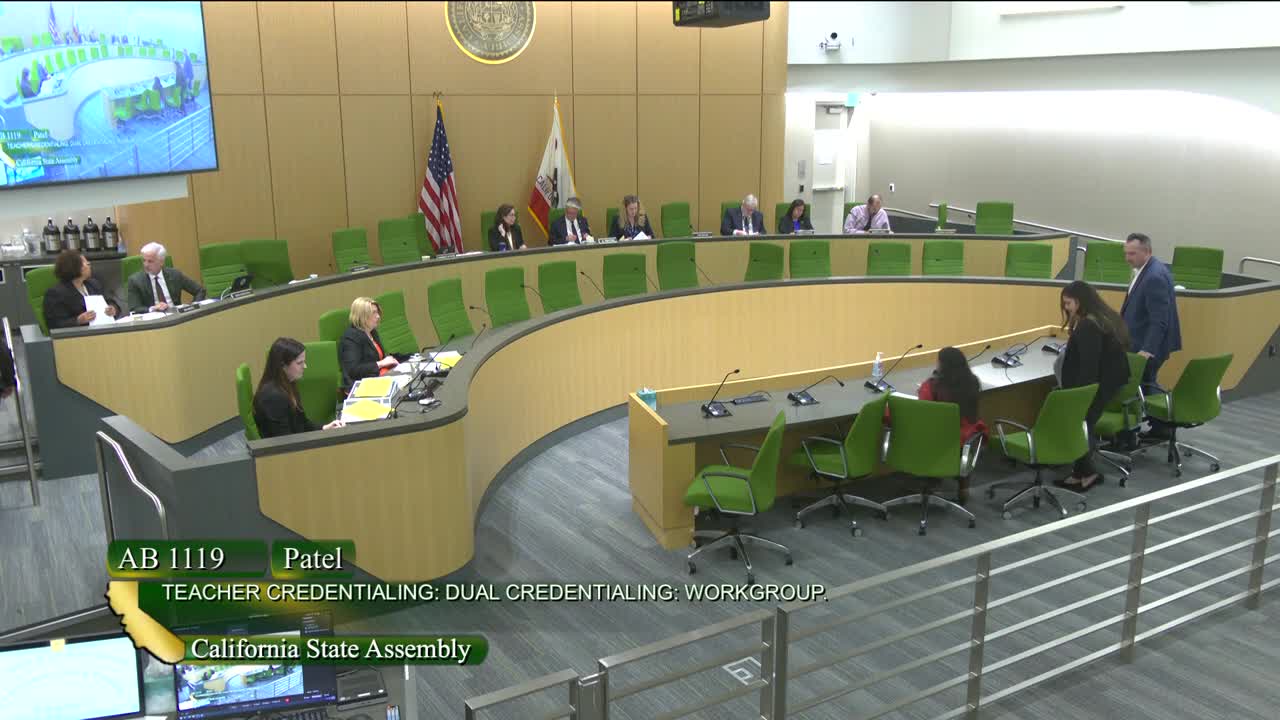
Discussed in Hearing
 27MIN
Assembly Standing Committee on Education
Bill Author
Bill Co-Author(s):