SB 746: Water: Urban Water Community Drought Relief program: Small Community Drought Relief program: high fire hazard and very high fire hazard severity zones.
- Session Year: 2025-2026
- House: Senate
- Latest Version Date: 2025-04-21
Current Status:
Failed
(2026-02-02: Returned to Secretary of Senate pursuant to Joint Rule 56.)
Introduced
In Committee
Awaiting First Chamber Vote
Passed First Chamber
In Committee
Awaiting Second Chamber Vote
Passed Second Chamber
Enacted
Existing law requires the State Fire Marshal to identify areas in the state as moderate, high, and very high fire hazard severity zones based on consistent statewide criteria and based on the severity of fire hazard that is expected to prevail in those areas. Existing law requires a local agency to designate, by ordinance, moderate, high, and very high fire hazard severity zones in its jurisdiction within 120 days of receiving recommendations from the State Fire Marshal, as provided.
Existing law authorizes specified state agencies, including the Department of Water Resources, subject to an appropriation, to make grants and direct expenditures for interim or immediate relief in response to conditions arising from a drought scenario to address immediate impacts on human health and safety or on fish and wildlife resources or to provide water to persons or communities that lose or are threatened with the loss or contamination of water supplies.
This bill would establish in the department the Urban Water Community Drought Relief program and the Small Community Drought Relief program to provide grants for similar interim or immediate drought relief. These programs, upon a specified appropriation, would authorize funding for benefits in addition to drought relief, including, among other projects, projects that reduce the risk of wildfire for entire neighborhoods and communities through water delivery system improvements for fire suppression purposes in high fire hazard severity zone communities or very high fire hazard severity zone communities, as designated by the State Fire Marshal or by a local agency.
The Legislature finds and declares all of the following:
(a)Californias rural landscapes and communities have been ground zero for large-scale environmental and economic devastation during the past decades by virtue of the Angora, Caldor, Camp, August Complex, Dixie, Palisades, Eaton, and Hughes Fires.
(b)Aging infrastructures combined with insufficient resources to prepare for adequate wildfire response has left many rural communities at high risk for future unchecked fire activity.
(c)Postfire costs associated with the destruction inflicted upon communities, such as Grizzly Flats, Paradise, Greenville, Malibu, Pacific Palisades, Altadena, and the County of Los Angeles, have been estimated to be in the tens of billions of dollars.
(d)While California is taking the necessary actions to mitigate the intensity and frequency of fire in the rural parts of the state, local governments need state support for necessary investments to prepare for fire.
SEC. 2.Section 13198.5 is added to the Water Code, to read:13198.5.(a)There is hereby established in the department the Urban Water Community Drought Relief program to provide grants for interim or immediate drought relief to secure the future of Californias water supply to address immediate impacts on human health and safety, to protect fish and wildlife resources, and to provide water to urban communities that lose or are threatened with the loss or contamination of water supplies.
(b)A project funded by this program shall benefit a community supplied by an urban water supplier, as defined in Section 10617.
(c)The program, upon appropriation for these purposes after the operative date of this section, may fund projects that provide benefits in addition to drought relief, including, but not limited to, all of the following projects:
(1)Projects that reduce the risk of wildfire for entire neighborhoods and communities through water delivery system improvements for fire suppression purposes in high fire hazard severity zone communities or very high fire hazard severity zone communities, as designated by the State Fire Marshal pursuant to Article 9 (commencing with Section 4201) of Chapter 1 of Part 2 of Division 4 of the Public Resources Code or by a local agency pursuant to Chapter 6.8 (commencing with Section 51175) of Part 1 of Division 1 of Title 5 of the Government Code.
(2)Projects that provide water deliveries such as hauled water, temporary community water tanks, bottled water, or water vending machines.
(3)Projects that construct infrastructure such as emergency water interties, drilling or rehabilitating new wells, or the installation of permanent water infrastructure.
(4)Projects that rescue, protect, and relocate fish and wildlife.
(5)Projects that support water conservation activities, including, but not limited to, education, fixture replacement incentives and rebate programs, and turf replacement with drought tolerant landscaping.
(6)Projects to repair, replace, restore, or rehabilitate facilities that convey source water to a water treatment plant to preserve water supply availability for water distribution systems.
SEC. 3.Section 13198.51 is added to the Water Code, to read:13198.51.(a)There is hereby established in the department the Small Community Drought Relief program to provide grants for interim or immediate drought relief to address impacts on human health and safety and impacts on fish and wildlife resources, and to provide water to persons or small or rural communities that lose or are threatened with the loss or contamination of water supplies.
(b)A project funded by this program shall benefit a community not supplied by an urban water supplier, as defined in Section 10617.
(c)The program, upon appropriation for its purposes after the operative date of this section, may fund projects that provide benefits in addition to drought relief, including, but not limited to, all of the following projects:
(1)Projects that reduce the risk of wildfire for entire neighborhoods and communities through water delivery system improvements for fire suppression purposes in high fire hazard severity zone communities or very high fire hazard severity zone communities, as designated by the State Fire Marshal pursuant to Article 9 (commencing with Section 4201) of Chapter 1 of Part 2 of Division 4 of the Public Resources Code or by a local agency pursuant to Chapter 6.8 (commencing with Section 51175) of Part 1 of Division 1 of Title 5 of the Government Code.
(2)Projects that provide water deliveries such as hauled water, temporary community water tanks, bottled water, or water vending machines.
(3)Projects that construct infrastructure such as emergency water interties, drilling or rehabilitating new wells, or the installation of permanent water infrastructure.
(4)Projects that rescue, protect, and relocate fish and wildlife.
The Legislature finds and declares all of the following:
(a)Californias rural landscapes and communities have been ground zero for large-scale environmental and economic devastation during the past decades by virtue of the Angora, Caldor, Camp, August Complex, Dixie, Palisades, Eaton, and Hughes Fires.
(b)Aging infrastructures combined with insufficient resources to prepare for adequate wildfire response has left many rural communities at high risk for future unchecked fire activity.
(c)Postfire costs associated with the destruction inflicted upon communities, such as Grizzly Flats, Paradise, Greenville, Malibu, Pacific Palisades, Altadena, and the County of Los Angeles, have been estimated to be in the tens of billions of dollars.
(d)While California is taking the necessary actions to mitigate the intensity and frequency of fire in the rural parts of the state, local governments need state support for necessary investments to prepare for fire.
SEC. 2.Section 13198.5 is added to the Water Code, to read:13198.5.(a)There is hereby established in the department the Urban Water Community Drought Relief program to provide grants for interim or immediate drought relief to secure the future of Californias water supply to address immediate impacts on human health and safety, to protect fish and wildlife resources, and to provide water to urban communities that lose or are threatened with the loss or contamination of water supplies.
(b)A project funded by this program shall benefit a community supplied by an urban water supplier, as defined in Section 10617.
(c)The program, upon appropriation for these purposes after the operative date of this section, may fund projects that provide benefits in addition to drought relief, including, but not limited to, all of the following projects:
(1)Projects that reduce the risk of wildfire for entire neighborhoods and communities through water delivery system improvements for fire suppression purposes in high fire hazard severity zone communities or very high fire hazard severity zone communities, as designated by the State Fire Marshal pursuant to Article 9 (commencing with Section 4201) of Chapter 1 of Part 2 of Division 4 of the Public Resources Code or by a local agency pursuant to Chapter 6.8 (commencing with Section 51175) of Part 1 of Division 1 of Title 5 of the Government Code.
(2)Projects that provide water deliveries such as hauled water, temporary community water tanks, bottled water, or water vending machines.
(3)Projects that construct infrastructure such as emergency water interties, drilling or rehabilitating new wells, or the installation of permanent water infrastructure.
(4)Projects that rescue, protect, and relocate fish and wildlife.
(5)Projects that support water conservation activities, including, but not limited to, education, fixture replacement incentives and rebate programs, and turf replacement with drought tolerant landscaping.
SEC. 3.Section 13198.51 is added to the Water Code, to read:13198.51.(a)There is hereby established in the department the Small Community Drought Relief program to provide grants for interim or immediate drought relief to address impacts on human health and safety and impacts on fish and wildlife resources, and to provide water to persons or small or rural communities that lose or are threatened with the loss or contamination of water supplies.
(b)A project funded by this program shall benefit a community not supplied by an urban water supplier, as defined in Section 10617.
(c)The program, upon appropriation for its purposes after the operative date of this section, may fund projects that provide benefits in addition to drought relief, including, but not limited to, all of the following projects:
(1)Projects that reduce the risk of wildfire for entire neighborhoods and communities through water delivery system improvements for fire suppression purposes in high fire hazard severity zone communities or very high fire hazard severity zone communities, as designated by the State Fire Marshal pursuant to Article 9 (commencing with Section 4201) of Chapter 1 of Part 2 of Division 4 of the Public Resources Code or by a local agency pursuant to Chapter 6.8 (commencing with Section 51175) of Part 1 of Division 1 of Title 5 of the Government Code.
(2)Projects that provide water deliveries such as hauled water, temporary community water tanks, bottled water, or water vending machines.
(3)Projects that construct infrastructure such as emergency water interties, drilling or rehabilitating new wells, or the installation of permanent water infrastructure.
(4)Projects that rescue, protect, and relocate fish and wildlife.
|
Date
|
Status
|
|---|---|
| Feb 2, 2026 | Returned to Secretary of Senate pursuant to Joint Rule 56. |
| May 23, 2025 | May 23 hearing: Held in committee and under submission. |
| May 16, 2025 | Set for hearing May 23. |
| May 5, 2025 | May 5 hearing: Placed on APPR. suspense file. |
| Apr 25, 2025 | Set for hearing May 5. |
| Apr 23, 2025 | From committee: Do pass and re-refer to Com. on APPR. (Ayes 6. Noes 0. Page 840.) (April 22). Re-referred to Com. on APPR. |
| Apr 21, 2025 | From committee with author's amendments. Read second time and amended. Re-referred to Com. on N.R. & W. |
| Apr 4, 2025 | Set for hearing April 22. |
| Mar 12, 2025 | Referred to Com. on N.R. & W. |
| Feb 24, 2025 | From printer. May be acted upon on or after March 24. |
| Feb 24, 2025 | Read first time. |
| Feb 21, 2025 | Introduced. To Com. on RLS. for assignment. To print. |
|
Date
|
Description
|
Location
|
Votes
|
|
|---|---|---|---|---|
| May 5, 2025 | Placed on suspense file | Senate Standing Committee on Appropriations |
Passed |
|
| Apr 22, 2025 | Do pass, but first be re-referred to the Committee on [Appropriations] | Senate Standing Committee on Natural Resources and Water |
Passed |
This list shows positions taken on this bill by organizations on the date displayed, which is linked to the original source.
Positions by individuals are not included.
|
Organization
|
Position
|
Date
|
|---|---|---|
| California Water Association | ** Support | |
| Humboldt Redwood Company | ** Support | |
| Independent Insurance Agents & Brokers of California | ** Support | |
| Mendocino Redwood Company | ** Support | |
| Sierra Club California | ** Against |
SENATE COMMITTEE ON
Senator Anna Caballero, Chair
2025 - 2026 Regular Session
SB 746 (Alvarado-Gil) - Water: Urban Water Community Drought Relief program: Small Community Drought Relief program: high fire hazard and very high fire hazard severity zones
Version: | Policy Vote: |
Urgency: | Mandate: |
Hearing Date: | Consultant: |
Bill Summary:
This bill would codify the Urban Water Community Drought Relief program and the Small Community Drought Relief program at the Department of Water Resources (DWR). Further, this bill would authorize these programs, upon appropriation, to fund projects that provide benefits in addition to drought relief, including projects that reduce the risk of wildfires for communities through water delivery system improvements for fire suppression purposes in high- and very high-fire hazard severity zones, among other things.
Fiscal Impact:
- Unknown, potentially significant costs (General Fund, special fund, or bond funds) for DWR to implement the provisions of this bill.
- Cost pressures of an unknown amount (General Fund, special fund, or bond funds) to fund projects that provide benefits in addition to drought relief, including projects that reduce the risk of wildfires for communities through water delivery system improvements for fire suppression purposes in high- and very high-fire hazard severity zones, among other things, as authorized by this bill.
Background:
Small water suppliers and rural communities. Pursuant to AB 1668 (Friedman, Chapter 15, Statutes of 2018), DWR issued Small Water Systems and Rural Communities Drought and Water Shortage Contingency Planning and Risk Assessment in 2021. This report, released in two parts, identified small water systems and rural communities at risk of drought and water shortage vulnerability (Part II) and made recommendations for improving drought contingency planning for those areas (Part I).
DWR examined the relative risk of drought and water shortage for 2,419 small water suppliers in the report. The results show that a vast majority of the state’s counties (47 of the 58 counties) have small water suppliers in the top 10 percent of risk scores (240 suppliers) for water shortage. Of those in the top 10 percent, over half (61 percent or 149 suppliers) are located in high or very high fire hazard severity zones. In other words, there are many small and rural communities across the state that are at high risk of running out of water during a drought or other disaster. Additionally, many communities located in areas with a high risk for wildfire are also at high risk of water shortage, which could impact their capacity to suppress fires when they occur.
The report recommended that the state support small community water systems to install additional infrastructure to improve drought and water shortage preparedness and response. The report noted that most water systems under 1,000 connections have difficulty ensuring water supplies during natural disaster events, regardless of the development of planning materials, due to their inherent lack of economies of scale to finance needed infrastructure improvements and the high cost of emergency response activities. The minimum infrastructure resiliency measures to help ensure sustainable water supplies include, among others, having source and distribution system capacity to meet wildfire flow requirements.
Urban Community Drought Relief Program. This program, established via the Budget Act of 2021, offers grant funding for urban water suppliers, among others, for drought relief, including to provide water to communities that face the loss or contamination of their water supplies, address immediate impacts on human health and safety, secure the future of California’s water supply, and protect fish and wildlife resources. Eligible project types include projects that support immediate drought response, installation of temporary or permanent community water tanks, emergency water interties, new wells or rehabilitation of existing wells, and construction or installation of a permanent connection to adjacent water systems. An urban water supplier is defined as a supplier, either publicly or privately owned, that provides water for municipal purposes, either directly or indirectly, to more than 3,000 customers or supplying more than 3,000 acre-feet of water annually.
The Budget Act of 2021 provided $310 million for this program. (Section 80, Chapter 240, Statutes of 2021; Section 25, Chapter 44, Statutes of 2022; and Section 35, Chapter 574, Statutes of 2022.)
Small Community Drought Relief Program. This program, established via the Budget Act of 2021, provides immediate and near-term financial and technical support to help small communities survive droughts. The program aims to implement needed resiliency measures and infrastructure improvements for small water suppliers and rural communities. The specific objectives are to implement projects that provide reliable water supply sources, improve water system storage, replace aging and leaking pipelines, and provide alternative power sources for operation (emergency generators). Eligible project types include the construction or installation of permanent infrastructure, including connections to adjacent water systems; installation of water system pipelines; installation of booster pump stations; installation of water intake works; installation of water storage tanks; and construction of other projects. Projects must benefit communities not supplied by an urban water supplier, as defined in the Urban Community Drought Relief Program.
The Budget Act of 2021 provided $300 million for this program. (Section 80, Chapter 240, Statutes of 2021; and Section 25, Chapter 44, Statutes of 2022.)
Proposed Law:
This bill would codify and expand the Urban Water Community Drought Relief program and the Small Community Drought Relief program at DWR. Specifically, this bill would:
- Establish the Urban Water Community Drought Relief program and the Small Community Drought Relief program in DWR to provide grants for interim or immediate drought relief, as specified.
- Provide that a project funded by the Urban Water Community Drought Relief program shall benefit a community supplied by an urban water supplier whereas the Small Community Drought Relief program shall benefit a community not supplied by an urban water supplier, as defined.
- Authorize the Urban Water Community Drought Relief program and the Small Community Drought Relief program, upon appropriation for these purposes after the operative date of this bill, to fund projects that provide benefits in addition to drought relief, including, but not limited to:
- Projects that reduce the risk of wildfire for entire neighborhoods and communities through water delivery system improvements for fire suppression purposes in high fire hazard severity zone communities or very high fire hazard severity zone communities, as specified.
- Projects that provide water deliveries such as hauled water, temporary community water tanks, bottled water, or water vending machines.
- Projects that construct infrastructure such as emergency water interties, drilling or rehabilitating new wells, or the installation of permanent water infrastructure.
- Projects that rescue, protect, and relocate fish and wildlife.
- For the Urban Water Community Drought Relief program:
- Projects that support water conservation activities, including, but not limited to, education, fixture replacement incentives and rebate programs, and turf replacement with drought tolerant landscaping.
- Projects that repair, replace, restore, or rehabilitate facilities that convey source water to a water treatment plant to preserve water supply availability for water distribution systems (as proposed by recent author amendments, see Comment below).
- Projects that support water conservation activities, including, but not limited to, education, fixture replacement incentives and rebate programs, and turf replacement with drought tolerant landscaping.
- Projects that reduce the risk of wildfire for entire neighborhoods and communities through water delivery system improvements for fire suppression purposes in high fire hazard severity zone communities or very high fire hazard severity zone communities, as specified.
- Make a series of findings and declarations.
Related Legislation:
SB 470 (Alvarado-Gil, 2023) is nearly identical to this bill. This bill was vetoed by Governor Newsom.
AB 1567 (Garcia, 2023) would have enacted a new bond act, which if approved by the voters, would have authorized the issuance of over $15 billion in bonds for various purposes, including $325 million for a prehazard mitigation grant program that may fund, among other eligible project types, grants for water delivery system improvements for fire suppression purposes for specified communities. This bill was held in this committee.
AB 148 (Committee on Budget, Chapter 115, Statutes of 2021) provides for drought relief by authorizing specified state agencies to make grants and direct expenditures to provide (1) interim or immediate relief in response to conditions arising from a drought scenario to address immediate impacts on human health and safety and fish and wildlife resources and (2) water to persons or communities that lose or are threatened with the loss or contamination of water supplies.
AB 2387 (E. Garcia, 2022) would have enacted a new bond act, which if approved by the voters, would have authorized the issuance of over $15 billion in bonds for various purposes, including $300 million for a prehazard mitigation grant program that may fund, among other eligible project types, grants for water delivery system improvements for fire suppression purposes for specified communities. This bill was held on the suspense file in the Assembly Appropriations Committee.
-- END --
SENATE COMMITTEE ON NATURAL RESOURCES AND WATER
Senator Monique Limón, Chair
2025 - 2026 Regular
Bill No: SB Hearing Date: April 22, 2025
Author: | Alvarado-Gil | ||
Version: | April 21, 2025 Amended | ||
Urgency: | No | Fiscal: | Yes |
Consultant: | Genevieve Wong | ||
Subject: Water: Urban Water Community Drought Relief program: Small Community Drought Relief program: high fire hazard and very high fire hazard severity zones
SUMMARY
This bill would codify the Urban Water Community Drought Relief program and the Small Community Drought Relief program at the Department of Water Resources (DWR). Further, this bill would authorize these programs, upon appropriation, to fund projects that provide benefits in addition to drought relief, including projects that reduce the risk of wildfires for communities through water delivery system improvements for fire suppression purposes in high- and very high-fire hazard severity zones, among other things.
BACKGROUND AND EXISTING LAW
Small water suppliers and rural communities. Pursuant to AB 1668 (Friedman, Chapter 15, Statutes of 2018), DWR issued Small Water Systems and Rural Communities Drought and Water Shortage Contingency Planning and Risk Assessment in 2021. This report, released in two parts, identified small water systems and rural communities at risk of drought and water shortage vulnerability (Part II) and made recommendations for improving drought contingency planning for those areas (Part I).
DWR examined the relative risk of drought and water shortage for 2,419 small water suppliers in the report. The results show that a vast majority of the state’s counties (47 of the 58 counties) have small water suppliers in the top 10 percent of risk scores (240 suppliers) for water shortage. Of those in the top 10 percent, over half (61 percent or 149 suppliers) are located in high or very high fire hazard severity zones. In other words, there are many small and rural communities across the state that are at high risk of running out of water during a drought or other disaster. Additionally, many communities located in areas with a high risk for wildfire are also at high risk of water shortage, which could impact their capacity to suppress fires when they occur.
The report recommended that the state support small community water systems to install additional infrastructure to improve drought and water shortage preparedness and response. The report noted that most water systems under 1,000 connections have difficulty ensuring water supplies during natural disaster events, regardless of the development of planning materials, due to their inherent lack of economies of scale to finance needed infrastructure improvements and the high cost of emergency response activities. The minimum infrastructure resiliency measures to help ensure sustainable water supplies include, among others, having source and distribution system capacity to meet wildfire flow requirements.
Urban Community Drought Relief Program. This program, established via the Budget Act of 2021, offers grant funding for urban water suppliers, among others, for drought relief, including to provide water to communities that face the loss or contamination of their water supplies, address immediate impacts on human health and safety, secure the future of California’s water supply, and protect fish and wildlife resources. Eligible project types include projects that support immediate drought response, installation of temporary or permanent community water tanks, emergency water interties, new wells or rehabilitation of existing wells, and construction or installation of a permanent connection to adjacent water systems. An urban water supplier is defined as a supplier, either publicly or privately owned, that provides water for municipal purposes, either directly or indirectly, to more than 3,000 customers or supplying more than 3,000 acre-feet of water annually.
The Budget Act of 2021 provided $310 million for this program. (Section 80, Chapter 240, Statutes of 2021; Section 25, Chapter 44, Statutes of 2022; and Section 35, Chapter 574, Statutes of 2022.)
Small Community Drought Relief Program. This program, established via the Budget Act of 2021, provides immediate and near-term financial and technical support to help small communities survive droughts. The program aims to implement needed resiliency measures and infrastructure improvements for small water suppliers and rural communities. The specific objectives are to implement projects that provide reliable water supply sources, improve water system storage, replace aging and leaking pipelines, and provide alternative power sources for operation (emergency generators). Eligible project types include the construction or installation of permanent infrastructure, including connections to adjacent water systems; installation of water system pipelines; installation of booster pump stations; installation of water intake works; installation of water storage tanks; and construction of other projects. Projects must benefit communities not supplied by an urban water supplier, as defined in the Urban Community Drought Relief Program.
The Budget Act of 2021 provided $300 million for this program. (Section 80, Chapter 240, Statutes of 2021; and Section 25, Chapter 44, Statutes of 2022.)
Existing law
- Establishes DWR in the California Natural Resources Agency under the control of the director. (Water Code (Wat. C.) §120)
- Authorizes an implementing agency, subject to an appropriation in the annual Budget Act or another statute for these purposes, to make grants and direct expenditures, including to or on behalf of affected public and private entities, for interim or immediate relief in response to conditions arising from a drought scenario, as specified. (Wat. C. §§13198.2, 13198.4, 13198.8)
- Directs a city or county, upon the next revision of the housing element of a general plan on or after January 1, 2014, to include a set of feasible implementation measures designed to carry out specified goals, policies, and objectives, including designing adequate infrastructure if a new development is located in a state responsibility area or in a very high fire hazard severity zone, including water supplies for structural fire suppression. (Government Code §65302)
PROPOSED LAW
This bill would codify and expand the Urban Water Community Drought Relief program and the Small Community Drought Relief program at DWR. Specifically, this bill would:
- Establish the Urban Water Community Drought Relief program and the Small Community Drought Relief program in DWR to provide grants for interim or immediate drought relief, as specified.
- Provide that a project funded by the Urban Water Community Drought Relief program shall benefit a community supplied by an urban water supplier whereas the Small Community Drought Relief program shall benefit a community not supplied by an urban water supplier, as defined.
- Authorize the Urban Water Community Drought Relief program and the Small Community Drought Relief program, upon appropriation for these purposes after the operative date of this bill, to fund projects that provide benefits in addition to drought relief, including, but not limited to:
- Projects that reduce the risk of wildfire for entire neighborhoods and communities through water delivery system improvements for fire suppression purposes in high fire hazard severity zone communities or very high fire hazard severity zone communities, as specified.
- Projects that provide water deliveries such as hauled water, temporary community water tanks, bottled water, or water vending machines.
- Projects that construct infrastructure such as emergency water interties, drilling or rehabilitating new wells, or the installation of permanent water infrastructure.
- Projects that rescue, protect, and relocate fish and wildlife.
- For the Urban Water Community Drought Relief program:
- Projects that support water conservation activities, including, but not limited to, education, fixture replacement incentives and rebate programs, and turf replacement with drought tolerant landscaping.
- Projects that repair, replace, restore, or rehabilitate facilities that convey source water to a water treatment plant to preserve water supply availability for water distribution systems (as proposed by recent author amendments, see Comment below).
- Projects that support water conservation activities, including, but not limited to, education, fixture replacement incentives and rebate programs, and turf replacement with drought tolerant landscaping.
- Projects that reduce the risk of wildfire for entire neighborhoods and communities through water delivery system improvements for fire suppression purposes in high fire hazard severity zone communities or very high fire hazard severity zone communities, as specified.
- Make a series of findings and declarations.
ARGUMENTS IN SUPPORT
According to the author, “California has long faced the twin crises of prolonged drought and catastrophic wildfires, both of which threaten public health, safety, and economic stability. Senate Bill 746 (SB 746), introduced by Senator Alvarado-Gil, is a necessary and proactive measure that seeks to mitigate the devastating effects of drought while simultaneously strengthening wildfire resilience in high-risk communities. By establishing two new grant programs under the Department of Water Resources – the Urban Water Community Drought Relief Program and the Small Community Drought Relief Program – SB 746 ensures that both urban and rural areas receive targeted funding to improve water security and fire suppression capabilities. […] SB 746 shifts the focus toward proactive drought mitigation by funding infrastructure projects, emergency water interties, and conservation programs that help communities secure reliable water supplies before a crisis emerges. […]”
“Many high-risk communities – especially in rural areas – lack the water infrastructure needed to effectively combat wildfires, leaving them vulnerable to destruction. […] By investing in preventative fire suppression infrastructure, SB 746 helps reduce the risk of unchecked wildfire spread, ultimately protecting homes, businesses, and lives.”
“While previous state programs have provided temporary drought relief and wildfire response funding, SB 746 establishes a long-term grant framework that ensures communities can access resources before disasters strike. […] By funding drought preparedness and wildfire prevention simultaneously, this legislation will help safeguard the state’s most vulnerable communities, ensuring that they have the water security and fire protection infrastructure necessary to withstand future crises.”
ARGUMENTS IN OPPOSITION
According to Sierra Club California, “[o]ur primary concern with the bill is that agencies would use ‘fire suppression’ as a way to move water around, or store it, that in reality has nothing to do with ‘fire suppression.’”
COMMENTS
This bill. This bill is a reintroduction of SB 470 (Alvarado-Gil, 2023), which was vetoed by the Governor Newsom. The bill would codify and expand two programs that were established by the Budget Act of 2021. While the original programs were created to provide drought relief, this bill would also authorize the programs to fund projects that provide benefits in addition to drought relief, including, but not limited to:
- Projects that reduce risk of wildfire for entire neighborhoods and communities through water delivery system improvements for fire suppression purposes in certain fire hazard severity zones, as specified.
- Projects that provide water deliveries.
- Projects that construct infrastructure such as emergency water interties, drilling or rehabilitating new wells, or the installation of permanent water infrastructure.
- Projects that rescue, protect, and relocate fish and wildlife.
- Projects that support water conservation activities (Urban Water Community Drought Relief program only).
- Projects that repair, replace, restore, or rehabilitate facilities that convey source water to a water treatment plant to preserve water supply availability for water distribution systems (Urban Water Community Drought Relief program only, as amended by recent author’s amendments – see below).
However, it appears that there may not be funding currently available in the programs (see Governor’s veto message below). The author may wish to consider adding a funding source for these programs.
Recent author amendments. The bill, as introduced, authorizes the programs to fund projects that provide benefits in addition to drought relief and, for the Urban Water Community Drought Relief Program, provides a non-exhaustive list specifying 5 such categories of projects: (1) reducing wildfire risk, (2) providing water deliveries, (3) constructing infrastructure and installation of permanent water infrastructure, (4) protecting fish and wildlife, and (5) supporting water conservation activities. Recent author amendments would add a sixth category: projects that repair, replace, restore, or rehabilitate facilities that convey source water to a water treatment plant to preserve water supply availability for water distribution systems.
An argument can be made that these projects are already covered by the third category – which relates to water infrastructure. A question arises as to the necessity of calling special attention to this particular type of infrastructure project. If this particular type of infrastructure project is highlighted, are there other types of projects that groups will feel should also be given special attention?
Take two. This bill is nearly identical to SB 470 (Alvarado-Gil, 2023). That bill was vetoed by Governor Newsom. In his veto message, Governor Newsom writes:
“I thank the author for the commitment to support under-resourced communities most at risk of wildfire, and the intent of this bill is in line with work currently underway within my Administration. The California Governor's Office of Emergency Services (CalOES) recently launched the Prepare California Initiative, a grant program focused on building community resilience amongst vulnerable individuals living in high hazard risk communities.
“However, the two programs this bill seeks to expand have exhausted all funding appropriated in the 2021 Budget and as such, it is unnecessary to formally establish the programs in statute.”
Related previous legislation
SB 470 (Alvarado-Gil, 2023) is nearly identical to this bill. This bill was vetoed by Governor Newsom.
AB 1567 (Garcia, 2023) would have enacted a new bond act, which if approved by the voters, would have authorized the issuance of over $15 billion in bonds for various purposes, including $325 million for a prehazard mitigation grant program that may fund, among other eligible project types, grants for water delivery system improvements for fire suppression purposes for specified communities. This bill was held in this committee.
AB 148 (Committee on Budget, Chapter 115, Statutes of 2021) provides for drought relief by authorizing specified state agencies to make grants and direct expenditures to provide (1) interim or immediate relief in response to conditions arising from a drought scenario to address immediate impacts on human health and safety and fish and wildlife resources and (2) water to persons or communities that lose or are threatened with the loss or contamination of water supplies.
AB 2387 (E. Garcia, 2022) would have enacted a new bond act, which if approved by the voters, would have authorized the issuance of over $15 billion in bonds for various purposes, including $300 million for a prehazard mitigation grant program that may fund, among other eligible project types, grants for water delivery system improvements for fire suppression purposes for specified communities. This bill was held on the suspense file in the Assembly Appropriations Committee.
SUPPORT
California Water Association
Humboldt Redwood Company
Independent Insurance Agents & Brokers of California
Mendocino Redwood Company
OPPOSITION
Sierra Club California
-- END --
Discussed in Hearing
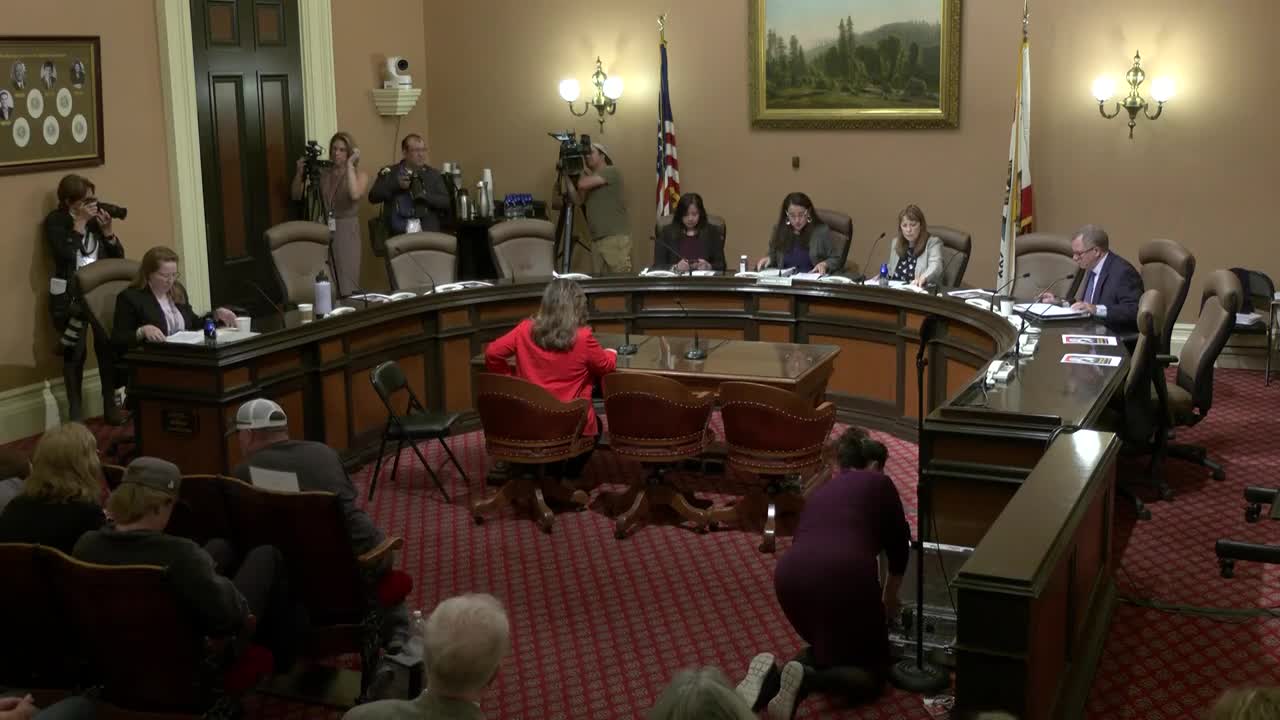 3MIN
Senate Standing Committee on Natural Resources and Water
Bill Author

Bill Co-Author(s):