AB 1048: School finance: school districts: annual budgets: reserve balance.
- Session Year: 2015-2016
- House: Assembly
- Latest Version Date: 2015-02-26
In a fiscal year immediately after a fiscal year in which a transfer is made into the Public School System Stabilization Account, existing law prohibits a school districts adopted or revised budget from containing a combined assigned or unassigned ending fund balance that is in excess of either 2 or 3 times the minimum recommended reserve for economic uncertainties adopted by the State Board of Education, depending on the school districts units of average daily attendance. Existing law authorizes the county superintendent of schools to waive the prohibition, pursuant to specified conditions, for up to 2 consecutive fiscal years within a 3-year period if the school district provides documentation indicating that extraordinary fiscal circumstances substantiate the need for the balance.
This bill would repeal those provisions.
This bill would declare that it is to take effect immediately as an urgency statute.
(a)In a fiscal year immediately after a fiscal year in which a transfer is made into the Public School System Stabilization Account, a school district budget that is adopted or revised pursuant to Section 42127 shall not contain a combined assigned or unassigned ending fund balance that is in excess of the following:
(1)For school districts with fewer than 400,000 units of average daily attendance, the sum of the school districts applicable minimum recommended reserve for economic uncertainties adopted by the state board pursuant to subdivision (a) of Section 33128, multiplied by two.
(2)For school districts with more than 400,000 units of average daily attendance, the sum of the school districts applicable minimum recommended reserve for economic uncertainties adopted by the state board pursuant to subdivision (a) of Section 33128, multiplied by three.
(b)A county superintendent of schools may grant a school district under its jurisdiction an exemption from the requirements of subdivision (a) for up to two consecutive fiscal years within a three-year period if the school district provides documentation indicating that extraordinary fiscal circumstances, including, but not limited to, multiyear infrastructure or technology projects, substantiate the need for a combined assigned or unassigned ending fund balance that is in excess of the minimum recommended reserve for economic uncertainties. As a condition of receiving an exception, a school district shall do all of the following:
(1)Provide a statement that substantiates the need for an assigned and unassigned ending fund balance that is in excess of the minimum recommended reserve for economic uncertainties.
(2)Identify the funding amounts in the budget adopted by the school district that are associated with the extraordinary fiscal circumstances.
(3)Provide documentation that no other fiscal resources are available to fund the extraordinary fiscal circumstances.
(c)This section shall become operative on December 15, 2014, only if Assembly Constitutional Amendment No. 1 of the 201314 Second Extraordinary Session is approved by the voters at the November 4, 2014, statewide general election. If Assembly Constitutional Amendment No. 1 of the 201314 Second Extraordinary Session is not approved by the voters at the November 4, 2014, statewide general election, this section shall not become operative and is repealed on January 1, 2015.
SEC. 2.This act is an urgency statute necessary for the immediate preservation of the public peace, health, or safety within the meaning of Article IV of the Constitution and shall go into immediate effect. The facts constituting the necessity are:
In order to ensure that school districts have budgetary flexibility due to fiscal uncertainties, it is necessary for this act to take immediate effect.
|
Date
|
Status
|
|---|---|
| Feb 26, 2015 | Read first time. To print. |
| Feb 27, 2015 | From printer. May be heard in committee March 29. |
| Mar 19, 2015 | Referred to Com. on ED. |
| May 13, 2015 | In committee: Set, first hearing. Failed passage. Reconsideration granted. |
| Jan 31, 2016 | Died pursuant to Article IV, Sec. 10(c) of the Constitution. |
| Feb 1, 2016 | From committee: Filed with the Chief Clerk pursuant to Joint Rule 56. |
|
Date
|
Description
|
Location
|
Votes
|
|
|---|---|---|---|---|
| May 13, 2015 | Reconsideration. | Assembly Standing Committee on Education |
Passed |
|
| May 13, 2015 | Do pass. | Assembly Standing Committee on Education |
Failed |
This list shows positions taken on this bill by organizations on the date displayed, which is linked to the original source.
Positions by individuals are not included.
|
Organization
|
Position
|
Date
|
|---|---|---|
| Access Superintendency Council | * Support | May 13, 2015 |
| American Federation Of State, County And Municipal Employees, Afl-Cio | ** Against | May 13, 2015 |
| Association Of California School Administrators | ** Support | May 13, 2015 |
| Berkeley Unified School District | * Support | May 13, 2015 |
| Cal Tax | ** Support | May 13, 2015 |
| California Association Of School Business Officials | * Support | May 13, 2015 |
| California Association Of Suburban School Districts | * Support | May 13, 2015 |
| California School Boards Association | * Support | May 13, 2015 |
| California School Employees Association | * Against | May 13, 2015 |
| California School Funding Coalition | * Indeterminate | May 13, 2015 |
| California State PTA | ** Support | May 13, 2015 |
| California Teachers Association | * Against | May 13, 2015 |
| Children Now | * Support | May 13, 2015 |
| Clovis Unified School District | * Indeterminate | May 13, 2015 |
| Contra Costa County Office of Education | * Support | May 13, 2015 |
| Cutler-Orosi Joint Unified School District | * Support | May 13, 2015 |
| Dublin Unified School District | * Support | May 13, 2015 |
| Ed Voice | * Support | May 13, 2015 |
| Education Trust West | * Support | May 13, 2015 |
| Education Trust-West | * Support | May 13, 2015 |
| Edvoice | * Support | May 13, 2015 |
| Elk Grove Unified School District | * Support | May 13, 2015 |
| Fontanta California | * Against | May 13, 2015 |
| Galt Joint Union Elementary School District | * Support | May 13, 2015 |
| Kern County Superintendent | * Support | May 13, 2015 |
| Kings Canyon Unified School District | * Support | May 13, 2015 |
| Labor Coalition | ** Against | May 13, 2015 |
| Lafayette School District | * Support | May 13, 2015 |
| Lake Tahoe Unified School District | * Against | May 13, 2015 |
| Lodi High | * Against | May 13, 2015 |
| Modesto City School Board | * Support | May 13, 2015 |
| Natomas Unified School Board | * Support | May 13, 2015 |
| Nevada County | * Against | May 13, 2015 |
| Program of the League of Women Voters of California | * Support | May 13, 2015 |
| Public Advocates | * Support | May 13, 2015 |
| Sacramento Resident | * Support | May 13, 2015 |
| Sacramento Unified School District | * Support | May 13, 2015 |
| San Francisco Unified School District | * Support | May 13, 2015 |
| San Joaquin County Office Of Education | * Support | May 13, 2015 |
| San Joaquin Office of Education | ** Support | May 13, 2015 |
| San Juan Unified School District | * Support | May 13, 2015 |
| San Ramon Unified School District | ** Support | May 13, 2015 |
| San Ramon Valley Unified School District | * Support | May 13, 2015 |
| School Employers Association Of California | ** Support | May 13, 2015 |
| Small School Districts Association | * Support | May 13, 2015 |
| Southtaw High School | * Indeterminate | May 13, 2015 |
| Third District PTA | * Support | May 13, 2015 |
| Towns and Public Affairs | * Support | May 13, 2015 |
| Turlock Unified School District | * Support | May 13, 2015 |
| Tustin Unified School District | * Support | May 13, 2015 |
AB 1048
Page 5
Date of Hearing: May 13, 2015
ASSEMBLY COMMITTEE ON EDUCATION
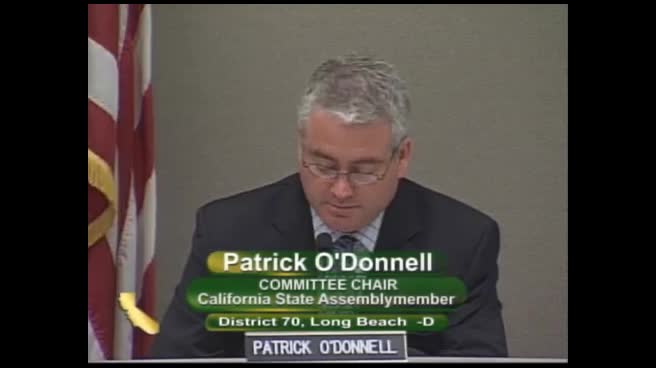
Patrick O'Donnell, Chair
AB 1048
(Baker) – As Introduced February 26, 2015
SUBJECT: School finance: school districts: annual budgets: reserve balance
SUMMARY: Repeals the statutory cap on school district budget reserves and related statutory provisions that are applied in a fiscal year following the fiscal year in which funds are transferred into the Public School System Stabilization Account (PSSSA).
EXISTING LAW:
Establishes the PSSSA at the state level to be funded by a transfer of capital gains-related tax revenues in excess of 8 percent of general fund revenues.
Specifies that funds will be appropriated from the PSSSA to schools and community colleges when state support for K-14 education exceeds the allocation of general fund revenues, allocated property taxes and other available resources.
Requires school districts to maintain the following minimum reserves for economic uncertainties, as a percentage of total expenditures:
The greater of 5% or $64,000 for districts with 0 to 300 average daily attendance (ADA);
The greater of 4% or $64,000 for districts with 301 to 1,000 ADA;
3% for districts with 1,001 to 30,000 ADA;
2% for districts with 30,001 to 400,000 ADA; and
1% for districts with 400,001 and over ADA.
Limits the amount that districts may set aside in an assigned or unassigned reserve in the fiscal year following the fiscal year in which a transfer is made to the PSSA as follows:
For school districts with 400,000 or fewer ADA, the minimum reserve multiplied by 2; and
For school districts with more than 400,000 ADA, the minimum reserve multiplied by 3.
Authorizes a county superintendent of schools to grant a school district under its jurisdiction an exemption from the reserve cap for up to two consecutive fiscal years within a three-year period if the school district provides documentation indicating that extraordinary fiscal circumstances, including, but not limited to, multiyear infrastructure or technology projects, substantiate the need for a combined assigned or unassigned ending fund balance that is in excess of the minimum reserve.
Requires a school district, as a condition of receiving an exemption to do all of the following:
Provide a statement that substantiates the need for an assigned and unassigned ending fund balance that is in excess of the minimum;
Identify the funding amounts in its budget that are associated with the extraordinary fiscal circumstances; and
Provide documentation that no other fiscal resources are available to fund the extraordinary fiscal circumstances.
FISCAL EFFECT: Unknown
COMMENTS: Existing law requires districts to maintain a minimum reserve, specified as a percentage of total expenditures, but does not impose a cap on reserves except in the year following a transfer to the PSSSA, also referred to as the Proposition 98 reserve account. As a consequence of no cap, some districts have accumulated very large reserves, mounting to 50% or more of total expenditures. Some have noted that this violates a basic tenet of public finance, which is that today's tax revenues should be used to support programs and services for today's taxpayers. The cap on reserves in specified years was enacted in part to prevent the accumulation of unreasonably large reserves and in part to recognize that the transfer of funds into the state-level Proposition 98 reserve reduces the need for large local reserves. This is because the state-level reserve will be used to help maintain K-14 funding during economic downturns, a purpose also served by the local reserves for economic uncertainty.
LAO report. The Legislative Analyst's Office (LAO) issued an "Analysis of School District Reserves" in January 2015. The report notes that there are five components to a district's General Fund reserve:
Components of a School District's General Fund Reserve
Component |
Description |
Example |
Non-spendable monies |
Amount that is unavailable for spending |
A donation toward a permanent endowment that does not allow the principal to be spent. |
Restricted monies |
Amount that can legally be spent only for specific purposes |
An unspent state grant for serving students with disabilities |
Committed monies |
Amount that has been designated for specific future uses by the school board |
Funds set aside by the school board to paint a building next year |
Assigned monies |
Amount that can has been designated for specific future uses by a district employee |
Funds set aside by the superintendent to replace computers next year. |
Unassigned monies |
Amount that has not been designated for any specific use |
Funds not designated for any specific future use |
The LAO reports that, statewide, about $9.8 billion was set aside in these five components in 2013-14. About half of this, or about $4.8 billion (roughly $765 per student), was in unassigned reserves. Committed reserves, which require an action of the governing board and are not subject to the cap, accounted for about $300,000, while assigned reserves, which do not require governing board action, accounted for $2.5 billion—more than 8 times the amount in committed reserves. The cap applies only to assigned and unassigned reserves. Assigned and unassigned reserves equaled about 15% of total expenditures, on average.
The following figure from the LAO report shows that the amounts in assigned and unassigned reserves increased from 2003-04 to 2010-11, but have begun to decline since 2010-11.

The LAO suggests several reasons for this increase in reserve levels, including:
Several large infusions of one-time state and federal funding between 2005-06 and 2013-14;
Potential funding reductions that did not materialize;
Pessimism regarding the state economy and state budget; and
Concerns regarding cash and payment deferrals.
The LAO report states, "As a result of [these] one-time state and federal actions, as well as local pessimism and caution, many districts have built higher reserves than they have traditionally maintained. In a more stable budget environment, however, districts seem less likely to view reserves of this level as essential."
The budget cap is not currently in effect. The school district budget cap has not been imposed and will not be imposed until after the state transfers money into the PSSSA, otherwise known as the Proposition 98 reserve account. The purpose of the Proposition 98 reserve is to protect schools against reductions or slow-downs in state General Fund revenue, which would otherwise result in reductions in school funding. This is the same primary purpose as local unassigned reserves. The availability of a state level hedge against economic downturns reduces the need for a local reserve that serves the same purpose.
Options to respond to the cap. Although opponents of the cap have argued that it would "force" districts to slash reserves and increase risk, there are multiple options available to districts to avoid this outcome. First, districts can obtain an exemption from the county superintendent of schools. The exemption is available for two consecutive years within a three year period. To obtain an exemption, districts need to document that its financial circumstances justify a higher level of assigned and unassigned reserves.
Second, districts could assign more monies to their committed reserves. Related legislation, AB 531 (O'Donnell), which passed the Assembly Education Committee on a 6-0 vote, clarifies that committed reserves are exempt from the cap. Using a committed reserve has other benefits:
A committed reserve requires an action of the governing board, enhancing the board's fiduciary role.
Because it requires board action, using a committed reserve increases transparency, enabling the public to see how much money is being reserved and for what purpose(s).
Using the committed reserve does not result in any loss of flexibility, because the governing board can vote to redirect funds in a committed reserve to an alternative purpose at any time.
Third, as noted by the LAO, districts could shift monies from the General Fund to nearly any of the other 29 accounts they maintain. Funds could be transferred back to the General Fund in future years.
Related legislation. AB 531 (O'Donnell) clarifies that funds set aside in a committed reserve are not subject to the cap. AB 1318 (Gray) changes the cap to unspecified levels.
Arguments in support. Supporters argue that the cap is in "direct conflict" with the principle of local control that underlies the local control funding formula. In addition, the cap may have a negative impact on a school district's credit rating and would undermine a district's ability to save funds "for such things as school construction, school repair, self-insurance, post-employment benefits for employees, investments in education programs including textbooks and technology, and larger purchases such as school buses."
Arguments in opposition. Opponents argue that large reserves were not used to compensate for revenue losses during the recent economic downturn. In fact, reserves increased at the same time districts were making a "significant number of program cuts that impacted students, such as larger class sizes, and shortening the school year, which equated to less instructional time for our students." In addition, opponents argue that the funding of a state-level Proposition 98 reserve will reduce the need for local reserves to provide a buffer against potential revenue reductions.
REGISTERED SUPPORT / OPPOSITION:
Support
Association of California School Administrators
Cal Tax
California Association of School Business Officials
California School Boards Association
California State PTA
Children Now
Educate Our State
Education Trust-West
EdVoice
Kern County Superintendent of Schools
Kings Canyon Unified School District
Public Advocates
San Francisco Unified School District
San Joaquin Office of Education
San Ramon Unified School District
School Employers Association of California
Small School Districts' Association
Numerous individuals
Opposition
American Federation of State, County and Municipal Employees, AFL-CIO
California Labor Federation
California School Employees Association
California Teachers Association
Labor Coalition
Analysis Prepared by: Rick Pratt / ED. / (916) 319-2087