AB 1086: Assignment of reimbursement rights.
- Session Year: 2015-2016
- House: Assembly
- Latest Version Date: 2015-04-23
Existing law, the Knox-Keene Health Care Service Plan Act of 1975, provides for the licensure and regulation of health care service plans by the Department of Managed Health Care and makes a willful violation of that act a crime. Existing law also provides for the regulation of health insurers by the Department of Insurance.
Existing law requires, on and after January 1, 1994, every group health care service plan, that provides hospital, medical, or surgical expense benefits for plan members and their dependents to authorize and permit assignment of the enrollees or subscribers right to any reimbursement for health care services covered under the plan contract to the State Department of Health Care Services when health care services, excepting specified contracted services, are provided to a Medi-Cal beneficiary.
This bill would prohibit certain health care service plans and disability insurers from prohibiting an enrollee, subscriber, or insured from making an assignment of his or her reimbursement rights for covered health care services to the physician and surgeon who furnished those services. The bill would require a physician and surgeon seeking payment from a health care service plan or disability insurer under the provisions of the bill to provide the plan or insurer with specified documentation and information, including an itemized bill for service. This bill would require the physician and surgeon to provide a written agreement authorizing the assignment of the enrollees, subscribers, or insureds reimbursement rights, and would specify the form and content of that agreement. require certain health care service plans, on and after January 1, 2016, to authorize and permit an enrollee or subscriber to assign the enrollee or subscribers right to reimbursement for health care services covered under the plan contract by a noncontracting physician and surgeon who furnished the services, as specified. The bill would require certain disability insurers to pay group insurance benefits to a physician and surgeon rendering health care services to an insured upon obtaining written consent of the insured. The bill would require a noncontracting physician and surgeon who renders services to an enrollee or an insured to give the enrollee or the insured a written estimate of the cost of care and a notice regarding, among other things, the estimated cost of care and the enrollees or subscribers, and the plans or the insurers responsibility for payment of the cost of care, as specified. The bill would prohibit a noncontracting physician and surgeon who accepts an assignment of benefits from collecting more than the estimated cost of care from the enrollee or insured. The bill would prohibit a noncontracting physician and surgeon from accepting an assignment of benefits from a patient with whom the physician and surgeon or an employee of the physician and surgeon communicates in a language other than English or one of specified languages, unless the notice described above is given in that language.
Because a willful violation of the bills requirements relative to health care service plans would be a crime, this bill would impose a state-mandated local program.
The California Constitution requires the state to reimburse local agencies and school districts for certain costs mandated by the state. Statutory provisions establish procedures for making that reimbursement.
This bill would provide that no reimbursement is required by this act for a specified reason.
Existing law, the Knox-Keene Health Care Service Plan Act of 1975, provides for the licensure and regulation of health care service plans by the Department of Managed Health Care and makes a willful violation of that act a crime. Existing law also provides for the regulation of health insurers by the Department of Insurance.
Existing law requires, on and after January 1, 1994, every group health care service plan, that provides hospital, medical, or surgical expense benefits for plan members and their dependents to authorize and permit assignment of the enrollees or subscribers right to any reimbursement for health care services covered under the plan contract to the State Department of Health Care Services when health care services, excepting specified contracted services, are provided to a Medi-Cal beneficiary.
This bill would prohibit certain health care service plans and disability insurers from prohibiting an enrollee, subscriber, or insured from making an assignment of his or her reimbursement rights for covered health care services to the physician and surgeon who furnished those services. The bill would require a physician and surgeon seeking payment from a health care service plan or disability insurer under the provisions of the bill to provide the plan or insurer with specified documentation and information, including an itemized bill for service. This bill would require the physician and surgeon to provide a written agreement authorizing the assignment of the enrollees, subscribers, or insureds reimbursement rights, and would specify the form and content of that agreement.
Because a willful violation of the bills requirements relative to health care service plans would be a crime, this bill would impose a state-mandated local program.
The California Constitution requires the state to reimburse local agencies and school districts for certain costs mandated by the state. Statutory provisions establish procedures for making that reimbursement.
This bill would provide that no reimbursement is required by this act for a specified reason.
(a)A health care service plan that provides medical or surgical expense benefits for plan members and their dependents shall not prohibit an enrollee or subscriber from making an assignment of the enrollees or subscribers right to any reimbursement for health care services covered under the plan contract to the physician and surgeon who furnished the health care services.
1371.34.(a)On or after January 1, 2016, a health care service plan that provides out-of-network services as a covered benefit for plan members and their dependents shall authorize and permit assignment of the enrollees or subscribers right to any reimbursement for health care services covered under the plan contract to a noncontracting physician and surgeon who furnishes the health care services. This section shall not apply to emergency services covered under Section 1371.4, poststabilization services as defined in Section 1371.4, or urgent care as defined in paragraph (2) of subdivision (h) of Section 1367.01.
(b)When seeking payment from a health care service plan pursuant to subdivision (a), a noncontracting physician and surgeon shall provide the plan with the noncontracting physician and surgeons itemized bill for service, the name and address of the person to be reimbursed, and the name and contract number of the enrollee. The noncontracting physician and surgeon shall also retain on file, and provide upon request to the health care service plan, documentation showing the notice required in paragraph (2) of subdivision (c) was provided in a timely manner, as required by paragraph (1) of subdivision (c).
(c)The written agreement authorizing assignment of the enrollees or subscribers right to any reimbursement for health care services covered under subdivision (a) shall do all of the following:
(1)Be written in plain language.
(2)Be made available by the physician and surgeon in the primary languages of the two largest groups seen by the physician and surgeon who either do not speak English or who are unable to effectively communicate in English because it is not their native language, and who comprise 5 percent or more of the patients served by the physician.
(3)Be printed in at least 12-point font. The agreement shall disclose in boldface type or a font a minimum of two points larger than the rest of the agreement, exclusive of the heading, all of the following information:
(A)The enrollee or subscriber remains responsible for costs, including any provider fees, copayments, and coinsurance exceeding the amount of the benefit covered by the policy and paid by the health plan.
(B)The enrollee or subscriber is entitled to a summary of benefits and coverage from the health care service plan pursuant to Section 300gg-15 of Title 42 of the United States Code to help in better understanding benefit design, level of financial protection, and costs related to out-of-network services.
(C)The enrollee or subscriber is entitled to information from the health care service plan that explains how the health plan determines the amount it pays for out-of-network services. Your actual out-of-pocket costs may vary based on factors specific to your health plan. Some plans base their reimbursement rates on a percentage of usual, customary, and reasonable charges, which is referred to as UCR. Others use a formula based on the Medicare fee schedule that is published by the United States Department of Health and Human Services. To learn how your health plan determines out-of-network reimbursement rates and covered services, call the number listed on the back of your insurance card. Then, to estimate your out-of-pocket costs, visit the following Internet Web site http://fairhealthconsumer.org, which will, using the method that your plan uses to calculate reimbursement, allow you to estimate your out-of- pocket costs.
(4)Be signed and dated by the enrollee or subscriber.
(d)This section applies only to a preferred provider organization, point of service plan, or any other plan contract that provides for out-of-network coverage and services. This section does not apply to a plan providing benefits pursuant to a specialized health care service plan contract, as defined in subdivision (o) of Section 1345.
(c)(1)A noncontracting physician and surgeon accepting an assignment of benefits shall give the enrollee the notice described in paragraph (2) and obtain a signature from the enrollee. The notice shall be in 12-point type, on a single page, without any additional information other than that specified in the statutory notice.
(A)The notice shall be provided to the enrollee at least 24 hours prior to providing care.
(B)For health care services offered to the enrollee within the same business day from the time an appointment is requested by the enrollee, the notice shall be provided to the enrollee prior to providing care.
(2)The notice provided pursuant to paragraph (1) shall be in the following form:
| [Noncontracting physician and surgeon may add office logo and office contact information here.] | |||
ASSIGNMENT OF BENEFITS | |||
I, [patient name] agree to receive medical services from [physician and surgeons name] at [business name and location]. My signature below means I have read and understand the following: | |||
The physician and surgeon listed above is not part of my health plans network. | |||
My health plan may pay some of the cost, or none at all. I will be responsible for most of the cost. | |||
My health plan must help me get care from an in-network physician and surgeon if I call the health plan at the telephone number on my membership card. I am likely to pay less if I use a physician and surgeon that is in my health plans network. | |||
My health plan may not cover the costs of other care ordered by this physician and surgeon. Examples of care that the physician and surgeon might order include lab tests, imaging, and referrals to other providers. | |||
State law does not require any payments I make to this physician and surgeon to count toward my annual out-of-pocket maximum. I can call my health plan at the telephone number on my membership card to find out the remaining costs before I reach my out-of-pocket maximum. My costs will also be in addition to my share of premium for this year. | |||
I have received this notice and a written estimate of the cost for care from [physician and surgeons name]. | |||
The estimate cost of treatment may be up to [amount], and the estimate is attached to this notice. I will receive another notice if the cost is more than $100 higher, or more than 10 % higher, than the original estimate, whichever is the larger change. | |||
The estimate is limited to services provided by [physician and surgeons name] and may not include services from other providers, such as facility charges. | |||
I have the right to confirm health plan benefit information from my health plan before beginning treatment. | |||
DateSignature | |||
TimePrint name | |||
(d)(1)The noncontracting physician and surgeon shall provide the enrollee a written estimate of the cost of care at the time of providing the notice required by paragraph (2) of subdivision (c). The estimate shall include each anticipated service to be provided and the estimated cost of each service. The noncontracting physician and surgeon shall attach the written estimate, along with any explanation of the cost estimate, to the notice.
(2)If, upon further examination, the care costs more than the greater of one hundred dollars ($100) more than, or more than 10 percent higher than, the physician and surgeons initial estimate of the cost of care, the physician and surgeon shall provide a revised estimate of the cost of care in writing as soon as practicable.
(e)A noncontracting physician and surgeon shall not accept an assignment of benefits from a patient with whom the noncontracting physician and surgeon, or an employee or agent of that physician and surgeon, communicates primarily in a language other than English, or in a Medi-Cal threshold language, as defined by the regulations adopted pursuant to Section 14680 of the Welfare and Institutions Code, unless the written notice required by paragraph (2) of subdivision (c) is also provided in that language.
(f)(1)A noncontracting physician and surgeon who accepts an assignment of benefits from an enrollee may collect no more than the estimated cost of care from the enrollee.
(2)After receiving the direct payment from the enrollees plan, a noncontracting physician and surgeon shall refund any overpayment to the enrollee within 30 business days if the payment from the plan is more than the estimated payment.
(g)This section shall only apply to health care service plans that offer out-of-network covered benefits. Nothing in this section shall be construed to require a health care service plan to cover out-of-network benefits not otherwise required by this article. This section does not apply to a plan providing benefits pursuant to a specialized health care service plan contract, as defined in subdivision (o) of Section 1345.
(h)Nothing in this section shall be construed to exempt a health care service plan from the requirements of paragraph (2) of subdivision (h) of Section 1367, or Section 1371.4, or 1371.37, or to exempt a health care provider from the requirements of Section 1317, 1371.39, or 1379.
SEC. 2.Section 10133.75 is added to the Insurance Code, to read:10133.75.(a)On Notwithstanding Section 10133, on and after January 1, 2013, a disability insurer shall pay individual insurance benefits contingent upon, or for expenses incurred on account of, medical or surgical aid to the physician and surgeon having provided the medical or surgical aid where that physician and surgeon has qualified for reimbursement by submitting the items and information specified in subdivision (b). 2016, upon written consent of the insured first obtained with respect to a particular claim, a disability insurer shall pay group benefits contingent upon, or for expenses incurred on account of, hospitalization or medical or surgical aid to a physician and surgeon furnishing the hospitalization or medical or surgical aid, but the amount of that payment shall not exceed the amount of benefit provided by the policy with respect to the service or billing of the physician and surgeon, and the amount of the payments pursuant to one or more assignments shall not exceed the amount of expenses incurred on account of the hospitalization or medical or surgical aid. Payments so made shall discharge the insurers obligation with respect to the amount so paid.
(b)When seeking payment from a disability insurer pursuant to subdivision (a), a person a noncontracting physician and surgeon shall provide the insurer with the providers physician and surgeons itemized bill for service, the name and address of the person to be reimbursed, and the name and policy number of the insured. The noncontracting physician and surgeon shall also retain on file, and provide upon request to the insurer, documentation showing the notice required in paragraph (2) of subdivision (c) was provided in a timely manner, as required by paragraph (1) of subdivision (c).
(c)The written agreement authorizing assignment of the insureds right to any reimbursement for health care services covered under subdivision (a) shall do all of the following:
(1)Be written in plain language.
(2)Be made available by the physician and surgeon in the primary languages of the two largest groups seen by the physician and surgeon who either do not speak English or who are unable to effectively communicate in English because it is not their native language, and who comprise 5 percent or more of the patients served by the physician and surgeon.
(3)Be printed in at least 12-point font. The agreement shall disclose in boldface type or a font a minimum of two points larger than the rest of the agreement, exclusive of the heading, the following information:
(A)The insured remains responsible for costs, including any provider fees, copayments, and coinsurance exceeding the amount of the benefit covered by the policy and paid by the insurer.
(B)The insured is entitled to a summary of benefits and coverage from the insurer pursuant to Section 300gg-15 of Title 42 of the United States Code to help in better understanding benefit design, level of financial protection, and costs related to out-of-network services.
(C)The insured is entitled to information from the insurer that explains how the insurer determines the amount it pays for out-of-network services. Your actual out-of-pocket costs may vary based on factors specific to your health plan. Some plans base their reimbursement rates on a percentage of usual, customary, and reasonable charges, which is referred to as UCR. Others use a formula based on the Medicare fee schedule that is published by the United States Department of Health and Human Services. To learn how your health plan determines out of-network reimbursement rates and covered services, call the number listed on the back of your insurance card. Then, to estimate your out-of-pocket costs, visit the following Internet Web site http://fairhealthconsumer.org, which will, using the method that your plan uses to calculate reimbursement, allow you to estimate your out-of-pocket costs.
(4)Be signed and dated by the insured.
(d)This section shall not apply to an insurer providing benefits pursuant to a specialized health insurance policy, as defined in subdivision (c) of Section 106.
(c)(1)A noncontracting physician and surgeon accepting an assignment of benefits shall give the insured with the notice described in paragraph (2) and obtain a signature from the insured. The notice shall be in 12-point type, on a single page, without any additional information other than that specified in the statutory notice.
(A)The notice shall be provided to the insured at least 24 hours prior to providing care.
(B)For health care services offered to the insured within the same business day from the time an appointment is requested by the insured, the notice shall be provided to the insured prior to providing care.
(2)The notice provided pursuant to paragraph (1) shall be in the following form:
| [Noncontracting physician and surgeon may add office logo and office contact information here.] | |||
ASSIGNMENT OF BENEFITS | |||
I, [patient name] agree to receive medical services from [physician and surgeons name] at [business name and location]. My signature below means I have read and understand the following: | |||
The physician and surgeon listed above is not part of my health plans network. | |||
My health plan may pay some of the cost, or none at all. I will be responsible for most of the cost. | |||
My health plan must help me get care from an in-network physician and surgeon if I call the health plan at the telephone number on my membership card. I am likely to pay less if I use a physician and surgeon that is in my health plans network. | |||
My health plan may not cover the costs of other care ordered by this physician and surgeon. Examples of care that the physician and surgeon might order include lab tests, imaging, and referrals to other providers. | |||
State law does not require any payments I make to this physician and surgeon to count toward my annual out-of-pocket maximum. I can call my health plan at the telephone number on my membership card to find out the remaining costs before I reach my out-of-pocket maximum. My costs will also be in addition to my share of premium for this year. | |||
I have received this notice and a written estimate of the cost for care from [physician and surgeons name]. | |||
The estimate cost of treatment may be up to [amount], and the estimate is attached to this notice. I will receive another notice if the cost is more than $100 higher, or more than 10 % higher, than the original estimate, whichever is the larger change. | |||
The estimate is limited to services provided by [physician and surgeons name] and may not include services from other providers, such as facility charges. | |||
I have the right to confirm health plan benefit information from my health plan before beginning treatment. | |||
DateSignature | |||
TimePrint name | |||
(d)(1)The noncontracting physician and surgeon shall provide the insured a written estimate of the cost of care at the time of providing the notice required by paragraph (2) of subdivision (c). The estimate shall include each anticipated service to be provided and the estimated cost of each service. The noncontracting physician and surgeon shall attach the written estimate, along with any explanation of the cost estimate, to the notice.
(2)If, upon further examination, the care costs more than the greater of one hundred dollars ($100) more than, or more than 10 percent higher than, the physician and surgeons initial estimate of the cost of care, the physician and surgeon shall provide a revised estimate of the cost of care in writing as soon as practicable.
(e)A noncontracting physician and surgeon shall not accept an assignment of benefits from a patient with whom the noncontracting physician and surgeon, or an employee or agent of that physician and surgeon, communicates primarily in a language other than English, or in a Medi-Cal threshold language, as defined by the regulations adopted pursuant to Section 14680 of the Welfare and Institutions Code, unless the written notice required by paragraph (2) of subdivision (c) is also provided in that language.
(f)(1)A noncontracting physician and surgeon who accepts an assignment of benefits from an insured may collect no more than the estimated cost of care from the insured.
(2)After receiving the direct payment from the insureds insurer, a noncontracting physician and surgeon shall refund any overpayment to the insured within 30 business days if the payment from the insurer is more than the estimated payment.
(g)This section shall only apply to an insurer that offers out-of-network covered benefits. Nothing in this section shall be construed to require an insurer to cover out-of-network benefits not otherwise required by this article. This section does not apply to an insurer providing benefits pursuant to a specialized health insurance policy, as defined in subdivision (c) of Section 106.
(h)Nothing in this section shall be construed to exempt an insurer from the requirements of subdivision (b) of Section 10123.137, or Section 10123.147.
SEC. 3.No reimbursement is required by this act pursuant to Section 6 of Article XIIIB of the California Constitution because the only costs that may be incurred by a local agency or school district will be incurred because this act creates a new crime or infraction, eliminates a crime or infraction, or changes the penalty for a crime or infraction, within the meaning of Section 17556 of the Government Code, or changes the definition of a crime within the meaning of Section 6 of Article XIIIB of the California Constitution.
(a)A health care service plan that provides medical or surgical expense benefits for plan members and their dependents shall not prohibit an enrollee or subscriber from making an assignment of the enrollees or subscribers right to any reimbursement for health care services covered under the plan contract to the physician and surgeon who furnished the health care services.
(b)When seeking payment from a health care service plan pursuant to subdivision (a), a physician and surgeon shall provide the plan with the physician and surgeons itemized bill for service, the name and address of the person to be reimbursed, and the name and contract number of the enrollee.
(c)The written agreement authorizing assignment of the enrollees or subscribers right to any reimbursement for health care services covered under subdivision (a) shall do all of the following:
(1)Be written in plain language.
(2)Be made available by the physician and surgeon in the primary languages of the two largest groups seen by the physician and surgeon who either do not speak English or who are unable to effectively communicate in English because it is not their native language, and who comprise 5 percent or more of the patients served by the physician.
(3)Be printed in at least 12-point font. The agreement shall disclose in boldface type or a font a minimum of two points larger than the rest of the agreement, exclusive of the heading, all of the following information:
(A)The enrollee or subscriber remains responsible for costs, including any provider fees, copayments, and coinsurance exceeding the amount of the benefit covered by the policy and paid by the health plan.
(B)The enrollee or subscriber is entitled to a summary of benefits and coverage from the health care service plan pursuant to Section 300gg-15 of Title 42 of the United States Code to help in better understanding benefit design, level of financial protection, and costs related to out-of-network services.
(C)The enrollee or subscriber is entitled to information from the health care service plan that explains how the health plan determines the amount it pays for out-of-network services. Your actual out-of-pocket costs may vary based on factors specific to your health plan. Some plans base their reimbursement rates on a percentage of usual, customary, and reasonable charges, which is referred to as UCR. Others use a formula based on the Medicare fee schedule that is published by the United States Department of Health and Human Services. To learn how your health plan determines out-of-network reimbursement rates and covered services, call the number listed on the back of your insurance card. Then, to estimate your out-of-pocket costs, visit the following Internet Web site http://fairhealthconsumer.org, which will, using the method that your plan uses to calculate reimbursement, allow you to estimate your out-of- pocket costs.
(4)Be signed and dated by the enrollee or subscriber.
(d)This section applies only to a preferred provider organization, point of service plan, or any other plan contract that provides for out-of-network coverage and services. This section does not apply to a plan providing benefits pursuant to a specialized health care service plan contract, as defined in subdivision (o) of Section 1345.
SEC. 2.Section 10133.75 is added to the Insurance Code, to read:10133.75.(a)On and after January 1, 2013, a disability insurer shall pay individual insurance benefits contingent upon, or for expenses incurred on account of, medical or surgical aid to the physician and surgeon having provided the medical or surgical aid where that physician and surgeon has qualified for reimbursement by submitting the items and information specified in subdivision (b).
(b)When seeking payment from a disability insurer pursuant to subdivision (a), a person shall provide the insurer with the providers itemized bill for service, the name and address of the person to be reimbursed, and the name and policy number of the insured.
(c)The written agreement authorizing assignment of the insureds right to any reimbursement for health care services covered under subdivision (a) shall do all of the following:
(1)Be written in plain language.
(2)Be made available by the physician and surgeon in the primary languages of the two largest groups seen by the physician and surgeon who either do not speak English or who are unable to effectively communicate in English because it is not their native language, and who comprise 5 percent or more of the patients served by the physician and surgeon.
(3)Be printed in at least 12-point font. The agreement shall disclose in boldface type or a font a minimum of two points larger than the rest of the agreement, exclusive of the heading, the following information:
(A)The insured remains responsible for costs, including any provider fees, copayments, and coinsurance exceeding the amount of the benefit covered by the policy and paid by the insurer.
(B)The insured is entitled to a summary of benefits and coverage from the insurer pursuant to Section 300gg-15 of Title 42 of the United States Code to help in better understanding benefit design, level of financial protection, and costs related to out-of-network services.
(C)The insured is entitled to information from the insurer that explains how the insurer determines the amount it pays for out-of-network services. Your actual out-of-pocket costs may vary based on factors specific to your health plan. Some plans base their reimbursement rates on a percentage of usual, customary, and reasonable charges, which is referred to as UCR. Others use a formula based on the Medicare fee schedule that is published by the United States Department of Health and Human Services. To learn how your health plan determines out of-network reimbursement rates and covered services, call the number listed on the back of your insurance card. Then, to estimate your out-of-pocket costs, visit the following Internet Web site http://fairhealthconsumer.org, which will, using the method that your plan uses to calculate reimbursement, allow you to estimate your out-of-pocket costs.
(4)Be signed and dated by the insured.
(d)This section shall not apply to an insurer providing benefits pursuant to a specialized health insurance policy, as defined in subdivision (c) of Section 106.
SEC. 3.No reimbursement is required by this act pursuant to Section 6 of Article XIIIB of the California Constitution because the only costs that may be incurred by a local agency or school district will be incurred because this act creates a new crime or infraction, eliminates a crime or infraction, or changes the penalty for a crime or infraction, within the meaning of Section 17556 of the Government Code, or changes the definition of a crime within the meaning of Section 6 of Article XIIIB of the California Constitution.
|
Date
|
Status
|
|---|---|
| Feb 27, 2015 | Introduced. To print. |
| Mar 1, 2015 | From printer. May be heard in committee March 31. |
| Mar 2, 2015 | Read first time. |
| Mar 19, 2015 | Referred to Com. on HEALTH. |
| Apr 23, 2015 | From committee chair, with author's amendments: Amend, and re-refer to Com. on HEALTH. Read second time and amended. |
| Apr 27, 2015 | Re-referred to Com. on HEALTH. |
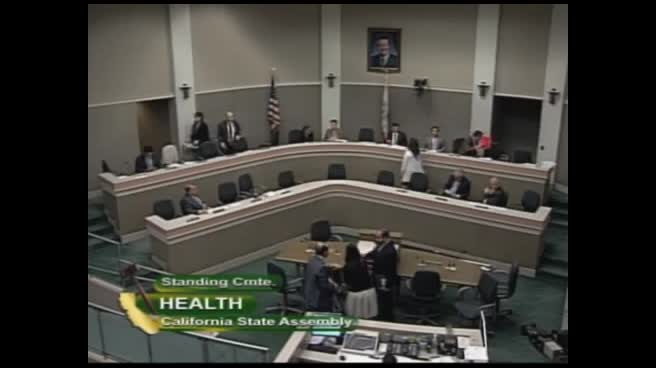
| Apr 28, 2015 | In committee: Set, first hearing. Failed passage. Reconsideration granted. |
| Jan 31, 2016 | Died pursuant to Article IV, Sec. 10(c) of the Constitution. |
| Feb 1, 2016 | From committee: Filed with the Chief Clerk pursuant to Joint Rule 56. |
|
Date
|
Description
|
Location
|
Votes
|
|
|---|---|---|---|---|
| Apr 28, 2015 | Reconsideration. | Assembly Standing Committee on Health |
Passed |
|
| Apr 28, 2015 | Do pass as amended and be re-referred to the Committee on [Appropriations] | Assembly Standing Committee on Health |
Failed |
This list shows positions taken on this bill by organizations on the date displayed, which is linked to the original source.
Positions by individuals are not included.
|
Organization
|
Position
|
Date
|
|---|---|---|
| Anthem Blue Cross | ** Against | Apr 28, 2015 |
| Association Of California Life & Health Insurance Companies | * Against | Apr 28, 2015 |
| Blue Shield Of California | ** Against | Apr 28, 2015 |
| California Association Of Health Plans | * Against | Apr 28, 2015 |
| California Medical Association, Inc. | ** Support | Apr 28, 2015 |
| California Society Of Anesthesiologists, Inc. | ** Support | Apr 28, 2015 |
| Consumers Union | ** Against | Apr 28, 2015 |
| Health Access California | * Against | Apr 28, 2015 |
AB 1086
Page 8
Date of Hearing: April 28, 2015
ASSEMBLY COMMITTEE ON HEALTH
Rob Bonta, Chair
AB 1086
Dababneh – As Amended April 23, 2015
SUBJECT: Assignment of reimbursement rights.
SUMMARY: Requires health care service plans (plans) and health insurers (insurers) that sell products in the individual market to authorize and permit assignment of an enrollee or insured's right to reimbursement (hereafter referred to as assignment of benefits) for covered services to a non-contracting physician who furnishes health care services. Specifically, this bill:
Requires, on or after January 1, 2016, every plan or insurer that provides out-of-pocket network service as a covered benefit to authorize and permit assignment of the enrollee' or insured's benefits for covered service to a non-contracting provider who furnishes health care services.
Specifies that a plan is not required to authorize or permit an assignment of benefits for emergency, post-stabilization, or urgent care services.
Requires a non-contracting physician accepting an assignment of reimbursement rights to provide the enrollee, a notice that meets specified formatting requirements and that is to be signed by the enrollee attesting to an understanding of all of the following:
The physician is not a part of the enrollee's health plan or insurer's network;
The plan may pay some of the costs, or none at all, and that the enrollee will be responsible for most of the cost;
The enrollee's health plan or insurer must help the enrollee get care from an in-network physician, and that the enrollee is likely to pay less by using a physician that is in the enrollee's network;
The plan or insurer may not cover the costs of other caser ordered by the physician, including lab tests, imaging, and referrals to other providers;
State law does not require any payments made to the non-contracting physician to count toward annual maximum out-of-pocket limits, that the enrollee may call the plan or insurer to find out how close he or she is to reaching the out-of-pocket maximum, and that any out-of-network costs do not counts toward premiums;
The enrollee received a written estimate of cost for care, and that another notice and estimate will be provided if the estimated costs changes by more than $100 or 10%, whichever is higher;
The estimate provided may not include services from other providers, such as facility charges; and,
The enrollee has the right to confirm benefit information from his or her plan or insurer before beginning treatment.
Requires the notice to be provided to the enrollee at least 24 hours prior to providing care, and, for same-day appointments, requires the notice to be provided prior to providing care. Requires a non-contracting physician to retain on file, and provide upon request to the plan or insurer, documentation showing the notice was provided in a timely manner.
Requires the non-contracting physician to provide the enrollee with a written estimate of the cost of care attached to the notice, that includes each anticipated service to be provided and the estimated cost of each service.
Requires the non-contracting physician to provide a revised written estimate of the cost of car as soon as practicable, if upon further examination, the care costs $100 or 10% more than initially estimated, whichever is higher.
Prohibits a non-contracting provider from accepting an assignment of reimbursement rights from a patient who primarily communicates with the physician or an employee of the physician in a language other than English, unless the written notice is also provided in the enrollee's primary language, as specified.
Provides that a non-contracting physician accepting an assignment of benefits may only collect from the enrollee no more than the estimated cost of care.
Requires physicians seeking payment from a health care service plan pursuant to an assignment of reimbursement rights to provide the plan or insurer with an itemized bill for service, the name of the person to be reimbursed, and the name and contract number of the enrollee.
Requires a non-contracting physician, after receiving the direct payment from the enrollee's plan, to refund any overpayment from the plan to an enrollee within 30 business days if the payment from the plan is more than the estimated payment.
Specifies that its provisions apply only to plans or insurers that offer out-of-network covered benefits, and that none of its provisions shall be construed to apply to specialized plans or policies, or to require a plan or insurer to cover out-of-network benefits not otherwise required.
Specifies that its provisions shall not be construed to exempt a plan from existing requirements related to billing and claim dispute resolution mechanisms, continuity of care, emergency services reimbursement, fair billing, and balance billing prohibitions. Also specifies that its provisions shall not be construed to exempt an insurer from timely payment requirements, and billing dispute resolution mechanisms.
EXISTING LAW:
Establishes the Knox-Keene Health Care Service Plan Act of 1975 (Knox-Keene), the body of law governing plans in the state, and provides for the licensure and regulation of plans by the Department of Managed Health Care (DMHC).
Provides for the regulation of health insurers, and health insurance agents and brokers, by the California Department of Insurance (CDI).
Requires group contracts administered by health plans licensed under Knox-Keene to authorize and permit assignment of enrollee's or subscriber's right to reimbursement to the Department of Health Care Services (DHCS) when services are provided to a Medi-Cal beneficiary.
Requires health insurers to pay group insurance benefits, for or contingent upon hospitalization or medical or surgical aid, upon written consent of the insured, to the person or persons having provided or having paid for the services, if the person qualifies for reimbursement by submitting specified information about the service and the insured person or dependent is covered by the policy.
Requires a health insurer to pay group insurance benefits to DHCS, in the case of a Medi-Cal beneficiary, where DHCS has paid for hospital, medical, or surgical services, as specified.
Requires health plans licensed under Knox-Keene to cover emergency services as a basic health care service and to directly reimburse providers within specified timeframes for emergency services and care provided to plan enrollees for the purpose of stabilizing the enrollee, unless the plan enrollee did not require emergency services and the enrollee should have known that an emergency did not exist, as specified.
Requires contracts between providers and health plans to be in writing and prohibits, except for applicable copayments and deductibles, a provider from invoicing or balance billing a plan's enrollee for the difference between the provider's billed charges and the reimbursement paid by the plan or the plan's capitated provider for any covered benefit.
Requires each contract between an issuer and a provider to contain provisions requiring a fast, fair, and cost-effective dispute resolution mechanism under which providers may submit disputes to the issuer and requires plans and insurers to notify providers of the procedures for processing and resolving disputes, including the location and telephone number where information regarding disputes may be submitted.
Allows a non-contracted provider to dispute the appropriateness of a Knox-Keene health plan's computation of the reasonable and customary value and requires the health plan to respond to the dispute through the health plan's mandated provider dispute resolution process.
Establishes, pursuant to regulations adopted by the DMHC and the CDI, similar but not identical requirements issuers must implement in their claims settlement practices with providers.
Permits an enrollee, an insured or a health care provider to file a written complaint with DMHC or CDI with respect to the handling of a claim or other obligation under a health plan contract or health insurance policy, as specified, and requires DMHC and CDI to respond to the complaint in a specified manner within specified timeframes.
Provides under the Patient Protection and Affordable Care Act, that a qualified health plan (participating in a state Health Benefits Exchange) shall not be treated as covering essential health benefits unless the plan provides that coverage for emergency department services will be provided without imposing any requirement under the plan for prior authorization of services or any limitation on coverage where the provider of services does not have a contractual relationship with the plan that is more restrictive than the requirements or limitations that apply for in network providers; and, if such services are provided out-of-network, the cost-sharing requirement is the same requirement that would apply if such services were provided in-network.
Prohibits a licensed healing arts practitioner from establishing credit or a loan for a patient with whom the practitioner, or an employee or agent of that practitioner, communicates primarily in a language other than English that is one of the Medi-Cal threshold language, unless specified written notice is also provided in that language.
FISCAL EFFECT: This bill has not yet been analyzed by a fiscal committee.
COMMENTS:
PURPOSE OF THIS BILL. According to the author, some health plans view out-of-network providers, who are not bound by contracted rates, as a risk to their bottom line. As such, the author states that some plans implement policies that refuse to honor the patient's assignment of benefits to a non-contracting provider, and send payment directly to the patient rather than the provider. The author asserts that refusing to honor assignment of benefit agreements between patients and providers strains provider-patient relationships, diverts health care dollars outside of the system when patients misappropriate those funds for personal use, and put patients at risk for higher out-of-pocket expenses. The author states that this bill would require plans and insurers to honor assignment of benefit agreements, consequently sending any payment directly to an out-of-network provider who furnishes services. The author concludes by stating that this bill does not, in any way, mandate a patient or a provider to enter into an assignment of benefit agreement, and would bring parity with existing law requiring small group insurers and Medi-Cal to honor assignment of benefits.
BACKGROUND. Regulation and oversight of health insurance in California is split between two state departments. DMHC regulates health plans under Knox-Keene, including health maintenance organizations (HMOs) and some Preferred Provider Organization (PPO) plans. CDI regulates disability insurers offering health insurance, which includes PPO plans and traditional indemnity insurance. An HMO is a managed care arrangement that provides and arranges for health care through contracted or employed providers and generally only covers health services provided by network providers, except in an emergency. In a PPO arrangement, the plan or insurer contracts with a network of medical providers who agree to accept lower fees and/or to control utilization. Enrollees in a preferred provider organization (PPO) plan have the option to obtain care from a provider that is out of the PPO network, but generally pay a higher cost in doing so.
Assignment of benefits. Assignment of benefits refers to an arrangement where a patient requests that his or her health benefit payments be made directly to a designated person or facility, such as a physician or hospital. All health plans under Knox-Keene, HMOs and the PPOs subject to DMHC jurisdiction, are required to directly reimburse providers for emergency care and services, providing certain statutory and regulatory conditions are met. Otherwise, HMO model plans would generally have no legal obligation to reimburse non-contracted providers, except in an emergency, since the plan contract provides that enrollees must get services from network providers in order for the benefits to be covered.
PPO plan enrollees may seek services from non-contracted providers.
PPO, have historically reimbursed the patients directly for covered
services but have generally allowed for assignment of benefits to
network providers, and even for out-of-network providers. If a
patient signs a written authorization, the provider may seek, and the
insurer must pay, the provider directly. Patients would still be
liable for their share of costs, which can be substantial for a
provider outside the PPO network. For example, a PPO policy might
pay 80% of the negotiated rate for contracted providers and the
patient pays the remaining 20% of that negotiated rate. For
non-contracted providers, the policy might only pay 60% of what the
carrier determines is the usual and customary fee and the patient is
liable for the difference between what the insurer paid and the
provider's billed charges, which might be higher than usual and
customary fees. Even where the patient assigns the benefits to the
provider, unless the provider waives the right to payment, the
patient remains liable for full payment to the provider.
In addition to the added cost to the patient for going to an out-of-network provider, a PPO may exclude amounts the patient pays to out-of-network providers for covered services from application toward the deductible and annual maximum copayment limits.
Consumer Protections. As a licensed health plan and if applicable, specialized health plan, under Knox-Keene certain standards are required such as that services be furnished in a manner providing continuity of care and ready referral of patients to other providers consistent with good professional practice. Additionally, all services shall be readily available at reasonable times to each enrollee consistent with good professional practice. Further, regulations require services to be within reasonable proximity of enrollees' homes or workplaces, and distance may not be an unreasonable barrier to accessibility. Plans must monitor accessibility and have a system designed for correcting problems, if they develop. Regulations also require each plan to ensure contracted provider networks have adequate capacity and availability to offer enrollees appointments for covered services according to specified time frames.
Balance billing protections. The California Supreme Court decision in Prospect Medical Group v. Northridge Emergency Medical Group, 45 Cal. 4th 497 (2009) concluded that billing disputes over emergency medical care must be resolved solely between the emergency room physician, who is entitled to a reasonable payment for his or her services, and the health plan, which is obligated to make the payment. The physician can't inject the patient into the dispute by billing for the remaining balance of what is not paid for by the plan. This is referred to as "balance billing." This case ended a long standing practice of emergency physicians attempting to bring collection actions against plan enrollees when they disputed the rate paid by the plan. The balance billing prohibition applies only to plans licensed under DMHC.
SUPPORT. The California Medical Association (CMA), the sponsor of this bill, states that, in practice, assignment of benefit amounts to little more than an agreement between the patient and provider to have any insurer or health plan payments sent directly to the provider. CMA states that existing requires group plans to authorize and permit an assignment of benefits by Medi-Cal beneficiaries, and also requires group insurance to authorize assignment of benefits, and that this bill will create parity among all PPOs by extending these requirements to plans regulated by DMHC and individual market PPOs under CDI.
OPPOSITION. Health Access California (HAC) and Consumers Union (CU) oppose the bill unless amended to strengthen consumer protections. The organizations state that the bill does not contain strong enough language to provide advance disclosure to patients seeking same-day appointments. HAC seeks to limit assignment of benefits for services provided during same-day appointments to situations with relatively low cost exposure, and only provided when the provider also offers same day appointments to enrollees in Medi-Cal, Medicare, and Covered California plans if the provider contracts with these plans. HAC and CU state the bill would not ensure patients are adequately notified that their out-of-network expenses do not apply toward the annual out-of-pocket limit on cost sharing, and that the bill should require providers to immediately notify a patient when a revision in a cost estimate for services is made. Finally, HAC states that the bill should be amended to reference existing law that seeks to provide consumers are not put in the middle of payments between doctors and health plans.
Health plans and insurers oppose the prior version of the bill stating that it will weaken provider networks and increase balance billing of consumers. Specifically, the plans and insurers state that provider networks are critically important to enrollees, and allowing physicians to obtain the statutory right to receive direct reimbursement from a plan removes incentives for providers to join provider networks. The plans and insurers state that when providers don't join the network, they have not agreed to valuable discounts that are negotiated with providers, leaving physicians free to charge whatever rate they want, making consumers pay more for services. Plans and insurers argue that provider contracts prohibit providers from balance billing patients, and that this bill not only fails to protect patients from balance billing by out-of-network providers, but incent providers to leave networks in order to obtain the right to collect higher payments for the same services. Plans and insurers state that out-of-network physicians do not need to meet the same consumer protections required in provider contracts, thus eroding consumer protections for patients.
RELATED LEGISLATION. AB 533 (Bonta) requires a health plan contract or health insurance policy issued, amended, or renewed on or after January 1, 2016, to provide that if an enrollee or insured obtains care from a participating facility, as defined, at which, or as a result of which, the enrollee or insured receives covered services provided by a nonparticipating provider, as defined, the enrollee or insured is required to pay the nonparticipating provider only the same cost sharing required if the services were provided by a participating provider. AB 533 is pending in the Assembly Appropriations Committee.
PREVIOUS LEGISLATION.
AB 1579 (Campos) of 2012 would have required issuers to pay a non-contracting dental provider directly for covered services rendered to an enrollee or insured in certain circumstances. AB 1579 was set for hearing in the Senate Health Committee, but not heard per the request of the author.
SB 1373 (Lieu) of 2012, would have required, when an enrollee or insured seeks care from a non-contracting provider, the provider to provide a specified written notice to the enrollee or insured informing the enrollee or insured that the provider is not in the enrollee's or insured's plan or provider network, as specified. Would have prohibited a health facility or a provider group from holding itself out as being within a plan network unless all of the individual providers providing services at the facility or with the provider group are within the plan network. This bill failed passage by the Senate Health Committee.
AB 2805 (Ma) of 2008, would have required issuers to permit enrollees to assign benefits directly to health care providers, or pay providers directly, respectively, for health care services in the same way that existing law requires such benefits be assigned or paid directly to providers of beneficiaries of the Medi-Cal program. AB 2805 failed passage on the Assembly floor.
POLICY COMMENTS. This bill would require in law a business practice (assignment of benefits) which would make it easier for out-of-network providers to obtain payment from an plan or insurer. Even with an assignment of benefit requirement, unless the provider waives some of his or her fee, he or she will still have to collect cost-sharing obligation from the patient. If opponents are correct in their assertion that direct payment is one of the most significant reasons providers agree to join a network, often at discounted rates, then California could see an erosion of managed care networks. The adequacy of provider networks is critical for enrollees to realize the promise of health coverage and have timely access to needed care and services.
However, when a consumer chooses a PPO, he or she is usually making a conscious choice to pick a plan type that may cost more out-of-pocket, but that gives him or her flexibility to go to providers outside of the plan or insurer's network. To go even further, many consumers choose a PPO for the specific purpose of seeing out-of-network providers, despite financial risk. Additionally, under PPO arrangements, an out-of-network provider is reimbursed by the plan, whether the payment is direct or indirect, without limits on what he or she can bill.
What seems to be most important in this arrangement is what information the patient has to make an informed choice about seeing an out-of-network provider and the added financial responsibility the patient may incur in doing so. This bill, as currently drafted, aims to provide the patient with written notice and information, including cost estimates, to make an informed choice about seeing an out-of-network provider and agreeing to an assignment of benefits, and includes other provisions designed to protect the patient risk and minimize unfair or undue financial risk. Many of these provisions are the result of productive discussions between the sponsor and consumer advocates.
There are areas of the bill that could be improved upon to tighten consumer protections even further. As such, the committee may wish to consider the following issues:
Amount of payment collected from the enrollee. This bill would prohibit a physician who accepts an assignment of benefit to collect no more than the estimated cost of care from the enrollee. However, if the actual cost of care is less than what the physician estimated, this language could be interpreted to allow the physician to collect more than the actual cost, up to the amount originally estimated. The Committee may wish to amend the bill to clarify that the physician may collect from the enrollee no more than the actual or estimated cost of care, whichever is lower.
Same-day appointments. For services provided pursuant to a same-day appointment, this bill would require a physician to provide the notice and cost-estimate to the patient prior to providing care, providing little time for a patient to review notice regarding an assignment of benefits in order to make an informed decision. The Committee may wish to amend the bill to ensure the patient is sufficiently made aware of the content of the notice, and has an opportunity to review the cost estimate prior to service. One suggestion is for the bill to require a verbal explanation of the content of the notice and the cost-estimate prior to the patient signing the notice and consenting to an assignment of benefit, when assignment of benefit is sought for a service provided during a same-day appointment.
REGISTERED SUPPORT / OPPOSITION:
Support
California Medical Association (sponsor)
California Society of Anesthesiologists
CalNET
Opposition
Anthem Blue Cross
Association of California Life and Health Insurance Companies
Blue Shield of California
California Association of Health Plans
Consumers Union (unless amended)
Health Access California (unless amended)
Analysis Prepared by: Kelly Green / HEALTH / (916) 319-2097
Bill Author

Bill Co-Author(s):
