AB 1406: Insurance: bail licenses.
- Session Year: 2015-2016
- House: Assembly
- Latest Version Date: 2015-04-28
(1)Existing law provides for the issuance of bail licenses under the jurisdiction of the Insurance Commissioner. Existing law requires persons soliciting or negotiating the execution or delivery of an undertaking of bail on behalf of a surety insurer to be licensed as a bail agent.
This bill would require each surety insurer or bail permittee to pay a fee, not to exceed $30 fee of $15 per bail bond transaction. These fees would go to the Bail Investigation and Prosecution Fund, created as a special account in the Insurance Fund. This bill would provide that moneys in the Bail Investigation and Prosecution Fund be distributed by the commissioner, upon appropriation, to fund the reasonable costs incurred in regulating entities involved in the undertaking of bail, as specified. This bill would provide that require the commissioner to reduce the amount of the assessment, as specified, if the total amount in the Bail Investigation and Prosecution Fund ever exceeds $8,000,000, then the commissioner shall reduce the amount of the assessment, as specified. $8,000,000. This bill would authorize the commissioner to develop guidelines to implement or clarify these provisions. This bill would require the commissioner to provide an annual report on the departments Internet Web site including various information, as specified.
(2)Existing constitutional provisions require that a statute that limits the publics right of access to the meetings of public bodies or the writings of public officials and agencies be adopted with findings demonstrating the interest protected by the limitation and the need for protecting that interest.
This bill would make legislative findings to that effect.
(1)Existing law provides for the issuance of bail licenses under the jurisdiction of the Insurance Commissioner. Existing law requires persons soliciting or negotiating the execution or delivery of an undertaking of bail on behalf of a surety insurer to be licensed as a bail agent.
This bill would require each surety insurer or bail permittee to pay a fee, not to exceed $30 per bail bond transaction. These fees would go to the Bail Investigation and Prosecution Fund, created as a special account in the Insurance Fund. This bill would provide that moneys in the Bail Investigation and Prosecution Fund be distributed by the commissioner, upon appropriation, to fund the reasonable costs incurred in regulating entities involved in the undertaking of bail, as specified. This bill would provide that if the total amount in the Bail Investigation and Prosecution Fund ever exceeds $8,000,000, then the commissioner shall reduce the amount of the assessment, as specified. This bill would authorize the commissioner to develop guidelines to implement or clarify these provisions. This bill would require the commissioner to provide an annual report on the departments Internet Web site including various information, as specified.
(2)Existing constitutional provisions require that a statute that limits the publics right of access to the meetings of public bodies or the writings of public officials and agencies be adopted with findings demonstrating the interest protected by the limitation and the need for protecting that interest.
This bill would make legislative findings to that effect.
(a)The Bail Investigation and Prosecution Fund is hereby created as a special account within the Insurance Fund. Each surety insurer or bail permittee admitted and authorized to execute an undertaking of bail in this state through a licensed bail licensee shall pay a fifteen-dollar ($15) fee per bail bond transaction, not to exceed thirty dollars ($30), transaction for each bail bond posted in this state. The revenue from this fee shall be deposited into the Bail Investigation and Prosecution Fund.
(b)Moneys in the Bail Investigation and Prosecution Fund shall be distributed, upon appropriation by the Legislature, to fund the reasonable costs incurred in regulating entities involved in the undertaking of bail as described in this section. Moneys in the Bail Investigation and Prosecution Fund shall not be used for any other purpose. Moneys in the Bail Investigation and Prosecution Fund shall be distributed by the commissioner as follows:
(1)Seventy percent of these funds shall be distributed within the department for consumer enforcement and protection purposes related to bail transactions, including, but not limited to:
(A)Investigating and prosecuting unlawful conduct by bail licensees, or a person or entity purporting to solicit or negotiate in respect to execution or delivery of an undertaking of bail or bail bond, or execute or deliver an undertaking of bail or bail bond, or matters subsequent to the execution of an undertaking of bail or bail bond contract and arising out of it.
(B)Responding to consumer inquiries and complaints related to bail transactions.
(C)Regulating and overseeing bail bond products, solicitation, and advertising directed toward consumers.
(D)The cost of any fiscal audit performed pursuant to this section.
(2)Thirty percent of the funds shall be distributed to county district attorneys and city attorneys, for investigating and prosecuting surety insurer and bail abuse cases involving licensees, or any person or entity engaged in the solicitation or negotiation in respect to execution or delivery of an undertaking of bail or bail bond, or execution or delivery of an undertaking of bail or bail bond.
(A)The commissioner shall distribute funds to county district attorneys and city attorneys who show a likely positive outcome that will benefit consumers in the local jurisdiction based on specific criteria promulgated by the commissioner. Each local district attorney and city attorney desiring a portion of those funds shall submit to the commissioner an application, including, at a minimum, all of the following:
(i)The proposed use of the moneys and the anticipated outcome.
(ii)A list of all prior relevant cases or projects and a copy of the final accounting for each. If cases or projects are ongoing, the most recent accounting shall be provided.
(iii)A detailed budget, including salaries and general expenses, specifically identifying the cost of purchase or rental of equipment or supplies.
(B)Each district attorney and city attorney that receives funds pursuant to this section shall submit a final detailed accounting at the conclusion or closure of each case or project. For cases or projects that continue longer than six months, interim accountings shall be submitted every six months, or as otherwise directed by the commissioner.
(C)Each district attorney and city attorney that receives funds pursuant to this section shall submit a final report to the commissioner, which may be made public, as to the success of the cases or projects conducted. The report shall provide information and statistics on the number of active investigations, arrests, indictments, and convictions. The applications for moneys, the distribution of moneys, and the annual reports shall be public documents.
(c)Notwithstanding any other provision of this section, information submitted to the commissioner pursuant to this section concerning criminal investigations, whether active or inactive, shall be confidential.
(d)The commissioner may conduct a fiscal audit of the programs administered under this subdivision. If conducted, this fiscal audit shall be conducted by an internal audit unit of the department.
(e)If the commissioner determines that a district attorney or city attorney is unable or unwilling to investigate or prosecute a relevant bail abuse case, the commissioner may discontinue distribution of funds allocated for that matter and may redistribute those funds to other eligible district attorneys or city attorneys.
(f)If, as of June 30 of any calendar year, the total amount in the Bail Investigation and Prosecution Fund exceeds eight million dollars ($8,000,000), the commissioner shall reduce the amount of the assessment accordingly for the following year to eliminate that excess. A surety insurer, upon receipt of an invoice, shall transmit payment to the department for deposit in the Bail Investigation and Prosecution Fund. Any balance remaining in the Bail Investigation and Prosecution Fund at the end of the fiscal year shall be retained in the account, to be available in the next fiscal year.
(g)The commissioner may develop guidelines for implementing or clarifying these provisions, including guidelines for the allocation, distribution, and potential return of unused funds. The commissioner may, from time to time, issue regulations for implementing or clarifying these provisions. Regulations adopted pursuant to this section shall not be subject to the requirements of the Administrative Procedure Act (Chapter 3.5 (commencing with Section 11340) of Part 1 of Division 3 of Title 2 of the Government Code).
(h)The commissioner shall provide a consolidated report annually on the departments Internet Web site, which shall include, but is not limited to, the following information:
(1)The number of consumer complaints regarding to bail bond transactions.
(2)The number of investigations initiated relating to bail bond transactions.
(3)The number of investigations related to bail and bail bond transactions referred to and reported by prosecuting agencies.
(4)The number of administrative or regulatory cases related to bail and bail bond transactions referred to the departments legal division.
(5)The number of administrative or regulatory enforcement actions taken in cases related to bail and bail bond transactions.
(i)A violation of this section is not a crime pursuant to Section 1814.
SEC. 2.The Legislature finds and declares that this act imposes limits on the publics right of access to meetings of public bodies or the writings of public officials and agencies within the meaning of Section 3 of Article I of the California Constitution. Pursuant to that constitutional provision, the Legislature makes the following finding to demonstrate the interest protected by this limitation and the need for protecting that interest:
In order to ensure that criminal investigations are not frustrated or hindered, it is necessary to limit the publics right of access to information submitted to the Insurance Commissioner pursuant to this act concerning criminal investigations.
(a)The Bail Investigation and Prosecution Fund is hereby created as a special account within the Insurance Fund. Each surety insurer or bail permittee admitted and authorized to execute an undertaking of bail in this state through a licensed bail licensee shall pay a fee per bail bond transaction, not to exceed thirty dollars ($30), for each bail bond posted in this state. The revenue from this fee shall be deposited into the Bail Investigation and Prosecution Fund.
(b)Moneys in the Bail Investigation and Prosecution Fund shall be distributed, upon appropriation by the Legislature, to fund the reasonable costs incurred in regulating entities involved in the undertaking of bail as described in this section. Moneys in the Bail Investigation and Prosecution Fund shall not be used for any other purpose. Moneys in the Bail Investigation and Prosecution Fund shall be distributed by the commissioner as follows:
(1)Seventy percent of these funds shall be distributed within the department for consumer enforcement and protection purposes related to bail transactions, including, but not limited to:
(A)Investigating and prosecuting unlawful conduct by bail licensees, or a person or entity purporting to solicit or negotiate in respect to execution or delivery of an undertaking of bail or bail bond, or execute or deliver an undertaking of bail or bail bond, or matters subsequent to the execution of an undertaking of bail or bail bond contract and arising out of it.
(B)Responding to consumer inquiries and complaints related to bail transactions.
(C)Regulating and overseeing bail bond products, solicitation, and advertising directed toward consumers.
(D)The cost of any fiscal audit performed pursuant to this section.
(2)Thirty percent of the funds shall be distributed to county district attorneys and city attorneys, for investigating and prosecuting surety insurer and bail abuse cases involving licensees, or any person or entity engaged in the solicitation or negotiation in respect to execution or delivery of an undertaking of bail or bail bond, or execution or delivery of an undertaking of bail or bail bond.
(A)The commissioner shall distribute funds to county district attorneys and city attorneys who show a likely positive outcome that will benefit consumers in the local jurisdiction based on specific criteria promulgated by the commissioner. Each local district attorney and city attorney desiring a portion of those funds shall submit to the commissioner an application, including, at a minimum, all of the following:
(i)The proposed use of the moneys and the anticipated outcome.
(ii)A list of all prior relevant cases or projects and a copy of the final accounting for each. If cases or projects are ongoing, the most recent accounting shall be provided.
(iii)A detailed budget, including salaries and general expenses, specifically identifying the cost of purchase or rental of equipment or supplies.
(B)Each district attorney and city attorney that receives funds pursuant to this section shall submit a final detailed accounting at the conclusion or closure of each case or project. For cases or projects that continue longer than six months, interim accountings shall be submitted every six months, or as otherwise directed by the commissioner.
(C)Each district attorney and city attorney that receives funds pursuant to this section shall submit a final report to the commissioner, which may be made public, as to the success of the cases or projects conducted. The report shall provide information and statistics on the number of active investigations, arrests, indictments, and convictions. The applications for moneys, the distribution of moneys, and the annual reports shall be public documents.
(c)Notwithstanding any other provision of this section, information submitted to the commissioner pursuant to this section concerning criminal investigations, whether active or inactive, shall be confidential.
(d)The commissioner may conduct a fiscal audit of the programs administered under this subdivision. If conducted, this fiscal audit shall be conducted by an internal audit unit of the department.
(e)If the commissioner determines that a district attorney or city attorney is unable or unwilling to investigate or prosecute a relevant bail abuse case, the commissioner may discontinue distribution of funds allocated for that matter and may redistribute those funds to other eligible district attorneys or city attorneys.
(f)If, as of June 30 of any calendar year, the total amount in the Bail Investigation and Prosecution Fund exceeds eight million dollars ($8,000,000), the commissioner shall reduce the amount of the assessment accordingly for the following year to eliminate that excess. A surety insurer, upon receipt of an invoice, shall transmit payment to the department for deposit in the Bail Investigation and Prosecution Fund. Any balance remaining in the Bail Investigation and Prosecution Fund at the end of the fiscal year shall be retained in the account, to be available in the next fiscal year.
(g)The commissioner may develop guidelines for implementing or clarifying these provisions, including guidelines for the allocation, distribution, and potential return of unused funds. The commissioner may, from time to time, issue regulations for implementing or clarifying these provisions. Regulations adopted pursuant to this section shall not be subject to the requirements of the Administrative Procedure Act (Chapter 3.5 (commencing with Section 11340) of Part 1 of Division 3 of Title 2 of the Government Code).
(h)The commissioner shall provide a consolidated report annually on the departments Internet Web site, which shall include, but is not limited to, the following information:
(1)The number of consumer complaints regarding to bail bond transactions.
(2)The number of investigations initiated relating to bail bond transactions.
(3)The number of investigations related to bail and bail bond transactions referred to and reported by prosecuting agencies.
(4)The number of administrative or regulatory cases related to bail and bail bond transactions referred to the departments legal division.
(5)The number of administrative or regulatory enforcement actions taken in cases related to bail and bail bond transactions.
(i)A violation of this section is not a crime pursuant to Section 1814.
SEC. 2.The Legislature finds and declares that this act imposes limits on the publics right of access to meetings of public bodies or the writings of public officials and agencies within the meaning of Section 3 of Article I of the California Constitution. Pursuant to that constitutional provision, the Legislature makes the following finding to demonstrate the interest protected by this limitation and the need for protecting that interest:
In order to ensure that criminal investigations are not frustrated or hindered, it is necessary to limit the publics right of access to information submitted to the Insurance Commissioner pursuant to this act concerning criminal investigations.
|
Date
|
Status
|
|---|---|
| Feb 27, 2015 | Introduced. To print. |
| Mar 1, 2015 | From printer. May be heard in committee March 31. |
| Mar 2, 2015 | Read first time. |
| Mar 26, 2015 | Referred to Com. on INS. |
| Apr 27, 2015 | From committee: Amend, and do pass as amended and re-refer to Com. on APPR. (Ayes 8. Noes 2.) (April 22). |
| Apr 28, 2015 | Read second time and amended. |
| Apr 29, 2015 | Re-referred to Com. on APPR. |
| May 6, 2015 | In committee: Set, first hearing. Referred to APPR. suspense file. |
| May 28, 2015 | In committee: Held under submission. |
| Jan 31, 2016 | Died pursuant to Article IV, Sec. 10(c) of the Constitution. |
| Feb 1, 2016 | From committee: Filed with the Chief Clerk pursuant to Joint Rule 56. |
|
Date
|
Description
|
Location
|
Votes
|
|
|---|---|---|---|---|
| Apr 22, 2015 | Do pass as amended and be re-referred to the Committee on [Appropriations] | Assembly Standing Committee on Insurance |
Passed |
This list shows positions taken on this bill by organizations on the date displayed, which is linked to the original source.
Positions by individuals are not included.
|
Organization
|
Position
|
Date
|
|---|---|---|
| Alameda County District Attorney | ** Support | Apr 22, 2015 |
| American Bail Coalition | ** Against | Apr 22, 2015 |
| Bail Agent | * Against | Apr 22, 2015 |
| Bail Bond Company Owner | * Support | Apr 22, 2015 |
| California Bail Agents Association | * Against | Apr 22, 2015 |
| California District Attorneys Association | ** Support | Apr 22, 2015 |
| Castle Bail Bonds | * Support | Apr 22, 2015 |
| City Attorney of Los Angeles | ** Support | Apr 22, 2015 |
| Department of Insurance | * Support | Apr 22, 2015 |
| Erin Reed Associates | * Support | Apr 22, 2015 |
| Golden State Bail Agents Association, Inc. | * Against | Apr 22, 2015 |
| Greg Padilla Bail Bonds | * Against | Apr 22, 2015 |
| INS. | ** Against | Apr 22, 2015 |
| Law Firm of Isaacs, Friedberg and Labaton | * Support | Apr 22, 2015 |
| Lexington National Insurance Corporation | * Against | Apr 22, 2015 |
| Los Angeles City Attorneys Office | * Support | Apr 22, 2015 |
| Northern California Fraud Investigator Association Anti-Fraud Alliance | ** Support | Apr 22, 2015 |
| Peace Officers Research Association Of California | ** Support | Apr 22, 2015 |
| Professional Bail Agents of the United States | * Against | Apr 22, 2015 |
| Santa Clara County District Attorney | ** Support | Apr 22, 2015 |
AB 1406
Page 2
Date of Hearing: May 6, 2015
ASSEMBLY COMMITTEE ON APPROPRIATIONS
Jimmy Gomez, Chair
AB 1406
(Gordon) – As Amended April 28, 2015
Policy Committee: |
Insurance |
Vote: |
8 - 2 |
|
|
|
|
|
|
|
|
Urgency: No State Mandated Local Program: No Reimbursable: No
SUMMARY:
This bill imposes a $15 fee on all bail transactions to fund enforcement efforts by the California Department of Insurance (CDI) and local district and city attorneys. Specifically, this bill:
Requires a surety insurer to pay a $15 fee on all bail transactions.
Creates the Bail Investigation and Prosecution Fund (fund) within the Insurance Fund to receive bail transaction fee revenue.
Requires CDI to distribute the revenues in the fund as follows:
70% for investigating and prosecuting unlawful conduct by bail agents and responding to consumer complaints.
30% to provide grants to local prosecutors for investigating and prosecuting bail cases.
Provides CDI authority to issue regulations and requires CDI to issue an annual report related to bail investigation and prosecution activities.
FISCAL EFFECT:
The new fee is projected to raise about $2.6 million annually (Bail Investigation and Prosecution Fund, created by this bill), $1.8 million of which would fund CDI activities and $800,000 of which would fund local activities.
COMMENTS:
Purpose. According to the author, the bill is motivated by the growth and seriousness of bail complaints received by the department. The department's resource limitations have prevented the creation of a comprehensive bail enforcement program. Funds are not only needed to create an aggressive prevention, investigation, and prosecution program dedicated to eliminating illegal bail schemes, but also to educate and increase outreach on bail laws in California. This bill is sponsored by CDI.
Background. Existing law requires surety insurers and bail agents to be licensed by the CDI. In California, a bail agent is a person licensed and regulated by the department, and will post a bond for a person accused of a crime. A bail agent works with one or more bail surety companies, which essentially operate as an insurer backing the bail bond. The bail agent takes responsibility for the accused making all court appearances and if the accused fails to appear, the bail agent will be the party responsible to pay the court the full amount of the bail bond.
This bill would impose a fee of $15 per bond transaction to all surety companies transacting bail in California. Similar programs are in place for automobile insurance and investigations related to life insurance and annuity products.
Support. A broad coalition of law enforcement supports this bill, including associations of sheriffs, district attorneys, city attorneys, and the Peace Officers Research Association of California. Some individual bail agents also support this bill.
Opposition. This bill is opposed by coalitions of bail agents, bail surety companies, and individual agents. The Golden State Bail Agents Association questions whether this fee is necessary and is appropriately scaled, and indicates their belief that CDI's data on bail-related complaints is suspect. The American Bail Coalition (of surety companies) states license fees support regulation and that the fee level is far too high, working out to over $500 per bail agent.
Staff Comment. A workload justification for the regulatory fee level has not been provided. Additionally, if the bail agents' conduct requires an enhanced level of investigation, as is alleged, it is unclear that a fee on bail transactions has the appropriate nexus. Generally, across many licensing categories, investigation into conduct of professional licensees is paid for by license fees.
Analysis Prepared by: Lisa Murawski / APPR. / (916) 319-2081
AB 1406
Page 4
Date of Hearing: April 22, 2015
ASSEMBLY COMMITTEE ON INSURANCE
Tom Daly, Chair
AB 1406
(Gordon) – As Introduced February 27, 2015
SUBJECT: Insurance: bail license fees
SUMMARY: Imposes a $30 fee on all bail transactions to fund enforcement efforts by the Department of Insurance (department). Specifically, this bill:
Requires a surety insurer to pay a $30 fee on all bail transactions.
Creates the Bail Investigation and Prosecution Fund (fund) within the Insurance Fund to receive bail transaction fee revenue.
Permits the department to spend the proceeds of the bail transaction fee as follows:
70% shall be used to pay for investigating and prosecuting unlawful conduct by bail agents and responding to consumer complaints.
30% shall be used to provide grants to local prosecutors for investigating and prosecuting bail cases.
Establishes rules for the grant program broadly consistent with other local prosecutor grant programs administered by the department.
Requires the Insurance Commissioner (commissioner) to reduce the bail transaction fee if the fund has a balance exceeding $8 million.
Allows the commissioner to adopt regulations regarding the disposition of excess revenues in the fund.
Exempts those regulations from the Administrative Procedures Act (APA).
Requires the commissioner to provide an annual report regarding its bail related enforcement actions.
EXISTING LAW:
Requires surety insurers and bail agents to be licensed by the department.
Requires a bail agent to pay a fee every other year to renew his or her license.
Requires state agencies to comply with the APA when adopting regulations.
Establishes industry assessments to fund consumer service and enforcement functions for automobile insurance and life and annuity insurance products.
FISCAL EFFECT: Undetermined
COMMENTS:
Purpose. According to the author, the bill is motivated by the growth and seriousness of bail complaints received by the department. The department's resource limitations have prevented the creation of a comprehensive bail enforcement program. Funds are not only needed to create an aggressive prevention, investigation, and prosecution program dedicated to eliminating illegal bail schemes, but also to educate and increase outreach on bail laws in California. This bill would impose a fee of $30 per bond transaction to all surety companies transacting bail in California. Thirty percent of the funds would be distributed to city attorneys and county district attorneys and the other seventy percent would be allocated within the department to investigate, enforce, and prosecute illegal bail activity and code violations. Similar programs are in place for automobile insurance and investigations related to life insurance and annuity products. Imposing this assessment would provide dedicated resources to investigate bail-related complaints and prosecute those cases that rise to the level of criminal conduct. It would also better enable the Department to regulate and oversee bail products and would also assist city attorneys and county district attorneys in investigating and prosecuting surety insurer and bail cases.
Bail. Once a person is arrested on a criminal charge and booked into a jail, the question is whether the accused remains in custody. Depending on many factors, an accused may be released to await court dates on his or her “own recognizance” or “bail” will be set. If bail is set, that means a specific amount of money, usually in the form of a bail bond, is required to be paid to the courts in order to secure the appearance in court of the accused. Bail is usually determined by a “schedule” or the accused can have a bail hearing in front of a judge. The bail schedule has pre-set amounts for a particular crime. If a bail hearing is warranted, a judge determines the amount of the bail bond. If an accused does not wish to pay the full amount ordered by the court for release, or cannot afford the full amount, the accused may seek the services of a bail agent. Under existing law, a bail agent must be solicited for bail directly by the arrestee, the arrestee’s attorney of record, or an adult friend or family member. The bail agent may post bail for the accused as a guarantee for the person’s appearance at mandated court hearings and for release from custody.
In California, a bail agent is a person licensed and regulated by the department and will post the bond for the accused. A bail agent works with one or more bail surety companies, which essentially operate as an insurer backing the bail bond. In this instance, the bail agent takes responsibility for the accused making all court appearances and if the accused fails to appear, the bail agent will be the party responsible to pay the court the full amount of the bail bond.
Bail bonds may be negotiated in several ways. Most commonly, a bail agent charges eight or ten percent of the bail bond, commonly referred to as premium. This is the bail agent’s commission. The accused does not get any of this money back unless the bail agent chooses to rebate monies back to the accused. For example, on a $25,000 bail, the ten percent premium paid to the bail agent is $2,500. In turn, the bail agent must pay the surety a percentage of the $2,500 based on the bail agents contract with the surety insurer involved. When all appearances are made and the case resolved, the money provided to the court for bail will go back to the party that paid – either the accused or the bail agent. If the accused fails to appear for any court appearance at any time, that money is forfeited to the court and a warrant is issued for the arrest of the person.
Industry Assessments. The department operates similar programs funded by industry assessments for automobile insurance and life and annuity products. As with this bill, an industry assessment supports departmental operations costs incurred regulating its licensees and providing grants to local law enforcement agencies to cover the cost of investigations and prosecutions related to licensee conduct. The department is pursuing an industry assessment for bail agents because of the limited size of the bail agent population. With about 3,000 bail licensees it is impractical to fund the regulatory program exclusively with licensing fees. The department reports an increase in the number and severity of consumer complaints regarding bail licensees and believes that more resources are needed to respond to the problem. While no formal fiscal estimate has been completed, the bill would likely produce approximately $5.2 million per year in added revenue for the department, of which approximately $3.6 million per year would go to support its bail licensee enforcement program (the remainder being provided as grants to local prosecutors). That is nearly ten times the total annual revenue the department collects from its bail licensees currently through licensing fees and a six-fold increase in the department's enforcement resources for its bail program. Such an increase would amount to approximately $1,200 per year for every licensed bail agent in California.
Regulations. The rulemaking portion of the APA was established to provide a common set of rulemaking procedures and standards for state agencies in California. These standards are designed to provide the public with a meaningful opportunity to participate in the adoption of state regulations and to ensure that regulations are clear, necessary and legally valid. The standards include requirements that agencies proposing regulations provide reasonable notice of their proposals and consider the comments submitted by the public.
Suggested Amendments. The author should consider the following amendments to the bill:
Reduce the assessment to $15. A $30 fee would result in a massive increase in funding for bail enforcement activity that is dramatically out of scale for the size of the bail agent population. A $15 assessment would provide considerable additional resources to both the department and local prosecutors, but be more appropriately scaled to the number of bail agents.
Delete the exemption from the APA on page 6, lines 27-31. The regulations contemplated by this section are routine and no justification for the exemption has been provided.
REGISTERED SUPPORT / OPPOSITION:
Support
Department of Insurance (sponsor)
Alameda County District Attorney
California District Attorneys Association
California State Sheriffs Association
City Attorney of Los Angeles
Northern California Fraud Investigator Association Anti-Fraud Alliance
Peace Officers Research Association of California
Santa Clara County District Attorney
Numerous individuals (including individual bail agents)
Opposition
American Bail Coalition
California Bail Agents Association (CBAA)
Golden State Bail Agents Association (GSBAA)
Professional bail Agents of the United States (PBUS)
Numerous individuals (including individual bail agents)
Analysis Prepared by: Paul Riches / INS. / (916) 319-2086
AB 1406
Page 3
Date of Hearing: April 22, 2015
ASSEMBLY COMMITTEE ON INSURANCE
Tom Daly, Chair
AB 1406
(Gordon) – As Amended April 20, 2015
SUBJECT: Insurance: bail license fees
SUMMARY: Imposes a $15 fee on all bail transactions to fund enforcement efforts by the Department of Insurance (department). Specifically, this bill:
Requires a surety insurer to pay a $15 fee on all bail transactions.
Creates the Bail Investigation and Prosecution Fund (fund) within the Insurance Fund to receive bail transaction fee revenue.
Permits the department to spend the proceeds of the bail transaction fee as follows:
70% shall be used to pay for investigating and prosecuting unlawful conduct by bail agents and responding to consumer complaints.
30% shall be used to provide grants to local prosecutors for investigating and prosecuting bail cases.
Establishes rules for the grant program broadly consistent with other local prosecutor grant programs administered by the department.
Requires the Insurance Commissioner (commissioner) to reduce the bail transaction fee if the fund has a balance exceeding $8 million.
Allows the commissioner to adopt regulations regarding the disposition of excess revenues in the fund.
Requires the commissioner to provide an annual report regarding its bail related enforcement actions.
Sunsets the bail transaction fee on January 1, 2021.
EXISTING LAW:
Requires surety insurers and bail agents to be licensed by the department.
Requires a bail agent to pay a fee every other year to renew his or her license.
Establishes industry assessments to fund consumer service and enforcement functions for automobile insurance and life and annuity insurance products.
FISCAL EFFECT: Undetermined
COMMENTS:
Purpose. According to the author, the bill is motivated by the growth and seriousness of bail complaints received by the department. The department's resource limitations have prevented the creation of a comprehensive bail enforcement program. Funds are not only needed to create an aggressive prevention, investigation, and prosecution program dedicated to eliminating illegal bail schemes, but also to educate and increase outreach on bail laws in California. This bill would impose a fee of $15 per bond transaction to all surety companies transacting bail in California. Thirty percent of the funds would be distributed to city attorneys and county district attorneys and the other seventy percent would be allocated within the department to investigate, enforce, and prosecute illegal bail activity and code violations. Similar programs are in place for automobile insurance and investigations related to life insurance and annuity products. Imposing this assessment would provide dedicated resources to investigate bail-related complaints and prosecute those cases that rise to the level of criminal conduct. It would also better enable the department to regulate and oversee bail products and would also assist city attorneys and county district attorneys in investigating and prosecuting surety insurer and bail cases.
Bail. Once a person is arrested on a criminal charge and booked into a jail, the question is whether the accused remains in custody. Depending on many factors, an accused may be released to await court dates on his or her “own recognizance” or “bail” will be set. If bail is set, that means a specific amount of money, usually in the form of a bail bond, is required to be paid to the courts in order to secure the appearance in court of the accused. Bail is usually determined by a “schedule” or the accused can have a bail hearing in front of a judge. The bail schedule has pre-set amounts for a particular crime. If a bail hearing is warranted, a judge determines the amount of the bail bond. If an accused does not wish to pay the full amount ordered by the court for release, or cannot afford the full amount, the accused may seek the services of a bail agent. Under existing law, a bail agent must be solicited for bail directly by the arrestee, the arrestee’s attorney of record, or an adult friend or family member. The bail agent may post bail for the accused as a guarantee for the person’s appearance at mandated court hearings and for release from custody.
In California, a bail agent is a person licensed and regulated by the department and will post the bond for the accused. A bail agent works with one or more bail surety companies, which essentially operate as an insurer backing the bail bond. In this instance, the bail agent takes responsibility for the accused making all court appearances and if the accused fails to appear, the bail agent will be the party responsible to pay the court the full amount of the bail bond.
Bail bonds may be negotiated in several ways. Most commonly, a bail agent charges eight or ten percent of the bail bond, commonly referred to as premium. This is the bail agent’s commission. The accused does not get any of this money back unless the bail agent chooses to rebate monies back to the accused. For example, on a $25,000 bail, the ten percent premium paid to the bail agent is $2,500. In turn, the bail agent must pay the surety a percentage of the $2,500 based on the bail agents contract with the surety insurer involved. Collateral may take many forms, including a lien on house or a car. When all appearances are made and the case resolved, the money provided to the court for bail will go back to the party that paid – either the accused or the bail agent. If the accused fails to appear for any court appearance at any time, that money is forfeited to the court and a warrant is issued for the arrest of the person.
Industry Assessments. The department operates similar programs funded by industry assessments for automobile insurance and life and annuity products. As with this bill, an industry assessment supports departmental operations costs incurred regulating its licensees and providing grants to local law enforcement agencies to cover the cost of investigations and prosecutions related to licensee conduct. The department is pursuing an industry assessment for bail agents because of the limited size of the bail agent population. With about 3,000 bail licensees it is impractical to fund the regulatory program required exclusively with licensing fees. The department reports an increase in the number and severity of consumer complaints regarding bail licensees and believes that more resources are needed to respond to the problem. While no formal fiscal estimate has been completed, the bill would likely produce approximately $2.5 million per year in added revenue for the department, of which approximately $1.8 million per year would go to support its bail licensee enforcement program (the remainder being provided as grants to local prosecutors). That is three times the total annual revenue the department collects from its bail licensees and will support a significant expansion in the department's enforcement efforts related to bail licensees.
REGISTERED SUPPORT / OPPOSITION:
Support
Department of Insurance (sponsor)
Alameda County District Attorney
California District Attorneys Association
California State Sheriffs Association
City Attorney of Los Angeles
Northern California Fraud Investigator Association Anti-Fraud Alliance
Peace Officers Research Association of California
Santa Clara County District Attorney
Numerous individuals (including individual bail agents)
Opposition
American Bail Coalition
California Bail Agents Association
Golden State Bail Agents Association (GSBAA)
Professional Bail Agents of the United States (PBUS)
Numerous individuals (including individual bail agents)
Analysis Prepared by: Paul Riches / INS. / (916) 319-2086
Discussed in Hearing
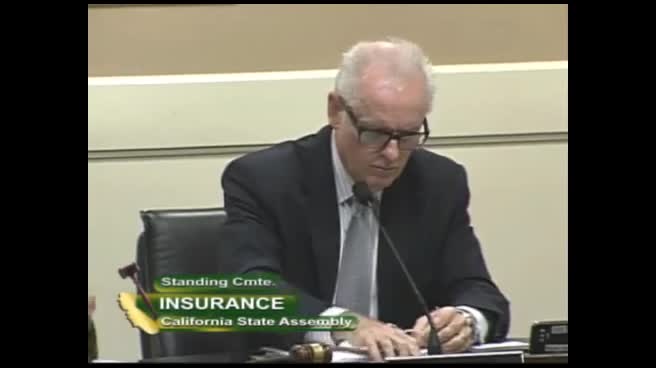 36MIN
Assembly Standing Committee on Insurance
Bill Author

Bill Co-Author(s):