AB 1699: Homeless youth emergency service projects.
- Session Year: 2015-2016
- House: Assembly
- Latest Version Date: 2016-04-06
Existing law establishes the Homeless Youth and Exploitation Program, under which homeless youth emergency service projects are established in the Counties of Los Angeles, Santa Clara, San Diego, and the City and County of San Francisco through a grant program to eligible private, nonprofit agencies with a demonstrated record of success in the delivery of services to homeless youth. Under existing law, this program is administered by the Office of Emergency Services. Existing law requires each project to provide specified services, including food and access to overnight shelter, counseling to address immediate emotional crises and problems, and long-term stabilization planning.
This bill would require a homeless youth emergency service project to be established in the County of Orange and would require the Office of Emergency Services to establish additional homeless youth emergency service projects in other counties with a priority given to counties that lack existing services for runaway and homeless youth. The bill would require the Office of Emergency Services to develop, with input from specified stakeholders, criteria for the selection of grantees and the determination of grant amounts under the grant program. The bill would additionally require each project to provide transitional living services for designated homeless youth for a period of up to 36 months, with access to education and employment assistance, independent living skill development, and family engagement and interventions. The bill would appropriate $25,000,000 from the General Fund to the Office of Emergency Services to provide additional funding for these homeless youth emergency service projects.
Existing law establishes the Homeless Youth and Exploitation Program, under which homeless youth emergency service projects are established in the Counties of Los Angeles, Santa Clara, San Diego, and the City and County of San Francisco through a grant program to eligible private, nonprofit agencies with a demonstrated record of success in the delivery of services to homeless youth. Under existing law, this program is administered by the Office of Emergency Services. Existing law requires each project to provide specified services, including food and access to overnight shelter, counseling to address immediate emotional crises and problems, and long-term stabilization planning.
This bill would require a homeless youth emergency service project to be established in the County of Orange, Orange and would authorize require the Office of Emergency Services to establish additional projects in other counties, counties with a priority given to underserved counties. counties that lack existing services for runaway and homeless youth. The bill would additionally require each project to provide transitional living services, services for designated homeless youth for a period of up to 36 months, with access to education and employment assistance, independent living skill development, and family engagement and interventions. The bill would appropriate $25,000,000 from the General Fund to the Office of Emergency Services to provide additional funding for these homeless youth emergency service projects.
Existing law establishes the Homeless Youth and Exploitation Program, under which homeless youth emergency service projects are established in the Counties of Los Angeles, Santa Clara, San Diego, and the City and County of San Francisco through a grant program to eligible private, nonprofit agencies with a demonstrated record of success in the delivery of services to homeless youth. Under existing law, this program is administered by the Office of Emergency Services. Existing law requires each project to provide specified services, including food and access to overnight shelter, counseling to address immediate emotional crises and problems, and long-term stabilization planning.
This bill would require a homeless youth emergency service project to be established in the County of Orange, and would authorize the Office of Emergency Services to establish additional projects in other counties, with a priority given to underserved counties. The bill would additionally require each project to provide transitional living services, for a period of up to 36 months, with access to education and employment assistance, independent living skill development, and family engagement and interventions. The bill would appropriate $25,000,000 from the General Fund to the Office of Emergency Services to provide additional funding for these homeless youth emergency service projects.
(a)The Legislature finds and declares all of the following:
(1)There are homeless minors living on the streets of major urban centers, suburban communities, and in rural areas in this state without adequate food, shelter, health care, or financial support.
(2)Many of these homeless youth in these urban centers come from out-of-city or out-of-county locations.
(3)The homeless child, in many instances, has a history of physical or sexual abuse at home, and of having been rejected or forced out of the parental home.
(4)While living on the streets, these youth fall prey to drug abuse, human trafficking, prostitution, and other illegal activities.
(5)Local public agencies are unable to provide these youth with an adequate level or range of remedial services.
(6)These homeless minors are urgently in need of specialized services to locate them, to assist them with their immediate survival needs, and to address their long-term need to reunite with their parents or find a suitable home.
(7)Two homeless youth emergency service pilot programs, one in the City of Los Angeles, and one in the City and County of San Francisco, have demonstrated the need for ongoing programs to meet the needs of homeless minors and the effectiveness of these programs in meeting these needs.
(8)While critical, immediate crisis intervention does not go far enough to help these youth make a successful transition to adulthood. Evidence supports transitional living programs as the key driver of positive outcomes for homeless youth.
(b)The purpose of this chapter is therefore is, therefore, to maintain one homeless youth emergency project in the County of Los Angeles and one in the City and County of San Francisco, where the problem is most acute, and to the extent funds are appropriated in the Budget Act of 1991, to establish additional homeless youth emergency service pilot projects pursuant to this chapter. It is the further purpose of this chapter to examine the condition of homeless youth in major urban areas of this state with populations of 500,000 or more, as well as other urban, suburban, and rural areas, and develop a profile of homeless youth in terms of background and available services, in order to locate these youth, to provide for their emergency survival needs, and to assist them in reunification with their parents or in finding a suitable home.
SEC. 2.Section 13700.5 of the Welfare and Institutions Code is amended to read:13700.5.For purposes of this chapter, office means the Office of Emergency Services.
SEC. 3.Section 13701 of the Welfare and Institutions Code is amended to read:13701.Each homeless youth project established under this chapter shall provide services that shall include, but are not limited to, all of the following:
(a)Food and access to an overnight shelter.
(b)Counseling to address immediate emotional crises or problems.
(c)Outreach services to locate homeless youth and link them with services, and drop-in facilities to make the services accessible to the street population.
(d)Screening for basic health needs and referral to public and private agencies for health care.
(e)Linkage to other services offered by public and private agencies.
(f)Long-term stabilization planning so that the youth may be returned to the parental home under circumstances favoring long-term reunification with the family, or so that the youth can be suitably placed in a situation outside the family when family reunification is not possible.
(g)Followup services to ensure that the return to the family or the placement outside the family is stable.
(h)Transitional living services for homeless youth 18 through 24 years of age, inclusive, for a period of up to 36 months, with access to education and employment assistance, independent living skill development, and family engagement and interventions.
SEC. 4.Section 13703 of the Welfare and Institutions Code is amended to read:13703.(a)One homeless youth emergency service project shall be established in the County of Los Angeles and one shall be established in the City and County of San Francisco. One homeless youth emergency service project shall also be established in the County of San Diego, and one shall be established in the County of Santa Clara. The office shall establish additional homeless youth emergency service projects in the County of Orange and other counties, with a priority given to counties that lack existing services for runaway and homeless youth. The office shall, with input from stakeholders, develop criteria for the selection of grantees and the determination of grant amounts under the grant program. For purposes of this section, stakeholders shall include, but not be limited to, current and former homeless youth and representatives from advocacy groups serving homeless youth. Each project may have one central location or may have more than one location in the service area in order to serve effectively the area population of homeless youth. Each project shall be operated by an agency in accordance with the grant award agreement with the office.
(b)(1)The office shall prepare and disseminate a request for proposals for grantees under this chapter by February 15, 1986. The office shall enter into grant award agreements, and the operation of pilot projects shall begin, not later than June 1, 1986. With respect to projects to be established in the County of San Diego and the County of Santa Clara, the office shall prepare and disseminate a request for proposals for grantees under this chapter by March 31, 1992. The office shall enter into grant award agreements and the operation of these projects shall begin not later than July 1, 1992.
(2)With respect to additional homeless youth emergency service projects to be established pursuant to funding appropriated by the act that added this paragraph, the office shall prepare and disseminate requests for proposals not no later than March 31, 2017.
(c)An agency eligible to apply for funds under this chapter and to operate a homeless youth emergency service project shall be a private, nonprofit agency with a demonstrated record of success in the delivery of services to homeless youth. The agency selected for each project shall demonstrate the ability to provide each of the services described in Section 13701, either directly or under subcontract with a competent provider. Preference shall be given to agencies that demonstrate a history of coordination with other public and private agencies in the service region that provide services to homeless youth. Preference shall also be given to agencies that will involve a network of youth-serving agencies in the delivery of services to homeless youth under this chapter.
SEC. 5.The sum of twenty-five million dollars ($25,000,000) is hereby appropriated from the General Fund to the Office of Emergency Services to provide additional funding for homeless youth emergency service projects established pursuant to Chapter 6 (commencing with Section 13700) of Part 3 of Division 9 of the Welfare and Institutions Code.
(a)The Legislature finds and declares all of the following:
(1)There are homeless minors living on the streets of major urban centers centers, suburban communities, and in rural areas in this state without adequate food, shelter, health care, or financial support.
(2)Many of these homeless youth in these urban centers come from out-of-city or out-of-county locations.
(3)The homeless child, in many instances, has a history of physical or sexual abuse at home, and of having been rejected or forced out of the parental home.
(4)While living on the streets, these youth fall prey to drug abuse, human trafficking, prostitution, and other illegal activities.
(5)Local public agencies are unable to provide these youth with an adequate level or range of remedial services.
(6)These homeless minors are urgently in need of specialized services to locate them, to assist them with their immediate survival needs, and to address their long-term need to reunite with their parents or find a suitable home.
(7)Two homeless youth emergency service pilot programs, one in the City of Los Angeles, and one in the City and County of San Francisco, have demonstrated the need for ongoing programs to meet the needs of homeless minors and the effectiveness of these programs in meeting these needs.
(8)While critical, immediate crisis intervention does not go far enough to help these youth make a successful transition to adulthood. Evidence supports transitional living programs as the key driver of positive outcomes for homeless youth.
(b)The purpose of this chapter is therefore to maintain one homeless youth emergency project in the County of Los Angeles and one in the City and County of San Francisco, where the problem is most acute, and to the extent funds are appropriated in the Budget Act of 1991, to establish additional homeless youth emergency service pilot projects pursuant to this chapter. It is the further purpose of this chapter to examine the condition of homeless youth in major urban areas of this state with populations of 500,000 or more, as well as other urban, suburban, and rural areas, and develop a profile of homeless youth in terms of background and available services, in order to locate these youth, to provide for their emergency survival needs, and to assist them in reunification with their parents or in finding a suitable home.
SEC. 2.Section 13700.5 of the Welfare and Institutions Code is amended to read:13700.5.For purposes of this chapter, office means the Office of Emergency Services.
SEC. 3.Section 13701 of the Welfare and Institutions Code is amended to read:13701.Each homeless youth project established under this chapter shall provide services that shall include, but are not limited to, all of the following:
(a)Food and access to an overnight shelter.
(b)Counseling to address immediate emotional crises or problems.
(c)Outreach services to locate homeless youth and link them with services, and drop-in facilities to make the services accessible to the street population.
(d)Screening for basic health needs and referral to public and private agencies for health care.
(e)Linkage to other services offered by public and private agencies.
(f)Long-term stabilization planning so that the youth may be returned to the parental home under circumstances favoring long-term reunification with the family, or so that the youth can be suitably placed in a situation outside the family when family reunification is not possible.
(g)Followup services to ensure that the return to the family or the placement outside the family is stable.
(h)Transitional living services, services for homeless youth 18 through 24 years of age, inclusive, for a period of up to 36 months, with access to education and employment assistance, independent living skill development, and family engagement and interventions.
SEC. 4.Section 13703 of the Welfare and Institutions Code is amended to read:13703.(a)One homeless youth emergency service project shall be established in the County of Los Angeles and one shall be established in the City and County of San Francisco. One homeless youth emergency service project shall also be established in the County of San Diego, one shall be established in the County of Santa Clara, and one shall be established in the County of Orange. Diego, and one shall be established in the County of Santa Clara. The office may shall establish additional homeless youth emergency service projects in the County of Orange and other counties, with a priority given to underserved counties. counties that lack existing services for runaway and homeless youth. Each project may have one central location or may have more than one location in the service area in order to serve effectively the area population of homeless youth. Each project shall be operated by an agency in accordance with the grant award agreement with the office.
(b)(1)The office shall prepare and disseminate a request for proposals for grantees under this chapter by February 15, 1986. The office shall enter into grant award agreements, and the operation of pilot projects shall begin, not later than June 1, 1986. With respect to projects to be established in the County of San Diego and the County of Santa Clara, the office shall prepare and disseminate a request for proposals for grantees under this chapter by March 31, 1992. The office shall enter into grant award agreements and the operation of these projects shall begin not later than July 1, 1992.
(2)With respect to additional homeless youth emergency service projects to be established pursuant to funding appropriated by the act that added this paragraph, the office shall prepare and disseminate requests for proposals not later than March 31, 2017.
(c)An agency eligible to apply for funds under this chapter and to operate a homeless youth emergency service project shall be a private, nonprofit agency with a demonstrated record of success in the delivery of services to homeless youth. The agency selected for each project shall demonstrate the ability to provide each of the services described in Section 13701, either directly or under subcontract with a competent provider. Preference shall be given to agencies that demonstrate a history of coordination with other public and private agencies in the service region that provide services to homeless youth. Preference shall also be given to agencies that will involve a network of youth-serving agencies in the delivery of services to homeless youth under this chapter.
SEC. 5.The sum of twenty-five million dollars ($25,000,000) is hereby appropriated from the General Fund to the Office of Emergency Services to provide additional funding for homeless youth emergency service projects established pursuant to Chapter 6 (commencing with Section 13700) of Part 3 of Division 9 of the Welfare and Institutions Code.
(a)The Legislature finds and declares all of the following:
(a)
(1)There are homeless minors living on the streets of major urban centers in this state without adequate food, shelter, health care, or financial support.
(b)
(2)Many of these homeless youth in these urban centers come from out-of-city or out-of-county locations.
(c)
(3)The homeless child, in many instances, has a history of physical or sexual abuse at home, and of having been rejected or forced out of the parental home.
(d)
(4)While living on the streets, these youth fall prey to drug abuse, prostitution, and other illegal activities.
(e)
(5)Local public agencies are unable to provide these youth with an adequate level or range of remedial services.
(f)
(6)These homeless minors are urgently in need of specialized services to locate them, to assist them with their immediate survival needs, and to address their long-term need to reunite with their parents or find a suitable home.
(g)
(7)Two homeless youth emergency service pilot programs, one in the City of Los Angeles, and one in the City and County of San Francisco, have demonstrated the need for ongoing programs to meet the needs of homeless minors and the effectiveness of these programs in meeting these needs.
(8)While critical, immediate crisis intervention does not go far enough to help these youth make a successful transition to adulthood. Evidence supports transitional living programs as the key driver of positive outcomes for homeless youth.
The
(b)The purpose of this chapter is therefore to maintain one homeless youth emergency project in the County of Los Angeles and one in the City and County of San Francisco, where the problem is most acute, and to the extent funds are appropriated in the Budget Act of 1991, to establish additional homeless youth emergency service pilot projects pursuant to this chapter. It is the further purpose of this chapter to examine the condition of homeless youth in major urban areas of this state with populations of 500,000 or more, as well as other urban, suburban, and rural areas, and develop a profile of homeless youth in terms of background and available services, in order to locate these youth, to provide for their emergency survival needs, and to assist them in reunification with their parents or in finding a suitable home.
SEC. 2.Section 13700.5 of the Welfare and Institutions Code is amended to read:13700.5.For purposes of this chapter, office means the Office of Criminal Justice Planning. Emergency Services.
SEC. 3.Section 13701 of the Welfare and Institutions Code is amended to read:13701.Each homeless youth project established under this chapter shall provide services which that shall include, but are not limited to, all of the following:
(a)Food and access to an overnight shelter.
(b)Counseling to address immediate emotional crises or problems.
(c)Outreach services to locate homeless youth and link them with services, and drop-in facilities to make the services accessible to the street population.
(d)Screening for basic health needs and referral to public and private agencies for health care.
(e)Linkage to other services offered by public and private agencies.
(f)Long-term stabilization planning so that the youth may be returned to the parental home under circumstances favoring long-term reunification with the family, or so that the youth can be suitably placed in a situation outside the family when family reunification is not possible.
(g)Followup services to ensure that the return to the family or the placement outside the family is stable.
(h)Transitional living services, for a period of up to 36 months, with access to education and employment assistance, independent living skill development, and family engagement and interventions.
SEC. 4.Section 13703 of the Welfare and Institutions Code is amended to read:13703.(a)One homeless youth emergency service project shall be established in the County of Los Angeles and one shall be established in the City and County of San Francisco. One homeless youth emergency service project shall also be established in the County of San Diego and Diego, one shall be established in the County of Santa Clara. Clara, and one shall be established in the County of Orange. The office may establish additional homeless youth emergency service projects in other counties, with a priority given to underserved counties. Each project may have one central location or may have more than one location in the service area in order to serve effectively the area population of homeless youth. Each project shall be operated by an agency in accordance with the grant award agreement with the office.
(b)The office shall prepare and disseminate a request for proposals for grantees under this chapter by February 15, 1986. The office shall enter into grant award agreements, and the operation of pilot projects shall begin, not later than June 1, 1986. With respect to projects to be established in the County of San Diego and the County of Santa Clara, the office shall prepare and disseminate a request for proposals for grantees under this chapter by March 31, 1992. The office shall enter into grant award agreements and the operation of these projects shall begin not later than July 1, 1992.
(c)An agency eligible to apply for funds under this chapter and to operate a homeless youth emergency service project shall be a private, nonprofit agency with a demonstrated record of success in the delivery of services to homeless youth. The agency selected for each project shall demonstrate the ability to provide each of the services described in Section 13701, either directly or under subcontract with a competent provider. Preference shall be given to agencies that demonstrate a history of coordination with other public and private agencies in the service region that provide services to homeless youth. Preference shall also be given to agencies that will involve a network of youth-serving agencies in the delivery of services to homeless youth under this chapter.
SEC. 5.The sum of twenty-five million dollars ($25,000,000) is hereby appropriated from the General Fund to the Office of Emergency Services to provide additional funding for homeless youth emergency service projects established pursuant Chapter 6 (commencing with Section 13700) of Part 3 of Division 9 of the Welfare and Institutions Code.
|
Date
|
Status
|
|---|---|
| Jan 25, 2016 | Read first time. To print. |
| Jan 26, 2016 | From printer. May be heard in committee February 25. |
| Feb 18, 2016 | Referred to Com. on HUM. S. |
| Mar 28, 2016 | From committee chair, with author's amendments: Amend, and re-refer to Com. on HUM. S. Read second time and amended. |
| Mar 29, 2016 | Re-referred to Com. on HUM. S. |
| Apr 5, 2016 | From committee: Amend, and do pass as amended and re-refer to Com. on APPR. (Ayes 6. Noes 0.) (March 29). |
| Apr 6, 2016 | Read second time and amended. |
| Apr 7, 2016 | Re-referred to Com. on APPR. |
| Apr 20, 2016 | In committee: Set, first hearing. Referred to APPR. suspense file. |
| May 27, 2016 | In committee: Held under submission. |
|
Date
|
Description
|
Location
|
Votes
|
|
|---|---|---|---|---|
| Mar 29, 2016 | Do pass as amended and be re-referred to the Committee on [Appropriations] | Assembly Standing Committee on Human Services |
Passed |
This list shows positions taken on this bill by organizations on the date displayed, which is linked to the original source.
Positions by individuals are not included.
|
Organization
|
Position
|
Date
|
|---|---|---|
| American Academy Of Pediatrics, Ca | ** Support | Mar 29, 2016 |
| ASPIRANET | ** Support | Mar 29, 2016 |
| California Catholic Conference | ** Support | Mar 29, 2016 |
| California Coalition For Youth | * Support | Mar 29, 2016 |
| California Coalition For Youth | * Indeterminate | Mar 29, 2016 |
| Children Now | * Support | Mar 29, 2016 |
| ChildrenNow | * Indeterminate | Mar 29, 2016 |
| County Welfare Directors Association | * Indeterminate | Mar 29, 2016 |
| Disabilities Caucus for the Democratic Party | * Indeterminate | Mar 29, 2016 |
| Family Assistance Program | ** Support | Mar 29, 2016 |
| Fastenau & Associates | ** Support | Mar 29, 2016 |
| Home State Inc. | ** Support | Mar 29, 2016 |
| Larkan Street Youth Services | * Indeterminate | Mar 29, 2016 |
| San Diego Youth Services | ** Support | Mar 29, 2016 |
Date of Hearing: April 20, 2016
ASSEMBLY COMMITTEE ON APPROPRIATIONS
Lorena Gonzalez, Chair
ABPCA Bill Id:AB 1699
Author:(Kim) – As Amended Ver:April 6, 2016
Policy Committee: | Human Services | Vote: | 6 - 0 |
|
|
Urgency: No State Mandated Local Program: No Reimbursable: No
SUMMARY: This bill expands homeless youth emergency service projects to additional counties and requires these projects to provide transitional living services. Specifically, this bill:
- Adds transitional living services for homeless youth ages 18 to 24, as specified, and for a period of up to 36 months, to the list of required services to be provided by homeless youth emergency service projects.
- Requires the Office of Emergency Services (OES) to establish additional homeless youth emergency service projects in other counties, with a priority given to counties that lack existing services for runaway and homeless youth.
- Requires OES to develop criteria for the selection of grantees and the determination of grant amounts, with input from stakeholders including former homeless youth and representatives from advocacy groups serving homeless youth.
- Requires OES to prepare and disseminate requests for proposals for these new projects, as specified, by March 31, 2017.
- Appropriates $25 million from the General Fund to OES to provide additional funding for homeless youth emergency service projects, as specified.
FISCAL EFFECT:
- Appropriates $25 million (GF) to OES for homeless youth emergency service projects.
- Unknown, but potentially significant, costs to OES to develop selection criteria with stakeholder input and to prepare and disseminate requests for proposals.
COMMENTS:
- Purpose. According to the author, this bill, “would provide a comprehensive services plan and funding to help address California’s growing homeless youth crisis. Current services specific for homeless youth are woefully inadequate and more needs to be done to address homelessness at a young age. By providing the tools and addressing their needs while young, we can correct some of the factors that lead to being a chronically homeless adult.”
- Background. The Homeless Youth Act of 1985 (AB 1596, Chapter 1445, Statutes of 1985) established pilot projects to develop a network of youth services in San Francisco and Los Angeles, and required the state to collect data on runaway youths in Santa Clara and San Diego counties. That bill appropriated state General Fund monies to the former Office of Criminal Justice Planning to administer the program. SB 508, Chapter 288, Statutes of 1988, extended the Homeless Youth Act, deleting references to pilot projects and making provisions permanent.
Today, the Homeless Youth and Exploitation Program provides food, shelter, counseling, outreach services, referrals, screening for basic health needs and long-term stabilization planning. It is administered by OES and operates in four agencies, each representing a separate county: San Diego Youth Services, Children’s Hospital of Los Angeles, Larkin Street Youth Services (San Francisco), and the Bill Wilson Center (Santa Clara County). Total 2015-16 funding for the projects is almost $1.1 million, $356,000 of which is General Fund (the remaining funds are State Victim Witness Assistance Funds). A youth is considered homeless if he/she is under the age of 24 and only of the following, or combination, apply: 1) does not have a permanent residence; 2) has run away from home; 3) has been pushed out of his/her home by parents or guardians; 4) has aged out of the foster care system and is now homeless; 5) is living in a shelter; 6) and/or is living on the streets.
OES has reported that, for the 2013-14 fiscal year, the Homeless Youth and Exploitation Program (across all four county projects), among other things: provided 8,877 youth with outreach services; provided 667 youth with shelter; assisted 223 youth with family reunification; and provided training on independent living and survival skills to 1,041 youth.
In 2011, the California Homeless Youth Project conducted a point-in-time study to try to assess how many programs in the state provided services and support specifically to unaccompanied homeless youth, ultimately identifying 53 programs, from street outreach to transitional living, aimed at reaching unaccompanied homeless youth. Thirty counties were found to have no services of any kind specifically for homeless youth.
- Budget Consideration. This bill makes a $25 million General Fund appropriation to fund a significant expansion of the homeless youth emergency service projects. This represents a major increase in funding from just over $1 million ($356,000 GF) to $25 million (GF). The Committee may wish to consider whether this proposal is more appropriately considered in the context of the budget discussion.
Analysis Prepared by: Jennifer Swenson / APPR. / (916) 319-2081
Date of Hearing: March 29, 2016
ASSEMBLY COMMITTEE ON HUMAN SERVICES
Susan Bonilla, Chair
ABPCA Bill Id:AB 1699 (
Author:Kim) – As Amended Ver:March 28, 2016
SUBJECT: Homeless youth emergency service projects
SUMMARY: Expands homeless youth emergency service projects to additional counties and requires these projects to provide transitional living services.
Specifically, this bill:
- Expands upon current Legislative findings and declarations regarding homeless youth and makes a Legislative declaration regarding the importance of transitional living programs to positive outcomes for homeless youth.
- Adds transitional living services for homeless youth ages 18 to 24, as specified and for a period of up to 36 months, to the list of required services to be provided by homeless youth emergency service projects.
- Requires the Office of Emergency Services (OES) to establish additional homeless youth emergency service projects in Orange County and in other counties, with a priority given to counties that lack existing services for runaway and homeless youth.
- Requires OES to prepare and disseminate requests for proposals for these new projects, as specified, by March 31, 2017.
- Appropriates $25 million from the General Fund to OES to provide additional funding for homeless youth emergency services, as specified.
- Makes technical changes.
EXISTING LAW:
- Establishes homeless youth emergency service projects in Los Angeles, San Francisco, San Diego, and Santa Clara counties. (WIC 13700 et seq.)
- Requires each homeless youth emergency project to provide services, as specified and including, but not limited to: food and access to overnight shelter; counseling to address immediate emotional crises or problems; outreach services; screening for basic health needs and referral to public and private agencies for health care; linkage to other services; long-term stabilization planning; and follow-up services to ensure that any return to the family or placement outside of the family is stable. (WIC 13701)
- Requires each of the four county-based projects to be operated by an agency in accordance with a grant award agreement with the Office of Criminal Justice Planning (now the Office of Emergency Services [OES]), and permits each project to have one central location or more than one location, as specified. Further requires that, to be eligible, grantees must be private, nonprofit agencies with a demonstrated record of success in the delivery of services to homeless youth, and sets criteria for granting preference, as specified. (WIC 13703)
- Requires OES to monitor the homeless youth emergency service projects, as specified. (WIC 13704)
FISCAL EFFECT: Unknown.
COMMENTS:
Homeless youth in California: The federal McKinney-Vento Homeless Assistance Act of 2001 defines homeless children and youths as individuals who “lack a fixed, regular, and adequate nighttime residence,” to include children and youths who: have to share housing with others due to loss of housing or economic hardship; are living in motels, hotels, trailer parks, or camp grounds because they lack other accommodations; are living in emergency or transitional shelters; are awaiting foster placement; or have a primary nighttime residence that is not designed as a regular sleeping accommodation for human beings.
According to the U.S. Department of Housing and Urban Development’s 2015 Annual Homeless Assessment Report to Congress, on a single night in January 2015, California reported having 10,416 homeless unaccompanied youth; this equaled 28% of the national total. California also reported having the largest number (9,524) of unaccompanied homeless youth ages 18 to 24. However, these counts only reflect the population of homeless youth counted on one night. It is estimated that, throughout the course of the year, many more youth experience homelessness. For example, the Californian Homeless Youth Project reported that, for the 2012-13 school year, nearly 270,000 students experienced homelessness in California.
In 2011, the California Homeless Youth Project conducted a point-in-time study to try to assess how many programs in the state provided services and support specifically to unaccompanied homeless youth, ultimately identifying 53 programs, from street outreach to transitional living, aimed at reaching unaccompanied homeless youth. Thirty counties were found to have no services of any kind specifically for homeless youth.
Homeless youth emergency service projects: The Homeless Youth Act of 1985 (AB 1596, Chapter 1445, Statutes of 1985) established pilot projects to develop a network of youth services in San Francisco and Los Angeles, and required the state to collect data on runaway youths in Santa Clara and San Diego counties. This bill appropriated state General Fund monies to the former Office of Criminal Justice Planning to administer the program. SB 508, Chapter 288, Statutes of 1988, extended the Homeless Youth Act, deleting references to pilot projects and making provisions permanent.
Today, the Homeless Youth and Exploitation Program is administered by OES and operates in four agencies, each representing a separate county: San Diego Youth Services, Children’s Hospital of Los Angeles, Larkin Street Youth Services (San Francisco), and the Bill Wilson Center (Santa Clara County). Total 2015-16 funding for the projects is almost $1.1 million, $356,000 of which is General Fund (the remaining funds are State Victim Witness Assistance Funds).
OES has reported that, for the 2013-14 fiscal year, the Homeless Youth and Exploitation Program (across all four county projects), among other things: provided 8,877 youth with outreach services; provided 667 youth with shelter; assisted 223 youth with family reunification; and provided training on independent living and survival skills to 1,041 youth.
Need for this bill: According to the author, this bill, “would provide a comprehensive services plan and funding to help address California’s growing homeless youth crisis. Current services specific for homeless youth are woefully inadequate and more needs to be done to address homelessness at a young age. By providing the tools and addressing their needs while young, we can correct some of the factors that lead to being a chronically homeless adult.”
Staff comments: This bill proposes a significant expansion of homeless youth emergency service projects, and substantial increase in funding made available for these projects (from just over $1 million dollars [$356,000 of which is General Fund] to $25 million General Fund). It is important to ensure that these projects are selected and funds distributed in a transparent and consistent manner that best realizes this bill’s intent to target underserved areas. OES could play a lead role, alongside stakeholders representing homeless youth, in setting clear criteria for the selection of grantees and allotment of grant funds across these grantees.
Additionally, given this bill’s proposal for a large expansion of projects across the state and considerable increase in use of General Fund dollars, heightened oversight may be warranted. Should this bill move forward, the author may wish to consider including provisions to ensure oversight, such as requiring OES to produce a periodic report for the Legislature detailing the use of these funds and observed outcomes for California’s homeless youth.
Suggested amendments: In order to ensure projects are selected and funds are awarded in a transparent and consistent fashion that strives to achieve this bill’s goal of targeting underserved areas, committee staff recommends the following amendments, starting on line 19 of page 4 of the bill:
11
13703. (a) One homeless youth emergency service project
12
shall be established in the County of Los Angeles and one shall
13
be established in the City and County of San Francisco. One
14
homeless youth emergency service project shall also be established
15
in the County of San Diego, one shall be established in the County
16
of Santa Clara, and one shall be established in the County of
17
Orange. Diego, and one shall be established in the County of Santa
18
Clara. The office may shall establish additional homeless youth
19
emergency service projects in the County of Orange and other
20
counties, with a priority given to underserved counties. counties
21
that lack existing services for runaway and homeless youth. The office shall, with the input of stakeholders, develop criteria for the selection of grantees and determination of grant amounts. Stakeholders shall include, but not be limited to, current and former homeless youth, and advocacy groups serving homeless youth. Each
22
project may have one central location or may have more than one
23
location in the service area in order to serve effectively the area
24
population of homeless youth. Each project shall be operated by
25
an agency in accordance with the grant award agreement with the
26
office.
REGISTERED SUPPORT / OPPOSITION:
Support
American Academy of Pediatrics, CA (AAP-CA)
Aspiranet
California Catholic Conference
California Coalition for Youth (CCY)
Children Now
Family Assistance Program
Fastenau & Associates
Home State Inc.
San Diego Youth Services
Opposition
None on file.
Analysis Prepared by: Daphne Hunt / HUM. S. / (916) 319-2089
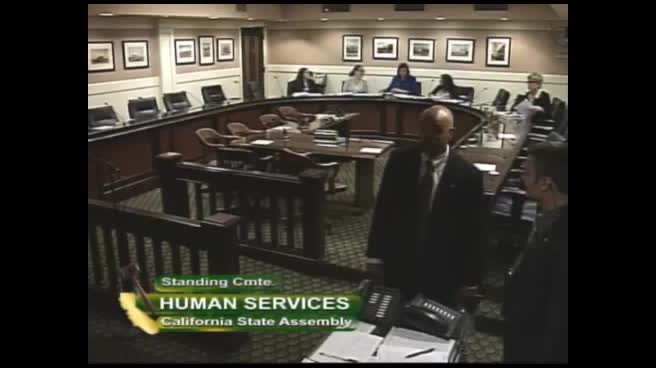
Discussed in Hearing
 12MIN
Assembly Standing Committee on Human Services
Bill Author