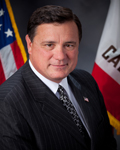
AB 1714: Department of Motor Vehicles: services: third-party contracts.
- Session Year: 2015-2016
- House: Assembly
- Latest Version Date: 2016-04-12
Existing law authorizes the Department of Motor Vehicles, in conformance with certain provisions in existing law relating to personal services contracts with private parties, to establish contracts for electronic programs that allow qualified private industry partners to join the department to provide title and vehicle registration transactions. Existing law authorizes the department to enter into contractual agreements with 3 specified types of private industry partners for this purpose, and to charge a transaction fee for the information and services provided.
This bill would expand the services for which the department would be authorized to establish contracts with private industry partners as described above, to include processing and payment programs for drivers license renewals, eyesight and hearing tests, and fingerprinting and photography services. The bill would make other technical and conforming changes. renewals, as specified.
Existing law authorizes the Department of Motor Vehicles, in conformance with certain provisions in existing law relating to personal services contracts with private parties, to establish contracts for electronic programs that allow qualified private industry partners to join the department to provide title and vehicle registration transactions. Existing law authorizes the department to enter into contractual agreements with 3 specified types of private industry partners for this purpose, and to charge a transaction fee for the information and services provided.
This bill would expand the services for which the department would be authorized to establish contracts with private industry partners as described above, to include drivers license renewals, eyesight and hearing tests, and fingerprinting and photography services. The bill would make other technical and conforming changes.
(a)In order to continue to improve the quality of products and services it provides to its customers, the department, in conformance with Article 4 (commencing with Section 19130) of Chapter 5 of Part 2 of Division 5 of Title 2 of the Government Code, may establish contracts for electronic programs that allow qualified private industry partners to join the department in providing services that include processing and payment programs for drivers license renewals pursuant to Section 12800.
(b)(1)The department may enter into contractual agreements with qualified private industry partners to provide the services authorized under subdivision (a). The following three types of private industry partnerships are authorized under this section:
(A)A first-line business partner is an industry partner that receives data directly from the department and uses it to complete an activity authorized in subdivision (a), for that partners own business purposes.
(B)A first-line service provider is an industry partner that receives information from the department and then transmits it to another authorized industry partner.
(C)A second-line business partner is a partner that receives information from a first-line service provider.
(2)The private industry partner contractual agreements shall include the following minimum requirements:
(A)Filing of an application and payment of an application fee, as established by the department.
(B)Submission of information, including, but not limited to, fingerprints and personal history statements, focusing on and concerning the applicants character, honesty, integrity, and reputation as the department may consider necessary.
(C)Posting a bond in an amount consistent with Section 1815.
(3)A private industry partners contractual agreements shall be met for purposes of this section if the private industry partner satisfies the contractual agreements required in Section 1685.
(4)The department, by regulation, shall establish any additional requirements for the purpose of safeguarding privacy and protecting the information authorized for release under this section.
(c)The director, through the adoption of regulations, may establish the maximum amount that a qualified private industry partner may charge its customers in providing the services authorized under subdivision (a).
(d)The department shall charge a three-dollar ($3) transaction fee for each category of information and services provided under subdivision (a). The private industry partner may pass the transaction fee to the customer, but the total charge to a customer for any category of information and services may not exceed the amount established by the director under subdivision (c).
(e)All fees collected by the department pursuant to subdivision (d) shall be deposited in the Motor Vehicle Account. On January 1 of each year, the department shall adjust the fee in accordance with the California Consumer Price Index. The amount of the fee shall be rounded to the nearest whole dollar, with amounts equal to, or greater than, fifty cents ($0.50) rounded to the next highest whole dollar.
(f)The department shall adopt or revise regulations and procedures that ensure adequate oversight and monitoring of qualified private industry partners to protect the departments customers from the improper use of information provided to the qualified industry partner pursuant to this section. These regulations and procedures shall include provisions for qualified private industry partners to periodically submit records to the department, and the department shall review those records as necessary. The regulations shall also include provisions for the dedication of department resources to program monitoring and oversight; the protection of confidential records in the departments files and databases; and the duration and nature of the contracts with qualified private industry partners.
(g)Notwithstanding Section 10231.5 of the Government Code, by October 1 of each year, the department shall provide a report to the Legislature that shall include all of the following information gathered during the fiscal year immediately preceding the report date:
(1)Listing of all qualified private industry partners, including names and business addresses.
(2)Volume of transactions, by type, completed by business partners.
(3)Total amount of funds, by transaction type, collected by business partners.
(4)Total amount of funds received by the department.
(5)Description of any fraudulent activities identified by the department.
(6)Evaluation of the benefits of the program.
(7)Recommendations for any administrative or statutory changes that may be needed to improve the program.
(h)A report submitted under subdivision (g) shall be submitted pursuant to Section 9795 of the Government Code.
(i)This section does not impair or limit the authority provided in Section 12155 of the Insurance Code.
SECTION 1.Section 1685 of the Vehicle Code is amended to read:1685.(a)In order to continue improving the quality of products and services it provides to its customers, the department, in conformance with Article 4 (commencing with Section 19130) of Chapter 5 of Part 2 of Division 5 of Title 2 of the Government Code, may establish contracts for electronic programs that allow qualified private industry partners to join the department in providing services that include processing and payment programs for all of the following:
(1)Vehicle registration and titling transactions.
(2)Drivers license renewals.
(3)Eyesight and hearing tests.
(4)Fingerprinting services.
(5)Photography services.
(b)(1)The department may enter into contractual agreements with qualified private industry partners to provide the services authorized under subdivision (a). The following three types of private industry partnerships are authorized under this section:
(A)A first-line business partner is an industry partner that receives data directly from the department and uses it to complete an activity authorized in subdivision (a), for that partners own business purposes.
(B)A first-line service provider is an industry partner that receives information from the department and then transmits it to another authorized industry partner.
(C)A second-line business partner is a partner that receives information from a first-line service provider.
(2)The private industry partner contractual agreements shall include the following minimum requirements:
(A)Filing of an application and payment of an application fee, as established by the department.
(B)Submission of information, including, but not limited to, fingerprints and personal history statements, focusing on and concerning the applicants character, honesty, integrity, and reputation as the department may consider necessary.
(C)Posting a bond in an amount consistent with Section 1815.
(3)The department, by regulation, shall establish any additional requirements for the purpose of safeguarding privacy and protecting the information authorized for release under this section.
(c)The director, through the adoption of regulations, may establish the maximum amount that a qualified private industry partner may charge its customers in providing the services authorized under subdivision (a).
(d)The department shall charge a three-dollar ($3) transaction fee for each category of information and services provided under subdivision (a). The private industry partner may pass the transaction fee to the customer, but the total charge to a customer for any category of information and services may not exceed the amount established by the director under subdivision (c).
(e)All fees collected by the department pursuant to subdivision (d) shall be deposited in the Motor Vehicle Account. On January 1 of each year, the department shall adjust the fee in accordance with the California Consumer Price Index. The amount of the fee shall be rounded to the nearest whole dollar, with amounts equal to, or greater than, fifty cents ($0.50) rounded to the next highest whole dollar.
(f)The department shall adopt or revise regulations and procedures that ensure adequate oversight and monitoring of qualified private industry partners to protect vehicle owners and other department customers from the improper use of vehicle records or other information provided to the qualified industry partner pursuant to this section. These regulations and procedures shall include provisions for qualified private industry partners to periodically submit records to the department, and the department shall review those records as necessary. The regulations shall also include provisions for the dedication of department resources to program monitoring and oversight; the protection of confidential records in the departments files and databases; and the duration and nature of the contracts with qualified private industry partners.
(g)Notwithstanding Section 10231.5 of the Government Code, by October 1 of each year, the department shall provide a report to the Legislature that shall include all of the following information gathered during the fiscal year immediately preceding the report date:
(1)Listing of all qualified private industry partners, including names and business addresses.
(2)Volume of transactions, by type, completed by business partners.
(3)Total amount of funds, by transaction type, collected by business partners.
(4)Total amount of funds received by the department.
(5)Description of any fraudulent activities identified by the department.
(6)Evaluation of the benefits of the program.
(7)Recommendations for any administrative or statutory changes that may be needed to improve the program.
(h)A report submitted under subdivision (g) shall be submitted pursuant to Section 9795 of the Government Code.
(i)This section does not impair or limit the authority provided in Section 4610 or Section 12155 of the Insurance Code.
(a)In order to continue improving the quality of products and services it provides to its customers, the department, in conformance with Article 4 (commencing with Section 19130) of Chapter 5 of Part 2 of Division 5 of Title 2 of the Government Code, may establish contracts for electronic programs that allow qualified private industry partners to join the department in providing services that include processing and payment programs for vehicle registration and titling transactions. all of the following:
(1)Vehicle registration and titling transactions.
(2)Drivers license renewals.
(3)Eyesight and hearing tests.
(4)Fingerprinting services.
(5)Photography services.
(b)(1)The department may enter into contractual agreements with qualified private industry partners. There are the partners to provide the services authorized under subdivision (a). The following three types of private industry partnerships are authorized under this section:
(A)First-line A first-line business partner is an industry partner that receives data directly from the department and uses it to complete registration and titling activities an activity authorized in subdivision (a), for that partners own business purposes.
(B)First-line A first-line service provider is an industry partner that receives information from the department and then transmits it to another authorized industry partner.
(C)Second-line A second-line business partner is a partner that receives information from a first-line service provider.
(2)The private industry partner contractual agreements shall include the following minimum requirements:
(A)Filing of an application and payment of an application fee, as established by the department.
(B)Submission of information, including, but not limited to, fingerprints and personal history statements, focusing on and concerning the applicants character, honesty, integrity, and reputation as the department may consider necessary.
(C)Posting a bond in an amount consistent with Section 1815.
(3)The department shall, through regulations, department, by regulation, shall establish any additional requirements for the purpose of safeguarding privacy and protecting the information authorized for release under this section.
(c)The director may establish, director, through the adoption of regulations, may establish the maximum amount that a qualified private industry partner may charge its customers in providing the services authorized under subdivision (a).
(d)The department shall charge a three-dollar ($3) transaction fee for the each category of information and services provided under subdivision (a). The private industry partner may pass the transaction fee to the customer, but the total charge to a customer for any category of information and services may not exceed the amount established by the director under subdivision (c).
(e)All fees collected by the department pursuant to subdivision (d) shall be deposited in the Motor Vehicle Account. On January 1 of each year, the department shall adjust the fee in accordance with the California Consumer Price Index. The amount of the fee shall be rounded to the nearest whole dollar, with amounts equal to, or greater than, fifty cents ($0.50) rounded to the next highest whole dollar.
(f)The department shall adopt or revise regulations and procedures that ensure adequate oversight and monitoring of qualified private industry partners to protect vehicle owners and other department customers from the improper use of vehicle records. records or other information provided to the qualified industry partner pursuant to this section. These regulations and procedures shall include provisions for qualified private industry partners to periodically submit records to the department, and the department shall review those records as necessary. The regulations shall also include provisions for the dedication of department resources to program monitoring and oversight; the protection of confidential records in the departments files and databases; and the duration and nature of the contracts with qualified private industry partners.
(g)The department shall, annually, by October 1, Notwithstanding Section 10231.5 of the Government Code, by October 1 of each year, the department shall provide a report to the Legislature that shall include all of the following information gathered during the fiscal year immediately preceding the report date:
(1)Listing of all qualified private industry partners, including names and business addresses.
(2)Volume of transactions, by type, completed by business partners.
(3)Total amount of funds, by transaction type, collected by business partners.
(4)Total amount of funds received by the department.
(5)Description of any fraudulent activities identified by the department.
(6)Evaluation of the benefits of the program.
(7)Recommendations for any administrative or statutory changes that may be needed to improve the program.
(h)A report submitted under subdivision (g) shall be submitted pursuant to Section 9795 of the Government Code.
(h)Nothing in this section impairs or limits
(i)This section does not impair or limit the authority provided in Section 4610 or Section 12155 of the Insurance Code.
|
Date
|
Status
|
|---|---|
| Jan 26, 2016 | Read first time. To print. |
| Jan 27, 2016 | From printer. May be heard in committee February 26. |
| Mar 14, 2016 | Referred to Coms. on TRANS. and P.E., R., & S.S. |
| Mar 29, 2016 | In committee: Hearing postponed by committee. |
| Apr 7, 2016 | In committee: Set, first hearing. Hearing canceled at the request of author. |
| Apr 12, 2016 | From committee chair, with author's amendments: Amend, and re-refer to Com. on TRANS. Read second time and amended. |
| Apr 13, 2016 | Re-referred to Com. on TRANS. |
| Apr 18, 2016 | In committee: Set, second hearing. Hearing canceled at the request of author. |
This list shows positions taken on this bill by organizations on the date displayed, which is linked to the original source.
Positions by individuals are not included.
Date of Hearing: April 18, 2016
ASSEMBLY COMMITTEE ON TRANSPORTATION
Jim Frazier, Chair
ABPCA Bill Id:AB 1714 (
Author:Brough) – As Amended Ver:April 12, 2016
SUBJECT: Department of Motor Vehicles: services: third-party contracts
SUMMARY: Expands the types of transactions for which the Department of Motor Vehicles (DMV) may establish contracts with private industry partners to include processing and payment programs for driver’s license renewals.
EXISTING LAW:
- Requires an applicant for an original or renewal of a driver’s license to provide DMV with information including the applicant’s true full name, age, sex, mailing address, residence address, social security account number or proof of legal presence in the United States or proof of residency in California, and a full-face photograph of the applicant.
- Requires DMV to report information from an applicant for a driver’s license or identification card relating to voter registration to the Secretary of State.
- Requires the renewal of a driver’s license every 5 years.
- Authorizes DMV to conduct driver’s license renewals by mail for persons under the age of 70 who have not renewed their license by mail twice consecutively.
- Authorizes DMV to establish contracts for electronic programs that allow qualified private industry partners to provide services that include processing and payment programs for vehicle registration and titling transactions.
- Requires a new motor vehicle dealer to use electronic programs provided by a specific type of private industry partner to register a vehicle the dealer sells or leases if DMV permits the transaction to be processed electronically, except for off-highway or recreational vehicles.
FISCAL EFFECT: Unknown
COMMENTS: Existing law, [SB 46 (Polanco), Chapter 127, Statutes of 2001], establishes DMV’s Business Partner Automation (BPA) program and authorizes the department to enter into contracts that allow private industry partners to process specific vehicle-related transactions, such as vehicle registration and titling. Under this program, a business partner communicates with DMV either directly or through a service provider to complete the transaction. In 2011,
AB 1215 (Blumenfield), Chapter 329, Statutes of 2011, required licensed new motor vehicle dealers to participate in the BPA program and electronically process all vehicle sales and leases. Since that time, the BPA program has grown to become the primary processing method for these transactions, and more than $1.2 billion in annual vehicle-related state revenue is received by the state through the BPA program.
AB 1714 would similarly allow DMV to conduct transactions through private industry partnerships relating to driver’s license renewals.
According to the author, AB 1714 would improve DMV customers’ experiences with the department by streamlining the role DMV plays in providing license renewal services through a public-private partnership with industry partners. The author intends this bill to alleviate the wait times that DMV customers often encounter in local DMV field offices. The author cites the 25 million customer transactions handled by DMV in 2013 and the growth in the proportion of Californians eligible for driver’s licenses under AB 60 (Alejo), Chapter 524, Statutes of 2013, as evidence of the significant volume of work undertaken by DMV that could be lessened through additional private industry participation.
As the author notes, the Administration has indicated a shift towards eliminating the need for some DMV transactions to be conducted in field offices through an $8 million proposal in the 2016-17 state budget to fund self-service kiosks to conduct DMV transactions in places like grocery stores.
According to the American Association of Motor Vehicle Administrators, 18 other states outsource some motor vehicle functions to private industry.
Committee concerns: While the BPA program has been successful in demonstrating the potential for streamlining DMV functions through the use of private industry participation, the transactions authorized to be conducted under that program are constrained to vehicle registration and titling. The complexity of those transactions and information involved is significantly different from that of driver’s license renewals.
In addition to basic identification information, driver’s license renewals require the applicant to provide additional information, for example, information relating to social security, immigration status, and voter registration. That information must all be verified by DMV with the Social Security Administration, the Department of Homeland Security, and the Secretary of State. While it is often necessary for government agencies to share this kind of information, authorizing private vendors to collect and examine that information is inappropriate. Furthermore, encouraging DMV customers to share that information with private vendors would likely create a threat to those customers’ privacy and identification security. If DMV were to be required to collect and verify that information as part of the transactions conducted by industry partners, it would likely eliminate whatever value was added by outsourcing those functions.
The functions that DMV performs related to identification are also closely related to ensuring that license holders are appropriately certified for safely operating motor vehicles. While DMV currently has extensive control over who is able to receive a driver’s license and how an applicant’s abilities are tested, delegating that control to private industry could result in substandard enforcement of requirements, unsafe licensure, or fraud. For example, the holder of a highly-regulated commercial driver’s license might be subjected to all the requirements established by state and federal law when renewing that license through DMV, but when renewing through a private vendor, inconsistencies in how that vendor operates compared to the department could lead to a renewal that would not otherwise meet state and federal requirements. In that example, since federal requirements on interstate trucking include rules on commercial licenses, a worst-case scenario in improper licensure through a private vendor could result in the state’s forfeiture of some federal transportation funds.
While there may be some functions of DMV that might be appropriate for delegation to private industry partners, as shown by the success of the BPA program, the transactions specified in this bill are not those functions.
Double referral: This bill will be referred to the Assembly Public Employees, Retirement & Social Security Committee should it pass out of this committee.
Related legislation: AB 2107 (Frazier), authorizes DMV to enter into agreements with qualified private industry partners to carry out certain electronic registration transactions related to the International Registration Plan. AB 2107 passed out of this committee on April 4, 2016, with a vote of 16-0, and is currently awaiting a hearing in the Assembly Appropriations Committee.
Previous legislation: AB 1215 (Blumenfield), Chapter 329, Statutes of 2011, required new car dealers to participate in a program to electronically title and register vehicles that they sell and to post specified warning notices on some used cars.
SB 46 (Polanco), Chapter 127, Statutes of 2001, established the BPA program, allowing qualified private industry partners to process specific vehicle-related transactions and electronically transmit the transaction information to the department’s vehicle registration database.
REGISTERED SUPPORT / OPPOSITION:
Support
None on file
Opposition
None on file
Analysis Prepared by: Justin Behrens / TRANS. / (916) 319-2093