AB 2141: Energy assistance: corner stores.
- Session Year: 2015-2016
- House: Assembly
- Latest Version Date: 2016-04-20
Under existing law, the Public Utilities Commission has regulatory authority over public utilities, including electrical corporations. Existing law authorizes the commission to fix the rates and charges for every public utility, and requires that those rates and charges be just and reasonable. Existing law requires each electrical corporation and gas corporation to develop and implement a program of rate assistance to eligible food banks at a fixed percentage to be determined by the commission and subject to direction and supervision by the commission. Existing law requires all public utilities to develop programs, in cooperation with local school districts, to reduce their the electricity and gas bills of those school districts through conservation and improvements in efficiency. Pursuant to existing law, the commission supervises various energy efficiency and low-income targeted energy efficiency programs administered by electrical corporations, gas corporations, and third-party administrators.
This bill would require each electrical corporation and gas corporation to develop a program, subject to direction and supervision by the commission, that provides incentives and assistance to owners, operators, or lessees of corner stores, as defined, to reduce their electricity and gas bills through conservation and energy efficiency improvements, including the placement of, or replacement of less efficient equipment with, free or low-cost energy-efficient refrigeration in order to improve a communitys access to healthy and fresh food options. The bill would require that the program give priority to low-income or lower income, as defined, areas and communities, areas and communities with limited access to healthy food, including those areas and communities that are considered to be food deserts, as defined, and communities with higher rates of diet-related diseases, as defined. The bill would require each electrical and gas corporation corporation, in designing its program, to consult with store owners, product vendors, refrigeration manufacturers, and the Office of Farm to Fork in the Department of Food and Agriculture. The bill would require each electrical and gas corporation to submit its proposal for the program to the commission by January 1, 2018, and would require the commission to authorize or deny implementation of the program by July 1, 2018.
Under existing law, a violation of the Public Utilities Act or any order, decision, rule, direction, demand, or requirement of the commission is a crime.
Because the provisions of this bill would be a part of the act and because a violation of an order or decision of the commission implementing its requirements would be a crime, the bill would impose a state-mandated local program by creating a new crime.
The California Constitution requires the state to reimburse local agencies and school districts for certain costs mandated by the state. Statutory provisions establish procedures for making that reimbursement.
This bill would provide that no reimbursement is required by this act for a specified reason.
Under existing law, the Public Utilities Commission has regulatory authority over public utilities, including electrical corporations. Existing law authorizes the commission to fix the rates and charges for every public utility, and requires that those rates and charges be just and reasonable. Existing law requires each electrical corporation and gas corporation to develop and implement a program of rate assistance to eligible food banks at a fixed percentage to be determined by the commission and subject to direction and supervision by the commission. Existing law requires all public utilities to develop programs, in cooperation with local school districts, to reduce their electricity and gas bills through conservation and improvements in efficiency. Pursuant to existing law, the commission supervises various energy efficiency and low-income targeted energy efficiency programs administered by electrical corporations, gas corporations, and third-party administrators.
This bill would require an each electrical corporation and gas corporation to develop a program, subject to direction and supervision by the commission, that promotes the placement of free or low-cost energy-efficient refrigeration in corner grocery stores in low-income communities in order to provide convenient fresh food options in those communities. provides incentives and assistance to owners, operators, or lessees of corner stores, as defined, to reduce their electricity and gas bills through conservation and energy efficiency improvements, including the placement or replacement of free or low-cost energy-efficient refrigeration in order to improve a communitys access to healthy and fresh food options. The bill would require that the program give priority to low-income or lower income, as defined, areas and communities, areas and communities with limited access to healthy food, including those areas and communities that are considered to be food deserts, as defined, and communities with higher rates of diet-related diseases, as defined. The bill would require each electrical and gas corporation to submit its proposal for the program to the commission by January 1, 2018, and would require the commission to authorize or deny implementation of the program by July 1, 2018.
Under existing law, a violation of the Public Utilities Act or any order, decision, rule, direction, demand, or requirement of the commission is a crime.
Because the provisions of this bill would be a part of the act and because a violation of an order or decision of the commission implementing its requirements would be a crime, the bill would impose a state-mandated local program by creating a new crime.
The California Constitution requires the state to reimburse local agencies and school districts for certain costs mandated by the state. Statutory provisions establish procedures for making that reimbursement.
This bill would provide that no reimbursement is required by this act for a specified reason.
Under existing law, the Public Utilities Commission has regulatory authority over public utilities, including electrical corporations. Existing law authorizes the commission to fix the rates and charges for every public utility, and requires that those rates and charges be just and reasonable. Existing law requires each electrical corporation and gas corporation to develop and implement a program of rate assistance to eligible food banks at a fixed percentage to be determined by the commission and subject to direction and supervision by the commission. Existing law requires all public utilities to develop programs, in cooperation with local school districts, to reduce their electricity and gas bills through conservation and improvements in efficiency. Pursuant to existing law, the commission supervises various energy efficiency and low-income targeted energy efficiency programs administered by electrical corporations, gas corporations, and third-party administrators.
This bill would require an electrical corporation to develop a program, subject to direction and supervision by the commission, that promotes the placement of free or low-cost energy-efficient refrigeration in corner grocery stores in low-income communities in order to provide convenient fresh food options in those communities.
Under existing law, a violation of the Public Utilities Act or any order, decision, rule, direction, demand, or requirement of the commission is a crime.
Because the provisions of this bill would be a part of the act and because a violation of an order or decision of the commission implementing its requirements would be a crime, the bill would impose a state-mandated local program by creating a new crime.
The California Constitution requires the state to reimburse local agencies and school districts for certain costs mandated by the state. Statutory provisions establish procedures for making that reimbursement.
This bill would provide that no reimbursement is required by this act for a specified reason.
(a)For purposes of this section, the following terms have the following meanings:
(1)Corner store means a small-scale store or grocery store, either an independent store or a chain store, that sells a limited selection of foods and other products, in rural, urban, and suburban settings. Corner store includes stores that are not located on a corner and stores commonly referred to as convenience stores or neighborhood stores.
(2)Diet-related diseases includes, but is not limited to, obesity, diabetes, cancer, and cardiovascular diseases.
(3)Food desert means an area or community that lacks or is absent devoid of grocery stores or supermarkets that sell fresh produce and healthy food options.
(4)Low-income or lower income means households with annual incomes that are no greater than 400 percent of the federal poverty level.
(b)(1)Subject to the direction and approval of the commission, each electrical corporation and gas corporation shall develop and implement a program to provide incentives and assistance to owners, operators, or lessees of corner stores to reduce their electricity and gas bills through conservation and energy efficiency improvements, including, but not limited to, the placement of, or replacement of less efficient equipment with, free or low-cost energy-efficient refrigeration in order to improve a communitys access to healthy and fresh food options.
(2) The program shall require participating corner stores to agree to sell fresh produce and other healthy foods for a minimum of three years. The commission may impose other conditions to ensure the integrity of the program and to protect ratepayers. The three year three-year requirement shall not be enforceable if the individual or entity, or its successor, owning, operating, or leasing the corner store ceases all of its retail food sales operations.
(3)The program shall give priority to, but is not limited to, the following:
(A)Low-income or lower income areas and communities.
(B)Areas and communities with limited access to healthy food, including those that are considered to be food deserts.
(C)Communities with higher rates of diet-related diseases.
(4)The program shall encourage and include outreach to corner stores to promote participation.
(c)(1)Each In designing its program, each electrical corporation and gas corporation shall consult with store owners, product vendors, refrigeration manufacturers, and the Office of Farm to Fork in the Department of Food and Agriculture. Each electrical corporation and gas corporation shall submit its proposal for the program to the commission by January 1, 2018.
(2)Each electrical corporation and gas corporation shall consult with the Office of Farm to Fork to determine which foods should be considered fresh and healthy and how much refrigerated space should be available under this program for healthy food options.
(2)
(3)The commission may approve the proposal, modify and approve the proposal, or direct the utility to file a new proposal with elements specified by the commission by a date certain.
(3)
(4)The commission shall authorize or deny implementation of the program by July 1, 2018.
(d)The commission shall implement an equitable means to fund the program, which may include, but is not limited to, overcollections pursuant to the California Alternate Rates for Energy (CARE) program, the Energy Savings Assistance Program established pursuant to Section 382, and other energy efficiency funds or programs subject to the commissions oversight.
SEC. 2.No reimbursement is required by this act pursuant to Section 6 of Article XIIIB of the California Constitution because the only costs that may be incurred by a local agency or school district will be incurred because this act creates a new crime or infraction, eliminates a crime or infraction, or changes the penalty for a crime or infraction, within the meaning of Section 17556 of the Government Code, or changes the definition of a crime within the meaning of Section 6 of Article XIIIB of the California Constitution.
Subject to direction and supervision by the commission, each electrical corporation shall develop a program that promotes the placement of free or low-cost energy-efficient refrigeration in corner grocery stores in low-income communities in order to provide convenient fresh food options in those communities.
SECTION 1.Section 748 is added to the Public Utilities Code, to read:748.(a)For purposes of this section, the following terms have the following meanings:
(1)Corner store means a small-scale store or grocery store, either an independent store or a chain store, that sells a limited selection of foods and other products, in rural, urban, and suburban settings. Corner store includes stores that are not located on a corner and stores commonly referred to as convenience stores or neighborhood stores.
(2)Diet-related diseases includes, but is not limited to, obesity, diabetes, cancer, and cardiovascular diseases.
(3)Food desert means an area or community that lacks or is absent of grocery stores or supermarkets that sell fresh produce and healthy food options.
(4)Low-income or lower income means households with annual incomes that are no greater than 400 percent of the federal poverty level.
(b)(1)Subject to the direction and approval of the commission, each electrical corporation and gas corporation shall develop and implement a program to provide incentives and assistance to owners, operators, or lessees of corner stores to reduce their electricity and gas bills through conservation and energy efficiency improvements, including, but not limited to, the placement or replacement of free or low-cost energy-efficient refrigeration in order to improve a communitys access to healthy and fresh food options.
(2) The program shall require participating corner stores to agree to sell fresh produce and other healthy foods for a minimum of three years. The commission may impose other conditions to ensure the integrity of the program and to protect ratepayers. The three year requirement shall not be enforceable if the individual or entity, or its successor, owning, operating, or leasing the corner store ceases all of its retail food sales operations.
(3)The program shall give priority to, but is not limited to, the following:
(A)Low-income or lower income areas and communities.
(B)Areas and communities with limited access to healthy food, including those that are considered to be food deserts.
(C)Communities with higher rates of diet-related diseases.
(4)The program shall encourage and include outreach to corner stores to promote participation.
(c)(1)Each electrical corporation and gas corporation shall submit its proposal for the program to the commission by January 1, 2018.
(2)The commission may approve the proposal, modify and approve the proposal, or direct the utility to file a new proposal with elements specified by the commission by a date certain.
(3)The commission shall authorize or deny implementation of the program by July 1, 2018.
(d)The commission shall implement an equitable means to fund the program, which may include, but is not limited to, overcollections pursuant to the California Alternate Rates for Energy (CARE) program, the Energy Savings Assistance Program established pursuant to Section 382, and other energy efficiency funds or programs subject to the commissions oversight.
SEC. 2.No reimbursement is required by this act pursuant to Section 6 of Article XIIIB of the California Constitution because the only costs that may be incurred by a local agency or school district will be incurred because this act creates a new crime or infraction, eliminates a crime or infraction, or changes the penalty for a crime or infraction, within the meaning of Section 17556 of the Government Code, or changes the definition of a crime within the meaning of Section 6 of Article XIIIB of the California Constitution.
Subject to direction and supervision by the commission, each electrical corporation shall develop a program that promotes the placement of free or low-cost energy-efficient refrigeration in corner grocery stores in low-income communities in order to provide convenient fresh food options in those communities.
SEC. 2.No reimbursement is required by this act pursuant to Section 6 of Article XIIIB of the California Constitution because the only costs that may be incurred by a local agency or school district will be incurred because this act creates a new crime or infraction, eliminates a crime or infraction, or changes the penalty for a crime or infraction, within the meaning of Section 17556 of the Government Code, or changes the definition of a crime within the meaning of Section 6 of Article XIIIB of the California Constitution.
|
Date
|
Status
|
|---|---|
| Feb 17, 2016 | Read first time. To print. |
| Feb 18, 2016 | From printer. May be heard in committee March 19. |
| Feb 29, 2016 | Referred to Com. on U. & C. |
| Mar 16, 2016 | In committee: Set, first hearing. Hearing canceled at the request of author. |
| Apr 5, 2016 | From committee chair, with author's amendments: Amend, and re-refer to Com. on U. & C. Read second time and amended. |
| Apr 6, 2016 | Re-referred to Com. on U. & C. |
| Apr 19, 2016 | From committee: Amend, and do pass as amended and re-refer to Com. on APPR. (Ayes 9. Noes 4.) (April 13). |
| Apr 20, 2016 | Read second time and amended. |
| Apr 21, 2016 | Re-referred to Com. on APPR. |
| May 18, 2016 | In committee: Set, first hearing. Referred to APPR. suspense file. |
| May 27, 2016 | In committee: Held under submission. |
|
Date
|
Description
|
Location
|
Votes
|
|
|---|---|---|---|---|
| Apr 13, 2016 | Do pass as amended and be re-referred to the Committee on [Appropriations] | Assembly Standing Committee on Utilities and Commerce |
Passed |
This list shows positions taken on this bill by organizations on the date displayed, which is linked to the original source.
Positions by individuals are not included.
|
Organization
|
Position
|
Date
|
|---|---|---|
| Brightline Defense Project | * Support | Apr 13, 2016 |
| California Association Of Food Banks | ** Support | Apr 13, 2016 |
| California Grocers Association | ** Support | Apr 13, 2016 |
| Environmental Defense Fund | * Support | Apr 13, 2016 |
| Food Bank of Contra Costa & Solano | ** Support | Apr 13, 2016 |
| Hunger Action Los Angeles | ** Support | Apr 13, 2016 |
| PolicyLink | ** Support | Apr 13, 2016 |
| Sempra Energy And Its Affiliates, San Diego Gas & Electric Company, Southern California Gas Company & Sempra Global | * Against Unless Amend | Apr 13, 2016 |
| Sierra Club California | ** Support | Apr 13, 2016 |
| Southern California Edison | * Against Unless Amend | Apr 13, 2016 |
Date of Hearing: May 18, 2016
ASSEMBLY COMMITTEE ON APPROPRIATIONS
Lorena Gonzalez, Chair
ABPCA Bill Id:AB 2141
Author:(Ting) – As Amended Ver:April 20, 2016
Policy Committee: | Utilities and Commerce | Vote: | 9 - 4 |
|
| ||
|
|
Urgency: No State Mandated Local Program: Yes Reimbursable: No
SUMMARY:
This bill requires each electrical and gas corporation to develop a program under the direction and supervision of the California Public Utilities Commission (PUC) to provide incentives and assistance to owners, operators, or lessees of corner stores to reduce their electricity and gas bills. Specifically, this bill:
- Defines a "corner store" as a small-scale store or grocery store, either an independent store or a chain store, that sells a limited selection of foods and other products, in rural, urban, and suburban settings, including stores that are not located on a corner and stores commonly referred to as convenience stores or neighborhood stores.
- Requires the program to prioritize low-income areas and communities, areas and communities with limited access to healthy food, and communities with higher rates of diet-related diseases.
- Requires participating corner stores to agree to sell fresh produce and other healthy foods for a minimum of three years, unless the store ceases all of its retail flood sales. The PUC may impose other conditions to ensure the integrity of the program and to protect ratepayers.
- Requires each electrical and gas corporation, in designing its program, to consult with store owners, product vendors, refrigeration manufacturers and the Office of Farm to Fork in the Department of Food and Agriculture.
- Requires each electrical corporation and gas corporation to submit its proposal for the program to the PUC by January 1, 2018. Authorizes the PUC to approve the proposal, modify and approve the proposal, or direct the utility to file a new proposal by a date certain.
- Requires the PUC to implement equitable means to fund the program, which may include, but is not limited to, over-collections pursuant to the California Alternate Rates for Energy (CARE) program, the Energy Savings Assistance Program (ESAP), and other energy efficiency funds or programs subject to the PUC's oversight.
FISCAL EFFECT:
- The PUC anticipates overseeing this program will require one Regulatory Analyst, at an annual cost of approximately $130,000 and a total of $500,000 in contract fees for third party evaluators for the first four years of the program (PUC Utilities Commission Fund.)
- To implement this bill, the Office of Farm to Fork estimates $70,000 in costs in the first year and $110,000 in the second. Ongoing costs of $100,000 to $150,000 for one staff analyst to develop standards for healthy foods, eligible communities, and how much space should be devoted toward selling those foods. In addition to developing the overall guidelines, the staff analyst would consult with each individual gas and electric corporation to develop their specific programs. The bill does not appropriate funding for these costs and they cannot be absorbed within the Office’s existing budget.
This bill requires the Office of Farm to Fork (Office) to consult with more than 50 gas and electric corporations in California to develop standards relating to healthy foods and refrigerated space as they develop their corner store programs.
COMMENTS:
- Purpose. According to the author, this bill brings energy efficiency and refrigeration to neighborhood corner stores in an effort to provide fresh produce and healthy food options to low-income communities and communities that lack access to grocery stores due to geographic barriers. Specifically, this bill requires utility providers to develop a program to encourages owners of corner stores to participate in the state’s energy efficiency programs to expand healthy food choices.
- Background. For decades, the state and federal governments have overseen low-income programs to provide low-income customers discounts on their utility bills to the extent the customer meets the program eligibility requirements. The following is a breakdown of select programs:
- The CARE program offers eligible customers a 20% discount on their electricity and natural gas bill.
- The Family Electric Rate Assistance (FERA) program offers assistance to families whose household income slightly exceeds the low-income energy program allowances by billing some of their electricity usage at a lower rate.
- ESAP provides no-cost weatherization services to low-income households who meet the CARE income guidelines. Services provided include attic insulation, energy efficient refrigerators, energy efficient furnaces, weather stripping, caulking, low-flow showerheads, water heater blankets, and door and building envelope repairs which reduce air infiltration.
- The Department of Community Services and Development administers Federal low-income home energy assistance, energy crisis intervention, and low-income weatherization programs (LIHEAP). These programs are funded by federal grants to provide weatherization services and financial assistance to help low-income customers pay their energy bills.
- The Emergency Food Assistance Program (EFAP) provides low-income individuals and households with surplus commodities donated by the USDA.
It is unclear if all of the funding sources identified in the bill are appropriate for this purpose. The author may wish to work with electric and gas corporations to further refine the requirements of the bill, eligible recipients, and potential funding sources.
- Prior Legislation. AB 2218 (Bradford), Chapter 581, Statutes of 2014 requires each electrical corporation and gas corporation, subject to direction and supervision by the PUC, to develop and implement a program of rate assistance to eligible food banks, at a fixed percentage determined by the PUC. This law authorizes the PUC to adjust the fixed percentage of rate assistance as appropriate. Furthermore, this law encourages the governing board of each local publicly owned electric utility to develop and implement a program of rate assistance to eligible food banks at a fixed percentage.
The program created under AB 2218 shares similar goals with the program created by this bill. An evaluation of the AB 2218 program is not possible, as it has not yet been implemented.
Analysis Prepared by: Jennifer Galehouse / APPR. / (916) 319-2081
Date of Hearing: April 13, 2016
ASSEMBLY COMMITTEE ON UTILITIES AND COMMERCE
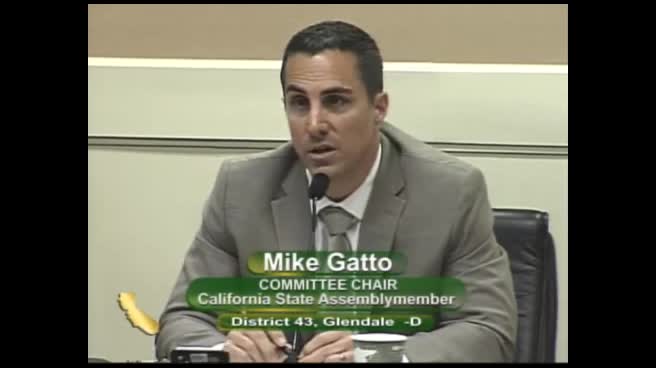
Mike Gatto, Chair
ABPCA Bill Id:AB 2141 (
Author:Ting) – As Introduced Ver:February 17, 2016
SUBJECT: Energy-efficient refrigeration program: low-income communities
SUMMARY: Requires each electrical and gas corporation to develop a program under the direction and supervision of the California Public Utilities Commission (CPUC) that provides incentives and assistance to owners, operators, or lessees of corner stores in order to reduce their electricity and gas bills. Specifically, this bill:
- Requires the program to give priority to:
- Low-income or lower-income areas and communities;
- Areas and communities with limited access to healthy food, including those that are considered to be food deserts; and
- Communities with higher rates of diet-related diseases.
- Requires participating corner stores to agree to sell fresh produce and other healthy foods for a minimum of three years.
- Authorizes the CPUC to impose other conditions to ensure the integrity of the program and to protect ratepayers.
- Requires the program to encourage and include outreach to corner stores to promote participation.
- Requires each electrical corporation and gas corporation to submit its proposal for the program to the CPUC by January 1, 2018.
- Authorizes the CPUC to approve the proposal, modify and approve the proposal, or direct the utility to file a new proposal with elements specified by the CPUC by a date certain.
- Requires the CPUC to implement equitable means to fund the program, which may include, but is not limited to, over-collections pursuant to the California Alternate Rates for Energy (CARE) program, the Energy Savings Assistance Program (ESAP), and other energy efficiency funds or programs subject to the CPUC's oversight.
- Defines a "corner store" as a small-scale store or grocery store, either an independent store or a chain store, that sells a limited selection of foods and other products, in rural, urban, and suburban settings, including stores that are not located on a corner and stores commonly referred to as convenience stores or neighborhood stores.
- States the term "diet-related diseases" includes, but is not limited to, obesity, diabetes, cancer, and cardiovascular diseases.
- Defines "food desert" to mean an area or community that lacks or is absent of grocery stores or supermarkets that sell fresh produce and healthy food options.
- Defines "low-income or lower-income" to mean households with annual incomes that are no greater than 400% of the federal poverty level.
EXISTING LAW:
- Directs the CPUC to administer cost-effective energy efficiency programs funded by a nonbypassable system benefits charge assessed on ratepayers to fund energy efficiency programs. (Public Utilities Code Section 381)
- Requires the California Energy Commission (CEC) to establish annual targets for statewide energy efficiency savings and demand reduction that will achieve a cumulative doubling of statewide energy efficiency savings in electricity and natural gas final end uses of retail customers by January 1, 2030. (Public Utilities Code Section 701.1)
- Requires the CPUC to establish efficiency targets for electrical corporations consistent with the state’s 2030 energy efficiency goal and requires local publicly owned electric utilities to establish annual targets for energy efficiency savings and demand reduction consistent with that goal. (Public Utilities Code Section 454.55)
- Requires the CPUC to report annually on its effort to identify ratepayer-funded energy efficiency programs that are similar to other state programs to ensure that the ratepayer-funded programs complement and do not duplicate programs of other state agencies (Public Utilities Code Section 747.6)
- Establishes the CARE program to assist low-income electric and gas customers with annual household incomes that are no greater than 200% of the federal poverty guideline levels. (Public Utilities Code Section 739.1)
- Requires each electrical corporation and gas corporation, subject to direction and supervision by the CPUC, to develop and implement a program of rate assistance to eligible food banks, as defined, at a fixed percentage determined by the CPUC. (Public Utilities Code Section 739.3)
- Establishes the Office of Farm to Fork (OF2F), within the Department of Food and Agriculture (CDFA), to work with various entities involved in promoting food access, and to increase the amount of agricultural products available to schools and underserved communities in the state. (Food and Agriculture Code Section 49000)
- Requires OF2F to identify urban and rural communities that lack access to healthy food, and to coordinate with local, state, and federal agencies to promote and increase awareness of programs that promote greater food access. (Food and Agriculture Code Section 49001)
- Creates the Farm to Fork Account in the CDFA Fund consisting of money made available from federal, state, industry, and other sources, and would continuously appropriate the money deposited in the account to carry out the purposes of OF2F. (Food and Agriculture Code Section 49002)
FISCAL EFFECT: Unknown.
COMMENTS:
- Author's Statement: "The overall health of a person is closely linked to their income and proximity to grocery stores. According to the USDA, nearly 10% percent of the U.S. population, or 29.7 million people, live in low-income areas more than 1 mile from a supermarket. As a result, this population must resort to purchasing and consuming unhealthy foods that are often found at local corner stores or fast food restaurants. This contributes to diet-related diseases and ultimately, to poor health. This bill brings energy efficiency and refrigeration to neighborhood corner stores in an effort to provide fresh produce and healthy food options to communities that are low-income or communities that lack access to grocery stores due to geographic barriers. Specifically, AB 2141 requires utility providers to develop a program that encourages owners of corner stores to participate in the state’s energy efficiency programs to expand healthy food choices."
- Existing Ratepayer Assistance Programs: For decades, the state and federal governments have overseen low-income programs to provide low-income customers discounts on their utility bills to the extent the customer meets the program eligibility requirements. The following is a breakdown of select programs:
- The CARE program offers eligible customers a 20% discount on their electricity and natural gas bill.
- The Family Electric Rate Assistance (FERA) program offers assistance to families whose household income slightly exceeds the low-income energy program allowances by billing some of their electricity usage at a lower rate.
- ESAP provides no-cost weatherization services to low-income households who meet the CARE income guidelines. Services provided include attic insulation, energy efficient refrigerators, energy efficient furnaces, weather stripping, caulking, low-flow showerheads, water heater blankets, and door and building envelope repairs which reduce air infiltration.
- The Department of Community Services and Development administers Federal low-income home energy assistance, energy crisis intervention, and low-income weatherization programs (LIHEAP). These programs are funded by federal grants to provide weatherization services and financial assistance to help low-income customers pay their energy bills.
- The Emergency Food Assistance Program (EFAP) provides low-income individuals and households with surplus commodities donated by the USDA. The California Department of Social Services is responsible for overseeing EFAP and ensures that USDA commodities are provided and distributed to eligible individuals and households in all 58 California counties. Program-eligible recipients may receive commodities through congregate feeding sites which serve meals, or through distribution sites, which distribute food for household consumption. There are 48 food banks that coordinate distribution to more than 2,300 food banks in their regions.
- AB 2218 (Bradford), Chapter 581, Statutes of 2014: AB 2218 requires each electrical corporation and gas corporation, subject to direction and supervision by the CPUC, to develop and implement a program of rate assistance to eligible food banks, at a fixed percentage determined by the CPUC. This law authorizes the CPUC to adjust the fixed percentage of rate assistance as appropriate. Furthermore, this law encourages the governing board of each local publicly owned electric utility to develop and implement a program of rate assistance to eligible food banks at a fixed percentage.
The program created under AB 2218 is substantially similar to the program this bill attempts to create in its mission and method of implementation. However, this statute is not yet implemented.
- Need for Refrigeration: According to the "Healthy Corner Stores Q & A" published by the Healthy Corner Store Network, one major barrier to stocking and selling fresh produce in corner stores is the lack of proper refrigeration equipment. This report goes on to state:
Corner stores have small square footage with limited shelving and refrigeration, which can make it hard for them to expand their inventory or stock perishable items. Many store owners do not have the time or resources to invest in store upgrades, and are not aware of financing options or how to apply for grants or loans.
Another study published in the American Journal of Public Health in 2012 identified similar barriers to increasing healthy food options in corner stores including lack of space and refrigeration.
- What Does an Energy Efficient Refrigerator Look Like? Refrigerators can be retrofitted or designed for energy efficiency. For example, refrigerators with glass doors can be upgraded to provide automatic door closures to better retain cold air. Motors and evaporators can be optimized and retrofitted to function more efficiently. Some motors are designed to shut off under certain conditions.
It may be more difficult to ensure that refrigerators specifically used for produce are energy efficient. Produce refrigerators tend to be open-air rather than closed with a door. Although these types of refrigerators may not be as efficient as those with a closing door, open-air refrigerators can become more efficient in other ways. These refrigerators can use low-heat lighting, such as LED lightbulbs, have roll-down screens or covers to hold in cold air when the store is closed, and can operate in conjunction with a condensate pump to manage condensation issues in high humidity areas.
Further, some product manufacturers will provide, at no- or low-cost, point-of-purchase refrigerators to assist with marketing their products. According to one popular soda vendor's literature, some of their refrigeration equipment is certified by the federal EnergyStar program and are equipped with energy management devices. It is unclear if similar programs exist for refrigerators that can be used to market healthy foods or whether there is a potential to utility partnernerships with healthy food vendors.
- Energy Bill Reduction: In its current form, this bill requires each gas and electrical corporation to help reduce the electricity and gas bills of participating corner stores through conservation and energy efficiency improvements. However, there is no guarantee that the addition of an energy efficient refrigerator will reduce energy usage or the monthly energy bill for a participating corner store. If a corner store has an existing refrigerator, the store may choose to keep the older refrigerator and begin using the new energy efficient refrigerator simultaneously. Now with two refrigerators, the energy consumption level and monthly energy bill would increase. Monthly energy bills could also increase in stores that did not previously own a refrigerator.
This bill should attempt to reduce energy costs if feasible and seek to provide more energy efficiency overall in a store's current consumption. Corner store owners should understand when choosing whether or not to participate in the program that their energy bill is not guaranteed to be reduced.
The author may wish to consider an amendment to clarify assistance to owners, operators, or lessees of corner stores to is intended to assist with using electricity and natural gas efficiently through conservation and energy efficiency improvements, including, but not limited to, the placement or replacement by providing incentives and assistance to owners, operators, or lessees of corner stores.
- Office of Farm to Fork: In its current strategic plan, the OF2F includes the following objectives related to the purpose of this bill:
- To provide resources for corner stores to carry healthier foods as a means to increase access points for consumers to purchase healthy foods.
- Facilitate access to existing federal and state funds to increase the number to food retail outlets in areas with limited food access.
- Work closely with local, state, and federal agencies to leverage existing programs and broaden new ones.
- Support nutrition education.
- Provide tools to help schools who want to improve meal program options and food literacy.
- Other Barriers to Healthy Foods in Corner Stores: The Healthy Corner Store Network identifies in their 2010 report that many store owners are not used to selling fresh produce or other perishable items. They may not know how to price, buy, handle or market these items or be aware of distribution options available to them. These stores do not have the buying power of larger stores, which can make it difficult for store owners to meet minimum order requirements or receive lower prices from distributors. Further, changing a product mix can be risky and many corner store owners believe the products they sell reflect customer demand. The study published in the American Journal of Public Health in 2012 also described customer demand as a barrier to selling healthy foods at corner stores.
This bill does not require corner stores to participate in incentive programs, leaving corner stores to determine for themselves whether or not it would be profitable for them to participate in the program. However, there is a possibility that very few corner stores would choose to participate in the program considering how many barriers prevent corner stores from selling perishable produce and healthy food, refrigeration being one of those barriers. Nevertheless, every electric and gas corporation would be required to develop a program and the CPUC would be required to review, approve, and modify project proposals from each utility. Program development costs may not be rewarded with the environmental, social, and health rewards the author hopes to achieve if proper consumer and store owners education of does not occur.
This bill requires the programs to encourage and include outreach to corner stores to promote participation. This may address some of the issues related to awareness and access that could lead to low participation. However, this clause does not address issues with customer demand.
The author may wish to consider an amendment that would require electrical and gas corporations to consult with the OF2F in their efforts to provide resources for corner stores to carry healthier foods and support nutrition education.
- Healthy and Fresh Foods: It is unclear how “healthy and fresh food options” are defined in this bill or if the communities this bill aims to serve are in demand for these food options in their corner stores. This bill does not require corner stores to participate in the program, but would create an incentivized option for corner store owners who feel the program would benefit their business to participate and adopt energy efficient refrigeration within their stores.
The author may wish to consider an amendment that would require the electrical and gas corporations to consult with the OF2F in order to determine which foods should be considered fresh and healthy under this bill and how much refrigerated space should be available under this program for healthy food options.
- Arguments in Support: According to PolicyLink, “ California has lead the nation in advancing state energy efficiency policies and programs, such as the Clean Energy and Pollution Reduction Act of 2105 and the develop of the [CARE] program that offers discount rates for low income gas and electric consumers. However, given that half of California residents are renters, these constituents have not yet directly benefitted from these policies. AB 2141would enable these residents to benefit from these efforts by providing incentives for local store owners to invest in energy efficient refrigeration and other upgrades in neighborhood corner stores, allowing them to sell fresh produce and other healthier food options. Existing regulations already require electric and gas companies to develop and implement a program of rate assistance to eligible food banks through the [CPUC], and this bill would create a similar program for local corner stores, another important community fixture through which many low-income consumers rely on for food.
- Suggested Amendments:
SECTION 1.
Section 748 is added to the Public Utilities Code, to read:
748. (a) For purposes of this section, the following terms have the following meanings:
(1) “Corner store” means a small-scale store or grocery store, either an independent store or a chain store, that sells a limited selection of foods and other products, in rural, urban, and suburban settings. “Corner store” includes stores that are not located on a corner and stores commonly referred to as convenience stores or neighborhood stores.
(2) “Diet-related diseases” includes, but is not limited to, obesity, diabetes, cancer, and cardiovascular diseases.
(3) “Food desert” means an area or community that lacks or is absent of grocery stores or supermarkets that sell fresh produce and healthy food options.
(4) “Low-income or lower income” means households with annual incomes that are no greater than 400 percent of the federal poverty level.
(b) (1) Subject to the direction and approval of the commission, each electrical corporation and gas corporation shall develop and implement a program to provide incentives and assistance to owners, operators, or lessees of corner stores to use electricity and natural gas efficiently through conservation and energy efficiency improvements, including, but not limited to, the placement or replacement of free or low-cost energy-efficient refrigeration in order to improve a community’s access to healthy and fresh food options.
(2) The program shall require participating corner stores to agree to sell fresh produce and other healthy foods for a minimum of three years. The commission may impose other conditions to ensure the integrity of the program and to protect ratepayers. The three year requirement shall not be enforceable if the individual or entity, or its successor, owning, operating, or leasing the corner store ceases all of its retail food sales operations.
(3) The program shall give priority to, but is not limited to, the following:
(A) Low-income or lower income areas and communities.
(B) Areas and communities with limited access to healthy food, including those that are considered to be food deserts.
(C) Communities with higher rates of diet-related diseases.
(4) The program shall encourage and include outreach to corner stores to promote participation.
(c) (1) Each electrical corporation and gas corporation shall submit its proposal for the program to the commission by January 1, 2018.
(1) In designing its programs, each electrical corporation and gas corporation shall consult with store owners, product vendors, refrigeration manufacturers, and the Office of Farm to Fork and submit proposals for the program to the commission by January 1, 2018.
(2) Electrical and gas corporations shall consult with the Office of Farm to Fork to determine which foods should be considered fresh and healthy under this bill and how much refrigerated space should be available under this program for healthy food options.
(2) (3) The commission may approve the proposal, modify and approve the proposal, or direct the utility to file a new proposal with elements specified by the commission by a date certain.
(3) The commission shall authorize or deny implementation of the program by July 1, 2018.
(d) The commission shall implement an equitable means to fund the program, which may include, but is not limited to, overcollections pursuant to the California Alternate Rates for Energy (CARE) program, the Energy Savings Assistance Program established pursuant to Section 382, and other energy efficiency funds or programs subject to the commission’s oversight.
- Prior Legislation:
AB 2218 (Bradford), Chapter 581, Statutes of 2014: Requires each electrical corporation and gas corporation, subject to direction and supervision by the CPUC, to develop and implement a program of rate assistance to eligible food banks, as defined, at a fixed percentage determined by the CPUC.
SB 491 (Rosenthal), Chapter 947, Statutes of 1994: Established the CARE program, which provides assistance to low-income electric and gas customers.
REGISTERED SUPPORT / OPPOSITION:
Support
Brightline Defense Project (Sponsor)
California Association of Food Banks
California Grocers Association
Food Bank of Contra Costa & Solano
Hunger Action Los Angeles
PolicyLink
Sierra Club California
Western Center on Law & Poverty
Opposition
None on file.
Analysis Prepared by: Darion Johnston / U. & C. / (916) 319-2083
Discussed in Hearing
 9MIN
Assembly Standing Committee on Utilities and Commerce
Bill Author

Bill Co-Author(s):