AB 2213: Medi-Cal: nondesignated public hospitals.
- Session Year: 2015-2016
- House: Assembly
- Latest Version Date: 2016-03-18
Existing law provides for the Medi-Cal program, which is administered by the State Department of Health Care Services, under which qualified low-income individuals receive health care services. The Medi-Cal program is, in part, governed and funded by federal Medicaid Program provisions. Existing law requires carriers and providers of Medi-Cal benefits to utilize uniform accounting and cost-reporting systems as developed by the department, and requires these carriers and providers to provide cost information to the department as is necessary, including copies of any Medicare costs reports and settlements and any Medicare audit reports. Existing law requires amounts paid for services provided to Medi-Cal beneficiaries to be audited by the department in a manner and form prescribed by the department. Existing law requires the department to implement a new Medi-Cal inpatient hospital reimbursement methodology based on diagnosis-related groups that reflects the costs and staffing levels associated with quality of care for private general acute care hospitals admissions on or after July 1, 2013, and for nondesignated public hospitals with admissions on or after January 1, 2014.
Existing law requires a hospital to report specified summary financial and utilization data to the Office of Statewide Health Planning and Development (OSHPD), as specified.
This bill would require the department and the OSHPD to administer and implement a demonstration under which the audits of nondesignated public hospitals for reporting periods beginning on and after July 1, 2016, would be evaluated to determine the reimbursement relevancy of cost report data. The bill would require the department and the OSHPD to, among other things, evaluate the data currently being collected through specified data and reports, including financial and utilization data and Medi-Cal cost reports, in order to determine its reimbursement relevancy, as specified. The bill would specify the goals of the demonstration, which includes designing a combined reporting form to collect relevant and useful data for policy making purposes.
The bill would authorize nondesignated public hospitals to participate in a 3-year demonstration project for the purpose of evaluating whether the goals under the initial demonstration are met. The bill would require the department and the OSHPD, within one year of the completion date of the 3-year demonstration project, to prepare and submit a report to the Legislature that includes an evaluation regarding the effectiveness of the 3-year demonstration project and recommendations regarding the continuation and expansion of the demonstration project to all hospitals.
Existing law provides for the Medi-Cal program, which is administered by the State Department of Health Care Services, under which qualified low-income individuals receive health care services. The Medi-Cal program is, in part, governed and funded by federal Medicaid Program provisions. Existing law establishes the Medi-Cal Hospital/Uninsured Care Demonstration Project Act, which revises hospital supplemental payment methodologies under the Medi-Cal program in order to maximize the use of federal funds consistent with federal Medicaid law and to stabilize the distribution of funding for hospitals that provide care to Medi-Cal beneficiaries and uninsured patients. Existing law requires the department to seek a successor demonstration project or federal waiver of Medicaid law to implement specified objectives, which may include better care coordination for seniors, persons with disabilities, and children with special health care needs. Existing law provides that to the extent the provisions under the Medi-Cal Hospital/Uninsured Care Demonstration Project Act do not conflict with the provisions of, or the Special Terms and Conditions of, this demonstration project, the provisions of the Medi-Cal Hospital/Uninsured Care Demonstration Project Act shall apply. Existing law also defines nondesignated public hospitals for purposes of these provisions and requires that nondesignated public hospitals be eligible for specified payments under the demonstration project.
This bill would declare the intent of the Legislature to enact legislation that would ensure that nondesignated public hospitals are reimbursed adequately and promptly.
Existing law provides for the Medi-Cal program, which is administered by the State Department of Health Care Services, under which qualified low-income individuals receive health care services. The Medi-Cal program is, in part, governed and funded by federal Medicaid Program provisions. Existing law establishes the Medi-Cal Hospital/Uninsured Care Demonstration Project Act, which revises hospital supplemental payment methodologies under the Medi-Cal program in order to maximize the use of federal funds consistent with federal Medicaid law and to stabilize the distribution of funding for hospitals that provide care to Medi-Cal beneficiaries and uninsured patients. Existing law requires the department to seek a successor demonstration project or federal waiver of Medicaid law to implement specified objectives, which may include better care coordination for seniors, persons with disabilities, and children with special health care needs. Existing law provides that to the extent the provisions under the Medi-Cal Hospital/Uninsured Care Demonstration Project Act do not conflict with the provisions of, or the Special Terms and Conditions of, this demonstration project, the provisions of the Medi-Cal Hospital/Uninsured Care Demonstration Project Act shall apply. Existing law also defines nondesignated public hospitals for purposes of these provisions and requires that nondesignated public hospitals be eligible for specified payments under the demonstration project.
This bill would declare the intent of the Legislature to enact legislation that would ensure that nondesignated public hospitals are reimbursed adequately and promptly.
(a)The department, in collaboration with the Office of Statewide Health Planning and Development, shall administer and implement a demonstration under which the audits of nondesignated public hospitals for reporting periods beginning on and after July 1, 2016, are evaluated to determine the reimbursement relevancy of cost report data.
(b)In order to determine the reimbursement relevancy of existing data collected and what additional data would be useful, the demonstration under this section shall include an evaluation of all of the following:
(1)Data currently being collected through the Office of Statewide Health Planning and Development.
(2)Annual and quarterly financial and utilization data.
(3)Annual report of hospitals and other relevant reports.
(4)Data currently being collected by the department through the annual Medi-Cal cost report.
(c)Goals for the demonstration shall include all of the following:
(1)Design a combined reporting form to collect relevant and useful data for policymaking purposes.
(2)Eliminate the data report audit function, if appropriate, and utilize desk audits to ensure that reported data is as accurate as possible.
(3)Determine the appropriate agency to administer the reporting and data collection function.
(d)Upon the attainment of the goals described in subdivision (c), nondesignated public hospitals may participate in a three-year demonstration project for the purpose of evaluating whether the goals under the initial demonstration are met.
(e)(1)The department, in collaboration with the Office of Statewide Health Planning and Development, shall, within one year of the completion date of the three-year demonstration project described in subdivision (d), prepare and submit a report to the Legislature that includes an evaluation regarding the effectiveness of the three-year demonstration project and recommendations regarding the continuation and expansion of the demonstration project to all hospitals.
(2)A report submitted pursuant to this subdivision shall be submitted in compliance with Section 9795 of the Government Code.
SECTION 1.It is the intent of the Legislature to enact legislation that would ensure that nondesignated public hospitals are reimbursed adequately and promptly.
It is the intent of the Legislature to enact legislation that would ensure that nondesignated public hospitals are reimbursed adequately and promptly.
|
Date
|
Status
|
|---|---|
| Feb 18, 2016 | Read first time. To print. |
| Feb 19, 2016 | From printer. May be heard in committee March 20. |
| Mar 17, 2016 | Referred to Com. on HEALTH. |
| Mar 18, 2016 | From committee chair, with author's amendments: Amend, and re-refer to Com. on HEALTH. Read second time and amended. |
| Mar 28, 2016 | Re-referred to Com. on HEALTH. |
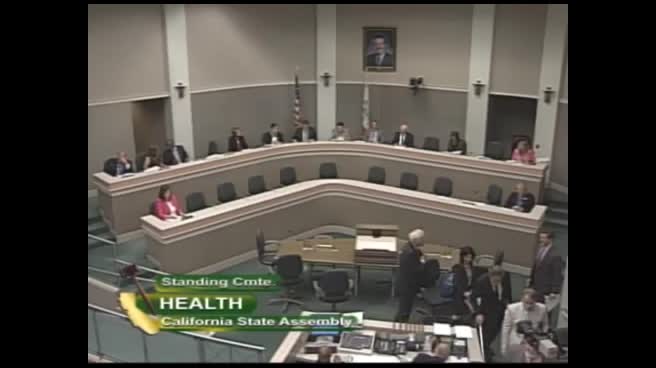
| Apr 20, 2016 | From committee: Do pass and re-refer to Com. on APPR. (Ayes 19. Noes 0.) (April 19). Re-referred to Com. on APPR. |
| May 4, 2016 | In committee: Set, first hearing. Referred to APPR. suspense file. |
| May 27, 2016 | In committee: Held under submission. |
|
Date
|
Description
|
Location
|
Votes
|
|
|---|---|---|---|---|
| Apr 19, 2016 | Do pass and be re-referred to the Committee on [Appropriations] | Assembly Standing Committee on Health |
Passed |
This list shows positions taken on this bill by organizations on the date displayed, which is linked to the original source.
Positions by individuals are not included.
|
Organization
|
Position
|
Date
|
|---|---|---|
| Association of California Healthcare Districts | ** Support | Apr 19, 2016 |
| District Hospital Leadership Forum | * Support | Apr 19, 2016 |
| District Hospital Leadership Forum | * Indeterminate | Apr 19, 2016 |
Date of Hearing: May 4, 2016
ASSEMBLY COMMITTEE ON APPROPRIATIONS
Lorena Gonzalez, Chair
ABPCA Bill Id:AB 2213
Author:(Dahle) – As Amended Ver:March 18, 2016
Policy Committee: | Health | Vote: | 19 - 0 |
Urgency: No State Mandated Local Program: No Reimbursable: No
SUMMARY:
This bill requires the Department of Health Care Services (DHCS) and Office of Statewide Health Planning and Development (OSHPD) to jointly develop and implement a three-year demonstration program, whereby the data collected by DHCS and OSHPD from the audits of non-designated public hospitals (NDPHs) for the cost reporting periods beginning on and after July 1, 2016, is evaluated for reimbursement relevancy.
It also requires DHCS and OSHPD to prepare and submit a report to the Legislature that evaluates the effectiveness of the three-year demonstration program and makes recommendations regarding continuing and expanding the project to all hospitals.
FISCAL EFFECT:
- Costs of $350,000 (GF/potentially federal) annually for DHCS staff costs to manage the project for the three-year life of the demonstration and minor costs to OSHPD for consultation and collaboration (Health Data and Planning Fund).
- Unknown, potentially significant additional costs for training and costs, information technology contract costs, or related contract activities.
- This bill does not make implementation contingent on federal approval, and it’s unknown if the federal Center for Medicare and Medicaid Services (CMS) would approve a demonstration project for amending the federal cost report form. If DHCS does not obtain federal approval for the demonstration project, the cost of implementation would be 100% GF with no federal match.
COMMENTS:
- Purpose. According to the author, the Medi-Cal cost report is no longer needed as a reimbursement tool. Minimizing reporting burden and streamlining reporting to what is useful and necessary would benefit hospitals and the state. This bill is sponsored by the District Hospital Leadership Forum, who states it would reduce the administrative costs and burdens associated with the outdated cost report process.
- Background. Hospital reimbursement in Medi-Cal is complex, and how hospitals are paid depends on the status of the hospital as designated public hospital (DPH), non-designated public hospital (NDPH or district hospitals), and or a private hospital. NDPHs recently converted to a Medi-Cal inpatient reimbursement methodology called Diagnosis-Related Group (DRG). The methodology takes into account the patient’s diagnosis, age, procedures performed, and discharge status. Hospitals indicate that since the inception of the new methodology, the Medi-Cal cost report is no longer used as a reimbursement tool. This bill allows hospitals to work with DHCS, OSHPD, and other stakeholders to determine the appropriate data needed.
Analysis Prepared by: Lisa Murawski / APPR. / (916) 319-2081
Date of Hearing: April 19, 2016
ASSEMBLY COMMITTEE ON HEALTH
Jim Wood, Chair
ABPCA Bill Id:AB 2213
Author:(Dahle) – As Amended Ver:March 18, 2016
SUBJECT: Medi-Cal: nondesignated public hospitals.
SUMMARY: Requires the Department of Health Care Services (DHCS), in collaboration with the Office of Statewide Health Planning and Development (OSHPD) to administer and implement a demonstration under which the audits of nondesignated public hospitals (NDPHs) for reporting periods beginning on and after July 1, 2016, are evaluated to determine the reimbursement relevancy of cost report data. Specifically, this bill:
- Requires, in order to determine the reimbursement relevancy of existing data collected and what additional data would be useful, the demonstration to include an evaluation of all of the following:
- Data currently being collected through OSHPD;
- Annual and quarterly financial and utilization data;
- Annual report of hospitals and other relevant reports; and,
- Data currently being collected by DHCS through the annual Medi-Cal cost report.
- Requires the goals for the demonstration project to include all of the following:
- Design a combined reporting form to collect relevant and useful data for policymaking purposes;
- Eliminate the date report audit function, if appropriate, and utilize desk audits to ensure that reported data is as accurate as possible; and,
- Determine the appropriate agency to administer the reporting and data collection function.
- Authorizes NDPHs upon attainment of the goals in 2) above, to participate in a three-year demonstration project to evaluate whether the goals under the initial demonstration are met.
- Requires DHCS, in collaboration with OSHPD, within one year of the completion date of the three year demonstration project specified in 3) above, to prepare and submit a report to the Legislature that includes an evaluation regarding the effectiveness of the three-year demonstration project and recommendations regarding the continuation and expansion of the demonstration project to all hospitals.
EXISTING LAW:
- Establishes Medi-Cal, administered by DHCS, to provide comprehensive health care services and long-term care to pregnant women, children, and people who are aged, blind, and disabled.
- Requires DHCS to develop and implement a payment methodology based on diagnosis related groups (DRGs) subject to federal approval, that reflects the costs and staffing level associated with quality of care for patients in all general acute care hospitals in state and out of state, including Medicare critical access hospitals, but excluding designated public hospitals, psychiatric hospitals, and rehabilitation hospitals, which include alcohol and drug rehabilitation hospitals.
- Requires DHCS to audit amounts paid for services provided to Medi-Cal beneficiaries, including cost reports that must be submitted by hospitals for purposes of reimbursement.
- Requires, under federal law, providers receiving payment on the basis of reimbursable cost to provide adequate cost data. Applies this requirement to providers such as hospitals, skilled nursing facilities, rural health clinics, federally qualified health clinics, and community mental health centers.
FISCAL EFFECT: This bill has not yet been analyzed by a fiscal committee.
COMMENTS:
- PURPOSE OF THIS BILL. According to the author, since the inception of the Medi-Cal DRG-based inpatient fee-for-service (FFS) payment system in July 2013 and January 2014, the Medi-Cal cost report is no longer used as a reimbursement tool. FFS payments and Medi-Cal managed care payments are not paid based upon the filing of the Medi-Cal cost report. Prior to the implementation of DRGs, some hospitals were reimbursed allowable costs for providing services to Medi-Cal beneficiaries, requiring the use of extensive cost report data filed with and audited by the state. This bill allows district and municipal hospitals to work with DHCS, OSHPD, and other stakeholders to determine the appropriate data needed.
- BACKGROUND. NDPHs are hospitals owned by hospital districts or municipal entities. There are 40 NDPHs in California (39 district hospitals and one municipal hospital). NDPHs have publicly elected board of directors and local governments are responsible for providing for the healthcare needs of their communities. NDPHs have licensed acute beds that range from three to more than 400. Many NDPHs are in rural and medically underserved areas and some are critical access hospitals.
SB 853 (Committee on Budget and Fiscal Review), Chapter 717, Statutes of 2010, mandates the design and implementation of a new payment methodology for hospital inpatient services provided to Medi-Cal beneficiaries based upon the DRGs. This new DRG payment mechanism applied to all private hospitals with admissions on or after July 1, 2013 and for NDPHs with admissions on or after January 1, 2014.
According to DHCS, under the previous reimbursement methodology, these hospitals were reimbursed based on Medi-Cal allowable, audited costs. Hospitals were paid interim rates using a cost-to-charge ratio based on the most recently submitted cost report. A cost settlement process reconciled the difference between interim payments and the allowable costs of providing services. Per diem rates for contract hospitals were negotiated by the former Office of the California Medical Assistance Commission under the Selective Provider Contracting Program. Simply put, prior to DRGs, NDPHs were paid on a per diem basis, regardless of the procedure or diagnosis.
Under DRG, every complete inpatient stay is assigned to a single DRG using a computerized algorithm that takes into account the patient’s diagnosis, age, procedures performed, and discharge status. Each DRG has a relative weight that reflects the typical hospital resources needed to care a patient in that DRG relative to the hospital resources needed to take care of the average patient. The change in DRG reimbursement methodology is applied as follows- Programs: DRGs applied to Medi-Cal FFS, California Children’s Services, or the Genetically Handicapped Persons Program;
- Hospitals: DRGs applied to general acute care hospitals, including out-of-state, Medicare-designated critical access hospitals, and Medicare-designated long term acute care hospitals;
- Excluded Hospitals: designated public hospitals, psychiatric hospitals (county); and,
- Excluded Services: rehabilitation (per diem), administrative days (per diem), psychiatric services (counties).
According to DHCS, the goals of the project are to: a) engage in payment reform to help drive California towards the goals of health care reform, including driving payment towards quality and reducing the cost trend; b) Promote efficiency, improve transparency, and improve fairness by paying similarly across hospitals for similar care; c) Promote access to care by paying more for patients who require more care; and, d) simplify the payment process, encourage administrative efficiency and base payments on consistent and credible data.
- SUPPORT. According to the District Hospital Leadership Forum, the sponsor of this bill, and the Association of California Healthcare Districts, the demonstration project under this bill would reduce the administrative costs and burdens associated with the outdated cost report process that is currently in place.
- POLICY COMMENT. DHCS points out that cost reports are federally required to capture allowable Medicaid costs and as such, its elimination may require federal change. The Committee may wish to ask the author or the sponsor to address this issue.
REGISTERED SUPPORT / OPPOSITION:
Support
District Hospital Leadership Forum
Association of California Healthcare Districts
Opposition
None on file.
Analysis Prepared by: Rosielyn Pulmano / HEALTH / (916) 319-2097
Bill Author
Bill Co-Author(s):