AB 2323: Electricity: rates: low-carbon fuel production facilities.
- Session Year: 2015-2016
- House: Assembly
- Latest Version Date: 2016-04-19
Under existing law, the Public Utilities Commission (PUC) has regulatory authority over public utilities, including electrical corporations. Existing law authorizes the PUC to fix the rates and charges for every public utility, and requires that those rates and charges be just and reasonable. Existing law, with certain exceptions, prohibits a public utility from changing any rate, except upon a showing before the PUC and a finding by the PUC that the new rate is justified.
Existing law, enacted as part of the Clean Energy and Pollution Reduction Act of 2015, requires the PUC, in consultation with the State Energy Resources Conservation and Development Commission (Energy Commission) and the State Air Resources Board, to direct electrical corporations to file applications for programs and investments to accelerate widespread transportation electrification to reduce dependence on petroleum, meet air quality standards, achieve the goals set forth in the Charge Ahead California Initiative, and reduce emissions of greenhouse gases to 40% below 1990 levels by 2030 and to 80% below 1990 levels by 2050. That law requires that the programs proposed by electrical corporations seek to minimize overall costs and maximize overall benefits. The PUC is required to approve, or modify and approve, programs and investments in transportation electrification, including those that deploy charging infrastructure, through a reasonable cost recovery mechanism, if they are consistent with the above-described purposes, do not unfairly compete with nonutility enterprises, include performance accountability measures, and are in the interests of ratepayers, as specified.
This bill would require an electrical corporation that offers time-of-use rates, critical peak pricing, real-time pricing, or peak time rebates for the charging of electric vehicles, as part of a program to encourage transportation electrification, to offer similar rates to low-carbon transportation fuel production facilities and public and private fueling stations dedicated to providing low-carbon fuels for transportation purposes. The bill would require the PUC, in consultation with the state board and the Energy Commission, to establish performance accountability measures for production facilities that elect to use the rates established pursuant to the bills requirements and would require the PUC to ensure that those rates are in the interests of ratepayers.
Under existing law, a violation of the Public Utilities Act or any order, decision, rule, direction, demand, or requirement of the commission PUC is a crime.
Because the provisions of this bill are within the act, and because a violation of an order of the commission under these provisions would be a crime, the bill would impose a state-mandated local program.
The California Constitution requires the state to reimburse local agencies and school districts for certain costs mandated by the state. Statutory provisions establish procedures for making that reimbursement.
This bill would provide that no reimbursement is required by this act for a specified reason.
Under existing law, the Public Utilities Commission (PUC) has regulatory authority over public utilities, including electrical corporations. Existing law authorizes the PUC to fix the rates and charges for every public utility, and requires that those rates and charges be just and reasonable. Existing law, with certain exceptions, prohibits a public utility from changing any rate, except upon a showing before the PUC and a finding by the PUC that the new rate is justified.
Existing law, enacted as part of the Clean Energy and Pollution Reduction Act of 2015, requires the PUC, in consultation with the State Energy Resources Conservation and Development Commission and the State Air Resources Board, to direct electrical corporations to file applications for programs and investments to accelerate widespread transportation electrification to reduce dependence on petroleum, meet air quality standards, achieve the goals set forth in the Charge Ahead California Initiative, and reduce emissions of greenhouse gases to 40% below 1990 levels by 2030 and to 80% below 1990 levels by 2050. That law requires that the programs proposed by electrical corporations seek to minimize overall costs and maximize overall benefits. The PUC is required to approve, or modify and approve, programs and investments in transportation electrification, including those that deploy charging infrastructure, through a reasonable cost recovery mechanism, if they are consistent with the above-described purposes, do not unfairly compete with nonutility enterprises, include performance accountability measures, and are in the interests of ratepayers, as specified.
This bill would require an electrical corporation that offers time-of-use rates, critical peak pricing, real-time pricing, or peak time rebates for the charging of electric vehicles, as part of a program to encourage transportation electrification, to offer similar rates to low-carbon transportation fuel production facilities and public and private fueling stations dedicated to providing low-carbon fuels for transportation purposes.
Under existing law, a violation of the Public Utilities Act or any order, decision, rule, direction, demand, or requirement of the commission is a crime.
Because the provisions of this bill are within the act, and because a violation of an order of the commission under these provisions would be a crime, the bill would impose a state-mandated local program.
The California Constitution requires the state to reimburse local agencies and school districts for certain costs mandated by the state. Statutory provisions establish procedures for making that reimbursement.
This bill would provide that no reimbursement is required by this act for a specified reason.
Under existing law, the Public Utilities Commission (PUC) has regulatory authority over public utilities, including electrical corporations. Existing law authorizes the PUC to fix the rates and charges for every public utility, and requires that those rates and charges be just and reasonable. Existing law, with certain exceptions, prohibits a public utility from changing any rate, except upon a showing before the PUC and a finding by the PUC that the new rate is justified.
Existing law, enacted as part of the Clean Energy and Pollution Reduction Act of 2015, requires the PUC, in consultation with the State Energy Resources Conservation and Development Commission and the State Air Resources Board, to direct electrical corporations to file applications for programs and investments to accelerate widespread transportation electrification to reduce dependence on petroleum, meet air quality standards, achieve the goals set forth in the Charge Ahead California Initiative, and reduce emissions of greenhouse gases to 40% below 1990 levels by 2030 and to 80% below 1990 levels by 2050. That law requires that the programs proposed by electrical corporations seek to minimize overall costs and maximize overall benefits. The PUC is required to approve, or modify and approve, programs and investments in transportation electrification, including those that deploy charging infrastructure, through a reasonable cost recovery mechanism, if they are consistent with the above-described purposes, do not unfairly compete with nonutility enterprises, include performance accountability measures, and are in the interests of ratepayers, as specified.
This bill would require an electrical corporation that offers time-of-use rates, critical peak pricing, real-time pricing, or peak time rebates for the charging of electric vehicles, as part of a program to encourage transportation electrification, to offer similar rates to low-carbon fuel production facilities and public and private fueling stations dedicated to providing low-carbon fuels for transportation purposes.
Under existing law, a violation of the Public Utilities Act or any order, decision, rule, direction, demand, or requirement of the commission is a crime.
Because the provisions of this bill are within the act, and because a violation of an order of the commission under these provisions would be a crime, the bill would impose a state-mandated local program.
The California Constitution requires the state to reimburse local agencies and school districts for certain costs mandated by the state. Statutory provisions establish procedures for making that reimbursement.
This bill would provide that no reimbursement is required by this act for a specified reason.
Existing law creates the State Air Resources Board as the state agency with the primary responsibility over regulation of air pollution. Existing law authorizes the state board to do such acts as may be necessary for the proper execution of the powers and duties granted to, and imposed upon, the state board.
This bill would make technical, nonsubstantive changes to this authorization.
(a)An electrical corporation that offers time-of-use rates, critical peak pricing, real-time pricing, or peak time rebates for the charging of electric vehicles, as part of a program to encourage transportation electrification, shall offer similar rates to low-carbon transportation fuel production facilities and public and private fueling stations dedicated to providing low-carbon fuels for transportation purposes. Nothing in this section requires an electrical corporation to offer time-of-use rates, critical peak pricing, real-time pricing, or peak time rebates to low-carbon transportation fuel production facilities or low-carbon transportation fueling stations that do not offer special electric service rates designed to encourage the use of electric vehicles. For purposes of this section, low-carbon transportation fuel means a liquid or gaseous transportation fuel that meets the low-carbon fuel standard regulation (Subarticle 7 (commencing with Section 95480) of Article 4 of Subchapter 10 of Chapter 1 of Division 3 of Title 17 of the California Code of Regulations) requirements for reduced carbon intensity compared to the closest comparable petroleum fuel.
(b)The commission, in consultation with the State Air Resources Board and the Energy Commission, shall establish performance accountability measures for production facilities that elect to use the rates established pursuant to this section.
(c)The commission shall ensure that the rates established pursuant to this section are in the interests of ratepayers as defined in Section 740.8.
SEC. 2.No reimbursement is required by this act pursuant to Section 6 of Article XIIIB of the California Constitution because the only costs that may be incurred by a local agency or school district will be incurred because this act creates a new crime or infraction, eliminates a crime or infraction, or changes the penalty for a crime or infraction, within the meaning of Section 17556 of the Government Code, or changes the definition of a crime within the meaning of Section 6 of Article XIIIB of the California Constitution.
An electrical corporation that offers time-of-use rates, critical peak pricing, real-time pricing, or peak time rebates for the charging of electric vehicles, as part of a program to encourage transportation electrification, shall offer similar rates to low-carbon transportation fuel production facilities and public and private fueling stations dedicated to providing low-carbon fuels for transportation purposes. Nothing in this section requires an electrical corporation to offer time-of-use rates, critical peak pricing, real-time pricing, or peak time rebates to low-carbon transportation fuel production facilities or low-carbon transportation fueling stations that do not offer special electric service rates designed to encourage the use of electric vehicles. For purposes of this section, low-carbon transportation fuel means a liquid or gaseous transportation fuel that meets the low-carbon fuel standard regulation (Subarticle 7 (commencing with Section 95480) of Article 4 of Subchapter 10 of Chapter 1 of Division 3 of Title 17 of the California Code of Regulations) requirements for reduced carbon intensity compared to the closest comparable petroleum fuel.
SEC. 2.No reimbursement is required by this act pursuant to Section 6 of Article XIIIB of the California Constitution because the only costs that may be incurred by a local agency or school district will be incurred because this act creates a new crime or infraction, eliminates a crime or infraction, or changes the penalty for a crime or infraction, within the meaning of Section 17556 of the Government Code, or changes the definition of a crime within the meaning of Section 6 of Article XIIIB of the California Constitution.
An electrical corporation that offers time-of-use rates, critical peak pricing, real-time pricing, or peak time rebates for the charging of electric vehicles, as part of a program to encourage transportation electrification, shall offer similar rates to low-carbon fuel production facilities and public and private fueling stations dedicated to providing low-carbon fuels for transportation purposes. Nothing in this section requires an electrical corporation to offer time-of-use rates, critical peak pricing, real-time pricing, or peak time rebates to low-carbon fuel production facilities or low-carbon fueling stations that do not offer special electric service rates designed to encourage the use of electric vehicles.
SEC. 2.No reimbursement is required by this act pursuant to Section 6 of Article XIIIB of the California Constitution because the only costs that may be incurred by a local agency or school district will be incurred because this act creates a new crime or infraction, eliminates a crime or infraction, or changes the penalty for a crime or infraction, within the meaning of Section 17556 of the Government Code, or changes the definition of a crime within the meaning of Section 6 of Article XIIIB of the California Constitution.
SECTION 1.Section 39600 of the Health and Safety Code is amended to read:39600.The state board shall do those acts as may be necessary for the proper execution of the powers and duties granted to, and imposed upon, the state board by this division and by any other law.
The state board shall do such those acts as may be necessary for the proper execution of the powers and duties granted to, and imposed upon, the state board by this division and by any other provision of law.
|
Date
|
Status
|
|---|---|
| Feb 18, 2016 | Read first time. To print. |
| Feb 19, 2016 | From printer. May be heard in committee March 20. |
| Mar 17, 2016 | From committee chair, with author's amendments: Amend, and re-refer to Com. on U. & C. Read second time and amended. |
| Mar 17, 2016 | Referred to Com. on U. & C. |
| Mar 28, 2016 | Re-referred to Com. on U. & C. |
| Mar 29, 2016 | From committee chair, with author's amendments: Amend, and re-refer to Com. on U. & C. Read second time and amended. |
| Mar 30, 2016 | Re-referred to Com. on U. & C. |
| Apr 18, 2016 | From committee: Amend, and do pass as amended and re-refer to Com. on APPR. (Ayes 10. Noes 4.) (April 13). |
| Apr 19, 2016 | Read second time and amended. |
| Apr 20, 2016 | Re-referred to Com. on APPR. |
| May 11, 2016 | In committee: Set, first hearing. Referred to APPR. suspense file. |
| May 27, 2016 | In committee: Held under submission. |
|
Date
|
Description
|
Location
|
Votes
|
|
|---|---|---|---|---|
| Apr 13, 2016 | Do pass as amended and be re-referred to the Committee on [Appropriations] | Assembly Standing Committee on Utilities and Commerce |
Passed |
This list shows positions taken on this bill by organizations on the date displayed, which is linked to the original source.
Positions by individuals are not included.
|
Organization
|
Position
|
Date
|
|---|---|---|
| California Advanced Ethanol Producers | ** Support | Apr 13, 2016 |
| California Biodiesel Alliance | ** Support | Apr 13, 2016 |
| Clean Energy | ** Support | Apr 13, 2016 |
| Coalition For Renewable Natural Gas | * Support | Apr 13, 2016 |
Date of Hearing: May 11, 2016
ASSEMBLY COMMITTEE ON APPROPRIATIONS
Lorena Gonzalez, Chair
ABPCA Bill Id:AB 2323
Author:(Ridley-Thomas) – As Amended Ver:April 19, 2016
Policy Committee: | Utilities and Commerce | Vote: | 10 - 4 |
|
|
Urgency: No State Mandated Local Program: Yes Reimbursable: No
SUMMARY:
This bill requires electrical corporations that offer time-of-use rates, critical peak pricing, real-time pricing, or peak time rebates for charging electric vehicles to offer similar rates to low-carbon transportation fuel production facilities and fueling stations.
Additionally, this bill requires the California Public Utilities Commission (PUC) to consult with the Air Resources Board (ARB) and the California Energy Commission (CEC) to establish accountability measures for facilities that elect to use the rates provided by the bill.
FISCAL EFFECT:
- Increased one-time costs of approximately $190,000 to hold a rulemaking proceeding to extend rates to other qualified entities and adopt performance accountability measures (special fund).
- Absorbable costs for CEC and ARB to assist in establishing performance accountability measures.
COMMENTS:
- Purpose. According to the author, some investor-owned electric utility companies are currently offering, or plan to offer, discount rate programs to electric vehicle users to encourage use and promote the reduction of the state’s carbon footprint. The author states that, like electric vehicles, the use of biofuels, hydrogen, and natural gas can play a significant role in advancing the state’s air quality and climate change goals.
This bill provides discounted rates for all eligible low-carbon fuel facilities and fueling stations.
- Background. Electrical corporations provide various rate plans for customers, including time-of-use rates, critical peak pricing, retail-time pricing, and peak time rebates, irrespective of whether the customer is using that electricity for charging a vehicle. These rate plans, known as tariffs, are designed in a manner that does not require one class of customer to subsidize another, with the exception of programs designed to support low income customers.
This bill requires the PUC to ensure the new discounted rates benefit ratepayers, as specified.
- State Petroleum Reduction Goals. In his 2015, Governor Brown announced three new energy goals that would take state clean energy policy beyond 2020: (1) 50% percent of California’s electricity to come from renewable energy sources; (2) reducing by 50% the amount of petroleum used in cars and trucks; and (3) doubling the energy efficiency of existing buildings, all by 2030.
Analysis Prepared by: Jennifer Galehouse / APPR. / (916) 319-2081
Date of Hearing: April 13, 2016
ASSEMBLY COMMITTEE ON UTILITIES AND COMMERCE
Mike Gatto, Chair
ABPCA Bill Id:AB 2323 (
Author:Ridley-Thomas) – As Amended Ver:March 29, 2016
SUBJECT: Electricity: rates: low-carbon fuel production facilities
SUMMARY: Requires electrical corporations to offer rate plans to certain transportation fuel production facilities. Specifically, this bill requires an electrical corporation that offers time-of-use rates, critical peak pricing, real-time pricing, or peak time rebates for the charging of electric vehicles, as part of a program to encourage transportation electrification, to offer similar rates to low-carbon transportation fuel production facilities and public and private fueling stations dedicated to providing low-carbon fuels for transportation purposes.
EXISTING LAW:
- Requires the California Public Utilities Commission (CPUC) to establish rates for electricity and gas using cost allocation principles that fairly and reasonably assign to different customer classes the costs of providing service to those customer classes, consistent with the policies of affordability and conservation. (Public Utilities Code Section 739.6)
- Defines "interests" of ratepayers to mean direct benefits that are specific to ratepayers and consistent with safer, more reliable, or less costly gas or electrical service, improvement in energy efficiency of travel, reduction of health and environmental impacts from air pollution, reduction of greenhouse gas emissions related to electricity and natural gas production and use, increased use of alternative fuels, and creating high-quality jobs or other economic benefits, including in disadvantaged communities identified. (Public Utilities Code Section 740.8)
- Directs the CPUC to require electrical corporations to file applications for programs and investments to accelerate widespread transportation electrification to reduce dependence on petroleum, meet air quality standards, and achieve the goals set forth in the Charge Ahead California Initiative and requires that these programs be in the interests of ratepayers. (Public Utilities Code Section 740.12)
Authorizes the Charge Ahead California Initiative program to increase the availability of zero-emission vehicles and near-zero-emission vehicles. (Health and Safety Code Section 44258.4).
FISCAL EFFECT: Unknown.
COMMENTS:
- Author's Statement: "In 2015 Governor Brown set a goal to reduce petroleum consumption in California by 50%, by 2030. As such, the state is attempting to encourage a 10% reduction of the carbon intensity (CI) in all transportation fuels by 2020, with plans to further reduce CI values by 2030, 2040, and 2050.
"Some investor-owned electric utility companies are currently offering or plan to offer discount rate programs to electric vehicle users to encourage the adoption of electric vehicles and the reduction of the state’s carbon footprint. Like electric vehicles, the use of biofuels, hydrogen, and natural gas can play a significant role in advancing the state’s air quality and climate change goals."
- Background: According to the author, some investor-owned electric utility companies (IOUs) are currently offering or plan to offer discount rate programs to electric vehicle users to encourage the adoption of electric vehicles and the reduction of the state's carbon footprint. Like electric vehicles, the use of biofuels, hydrogen, and natural gas can play a significant role in advancing the state's air quality and climate change goals. In order to achieve the state's air quality and climate change goals, the state needs to encourage the use of low-carbon alternative transportation fuels that can be used in the medium- and heavy-duty transportation sectors where electrification may not be commercially available. The Air Resources Board estimates sufficient fuel cell and battery electric technology for these sectors will not be available for 15-35 years. Encouraging the use of low-carbon alternative transportation fuels in the medium- and heavy-duty transportation sectors will provide prompt air quality benefits to disadvantaged communities while the infrastructure for zero-emission heavy duty vehicles is developed.
Electrical corporations provide various rate plans for customers, including time-of-use rates, critical peak pricing, retail-time pricing, and peak time rebates to many customers, irrespective of whether the customer is using that electricity for charging a vehicle. These rate plans, known as tariffs, are designed in a manner that does not require one class of customer to subsidize another, with the exception of programs designed to support low income customers.
- Already eligible? Fuel production facilities are either commercial or industrial customers (i.e., not residential, street lighting, or agriculture). As such, they are already required to take utility service under time-of-use rate plans and are eligible for a variety of utility rate plans which include critical peak pricing.
- Alternative fuels – gas and electric – are they equivalent? This bill proposes a unique offer to production facilities of unspecified alternative fuels to be subsidized by electrical customers. It is unclear whether electrical customers would receive any benefit from this offer. Electric vehicles can be operated in a manner that can assist in management of the electrical grid and integrating generation from eligible renewable energy resources. It is unclear how or if gaseous fuels could provide these services. It is also unclear why the electrical rate would be provided to a production facility without also including a minimum requirement of fuel dispensing.
The author may wish to consider an amendment that includes performance accountability measures and that the rates offered are in the interest of ratepayers.
- Suggested amendments:
740.13. (a) An electrical corporation that offers time-of-use rates, critical peak pricing, real-time pricing, or peak time rebates for the charging of electric vehicles, as part of a program to encourage transportation electrification, shall offer similar rates to low-carbon transportation fuel production facilities and public and private fueling stations dedicated to providing low-carbon fuels for transportation purposes. Nothing in this section requires an electrical corporation to offer time-of-use rates, critical peak pricing, real-time pricing, or peak time rebates to low-carbon transportation fuel production facilities or low-carbon transportation fueling stations that do not offer special electric service rates designed to encourage the use of electric vehicles. For purposes of this section, “low-carbon transportation fuel” means a liquid or gaseous transportation fuel that meets the low-carbon fuel standard regulation (Subarticle 7 (commencing with Section 95480) of Article 4 of Subchapter 10 of Chapter 1 of Division 3 of Title 17 of the California Code of Regulations) requirements for reduced carbon intensity compared to the closest comparable petroleum fuel.
(b) The commission, in consultation with the Air Resources Board and the California Energy Commission, shall establish performance accountability measures for production facilities that elect to use the rates established pursuant to this section.
(c)The commission shall ensure that the rates established pursuant to this section in the interests of ratepayers as defined in Section 740.8
- Arguments in Support: Supporters argue that this bill will help reduce costs and assist with expanding the use of low-carbon fuels and provide parity with electric vehicle fueling costs.
REGISTERED SUPPORT / OPPOSITION:
Support
California Advanced Ethanol Producers
California Biodiesel Alliance
Clean Energy
Coalition for Renewable Natural Gas
Opposition
None on file
Analysis Prepared by: Sue Kateley / U. & C. / (916) 319-2083
Discussed in Hearing
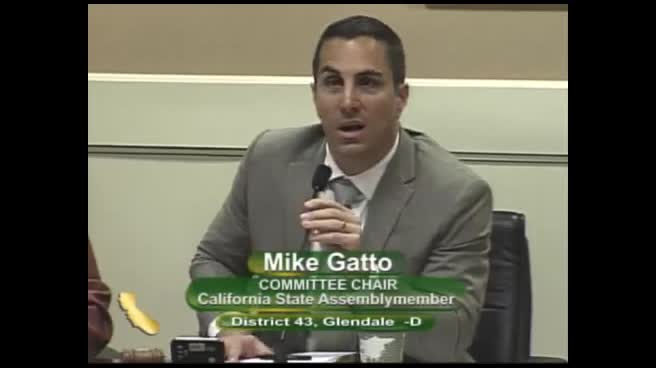 9MIN
Assembly Standing Committee on Utilities and Commerce
Bill Author

Bill Co-Author(s):