AB 2453: Emergency services: State 911 Advisory Board.
- Session Year: 2015-2016
- House: Assembly
- Latest Version Date: 2016-04-28
Existing law establishes the State 911 Advisory Board Board, which is composed of 11 members who meet quarterly in public sessions and are appointed by, and serve at the pleasure of of, the Governor.
This bill would increase the membership to 13 members, as specified.
This bill would also prohibit a representative from the California Emergency Medical Services Authority, communications industry, cellular technology or with a background in the telecommunications industry, or public safety communications field industry from being a member of the board if, during the 2 years prior to appointment on the board, he or she received a substantial portion of his or her income from a listed professional category or industry.
Existing law, the Political Reform Act of 1974, generally prohibits a public official at any level of state or local government from making, participating in making, or in any way attempting to use his or her official position to influence a governmental decision in which he or she knows, or has reason to know, he or she has a financial interest.
This bill would prohibit a member of the advisory board from personally and substantially participating, as specified, in a claim, contract, controversy, determination, plan, study, or other matter in which the advisory board is a party or has an interest, if the member of the advisory board has knowledge that he or she, his or her spouse, minor child, or partner, or an organization, as specified, for which the member of the advisory board currently serves as an officer, director, trustee, partner, or employee or has served in this position within the 2 year period prior to his or her appointment to the advisory board has a direct or indirect financial interest in the matter.
This bill would prohibit a member of the advisory board from acting as an agent, attorney, or employee for any party other than the state when the advisory board is a party to or has a direct, substantial interest in a judicial or other proceeding, hearing, application, request for a ruling, or other determination, contract, claim, controversy, study, plan, or other particular matter.
This bill would also prohibit a representative from the California Emergency Medical Services Authority, communications industry, cellular technology or telecommunications industry, or public safety communications field Authority or with a background in the telecommunications industry from being employed within a listed professional category or industry within 2 years after he or she ceases to be a member of the board.
Existing law establishes the State 911 Advisory Board which is composed of 11 members who meet quarterly in public sessions and are appointed by, and serve at the pleasure of the Governor.
This bill would increase the membership to 15 13 members, as specified.
This bill would also prohibit a representative from the California Emergency Medical Services Authority, communications industry, cellular technology or telecommunications industry, or public safety communications field from being a member of the board if, during the 2 years prior to appointment on the board, he or she received a substantial portion of his or her income from a listed professional category or industry.
Existing law, the Political Reform Act of 1974, generally prohibits a public official at any level of state or local government from making, participating in making, or in any way attempting to use his or her official position to influence a governmental decision in which he or she knows, or has reason to know, he or she has a financial interest.
This bill would prohibit a member of the advisory board from personally and substantially participating, as specified, in a claim, contract, controversy, determination, plan, study, or other matter in which the advisory board is a party or has an interest, if the member of the advisory board has knowledge that he or she, his or her spouse, minor child, or partner, or an organization, as specified, for which the member of the advisory board currently serves as an officer, director, trustee, partner, or employee or has served in this position within the 2 year period prior to his or her appointment to the advisory board has a direct or indirect financial interest in the matter.
This bill would prohibit a member of the advisory board from acting as an agent, attorney, or employee for any party other than the state when the advisory board is a party to or has a direct, substantial interest in a judicial or other proceeding, hearing, application, request for a ruling, or other determination, contract, claim, controversy, study, plan, or other particular matter.
This bill would also prohibit a representative from the California Emergency Medical Services Authority, communications industry, cellular technology or telecommunications industry, or public safety communications field from being employed within a listed professional category or industry within 2 years after he or she ceases to be a member of the board.
Existing law establishes the State 911 Advisory Board which is composed of 11 members who meet quarterly in public sessions and are appointed by, and serve at the pleasure of the Governor.
This bill would increase the membership to 15 members, as specified.
(a)There is in state government the State 911 Advisory Board.
(b)The advisory board shall be composed of the following members appointed by the Governor who shall serve at the pleasure of the Governor:
(1)The Chief of the Public Safety Communications Division shall serve as the nonvoting chair of the board.
(2)One representative from the Department of the California Highway Patrol.
(3)Two representatives on the recommendation of the California Police Chiefs Association.
(4)Two representatives on the recommendation of the California State Sheriffs Association.
(5)Two representatives on the recommendation of the California Fire Chiefs Association.
(6)Two representatives on the recommendation of the CalNENA Executive Board.
(7)One representative on the joint recommendation of the executive boards of the state chapters of the Association of Public-Safety Communications Officials-International, Inc.
(8)One representative from the California Emergency Medical Services Authority.
(9)One representative with a background in the telecommunications industry.
(c)(1)Recommending authorities shall give great weight and consideration to the knowledge, training, and expertise of the appointee with respect to their experience within the California 911 system. Board members should have at least two years of experience as a Public Safety Answering Point (PSAP) manager or county coordinator, except where a specific person is designated as a member.
(2)A representative from the California Emergency Medical Services Authority, communications industry, cellular technology or telecommunications industry, or public safety communications field Authority or with a background in the telecommunications industry shall not be a member of the board if, during the two years prior to appointment on the board, he or she received a substantial portion of his or her income directly or indirectly from a professional category or industry listed above. in subdivision (b).
(d)Members of the advisory board shall serve at the pleasure of the Governor, but may not serve more than two consecutive two-year terms, except as follows:
(1)The presiding Chief of the Public Safety Communications Division shall serve for the duration of his or her tenure.
(2)Four of the members shall serve an initial term of three years.
(e)Advisory board members shall not receive compensation for their service on the board, but may be reimbursed for travel and per diem for time spent in attending meetings of the board.
(f)The advisory board shall meet quarterly in public sessions in accordance with the Bagley-Keene Open Meeting Act (Article 9 (commencing with Section 11120) of Chapter 2 of Part 1 of Division 3 of Title 2). The division shall provide administrative support to the State 911 Advisory Board. The State 911 Advisory Board, at its first meeting, shall adopt bylaws and operating procedures consistent with this article and establish committees as necessary.
(g)Notwithstanding any other provision of law, a member of the advisory board may designate a person to act as that member in his or her place and stead for all purposes, as though the member were personally present.
(h)(1)A member of the advisory board shall not personally and substantially participate, through decision, approval, disapproval, recommendation, the rendering of advice, investigation, or otherwise, in a claim, contract, controversy, determination, plan, study, or other particular matter in which the advisory board is a party or has an interest, if the member of the advisory board has knowledge that he or she, his or her spouse, minor child, or partner, or an organization for which the member of the advisory board currently serves as an officer, director, trustee, partner, or employee or has served in this position within the two year period prior to his or her appointment to the advisory board has a direct or indirect financial interest.
(2)A member of the advisory board shall not act as an agent, attorney, or employee for any party other than the state when the advisory board is a party to or has a direct, substantial interest in a judicial or other proceeding, hearing, application, request for a ruling, or other determination, contract, claim, controversy, study, plan, or other particular matter.
(3)A representative from the California Emergency Medical Services Authority, communications industry, cellular technology or telecommunications industry, or public safety communications field Authority or with a background in the telecommunications industry shall not be employed within a professional category or industry listed above in subdivision (b) within two years after he or she ceases to be a member of the board.
(4)For purposes of this subdivision, organization shall not include a governmental agency or educational or research institution that is a tax exempt, nonprofit organization.
(a)There is in state government the State 911 Advisory Board.
(b)The advisory board shall be composed of the following members appointed by the Governor who shall serve at the pleasure of the Governor:
(1)The Chief of the Public Safety Communications Division shall serve as the nonvoting chair of the board.
(2)One representative from the Department of the California Highway Patrol.
(3)Two representatives on the recommendation of the California Police Chiefs Association.
(4)Two representatives on the recommendation of the California State Sheriffs Association.
(5)Two representatives on the recommendation of the California Fire Chiefs Association.
(6)Two representatives on the recommendation of the CalNENA Executive Board.
(7)One representative on the joint recommendation of the executive boards of the state chapters of the Association of Public-Safety Communications Officials-International, Inc.
(8)One representative from the California Emergency Medical Services Authority.
(9)One representative with a background in the communications telecommunications industry.
(10)One representative with an expertise in the technology of cellular phones and telecommunications.
(11)One representative with a background in public safety communications.
(c)(1)Recommending authorities shall give great weight and consideration to the knowledge, training, and expertise of the appointee with respect to their experience within the California 911 system. Board members should have at least two years of experience as a Public Safety Answering Point (PSAP) manager or county coordinator, except where a specific person is designated as a member.
(2)A representative from the California Emergency Medical Services Authority, communications industry, cellular technology or telecommunications industry, or public safety communications field shall not be a member of the board if, during the two years prior to appointment on the board, he or she received a substantial portion of his or her income directly or indirectly from a professional category or industry listed above.
(d)Members of the advisory board shall serve at the pleasure of the Governor, but may not serve more than two consecutive two-year terms, except as follows:
(1)The presiding Chief of the Public Safety Communications Division shall serve for the duration of his or her tenure.
(2)Four of the members shall serve an initial term of three years.
(e)Advisory board members shall not receive compensation for their service on the board, but may be reimbursed for travel and per diem for time spent in attending meetings of the board.
(f)The advisory board shall meet quarterly in public sessions in accordance with the Bagley-Keene Open Meeting Act (Article 9 (commencing with Section 11120) of Chapter 2 of Part 1 of Division 3 of Title 2). The division shall provide administrative support to the State 911 Advisory Board. The State 911 Advisory Board, at its first meeting, shall adopt bylaws and operating procedures consistent with this article and establish committees as necessary.
(g)Notwithstanding any other provision of law, a member of the advisory board may designate a person to act as that member in his or her place and stead for all purposes, as though the member were personally present.
(h)(1)A member of the advisory board shall not personally and substantially participate, through decision, approval, disapproval, recommendation, the rendering of advice, investigation, or otherwise, in a claim, contract, controversy, determination, plan, study, or other particular matter in which the advisory board is a party or has an interest, if the member of the advisory board has knowledge that he or she, his or her spouse, minor child, or partner, or an organization for which the member of the advisory board currently serves as an officer, director, trustee, partner, or employee or has served in this position within the two year period prior to his or her appointment to the advisory board has a direct or indirect financial interest.
(2)A member of the advisory board shall not act as an agent, attorney, or employee for any party other than the state when the advisory board is a party to or has a direct, substantial interest in a judicial or other proceeding, hearing, application, request for a ruling, or other determination, contract, claim, controversy, study, plan, or other particular matter.
(3)A representative from the California Emergency Medical Services Authority, communications industry, cellular technology or telecommunications industry, or public safety communications field shall not be employed within a professional category or industry listed above within two years after he or she ceases to be a member of the board.
(4)For purposes of this subdivision, organization shall not include a governmental agency or educational or research institution that is a tax exempt, nonprofit organization.
(a)There is in state government the State 911 Advisory Board.
(b)The advisory board shall be comprised composed of the following members appointed by the Governor who shall serve at the pleasure of the Governor. Governor:
(1)The Chief of the Public Safety Communications Division shall serve as the nonvoting chair of the board.
(2)One representative from the Department of the California Highway Patrol.
(3)Two representatives on the recommendation of the California Police Chiefs Association.
(4)Two representatives on the recommendation of the California State Sheriffs Association.
(5)Two representatives on the recommendation of the California Fire Chiefs Association.
(6)Two representatives on the recommendation of the CalNENA Executive Board.
(7)One representative on the joint recommendation of the executive boards of the state chapters of the Association of Public-Safety Communications Officials-International, Inc.
(8)One representative from the California Emergency Medical Services Authority.
(9)One representative with a background in the communications industry.
(10)One representative with an expertise in the technology of cellular phones and telecommunications.
(11)One representative with a background in public safety communications.
(c)Recommending authorities shall give great weight and consideration to the knowledge, training, and expertise of the appointee with respect to their experience within the California 911 system. Board members should have at least two years of experience as a Public Safety Answering Point (PSAP) manager or county coordinator, except where a specific person is designated as a member.
(d)Members of the advisory board shall serve at the pleasure of the Governor, but may not serve more than two consecutive two-year terms, except as follows:
(1)The presiding Chief of the Public Safety Communications Division shall serve for the duration of his or her tenure.
(2)Four of the members shall serve an initial term of three years.
(e)Advisory board members shall not receive compensation for their service on the board, but may be reimbursed for travel and per diem for time spent in attending meetings of the board.
(f)The advisory board shall meet quarterly in public sessions in accordance with the Bagley-Keene Open Meeting Act (Article 9 (commencing with Section 11120) of Chapter 2 of Part 1 of Division 3 of Title 2). The division shall provide administrative support to the State 911 Advisory Board. The State 911 Advisory Board, at its first meeting, shall adopt bylaws and operating procedures consistent with this article and establish committees as necessary.
(g)Notwithstanding any other provision of law, any a member of the advisory board may designate a person to act as that member in his or her place and stead for all purposes, as though the member were personally present.
|
Date
|
Status
|
|---|---|
| Feb 19, 2016 | Introduced. To print. |
| Feb 21, 2016 | From printer. May be heard in committee March 22. |
| Feb 22, 2016 | Read first time. |
| Mar 8, 2016 | Referred to Com. on U. & C. |
| Apr 11, 2016 | From committee: Amend, and do pass as amended and re-refer to Com. on APPR. (Ayes 14. Noes 0.) (March 30). |
| Apr 12, 2016 | Read second time and amended. |
| Apr 13, 2016 | Re-referred to Com. on APPR. |
| Apr 27, 2016 | From committee: Amend, and do pass as amended. To Consent Calendar. (Ayes 19. Noes 0.) (April 27). |
| Apr 28, 2016 | Read second time and amended. Ordered returned to second reading. |
| May 2, 2016 | Read second time. Ordered to Consent Calendar. |
| May 5, 2016 | From Consent Calendar. |
| May 5, 2016 | Ordered to inactive file at the request of Assembly Member Rodriguez. |
|
Date
|
Description
|
Location
|
Votes
|
|
|---|---|---|---|---|
| Apr 27, 2016 | Do pass as amended. To Consent Calendar. | Assembly Standing Committee on Appropriations |
Passed |
|
| Mar 30, 2016 | Do pass as amended and be re-referred to the Committee on [Appropriations] | Assembly Standing Committee on Utilities and Commerce |
Passed |
This list shows positions taken on this bill by organizations on the date displayed, which is linked to the original source.
Positions by individuals are not included.
|
Organization
|
Position
|
Date
|
|---|---|---|
| California Cable & Telecommunications Association | ** Support | Mar 30, 2016 |
| California Fire Chiefs Association | ** Against | Mar 30, 2016 |
| Fire Districts Association Of California | ** Against | Mar 30, 2016 |
Date of Hearing: April 27, 2016
ASSEMBLY COMMITTEE ON APPROPRIATIONS
Lorena Gonzalez, Chair
ABPCA Bill Id:AB 2453
Author:(Rodriguez) – As Amended Ver:April 12, 2016
Policy Committee: | Utilities and Commerce | Vote: | 14 - 0 |
|
|
Urgency: No State Mandated Local Program: No Reimbursable: No
SUMMARY:
This bill increases the membership of the State 911 Advisory Board (advisory board) from 11 to 13 members by adding a representative of the California Emergency Medical Services Authority and a representative with a background in the telecommunications industry. Additionally, this bill includes conflict of interest provisions.
FISCAL EFFECT:
Increased annual costs to the Office of Emergency Services (CalOES) of approximately $6,000 for travel and per diem payments to the additional two members.
COMMENTS:
- Purpose. According to the author, new and developing technologies, software and equipment are being created and are increasingly complex. Having a more diverse and knowledgeable advisory board will create a better 911 system.
- Background. 1973, the Legislature passed the Warren-911 Act, which established the state's 911 emergency telephone response system. The State 911 Advisory Board makes recommendations to the 911 Emergency Communications Branch within CalOES on policies, practices, procedures, and technical and operational standards for the state 911 system. The current Board consists of 11 members:
- The Chief of the Public Safety Communications Division, who serves as a nonvoting chair of the board;
- One representative from the California Highway Patrol;
- Two representatives recommended by the California Police Chiefs Association;
- Two representatives recommended by the California State Sheriffs’ Association;
- Two representatives recommended by the California Fire Chiefs Association;
- Two representatives recommended by the California Chapter of the National Emergency Number Association Executive Board; and
- One representative who is jointly recommended by the executive boards of the state chapters of the Association of Public-Safety Communications Officials-International, Inc.
- Technical Amendments. The Utilities and Commerce Committee requested the inclusion of conflict of interest provisions which were adopted by the Committee. The provisions were drafted to a previous version of AB 2453 that added an additional four members. The author may wish to consider modifying the conflict of interest provisions to reflect the addition of two members in the current version of this bill
Analysis Prepared by: Jennifer Galehouse / APPR. / (916) 319-2081
Date of Hearing: March 30, 2016
ASSEMBLY COMMITTEE ON UTILITIES AND COMMERCE
Mike Gatto, Chair
ABPCA Bill Id:AB 2453 (
Author:Rodriguez) – As Introduced Ver:February 19, 2016
SUBJECT: Emergency services: State 911 Advisory Board
SUMMARY: Increases the membership of the State 911 Advisory Board from 11 members to 15 members. Specifically, this bill:
- Adds four additional member to the State 911 Advisory Board from each of the following categories:
- The California Emergency Medical Services Authority;
- The communications industry;
- The telecommunications and cellular technology field; and
- The public safety communications field.
EXISTING LAW:
- Establishes the State 911 Advisory Board comprised of the following members who are appointed by the Governor:
- The Chief of the Public Safety Communications Division, who serves as a nonvoting chair of the board;
- One representative from the California Highway Patrol;
- Two representatives recommended by the California Police Chiefs Association;
- Two representatives recommended by the California State Sheriff’s Association;
- Two representatives recommended by the California Fire Chiefs Association;
- Two representatives recommended by the California Chapter of the National Emergency Number Association Executive Board; and
- One representative on the joint recommendation of the executive boards of the state chapters of the Association of Public-Safety Communications Officials-International, Inc. (Government Section Code 53115.1)
- Requires the State 911 Advisory Board to advise the Office of Emergency Services (CalOES) on policies, practices, and procedures for the California 911 Emergency Communications Office, technical and operational standards for the California 911 system consistent with the National Emergency Number Association (NENA) standards, budget, funding, and reimbursement decisions related to the State Emergency Number Account, and expediting rollout of the Enhanced 911 Phase II technology, among other things. (Government Code Section 53115.2)
- Establishes the Warren-911-Emergency Assistance Act (Warren-911 Act), which creates a uniform, statewide 911 emergency number, and improves statewide emergency communications procedures and facilities, as specified. (Government Code Section 53100)
- Requires every local public agency to establish and operate a basic 911 emergency response system, or be a part of such a system. (Government Code Section 53109)
- Defines “public agency” as any city, county, municipal corporation, public district, or public authority within the state which provides or has the authority to provide firefighting, police, ambulance, medical, or other emergency services. (Government Code Section 53110)
- States 911 Advisory board members shall not be compensated for their service on the board, but can be reimbursed for travel and per diem for time spent in attendance of quarterly board meetings. (Government Code Section 53115.1(e))
- Requires the CalOES to develop a plan and timeline of target dates for the testing, implementation, and operation of a Next Generation 911 emergency communication system which will enable real-time transmission of emergency-related voice, text, data, photos, and video between the public and public safety agencies. (Government Code Section 53120)
FISCAL EFFECT: Unknown.
COMMENTS:
- Author’s Statement: "AB 2453 revises the makeup of the State 911 Advisory Board to provide valuable expertise and technical input on the future of the 911 system. In the 911 system new and developing technologies, software and equipment are being created and are increasingly complex. Having a more diverse and knowledgeable Board will create a better 911 system. The OES description of the State 911 Advisory Board states that it ‘… advises the California 911 Emergency Communications Branch on policies, practices and procedures; technical and operational standards for the California 911 system. The Board was established by statute in 2005.’ Better and more comprehensive technical expertise on the board is needed."
- Background: In 1973, the Legislature passed the Warren-911 Act, which established the state's 911 emergency telephone response system. Before the Act, the state had thousands of different emergency phone numbers, and its telephone exchange boundaries and central office service areas were not designed to consider public safety and political boundaries. The Warren-911 Act provided for a single, primary three-digit emergency number through which emergency service could be quickly and efficiently obtained making it less difficult for law enforcement and other public service personnel to locate and provide emergency services.
In 2014, the Legislature passed SB 1211 (Padilla), Chapter 926, Statutes of 2014, requiring CalOES to develop a plan and timeline of target dates for testing, implementing, and operating a Next Generation 911(Next Gen 911) emergency communication system, including text to 911 service. Next Gen 911 is an Internet Protocol (IP)-based, two-way communications system that will enable real-time transmission of emergency-related voice, text, data, photos, and video between the public and public safety agencies. Next Gen 911 will build upon, and eventually replace, the existing state 911 voice system that operates on the legacy switched telephone network. The system is aimed at updating the 911 service infrastructure to improve public emergency communications services in a growingly wireless mobile society.
CalOES oversees and coordinates the emergency preparedness, response, and recovery activities within the state. The CalOES Public Safety Communication Office is tasked with administering the states 911 emergency system which includes reviewing local public safety answering point equipment and operations. The 911 Advisory Board advises CalOES on the operation, funding, and planning for the State 911 system.
- State 911 Advisory Board: The State 911 Advisory Board makes recommendations to the 911 Emergency Communications Branch within CalOES on policies, practices, procedures, and technical and operational standards for the state 911 system. The current Board consists of 11 members:
- The Chief of the Public Safety Communications Division, who serves as a nonvoting chair of the board;
- One representative from the California Highway Patrol;
- Two representatives recommended by the California Police Chiefs Association;
- Two representatives recommended by the California State Sheriffs’ Association;
- Two representatives recommended by the California Fire Chiefs Association;
- Two representatives recommended by the California Chapter of the National Emergency Number Association Executive Board; and
- One representative who is jointly recommended by the executive boards of the state chapters of the Association of Public-Safety Communications Officials-International, Inc.
This bill would increase the membership of the Board from 11 members to 15 by adding one member to the Board from each of the following four categories:
- The California Emergency Medical Services Authority;
- A representative from the communications industry;
- A representative from the telecommunications and cellular technology field; and
- A representative from the public safety communications field.
- California Emergency Medical Services Authority: Emergency Medical Service (EMS) centers provide emergency and disaster medical services through a network of first responders, Emergency Medical Technicians (EMTs), nurses, and physicians. According to the Warren-911 Act, medical services must be provided via the 911 emergency response system. Although most EMS centers are consolidated within law enforcement and fire public safety answering points (PSAPs), the current membership of the 911 Advisory Board does not include a member who is identified primarily as a medical professional on the CalOES Web site.
According to a study conducted by the Department of Emergency Medicine at SUNY Upstate Medical University, a primary barrier to the deployment of emergency 911 services is getting stakeholders together to agree on an implementation strategy. Researchers found that physicians, nurses, EMS providers and others in the medical community can play an important leadership role in the development of a wireless emergency 911 (WE-911) implementation plan. Furthermore, researchers state, "there is a need to educate the medical community not only on the issues, but also on how it can move from a reactive (retrospective) to a proactive role and have a positive impact on WE-911 implementation."
- Communications Industry and Public Safety Communications: As 911 emergency services technology develops, it is important to consult with the communications industry to develop strategies for educating the public on their options for contacting emergency service providers. In addition to calling 911 from a phone, Next Gen 911 will enable the public to transmit text, images, video and data to a 911 center. Next Gen 911 also envisions additional types of emergency communications and data transfer and is intended to replace the current system over time.
It is important that the public understands how to access the 911 emergency response system. Many wireless phone users do not understand that their emergency call may not provide a dispatcher with the caller's location automatically and that they will have to provide their location by voice. Knowing the capability of the phone service to provide location automatically is crucial, often life-saving information for the caller and for the dispatcher. Educating the public on ways they can and cannot contact emergency services using modern technology will only become more critical as Next Gen 911 develops additional types of emergency communications capabilities.
- Telecommunications/ Cellular Technology Expert: The Warren-911 Act identifies the importance of technology, and telephone technologies in particular, to the functionality of the state 911 emergency response system. Existing law establishes a clear connection between efficiency in the emergency response system and reducing emergency response times. Incorporating telecommunications and cellular technology expertise in the development of the 911 emergency response system is important to ensure emergency response technologies continue to become more efficient as modern communications technologies develop.
- Conflict of Interest: This bill seeks to add a representative from the Board coming from the California Emergency Medical Services Authority, the communications industry, the telecommunications and cellular technology field, and the public safety communications field to the State 911. However, adding Board members from these industries may result in the addition of Board members with substantial conflicts of interest. The State 911 Advisory Board advises CalOES on policies, practices, and procedures for the 911 Emergency Communications Office as well as budget, funding, and reimbursement decisions related to the State Emergency Number Account. It is possible that members of the Board from these professional fields and industries may be making substantial financial decisions on issues that may benefit for-profit companies in the professional fields and industries they represent.
The author may wish to consider an amendment to ensure these additional Board members do not have a conflict of interest with the State 911 Advisory Board.
- Arguments in Support: According to the California Cable & Telecommunications Association (CCTA), "Given the important role of the Board amid rapidly changing technology, new products, and services related to emergency communications, CCTA welcomes the addition of board members who have technical, communications industry expertise, and are able to share that knowledge. In particular, with the advent of Next-Gen 911 emerging technologies, the additional board representatives prescribed by AB 2453 would enable the board to make fully informed and timely procurement decisions."
- Arguments in Opposition: According to the California Fire Chiefs Association and the Fire Districts Association of California, "The proposed additional positions, as outlined in AB 2453, are already represented by the current Board. As currently designed, each representative of the 911 Advisory Board was chosen to represent multiple stakeholder groups, both as subject matter experts within the public safety industry and as representatives of their respective groups. Presently, technical experts have the opportunity to provide guidance and bring their concerns before the 911 Advisory Board and Long Range Planning Community; expanding the Board to include members of the commercial community may create a conflict of interest."
- Suggested Amendments:
Add the following sections to the Government Code:
Government Code Section --- : No representative from the California Emergency Medical Services Authority, communications industry, cellular technology or telecommunications industry, or public safety communications field shall be a member of the Board who, during the two years prior to appointment on the Board, received any substantial portion of his or her income directly or indirectly from a professional category or industry listed above. A representative from the California Emergency Medical Services Authority, communications industry, cellular technology or telecommunications industry, or public safety communications field shall not be employed within a professional category or industry listed above within two years after he or she ceases to be a member of the Board.
Government Code Section --- : A person who is a member of the Board shall not participate personally and substantially as a member of the Board, through decision, approval, disapproval, recommendation, the rendering of advice, investigation, or otherwise, in a determination, contract, claim, controversy, study, plan, or other particular matter in which, to his or her knowledge, he or she, his or her spouse, minor child, or partner, or any organization, except a governmental agency or educational or research institution qualifying as a nonprofit organization under state or federal income tax law, in which he or she is serving, or has served as officer, director, trustee, partner, or employee while serving as a member of the Board or within two years prior to his or her appointment as a member of the Board, has a direct or indirect financial interest.
Government Code Section --- : A person who is a member of the Board shall not act as an attorney, agent, or employee for any person other than the state in connection with any judicial or other proceeding, hearing, application, request for a ruling, or other determination, contract, claim, controversy, study, plan, or other particular matter in which the Board is a party or has a direct and substantial interest.
- Related Legislation:
AB 1564 (Williams) 2016: Requires CalOES, the California Highway Patrol, and county coordinators to review the states routing of 911 calls, as specified. Pending in the Assembly Utilities and Commerce Committee.
AB 510 (Rodriguez) 2015: Requires CalOES, by January 1, 2017, to conduct a comprehensive review of California’s 911 emergency communication systems, as specified. Pending in the Senate Energy, Utilities and Communications Committee.
- Prior Legislation:
SB 1211 (Padilla), Chapter 926, Statutes of 2014: Requires CalOES to develop a plan and timeline of target dates for testing, implementing, and operating a Next Gen 911 emergency communication system, including text to 911 service, throughout California, as specified.
SB 911 (Alpert), Chapter 631, Statutes of 2004: Created the State 911 Advisory Board to advise the Telecommunications Division of the Department of General Services, with membership appointed by the Governor.
REGISTERED SUPPORT / OPPOSITION:
Support
California Cable & Telecommunications Association
Opposition
California Fire Chiefs Association
Fire Districts Association of California
Analysis Prepared by: Darion Johnston / U. & C. / (916) 319-2083
Discussed in Hearing
 20MIN
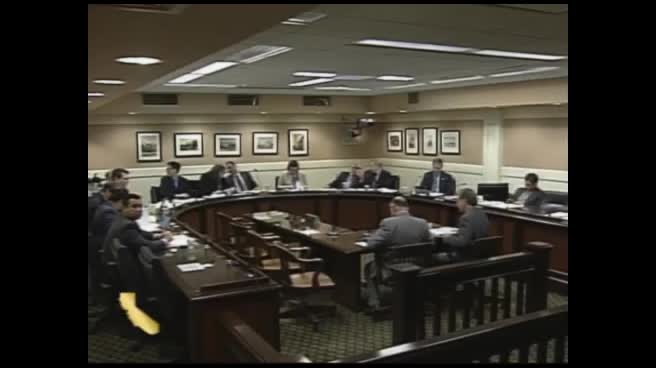
Assembly Standing Committee on Utilities and Commerce
Bill Author

Bill Co-Author(s):