AB 2475: Loan program: California Infrastructure and Economic Development Bank.
- Session Year: 2015-2016
- House: Assembly
- Latest Version Date: 2016-03-18
Existing law, including the California Global Warming Solutions Act of 2006, imposes requirements on local governments for meeting specific environmental quality standards. The Bergeson-Peace Infrastructure and Economic Development Bank Act authorizes the California Infrastructure and Economic Development Bank, governed by a board of directors, to make loans, issue bonds, and provide other financial assistance for various types of infrastructure and economic development projects, among other things. The act establishes the California Infrastructure and Economic Development Bank Fund, a continuously appropriated fund, for support of the bank.
This bill would state the intent of the Legislature to enact legislation to establish a forgivable loan program, administered by the California Infrastructure and Economic Development Bank, for local governments that provide matching funds for affordable housing projects that assist in meeting the goals of their regions sustainable community strategy (SCS) and the California Global Warming Solutions Act of 2006.
This bill would establish within the bank the Local Government Affordable Housing Forgivable Loan Program, and require the bank to make loans to a local government for the development of affordable housing by the local government on terms and conditions the bank deems in the best interests of the state. The bill would define terms for its purposes. The bill would excuse a local government from being required to repay either half or all of the principal and interest on a loan if the local government meets specific requirements that include, among others, that at least 75% of the units in the financed affordable housing be affordable to very low income households or extremely low income households, as specified. The bill would require the board to consult with the Strategic Growth Council and the California Housing Finance Agency in determining whether a local government has met these requirements. By expanding the use of the California Infrastructure and Economic Development Bank Fund, a continuously appropriated fund, this bill would make an appropriation.
Existing law, including the California Global Warming Solutions Act of 2006, imposes requirements on local governments for meeting specific environmental quality standards. The Bergeson-Peace Infrastructure and Economic Development Bank Act authorizes the California Infrastructure and Economic Development Bank, governed by a board of directors, to make loans, issue bonds, and provide other financial assistance for various types of infrastructure and economic development projects, among other things. The act establishes the California Infrastructure and Economic Development Bank Fund, a continuously appropriated fund, for support of the bank.
This bill would state the intent of the Legislature to enact legislation to establish a forgivable loan program, administered by the California Infrastructure and Economic Development Bank, for local governments that provide matching funds for affordable housing projects that assist in meeting the goals of their regions sustainable community strategy (SCS) and the California Global Warming Solutions Act of 2006.
There is within the bank the Local Government Affordable Housing Forgivable Loan Program.
63090.5.For purposes of this chapter, the following definitions shall apply:
(a)Affordable housing means a dwelling available for purchase or lease by persons and families who qualify as low- or moderate-income, as defined in Section 50093 of the Health and Safety Code, very low income households, as defined in Section 50105 of the Health and Safety Code, or extremely low income households, as defined in Section 50106 of the Health and Safety Code.
(b)Loan program means the Local Government Affordable Housing Forgivable Loan Program established by this chapter.
(c)Local government means a city, county, or city and county.
63090.10.The bank shall develop and administer the loan program to make loans to a local government for the development of affordable housing by the local government on terms and conditions the bank deems in the best interests of the state.
63090.15.A local government shall not be required to repay a loan made pursuant to the loan program, as follows:
(a)A local government shall not be required to repay one-half of the principal of, and accrued interest on, a loan made pursuant to the loan program if all of the following requirements have been satisfied by the local government to the satisfaction of the board:
(1)The affordable housing financed with the loan proceeds is compatible with the strategy required by Section 65080.
(2)The affordable housing financed with the loan proceeds contributes to the reduction of greenhouse gases pursuant to the strategy required by Section 65080.
(3)Each dwelling of affordable housing financed with the loan proceeds is restricted by deed to remain affordable housing for 55 years from the completion of the dwelling.
(4)At least 75 percent of the dwellings in an affordable housing development financed with the loan proceeds are affordable to very low income households, as defined in Section 50105 of the Health and Safety Code, or extremely low income households, as defined in Section 50106 of the Health and Safety Code, at either an affordable housing cost, as defined in Section 50052.5 of the Health and Safety Code or an affordable rent, as defined in Section 50053 of the Health and Safety Code.
(5)The local government contributed to development of the affordable housing financed with the loan proceeds in an amount of funds that are equal to, or infrastructure improvements that are equal in value to, the amount of the loan.
(b)A local government shall not be required to repay any amount of a loan made pursuant to the loan program if all of the following requirements have been satisfied by the local government to the satisfaction of the board:
(1)All the requirements in subdivision (a).
(2)The local government waived at least 50 percent of any development or permitting fees it could have imposed on a developer in the ordinary course of approving the development of the affordable housing financed with the loan proceeds.
(3)The affordable housing development financed with the loan proceeds includes onsite access to services needed by the residents of the affordable housing, including, but not limited to, social services and medical services.
63090.20.(a)The board shall determine whether a local government is excused from repaying half or all of a loan pursuant to Section 63090.15 after the completion of the development of the affordable housing financed with the loan proceeds.
(b)The board shall make a determination pursuant to subdivision (a) only after consulting with the Strategic Growth Council and the California Housing Finance Agency regarding whether the local government met the requirements of Section 63090.15. The Strategic Growth Council and the California Housing Finance Agency shall respond to a request for consultation from the board within a reasonable time.
(c)The board shall establish a process for a local government to apply for a reduction in loan repayment pursuant to Section 63090.15.
SECTION 1.It is the intent of the Legislature to enact legislation to establish a forgivable loan program, administered by the California Infrastructure and Economic Development Bank, for local governments that provide matching funds for affordable housing projects that assist in meeting the goals of their regions sustainable community strategy (SCS) and the California Global Warming Solutions Act of 2006 (Division 25.5 (commencing with Sec. 38500) of the Health and Safety Code).
It is the intent of the Legislature to enact legislation to establish a forgivable loan program, administered by the California Infrastructure and Economic Development Bank, for local governments that provide matching funds for affordable housing projects that assist in meeting the goals of their regions sustainable community strategy (SCS) and the California Global Warming Solutions Act of 2006 (Division 25.5 (commencing with Sec. 38500) of the Health and Safety Code).
|
Date
|
Status
|
|---|---|
| Feb 19, 2016 | Introduced. To print. |
| Feb 21, 2016 | From printer. May be heard in committee March 22. |
| Feb 22, 2016 | Read first time. |
| Mar 17, 2016 | Referred to Coms. on H. & C.D. and L. GOV. |
| Mar 18, 2016 | From committee chair, with author's amendments: Amend, and re-refer to Com. on H. & C.D. Read second time and amended. |
| Mar 28, 2016 | Re-referred to Com. on H. & C.D. |
| Apr 7, 2016 | (pending re-refer to Com. on L. GOV.) |
| Apr 7, 2016 | Assembly Rule 56 suspended. |
| Apr 7, 2016 | Assembly Rule 56 suspended. (Page 4218.) |
| Apr 13, 2016 | From committee: Do pass and re-refer to Com. on L. GOV. (Ayes 6. Noes 1.) (April 13). Re-referred to Com. on L. GOV. |
| Apr 21, 2016 | From committee: Do pass and re-refer to Com. on APPR. (Ayes 5. Noes 2.) (April 20). Re-referred to Com. on APPR. |
| May 11, 2016 | In committee: Set, first hearing. Referred to APPR. suspense file. |
| May 27, 2016 | In committee: Held under submission. |
|
Date
|
Description
|
Location
|
Votes
|
|
|---|---|---|---|---|
| Apr 20, 2016 | Do pass and be re-referred to the Committee on [Appropriations] | Assembly Standing Committee on Local Government |
Passed |
|
| Apr 13, 2016 | Do pass and be re-referred to the Committee on [Local Government] | Assembly Standing Committee on Housing and Community Development |
Passed |
This list shows positions taken on this bill by organizations on the date displayed, which is linked to the original source.
Positions by individuals are not included.
|
Organization
|
Position
|
Date
|
|---|---|---|
| American Planning Association, California Chapter | ** Support | Apr 20, 2016 |
| California Association Of Realtors | ** Against | Apr 20, 2016 |
| California State Association Of Counties | ** Support | Apr 20, 2016 |
| City Of Oakland | ** Support | Apr 20, 2016 |
| League Of California Cities | ** Support | Apr 20, 2016 |
| Non-Profit Housing Association of Northern California | * Support | Apr 20, 2016 |
Date of Hearing: May 11, 2016
ASSEMBLY COMMITTEE ON APPROPRIATIONS
Lorena Gonzalez, Chair
ABPCA Bill Id:AB 2475
Author:(Gordon) – As Amended Ver:March 18, 2016
Policy Committee: | Housing and Community Development | Vote: | 6 - 1 |
Local Government | 5 - 2 | ||
|
|
Urgency: No State Mandated Local Program: No Reimbursable: No
SUMMARY: This bill creates the Local Government Affordable Housing Forgivable Loan Program within the Infrastructure and Economic Development Bank (IBank). Specifically, this bill:
- Requires the IBank to develop and administer the loan program to make loans to local government for affordable housing developments with terms and conditions the IBank deems to be in the best interests of the state.
- Requires the IBank to determine whether a local government is excused from repaying half or all of a loan after the completion of the development of the affordable housing development based on whether a local government meets certain requirements including:
- The affordable housing must be compatible with the community's greenhouse gas reduction plan, and must contribute to a reduction in greenhouse gases,
- At least 75% of the affordable housing units in the development would need to be for extremely low- and very low-income households restricted for 55 years,
- The local government would have to contribute an amount equal to the amount of the loan or infrastructure improvements equal to the amount of the loan.
- To get the entire loan forgiven, the local government would additionally have to comply with all of the requirements listed above and waive at least 50% of any development or permitting fees it could have imposed on a developer, and the development would have to include onsite services for residents including social services and medical services.
- Requires the IBank to consult with the Strategic Growth Council (SGC) and the California Housing Finance Agency (CalHFA) to determine if the local government has met the requirements for a partial or total forgiveness of the loan.
FISCAL EFFECT:
- One-time cost of approximately $100 million (GF) to initially fund a meaningful loan program. Future ongoing costs of an unknown amount to backfill any forgiven debt to allow the program to continue to operate.
- One-time costs of approximately $500,000 (GF) to develop criteria, priorities, and guidelines and set up the organizational structure for the forgivable housing loan program.
- Ongoing costs of approximately $800,000 (GF) to fund 6 PYs to manage the program, including 2 originating loan officers, an administering loan officer, a compliance officer, a program manager, and an administrative support position.
COMMENTS:
- Purpose. According to the author, "AB 2475 creates a forgivable loan program, housed within the IBank, to assist local governments in financing critical new affordable housing projects. The program will hold loan recipients accountable to meeting required criteria that contribute positive outcomes back to the state as well as local communities. In return, loans will be eligible for partial or full forgiveness upon project completion. AB 2475 takes advantage of the IBank’s expertise in development financing, and places responsibility for administering this new program there. However, the bill also recognizes that meeting the specific requirements of the program are essential to its success. Because of this, the loan forgiveness determination occurs after project completion, and requires that IBank consult with the SGC and California Housing Finance Agency (CalHFA) on whether the project meets the required criteria. By integrating these entities into the final project review, the IBank will be able to leverage experts in sustainable development and housing finance to ensure that the criteria of the program have been met."
- Background. The IBank was established in 1994 to finance public infrastructure and private development. Housed within GO-Biz, it is governed by a five-member board of directors comprised of the Director of GO-Biz (chair), the State Treasurer, the Director of the Department of Finance, the Secretary of the Transportation Agency, and an appointee of the Governor. The day-to-day operations are directed by the Executive Director who is an appointee of the Governor and is subject to confirmation by the California State Senate.
The IBank does not receive any ongoing General Fund support, but is financed through fees, interest income and other revenues derived from its public and private sector financing activities. The IBank has authority to issue bonds, finance public agencies, provide credit enhancements, acquire or lease facilities, and leverage State and Federal dollars for its various programs. Since its creation in 1994, the I-Bank has loaned, financed, or participated in over $34 billion in infrastructure and economic expansion projects. This includes over $400 million to local and state agencies.
The IBank currently funds projects related to infrastructure including city streets, county highways, drainage, water supply and flood control, educational facilities, environmental mitigation measures, parks and recreational facilities, port facilities, power and communications, public transit, sewage collection and treatment, solid waste collection and disposal, water treatment and distribution, defense conversion, public safety facilities, state highways, military infrastructure, and goods movement-related infrastructure. This bill would expand the scope of IBank’s programs to include affordable housing.
- Related Legislation. AB 2319 (Gordon), also before this Committee today, authorizes the financing of an affordable housing project by the California IBank, including financing through the Infrastructure State Revolving Fund (ISRF).
Analysis Prepared by: Jennifer Swenson / APPR. / (916) 319-2081
Date of Hearing: April 20, 2016
ASSEMBLY COMMITTEE ON LOCAL GOVERNMENT
Susan Talamantes Eggman, Chair
ABPCA Bill Id:AB 2475 (
Author:Gordon) – As Amended Ver:March 18, 2016
SUBJECT: Loan program: California Infrastructure and Economic Development Bank.
SUMMARY: Creates the Local Government Affordable Housing Forgivable Loan Program. Specifically, this bill:
- Creates, within the California Infrastructure and Economic Development Bank (I-Bank),
the Local Government Affordable Housing Forgivable Loan Program (loan program). - Defines the following terms for the loan program:
- “Affordable housing” to mean a dwelling available for purchase or lease by persons and families who qualify as low- and moderate-income, very low-income households, or extremely low-households, as defined.
- “Loan program” to mean the Local Government Affordable Housing Forgivable Loan Program established by this chapter; and,
- “Local government” to mean a city, county, or city and county.
- Requires the I-Bank to develop and administer the loan program to make loans to a local government for the development of affordable housing by the local government on terms and conditions the I-Bank deems in the best interests of the state.
- Specifies that a local government shall not be required to repay a loan made pursuant to the loan program, as follows:
- A local government shall not be required to repay one-half of the principal of, and accrued interest on, a loan made pursuant to the loan program, if all of the following requirements have been satisfied by the local government to the satisfaction of the Board:
- The affordable housing financed with the loan proceeds is compatible with the Sustainable Communities Strategy (SCS);
- The affordable housing financed with the loan proceeds contributes to the reduction of greenhouse gases pursuant to the SCS;
- Each dwelling of affordable housing financed with the loan proceeds is restricted by deed to remain affordable housing for 55 years from the completion of the dwelling;
- At least 75% of the dwellings in an affordable housing development financed with the loan proceeds are affordable to very low-income households, or extremely low- income households, as defined, at either an affordable housing cost or an affordable rent, as defined; and,
- The local government contributed to development of the affordable housing financed with the loan proceeds in an amount of funds that are equal to, or infrastructure improvements that are equal to, the amount of the loan.
- A local government shall not be required to repay one-half of the principal of, and accrued interest on, a loan made pursuant to the loan program, if all of the following requirements have been satisfied by the local government to the satisfaction of the Board:
- Specifies that a local government shall not be required to repay any amount of a loan made pursuant to the loan program, if all of the following requirements have been satisfied by the local government to the satisfaction of the Board of the I-Bank:
- All the requirements listed in 4), above;
- The local government waived at least 50% of any development or permitting fees it could have imposed on a developer in the ordinary course of approving the development of the affordable housing financed with the loan proceeds; and,
- The affordable housing development financed with the loan proceeds includes onsite access to services needed by the residents of the affordable housing, including, but not limited to, social services and medical services.
- Requires the Board of the I-Bank to determine whether a local government is excused from repaying half or all of the loan after the completion of the development of the affordable housing financed with the loan proceeds.
- Requires the Board of the I-Bank to make a determination pursuant to 6), above, only after consulting with the Strategic Growth Council and the California Housing Finance Agency regarding whether the local government met the requirements of 4), above. Requires the Strategic Growth Council and the California Housing Finance Agency to respond to a request for consultation from the Board within a reasonable time.
- Requires the I-Bank Board to establish a process for a local government to apply for a reduction in loan repayment.
EXISTING LAW:
- Establishes the I-Bank within the Governor's Office of Business and Economic Development (GO-Biz) and authorizes it to undertake a variety of infrastructure related financial activities including, but not limited to, the administration of a revolving loan fund, oversight of the Small Business Finance Center, and the issuance of tax-exempt and taxable revenue bonds.
- Defines "project" for purposes of the I-Bank to mean designing, acquiring, planning, permitting, entitling, constructing, improving, extending, restoring, financing and generally development of public development facilities or economic development facilities within the state or financing transition costs or the acquisition of property or both upon approval of financing order by the Public Utilities Commission.
- Defines “extremely low-income households” to mean persons and families whose incomes do not exceed 30% of median area income.
- Defines very low-income households” to mean persons and families whose incomes do not exceed 50% of median area income.
- Defines “low-income households” to mean persons and families whose income does not 80% of median area income.
- Defines “moderate-income households” to mean persons and families of low or moderate income whose income exceeds the income limit for lower-income households.
FISCAL EFFECT: This bill is keyed fiscal.
COMMENTS:
- Bill Summary. This bill would direct I-Bank to develop a new loan program to make loans to local governments for affordable housing developments. If a local government meets certain requirements, the I-Bank would forgive either half of the loan amount or the full loan amount. To qualify to have half of the loan forgiven, a local government would have to: develop affordable housing that is compatible with the communities greenhouse gas reduction plan, or SCS, the affordable housing development would need to contribute to a reduction in greenhouse gases, at least 75% of the affordable housing units in the development would need to be for extremely low- and very low-income households restricted for 55 years, and the local government would have to contribute an amount equal to the amount of the loan or infrastructure improvements equal to the amount of the loan. To get the entire loan forgiven, the local government would have to comply with all of the requirements listed above and waive at least 50% of any development or permitting fees it could have imposed on a developer and the development would have to include onsite services for residents, including social services and medical services.
This bill is an author-sponsored measure.
- Author’s Statement. According to the author, "AB 2475 creates a forgivable loan program, housed within the I-Bank, to assist local governments in financing critical new affordable housing projects. The program will hold loan recipients accountable to meeting required criteria that contribute positive outcomes back to the state as well as local communities. Through working together, local governments, developers, and the state can integrate major regional planning and development targets into much needed affordable housing projects.
In return, loans will be eligible for partial or full forgiveness upon project completion.
AB 2475 takes advantage of the I-Bank’s expertise in development financing, and places responsibility for administering this new program there. However, the bill also recognizes that meeting the specific requirements of the program is essential to its success. Because of this, the loan forgiveness determination occurs after project completion, and requires that
I-Bank consults with the Strategic Growth Council (SGC) and California Housing Finance Agency (CalHFA) on whether the project meets the required criteria. By integrating these entities into the final project review, the I-Bank will be able to leverage experts in sustainable development and housing finance to ensure that the criteria of the program have been met.
“Rather than giving out funding in the form of matching grants for these critical developments, AB 2475 requires recipients follow through on promises. This strategy supports the State’s climate action goals to reduce GHGs, while also addressing the housing crisis by providing funding to local governments for housing projects. Integrating state goals with local needs is mutually beneficial.
“The I-Bank was created within Go-BIZ in 1994 to provide financial assistance for infrastructure and development projects that stimulate the economy, promote job creation, and strengthen California communities. To do this, the I-Bank has authority to issue bonds, finance public agencies, provide credit enhancements, acquire or lease facilities, and leverage State and Federal dollars for its various programs.”
- Two-thirds vote. The I-Bank Fund is a continuously appropriated fund; therefore, because this bill expands I-Bank’s duties, this bill will require a two-thirds vote of each house.
- Policy Considerations. The I-Bank currently funds projects related to infrastructure including city streets, county highways, drainage, water supply and flood control, educational facilities, environmental mitigation measures, parks and recreational facilities, port facilities, power and communications, public transit, sewage collection and treatment, solid waste collection and disposal, water treatment and distribution, defense conversion, public safety facilities, state highways, military infrastructure, and goods movement-related infrastructure. This bill would expand the scope of I-Bank’s programs to include affordable housing.
- Arguments in Support. Supporters argue that these loans have the potential to help build many additional units and create additional jobs and economic activity.
- Arguments in Opposition. Opponents note concern with the deed restriction provision contained in the bill.
- Double-Referral. This bill was heard in the Housing and Community Development Committee on April 13, 2016, where it passed with a 6-1 vote.
REGISTERED SUPPORT / OPPOSITION:
Support
American Planning Association, California Chapter
California State Association of Counties (CSAC)
City of Oakland
League of California Cities
Opposition
California Association of Realtors (unless amended)
Analysis Prepared by: Debbie Michel / L. GOV. / (916) 319-3958
Date of Hearing: April 13, 2016
ASSEMBLY COMMITTEE ON HOUSING AND COMMUNITY DEVELOPMENT
David Chiu, Chair
ABPCA Bill Id:AB 2475 (
Author:Gordon) – As Amended Ver:March 18, 2016
SUBJECT: Loan program: California Infrastructure and Economic Development Bank
SUMMARY: Creates the Local Government Affordable Housing Forgivable Loan Program with the Infrastructure and Economic Development Bank (IBank). Specifically, this bill:
- Defines "affordable housing" to mean a dwelling available for purchase or lease by persons and families who qualified as extremely low-, very low-, low- or moderate-income.
- Defines "loan program" to mean the Local Government Affordable Housing Forgivable Loan Program.
- Defines a "local government" to mean a city, county, or city and county.
- Requires the IBank to develop and administer the loan program to make loans to local government for the development of affordable housing by local government with terms and conditions the IBank deems to be in the best interests of the state.
- Provides that a local government will not be required to repay one-half of the principal of, and accrued interest on a loan, if all of the following requirements have been met to the satisfaction of the board:
- The affordable housing financed is compatible with a local government's sustainable community strategy (SCS).
- The affordable housing financed contributes to the reduction of greenhouse gasses pursuant to local government's sustainable community strategy (SCS).
- Each affordable housing unit financed by the loan is restricted by deed to remain affordable for 55 years.
- At least 75% of the dwellings in the affordable housing development financed with loan proceeds are affordable to extremely low- and very low income households.
- The local government contributed to the affordable housing development in an amount of funds that are equal to, or infrastructure improvements that are equal in value, to the amount of the loan.
- Provides that a local government will not be required to repay any amount of a loan if all of the following requirements have been met to the satisfaction of the IBank:
- The requirements above in (5) a) through e) have been met;
- The local government waives at least 50% of any development or permitting fees it could have imposed on a developer in the ordinary course of approving the affordable housing development; and
- The affordable housing development includes onsite access to services needed by residents including but not limited to social and medical services.
- Requires the IBank to determine whether a local government is excused from repaying half or all of a loan after the completion of the development of the affordable housing development.
- Requires the IBank to consult with the Strategic Growth Council (SGC) and the California Housing Finance Agency (CalHFA) to determine if the local government has met the requirements for a partial or total forgiveness of the loan.
- Requires the SGC and CalHFA to respond to a request for consultation from the IBank in a reasonable time.
- Requires the IBank to establish a process for a local government to apply for a reduction in the loan repayment.
- Makes an appropriation by expanding the authority of the IBank to expend funds in a continuously appropriated fund.
EXISTING LAW:
- Establishes the I-Bank within the Governor's Office of Business and Economic Development (GO-Biz) and authorizes it to undertake a variety of infrastructure related financial activities including, but not limited to, the administration of a revolving loan fund, oversight of the Small Business Finance Center, and the issuance of tax-exempt and taxable revenue bonds.
- Defines "project" for purposes of the IBank to mean designing, acquiring, planning, permitting, entitling, constructing, improving, extending, restoring, financing and generally development of public development facilities or economic development facilities within the state or financing transition costs or the acquisition of property or both upon approval of financing order by the Public Utilities Commission.
- Defines “extremely low income households” to mean persons and families whose incomes do not exceed 30% of median area income.
- Defines very low-income households” to mean persons and families whose incomes do not exceed 50% of median area income.
- Defines “low-income households” means persons and families whose income does not 80% of median area income.
- Defines “moderate-income households” means persons and families of low or moderate income whose income exceeds the income limit for lower income households.
FISCAL EFFECT: Unknown. 2/3 vote.
COMMENTS:
This bill would direct IBank to develop a new loan program to make loans to local governments for affordable housing developments. If a local government meets certain requirements the IBank would forgive either half of the loan amount or the full loan amount. To qualify to have half of the loan forgiven, a local government would have to: develop affordable housing that is compatible the communities greenhouse gas reduction plan, or SCS, the affordable housing development would need to contribute to a reduction in greenhouse gases, at least 75% of the affordable housing units in the development would need to be for extremely low- and very low-income households restricted for 55 years, and the local government would have to contribute an amount equal to the amount of the loan or infrastructure improvements equal to the amount of the loan. To get the entire loan forgiven, the local government would have to comply with all of the requirements listed above and waive at least 50% of any development or permitting fees it could have imposed on a developer and the development would have to include onsite services for residents including social services and medical services.
Overview of the IBank: The I-Bank was established in 1994 to promote economic revitalization, enable future development, and encourage a healthy climate for jobs in California. Housed within GO-Biz, it is governed by a five-member board of directors comprised of the Director of GO-Biz (chair), the State Treasurer, the Director Department of Finance, the Transportation Agency, and a Governor’s appointee. The I-Bank does not receive any ongoing General Fund support, rather it is financed through fees, interest income and other revenues derived from its public and private sector financing activities. According to its Comprehensive Annual Financial Report for the fiscal year ended June 2013, its programs continued to provide revenues sufficient to cover operating expenses. The I-Bank administers three programs: (1) the Infrastructure State Revolving Fund which provides direct low-cost financing to public agencies for a variety of public infrastructure projects; (2) the Conduit Bond Program which provides financing for manufacturing companies, public benefit nonprofit organizations, public agencies and other eligible entities; and (3) the Small Business Finance Center which helps small businesses access private financing through loan guarantees, direct loans, and performance bond guarantees. There is no commitment of I-Bank or state funds for any of the conduit revenue bonds. Since its creation in 1994, the I-Bank has loaned, financed, or participated in over $34 billion in infrastructure and economic expansion projects. This includes over $400 million to local and state agencies.
Overview of the California Housing Finance Agency (CalHFA): CalHFA is the state's affordable housing lender, supporting homeownership and rental housing for low- and moderate income families. CalHFA funds its programs by issuing bonds and then repays the bonds with loan proceeds. The agency is completely self-supporting and receives no General Fund money. The agency provides low interest rate mortgages to low and moderate income homebuyers in California, as well as down payment and closing costs assistance. Since inception, CalHFA has provided $19.6 billion in mortgages to 153,000 first-time homebuyers. CalHFA provides loans for the acquisition, rehabilitation, and permanent financing to preserve, maintain, and increase the supply of affordable multi-family rental housing. Since its creation, CalHFA has made $192 million in loans to local agencies for affordable housing.
Purpose of this bill: According to the author, "AB 2475 creates a forgivable loan program, housed within the IBank, to assist local governments in financing critical new affordable housing projects. The program will hold loan recipients accountable to meeting required criteria that contribute positive outcomes back to the state as well as local communities. Through working together, local governments, developers, and the state can integrate major regional planning and development targets into much needed affordable housing projects. In return, loans will be eligible for partial or full forgiveness upon project completion. AB 2475 takes advantage of the IBank’s expertise in development financing, and places responsibility for administering this new program there. However, the bill also recognizes that meeting the specific requirements of the program are essential to its success. Because of this, the loan forgiveness determination occurs after project completion, and requires that IBank consults with the Strategic Growth Council (SGC) and California Housing Finance Agency (CalHFA) on whether the project meets the required criteria. By integrating these entities into the final project review, the IBank will be able to leverage experts in sustainable development and housing finance to ensure that the criteria of the program have been met."
Staff Comments:
Who builds affordable housing? This bill would make loans to local governments for the development of affordable housing for low and moderate income families that support state and local efforts to reduce greenhouse gas reduction. Local governments don't build affordable housing.
Who should operate this new program? The state has an affordable housing lender in CalHFA with expertise lending to developers who construct affordable housing. The committee may wish to consider whether it makes sense to house this program within CalHFA rather than the IBank.
Committee amendments:
The committee may wish to consider an amendment to require CalHFA to operate this new program rather than the IBank.
Double referred: If AB 2475 passes this committee, the bill will be referred to the Committee on Local Government
REGISTERED SUPPORT / OPPOSITION:
Support
California State Association of Counties (CSAC)
City of Oakland
League of California Cities
Opposition
None on file
Analysis Prepared by: Lisa Engel / H. & C.D. / (916) 319-2085, Lisa Engel / H. & C.D. / (961) 319-2085
Discussed in Hearing
 4MIN
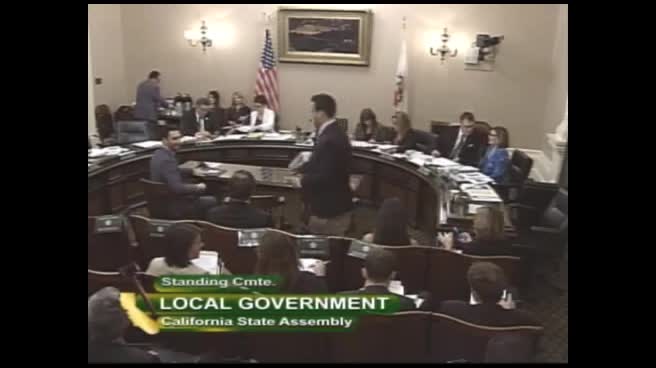
Assembly Standing Committee on Local Government
 2MIN
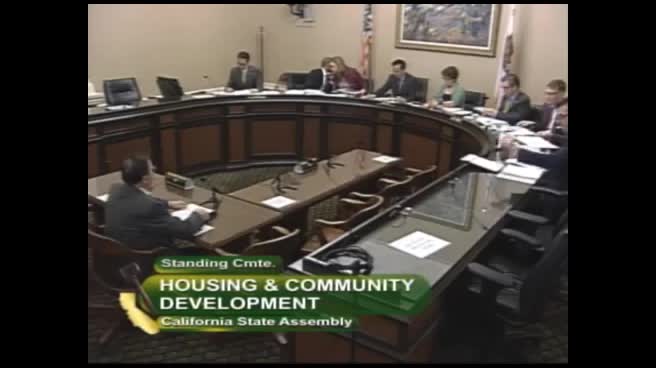
Assembly Standing Committee on Housing and Community Development
Bill Author

Bill Co-Author(s):