AB 2592: Controlled substances: medicine locking closure packages: grant program.
- Session Year: 2015-2016
- House: Assembly
- Latest Version Date: 2016-04-25
Existing law, the California Uniform Controlled Substances Act, specifies the proper uses of, and means of prescribing, controlled substances, as defined. Existing law prohibits a person other than a pharmacist or an intern pharmacist, as specified, from compounding, preparing, filling, or dispensing a prescription for a controlled substance. A violation of these provisions is generally a misdemeanor unless another punishment is specifically provided.
Existing law establishes the State Department of Public Health, which has authority over various programs promoting public health and which may investigate, apply for, and enter into agreements to secure federal or nongovernmental funding opportunities for the purposes of advancing public health.
This bill, until January 1, 2020, would require authorize the department to establish a pilot program, as specified, to award grants to combat opioid abuse through the safe prescribing of opioids. The bill would require the department to award grants, in an amount to be determined by the department, to individual pharmacies that choose to participate in the program. The bill would require a pharmacy that applies for and receives a grant to offer all patients who are prescribed an opioid a medicine locking closure package, as defined. The bill would prohibit the department from using General Fund moneys on this program unless those moneys are specifically appropriated for this purpose. The bill would require the department to evaluate the effectiveness of the program and report its findings to the Legislature no later than December 31, 2019.
Existing law, the California Uniform Controlled Substances Act, specifies the proper uses of, and means of prescribing, controlled substances, as defined. Existing law prohibits a person other than a pharmacist to compound, prepare, fill, or dispense or an intern pharmacist, as specified, from compounding, preparing, filling, or dispensing a prescription for a controlled substance. A violation of these provisions is generally a misdemeanor unless another punishment is specifically provided.
Existing law establishes the State Department of Public Health, which has authority over various programs promoting public health and which may investigate, apply for, and enter into agreements to secure federal or nonfederal nongovernmental funding opportunities for the purposes of advancing public health.
This bill, until January 1, 2022, 2020, would require the department to implement the Opioid Abuse Prevention Pilot Program establish a pilot program, as specified, to award grants to combat opioid abuse and improve through the safe prescribing of opioids. The bill would require the department to award grants, in an amount to be determined by the department, to individual pharmacies that choose to participate. participate in the program. The bill would require a pharmacy that applies for and receives a grant to offer all patients who are prescribed an opioid a medicine locking closure package, as defined. The bill would prohibit the department from using General Fund moneys on this program unless those moneys are specifically appropriated for this purpose. The bill would require the department to evaluate the effectiveness of the program and report its findings to the Legislature no later than December 31, 2021. 2019.
Existing law, the California Uniform Controlled Substances Act, specifies the proper uses of, and means of prescribing, controlled substances, as defined. Existing law prohibits a person other than a pharmacist to compound, prepare, fill, or dispense a prescription for a controlled substance. A violation of these provisions is generally a misdemeanor unless another punishment is specifically provided.
Existing law establishes the State Department of Public Health, which has authority over various programs promoting public health and which may investigate, apply for, and enter into agreements to secure federal or nonfederal funding opportunities for the purposes of advancing public health.
This bill, until January 1, 2022, would require the department to implement the Opioid Abuse Prevention Pilot Program to award grants to combat opioid abuse and improve the safe prescribing of opioids. The bill would require the department to award grants, in an amount to be determined by the department, to individual pharmacies that choose to participate. The bill would require a pharmacy that applies for and receives a grant to offer all patients who are prescribed an opioid a medicine locking closure package, as defined. The bill would prohibit the department from using General Fund moneys on this program unless those moneys are specifically appropriated for this purpose. The bill would require the department to evaluate the effectiveness of the program and report its findings to the Legislature no later than December 31, 2021.
Existing law, the California Uniform Controlled Substances Act, classifies controlled substances into 5 designated schedules, with the most restrictive limitations generally placed on controlled substances classified in Schedule I, and the least restrictive limitations generally placed on controlled substances classified in Schedule V. Existing law prohibits the delivery of Schedule II, III, or IV controlled substances to a pharmacy unless a receipt for the merchandise is signed by a pharmacist or authorized receiving personnel. A violation of this provision is a crime.
This bill would make nonsubstantive changes to this provision.
The Legislature finds and declares all of the following:
(a)More than 4,300 people died from drug poisoning in California in 2013.
(b)Most drug poisonings stem from prescription medications, and opioids are the most commonly prescribed.
(c)Recent research by the federal Centers for Disease Control and Prevention finds that 98 percent of all sources for abused prescription drugs originate within the home. Only 3 percent of homes lock up their medications.
(d)The State Department of Public Health recently received a new grant of more than $3.7 million to improve the safe prescribing of opioid painkillers.
SEC. 2.Section 11209.3 is added to the Health and Safety Code, to read:11209.3.(a)The State Department of Public Health shall, may, to the extent funding is available, establish a pilot program to award grants to combat opioid abuse through the safe prescribing of opioids. Grants, in an amount determined by the department, shall be awarded to individual pharmacies that choose to participate in the program. Grants shall target areas where the prevalence of prescription drug abuse is high as determined by data that have been collected by the department and the California Health Care Foundation.
(b)A pharmacy that applies for and receives a grant pursuant to this section shall offer all patients who are prescribed an opioid a medicine locking closure package. A patient shall not receive a medicine locking closure package unless he or she consents either orally or in writing. Every medicine locking closure package shall be dispensed with instructions for patient use unless the patient indicates orally or in writing that instructions are not needed.
(c)The State Department of Public Health shall not expend General Fund moneys on this program unless those moneys are specifically appropriated for this purpose. The department may seek funds from private entities, including foundations and nonprofit organizations, and may apply for federal or other grants, to fund the grant program.
(d)For purposes of this section, medicine locking closure package means a locking closure container, unlocked only with a user-generated code, that only allows the person with the prescription to access the medicine. accessible only by the designated patient with a passcode, an alphanumeric code, a key, or by another secure mechanism. A medicine locking closure package includes, but is not limited to, an amber prescription container combined with a resettable alphanumerical code.
(e)The department shall evaluate the effectiveness of the pilot program to combat prescription drug abuse in targeted areas and report its findings to the Legislature no later than December 31, 2019. The report shall be submitted in compliance with Section 9795 of the Government Code.
(f) This section shall remain in effect only until January 1, 2020, and as of that date is repealed, unless a later enacted statute, that is enacted before January 1, 2020, deletes or extends that date.
The Legislature finds and declares all of the following:
(a)More than 4,300 people died from drug poisoning in California in 2013.
(b)Most drug poisonings stem from prescription medications, and opioids are the most commonly prescribed.
(c)Recent research by the federal Centers for Disease Control and Prevention finds that 98 percent of all sources for abused prescription drugs originate within the home. Only 3 percent of homes lock up their medications.
(d)The State Department of Public Health recently received a new grant of more than $3.7 million to improve the safe prescribing of opioid painkillers.
SEC. 2.Section 11209.3 is added to the Health and Safety Code, to read:11209.3.(a)The State Department of Public Health shall, to the extent funding is available, establish the Opioid Abuse Prevention Pilot Program a pilot program to award grants to combat opioid abuse and improve through the safe prescribing of opioids. Grants, in an amount determined by the department, shall be awarded to individual pharmacies that choose to participate. participate in the program. Grants shall target areas where the prevalence of prescription drug abuse is high as determined by data that has have been collected by the department and the California Health Care Foundation.
(b)A pharmacy that applies for and receives a grant pursuant to this section shall offer all patients who are prescribed an opioid with a medicine locking closure package. A patient shall not receive a medicine locking closure package unless he or she consents either orally or in writing. Every medicine locking closure package shall be dispensed with instructions for patient use unless the patient indicates orally or in writing that instructions are not needed.
(c)The State Department of Public Health shall not expend General Fund moneys on this program unless those moneys are specifically appropriated for this purpose. The department may seek funds from private entities, including foundations and nonprofit organizations, and may apply for federal or other grants, to fund the grant program.
(d)For purposes of this section, medicine locking closure package means a locking closure mechanism that can only be unlocked with a user-generated, resettable alphanumerical code in combination with an amber prescription container that forms a package that only allows the person with the prescription to access the medicine. container, unlocked only with a user-generated code, that only allows the person with the prescription to access the medicine. A medicine locking closure package includes, but is not limited to, an amber prescription container combined with a resettable alphanumerical code.
(e)The department shall evaluate the effectiveness of the pilot program to combat prescription drug abuse in targeted areas and report its findings to the Legislature no later than December 31, 2021. 2019. The report shall be submitted in compliance with Section 9795 of the Government Code.
(f) This section shall remain in effect only until January 1, 2022, 2020, and as of that date is repealed, unless a later enacted statute, that is enacted before January 1, 2022, 2020, deletes or extends that date.
The Legislature finds and declares all of the following:
(a)More than 4,300 people died from drug poisoning in California in 2013.
(b)Most drug poisonings stem from prescription medications, and opioids are the most commonly prescribed.
(c)Recent research by the federal Centers for Disease Control and Prevention finds that 98 percent of all sources for abused prescription drugs originate within the home. Only 3 percent of homes lock up their medications.
(d)The State Department of Public Health recently received a new grant of more than $3.7 million to improve the safe prescribing of opioid painkillers.
SEC. 2.Section 11209.3 is added to the Health and Safety Code, to read:11209.3.(a)The State Department of Public Health shall, to the extent funding is available, establish the Opioid Abuse Prevention Pilot Program to award grants to combat opioid abuse and improve the safe prescribing of opioids. Grants, in an amount determined by the department, shall be awarded to individual pharmacies that choose to participate. Grants shall target areas where the prevalence of prescription drug abuse is high as determined by data that has been collected by the department and the California Health Care Foundation.
(b)A pharmacy that applies for and receives a grant pursuant to this section shall offer all patients who are prescribed an opioid with a medicine locking closure package. A patient shall not receive a medicine locking closure package unless he or she consents either orally or in writing. Every medicine locking closure package shall be dispensed with instructions for patient use unless the patient indicates orally or in writing that instructions are not needed.
(c)The State Department of Public Health shall not expend General Fund moneys on this program unless those moneys are specifically appropriated for this purpose. The department may seek funds from private entities, including foundations and nonprofit organizations, and may apply for federal or other grants, to fund the grant program.
(d)For purposes of this section, medicine locking closure package means a locking closure mechanism that can only be unlocked with a user-generated, resettable alphanumerical code in combination with an amber prescription container that forms a package that only allows the person with the prescription to access the medicine.
(e)The department shall evaluate the effectiveness of the pilot program to combat prescription drug abuse in targeted areas and report its findings to the Legislature no later than December 31, 2021. The report shall be submitted in compliance with Section 9795 of the Government Code.
(f) This section shall remain in effect only until January 1, 2022, and as of that date is repealed, unless a later enacted statute, that is enacted before January 1, 2022, deletes or extends that date.
SECTION 1.Section 11209 of the Health and Safety Code is amended to read:11209.(a)A person shall not deliver Schedule II, III, or IV controlled substances to a pharmacy or pharmacy receiving area, nor shall any person receive controlled substances on behalf of a pharmacy unless, at the time of delivery, a pharmacist or authorized receiving personnel signs a receipt showing the type and quantity of the controlled substances received. Any discrepancy between the receipt and the type or quantity of controlled substances actually received shall be reported to the delivering wholesaler or manufacturer by the next business day after delivery to the pharmacy.
(b)The delivery receipt and any record of discrepancy shall be maintained by the wholesaler or manufacturer for a period of three years.
(c)A violation of this section is a misdemeanor.
(d)Nothing in this section shall require a common carrier to label a package containing controlled substances in a manner contrary to federal law or regulation.
(a)No A person shall not deliver Schedule II, III, or IV controlled substances to a pharmacy or pharmacy receiving area, nor shall any person receive controlled substances on behalf of a pharmacy unless, at the time of delivery, a pharmacist or authorized receiving personnel signs a receipt showing the type and quantity of the controlled substances received. Any discrepancy between the receipt and the type or quantity of controlled substances actually received shall be reported to the delivering wholesaler or manufacturer by the next business day after delivery to the pharmacy.
(b)The delivery receipt and any record of discrepancy shall be maintained by the wholesaler or manufacturer for a period of three years.
(c)A violation of this section is a misdemeanor.
(d)Nothing in this section shall require a common carrier to label a package containing controlled substances in a manner contrary to federal law or regulation.
|
Date
|
Status
|
|---|---|
| Feb 19, 2016 | Introduced. To print. |
| Feb 21, 2016 | From printer. May be heard in committee March 22. |
| Feb 22, 2016 | Read first time. |
| Mar 17, 2016 | Referred to Coms. on HEALTH and B. & P. |
| Mar 18, 2016 | From committee chair, with author's amendments: Amend, and re-refer to Com. on HEALTH. Read second time and amended. |
| Mar 28, 2016 | Re-referred to Com. on HEALTH. |
| Apr 7, 2016 | From committee: Amend, and do pass as amended and re-refer to Com. on B. & P. (Ayes 18. Noes 0.) (April 5). |
| Apr 11, 2016 | Read second time and amended. |
| Apr 12, 2016 | Re-referred to Com. on B. & P. |
| Apr 21, 2016 | From committee: Amend, and do pass as amended and re-refer to Com. on APPR. (Ayes 13. Noes 0.) (April 19). |
| Apr 25, 2016 | Read second time and amended. |
| Apr 26, 2016 | Re-referred to Com. on APPR. |
| May 4, 2016 | In committee: Set, first hearing. Referred to APPR. suspense file. |
| May 27, 2016 | In committee: Held under submission. |
|
Date
|
Description
|
Location
|
Votes
|
|
|---|---|---|---|---|
| Apr 19, 2016 | Do pass as amended and be re-referred to the Committee on [Appropriations] | Assembly Standing Committee on Business and Professions |
Passed |
|
| Apr 5, 2016 | Do pass as amended and be re-referred to the Committee on [Business and Professions] | Assembly Standing Committee on Health |
Passed |
This list shows positions taken on this bill by organizations on the date displayed, which is linked to the original source.
Positions by individuals are not included.
Date of Hearing: May 4, 2016
ASSEMBLY COMMITTEE ON APPROPRIATIONS
Lorena Gonzalez, Chair
ABPCA Bill Id:AB 2592
Author:(Cooper) – As Amended Ver:April 25, 2016
Policy Committee: | Health | Vote: | 18 - 0 |
Business and Professions | 13 - 0 |
Urgency: No State Mandated Local Program: No Reimbursable: No
SUMMARY:
This bill authorizes the California Department of Public Health (CDPH), to the extent funding is available, to establish a pilot program to award grants to combat opioid abuse, in which pharmacies would be granted funds to provide medicine locking closure packages meant to keep opioid drugs secure to customers picking up such drugs. It also:
- Specifies CDPH shall not expend General Fund moneys on this program unless those moneys are specifically appropriated for this purpose.
- Authorizes CDPH to seek funds from private entities, including foundations and nonprofit organizations, and to apply for federal or other grants, to fund the grant program.
FISCAL EFFECT:
GF Cost pressure of $2.8 million to CDPH over two years to operate a pilot in five counties with the highest opioid overdose rates, including $830,000 for staff and related expenses, $200,000 for an evaluation contract, and $1.75 million for purchase of medicine locking closure packages.
COMMENTS:
- Purpose. According to the sponsor, GateKeeper Innovations (GateKeeper), which manufactures medicine locking closure packages, California has taken steps to address the prescription drug abuse epidemic but there is one prevention initiative that has gone widely unaddressed: the safe storage of prescription medications. GateKeeper explains that this bill would establish a pilot program to examine whether increasing the safe storage of prescription drugs reduces the number of drug abuse cases amongst teens and young adults.
- Prescription Opioid Misuse. According to CDPH, prescription opioid misuse is a public health problem that can lead to long-term health consequences, including limitations in daily activity, impaired driving, mental health problems, trouble breathing, overdose and death. Overdose deaths, in particular, have increased dramatically in recent years. There are a number of initiatives at the state and national level to combat the growing problem of prescription opioid abuse. CDPH and its state partners convened a Prescription Opioid Misuse and Overdose Prevention Workgroup in Spring 2014 to improve collaboration and expand joint efforts among state departments working to address this epidemic. Its priorities are expansion and strengthening of prevention strategies, and improvement of monitoring and surveillance. CDPH advises patients and pharmacists to safely store medications, but does not appear to have advice specific to locking mechanisms.
- Medicine Locking Closure. This bill defines “medicine locking closure package” as a locking closure container, accessible only by the designated patient with a passcode, an alphanumeric code, a key, or by another secure mechanism. It also specifies a medicine locking closure package includes, but is not limited to, an amber prescription container combined with a resettable alphanumerical code. Locking caps that fit on prescription bottles currently sell for around $12.
Analysis Prepared by: Lisa Murawski / APPR. / (916) 319-2081
Date of Hearing:
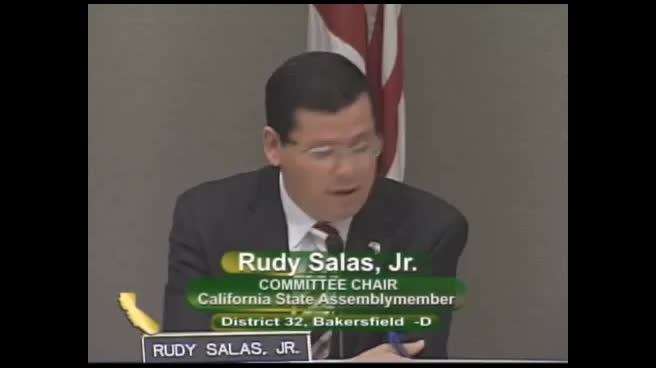
ASSEMBLY COMMITTEE ON BUSINESS AND PROFESSIONS
Rudy Salas, Chair
ABPCA Bill Id:AB 2592
Author:(Cooper) – As Amended Ver:April 11, 2016
NOTE: This bill is double referred, having previously been heard by the Assembly Committee on Health and passed on a 18-0 vote.
SUBJECT: Controlled substances: medicine locking closure packages: grant program.
SUMMARY: Creates within the California Department of Public Health (CDPH) a pilot program that would award grants to eligible pharmacies for the purpose of supplying medicine locking closure packages to patients with prescriptions for opioids.
EXISTING LAW:
- Provides for the licensure and regulation of pharmacies by the California State Board of Pharmacy (Board). (Business and Professions Code (BPC) Section 4001)
- Defines “Pharmacist” to mean the holder of an unexpired and active pharmacist license issued by the board, and who is entitled to practice pharmacy. (BPC Section 4036)
- Defines “Pharmacy” to mean an area, place, or premises licensed by the board in which the profession of pharmacy is practiced and where prescriptions are compounded. “Pharmacy” includes, but is not limited to, any area, place, or premises described in a license issued by the board wherein controlled substances, dangerous drugs, or dangerous devices are stored, possessed, prepared, manufactured, derived, compounded, or repackages, and from which those substances are furnished sold or dispensed at retail. (BPC Section 4037(a))
- Requires the Board to license a surplus medication collection and distribution intermediary established for the purpose of facilitating the donation of medications to or transfer of medications between participating entities under a program established pursuant to Division 116 of the Health and Safety Code. (HSC Section 4169.5(a))
- Requires all California licensed prescribers authorized to prescribe scheduled drugs to register for access to CURES 2.0 by July 1, 2016 or upon issuance of a Drug Enforcement Administration Controlled Substance Registration Certificate, whichever occurs later, and requires licensed pharmacists to register for access to CURES 2.0 by July 1, 2016, or upon issuance of a license, whichever occurs later. (HSC Section 11165.1)
THIS BILL:
- Makes various findings and declarations regarding the prescription opioid dependence problem facing California and the United States.
- Requires the CDPH to launch a pilot program, to the extent funding is available, and award grants to participating pharmacies in regions where opioid abuse is most prevalent.
- Requires every medicine locking closure package to be dispensed with instructions for patient use unless the patient indicates orally or in writing that instructions are not needed.
- Requires participating pharmacies to offer all patients with opioid prescriptions a medicine locking closure package along with their medication. The locking closure package shall be given only with the patient’s consent.
- Defines “medicine locking closure package” to include a locking closure container, unlocked only with a user-generated code that only allows the person with the prescription to access the medicine, which may include an amber prescription container combined with a resettable alphanumerical code.
- Prohibits the CDPH from expending General Fund monies on this program unless those monies are specifically appropriated for this purpose, and permits the CDPH to seek funds from private entities, including foundations and nonprofit organizations, and may apply for federal or other grants, to fund the grant program.
- Requires the CDPH to evaluate the effectiveness of the pilot program to combat prescription drug abuse in targeted areas and report its findings to the Legislature no later than December 31, 2019. The report shall be submitted in compliance with Section 9795 of the Government Code.
- Repeals the pilot program on January 1, 2020.
FISCAL EFFECT: Unknown. This bill has been keyed fiscal by the Legislative Counsel.
COMMENTS:
Purpose. This bill is sponsored by GateKeepers Innovations, Inc. According to the author, “[This bill] is a prescription drug abuse prevention bill. The intent of the bill is to keep prescription drugs out of the hands of young people. Prescription drug abuse is arguably the largest healthcare epidemic in the United States. A study by the Partnership for Drug-Free Kids, found that one of the key drivers for abusing prescription pain killers among teens is the availability and easy access. In the Sacramento area, which includes portions of my district, 42 overdoses and 10 deaths have been blamed on the prescription painkiller fentanyl. AB 2592 establishes a pilot program to measure whether increasing safe storage of opioids reduces the number of accidental poisonings among young people, and reduces the overall prescription drug abuse rate among teens. The Department of Public Health would administer the voluntary pilot program and award grants to participating pharmacies in areas with high rates of prescription drug abuse. Finally, the bill requires a report to the Legislature and sunsets the program on January 1, 2020.”
Background. The Board regulates 140,000 licensees in the industry. During the Board’s last sunset review in March, 2016, they identified the prescription drug abuse problem as an area of concern. The Senate Committee on Business, Professions, and Economic Development, staff 2016 Background Paper stated, “Federal data for 2014 showed that abuse of prescription pain killers now ranks second, just behind marijuana, as the nation's most widespread illegal drug problem. Abuse can stem from the fact that prescription drugs are legal and potentially more easily accessible, as they can be found at home in a medicine cabinet. Data shows that individuals who misuse prescription drugs, particularly teens, believe these substances are safer than illicit drugs because they are prescribed by a health care professional and thus are safe to take under any circumstances.”
CURES 2.0. In recognition of the prescription drug abuse epidemic, the office of the Attorney General launched the Controlled Substance Utilization Review and Evaluation System (CURES). The board utilizes this prescription drug monitoring program more than any other regulatory board. Pharmacies are required to report the dispensing of controlled drugs to CURES by drug name, quantity, prescriber, patient, and pharmacy and the Board in turn conducts research and monitoring of this data.
Legislation in Other States. Illinois is the first state to pass legislation to launch a pilot program similar to the program proposed by this bill. House Bill (HB) 3219 creates a pilot project requiring that Schedule II controlled substances containing hydrocodone be dispensed in non-reusable medicine locking closure packages with instructions for patient use, and provides that the pilot program only applies to pharmacies that voluntarily choose to participate. It provides that the Department of Financial and Professional Regulation shall not expend more than $150,000 on the pilot program. It exempts prescriptions reimbursed via the Medicare Part D and Medicaid programs from the pilot program and prescriptions for individuals residing in facilities licensed under the Nursing Home Care Act.
Prior Related Legislation. SB 1329 (Simitian), Chapter 709, Statutes of 2012, made a number of changes to the way a surplus prescription drug collection and distribution program could be authorized and the entities eligible to donate medications under such a program. The bill authorized a county public health officer delegated by a county board of supervisors to implement a program, in addition current law which required a program to be implemented via a county ordinance. The bill also added several categories of licensed health care facilities that may donate medications and allowed both primary care clinic pharmacies and primary care clinics that have Board licensees, to administer and dispense medication, provided these Board licensees are in good standing with the Board.
SB 809 (De Saulnier), Chapter 400, Statutes of 2013, established a funding mechanism to update and maintain CURES while also requiring all prescribing health care practitioners to apply to access CURES information.
AB 467 (Stone), Chapter 10, Statutes of 2014, established a new Board licensure category for a surplus medication collection and distribution intermediary for the purpose of facilitating the donation of medications to, or transfer of medications between, participating entities under a county’s unused medication repository and distribution program. The Board now licenses one intermediary.
ARGUMENTS IN SUPPORT:
GateKeeper Innovation, Inc. writes, “This bill is inspired by recent legislation passed in Illinois (H.R. 3215). This pilot program will examine whether the increase in safe storage of prescription drugs will in fact reduce the number of abuse cases among children and young adults… Prescription drugs now kill more people than car accidents. According to the Center for Disease Control (CDC), 70% of medications are obtained for illegal use from a friend or relative, and more frequently from their medicine cabinets.”
C.O.R.E. Medical Clinic, Inc. writes, “Many of our current patients had their first exposure to opioids through a relative or friend’s medicine cabinet. Unfortunately, many individuals switch to using street heroin due to cost or access issues related to opioid prescription pills…We believe your pilot program is a valuable first step in trying to increase safe storage of prescription medications.”
Capitol Health Network writes, “Our mission is to support and strengthen the healthcare safety net and to advocate for vulnerable people in Sacramento and the surrounding region… “Increasing the safe storage of prescription drugs is a key prevention measure that will help limit teen and young adult’s access to the nonmedical use of prescription drugs.”
POLICY ISSUES:
The definition of “medicine locking closure package” as provided in this bill may be too prescriptive.
AMENDMENTS:
In order to ensure this bill would allow the pilot program to accept a variety of medicine locking containers, the author should amend the bill as follows:
1) Page 2, in line 16, strike shall, and insert:
may,
2) Page 3, in line 22, strike unlocked only with a user-generated code, strike lines 23-26 inclusive and insert:
accessible only by the designated patient with a passcode, an alphanumeric code, a key, or by another secure mechanism.
REGISTERED SUPPORT:
GateKeeper Innovation, Inc. (sponsor)
Capitol Health Network
C.O.R.E. Medical Clinic, Inc.
REGISTERED OPPOSITION:
None on file.
Analysis Prepared by: Tessa Nevarez / B. & P. / (916) 319-3301, Vincent Chee / B. & P. / (916) 319-3301
Date of Hearing: April 5, 2016
ASSEMBLY COMMITTEE ON HEALTH
Jim Wood, Chair
ABPCA Bill Id:AB 2592 (
Author:Cooper) – As Amended Ver:March 18, 2016
SUBJECT: Controlled substances: medicine locking closure packages: grant program.
SUMMARY: Establishes the Opioid Abuse Prevention Pilot Program (Pilot Program) within the Department of Public Health (DPH) to award grants to combat opioid abuse. Specifically, this bill:
- Requires DPH to establish the Pilot Program to the extent funding is available, to award grants to participating pharmacies to combat opioid abuse and improve the safe prescribing of opioids. Provides that these grants will target areas where the prevalence of prescription drug abuse is high as determined by data that has been collected by DPH and the California HealthCare Foundation.
- Requires pharmacies awarded grants to offer all patients who are prescribed an opioid with a medicine locking closure package. Specifies that pharmacies must obtain oral or written consent and provide the patient with instructions before providing the patient with a medicine locking closure package, as specified.
- Prohibits DPH from expending General Fund monies, unless specifically appropriated for the Pilot Program. Allows DPH to seek funds from private entities, as specified.
- Defines medicine locking closure package as a locking closure mechanism that can only be unlocked by a user-generated, resettable alphanumerical code in combination with an amber prescription container that only allows the patient to access the medicine container.
- Requires DPH to evaluate the Pilot Program’s effectiveness to combat prescription drug abuse in targeted areas and report its findings to the Legislature no later than December 31, 2021, as specified.
- Sunsets the provisions of this bill until January 1, 2022, unless that date is deleted or extended.
EXISTING LAW:
- Establishes the Poison Prevention Packaging Act of 1970 which among other provisions specifies various requirements for the packaging of numerous materials, including any drug that is intended for human use that is in a dosage form intended for oral administration and that is required to be dispensed only by or upon an oral or written prescription of a practitioner licensed by law to administer such drug.
- Classifies controlled substances into five designated schedules, with the most restrictive limitations generally placed on controlled substances classified in Schedule I, and the least restrictive limitations generally placed on controlled substances classified in Schedule V.
- Prohibits the delivery of Schedule II, III, or IV controlled substances to a pharmacy unless a receipt for the merchandise is signed by a pharmacist or authorized receiving personnel.
FISCAL EFFECT: This bill has not yet been analyzed by a fiscal committee.
COMMENTS:
- PURPOSE OF THIS BILL. According to the sponsor, GateKeeper Innovations (GateKeeper), California has taken steps to address the prescription drug abuse epidemic by providing substance abuse disorder services and creating a statewide drug monitoring program called the Controlled Substance Utilization Review and Evaluation System (CURES). The state has also funded many county programs through the Community Prevention Initiative under Department of Health Care Services. The sponsor argues that there is one prevention initiative that has gone widely unaddressed, specifically, the safe storage of prescription medications. GateKeeper explains that this bill would establish the Pilot Program to examine whether increasing the safe storage of prescription drugs would reduce the number of drug abuse cases amongst teens and young adults. According to sponsor, the Centers for Disease Control and Prevention (CDC) reports that 70% of schedule medications are obtained for illegal use from a friend or relative, and more frequently from their medicine cabinets. Yet, the CDC has also reported that fewer than 3% of households lock up their schedule prescription medications.
- BACKGROUND.
- Federal hearings. The House Committee on Oversight and Government Reform recently convened a hearing to discuss ways to improve the federal response to the heroin and opioid abuse problem as the House considers path forward on bipartisan legislation. This hearing follows Senate passage of a bill earlier this month, the Comprehensive Addiction and Recovery Act (S. 524) (CARA), which would authorize the administration to offer grants to states to expand their treatment offerings and increase access to naloxone, an overdose prevention drug. CARA would also give the U.S. Department of Justice additional tools to combat drug trafficking.
Additionally, the CDC issued new prescribing guidelines for opioids, which may help doctors and patients better understand the risks associated with prescription painkiller use. In addition to the CDC guidelines, the Obama Administration requested more than $1 billion in new mandatory funding in next year’s budget to address opioid drug abuse. The Food and Drug Administration (FDA) announced changes to the safety warnings that are required on the labels of prescription painkillers – the labels must now include a boxed warning about risks of misuse, addiction, overdose, and death. FDA also revealed new steps to scrutinize applications for opioids.
- CURES 2.0. CURES 2.0 is a database of Schedule II, III, and IV controlled substance prescriptions dispensed in California serving the public health, regulatory oversight agencies, and law enforcement. California law requires all California licensed prescribers authorized to prescribe scheduled drugs to register for access to CURES 2.0 by July 1, 2016 or upon issuance of a Drug Enforcement Administration Controlled Substance Registration Certificate, whichever occurs later. California licensed pharmacists must register for access to CURES 2.0 by July 1, 2016, or upon issuance of a Board of Pharmacy Pharmacist License, whichever occurs later. California Health & Safety Code Section 11165(d) requires dispensing pharmacies, clinics, or other dispensers of Schedule II through IV controlled substances to provide specified dispensing information to the California Department of Justice (DOJ) on a weekly basis in a format approved and accepted by the DOJ.
- Prescription Opioid Misuse and Overdose Prevention Workgroup. In response to the national epidemic of prescription medication misuse and overdose, DPH and its state partners convened a Prescription Opioid Misuse and Overdose Prevention Workgroup in Spring 2014. This workgroup is exploring opportunities to improve collaboration and expand joint efforts among state departments working to address this epidemic. It has identified two priorities: expansion and strengthening of prevention strategies and improvement of monitoring and surveillance.
- Medicine Locking Closure. This bill defines a medicine locking closure package as a locking closure mechanism that can only be unlocked by a user-generated resettable alphanumerical code in combination with an amber prescription container that only allows the patient to access the medicine container. An example of this locking mechanism is “Safer Lock” manufactured by GateKeeper, the sponsor of this bill. According to GateKeeper’s Website, “Safer Lock is a patented 4-digit combination locking cap designed to prevent misuse or abuse of in-home medications and other substances that should be kept out of curious hands.” A single unit of Safer Lock retails for $17.99. Since Safer Lock is patented, it is not clear if there are other manufacturers in the market for this type of medicine locking closure.
- Similar laws in other states. Effective 2016, Illinois will implement numerical locking devices similar to those used on gym lockers. Under the one-year program, participating pharmacies will place the locks on bottles of painkillers that contain hydrocodone, which is also known as Vicodin or Norco. In 2010, Massachusetts added Safeguards to the Prescription Monitoring Program and furthering Substance Abuse Education and Prevention and required all pharmacies in Massachusetts that dispense schedule II, III, IV, or V prescription drugs to make lock boxes available for sale at each location.
- SUPPORT. GateKeeper, the sponsor of this bill, contends that this bill will examine whether the increase in safe storage of prescription drugs will reduce the number of abuse cases among children and young adults. Specifically, this bill would require DPH to implement a pilot project that would incentivize pharmacies to dispense opioid prescriptions in a non-reusable medicine locking closure package. Per the sponsor, pharmacies can voluntarily choose to participate and patients can choose to opt-out. Furthermore, the vendor for the locking closure packages would be selected by DPH or pharmacy through a competitive bidding process. DPH would then evaluate the effectiveness of the Pilot Program to determine whether safer storage contributed to a decrease in prescription drug abuse.
REGISTERED SUPPORT / OPPOSITION:
Support
GateKeeper Innovations, Inc. (sponsor)
Opposition
None on file.
Analysis Prepared by: Kristene Mapile / HEALTH / (916) 319-2097
Discussed in Hearing
 8MIN
Assembly Standing Committee on Business and Professions
Bill Author

Bill Co-Author(s):