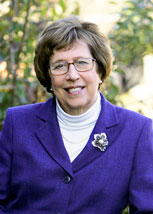
AB 2666: Firearms: felons in possession.
- Session Year: 2015-2016
- House: Assembly
- Latest Version Date: 2016-03-17
Existing law provides that any person convicted of a felony under the laws of the United States, the State of California, or any other state or country, and who owns, purchases, receives, or has in possession or under custody or control any firearm is guilty of a felony. Existing law prescribes the punishment for that felony as imprisonment for a term of 16 months, or 2 or 3 years. years in the state prison.
This bill would provide that the punishment for subsequent convictions of that felony would be imprisonment for a term of 4, 5, or 6 years. years in the state prison. By increasing the penalties for an existing creating a new crime, this bill would impose a state-mandated local program. The bill would also make additional technical, nonsubstantive changes.
The California Constitution requires the state to reimburse local agencies and school districts for certain costs mandated by the state. Statutory provisions establish procedures for making that reimbursement.
This bill would provide that no reimbursement is required by this act for a specified reason.
Existing law provides that any person convicted of a felony under the laws of the United States, the State of California, or any other state or country, and who owns, purchases, receives, or has in possession or under custody or control any firearm is guilty of a felony. Existing law prescribes the punishment for that felony as imprisonment for a term of 16 months, or 2 or 3 years.
This bill would provide that the punishment for subsequent convictions of that felony would be imprisonment for a term of 4, 5, or 6 years. By increasing the penalties for an existing crime, this bill would impose a state-mandated local program. The bill would also make additional technical, nonsubstantive changes.
The California Constitution requires the state to reimburse local agencies and school districts for certain costs mandated by the state. Statutory provisions establish procedures for making that reimbursement.
This bill would provide that no reimbursement is required by this act for a specified reason.
(a)(1)A person who has been convicted of a felony under the laws of the United States, the State of California, or any other state, government, or country and who owns, purchases, receives, or has in possession or under custody or control any firearm is guilty of a felony punishable pursuant to subdivision (h) of Section 1170. felony. A subsequent conviction for this offense is a felony punishable by imprisonment for four, five, or six years pursuant to subdivision (h) of Section 1170. years.
(2)A person who has been convicted of a misdemeanor violation of paragraph (2) or (3) of subdivision (a) of Section 245, a misdemeanor violation of Section 246, or a misdemeanor violation of subdivision (c) of Section 417 and who owns, purchases, receives, or has in possession or under custody or control any firearm is guilty of a felony punishable pursuant to subdivision (h) of Section 1170. felony.
(3)A person who is addicted to the use of any narcotic drug and who owns, purchases, receives, or has in possession or under custody or control any firearm is guilty of a felony punishable pursuant to subdivision (h) of Section 1170. felony.
(4)A person who has two or more convictions for violating paragraph (2) of subdivision (a) of Section 417 and who owns, purchases, receives, or has in possession or under custody or control any firearm is guilty of a felony punishable pursuant to subdivision (h) of Section 1170. felony.
(b)Notwithstanding subdivision (a), a person who has been convicted of a felony or of an offense enumerated in Section 23515, when that conviction results from certification by the juvenile court for prosecution as an adult in an adult court under Section 707 of the Welfare and Institutions Code, and who owns or has in possession or under custody or control any firearm is guilty of a felony punishable pursuant to subdivision (h) of Section 1170. felony.
(c)Subdivision (a) shall not apply to a person who has been convicted of a felony under the laws of the United States unless either of the following criteria is satisfied:
(1)Conviction of a like offense under California law can only result in imposition of felony punishment.
(2)The defendant was sentenced to a federal correctional facility for more than 30 days, or received a fine of more than one thousand dollars ($1,000), or received both punishments.
SEC. 2.No reimbursement is required by this act pursuant to Section 6 of Article XIIIB of the California Constitution because the only costs that may be incurred by a local agency or school district will be incurred because this act creates a new crime or infraction, eliminates a crime or infraction, or changes the penalty for a crime or infraction, within the meaning of Section 17556 of the Government Code, or changes the definition of a crime within the meaning of Section 6 of Article XIIIB of the California Constitution.
(a)(1)Any A person who has been convicted of a felony under the laws of the United States, the State of California, or any other state, government, or country, or of an offense enumerated in subdivision (a), (b), or (d) of Section 23515, or who is addicted to the use of any narcotic drug, country and who owns, purchases, receives, or has in possession or under custody or control any firearm is guilty of a felony. felony punishable pursuant to subdivision (h) of Section 1170. A subsequent conviction for this offense is a felony punishable by imprisonment for four, five, or six years pursuant to subdivision (h) of Section 1170.
(2)A person who has been convicted of a misdemeanor violation of paragraph (2) of subdivision (a) of Section 245, a misdemeanor violation of Section 246, or a misdemeanor violation of subdivision (c) of Section 417 and who owns, purchases, receives, or has in possession or under custody or control any firearm is guilty of a felony punishable pursuant to subdivision (h) of Section 1170.
(3)A person who is addicted to the use of any narcotic drug and who owns, purchases, receives, or has in possession or under custody or control any firearm is guilty of a felony punishable pursuant to subdivision (h) of Section 1170.
(2)Any
(4)A person who has two or more convictions for violating paragraph (2) of subdivision (a) of Section 417 and who owns, purchases, receives, or has in possession or under custody or control any firearm is guilty of a felony. felony punishable pursuant to subdivision (h) of Section 1170.
(b)Notwithstanding subdivision (a), any a person who has been convicted of a felony or of an offense enumerated in Section 23515, when that conviction results from certification by the juvenile court for prosecution as an adult in an adult court under Section 707 of the Welfare and Institutions Code, and who owns or has in possession or under custody or control any firearm is guilty of a felony. felony punishable pursuant to subdivision (h) of Section 1170.
(c)Subdivision (a) shall not apply to a person who has been convicted of a felony under the laws of the United States unless either of the following criteria is satisfied:
(1)Conviction of a like offense under California law can only result in imposition of felony punishment.
(2)The defendant was sentenced to a federal correctional facility for more than 30 days, or received a fine of more than one thousand dollars ($1,000), or received both punishments.
SEC. 2.No reimbursement is required by this act pursuant to Section 6 of Article XIIIB of the California Constitution because the only costs that may be incurred by a local agency or school district will be incurred because this act creates a new crime or infraction, eliminates a crime or infraction, or changes the penalty for a crime or infraction, within the meaning of Section 17556 of the Government Code, or changes the definition of a crime within the meaning of Section 6 of Article XIIIB of the California Constitution.
|
Date
|
Status
|
|---|---|
| Feb 19, 2016 | Introduced. To print. |
| Feb 21, 2016 | From printer. May be heard in committee March 22. |
| Feb 22, 2016 | Read first time. |
| Mar 10, 2016 | Referred to Com. on PUB. S. |
| Mar 17, 2016 | From committee chair, with author's amendments: Amend, and re-refer to Com. on PUB. S. Read second time and amended. |
| Mar 28, 2016 | Re-referred to Com. on PUB. S. |
| Apr 20, 2016 | In committee: Set, first hearing. Failed passage. |
| May 27, 2016 | From committee: Without further action pursuant to Joint Rule 62(a). |
|
Date
|
Description
|
Location
|
Votes
|
|
|---|---|---|---|---|
| Apr 20, 2016 | Do pass and be re-referred to the Committee on [Appropriations] | Assembly Standing Committee on Public Safety |
Failed |
This list shows positions taken on this bill by organizations on the date displayed, which is linked to the original source.
Positions by individuals are not included.
Date of Hearing:
Counsel: Gabriel Caswell
ASSEMBLY COMMITTEE ON PUBLIC SAFETY
Reginald Byron Jones-Sawyer, Sr., Chair
ABPCA Bill Id:AB 2666
Author:(Baker) – As Amended Ver:March 17, 2016
SUMMARY: Increases the punishment for a second or subsequent violation of felon in possession of a firearm from 16 months, two, or three years in state prison to four, five, or six years in state prison.
EXISTING LAW:
- Requires that firearms dealers obtain certain identifying information from firearms purchasers and forward that information, via electronic transfer to Department of Justice (DOJ) to perform a background check on the purchaser to determine whether he or she is prohibited from possessing a firearm (Pen. Code §, subds. 28160-28220); and
- Requires that, upon receipt of the purchaser’s information, DOJ shall examine its records, as well as those records that it is authorized to request from the State Department of Mental Health pursuant to Section 8104 of the Welfare and Institutions Code, in order to determine if the purchaser is prohibited from purchasing a firearm. (Pen. Code § 28220.)
- Provides that it shall be unlawful for the following people to ship or transport in interstate or foreign commerce, or possess in or affecting commerce, any firearm or ammunition; or to receive any firearm or ammunition which has been shipped or transported in interstate or foreign commerce: (18 USC § 922(g).)
- Who has been convicted in any court of, a crime punishable by imprisonment for a term exceeding one year;
- Who is a fugitive from justice;
- Who is an unlawful user of or addicted to any controlled substance, as defined;
- Who has been adjudicated as a mental defective or who has been committed to a mental institution;
- Who, being "an alien" —
- is illegally or unlawfully in the United States; or
- except as specified, has been admitted to the United States under a non-immigrant visa, as defined;
- is illegally or unlawfully in the United States; or
- Who has been discharged from the Armed Forces under dishonorable conditions;
- Who, having been a citizen of the United States, has renounced his citizenship;
- Who is subject to a court order that —
- was issued after a hearing of which such person received actual notice, and at which such person had an opportunity to participate;
- restrains such person from harassing, stalking, or threatening an intimate partner of such person or child of such intimate partner or person, or engaging in other conduct that would place an intimate partner in reasonable fear of bodily injury to the partner or child; and
- includes a finding that such person represents a credible threat to the physical safety of such intimate partner or child; or
- by its terms explicitly prohibits the use, attempted use, or threatened use of physical force against such intimate partner or child that would reasonably be expected to cause bodily injury; or
- includes a finding that such person represents a credible threat to the physical safety of such intimate partner or child; or
- was issued after a hearing of which such person received actual notice, and at which such person had an opportunity to participate;
- Who has been convicted in any court of a misdemeanor crime of domestic violence
- Who has been convicted in any court of, a crime punishable by imprisonment for a term exceeding one year;
- Provides that certain people are prohibited from owning or possessing a firearm. This includes (Pen. Code §§ 29800; 23515; 29805.):
- Anyone convicted of a felony;
- Anyone addicted to a narcotic drug;
- Any juvenile convicted of a violent crime with a gun and tried in adult court;
- Any person convicted of a federal crime that would be a felony in California and sentenced to more than 30 days in prison, or a fine of more than $1,000;
- Anyone convicted of certain violent misdemeanors, e.g., assault with a firearm; inflicting corporal injury on a spouse or significant other; brandishing a firearm in the presence of a police officer; and
- Provides that a violation of these provisions is a felony.
- Anyone convicted of a felony;
- Specifies a ten year ban for anyone convicted of numerous misdemeanors involving violence or threats of violence. (Pen. Code § 29805.)
- Provides that a violation of these provisions of the ten year firearm ban may be sentenced to a year in the county jail or up to 3 years in state prison, as specified. (Pen. Code § 29805.)
- Provides that persons who are bound by a temporary restraining order or injunction or a protective order issued under the Family Code or the Welfare and Institutions Code, may be prohibited from firearms ownership for the duration of that court order. (Pen. Code § 29825.)
- Specifies that the Attorney General maintains an online database known as the Armed Prohibited Persons File (“APPS”). The purpose of APPS is to cross-reference persons who have ownership or possession of a firearm on or after January 1, 1991, as indicated by a record in the Consolidated Firearms Information System, and who, subsequent to the date of that ownership or possession of a firearm, fall within a class of persons who are prohibited from owning or possessing a firearm. The information contained in APPS is only be available to specified entities through the California Law Enforcement Telecommunications System, for the purpose of determining if persons are armed and prohibited from possessing firearms. (Pen. Code § 30000.)
FISCAL EFFECT: Unknown.
COMMENTS:
- Author's Statement: According to the author, "A felon who is found to be illegally in possession of a firearm is precisely the individual on whom we should be focusing our limited law enforcement and public safety efforts. We need to get guns out of their hands. Yet California law only slaps their hands when these felons are found to illegally possess a firearm."
- Prohibited Persons: California has several laws that prohibit certain persons from purchasing firearms. All felony convictions lead to a lifetime prohibition, while specified misdemeanors will result in a 10-year prohibition. A person may be prohibited due to a protective order or as a condition of probation. Another prohibition is based on the mental health of the individual. If a person communicates to his or her psychotherapist a serious threat of physical violence against a reasonably identifiable victim or victims, the person is prohibited from owning or purchasing a firearm for six months, starting from the date the psychotherapist reports to local law enforcement the identity of the person making the threat. (Welf. & Inst. Code, § 8100 (b) (1).] If a person is admitted into a facility because that person is a danger to himself, herself, or to others, the person is prohibited from owning or purchasing a firearm for five years. (Welf. & Inst. Code, § 8103(f).] For the provisions prohibiting a person from owning or possessing a firearm based on a serious threat of violence or based on admittance into a facility as a threat to self or others, the person has the right to request a hearing whereby the person could restore his or her right to own or possess a firearm if a court determines that the person is likely to use firearms or other deadly weapons in a safe and lawful manner. [WELF. & INST. CODE, § §8100(b) (1) and 8103(f).]
DOJ developed the Armed Prohibited Persons System (APPS), an automated system for tracking handgun and assault weapon owners in California who may pose a threat to public safety. (Penal Code Section 30000 et seq.) APPS collects information about persons who have been, or will become, prohibited from possessing a firearm subsequent to the legal acquisition or registration of a firearm or assault weapon. DOJ receives automatic notifications from state and federal criminal history systems to determine if there is a match in the APPS for a current California gun owner. DOJ also receives information from courts, local law enforcement and state hospitals as well as public and private mental hospitals to determine whether someone is in a prohibited status. When a match is found, DOJ has the authority to investigate the person’s status and confiscate any firearms or weapons in the person's possession. Local law enforcement may also request from DOJ the status of an individual, or may request a list of prohibited persons within their jurisdiction, and conduct an investigation of those persons.
According to DOJ, about 50% of the persons on APPS are prohibited due to criminal history; about 30% due to mental health status, and about 20% due to active restraining orders. - Overview of Current Law: California for many years has required registration of handguns at point of transfer of ownership. In addition, persons who move into the state with handguns have to register the same and licensed collectors who acquire guns outside the state have to register them as well. There is also a voluntary system of firearms that has been in code for over 20 years and is now reflected in Penal Code Section 28000. The exact dates as to when these requirements have applied to the following categories are subject to question, but they appear to be as follows:
- California residents who acquired a handgun from an in-state source and the transfer took place in California after September 30, 1953 by virtue of the enactment of then Penal Code Section 12072 which was added by virtue of the enactment of the Dangerous and Deadly Weapons Control Law. In 1953, statutes went into effect at an earlier timer than is the case today.
- An individual, who acquired a handgun outside of state, was not a California resident at the time of acquisition and brought the guns here after January 1, 1998 as new California residents.
- An individual who acquired a handgun as a California residents in mail order or other transactions from an out-of-state after November 8, 1967. In 1967, AB 1324 (Biddle), Ch. 1282/1967 required anyone who was not state licensed as a dealer who acquired a handgun from an out-of-state source had to register the gun with DOJ. This was former Penal Code Section 12079 and it was repealed in 1988 as obsolete in a Department of Justice sponsored bill on the basis federal law and subsequent legal developments covered it.
- Since October 22, 1968 anyone who acquires a firearm from an out-of-state source after that date must have that transaction brokered through an in-state federally licensed [and in California state licensed as well] firearms dealer with the transaction being subject to state requirements. In California this would include the waiting period, background checks, gun registration etc. That federal requirement under various proposals would make that a California state law requirement as well as is now the case in Maryland and Oregon.
- California residents who acquired a handgun from an in-state source and the transfer took place in California after September 30, 1953 by virtue of the enactment of then Penal Code Section 12072 which was added by virtue of the enactment of the Dangerous and Deadly Weapons Control Law. In 1953, statutes went into effect at an earlier timer than is the case today.
Because of confusion over dates and for other reasons, the Department of Justice has taken the position that it will accept for registration and place in the centralized registry using the “voluntary system” codified in Section 28000 of the Penal Code the ownership of a firearm where the person is not within a prohibited status, the gun is not reported lost or stolen, and the person is at least 18 years of age.
However, in the normal run-of-the mill transaction where someone goes into a dealership, fills out paperwork, goes through the waiting period-background check system, save in very few situations, DOJ is not notified that a person who applied to acquire a firearm and was cleared to take possession of that firearm took possession of that firearm. In most transactions, the process works so that the dealer pre-registers the gun in the recipient’s name. Only if the gun is not picked up is DOJ to be notified. It is not uncommon to have handguns to be pre-registered to multiple persons or other registration issues that prevent guns from otherwise being properly registered. This issue is magnified by the huge spikes in DROS transactions and will be even more problematical come January 1, 2014 when registration applies to all gun transactions.
After the waiting period has expired and the background check is completed, current law requires the dealer to record on the DROS form the date and time of delivery of the firearm to the gun recipient. They are also required to provide the recipient of the gun his DROS form if requested though the timing is unclear – See SB 41 discussion below.
The DROS form prepared by the DOJ and used by licensed dealers in California, as modified October 2003, does contain at the top under "Transaction Information" a line for both "Delivery Date" and "Time" of that delivery, which reflects the changes made by SB 824 (Scott), Ch. 502/2003. Dealers must keep that form and make it available for inspection by law enforcement officials; however, there is some debate about whether that information must be submitted to DOJ as a matter of course.
Prior to SB 824 Legislative Counsel issued an opinion that DOJ could require dealers to write the delivery date on DROS register and also make other changes to the DROS form. Dealers are also currently required to provide a copy of the DROS form when the buyer takes possession of the firearm if the buyer asks for it. Lastly, existing law allows persons to check with DOJ to determine whether DOJ lists them as the owner of any firearm. The language of Penal Code § 28000 also is opaque enough so that a person who receives a gun from a dealer just to protect himself or herself can register the gun in his or own name if the registration is not properly done.
However, DOJ could not compel dealers to submit the information on delivery to DOJ. DOJ could only enter that information into its Automated Firearms System (AFS) if DOJ obtains the delivery information by physically inspecting the registry kept by dealers. Given this now applies to rifles and shotguns as of January 1, 2014.
- On-Going Concerns for Prison Overcrowding: On February 10, 2014, the federal court ordered California to reduce its in-state adult institution population to 137.5% of design capacity by February 28, 2016, as follows:
• 143% of design bed capacity by June 30, 2014;
• 141.5% of design bed capacity by February 28, 2015; and,
• 137.5% of design bed capacity by February 28, 2016.
In February of last year the administration reported that as "of February 11, 2015, 112,993 inmates were housed in the State’s 34 adult institutions, which amounts to 136.6% of design bed capacity, and 8,828 inmates were housed in out-of-state facilities. This current population is now below the court-ordered reduction to 137.5% of design bed capacity." (Defendants' February 2015 Status Report In Response To February 10, 2014 Order, 2:90-cv-00520 KJM DAD PC, 3-Judge Court, Coleman v. Brown, Plata v. Brown (fn. omitted).
While significant gains have been made in reducing the prison population, the state now must stabilize these advances and demonstrate to the federal court that California has in place the “durable solution” to prison overcrowding “consistently demanded” by the court. (Opinion Re: Order Granting in Part and Denying in Part Defendants’ Request For Extension of December 31, 2013 Deadline, NO. 2:90-cv-0520 LKK DAD (PC), 3-Judge Court, Coleman v. Brown, Plata v. Brown (2-10-14).
However, even though the state has complied with the federal court order, the prison population needs to be maintained, not increased. And according to the Legislative Analyst's Office (LAO), "CDCR is currently projecting that the prison population will increase by several thousand inmates in the next few years and will reach the cap by June 2018 and exceed it by 1,000 inmates by June 2019." (http://www.lao.ca.gov/reports/2014/budget/criminal-justice/criminal-justice-021914.aspx.) The LAO also notes that predicting the prison population is "inherently difficulty" and subject to "considerable uncertainty." (Ibid.) Nevertheless, creating a new exclusion for county jail sentences when the prison population is already expected to increase seems imprudent.
- Argument in Support: According to California State Sheriffs' Association, "Assembly Bill 2666 provides that subsequent convictions for being a felon in possession of a firearm shall be punished by imprisonment for a term of four, five, or six years.
"Existing law provides that a felon in possession of a firearm is guilty of a felony punishable by imprisonment for a term of 16 months, or two or three years. However, current law does not provide for increased penalties for subsequent offenses.
"Gun possession by felons is a concern for the general public. A convicted felon has already proven a disregard for society's laws, which is why he or she is prohibited from possessing guns. AB 2666 provides a necessary enhancement to deter individuals from reoffending."
- Argument in Opposition: According to the California Public Defenders Association, "Existing law provides that any person convicted of a felony under the laws of the United States, the State of California, or any other state or country, and who owns, purchases, receives, or has in possession or under custody or control any firearm is guilty of a felony. Existing law prescribes the punishment for that felony as imprisonment for a term of 16 months, or 2 or 3
"This bill would provide that the punishment for subsequent convictions of that felony would be imprisonment for a term of 4, 5, or 6 years in the state prison. By creating a new crime, this bill would impose a state-mandated local program. The bill would also make additional technical, no substantive changes.
"Over the past several years, Criminal Justice Realignment (AB 109) and Proposition 47 have been passed in order to reduce state prison population. Proposition 47 was passed by 59.6 percent of California voters less than 2 years ago. The voters have spoken on this issue. At this point, the effects on crime of Proposition 47 are unknown.
"In addition, Proposition 47 and AB 109 have helped to reduce prison population, as ordered by the United States Supreme Court. Our Governor and our Legislature have worked very hard to reduce the constitutionally impermissible overcrowding in California prisons, this bill would undo some of that hard work by increasing prison population."
- Prior Legislation:
- SB 755 (Wolk), of the 2013-2014 Legislative Session, would have added specified offenses to the list of misdemeanors that result in a 10-year prohibition on firearms and ammunition possession, and adds certain misdemeanors related to substance abuse for which a violation of two or more within a three-year period will result in a 10-year prohibition on firearms possession. SB 755 was vetoed by the Governor.
- SB 819 (Leno), Chapter 743, Statutes of 2011, provided that the Department of Justice may use dealer record of sale funds for costs associated with its firearms-related regulatory and enforcement activities regarding the possession as well as the sale, purchase, loan, or transfer of firearms, as specified.
REGISTERED SUPPORT / OPPOSITION:
Support
California State Sheriffs' Association
Crime Victims United
Gun Owners of California
Opposition
American Civil Liberties Union
California Public Defenders Association
California Right to Carry
Legal Services for Prisoners with Children
Analysis Prepared by:
Gabriel Caswell / PUB. S. / (916) 319-3744
Bill Author