AB 2773: Biomethane.
- Session Year: 2015-2016
- House: Assembly
- Latest Version Date: 2016-03-28
Existing law requires the Public Utilities Commission, by rule or order, to adopt standards for biomethane that is to be injected into a common carrier pipeline that specify, for constituents that may be found in that biomethane, concentrations that are reasonably necessary to ensure the protection of human health, and pipeline and pipeline facility integrity and safety. Pursuant to this requirement, the commission has adopted standards to ensure the protection of human health, and pipeline and pipeline facility integrity and safety, in part by establishing a biomethane minimum heating value, which is a measure of the energy content, a biomethane siloxane trigger level, which gives rise to a monitoring requirement, and a biomethane siloxane lower action level, which is used in screening gas supplies.
This bill would require the commission to modify the minimum heating value and the siloxane trigger and lower action levels, as specified.
Existing law establishes the California Teleconnect Fund Administrative Committee Fund in the State Treasury, requires that moneys from the fund only be expended upon appropriation in the annual Budget Act or upon supplemental appropriation, and requires that the moneys appropriated be utilized exclusively by the commission for authorized teleconnect programs. Existing law authorizes the commission to expend up to $2,000,000 of the unencumbered amount of those funds for the nonrecurring installation costs for high-speed broadband services for community organizations that are eligible for discounted rates, as specified. Existing law defines high-speed broadband services for these purposes to mean a system for the digital transmission of information over the Internet at a speed of at least 384 kilobits per second.
This bill would change the minimum speed in that definition from 384 kilobits per second to 500 kilobits per second.
(a)On or before May 15, 2013, all of the following shall be completed:
(1)The office, in consultation with the board, the department, CalRecycle, and the California Environmental Protection Agency, shall compile a list of constituents of concern that could pose risks to human health and that are found in biogas at concentrations that significantly exceed the concentrations of those constituents in natural gas. The office, in consultation with the board, the department, CalRecycle, and the California Environmental Protection Agency, shall update this list at least every five years.
(2)The office shall determine health protective levels for the list of constituents of concern identified pursuant to paragraph (1). In determining those health protective levels, the office shall consider potential health impacts and risks, including, but not limited to, health impacts and risks to utility workers and gas end users. The office shall update these levels at least every five years.
(3)The board shall identify realistic exposure scenarios and, in consultation with the office, shall identify the health risks associated with the exposure scenarios for the constituents of concern identified by the office pursuant to paragraph (1). The board shall update the exposure scenarios, and, in consultation with the office, the health risks associated with the exposure scenarios, at least every five years.
(4)Upon completion of the responsibilities required pursuant to paragraphs (1) through (3), the board, in consultation with the office, the department, CalRecycle, and the California Environmental Protection Agency shall determine the appropriate concentrations of constituents of concern. In determining those concentrations, the board shall use the health protective levels identified pursuant to paragraph (2) and the exposure scenarios identified pursuant to paragraph (3). The concentrations shall be updated at least every five years by the board in consultation with the office, the department, CalRecycle, and the California Environmental Protection Agency.
(5)The board, in consultation with the office, the department, CalRecycle, and the California Environmental Protection Agency, shall identify reasonable and prudent monitoring, testing, reporting, and recordkeeping requirements, separately for each source of biogas, that are sufficient to ensure compliance with the health protective standards adopted pursuant to subdivision (d). The board, in consultation with the office, the department, CalRecycle and the California Environmental Protection Agency shall update the monitoring, testing, reporting, and recordkeeping requirements at least every five years.
(b)Actions taken pursuant to subdivision (a) shall not constitute regulations and shall be exempt from the administrative regulations and rulemaking provisions of the Administrative Procedure Act (Chapter 3.5 (commencing with Section 11340) of Division 2 of Title 2 of the Government Code).
(c)(1)On or before December 31, 2013, for biomethane that is to be injected into a common carrier pipeline, the commission shall, by rule or order, adopt standards that specify, for constituents that may be found in that biomethane, concentrations that are reasonably necessary to ensure both of the following:
(1)
(A)The protection of human health. In making this specification, the commission shall give due deference to the determinations of the board pursuant to paragraph (4) of subdivision (a).
(2)
(B)Pipeline and pipeline facility integrity and safety.
(2)On or before June 1, 2017, the commission shall, for the injection of biomethane into common carrier pipelines, do both of the following:
(A)Modify the minimum heating value requirement of biomethane to allow for the injection of biomethane without first being blended upstream with other fuel to account for the downstream blending occurring naturally in the pipeline. The commission shall consider modifying the minimum heating value for biomethane from 990 British thermal units per standard cubic foot (Btu/scf) to 970 Btu/scf.
(B)Modify the siloxane trigger level and lower action level to reflect a reasonable standard that can be met by siloxane processing equipment manufacturers and suppliers and for which those manufacturers and suppliers are willing to provide performance guarantees. The commission shall consider modifying the siloxane trigger level to 1.0 milligram of silicon per square meter (mg Si/m3) and the lower action level to 2.5 mg Si/m3.
(d)To ensure pipeline and pipeline facility integrity and safety, on or before December 31, 2013, the commission, giving due deference to the boards determinations, shall, by rule or order, adopt the monitoring, testing, reporting, and recordkeeping requirements identified pursuant to paragraph (5) of subdivision (a).
(e)Every five years, or earlier if new information becomes available, the commission shall review and update the standards for the protection of human health and pipeline integrity and safety adopted pursuant to subdivision (c), as well as the monitoring, testing, reporting, and recordkeeping requirements adopted pursuant to subdivision (d).
(f)(1)A person shall not inject biogas into a common carrier pipeline unless the biogas satisfies both the standards set by the commission pursuant to subdivision (c), as well as the monitoring, testing, reporting, and recordkeeping requirements of subdivision (d).
(2)The commission shall require gas corporation tariffs to condition access to common carrier pipelines on the applicable customer meeting the standards and requirements adopted by the commission pursuant to subdivisions (c) and (d).
(g)(1)A person shall not knowingly sell, supply, or transport, or knowingly cause to be sold, supplied, or transported, biogas collected from a hazardous waste landfill to a gas corporation through a common carrier pipeline.
(2)A gas corporation shall not knowingly purchase gas collected from a hazardous waste landfill through a common carrier pipeline.
SECTION 1.Section 884 of the Public Utilities Code is amended to read:884.(a)It is the intent of the Legislature that any program administered by the commission that addresses the inequality of access to high-speed broadband services by providing those services to schools and libraries at a discounted price, provide comparable discounts to a nonprofit community technology program.
(b)Notwithstanding any other law or existing program of the commission, but consistent with the purposes for which those funds were appropriated from the California Teleconnect Fund Administrative Committee Fund in Item 8660-001-0493 of Section 2.00 of the Budget Act of 2003 (Chapter 157 of the Statutes of 2003), and reappropriated in Item 8660-491 of Section 2.00 of the Budget Act of 2006 (Chapter 47 of the Statutes of 2006), the commission may expend up to two million dollars ($2,000,000) of the unencumbered amount of those funds for the nonrecurring installation costs for high-speed broadband services for community organizations that are eligible for discounted rates pursuant to Section 280.
(c)For the purpose of this section:
(1)High-speed broadband services means a system for the digital transmission of information over the Internet at a speed of at least 500 kilobits per second.
(2)Nonprofit community technology program means a community-based nonprofit organization that is exempt from taxation under Section 501(c)(3) of the Internal Revenue Code and engages in diffusing technology into local communities and training local communities that have no access to, or have limited access to, the Internet and advanced telecommunications technologies.
(a)It is the intent of the Legislature that any program administered by the commission that addresses the inequality of access to high-speed broadband services by providing those services to schools and libraries at a discounted price, provide comparable discounts to a nonprofit community technology program.
(b)Notwithstanding any other law or existing program of the commission, but consistent with the purposes for which those funds were appropriated from the California Teleconnect Fund Administrative Committee Fund in Item 8660-001-0493 of Section 2.00 of the Budget Act of 2003 (Chapter 157 of the Statutes of 2003), and reappropriated in Item 8660-491 of Section 2.00 of the Budget Act of 2006 (Chapter 47 of the Statutes of 2006), the commission may expend up to two million dollars ($2,000,000) of the unencumbered amount of those funds for the nonrecurring installation costs for high-speed broadband services for community organizations that are eligible for discounted rates pursuant to Section 280.
(c)For the purpose of this section:
(1)High-speed broadband services means a system for the digital transmission of information over the Internet at a speed of at least 384 500 kilobits per second.
(2)Nonprofit community technology program means a community-based nonprofit organization that is exempt from taxation under Section 501(c)(3) of the Internal Revenue Code and engages in diffusing technology into local communities and training local communities that have no access to, or have limited access to, the Internet and advanced telecommunications technologies.
|
Date
|
Status
|
|---|---|
| Feb 19, 2016 | Introduced. To print. |
| Feb 21, 2016 | From printer. May be heard in committee March 22. |
| Feb 22, 2016 | Read first time. |
| Mar 10, 2016 | Referred to Com. on U. & C. |
| Mar 28, 2016 | From committee chair, with author's amendments: Amend, and re-refer to Com. on U. & C. Read second time and amended. |
| Mar 28, 2016 | In committee: Set, first hearing. Hearing canceled at the request of author. |
| Mar 29, 2016 | Re-referred to Com. on U. & C. |
| Mar 31, 2016 | Re-referred to Com. on RLS. pursuant to Assembly Rule 96. |
| Apr 4, 2016 | From committee: Be re-referred to Com. on U. & C. Re-referred. (Ayes 10. Noes 0.) (April 4). Re-referred to Com. on U. & C. |
| Apr 14, 2016 | From committee: Do pass and re-refer to Com. on APPR. (Ayes 14. Noes 0.) (April 13). Re-referred to Com. on APPR. |
| Apr 27, 2016 | In committee: Set, first hearing. Referred to APPR. suspense file. |
| May 27, 2016 | In committee: Held under submission. |
|
Date
|
Description
|
Location
|
Votes
|
|
|---|---|---|---|---|
| Apr 13, 2016 | Do pass and be re-referred to the Committee on [Appropriations] | Assembly Standing Committee on Utilities and Commerce |
Passed |
|
| Apr 4, 2016 | Be re-referred to the Committee on [Utilities and Commerce] | Assembly Standing Committee on Rules |
Passed |
This list shows positions taken on this bill by organizations on the date displayed, which is linked to the original source.
Positions by individuals are not included.
|
Organization
|
Position
|
Date
|
|---|---|---|
| Coalition For Renewable Natural Gas | ** Support | Apr 13, 2016 |
Date of Hearing: April 27, 2016
ASSEMBLY COMMITTEE ON APPROPRIATIONS
Lorena Gonzalez, Chair
ABPCA Bill Id:AB 2773
Author:(Quirk) – As Amended Ver:March 28, 2016
Policy Committee: | Rules | Vote: | 10 - 0 |
Utilities and Commerce | 14 - 0 |
Urgency: No State Mandated Local Program: No Reimbursable: No
SUMMARY:
This bill requires the California Public Utilities Commission (PUC) to modify the minimum heating value, the siloxane trigger, and lower action levels of biomethane. Specifically, this bill:
- Requires the PUC to modify the minimum heating value requirement of biomethane to allow for the injection of biomethane without first being blended upstream with other fuel to account for the downstream blending occurring naturally in the pipeline.
- Requires the PUC to consider modifying the minimum heating value for biomethane from 990 British thermal units per standard cubic foot (Btu/scf) to 970 Btu/scf.
- Requires the PUC to modify the siloxane trigger level and lower action level to reflect a standard that can be met by siloxane processing equipment manufacturers and suppliers, and for which those manufacturers and suppliers are willing to provide performance guarantees.
- Requires the PUC to consider modifying the siloxane trigger level to 1.0 milligram of silicon per square meter (mg Si/m3) and the lower action level to 2.5 mg Si/m3.
FISCAL EFFECT:
- Increased one-time costs of $118,480 (PUC Utilities Reimbursement Fund) to re-open an existing proceeding or open a new proceeding on methane to consider the blending of gas downstream, lowering the minimum heating value and modifying siloxane levels. This includes an Administrative Law Judge and Analyst.
- Ongoing annual costs of $263,305 (PUC Utilities Reimbursement Fund) to devote a full time engineer to the proceeding and provide ongoing training and enforcement expertise.
This bill will require PUC to either reopen R.13-02-008, or open a new proceeding, to consider these issues. Since these issues involve impacts on the safety and reliability of the gas pipeline system and on gas appliances, evidentiary hearings on the impact of such changes are likely.
COMMENTS:
- Purpose. According to the author, the standards developed for biomethane injection into distribution pipelines have been so stringent that no pipeline biomethane projects have been developed since the implementation of the standards in 2014. AB 2773 directs the PUC to expedite the review and modification of standards taking into account recent experiences and challenges in meeting the current standards . The author further states that this bill will require the PUC to consider practicable approaches to delivering the same reliability of natural gas delivered while encouraging in-state biomethane production.
- Background. The PUC opened a rulemaking proceeding in February 2013. In January 2014, the PUC issued Decision (D) 14-01-034 adopting concentration standards for 17 Constituents of Concern (these include ammonia, biologicals, hydrogen, mercury, and siloxanes), as well as the monitoring, testing, reporting, and recordkeeping protocols for biomethane to be injected into the gas utilities' pipelines.
On April 9, 2014, the second phase of the same proceeding was opened to consider who should bear the costs of meeting the standards and requirements that the PUC adopted in D.14-01-034. In June 2015, the PUC adopted D.15-06-029 and concluded that the costs of complying with the standards and protocols adopted by D.14-01-034 should be borne by the biomethane producers.
- Related Legislation. AB 2206 (Williams) requires the PUC to contract with the California Council on Science and Technology to conduct a study evaluating siloxane and minimum heating value requirements. This bill is pending in this Committee.
Analysis Prepared by: Jennifer Galehouse / APPR. / (916) 319-2081
Date of Hearing: April 13, 2016
ASSEMBLY COMMITTEE ON UTILITIES AND COMMERCE
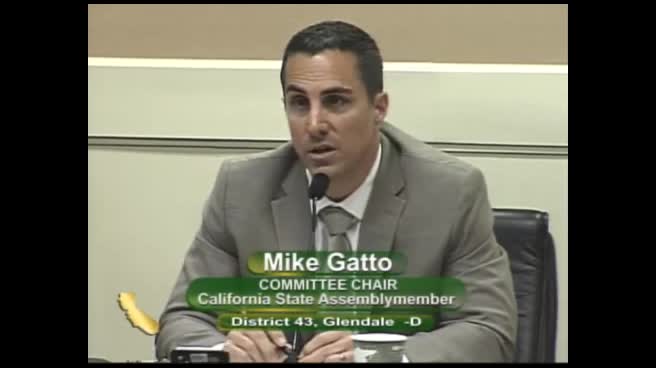
Mike Gatto, Chair
ABPCA Bill Id:AB 2773 (
Author:Quirk) – As Introduced Ver:March 28, 2016
SUBJECT: Biomethane
SUMMARY: Requires the California Public Utilities Commission (CPUC) to modify the minimum heating value, the siloxane trigger, and lower action levels of biomethane. Specifically, this bill:
- Requires the CPUC to modify the minimum heating value requirement of biomethane to allow for the injection of biomethane without first being blended upstream with other fuel to account for the downstream blending occurring naturally in the pipeline.
- Requires the CPUC to consider modifying the minimum heating value for biomethane from 990 British thermal units per standard cubic foot (Btu/scf) to 970 Btu/scf.
- Requires the CPUC modify the siloxane trigger level and lower action level to reflect a standard that can be met by siloxane processing equipment manufacturers and suppliers and for which those manufacturers and suppliers are willing to provide performance guarantees.
- Requires the CPUC to consider modifying the siloxane trigger level to 1.0 milligram of silicon per square meter (mg Si/m3) and the lower action level to 2.5 mg Si/m3.
EXISTING LAW:
- Requires the CPUC to adopt pipeline access rules to ensure gas corporations provide nondiscriminatory open access to the pipeline system for biomethane, regardless of the type or source of the biogas. (Public Utilities Code Section 784)
- Requires the California Energy Commission (CEC) to identify impediments that limit procurement of biomethane in California, including, but not limited to, impediments to interconnection and offer solutions to those impediments. (Public Resources Code Section 25326)
- Directed the Office of Environmental Health Hazard Assessment (OEHHA) and the California Air Resources Board (CARB), in consultation with other state agencies, to perform certain tasks related to the human health effects of biogas and biomethane. (Health and Safety Code Section 25421)
FISCAL EFFECT: Unknown.
COMMENTS:
- Author's Statement: "The standards developed for biomethane injection into distribution pipelines have been so stringent that no pipeline biomethane projects have been developed since the implementation of the standards in 2014. AB 2773 directs the [CPUC] to expedite the review and modification of siloxane standard and minimum heating value requirement by taking into account recent experiences and challenges in meeting the current standards and consideration of practicable approaches to delivering the same reliability of natural gas delivered to consumers while encouraging in-state biomethane production."
- Background: In implementing the requirement to adopt pipeline access rules for biomethane (pursuant to AB 1900 (Gatto), Chapter 602, Statutes of 2012) the CPUC opened a rulemaking proceeding in February 2013. In January 2014, the CPUC issued Decision (D) 14-01-034 adopting concentration standards for 17 Constituents of Concern (these include ammonia, biologicals, hydrogen, mercury, and siloxanes), and the monitoring, testing, reporting, and recordkeeping protocols for biomethane to be injected into the gas utilities' pipelines.
On April 9, 2014, the second phase of the same proceeding was opened to consider who should bear the costs of meeting the standards and requirements that the CPUC adopted in D.14-01-034.
In June 2015, the CPUC adopted D.15-06-029 and concluded that the costs of complying with the standards and protocols adopted by D.14-01-034 should be borne by the biomethane producers. However, consistent with AB 1900 and to provide initial support to the developing biomethane market, the CPUC's decision adopts a policy and program of a five-year monetary incentive program to encourage biomethane producers to design, construct, and to successfully operate biomethane projects that interconnect with the gas utilities’ pipeline systems so as to inject biomethane that can be safely used at an end user’s home or business. As described in this decision, each biomethane project that is built over the next five years, or sooner if the program funds are exhausted before that period, can receive 50% of the project’s interconnection costs, up to $1.5 million, to help offset these costs upon the successful interconnection and operation of the facility.
Since s single biogas project is in operation – the Point Loma Wastewater Treatment facility in San Diego County.
The Point Loma facility is specifically mentioned in a CEC report[1] on natural gas:
Because the heating value of biomethane is generally lower than fossil natural gas, blending with propane may be required to achieve heating values of greater than 990 British thermal unit (Btu) per standard cubic foot. Natural gas prices have been much lower than the production cost of biomethane. For example, the Point Loma Wastewater Plant produces biomethane at roughly $8.50 per MMBtu compared to an average cost of $4.00 per MMBtu for natural gas. As a result, biomethane production is more expensive than natural gas extraction.
- Issues with Heat Rate and Siloxanes: The issues raised by this bill relate to the heat content of the biogas, which is typically lower than natural gas.
It is unclear if the lower heat content of biogas will adversely impact end use equipment (such as gas turbines, water heaters, cook stoves, furnaces, etc.) which were not designed to be used with lower heat gas. Current utility heating values are 990 British thermal units per standard cubic feet (btu/scf). Biomethane proponents prefer a heat rate of 950 to 970 btu/scf.
In an earlier decision, (D.06-09-039), the CPUC relied on to reach its decision on heating value in this proceeding, the CPUC found that heating value could have an effect on auto-ignition, flashback, and combustion dynamics. (D.06-09-039). The CPUC also relied on a National Gas Council paper done in conjunction with representatives of liquefied natural gas suppliers, natural gas pipelines, utilities, power generators, industrial process gas users, appliance manufacturers, and natural gas processors. This paper found that understanding the historical composition of gas in a region is essential to establishing acceptable interchangeability standards, and that for home appliances, that the "Appliance performance degrades when the appliance is operated with gas that is not interchangeable with the gas used to tune the appliance when it was first installed."
The CPUC went on to state:
The proponents of biomethane have not introduced any scientific evidence in this proceeding to demonstrate that lowering the heating value to 950 or 970 btu/scf will not cause end use equipment problems. Instead, the biomethane proponents rely on the argument that since other states allow biomethane to have a minimum heating value of 950 btu/scf, or close to that number, that California should likewise lower its minimum heating value. That argument is insufficient justification to lower the heating value when such a change could affect the integrity and safety of end use equipment. As the 2009 GTI [Gas Technology Institute] Report notes, 'Low BTU gas may have detrimental effects on end use equipment and may not be compatible with many systems.'
Siloxane is found in gas produced at wastewater facilities and is a wasteproduct of detergents and cosmetics. During combustion of biogas containing siloxanes, silicon is released and can combine with free oxygen or various other elements in the combustion gas. Deposits are formed containing mostly silica or silicates but can also contain calcium, sulphur, zinc and phosphorous. These deposits can accumulate and must be removed by chemical or mechanical means.
According to the CPUC decision setting standards for pipeline biomethane:
The biomethane proponents have not provided any evidence to substantiate its argument that these 17 constituents of concern will not harm human health, or affect the integrity and safety of the pipeline and pipeline facilities.
- AB 2206 (Williams) 2016: A substantially similar bill, AB 2206 (Williams), passed unanimously out of the Assembly Utilities and Commerce Committee on April 6, 2016. AB 2206 requests a study on technical aspects of biomethane related to its delivery in common carrier pipelines and impacts on end uses of biomethane. Specifically, AB 2206:
- Requests the CCST to undertake and complete a study analyzing issues relating to minimum heating value and maximum siloxane specifications adopted by the California Public Utilities Commission (CPUC) for biomethane before it can be injected into common carrier gas pipelines.
- Requires each gas corporation operating common carrier pipelines in California to proportionately contribute to the expenses to undertake the study with the cost recoverable in rates if CCST agrees to undertake and complete the study.
- Authorizes the CPUC to modify certain available monetary incentives to allocate some of these incentive moneys to pay for the costs of the study.
- Requires, if CCST agrees to undertake and complete the study, the CPUC, within 6 months of its completion, to reevaluate requirements and standards adopted for injection of biomethane into common carrier pipelines and, if appropriate, change those requirements and standards or adopt new requirements and standards, giving due deference to the conclusions and recommendations made in the study.
- Arguments in Support: According to the Coalition for Renewable Natural Gas, the sponsor of this bill, “Renewable natural gas [RNG] is an alternative, clean and domestic energy resource used to generate renewable electric power, renewable heat, and the lowest carbon-intensity transportation fuel available. RNG utilization, particularly as transportation fuel is an important component in a truly diversified energy portfolio necessary to achieve the State’s greenhouse gas emissions reduction and related climate change objectives. Our members produce 90% of the RNG in North America for more than 55 projects operating successfully (in some cases for more than 30 years) in 17 different states. Unfortunately, none of these RNG projects have been developed or RNG volumes have been produced in California. Instead, they have been and are continuing to be developed and produced in states whose natural gas pipeline companies have a minimum heating value requirement no greater than 970 btu/scf, and who do not impose any standard for maximum siloxane concentration.”
- Arguments in Opposition: Proponents of biomethane have not introduced scientific evidence to demonstrate that lowering the heating value to 950 or 970 btu/scf will not cause end use equipment problems. Proponents rely on the argument that since other states allow biomethane to have a minimum heating value of 950 btu/scf, or close to that number, that California should likewise lower its minimum heating value. That argument is insufficient justification to lower the heating value when such a change could affect the integrity and safety of end use equipment.
Further, proponents have not provided evidence to substantiate the argument that the 17 constituents of concern, including siloxane, will not harm human health, or affect the integrity and safety of the pipeline and pipeline facilities.
- Related Legislation:
AB 2206 (Williams) 2016: Requires the CPUC to contract with the CCST to conduct a study evaluating siloxane and minimum heating value requirements. Pending in the Assembly Natural Resources Committee.
- Prior Legislation:
AB 1900 (Gatto), Chapter 602, Statutes of 2012: Requires OEHHA, in consultation with CARB, the Department of Toxic Substances Control, the Department of Resources Recycling and Recovery, and the California Environmental Protection Agency, to compile a list of constituents of concern that could pose risks to human health and that are found in biogas. Requires OEHHA to determine the health protective levels for that list and requires CARB to identify realistic exposure scenarios and the health risks associated with those scenarios. Requires CARB to determine the appropriate concentrations of those constituents. Requires the CPUC to adopt standards for biomethane that specify the concentrations of constituents of concern that are reasonably necessary to protect public health and ensure pipeline integrity and safety, and adopt requirements for monitoring, testing, reporting, and recordkeeping, as specified.
REGISTERED SUPPORT / OPPOSITION:
Support
Coalition for Renewable Natural Gas (Sponsor)
Opposition
None on file.
Analysis Prepared by: Darion Johnston / U. & C. / (916) 319-2083
Discussed in Hearing
 4MIN
Assembly Standing Committee on Utilities and Commerce
Bill Author

Bill Co-Author(s):