AB 334: Peace officers: training: profiling of motorcycle riders.
- Session Year: 2015-2016
- House: Assembly
- Latest Version Date: 2015-04-07
Existing law establishes the Commission on Peace Officer Standards and Training in the Department of Justice and requires the commission to adopt rules establishing minimum standards regarding the recruitment of peace officers. Existing law requires the commission to develop guidelines and implement courses of instruction regarding racial profiling, handling domestic violence, hate crimes, and human trafficking, among others.
This bill would require the Commission on Peace Officer Standards and Training to ensure that the profiling of motorcycle riders is addressed in the course of basic law enforcement training and offered to law enforcement officers in conjunction with existing training regarding profiling. The bill would require all local law enforcement agencies to adopt a written policy designed to condemn and prevent the profiling of motorcycle riders and to review and audit any existing policies to ensure that those policies do not enable or foster the practice of profiling motorcycle riders. Because this bill would impose additional duties on local law enforcement agencies, this bill would impose a state-mandated local program.
The California Constitution requires the state to reimburse local agencies and school districts for certain costs mandated by the state. Statutory provisions establish procedures for making that reimbursement.
This bill would provide that, if the Commission on State Mandates determines that the bill contains costs mandated by the state, reimbursement for those costs shall be made pursuant to these statutory provisions.
The Legislature finds and declares all of the following:
(a)Millions of Americans ride motorcycles. They may commute to work on a motorcycle or ride for pleasure after work and on weekends.
(b)A prominent motorcycle organization, the American Motorcycle Association, has over 215,000 members. Their members are on average 46 years of age.
(c)There are approximately 2,700 motorcycle schools across the United States recognized by the Motorcycle Safety Foundation. Of these, 130 are located in California, where the Motorcycle Safety Foundation contracts with the California Highway Patrol to administer the California Motorcyclist Safety Program. The curriculum of motorcycle schools in California is typical, consisting of approximately three hours of online instruction, five hours of classroom instruction, and 10 hours of instruction on the motorcycle range. Fees for these schools range from $250 to $350, inclusive, and the failure rate is around 13 to 15 percent, inclusive.
(d)Since its inception in 1987, Motorcycle Safety Foundation-authorized schools in California have educated 900,000 Californians in motorcycle safety, including 62,000 in 2013.
(e)A rising number of older Americans have begun riding motorcycles. For instance, a 2011 Wall Street Journal article, When Heaven Is a Harley: The 50-plus crowd is having a belated romance with motorcycles focuses on the increased interest in motorcycling among older Americans.
(f)According to the Department of Motor Vehicles, Californians over 50 years of age constitute 47 percent of the nearly 1.4 million Californians licensed to operate motorcycles. Nationally, the average age of motorcycle owners rose from 33 to 40 over the past 10 years.
(g)One observer of the trend toward older beginner motorcyclists has said, A lot of them say they were just too busy with careers and kids until now, and theyve reached a point in life where they want to try something different.
(h)An older proponent of motorcycling has described motorcyclings appeal as a really good feeling similar to downhill skiing, effortlessly moving through the fresh air.
(i)Additionally, motorcycles are more fuel-efficient than cars and a shift to motorcycle commuting may potentially reduce traffic congestion and emissions, thereby aligning with Californias goals under the California Global Warming Solutions Act of 2006 (AB 32) to reduce the transportation sectors carbon footprint.
SEC. 2.Section 13519.17 is added to the Penal Code, to read:13519.17.(a)The Commission on Peace Officer Standards and Training shall ensure that the profiling of motorcycle riders is addressed in the course of basic law enforcement training and offered to law enforcement officers in conjunction with existing training regarding profiling.
(b)Every local law enforcement agency shall adopt a written policy designed to condemn and prevent the profiling of motorcycle riders and shall review and audit existing procedures, practices, and training materials, to ensure that they do not enable or foster the practice of profiling motorcycle riders.
(c)For purposes of this section, profiling of motorcycle riders means using the fact that a person rides a motorcycle or wears motorcycle paraphernalia as a factor, without any individualized suspicion of the particular person, in deciding to stop and question, take enforcement action, arrest, or search a person or vehicle, with or without legal basis under the California Constitution or the United States Constitution. is the practice of detaining a suspect based on the fact that a person rides a motorcycle or wears motorcycle paraphernalia without any individualized suspicion of the particular person being stopped.
SEC. 3.If the Commission on State Mandates determines that this act contains costs mandated by the state, reimbursement to local agencies and school districts for those costs shall be made pursuant to Part 7 (commencing with Section 17500) of Division 4 of Title 2 of the Government Code.
The Legislature finds and declares all of the following:
(a)Millions of Americans ride motorcycles. They may commute to work on a motorcycle or ride for pleasure after work and on weekends.
(b)A prominent motorcycle organization, the American Motorcycle Association, has over 215,000 members. Their members are on average 46 years of age.
(c)There are approximately 2,700 motorcycle schools across the United States recognized by the Motorcycle Safety Foundation. Of these, 130 are located in California, where the Motorcycle Safety Foundation contracts with the California Highway Patrol to administer the California Motorcyclist Safety Program. The curriculum of motorcycle schools in California is typical, consisting of approximately three hours of online instruction, five hours of classroom instruction, and 10 hours of instruction on the motorcycle range. Fees for these schools range from $250 to $350, inclusive, and the failure rate is around 13 to 15 percent, inclusive.
(d)Since its inception in 1987, Motorcycle Safety Foundation-authorized schools in California have educated 900,000 Californians in motorcycle safety, including 62,000 in 2013.
(e)A rising number of older Americans have begun riding motorcycles. For instance, a 2011 Wall Street Journal article, When Heaven Is a Harley: The 50-plus crowd is having a belated romance with motorcycles focuses on the increased interest in motorcycling among older Americans.
(f)According to the Department of Motor Vehicles, Californians over 50 years of age constitute 47 percent of the nearly 1.4 million Californians licensed to operate motorcycles. Nationally, the average age of motorcycle owners rose from 33 to 40 over the past 10 years.
(g)One observer of the trend toward older beginner motorcyclists has said, A lot of them say they were just too busy with careers and kids until now, and theyve reached a point in life where they want to try something different.
(h)An older proponent of motorcycling has described motorcyclings appeal as a really good feeling similar to downhill skiing, effortlessly moving through the fresh air.
(i)Additionally, motorcycles are more fuel-efficient than cars and a shift to motorcycle commuting may potentially reduce traffic congestion and emissions, thereby aligning with Californias goals under the California Global Warming Solutions Act of 2006 (AB 32) to reduce the transportation sectors carbon footprint.
SEC. 2.Section 13519.17 is added to the Penal Code, to read:13519.17.(a)The Commission on Peace Officer Standards and Training shall ensure that the profiling of motorcycle riders is addressed in the course of basic law enforcement training and offered to law enforcement officers in conjunction with existing training regarding profiling.
(b)Every local law enforcement agency shall adopt a written policy designed to condemn and prevent the profiling of motorcycle riders and shall review and audit existing procedures, practices, and training materials, to ensure that they do not enable or foster the practice of profiling motorcycle riders.
(c)For purposes of this section, profiling of motorcycle riders means using the fact that a person rides a motorcycle or wears motorcycle paraphernalia as a factor, without any individualized suspicion of the particular person, in deciding to stop and question, take enforcement action, arrest, or search a person or vehicle, with or without legal basis under the California Constitution or the United States Constitution.
SEC. 3.If the Commission on State Mandates determines that this act contains costs mandated by the state, reimbursement to local agencies and school districts for those costs shall be made pursuant to Part 7 (commencing with Section 17500) of Division 4 of Title 2 of the Government Code.
|
Date
|
Status
|
|---|---|
| Feb 13, 2015 | Read first time. To print. |
| Feb 17, 2015 | From printer. May be heard in committee March 19. |
| Feb 23, 2015 | Referred to Com. on PUB. S. |
| Apr 6, 2015 | From committee: Amend, and do pass as amended and re-refer to Com. on APPR. (Ayes 5. Noes 1.) (March 24). |
| Apr 7, 2015 | Read second time and amended. |
| Apr 8, 2015 | Re-referred to Com. on APPR. |
| Apr 15, 2015 | In committee: Set, first hearing. Referred to suspense file. |
| May 28, 2015 | In committee: Held under submission. |
| Jan 31, 2016 | Died pursuant to Article IV, Sec. 10(c) of the Constitution. |
| Feb 1, 2016 | From committee: Filed with the Chief Clerk pursuant to Joint Rule 56. |
|
Date
|
Description
|
Location
|
Votes
|
|
|---|---|---|---|---|
| Mar 24, 2015 | Do pass as amended and be re-referred to the Committee on [Appropriations] | Assembly Standing Committee on Public Safety |
Passed |
This list shows positions taken on this bill by organizations on the date displayed, which is linked to the original source.
Positions by individuals are not included.
|
Organization
|
Position
|
Date
|
|---|---|---|
| Aaron Read & Associates | * Against | Mar 24, 2015 |
| ABATE | * Support | Mar 24, 2015 |
| ABATE of California | * Support | Mar 24, 2015 |
| American Motorcyclist Association | * Support | Mar 24, 2015 |
| American Motorcyclists Association | * Support | Mar 24, 2015 |
| Bikers Rights Organization of California | * Support | Mar 24, 2015 |
| California Association Of Highway Patrolmen | * Against | Mar 24, 2015 |
| California Attorneys For Criminal Justice | * Support | Mar 24, 2015 |
| California Fraternal Order of Police | * Neutral | Mar 24, 2015 |
| California Public Defender Association | * Support | Mar 24, 2015 |
| California Public Defenders Association | * Support | Mar 24, 2015 |
| Californian | * Support | Mar 24, 2015 |
| Central Valley Confederation of Clubs | * Support | Mar 24, 2015 |
| Deputy Sheriffs in Sacramento County | * Neutral | Mar 24, 2015 |
| Fair Oaks | * Support | Mar 24, 2015 |
| Fraternal Order of Police | * Against | Mar 24, 2015 |
| Long Beach Police Officers Association | * Neutral | Mar 24, 2015 |
| Long Beach Police Officers Association | * Against | Mar 24, 2015 |
| Los Angeles County Professional Peace Officer Association | * Against | Mar 24, 2015 |
| Los Angeles County Professional Peace Officers Association | * Neutral | Mar 24, 2015 |
| Modified Motorcycle Association Of California | * Support | Mar 24, 2015 |
| Motor Cycle Club | * Support | Mar 24, 2015 |
| Sacramento County Deputy Sheriffs' Association | ** Against | Mar 24, 2015 |
| Santa Ana Police Officers Association | ** Against | Mar 24, 2015 |
| Southern California Coalition of Motorcycle Clubs | * Support | Mar 24, 2015 |
AB 334
Page 2
Date of Hearing: April 15, 2015
ASSEMBLY COMMITTEE ON APPROPRIATIONS
Jimmy Gomez, Chair
AB 334
(Cooley) – As AmendedApril 7, 2015
Policy Committee: |
Public Safety |
Vote: |
5 - 1 |
|
|
|
|
|
|
|
|
Urgency: No State Mandated Local Program: Yes Reimbursable: Yes
SUMMARY:
This bill requires training for law enforcement officers on the profiling of motorcycle riders, as defined, and requires local law enforcement agencies to adopt policies preventing the profiling of motorcycle riders. Specifically, this bill:
Requires that The Commission on Peace Officer Standards and Training (POST) ensure that the profiling of motorcycle riders is addressed in the course of basic law enforcement training and offered to law enforcement officers in conjunction with existing training.
Defines “profiling of motorcycle riders” as the practice of detaining a suspect based on the fact a person rides a motorcycle or wears motorcycle paraphernalia without any individualized suspicion of the particular person being stopped.
Requires local law enforcement agencies to adopt written policies designed to condemn and prevent the profiling of motorcycle riders.
FISCAL EFFECT:
Moderate one-time cost, $120,000 to $350,000 (GF), for POST to develop the required course on motorcycle profiling and review existing curriculum to determine what portion can be eliminated or reduced to incorporate the new course.
Moderate reimbursable one-time GF costs of $400,000 to $500,000, associated with the requirement for local agencies adopt written policies regarding profiling motorcycle riders. (Assume a cost of at least $1,000 per agency to review and audit existing procedures, practices, and training materials, to ensure local law enforcement agencies do not enable or foster the practice of profiling motorcycle riders and assume at least 400 agencies will submit a claim for reimbursement.)
COMMENTS:
Background. Current law requires POST to establish a certification program for peace officers, which shall be considered professional certificates. Also requires that the course of basic training for law enforcement officers include adequate instruction on racial and cultural diversity in order to foster mutual respect and cooperation between law enforcement and members of all racial and cultural groups.
Purpose. According to the author, “AB 334 ensures that law-abiding, recreational motorcycle riders, including those wearing ‘leathers’ for safety if their bike goes down, are not unfairly profiled by law enforcement and stopped without other reasonable cause. It directs the Commission on Peace Officer Standards and Training to incorporate and address the profiling of motorcycle riders during continuing law enforcement training. The bill also requires local law enforcement agencies to adopt a written policy to prevent the profiling of motorcycle riders.
Argument in Support: According to Western States Representative Nicholas Haris of the American Motorcyclist Association, “The motorcycling community is a diverse one, and individual riders deserve to be judged on specific actions and behaviors, not solely by their chosen mode of transportation.” Mr. Haris also refers to the fact that similar legislation has been enacted in Washington state in 2011 and has been proposed in Minnesota and Arizona.
Argument in Opposition: According to the Sacramento County Deputy Sheriffs’ Association, the proposed legislation, “. . . if enacted, will hinder our ability to protect the public by classifying legitimate and constitutional police practices as unlawful. Additionally, AB 334 expressly states that law enforcement officers shall be banned from legally stopping motorcycle riders in cases where officers have a legal right – and duty – to stop riders in violation of traffic and other laws.”
“This bill in its current form will protect criminal motorcycle gang members and prevent dedicated law enforcement officers from ensuring the safety of the law-abiding public.”
Analysis Prepared by: Pedro Reyes / APPR. / (916) 319-2081
AB 334
Page 6
Date of Hearing: March 24, 2015
Counsel: David Billingsley
ASSEMBLY COMMITTEE ON PUBLIC SAFETY
Bill Quirk, Chair
AB 334
(Cooley) – As Introduced February 13, 2015
As Proposed to be Amended in Committee
SUMMARY:
Requires training for law enforcement officers on the profiling of motorcycle riders. Requires local law enforcement agency to adopt policies preventing the profiling of motorcycle riders. Defines “profiling of motorcycle riders.” Specifically, this bill:
Requires that The Commission on Peace Officer Standards and Training (POST) ensure that the profiling of motorcycle riders is addressed in the course of basic law enforcement training and offered to law enforcement officers in conjunction with existing training regarding profiling.
Requires local law enforcement agencies adopt written policies designed to condemn and prevent the profiling of motorcycle riders. Requires that such policies review and audit existing procedures, practices, and training materials, to ensure that they do not enable or foster the practice of profiling motorcycle riders.
Defines “profiling of motorcycle riders” as the practice of detaining a suspect based on the fact a person rides a motorcycle or wears motorcycle paraphernalia without any individualized suspicion of the particular person being stopped.
EXISTING LAW:
Requires all peace officers to complete an introductory course of training prescribed by POST, demonstrated by passage of an appropriate examination developed by POST. (Pen. Code, § 832, subd. (a).)
Establishes the Commission on Peace Officer Training and Standards. (Pen. Code, § 13500.)
Empowers POST to develop and implement programs to increase the effectiveness of law enforcement. (Pen. Code, §13503.)
Authorizes POST, for the purpose of raising the level of competence of local law enforcement officers, to adopt rules establishing minimum standards related to physical, mental and moral fitness and training that shall govern the recruitment of any peace officers in California. (Pen. Code, § 13510, subd. (a).)
Requires POST to conduct research concerning job-related educational standards and job-related selection standards to include vision, hearing, physical ability, and emotional stability and adopt standards supported by this research. (Pen. Code, § 13510, subd. (b).)
Requires POST to establish a certification program for peace officers, which shall be considered professional certificates. (Pen. Code, § 13510.1, subd. (a).)
Requires that the course of basic training for law enforcement officers include adequate instruction on racial and cultural diversity in order to foster mutual respect and cooperation between law enforcement and members of all racial and cultural groups. (Pen. Code, § 13519.4, subd. (b).)
Defines "Racial profiling," as the practice of detaining a suspect based on a broad set of criteria which casts suspicion on an entire class of people without any individualized suspicion of the particular person being stopped. (Pen. Code, § 13519.4, subd. (e).)
Prohibits a law enforcement officer from engaging in racial profiling. (Pen. Code, § 13519.4, subd. (f).)
FISCAL EFFECT:
Unknown
COMMENTS:
Author's Statement: According to the author, “Far from the stereotypical ‘outlaw’ image, motorcycle enthusiasts are more likely to be middle-class baby-boomers, and a great many are veterans who enjoy the independence and comradery that the sport affords. An increasing number of these enthusiasts are older Californians that didn’t have time for this hobby in the past, but now are either discovering or re-discovering their passion for motorcycles. They find it to be a fun recreational activity to participate in with friends and family.
“According to the American Motorcycle Association, the average age of their more than 215,000 members is 46 years old. Over the past ten years, the average age of motorcycle owners nationally rose from 33 to 40. Data from the California Highway Patrol’s SWITRS (Statewide Integrated Traffic Records System) show the steady climb of licensed motorcycle drivers in California, from approximately 800,000 in 1994 to nearly 1.4 million in 2012. According to the DMV, 47% of California’s 1.4 million motorcycle licensees are over the age of 50. Since its founding in 1987, Motorcycle Safety Foundation-authorized schools have educated more than 900,000 prospective motorcyclists in California in motorcycle safety, including 62,000 in 2013 alone. Motorcycle education consists of classroom time and practical learning to teach students safe riding practices.
“AB 334 ensures that law-abiding, recreational motorcycle riders, including those wearing ‘leathers’ for safety if their bike goes down, are not unfairly profiled by law enforcement and stopped without other reasonable cause. It directs the Commission on Peace Officer Standards and Training to incorporate and address the profiling of motorcycle riders during continuing law enforcement training. The bill also requires local law enforcement agencies to adopt a written policy to prevent the profiling of motorcycle riders.
“In 2011, Washington State enacted a similar statute. This bill proposes California adopt the Washington approach.”

Prevalence of Profiling of Motorcyclists: Based on the material provided by the author, there were nearly 1.4 million licensed motorcycle drivers in California in 2012. However, it is difficult to ascertain the extent of “profiling” based on riding a motorcycle, or wearing motorcycle paraphernalia. The author did provide some anecdotal evidence of profiling, but no data has been provided to the Committee.
Current POST Training: POST was created by the legislature in 1959 to set minimum selection and training standards for California law enforcement. According to the POST Web site, the Regular Basic Course Training includes 42 separate topics, ranging from juvenile law and procedure to search and seizure. [POST, Regular Basic Course Training Specifications; [<http://post.ca.gov/regular-basic-course-training-specifications.aspx>.] These topics are taught during a minimum of 664 hours of training. [POST, Regular Basic Course, Course Formats, available at: <http://post.ca.gov/regular-basic-course.aspx.>]
POST currently provides specific training on racial profiling and cultural diversity in connection with the mandate of Penal Code section 13519.4. According to POST that curriculum consists of the following:
Racial Profiling Training
Part I – Initial* - 5 Hours
(1) Why Are We Here?
(2) Racial Profiling Defined
(3) Legal Considerations
(4) History of Civil Rights
(5) Impact of Racial Profiling
(6) Community Considerations
(7) Ethical Considerations
Part II – Refresher** - 2 Hours
(1) Review of Applicable Initial Training
(2) Update on Changes in Law and Practices
*Included in Basic Course after January 1, 2004.
**To be completed every five years after initial training
POST also provided a list of classes within their curriculum related to the constitutional legality of enforcement actions and impartial policing:
Leadership, Professionalism and Ethics
Policing the Community (Fair and impartial enforcement)
Introduction to Criminal Law
Laws of Arrest
Search and Seizure
Gang Awareness
U.S. Constitution, 4TH Amendment Implications: The proposed legislation will not impact the way courts evaluate the lawfulness of police enforcement actions, including investigative detentions, searches and arrests.
The Fourth Amendment of the United States Constitution provides that “The right of the people to be secure in their persons, houses, papers, and effects, against unreasonable searches and seizures, shall not be violated, and no warrants shall issue, but upon probable cause, supported by oath or affirmation, and particularly describing the place to be searched, and the persons or things to be seized.”
The Fourth Amendment’s prohibition against unreasonable search and seizure covers law enforcement actions including investigative detentions, arrests, searches of persons or vehicles.
The test to determine the constitutional validity of an officer’s
detention, search, arrest or other action implicating the right to be
free from unreasonable search and seizure is and objective
test. In
analyzing the reasonableness of a particular search or seizure, "it
is imperative that the facts be judged against an objective standard"
Terry
v. Ohio
(1968) 39 U.S. 1, 21.
Under that test, the court would examine
whether objective facts legally support the enforcement action the
officer took. The officer’s subjective belief or intent is
generally not material to the judicial determination of the legality
of the enforcement action.
Proposed Legislation Will Not Affect the Admissibility of Evidence Obtained by Law Enforcement During a Detention, Arrest, or Search: Proposition 8, passed in 1982, limited the circumstances a trial court may exclude relevant evidence as a sanction for the violation of state statutes. (Cal. Const., art. I, § 28, subd. (d).) Pursuant to Proposition 8, trial courts can only exclude evidence acquired through an unreasonable search or seizure by law enforcement if that exclusion is required under federal law.
"What Proposition 8 does is to eliminate a judicially created remedy for violations of the search and seizure provisions of the federal or state Constitutions, through the exclusion of evidence so obtained, except to the extent that exclusion remains federally compelled." In re Lance W. (1985) 37 Cal. 3d 873,886-887.)
Proposed Amendment to be Taken in Committee: The proposed amendment alters the definition of “profiling of motorcycle riders.” The language of the proposed amendment is as follows:
(c) For purposes of this section, “profiling of motorcycle riders” is the practice of detaining a suspect based on the fact a person rides a motorcycle or wears motorcycle paraphernalia without any individualized suspicion of the particular person being stopped.
The language of the proposed amendment is consistent with the language the Legislature adopted to define “racial profiling.” (Cal. Pen. Code, § 13519.4.)
Letters in Support and Opposition were submitted prior to the proposed amendment.
Argument in Support: According to Western States Representative Nicholas Haris of the American Motorcyclist Association, “The motorcycling community is a diverse one, and individual riders deserve to be judged on specific actions and behaviors, not solely by their chosen mode of transportation.” Mr. Haris also refers to the fact that similar legislation has been enacted in Washington state in 2011 and has been proposed in Minnesota and Arizona.
Argument in Opposition: According to the Sacramento County Deputy Sheriffs’ Association, the proposed legislation, “. . . if enacted, will hinder our ability to protect the public by classifying legitimate and constitutional police practices as unlawful. Additionally, AB 334 expressly states that law enforcement officers shall be banned from legally stopping motorcycle riders in cases where officers have a legal right – and duty – to stop riders in violation of traffic and other laws.”
“This bill in its current form will protect criminal motorcycle gang members and prevent dedicated law enforcement officers from ensuring the safety of the law-abiding public.”
REGISTERED SUPPORT / OPPOSITION:
Support
Biker’s Rights Organization
American Motorcyclist Association
California Public Defender Association
ABATE of California
126 private individuals
Opposition
Sacramento County Deputy Sheriffs’ Association
Los Angeles County Professional Peace Officer Association
Fraternal Order of Police
Long Beach Police Officers Association
Santa Ana Police Officers Association
Analysis Prepared by:
David Billingsley / PUB. S. / (916) 319-3744
Discussed in Hearing
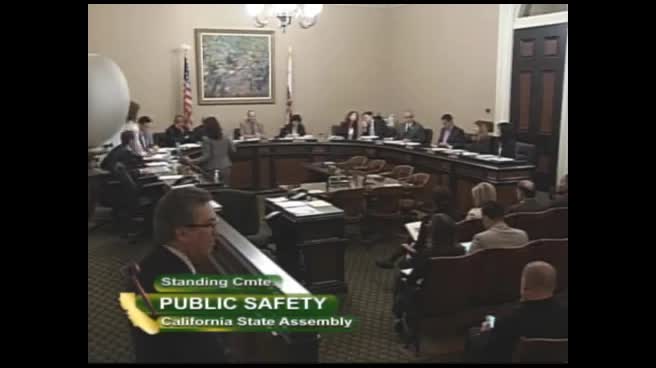 20MIN
Assembly Standing Committee on Public Safety
Bill Author

Bill Co-Author(s):