AB 337: Personal income tax: credits: qualified teachers.
- Session Year: 2015-2016
- House: Assembly
- Latest Version Date: 2015-05-21
The Personal Income Tax Law allows various credits against the tax imposed by that law.
This bill would, for taxable years beginning on or after January 1, 2015, 2016, and before January 1, 2020, 2021, allow a credit against that tax for amounts paid or incurred by a qualified teacher, as defined, during the school year beginning immediately prior to the taxable year for instructional materials and classroom supplies, as defined, not to exceed $250, except as provided. The bill would make related findings and declarations. The bill would require the school in which a qualified teacher works to provide a certificate certifying the hours the qualified teacher worked in a school year and the date in which the individual became a teacher. By requiring the schools to provide this certificate, the bill would impose a state-mandated local program.
The California Constitution requires the state to reimburse local agencies and school districts for certain costs mandated by the state. Statutory provisions establish procedures for making that reimbursement.
This bill would provide that, if the Commission on State Mandates determines that the bill contains costs mandated by the state, reimbursement for those costs shall be made pursuant to these statutory provisions.
This bill would take effect immediately as a tax levy.
The Personal Income Tax Law allows various credits against the tax imposed by that law.
This bill would, for taxable years beginning on or after January 1, 2015, and before January 1, 2020, allow a credit against that tax for amounts paid or incurred by a qualified teacher, as defined, during the taxable year for instructional materials and classroom supplies, as defined, not to exceed $250, except as provided. The bill would make related findings and declarations.
This bill would take effect immediately as a tax levy.
The Legislature finds and declares all of the following:
(a)While ensuring that a quality education for all of Californias school children is a shared responsibility of the general public, it is foremost the duty of individual parents and teachers.
(b)State tax relief for education expenses, leveraged with current federal deductions, can further support and strengthen new teachers for successful careers in their noble profession.
SEC. 2.Section 17052.7 is added to the Revenue and Taxation Code, to read:17052.7.(a)(1)For each taxable year beginning on or after January 1, 2015, 2016, and before January 1, 2020, 2021, there shall be allowed as a credit against the net tax, as defined in Section 17039, an amount equal to the amount paid or incurred by a qualified teacher during the taxable year for instructional materials and classroom supplies, not to exceed two hundred fifty dollars ($250), except as provided in paragraph (2).
(2)Subject to the maximum credit amount allowed per qualified teacher, for two qualified teachers who are married to each other and filing a joint return, the credit shall not exceed five hundred dollars ($500).
(b)For purposes of this section:
(1)Instructional materials and classroom supplies means books, supplies, computer equipment, including related software and services software, services, and other equipment, and supplementary materials used in the classroom, including, but not limited to, supplies for courses in health and physical education, the amount paid or incurred for which is otherwise deductible under Section 162 of the Internal Revenue Code and not reimbursed.
(2)Qualified teacher means a teacher who meets all of the following requirements:
(A)The individual teacher has worked at least 900 hours in the school year beginning immediately prior to the taxable year as a teacher, in a school offering instruction in kindergarten or any of grades 1 to 12, inclusive, in California at a public, charter, or private school that has a current private school affidavit on file with the State Department of Education in a school year. public or charter school.
(B)The teacher is primarily engaged in the duty of imparting knowledge to pupils by teaching, instructing, or lecturing.
(C)The teacher customarily and regularly exercises discretion and independent judgment in performing the duties of a teacher.
(D)The teacher is not employed as a tutor, teaching assistant, instructional aide, student teacher, day care provider, vocational instructor, or similar position. was not employed as a qualified teacher prior to the 201516 school year.
(c)The credit allowed pursuant to this section shall be available as follows:
(1)For taxable years beginning on or after January 1, 2015, and before January 1, 2016, the credit shall be allowed only to a qualified teacher with no more than one year of employment as a qualified teacher.
(2)For taxable years beginning on or after January 1, 2016, and before January 1, 2017, the credit shall be allowed only to a qualified teacher with no more than two consecutive years of employment as a qualified teacher.
(3)For taxable years beginning on or after January 1, 2017, and before January 1, 2020, the credit shall be allowed only to a qualified teacher with no more than three consecutive years of employment as a qualified teacher.
(E)The teacher has not been a qualified teacher for more than three consecutive school years.
(3)School year means the fiscal year or the academic year.
(c)(1)The school in which the qualified teacher works shall provide a certificate to the qualified teacher certifying that the teacher has worked at least 900 hours during the school year.
(2)A qualified teacher shall provide a copy of the certificate to the Franchise Tax Board upon request.
(d) In the case where the credit allowed by this section exceeds the net tax, the excess may be carried over to reduce the net tax in the following year, and succeeding four years if necessary, until the credit is exhausted.
(e) (1)The Franchise Tax Board may prescribe rules, guidelines, or procedures necessary or appropriate to carry out the purposes of this section.
(2)Chapter 3.5 (commencing with Section 11340) of Part 1 of Division 3 of Title 2 of the Government Code shall not apply to any standard, criterion, procedure, determination, rule, notice, or guideline established or issued by the Franchise Tax Board pursuant to this section.
(f)Section 41 shall not apply to the credit allowed pursuant to this section.
(g)
(f)This section shall remain in effect only until December 1, 2020, and as of that date is repealed.
SEC. 3.Pursuant to Section 41 of the Revenue and Taxation Code, the specific goal of the credit allowed under Section 17052.7 of the Revenue and Taxation Code is to support qualified teachers who are purchasing instructional materials and classroom supplies with personal funds.
(a)The effectiveness of this credit shall be measured by the number of qualified teachers who are allowed this credit.
(1)The State Department of Education and the Commission on Teacher Credentialing shall report to the Legislature by January 1, 2020, the number of qualified teachers in California after the effective date of this act.
(2)(A)The Franchise Tax Board shall report to the Legislature by January 1, 2020, the number of taxpayers allowed this credit in each taxable year beginning on and after January 1, 2016, and before January 1, 2019.
(B)A report to be submitted pursuant to subparagraph (A) shall be submitted in compliance with Section 9795 of the Government Code.
(b)(1)The Demographics Office of the State Department of Education reports that, in 201314 school year, there were 13,398 first year teachers and 16,596 second year teachers. If 10,000 qualified teachers are allowed this credit in the first taxable year, which begins on or after January 1, 2016; 20,000 in the second taxable year, which begins on or after January 1, 2017; and 30,000 in the third taxable year, which begins on or after January 1, 2018, the credit will have effectively reduced the personal expenses for instructional materials and classroom supplies incurred by new teachers by an estimated $15 million.
(2)A report to be submitted pursuant to paragraph (1) shall be submitted in compliance with Section 9795 of the Government Code.
(c)The Franchise Tax Board shall measure the estimated number of qualified teachers described in subdivision (b) against the number of qualified teachers that are allowed this credit.
(d)This credit shall be considered successful if 50 percent or more of the estimated number of qualified teachers are allowed this credit.
SEC. 4.If the Commission on State Mandates determines that this act contains costs mandated by the state, reimbursement to local agencies and school districts for those costs shall be made pursuant to Part 7 (commencing with Section 17500) of Division 4 of Title 2 of the Government Code.
SEC. 3.SEC. 5.This act provides for a tax levy within the meaning of Article IV of the Constitution and shall go into immediate effect.
The Legislature finds and declares all of the following:
(a)While ensuring that a quality education for all of Californias school children is a shared responsibility of the general public, it is foremost the duty of individual parents and teachers.
(b)State tax relief for education expenses, leveraged with current federal deductions, can further support and strengthen new teachers for successful careers in their noble profession.
SEC. 2.Section 17052.7 is added to the Revenue and Taxation Code, to read:17052.7.(a)(1)For each taxable year beginning on or after January 1, 2015, and before January 1, 2020, there shall be allowed as a credit against the net tax, as defined in Section 17039, an amount equal to the amount paid or incurred by a qualified teacher during the taxable year for instructional materials and classroom supplies, not to exceed two hundred fifty dollars ($250), except as provided in paragraph (2).
(2)Subject to the maximum credit amount allowed per qualified teacher, for two qualified teachers who are married to each other and filing a joint return, the credit shall not exceed five hundred dollars ($500).
(b)For purposes of this section:
(1)Instructional materials and classroom supplies means books, supplies, computer equipment, including related software and services and other equipment, and supplementary materials used in the classroom, including, but not limited to, supplies for courses in health and physical education, the amount paid or incurred for which is otherwise deductible under Section 162 of the Internal Revenue Code and not reimbursed.
(2)Qualified teacher means a teacher who meets all of the following requirements:
(A)The individual has worked at least 900 hours in the school year as a teacher, in a school offering instruction in kindergarten or any of grades 1 to 12, inclusive, in California at a public, charter, or private school that has a current private school affidavit on file with the State Department of Education in a school year.
(B)The teacher is primarily engaged in the duty of imparting knowledge to pupils by teaching, instructing, or lecturing.
(C)The teacher customarily and regularly exercises discretion and independent judgment in performing the duties of a teacher.
(D)The teacher is not employed as a tutor, teaching assistant, instructional aide, student teacher, day care provider, vocational instructor, or similar position.
(c)The credit allowed pursuant to this section shall be available as follows:
(1)For taxable years beginning on or after January 1, 2015, and before January 1, 2016, the credit shall be allowed only to a qualified teacher with no more than one year of employment as a qualified teacher.
(2)For taxable years beginning on or after January 1, 2016, and before January 1, 2017, the credit shall be allowed only to a qualified teacher with no more than two consecutive years of employment as a qualified teacher.
(3)For taxable years beginning on or after January 1, 2017, and before January 1, 2020, the credit shall be allowed only to a qualified teacher with no more than three consecutive years of employment as a qualified teacher.
(d)In the case where the credit allowed by this section exceeds the net tax, the excess may be carried over to reduce the net tax in the following year, and succeeding four years if necessary, until the credit is exhausted.
(e)(1)The Franchise Tax Board may prescribe rules, guidelines, or procedures necessary or appropriate to carry out the purposes of this section.
(2)Chapter 3.5 (commencing with Section 11340) of Part 1 of Division 3 of Title 2 of the Government Code shall not apply to any standard, criterion, procedure, determination, rule, notice, or guideline established or issued by the Franchise Tax Board pursuant to this section.
(f)Section 41 shall not apply to the credit allowed pursuant to this section.
(g)This section shall remain in effect only until December 1, 2020, and as of that date is repealed.
SEC. 3.This act provides for a tax levy within the meaning of Article IV of the Constitution and shall go into immediate effect.
|
Date
|
Status
|
|---|---|
| Feb 13, 2015 | Read first time. To print. |
| Feb 17, 2015 | From printer. May be heard in committee March 19. |
| Feb 23, 2015 | Referred to Com. on REV. & TAX. |
| Mar 23, 2015 | In committee: Set, first hearing. Hearing canceled at the request of author. |
| Apr 13, 2015 | In committee: Set, second hearing. Hearing canceled at the request of author. |
| Apr 27, 2015 | In committee: Hearing postponed by committee. |
| May 11, 2015 | In committee: Set, final hearing. Referred to REV. & TAX. suspense file. |
| May 20, 2015 | From committee: Amend, and do pass as amended and re-refer to Com. on APPR. (Ayes 8. Noes 0.) (May 18). |
| May 21, 2015 | Read second time and amended. |
| May 22, 2015 | Re-referred to Com. on APPR. |
| May 27, 2015 | In committee: Set, first hearing. Referred to APPR. suspense file. |
| May 28, 2015 | In committee: Held under submission. |
| May 28, 2015 | Joint Rule 62(a), file notice suspended. |
| May 28, 2015 | Joint Rule 62(a), file notice suspended. (Page 1613.) |
| Jan 31, 2016 | Died pursuant to Article IV, Sec. 10(c) of the Constitution. |
| Feb 1, 2016 | From committee: Filed with the Chief Clerk pursuant to Joint Rule 56. |
|
Date
|
Description
|
Location
|
Votes
|
|
|---|---|---|---|---|
| May 18, 2015 | Do pass as amended and be re-referred to the Committee on [Appropriations] | Assembly Standing Committee on Revenue and Taxation |
Passed |
This list shows positions taken on this bill by organizations on the date displayed, which is linked to the original source.
Positions by individuals are not included.
|
Organization
|
Position
|
Date
|
|---|---|---|
| American Federation Of State, County And Municipal Employees, Afl-Cio | ** Against | May 11, 2015 |
| California Association Of Private School Organizations | * Support | May 11, 2015 |
| California Catholic Conference | * Support | May 11, 2015 |
| California Catholic Conference | * Indeterminate | May 11, 2015 |
| California Tax Reform Association | ** Against | May 11, 2015 |
| California Teachers Association | ** Against | May 11, 2015 |
| Elk Grove Unified School District | * Support | May 11, 2015 |
| Los Angeles County Office Of Education | ** Support | May 11, 2015 |
AB 337
Page 2
Date of Hearing: May 27, 2015
ASSEMBLY COMMITTEE ON APPROPRIATIONS
Jimmy Gomez, Chair
AB 337
(Jones-Sawyer) – As Amended May 21, 2015
Policy Committee: |
Revenue and Taxation |
Vote: |
8 - 0 |
Urgency: Yes State Mandated Local Program: Yes Reimbursable: Yes
SUMMARY:
This bill allows qualified teachers to claim a personal income tax credit, not to exceed $250, for instructional materials and classroom supplies beginning on or after January 1, 2016 and before January 1, 2021. Specifically, this bill
1) Defines a "qualified teacher" as one that meets the following requirements, among others:
a) The teacher worked at least 900 hours in the school year beginning immediately prior to the taxable year in California at a K-12 public or charter school; and
b) The teacher was not employed as a qualified teacher prior to the 2015-16 school year, and has not been a qualified teacher more than 3 consecutive years.
2) Requires the school in which the teacher works to provide a certificate establishing the teacher worked at least 900 hours during the school year, and allows the Franchise Tax Board (FTB) to request a copy of that certificate.
3) Defines "instructional materials and classroom supplies" as books, supplies, computer equipment, including related software, services and other equipment, and supplementary materials used in the classroom, including supplies for courses in health and physical education, the amount paid or incurred for which is otherwise deductible under Internal Revenue Code Section 162 and not reimbursed.
4) Allows a taxpayer to carry forward any unused tax credit for up to five years to offset future tax liability.
5) Establishes specific goals and performance criteria to measure the credit's success pursuant to section 41 of the Revenue & Tax Code.
FISCAL EFFECT:
1) Potentially significant GF costs to FTB to administer the changes to forms and systems.
2) Estimated GF revenue decreases of $3.0 million, $5.9 million, and $8.5 million in FY 2015-16, FY 2016-17, and FY 2017-18, respectively.
3) Unknown, but potentially significant reimbursable mandate costs to schools providing the requisite certificates for FTB inspection.
COMMENTS:
1) Purpose. According to the author, this bill enables new teachers, in their first three years of service, to claim individual tax credits of up to $250 for expenses relating to instructional materials and classroom supplies. The author contends that while the cost to the state is expected to be modest, the benefits to teachers will be significant, especially when leveraged with existing federal deductions for similar expenditures on classroom supplies and materials.
2) Tax Incentive vs Investment in Education. Opponents, including the California Teachers Association (CTA), argue K-12 education endured budget cuts of $20 billion over the recession years, and additional revenues should be spent on restoring those budgets instead of being used for tax incentives. CTA asserts schools should be adequately funded so that teachers do not have to spend personal income to purchase classroom materials. While this tax credit would be used for activities benefitting California's public schools, the effect would be diminished by reducing Proposition 98 funding. The committee may wish to consider whether increased school funding would be a more efficient approach to achieving these goals.
3) Supplying Certificates for School Supplies. Though certification of teacher eligibility for the credit will ease the administrative burden for FTB, such requirement creates a reimbursable mandate to local agencies. Given the minimum reimbursement claim is $1,000, it seems counterintuitive that the state would be willing to pay those reimbursement claims when the same amount could fund $250 worth of school supplies directly for 4 teachers at a single agency.
4) Prior legislation. AB 2427 (Jones-Sawyer) of 2014 was substantially similar to this bill, and was held on the Suspense File of this committee.
Analysis Prepared by: Joel Tashjian / APPR. / (916) 319-2081
AB 337
Page 6
Date of Hearing: May 18, 2015
ASSEMBLY COMMITTEE ON REVENUE AND TAXATION
Philip Ting, Chair
AB 337 (
Jones-Sawyer) – As Introduced February 13, 2015
SUSPENSE
Majority vote. Tax levy. Fiscal committee.
SUBJECT: Personal income tax: credits: qualified teachers.
SUMMARY: Allows a personal income tax (PIT) credit for amounts paid by a "qualified teacher" for "instructional materials and classroom supplies". Specifically, this bill:
Contains the following legislative findings:
While ensuring that a quality education for all of California's school children is a shared responsibility of the general public, it is foremost the duty of individual parents and teachers; and,
State tax relief for education expenses, leveraged with current federal deductions, can further support and strengthen new teachers for successful careers in their noble profession.
Allows, for taxable years beginning on or after January 1, 2015, and before January 1, 2020, a credit equal to the amount paid or incurred by a "qualified teacher" during the taxable year for "instructional materials and classroom supplies", not to exceed $250.
Provides that, in cases where two "qualified teachers" are married to each other and file a joint return, the credit shall not exceed $500.
Defines a "qualified teacher" as a teacher who meets all of the following requirements:
The individual has worked at least 900 hours in the school year as a teacher, in a school offering instruction in kindergarten or any of Grades 1 to 12, inclusive, in California at a public, charter, or private school that has a current private school affidavit on file with the State Department of Education in a school year;
The teacher is primarily engaged in the duty of imparting knowledge to pupils by teaching, instructing, or lecturing;
The teacher customarily and regularly exercises discretion and independent judgment in performing the duties of a teacher; and,
The teacher is not employed as a tutor, teaching assistant, instructional aide, student teacher, day care provider, vocational instructor, or in a similar position.
Defines "instructional materials and classroom supplies" as books, supplies, computer equipment, including related software and services and other equipment, and supplementary materials used in the classroom, including supplies for courses in health and physical education, the amount paid or incurred for which is otherwise deductible under Internal Revenue Code (IRC) Section 162 and not reimbursed.
Provides that, for taxable years beginning on or after January 1, 2015, and before January 1, 2016, the credit shall only be allowed to a qualified teacher with no more than one year of employment as a qualified teacher.
Provides that, for taxable years beginning on or after January 1, 2016, and before January 1, 2017, the credit shall only be allowed to a qualified teacher with no more than two consecutive years of employment as a qualified teacher.
Provides that, for taxable years beginning on or after January 1, 2017, and before January 1, 2020, the credit shall only be allowed to a qualified teacher with no more than three consecutive years of employment as a qualified teacher.
Provides that, in cases where the credit amount exceeds the taxpayer's net tax, the excess may be carried over to reduce the taxpayer's tax liability in the following year, and succeeding four years if necessary, until the credit is exhausted.
Authorizes the Franchise Tax Board (FTB) to prescribe rules, guidelines, or procedures necessary or appropriate to carry out the purposes of this bill.
Provides that the Administrative Procedure Act (Government Code Section 11340 et seq.) shall not apply to any standard, criterion, procedure, determination, rule, notice, or guideline established or issued by the FTB under this bill.
Provides that Revenue and Taxation Code (R&TC) Section 41, which requires bills allowing a new PIT credit to articulate specific goals and objectives, shall not apply to this bill.
Takes immediate effect as a tax levy.
Sunsets on December 1, 2020.
EXISTING FEDERAL LAW allows, for taxable years beginning before January 1, 2015, eligible educators to deduct up to $250 in expenses paid or incurred for books, supplies (other than nonathletic supplies for courses of instruction in health or physical education), computer equipment, and supplementary materials used by the eligible educator in the classroom. (IRC Section 62(a)(2)(D).)
EXISTING STATE LAW:
Allows various tax credits under the PIT Law. These credits are generally designed to encourage socially beneficial behavior or to provide relief to taxpayers who incur specified expenses.
Requires any bill authorizing a new PIT credit to contain all of the following:
Specific goals, purposes, and objectives that the tax credit will achieve;
Detailed performance indicators for the Legislature to use when measuring whether the tax credit meets the goals, purposes, and objectives stated in the bill; and,
Data collection requirements to enable the Legislature to determine whether the tax credit is meeting, failing to meet, or exceeding those specific goals, purposes, and objectives. The requirements shall include the specific data and baseline measurements to be collected and remitted in each year the credit is in effect, for the Legislature to measure the change in performance indicators, and the specific taxpayers, state agencies, or other entities required to collect and remit data. (R&TC Section 41.)
FISCAL EFFECT: The FTB estimates General Fund revenue losses of $3.2 million in fiscal year (FY) 2015-16, $6.2 million in FY 2016-17, and $9 million in FY 2017-18.
COMMENTS:
The author has provided the following statement in support of this bill:
AB 337 will enable new teachers, in their first three years of service, to claim individual tax credits up to $250 for expenses relating to instructional materials and classroom supplies. This bill will provide teachers with necessary financial support to further strengthen new teachers for successful careers in their noble profession and in turn help their students succeed academically with these newly acquired resources.
Proponents of this bill note the following:
AB 337 would allow K-12 teachers to claim an individual tax credit of up to $250 for out-of-pocket classroom expenses incurred during their first three years of fulltime teaching. Though modest, the benefit will provide tangible encouragement and support to those charged with the high responsibility of educating the young people of our state.
While the cost to the state is expected to be minimal, the benefit to
teachers will be substantial, especially when leveraged with the
existing federal above-the-line deduction for similar expenditures on
classroom supplies and materials. Most importantly, every dollar
spent by those eligible to receive the proposed credit will find its
way to a K-12 classroom, where it will redound to the benefit of
students.
Opponents of this bill note the following:
The fact that our teachers must use their personal funds to provide
instructional materials for their students is a testament to just how
much we have failed California's teachers. We believe that teachers
deserve additional financial support from the state, but that support
should not be in the form of a tax credit. The Legislature needs to
take the time to properly address this problem and enact policy that
would reform this system and keep teacher's hard earned money in
their pockets.
The FTB notes the following implementation and policy concerns in its staff analysis of this bill:
"This bill would allow a credit for qualified teachers based upon the years of employment as a qualified teacher. However, this bill fails to specify when or how recently employment as a qualified teacher must have occurred. For example, would the years of employment begin one year after the effective date of the statute or would a teacher's years of employment before the effective date of the statute qualify the teacher for the credit? To avoid conflicts between taxpayers and the department, the bill should be amended."
"This bill would allow a credit for specified instructional materials and classroom supplies paid or incurred that may currently be deductible as employee business expenses. Generally, a tax credit is allowed in lieu of a deduction in order to eliminate multiple tax benefits for the same item of expense."
Committee Staff Comments
What is a "tax expenditure"? Existing law provides various credits, deductions, exclusions, and exemptions for particular taxpayer groups. In the late 1960s, U.S. Treasury officials began arguing that these features of the tax law should be referred to as "expenditures" since they are generally enacted to accomplish some governmental purpose and there is a determinable cost associated with each (in the form of foregone revenues).
How is a tax expenditure different from a direct expenditure? As the Department of Finance notes in its annual Tax Expenditure Report, there are several key differences between tax expenditures and direct expenditures. First, tax expenditures are reviewed less frequently than direct expenditures once they are put in place. While this affords taxpayers greater financial predictability, it can also result in tax expenditures remaining a part of the tax code without demonstrating any public benefit. Second, there is generally no control over the amount of revenue losses associated with any given tax expenditure. Finally, it should also be noted that, once enacted, it takes a two-thirds vote to rescind an existing tax expenditure absent a sunset date, effectively resulting in a "one-way ratchet" whereby tax expenditures can be conferred by majority vote, but cannot be rescinded, irrespective of their efficacy, without a supermajority vote.
R&TC Section 41 shall not apply: On September 29, 2014, Governor Brown signed into law SB 1335 (Leno), Chapter 845, Statutes of 2014, which added R&TC Section 41. SB 1335 recognized that the Legislature should apply the same level of review used for government spending programs to tax preference programs, including tax credits. Thus, Section 41 requires any bill introduced on or after January 1, 2015 that allows a new PIT credit to contain specific goals, purposes, and objectives that the tax credit will achieve. In addition, Section 41 requires detailed performance indicators for the Legislature to use when measuring whether the tax credit meets the goals, purposes, and objectives so-identified.
The present bill provides that R&TC Section 41 shall not apply to
this credit. The Committee may wish to consider the appropriateness
of this Section 41 exemption. Advocates of the exemption may argue
that obtaining useful performance data (e.g., teacher funds spent
statewide on classroom materials) would be cumbersome in light of the
relatively modest per-teacher financial subsidy proposed. Critics of
a Section 41 exemption, however, might argue that the exemption
exacerbates one of the primary problems inherent in crafting tax
expenditure measures – namely, it is often unclear what objectives
the Legislature is aiming to achieve. In this instance, it is not
readily apparent whether the proposed credit is intended to
incentivize increased teacher spending for classroom supplies or,
alternatively, is designed simply to reward teachers who incur such
expenses. While the Committee may determine that mandated data
reporting is more appropriate in the context of larger tax subsidies
(e.g., those given to business to encourage hiring), it may still be
appropriate to articulate the purposes being served by this bill.
An incentive or a reward? Generally, tax credits are provided as a matter of legislative grace to encourage socially beneficial behavior that likely would not occur absent a financial incentive. Because this bill applies to taxable years beginning on or after January 1, 2015, this bill would be providing a credit for behavior that had already taken place before this bill's enactment. The Committee may wish to consider the policy implications of providing such an incentive.
Subsidizing private school materials: This bill includes within the definition of a "qualified teacher" individuals working in private schools with a current private school affidavit on file with the State Department of Education. Advocates of providing a tax credit to public and private school teachers alike might argue that all new teachers should be encouraged as they begin work in an inherently noble profession. Critics, however, might question why scarce General Fund moneys are being used to subsidize the acquisition of materials and supplies at private schools, especially given that tax expenditure programs tend to decrease the amount of funds available for public education funding in the first instance.
A question of percentages: Typically, credits are allowed in an amount equal to a specified percentage (e.g., 25%) of a taxpayer's qualifying expenditures. This ensures that taxpayers have some "skin in the game" by bearing at least part of the economic burden of the underlying activity. While this bill caps the amount of the total credit at a relatively modest $250 per year, the credit is allowed in an amount "equal to" qualifying expenses (i.e., 100%). Committee staff is not aware of any other credit operating in this fashion.
Implementation concerns: It is currently unclear how the FTB would verify whether a teacher meets the eligibility requirements specified in this bill. As such, the FTB has suggested potential amendments requiring the appropriate local agency to certify teacher eligibility. Teachers could then retain such certifications and, upon request, provide them to the FTB for verification. Such a requirement would certainly ease the FTB's administration of this credit. At the same time, requiring local agencies to verify eligibility and produce certifications may be somewhat costly, especially in light of the relatively modest per-teacher credit involved.
The Administrative Procedure Act: This bill provides that the Administrative Procedure Act shall not apply to any rule, notice, or guideline established by the FTB pursuant to this bill. It is not clear to Committee staff why an exemption from the Administrative Procedure Act is necessary in this instance.
The former Teacher Retention Credit: For tax years 2000, 2001, and 2003, California teachers were eligible to claim a credit on wages received for services as a teacher for an amount up to $1,500. Eligible teachers completed form FTB 3505, Teacher Retention Credit, to claim the credit. The credit was suspended for 2002 and for 2004 through 2006 tax years. The credit was eventually repealed in 2007.
Prior legislation:
AB 2427 (Jones-Sawyer), of the 2013-14 Legislative Session, contained provisions substantially similar to this bill. AB 2427 was held on the Assembly Committee on Appropriations' Suspense File.
SB 413 (Knight), of the 2013-14 Legislative Session, would have allowed a credit for an eligible science, technology, engineering, or mathematics (STEM) teacher, as specified. SB 413 failed passage in the Senate Committee on Governance and Finance.
SB 693 (Correa), of the 2013-14 Legislative Session, contained provisions substantially similar to this bill. SB 693 was held on the Senate Committee on Appropriations' Suspense File.
REGISTERED SUPPORT / OPPOSITION:
Support
California Association of Private School Organizations
California Catholic Conference
Los Angeles County Office of Education
Opposition
American Federation of State, County and Municipal Employees, AFL-CIO
California Tax Reform Association
California Teachers Association
Analysis Prepared by: M. David Ruff / REV. & TAX. / (916) 319-2098
AB 337
Page 6
Date of Hearing: May 11, 2015
ASSEMBLY COMMITTEE ON REVENUE AND TAXATION
Philip Ting, Chair
AB 337
(Jones-Sawyer) – As Introduced February 13, 2015
Majority vote. Tax levy. Fiscal committee.
SUBJECT: Personal income tax: credits: qualified teachers
SUMMARY: Allows a personal income tax (PIT) credit for amounts paid by a "qualified teacher" for "instructional materials and classroom supplies". Specifically, this bill:
Contains the following legislative findings:
While ensuring that a quality education for all of California's school children is a shared responsibility of the general public, it is foremost the duty of individual parents and teachers; and,
State tax relief for education expenses, leveraged with current federal deductions, can further support and strengthen new teachers for successful careers in their noble profession.
Allows, for taxable years beginning on or after January 1, 2015, and before January 1, 2020, a credit equal to the amount paid or incurred by a "qualified teacher" during the taxable year for "instructional materials and classroom supplies", not to exceed $250.
Provides that, in cases where two "qualified teachers" are married to each other and file a joint return, the credit shall not exceed $500.
Defines a "qualified teacher" as a teacher who meets all of the following requirements:
The individual has worked at least 900 hours in the school year as a teacher, in a school offering instruction in kindergarten or any of Grades 1 to 12, inclusive, in California at a public, charter, or private school that has a current private school affidavit on file with the State Department of Education in a school year;
The teacher is primarily engaged in the duty of imparting knowledge to pupils by teaching, instructing, or lecturing;
The teacher customarily and regularly exercises discretion and independent judgment in performing the duties of a teacher; and,
The teacher is not employed as a tutor, teaching assistant, instructional aide, student teacher, day care provider, vocational instructor, or in a similar position.
Defines "instructional materials and classroom supplies" as books, supplies, computer equipment, including related software and services and other equipment, and supplementary materials used in the classroom, including supplies for courses in health and physical education, the amount paid or incurred for which is otherwise deductible under Internal Revenue Code (IRC) Section 162 and not reimbursed.
Provides that, for taxable years beginning on or after January 1, 2015, and before January 1, 2016, the credit shall only be allowed to a qualified teacher with no more than one year of employment as a qualified teacher.
Provides that, for taxable years beginning on or after January 1, 2016, and before January 1, 2017, the credit shall only be allowed to a qualified teacher with no more than two consecutive years of employment as a qualified teacher.
Provides that, for taxable years beginning on or after January 1, 2017, and before January 1, 2020, the credit shall only be allowed to a qualified teacher with no more than three consecutive years of employment as a qualified teacher.
Provides that, in cases where the credit amount exceeds the taxpayer's net tax, the excess may be carried over to reduce the taxpayer's tax liability in the following year, and succeeding four years if necessary, until the credit is exhausted.
Authorizes the Franchise Tax Board (FTB) to prescribe rules, guidelines, or procedures necessary or appropriate to carry out the purposes of this bill.
Provides that the Administrative Procedure Act (Government Code Section 11340 et seq.) shall not apply to any standard, criterion, procedure, determination, rule, notice, or guideline established or issued by the FTB under this bill.
Provides that Revenue and Taxation Code (R&TC) Section 41, which requires bills allowing a new PIT credit to articulate specific goals and objectives, shall not apply to this bill.
Takes immediate effect as a tax levy.
Sunsets on December 1, 2020.
EXISTING FEDERAL LAW allows, for taxable years beginning before January 1, 2015, eligible educators to deduct up to $250 in expenses paid or incurred for books, supplies (other than nonathletic supplies for courses of instruction in health or physical education), computer equipment, and supplementary materials used by the eligible educator in the classroom. (IRC Section 62(a)(2)(D).)
EXISTING STATE LAW:
Allows various tax credits under the PIT Law. These credits are generally designed to encourage socially beneficial behavior or to provide relief to taxpayers who incur specified expenses.
Requires any bill authorizing a new PIT credit to contain all of the following:
Specific goals, purposes, and objectives that the tax credit will achieve;
Detailed performance indicators for the Legislature to use when measuring whether the tax credit meets the goals, purposes, and objectives stated in the bill; and,
Data collection requirements to enable the Legislature to determine whether the tax credit is meeting, failing to meet, or exceeding those specific goals, purposes, and objectives. The requirements shall include the specific data and baseline measurements to be collected and remitted in each year the credit is in effect, for the Legislature to measure the change in performance indicators, and the specific taxpayers, state agencies, or other entities required to collect and remit data. (R&TC Section 41.)
FISCAL EFFECT: The FTB estimates General Fund revenue losses of $3.2 million in fiscal year (FY) 2015-16, $6.2 million in FY 2016-17, and $9 million in FY 2017-18.
COMMENTS:
The author has provided the following statement in support of this bill:
AB 337 will enable new teachers, in their first three years of service, to claim individual tax credits up to $250 for expenses relating to instructional materials and classroom supplies. This bill will provide teachers with necessary financial support to further strengthen new teachers for successful careers in their noble profession and in turn help their students succeed academically with these newly acquired resources.
Proponents of this bill note the following:
AB 337 would allow K-12 teachers to claim an individual tax credit of up to $250 for out-of-pocket classroom expenses incurred during their first three years of fulltime teaching. Though modest, the benefit will provide tangible encouragement and support to those charged with the high responsibility of educating the young people of our state.
While the cost to the state is expected to be minimal, the benefit to
teachers will be substantial, especially when leveraged with the
existing federal above-the-line deduction for similar expenditures on
classroom supplies and materials. Most importantly, every dollar
spent by those eligible to receive the proposed credit will find its
way to a K-12 classroom, where it will redound to the benefit of
students.
Opponents of this bill note the following:
The fact that our teachers must use their personal funds to provide
instructional materials for their students is a testament to just how
much we have failed California's teachers. We believe that teachers
deserve additional financial support from the state, but that support
should not be in the form of a tax credit. The Legislature needs to
take the time to properly address this problem and enact policy that
would reform this system and keep teacher's hard earned money in
their pockets.
The FTB notes the following implementation and policy concerns in its staff analysis of this bill:
"This bill would allow a credit for qualified teachers based upon the years of employment as a qualified teacher. However, this bill fails to specify when or how recently employment as a qualified teacher must have occurred. For example, would the years of employment begin one year after the effective date of the statute or would a teacher's years of employment before the effective date of the statute qualify the teacher for the credit? To avoid conflicts between taxpayers and the department, the bill should be amended."
"This bill would allow a credit for specified instructional materials and classroom supplies paid or incurred that may currently be deductible as employee business expenses. Generally, a tax credit is allowed in lieu of a deduction in order to eliminate multiple tax benefits for the same item of expense."
Committee Staff Comments
What is a "tax expenditure"? Existing law provides various credits, deductions, exclusions, and exemptions for particular taxpayer groups. In the late 1960s, U.S. Treasury officials began arguing that these features of the tax law should be referred to as "expenditures" since they are generally enacted to accomplish some governmental purpose and there is a determinable cost associated with each (in the form of foregone revenues).
How is a tax expenditure different from a direct expenditure? As the Department of Finance notes in its annual Tax Expenditure Report, there are several key differences between tax expenditures and direct expenditures. First, tax expenditures are reviewed less frequently than direct expenditures once they are put in place. While this affords taxpayers greater financial predictability, it can also result in tax expenditures remaining a part of the tax code without demonstrating any public benefit. Second, there is generally no control over the amount of revenue losses associated with any given tax expenditure. Finally, it should also be noted that, once enacted, it takes a two-thirds vote to rescind an existing tax expenditure absent a sunset date, effectively resulting in a "one-way ratchet" whereby tax expenditures can be conferred by majority vote, but cannot be rescinded, irrespective of their efficacy, without a supermajority vote.
R&TC Section 41 shall not apply: On September 29, 2014, Governor Brown signed into law SB 1335 (Leno), Chapter 845, Statutes of 2014, which added R&TC Section 41. SB 1335 recognized that the Legislature should apply the same level of review used for government spending programs to tax preference programs, including tax credits. Thus, Section 41 requires any bill introduced on or after January 1, 2015 that allows a new PIT credit to contain specific goals, purposes, and objectives that the tax credit will achieve. In addition, Section 41 requires detailed performance indicators for the Legislature to use when measuring whether the tax credit meets the goals, purposes, and objectives so-identified.
The present bill provides that R&TC Section 41 shall not apply to
this credit. The Committee may wish to consider the appropriateness
of this Section 41 exemption. Advocates of the exemption may argue
that obtaining useful performance data (e.g., teacher funds spent
statewide on classroom materials) would be cumbersome in light of the
relatively modest per-teacher financial subsidy proposed. Critics of
a Section 41 exemption, however, might argue that the exemption
exacerbates one of the primary problems inherent in crafting tax
expenditure measures – namely, it is often unclear what objectives
the Legislature is aiming to achieve. In this instance, it is not
readily apparent whether the proposed credit is intended to
incentivize increased teacher spending for classroom supplies or,
alternatively, is designed simply to reward teachers who incur such
expenses. While the Committee may determine that mandated data
reporting is more appropriate in the context of larger tax subsidies
(e.g., those given to business to encourage hiring), it may still be
appropriate to articulate the purposes being served by this bill.
An incentive or a reward? Generally, tax credits are provided as a matter of legislative grace to encourage socially beneficial behavior that likely would not occur absent a financial incentive. Because this bill applies to taxable years beginning on or after January 1, 2015, this bill would be providing a credit for behavior that had already taken place before this bill's enactment. The Committee may wish to consider the policy implications of providing such an incentive.
Subsidizing private school materials: This bill includes within the definition of a "qualified teacher" individuals working in private schools with a current private school affidavit on file with the State Department of Education. Advocates of providing a tax credit to public and private school teachers alike might argue that all new teachers should be encouraged as they begin work in an inherently noble profession. Critics, however, might question why scarce General Fund moneys are being used to subsidize the acquisition of materials and supplies at private schools, especially given that tax expenditure programs tend to decrease the amount of funds available for public education funding in the first instance.
A question of percentages: Typically, credits are allowed in an amount equal to a specified percentage (e.g., 25%) of a taxpayer's qualifying expenditures. This ensures that taxpayers have some "skin in the game" by bearing at least part of the economic burden of the underlying activity. While this bill caps the amount of the total credit at a relatively modest $250 per year, the credit is allowed in an amount "equal to" qualifying expenses (i.e., 100%). Committee staff is not aware of any other credit operating in this fashion.
Implementation concerns: It is currently unclear how the FTB would verify whether a teacher meets the eligibility requirements specified in this bill. As such, the FTB has suggested potential amendments requiring the appropriate local agency to certify teacher eligibility. Teachers could then retain such certifications and, upon request, provide them to the FTB for verification. Such a requirement would certainly ease the FTB's administration of this credit. At the same time, requiring local agencies to verify eligibility and produce certifications may be somewhat costly, especially in light of the relatively modest per-teacher credit involved.
The Administrative Procedure Act: This bill provides that the Administrative Procedure Act shall not apply to any rule, notice, or guideline established by the FTB pursuant to this bill. It is not clear to Committee staff why an exemption from the Administrative Procedure Act is necessary in this instance.
The former Teacher Retention Credit: For tax years 2000, 2001, and 2003, California teachers were eligible to claim a credit on wages received for services as a teacher for an amount up to $1,500. Eligible teachers completed form FTB 3505, Teacher Retention Credit, to claim the credit. The credit was suspended for 2002 and for 2004 through 2006 tax years. The credit was eventually repealed in 2007.
Prior legislation:
AB 2427 (Jones-Sawyer), of the 2013-14 Legislative Session, contained provisions substantially similar to this bill. AB 2427 was held on the Assembly Committee on Appropriations' Suspense File.
SB 413 (Knight), of the 2013-14 Legislative Session, would have allowed a credit for an eligible science, technology, engineering, or mathematics (STEM) teacher, as specified. SB 413 failed passage in the Senate Committee on Governance and Finance.
SB 693 (Correa), of the 2013-14 Legislative Session, contained provisions substantially similar to this bill. SB 693 was held on the Senate Committee on Appropriations' Suspense File.
REGISTERED SUPPORT / OPPOSITION:
Support
California Association of Private School Organizations
California Catholic Conference
Los Angeles County Office of Education
Opposition
American Federation of State, County and Municipal Employees, AFL-CIO
California Tax Reform Association
California Teachers Association
Analysis Prepared by: M. David Ruff / REV. & TAX. / (916) 319-2098
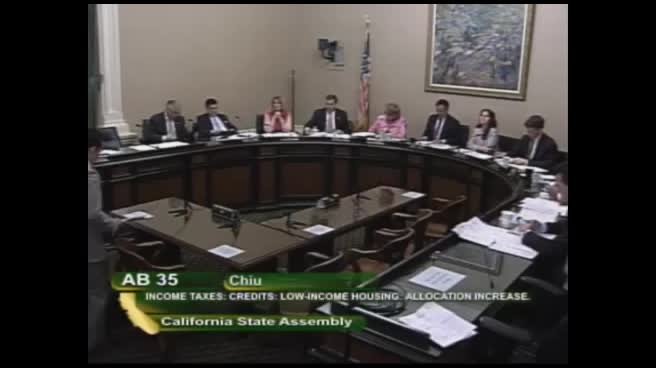
Discussed in Hearing
 15MIN
Assembly Standing Committee on Revenue and Taxation
Bill Author


