AB 641: Environmental quality: housing developments.
- Session Year: 2015-2016
- House: Assembly
- Latest Version Date: 2015-03-26
The California Environmental Quality Act requires a lead agency, as defined, to prepare, or cause to be prepared, and certify the completion of, an environmental impact report on a project that it proposes to carry out or approve that may have a significant effect on the environment or to adopt a negative declaration if it finds that the project will not have that effect. The act also requires a lead agency to prepare a mitigated negative declaration for a project that may have a significant effect on the environment if revisions in the project would avoid or mitigate that effect and there is no substantial evidence that the project, as revised, would have a significant effect on the environment. The act establishes a procedure by which a person may seek judicial review of the decision of the lead agency made pursuant to the act.
This bill would require the Judicial Council, on or before July 1, 2016, to adopt a rule of court to establish procedures applicable to actions or proceedings seeking judicial review of a public agencys action in certifying the environmental impact report and in granting approval for housing developments, as defined. The procedures would require the actions or proceedings, including any appeals therefrom, to be resolved, to the extent feasible, within 270 days of the certification of the record of proceedings. The bill would prohibit a court from staying or enjoining those housing developments unless it makes specified findings.
The California Environmental Quality Act requires a lead agency, as defined, to prepare, or cause to be prepared, and certify the completion of, an environmental impact report on a project that it proposes to carry out or approve that may have a significant effect on the environment or to adopt a negative declaration if it finds that the project will not have that effect. The act also requires a lead agency to prepare a mitigated negative declaration for a project that may have a significant effect on the environment if revisions in the project would avoid or mitigate that effect and there is no substantial evidence that the project, as revised, would have a significant effect on the environment. The act requires the lead agency to determine whether a project may have a significant effect on the environment based on substantial evidence in light of the whole record.
This bill would make technical, nonsubstantive changes to that provision.
(a)For the purposes of this section housing development means any activity related to the new construction of houses or dwelling units for the primary purpose of providing decent, safe, and sanitary housing for persons and families of all income levels. A housing development includes, but is not limited to, any building, land, equipment, facilities, or other real or personal property that a local agency determines to be necessary or convenient in connection with the provision of housing, including, but not limited to, streets, sewers, utilities, parks, site preparation, landscaping, and other nonhousing facilities, such as administrative, community, health, recreational, educational, commercial facilities, and that the local agency determines are an integral part of a housing development.
(b)Notwithstanding any other law, the procedures established pursuant to subdivision (c) shall apply to an action or proceeding brought to attack, review, set aside, void, or annul the certification of the environmental impact report for a housing development or the granting of any approvals for a housing development.
(c)On or before July 1, 2016, the Judicial Council shall adopt a rule of court to establish procedures applicable to actions or proceedings brought to attack, review, set aside, void, or annul the certification of the environmental impact report for a housing development or the granting of any project approvals. These procedures shall require the actions or proceedings, including any potential appeals therefrom, to be resolved, to the extent feasible, within 270 days of certification of the record of proceedings.
(d)(1)In granting relief in an action or proceeding brought pursuant to this division, the court shall not stay or enjoin the construction or operation of a housing development unless the court finds either of the following:
(A)The continued construction or operation of the housing development presents an imminent threat to the public health and safety.
(B)The site of the housing development contains unforeseen important Native American artifacts or unforeseen important historical, archaeological, or ecological values that would be materially, permanently, and adversely affected by the continued construction or operation of the housing development unless the court stays or enjoins the construction or operation of the housing development.
(2)If the court finds that subparagraph (A) or (B) of paragraph (1) is satisfied, the court shall only enjoin those specific activities associated with the housing development that present an imminent threat to public health and safety or that materially, permanently, and adversely affect unforeseen important Native American artifacts or unforeseen important historical, archaeological, or ecological values.
SECTION 1.Section 21082.2 of the Public Resources Code is amended to read:21082.2.(a)The lead agency shall determine whether a project may have a significant effect on the environment based on substantial evidence in light of the whole record.
(b)The existence of public controversy over the environmental effects of a project shall not require preparation of an environmental impact report if there is no substantial evidence in light of the whole record before the lead agency that the project may have a significant effect on the environment.
(c)Argument, speculation, unsubstantiated opinion or narrative, evidence that is clearly inaccurate or erroneous, or evidence of social or economic impacts that do not contribute to, or are not caused by, physical impacts on the environment, is not substantial evidence. Substantial evidence shall include facts, reasonable assumptions predicated upon facts, and expert opinion supported by facts.
(d)If there is substantial evidence, in light of the whole record before the lead agency, that a project may have a significant effect on the environment, an environmental impact report shall be prepared.
(e)Statements in an environmental impact report and comments with respect to an environmental impact report shall not be deemed determinative of whether the project may have a significant effect on the environment.
(a)The lead agency shall determine whether a project may have a significant effect on the environment based on substantial evidence in light of the whole record.
(b)The existence of public controversy over the environmental effects of a project shall not require preparation of an environmental impact report if there is no substantial evidence in light of the whole record before the lead agency that the project may have a significant effect on the environment.
(c)Argument, speculation, unsubstantiated opinion or narrative, evidence which that is clearly inaccurate or erroneous, or evidence of social or economic impacts which that do not contribute to, or are not caused by, physical impacts on the environment, is not substantial evidence. Substantial evidence shall include facts, reasonable assumptions predicated upon facts, and expert opinion supported by facts.
(d)If there is substantial evidence, in light of the whole record before the lead agency, that a project may have a significant effect on the environment, an environmental impact report shall be prepared.
(e)Statements in an environmental impact report and comments with respect to an environmental impact report shall not be deemed determinative of whether the project may have a significant effect on the environment.
|
Date
|
Status
|
|---|---|
| Feb 24, 2015 | Read first time. To print. |
| Feb 25, 2015 | From printer. May be heard in committee March 27. |
| Mar 26, 2015 | From committee chair, with author's amendments: Amend, and re-refer to Com. on NAT. RES. Read second time and amended. |
| Mar 26, 2015 | Referred to Coms. on NAT. RES. and JUD. |
| Apr 6, 2015 | Re-referred to Com. on NAT. RES. |
| Apr 27, 2015 | In committee: Set, first hearing. Failed passage. |
| Jun 8, 2015 | From committee: Without further action pursuant to Joint Rule 62(a). |
|
Date
|
Description
|
Location
|
Votes
|
|
|---|---|---|---|---|
| Apr 27, 2015 | Do pass and be re-referred to the Committee on [Judiciary] | Assembly Standing Committee on Natural Resources |
Failed |
This list shows positions taken on this bill by organizations on the date displayed, which is linked to the original source.
Positions by individuals are not included.
|
Organization
|
Position
|
Date
|
|---|---|---|
| California Chamber Of Commerce | * Support | Apr 27, 2015 |
| Sierra Club | * Against | Apr 27, 2015 |
Date of Hearing: April 27, 2015
ASSEMBLY COMMITTEE ON NATURAL RESOURCES
Das Williams, Chair
ABPCA Bill Id:AB 641
Author:(Mayes) – As Amended Ver:March 26, 2015
SUBJECT: Environmental quality: housing developments
SUMMARY: Establishes special judicial review procedures under the California Environmental Quality Act (CEQA) for any activity related to the new construction of houses or dwelling units.
EXISTING LAW:
- Requires lead agencies with the principal responsibility for carrying out or approving a proposed project to prepare a negative declaration, mitigated negative declaration, or environmental impact report (EIR) for this action, unless the project is exempt from CEQA (CEQA includes various statutory exemptions, as well as categorical exemptions in the CEQA guidelines).
- Authorizes judicial review of CEQA actions taken by public agencies, following the agency's decision to carry out or approve the project. Challenges alleging improper determination that a project may have a significant effect on the environment, or alleging an EIR doesn't comply with CEQA, must be filed in the Superior Court within 30 days of filing of the notice of approval. The courts are required to give CEQA actions preference over all other civil actions.
- Establishes that a record of proceeding includes, but is not limited to, all application materials, staff reports, transcripts or minutes of public proceedings, notices, written comments, and written correspondence prepared by or submitted to the public agency regarding the proposed project. Establishes a procedure for the preparation, certification, and lodging of the record of proceedings.
THIS BILL establishes special CEQA procedures for any "housing development," as follows:
- Defines “housing development” as any activity related to the new construction of houses or dwelling units for the primary purpose of providing decent, safe, and sanitary housing for persons and families of all income levels. A housing development includes, but is not limited to, any building, land, equipment, facilities, or other real or personal property that a local agency determines to be necessary or convenient in connection with the provision of housing, including, but not limited to, streets, sewers, utilities, parks, site preparation, landscaping, and other nonhousing facilities, such as administrative, community, health, recreational, educational, commercial facilities, and that the local agency determines are an integral part of a housing development.
- Requires Judicial Council to adopt a rule of court, by July 1, 2016, requiring lawsuits and any appeals to be resolved, to the extent feasible, within 270 days of certification of the record of proceedings (which must occur within five days of the lead agency filing the notice of determination on the project).
- Generally prohibits a court, in granting relief, from staying or enjoining the construction or operation of a housing development and provides that a court may only enjoin those specific activities associated with the project that present an imminent threat to public health and safety or that materially, permanently, and adversely affect unforeseen important Native American artifacts or unforeseen important historical, archaeological, or ecological values.
(in effect limiting the equitable powers of the court and prohibiting existing remedies under CEQA such as voiding the lead agency's decision or suspending project activities)
FISCAL EFFECT: Unknown
COMMENTS:
- Background. CEQA provides a process for evaluating the environmental effects of applicable projects undertaken or approved by public agencies. If a project is not exempt from CEQA, an initial study is prepared to determine whether the project may have a significant effect on the environment. If the initial study shows that there would not be a significant effect on the environment, the lead agency must prepare a negative declaration. If the initial study shows that the project may have a significant effect on the environment, the lead agency must prepare an EIR.
Generally, an EIR must accurately describe the proposed project, identify and analyze each significant environmental impact expected to result from the proposed project, identify mitigation measures to reduce those impacts to the extent feasible, and evaluate a range of reasonable alternatives to the proposed project. If mitigation measures are required or incorporated into a project, the agency must adopt a reporting or monitoring program to ensure compliance with those measures.
CEQA actions taken by public agencies can be challenged in Superior Court once the agency approves or determines to carry out the project. CEQA appeals are subject to unusually short statutes of limitations. Under current law, court challenges of CEQA decisions generally must be filed within 30-35 days, depending on the type of decision. The courts are required to give CEQA actions preference over all other civil actions. The petitioner must request a hearing within 90 days of filing the petition and, generally, briefing must be completed within 90 days of the request for hearing. There is no deadline specified for the court to render a decision.
In 2011, AB 900 (Buchanan) and SB 292 (Padilla) established expedited judicial review procedures for a limited number of projects. For AB 900, it was large-scale projects meeting extraordinary environmental standards and providing significant jobs and investment. For SB 292, it was a proposed downtown Los Angeles football stadium and convention center project achieving specified traffic and air quality mitigations. For these eligible projects, the bills provided for original jurisdiction by the Court of Appeal and a compressed schedule requiring the court to render a decision on any lawsuit within 175 days. This promised to reduce the existing judicial review timeline by 100 days or more, while creating new burdens for the courts and litigants to meet the compressed schedule. AB 900's provision granting original jurisdiction to the Court of Appeal was invalidated in 2013 by a decision in the Alameda Superior Court in Planning and Conservation League v. State of California. The stadium project subject to SB 292 has not proceeded. In 2013, SB 743 (Steinberg) established special CEQA procedures modeled on SB 292 for the proposed Sacramento Kings arena project. Like SB 292, SB 743 applied to a single project and included specified traffic and air quality mitigations.
- Should the AB 900/SB 292/SB 743 model be expanded? It's an open question whether the idea of limiting the scope and time of judicial review of favored projects was ever good policy, even for one project. The practical benefit of this approach to developers is debatable and it's unclear whether that benefit outweighs the potential sacrifice to effective environmental review and the increased burden on the courts. The only project that seems to have used, and possibly benefited from, the judicial review procedures enacted since 2011 is the Sacramento Kings arena project. It should be noted that the procedures in SB 743 applied only to the arena project and SB 743 also required the arena to be certified Leadership in Energy and Environmental Design (LEED) Gold, as well as minimize traffic and air quality impacts through project design or mitigation measures including reducing to at least zero the net greenhouse gas (GHG) emissions from private automobile trips to the arena, achieve reductions in GHG emissions from automobiles and light trucks that will exceed the GHG emission reduction targets for 2020 and 2035 adopted for the Sacramento region pursuant to SB 375, and achieve a 15% reduction in vehicle-miles traveled per attendee.
This bill applies similar expedited review procedures to any activity related to the new construction of houses or dwelling units, but does not include any mitigation measures. The bill would apply to an unknown number of future housing development projects with unknown impacts. Since the projects are undefined, it's impossible to evaluate their merits, much less whether those merits justify preferential treatment. The potential for many projects to qualify also increases the burden on the courts. Judicial Council indicates that the requirement to resolve lawsuits within 270 days may be unworkable in practice, will likely have an adverse impact on other cases, and undermines equal access to justice.
REGISTERED SUPPORT / OPPOSITION:
Support
California Building Industry Association
California Chamber of Commerce
Opposition
Center for Biological Diversity
Judicial Council of California
Natural Resources Defense Council
Sierra Club California
Analysis Prepared by: Lawrence Lingbloom / NAT. RES. / (916) 319-2092
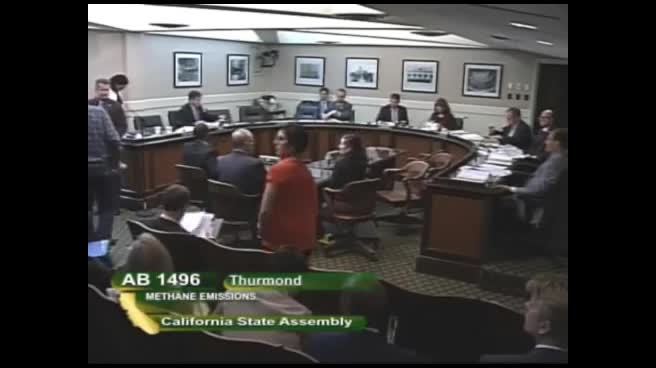
Discussed in Hearing
 9MIN
Assembly Standing Committee on Natural Resources


Bill Co-Author(s):