AB 845: Health care coverage: vision care.
- Session Year: 2015-2016
- House: Assembly
- Latest Version Date: 2015-04-21
Existing law, the federal Patient Protection and Affordable Care Act (PPACA), requires each state to establish an American Health Benefits Exchange to facilitate the purchase of qualified health plans by qualified individuals and small employers. PPACA prohibits an Exchange from making available any health plan other than a qualified health plan, except for certain stand-alone dental plans. Existing state law establishes the California Health Benefit Exchange within state government, specifies the powers and duties of the board governing the Exchange, and requires the board to facilitate the purchase of qualified health plans through the Exchange by qualified individuals and small employers by January 1, 2014.
This bill would authorize the executive board that governs the California Health Benefit Exchange to construct, manage, and maintain an Internet Web site that is separate and clearly distinct from the Exchanges Internet Web site, to inform consumers about participating individual and employer-based vision plans that are available to qualified individuals and qualified employers. The bill would authorize the board to receive funds from providers of ancillary vision care products and any other nongovernmental source for this purpose. The bill would prohibit federal funds and user fees and other assessments imposed for purposes of the Exchange from being used for this purpose. The bill would require the Internet Web site to provide certain information, including the fact that enrollment in a vision plan does not constitute enrollment in a qualified health plan or enrollment through the Exchange. The bill would also require the Internet Web site to facilitate an option for consumers to obtain more information about, and enrollment in, a vision plan through a licensed agent, as specified.
Existing law, the federal Patient Protection and Affordable Care Act (PPACA), requires each state to establish an American Health Benefits Exchange to facilitate the purchase of qualified health plans by qualified individuals and small employers. PPACA prohibits an Exchange from making available any health plan other than a qualified health plan, except for certain stand-alone dental plans. Existing state law establishes the California Health Benefit Exchange within state government, specifies the powers and duties of the board governing the Exchange, and requires the board to facilitate the purchase of qualified health plans through the Exchange by qualified individuals and small employers by January 1, 2014.
This bill would authorize the executive board that governs the California Health Benefit Exchange to construct, manage, and maintain an Internet Web site that is separate and clearly distinct from the Exchanges Internet Web site, to inform consumers about participating individual and employer-based vision plans that are available to qualified individuals and qualified employers. The bill would authorize the board to receive funds from providers of ancillary vision care products and any other nongovernmental source for this purpose. The bill would prohibit federal funds and user fees and other assessments imposed for purposes of the Exchange from being used for this purpose. The bill would require the Internet Web site to provide certain information, including the fact that enrollment in a vision plan does not constitute enrollment in a qualified health plan or enrollment through the Exchange.
(a)The board may construct, manage, and maintain an Internet Web site that is separate and clearly distinct from the Internet Web site established by the Exchange, to inform consumers about participating individual and employer-based vision plans that are available to qualified individuals and qualified employers. The board may receive funds from providers of ancillary vision care products and any other nongovernmental source for this purpose. Federal funds, user fees, and other assessments imposed for purposes of the Exchange shall not be used for this purpose, and other federal and state funds shall not be commingled with funds that are made available for this purpose.
(b) The Internet Web site constructed pursuant to subdivision (a) shall offer full and complete carrier information to consumers and shall allow enrollees and prospective enrollees to obtain standardized comparative information on the participating vision plans. If a telephone number is provided to provide additional information regarding a vision plan, that telephone number shall be a different telephone number than the telephone number provided to receive information regarding products offered through the Exchange.
(c)The Internet Web site constructed pursuant to subdivision (a) shall provide, at a minimum, the following information to visitors to the Internet Web site:
(1)An explanation of the types of coverage offered.
(2)The fact that the The vision plan is a separate, legally distinct entity from the Exchange.
(3)The fact that enrollment Enrollment in a vision plan does not constitute enrollment in a qualified health plan or enrollment through the Exchange.
(4)The fact that advance Advance payment of premium tax credit and cost-sharing reductions are not available for a vision plan.
(5)Pediatric vision care is an essential health benefit covered by the consumers health care service plan or health insurer.
(d)The Internet Web site constructed pursuant to subdivision (a) shall facilitate an option for consumers to obtain more information about, and enrollment in, a vision plan through a licensed agent, as described in Section 1626 of the Insurance Code.
(a)The board may construct, manage, and maintain an Internet Web site that is separate and clearly distinct from the Internet Web site established by the Exchange, to inform consumers about participating individual and employer-based vision plans that are available to qualified individuals and qualified employers. The board may receive funds from providers of ancillary vision care products and any other nongovernmental source for this purpose. Federal funds, user fees, and other assessments imposed for purposes of the Exchange shall not be used for this purpose, and other federal and state funds shall not be commingled with funds that are made available for this purpose.
(b) The Internet Web site constructed pursuant to subdivision (a) shall offer full and complete carrier information to consumers and shall allow enrollees and prospective enrollees to obtain standardized comparative information on the participating vision plans. If a telephone number is provided to provide additional information regarding a vision plan, that telephone number shall be a different telephone number than the telephone number provided to receive information regarding products offered through the Exchange.
(c)The Internet Web site constructed pursuant to subdivision (a) shall provide, at a minimum, the following information to visitors to the Internet Web site:
(1)An explanation of the types of coverage offered.
(2)The fact that the vision plan is a separate, legally distinct entity from the Exchange.
(3)The fact that enrollment in a vision plan does not constitute enrollment in a qualified health plan or enrollment through the Exchange.
(4)The fact that advance payment of premium tax credit and cost-sharing reductions are not available for a vision plan.
|
Date
|
Status
|
|---|---|
| Feb 26, 2015 | Read first time. To print. |
| Feb 27, 2015 | From printer. May be heard in committee March 29. |
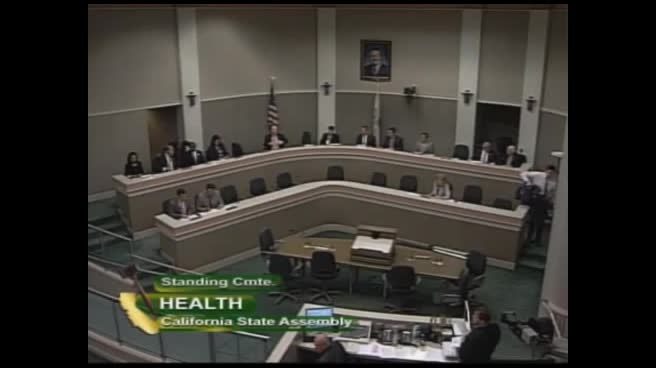
| Mar 16, 2015 | Referred to Com. on HEALTH. |
| Apr 20, 2015 | From committee: Amend, and do pass as amended and re-refer to Com. on APPR. (Ayes 17. Noes 0.) (April 14). |
| Apr 21, 2015 | Read second time and amended. |
| Apr 22, 2015 | Re-referred to Com. on APPR. |
| Apr 29, 2015 | In committee: Set, first hearing. Referred to APPR. suspense file. |
| May 28, 2015 | In committee: Held under submission. |
| Jan 31, 2016 | Died pursuant to Article IV, Sec. 10(c) of the Constitution. |
| Feb 1, 2016 | From committee: Filed with the Chief Clerk pursuant to Joint Rule 56. |
|
Date
|
Description
|
Location
|
Votes
|
|
|---|---|---|---|---|
| Apr 14, 2015 | Do pass as amended and be re-referred to the Committee on [Appropriations] | Assembly Standing Committee on Health |
Passed |
This list shows positions taken on this bill by organizations on the date displayed, which is linked to the original source.
Positions by individuals are not included.
|
Organization
|
Position
|
Date
|
|---|---|---|
| California Association Of Health Underwriters | * Against | Apr 14, 2015 |
| California Association Of Health Underwriters | * Support | Apr 14, 2015 |
| Vision Service Plan Global | ** Support | Apr 14, 2015 |
AB 845
Page 2
Date of Hearing: April 29, 2015
ASSEMBLY COMMITTEE ON APPROPRIATIONS
Jimmy Gomez, Chair
AB 845
(Cooley) – As Amended April 21, 2015
Policy Committee: |
Health |
Vote: |
17 - 0 |
|
|
|
|
|
|
|
|
Urgency: No State Mandated Local Program: No Reimbursable: No
SUMMARY:
This bill authorizes the board of the Exchange, referred to as Covered California, to construct, manage, and maintain a separate website to provide standardized information about vision plans available for consumers to purchase. It also:
Authorizes the board to receive funds from providers of ancillary vision care products and any other nongovernmental source for the purpose of the website.
Prohibits federal funds, user fees, and other assessments imposed for the purposes of the Exchange from being used for the purpose of the website, and prohibits other federal and state funds from being comingled with funds made available for the website.
Requires the website to facilitate an option for consumers to obtain more information about, and enrollment in, a vision plan through a licensed agent.
FISCAL EFFECT:
One-time cost pressure of in the hundreds of thousands to low millions to Covered California to construct, design, and test a website that meets the criteria of the bill. Costs depend on the functionality of the site. Although the bill authorizes, and does not require, Covered California to create the website, codifying such a directive places clear cost pressure on the state to create it. The bill authorizes Covered California to receive private funds for the purpose and does not allow the use of their other funding sources for the purpose. It is unclear whether resources would be available.
Ongoing costs to maintain the website in the low hundreds of thousands of dollars. If the website is built with private funds, there would be cost pressure to the state to maintain the site even if private funds later dry up.
COMMENTS:
Purpose. According to the author, this bill will provide California consumers the opportunity to shop for adult, individual vision care. The author states that Covered California currently offers pediatric-only vision benefits, and adult consumers do not have access to affordable vision coverage when purchasing a health plan through Covered California. The author states that vision is a critical part of everyday life, with the added preventative benefit that routine eye exams can disclose many serious underlying health conditions.
Background. Federal law requires state Exchanges, including Covered California, to facilitate enrollment in qualified health plans that provide a set of 10 “essential health benefits” (EHBs) including inpatient and outpatient care, pharmacy, maternity services, and behavioral health care, among others. In addition, pediatric oral and vision care is included as an EHB.
In 2012, the Covered California board intended to pursue the offering of supplemental insurance plans, including standalone vision and dental plans for adults and families. However, on March 29, 2013, the federal Center for Consumer Information and Insurance Oversight (CCIIO), released guidance stating an Exchange could not offer certain supplemental products, including vision plans. However, Covered California would be able to partner and share infrastructure with a separate non-Exchange state program in order to offer supplemental products such as vision plans, provided several conditions were met. For example, the non-Exchange state program must be supported by a separate funding stream and have a separate legal status. The federal guidance allows such an entity to share infrastructure with the Exchange, provided that if an Exchange resource is used for non-Exchange purposes, the cost of using the resource must be paid by the other, non-Exchange state program.
In a letter dated February 2, 2015, from the federal Department of Health and Human Services to Congresswoman Doris Matsui, the Centers for Medicare and Medicaid Services Administrator, Marilyn Tavenner, clarified that a separate state entity does not need to be created in order for the Exchange to provide a Website link to a marketplace for adult vision care. The website is, however, required to state disclaimers that the plans are not QHPs and do not qualify for tax credits and subsidies. This bill requires such disclaimers.
Previous Legislation. AB 1877 (Cooley) would have created in state government the California Vision Care Access Council, modeled after the Exchange, to create a marketplace for the purchase of vision plans by individuals and employers. This bill was vetoed. In his veto message, the Governor stated that, "Creating a new state bureaucracy to inform consumers about vision plans isn't necessary, nor is it advisable to divert Covered California's focus with a new scheme, the governance of which may be impermissible under federal rules." This bill partially addresses the veto message, in that it does not create a new state bureaucracy. However, the issue of diverting Covered California's focus from its core mission appears to stand.
Analysis Prepared by: Lisa Murawski / APPR. / (916) 319-2081
AB 845
Page 5
Date of Hearing: April 14, 2015
ASSEMBLY COMMITTEE ON HEALTH
Rob Bonta, Chair
AB 845
(Cooley) – As Introduced February 26, 2015
SUBJECT: Health care coverage: vision care.
SUMMARY: Authorizes the executive board (board) of the California Health Benefit Exchange (Exchange) to establish a Website to inform consumers about participating individual and employer-based vision plans that are available to qualified individuals and employers. Specifically, this bill:
Authorizes the board of the Exchange, referred to as Covered California, to construct, manage, and maintain a Website that is separate and clearly distinct from the Exchange Website, to inform consumers about participating individual and employer-based vision plans that are available to qualified individuals and employers.
Authorizes the board to receive funds from providers of ancillary vision care products and any other nongovernmental source for the purpose of the Website.
Prohibits federal funds, user fees, and other assessments imposed for the purposes of the Exchange from being used for the purpose of the Website, and other federal and state funds are not to be comingled with funds made available for the Website.
Requires the Website to offer full and complete carrier information to consumers and allow enrollees and prospective enrollees to obtain standardized comparative information on the participating vision plans. Specifies that if the Website contains a telephone number, that the number be different from number used to receive information regarding products offered through the Exchange.
Requires the Website to provide:
An explanation of the types of coverage offered;
A statement that the vision plan is a separate legally distinct entity from the Exchange;
A statement that enrollment in a vision plan does not constitute enrollment in a qualified health plan (QHP) or enrollment through the Exchange; and,
A statement that advance payment of premium tax credit and cost-sharing reductions are not available for a vision plan.
EXISTING LAW:
Requires, under the Patient Protection and Affordable Care Act (ACA), each state, by January 1, 2014, to establish a health benefit exchange that makes QHPs available to qualified individuals and qualified employers, or, if a state chooses not to establish an exchange, requires the federal government to establish one for the state. Federal law establishes requirements for an exchange, for health plans participating in an exchange, and who is eligible to receive coverage in the exchange.
Establishes in state government the Exchange as an independent public entity not affiliated with an agency or department. Requires the Exchange to compare and make available through selective contracting health insurance for individual and small business purchasers as authorized under the ACA.
Under federal law, establishes requirements for health plans offered through state exchanges, including that the plan provides essential health benefits (EHBs) and follows established limits on cost-sharing (deductibles, copayments, and out-of-pocket maximum amounts).
Establishes as California’s EHBs the Kaiser Small Group Health Maintenance Organization plan along with the following 10 ACA mandated benefits: a) ambulatory patient services; b) emergency services; c) hospitalization; d) maternity and newborn care; e) mental health and substance use disorder services, including behavioral health treatment; f) prescription drugs; g) rehabilitative and habilitative services and devices; h) laboratory services; i) preventive and wellness services and chronic disease management; and, j) pediatric services, including oral and vision care.
Establishes the Exchange SHOP (the Small Business Health Options Program), separate from activities of the Exchange board related to the individual market, to assist qualified small employers in facilitating the enrollment of their employees in QHPs offered through the Exchange in the small employer market in a manner consistent with the ACA.
Exempts specialized health plans, which include vision plans, from a number of requirements that apply more broadly to health plans.
FISCAL EFFECT: This bill has not yet been analyzed by a fiscal committee.
COMMENTS:
PURPOSE OF THIS BILL. According to the author, this bill will provide California consumers the opportunity to shop for adult, individual vision care. The author states that Covered California currently offers pediatric-only vision benefits, and adult consumers do not have access to affordable vision coverage when purchasing a health plan through Covered California. The author states that vision is a critical part of everyday life, with the added preventative benefit that routine eye exams can disclose many serious underlying health conditions. The author concludes that this bill is about access, and without it, Covered California consumers will not have access to a single competitive platform to purchase affordable, stand-alone, adult vision coverage.
BACKGROUND. Under the ACA, individuals are required to maintain health insurance or pay a penalty, with exceptions for financial hardship, religion, incarceration, and immigration status. The ACA also includes several insurance market reforms, such as prohibitions against health insurers imposing preexisting health condition exclusions and a requirement that health plans and insurers offer EHBs in the individual and small group markets.
The ACA allows each state to establish its own exchange to offer individual and small group coverage. California’s state exchange is Covered California, which is an independent government entity with a five-member board of directors. Individuals with income under 400% of the federal poverty level, provided certain conditions are met, can receive a subsidy in the form of a refundable tax credit toward the purchase of an Exchange plan. The payment goes directly to the insurer and reduces the premium liability for that individual. For some products in the Exchange, individuals who are eligible for a tax subsidy are also be eligible for assistance in paying cost-sharing for their health services. Federal subsidies are only available for Exchange plans.
All Exchange plans must cover the EHBs. Under the ACA, pediatric vision care is included in the EHBs, while adult vision care is considered a supplemental benefit.
VISION PLANS AND THE EXCHANGE. On October 25, 2012, the Exchange Board adopted a policy to offer supplemental dental and vision benefits in the individual and SHOP exchanges. The Exchange, in a letter to the Centers for Medicaid and Medicare Services, Center for Consumer Information and Insurance Oversight (CCIIO), advised CCIIO of its intention offer stand-alone vision and requested federal guidance about offering these benefits. The letter noted that stand-alone vision plans may increase the likelihood of utilization and provide greater emphasis on preventive care, and stated that offering stand-alone vision plans would bolster the consumer friendliness of the Exchange.
On April 5, 2013, CCIIO published a list of “Frequently Asked Questions (FAQ) on Reuse of Exchange for Ancillary Products.” The FAQ indicates that stand-alone vision plans and other ancillary insurance products such as disability or life insurance products cannot be offered in or through an Exchange: “An Exchange only may offer QHPs, including stand-alone dental plans, to qualified individuals and qualified employers... However, ancillary insurance products, which are not QHPs, may be offered by separate state programs that share resources and infrastructure with a State-based Exchange.”
The FAQ also indicates that Exchange Websites may provide basic information on vision and ancillary insurance products, and that, if this information is provided, it must indicate that the vision and ancillary insurance products are not QHPs and advance payment of premium tax credits and cost-sharing reductions are not available for these products. The FAQ advises that it would be acceptable, for example, for vision and ancillary products to be listed on an Exchange Website, along with the disclaimer about non-QHP status and unavailability of subsidies, with consumers having the ability to add the product to a shopping basket along with QHPs.
The FAQ provides conditions that must be met if Exchange resources are used to offer non-QHP ancillary plans: the agency or program facilitating the coverage must be legally and publicly distinct from the Exchange, and no federal funds or Exchange user fees or assessments may be used to support non-Exchange activities. To the extent that an Exchange resource is used to offer non-Exchange products, the FAQ indicates that the cost of using the resource must be paid by the other, non-Exchange state program.
In response to the Federal guidance, the Exchange was compelled to revise its adopted policy on vision benefits, determining that stand-alone vision plans and/or supplemental adult vision benefits could not be offered through Covered California, and that, for the 2014 plan year, pediatric EHB vision benefits be offered only through QHPs.
In a letter dated February 2, 2015 from the federal Department of Health and Human Services to Congresswoman Doris Matsui, Centers for Medicare and Medicaid Services Administrator Marilyn Tavenner clarified that a separate state entity does not need to be created in order for the Exchange to provide a Website link to a marketplace for adult vision care. There must only be the requisite disclaimers made in conjunction with the link that the plans are not QHPs and do not qualify for tax credits and subsidies. As such, VSP Global, the bill's sponsor, indicates that it is working with the Exchange with the goal of addressing this issue at the administrative level, and that this bill may provide a vehicle for any legislative changes that may be necessary for implementation.
SUPPORT. Vision Service Plan Global (VSP), this bill's sponsor, states that this measure will help make adult vision care available through Covered California. VSP states that for the past three years, the Exchange has worked to identify an appropriate pathway to provide access to adult vision coverage, and this bill will help deliver on the promise of achieving that goal.
OPPOSITION. The California Association of Health Underwriters (CAHU) opposes this bill unless amended to address specified concerns. CAHU states that there are still many computer system challenges and pending projects before the Exchange, particularly regarding the SHOP program, which should be completed before any further expansions. Additionally, CAHU states the bill should include language ensuring that certified agents would be the enrollment avenue available to consumers and employers if a decision to add stand-alone vision plans to Covered California as an optional benefit is made.
RELATED LEGISLATION.
AB 1109 (Wilk) provides that the only health benefit plans available to a member of the Legislature are health benefit plans offered through the Exchange. AB 1109 is currently in the Rules Committee.
SB 4 (Lara) requires the California Health and Human Service Secretary to apply to the federal government for a waiver of federal law to allow individuals not eligible to obtain health coverage due to their immigration status to obtain coverage from the Exchange; requires the Exchange to offer QHPs, as specified, to these individuals; and establishes the California Health Exchange Program for All Californians to be governed by the Exchange executive board. This bill is set for hearing in the Senate Health Committee on April 15, 2015.
SB 43 (Ed Hernandez) will be amended to update California’s EHB statute to incorporate federal regulations changes. SB 43 is pending in the Senate Health Committee.
PREVIOUS LEGISLATION.
AB 1877 (Cooley) would have created in state government the California Vision Care Access Council, modeled after the Exchange, to create a marketplace for the purchase of vision plans by individuals and employers. This bill was vetoed. In his veto message, the Governor stated that, "Creating a new state bureaucracy to inform consumers about vision plans isn't necessary, nor is it advisable to divert Covered California's focus with a new scheme, the governance of which may be impermissible under federal rules."
AB 1453 (Ed Hernandez), Chapter 866, Statutes of 2012, and SB 951 (Monning), Chapter 854, Statutes of 2012, establish California’s EHBs.
AB 1602 (John A. Pérez), Chapter 655, Statutes of 2010, and SB 900 (Alquist), Chapter 659, Statutes of 2010, establish the Exchange and its powers and duties.
POLICY COMMENT. Pediatric vision care is currently an EHB, and is required to be included in all individual and small group health plans in the state. Consumers who are directed to the Website proposed under this bill may not be aware that pediatric vision care is covered under their health plan. To help consumers, and attempt to avoid the potential of consumers using the proposed Website to purchase a separate vision plan for pediatric vision benefits, the committee may wish to amend this bill to require the Website for vision plans to include a statement that pediatric vision care is an EHB covered under their health plan.
REGISTERED SUPPORT / OPPOSITION:
Support
Vision Service Plan Global (sponsor)
Opposition
California Association of Health Underwriters
Analysis Prepared by: Kelly Green / HEALTH / (916) 319-2097
Bill Author

Bill Co-Author(s):